


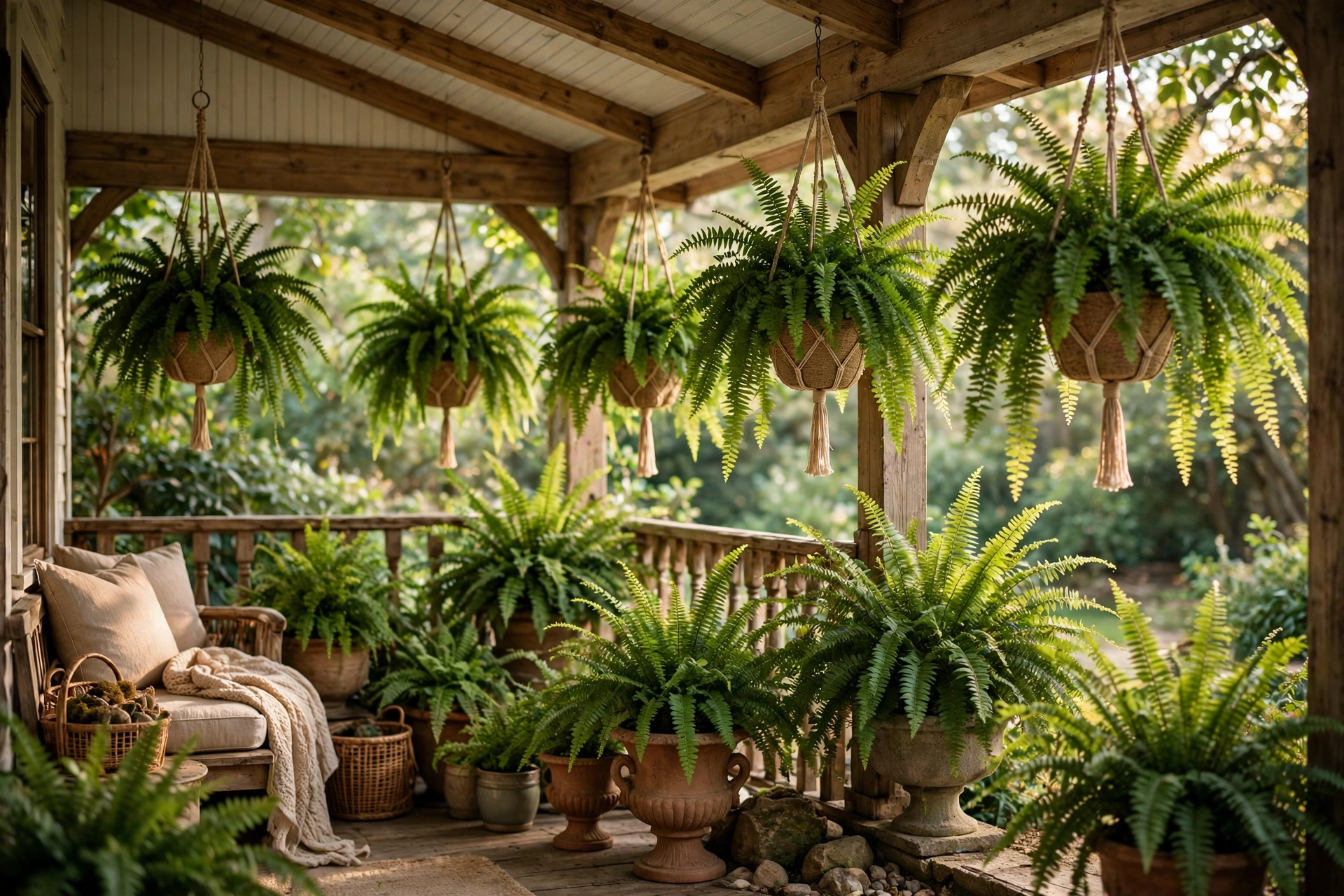
A shady porch can stay bare for years while the sunny beds get all the attention. Pots of flowers fade there, and most sun-loving plants stretch and sulk in the dim light. My north-facing porch sat empty for two summers because I assumed nothing would grow there, until a single hanging Boston fern changed the whole corner.
This guide covers 14 fern planter ideas for porches, patios, and indoor corners, with the fern type, pot size, cost, and watering need for each one. It suits beginners, renters, and anyone with more shade than sun. Every idea works in a container, so you can move it, swap it, or bring it inside when cold weather arrives.
Quick takeaways
- Drainage comes first: every fern pot needs holes, and saucers get emptied after watering.
- Most ferns want bright, indirect light or gentle morning sun, never hot afternoon sun.
- Water when the top inch of mix feels dry, and soak until water runs from the drainage holes.
- Match the fern to your winters: tropical types come inside before frost, hardy types can stay out.
- Grouping pots together raises the humidity around the fronds and cuts down on brown tips.
1. Classic hanging Boston fern basket
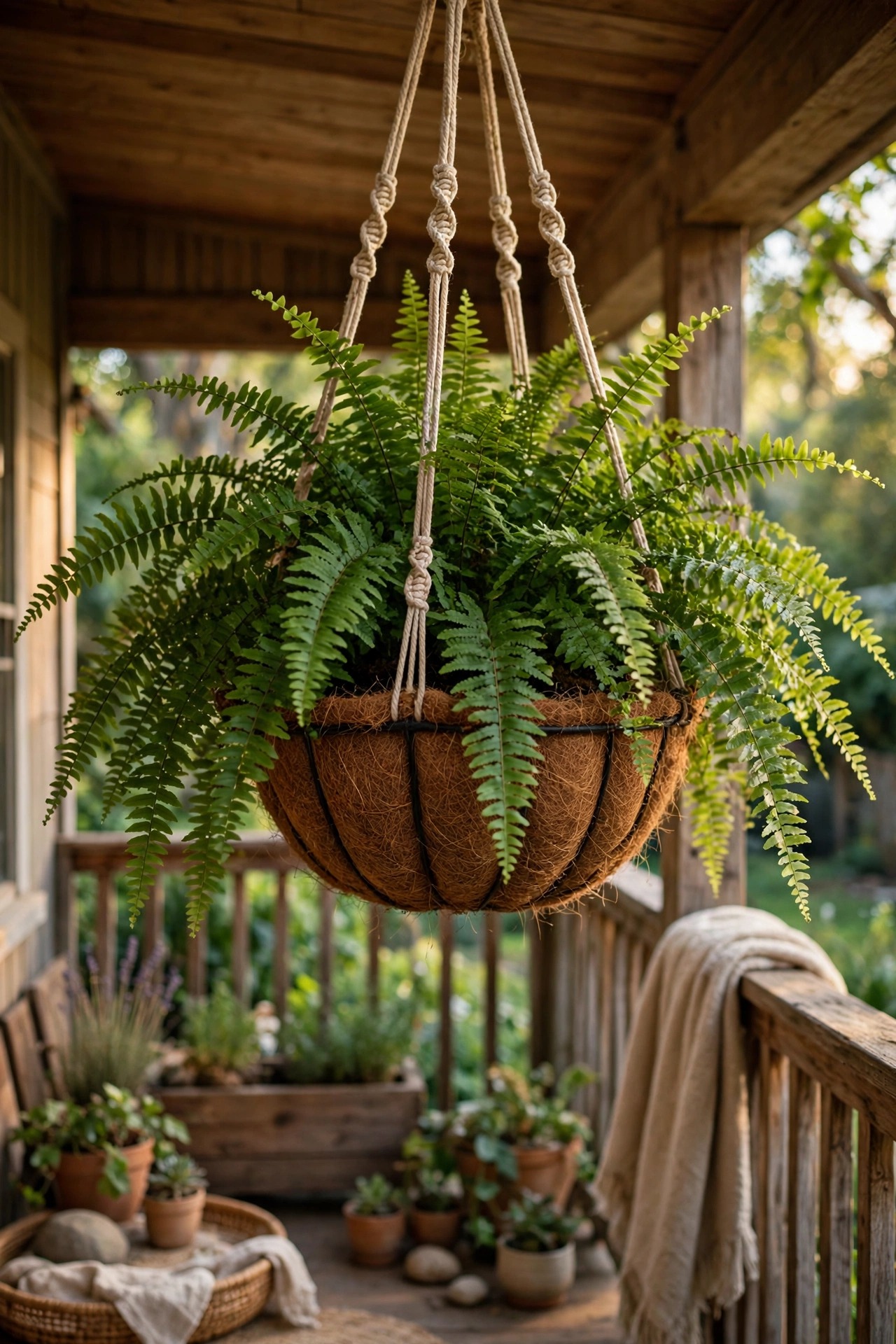
A Boston fern in a 10 to 12 inch coco-lined wire basket is the porch look most people picture first, and it earns that spot. The arching fronds can reach 2 to 3 feet long, so one basket fills a whole corner of a covered porch. Hang it from a ceiling hook rated for at least 20 pounds, since a soaked basket gets heavy fast. Water daily in summer heat, and spin the basket a quarter turn each week so all sides grow evenly.
Try this: Drop the nursery pot straight into the coco liner instead of repotting, and water until it drips freely from the bottom.
Difficulty: Easy | Cost: $$
2. Flanking urns at the front door
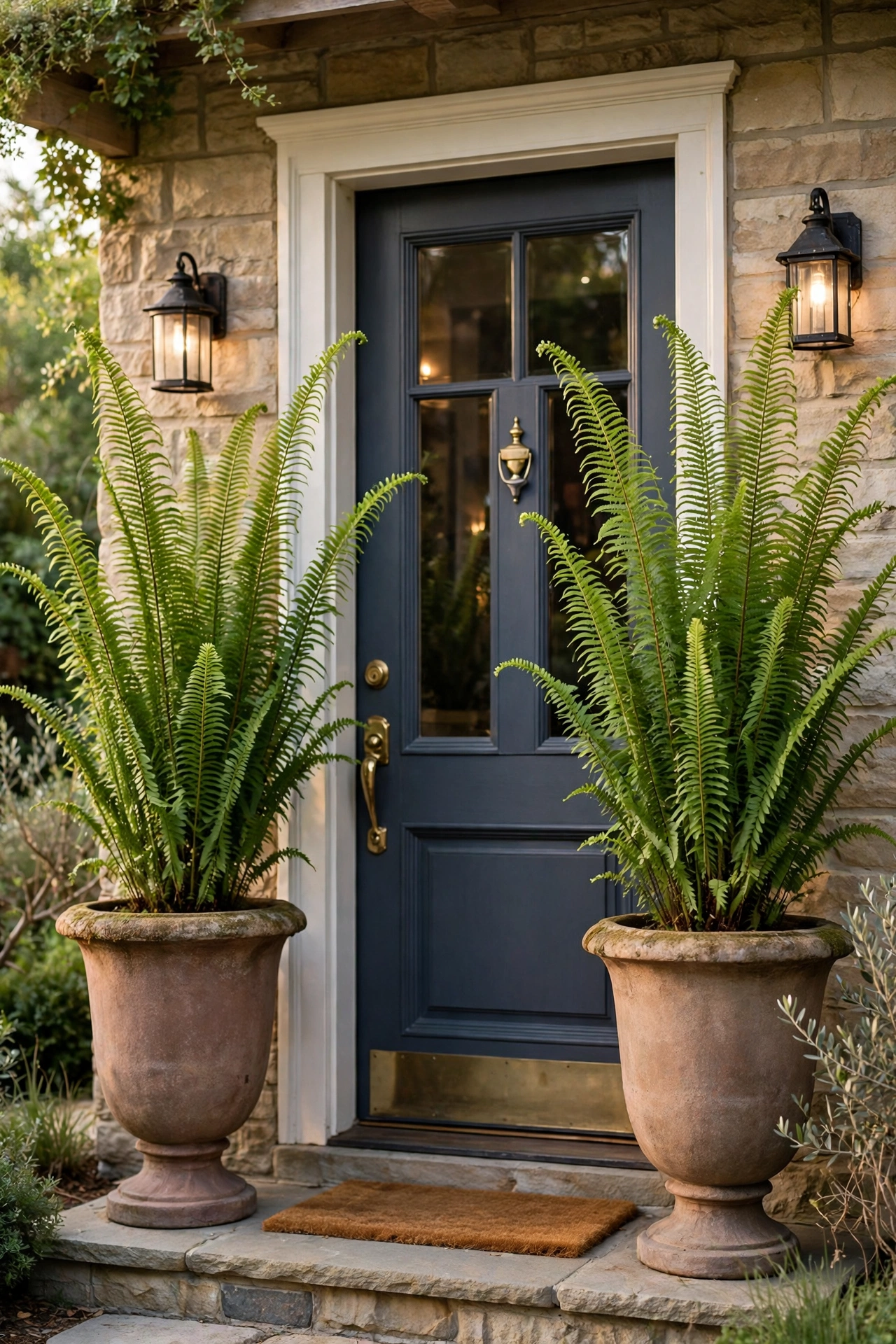
Two matching urns, one on each side of the door, turn a plain entry into a finished one. Kimberly Queen ferns suit this spot because they grow upright instead of arching, so they frame the door without blocking the path. Use 16 to 20 inch urns with drainage holes, and set each on a small riser so water drains clear of the porch floor. Morning sun suits them, but move them back under the roofline if afternoon sun hits the entry.
Try this: Plant one fern per urn and tuck a few white impatiens around the base for a soft edge.
Difficulty: Easy | Cost: $$$
3. Tiered stand fern collection

A three-tier wooden stand packs a whole fern collection into one shady corner without taking over the patio. Put the largest pot, a Boston fern, on the bottom tier where its fronds can arch freely. A Japanese painted fern goes in the middle for its silver and burgundy fronds, and a small button fern sits on top where you can see its tiny round leaves up close. Water the top tier first and let the runoff remind you to check the lower pots, since they dry out at different rates.
Try this: Label each pot on the back with the fern name and its watering note, so anyone can help while you are away.
Difficulty: Easy | Cost: $$
4. Wall pocket fern garden
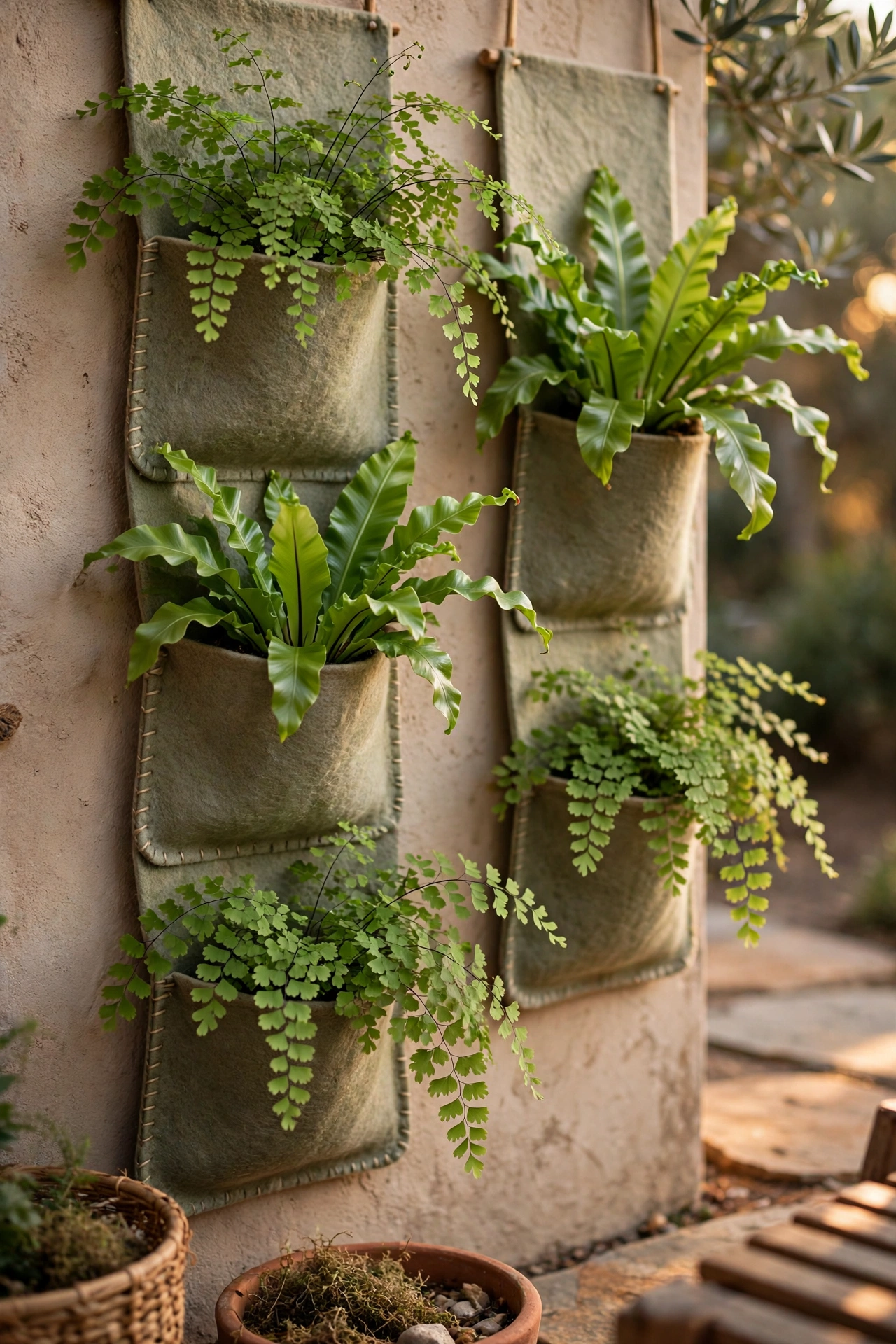
Felt wall pockets turn a blank patio wall into a living panel. Maidenhair ferns suit the upper pockets, where their fine fronds catch the light, and bird’s nest ferns anchor the lower pockets with broad, upright leaves. Mount the panel on a north or east-facing wall, and leave a gap behind it so air moves and the wall stays dry. Water from the top pocket down with a narrow-spout can, and check the bottom pockets last, since they collect the extra.
Try this: Line each pocket with a small plastic pot inside the felt, so you can lift a fern out to water it in the sink.
Difficulty: Moderate | Cost: $$
5. Porch rail planters with trailing ferns
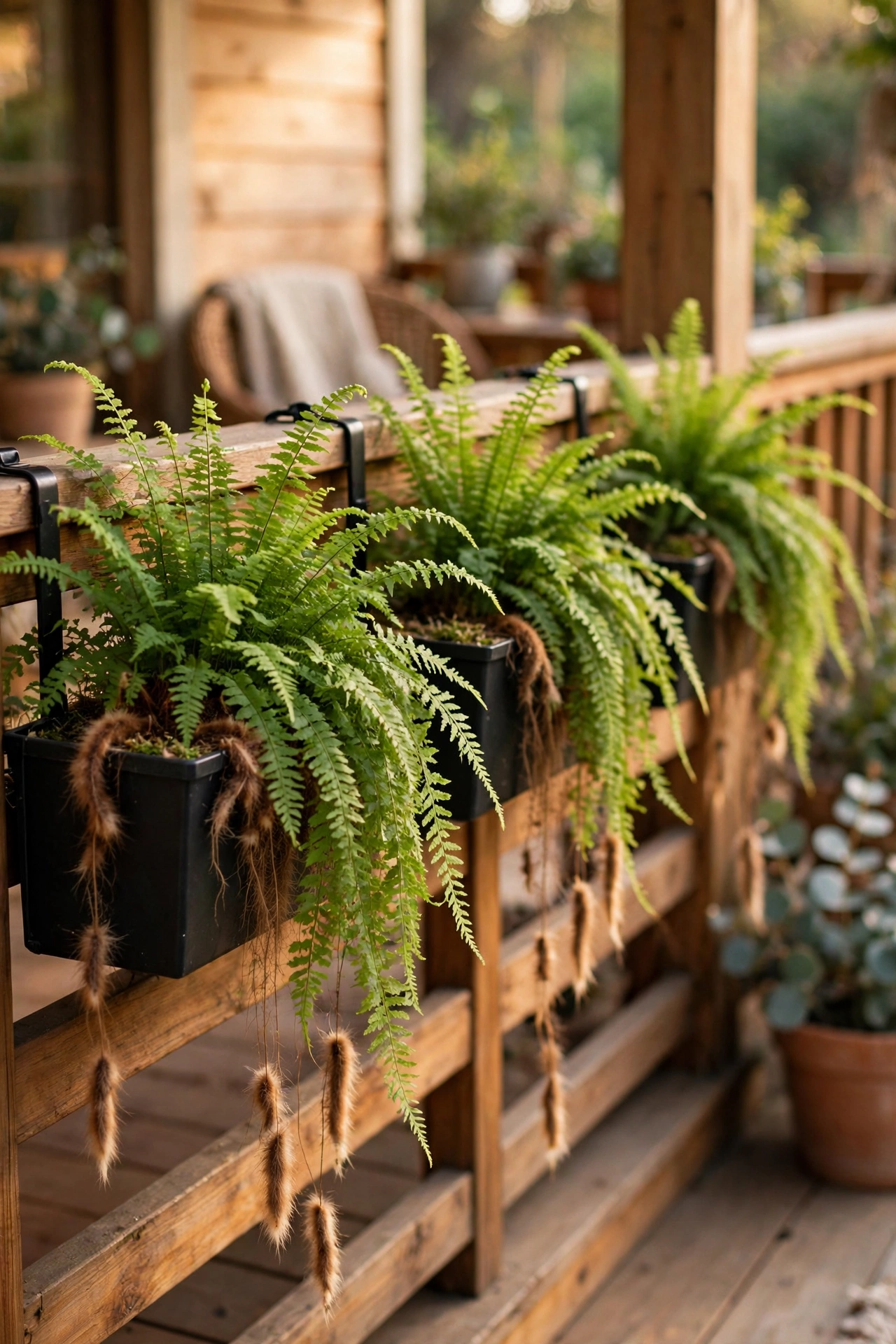
Rail planters use space that otherwise goes to waste, and trailing ferns soften a hard porch edge fast. Rabbit’s foot ferns work well here because their fuzzy rhizomes creep over the rim and their fronds spill down the outside of the box. Lemon button ferns fill the gaps with small, round leaflets. Secure each box with brackets rated for a wet, planted box, and keep the planting to one fern per 12 inches of box so the roots do not crowd each other out by midsummer.
Try this: Mix one upright fern, like a small Kimberly Queen, at each end of the box to stop the row from looking flat.
Difficulty: Easy | Cost: $$
6. Macramé hanging fern indoors

A macramé hanger gives a small fern a home that takes zero floor space, which suits apartments and small rooms. Button ferns fit best, since they stay compact at 12 inches tall and their round leaflets read well at eye level. Hang the planter near a north or east window with sheer curtains, and set the pot on a saucer inside the hanger so drips never reach the floor. Bathrooms suit this idea well, because shower steam keeps the air damp around the fronds.
Try this: Mist the fronds in the morning twice a week, and skip evening misting so the leaves dry before night.
Difficulty: Easy | Cost: $$
7. Terracotta fern trio on the steps
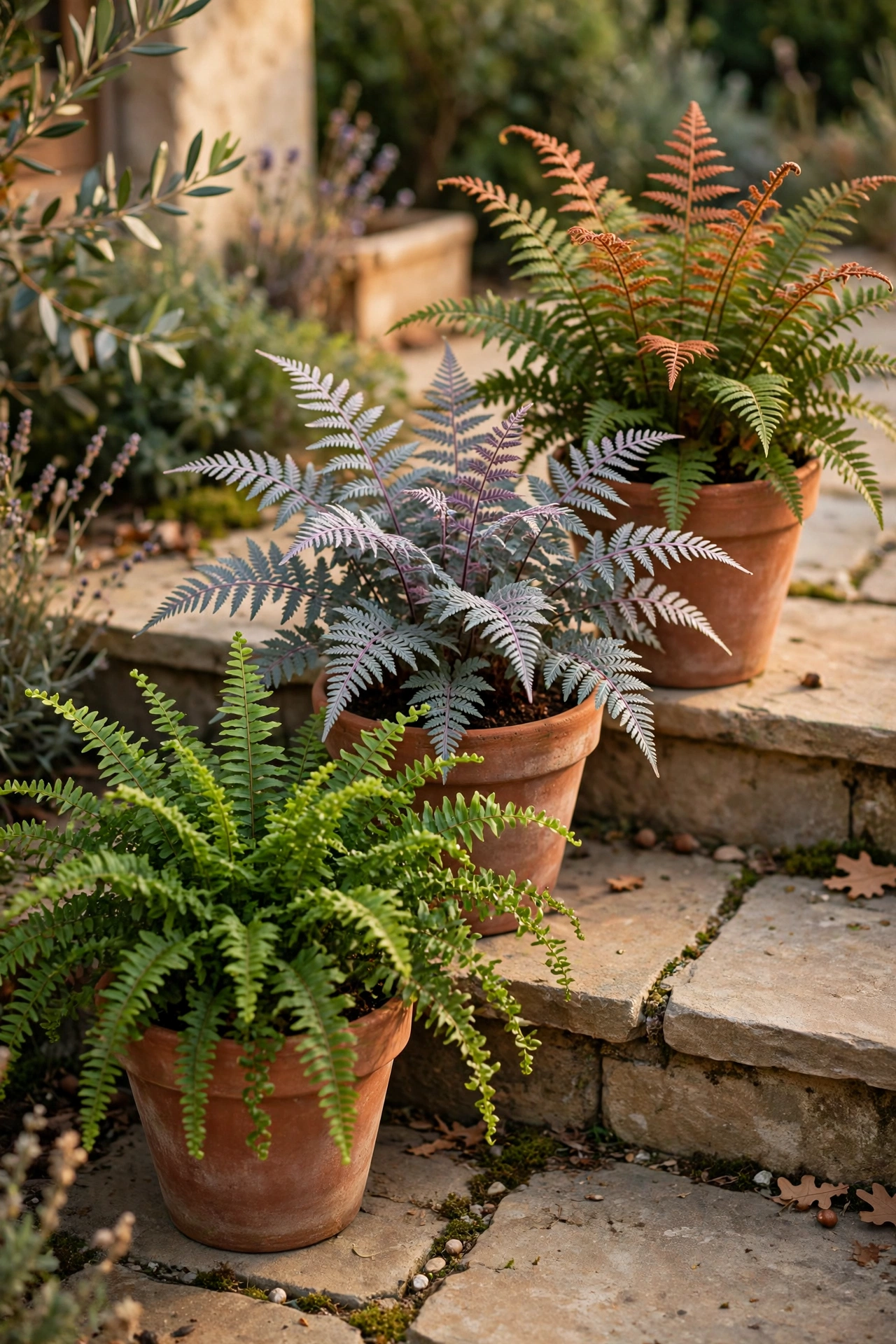
Three terracotta pots in a row up the patio steps read as one intentional display instead of three stray plants. A Boston fern takes the lowest, widest step where its fronds can spread. A Japanese painted fern sits on the middle step for its silver color, and an autumn fern takes the top step, where its copper new growth catches the eye. Terracotta dries out faster than plastic, so check these pots daily in warm weather and soak them fully each time you water.
Try this: Use pots in three sizes, 12, 10, and 8 inches, stepping down with the stairs for a tidy rhythm.
Difficulty: Easy | Cost: $$
8. Fern and impatiens mixed urn

A Boston fern in the center of a large urn, ringed with white impatiens, gives you height, texture, and flowers from one pot. Both plants want the same thing, partial shade and soil that stays evenly moist, so neither one fights the other for water or light. Use an 18 inch urn, plant the fern first at the same depth it grew in its nursery pot, then tuck five or six impatiens around the edge. Feed monthly at half strength through summer, since two plants in one pot use up food fast.
Try this: Pinch the impatiens tips once after planting so they branch out instead of growing tall and thin.
Difficulty: Easy | Cost: $$
9. Mounted staghorn fern board
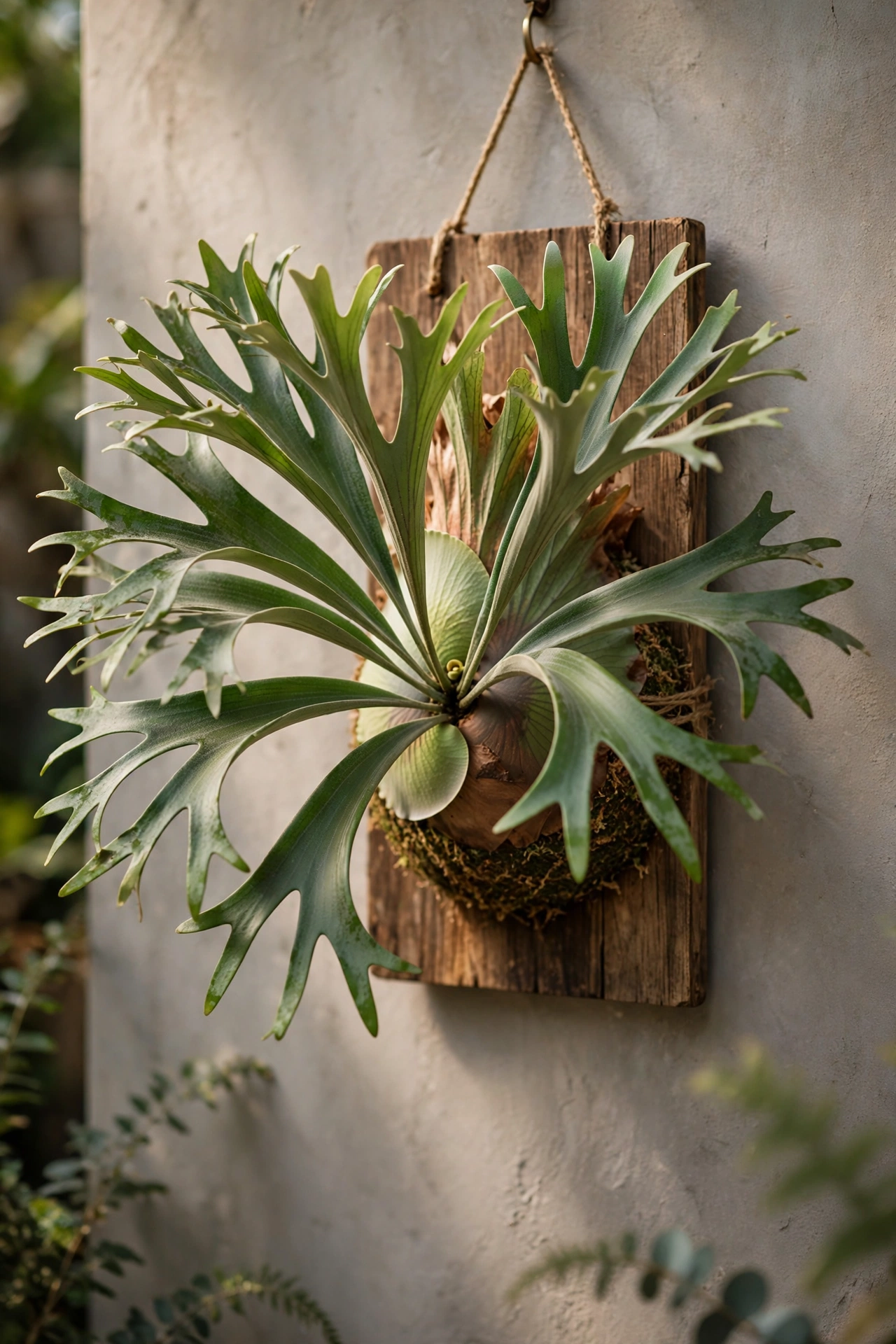
A staghorn fern grows on trees in the wild, so mounting one on a board copies its natural habit and makes a wall display no pot can match. Start with a cedar board about 12 by 18 inches, pad the center with damp sphagnum moss, set the fern’s root ball on it, and hold it in place with fishing line or soft wire looped over the base fronds. Hang it on a shaded wall with bright, indirect light, and soak the whole board in a bucket every 7 to 10 days instead of watering from above.
Try this: Mist the shield fronds lightly twice a week in dry rooms, and never cut the brown, papery shield fronds, since they protect the roots.
Difficulty: Moderate | Cost: $$
10. Glass terrarium fern garden
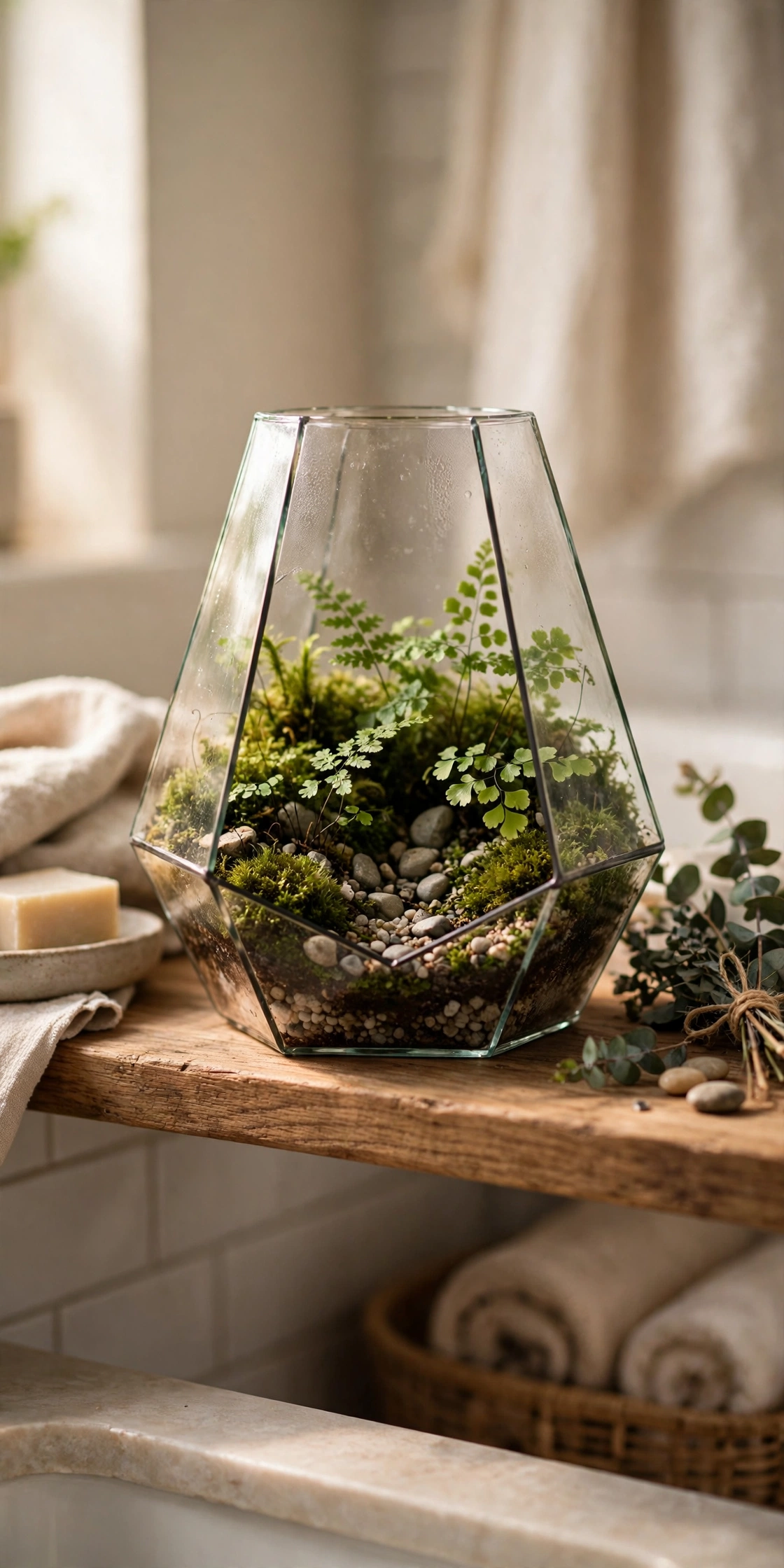
A glass terrarium suits miniature ferns that would get lost in a big pot, and it holds humidity on its own. Layer the bottom with half an inch of charcoal, then an inch of gravel, then 3 inches of loose potting mix with bark and perlite mixed in. Plant button ferns and small maidenhair divisions, add a patch of moss and a few pebbles, and set the terrarium where it gets bright, indirect light. Leave the lid ajar or open it for a couple of hours every few days, since sealed glass with no airflow grows mold fast.
Try this: Water with a spoonful at a time, not a watering can, since a terrarium has no drainage hole to release extra water.
Difficulty: Easy | Cost: $$
11. Self-watering double-pot fern

A double-pot setup keeps a fern watered while you travel, and it lets you use a pretty pot with no drainage hole. Set the fern, still in its nursery pot with holes, inside a larger watertight cachepot. Fill the gap at the bottom with 2 inches of pebbles and water, and keep the inner pot sitting above the water line, never submerged. The roots draw moisture up through the drainage holes, and you only need to top up the reservoir once a week. Refresh the reservoir water weekly so it never turns stale.
Try this: Check the reservoir with a finger each Sunday, and empty it fully once a month before refilling.
Difficulty: Easy | Cost: $$
12. Galvanized tub fern planter

An old galvanized tub holds two or three Boston ferns at once and suits a rustic porch better than a row of matching pots. Drill five half-inch drainage holes in the base before planting, and set the tub on bricks so water drains clear and air moves under it. Fill it with a loose mix of potting soil, bark, and perlite, and plant the ferns 12 inches apart so air flows between the fronds. Metal heats up in sun, so keep this planter in full shade and water it a day earlier than you think it needs.
Try this: Drop the ferns in their nursery pots into the tub and cover the gaps with moss, so you can lift each one out in fall.
Difficulty: Easy | Cost: $$
13. Shady window box ferns

A window box under a north-facing window stays cool enough for ferns that would crisp in a sunny box. Maidenhair ferns give the box its fine, lacy height, and golden creeping jenny trails over the front edge for color. Use a box at least 8 inches deep with drainage holes along the bottom, and line the inside with landscape fabric so soil stays in while water drains out. Window boxes dry out faster than ground pots in wind, so check the soil every morning in summer and water before the fronds droop.
Try this: Plant the maidenhair at the back of the box and the creeper at the front, so the trailer never shades out the fern.
Difficulty: Moderate | Cost: $$
14. Indoor fern shelf garden
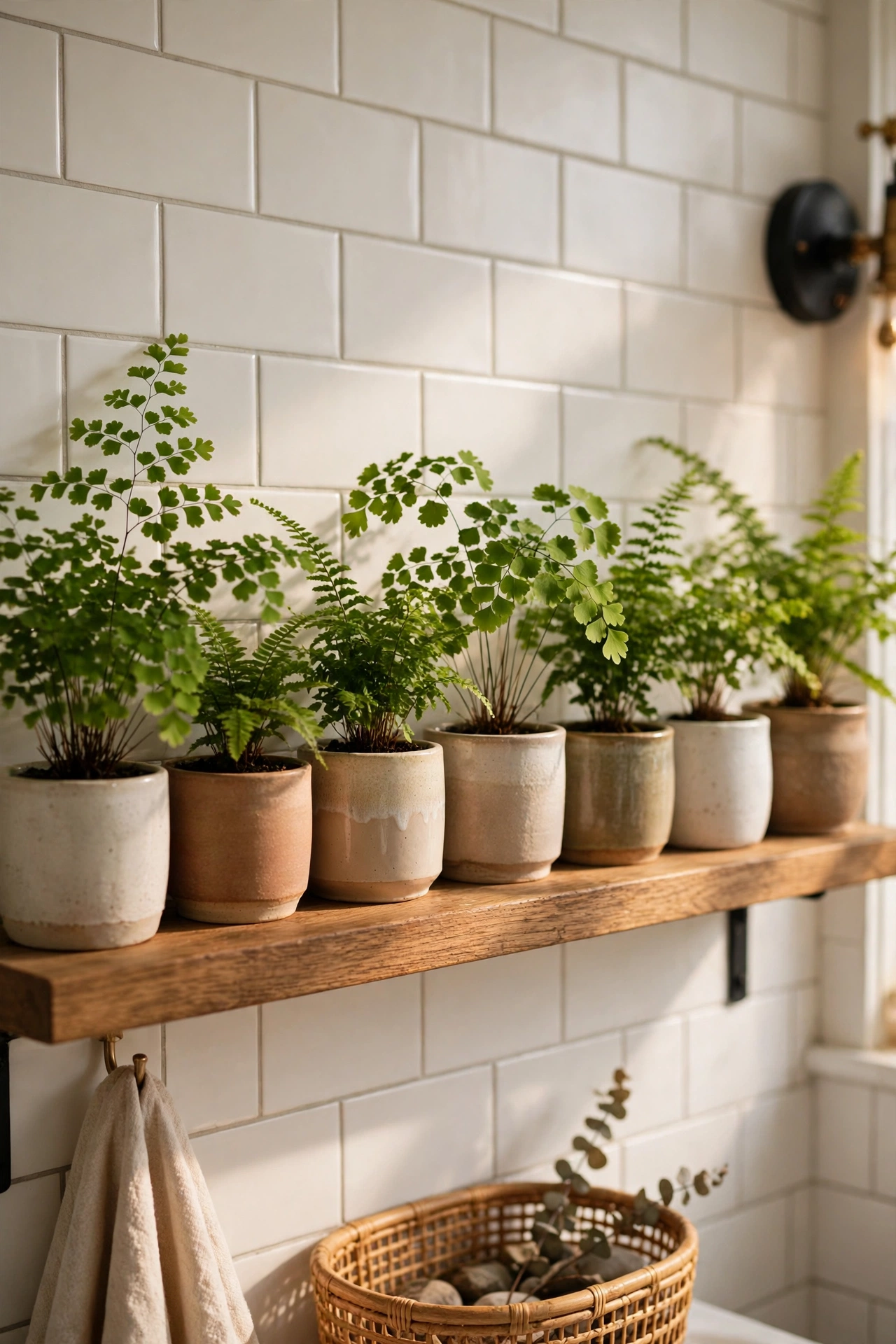
A bathroom shelf lined with small fern pots turns the most humid room in the house into a fern nursery. Button ferns, bird’s nest ferns, and rabbit’s foot ferns all stay compact in 4 to 6 inch ceramic pots, and the steam from daily showers keeps their fronds from browning at the tips. Set each pot on a pebble tray with water just below the pot base, and rotate the pots a quarter turn each week so growth stays even. Keep the shelf near a window with filtered light, not pressed against the glass.
Try this: Group three pots close together instead of spacing them out, since clustered leaves hold more moisture in the air.
Difficulty: Easy | Cost: $$
How to choose the right fern planter
Start with light. A north or east-facing spot with bright, indirect light suits almost every fern in this guide, while a south or west spot needs a solid roof or a sheer curtain between the plant and the sun. Next, weigh your watering habit honestly. If you travel or forget, pick the double-pot setup or a large pot that dries out slowly, and skip small hanging baskets that need daily water. Then check your winters. Tropical ferns like Boston and Kimberly Queen come inside before the first frost, while Japanese painted, autumn, and Christmas ferns survive cold winters in the ground in zones 5 to 8 and can stay out in pots with winter protection. Last, check the weight. A soaked hanging basket or a stone urn can pass 20 pounds, so hooks and brackets need ratings to match.
For the care basics behind these picks, the North Carolina Extension guide to Boston fern sets out its light, humidity, and soil needs in plain terms. For porch ferns in particular, Clemson Extension covers watering, soil, and feeding for the porch setting.
Read the North Carolina Extension Boston fern guide here: North Carolina Extension: Boston fern. Read the Clemson Extension porch fern guide here: Clemson Extension: How to grow and care for porch ferns.
Fern planter comparison table
| Idea | Cost | Difficulty | Best for |
|---|---|---|---|
| Hanging Boston fern basket | $25 to $45 | Easy | Covered porches |
| Flanking urns at the door | $60 to $120 | Easy | Formal entries |
| Tiered stand collection | $40 to $80 | Easy | Small shady corners |
| Wall pocket garden | $35 to $60 | Moderate | Blank patio walls |
| Porch rail planters | $30 to $55 | Easy | Porch edges |
| Macramé hanging fern | $20 to $35 | Easy | Apartments, bathrooms |
| Terracotta trio on steps | $45 to $75 | Easy | Patio steps |
| Fern and impatiens urn | $35 to $60 | Easy | Color in shade |
| Mounted staghorn board | $30 to $50 | Moderate | Wall displays |
| Glass terrarium garden | $25 to $45 | Easy | Desks, shelves |
| Self-watering double pot | $20 to $35 | Easy | Travelers, beginners |
| Galvanized tub planter | $40 to $70 | Easy | Rustic porches |
| Shady window box | $35 to $55 | Moderate | North windows |
| Indoor fern shelf garden | $30 to $50 | Easy | Bathrooms, shelves |
Common mistakes to avoid
No drainage holes. A pot with no way out for water drowns fern roots within days. Drill holes, or use the pot as a cachepot with a holed nursery pot inside.
Afternoon sun. Hot, direct sun scorches fronds fast, and the damage does not heal. Morning sun or bright, indirect light suits nearly every fern in this guide.
Letting the soil dry out fully. Ferns wilt and brown at the tips when the mix dries right through. Water when the top inch feels dry, before the whole pot dries.
Burying the crown. Planting a fern deeper than it grew in its nursery pot rots the crown where fronds emerge. Keep the crown at the same level, or a touch above the soil line.
A pot far too big. A small fern in a huge pot sits in wet soil its roots cannot reach, and the edges stay soggy. Move up only one pot size at a time.
Leaving tropical ferns out in frost. Boston and Kimberly Queen ferns die back in a hard frost. Bring them inside before nighttime temperatures drop near freezing.
Misting at night. Wet leaves overnight invite fungal spots. Mist in the morning so fronds dry during the day.
More garden ideas
For rustic porch styling around your ferns, see these rustic porch planters ideas.
If you like the galvanized tub look, these repurposed planter ideas show more second-life containers for the garden.
For more ways to plant a blank wall, these DIY wall planter ideas cover pockets, shelves, and mounted planters.
For the wider container setup behind these planters, these container gardening on patio ideas help with soil, layout, and watering.
For shade-tolerant plants to pair with ferns in larger beds, these tall shade plants add height behind low fern pots.
Frequently asked questions
What ferns grow best in planters?
Boston ferns suit hanging baskets and large pots, Kimberly Queen ferns suit upright urns and entries, and Japanese painted, autumn, and Christmas ferns suit year-round outdoor pots in cold climates. For small indoor pots, button ferns, bird’s nest ferns, and rabbit’s foot ferns stay compact. Match the fern to your light and your winters first, and let looks come second.
How often should I water ferns in pots?
Water when the top inch of mix feels dry, which runs every 1 to 3 days in summer for most outdoor pots. Hanging baskets and small pots may need water daily when temperatures pass 75 degrees. Soak until water drains from the bottom holes, then empty the saucer so the pot never sits in standing water.
Do fern planters need drainage holes?
Yes, always. Ferns want soil that stays evenly moist, not soil that stays wet. Without drainage holes, water pools at the base and roots rot. If a decorative pot has no holes, use it as a cachepot and keep the fern in a nursery pot with holes inside it.
Can ferns stay outside in winter?
It depends on the type. Tropical ferns like Boston and Kimberly Queen must come inside before frost, since they grow outdoors year-round only in zones 9 to 11. Hardy ferns like Japanese painted, autumn, and Christmas ferns survive cold winters in zones 5 to 8, but pots still need shelter from hard freezes and drying wind.
Are ferns safe around pets?
True ferns like Boston, maidenhair, and bird’s nest ferns are listed as non-toxic to cats and dogs by the ASPCA, so a nibbled frond is not a poisoning risk. Watch out for lookalikes: asparagus fern is not a true fern and is toxic to pets. Check the botanical name on the tag before you buy, since common names can mislead.
Final thoughts
Start with one planter and one fern that fits your light, and let the watering rhythm settle before you add more. My north-facing porch went from empty to full in a single season that way, one basket at a time, and the ferns now do the decorating work that flowers never could in that shade.
For planters dedicated to succulents instead of ferns, see these succulent planter ideas.
For dog water bowl planter ideas, see our guide to 20 Dog Water Bowl Planter Ideas for a Tidy, Leafy Drinking Spot for a classic succulent center-bowl planter, a raised wooden crate station, a self-watering wick planter, a splash-catching pebble tray, and a herb garden water station.


