



The container matters as much as the plant. A flat of petunias looks ordinary in a plastic nursery pot and downright charming in a whiskey barrel or a dented galvanized bucket, and the vessel sets the whole tone of the porch.
This guide covers 20 rustic porch planter ideas, every one a different vessel, from whiskey barrels and horse troughs to suitcases and chicken feeders. I have planted in most of these over the years (the wheelbarrow was my kids’ favorite), and each idea below tells you what grows well in it, how to handle drainage, and what it costs. This one is all about the containers; for full porch styling, see our companion guide.
- Every vessel needs drainage: drill holes or add a 2 inch gravel layer, since soggy roots kill more porch plants than anything else.
- Match the plant to the container size: shallow vessels suit herbs and succulents, deep ones suit tomatoes and small shrubs.
- Line porous wood and metal with landscape fabric to slow rot and rust while letting water through.
- Soil is heavy (about 75 pounds per cubic foot wet): confirm your porch floor can carry big barrels and troughs.
- Many rustic vessels are free or under $30 at flea markets, which leaves the budget for good potting soil.
1. Half whiskey barrel planter

The half whiskey barrel is the undisputed king of rustic planters. At about 26 inches across, it holds enough soil for a full thriller-filler-spiller arrangement: a grass or salvia in the center, petunias around it, sweet potato vine trailing over the edge. Real oak halves cost $40 to $80; resin lookalikes run $30 to $50 and weigh far less. Drill six half-inch drainage holes if yours lacks them.
Try this: set the barrel on bricks so water drains freely and the wood dries between waterings.
Cost: $$· Difficulty: Easy
2. Galvanized oval wash tub

An oval galvanized wash tub, about 2 feet long, makes a generous planter with instant farmhouse credibility. Plant it with white daisies, dusty miller, and trailing lobelia for a classic look. Vintage tubs cost $25 to $60 at flea markets. Drill drainage holes in the bottom and line the inside with landscape fabric so soil does not wash through the holes.
Try this: plant a single color family (all whites, all reds) for a tub that looks designed rather than random.
Cost: $$· Difficulty: Easy
3. Wooden horse trough
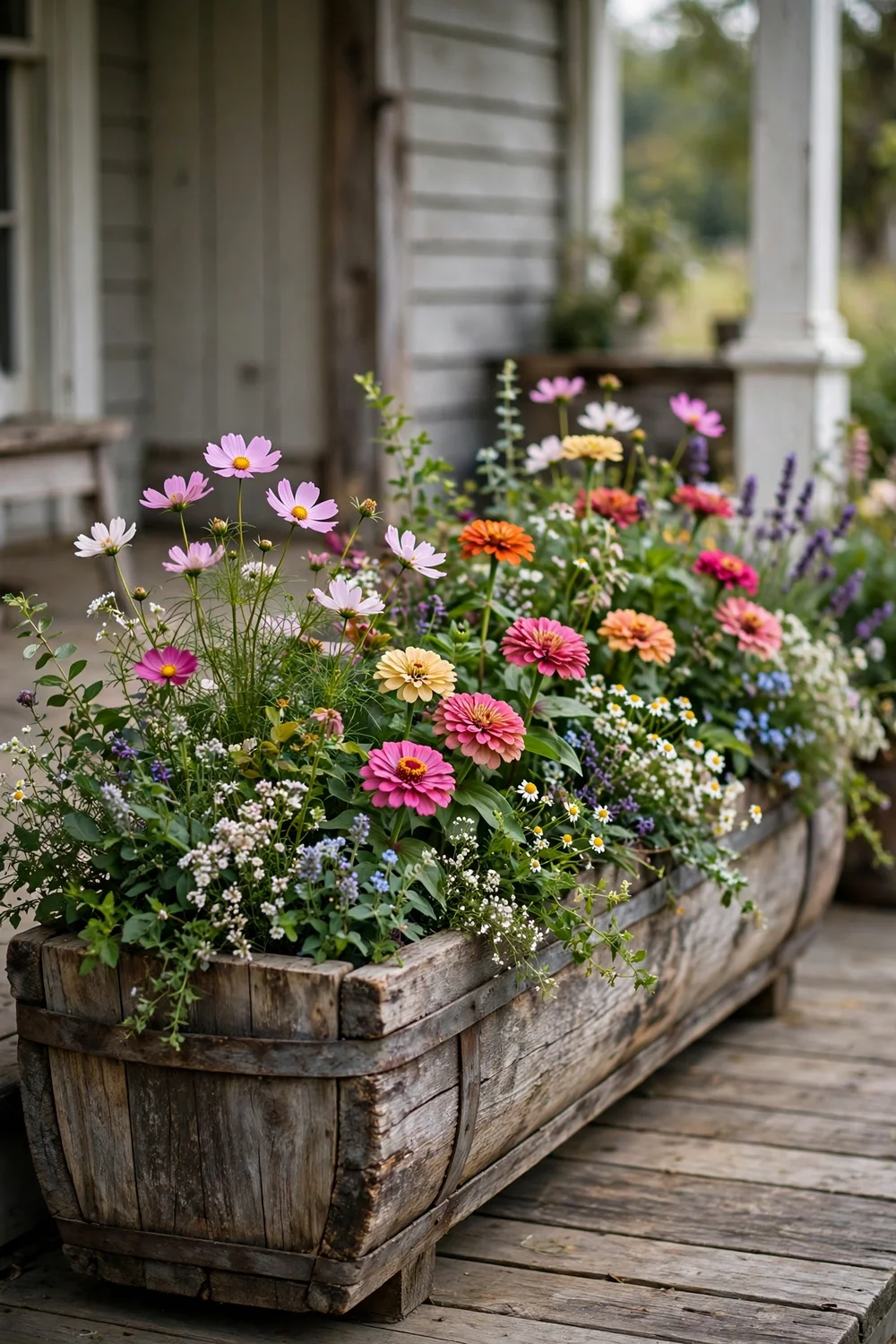
A 3 to 4 foot wooden horse trough becomes a long, low flower bed right on the porch. Fill it with a cottage mix: zinnias, cosmos, marigolds, and dill for height. Used troughs run $60 to $150; seal the inside with linseed oil to slow rot. A trough this size holds over 100 pounds of wet soil, so place it against a load-bearing wall, not mid-span on an old porch floor.
Try this: plant in a repeating pattern (tall, medium, trailing) so the long trough reads as one composition.
Cost: $$$· Difficulty: Easy
4. Wooden apple crate
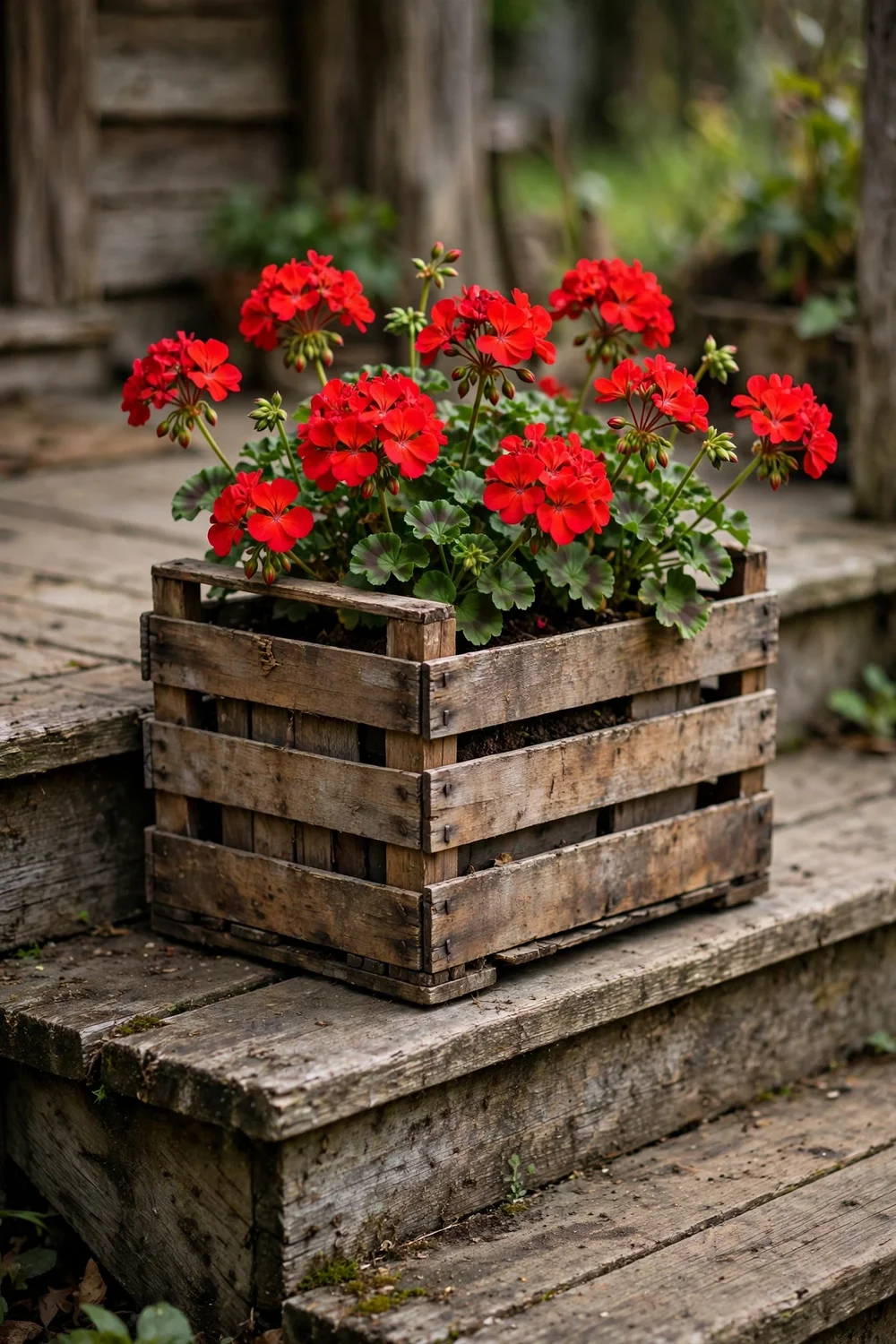
A weathered apple crate, roughly 18 by 12 inches, is the right size for a bold cluster of red geraniums or a dozen pansies. Line it with a cut-to-fit coco liner or landscape fabric, then add potting soil. Crates cost $10 to $25 at antique malls. The slats drain naturally, so this is one of the few vessels that rarely needs drilled holes.
Try this: stack two crates in an L shape for a stepped display that fits a porch corner.
Cost: $$· Difficulty: Easy
5. Vintage watering can
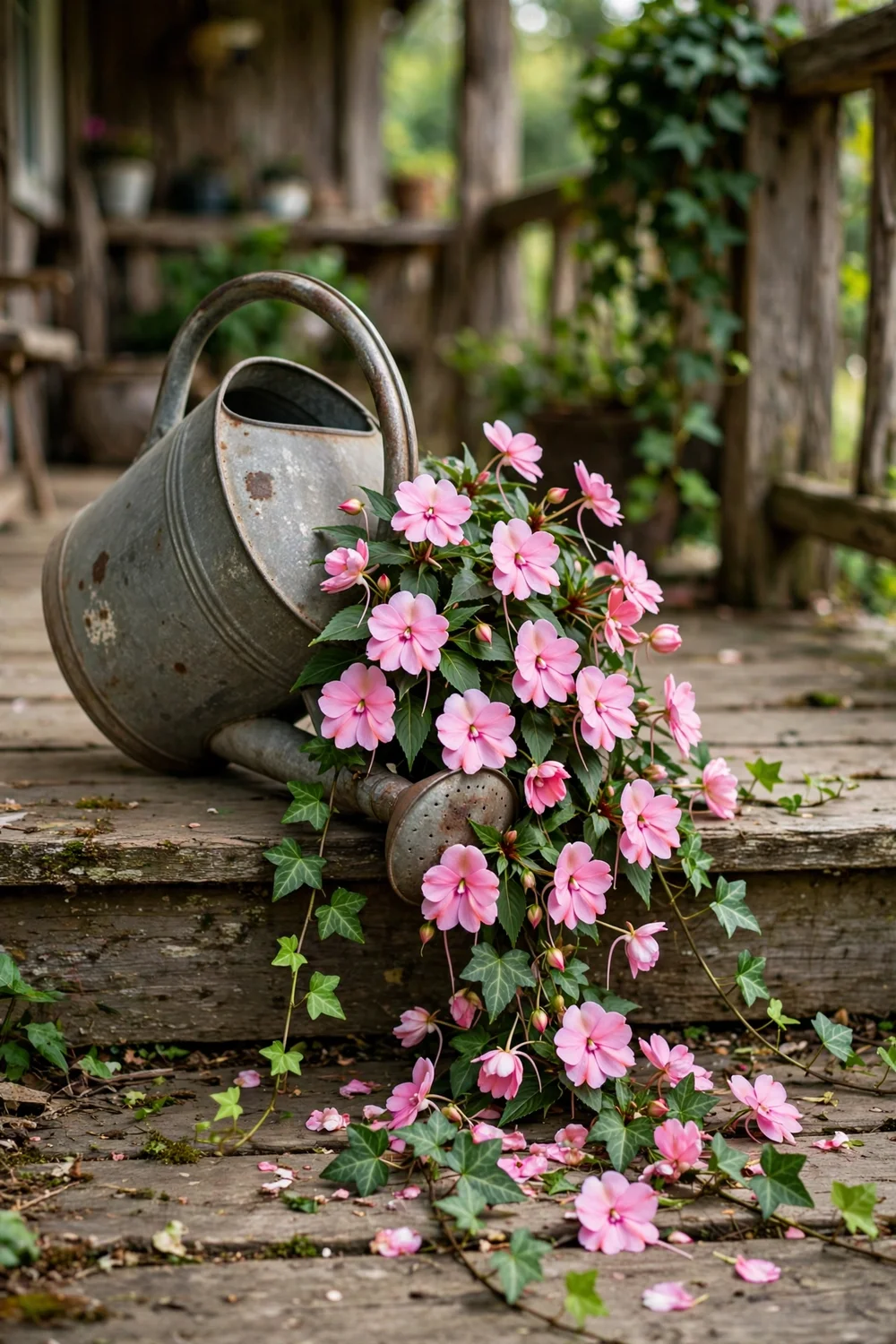
An old metal watering can, planted rather than used for watering, is pure porch charm. Tip it on its side with trailing plants (ivy, string of pearls, impatiens) spilling from the spout as if water were pouring out. Cans cost $15 to $40 at flea markets. Drill two small holes in the lowest point for drainage and keep the planting light, since the can holds little soil.
Try this: the tipped-over “pouring” arrangement photographs better than an upright can every time.
Cost: $$· Difficulty: Easy
6. Galvanized bucket
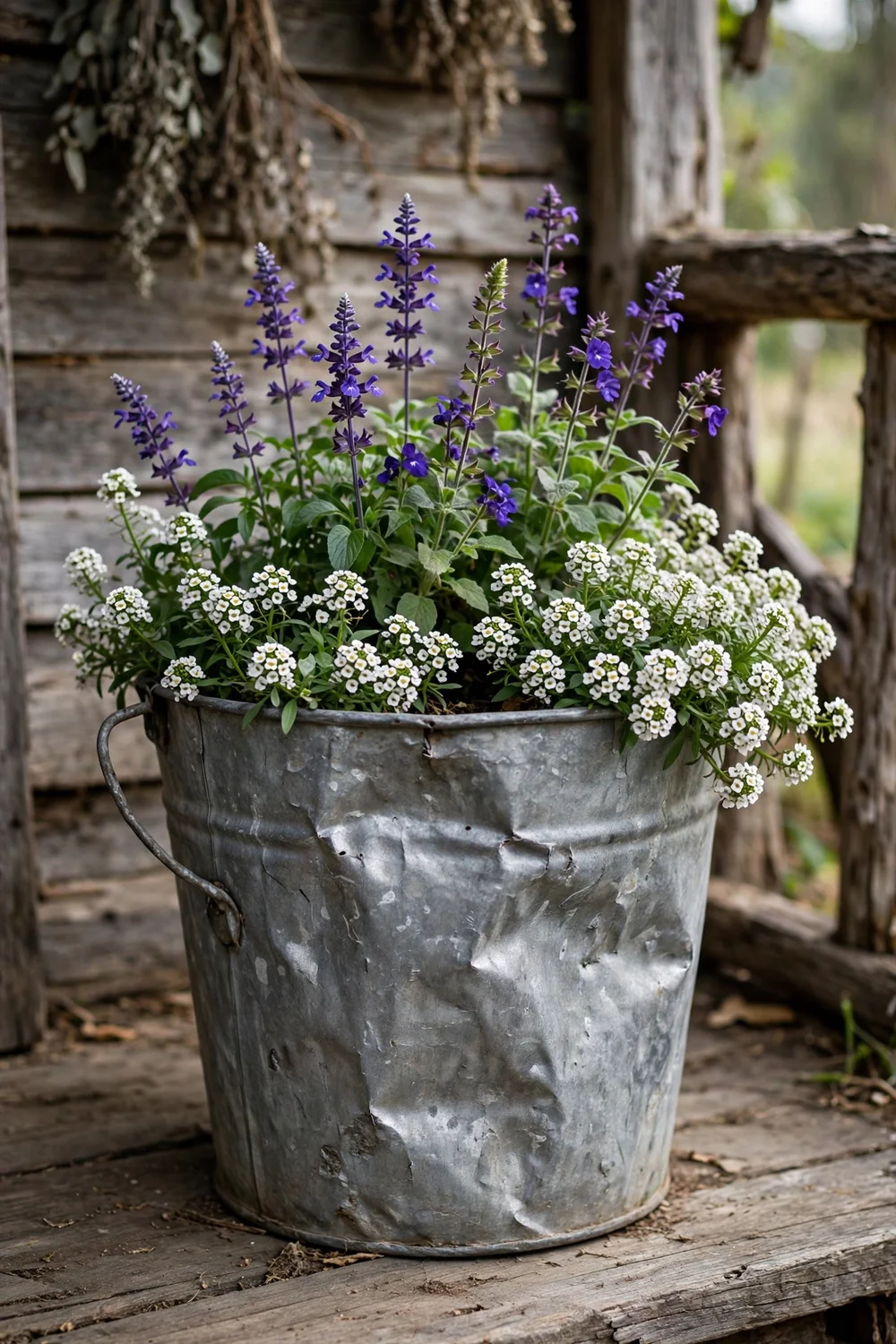
A dented galvanized bucket, 3 to 5 gallons, is the workhorse of rustic porch planting. Fill with purple salvia, white alyssum, and a spike dracaena in the center. Buckets cost $8 to $20 new and less used. The dents are a feature, not a flaw. Drill four quarter-inch holes in the bottom and set the bucket on a saucer or bricks.
Try this: group three buckets of different heights together for a cluster with more presence than one.
Cost: $$· Difficulty: Easy
7. Old wheelbarrow

An old single-wheel wheelbarrow overflowing with wildflowers is a showpiece. Line the basin with landscape fabric, add 4 to 6 inches of soil, and sow a wildflower mix or plant low growers like portulaca and alyssum. Non-working wheelbarrows sell for $30 to $80. Park it where the wheel chock keeps it from rolling, and deadhead monthly to keep the show going.
Try this: let nasturtiums trail over the front edge; their round leaves suit the rusty metal.
Cost: $$· Difficulty: Easy
8. Wooden pallet vertical planter

A wooden pallet stood upright and planted in its slats turns a 4 square foot wall into a garden. Staple landscape fabric into pockets behind the slats, fill with soil, and plant herbs, strawberries, or succulents. Heat-treated (HT-stamped) pallets are free behind many stores. Anchor the pallet to the wall with two brackets so wind cannot topple it.
Try this: plant the top slat with trailing rosemary so greenery spills over the frame.
Cost: $$· Difficulty: Medium
9. Hollowed log
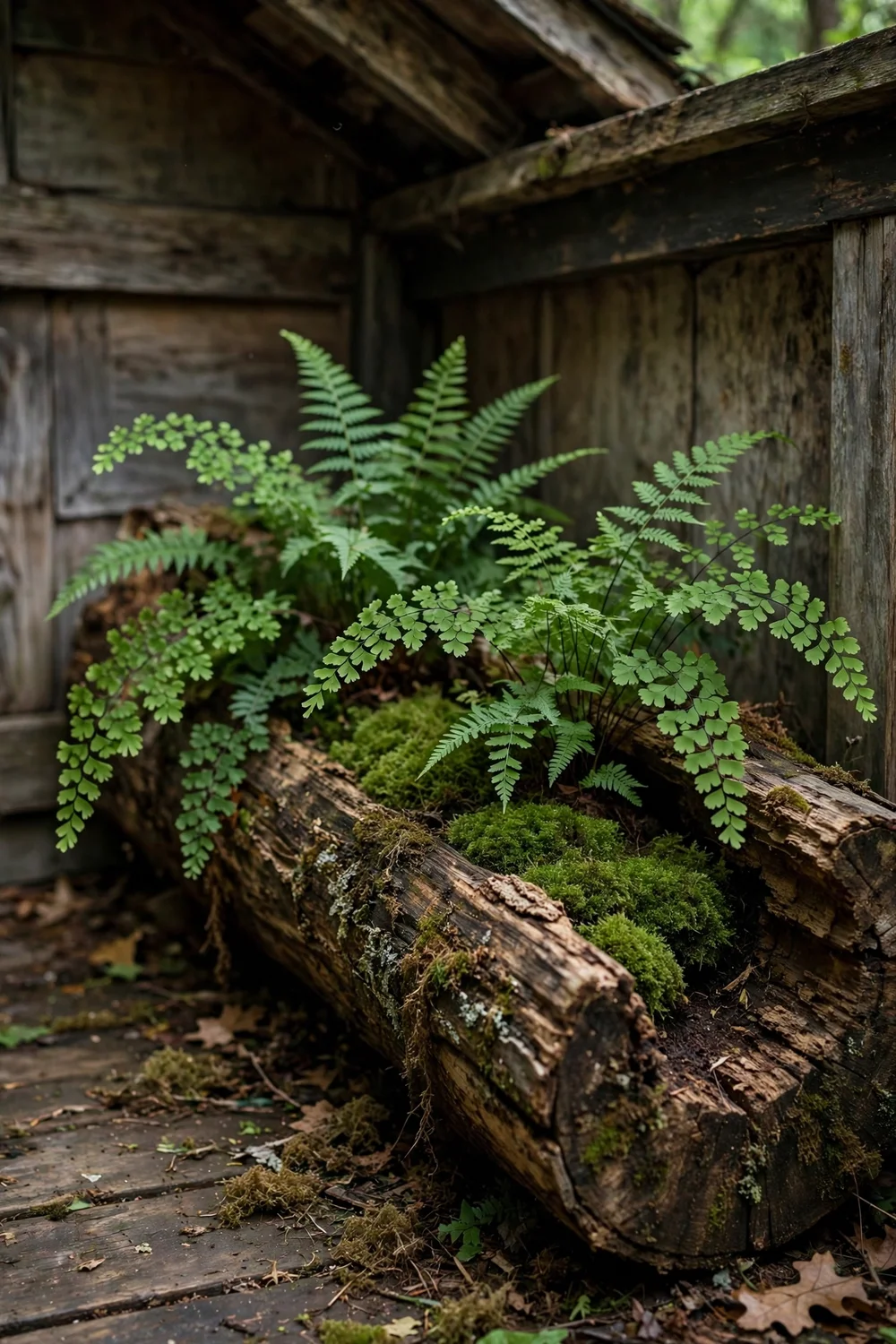
A hollowed log, 2 to 3 feet long, makes a planter that looks like the forest put it there. Fill the cavity with moss, ferns, and impatiens for a shade-loving arrangement. Fallen logs are free if you have woods nearby; hollowed log planters sell for $25 to $60. The wood will keep rotting (that is part of the charm), so expect 2 to 3 seasons from one log.
Try this: nestle the log in a shady porch corner where ferns thrive and the wood stays damp longer.
Cost: $$· Difficulty: Easy
10. Wicker basket with liner
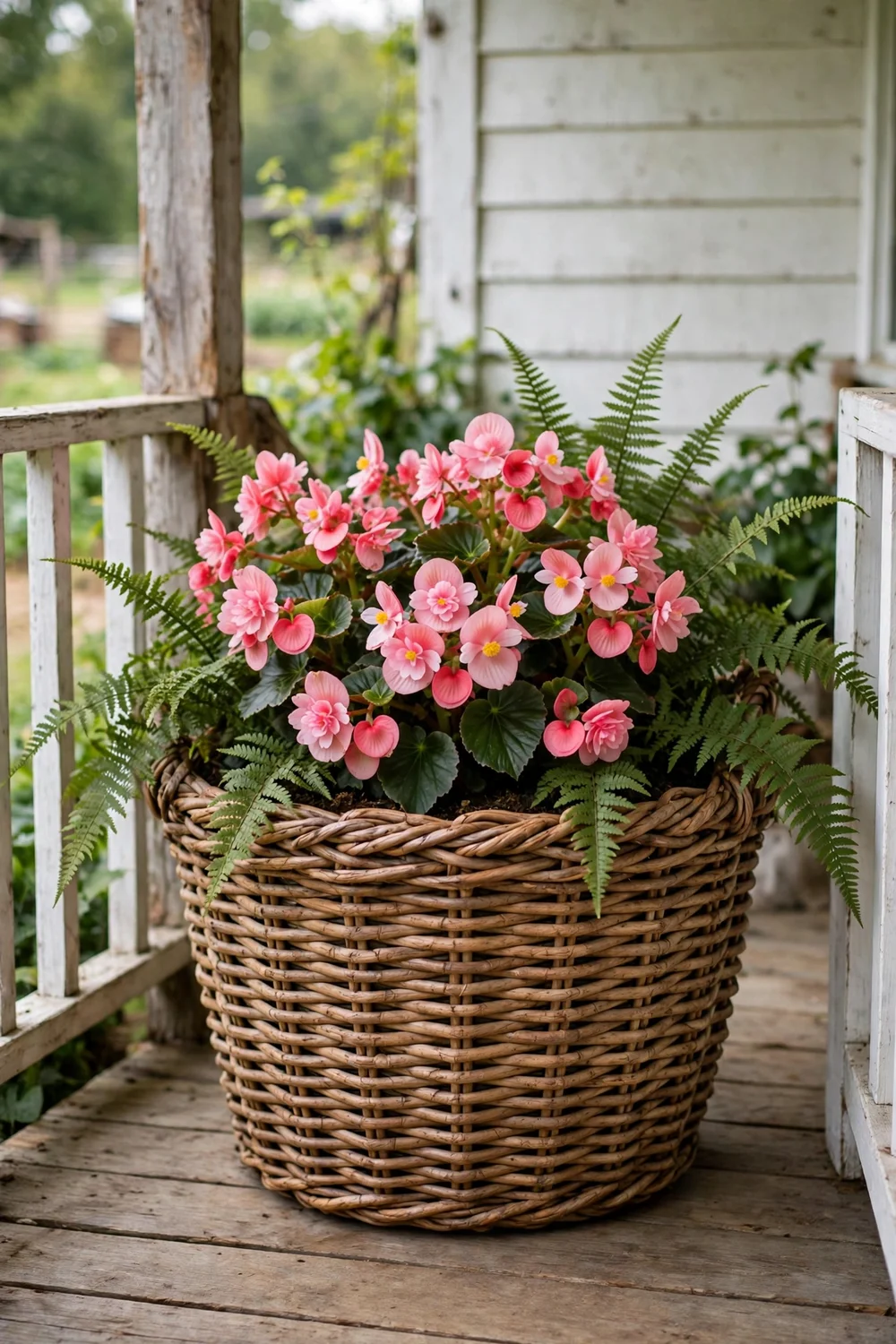
A large wicker basket with a fitted coco liner softens the look of any porch corner. Plant pink begonias, coleus, or ferns; the basket weave hides the liner completely. Baskets cost $15 to $35, liners $5 to $10. Set a plastic saucer inside the liner before planting, because water will find its way through wicker onto your porch floor.
Try this: choose a basket with handles for easy carrying when you rearrange the porch.
Cost: $$· Difficulty: Easy
11. Copper bucket
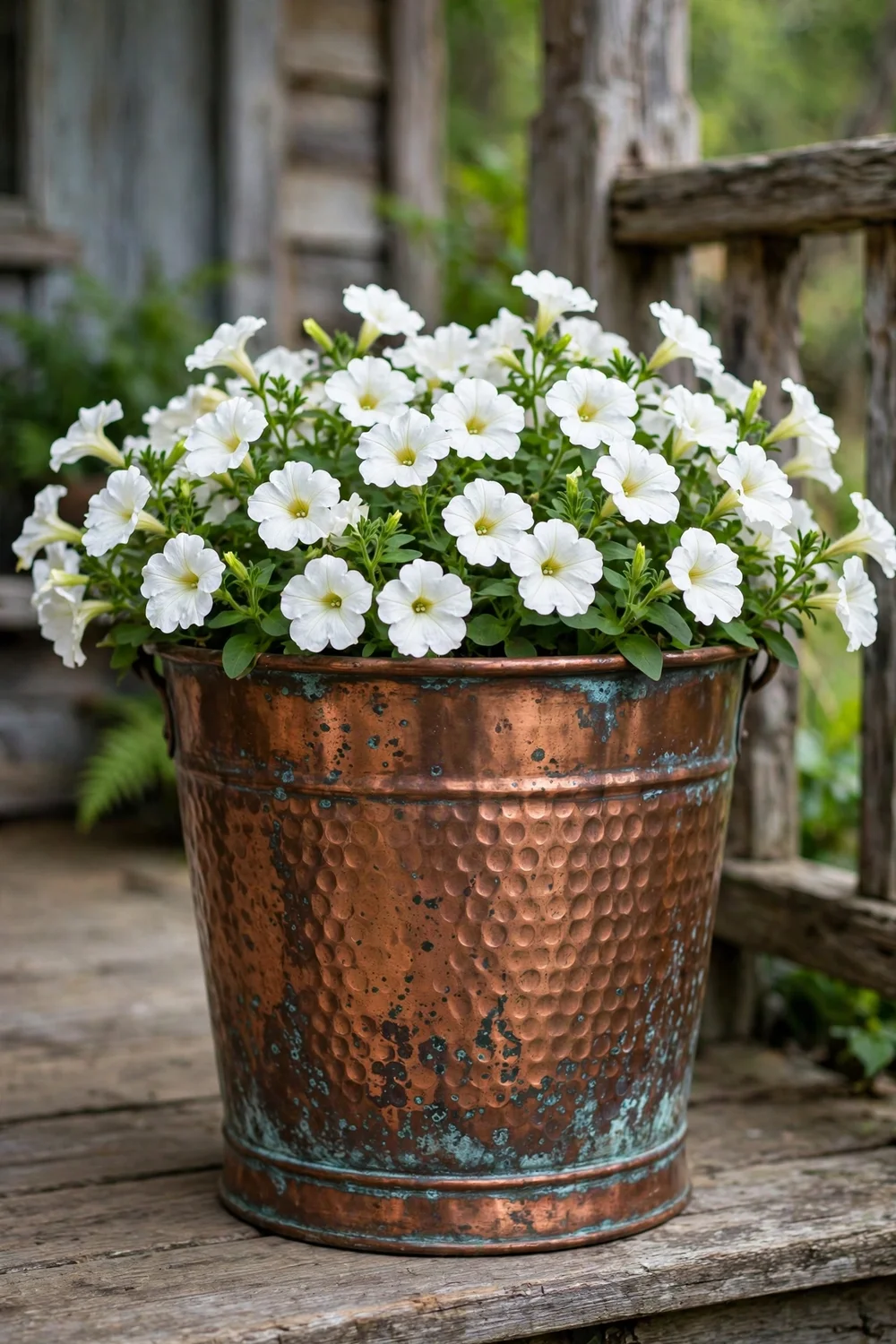
A hammered copper bucket lifts the whole rustic palette, especially planted with white petunias or bacopa that glow against the metal. Copper develops a rich patina outdoors; buckets cost $25 to $60. Copper heats up in direct sun, so this planter suits a shaded porch or heat-tolerant plants like lantana. Drill drainage holes with a metal bit.
Try this: let the patina develop naturally instead of polishing; the aged finish suits the rustic theme.
Cost: $$· Difficulty: Easy
12. Enamelware basin
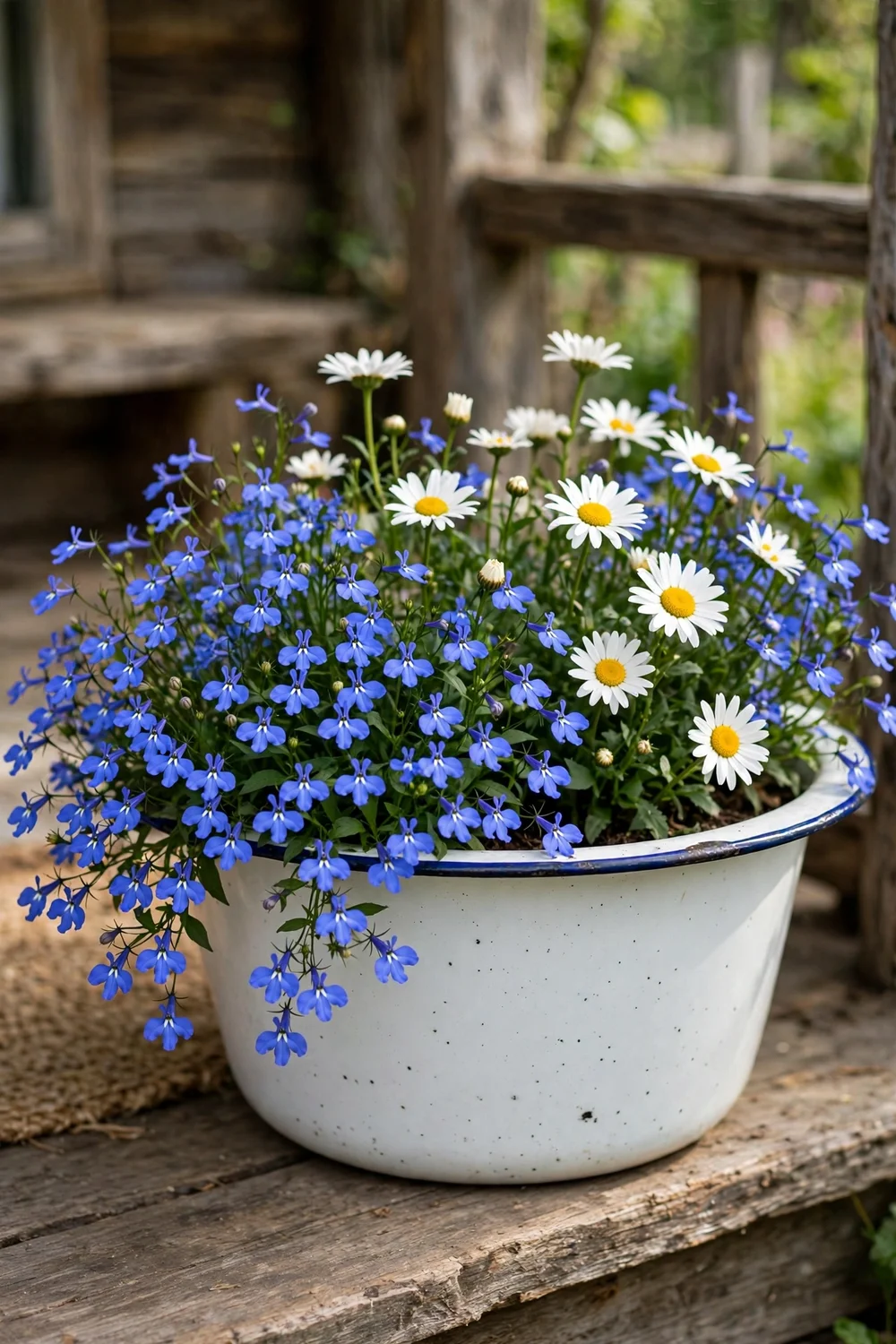
A white enamelware basin with a blue rim, planted with blue lobelia and white daisies, is vintage kitchen charm moved outdoors. Basins run $15 to $35 at antique shops. The enamel chips over time; seal chips with clear nail polish to slow rust. Shallow basins suit low growers, so skip anything with deep roots.
Try this: match the basin’s rim color to one flower in the planting for a coordinated look.
Cost: $$· Difficulty: Easy
13. Burlap-wrapped terracotta

Plain terracotta pots wrapped in burlap and tied with twine cost almost nothing and look entirely intentional. Wrap a 10 inch pot in a burlap square, secure with jute twine, and plant yellow marigolds or herbs. Pots are $5 to $12; burlap is a few dollars a yard. The burlap wicks moisture, so these pots dry faster and need more frequent watering.
Try this: double-wrap the burlap so the terracotta color does not show through the weave.
Cost: $$· Difficulty: Easy
14. Vintage suitcase

An open vintage suitcase, lined with plastic and planted with succulents, is the conversation piece of any porch. Line the case with a cut trash bag, poke drainage slits, add 3 inches of cactus mix, and arrange echeveria, sedum, and hens-and-chicks. Suitcases cost $15 to $40 at thrift stores. Prop the lid open with a stick so it stays upright in wind.
Try this: succulents need almost no water, which protects the old case from rot.
Cost: $$· Difficulty: Easy
15. Old dresser drawer

A deep dresser drawer on short legs becomes a raised planter at a comfortable working height. Screw on four 6 inch legs, drill drainage holes, line with fabric, and plant trailing sweet potato vine with upright coleus. Drawers are often free from discarded dressers. The raised height also keeps curious dogs from digging in the soil.
Try this: paint the drawer exterior with exterior paint but leave the wood inside natural under the liner.
Cost: $$· Difficulty: Medium
16. Burlap feed sack

A burlap feed sack, folded down to a 12 inch cuff and filled with soil, makes a surprisingly good grow bag for cherry tomatoes or potatoes. Sacks cost $3 to $8 at feed stores. Roll the cuff as the plant grows and add more soil, the same technique as potato towers. The burlap breathes, so roots stay healthy, but water daily in summer heat.
Try this: set the sack inside a shallow tray to catch drainage on a wood porch floor.
Cost: $· Difficulty: Easy
17. Metal chicken feeder
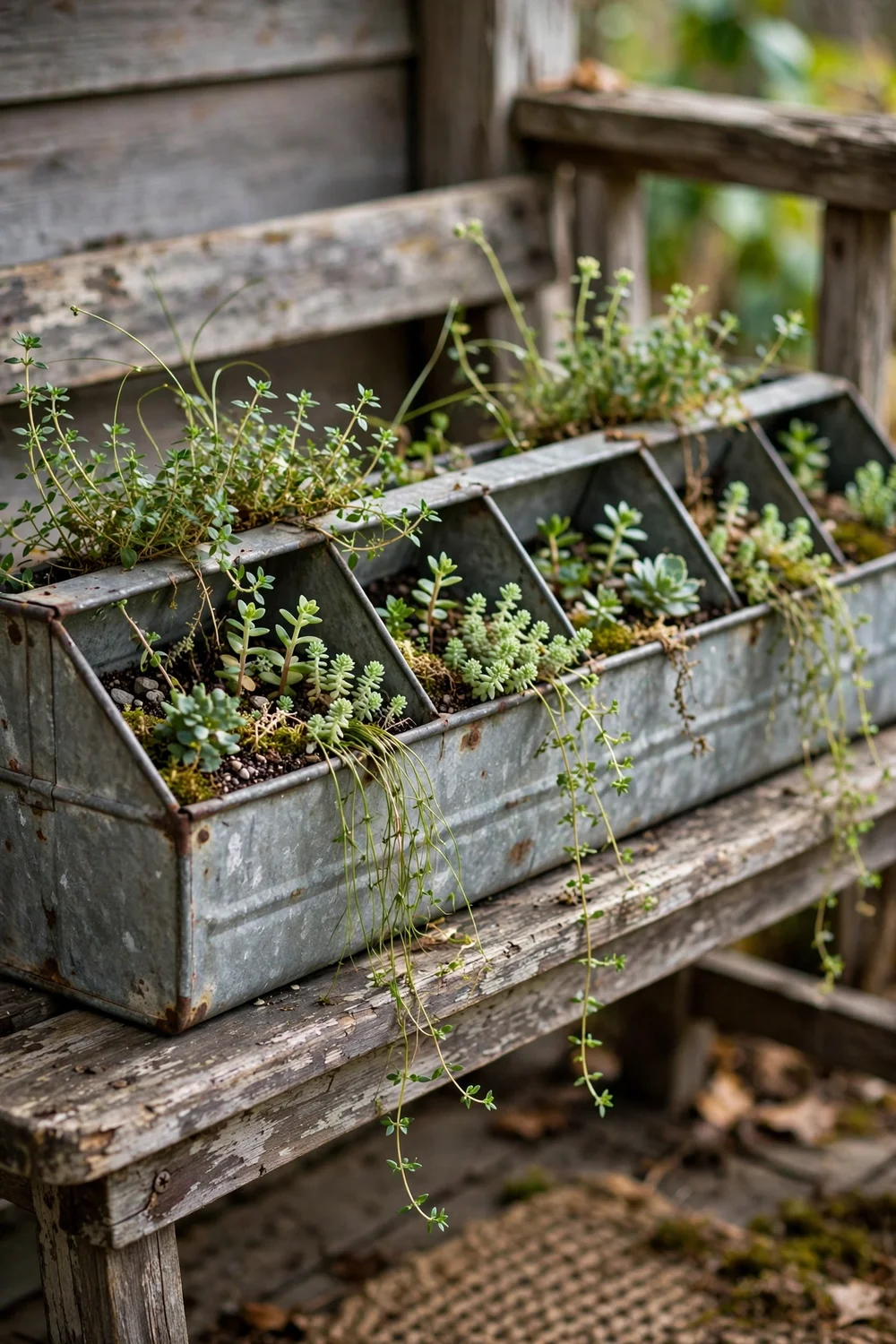
A long galvanized chicken feeder, with its divided compartments, is made for a row of small plants. Fill each section with trailing thyme, sedum, or hens-and-chicks for a living trough that costs $20 to $45 at farm supply stores. The compartments already drain through their seams, but add a gravel layer anyway. Hang it on wall brackets or set it on a bench.
Try this: plant kitchen herbs in the feeder and hang it by the door for snipping while you cook.
Cost: $$· Difficulty: Easy
18. Wooden toolbox
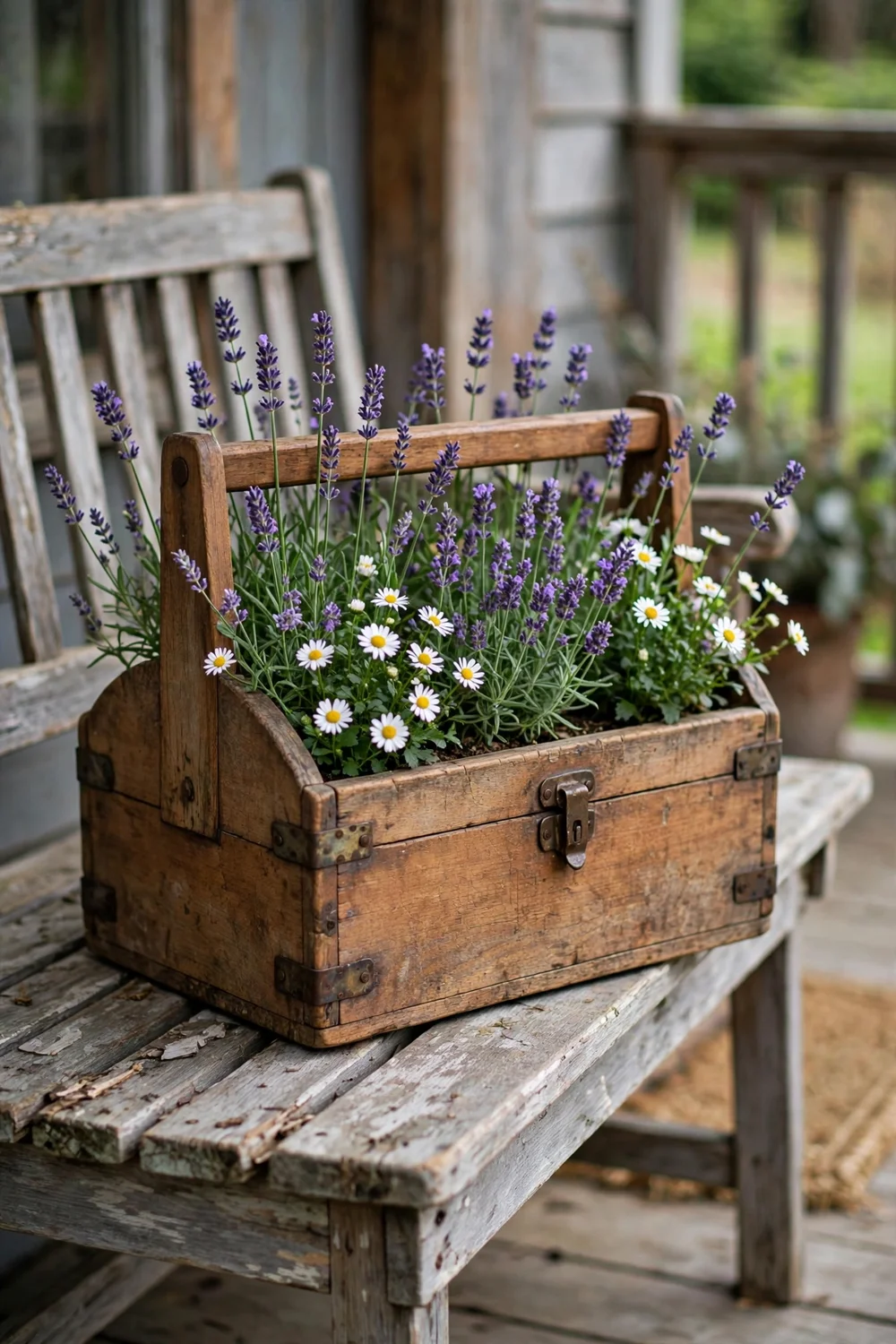
A wooden carpenter’s toolbox with its handle intact makes a narrow planter for a bench or step. Plant lavender and small white daisies; the handle makes it easy to carry inside before a frost. Toolboxes cost $15 to $35 at flea markets. Drill three holes in the bottom and line with fabric, since old toolboxes were never meant to hold wet soil.
Try this: the built-in handle means this is the easiest planter to move for sun or storms.
Cost: $$· Difficulty: Easy
19. Vintage olive bucket
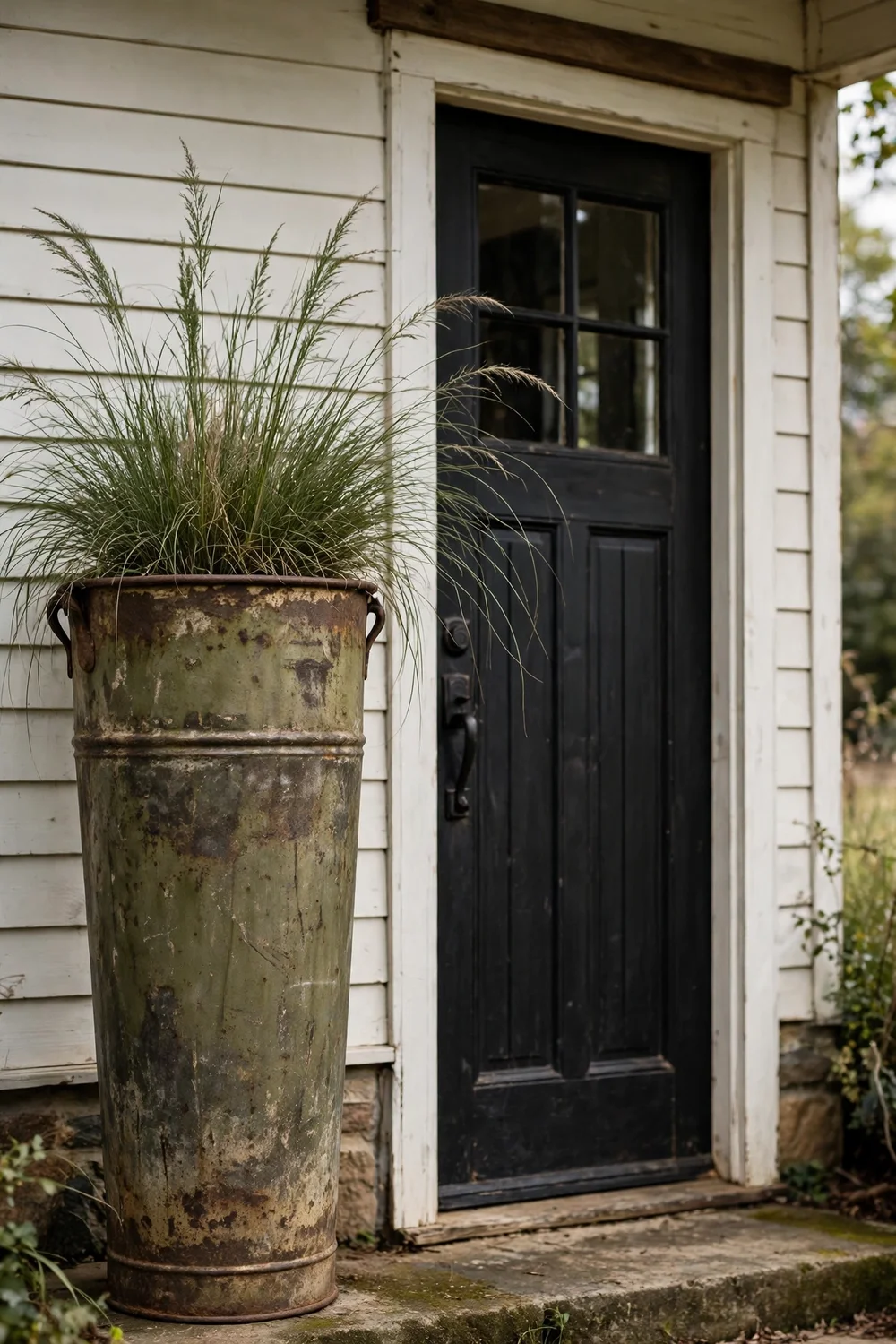
A tall olive bucket with faded lettering brings European farmhouse flavor to the porch. Its height suits ornamental grasses, tall salvia, or a small bay laurel. Reproductions cost $25 to $50; authentic French buckets run higher. The tall narrow shape dries out fast, so mulch the top 2 inches with bark to hold moisture.
Try this: one tall grass in an olive bucket flanks a door better than a fussy mixed planting.
Cost: $$· Difficulty: Easy
20. Miniature wooden wagon

A miniature wooden wagon, about 2 feet long, filled with miniature roses or a wildflower mix, is pure country nostalgia. Decorative wagons cost $30 to $70 at craft stores and garden centers. Line the bed with plastic (with drainage slits) so the thin wood survives more than one season. The handle lets you pull it into shade on scorching days.
Try this: plant one rose variety per wagon for a tidy look instead of a mixed jumble.
Cost: $$· Difficulty: Easy
Rustic planter vessels at a glance
Match the vessel to your plants and your porch’s weight limits before you buy soil. Wet soil is the hidden cost of every big planter.
Safety notes before you plant
Big planters are heavy. Wet potting soil weighs around 75 pounds per cubic foot, so a filled whiskey barrel or horse trough can pass 150 pounds. Place heavy vessels against a load-bearing wall or over a support beam, and check older porch floors for soft spots before loading them. If you need to dig post holes for a pallet planter or a wagon display near the porch, call 811 first: call811.com connects you to your local utility locator so you do not hit a buried line.
Several classic porch plants are toxic to pets: mums, hydrangeas, and many bulbs appear on the ASPCA’s toxic plant list, so keep those planters out of chewing range or choose pet-safe alternatives like Boston ferns and African violets. For container growing basics, NC State Extension’s container gardening guide covers soil mixes and watering in detail.
For the rest of the porch (furniture, signage, lighting, textiles), see our companion guide to rustic country front porch decor.
Frequently asked questions
Do I need drainage holes in every rustic planter?
Almost always, yes. Standing water rots roots faster than any other mistake. Drill holes in metal and plastic, rely on slat gaps in crates and pallets, and add a 2 inch gravel layer under the soil in vessels you cannot drill. The only exception is a lined basket with a saucer you empty after watering.
What is the cheapest rustic planter vessel?
Heat-treated pallets and discarded dresser drawers are often free, and burlap feed sacks cost $3 to $8. Flea-market buckets, crates, and watering cans usually run $10 to $25. Spend the savings on quality potting mix, which matters more to the plants than the container does.
How do I keep a whiskey barrel from rotting?
Raise it on bricks for airflow, drill generous drainage holes, and line the inside with landscape fabric to separate soil from wood. A coat of linseed oil on the outside each spring helps. Even with care, expect 5 to 8 years from an oak barrel used as a planter.
Which rustic planters are safe around dogs?
The vessel is rarely the problem; the plant is. Avoid mums, hydrangeas, and most spring bulbs in low planters a dog can reach, and check the ASPCA’s toxic plant list before planting. Raised vessels like the dresser drawer or a wall-hung pallet keep tempting plants above nose level.
Can I leave rustic planters out all winter?
Wood, metal, and enamelware vessels survive winter fine, but empty them or switch to cold-hardy plants like ornamental kale. Water expands as it freezes and can crack rigid containers, so tip small vessels on their sides or store them under cover in freezing climates.
Start with one vessel that makes you smile every time you walk past it, then build out from there. A whiskey barrel by the door or a watering can on the steps is enough to set the tone. When you are ready to choose what goes inside, our plants for your home entrance guide covers 10 reliable picks, and purple perennials add color that comes back every year. If edibles appeal to you, raised vegetable garden ideas pair well with barrel and trough planters.
For the fern version of porch planters, see these fern planter ideas.
For the full porch look on a budget, see these rustic porch decor ideas on a budget.


