



Modern backyard landscaping looks simple, but it runs on discipline: clean lines, a short material list, and every element earning its place. Get those right and even a plain rectangle of grass becomes a space that feels designed.
These 25 modern backyard landscaping ideas cover the moves that matter most, from geometric patios and architectural planting to lighting and water. I borrowed the grid-paver trick for our own patio two summers ago, and it changed how the whole yard reads from the kitchen window. Pick the ideas that fit your budget and build them in any order.
Quick takeaways
- Restraint is the style. Two materials and one plant repeated beat a dozen mixed elements.
- Geometry does the decorating: grids, straight lines, and right angles read as modern instantly.
- Light the yard like a room. Uplights, step lights, and string grids extend usable hours.
- Call 811 before any digging, hire licensed pros for gas and electric, and keep fire features 10 feet from structures.
- Native and drought-tolerant plants cut water and upkeep without softening the modern look.
1. Lay a geometric grid paver patio
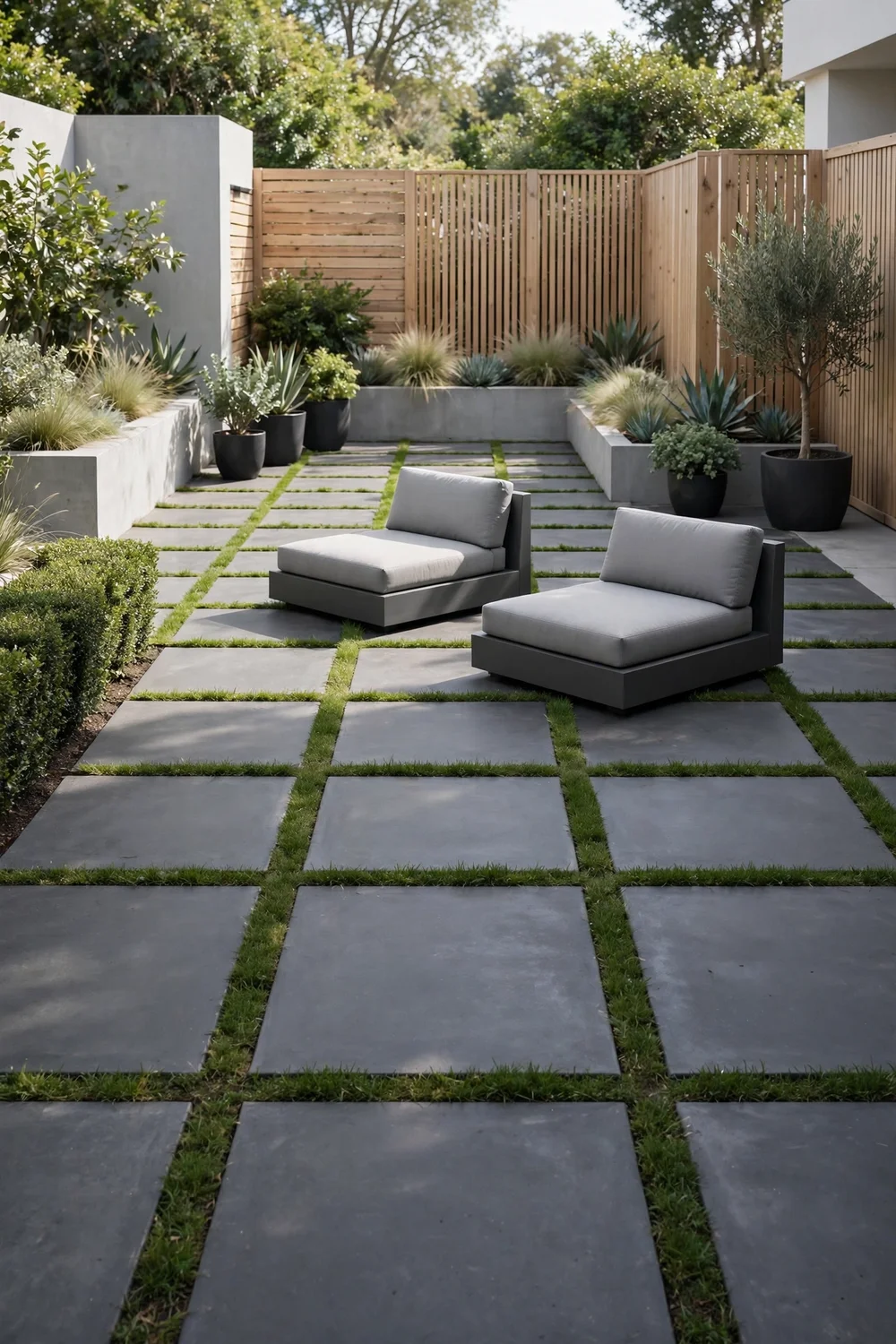
Large charcoal pavers set in a strict grid with narrow grass or gravel joints read as modern the moment you see them. Use 24-inch square concrete pavers over a compacted gravel base, and keep the joints a consistent 2 inches. The geometry does the decorating, so you need almost no plants to make it look finished. A grid patio also drains well and never puddles.
Try this: run the grid lines parallel to the house wall. Aligned geometry looks calm; diagonal joints look busy.
Cost: $$| Difficulty: moderate
2. Plant architectural grass blocks
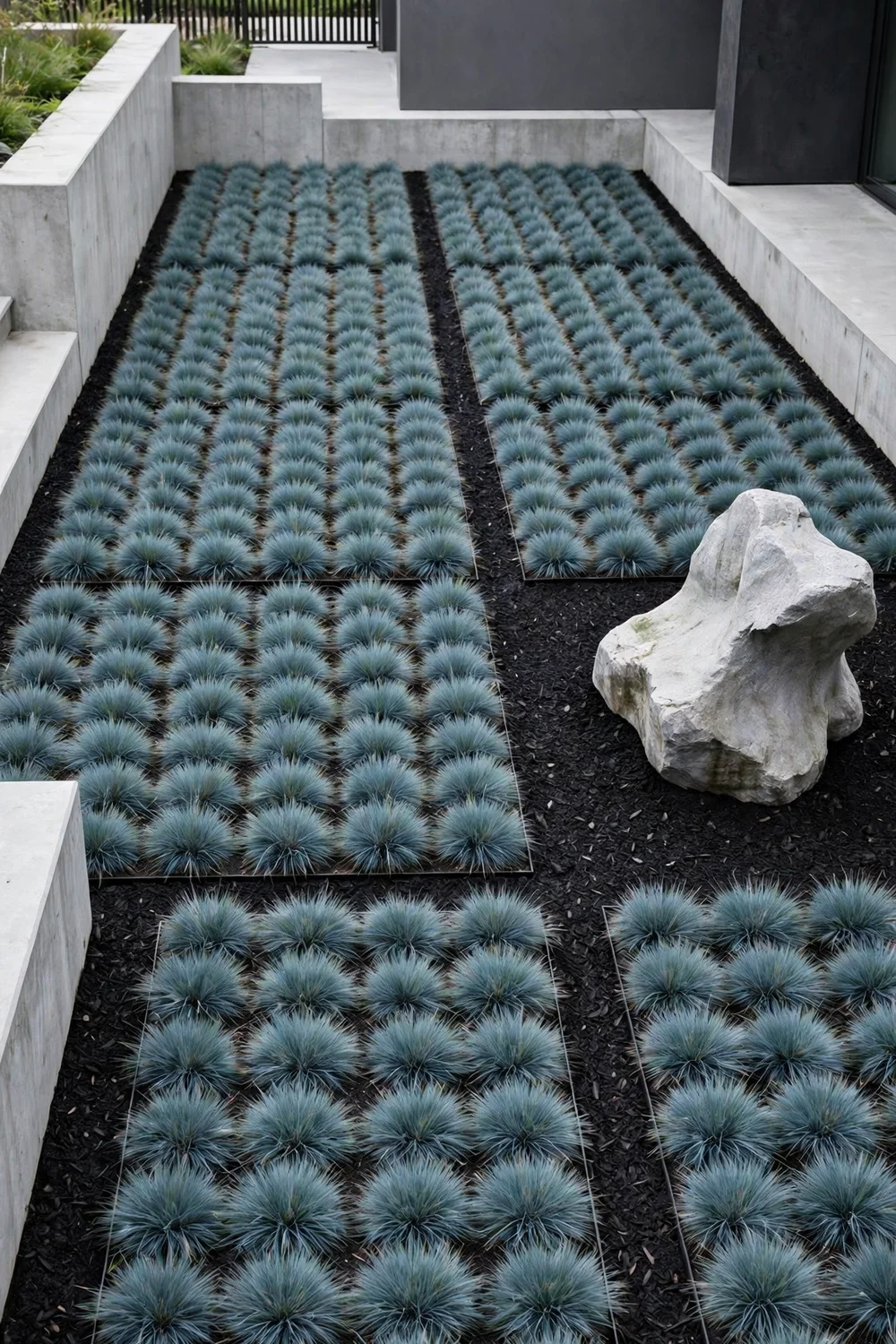
One grass, repeated in blocks, is the backbone of modern planting. Blue fescue or feather reed grass planted in strict rows gives you rhythm without fuss. Space plants by their mature width so the blocks read as solid masses, not polka dots. Cut the whole block back once a year in late winter and it flushes fresh each spring with almost no other care.
Try this: plant in odd-numbered rows (3, 5, 7). Even rows look like a parking lot landscape.
Cost: $| Difficulty: easy
3. Build corten steel planter walls

Rusted corten steel brings warm color and sharp lines that concrete cannot. Tall corten planter walls double as retaining and planting in one move, and the steel develops its protective rust patina in a few months with no sealing. Fill them with ornamental grasses or a single sculptural shrub per section. Pre-rusted panels cost more but skip the orange runoff phase on your patio.
Try this: set the steel on a gravel footing, not soil, so the base never sits wet.
Cost: $$$| Difficulty: moderate
4. Install a linear concrete fire pit
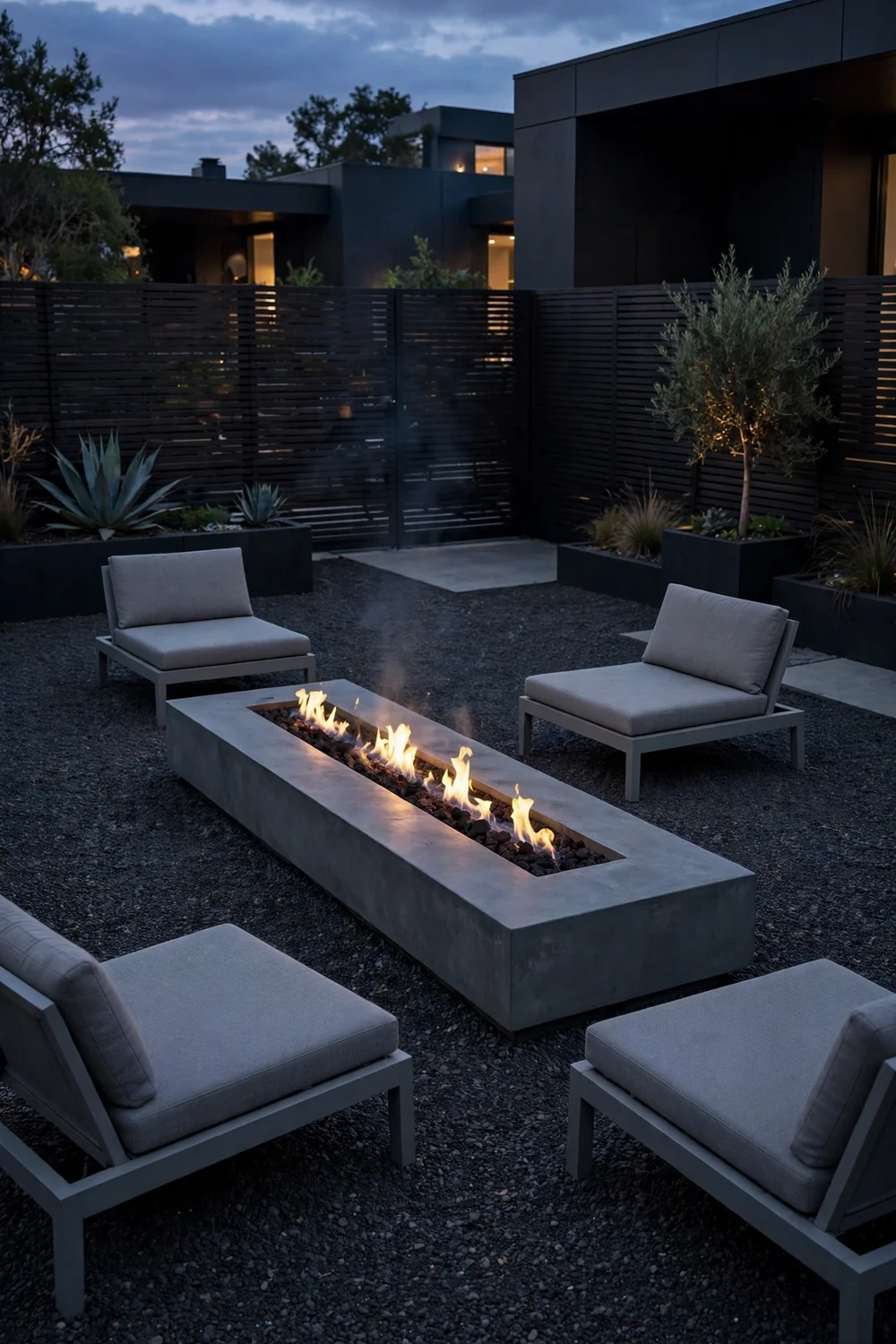
A long, low rectangular fire pit suits modern lines better than a round bowl. A 4-foot linear gas burner in a cast concrete trough gives even flame down the whole length with no wood to haul. Surround it with low lounge chairs on dark gravel. Keep 10 feet of clearance from the house and any overhang, and check local burn and gas codes before you build.
Try this: add a glass wind guard. It steadies the flame and reads as a design detail.
Cost: $$$$| Difficulty: hire a pro for gas
Safety: gas fire features need a licensed installer and proper clearances. Never leave any fire feature burning unattended.
5. Raise a slatted wood privacy screen
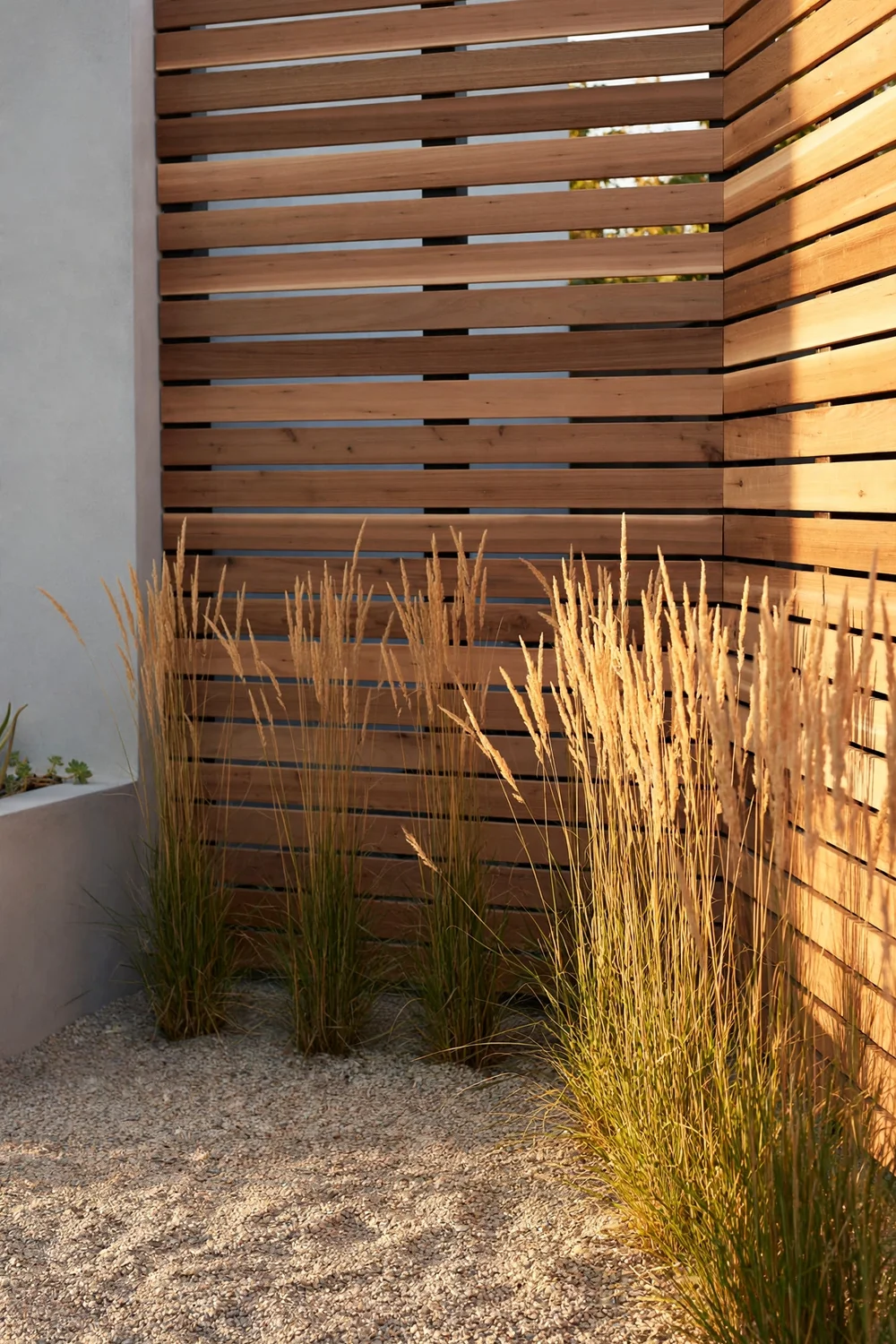
Horizontal cedar slats with half-inch gaps block sightlines while letting air and light through. A 6-foot screen along one boundary turns an overlooked yard into a private room. Cedar weathers to silver-gray with no stain, or seal it to hold the warm tone. Set posts 3 feet deep in concrete so the screen never leans.
Try this: run the slats past the post tops by 6 inches for a floating, finished edge.
Cost: $$| Difficulty: moderate (call 811 before digging post holes)
6. Add a minimalist water wall
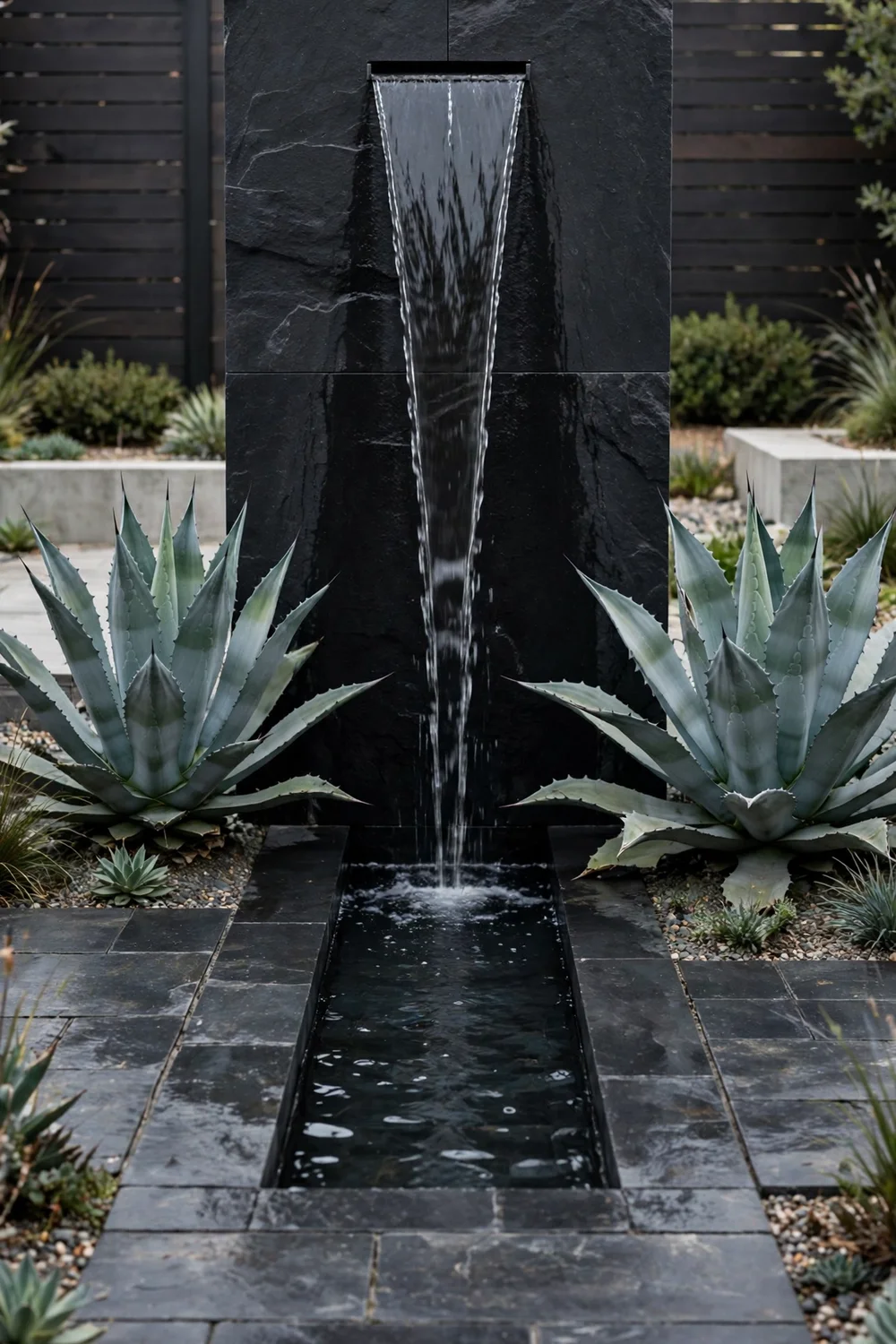
A black stone or steel panel with a thin sheet of water falling into a narrow basin adds movement and sound with a tiny footprint. The pump lives in the basin, so installation is one weekend and one outdoor outlet. Still, dark water hides leaves, so skim it weekly. A water wall near seating masks street noise better than any planting.
Try this: light it from below with one submersible LED. Night transforms it completely.
Cost: $$$$| Difficulty: moderate
Safety: any water feature with electricity needs a GFCI-protected outlet. Keep pumps and lights on outdoor-rated circuits.
7. Sink a lounge zone one step down
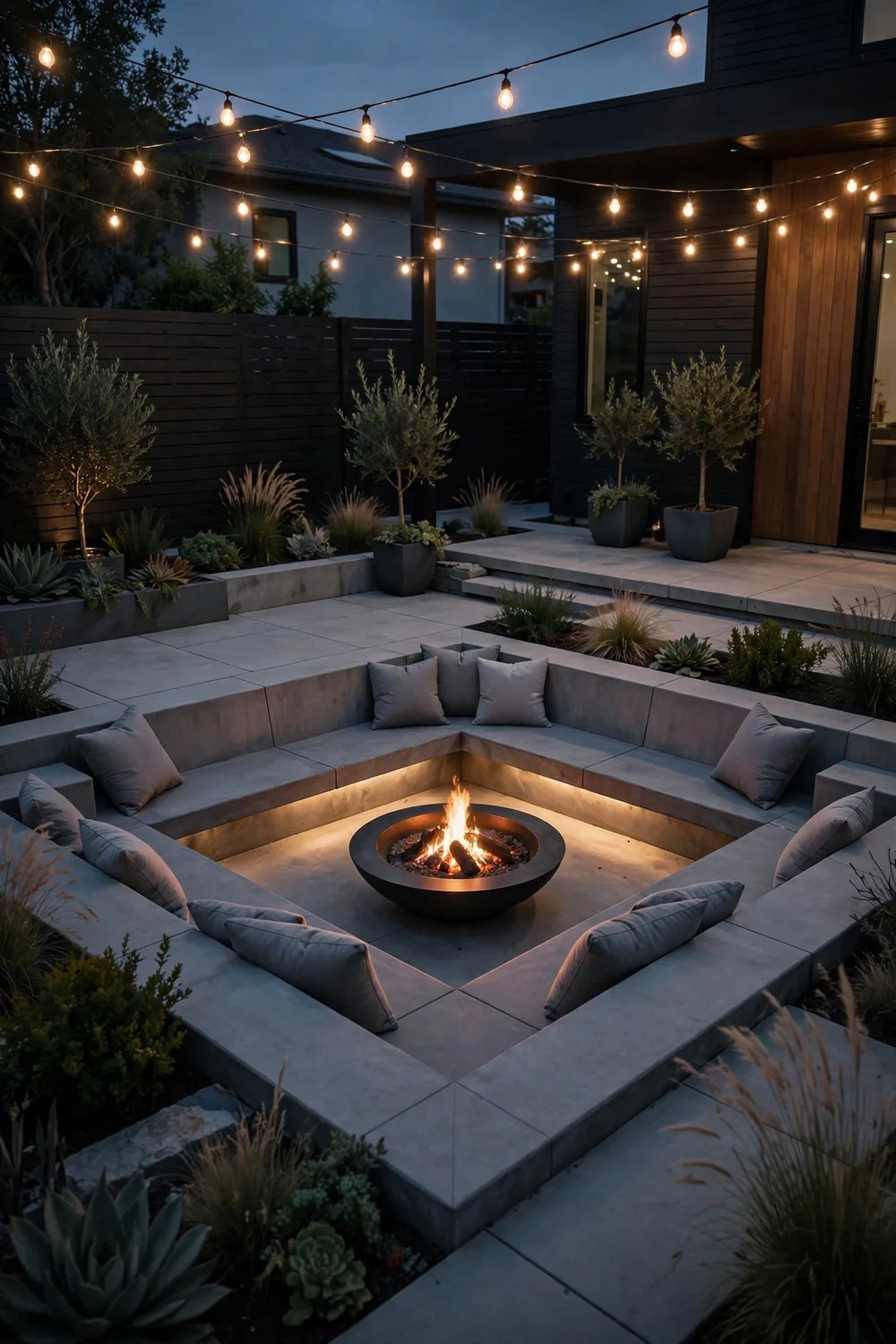
Dropping the seating area 12 to 18 inches below patio level creates a room-within-a-room that feels private without walls. Built-in concrete or block benches around a fire bowl seat six with zero furniture to store. Add drainage at the low point so rain never pools. One wide step doubles as extra seating when friends crowd in.
Try this: face the sunken seats toward the sunset side of the yard for the best evening light.
Cost: $$$$| Difficulty: hire a pro
8. Build an outdoor kitchen island
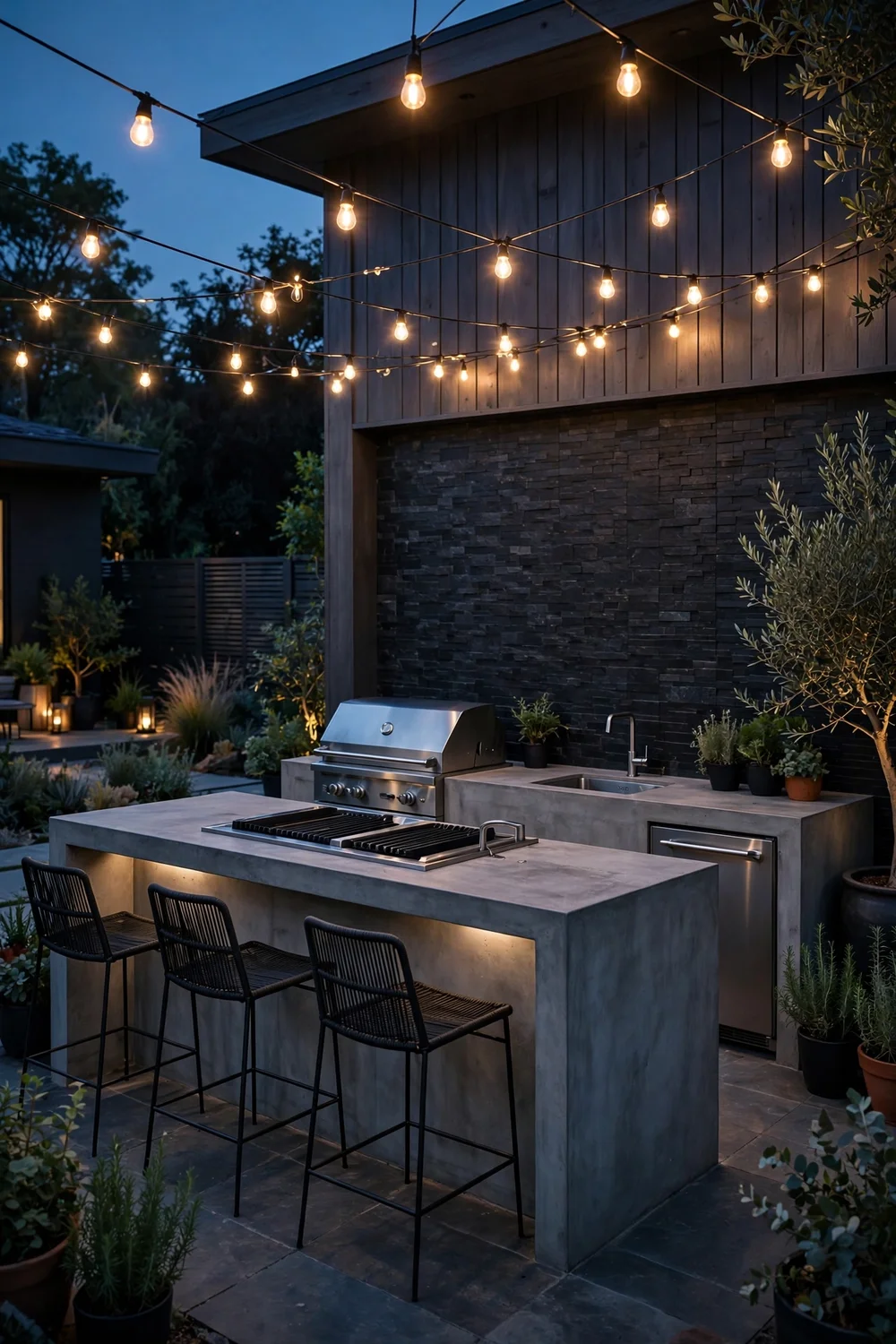
A concrete island with a built-in grill and bar seating turns the backyard into the house’s second kitchen. Keep it simple: grill, 6 feet of counter, a small fridge, and task lighting. Stainless steel and sealed concrete handle weather with a yearly wipe-down. Run gas and electric through conduit during the build, never as an afterthought.
Try this: add a 12-inch overhang on the seating side so stools tuck fully under the counter.
Cost: $$$$| Difficulty: hire licensed pros for gas and electric
9. Design a gravel courtyard with pavers

Pea gravel with large concrete pavers laid loose on top gives you a modern courtyard for a fraction of a full patio. The gravel drains instantly, needs no mortar, and the pavers can be lifted and re-leveled if they shift. Rake the gravel smooth each spring and top up thin spots. One olive tree in a corten pot finishes the composition.
Try this: lay landscape fabric under the gravel to stop weeds without blocking drainage.
Cost: $| Difficulty: easy to moderate
10. Group sculptural agaves
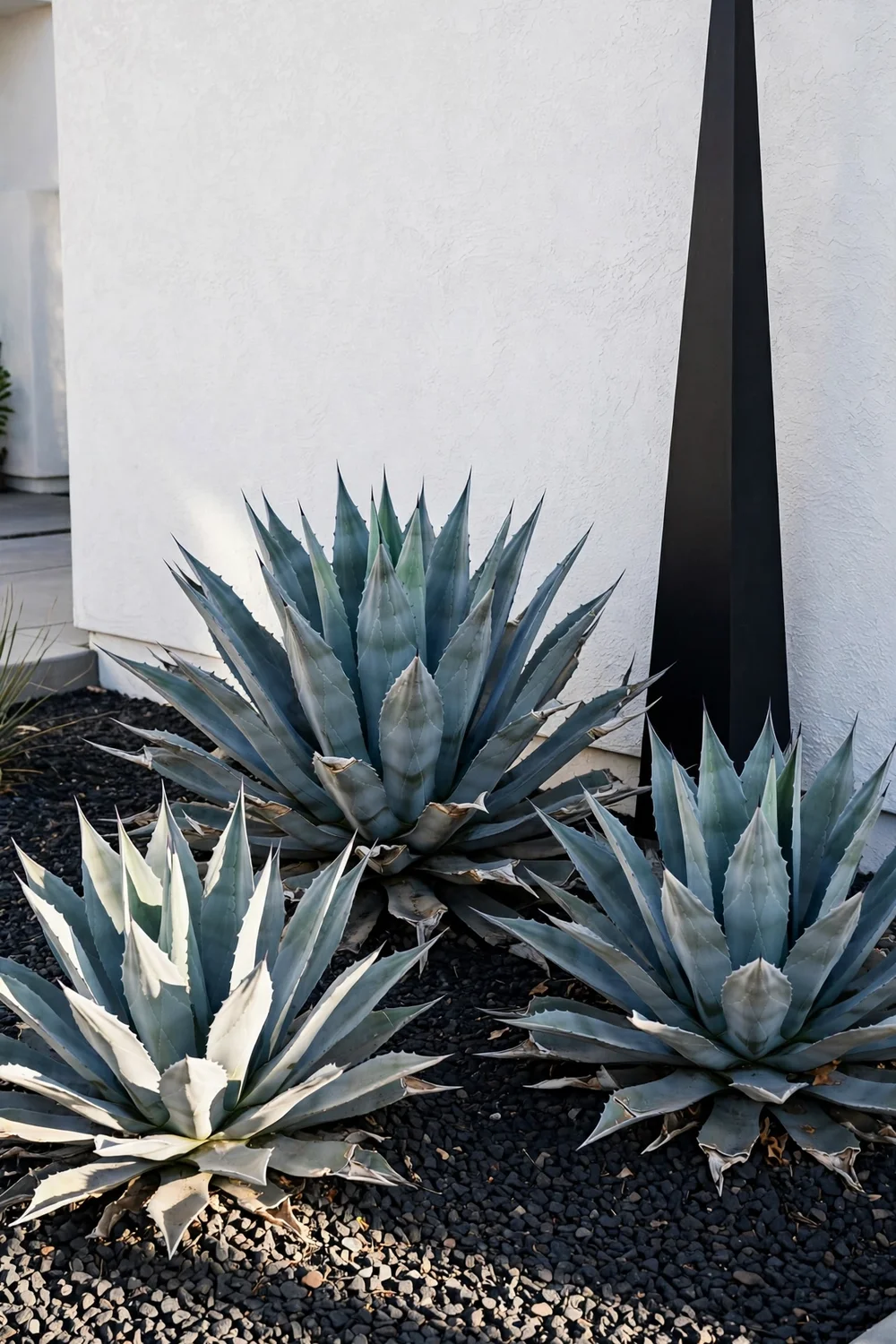
Three large agaves in dark gravel against a pale wall are a complete modern composition. Blue agave and Agave americana hold their rosette shape for years with no pruning and almost no water once established. Give each plant 3 to 4 feet of clear space, since mature rosettes reach 4 feet wide. Their sharp leaf tips demand placement away from walkways and play areas.
Try this: snip the sharpest leaf tips with pruners at planting time if the bed sits near a path.
Cost: $$| Difficulty: easy
Pet note: agave is toxic to pets if chewed, and the spines injure paws. Site it where animals do not roam.
11. Float deck platforms at two heights
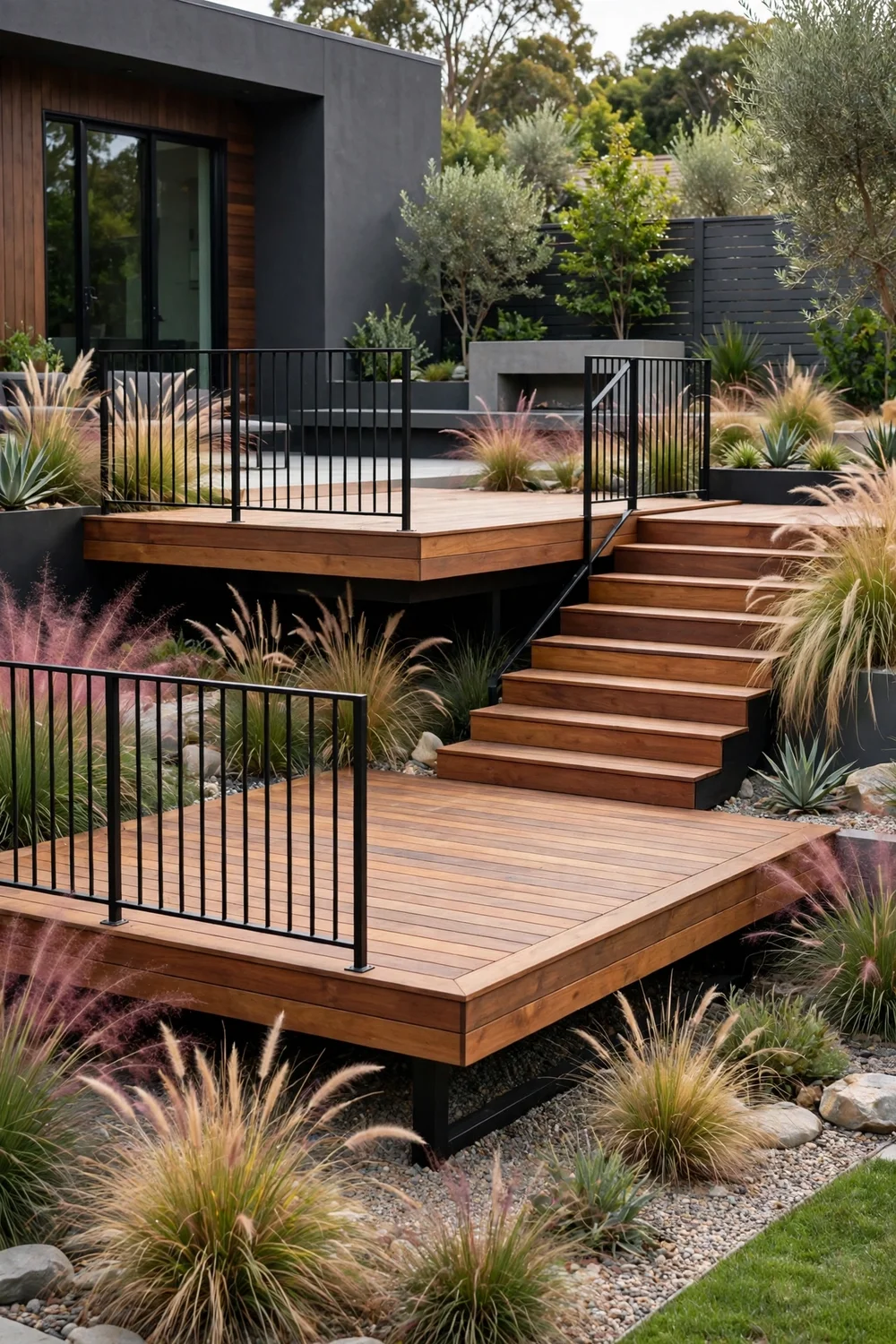
Two low deck platforms at slightly different heights create zones without railings or walls. Keep each platform under 30 inches high to avoid railing codes in most areas, and connect them with one wide step. Ipe or composite decking both suit the look; composite costs more up front and nothing after. Leave half-inch gaps between boards for drainage.
Try this: hide LED strip lights under the platform edges. The floating glow at night is pure modern.
Cost: $$| Difficulty: moderate
12. Uplight one specimen tree
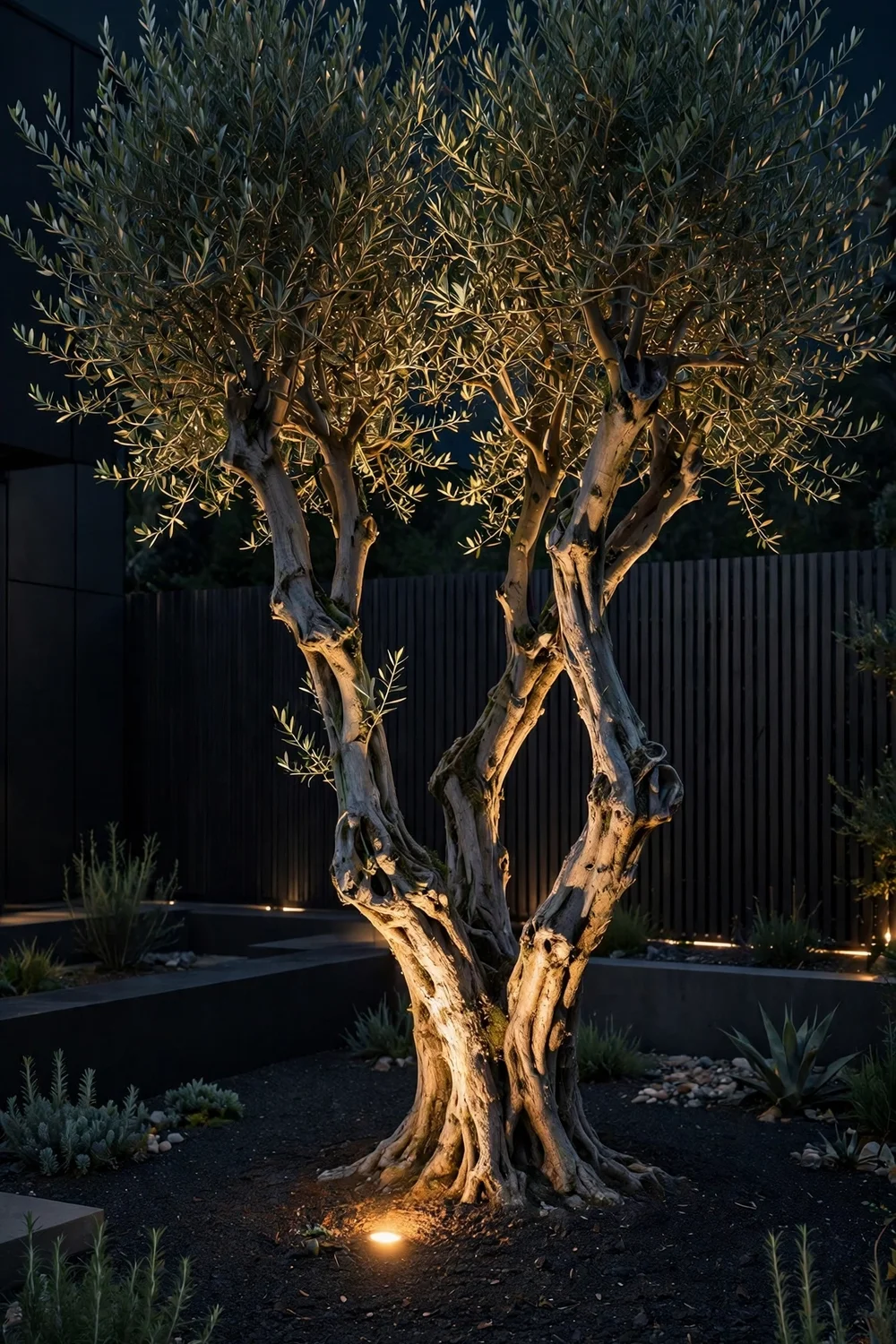
A single well-placed uplight turns an ordinary tree into nighttime sculpture. Set a warm-white LED spotlight at the base of a multi-trunk olive or Japanese maple, aimed up through the canopy. One light is enough; three looks like a car lot. Solar spotlights work for mild climates, but wired low-voltage gives reliable brightness year-round.
Try this: aim the beam at the trunk first, then tilt until the canopy glows. Bark texture matters as much as leaves.
Cost: $$| Difficulty: easy
13. Set a rectangular plunge pool
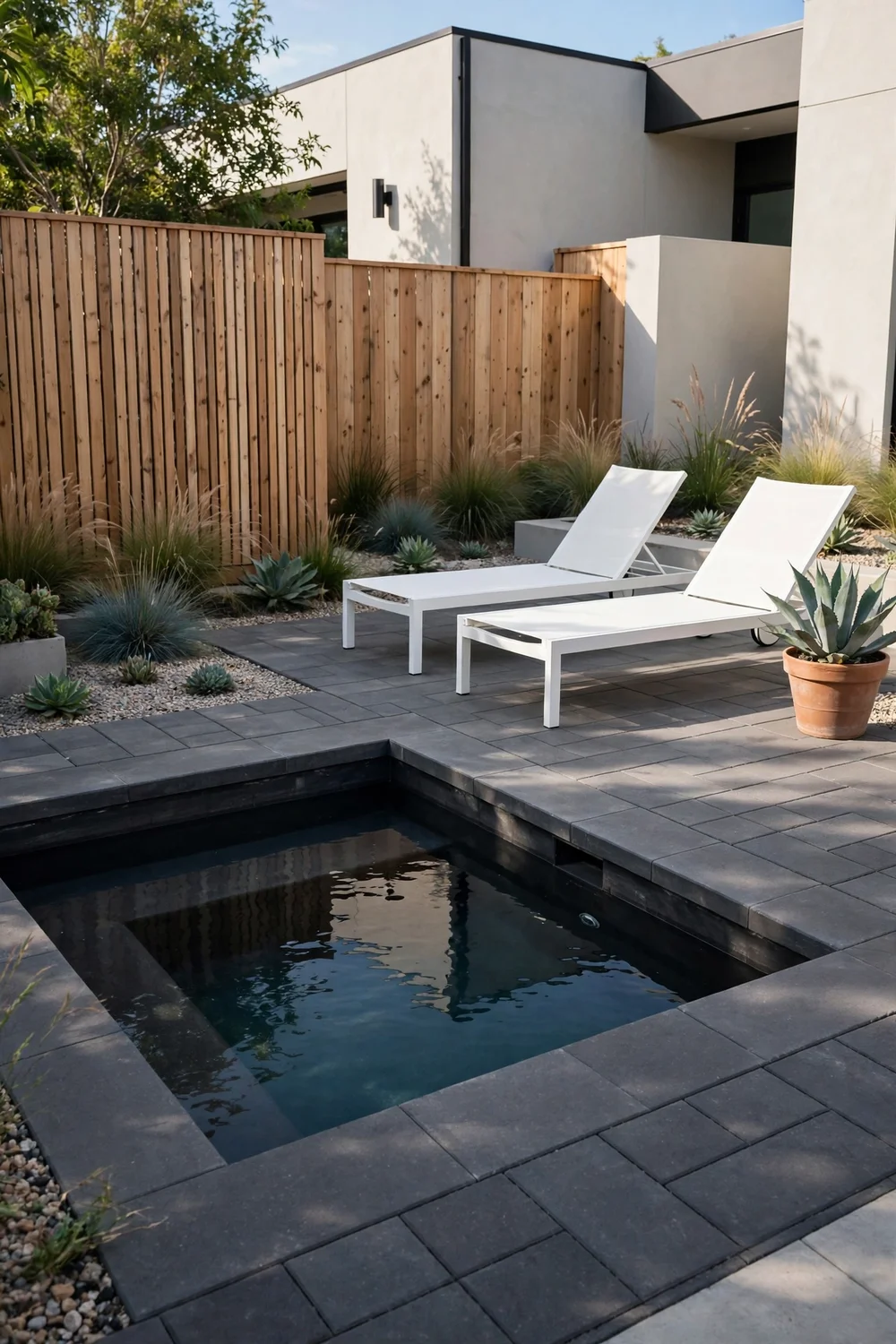
A small rectangular plunge pool, 7 by 12 feet, fits where a full pool never could and matches modern geometry perfectly. Dark interior finishes make the water read deep blue and hide wear. Flush charcoal pavers around the edge keep the lines clean. Budget for a safety fence or cover to meet local codes, which apply even to small pools.
Try this: add a narrow spillover edge on one side. The sound of falling water masks neighborhood noise.
Cost: $$$$| Difficulty: hire a pro
14. Contrast black mulch with white gravel

Two materials side by side, divided by a straight steel edge, create graphic contrast with zero plants required. Black mulch beds planted with green liriope sit next to white gravel beds holding a single dark boulder. The high contrast is the design. Refresh the black mulch yearly since sun fades it, and rinse the white gravel each spring to keep it bright.
Try this: keep the dividing line dead straight. A wavy edge ruins the graphic effect.
Cost: $$$| Difficulty: easy
15. Pour a polished concrete bench
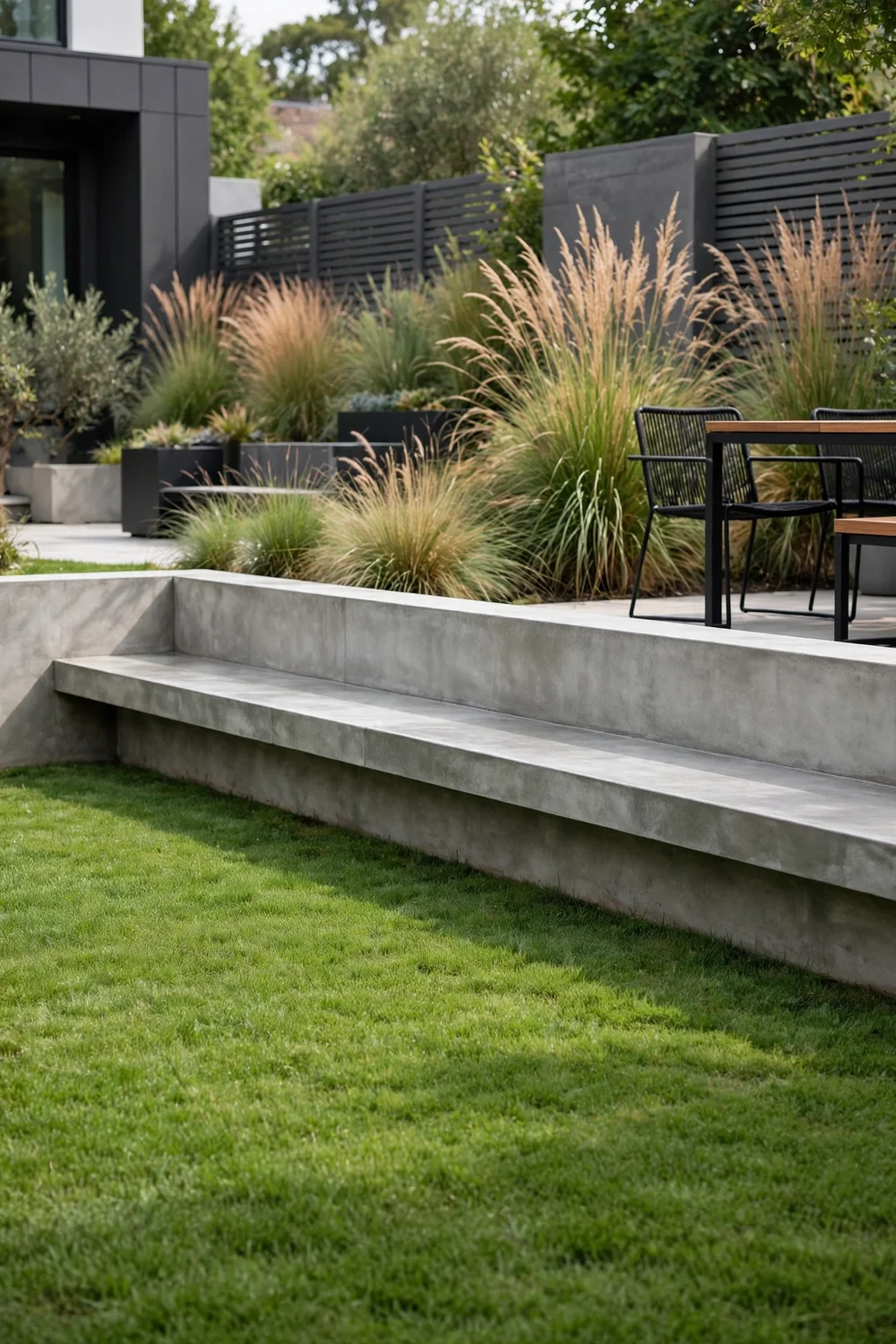
A concrete bench cast as part of a low retaining wall never moves, never rots, and seats a crowd. Form it 18 inches high and 16 inches deep, the standard comfortable seat dimensions, and polish the top for a smooth finish. In cold climates, use air-entrained concrete mix so freeze-thaw cycles do not crack it. One bench can anchor a whole patio layout.
Try this: add outdoor cushions in one solid color. They soften the concrete without breaking the minimal look.
Cost: $$$| Difficulty: moderate to pro
16. Raise corten planter beds
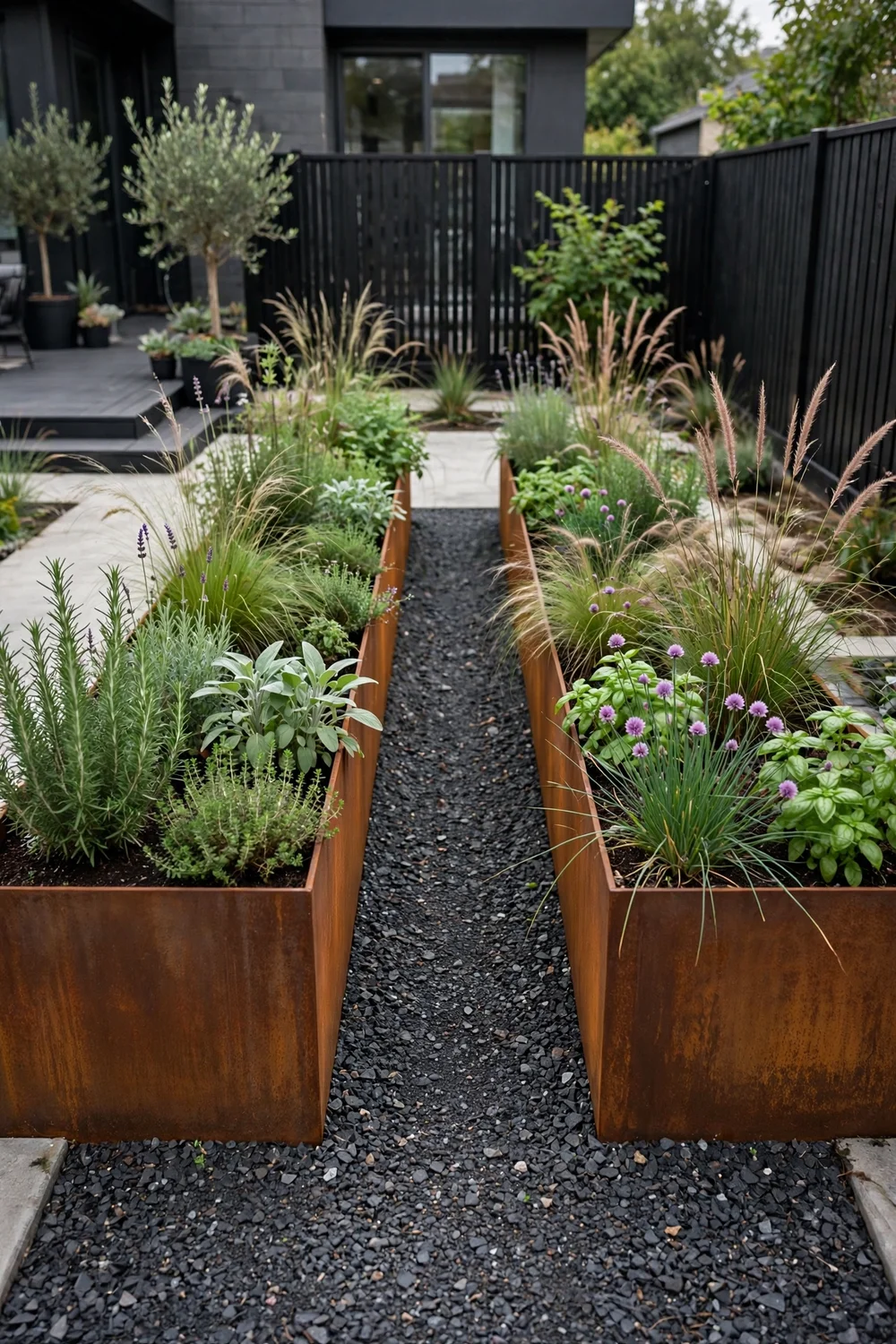
Rectangular corten steel raised beds bring the kitchen garden into modern design. At 24 inches tall they are comfortable to work, warm the soil early in spring, and the rust patina looks intentional against gravel paths. Fill the bottom half with logs and branches (hugelkultur style) to cut soil costs, then top with 12 inches of quality mix.
Try this: align two beds parallel with a 3-foot path between. The symmetry reads as designed.
Cost: $$$| Difficulty: easy
17. Tuck in an outdoor shower nook
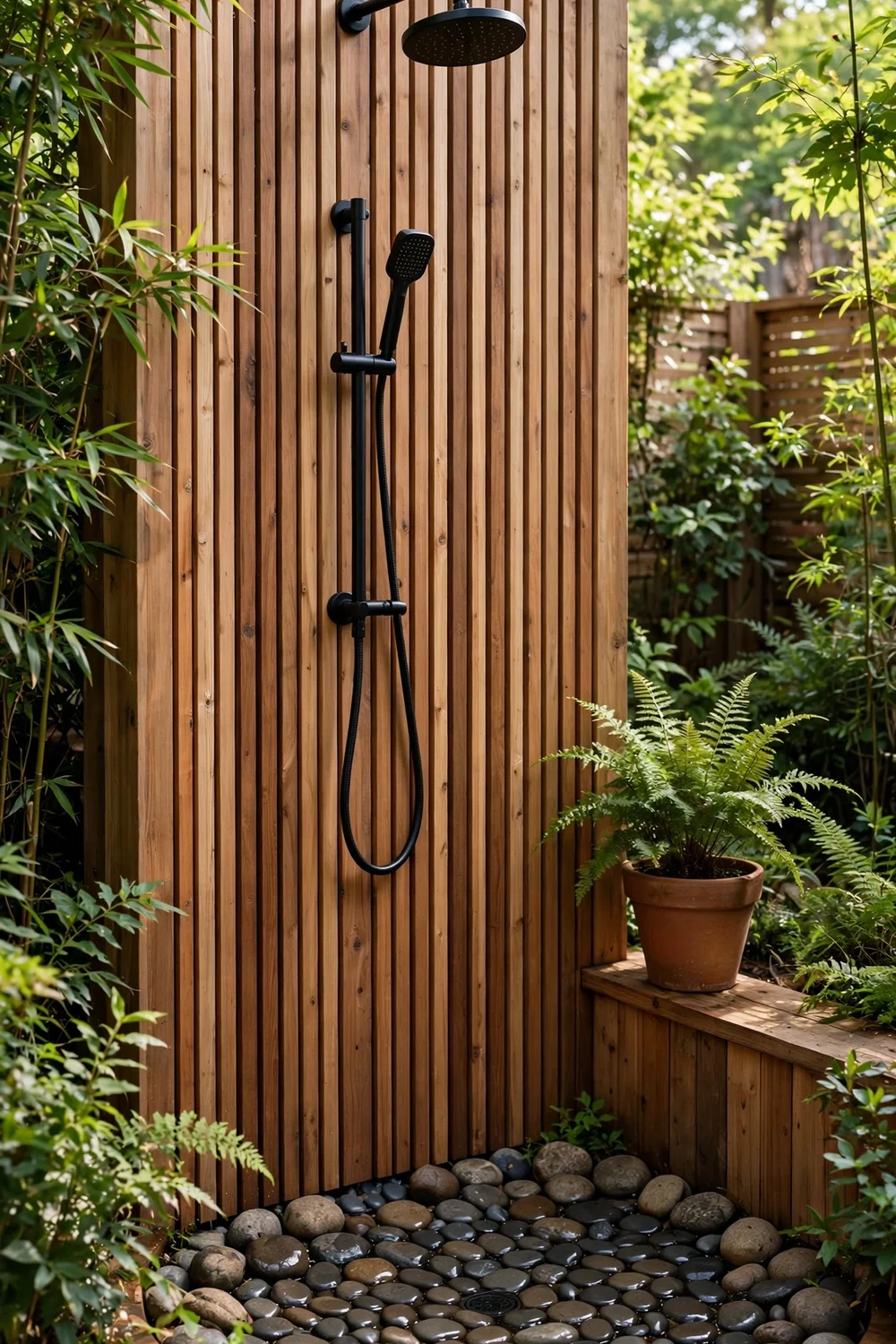
An outdoor shower beside the pool or garden is pure resort living. A matte black fixture on a cedar slat wall with a river-rock floor drains naturally and looks built-in. In cold climates, install a freeze-proof sillcock and drain the line each fall. Privacy comes from the slat wall itself, so site it where neighbors cannot see over.
Try this: add a small teak bench inside the nook. It holds towels and gives the space purpose.
Cost: $$$$| Difficulty: hire a plumber
18. Frame the patio with a clean-line pergola
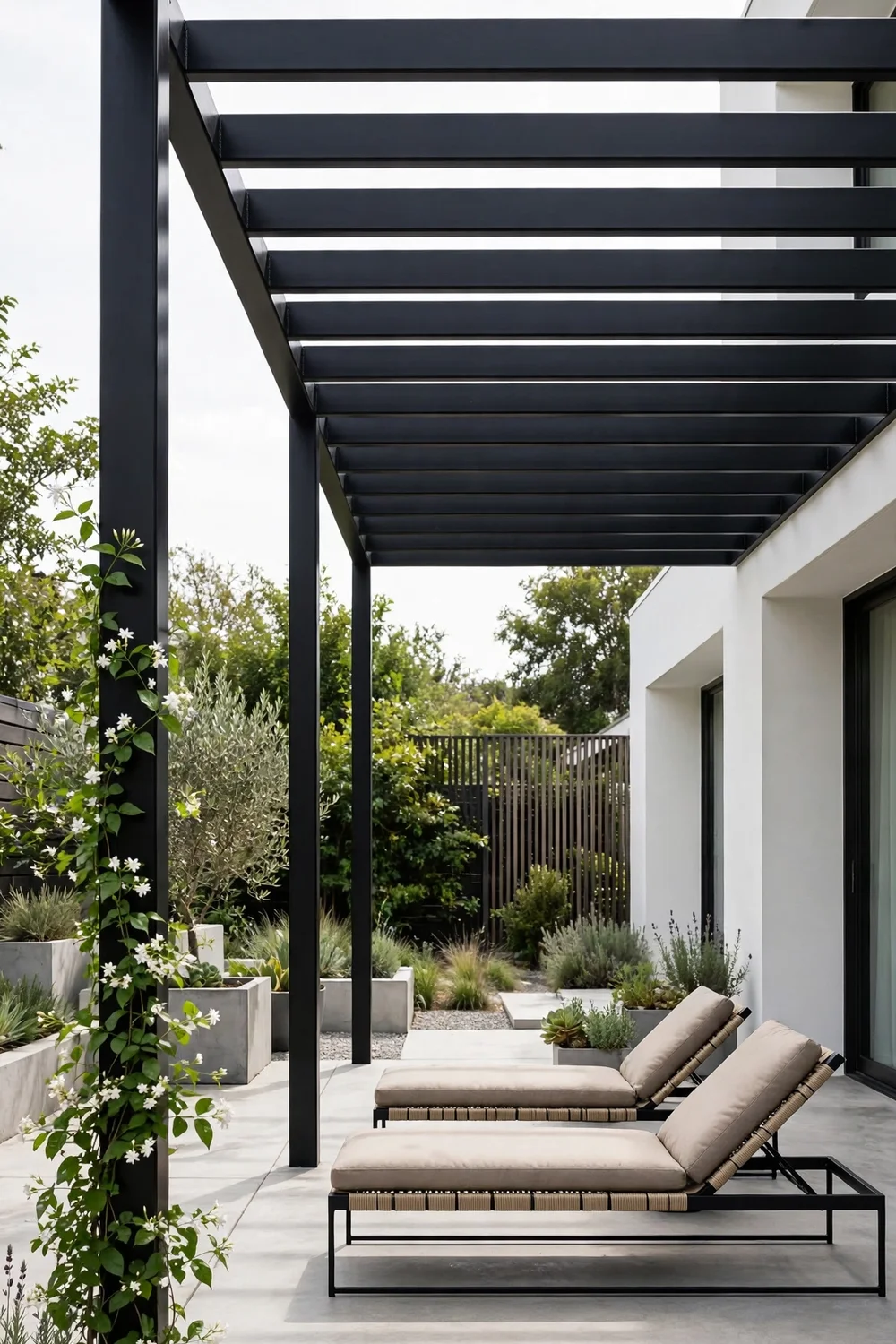
A pergola with straight square posts and evenly spaced beams defines the patio as an outdoor room. Black powder-coated aluminum needs zero maintenance and never warps; cedar costs less and weathers beautifully. Keep the beam spacing tight (12 to 16 inches) for real shade, and train one jasmine or wisteria up a single post for softness.
Try this: mount a dimmable string light or two under the beams now. Retrofitting later is a hassle.
Cost: $$$$| Difficulty: pro recommended (call 811 for post footings)
19. String a light canopy in a grid
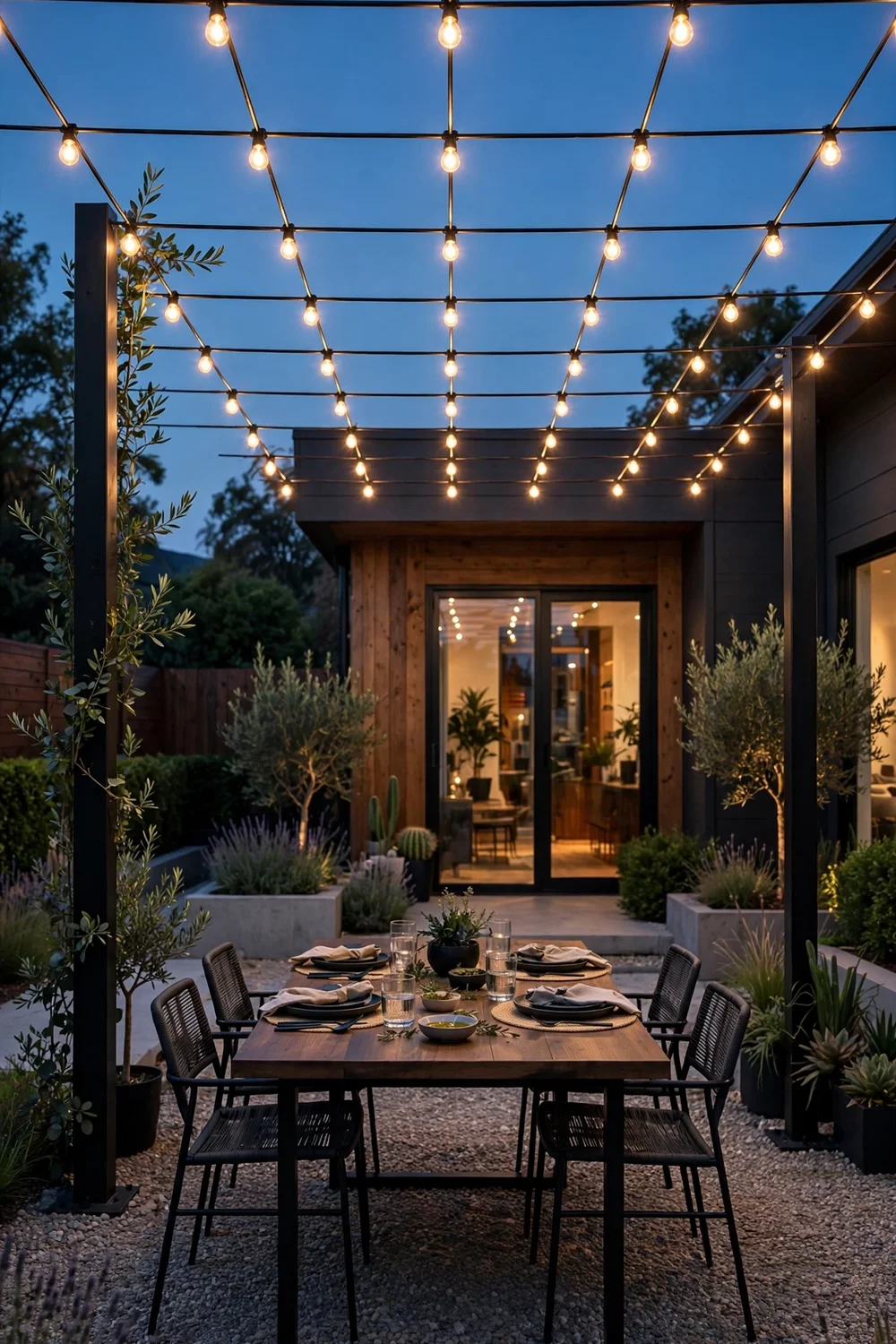
String lights hung in a precise grid, not random swags, read as modern. Run commercial-grade LED strings in parallel lines 3 feet apart between two posts or from house to post. The grid gives even light over a dining table and looks intentional by day too. Use shatterproof bulbs and a heavy-duty outdoor timer so they run themselves.
Try this: hang the grid 9 to 10 feet high. Lower feels cramped; higher loses the cozy glow.
Cost: $$$| Difficulty: easy
20. Sow a native meadow strip
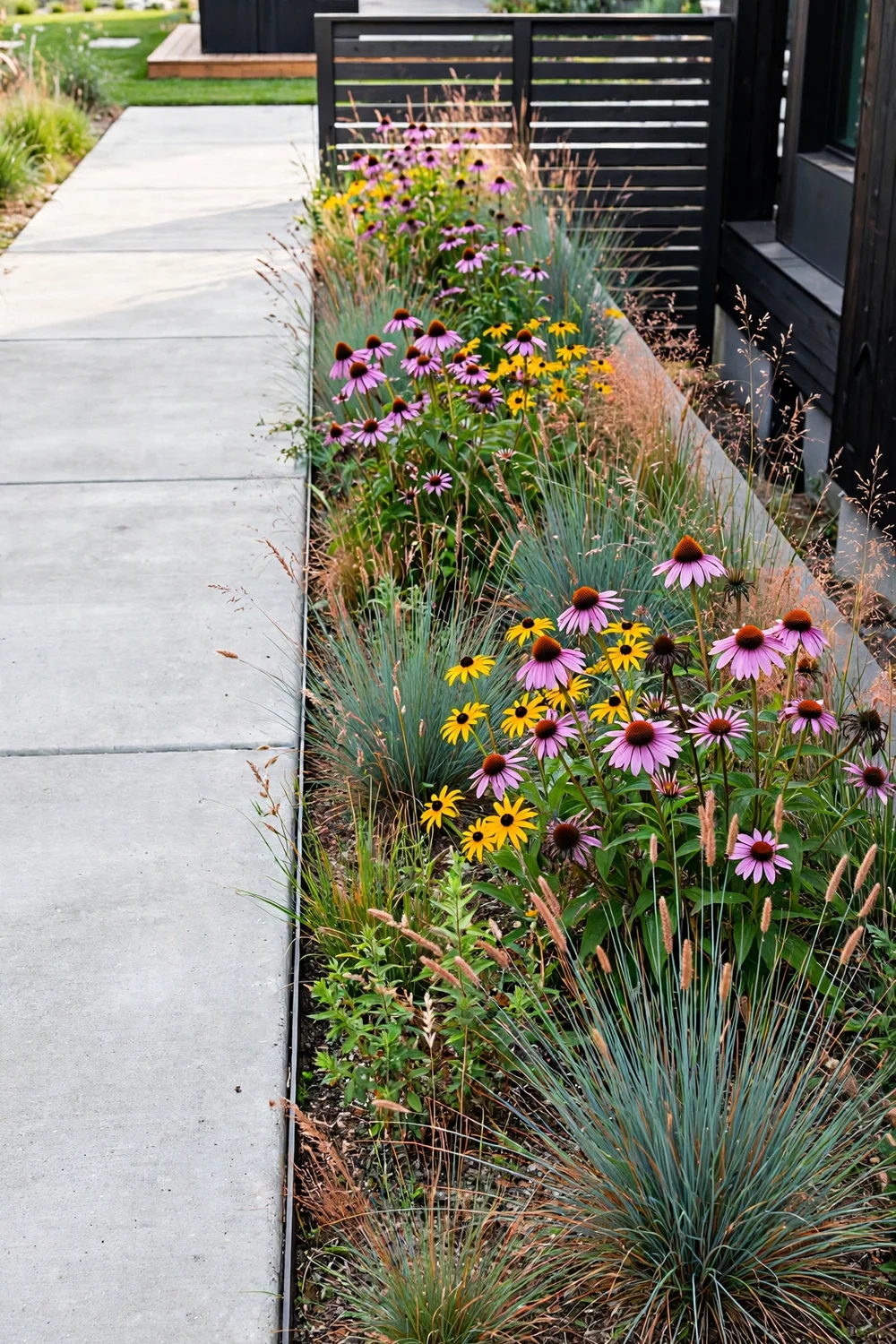
A defined rectangular strip of native flowers and grasses brings the modern meadow look without the mess of a full wild yard. Coneflower, black-eyed Susan, and little bluestem in a steel-edged bed bloom from June to frost and feed pollinators all season. Mow it once a year in late winter and it resets itself. Natives need no fertilizer and little water once established.
Try this: plant in drifts of 5 to 7 per species. Single plants dotted about look weedy; drifts look designed.
Cost: $$$| Difficulty: easy
21. Grow a monochrome succulent wall
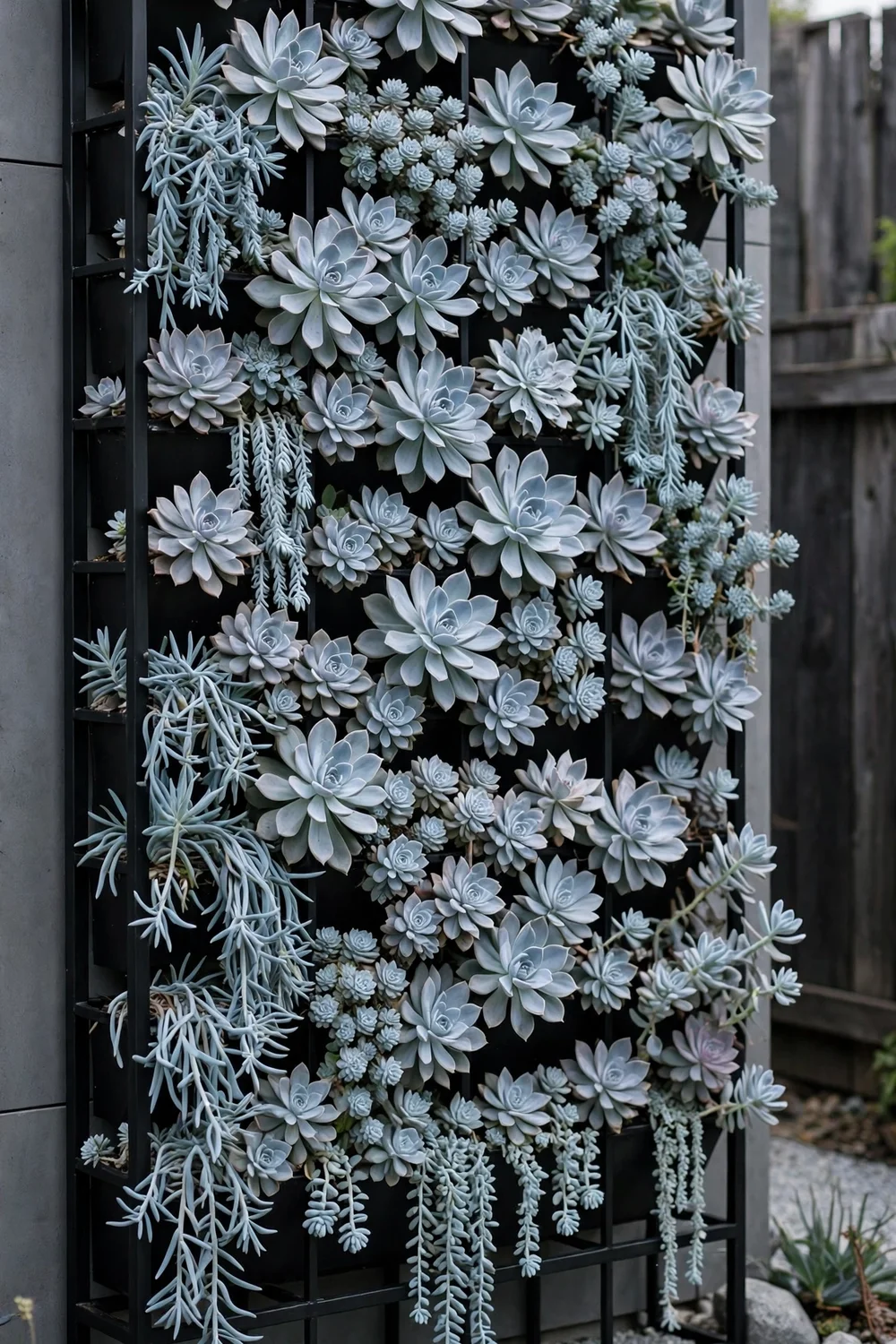
A vertical wall planted in one color family of succulents turns a blank fence into living art. Silvery-blue echeveria and sedum in a framed panel need watering only every week or two and never need mowing or pruning. In zones below 9, build the panel to lift off its mount so you can overwinter it in a garage. Drip irrigation on a timer keeps it hands-off.
Try this: start with a 2 by 3 foot panel. Small walls succeed; giant ones overwhelm beginners.
Cost: $$$| Difficulty: moderate
22. Step stone slabs across mulch
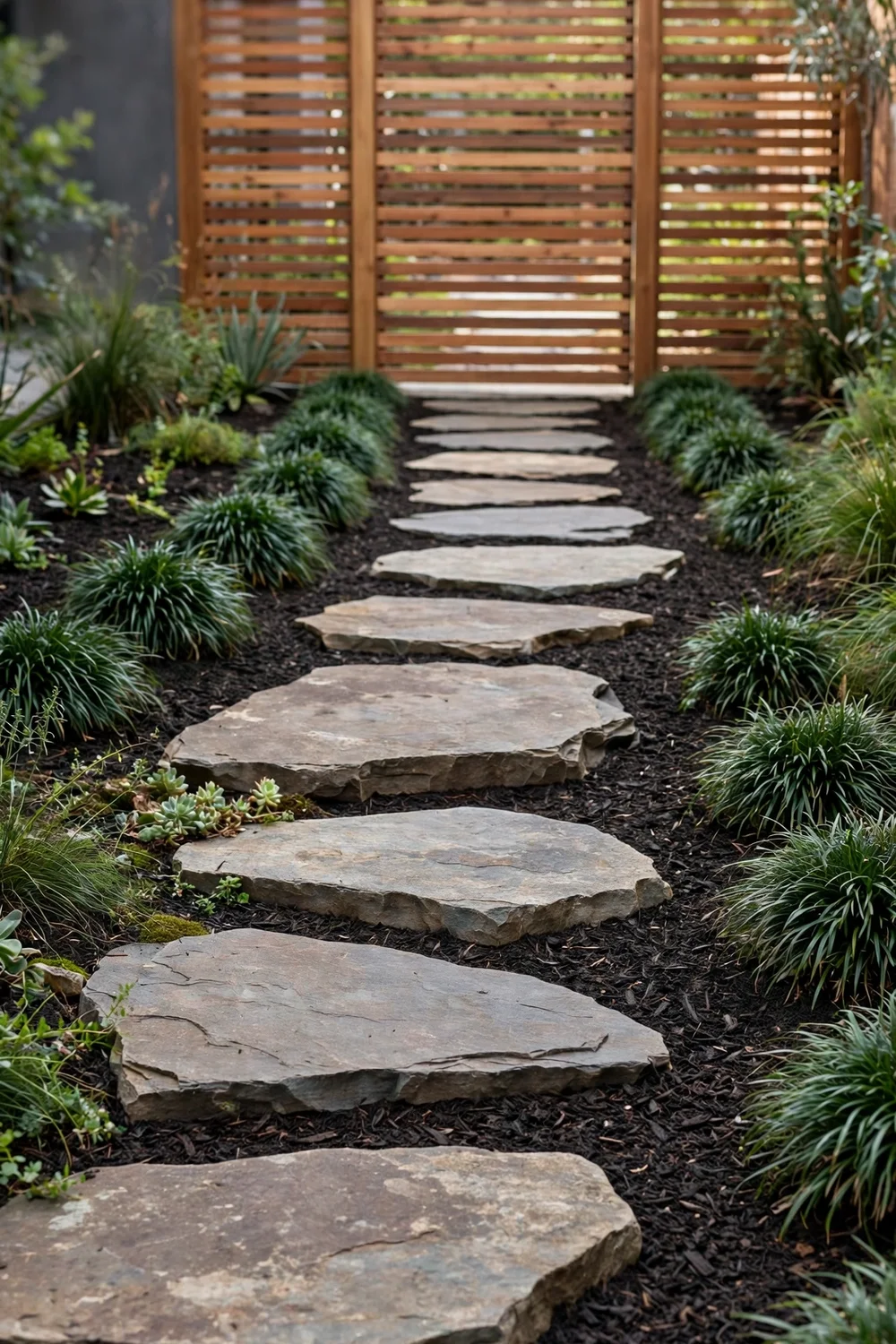
Large irregular natural stone slabs set across dark mulch give you an organic path that still suits modern planting. Choose slabs 24 to 30 inches wide so each step lands comfortably, and set them level with a slight crown for drainage. The contrast between rough stone edges and clipped grasses on either side is the whole aesthetic.
Try this: space slabs one comfortable stride apart (about 24 inches center to center) and walk it before final setting.
Cost: $$$| Difficulty: moderate (slabs are heavy)
23. Recess LED lights into steps
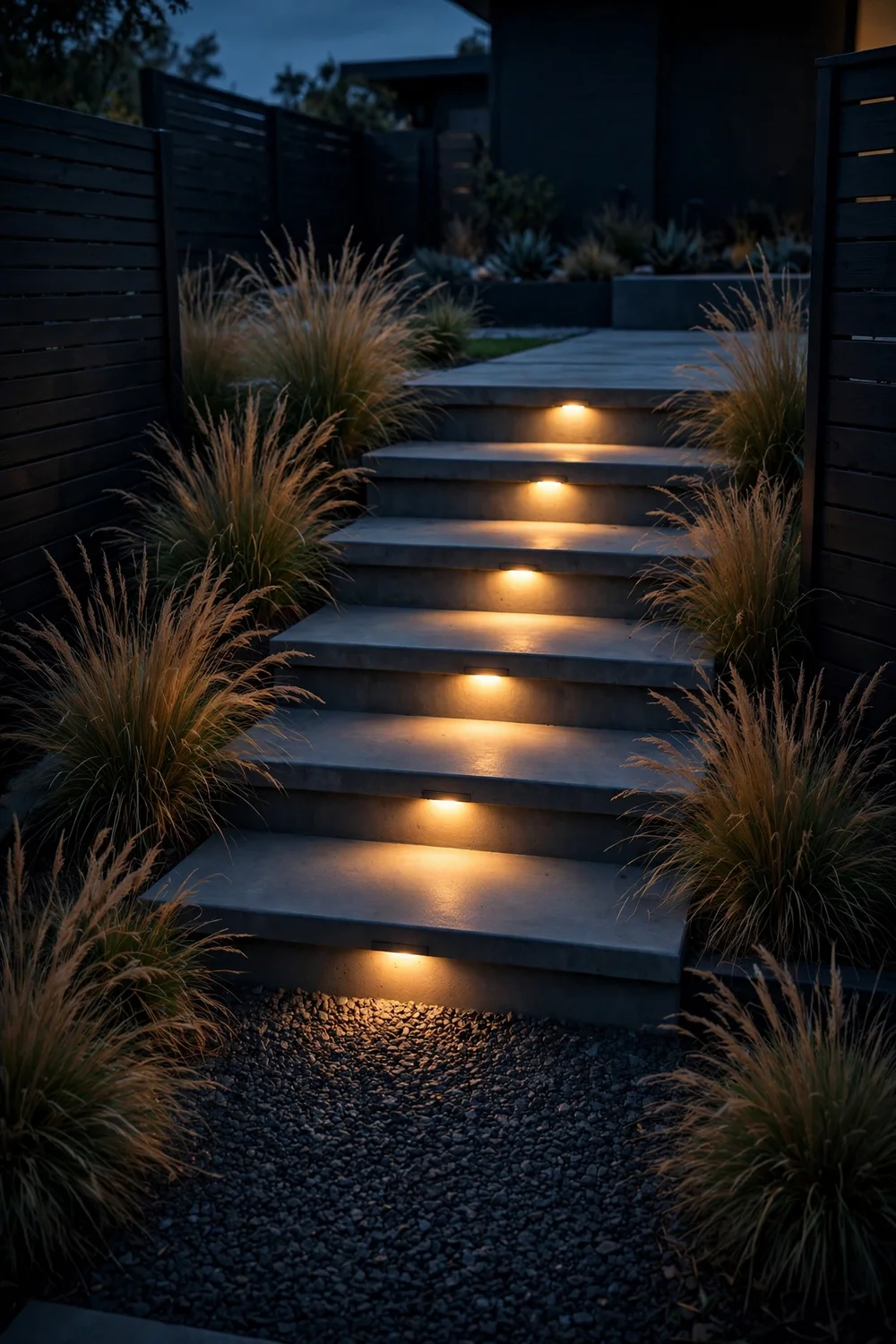
Small LED fixtures set flush into step risers light the tread without any visible hardware by day. They make stairs safe after dark and trace the yard’s geometry in light. Low-voltage kits wire back to one transformer, and most install with a hole saw and an afternoon. Warm white keeps the modern look; cool white reads commercial.
Try this: light every other riser, not every one. Half the fixtures give the same safe result for half the cost.
Cost: $$| Difficulty: easy to moderate
24. Frame an artificial turf panel
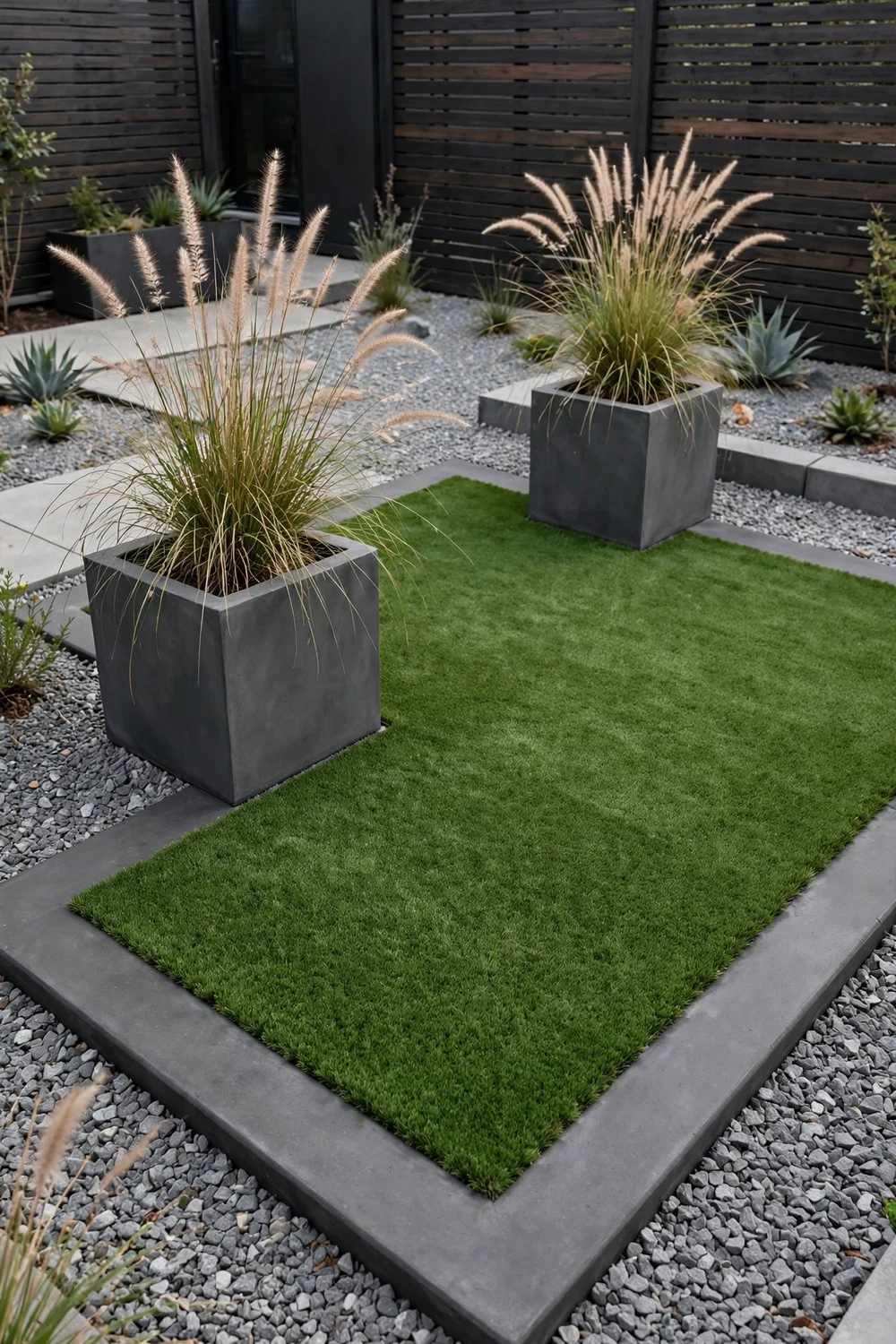
A crisp rectangle of artificial turf framed in charcoal edging gives you green year-round with zero mowing, watering, or fertilizing. Modern turf looks convincingly real from a few feet away, and it handles pets and play without mud. Sweep it monthly and rinse occasionally. It runs hot in direct sun, so site it where afternoon shade falls or accept warm feet in July.
Try this: infill with silica sand, not rubber crumb. Sand keeps blades upright without the black specks.
Cost: $$| Difficulty: pro install recommended
25. Circle a fire bowl with lounge chairs
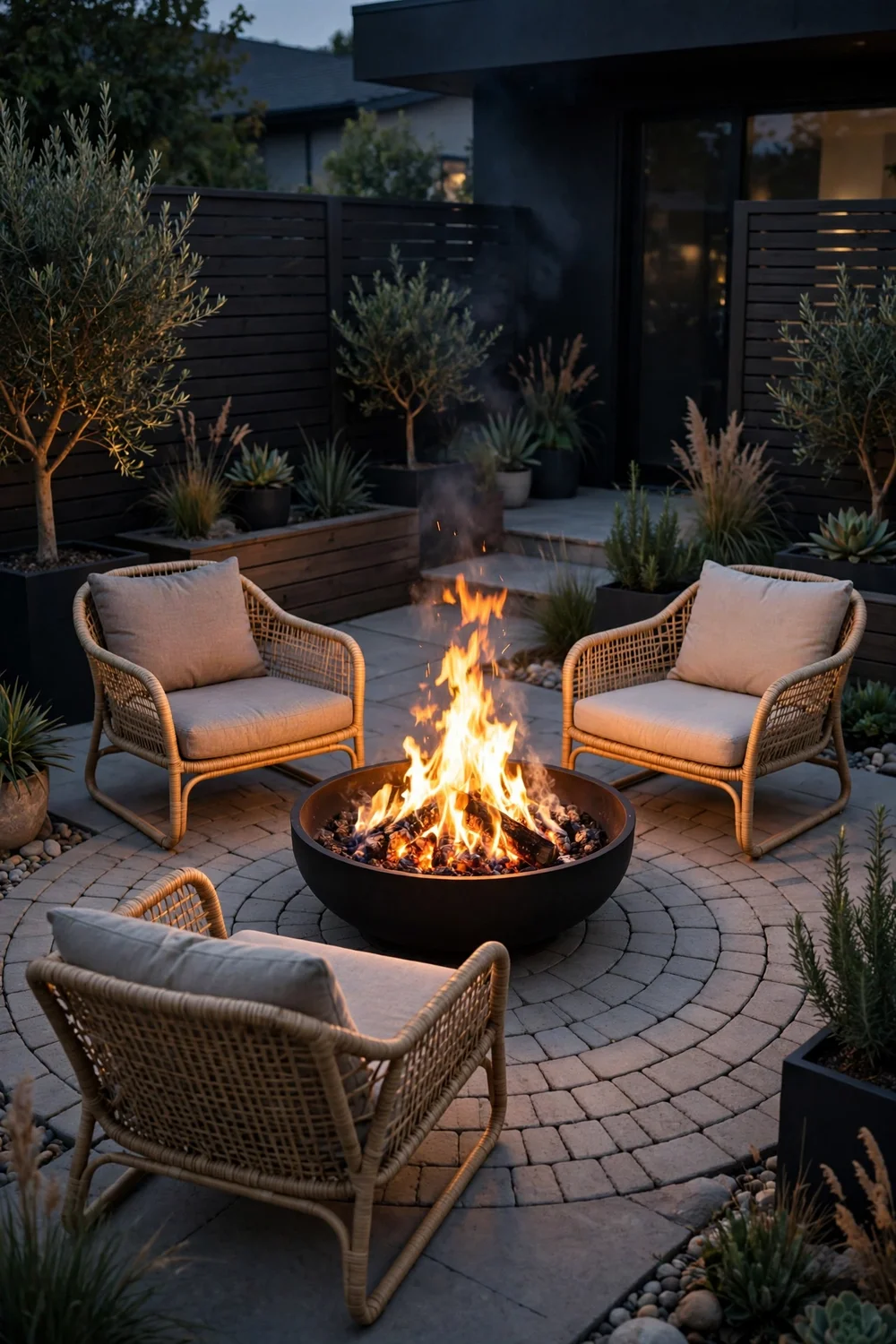
A round black fire bowl on a circular paver pad with three or four lounge chairs is the simplest modern gathering spot. No construction, no gas line: just level ground, a pad, and a bowl. Keep 10 feet from the house and anything flammable, and store the cover on when not in use. Wood bowls cost less; gas bowls light instantly and never smoke out the neighbors.
Try this: angle two chairs toward the view and two toward the fire. Everyone gets both.
Cost: $$$$| Difficulty: easy
Safety: check local fire codes before burning wood. Never leave any fire feature unattended, and keep a hose or extinguisher within reach.
Quick comparison: picking your projects
Frequently asked questions
What makes backyard landscaping look modern?
Clean geometry, a limited material palette, and repetition. Modern yards use straight lines, grids, and right angles instead of curves; two or three materials (concrete, steel, wood, gravel) instead of six; and one plant repeated in blocks instead of mixed borders. Lighting is part of the design, not an afterthought.
How much does modern backyard landscaping cost?
A DIY refresh with pavers, gravel, and block planting runs a few thousand dollars. Mid-range projects with a fire pit, lighting, and a pergola land between $5,000 and $25,000. Full pro builds with a pool, outdoor kitchen, and custom hardscaping start around $25,000 and climb from there. Start with the patio and lighting for the biggest visual return per dollar.
What are the lowest maintenance modern landscaping ideas?
Gravel courtyards, artificial turf panels, architectural grass blocks, succulent walls, and native meadow strips all need minimal care. Avoid lawns, fussy perennials, and water features with complex plumbing if low upkeep is the goal. Drip irrigation on a timer handles the rest.
Do I need a permit for a fire pit or pergola?
It depends on your city and county. Gas fire features usually need a permit and licensed installer; wood-burning pits face local burn codes and setback rules. Pergolas often need permits above a certain size or height. Check with your local building department before you buy materials.
How do I light a modern backyard without it looking harsh?
Use warm white light (2700 to 3000K), light from below or from hidden sources, and light fewer things than you think. One uplight on a tree, step lights on stairs, and a string grid over dining is a complete scheme. The Dark-Sky Association recommends shielded fixtures that aim light down to cut glare and light pollution.
Which plants work best in modern landscaping?
Plants with strong form: ornamental grasses, agave, yucca, boxwood, Japanese maple, olive, and succulents. Pick three to five species and repeat them in masses. Native species adapted to your region need the least water and care once established.
Keep reading
If fire is the centerpiece you want, these bonfire pit ideas cover styles and seating layouts for cozy backyard nights. bonfire pit ideas.
Need privacy on a budget before the pretty stuff? These cheap privacy fence ideas actually work without looking cheap. cheap privacy fence ideas.
Dreaming of water on a budget? These above ground pool ideas show how to make a temporary pool look built-in. above ground pool ideas.
Refreshing a deck instead of rebuilding? These painted deck stain ideas work with every home style. painted deck stain ideas.
Sources
Several modern plants (agave, yucca, sago palm) are rough on pets. Confirm every plant on the ASPCA toxic and non-toxic plant list before you buy. ASPCA toxic and non-toxic plant list.
Pergola footings, water lines, and pool digs all break ground. Call 811 a few business days ahead so utilities mark buried lines for free. Call 811.
DarkSky International publishes guidance on outdoor lighting that cuts glare and light pollution while keeping yards safe and beautiful. DarkSky International.
Modern backyard landscaping is not about spending more. It is about choosing less and placing it with intent: a grid instead of a blob, three grasses instead of twelve plants, one good light instead of five. Start with the patio geometry and the lighting, then add one idea at a time. The yard will look designed long before it looks finished.


