



Above-ground pools have a reputation problem. Most people picture a blue vinyl circle plopped on dead grass, which is why so many homeowners skip the idea entirely.
These 20 above ground pool ideas for 2026 show how decks, cladding, landscaping, and lighting make an affordable pool look intentional. Every idea includes realistic costs and what the project actually involves.
Quick takeaways
- A simple deck built to the pool’s top rail does more for the look than any accessory.
- Dark gray or wood-look pool walls read as modern; bright blue vinyl reads as temporary.
- Budget $1,500 to $4,000 for a quality steel-frame pool set, plus $500 to $2,000 for the surround.
- Level ground matters more than anything: 2 inches of slope can stress pool walls.
- Every pool needs a 4-foot fence with a self-latching gate and active supervision, no exceptions.
1. Wrap-around composite deck
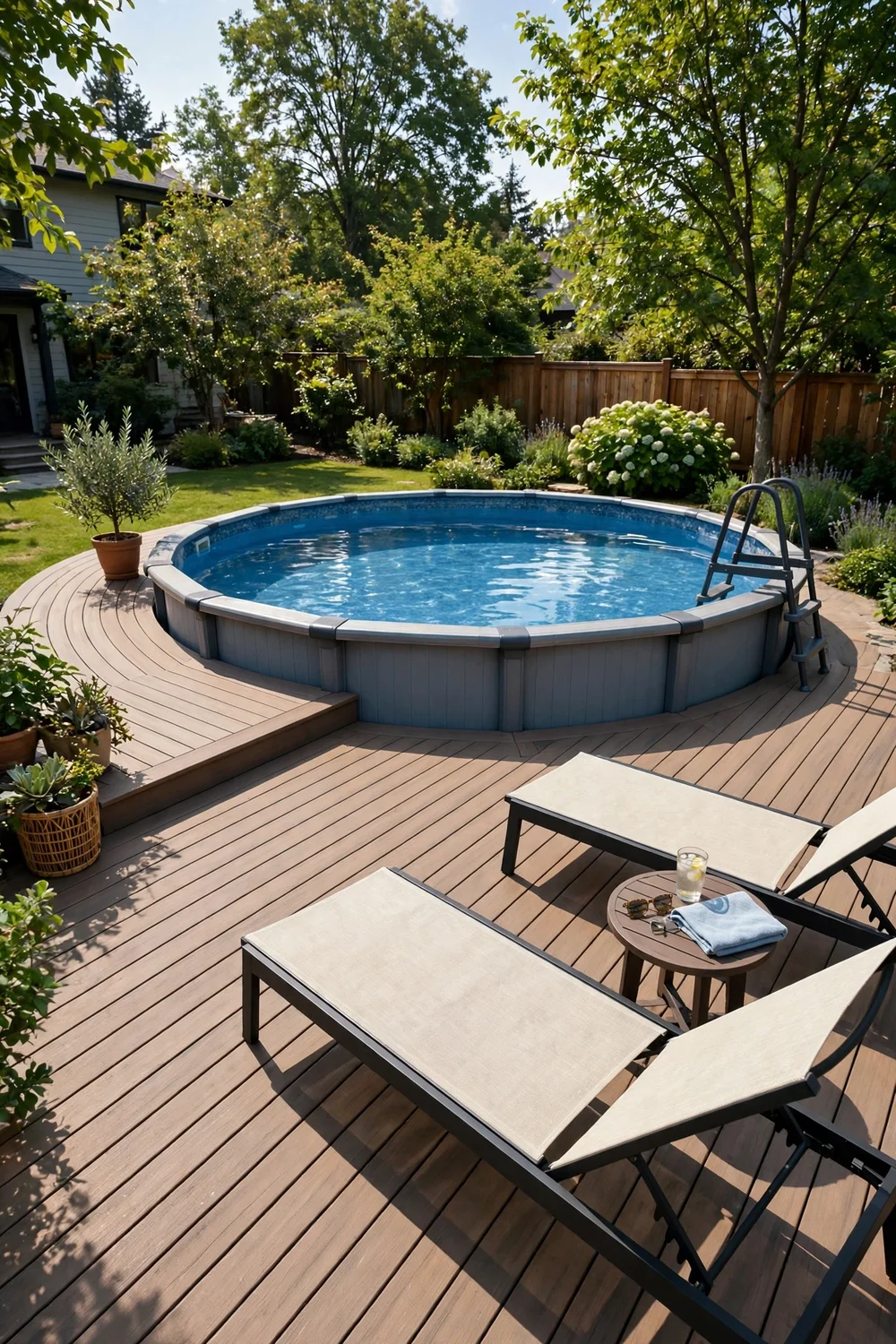
Build a freestanding deck from composite boards (like Trex or TimberTech) that meets the pool’s top rail on two or three sides. A 12×16-foot deck platform gives room for two lounge chairs and a side table without crowding swimmers. Composite costs more than pressure-treated wood upfront, about $8 to $12 per square foot in materials, but never needs staining. Leave a 1-inch gap between deck boards and the pool wall for liner replacement access. Try this: run the deck boards parallel to the pool wall for the cleanest look. Cost: $$$$. Difficulty: moderate.
2. Stock tank plunge pool
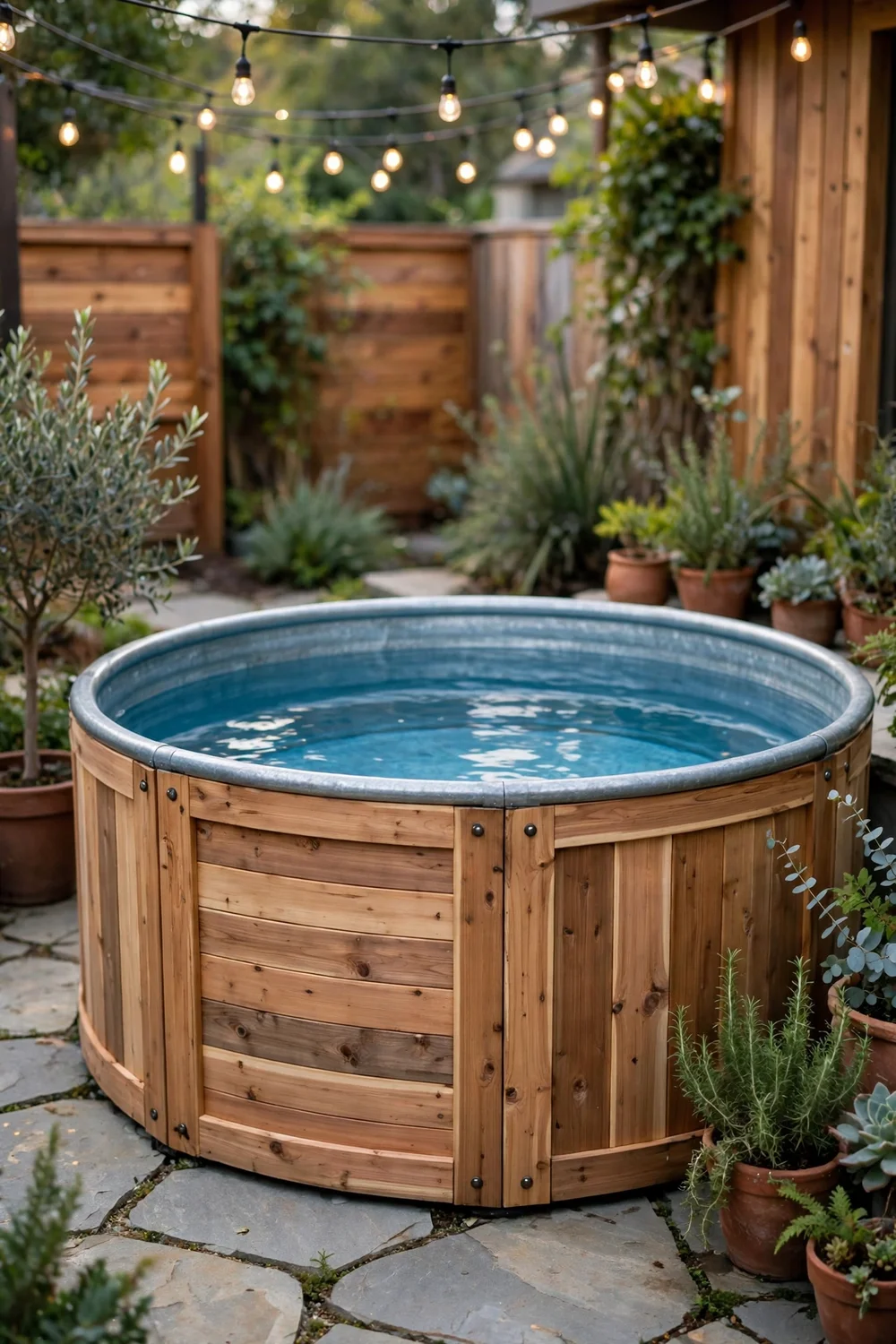
Repurpose an 8-foot galvanized stock tank from a farm supply store as a plunge pool, wrapping the steel in cedar fence pickets for a high-end look. The tank holds about 700 gallons, heats up fast in sun, and fits patios where a full pool cannot. Add a small cartridge filter and a submersible pump for circulation. Drill an overflow hole 4 inches below the rim to handle rain. Try this: stain the cedar wrap in a weathered gray to match modern patio furniture. Cost: $$$$. Difficulty: moderate.
3. Semi-inground with stone veneer

Set a pool rated for burial (brands like Radiant build insulated aluminum-wall models) two feet into a sloped yard, then face the exposed wall with manufactured stone veneer. This solves sloped lots without expensive retaining walls and looks like a custom build. Check that your specific pool model is rated for semi-inground installation; standard steel-wall pools are not. The veneer runs $6 to $10 per square foot installed. Try this: cap the veneer with a 2-inch bluestone coping for a finished edge. Cost: $$$$. Difficulty: hard (pro install).
4. Dark gray resin wall pool
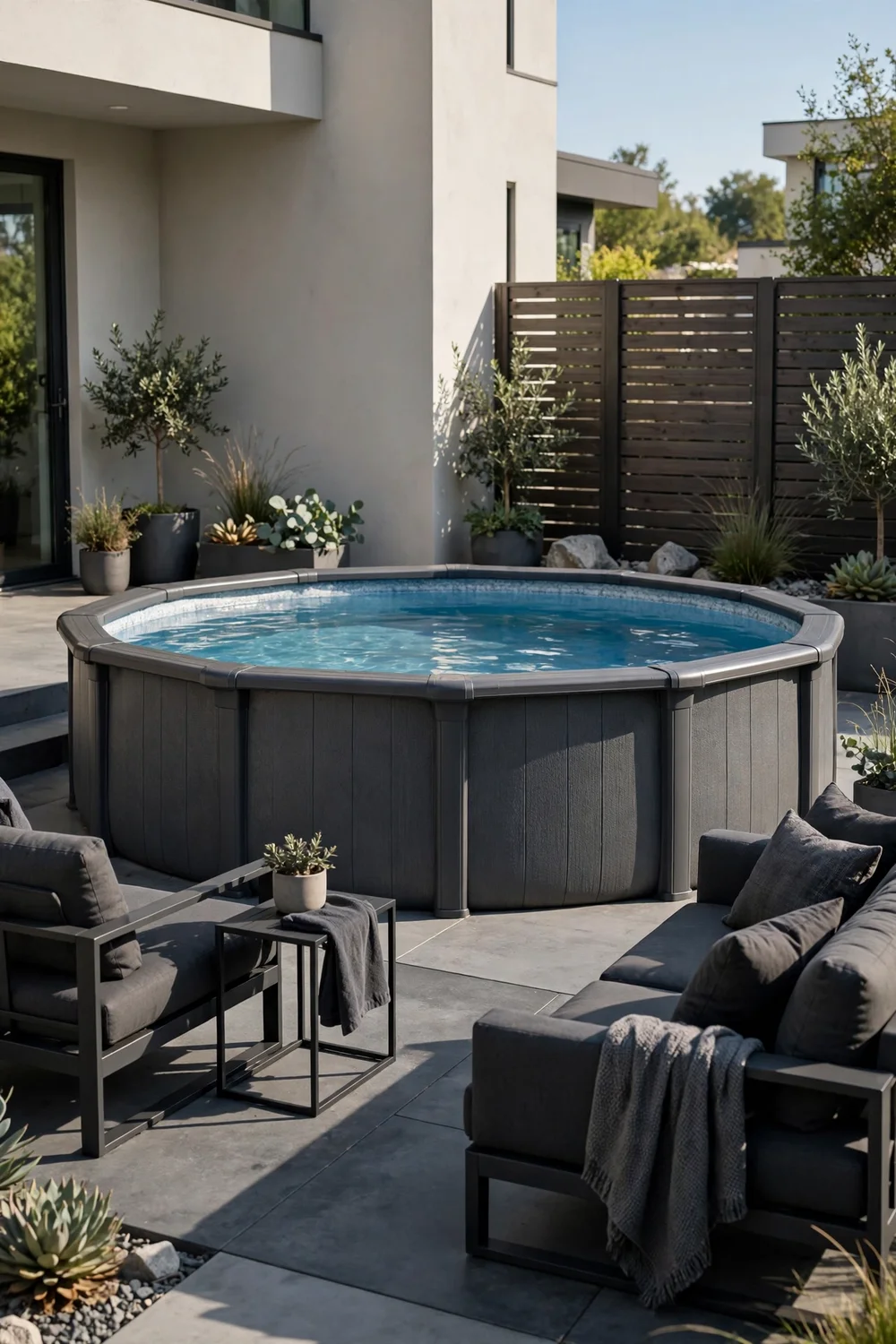
Choose a steel-frame pool with dark gray or graphite resin top rails and uprights instead of classic white or blue. Manufacturers like Intex and Bestway now sell gray-walled models that blend with contemporary patios instead of shouting “pool.” The darker wall also hides scuffs and sunscreen marks better than white. Pair it with black or charcoal patio furniture for a cohesive setup. Try this: add a gray outdoor rug beside the ladder to tie the palette together. Cost: $$$$. Difficulty: easy.
5. Oval pool with sun deck
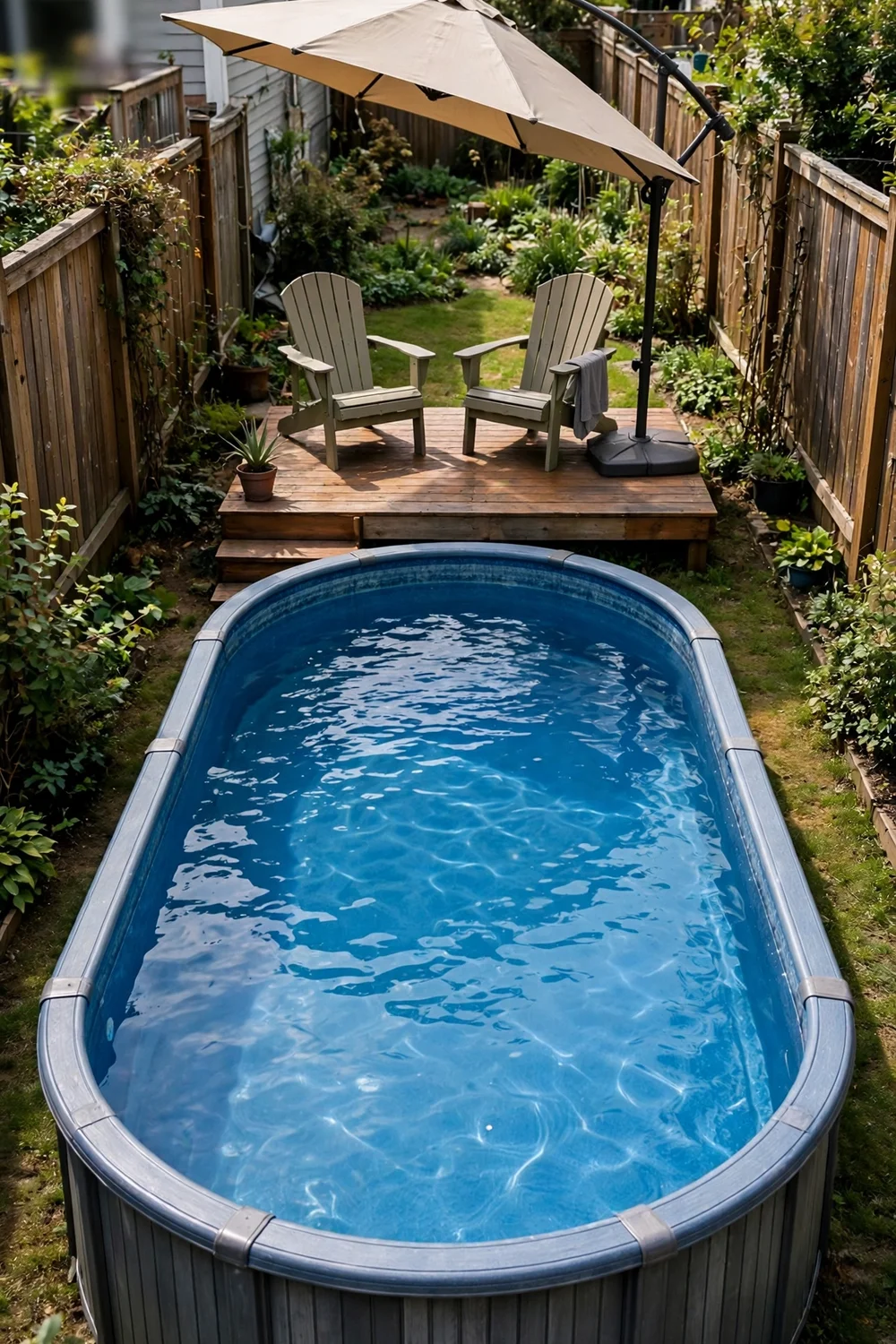
Pick an oval footprint, such as 12×22 feet, which fits narrow yards better than a round pool of similar volume, and build a compact 6×8-foot deck at one end for entry. The deck holds the ladder, two chairs, and a cantilever umbrella, so the rest of the yard stays open. Oval pools need buttress supports on the long sides, so leave 3 feet of clearance there. Try this: position the deck on the house side to shorten the walk with wet feet. Cost: $$$$. Difficulty: moderate.
6. Container-style raised pool
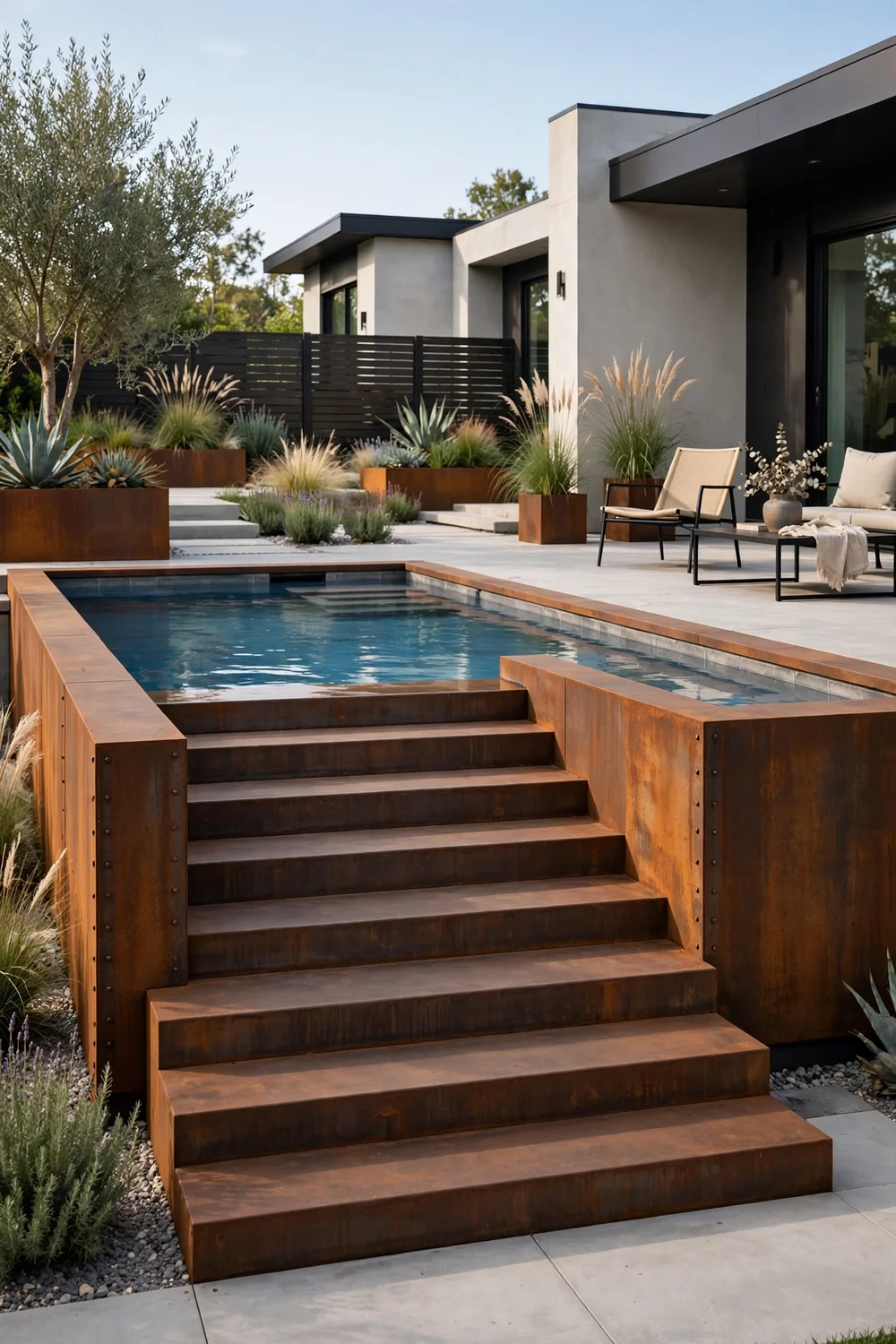
Go fully architectural with a rectangular raised pool wrapped in corten-steel-look or charred-wood cladding, entered by wide integrated steps. The raised design puts the waterline near eye level from the patio, which feels more like a design feature than a pool. This is a premium route, often $8,000 to $15,000 installed, but it suits modern homes where a vinyl pool would clash. Try this: add a sheer-descent waterfall on one wall for sound and movement. Cost: $$$$. Difficulty: hard (pro install).
7. Wooden privacy screen surround
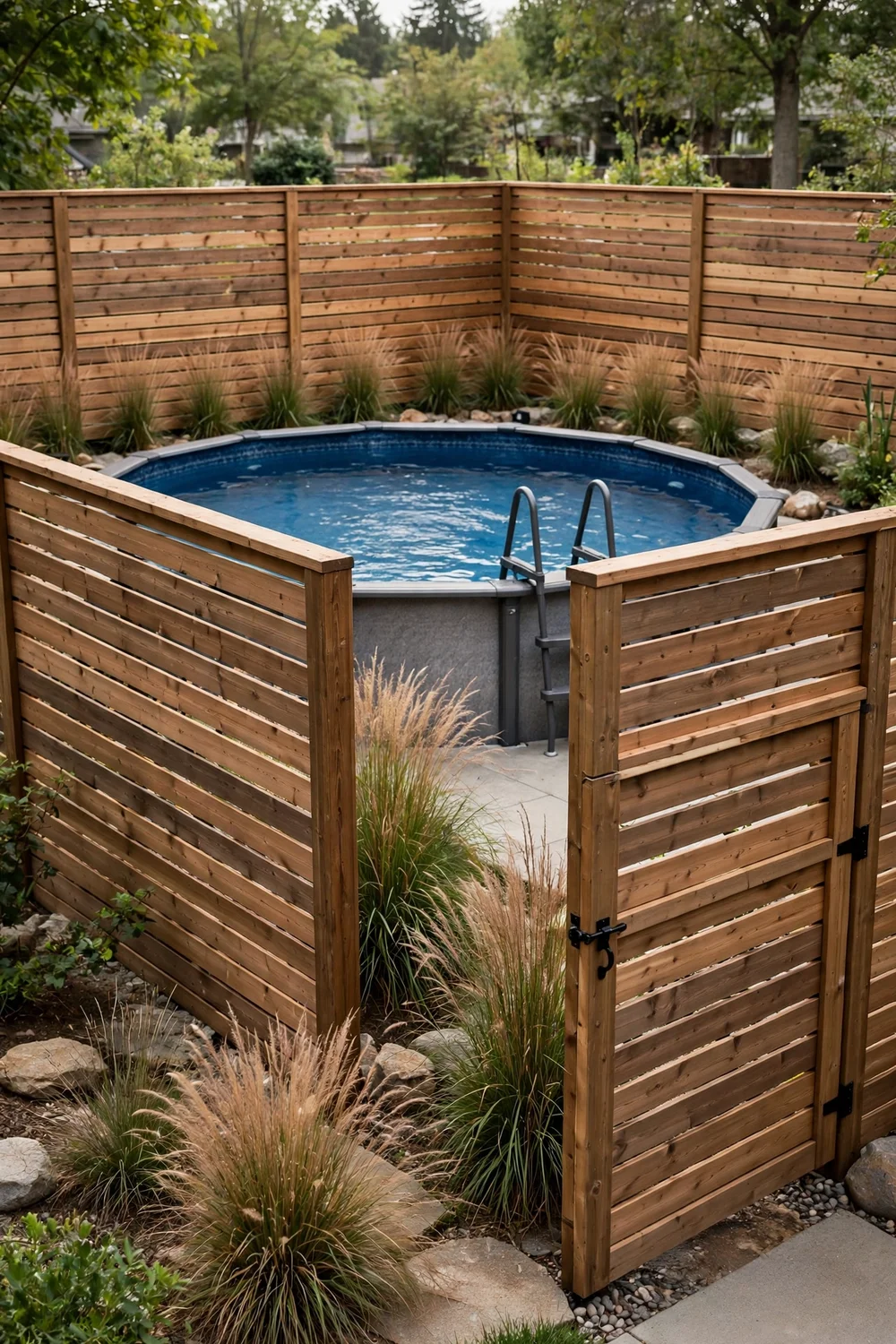
Hide the pool’s structure behind horizontal cedar slat screens set 2 feet out from the walls, with the gap planted with ornamental grasses. The screens read as fencing, satisfy many local barrier rules when built to 4 feet with self-closing gates, and give swimmers privacy from neighbors. Leave one removable panel for pump and filter access. Try this: stain the screens the same color as your house trim for a built-in feel. Cost: $$$$. Difficulty: moderate.
8. Gravel and paver patio base
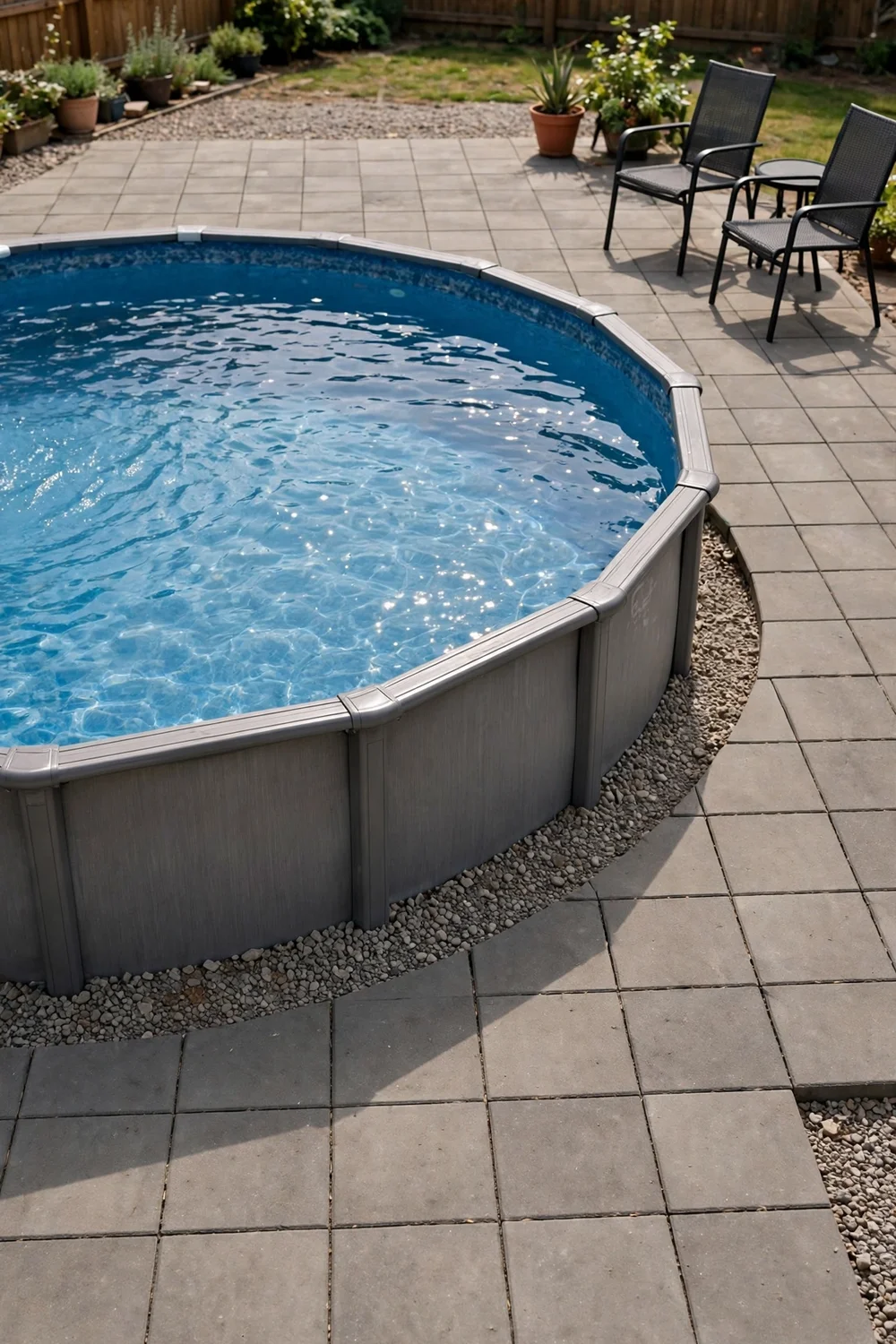
Set the pool on 3 inches of compacted crusher-run gravel topped with interlocking concrete pavers that extend 4 feet past the walls as a patio. The paver border drains splash water, stays cooler than concrete in sun, and gives you a clean surface for chairs. Compact the base in 1-inch lifts with a plate compactor; skipping this step causes settling and wall stress. Try this: use permeable pavers so rain drains through instead of pooling. Cost: $$$. Difficulty: moderate.
9. LED night lighting
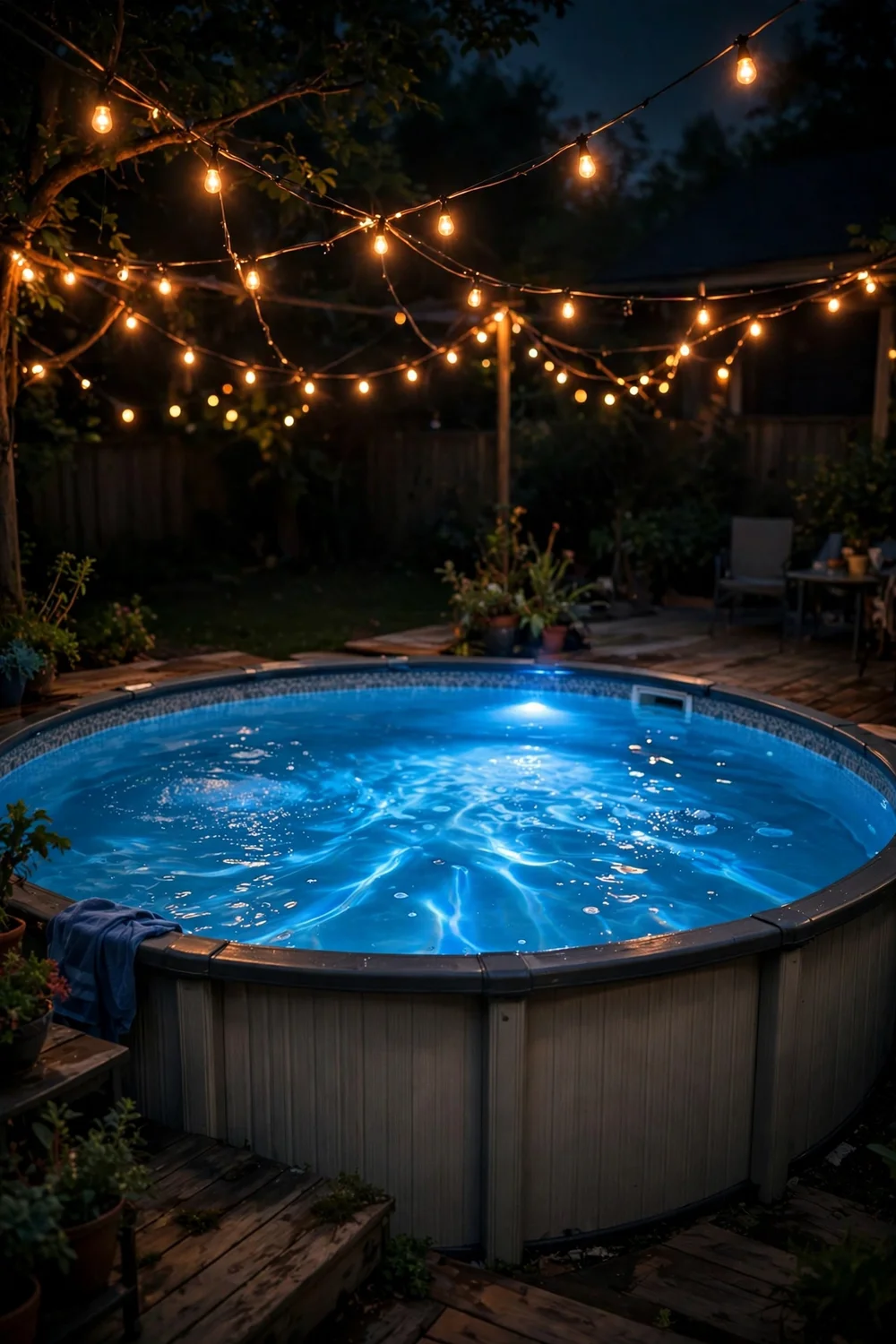
Add a magnetic submersible LED pool light (about $30) plus a strand of warm-white patio lights overhead to make the pool usable and inviting after dark. The underwater light makes night swims feel safe by revealing the pool floor, and the overhead strand defines the area without harsh floodlights. Use a GFCI-protected outdoor outlet for everything near water, and keep transformers 10 feet from the pool edge. Try this: put the lights on a dusk-to-dawn timer so you never forget them. Cost: $$$. Difficulty: easy.
10. Pergola shade structure
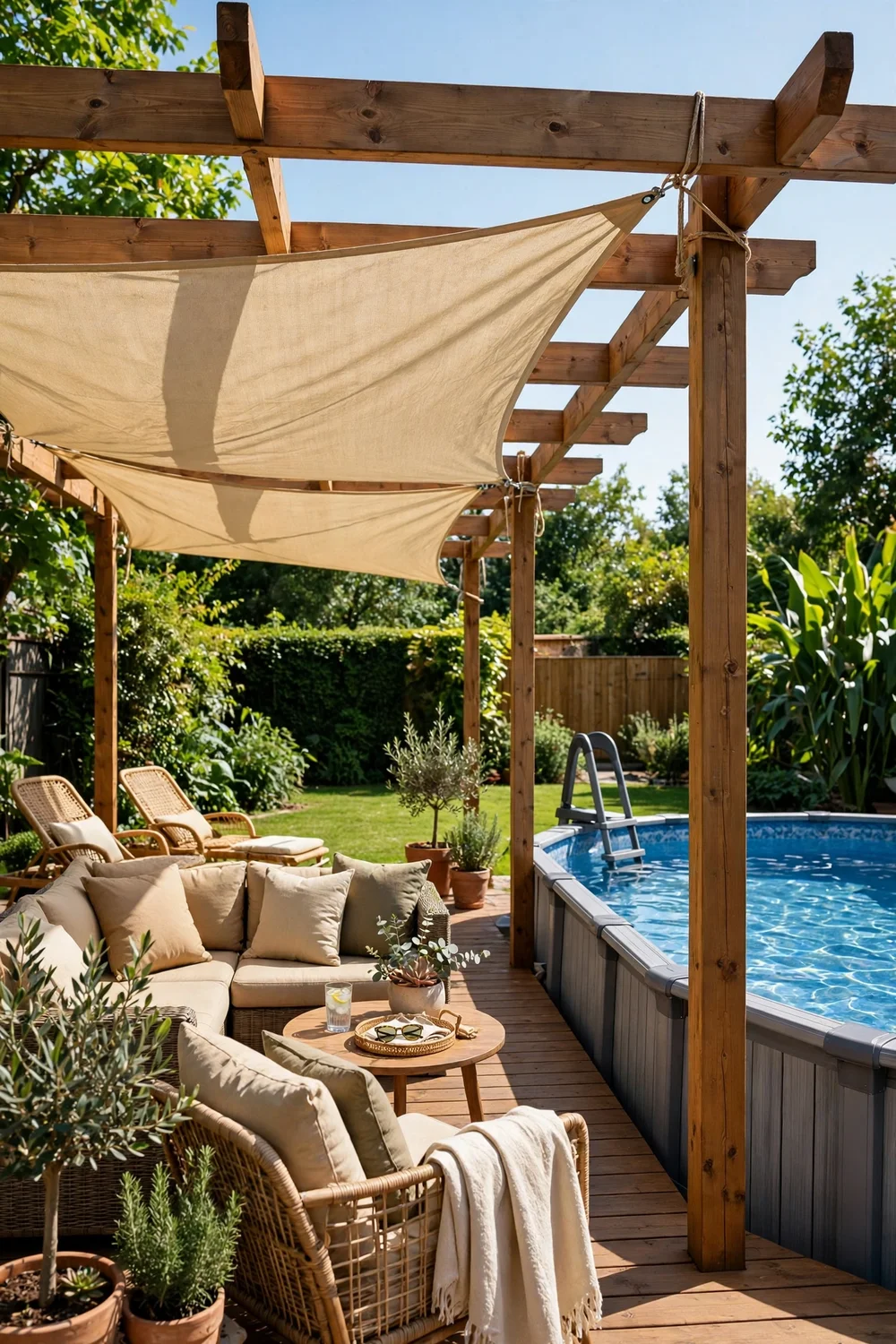
Build a simple 10×10-foot cedar pergola over the deck end of the pool and stretch a shade sail across the top beams. The structure blocks harsh midday sun, gives you somewhere to hang string lights, and frames the pool like an outdoor room. Anchor posts in concrete footings 36 inches deep so wind cannot lift the sail. A sail blocks about 90 percent of UV while still letting breeze through. Try this: train a fast-growing vine like clematis up two posts for living shade within two seasons. Cost: $$$$. Difficulty: moderate.
11. Built-in bench ledge

Choose a pool model with a molded bench or install an aftermarket in-pool bench that hooks over the top rail, giving swimmers a place to sit with drinks at water level. Benches 12 inches deep work for adults and double as a step for kids climbing out. They also reduce the swim area slightly, which actually helps small pools feel more like plunge pools. Rinse the bench weekly to prevent sunscreen buildup. Try this: add a floating drink holder tethered to the bench so cups do not drift away. Cost: $$$. Difficulty: easy.
12. Tropical planting border
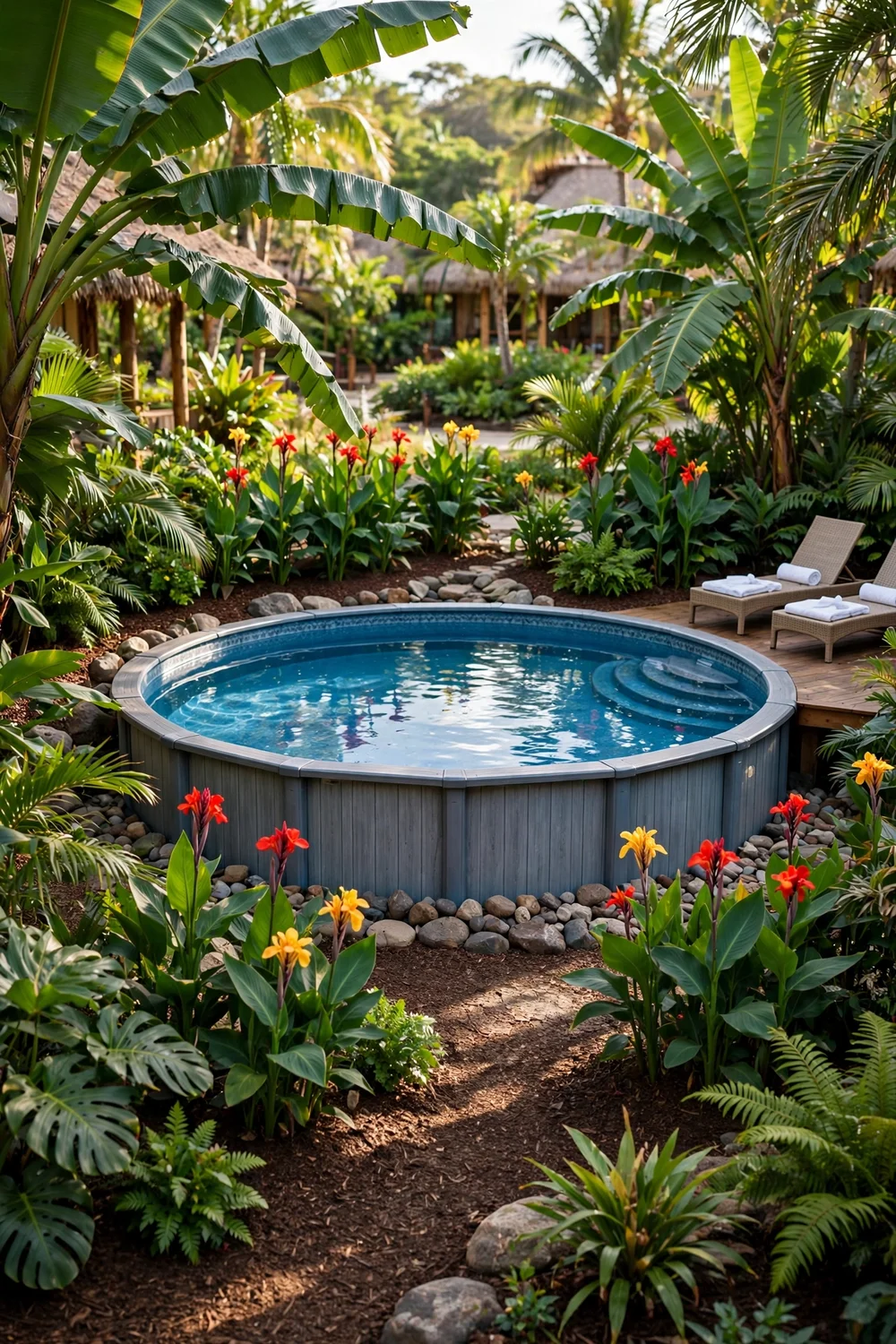
Ring the pool with large-leaf plants like banana, canna lily, and elephant ear in raised beds 3 feet from the walls to create a resort feel. The foliage hides the pool’s base, softens splashing sounds, and provides natural privacy. Keep plants out of the splash zone’s constant wetting, and avoid anything with thorns or heavy leaf drop near the water. In cold climates, grow them in pots and overwinter indoors. If your yard is small, these small patio ideas show how to layer plants in tight spaces. Try this: mulch the beds with river rock instead of bark so chips do not blow into the pool. Cost: $$$. Difficulty: easy.
13. Saltwater system conversion
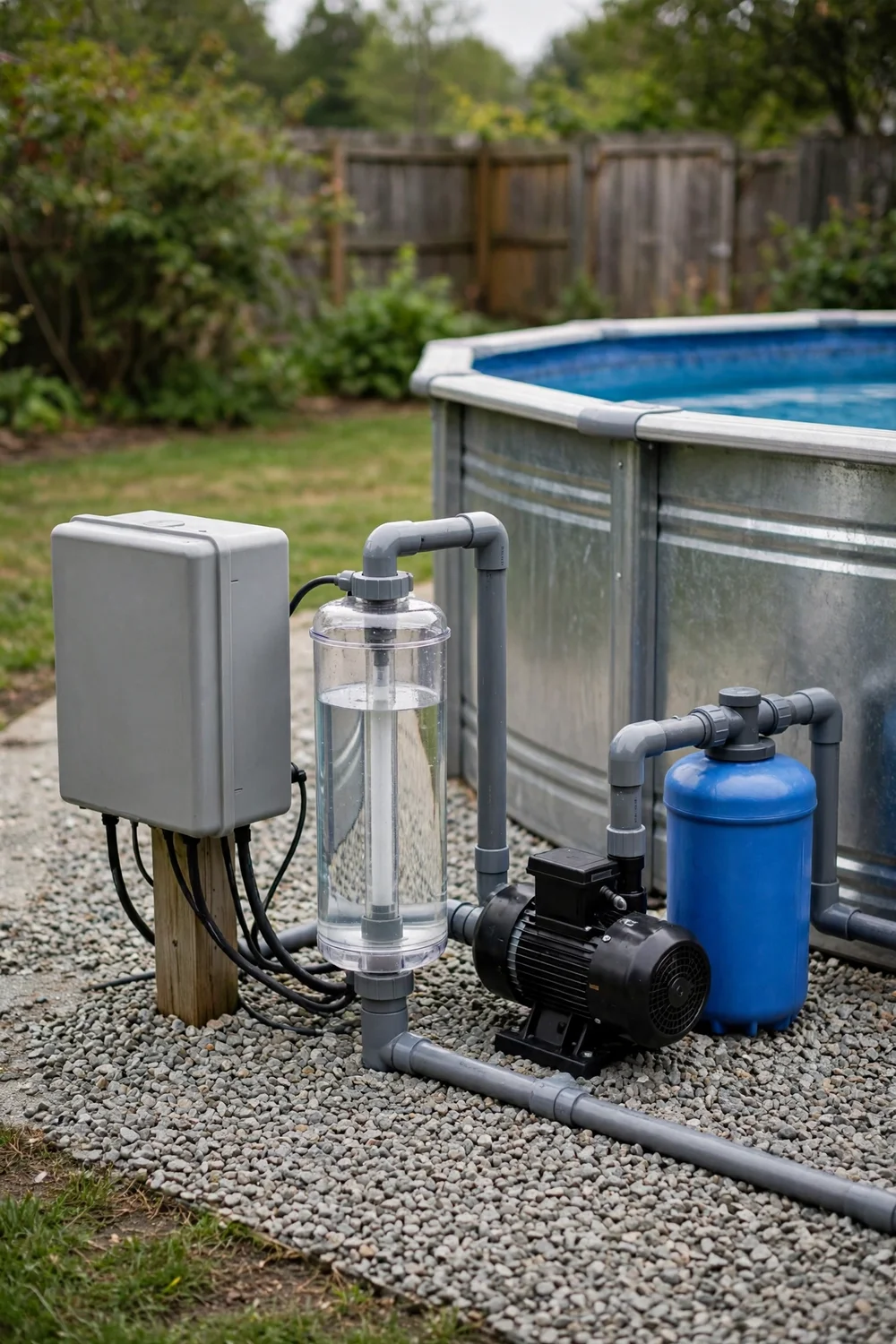
Swap harsh chlorine tablets for a saltwater chlorine generator sized to your pool’s gallons (a 15,000-gallon unit covers most family pools). Salt systems keep water gentler on eyes and skin and cut daily chemical handling to occasional salt top-ups. The generator cell needs replacement every 3 to 5 years at about $200. Test salt levels monthly with strips; too little salt means no chlorine production. Try this: add salt gradually over 24 hours with the pump running to dissolve it fully. Cost: $$$. Difficulty: easy.
14. Removable mesh safety fence
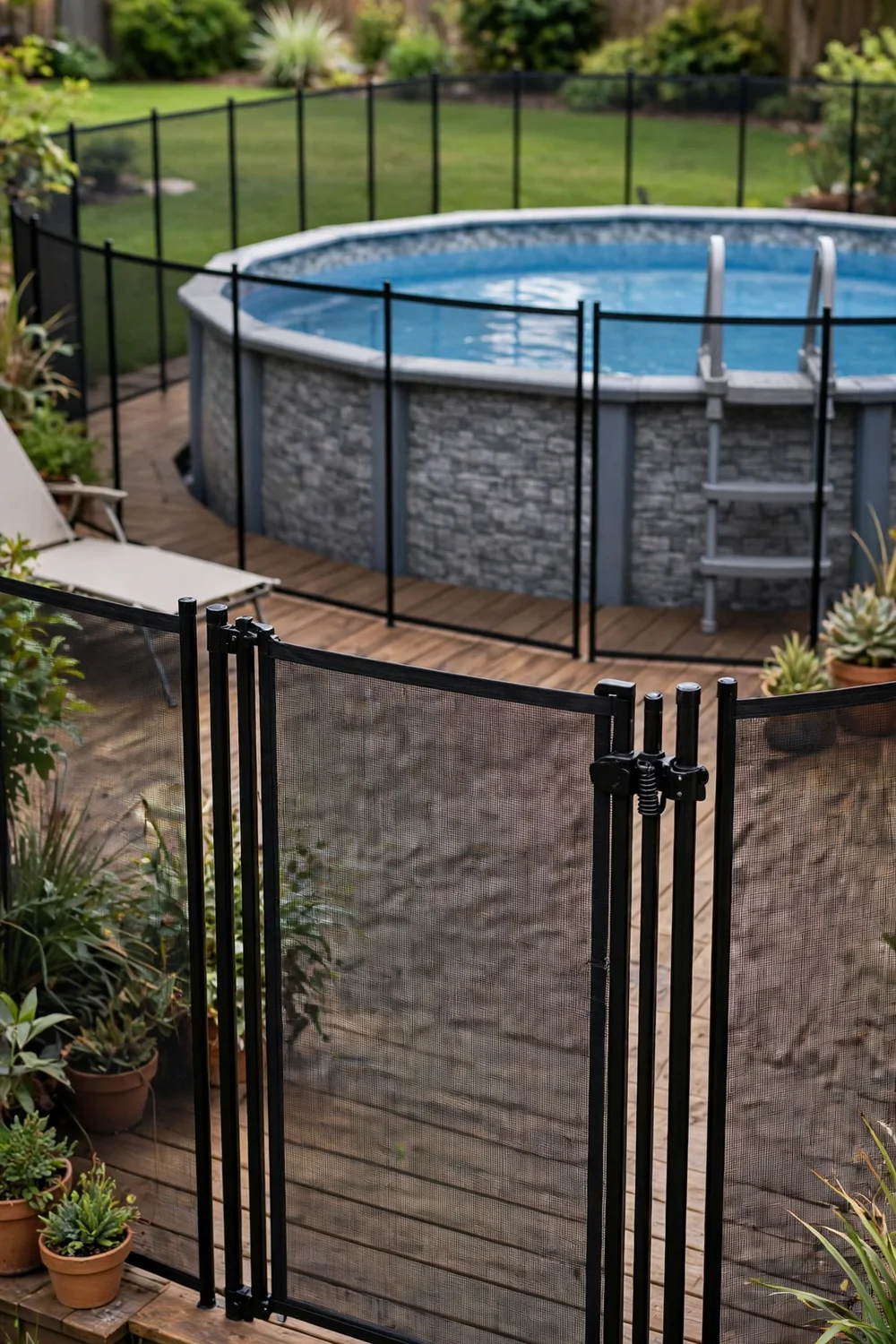
Install a removable mesh pool fence (4 feet tall, black or beige) around the pool area with a self-closing, self-latching gate. Mesh fencing meets most local barrier codes, comes down in minutes for parties, and costs far less than aluminum. The poles sleeve into deck-mounted sockets, so removal leaves only flush caps. This is the single most important accessory if kids or neighbor kids are ever nearby. Try this: choose a gate with a magnetic latch mounted out of small children’s reach. Cost: $$$$. Difficulty: moderate.
15. Outdoor shower station
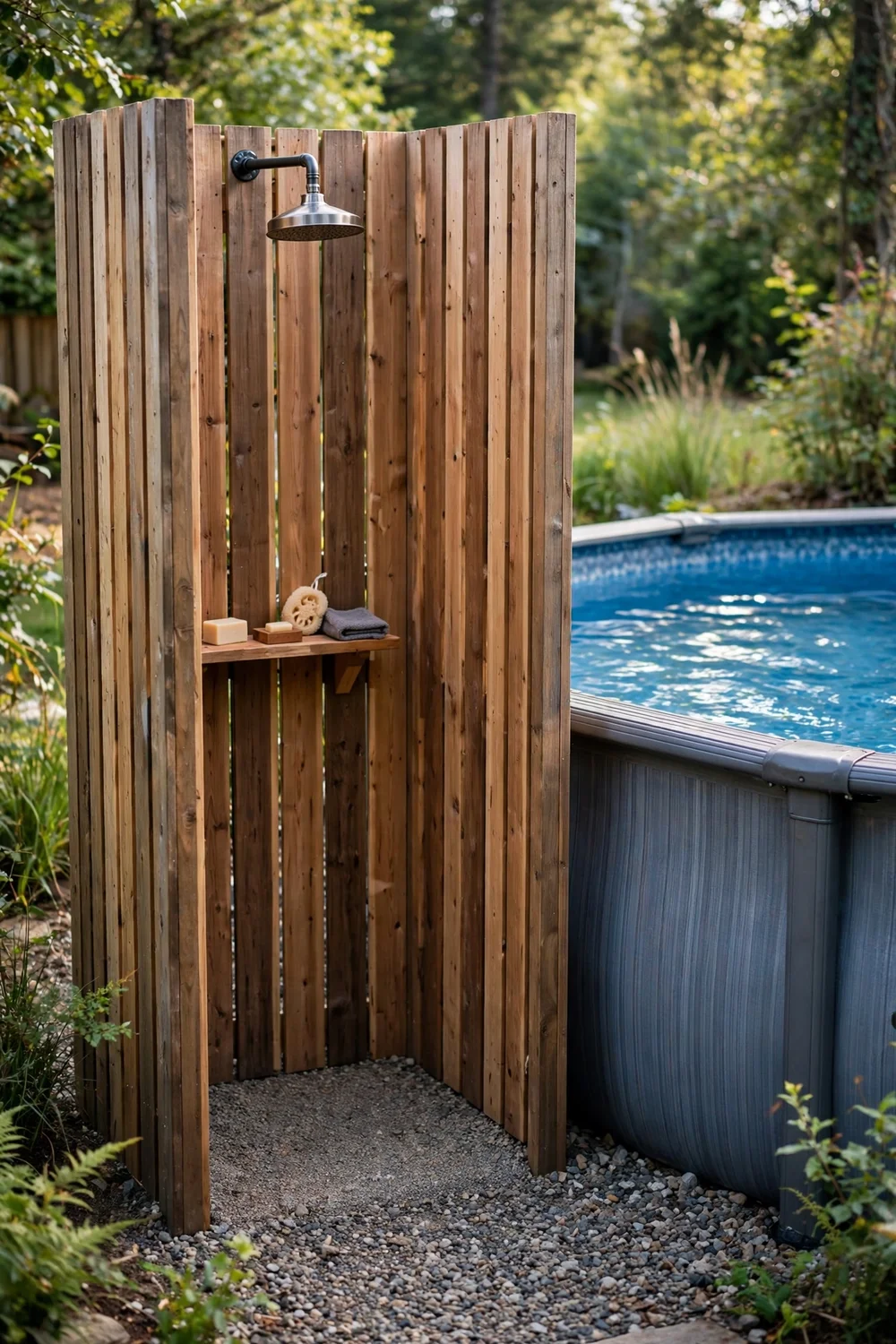
Add a simple outdoor shower on a cedar privacy screen near the pool so swimmers rinse off before entering, which keeps sunscreen and dirt out of the water and cuts chemical use. A garden-hose-fed shower kit costs under $100; a plumbed hot-and-cold version runs $300 to $600 plus a plumber. Slope the shower pad away from the pool so soapy runoff drains to the yard, not the water. Try this: mount a small shelf for shampoo at shoulder height inside the screen. Cost: $$$. Difficulty: easy to moderate.
16. Poolside serving ledge
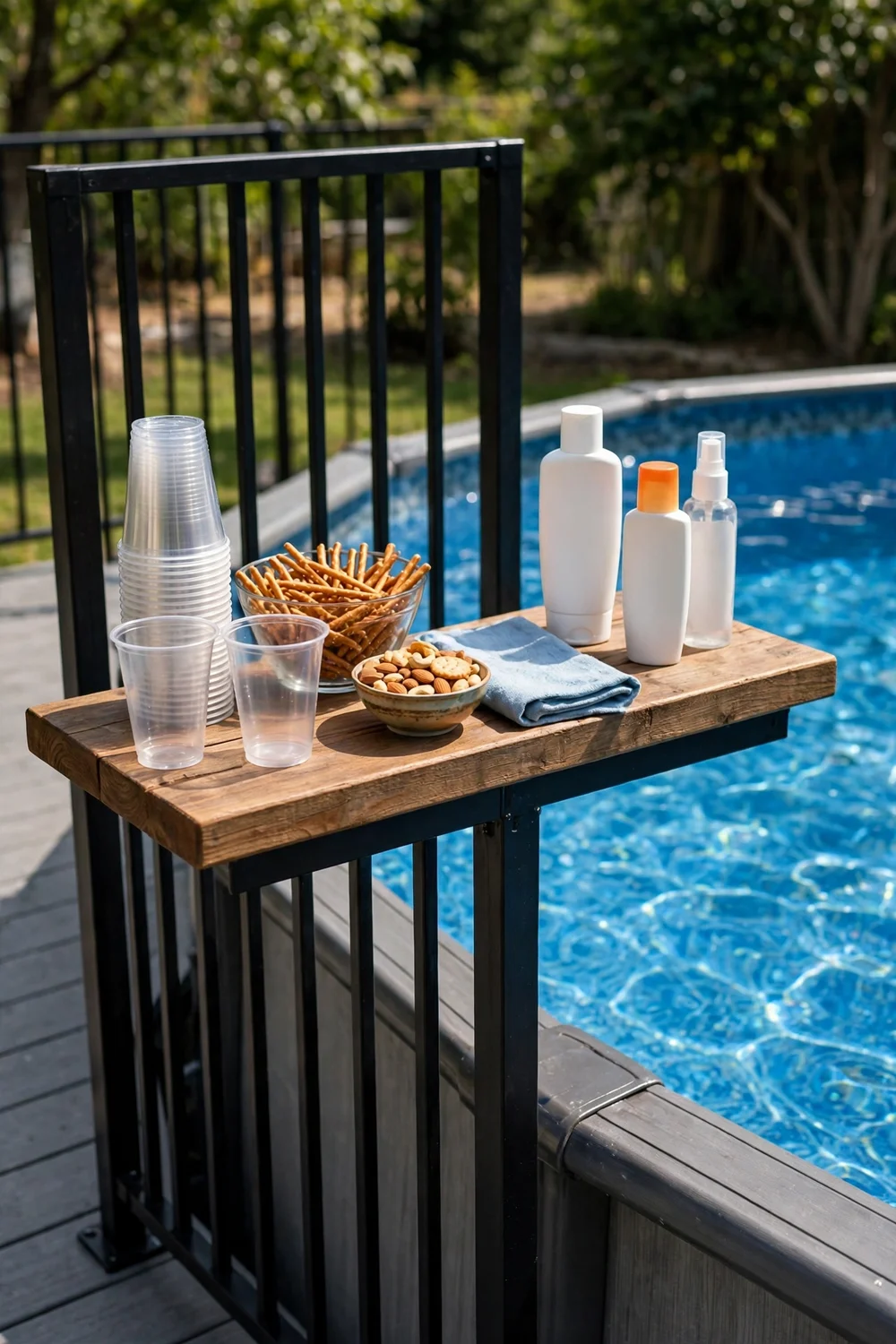
Mount a 12-inch-wide serving ledge to the deck rail at the pool’s edge for snacks, drinks, and sunscreen, keeping glass and clutter out of the swim area. Use marine-grade polymer or sealed teak so it survives constant splashing. Stock it with plastic cups only; broken glass near a pool means draining and a full liner inspection. The ledge doubles as a phone shelf for music control. Try this: add a small trash bin under the ledge so wrappers never blow into the water. Cost: $$$. Difficulty: easy.
17. Painted pool wall mural

Paint the pool’s exterior wall panels with exterior acrylic in a simple wave or geometric pattern to turn the biggest visual surface into art. Clean and prime the panels first, then use painter’s tape for crisp lines; a two-tone horizontal stripe is the easiest design that still looks sharp. Seal with a UV-protective clear coat so the color survives summers. This is a one-weekend project with outsized impact. Try this: match the mural’s darkest tone to your patio furniture for cohesion. Cost: $$$. Difficulty: easy.
18. Solar cover heating
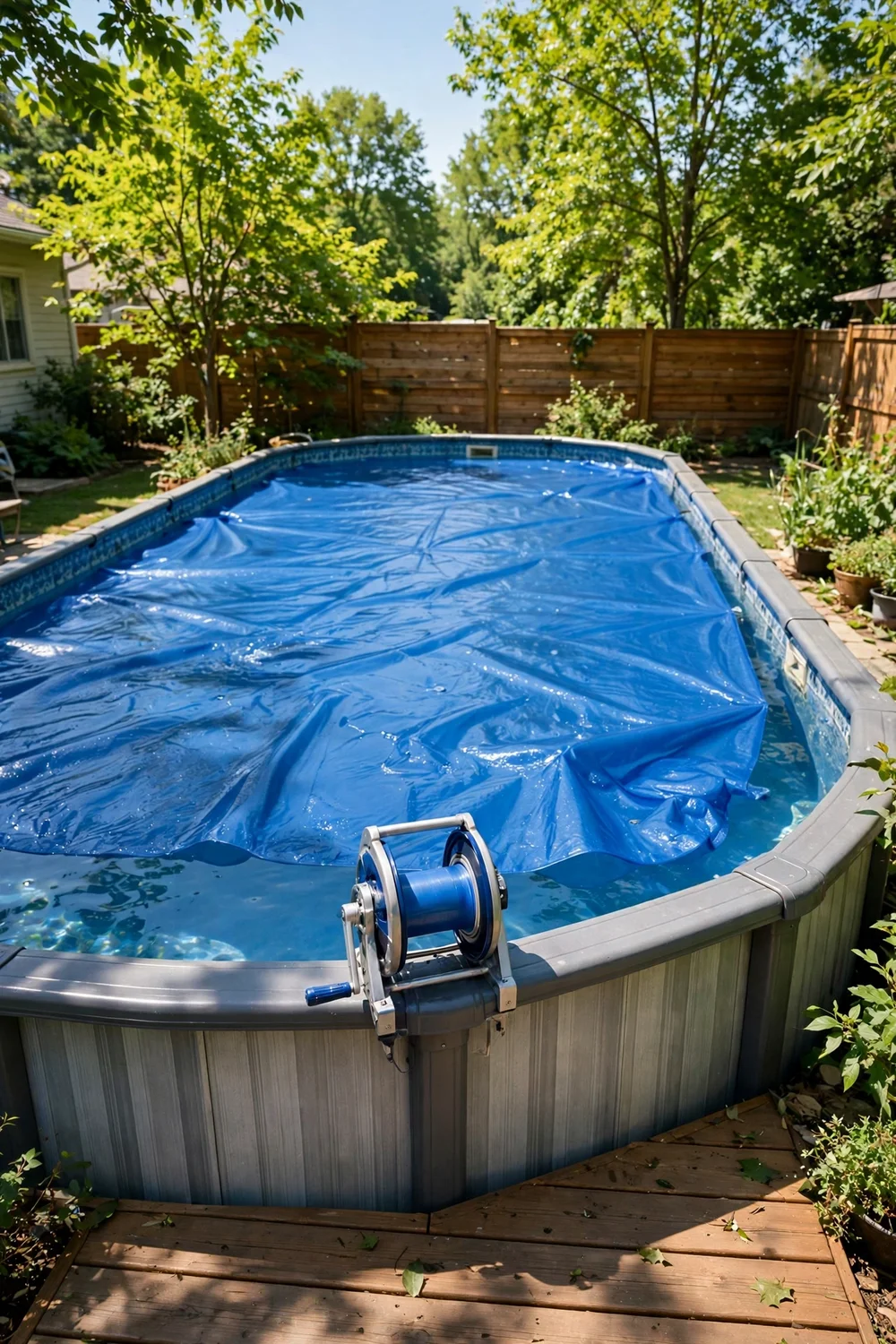
Float a blue solar cover on the water whenever the pool is not in use to gain 5 to 10 degrees of free heat and cut evaporation by up to 95 percent. Cut the cover to fit inside the walls and store it on a $60 reel at the pool’s end so one person can roll it off in a minute. Covers also keep leaves out, which means less skimming. Replace the cover every 3 seasons when the bubbles start flaking. Try this: run the pump during the sunniest hours to distribute the warmed surface water. Cost: $$$. Difficulty: easy.
19. Spool hybrid (spa plus pool)
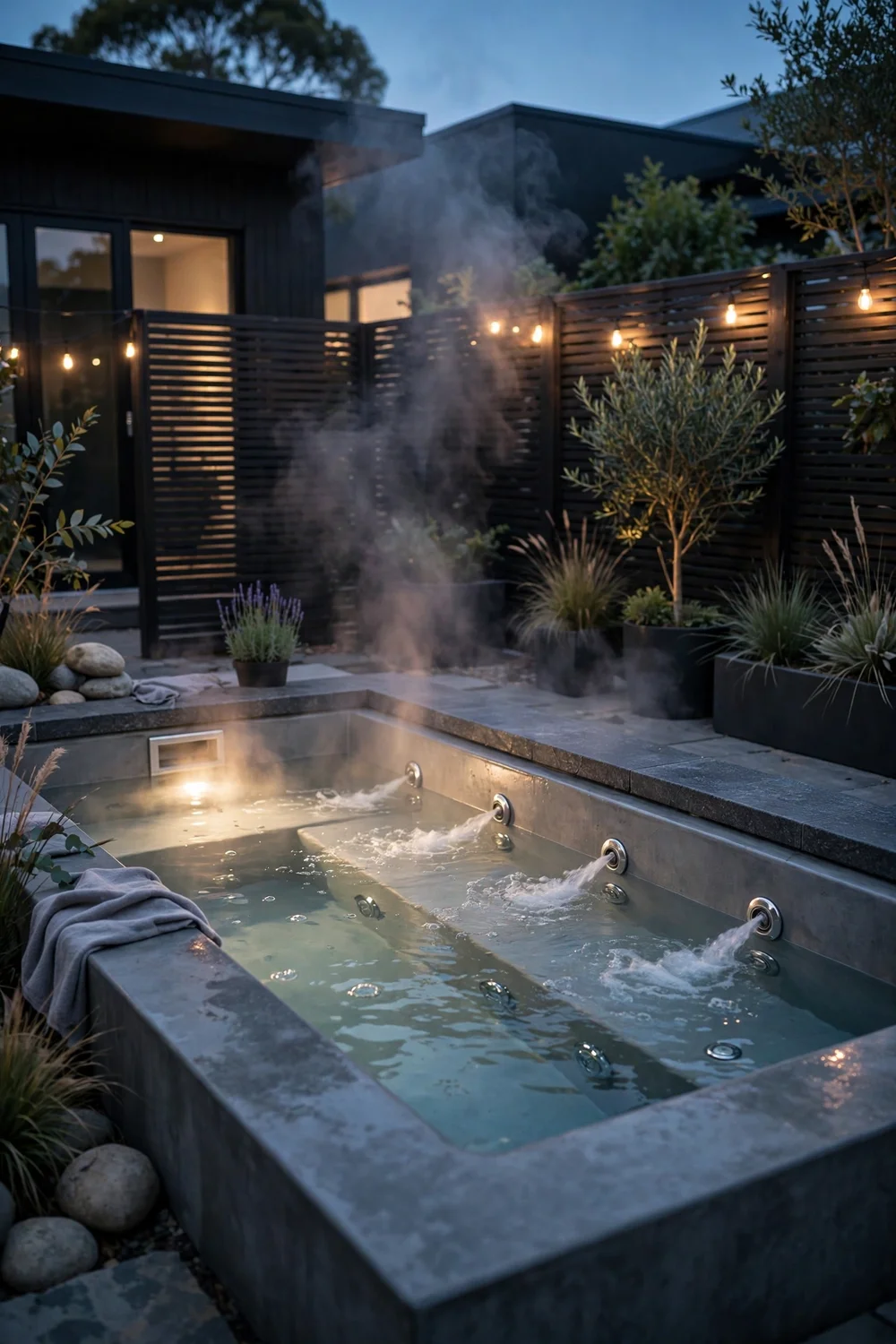
Install a compact spool, roughly 8×12 feet, with built-in benches and hydrotherapy jets for a pool that doubles as a hot tub. Spools heat to 100 degrees for evening soaks and cool down for daytime dips, giving year-round use from a tiny footprint. They need a dedicated 220V circuit and a heater, so budget for an electrician. The small water volume also means lower chemical and heating costs than a full pool. Try this: add a thermal cover to hold heat overnight and cut energy bills. Cost: $$$$. Difficulty: hard (pro install).
20. Winterizing and cover setup
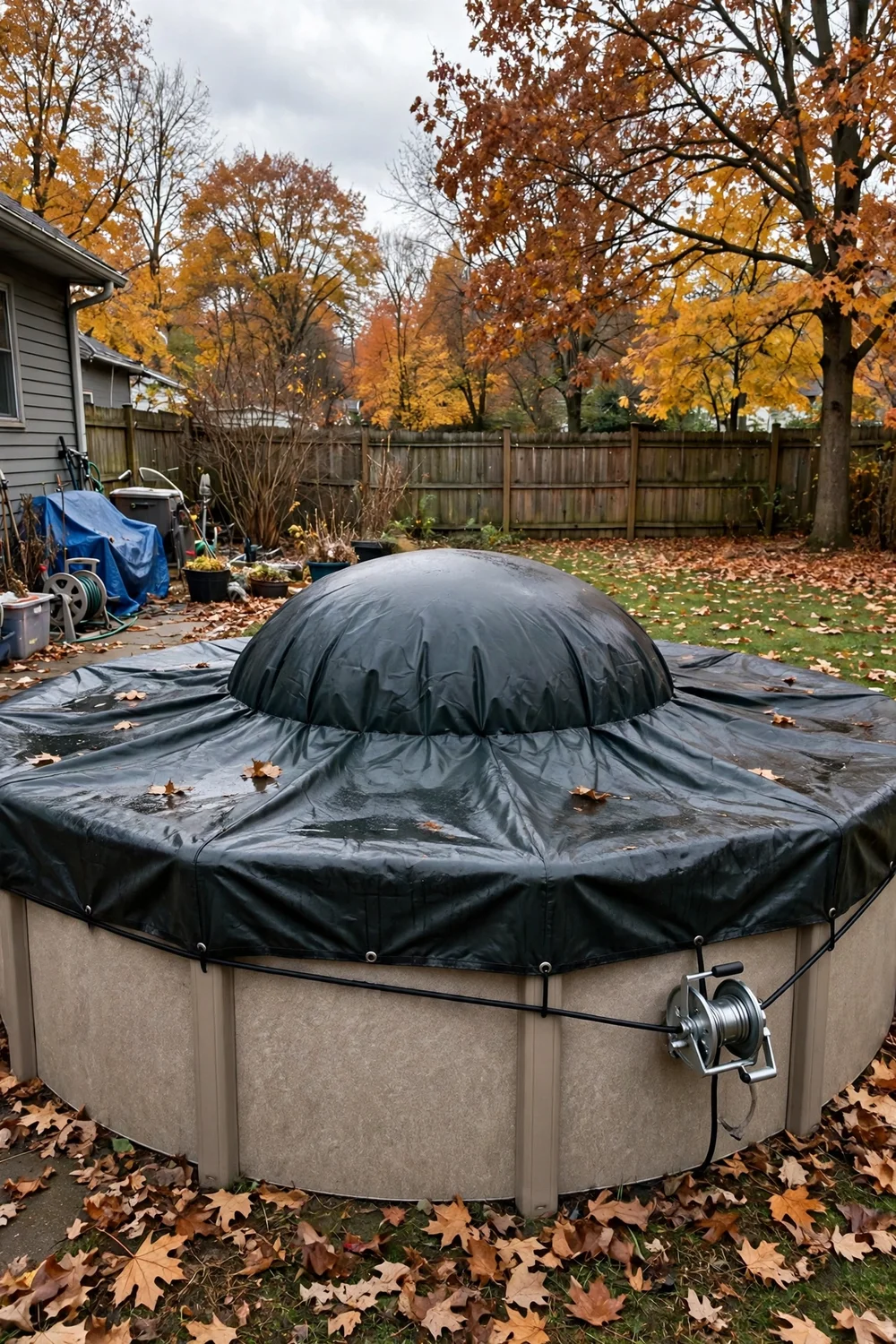
Close the pool properly each fall with a fitted winter cover secured by a cable and winch through the grommets, plus an air pillow centered underneath to absorb ice pressure. Drain water 4 to 6 inches below the skimmer, add winterizing chemicals, and disconnect the pump to store indoors. A good cover keeps the water clean enough that spring opening takes hours, not days. Try this: toss in a second air pillow for pools over 24 feet to split the ice load. Cost: $$$. Difficulty: easy.
How to choose the right size above-ground pool
Measure your yard first and subtract 6 feet on every side for setbacks, access, and the fence most codes require. A 15-foot round pool suits 2 to 3 swimmers; an 18-foot round or 12×24 oval handles a family of five. Bigger is not automatically better: every extra foot adds hundreds of gallons to fill, heat, and chemically balance. If the yard is tight, a stock tank or spool gives you water without swallowing the lawn. Check your city’s permit rules before buying; many treat any pool over 24 inches deep like an in-ground pool for fencing.
Mistakes to avoid with above-ground pools
Skipping the leveling step is the classic failure. Use a transit or a long level and screed the base to within 1 inch; sand alone shifts under thousands of gallons. Second, placing the pool under trees means endless leaf skimming and root damage to liners, so pick open sky. Third, running the pump on a standard extension cord is a fire and shock risk; hire an electrician for a dedicated GFCI circuit. Finally, check HOA and city rules before you buy, since setback and barrier requirements surprise many first-time owners.
Pool safety essentials for families
Drowning is fast and silent, so layers of protection matter. The CPSC’s Pool Safely campaign calls for four-sided fencing at least 4 feet tall with a self-closing, self-latching gate, plus a designated water watcher whenever kids are near the pool. Add a pool alarm and keep rescue equipment within reach. The CDC adds that proper chemical balance prevents illness, so test water 2 to 3 times per week. A metal fence around the pool area can satisfy barrier rules while looking better than chain link. Never rely on floaties or swim lessons alone; supervision is the layer that cannot be skipped.
Frequently asked questions
How much does an above-ground pool cost in 2026?
A quality steel-frame pool set runs $1,500 to $4,000 depending on size. Add $500 to $2,000 for the surround (deck, pavers, or landscaping) and $300 to $800 for electrical work if you need a dedicated circuit.
Do above-ground pools need a fence?
In most U.S. cities and many HOAs, yes. Any pool deeper than 24 inches typically needs a 4-foot barrier with a self-closing, self-latching gate. Check your local building code before installation.
Can you put an above-ground pool on grass?
You can, but it kills the grass underneath and the uneven ground stresses the walls. A compacted gravel or paver base leveled to within 1 inch lasts far longer and protects the liner.
How long do above-ground pools last?
Steel-frame pools last 7 to 15 years with proper care. Liners need replacement every 5 to 9 years. Winterizing correctly and keeping chemistry balanced are the two biggest factors in lifespan.
Are saltwater systems better for above-ground pools?
Salt systems feel gentler on skin and eyes and reduce daily chemical handling. They cost $300 to $600 upfront plus a replacement cell every 3 to 5 years. They still produce chlorine, just in a steadier, milder way.
What size above-ground pool fits a small yard?
A 12-foot round pool or an 8-foot stock tank fits most small yards while leaving room for seating. Measure first and subtract 6 feet on all sides for setbacks, access, and fencing.
Conclusion
An above-ground pool stops looking temporary the moment you give it a proper base, a simple surround, and intentional lighting. Pick the approach that fits your yard and budget, build the safety layers first, and you will swim all summer in a setup that looks like it was always meant to be there.
Want more ideas like these? Explore 25 Partial Above Ground Pool Ideas That Look Built-In.


