



An above ground pool is a fast way to get swimming, but the tall metal wall can make a backyard look unfinished. Many owners want the look of a real inground pool without the $40,000-plus price tag or the weeks of excavation.
A partial above ground pool install is the middle path. You bury the pool two to four feet into the ground, then finish the exposed wall with a deck, stone, or landscaping. I have watched neighbors do this and the result honestly fools guests. Here are 25 partial above ground pool ideas that make an affordable pool look like it was always part of the yard.
Quick takeaways
- Only pools rated for burial should be partially recessed; standard above ground pools can be damaged by soil pressure.
- Most partial installs bury the wall 18 to 36 inches and finish the rest with a deck or retaining wall.
- Call 811 before any digging so utility lines are marked.
- Check the CPSC pool safety guidance on fencing and covers before you swim.
1. Hillside Sunken Install

Sloped yards are the easiest place to do a partial install because the grade does half the work. Excavate into the hill so the pool sits two to three feet into the slope, then clad the exposed downhill wall in stacked stone or brick veneer. A set of stone steps up the bank connects the lawn to the water. This layout drains naturally away from the pool, which keeps the buried wall drier. It also hides the pool from the street while giving swimmers a view.
Try this: Keep the pool two feet from the slope edge so you have room for a proper retaining footing.
Cost: $$$$| Difficulty: Hire a pro
2. Wraparound Deck Flush With the Rail

A full wraparound deck turns a pool into a lounge zone. Build the deck so the walking surface sits exactly level with the pool’s top rail; anything lower forces an awkward step up, and anything higher makes leaning over the edge a stretch. Use pressure-treated lumber or composite boards, and leave a two-inch gap between the deck and the pool wall for liner replacement access. Add a simple railing on the outer edge and you have a resort-style platform that completely hides the pool’s height.
Try this: Use hidden deck fasteners for a smooth barefoot surface around the pool.
Cost: $$$$| Difficulty: Advanced DIY or pro
3. Curved Stone Retaining Wall

If full decking is out of budget, a curved retaining wall gives the buried section a finished look for less. Build a mortared or dry-stacked stone wall around the exposed side of the pool, backfilling between the wall and the pool with gravel for drainage. Plant the top of the wall with trailing sedum or creeping thyme so greenery spills over the stone. The curve softens the round shape of the pool and makes the whole yard feel designed rather than assembled.
Try this: Add a perforated drain pipe behind the wall so water never sits against the pool.
Cost: $$$$| Difficulty: Intermediate DIY or pro
4. Wide Wooden Entry Steps
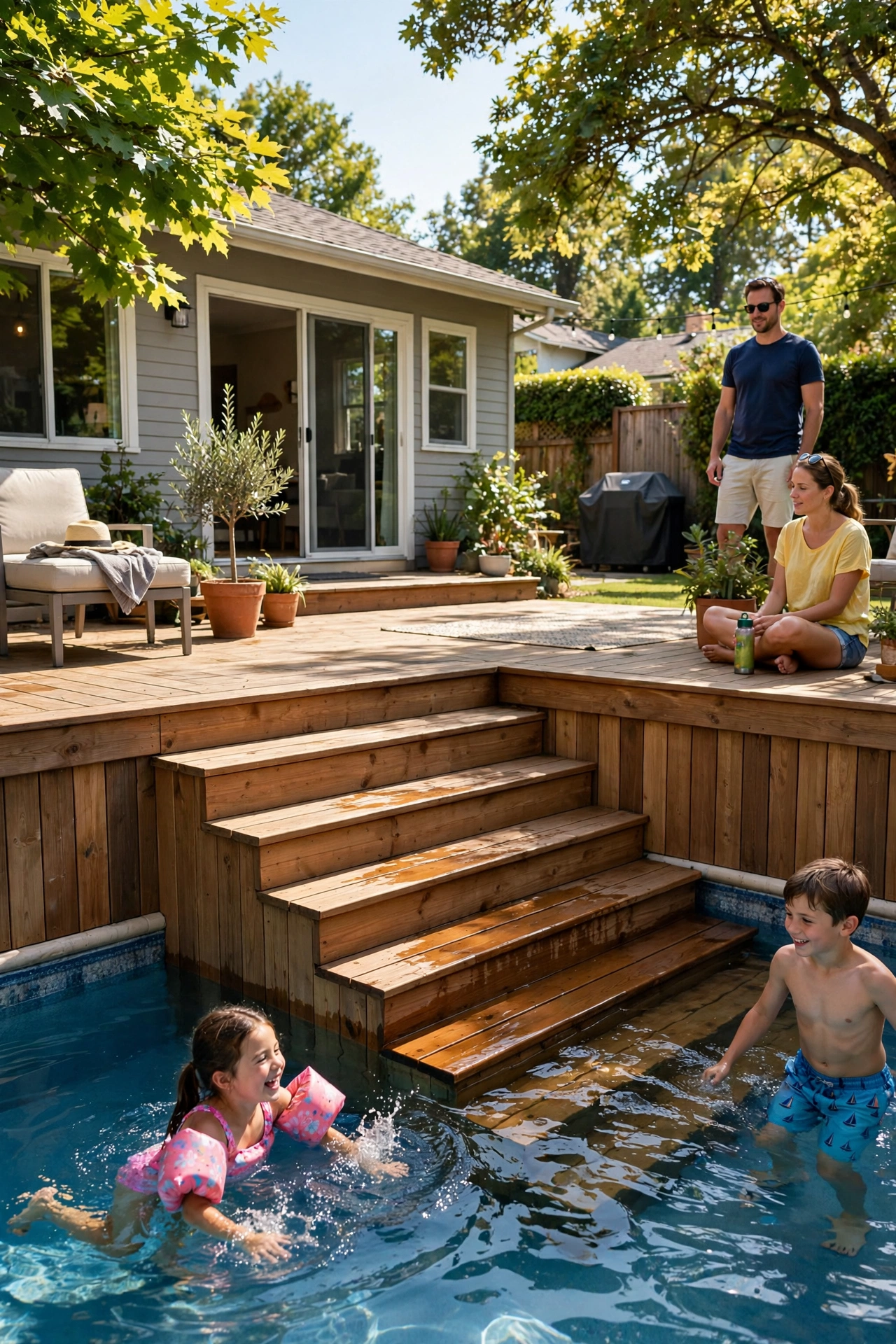
Ladders are the most annoying part of an above ground pool. Replace the ladder with wide wooden steps built into the deck at rail height. Steps four feet wide give swimmers a gracious entry and double as a place to sit with feet in the water. Frame them from pressure-treated 2×6 lumber, use stair stringers rated for the height, and add a handrail on one side. Kids and older swimmers will use the pool more when getting in feels easy.
Try this: Stain the steps a shade darker than the deck so the edges are easy to see in bright sun.
Cost: $$$| Difficulty: Intermediate DIY
5. Composite Deck Platform

Composite decking costs more up front but never needs staining, which matters when the deck sits inches from pool water. Build a platform that covers just the entry side and one long stretch of the pool rather than the full circle; this partial deck handles seating and entry for about half the cost of a wraparound. Cap the deck edge with a bullnose board for a clean line against the pool wall. Built-in planter boxes along the outer edge add color without taking up floor space.
Try this: Pick a light gray or tan composite to keep the surface cooler on bare feet.
Cost: $$$$| Difficulty: Advanced DIY or pro
6. Cedar Privacy Fence Enclosure

A six-foot cedar fence around a partially buried pool solves two problems at once: privacy and safety. Local codes often require a barrier around any pool, and a fence doubles as a windbreak that keeps the water warmer. Run warm-white string lights along the top rail for evening swims. Leave a four-foot gate with a self-closing, self-latching lock per CPSC pool safety guidance. The fence also hides pump equipment from view.
Try this: Set fence posts in concrete and keep boards two inches off the soil so they do not rot.
Cost: $$$$| Difficulty: Intermediate DIY or pro
7. Gravel Landing Zone

The ground right around a pool gets muddy fast. A four-foot ring of pea gravel around the exposed base handles foot traffic, drains rain away from the pool wall, and costs very little. Lay landscape fabric first, spread gravel three inches deep, and set flat stepping stones from the house to the pool entry. Add a few large pots of ornamental grass for height. This is the cheapest finishing idea on the list and a great first step while you plan a bigger deck later.
Try this: Use 3/8-inch pea gravel; larger stones hurt bare feet and smaller ones wash away.
Cost: $$$| Difficulty: Easy DIY weekend
8. Paver Patio Transition

Instead of decking, run a concrete paver patio right up to the buried edge of the pool. Pavers handle wet feet well, feel solid under furniture, and come in patterns that mimic natural stone. Grade the patio so it slopes one inch per eight feet away from the pool to keep splash-out moving. A patio umbrella in a weighted base plus two lounge chairs is all the furnishing a small patio needs. Edge the patio with steel or plastic paver restraints so the border stays crisp.
Try this: Rent a plate compactor for the base; hand-tamped patios settle and wobble.
Cost: $$$$| Difficulty: Intermediate DIY
9. Layered Shrub Landscaping

Landscaping can hide a pool wall as well as any structure. Plant a layered bed along the exposed side: tall evergreen shrubs like arborvitae at the back, mid-size flowering shrubs such as hydrangea in the middle, and low perennials or mulch in front. Keep every plant at least three feet from the pool wall so roots and branches never touch it. A three-inch mulch layer finishes the bed and keeps weeds down. In two growing seasons the pool will look planted into the garden.
Try this: Choose shrubs that stay under six feet so they never shade the pool or drop heavy debris.
Cost: $$$| Difficulty: Easy DIY
10. Ornamental Grass Border
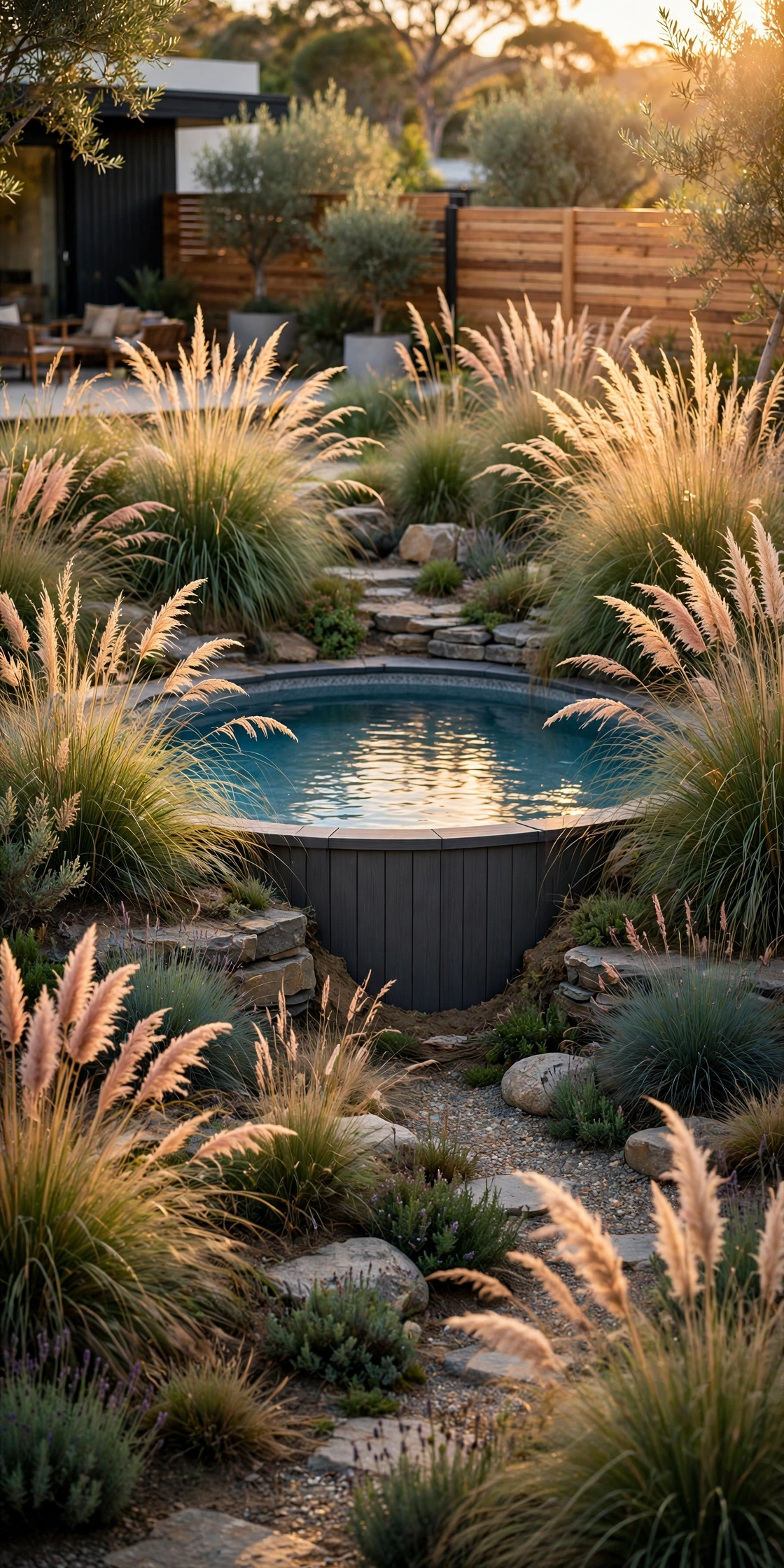
Ornamental grasses give a pool area movement and texture with almost no maintenance. Plant clumps of miscanthus, pennisetum, or panicum in a sweeping border two to four feet from the pool wall. They grow three to six feet tall, sway in the breeze, and need only a yearly cut-back in late winter. Their fine texture contrasts nicely with the flat plane of pool water. Avoid planting grasses where seed heads will blow directly into the skimmer.
Try this: Plant grasses in odd-numbered groups of three or five for a natural look.
Cost: $$$| Difficulty: Easy DIY
11. Attached Spillover Spa
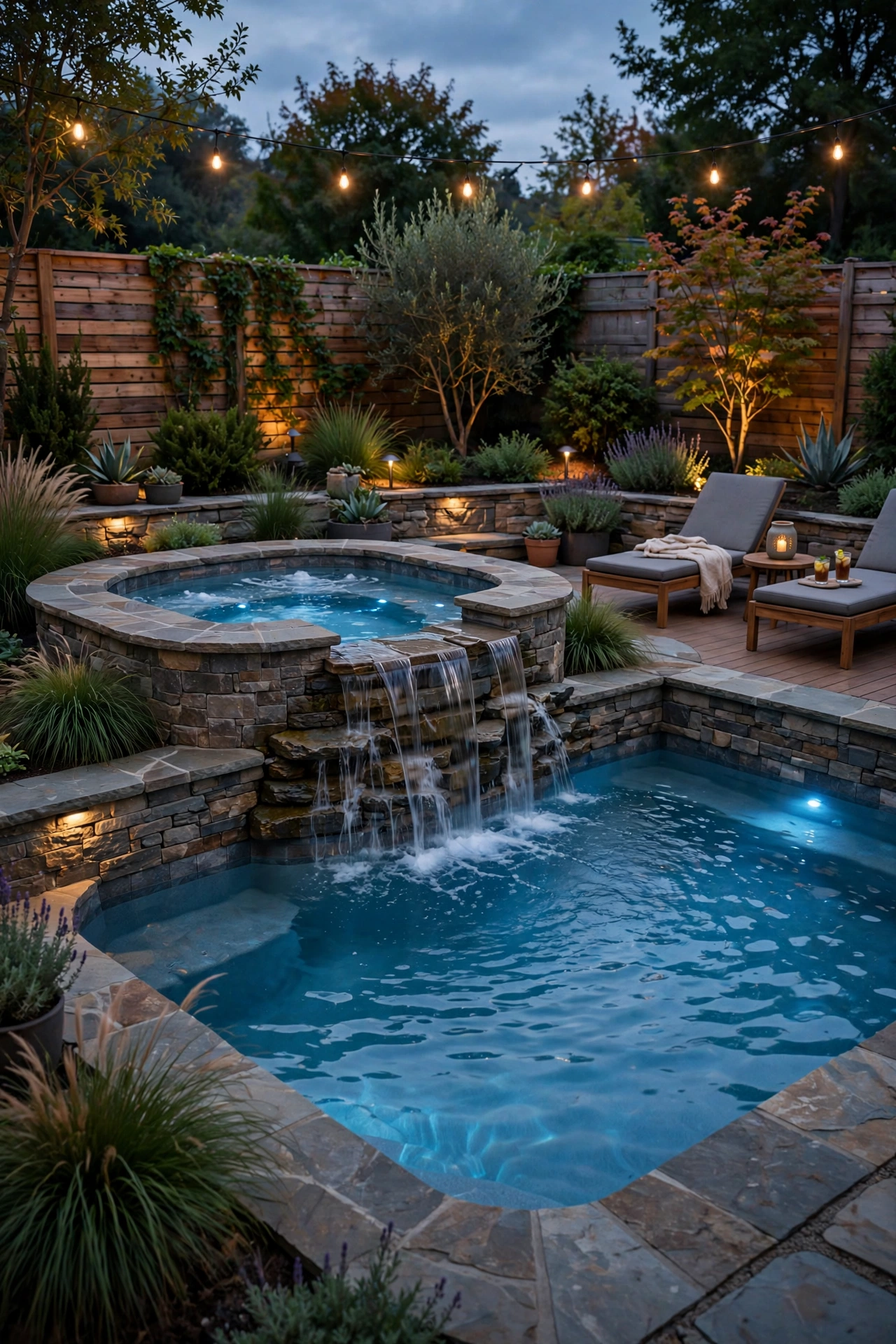
A small raised spa attached to the pool, with water spilling over a weir into the pool, is the fastest way to make the setup feel custom. The spa sits on its own pad or deck section at about 18 inches above the pool’s waterline, and a small secondary pump feeds the spillover. You get a hot soak in spring and fall plus a water feature all summer. Plumb the spa into the same equipment pad to keep wiring and plumbing in one place.
Try this: Size the spa for four people; larger spas take too long to heat for casual use.
Cost: $$$$| Difficulty: Hire a pro
12. Rock Waterfall Feature

A rock waterfall adds sound, movement, and a focal point to a plain pool. Build it on the side of the pool where the buried wall meets the deck, stacking real or faux stone around a small pump-fed spillway. Keep the drop under 18 inches so the pump stays small and quiet. Line the back of the feature with pond liner so splash never soaks the deck framing. Run the waterfall on a timer so it only flows when you want the sound.
Try this: Place the feature where you can see it from the patio chairs, not just from the water.
Cost: $$$$| Difficulty: Intermediate DIY
13. In-Pool Bench Seating Ledge
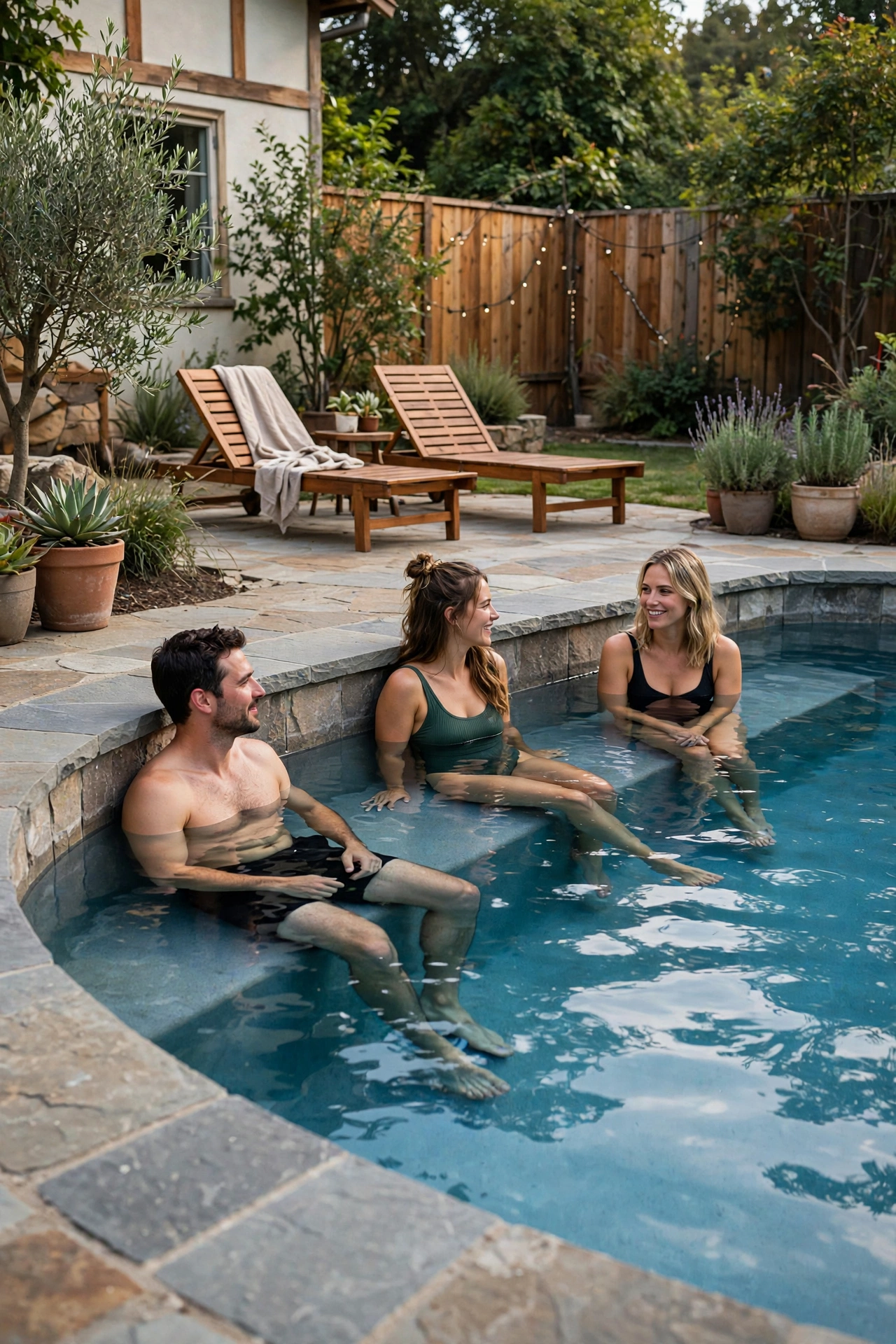
A wide bench ledge built just under the waterline along one side of the pool creates seating without taking up deck space. The ledge sits 12 to 18 inches below the surface, deep enough to keep adults cool while they sit. It must be planned before the liner goes in, since it changes the wall profile; this is easiest with a new pool install. Cover the ledge with the same liner material so it looks like part of the pool. Kids use it as a shallow play zone too.
Try this: Make the ledge at least 18 inches wide so it works as a real seat.
Cost: $$$$| Difficulty: Pro install
14. Corner Bench Nook on the Deck
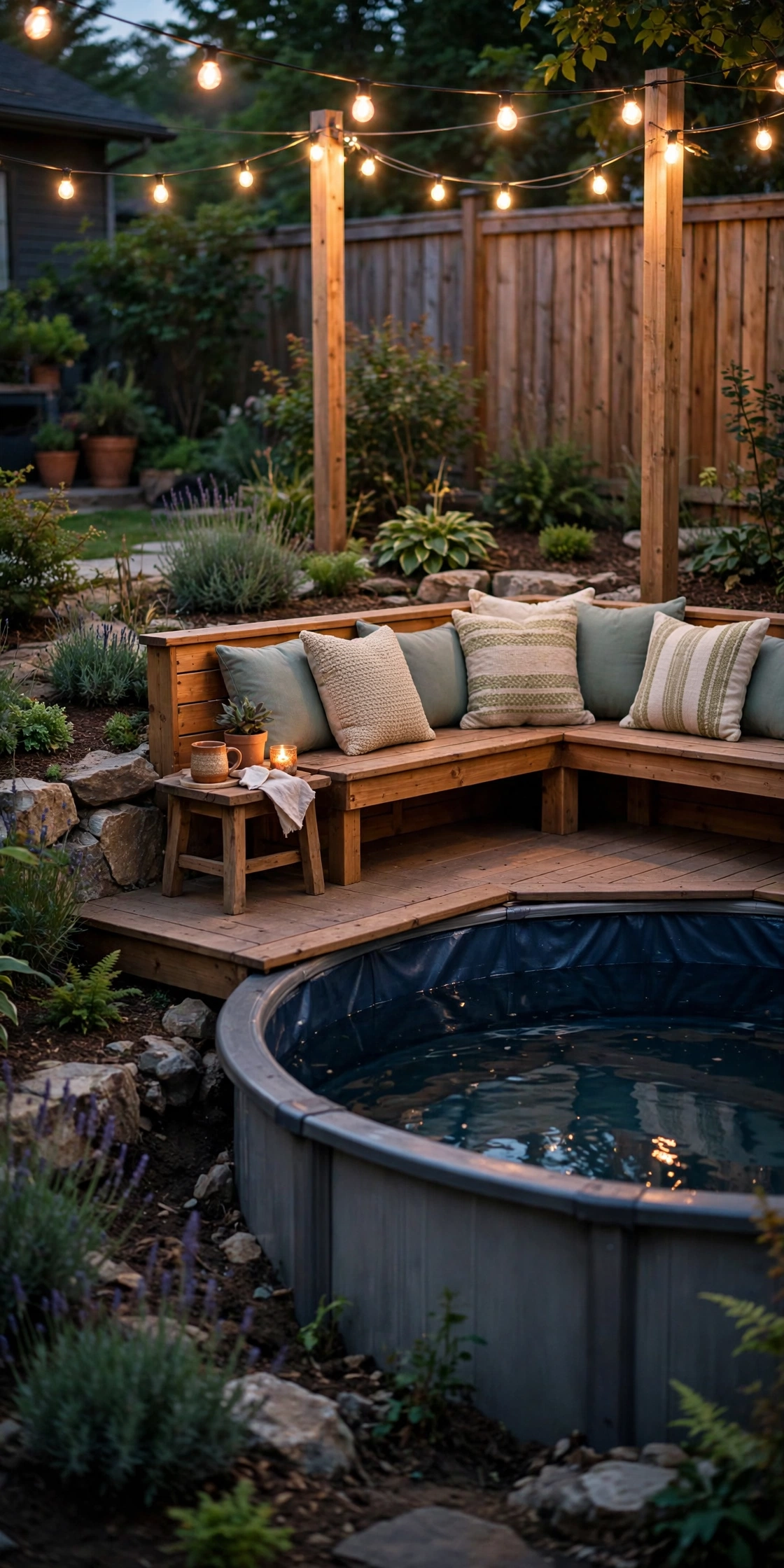
Turn a dead corner of the pool deck into a reading nook. Build an L-shaped bench from the same decking boards, add outdoor cushions and a small side table, and hang string lights overhead. The bench doubles as storage if you hinge the seat and use the space inside for pool toys and towels. A nook like this gives non-swimmers a reason to hang out at the pool, which keeps the whole family outside longer.
Try this: Build the bench 18 inches high and 20 inches deep, the standard seat dimensions.
Cost: $$$| Difficulty: Intermediate DIY
15. Shallow Tanning Ledge
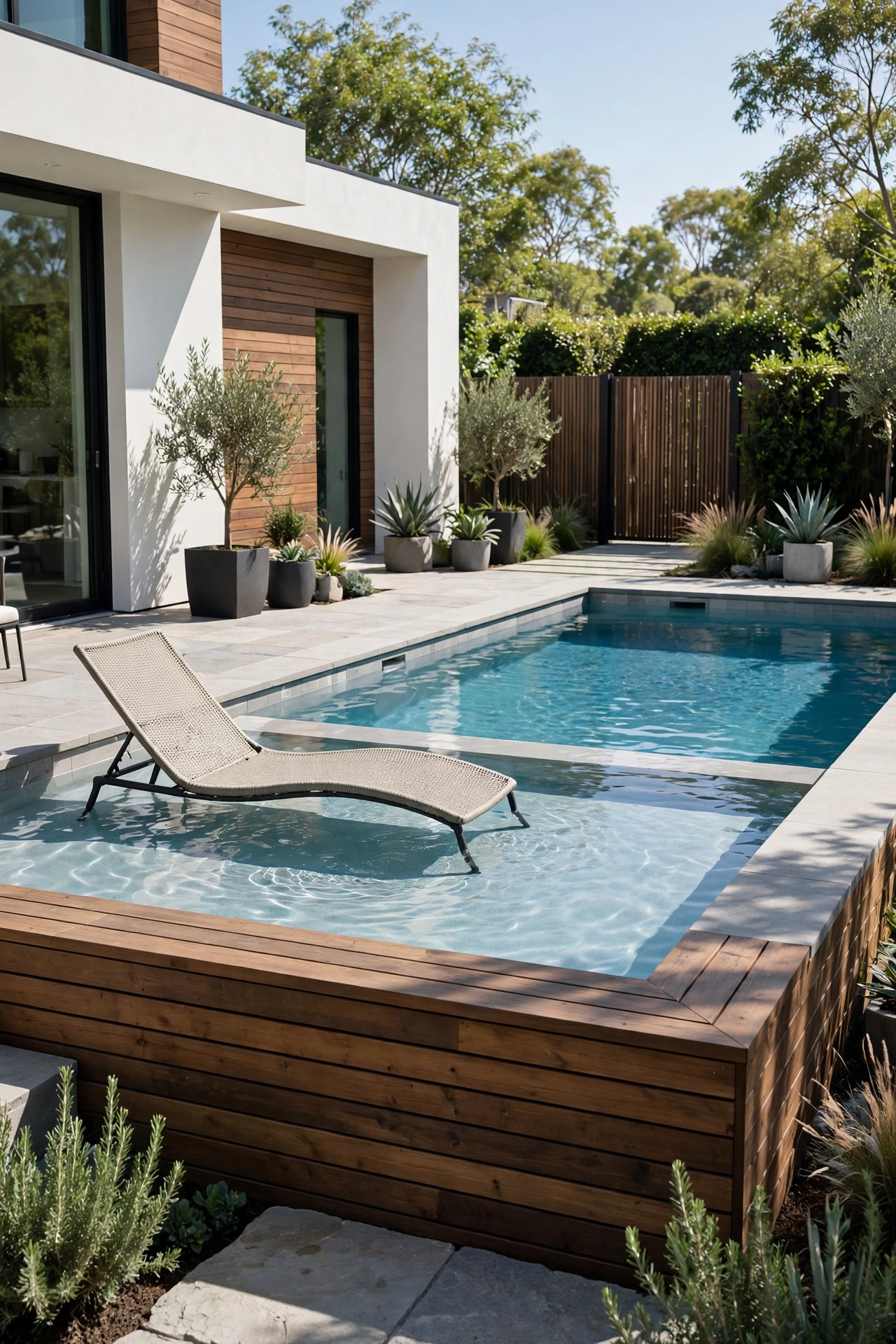
A tanning ledge, also called a Baja shelf, is a shallow platform at one end of the pool holding just six to nine inches of water. Place a low lounge chair on it and you can recline half in the water, which is the most relaxing seat in the yard. Like the bench ledge, this needs to be planned at install time. It works best on rectangular pools where one short end can be dedicated to the shelf. Add an umbrella sleeve in the shelf so you can add shade on demand.
Try this: Keep the shelf at least six by eight feet so a chair plus a small side table fits.
Cost: $$$$| Difficulty: Pro install
16. Outdoor Shower Station
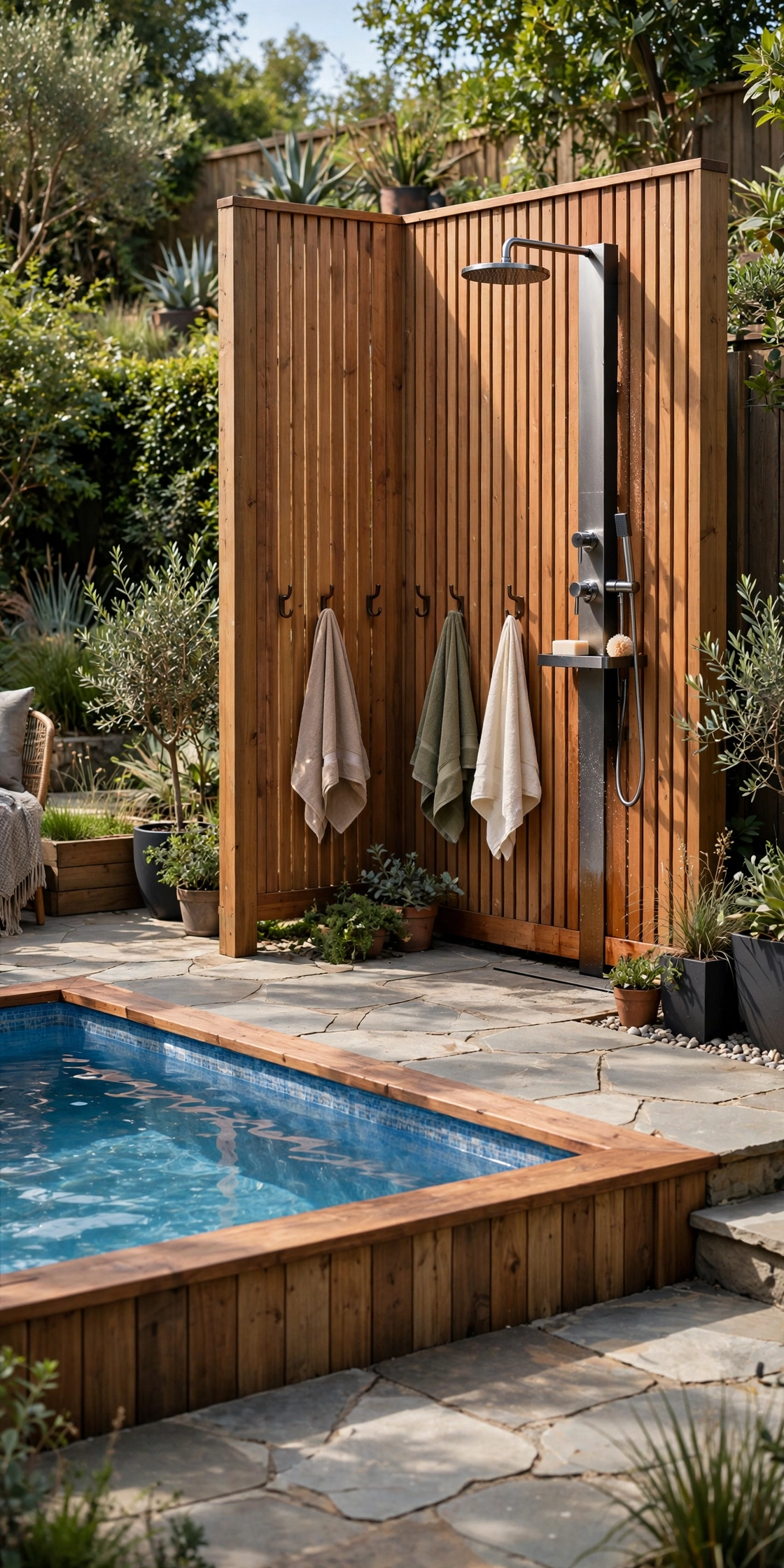
An outdoor shower beside the pool keeps sunscreen, grass, and dirt out of the water, which means less chemical use and clearer water. Mount a simple shower fixture on a cedar privacy screen, plumb it to the garden hose or a dedicated line, and set it on a stone or teak floor that drains into gravel. Add hooks for towels and a small bench. A cold-water-only shower costs very little; adding hot water needs a plumber and a tempering valve.
Try this: Position the shower so runoff drains away from the pool, not toward it.
Cost: $$$$| Difficulty: Intermediate DIY or plumber
17. Pergola Over One Side

A pergola over one side of the pool creates a shaded lounge zone without darkening the water. Build it from cedar or pressure-treated 6×6 posts set in concrete footings, with 2×8 rafters spaced 16 inches apart. Grow a light vine like clematis on one side only so leaves do not rain into the pool. Hang an outdoor fan from a rafter for still summer days. The pergola also gives string lights and a shade cloth something to hang from.
Try this: Orient the rafters north-south so dappled light moves across the deck through the day.
Cost: $$$$| Difficulty: Intermediate DIY or pro
18. Triangle Shade Sail
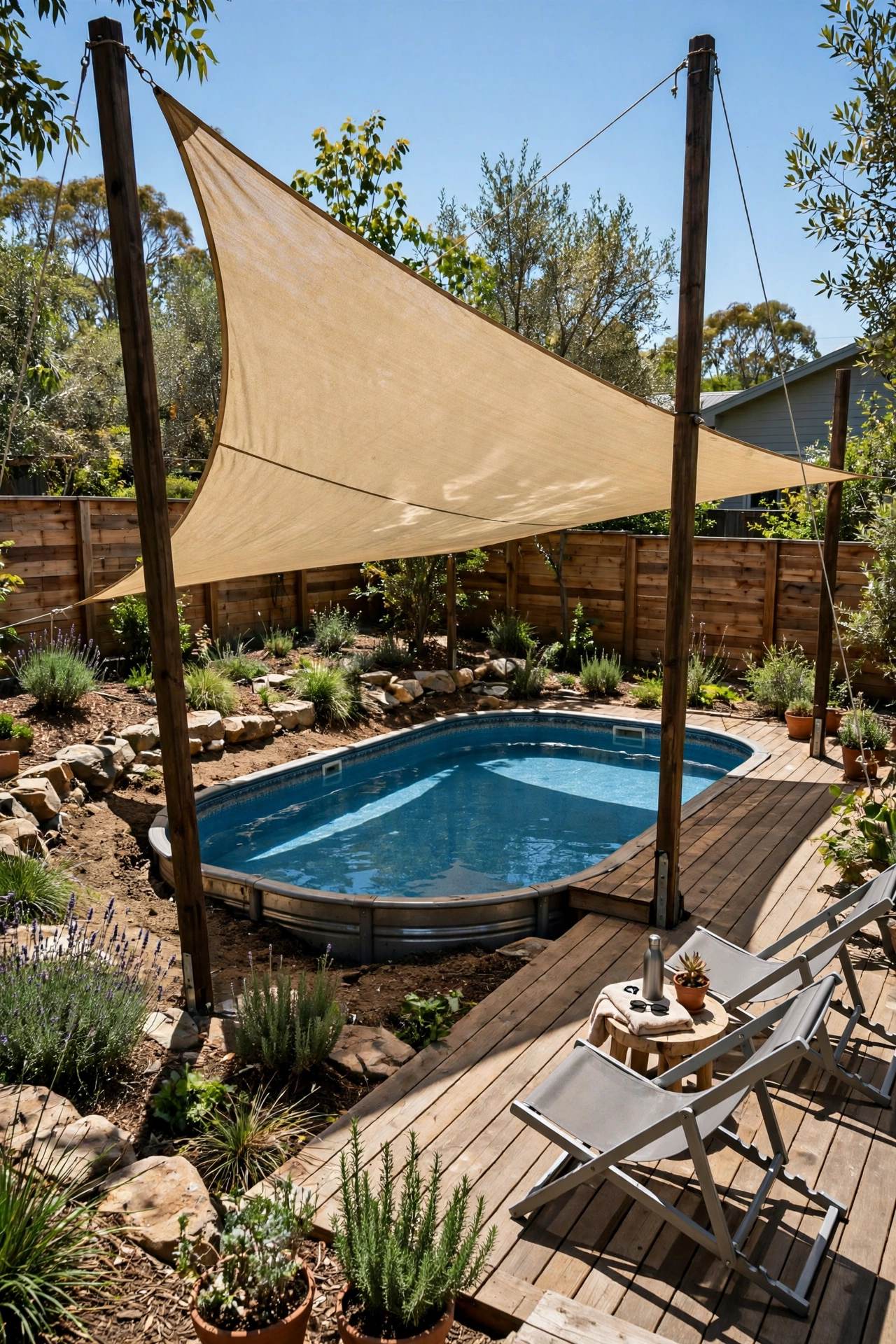
Shade sails are the fastest shade you can add to a pool. A 16-foot triangle sail on three steel posts can cover half a small pool and installs in a weekend. Set the posts in concrete footings at least 30 inches deep and tension the sail with a slight twist so rain runs off instead of pooling. Take the sail down before winter storms. Choose a sand or light gray fabric to keep the area bright rather than cave-like.
Try this: Mount one corner of the sail to the house or pergola to cut the number of posts to two.
Cost: $$$| Difficulty: Intermediate DIY
19. LED Lighting After Dark
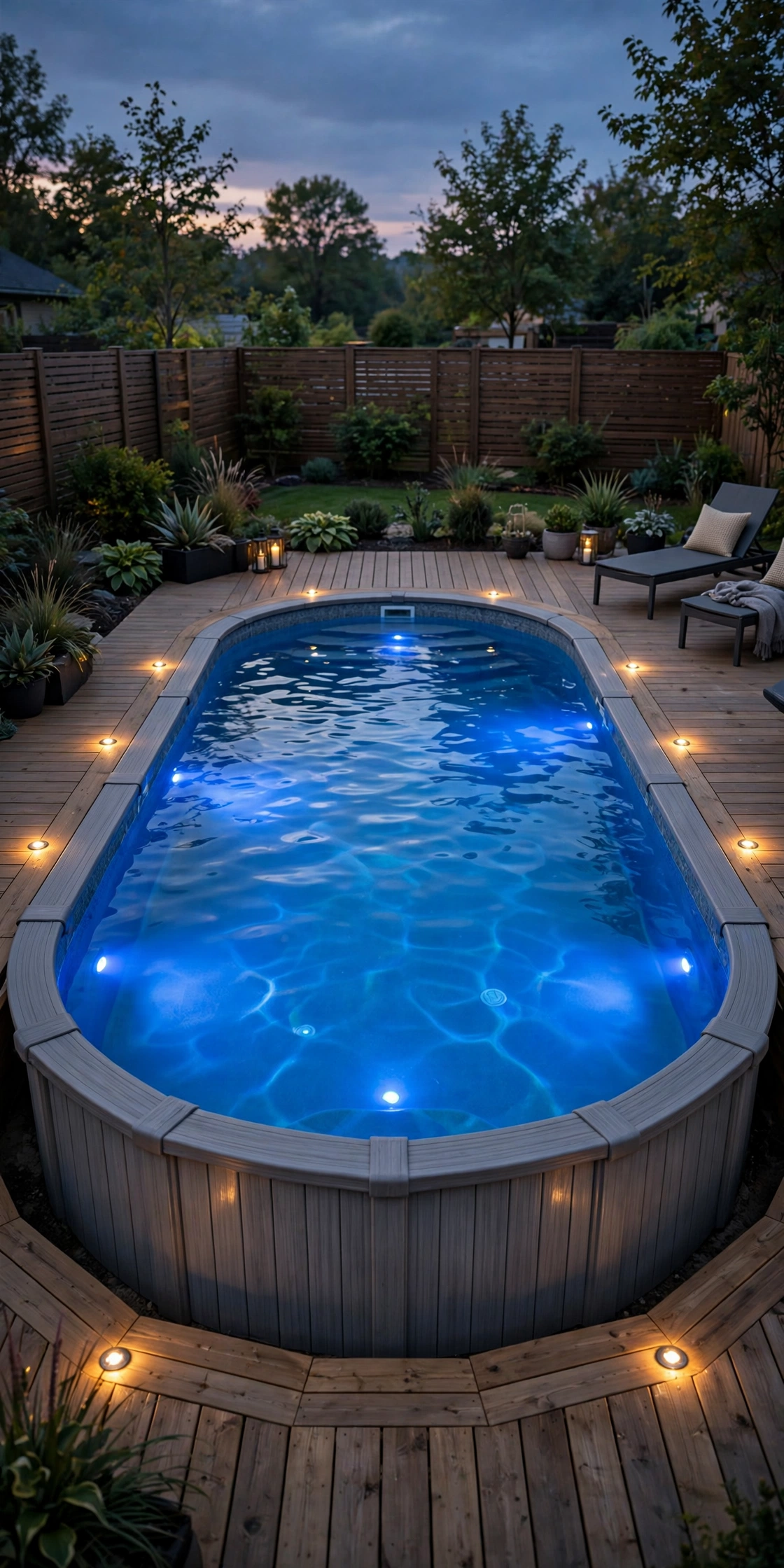
Lighting changes a pool from a daytime feature into an evening one. Add a submersible LED light with a magnetic mount inside the pool, low-voltage path lights around the deck, and one uplight on a nearby tree or fence. Keep all fixtures on a single outdoor timer. Choose 2700K warm white for the deck and a soft blue for the water; avoid harsh white that kills the mood. Solar path lights work fine as long as the spots get six hours of sun.
Try this: Light the walls or plants behind the pool rather than pointing lights at the water only.
Cost: $$$| Difficulty: Easy to intermediate DIY
20. Curved Deck for Round Pools
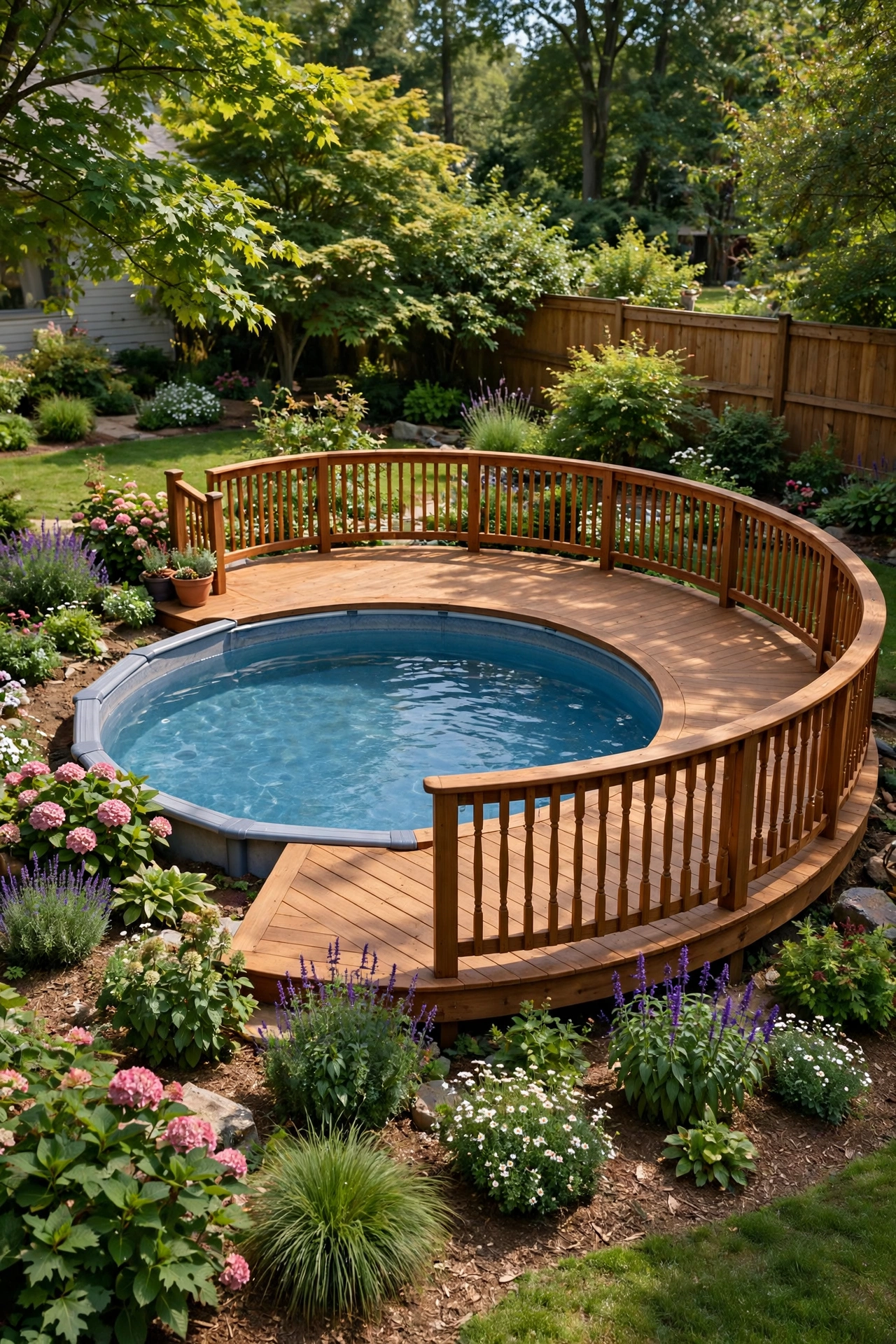
Round pools look best with a deck that follows their curve instead of fighting it. Build a curved deck section using flexible deck boards or by kerf-cutting the back of straight boards so they bend. A rounded deck with a simple two-rail fence echoes the pool’s shape and feels intentional. Keep the curve gentle; tight curves waste lumber and complicate the framing. Add one wide step down to the lawn on the far side for a finished exit.
Try this: Lay out the curve with a garden hose on the ground before you cut a single board.
Cost: $$$$| Difficulty: Advanced DIY
21. Split-Level Terrace Layout

On a sloped lot, terrace the yard into two levels and set the pool on the lower one. Stone steps connect the upper lawn to the pool deck, and low retaining walls hold each level. This layout keeps the pool tucked out of sight from the street while the upper terrace stays open for games or a garden. Plan the drainage carefully so the upper terrace never sends runoff into the pool area. If you liked the general styling ideas in our above ground pool ideas for 2026 roundup, the terrace layout pairs well with several of them.
Try this: Build the walls first and let the soil settle one rainy season before setting the pool.
Cost: $$$$| Difficulty: Hire a pro
22. Hidden Equipment Enclosure
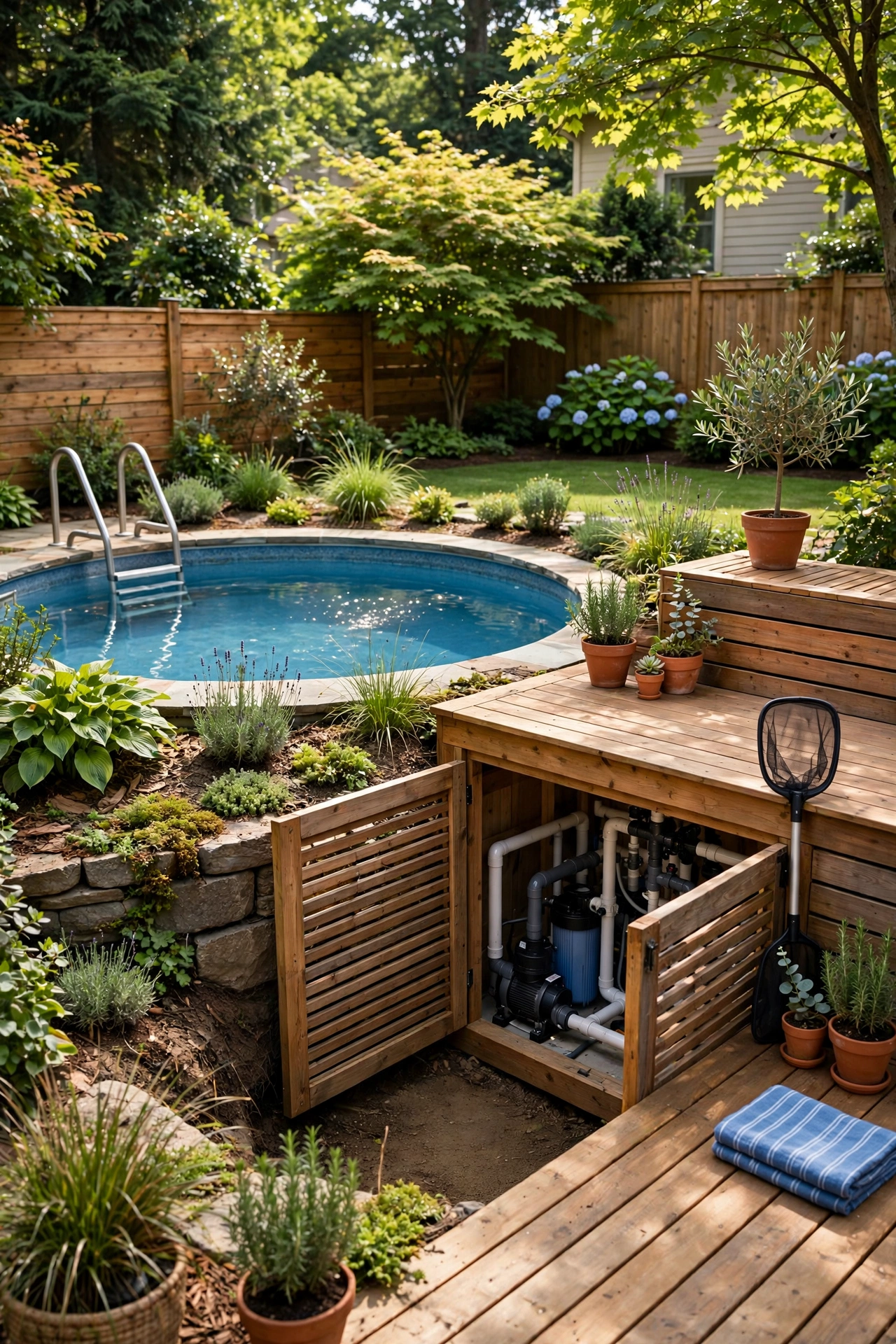
Pumps and filters are ugly, so hide them in a ventilated wooden enclosure that doubles as a storage bench. Build a box from cedar fence pickets with louvered sides for airflow, and hinge the top for bench seating. Keep the enclosure at least two feet from the pool wall and never block the pump’s vents or the electrical disconnect. For more ways to disguise the pool base, see our cheap deck skirting ideas. Store chemicals in a separate locked box away from the equipment.
Try this: Leave the front panel removable so winterizing the pump takes minutes, not hours.
Cost: $$$| Difficulty: Easy to intermediate DIY
23. Swim-Up Bar Counter
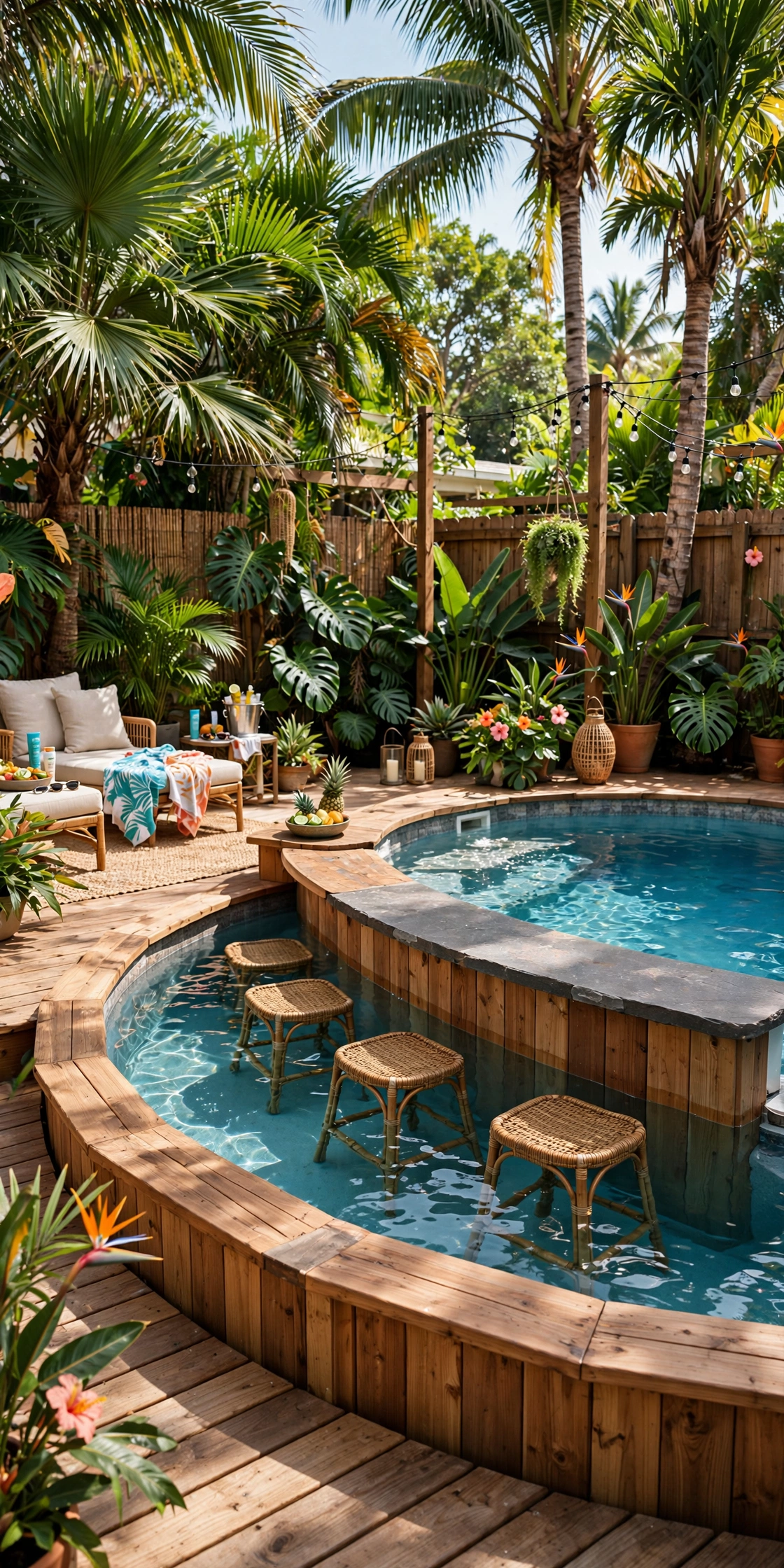
A swim-up bar turns the pool into the party spot. Build a counter into the deck edge at one end of the pool, with the counter top at 42 inches above the pool floor so seated swimmers can rest their drinks. Use marine-grade bar stools or simple submerged benches. Keep the counter shallow, about 12 inches deep, so it does not eat into swim space. This idea works best on pools 24 feet or longer where the bar does not crowd the swimming area. Budget builders can adapt this with ideas from our budget Intex pool ideas.
Try this: Add a small beverage fridge under the counter instead of running back to the kitchen.
Cost: $$$$| Difficulty: Intermediate DIY
24. Hot Tub Beside the Pool

Pairing a small hot tub with the pool extends your season into spring and fall. Set a round wooden or inflatable hot tub on a reinforced section of the deck right beside the pool, with a short step between them. The contrast of hot and cool water is the whole point, so keep the walk between them under six feet. Run a dedicated electrical circuit for the tub; most need 220V and a licensed electrician. Cover the tub when not in use to hold heat and keep debris out.
Try this: Face the tub away from the pool so soakers get a view instead of a wall.
Cost: $$$$| Difficulty: Hire a pro for electrical
25. Natural Stone Coping Upgrade

Swapping the metal top rail for natural stone coping is the single upgrade that most changes how the pool reads. Travertine or bluestone coping sits on the buried edge of the pool, overhanging the water by about an inch, and ties into whatever deck or patio surrounds it. The stone stays cooler than metal in the sun and gives swimmers a comfortable edge to grip. This is a pro job on a buried wall, since the coping must sit perfectly level for the liner to seal. Pair it with evening lighting and the fire pit ideas from our backyard fire pit roundup for nights by the water.
Try this: Seal the stone once a year to protect it from pool chemicals and freeze damage.
Cost: $$$$| Difficulty: Hire a pro
Pool Safety Before You Swim
Every pool, including a partially buried one, needs a safety plan before the first swim. The CPSC recommends a four-sided fence at least four feet high with a self-closing, self-latching gate, plus a safety cover when the pool is not in use. Keep rescue equipment and a phone poolside, and never leave children unattended. More guidance is available at PoolSafely.gov. Also call 811 before any digging so underground utilities are marked.
Partial Install Options Compared
FAQs
Can you partially bury any above ground pool?
No. Only pools rated by the manufacturer for burial should be partially recessed. Standard above ground pools are not designed to handle soil pressure and moisture, and burying them can damage the walls and void the warranty. Look for models labeled semi-inground or burial-rated, usually built with heavy-gauge steel or steel-resin hybrid walls.
How deep can you bury an above ground pool?
Most semi-inground pools are buried 18 to 36 inches, with two to four feet as the common range depending on the model. Always follow the manufacturer’s burial rating for your specific pool. Deeper burial needs proper drainage, such as gravel backfill and a drain pipe, so water never sits against the wall.
Do I need to call 811 before digging for a pool?
Yes. Call 811 a few days before any excavation so local utilities can mark underground lines for gas, electric, water, and cable. It is free, and in many states it is required by law. Never dig based on memory of where lines run.
How much does a partial above ground pool install cost?
A typical partial install runs $8,000 to $20,000 including the pool, excavation, and finishing such as a deck or retaining wall. The pool kit itself is often $3,000 to $8,000, excavation adds $1,000 to $3,000, and the deck or stone finishing makes up the rest. Simple gravel-and-landscape finishes keep you at the low end.
What pool safety rules should I follow?
Follow the CPSC pool safety guidance: a four-sided fence at least four feet high with a self-closing, self-latching gate, door alarms if the house forms one side of the barrier, a safety cover when the pool is closed, and constant supervision of children. Keep rescue equipment and a phone within reach of the pool.
Will a partially buried pool last as long as a regular above ground pool?
Yes, if the pool is rated for burial and installed with proper drainage. Burial-rated walls are built to resist soil pressure, and the buried section is actually protected from sun and wind damage. Good drainage behind the wall and a level base are the two details that decide how long the install lasts.
A partial above ground pool install is the best value move in backyard pools: real swimming for a fraction of inground cost, with a look that guests assume cost far more. Pick the burial depth your pool is rated for, finish the exposed wall with a deck or stone that fits your budget, and keep safety and drainage at the top of the list. Do that and you will have a pool that looks built-in for years.


