



The underside of a deck is never pretty: concrete piers, dark shadows, and a perfect hiding spot for critters. Skirting closes that gap and makes the whole deck look finished, but contractor quotes for custom skirting can sting. I nearly skipped it on our deck until I priced basic lattice and realized the cheapest option cost less than a tank of gas per panel.
These 18 cheap deck skirting ideas range from classic lattice to pallet wood, corrugated metal, and living plant screens. Every option stays budget-friendly, and each one notes what it costs, how hard the DIY is, and what to watch for with airflow and drainage so the skirting never traps moisture against your framing.
Quick takeaways
- Pressure-treated lattice is the cheapest honest option at roughly $20 to $40 per panel.
- Leave a 1-inch gap at the ground and allow airflow so framing dries after rain.
- Frame lattice panels before mounting to stop sagging and warping.
- Add hardware cloth behind open skirting to keep animals from moving in.
- Paint or stain wood skirting to match the deck for a built-in look.
1. Pressure-treated lattice panels
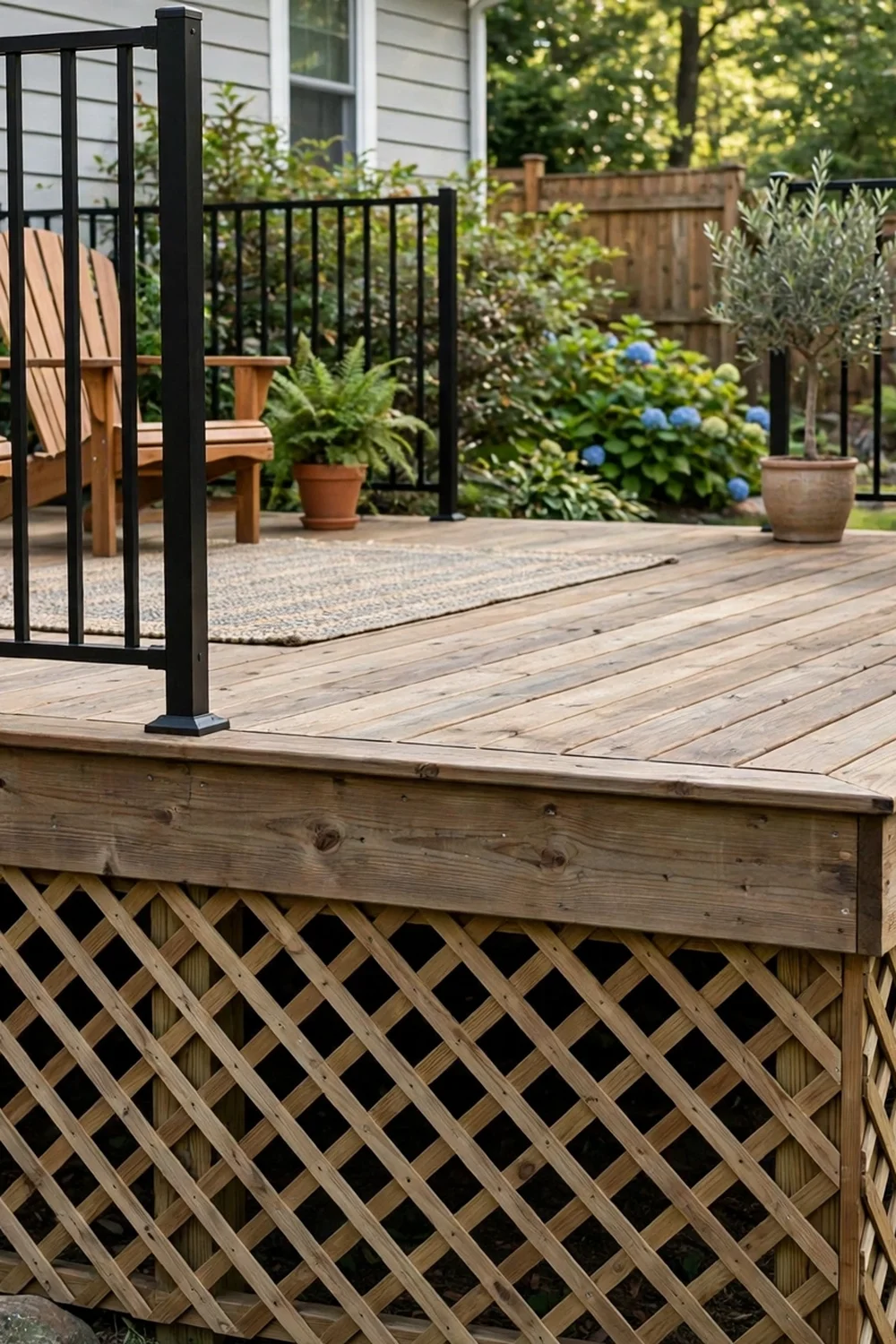
The classic for a reason: 4 by 8 foot lattice panels cost $20 to $40 each, cut easily with a circular saw, and install in an afternoon. The crisscross pattern hides the under-deck area while letting air flow through, which helps framing dry after rain. Frame each panel with 1 by 3 furring strips before mounting so it stays flat and never sags. Paint or stain the lattice to match the deck, since raw pressure-treated wood looks unfinished and weathers unevenly.
Try this: use screws, not nails, so you can remove one panel later for under-deck access.
Budget: about $2 to $5 per linear foot. Difficulty: easy.
2. Painted lattice in a bold color

The same cheap lattice reads completely different in a coat of dark paint. Charcoal, deep green, or navy lattice against a natural wood deck looks intentional and modern, and the dark color hides dirt and shadows. Use exterior paint over a primer made for pressure-treated wood. Two coats last 3 to 5 years before touch-ups. This is the fastest way to make budget skirting look like a design choice.
Try this: paint the framing the same color so the whole skirt reads as one piece.
Budget: about $3 to $6 per linear foot with paint. Difficulty: easy.
3. Vinyl lattice panels

Vinyl lattice costs more than wood, about $40 to $70 per 4 by 8 sheet, but it never needs painting and never rots. It wipes clean with a hose and holds its color for years. The trade-off is a slightly plastic look up close and a tendency to rattle in wind if the edges are not framed tightly. White is the most common color and brightens the shadow under the deck nicely.
Try this: frame every edge with vinyl trim pieces so the panels sit tight and quiet.
Budget: about $5 to $9 per linear foot. Difficulty: easy.
4. Horizontal wood slats

Run 1 by 6 cedar or pressure-treated boards horizontally with a quarter-inch gap between them for a clean, modern skirt. The horizontal lines echo contemporary siding and make the deck look wider. Cedar costs more but resists rot naturally, while pressure-treated boards need stain. The gaps provide the airflow that solid skirting lacks, so this style protects the framing while looking sharp.
Try this: test the gap width on a short section first, since wider gaps show more shadow inside.
Budget: about $6 to $12 per linear foot. Difficulty: easy to moderate.
5. Vertical board and batten

Vertical boards with thin battens over each seam give a farmhouse look that suits cottage and craftsman homes. Cut all boards to one length, since the battens hide small measurement differences between them. Paint it white or the house trim color for a crisp finish. Leave the boards an inch off the ground and add a gravel strip below so splashback never rots the bottoms.
Try this: use a story pole marked with the board length to speed up cutting.
Budget: about $5 to $10 per linear foot. Difficulty: easy to moderate.
6. Pallet wood skirting
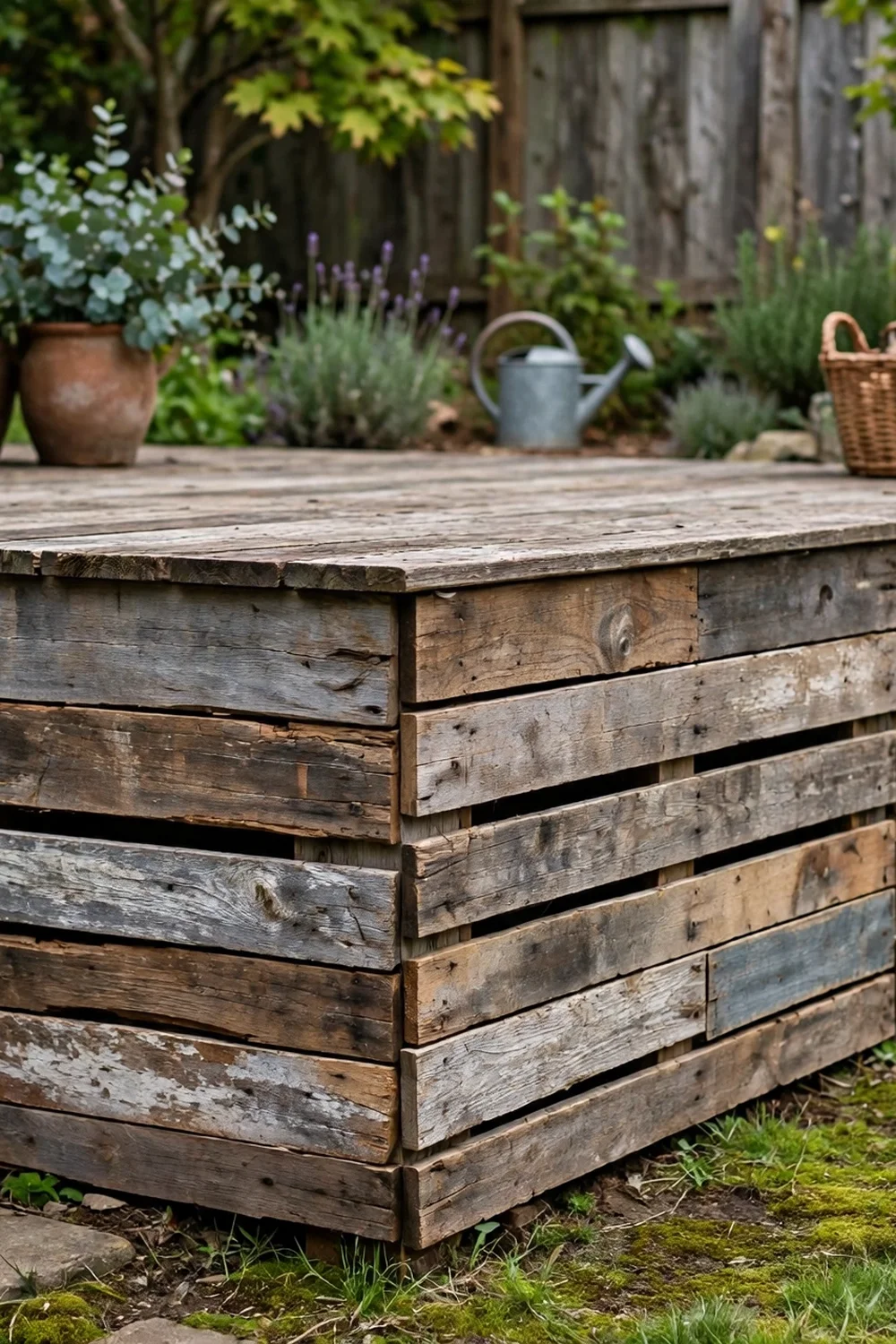
Disassembled pallets make charming rustic skirting for nearly free. Pull the boards, knock out nails, sand the worst splinters, and screw them vertically or horizontally to a simple frame. The mixed tones and nail holes give instant character. Seal with exterior stain or paint, since pallet wood is thin and weathers fast unprotected. This is the cheapest wood option if you can source the pallets free from local stores.
Try this: sort boards by tone first so you can blend the colors evenly around the deck.
Budget: about $1 to $4 per linear foot. Difficulty: easy.
7. Corrugated metal panels

Corrugated galvanized panels bring an industrial edge and shrug off weather for decades. Screw them to a pressure-treated frame, add wood trim top and bottom for a finished edge, and you are done. The metal reflects light under the deck, which keeps the area brighter and drier. Paint the panels if the silver look feels too stark, since metal takes exterior paint well with the right primer.
Try this: wear gloves and file the cut edges, since corrugated metal is sharp when trimmed.
Budget: about $6 to $12 per linear foot. Difficulty: easy to moderate.
8. Faux stone panels
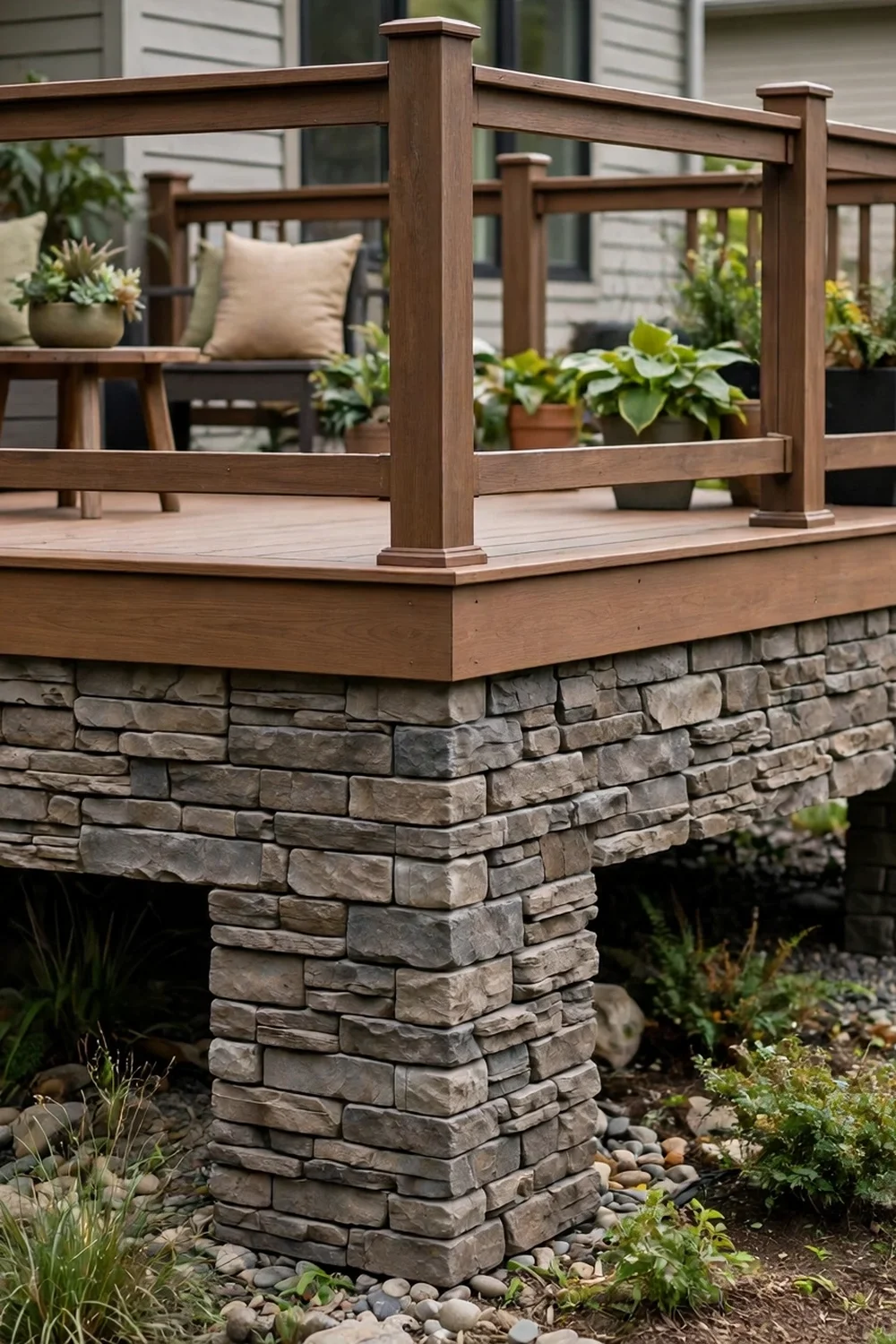
Molded faux stone panels give the look of a stacked-stone foundation at a fraction of the cost and weight of real stone. The interlocking panels screw to the framing and hide seams well from a few feet away. They need no painting and no mortar. Vent them properly, since they block airflow more than lattice, by leaving the top course slightly open or adding small screened vents every 8 feet.
Try this: start panels at the most visible corner so any cut pieces land in the least-seen spots.
Budget: about $8 to $15 per linear foot. Difficulty: easy to moderate.
9. T1-11 siding panels
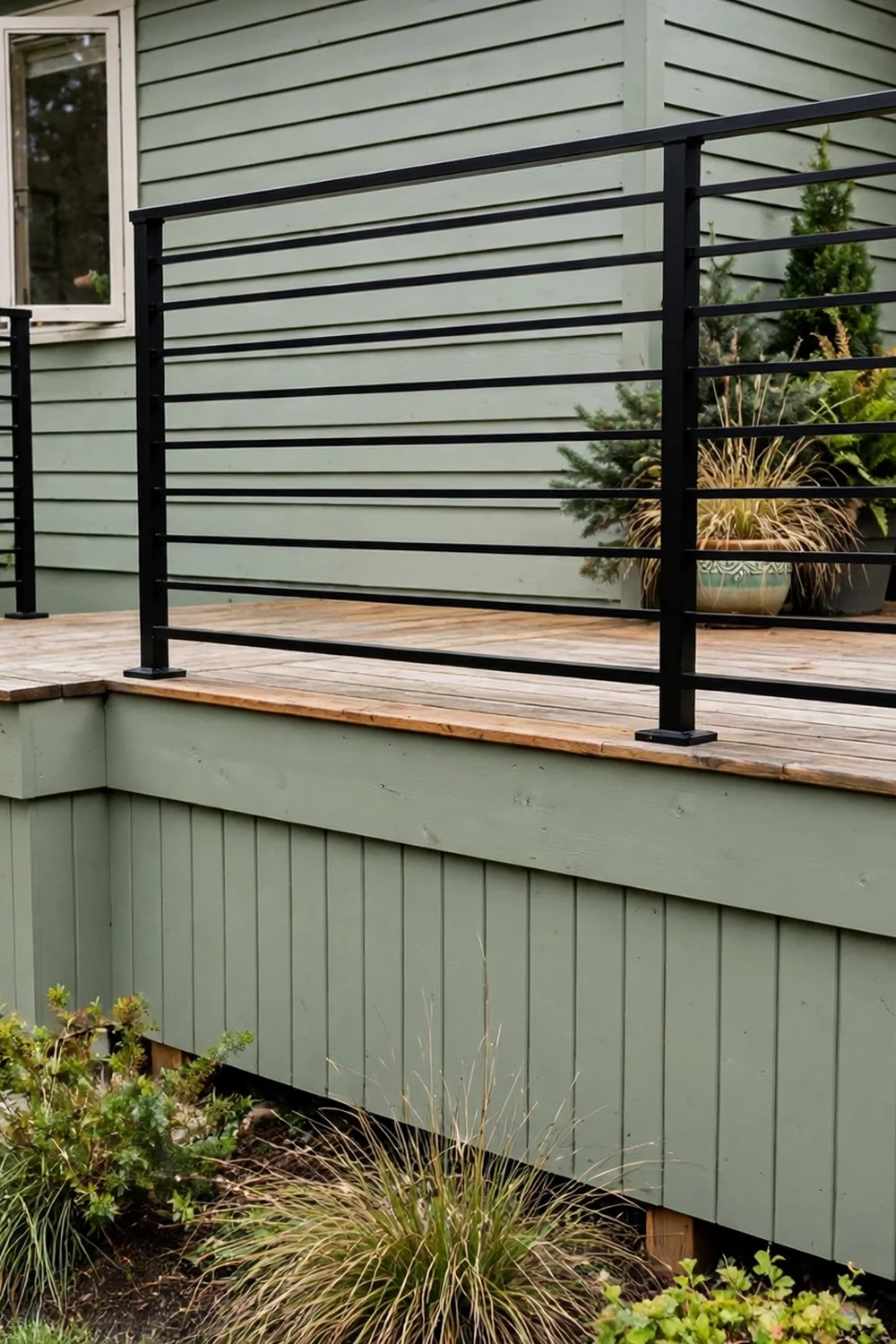
A single sheet of T1-11 siding covers 32 square feet fast, making it one of the quickest skirting installs. The grooved plywood pattern looks tidy painted in the house color, and it provides solid coverage that blocks wind and animals. It is not the most refined look, but painted to match the house it reads as intentional. Prime all six sides before installing, since the bottom edge wicks moisture otherwise.
Try this: caulk the top edge where the panel meets the deck rim to keep water out.
Budget: about $3 to $6 per linear foot. Difficulty: easy.
10. Composite deck boards as skirting

Run leftover or matching composite deck boards vertically as skirting for a perfect color match with zero future painting. This is the cleanest look for a composite deck, and the boards last as long as the deck itself. It costs more than lattice but far less than hiring out custom work. Leave small gaps or add vents for airflow, since composite manufacturers warn against trapping moisture behind solid skirting. Check Deckorators or your board brand’s install guide for their exact venting rules.
Try this: use hidden fastener clips at the top for a clean, screw-free face.
Budget: about $8 to $16 per linear foot. Difficulty: moderate.
11. Shiplap boards

Painted shiplap gives a coastal cottage look that suits beach houses and farmhouses alike. The overlapping joints shed water well, and the narrow boards install fast. Use exterior-grade shiplap or PVC shiplap near the ground, since standard interior boards rot quickly outside. White is classic, but a soft sage or pale blue ties the deck to the landscape.
Try this: back-prime every board before installing to double its outdoor life.
Budget: about $6 to $12 per linear foot. Difficulty: easy to moderate.
12. Cedar tongue and groove

Cedar tongue-and-groove boards fit tight for a refined, furniture-like skirt with natural rot resistance. The interlocking edges leave almost no gaps, so add screened vents every few feet for airflow. Cedar costs more than pressure-treated pine but holds stain color longer and never needs the chemical treatment. Let it weather naturally or stain it to match the deck.
Try this: acclimate the boards on site for a week so they do not shrink after install.
Budget: about $8 to $15 per linear foot. Difficulty: moderate.
13. Recycled fence pickets

Old fence pickets from a tear-down or salvage yard make characterful skirting for the cost of hauling them home. Trim the rotted ends, sand lightly, and install them vertically with small gaps. The weathered gray patina suits rustic and cottage yards as-is, or stain them for a fresher look. Check each picket for rot and toss the soft ones, since one rotten board spreads moisture to its neighbors.
Try this: mix picket widths for a casual, collected look instead of a uniform wall.
Budget: about $1 to $5 per linear foot. Difficulty: easy.
14. Bamboo screening

Rolled bamboo fencing unrolls into instant skirting with a tropical feel. Attach it to a simple frame with galvanized staples or screws with washers, and trim the top with a wood cap rail. It is one of the fastest installs here, often done in a couple of hours. Bamboo lasts 3 to 5 years outside before it grays and weakens, so treat it as a medium-term fix and seal it yearly to stretch its life.
Try this: double up two layers offset for better coverage and a richer look.
Budget: about $4 to $8 per linear foot. Difficulty: easy.
15. Wire mesh with climbing vines

Galvanized wire mesh panels on a wood frame cost almost nothing and disappear once fast-growing vines cover them. Plant clematis, jasmine, or sweet potato vine at the base in spring, and by midsummer you have a living green skirt. The mesh alone allows full airflow, which is great for the framing, and the plants add color. This is the prettiest cheap option, but it needs a full growing season to fill in.
Try this: choose evergreen jasmine in mild climates for year-round coverage.
Budget: about $2 to $5 per linear foot plus plants. Difficulty: easy.
16. Outdoor fabric panels
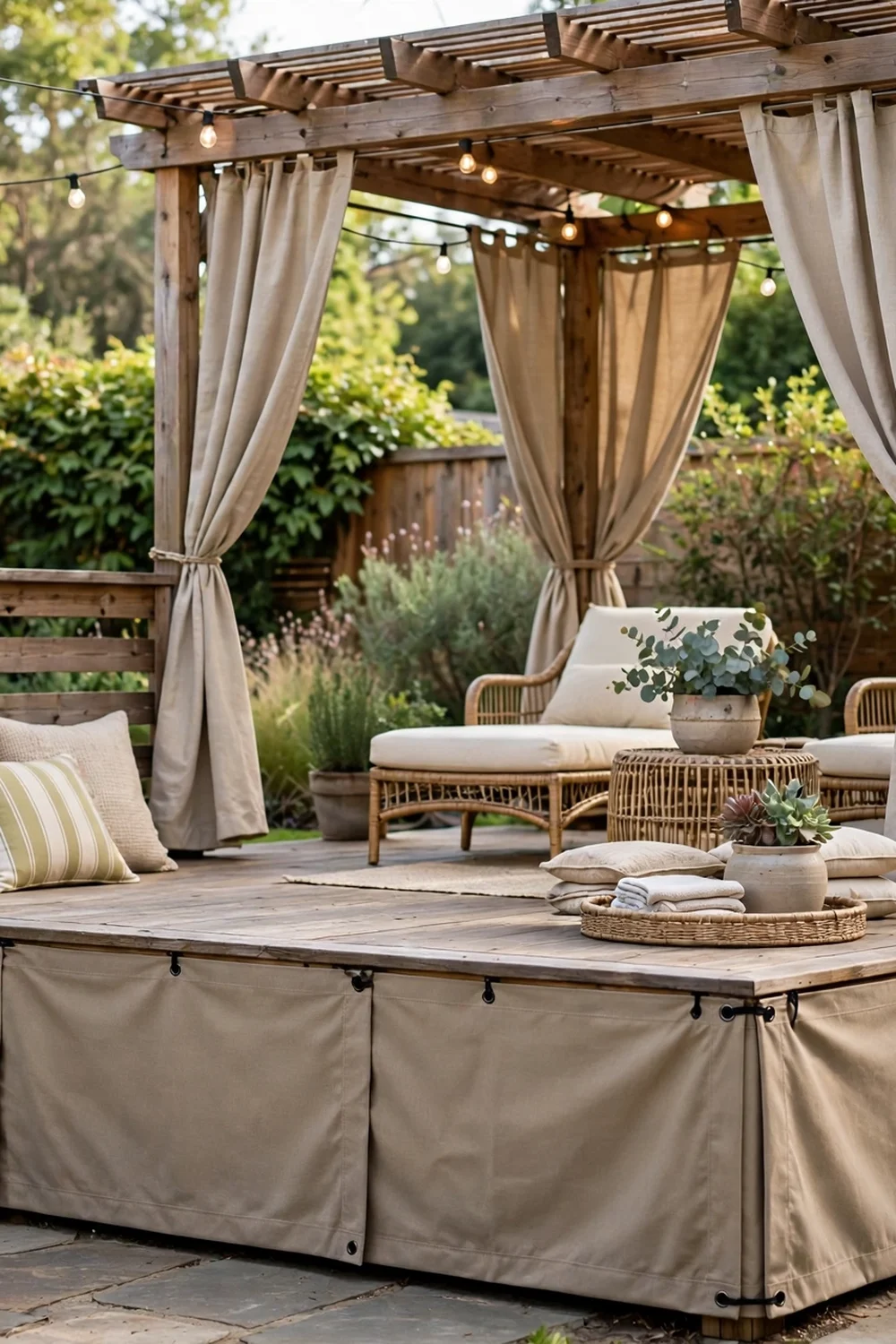
Weather-resistant canvas or shade cloth stretched between posts gives a relaxed cabana look and costs little. Hem the fabric, add grommets, and hang it from hooks or a tension cable so panels can be removed for cleaning. Fabric allows airflow, rolls up for under-deck access, and softens the hard lines of the deck. Choose solution-dyed acrylic fabric for the best fade resistance.
Try this: use a neutral sand or charcoal fabric that hides dirt between washes.
Budget: about $3 to $8 per linear foot. Difficulty: easy.
17. River rock border
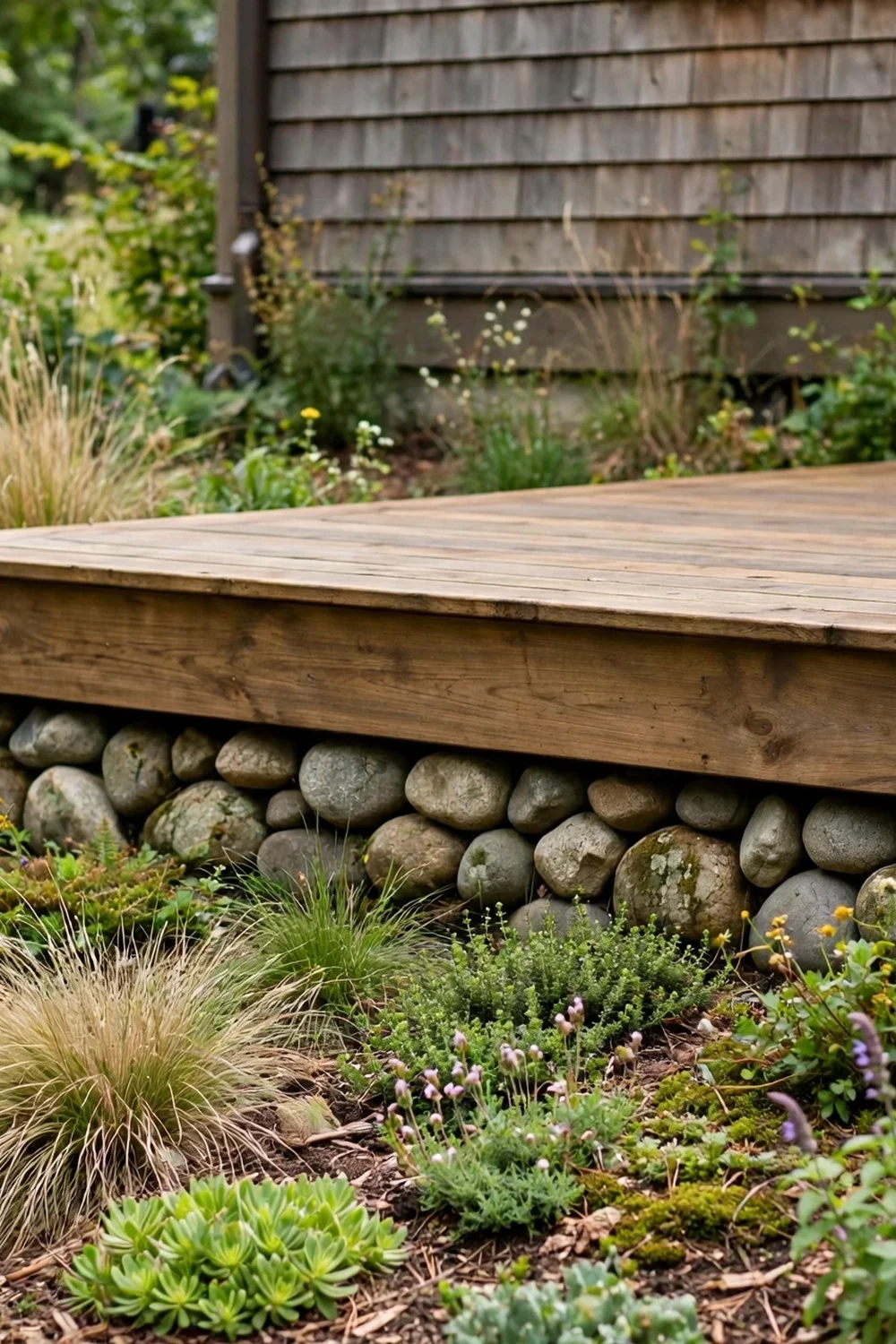
For low decks on sloped or uneven ground, a mounded river rock border does the job with zero carpentry. Pile 3 to 5 inch river rock against the deck base over landscape fabric, building the mound higher where the gap is taller. It drains perfectly, never rots, and looks like natural landscaping. This works best where the deck sits 12 inches or less off the ground, since taller gaps need a real wall.
Try this: tuck a few larger boulders into the rock line for a natural, designed feel.
Budget: about $4 to $10 per linear foot. Difficulty: easy.
18. Skirting with a hidden storage door

Build one section of your skirting as a hinged door so the under-deck area becomes lockable storage. Frame the door to match the surrounding skirting exactly, whether slats, lattice, or boards, so it disappears when closed. Add a simple latch and a prop stick to hold it open. The storage fits long-handled tools, hoses, and seasonal bins that would otherwise clutter the garage. This upgrade costs little extra during the build and pays off every time you need the rake.
Try this: make the door at least 30 inches wide so a mower or wheelbarrow fits through.
Budget: about $30 to $80 extra in hinges and framing. Difficulty: moderate.
Cheap deck skirting options compared
Cost per foot is only part of the story. This table compares the cheapest options by looks, upkeep, and lifespan.
How to install deck skirting that lasts
Good installation matters more than the material. Start by measuring the full perimeter and noting where the ground rises and falls, since skirting must follow grade without touching soil. Cut a 1-inch gap at the bottom everywhere, and set a gravel strip under the skirt so splashback never soaks the material. Frame the opening with pressure-treated 2 by 2 cleats screwed to the deck rim joist, then attach your skirting to the cleats, not directly to the rim.
Ventilation is the rule most DIYers skip. Solid skirting traps humid air under the deck, which rots framing from the inside out. Leave gaps, use lattice, or add screened vents every 6 to 8 feet on solid styles. For animal control, staple quarter-inch galvanized hardware cloth behind any openings and bury its bottom edge a few inches into the soil so diggers cannot slip under. For material-specific guidance, Trex publishes skirting and ventilation details for composite decks. If you like the reclaimed look, these DIY wooden pallet projects show more ways to use free pallet wood. These patio backyard deck designs show finished decks where the skirting completes the look, and these privacy metal fence ideas pair well if you want the whole yard to feel enclosed.
Deck skirting mistakes to avoid
The most common mistake is running skirting straight into the soil. Ground contact wicks moisture up into wood and invites termites, so keep that 1-inch gap everywhere and never backfill mulch against the skirt. The second mistake is sealing the under-deck area airtight with solid panels and no vents, which is a recipe for hidden rot. The third is forgetting access: someday someone needs to reach the plumbing, wiring, or a lost ball under there, so build in at least one removable panel or door.
Also skip the temptation to skip the frame. Unframed lattice warps and sags within two seasons, and unframed fabric flaps itself to shreds. A simple cleat frame costs little and doubles the life of any lightweight skirting. Finally, match the skirting style to the house, since a farmhouse board-and-batten skirt on a modern glass-railing deck looks like an afterthought.
Frequently asked questions
What is the cheapest deck skirting option?
Pressure-treated wood lattice is the cheapest widely available option, at roughly $2 to $5 per linear foot installed yourself. Reclaimed pallet wood or old fence pickets can cost even less if you source them free, but they need more prep and sealing. Lattice wins for most people because it is fast, ventilated, and easy to replace.
Should deck skirting touch the ground?
No. Leave about a 1-inch gap between the bottom of the skirting and the soil. Direct ground contact causes moisture wicking, speeds up rot in wood, and gives insects a highway under the deck. A gravel strip under the skirt keeps the gap clean and stops weeds.
Does deck skirting need ventilation?
Yes. Airflow under the deck lets the framing dry after rain, which slows rot and mold. Lattice and slatted styles ventilate naturally. Solid styles like T1-11, faux stone, or composite boards need screened vents every 6 to 8 feet or a gap along the top course.
How do I keep animals out from under my deck?
Use lattice with small openings or add quarter-inch galvanized hardware cloth behind any ventilation gaps. Bury the bottom edge of the mesh a few inches underground so animals cannot dig beneath it. Check the barrier each spring, since frost heave can open new gaps.
Can I install deck skirting myself?
Yes, most skirting is a beginner-friendly weekend project. Lattice, slats, and panels all attach to a simple cleat frame with screws. The main skills are measuring, cutting straight lines, and keeping the bottom gap consistent along uneven ground. A circular saw and a drill handle nearly every option here.
How long does deck skirting last?
It depends on the material and maintenance. Painted wood lattice lasts 5 to 10 years with regular staining, vinyl and metal last 15 to 20 years or more, and composite boards last as long as the deck. Bamboo and fabric are shorter-term options at 3 to 5 years.
Skirting is the detail that makes a deck look done, and the cheap options here prove it does not take a big budget. Pick the material that matches your house, frame it well, keep it off the ground, and your deck will look finished from every angle of the yard.


