


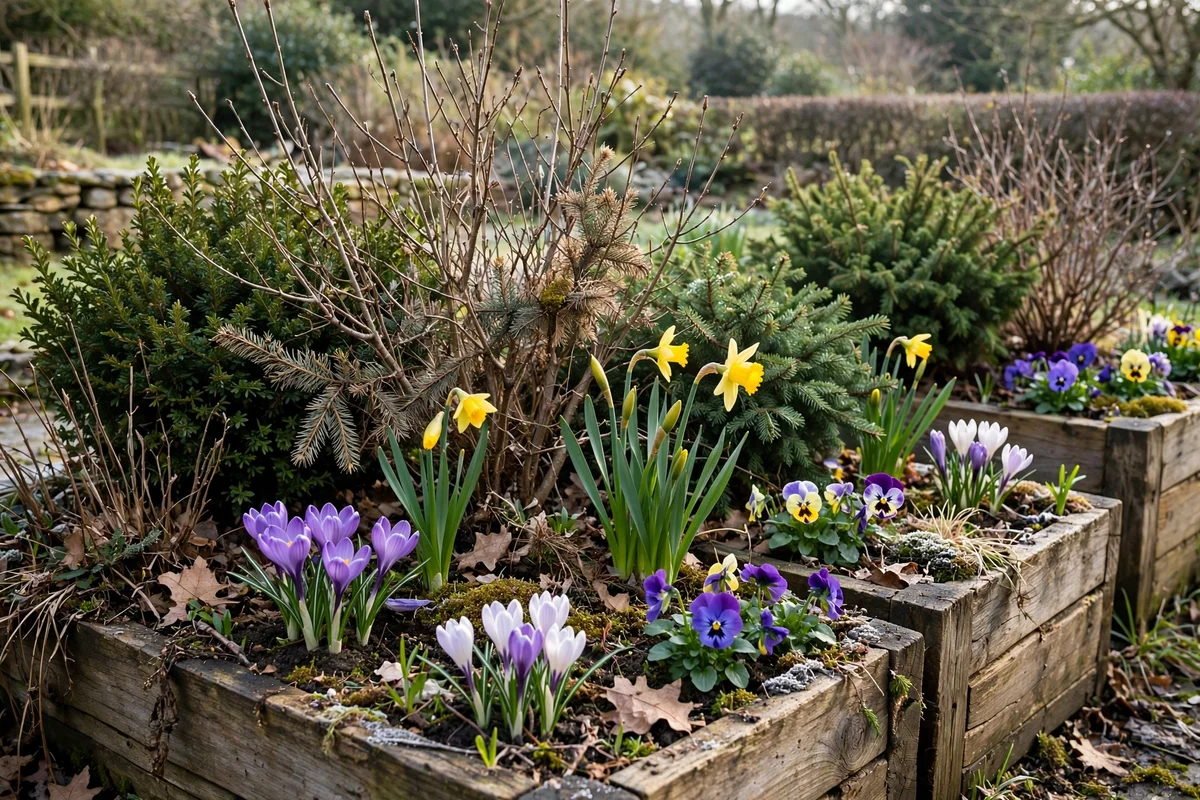
Every February I used to stare at my tired winter pots and wonder when I could finally rip them out. Then I learned the trick: plant for two seasons at once. A pot built in fall with spring bulbs tucked under winter greens looks good in December and then surprises you with flowers in March.
These 15 winter-to-spring planter ideas are all about the handoff. Each one looks good through the cold months and then carries into spring with either no work or one simple swap. Every idea includes real plants, a cost and difficulty label, and the timing that makes the transition work.
Quick takeaways
- Plant spring bulbs in fall underneath winter greens for a March payoff with zero spring work.
- Keep one evergreen anchor (boxwood, dwarf conifer) and swap only the fillers in March.
- Forced branches (forsythia, quince, pussy willow) cut in late winter bloom weeks ahead of the garden.
- Most transitional planters cost $15 to $40 to build in fall.
- Daffodil and tulip bulbs are toxic to pets; plant them where dogs cannot dig.
1. Bulb lasagna under winter greens
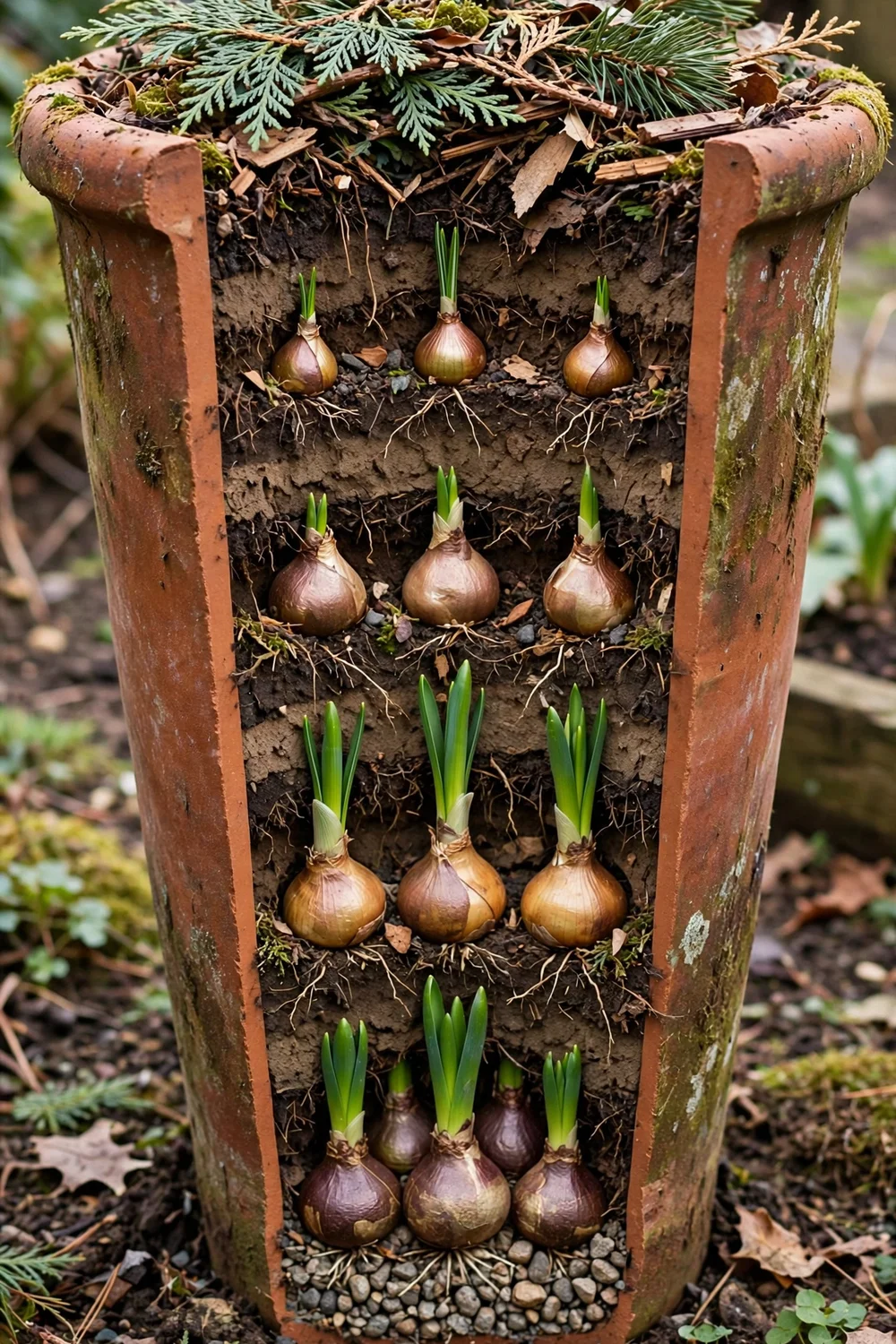
This is the classic two-season pot. In October, layer bulbs in a 14 inch deep pot: tulips at the bottom (8 inches deep), daffodils in the middle, crocus near the top. Cover with soil, then dress the surface with cut cedar and pine boughs for winter. The greens look good all winter; in March, shoots push through the fading boughs and flowers follow. One planting, two seasons, no spring replanting.
Try this: use 5 tulips, 7 daffodils, and 10 crocus per 14 inch pot; a bag of each costs about $12 total in fall.
Cost: $$ · Difficulty: Moderate
Note: daffodil and tulip bulbs are toxic to dogs and cats. The ASPCA toxic plant list flags both, so site bulb pots where pets cannot dig.
2. Evergreen anchor with a March flower swap

Plant a dwarf boxwood or juniper as the permanent center of the pot in fall, and surround it with cut winter greens. Come March, pull the tired cut greens and tuck in six-packs of pansies or violas around the evergreen. The anchor plant stays put for years; only the $8 of spring flowers is new each year. This is the lowest-effort transition on this list.
Try this: leave a 3 inch ring of bare soil around the anchor when you build the winter version, so spring planting takes minutes.
Cost: $$ · Difficulty: Easy
3. Forced forsythia branches

Forsythia branches cut in late February bloom indoors or in a sheltered porch pot weeks before the shrubs outside. Cut 3 to 4 foot stems, crush the cut ends lightly with a hammer, and stand them in a tall pot of water (or wet sand outdoors). Yellow flowers open in 1 to 2 weeks. Pair with a base of ivy or moss to hide the mechanics. When the show ends, compost the branches.
Try this: cut branches after at least 6 weeks of cold weather; they need that chill to bloom well.
Cost: $ · Difficulty: Easy
4. Pussy willow spring markers
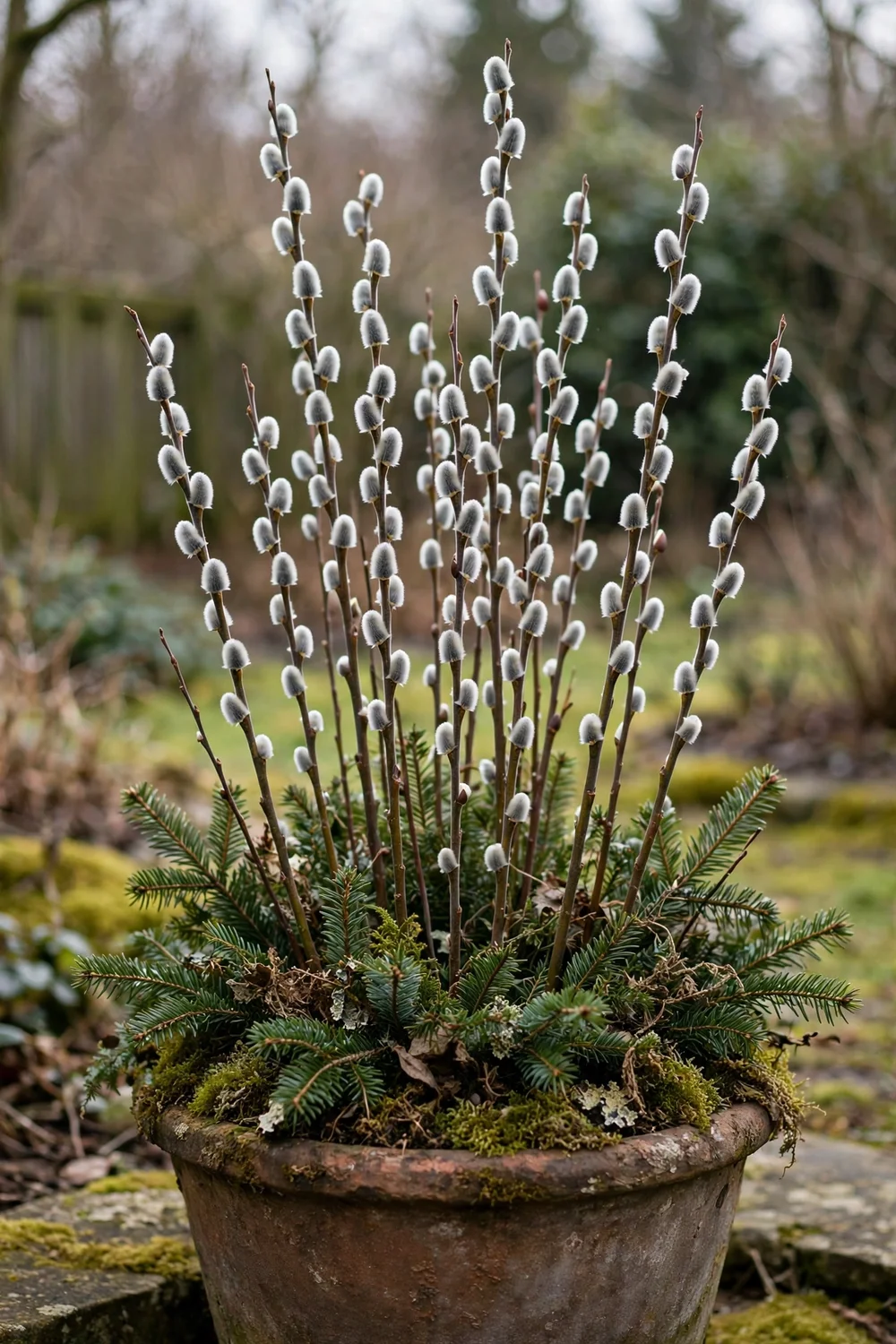
Pussy willow catkins are the visual signal that spring is close. In late winter, push 8 to 10 cut stems (2 to 3 feet tall) into a pot of packed winter greens or damp soil. The soft gray catkins open over a few weeks and last for a month or more. They pair naturally with the last of the winter evergreens, bridging the two seasons in one arrangement.
Try this: keep cut stems dry (no water) if you want the catkins to stay tight and silvery longer.
Cost: $ · Difficulty: Easy
5. Hellebore anchor pot
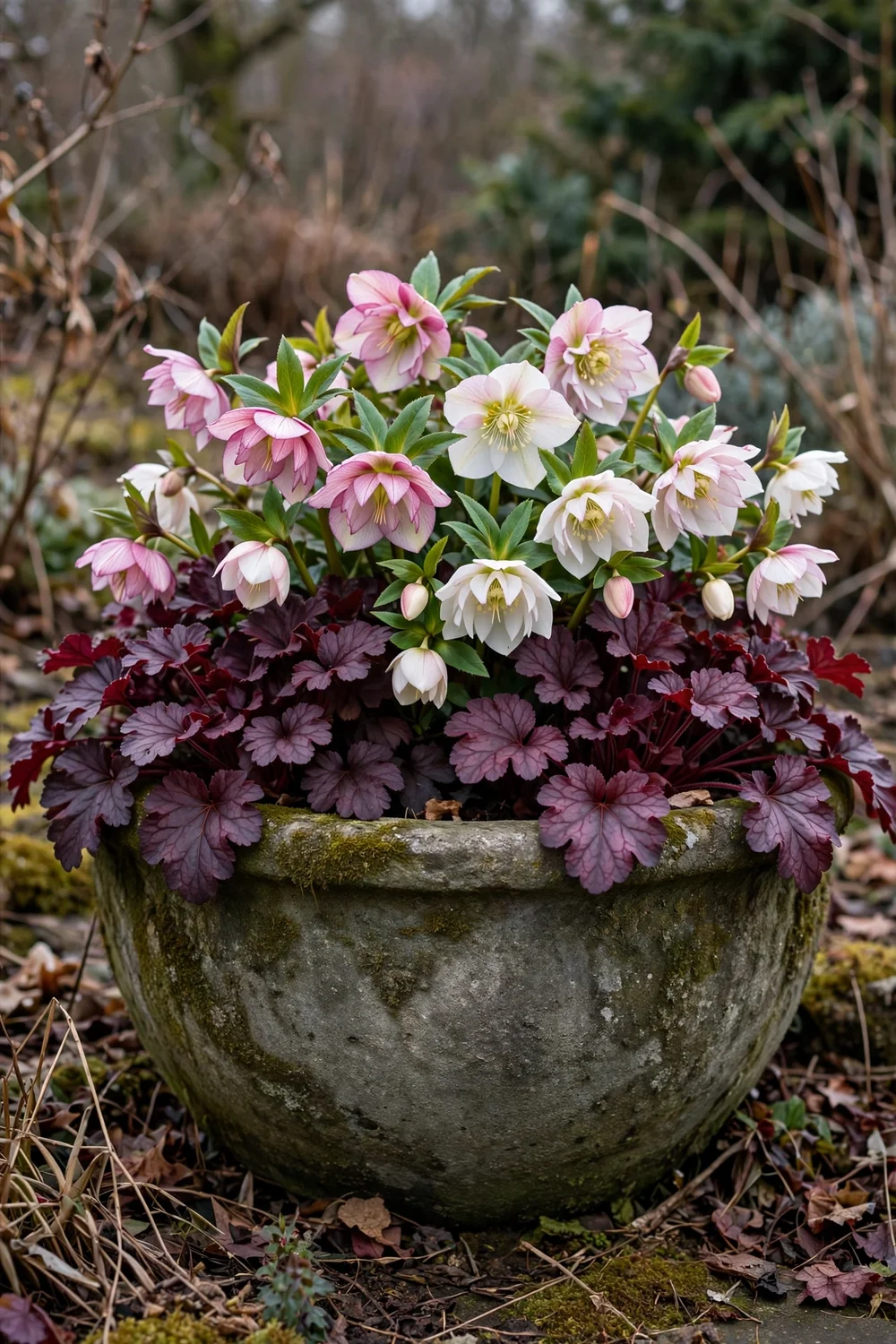
Hellebores bloom from January into April, which makes them the true winter-to-spring plant. Plant one large hellebore in a 14 inch pot with coral bells (heuchera) around it for foliage contrast. The flowers open while snow is still possible and keep going as the garden wakes. In zones 6 and warmer this pot needs no winter protection beyond a sheltered spot near the house.
Try this: trim last year’s hellebore leaves in late January so the new flowers show clearly.
Cost: $$ · Difficulty: Easy
6. Kale out, primroses in
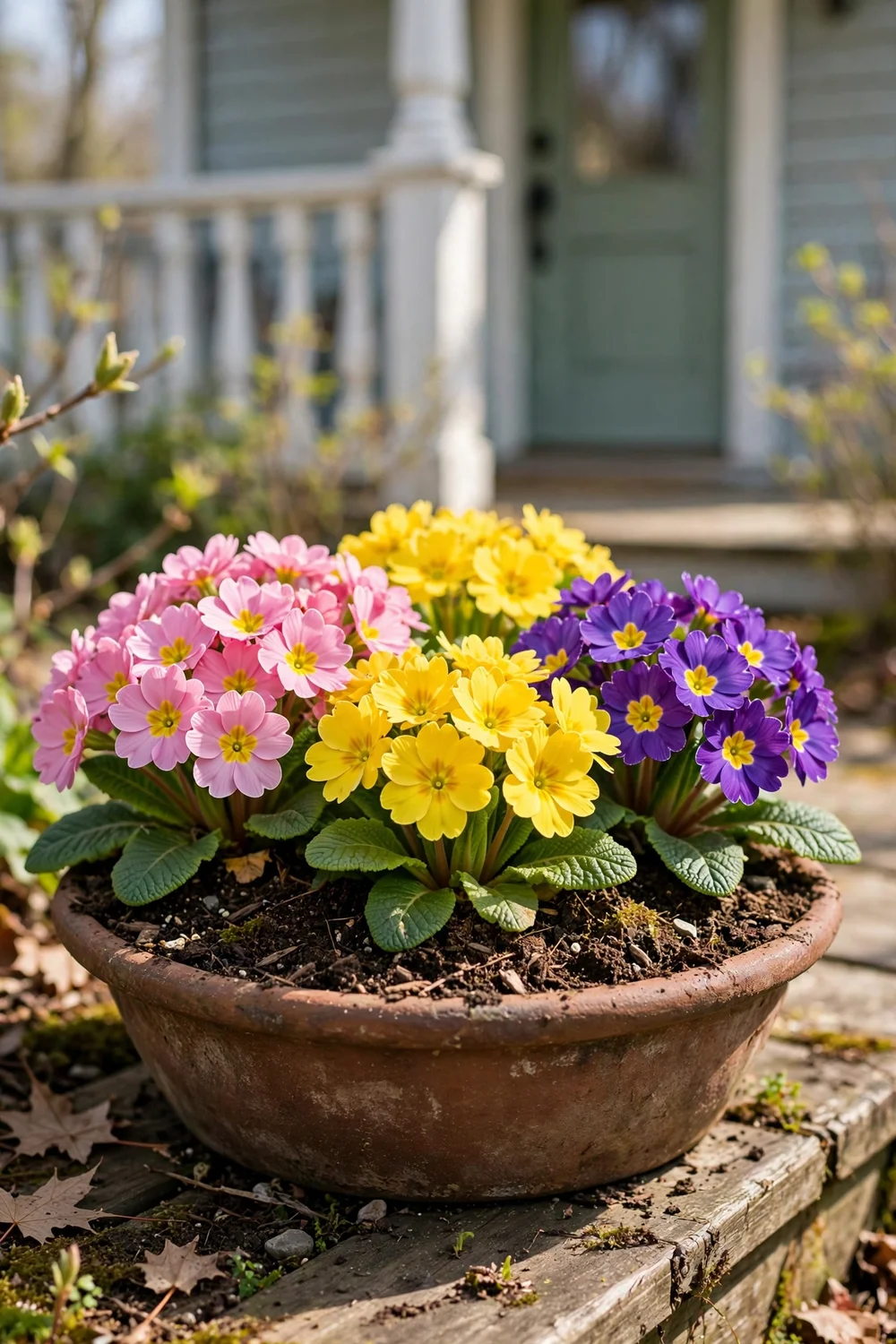
Ornamental kale earns its keep November through February, then gets leggy and tired. Plan the swap from the start: in March, pull the kale and drop in primroses, which bloom in cold spring weather and cost about $4 for a six-pack. The pot never sits empty, and the whole refresh takes 15 minutes. Primroses handle light frosts, so plant them as soon as the kale looks spent.
Try this: top up the pot with an inch of fresh potting mix when you swap; winter rains compact the old soil.
Cost: $ · Difficulty: Easy
7. Witch hazel branches for late-winter scent

Witch hazel blooms in January and February with spidery yellow flowers that smell faintly sweet. Cut 2 to 3 foot branches and arrange them in a pot over packed evergreen boughs, or plant a small witch hazel shrub in a large container in zones 5 and up. The flowers appear on bare wood, so the arrangement reads as winter until the blooms open and announce spring.
Try this: place the pot near a path or door where you will catch the scent on mild days.
Cost: $ · Difficulty: Easy
8. Winter jasmine spilling over the edge

Winter jasmine (Jasminum nudiflorum) flowers on bare green stems from January into March in zones 6 and warmer. Plant it in a pot where its arching stems can spill over the edge, and underplant with small evergreen ferns or ivy for the winter base. The yellow flowers open a few at a time over weeks, giving the pot a long, slow spring reveal.
Try this: prune right after flowering finishes in spring; it blooms on old wood.
Cost: $$ · Difficulty: Moderate
9. Snowdrop and crocus bowl

Snowdrops and crocus are the earliest bulbs to flower, often while winter still holds. Plant 15 to 20 bulbs in a shallow, wide bowl in October, 3 inches deep, and top with moss for a finished winter look. Set the bowl where you will see it daily, by the door or a window. The first white and purple flowers in February feel like a personal holiday.
Try this: plant in layers (snowdrops below, crocus above) for two waves of bloom from one bowl.
Cost: $ · Difficulty: Easy
10. Pieris with spring flower buds
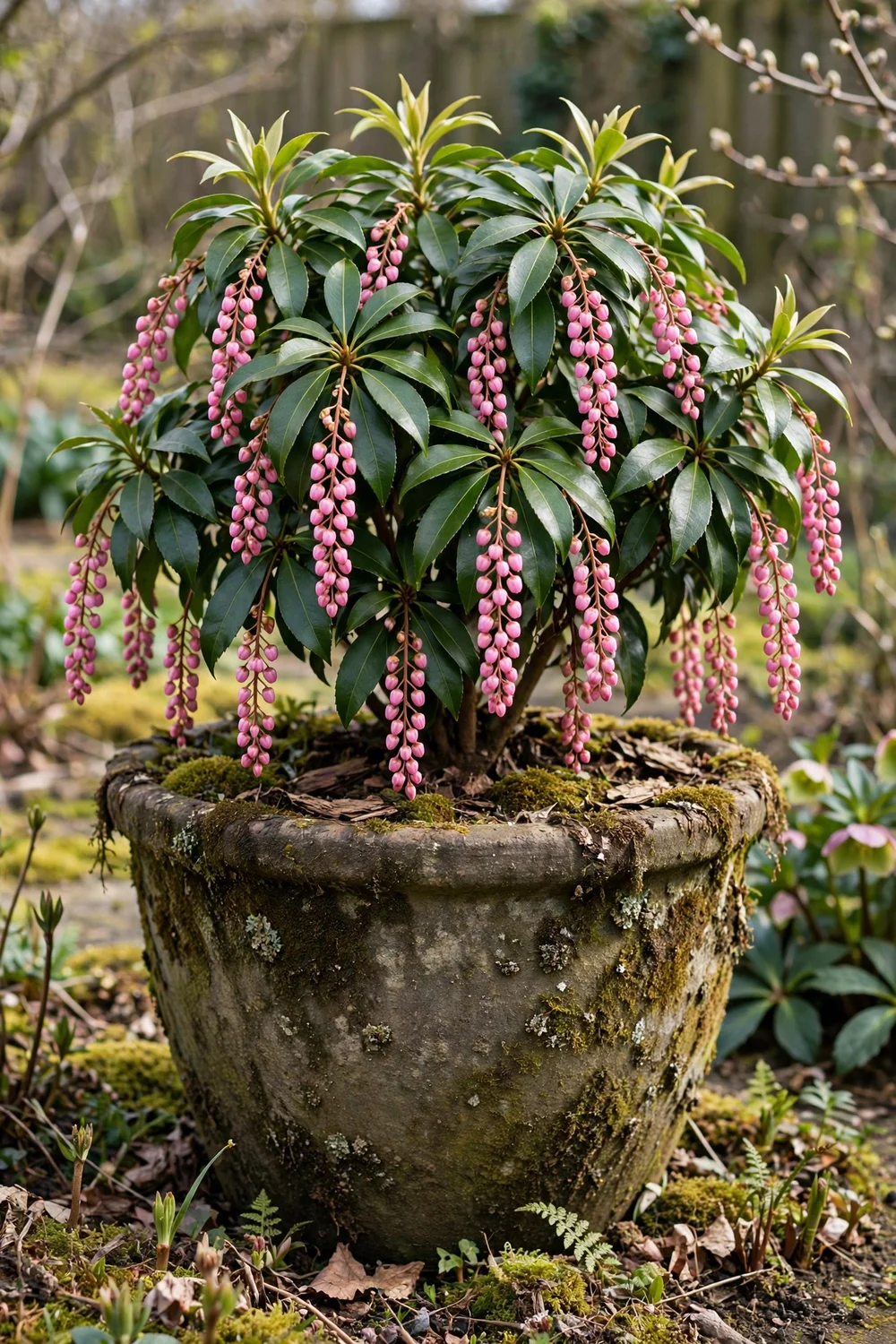
Pieris japonica carries glossy evergreen foliage all winter, then opens chains of bell-shaped flowers in March and April. A 3-gallon pieris in an 18 inch pot gives you winter structure and a spring flower show from one plant. It prefers acidic soil, so use a potting mix blended for azaleas and rhododendrons. New spring growth often emerges bronze-red, adding a second color moment.
Try this: site the pot in afternoon shade; winter sun plus wind burns pieris leaves.
Cost: $$$ · Difficulty: Moderate
11. Camellia for late-winter blooms
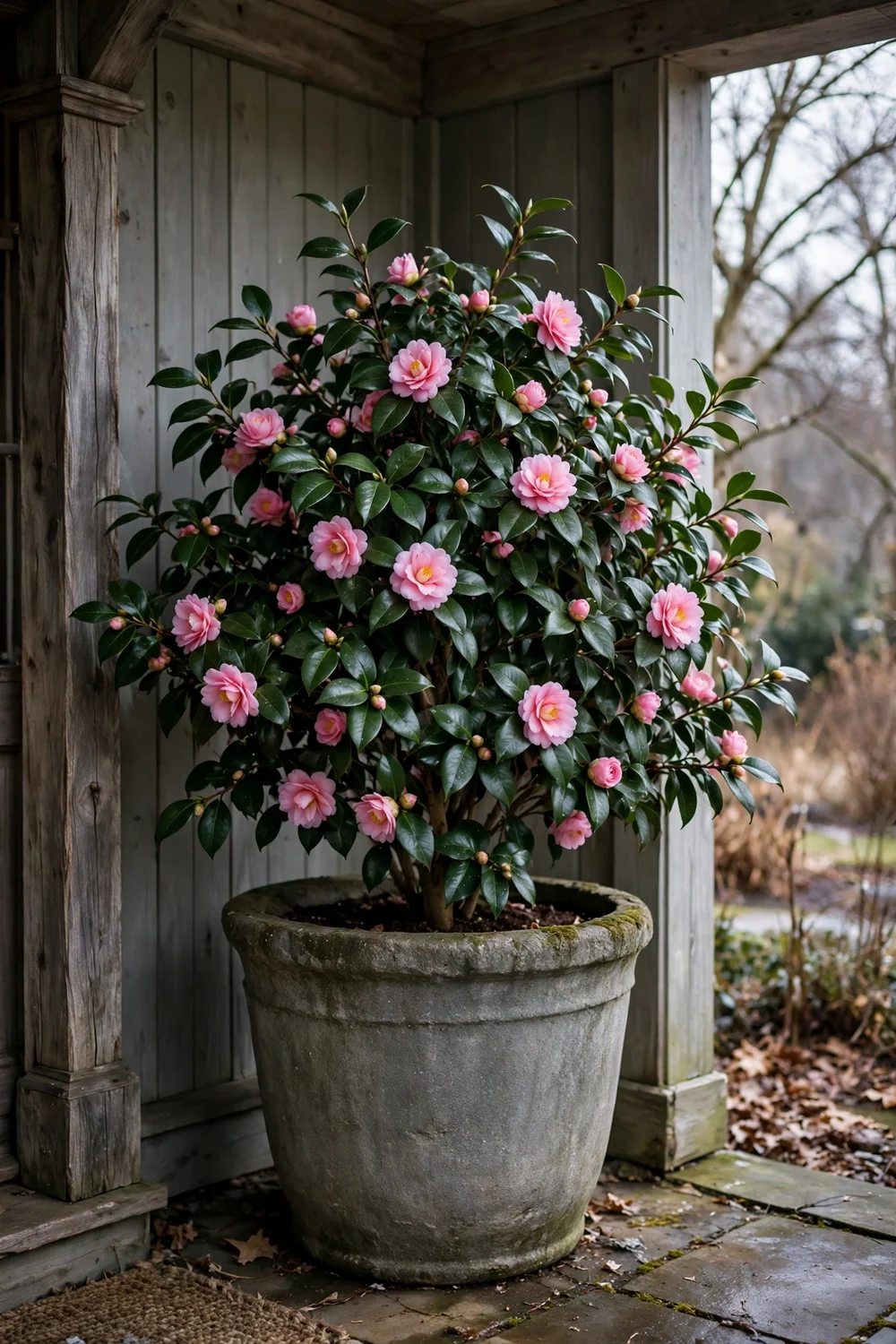
In zones 7 and warmer, camellias bloom from December into March, right across the winter-spring line. Plant one in a 20 inch pot with acidic potting mix and keep it in a sheltered spot out of morning sun, which damages frosted buds. The glossy leaves look good all winter even before the flowers open. This is the closest thing to a winter rose for mild-climate porches.
Try this: choose a late-blooming variety so flowers dodge the hardest freezes.
Cost: $$$ · Difficulty: Moderate
12. Forced flowering quince
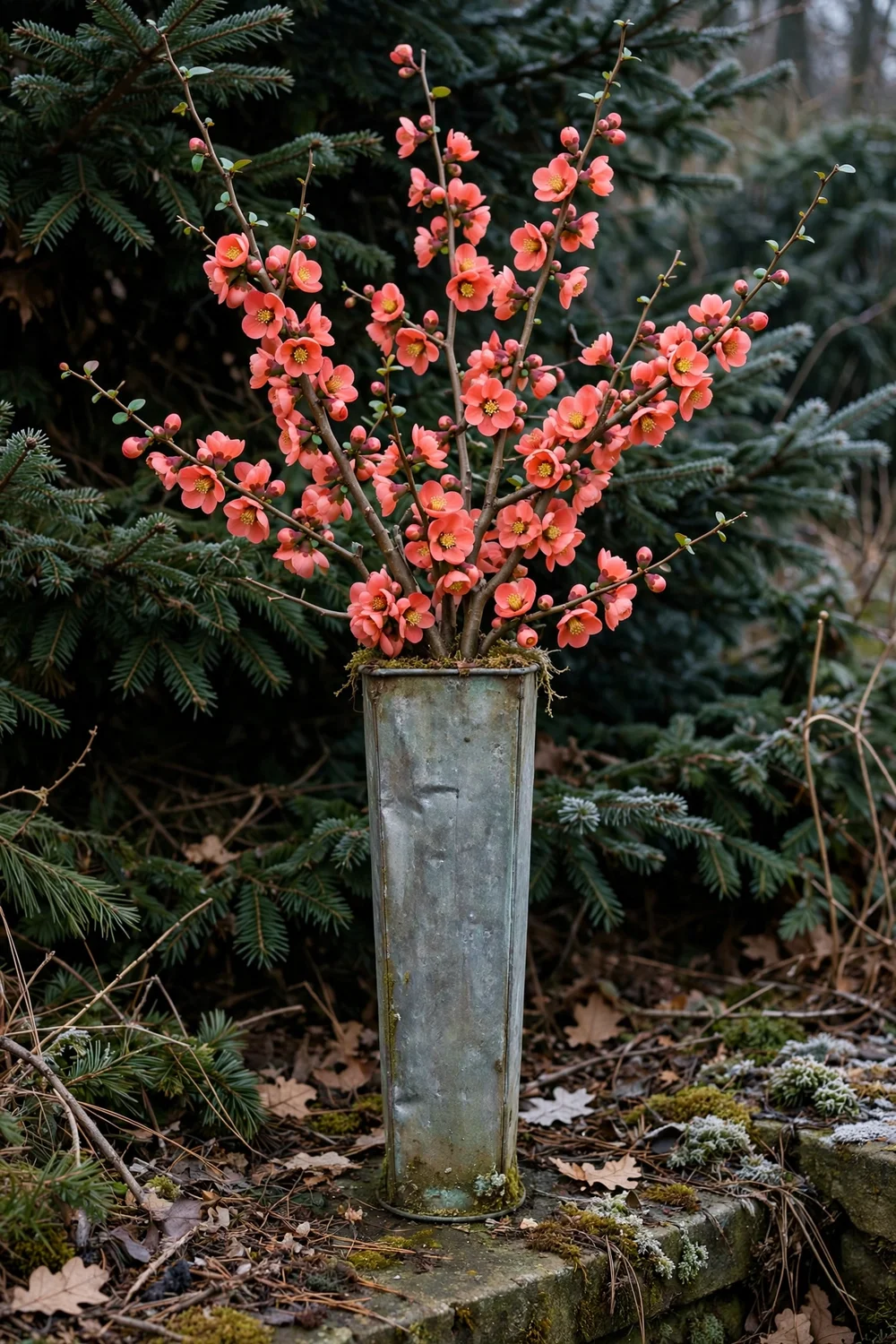
Flowering quince branches force as easily as forsythia but give richer coral, pink, or red blooms. Cut 2 to 3 foot stems in February, stand them in a tall narrow pot of water, and keep them cool (50 to 60°F) for the deepest color. Flowers open in 2 to 3 weeks. Set the pot against a backdrop of dark evergreens so the blossoms stand out.
Try this: recut the stem ends every few days and change the water to extend the bloom by a week.
Cost: $ · Difficulty: Easy
13. Daffodils started indoors, moved out in March
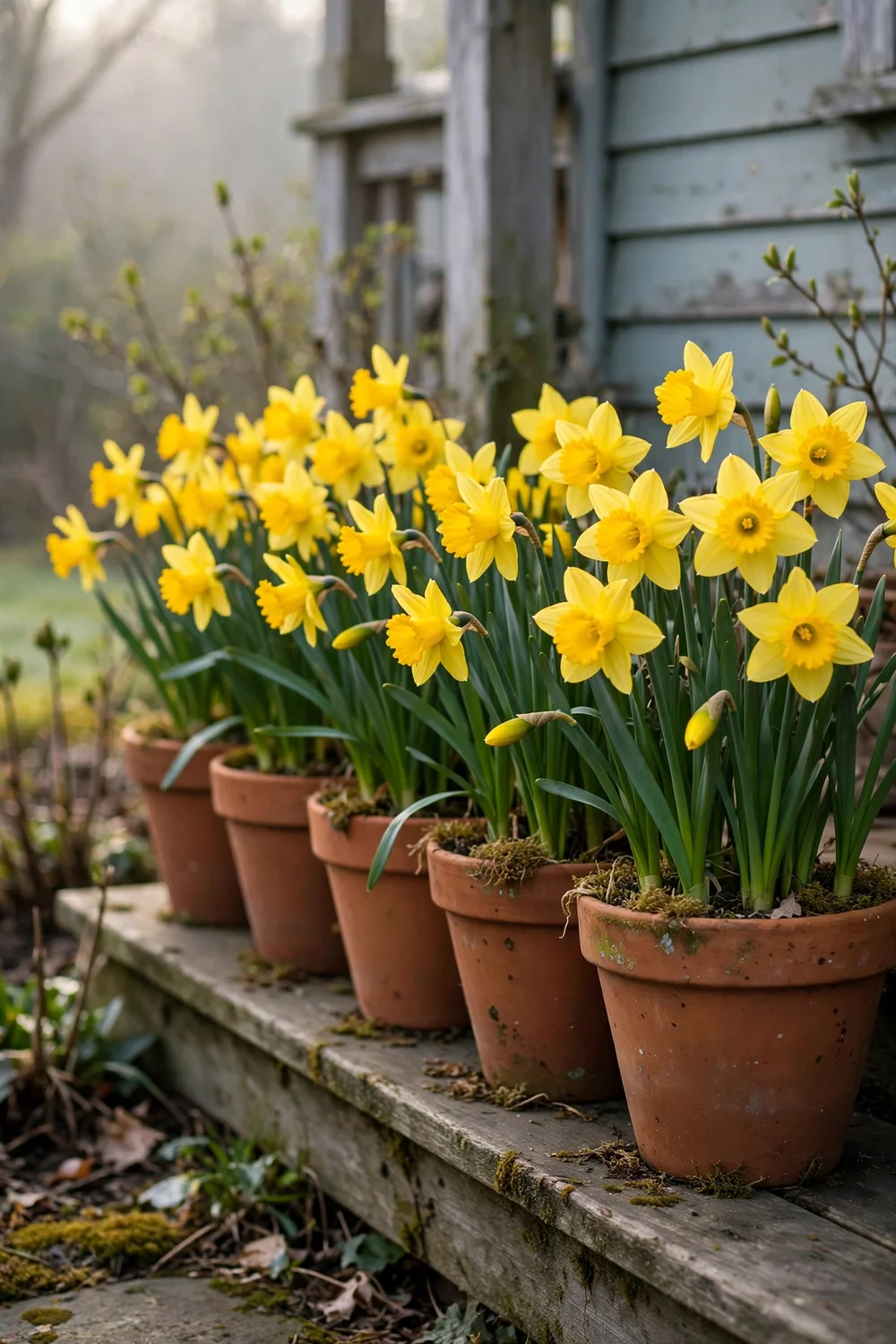
Missed fall bulb planting? Pot daffodil bulbs in January, keep them in a cool garage (40 to 50°F) for 8 weeks, then move them to the porch in March as buds form. They bloom a few weeks behind garden daffodils but fill the gap when winter pots look tired. After flowering, plant the bulbs in the garden in fall for next year. One bag of 20 bulbs fills four 8 inch pots.
Try this: label each pot with the variety; heights vary from 6 inch miniatures to 18 inch standards.
Cost: $ · Difficulty: Moderate
14. Pansy refresh over a perennial base
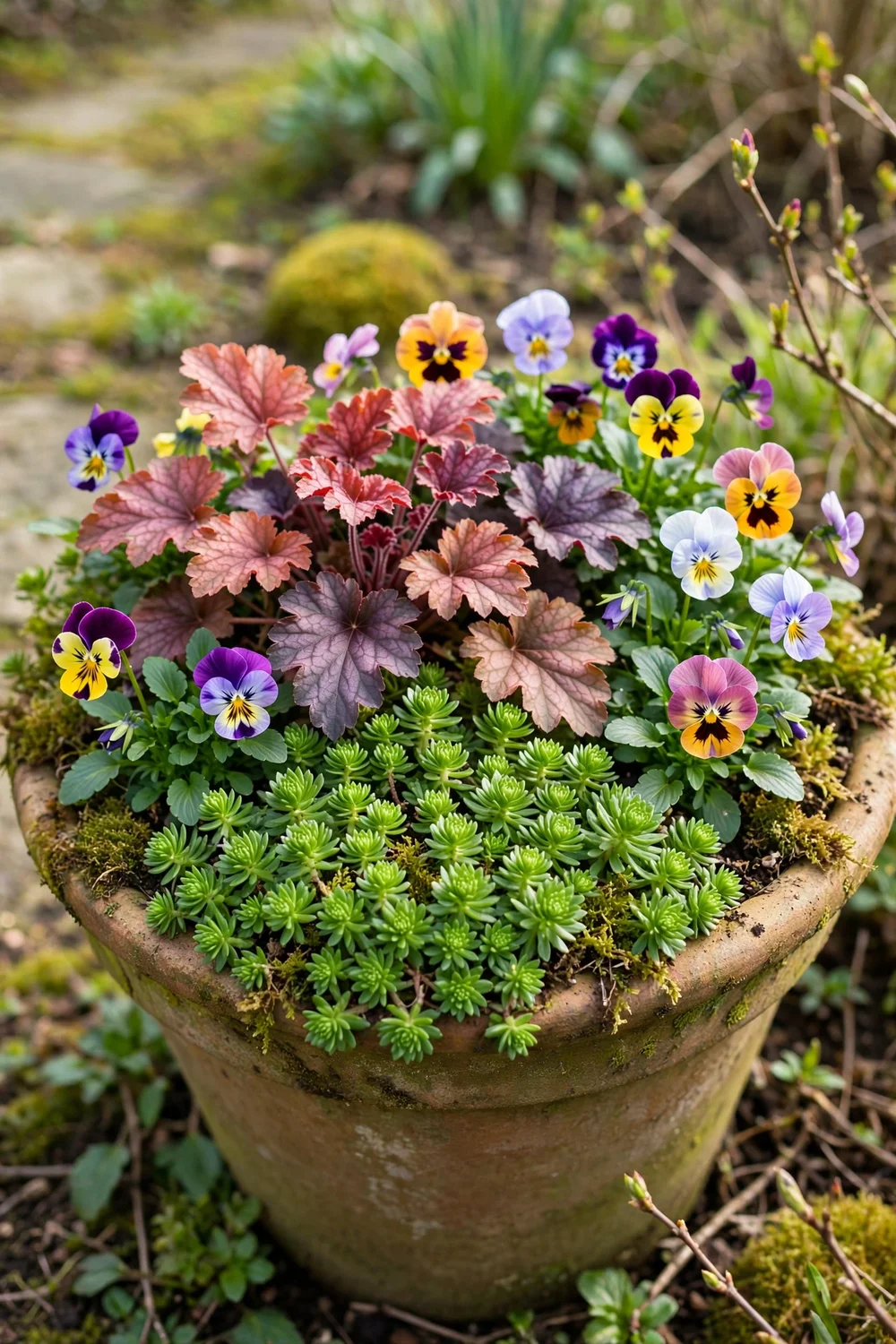
Build the winter pot around perennials that stay: sedum, coral bells, or dwarf mondo grass. They hold the pot together through winter with foliage alone. In March, tuck pansies or violas into the gaps without disturbing the perennials. The base plants return every year; only the annual color is new. This is the most sustainable transition on the list.
Try this: use violas instead of pansies if your springs are wet; they resist rot better.
Cost: $$ · Difficulty: Easy
15. Two-season urn: dwarf conifer ringed with daffodils
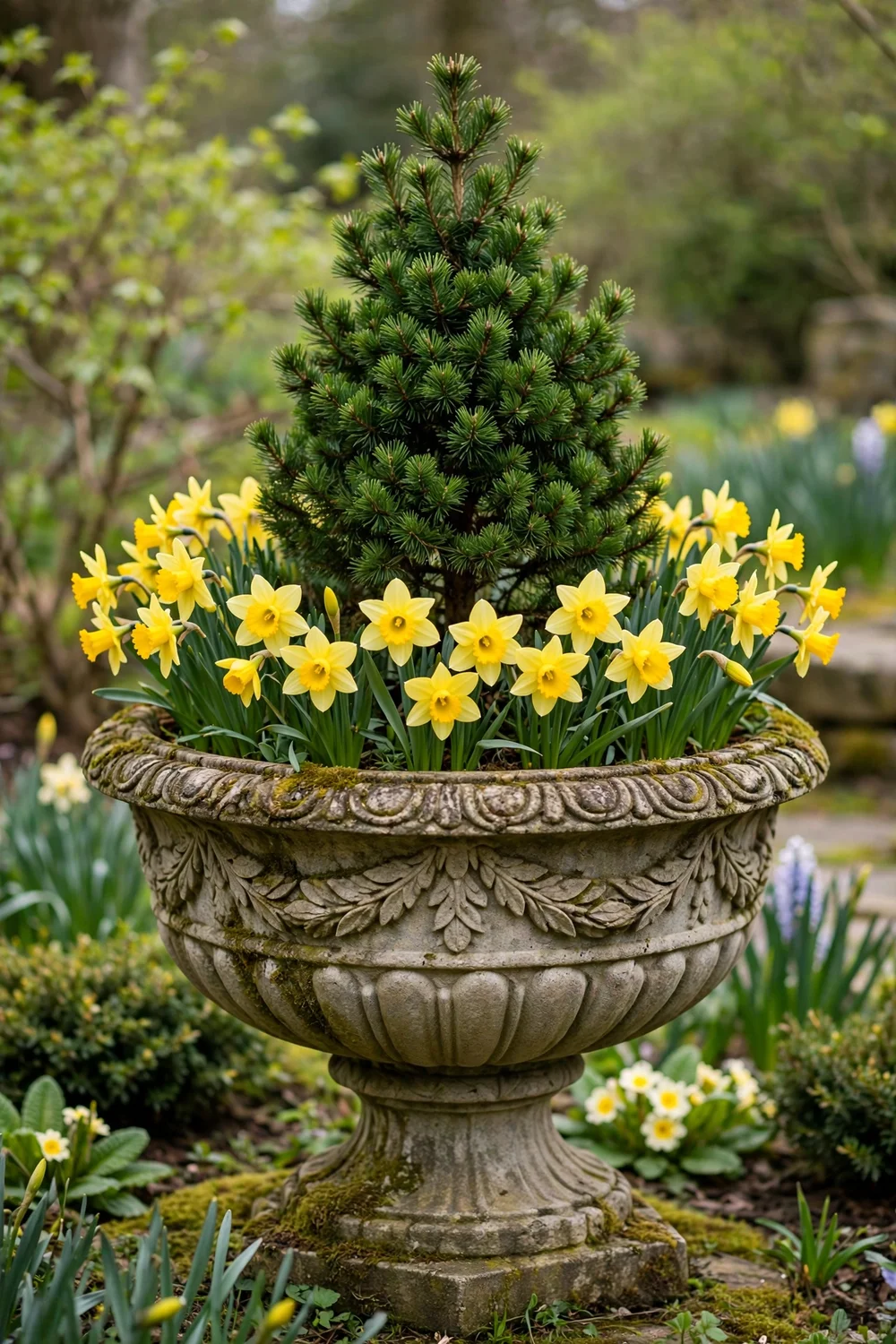
In fall, plant a dwarf Alberta spruce or juniper in the center of a large urn and ring it with daffodil bulbs at the proper depth. Dress the surface with winter greens. All winter you see the conifer and greens; in April a ring of daffodils opens around it. The formal shape suits front-door urns, and the whole thing repeats yearly with no replanting.
Try this: use a 20 inch or larger urn so bulbs have enough soil depth (6 inches) around the conifer’s root ball.
Cost: $$$ · Difficulty: Moderate
Which plants do both seasons well
Use this quick reference when planning a two-season pot.
| Plant | Winter role | Spring payoff | Zones |
|---|---|---|---|
| Hellebore | Evergreen foliage | Flowers Jan to Apr | 4 to 9 |
| Daffodils | Hidden bulbs under greens | Flowers Mar to Apr | 3 to 8 |
| Boxwood / juniper | Structure | Backdrop for spring flowers | 5 to 9 |
| Forsythia branches | Cut stems | Yellow blooms in 1 to 2 weeks | 5 to 8 |
| Camellia | Glossy leaves | Flowers Dec to Mar | 7 to 9 |
| Pieris | Evergreen foliage | Bell flowers Mar to Apr | 5 to 8 |
How to plan a planter that covers two seasons
Timing is everything. Bulbs go in during October, at the depths listed on the package, before the first hard freeze. The winter dressing (cut greens, moss, or a living evergreen) goes on top in November or December. The one rule: do not bury bulb shoots. Keep winter greens loose enough that shoots can push through in March. A 2 inch layer of loose boughs is fine; a packed 6 inch mat is not.
Choose containers with room to spare. Bulbs need their depth plus 2 inches of soil below, and a living anchor needs its root ball. A 14 inch deep pot is the practical minimum for a bulb lasagna. In cold zones (5 and below), cluster pots near the house wall or wrap them in burlap so bulbs do not freeze solid.
Mistakes to avoid when transitioning planters
The biggest mistake is waiting until April to think about spring. By then, garden centers are picked over and bulbs are long gone from shelves. Buy bulbs in September when selection is best. Second, do not cut back hellebore or evergreen foliage too early; old leaves protect new buds from late frosts. Wait until you see new growth starting.
Third, resist planting tender spring annuals too soon. Pansies handle frost, but petunias and marigolds do not; a late March freeze kills them overnight. Fourth, do not forget to water. Winter pots dry out on windy days, and bulbs forming roots in fall need consistent moisture. Check soil monthly through winter.
Pet safety: bulbs and spring plants
Pet safety note: daffodil, tulip, and hyacinth bulbs are toxic to dogs and cats, with the highest concentration of toxins in the bulb itself. Keep bulb pots where digging paws cannot reach them, and clean up any spilled bulbs promptly. The ASPCA toxic plant list covers all common spring bulbs.
For more on building pots that last, the University of Georgia Extension winter potted plant care guide covers drainage and container materials in depth. If you are planning the garden beds around your planters too, these courtyard garden ideas show how pots fit into small-space layouts. Poor soil holds bulbs back, so check the best plants for clay soil with poor drainage if your ground stays soggy. And for companion planting around your containers, the best strawberry companion plants list has spring pairings that work in pots.
Frequently asked questions
When should I plant bulbs for a winter-to-spring planter?
Plant spring bulbs in October, before the first hard freeze, at the depth listed on the package. Layer them under winter greens or around an evergreen anchor. The bulbs root through fall, rest in winter, and bloom in March or April with no further work.
Can I leave the same planter out all winter and spring?
Yes, if you build it for both seasons. Use a frost-proof pot, an evergreen anchor or bulb layer, and winter dressing on top. In March, remove spent cut greens and add spring flowers. The pot itself never needs to come inside in most zones.
What branches can I force for early spring blooms?
Forsythia, flowering quince, pussy willow, witch hazel, and flowering cherry all force well. Cut stems in late winter after 6 weeks of cold, stand them in water, and keep them cool. Blooms open in 1 to 3 weeks, well ahead of outdoor shrubs.
How do I protect container bulbs from freezing?
Choose bulbs hardy to your zone, plant at full depth, and cluster pots near the house wall for warmth. In zones 5 and below, wrap pots in burlap or bubble wrap. Mulch the surface with 2 inches of bark or leaves. Container bulbs freeze harder than ground bulbs, so zone ratings matter more in pots.
What should I do with winter planters in March?
Pull out spent cut greens and tired annuals like ornamental kale. Top up settled soil with an inch of fresh potting mix. Tuck in pansies, violas, or primroses around any evergreen anchors. Trim old hellebore leaves so new flowers show. Hold off on tender summer annuals until after your last frost date.
Are spring bulbs safe around pets?
Daffodil, tulip, and hyacinth bulbs are toxic to dogs and cats if chewed or dug up. Plant bulb containers where pets cannot reach them, and supervise dogs around newly planted pots. The ASPCA website lists the toxicity of common spring bulbs.
I built my first bulb lasagna three falls ago, mostly as an experiment, and the daffodils that pushed through the cedar boughs in March made me a convert. Build one pot this October and let it prove the idea to you too.


