



Most gardeners put the beds to sleep in November and accept a gray yard until April. I did that for years, and every winter I regretted it when the view from my kitchen window turned into bare mulch. A winter flower bed does not need a greenhouse or a mild climate. It needs plants that were bred for cold: pansies that bloom through frost, ornamental cabbage that gets more colorful as temperatures drop, and hellebores that open in January.
In this guide I am sharing 20 plant and flower ideas for a winter flower bed, each one a complete planting concept with specific varieties, spacing, and timing. Every pick is hardy in USDA zones 6 through 8 at minimum, and I note the exact zone range for each so you can plant with confidence. Plant in October or November and your bed will carry color all the way to spring.
Winter Flower Bed Quick Takeaways
- Plant winter beds in October or November so roots establish before hard frost.
- Pansies, violas, ornamental cabbage, hellebores, and winter heather are the most reliable cold bloomers.
- Mix flowers with evergreen structure (boxwood, ferns, ornamental grasses) so the bed looks full on gray days.
- Check your USDA zone before buying; most winter bedding thrives in zones 6 to 8, with hardier picks for zone 5.
- Mulch 2 to 3 inches deep after planting to protect roots through freeze and thaw cycles.
1. Pansy Carpet Bed
Plant winter pansy varieties like ‘Matrix’ or ‘Cool Wave’ 6 inches apart in a solid block for a carpet of color that blooms from November through March in zones 6 to 8. They pause in deep freezes and resume blooming as soon as temperatures rise above freezing. A 4 by 8 foot bed needs about 64 plants, which runs $40 to $60 as flats.
Mix three colors maximum, such as deep purple, golden yellow, and white, for a designed look instead of a jumble. Deadhead spent blooms every week to keep new flowers coming.
Try this: Plant pansies slightly deeper than they sat in the flat. The extra soil contact protects the crown during freezes.
Cost: $$· Difficulty: Easy

2. Ornamental Cabbage Rosette Bed
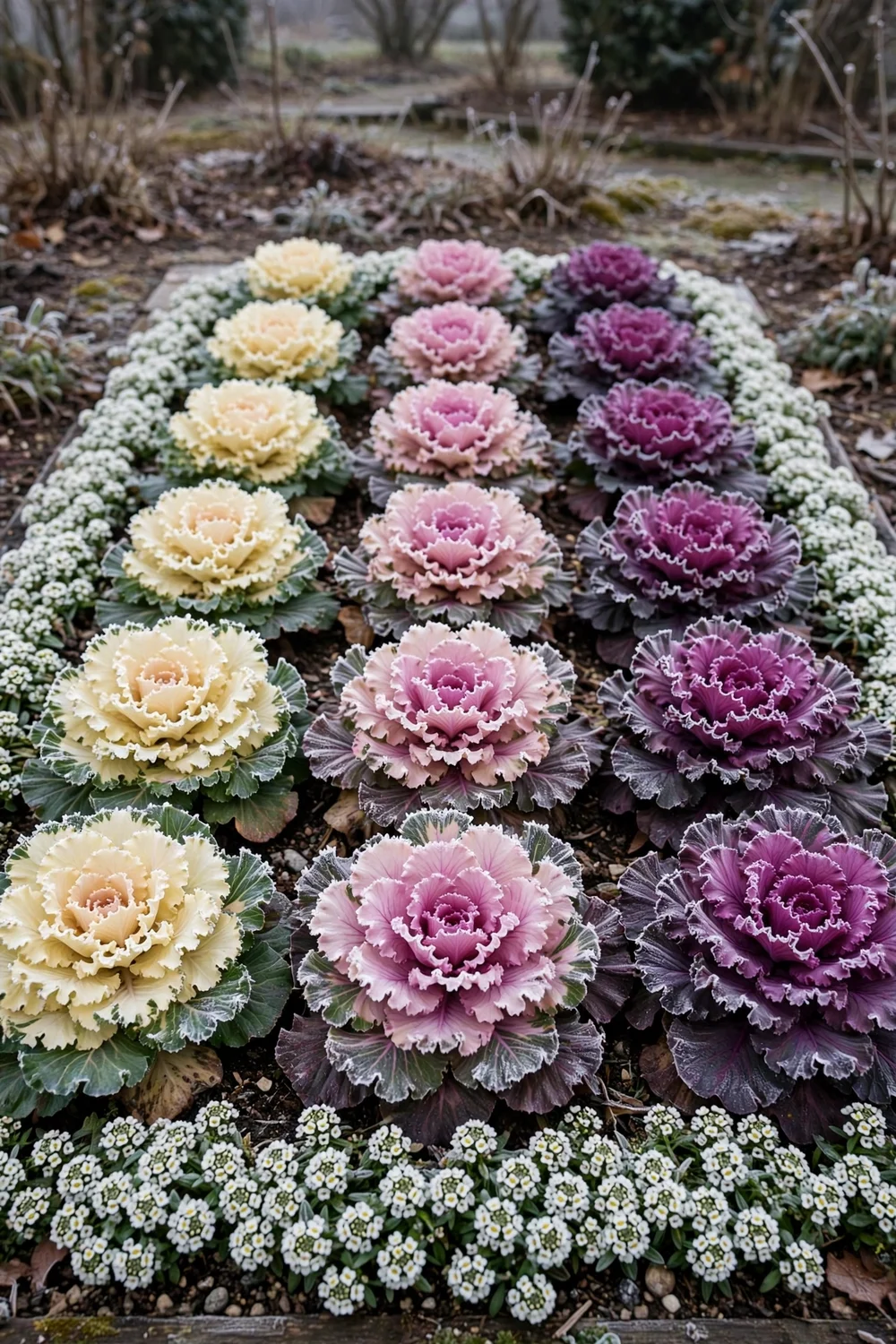
Ornamental cabbage forms tight rosettes in cream, pink, and purple that intensify in color after the first frost, thriving in zones 2 to 11. Space plants 12 inches apart in rows or a grid; each rosette grows 10 to 12 inches wide and becomes the star of the bed from November into December. They are technically edible but bred for looks, so grow them for the display.
Pair cabbage with low white alyssum at the edges for contrast. Watch for cabbage worms in warm spells and pick them off by hand.
Try this: Choose varieties with ruffled leaves like ‘Osaka’ for more texture. Smooth-leaf types look flat from a distance.
Cost: $$· Difficulty: Easy
3. Hellebore Shade Bed
Hellebores, often called Christmas roses or Lenten roses, bloom from late autumn through winter in zones 4 to 9, with flowers in white, blush, deep plum, and speckled patterns. Plant them 18 inches apart under deciduous trees or on the north side of the house where summer shade protects their evergreen foliage. A hellebore bed looks best with 5 to 7 plants grouped so the nodding flowers read as a drift.
Try this: Mulch with 2 inches of leaf mold, not bark. Hellebores feed on the slow decay and bloom more heavily.
Cost: $$$· Difficulty: Moderate

4. Winter Heather Border
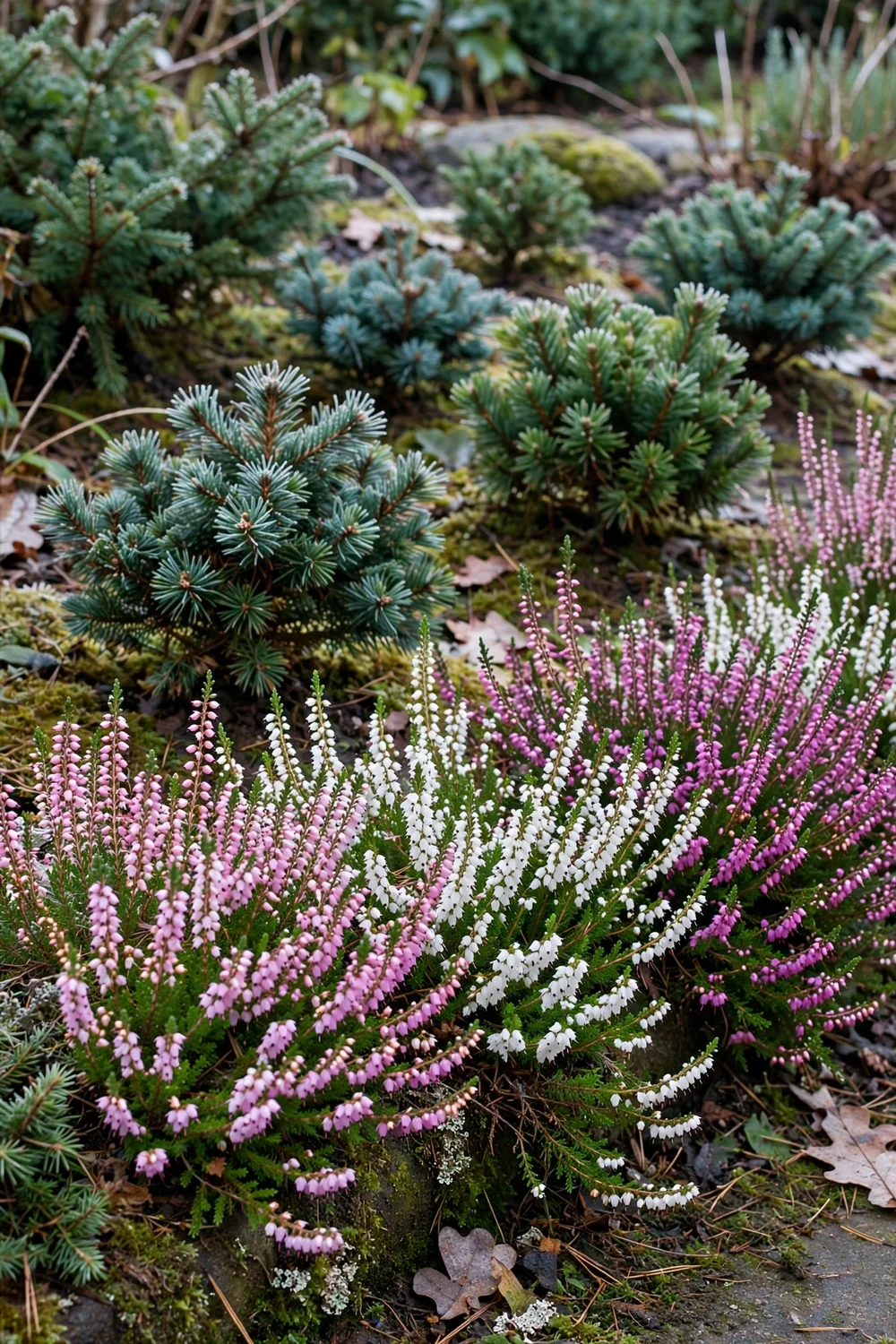
Winter heather (Erica carnea) blooms from January through March in zones 5 to 7, with tiny bell flowers in pink, white, and magenta over evergreen needle foliage. Plant it 12 inches apart along the front edge of a bed for a low ribbon of color exactly when the garden looks bleakest. It prefers acidic soil, so mix in composted pine bark at planting time.
Shear lightly after flowering to keep plants dense. Heather pairs beautifully with dwarf conifers behind it for a layered winter border.
Try this: Plant heather in odd-numbered drifts of 5 or 7. Even rows look stiff; drifts look natural.
Cost: $$· Difficulty: Easy
5. Cyclamen Woodland Edge
Hardy cyclamen (Cyclamen hederifolium) pushes delicate pink and white blooms through fallen leaves from September into winter in zones 5 to 9. Plant the corms 1 inch deep and 6 inches apart under shrubs or along a woodland bed edge, where they naturalize into expanding colonies over the years. Their silver-marbled leaves look good even when flowers rest.
Do not bury corms deeply; they rot in soggy soil. A top dressing of gravel around each corm keeps the crown dry through winter rain.
Try this: Mark planting spots with small sticks. Cyclamen goes fully dormant in summer and is easy to dig up by accident.
Cost: $$· Difficulty: Easy

6. Ornamental Kale Rows
Ornamental kale grows taller and looser than cabbage, with frilly leaves in purple, white, and blue-green that hold color through hard frosts in zones 2 to 11. Plant in straight rows 15 inches apart for a formal vegetable-garden look, or stagger in a triangle pattern for a cottage feel. Tall varieties like ‘Redbor’ reach 2 feet and make excellent middle-of-the-bed plants.
Kale needs full sun for the strongest color; shade-grown plants stay greenish. Fertilize lightly in fall and stop feeding once nights drop below freezing.
Try this: Interplant kale with red mustard for a two-tone foliage bed that costs half as much as all-kale.
Cost: $$· Difficulty: Easy

7. Snapdragon Backdrop Bed
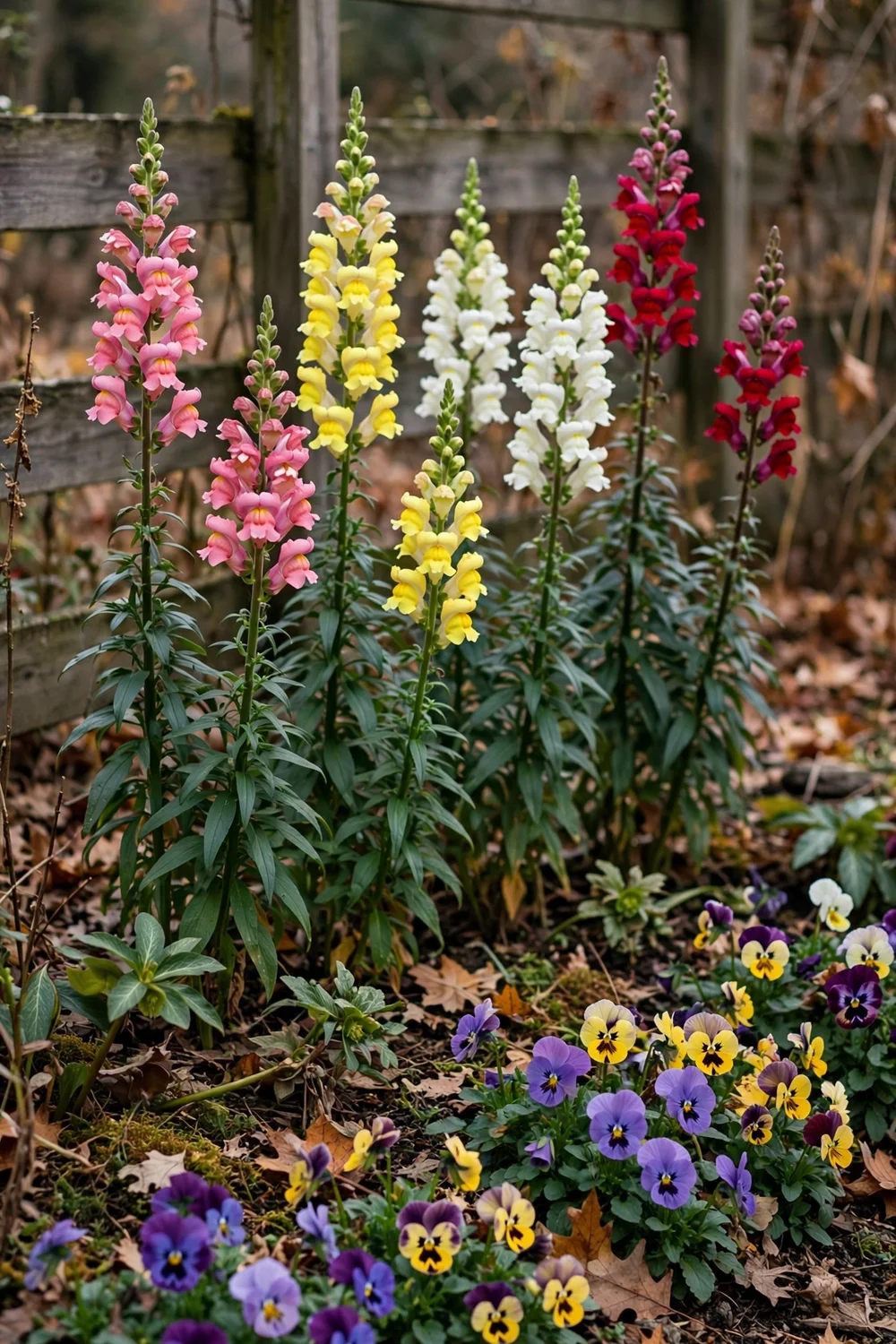
Snapdragons planted in fall bloom through winter in zones 7 to 10, and hardy varieties survive into zone 6 with mulch. Set tall varieties like ‘Rocket’ 10 inches apart along the back of the bed; their 2 to 3 foot spikes in pink, yellow, white, and red give the winter bed the height that low bedding lacks. They bloom heaviest in the cool weeks of late fall and early spring.
Pinch the center stem at 6 inches tall to force branching and more flower spikes. Stake tall varieties in windy spots so winter gusts do not snap them.
Try this: Cut the first flush of blooms for indoor vases. Cutting forces side shoots and doubles the total flowers.
Cost: $$· Difficulty: Easy
8. Dianthus Edging
Dianthus, often sold as ‘pinks’, forms low evergreen mats with fringed flowers in rose, salmon, and white that bloom in fall and again in early spring in zones 3 to 9. Plant 8 inches apart along bed edges where their blue-green foliage defines the border all winter. They need sharp drainage, so mix coarse sand into heavy clay before planting.
Shear after the fall bloom to keep mats tight. Dianthus hates wet crowns, so water at soil level and never overhead in winter.
Try this: Edge the bed with a single variety, not a mix. One color of dianthus reads as a crisp line; mixed colors read as clutter.
Cost: $$· Difficulty: Easy

9. Dusty Miller Silver Bed
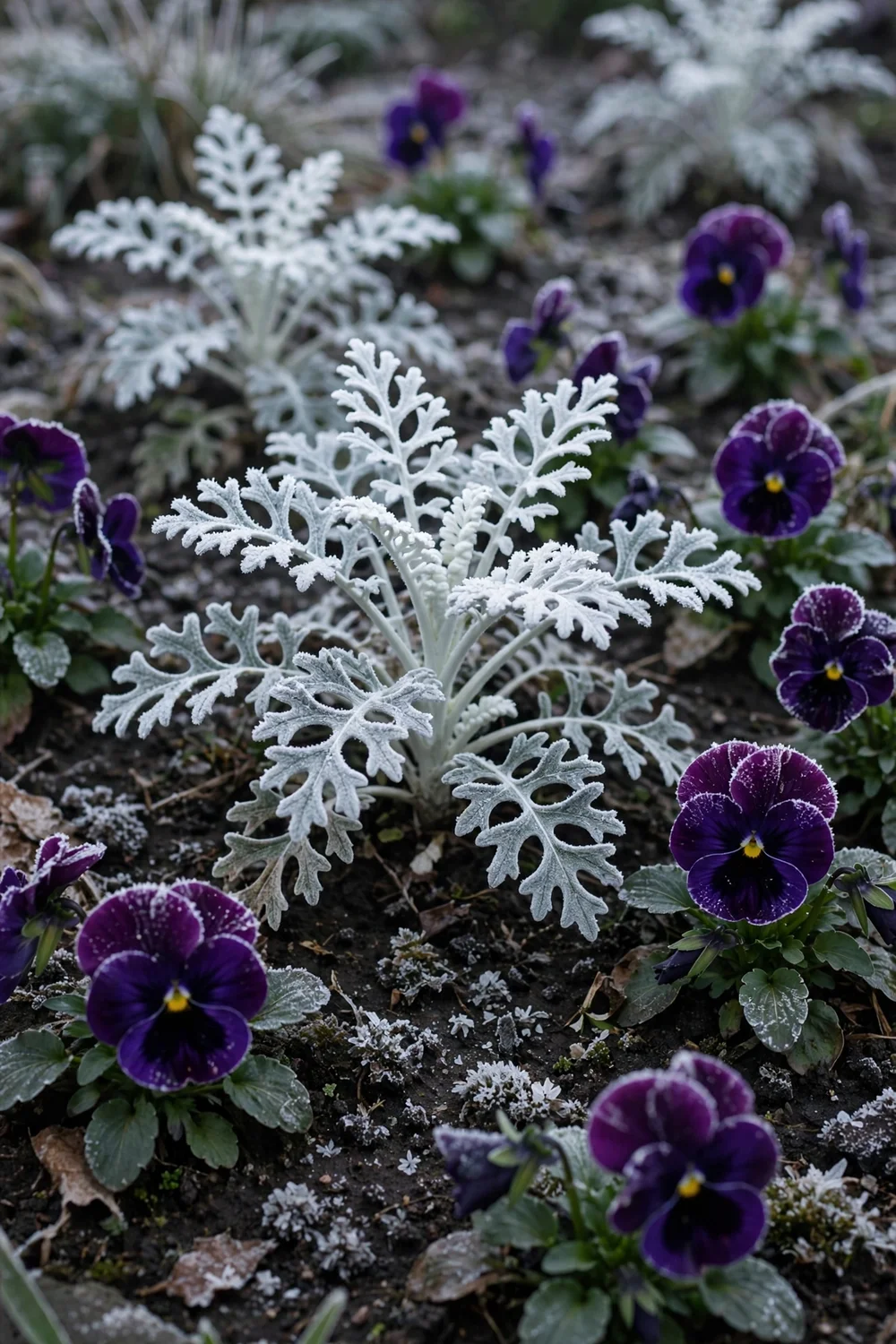
Dusty miller (Jacobaea maritima) offers silver-white lacy foliage that glows against dark winter soil and makes every flower color beside it pop, hardy in zones 7 to 10. Plant 10 inches apart as a filler between pansies or ornamental cabbage; the silver acts like a neutral that ties mixed colors together. It shrugs off light frost and looks good until hard freezes.
In zone 6 and colder, treat it as an annual and replant each fall. Remove any flower stalks that appear; they are insignificant and drain the plant’s energy.
Try this: Pair dusty miller with deep purple pansies. Silver and purple is the highest-contrast winter combination there is.
Cost: $$· Difficulty: Easy
10. Winterberry Shrub Bed
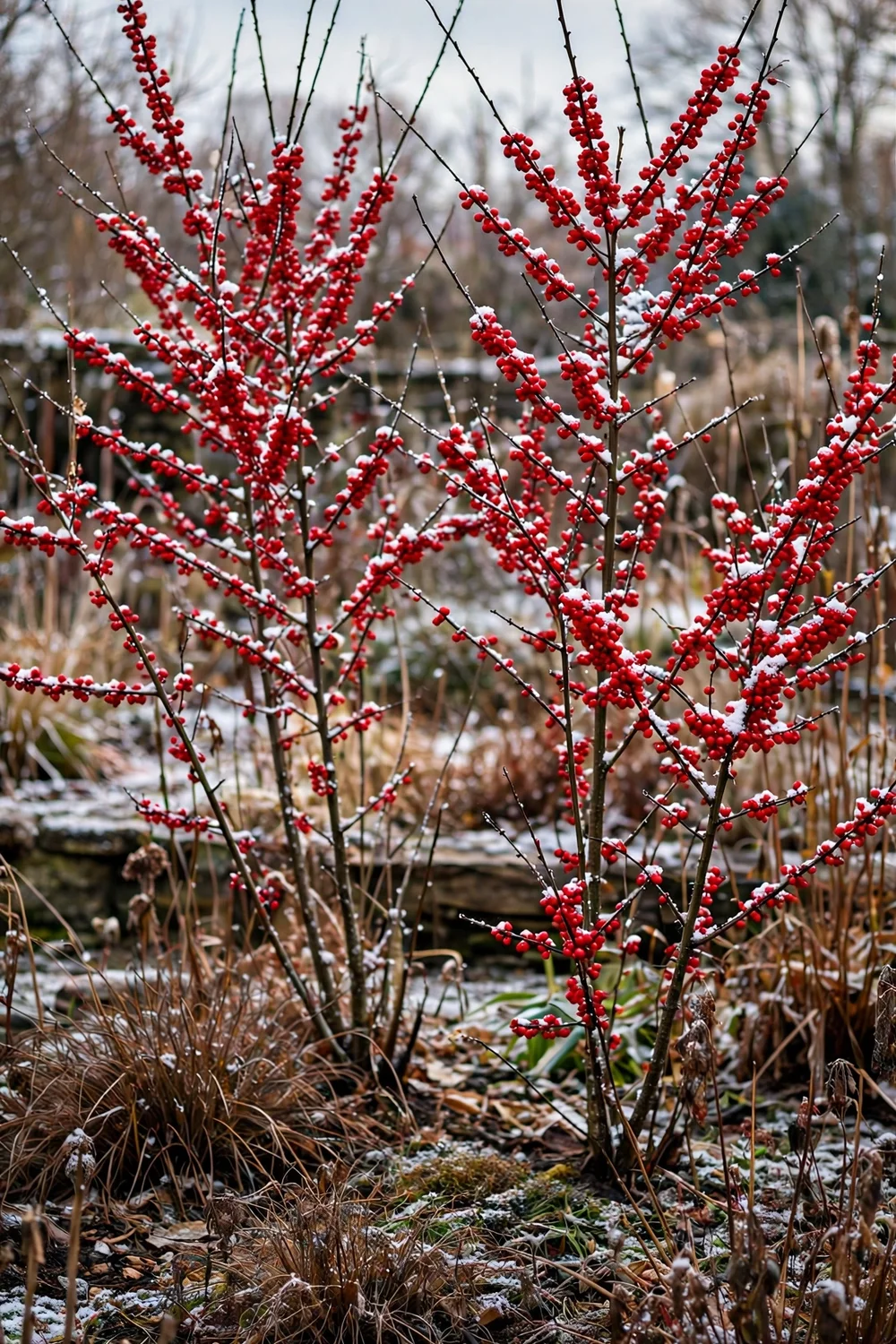
Winterberry holly (Ilex verticillata) drops its leaves in fall to reveal dense clusters of bright red berries on bare stems, hardy in zones 3 to 9. Plant one male pollinator for every 6 to 8 female berry-producing shrubs, spaced 6 feet apart, at the back of a winter bed. The berries feed birds from December into February and look spectacular against snow.
Winterberry needs consistently moist soil; drought stress in summer means fewer berries in winter. Prune in late winter, removing the oldest stems at the base to renew the shrub.
Try this: Plant winterberry where you see it from indoors. The whole point is winter viewing from a warm window.
Cost: $$· Difficulty: Moderate
11. Boxwood Structure Bed
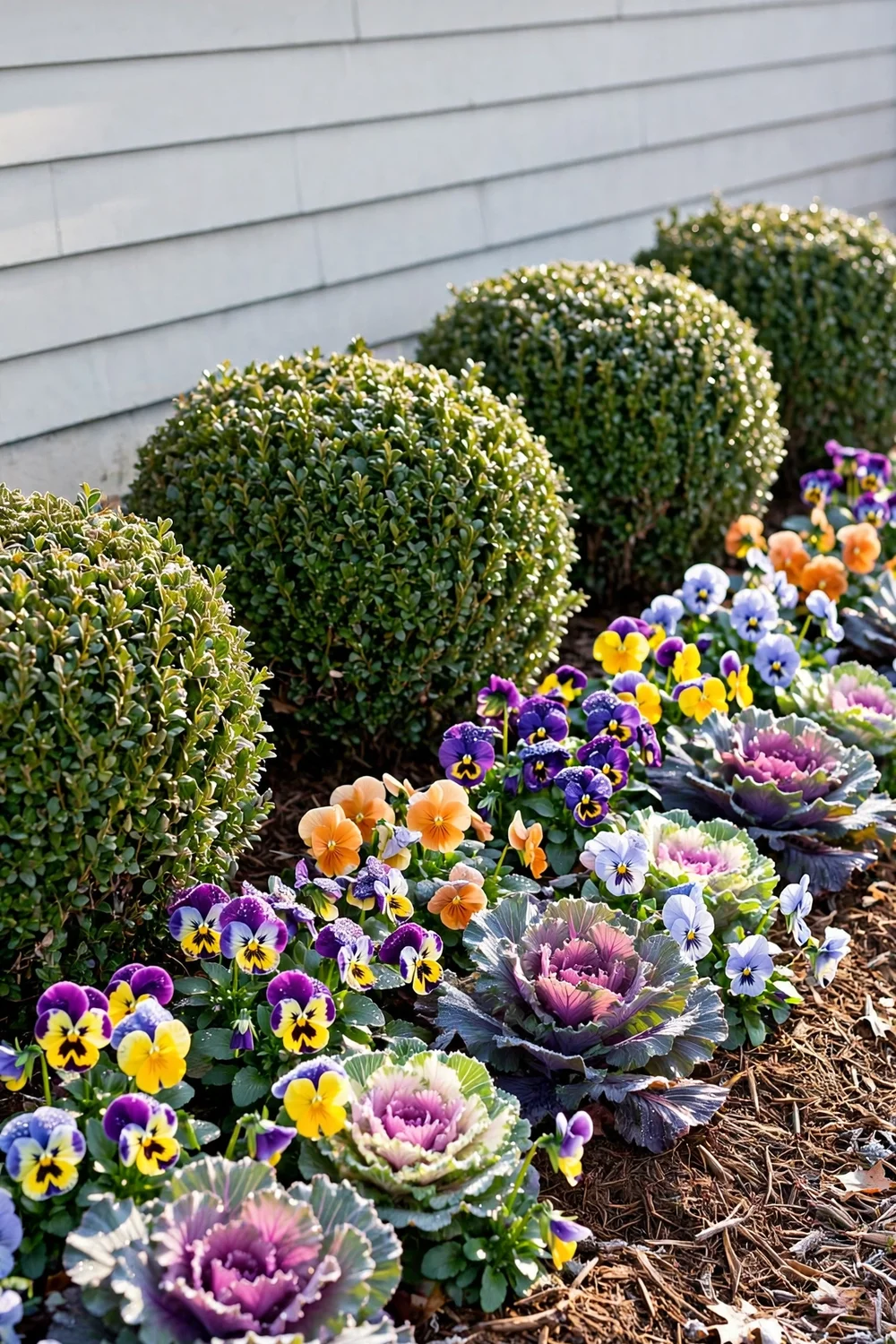
Boxwood gives a winter flower bed its bones: evergreen structure that looks intentional when flowers rest, hardy in zones 5 to 9 depending on variety. Plant dwarf ‘Green Velvet’ or ‘Green Mountain’ 2 feet apart as corner anchors or a low hedge behind winter bedding. Clip once in early summer and leave alone; winter pruning causes browning.
Water boxwood deeply before the ground freezes since winter wind dries evergreen leaves. A 3-foot plant in a 3-gallon pot runs $25 to $40 and anchors a bed for decades.
Try this: Plant boxwood first, then arrange flowers around it. Structure first, color second, is the rule for every season.
Cost: $$$· Difficulty: Moderate
12. Snowdrop Drift Bed
Snowdrops (Galanthus) are often the first flowers of the year, blooming January through February in zones 3 to 8. Plant bulbs 3 inches deep and 3 inches apart in drifts of 25 or more under trees or along a path edge in fall; small numbers disappear, but a drift of white bells stops walkers in their tracks. They naturalize freely, doubling every few years.
Buy bulbs in fall and plant immediately; dried-out snowdrop bulbs fail more than any other bulb. Let foliage die back naturally after bloom so the bulbs recharge.
Try this: Plant snowdrops where melting snow drains first, like a south-facing slope. They bloom weeks earlier in warm microclimates.
Cost: $$· Difficulty: Easy

13. Crocus Lawn Edge Bed
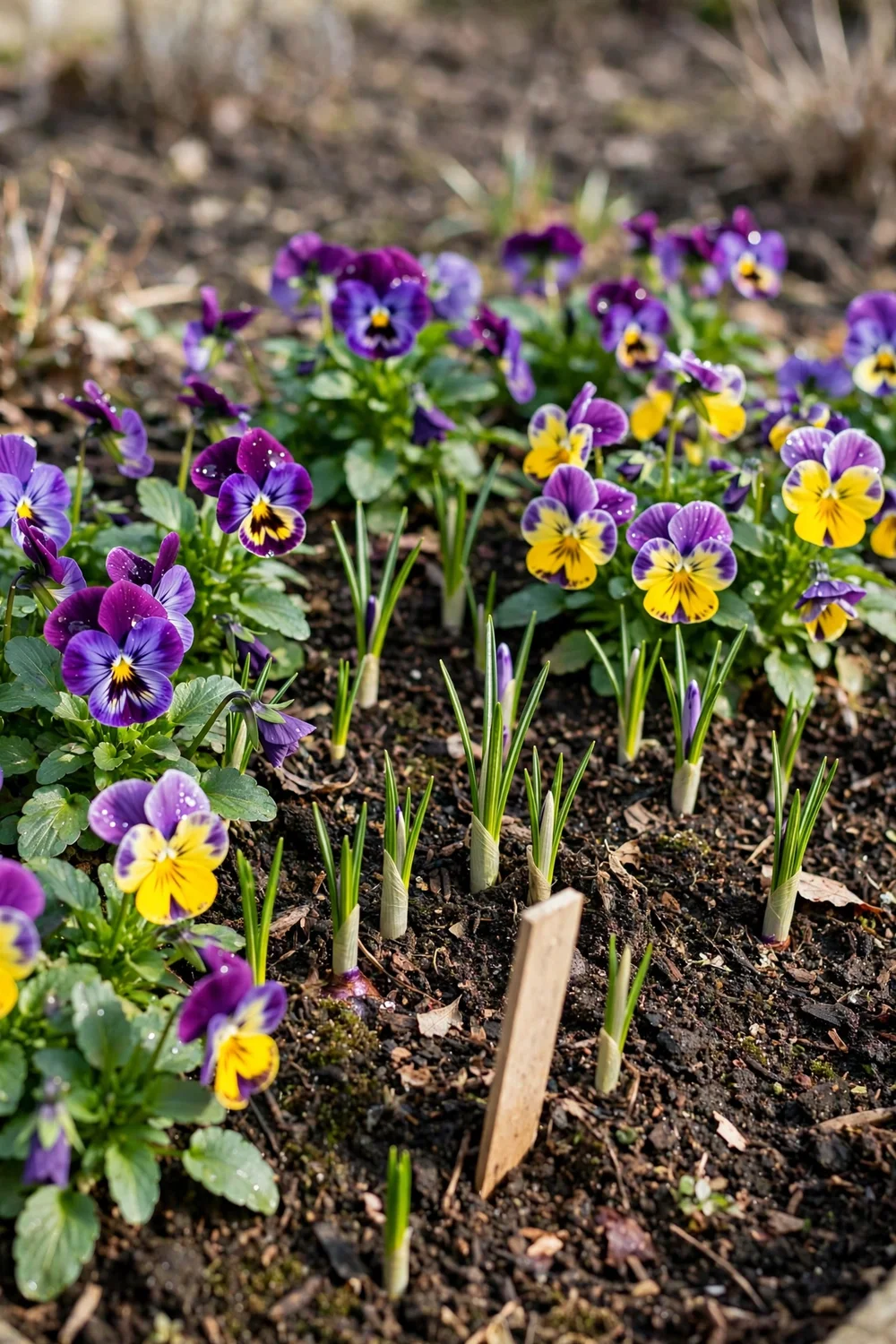
Crocus bulbs planted 3 inches deep along the edge where lawn meets bed give you purple, yellow, and white cups in late winter, hardy in zones 3 to 8. Plant in clusters of 10 to 12 bulbs, 4 inches apart, repeating the clusters every 2 feet for a dotted rhythm. They bloom before the grass needs mowing, so the flowers never compete with the mower.
Choose large-flowered Dutch crocus for the boldest show. Squirrels dig crocus bulbs, so cover fresh plantings with chicken wire for the first month.
Try this: Mix crocus colors within each cluster, not between clusters. Mixed clusters look abundant; single-color clusters in a row look sparse.
Cost: $$· Difficulty: Easy

14. Primrose Cottage Bed
Primroses bloom from December through May in zones 4 to 8, with clusters of flowers in pastels and jewel tones over rosettes of green leaves. Plant 8 inches apart in a cottage-style bed with partial shade; they sulk in hot afternoon sun even in winter in warm zones. A dozen plants fills a 3 by 3 foot bed for about $30.
Keep soil consistently moist but not soggy. Divide crowded clumps every 2 to 3 years in fall to keep blooms heavy.
Try this: Plant primroses near the front door or a path. Their flowers are small and best appreciated up close.
Cost: $$· Difficulty: Easy

15. Polyanthus Ribbon Bed
Polyanthus, the clustered cousins of primroses, bloom from late winter into May in zones 4 to 8 with bold multi-flowered heads in red, blue, yellow, and pink. Plant 10 inches apart in a winding ribbon through the middle of a bed; the ribbon shape leads the eye and makes a narrow bed feel longer. They handle more sun than primroses.
Feed once in fall with a balanced slow-release fertilizer. Remove faded flower heads to stretch the bloom season into spring.
Try this: Curve the ribbon instead of running it straight. A gentle S-curve doubles the visual interest of the same plants.
Cost: $$· Difficulty: Easy

16. Viola Carpet Edging
Violas are pansies’ smaller cousins, with dime-sized flowers in huge numbers that bloom from fall through spring in zones 4 to 8. Plant 6 inches apart as edging along paths or bed fronts; their sheer flower count outperforms pansies in raw color impact. Violas self-sow lightly, so you often get free volunteers the next year.
Shear the whole planting back by a third in midwinter if it gets leggy. It rebounds with fresh blooms in 3 weeks. Violas tolerate more shade than pansies, making them the pick for north-facing beds.
Try this: Use violas, not pansies, for narrow 12-inch edging strips. Their smaller scale fits tight spaces better.
Cost: $$· Difficulty: Easy

17. Evergreen Fern and Hellebore Bed
Christmas fern (Polystichum acrostichoides) stays green all winter in zones 3 to 9 and makes the perfect backdrop for hellebore flowers. Plant ferns 18 inches apart in the back row with hellebores 18 inches apart in front; the dark fern fronds make pale hellebore blooms glow by contrast. This is a plant-it-once bed that needs almost no care after the first year.
Water well the first fall; established ferns handle drought. Cut damaged fronds in early spring, never in fall, since the old fronds protect the crown.
Try this: Add a 2-inch leaf mulch layer each fall. Ferns and hellebores both evolved on forest floors and thrive on it.
Cost: $$· Difficulty: Easy

18. Ornamental Grass Winter Bed
Ornamental grasses like miscanthus and switchgrass hold their tan plumes and arching foliage all winter, giving the bed movement and structure in zones 4 to 9. Plant 3-foot clumps 3 feet apart as the bed’s skeleton, then tuck pansies or violas around their bases for color at ground level. The grasses catch frost and low sun beautifully on clear mornings.
Leave grasses standing all winter; cutting them in fall removes the show. Cut back to 6 inches in late winter before new growth starts.
Try this: Plant grasses where the low winter sun backlights them. Backlit plumes are the prettiest sight in a winter garden.
Cost: $$· Difficulty: Easy

19. Camellia Focal Bed
Camellia sasanqua blooms from fall into winter in zones 7 to 9, with rose-like flowers in pink, white, and red on glossy evergreen shrubs. Plant one 3-gallon camellia as the centerpiece of a 6 by 6 foot bed, underplanted with violas and ivy. A single camellia in bloom carries a whole bed through December.
Camellias need acidic soil and afternoon shade; morning sun with afternoon shade is ideal. Mulch with pine straw to feed the acidity they crave.
Try this: Choose sasanqua, not japonica, for winter bloom. Japonicas wait until late winter and spring.
Cost: $$$· Difficulty: Moderate

20. Bulb Lasagna Bed
Layer bulbs like a lasagna for succession blooms: daffodils 8 inches deep, tulips at 6 inches, crocus at 4 inches, all in the same bed, hardy in zones 3 to 8. The crocus blooms first in late winter, tulips follow, then daffodils, giving one bed three waves of flowers from one fall planting session. A 4 by 4 foot bed holds about 100 bulbs in layers.
Plant the deepest bulbs first and work upward, covering each layer with 2 inches of soil. Mark the bed so you do not dig into it in spring.
Try this: Top the lasagna with winter pansies. You get instant color in fall while the bulbs sleep below.
Cost: $$· Difficulty: Moderate
How to Choose Winter Plants for Your Zone
Your USDA hardiness zone is the single most important filter for a winter flower bed. A plant hardy in zone 7 may die outright in zone 5, and no amount of mulch fixes a zone mismatch. Find your exact zone on the USDA’s official plant hardiness zone map, then buy only plants rated for your zone or colder.
Within your zone, match plants to your bed’s sun and soil. Full-sun beds suit pansies, snapdragons, and ornamental kale; shade beds want hellebores, cyclamen, and ferns. Heavy clay needs the drainage lovers, dianthus and dusty miller, planted high with amended soil, and a raised bed fixes drainage problems fast. These creative cinder block garden bed ideas show several sturdy ways to build one. If you are designing the bed’s shape and layout from scratch, these front yard flower bed ideas cover curves, edging, and layered planting plans that work in any season.
Winter Flower Bed Mistakes to Avoid
The biggest mistake is planting too late. Winter bedding needs 4 to 6 weeks of root growth before hard frost, which means October planting in most zones, not December. Late-planted pansies sit sulking and half the bed looks empty by January.
The second mistake is skipping mulch. Bare soil freezes, thaws, and heaves plants right out of the ground. A 2 to 3 inch layer of shredded bark or pine straw after planting prevents most winter losses.
The third is planting summer plants and hoping. Petunias, marigolds, and zinnias die at the first hard frost. Pull them in October and replace with the cold-hardy picks in this guide instead of mourning them in November.
Safety Notes for Winter Beds
Several winter stars are toxic if eaten. Hellebores, snowdrops, daffodils, and ornamental cabbage relatives can sicken pets and children who chew leaves or bulbs, so site these beds away from play areas and curious dogs. Wear gloves when handling daffodil and hyacinth bulbs; their sap irritates skin.
If your bed design involves digging new edges or setting edging stones, call 811 a few days before you dig. The free Call Before You Dig service marks underground utility lines so a shovel never finds a gas or electric line the hard way.
Winter Plants at a Glance
| Plant | USDA zones | Bloom time | Sun |
|---|---|---|---|
| Pansies | 6 to 8 | Nov to Mar | Full sun to part shade |
| Ornamental cabbage | 2 to 11 | Foliage Nov to Dec | Full sun |
| Hellebores | 4 to 9 | Dec to Mar | Part to full shade |
| Winter heather | 5 to 7 | Jan to Mar | Full sun |
| Cyclamen | 5 to 9 | Sep to Dec | Part shade |
| Snapdragons | 7 to 10 | Oct to Dec, Mar to May | Full sun |
| Snowdrops | 3 to 8 | Jan to Feb | Part shade |
| Camellia sasanqua | 7 to 9 | Oct to Jan | Morning sun, afternoon shade |
Winter Flower Bed FAQs
When should I plant a winter flower bed?
Plant in October or early November in most US zones, giving roots 4 to 6 weeks to establish before hard frost. In zone 8 and warmer you can plant into December. Bulbs like snowdrops and crocus go in at the same time, 6 to 8 weeks before the ground freezes.
What flowers bloom all winter?
Winter pansies, violas, hellebores, winter heather, and cyclamen bloom through the coldest months in their hardiness zones. Ornamental cabbage and kale provide colorful foliage rather than flowers. No single plant blooms every week all winter; combine 3 to 4 types for continuous color.
Can I plant a winter flower bed in zone 5?
Yes, with hardier picks. Ornamental cabbage and kale, hellebores, snowdrops, winterberry, boxwood, and ornamental grasses all handle zone 5. Pansies are marginal in zone 5 without snow cover, so use violas and mulch heavily, or treat pansies as fall-only color.
How do I protect winter flowers from hard freezes?
Mulch 2 to 3 inches deep after planting, water before a hard freeze since moist soil holds heat better than dry soil, and cover tender bedding with frost cloth when temperatures drop below 20°F. Remove covers in the morning so plants get light and air.
Do winter flower beds need fertilizer?
Feed once at planting time in fall with a balanced slow-release fertilizer, then stop. Plants grow slowly in cold weather and cannot use heavy feeding. Resume light feeding in early spring when growth restarts. Over-fertilizing in fall produces soft growth that frost damages.
Will deer eat my winter flower bed?
Deer love pansies, violas, and tulips, and winter hunger makes them bolder. In deer country, lean on deer-resistant picks like hellebores, daffodils, ornamental grasses, boxwood, and dusty miller, or protect tasty plants with netting from November on. No plant is fully deer-proof when food is scarce.
Final Thoughts
A winter flower bed is the difference between dreading the view from your windows and looking forward to it. I planted my first pansy and cabbage bed three Octobers ago, and the January morning I spotted hellebores blooming through frost sold me for good. Start with the easy wins, pansies, ornamental cabbage, and mulch, then add hellebores and bulbs as your confidence grows. Your yard does not have to sleep all winter.


