


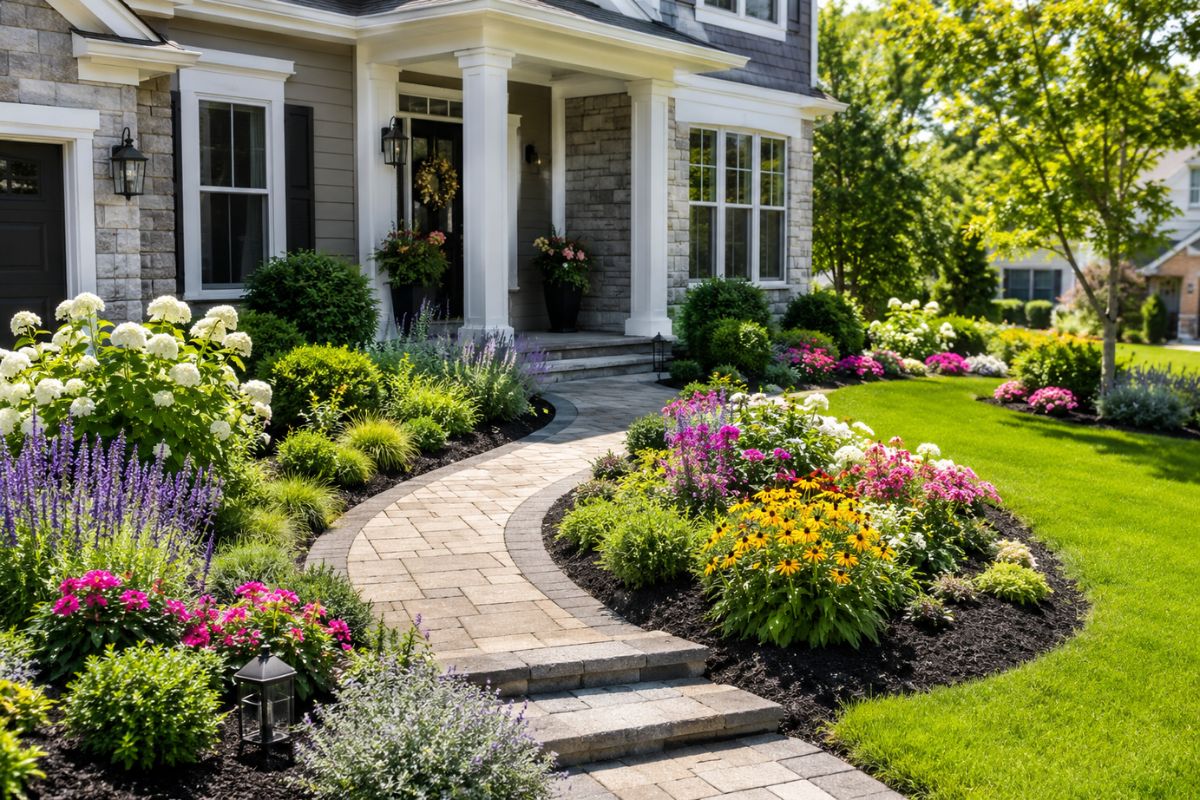
A front yard can look unfinished even when the lawn is healthy and the house looks great. I have found that the hardest part is often not planting the flowers. It is choosing the right spot, picking perennials that fit the sunlight, and creating a flower bed that still looks good after the plants mature. Many homeowners start with a beautiful plant they saw online, only to find that it gets too large, needs more water than expected, or struggles in the front yard.
That is why I prefer starting with the flower bed itself and then choosing reliable perennial plants to fit the space. A good front yard flower bed should add curb appeal without becoming a weekly chore. In this guide, I am sharing 27 practical ideas along with plant choices, layout tips, sunlight needs, and simple ways to keep the bed looking good for many growing seasons.
What Is the Best Front Yard Flower Bed?
The best front yard flower bed is one that matches your home’s style, available space, sunlight, soil, and climate. For an easy-care design, use reliable perennial flowers with different heights and bloom times. Coneflower, salvia, catmint, daylily, coral bells, and hostas can work well when matched to the right growing conditions.
For the easiest upkeep, choose plants suited to your USDA hardiness zone, leave enough room for mature growth, and group plants with similar water and sunlight needs. A simple curved, foundation, island, or walkway bed can add curb appeal without making the yard hard to maintain.
Front Yard Flower Bed Quick Takeaways
- Choose perennials that fit your sunlight and USDA hardiness zone.
- Check mature plant height and width before planting.
- Use tall, medium, and low plants to create layers.
- Group plants with similar water and soil needs.
- Mix bloom times for longer seasonal color.
- Use mulch to reduce weeds and help retain soil moisture.
- Leave walkways, windows, doors, and the mailbox clear.
- Choose native perennials where they fit your local growing conditions.
- Keep the design simple if you want less maintenance.
1. Curved Flower Beds Along Walkways
Curved flower beds can make a front yard feel softer and more natural. They work especially well beside a walkway leading to the front door.
Use low-growing perennials along the edge. Place taller plants farther back. Coneflowers, catmint, daylilies, and salvia can create a simple layered look.
A curved bed also helps break up a large lawn. Keep the curve wide enough to give your plants room to grow.
Best for: Medium to large front yards
Light: Full sun
Maintenance: Low to moderate
Perennial picks: Catmint, coneflower, salvia

2. Low-Maintenance Front Yard Flower Beds
A flower bed does not have to take hours of work every week. Low-maintenance perennials are a good choice for busy homeowners.
Look for plants that handle your local weather well. Drought-tolerant perennials can also reduce watering in dry areas.
Good choices include coneflower, yarrow, salvia, sedum, and daylily. Add a layer of mulch to help hold soil moisture and reduce weeds.
Best for: Busy homeowners
Light: Depends on plant choice
Maintenance: Low
Perennial picks: Coneflower, yarrow, sedum

3. Modern Front Yard Perennial Beds
Modern flower beds usually look clean and simple. Use fewer plant types and repeat them across the bed.
A straight or gently curved bed can work well beside a modern home. Try ornamental grasses with salvia, sedum, or other simple perennials.
Keep the color scheme limited. White, green, purple, or soft pink can create a calm look.
Best for: Modern homes
Light: Full sun to part shade
Maintenance: Low to moderate
Perennial picks: Salvia, sedum, ornamental grass

4. Cottage-Style Perennial Flower Beds
Cottage-style flower beds have a relaxed and informal look. Plants are often grouped close together for a full garden feel.
Peonies, catmint, coneflowers, salvia, and black-eyed Susans can work well together. Mix different plant heights and bloom times.
Do not make every part of the bed perfectly even. A little variation helps create the natural cottage look.
Best for: Traditional and farmhouse homes
Light: Mostly full sun
Maintenance: Moderate
Perennial picks: Peony, catmint, salvia

5. Rock and Perennial Flower Combination Beds
Rocks can add structure to a front yard flower bed. They also work well with drought-tolerant plants.
Place larger rocks around the bed instead of scattering many small stones everywhere. Then add perennials between the rocks.
Sedum, yarrow, lavender, and catmint can work well in sunny areas. Make sure the planting area has suitable drainage because many rock-garden plants do poorly in wet soil. Adding rocks to a bed does not automatically improve drainage.
Best for: Dry or sunny yards
Light: Full sun
Maintenance: Low
Perennial picks: Sedum, yarrow, lavender

6. Raised Perennial Flower Beds Near the Porch
A raised flower bed can give your front porch more visual interest. It also makes the planting area easier to define.
Use shorter plants near the front edge. Taller plants can go closer to the house if they do not block windows or walkways.
Hostas and coral bells work well in shady spots. Salvia, coneflower, and daylily can work in sunny areas.
Make sure the raised bed has good drainage.
Best for: Porch areas
Light: Full sun or shade, based on location
Maintenance: Low to moderate
Perennial picks: Hosta, coral bells, salvia

7. Small Front Yard Flower Bed Ideas
Small yards need simple designs. A narrow flower bed along the front of the house can add color without taking away too much lawn space.
Choose compact perennials and avoid plants that spread too far. Repeating two or three plant types can make a small bed look larger.
A small curved bed around the front walkway can also create a strong focal point.
Best for: Small front yards
Light: Depends on location
Maintenance: Low
Perennial picks: Catmint, coral bells, dwarf daylily

8. Flower Beds Around the Mailbox
The mailbox is an easy place to add a small flower bed. It can give a plain driveway or front lawn more color.
Choose plants that stay within their space. Avoid tall plants that block the mailbox or make it hard to reach.
Daylilies, catmint, coneflowers, and other compact perennials can work well depending on your climate.
Keep the planting area neat so the mailbox remains easy to access.
Best for: Driveway edges
Light: Usually full sun
Maintenance: Low
Perennial picks: Catmint, coneflower, daylily

9. Foundation Flower Beds Along the House
A foundation flower bed can frame the front of your home and make the entrance feel more finished. This design works especially well when you combine shrubs with reliable perennial flowers.
Place taller plants farther from the walkway and shorter plants closer to the front edge. Check the mature size of shrubs and perennials so they do not crowd windows, doors, or paths.
For sunny areas, coneflower, salvia, catmint, and daylily can work in suitable conditions. For shady areas, hostas, coral bells, and ferns may be better choices.
Best for: Front of the house
Light: Full sun to shade, based on plant selection
Maintenance: Low to moderate
Perennial picks: Coneflower, salvia, catmint, hosta, coral bells

10. Border Flower Beds Along Fences
A fence creates a natural boundary for a flower bed. A narrow perennial border can soften the hard line.
Use taller plants near the fence and shorter plants along the front. Repeating the same plants can make the border look organized.
This style works especially well with cottage, farmhouse, and natural garden designs.
Best for: Homes with front fences
Light: Depends on fence location
Maintenance: Low to moderate
Perennial picks: Black-eyed Susan, coneflower, salvia

11. Drought-Tolerant Perennial Flower Beds
If your area has hot or dry summers, choose perennials that can handle dry conditions once established and are suited to your local climate and soil.
Lavender, yarrow, salvia, catmint, coneflower, and sedum can be good choices for sunny beds when the species or cultivar is suited to your local climate and soil.
Use mulch to help reduce water loss. Good drainage is also important.
Best for: Hot and dry areas
Light: Full sun
Maintenance: Low
Perennial picks: Lavender, yarrow, sedum

12. Budget-Friendly Perennial Flower Beds
You can create a beautiful flower bed without buying dozens of mature plants.
Start with a smaller number of reliable perennials. Many clump-forming perennials can eventually be divided and replanted, depending on the species.
Choose plants that fit your soil and climate. This helps prevent money being wasted on plants that struggle.
Mulch and simple edging can finish the bed without adding a lot of cost.
Best for: Budget-conscious gardeners
Light: Any, based on plant choice
Maintenance: Low to moderate
Perennial picks: Daylily, coneflower, black-eyed Susan

13. Island Flower Beds in the Front Lawn
An island flower bed sits in an open area of the front lawn instead of directly beside the house. It can create a focal point and break up a large area of grass.
A curved or oval shape often works well for an island bed. Place taller perennials near the center and shorter plants around the outside when the bed can be viewed from all sides.
Repeat a few perennial varieties instead of using too many different plants. This creates a more organized look and can make maintenance easier.
Best for: Open front lawns
Light: Usually full sun
Maintenance: Low to moderate
Perennial picks: Coneflower, salvia, sedum

14. Symmetrical Perennial Flower Beds
Symmetry can make a front yard feel neat and balanced. This style works especially well around a centered front door.
Use matching plants on both sides of the entrance. You can repeat the same colors and plant heights for a clean look.
Boxwood or another suitable shrub can provide structure, while flowering perennials add seasonal color.
Best for: Formal home entrances
Light: Depends on the site
Maintenance: Low to moderate
Perennial picks: Salvia, daylily, catmint

15. Flower Beds Around Trees
Trees can create a natural focal point in a front yard. But planting under trees needs some care.
Tree roots can compete with flowers for water, nutrients, and planting space. The area may also have more shade than the rest of the yard.
Hostas, coral bells, ferns, and other shade-loving perennials may work under suitable trees. Avoid piling soil or mulch against the tree trunk.
Best for: Mature front yards
Light: Part shade to shade
Maintenance: Low to moderate
Perennial picks: Hosta, coral bells, fern

16. Four-Season Perennial Flower Beds
A great flower bed should have something interesting to offer beyond one short bloom period.
Choose plants with different bloom times. Spring flowers can be followed by summer and fall perennials.
Peonies can bring spring color. Coneflowers and salvia can provide summer blooms. Sedum and asters can add fall interest.
Leave attractive seed heads and ornamental grasses standing in winter where suitable.
Best for: Year-round garden interest
Light: Usually full sun
Maintenance: Moderate
Perennial picks: Peony, coneflower, sedum, aster

17. White Perennial Flower Garden Designs
White flowers can make a front yard feel clean and peaceful. They also stand out well against green leaves.
You can build a white flower bed with white coneflowers, Shasta daisies, white yarrow, and other suitable perennials.
Add plants with different leaf shapes to prevent the bed from looking flat.
Best for: Simple and classic designs
Light: Depends on plants
Maintenance: Low to moderate
Perennial picks: Shasta daisy, white coneflower, white yarrow

18. Wildflower-Style Front Yard Flower Beds
A wildflower-style flower bed has a relaxed and natural look. Instead of arranging every plant in straight rows, group flowers in loose clusters with different heights.
Use a mix of perennial flowers that bloom at different times. Leave some space between groups so the bed does not look too crowded as plants mature.
Coneflower, black-eyed Susan, yarrow, native asters, and other suitable perennials can create a natural look. Choose plants that fit your local growing conditions.
Best for: Natural-looking front yards
Light: Usually full sun
Maintenance: Low to moderate
Perennial picks: Coneflower, black-eyed Susan, yarrow, native asters

19. Brick-Edged Perennial Flower Beds
Brick edging gives a flower bed a finished look. It can also create a clear line between the lawn and planting area.
A brick border works with both traditional and modern homes. Use simple perennial groups inside the border.
Make sure the edging does not create a trip hazard beside walkways.
Best for: Neat and defined beds
Light: Any
Maintenance: Low
Perennial picks: Catmint, salvia, daylily

20. Layered Perennial Flower Beds
Layering is one of the easiest ways to make a flower bed look full.
Place tall plants at the back. Use medium-height perennials in the center. Put low-growing plants near the front.
For example, you could use coneflower at the back, salvia in the middle, and catmint near the edge.
Always check the mature height and width of each plant.
Best for: Most front yards
Light: Depends on plant selection
Maintenance: Low to moderate
Perennial picks: Coneflower, salvia, catmint

21. Front Yard Flower Beds for Corner Houses
Corner homes often have more visible yard space. This gives you more room to create a larger flower bed.
Use the bed to guide the eye around the corner of the house. Repeating the same plants on both sides can create unity.
Do not make every part of the bed the same height. Layering can keep the larger space interesting.
Best for: Corner lots
Light: Usually mixed
Maintenance: Moderate
Perennial picks: Coneflower, ornamental grass, salvia
22. Farmhouse-Style Perennial Flower Beds
Farmhouse homes often look good with relaxed flower beds and natural materials.
Try a mix of coneflowers, black-eyed Susans, catmint, salvia, and other easy perennials suited to your area.
Brick, stone, or simple wood edging can complete the look.
Keep the planting natural rather than making every line perfectly straight.
Best for: Farmhouse and country-style homes
Light: Mostly full sun
Maintenance: Low to moderate
Perennial picks: Black-eyed Susan, coneflower, catmint

23. Mulched Perennial Flower Bed Designs
Mulch gives a flower bed a clean finished appearance. It can also help hold moisture and reduce weed growth.
Spread mulch around the plants without covering their crowns. Keep mulch away from tree trunks and woody stems.
Organic mulch can also add material to the soil as it breaks down.
Choose a mulch color that works with your home and existing landscape.
Best for: Most flower beds
Light: Any
Maintenance: Low
Perennial picks: Daylily, coneflower, salvia

24. Shade-Loving Perennial Flower Beds
A front yard does not need full sun to have a beautiful flower bed.
For shady areas, consider hostas, coral bells, ferns, astilbe, and other perennials suited to your growing conditions.
Check whether the area has full shade or part shade. Also check soil moisture before choosing plants.
Avoid placing sun-loving perennials in deep shade and expecting them to bloom well.
Best for: Shady entrances and tree-covered yards
Light: Part shade to shade
Maintenance: Low to moderate
Perennial picks: Hosta, fern, coral bells
For more shade plant ideas, see our guide to shade perennials for a lush garden and our guide to shade-loving shrubs.

25. Simple Minimal Perennial Flower Beds
You do not need many plant types to create a good flower bed.
Choose two or three reliable perennials and repeat them across the space. This creates a clean look and makes the bed easier to care for.
Use one simple edging material and keep the color scheme limited.
This style works especially well for homeowners who want curb appeal without a busy garden.
Best for: Modern and small homes
Light: Depends on plants
Maintenance: Low
Perennial picks: Salvia, sedum, catmint

26. Full-Sun Perennial Flower Bed Combinations
Full-sun areas give you many choices. The key is to group plants with similar growing needs.
A sunny bed could combine coneflowers, black-eyed Susans, salvia, and sedum. Lavender and catmint can also work in suitable soil.
Choose plants with different heights and bloom periods. This helps the flower bed stay interesting for longer.
Best for: Sunny front yards
Light: Usually 6 or more hours of direct sunlight
Maintenance: Low to moderate
Perennial picks: Coneflower, salvia, catmint, sedum
For more plants that can help keep a garden colorful for a longer period, see our guide to long-blooming perennials.
27. Native Perennial Pollinator Flower Beds
Native perennial flowers can turn a front yard flower bed into a useful space for local pollinators. Choose plants that naturally grow well in your region and match the conditions in your yard.
Group several plants of the same type together to create larger patches of flowers. Include plants with different bloom periods when possible so flowers are available across more of the growing season.
Native coneflowers, bee balm, asters, goldenrod, and other regional perennials can be good choices when suited to your area.
Best for: Pollinator-friendly front yards
Light: Usually full sun
Maintenance: Low to moderate
Perennial picks: Native coneflower, bee balm, native asters, goldenrod
For more ideas on plants that can support local pollinators, see this Penn State Extension guide to planting for pollinators.
How to Choose the Best Front Yard Flower Bed for Your Yard
The best design depends on more than appearance. Your yard’s sunlight, soil, space, climate, and maintenance needs all affect which plants will perform well.
Use these steps before you start planting.
1. Check How Much Sun the Bed Gets
Watch the area during the day.
A spot that looks sunny in the morning may become shaded later. This matters because different perennials need different amounts of sunlight.
As a simple guide:
- Full sun: Usually 6 or more hours of direct sunlight
- Part shade: Some direct sun with periods of shade
- Shade: Little direct sunlight
Choose plants that match the actual conditions.
2. Check Your USDA Hardiness Zone
A perennial may grow well in one part of the United States but struggle in another.
Check the USDA Plant Hardiness Zone Map for your location before buying plants. This helps you choose perennials that are more likely to survive your area’s typical winter temperatures.
USDA hardiness zones are only one part of plant selection. Summer heat, rainfall, soil, drainage, and sunlight also affect how well a perennial grows.
3. Think About Mature Plant Size
Small nursery plants can become much larger.
Check the mature height and width before planting. Give each perennial enough room to reach its full size.
Crowded plants can have poor airflow and may need more trimming or dividing later.
4. Use Plant Layers
A simple flower bed often looks better when plants have different heights.
Place tall plants at the back. Use medium plants in the middle. Put low-growing plants near the front.
This works well for beds beside houses, fences, walkways, and porches.
5. Group Plants With Similar Needs
Do not place a plant that needs dry soil beside one that needs constant moisture.
Group plants based on:
- Sunlight
- Water needs
- Soil type
- Mature size
- Bloom period
- Climate needs
This makes the bed easier to care for.
6. Plan for More Than One Bloom Season
A bed filled with plants that all bloom at the same time may look great for a few weeks and quiet afterward.
Mix spring, summer, and fall bloomers. Add plants with attractive leaves, seed heads, or winter structure when possible.
Our guide to long-blooming perennials can help if you want more seasonal color.
7. Add Mulch and Simple Edging
Mulch can make a new flower bed look finished right away. It can also help reduce weeds and slow moisture loss.
Edging gives the bed a clear boundary. Brick, stone, metal, and other simple materials can work well.
Choose an edging style that fits your home.
For more detail on mulch benefits and application, see this University of Minnesota Extension guide to mulching.
How Wide Should a Front Yard Flower Bed Be?
The right flower bed width depends on the space, plant size, and design you want. A narrow border can work for a simple row of plants, while a deeper bed gives you more room to create layers.
If you want tall, medium, and low-growing perennials in the same bed, leave enough depth for each layer. Avoid making the bed so narrow that mature plants spill onto a walkway or lawn.
For a foundation bed, leave enough space for plants to reach their mature width without pressing against the house. Always check the mature size of each plant before deciding how much room to leave.
A deeper flower bed can also make a large front yard feel more balanced. For a small yard, a narrower bed may work better and leave more open lawn.
Check Your Flower Bed From the Street
A front yard flower bed should look good from more than one angle. Before planting, step back and look at the area from the street, sidewalk, driveway, and front door.
Check whether the shape looks balanced and whether taller plants will hide smaller flowers. Make sure the bed does not block the walkway, mailbox, windows, or front entrance.
This quick check can help you adjust the layout before the plants are in the ground.
Easy Perennial Combinations for Front Yard Flower Beds
Choosing a few plants that grow well together can make a front yard flower bed easier to plan. Match plants based on sunlight, soil, water needs, mature size, and bloom time.
Sunny Front Yard Flower Bed
Try:
- Coneflower
- Salvia
- Catmint
- Sedum
These plants can provide different heights, textures, and bloom periods when suited to the growing conditions.
Cottage-Style Front Yard Flower Bed
Try:
- Peony
- Catmint
- Black-eyed Susan
- Salvia
This mix can create a relaxed cottage-style look with different flower shapes and heights.
Shady Front Yard Flower Bed
Try:
- Hosta
- Coral bells
- Fern
- Astilbe
Choose varieties based on the amount of shade and soil moisture in your yard.
Pollinator-Friendly Front Yard Flower Bed
Try:
- Coneflower
- Bee balm
- Black-eyed Susan
- Native aster
Use native plants where possible and select species suited to your local region.
How to Make a Front Yard Flower Bed Low Maintenance
A low-maintenance flower bed starts with the right plant choices.
Choose perennials that are well suited to your climate and soil. Plants that naturally fit the site usually need less attention than plants growing in poor conditions.
Proper spacing also matters. Do not pack too many plants into a small space.
Mulch can reduce weeds and help the soil retain moisture. Drip irrigation or another efficient watering method can also help in dry areas.
Finally, avoid choosing plants only because they look good in a photo. A beautiful plant in the wrong location can become a constant source of work.
Common Front Yard Flower Bed Mistakes to Avoid
Planting Without Checking Sunlight
A beautiful perennial will struggle if it does not get the light it needs.
Check the site before buying plants.
Ignoring Mature Size
Plants that look small at the garden center may become much larger.
Always check mature height and width.
Using Too Many Plant Types
Too many different plants can make a small flower bed look messy.
Repeating a few reliable perennials often creates a better result.
Planting Everything at the Same Height
A flat flower bed can look less interesting.
Use tall, medium, and low plants to create layers.
Forgetting Drainage
Some perennials dislike wet soil.
If water sits in the bed after rain, improve drainage or choose plants that can handle those conditions.
If poor drainage is a major issue in your yard, you may also find our guide to plants for clay soil with poor drainage useful.
Which Front Yard Flower Bed Is Right for You?
| Your Yard or Goal | Flower Bed Style | Good Perennial Choices |
|---|---|---|
| Small front yard | Narrow or simple border | Catmint, coral bells, dwarf daylily |
| Large open lawn | Island bed | Coneflower, salvia, sedum |
| Along a walkway | Curved border | Catmint, salvia, coneflower |
| Beside the house | Foundation bed | Salvia, coneflower, hosta |
| Full sun | Sunny perennial bed | Coneflower, yarrow, daylily |
| Part shade | Part-shade bed | Coral bells, astilbe, hosta |
| Mostly shade | Shade bed | Hosta, fern, coral bells |
| Dry area | Drought-tolerant bed | Lavender, yarrow, sedum |
| Natural look | Wildflower-style bed | Coneflower, black-eyed Susan, aster |
| Pollinator-friendly yard | Native perennial bed | Native coneflower, bee balm, native asters |
| Low-maintenance goal | Simple perennial bed | Sedum, daylily, coneflower |
Front Yard Flower Bed FAQs
What flowers are best for a front yard flower bed?
The best flowers depend on your sunlight, soil, climate, and USDA hardiness zone. Reliable perennials such as coneflower, salvia, daylily, catmint, hosta, and coral bells can work well when matched to the right conditions.
How do I make a front yard flower bed low maintenance?
Choose easy-care perennials suited to your yard, give plants enough space to reach mature size, and group plants with similar water needs. Mulch can also help reduce weeds and slow moisture loss.
How deep should a front yard flower bed be?
The depth depends on the plants and layout. A simple row needs less space than a layered bed with tall, medium, and low-growing perennials. Give plants enough room to reach their mature width without spilling into walkways.
What perennials are good for a sunny front yard?
Coneflower, salvia, yarrow, catmint, daylily, and sedum are examples that can work in sunny beds when suited to the local climate and soil.
What perennials grow well in a shady front yard?
Hostas, coral bells, ferns, and astilbe can work in shady areas when their moisture and soil needs are met.
Should I use native plants in a front yard flower bed?
Native perennials can be a good choice because they are adapted to local conditions and can support local pollinators. Choose species that fit your region and the conditions in your yard.
How do I arrange perennials in a front yard flower bed?
For a bed viewed mainly from one direction, place taller plants toward the back, medium-height plants in the middle, and shorter plants near the front edge. For an island bed viewed from all sides, taller plants can go closer to the center.
How can I make my flower bed look good all season?
Choose perennials with different bloom periods. Combine spring, summer, and fall bloomers, and include plants with attractive foliage or winter structure where suitable.
Final Tips for a Beautiful Front Yard Flower Bed
A good front yard flower bed does not need dozens of plants or a complicated layout. Start with the conditions you already have, then choose reliable perennials that fit your sunlight, soil, space, and USDA zone. Use a simple shape, repeat a few plants, add different heights and bloom periods, and finish the bed with mulch or edging.
If you are going to dig a new bed, check for underground utilities first. In the United States, Call 811 before you dig so buried utility lines can be marked before you start the project.
Conclusion
After working with different flower bed layouts, I have learned that the prettiest front yard is not always the one with the most plants. The best results usually come from choosing perennials that fit the sunlight and soil, leaving enough room for mature growth, and repeating a few reliable plants throughout the bed. Start with the space you have, choose plants suited to your climate, and build the design around their needs. When those basics are right, a simple front yard flower bed can provide lasting curb appeal without turning into a constant gardening job.


