


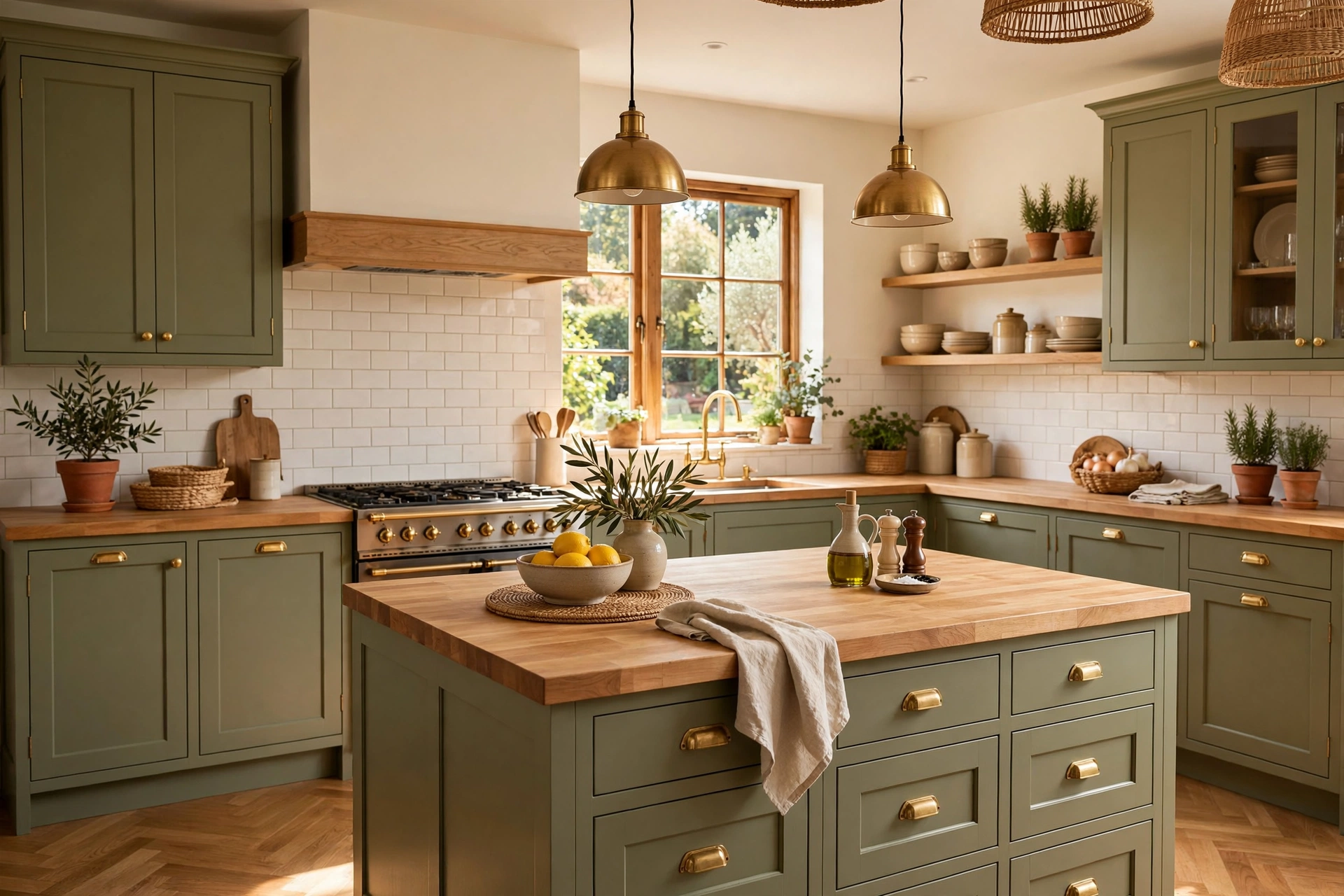
For years my kitchen was white. White cabinets, white subway tile, white counters — the safe choice everyone told me to make. And it was fine. Just… fine. Like a hotel lobby: clean, forgettable, gone from your memory the second you leave.
Then I visited a friend’s 1920s house with olive green cabinets, butcher block counters, and brass hardware — and I stood in her kitchen for twenty minutes inventing reasons not to leave. It felt like being hugged by a garden. Warm, earthy, alive. I came home, looked at my white boxes, and started pricing cabinet paint that same night.
Olive green is having a moment for good reason: it’s the green that behaves like a neutral. It pairs with wood, white, brass, black, marble — almost everything — while giving a kitchen a depth and character white never can. These 25 best olive green kitchen designs cover every angle: full cabinet color, islands only, two-tone combos, budget paint refreshes, and the hardware and counter pairings that make olive sing.
- Olive behaves like a neutral — it pairs with wood, white, brass, black, and marble.
- The nervous-commit move: paint just the island olive, keep the perimeter white.
- Brass hardware is olive’s soulmate; matte black gives it a modern edge.
- Olive shifts in different light — always test a large painted board morning and evening.
- The cheapest olive kitchen is paint: $80–$200 transforms existing cabinets completely.
1. Full Olive Cabinets with Butcher Block Counters
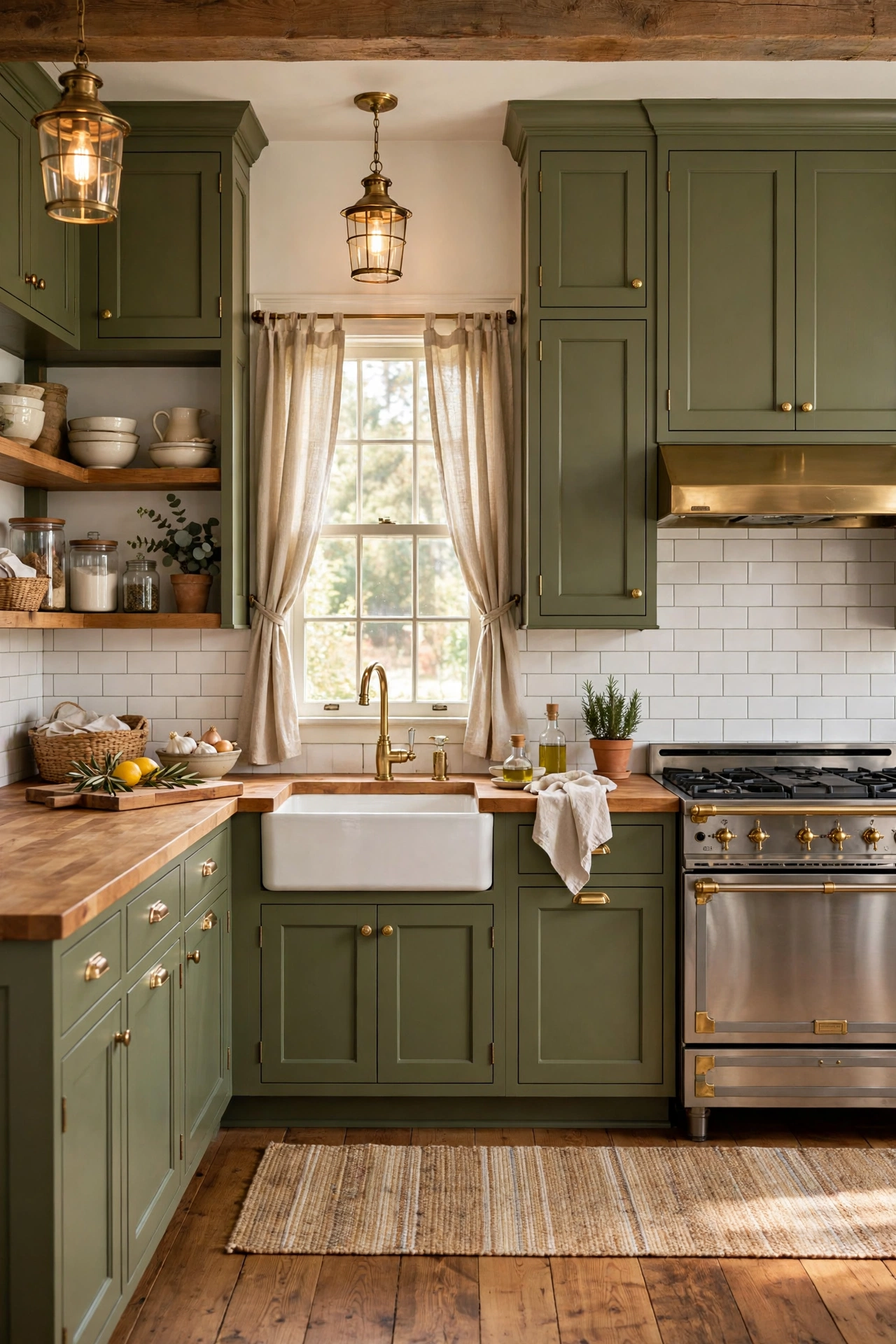
The classic: all cabinets in a warm olive, topped with butcher block. The wood warms up the green’s earthiness and the whole kitchen feels organic and grounded. This is the farmhouse-olive look at its best.
Try this: seal butcher block with multiple coats of food-safe oil — water rings are the enemy of wood counters.
Difficulty: Advanced | Cost: $$$$
2. Olive Island, White Perimeter
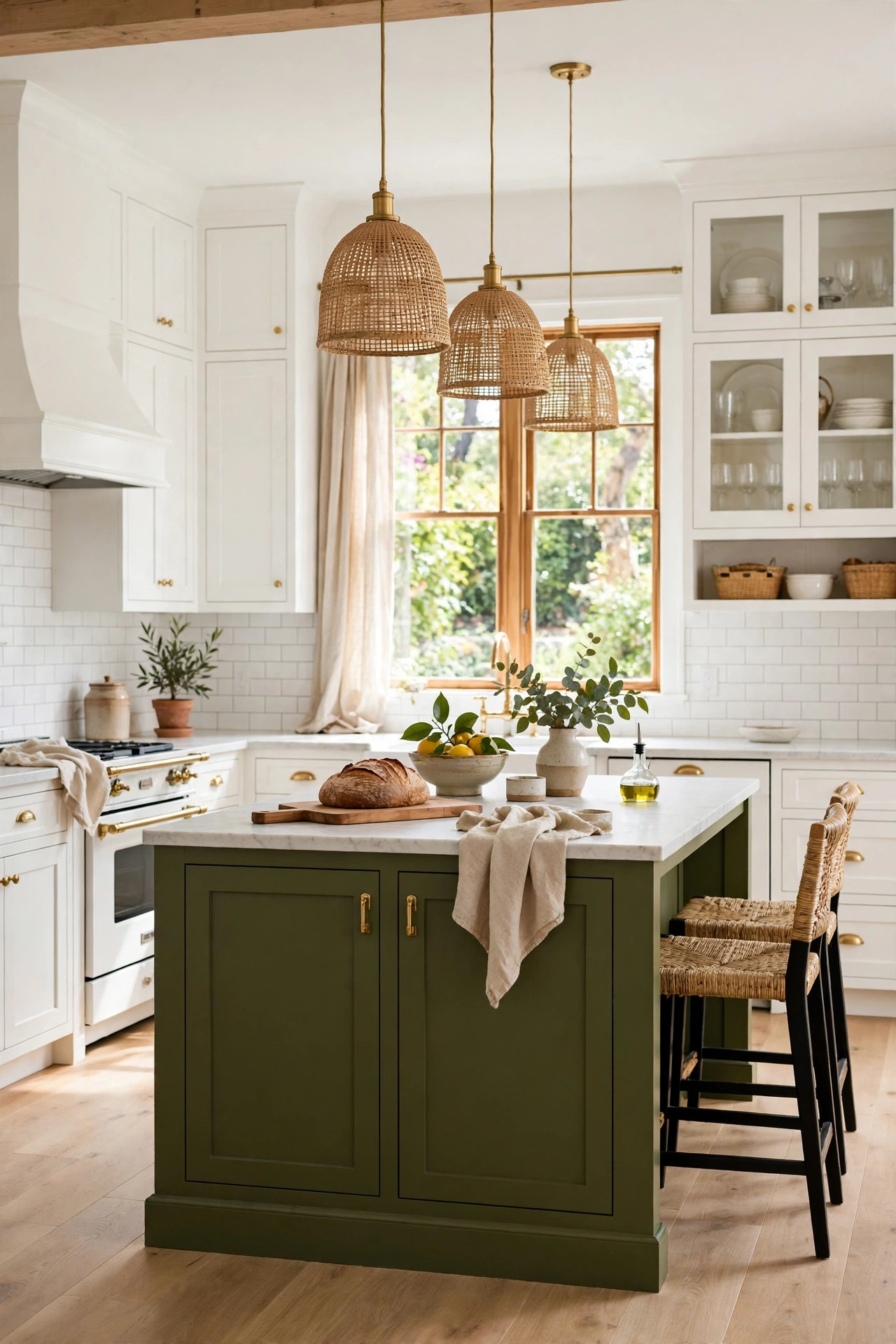
Can’t commit to full olive? Paint just the island olive and keep perimeter cabinets white. You get the color moment as the room’s centerpiece with a safe fallback everywhere else — and it’s half the painting work.
Try this: choose an olive with warm undertones so it harmonizes with white rather than fighting it.
Difficulty: Moderate | Cost: $$
3. Dark Olive with Brass Hardware
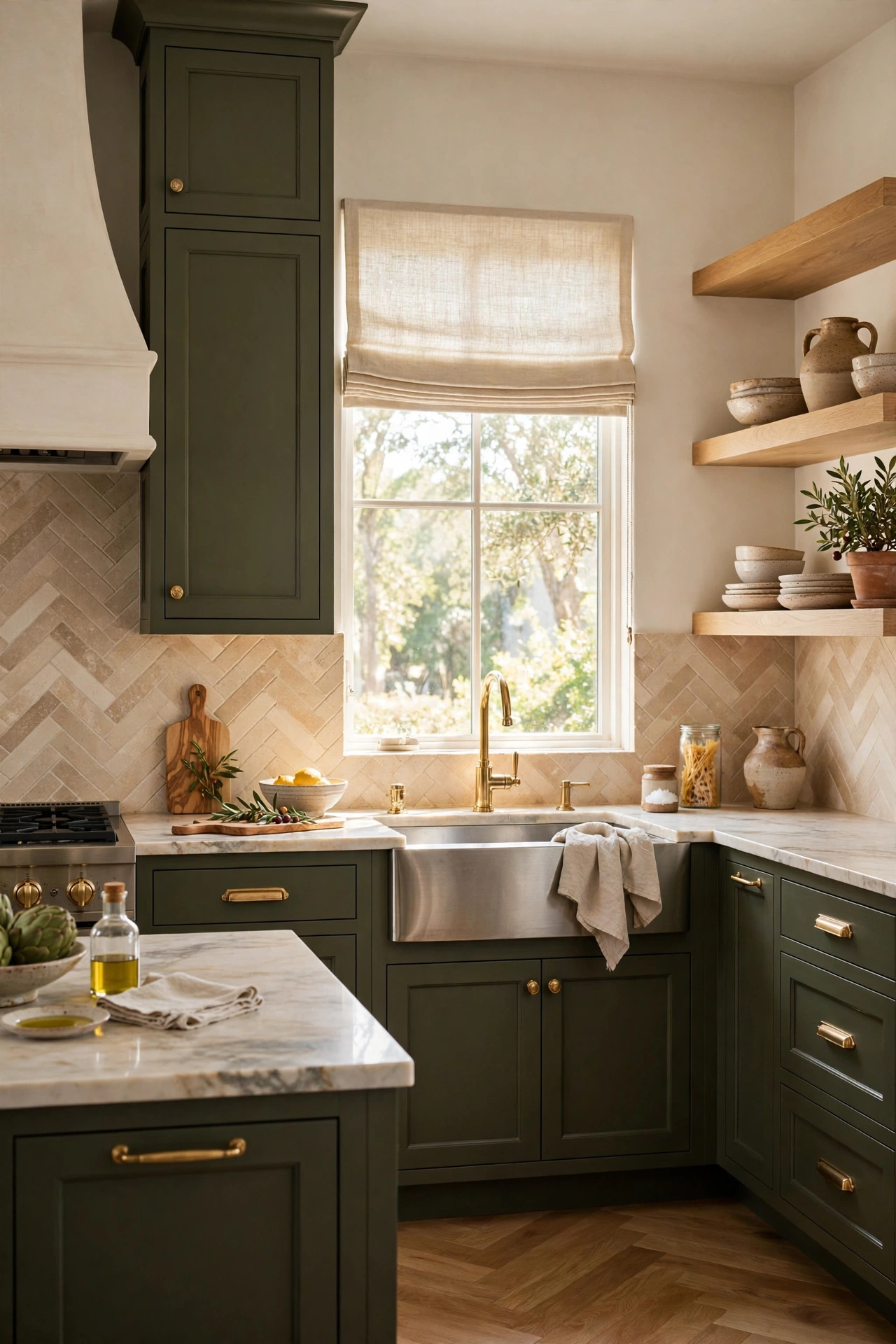
Deep olive cabinets + unlacquered brass pulls and knobs = instant luxury. The brass’s warmth plays beautifully against olive’s earthiness, and the combination reads expensive even on stock cabinets.
Try this: unlacquered brass develops a patina; if you want it to stay shiny, choose lacquered.
Difficulty: Moderate | Cost: $$$
4. Olive + Marble Countertops
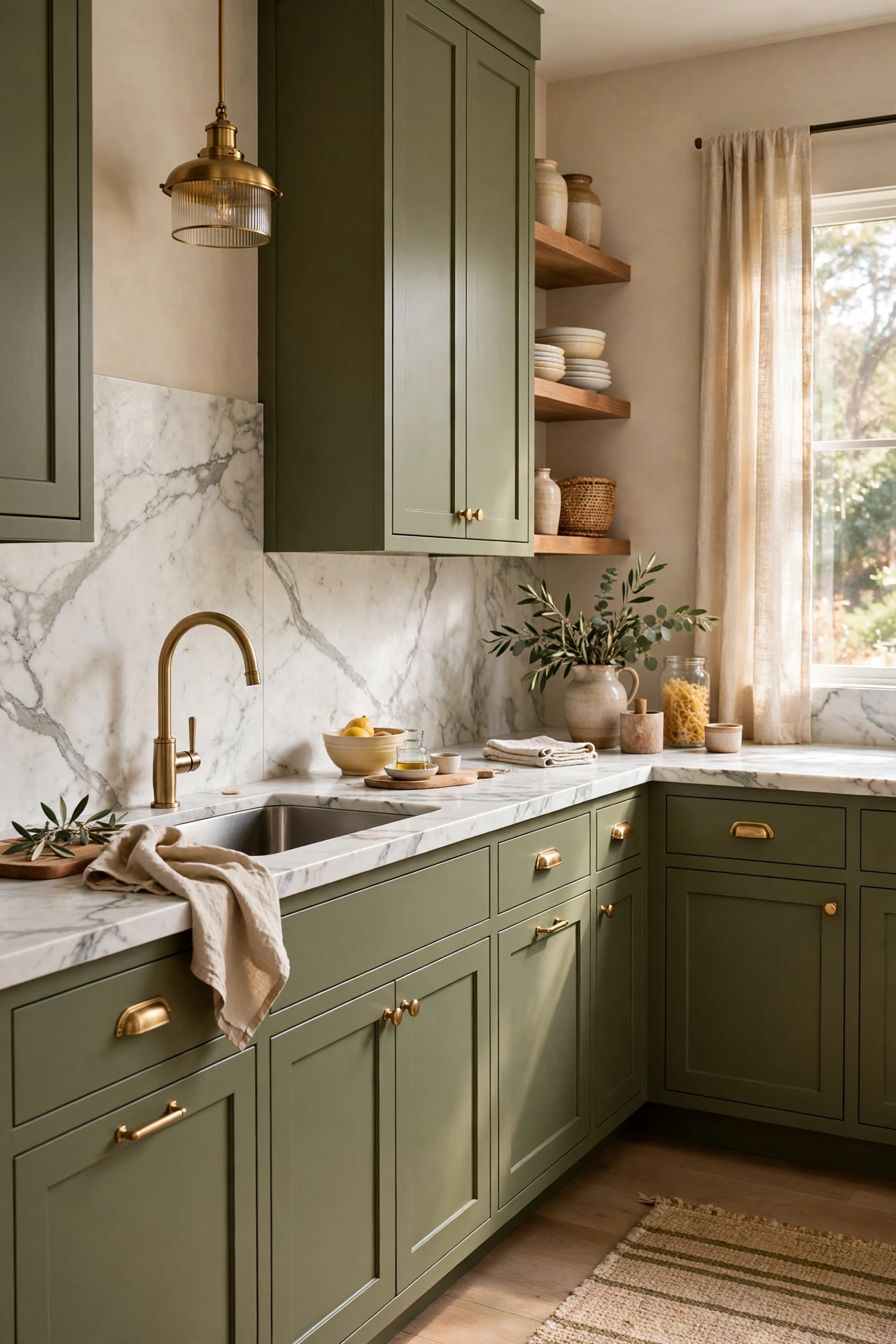
White marble (or quartz that mimics it) against olive cabinets is the high-contrast pairing that never misses. The marble’s cool veining keeps the earthy green from feeling heavy.
Try this: hone the marble instead of polishing it — matte finishes hide etching far better in a working kitchen.
Difficulty: Advanced | Cost: $$$$
5. Two-Tone: Olive Lowers, White Uppers
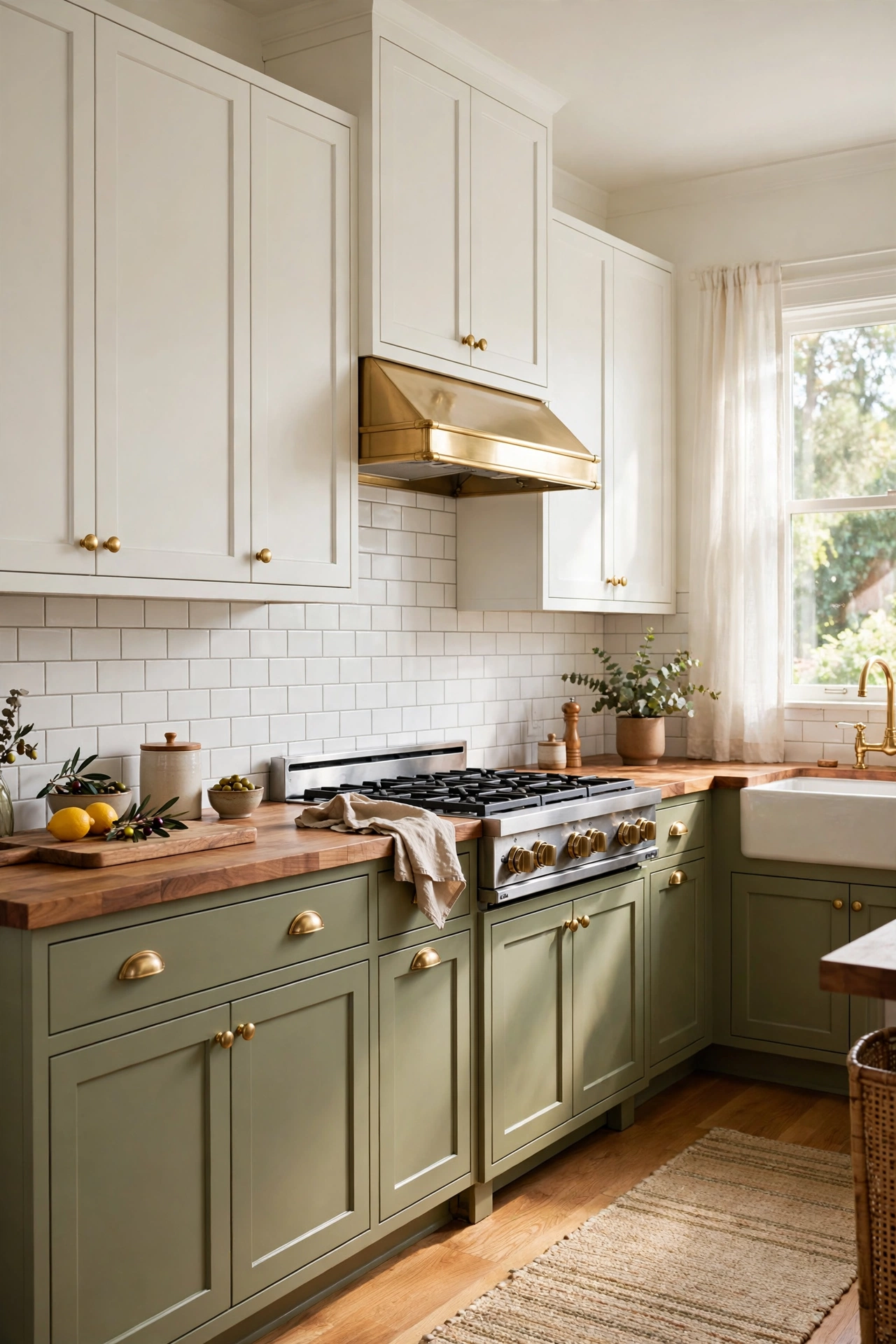
Olive base cabinets ground the room; white uppers keep it airy. This split is the most practical olive layout — the color lives where the action is, and the eye-level wall stays bright and open.
Try this: run the olive onto the island too for a cohesive base color story.
Difficulty: Advanced | Cost: $$$
6. Olive with Black Hardware and Fixtures
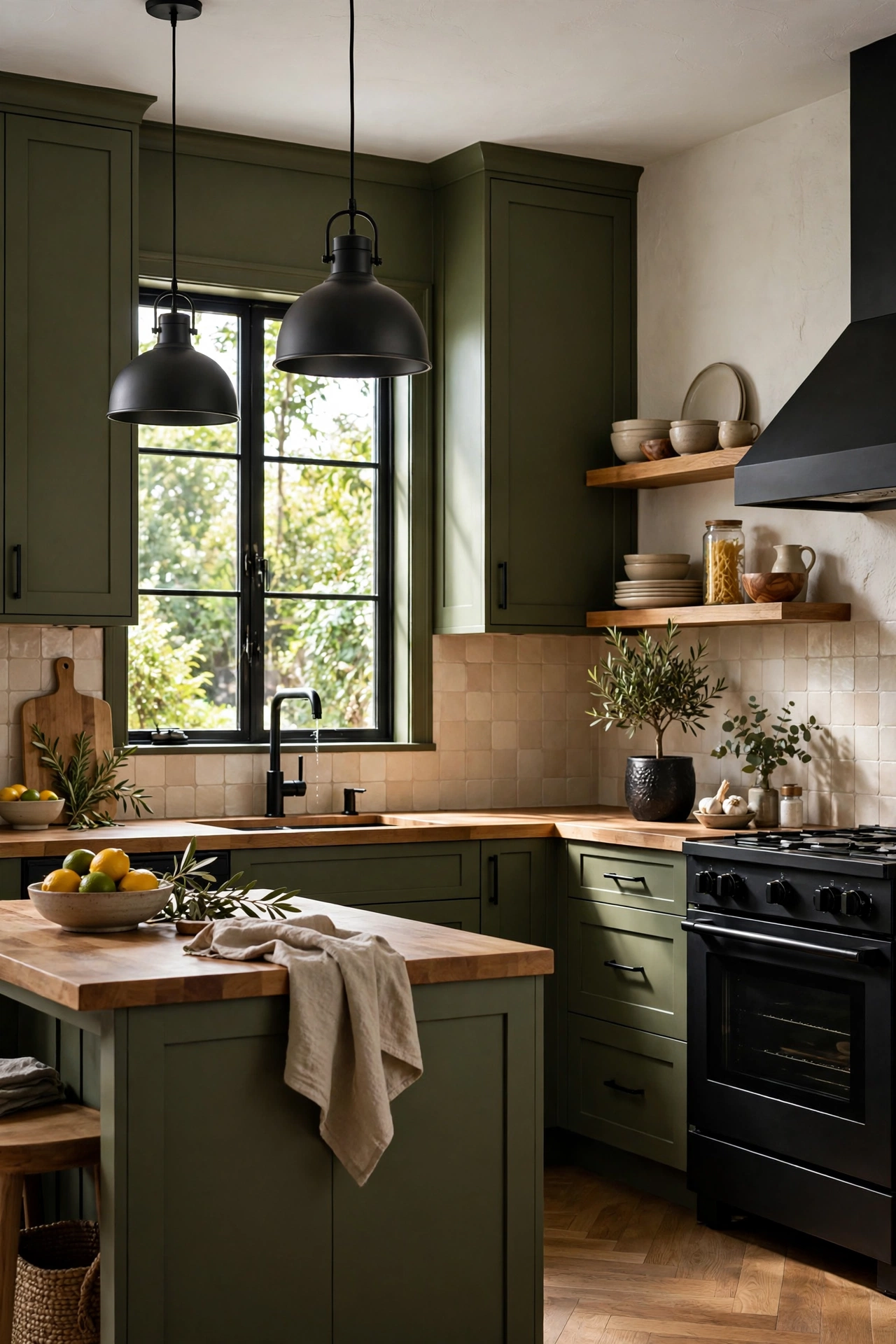
Matte black hardware, faucet, and light fixtures against olive cabinets give a modern, slightly moody edge. The black outlines the green crisply — like eyeliner for cabinets.
Try this: match your black finishes (all matte, or all satin) — mixed blacks look accidental.
Difficulty: Moderate | Cost: $$
7. Sage-Olive Blend for a Softer Take
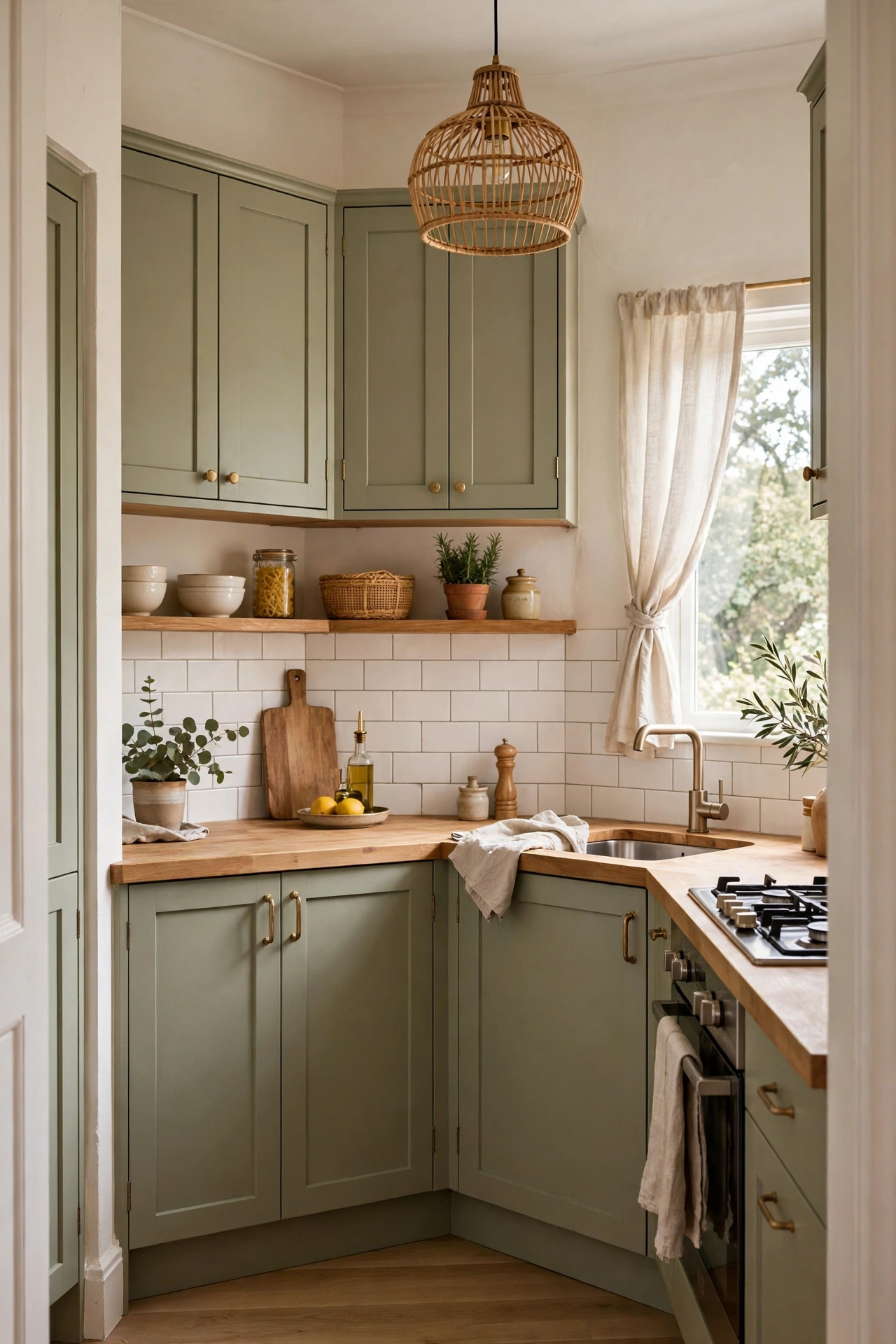
If full olive feels too strong, go one step lighter toward sage. Sage-olive hybrids keep the earthy calm with less saturation — perfect for small kitchens or low natural light.
Try this: test paint on a large board and move it around the room; olive shifts dramatically between morning and evening light.
Difficulty: Moderate | Cost: $$
8. Olive Cabinets + Subway Tile Backsplash
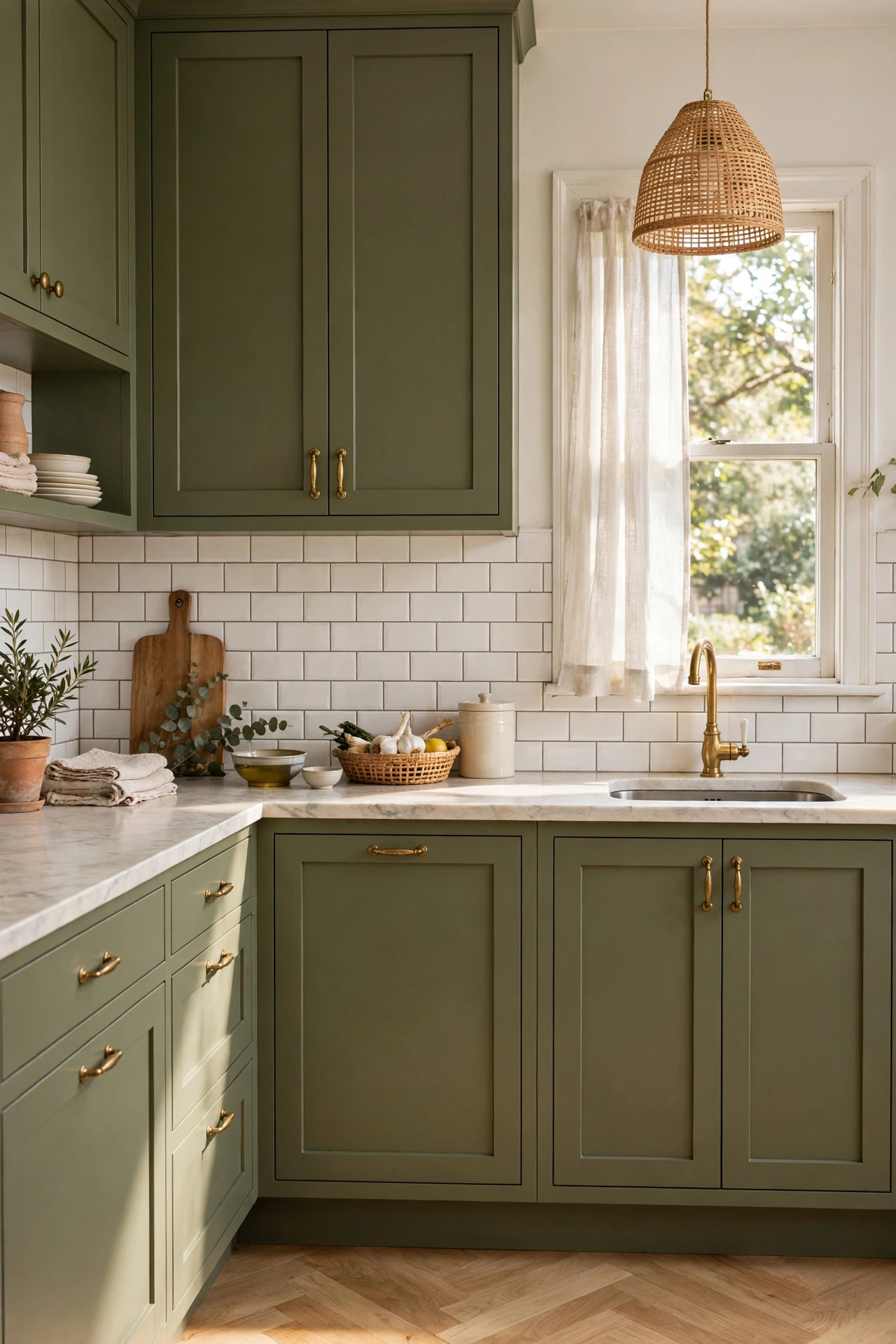
Classic white subway tile lets olive cabinets be the star without competition. It’s the safe backsplash that always works — handmade-look zellige tile adds texture if plain subway feels flat.
Try this: use a warm white grout, not stark white — it softens the grid and suits olive’s earthiness.
Difficulty: Advanced | Cost: $$$
9. Open Shelving Against Olive Walls
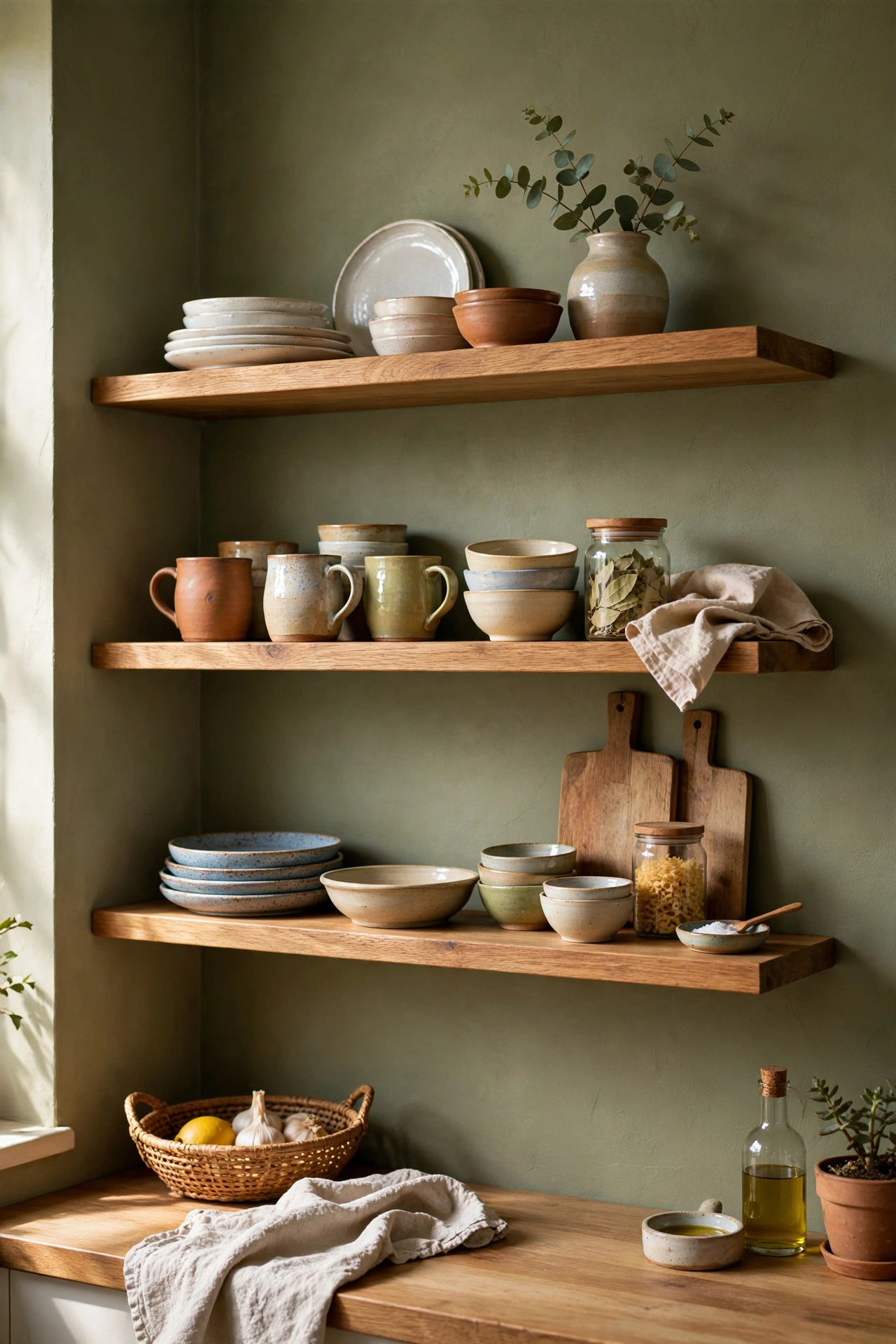
Replace upper cabinets with open wood shelves on an olive wall. The shelves break up the color, display your prettiest dishes, and make a small kitchen feel larger.
Try this: keep open shelves styled, not stuffed — 30% empty space is the difference between curated and cluttered.
Difficulty: Moderate | Cost: $$
10. Olive + Warm Wood Floors
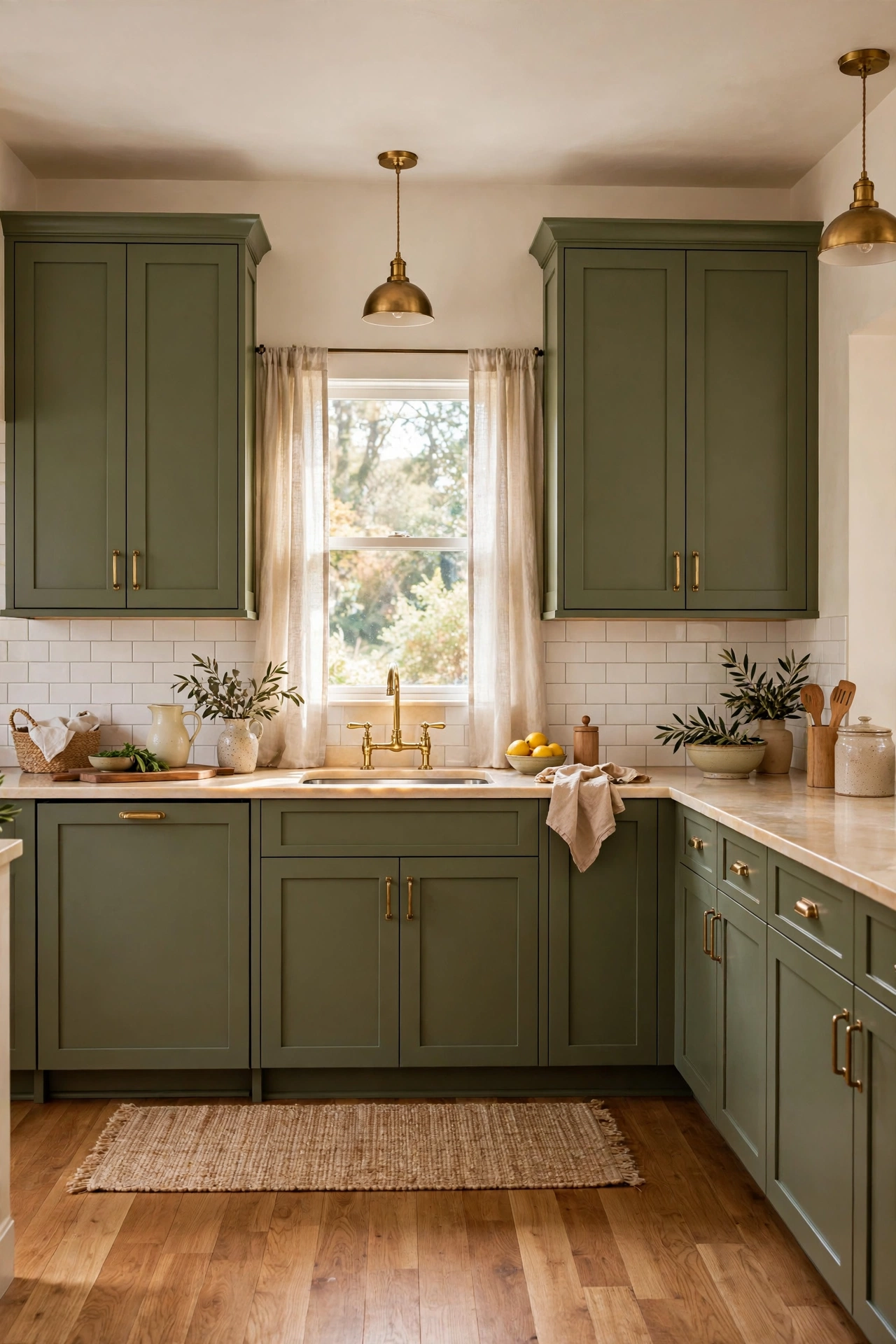
Olive cabinets over warm oak or pine floors is the nature-inside palette. The wood’s honey tones pull out olive’s yellow undertones and the whole room glows.
Try this: if floors are cool gray wood, warm up with a washable runner in rust or terracotta.
Difficulty: Advanced | Cost: $$$$
11. Moody All-Olive with Dark Counters
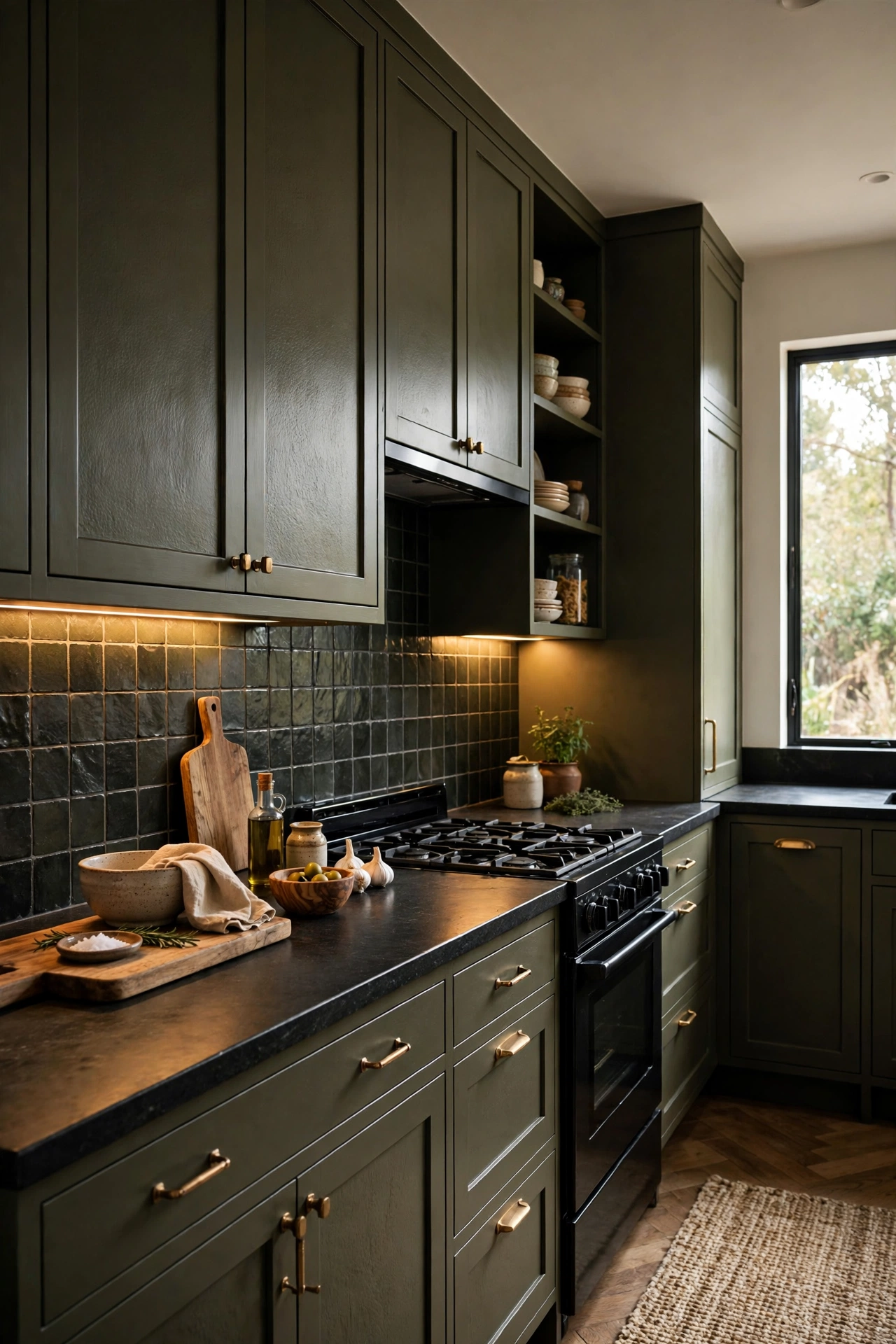
Take olive dark and pair with soapstone or honed black granite counters for a cocoon-like, dramatic kitchen. It works best in larger kitchens with good light — small dark kitchens need the contrast of lighter elements.
Dark cabinet colors demand good lighting to show their depth — these hidden lighting ideas for a cozy home cover under-cabinet and strip lighting that makes dark kitchens glow.
Try this: add under-cabinet lighting — dark-on-dark needs light to reveal the cabinet color.
Difficulty: Advanced | Cost: $$$$
12. Olive Pantry Wall or Hutch
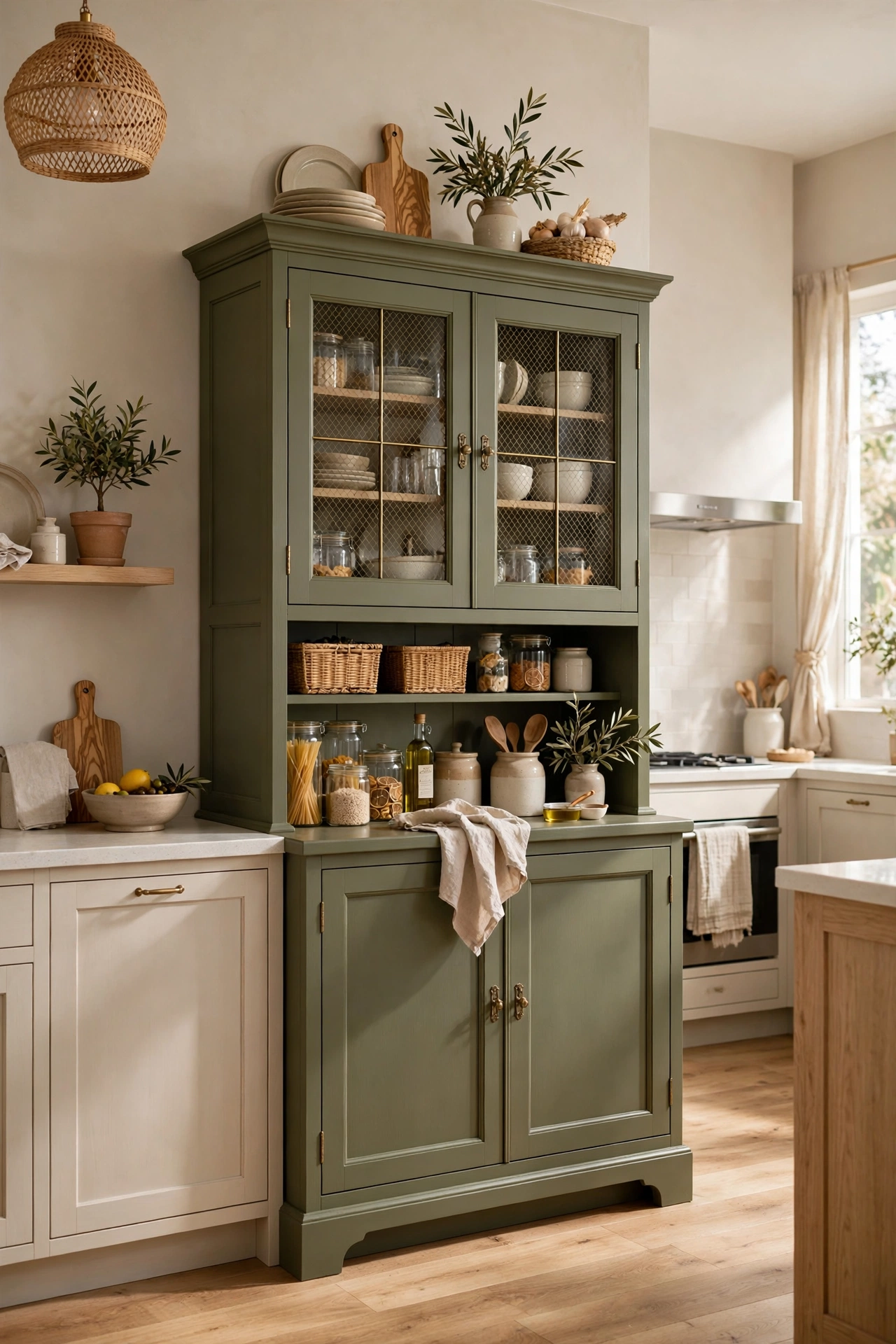
Paint a freestanding pantry cabinet or hutch olive as a furniture moment in an otherwise neutral kitchen. It’s the lowest-commitment way to try the color — one piece, huge impact.
Try this: style the hutch top with cutting boards and ceramics in warm wood and cream.
Difficulty: Easy | Cost: $
13. Olive + Terracotta Accents
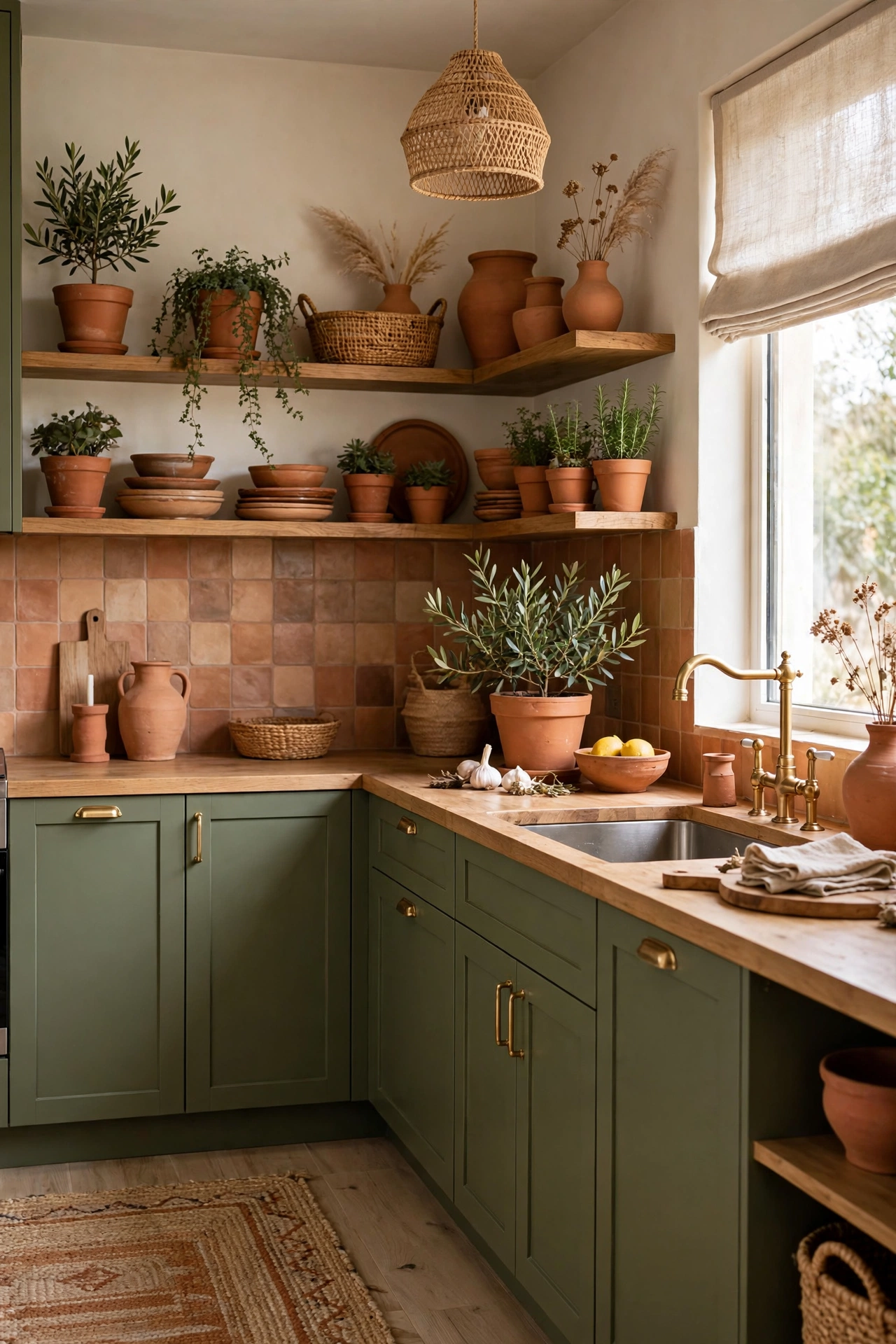
Olive and terracotta are garden companions — they sit next to each other in nature. Terracotta pots, a tiled backsplash in clay tones, or rust-colored bar stools make olive cabinets feel sun-warmed.
For more warm, earthy kitchen inspiration, these Mexican-style kitchen ideas are full of terracotta, wood, and sun-baked color done right.
Try this: keep terracotta to accents; full terracotta floors + olive cabinets can overwhelm.
Difficulty: Easy | Cost: $
14. Glass-Front Olive Uppers
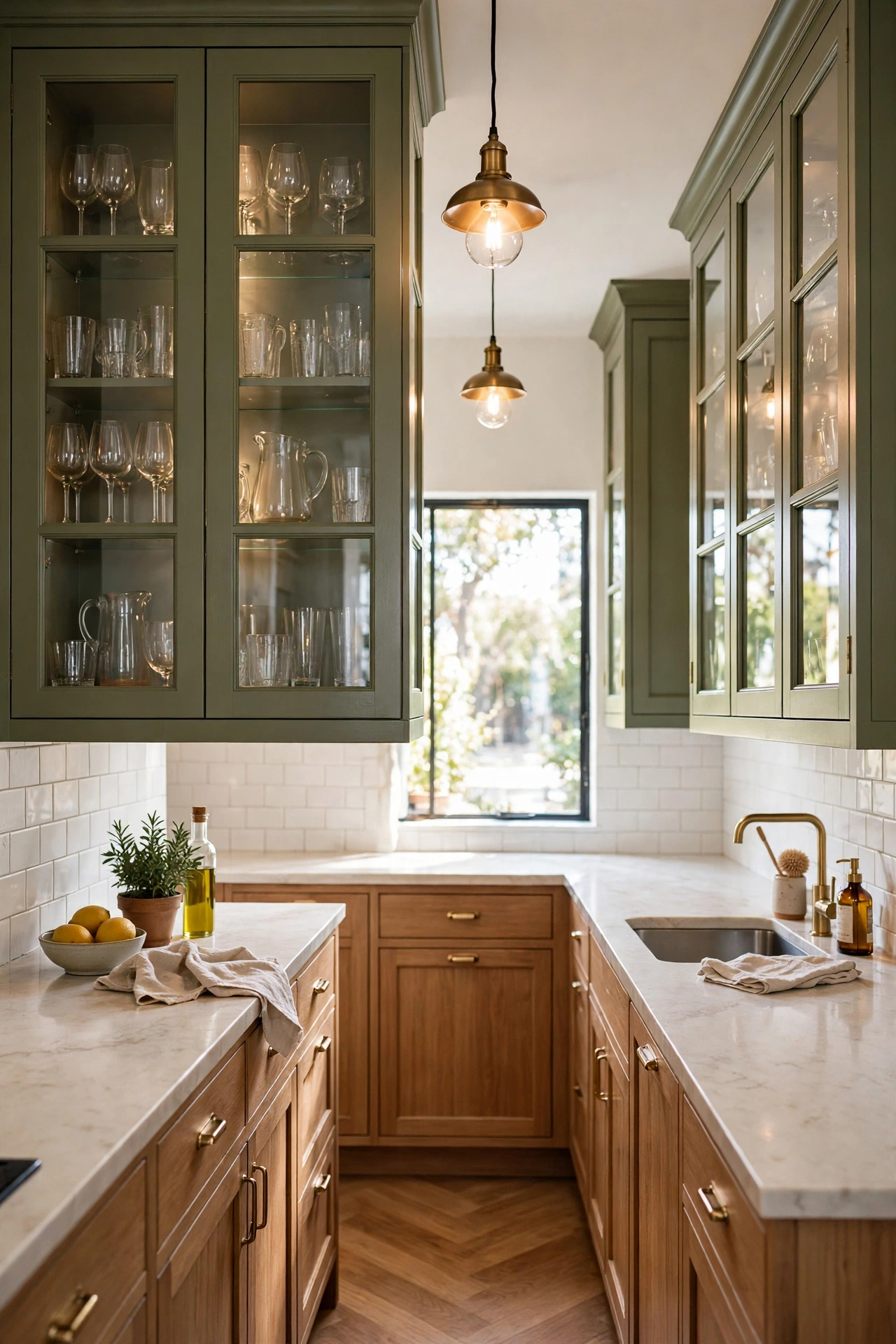
Olive cabinets with glass fronts on the uppers lighten the color’s weight and show off glassware. The glass breaks the solid green into rhythm — especially good in galley kitchens.
Try this: use reeded or seeded glass if your shelves aren’t photo-ready; it blurs contents beautifully.
Difficulty: Moderate | Cost: $$
15. Olive Kitchen with Brick Backsplash or Wall
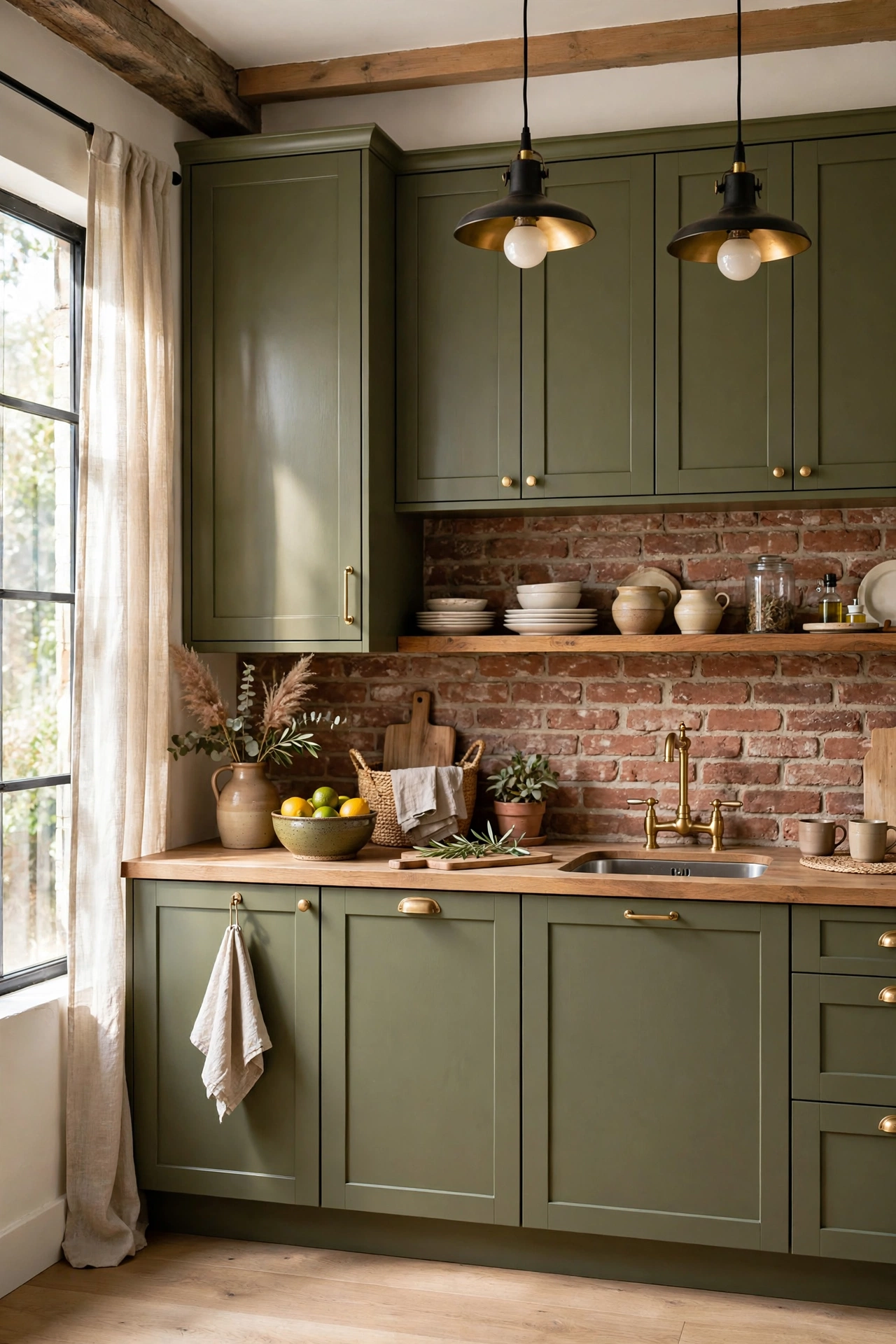
Exposed brick + olive cabinets is the rustic-modern sweet spot. The brick’s warmth and texture keep olive from feeling flat, and the combo photographs like a European farmhouse.
Try this: seal brick backsplashes — unsealed brick absorbs cooking grease permanently.
Difficulty: Advanced | Cost: $$$
16. Modern Flat-Panel Olive Cabinets
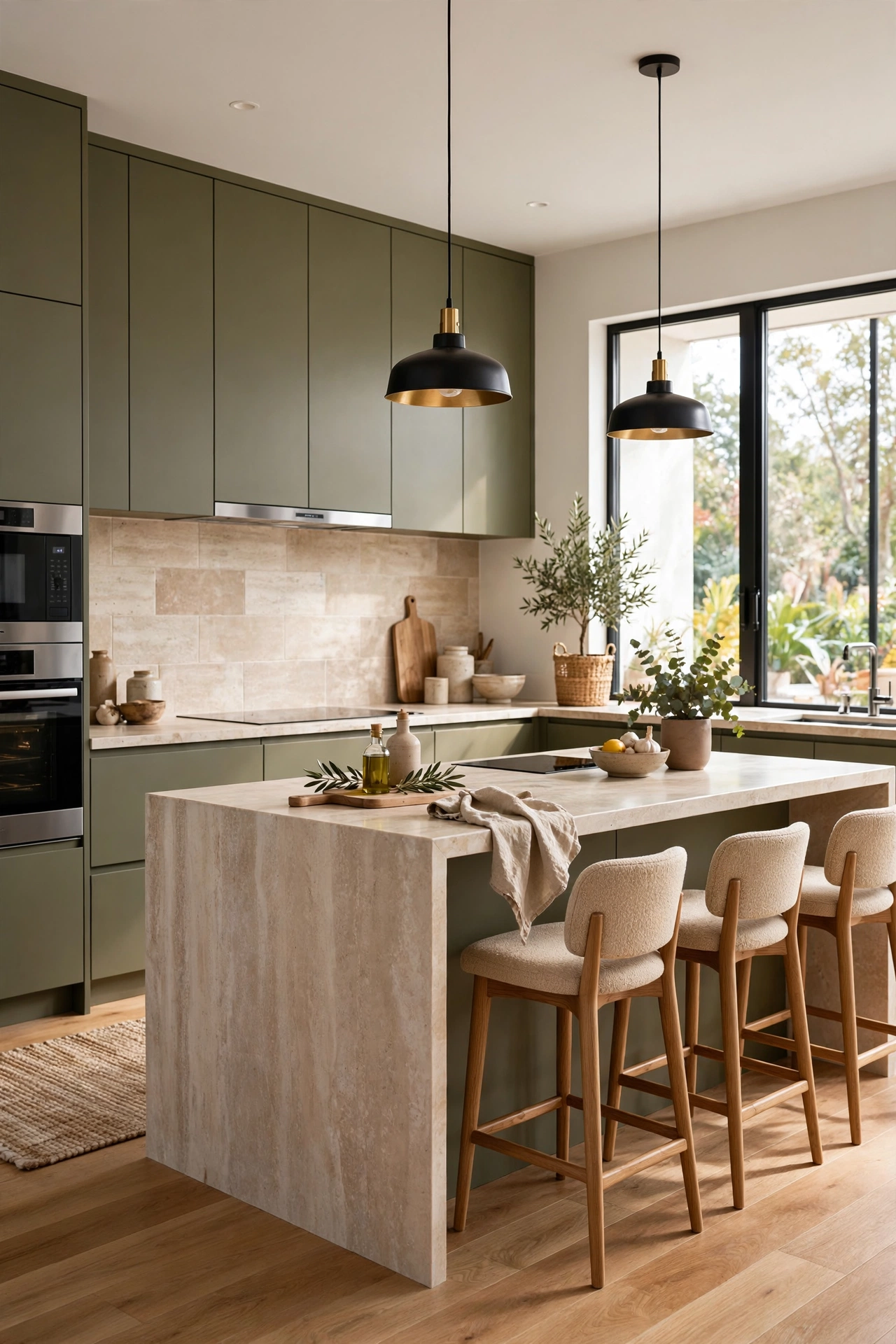
Olive isn’t just farmhouse. Flat-panel, handleless olive cabinets with integrated pulls read sleek and contemporary — the color adds warmth that modern kitchens often lack.
Try this: pair with a waterfall island in light stone to keep the modern lines crisp.
Difficulty: Advanced | Cost: $$$$
17. Olive + Cream (Not White) Palette
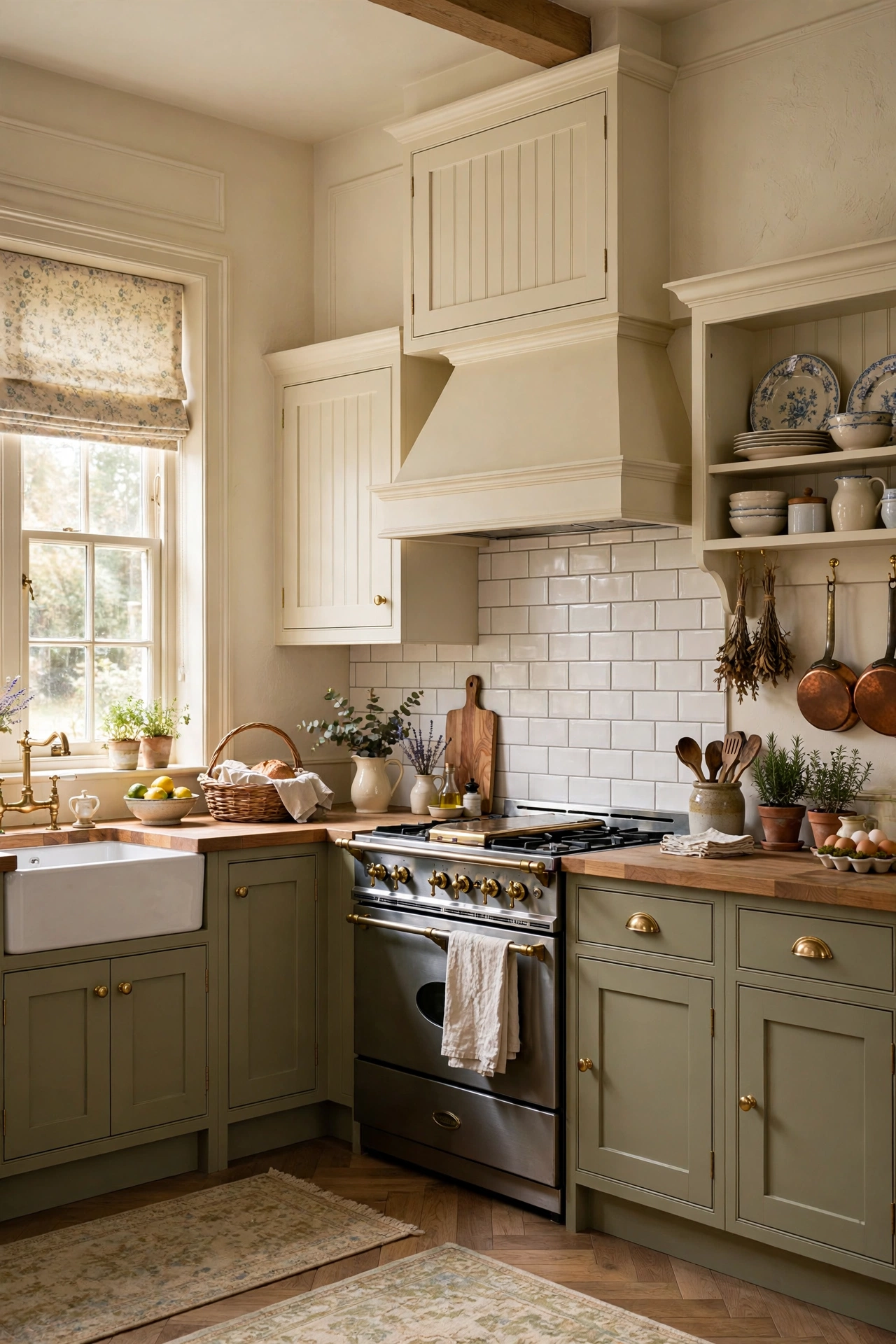
Cream cabinets or walls instead of stark white soften olive’s contrast into something gentle and vintage. It’s the English-country version — less graphic, more lived-in.
Try this: cream needs warm lighting; cool LEDs turn cream dingy.
Difficulty: Moderate | Cost: $$
18. Budget Refresh: Paint Existing Cabinets Olive
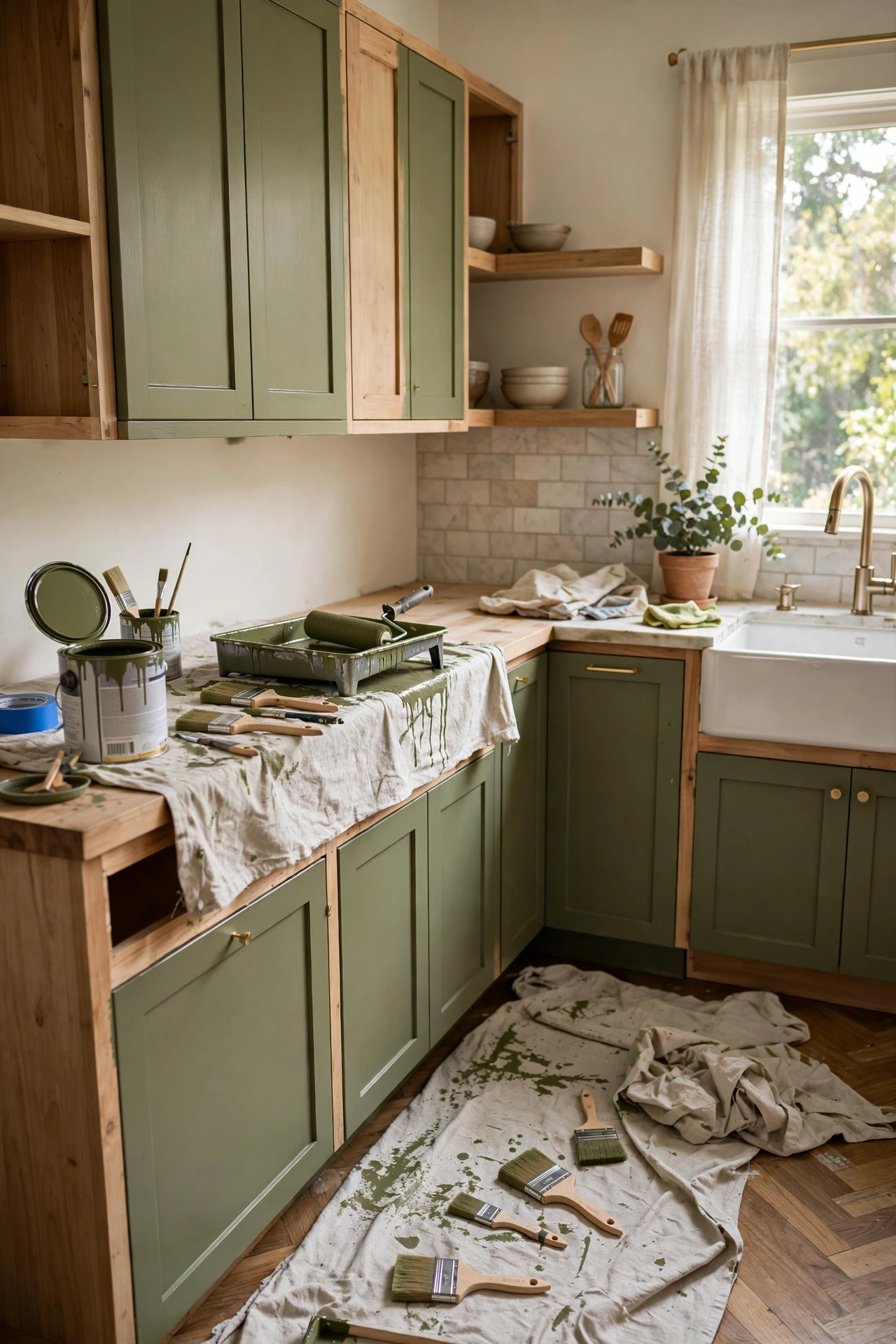
The cheapest olive kitchen is the one you already own. A $100 gallon of cabinet paint, a weekend of prep, and new hardware transforms oak or white cabinets completely.
Try this: prep is 80% of the job — degrease with TSP, sand, prime with bonding primer, then two coats of enamel.
Difficulty: Moderate | Cost: $
19. Olive Island with Waterfall Counter
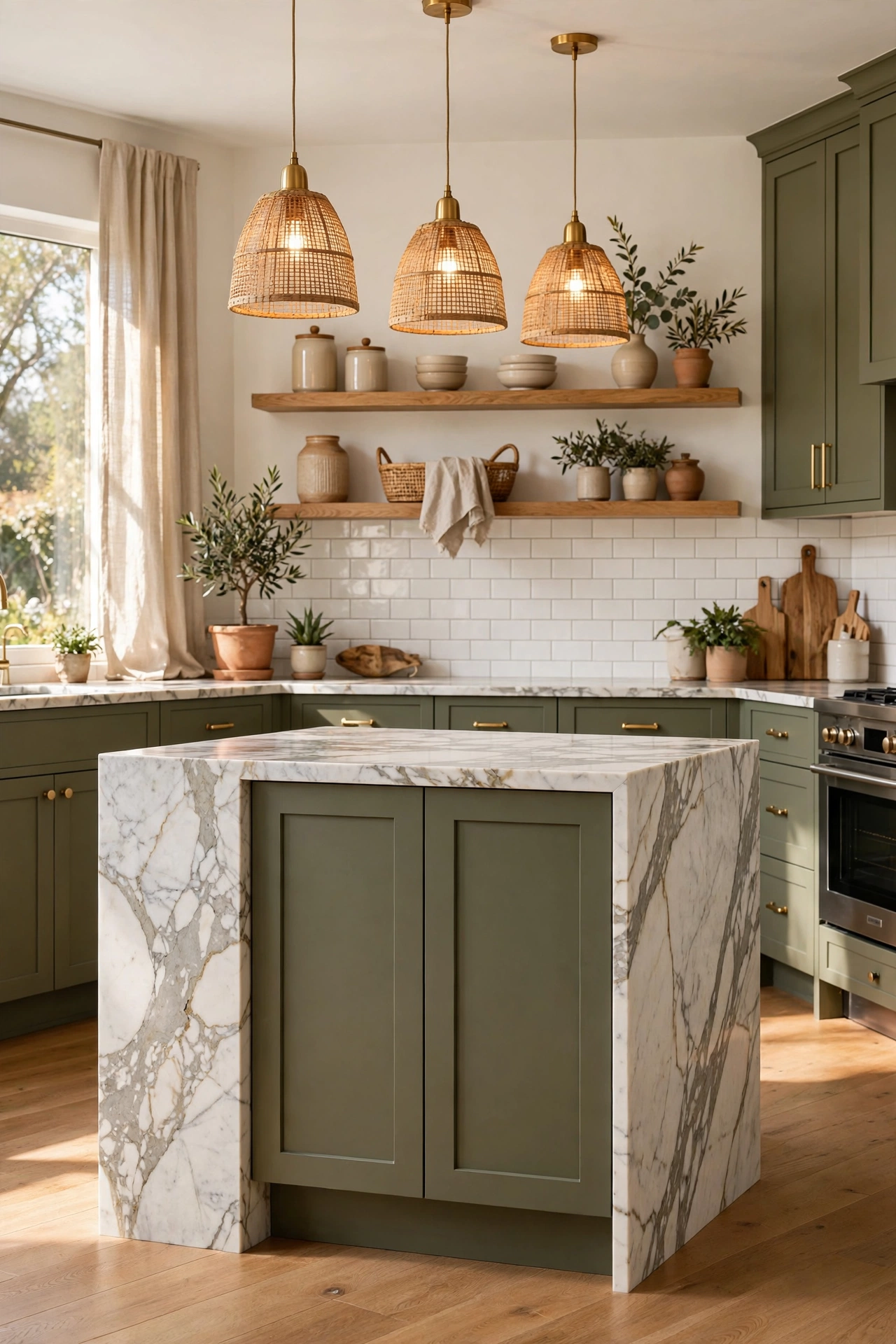
Make the island the star: olive base with a waterfall countertop in quartz or marble that cascades down the sides. The stone’s drama + olive’s earthiness = a true centerpiece.
Try this: waterfall edges show every crumb — keep the island styling minimal.
Difficulty: Advanced | Cost: $$$$
20. Olive + Navy Two-Tone
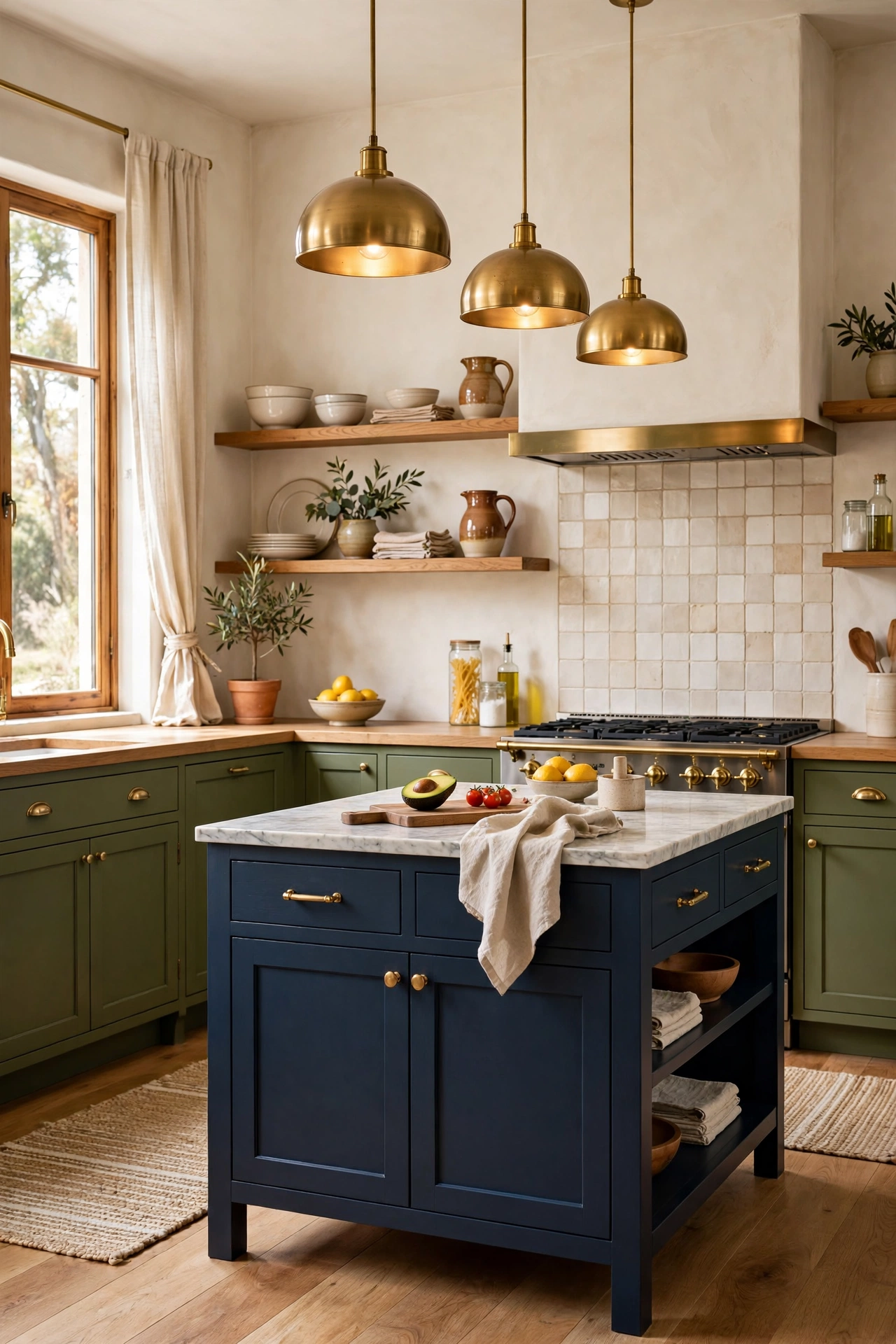
Olive lowers + navy island (or vice versa) is the bold designer’s two-tone. Both are deep, earthy colors that share a muted quality, so they harmonize instead of clashing.
Try this: unite them with one hardware finish throughout — brass ties both colors together.
Difficulty: Advanced | Cost: $$$
21. Vintage Olive with Beadboard
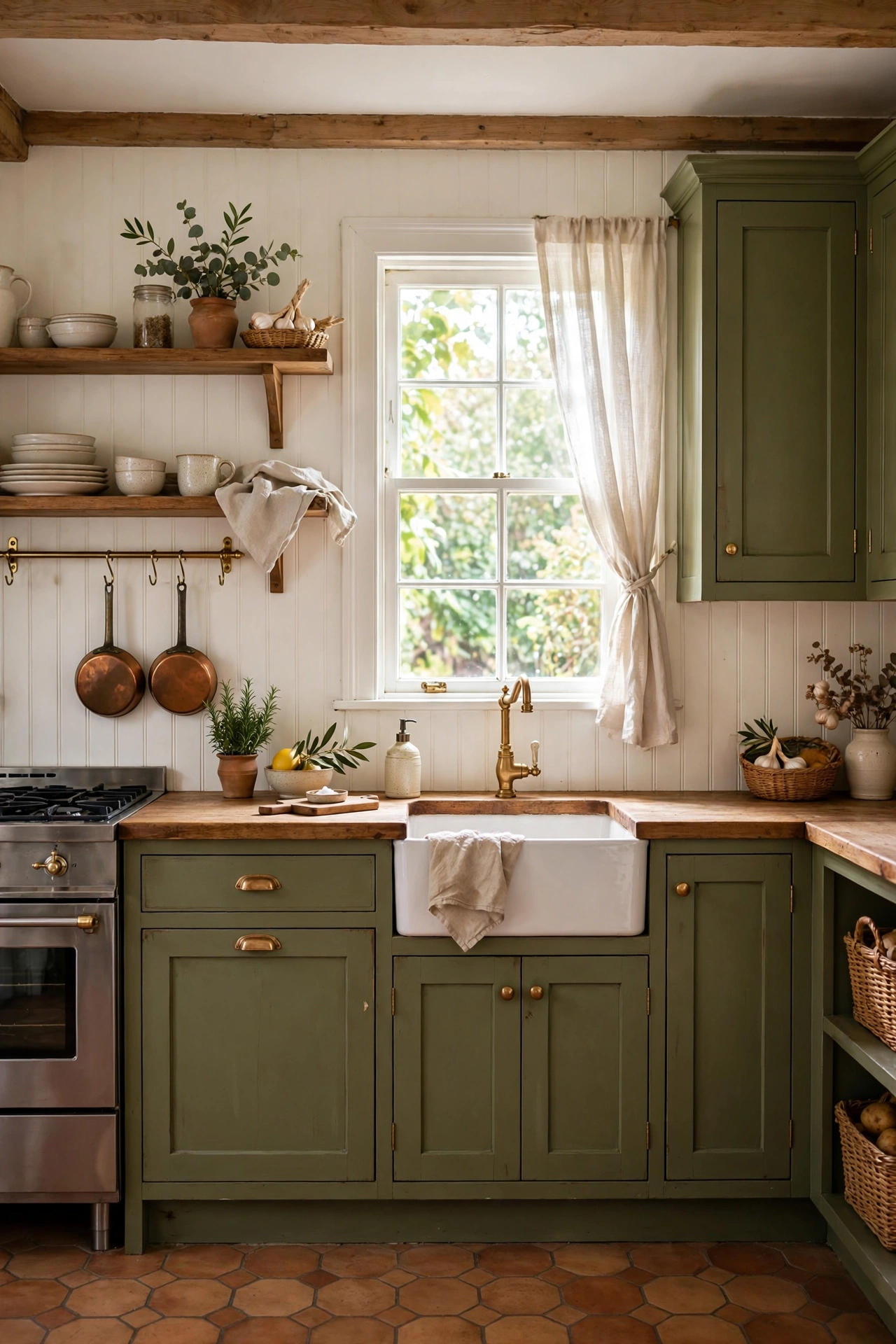
Beadboard backsplash or beadboard cabinet inserts + olive paint = cottage charm. It’s the cozy, collected look that suits older homes and small kitchens.
For more texture-rich wall ideas, these shiplap accent wall ideas for beginners show how paneling transforms plain walls step by step.
Try this: paint beadboard the same olive for texture without extra color noise.
Difficulty: Moderate | Cost: $$
22. Olive Range Hood as Focal Point
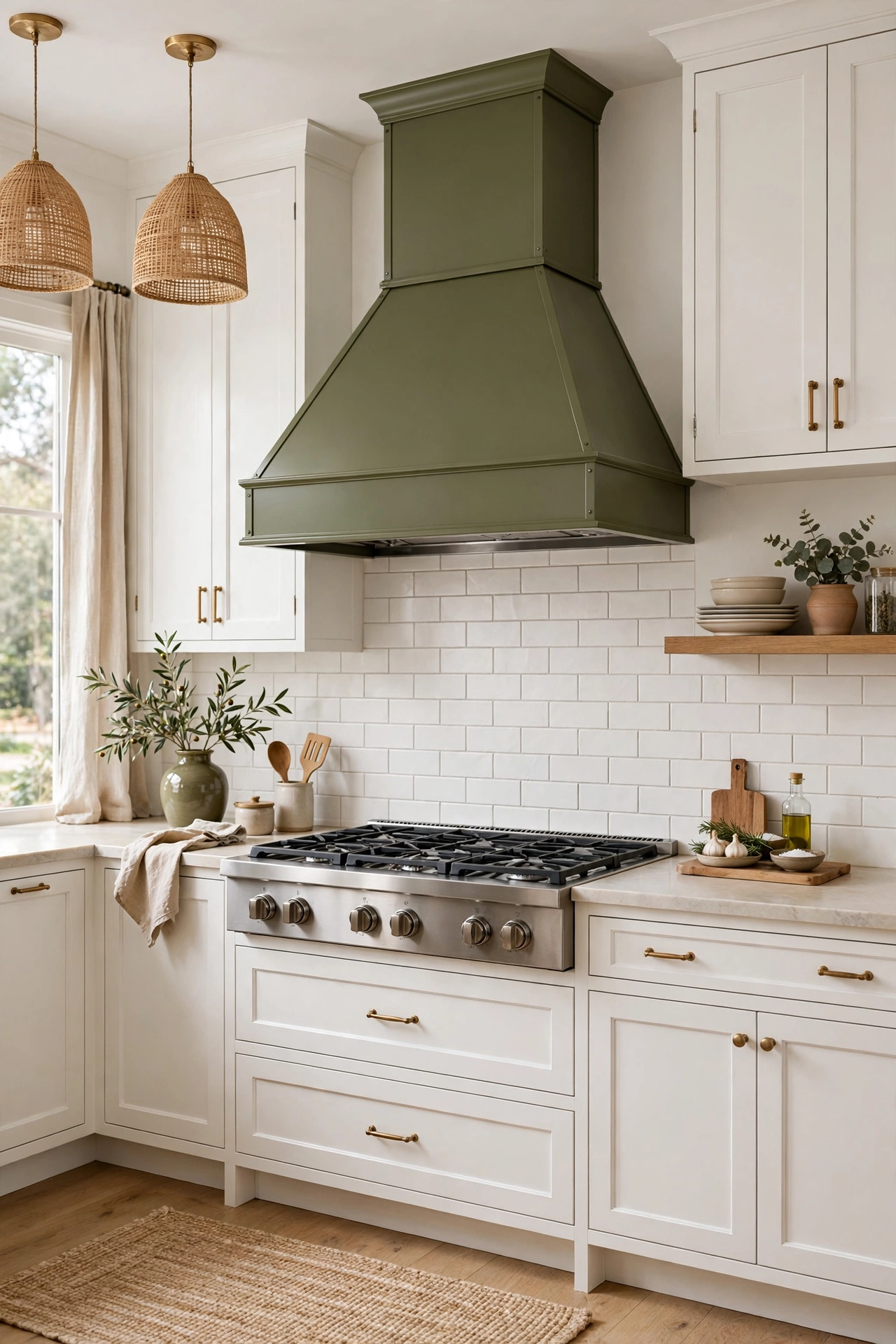
Paint or clad the range hood olive (even in a mostly white kitchen) to create a focal point over the stove. It’s a small area with outsized visual impact.
Try this: make sure the hood material is heat-rated and wipeable — style can’t beat function over a stove.
Difficulty: Moderate | Cost: $$
23. Olive + Concrete Counters
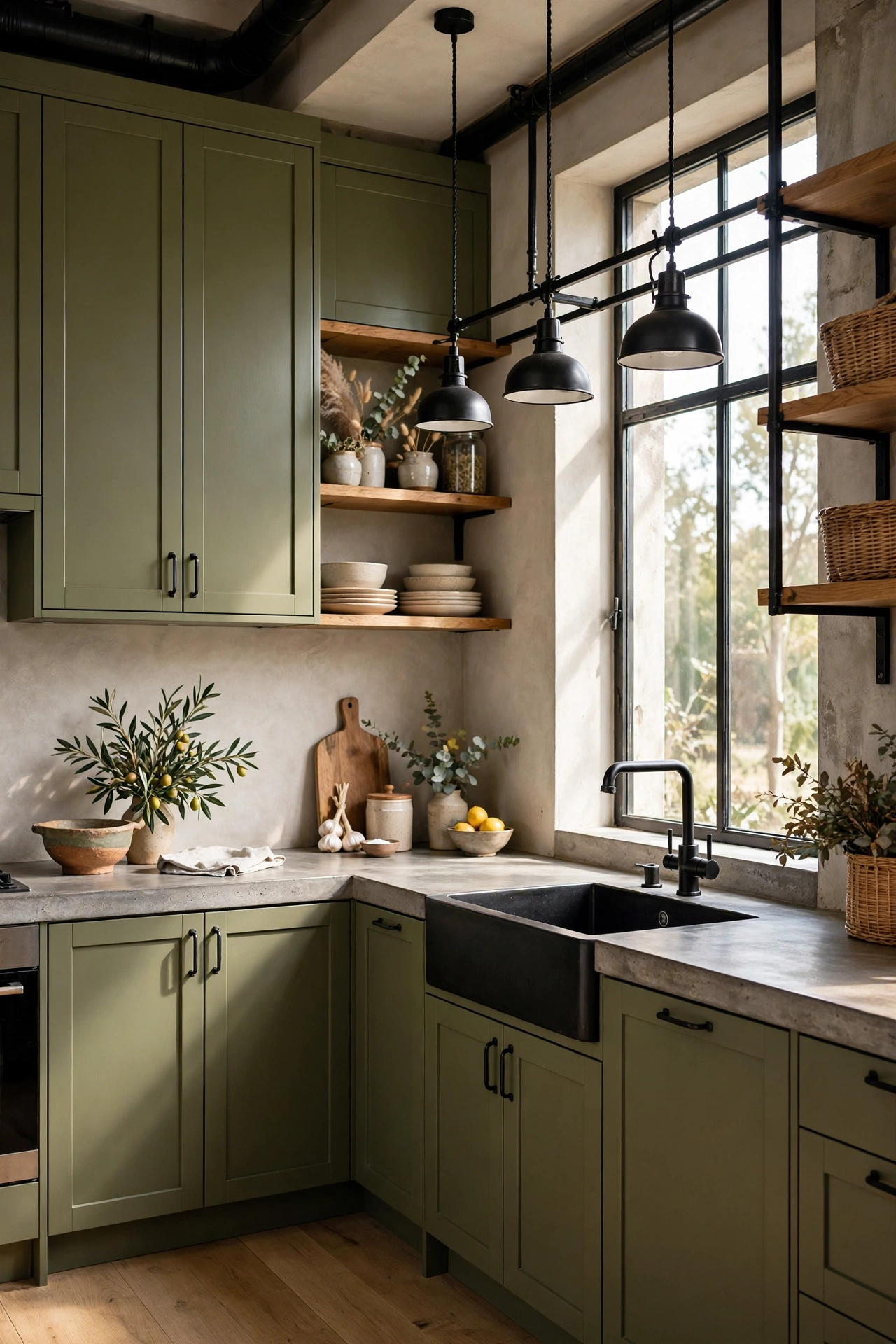
Honed concrete counters with olive cabinets give an industrial-organic mix. The concrete’s cool gray balances olive’s warmth, and both materials age with character.
Try this: seal concrete properly and accept patina — concrete is a living finish, not a perfect one.
Difficulty: Advanced | Cost: $$$
24. Small Kitchen Olive (Yes, It Works)
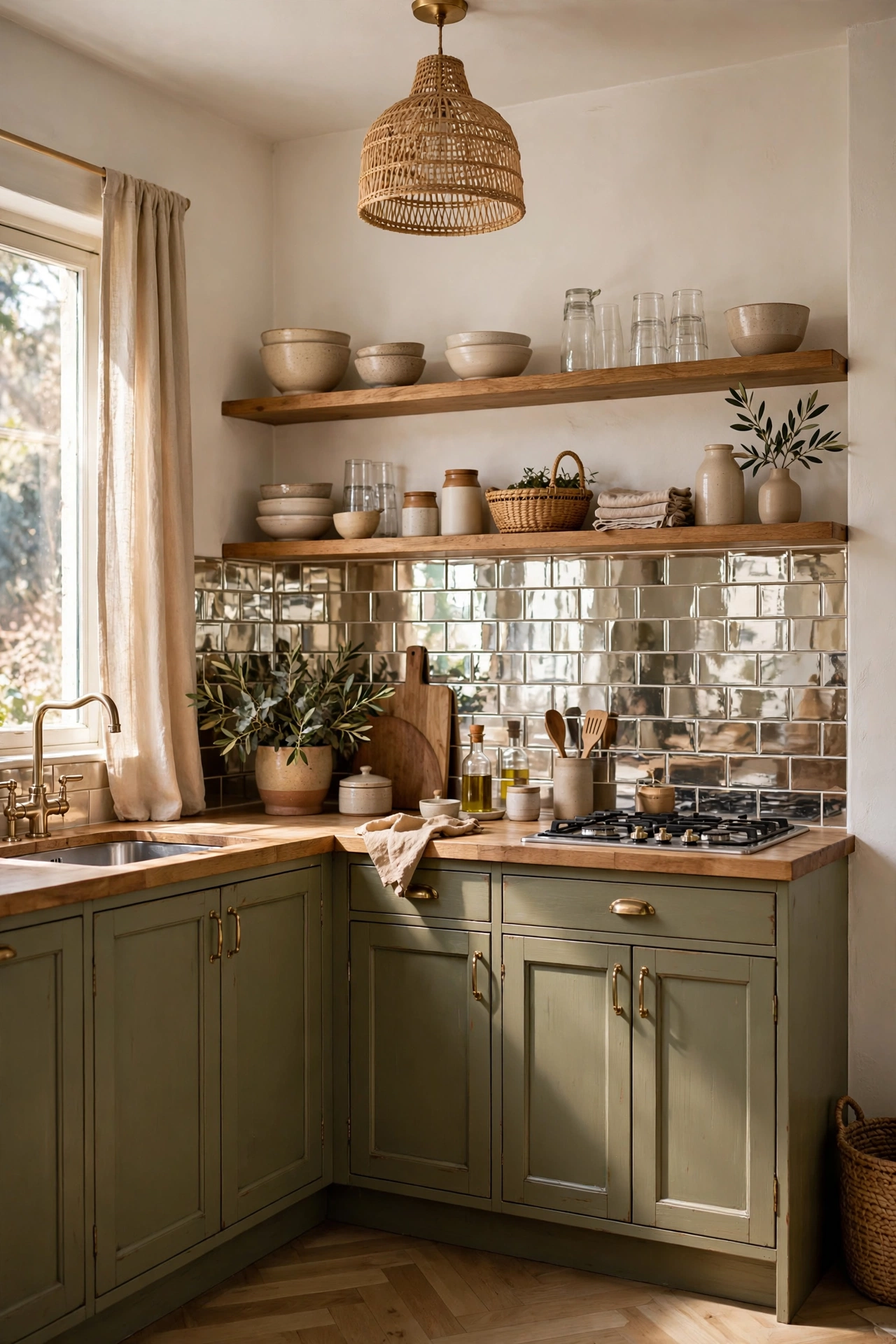
Olive in a small kitchen works if you keep the palette tight: olive lowers, light uppers or open shelves, reflective backsplash, and great lighting. The color adds depth that makes small feel intentional, not cramped.
Try this: a mirror or glossy tile backsplash bounces light and doubles the sense of space.
Difficulty: Moderate | Cost: $$
25. Olive Outdoor Kitchen
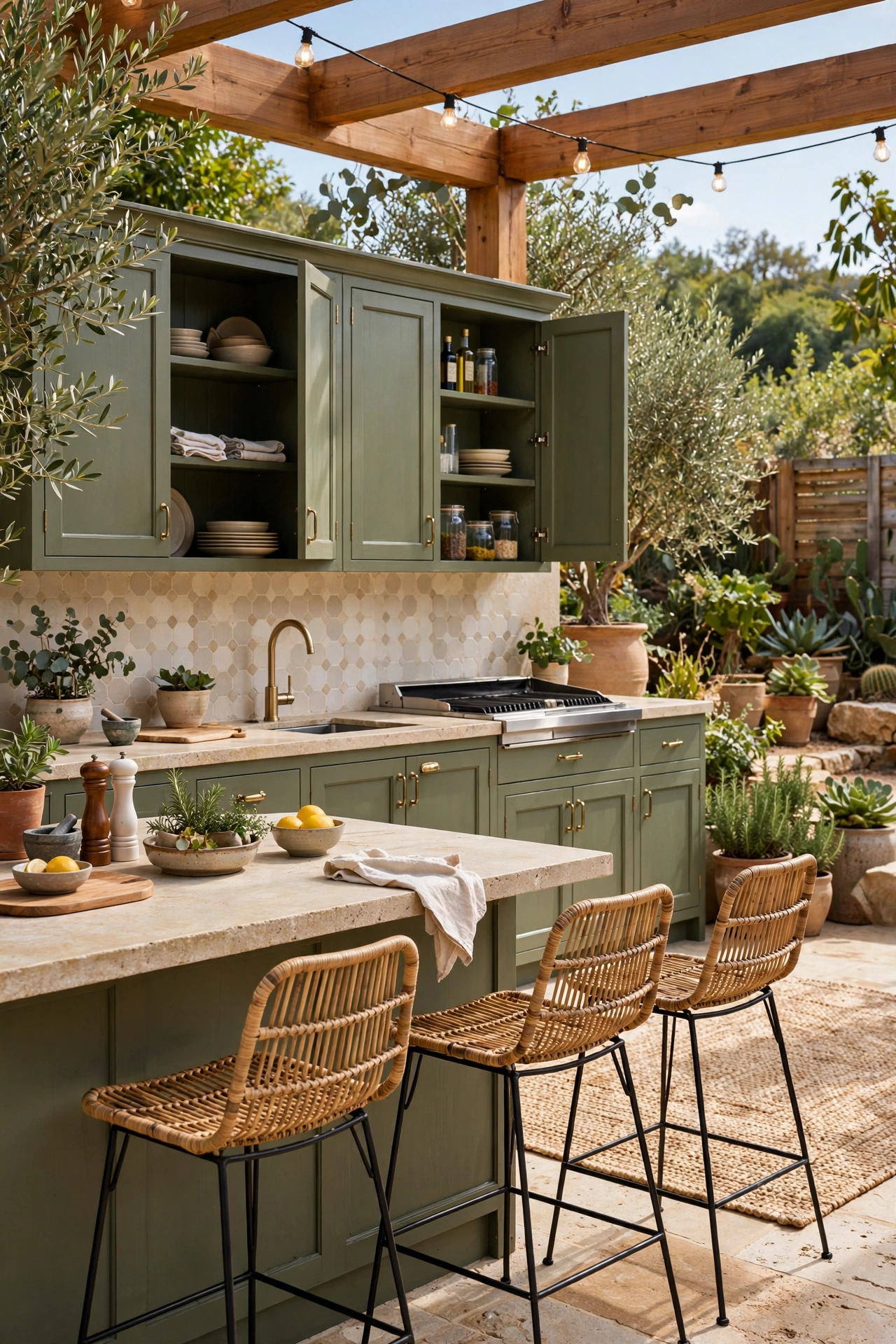
Take olive outside: painted cabinets or a storage wall in weather-rated olive paint gives an outdoor kitchen or patio bar the same earthy charm. It hides dirt better than white, too.
Try this: use exterior-grade enamel and stainless hardware — outdoor conditions punish interior finishes.
Difficulty: Moderate | Cost: $$
Quick-Pick Cheat Sheet
Not sure where to start? Match your situation to the right approach:
| Your Situation | Start With This | Why It Wins | Rough Cost |
|---|---|---|---|
| Full commitment | All-olive cabinets + butcher block | Color moment, safe fallback | $3,000–$8,000 refaced; $80–$150 DIY paint |
| Nervous about color | Olive island only | Color moment, safe fallback | $40–$80 paint + hardware |
| Want luxury | Dark olive + brass hardware | Reads expensive on stock cabinets | $200–$600 hardware |
| Small kitchen | Olive lowers + open shelves | Depth without heaviness | $100–$400 |
| Tight budget | Paint existing cabinets | Cheapest transformation possible | $80–$150 |
| Modern taste | Flat-panel olive, handleless | Warmth without farmhouse | $5,000+ new fronts |
Frequently Asked Questions
What colors go well with olive green kitchen cabinets?
Olive is a near-neutral: it pairs beautifully with white and cream, warm woods, brass and matte black hardware, marble and butcher block counters, and accent colors like terracotta, navy, and warm gray. Avoid pairing it with cool grays or stark cool whites, which can make olive look muddy.
Is olive green a good color for kitchen cabinets?
Yes — it’s one of the most livable cabinet colors. Olive is earthy and forgiving (it hides wear better than white), works in farmhouse, traditional, and modern kitchens, and has stayed in style far longer than most trend colors because it reads as a neutral, not a statement.
Does olive green make a kitchen look dark?
It can in a small or poorly lit kitchen, especially in deep shades. Counter it with white or light uppers, a reflective backsplash, under-cabinet lighting, and light counters. In well-lit or larger kitchens, even dark olive feels cozy rather than gloomy.
What hardware looks best on olive green cabinets?
Unlacquered brass is the classic pairing — its warmth complements olive’s earthiness and reads luxurious. Matte black gives a modern edge; polished nickel works for a crisper look. Match all metal finishes in the kitchen rather than mixing.
Can I paint my existing cabinets olive green?
Absolutely — it’s the most budget-friendly olive kitchen. Degrease with TSP, sand lightly, apply bonding primer, then two coats of cabinet enamel in your chosen olive. Replace hardware at the same time for the full transformation; the paint plus new pulls typically costs $80–$200 total.
Final Thoughts
Here’s what my friend’s olive kitchen taught me: the safest color isn’t always the right color. White cabinets never offended anyone, but they never made anyone linger in the kitchen either. Olive green — earthy, warm, a little unexpected — turned a cooking space into the room everyone gravitates toward.
You don’t have to repaint the whole kitchen on day one. Paint the island. Swap the hardware to brass. Try one wall of olive and live with it for a month. Color confidence builds the same way design does — one good decision at a time.
For more olive and green cabinet inspiration, this Benjamin Moore’s kitchen color ideas guide breaks down paint colors, countertops, and hardware pairings.
And for dramatic dark-green ideas, this Sherwin-Williams’ kitchen paint color guide shows how deep greens pair with marble, brass, and wood.


