


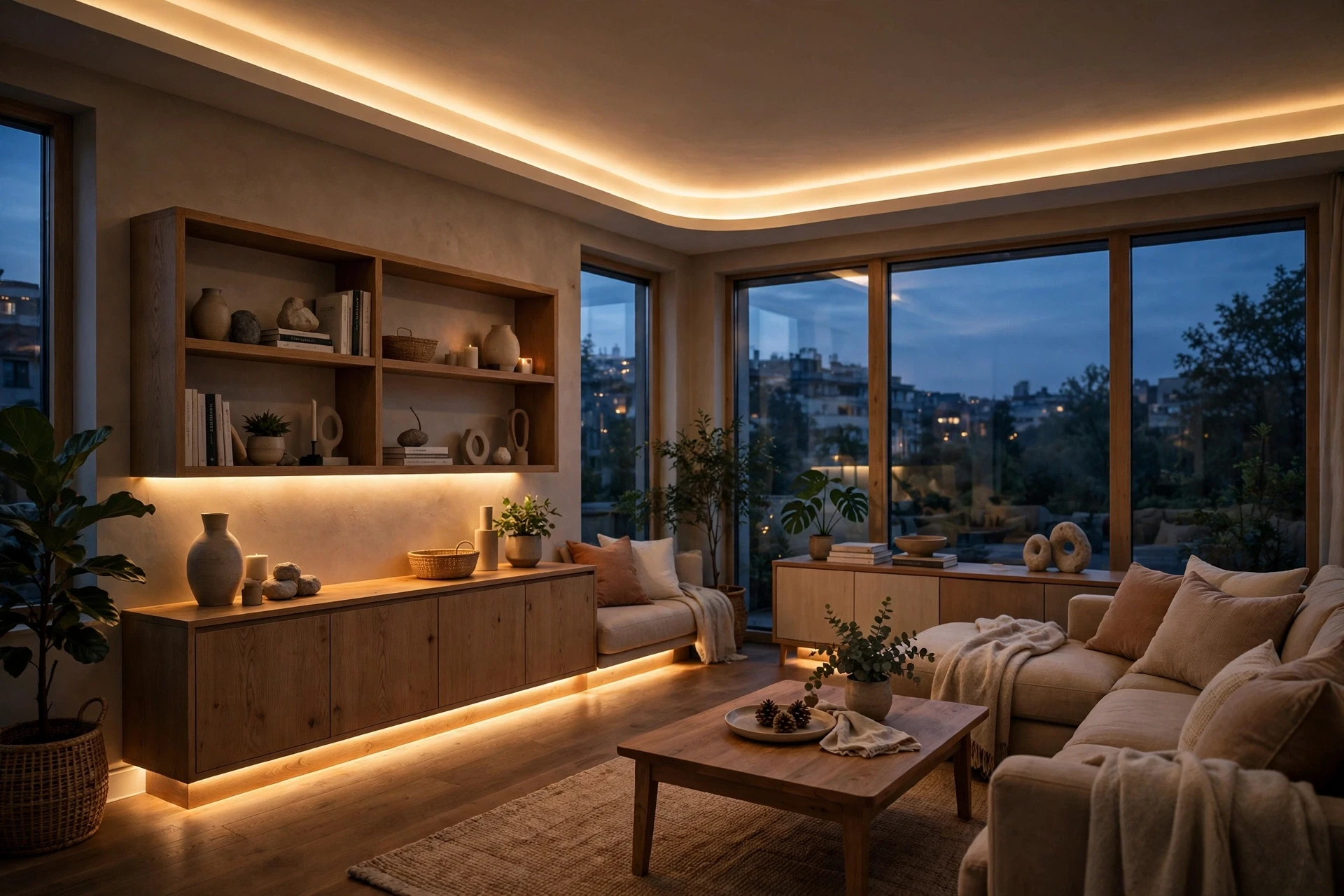
Last winter, a friend came over for dinner and the first thing she said when she walked in wasn’t about the food or the table — it was, “Your house always feels like this. Why does it feel like this?” It was 6 p.m., pitch dark outside, and my house was glowing. Not bright, exactly. Glowing. Warm light was coming from under the kitchen cabinets, from behind the TV, from a soft strip above the bookshelves. There wasn’t a single overhead light on in the whole house, and somehow you could see everything.
That is the whole secret of hidden lighting. Nobody walks into a room and thinks “nice LED strips.” They just feel comfortable, and they don’t know why. The light comes from places you can’t quite see, which means no glare, no harsh shadows, no squinting — just a warm, layered glow that makes every room feel intentional. I have added hidden lighting to nearly every room in my house over the last few years, most of it in weekend projects that cost less than a grocery run, and it changed the feel of my home more than any furniture ever did.
These 25 hidden lighting ideas for a cozy home are the ones that actually work in real houses — kitchens, bedrooms, bathrooms, stairs, closets, and all the odd corners in between. Most use simple LED strips or puck lights, most take under an hour, and a bunch are completely renter-friendly.
- Hidden lighting means the source is invisible — the glow is the point, not the fixture.
- Warm white (2700K) is the cozy setting; anything cooler reads as an office, not a home.
- LED strips and battery puck lights handle 90% of these ideas — no electrician needed.
- Layer low (toe-kicks, under-bed), mid (shelves, cabinets), and high (cove, wardrobe tops) for a full glow.
- Put the strips you use every evening on timers or smart plugs so the cozy happens automatically.
1. Under-Cabinet LED Strips in the Kitchen
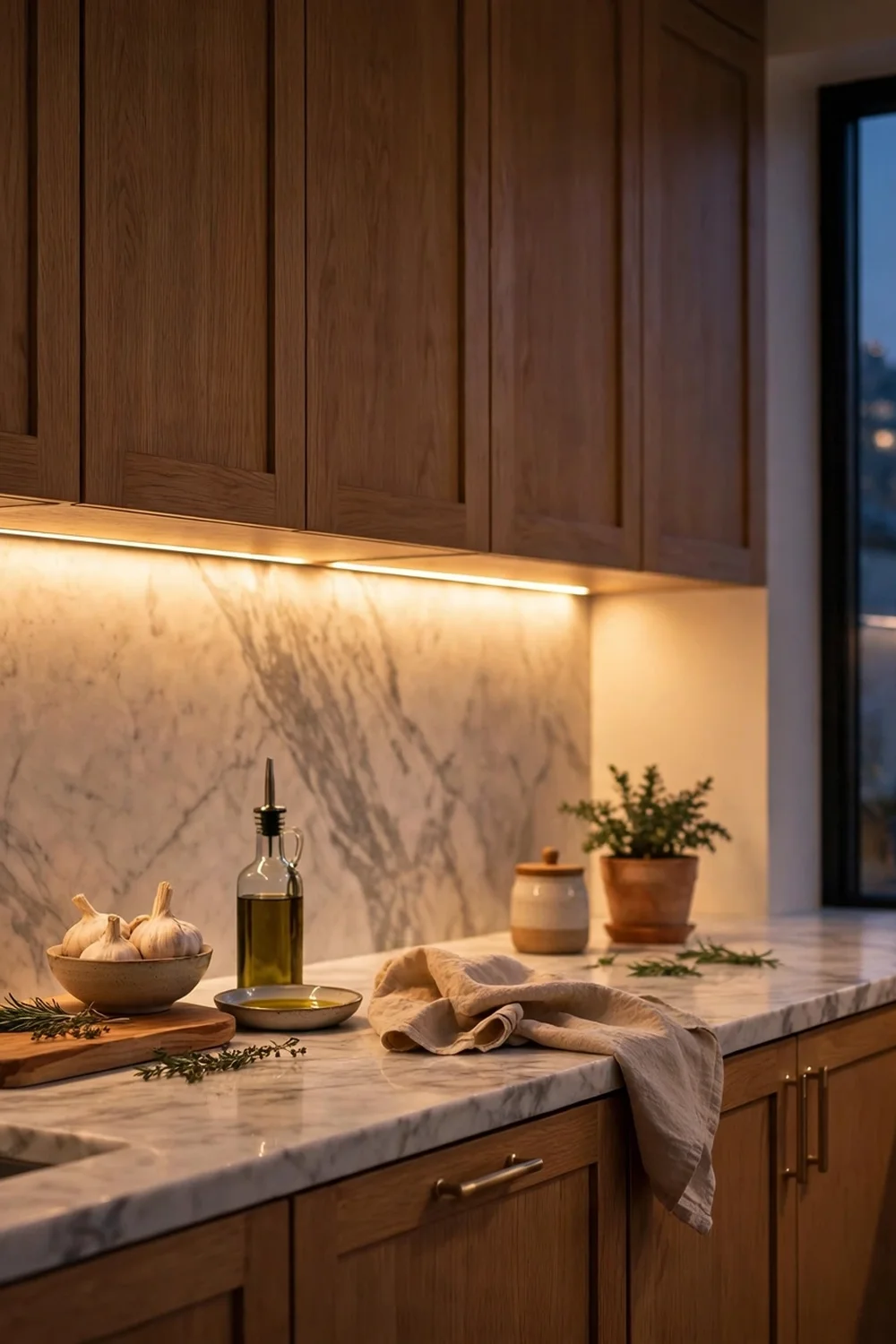
This is the gateway project, and honestly it might be the single best dollar-for-coziness upgrade in any house. A warm LED strip tucked under the wall cabinets washes light down the backsplash and across the countertop, and suddenly your kitchen looks like a showroom at night. It is also genuinely useful — you can actually see what you are chopping. Mount the strip toward the front edge of the cabinet so the light falls forward, not back into the corner.
Try this: choose a strip with a dimmer or a smart plug. Full brightness for cooking, dimmed to a glow for the evening — two moods from one strip.
2. Toe-Kick Lighting on the Kitchen Island
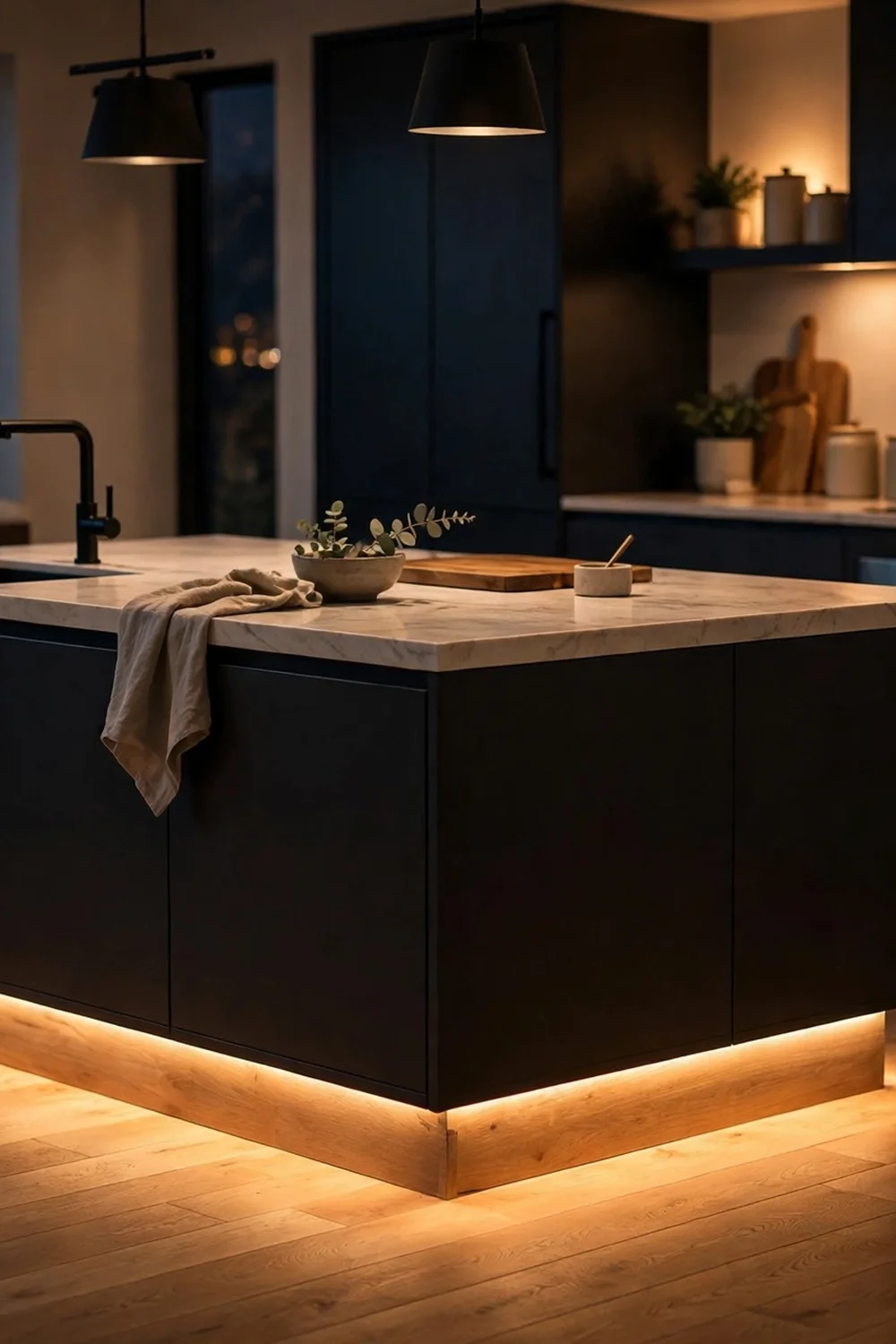
The recessed strip at the very bottom of your cabinets — the toe-kick — is wasted space in most kitchens. Put a warm LED strip in there and the whole island looks like it is floating a few inches off the floor. It is subtle during the day and completely magical at night, plus it doubles as the perfect low nightlight for midnight trips to the kitchen. You see the glow, never the source.
Try this: wire it to the same switch or smart routine as your under-cabinet strips so the whole kitchen glows with one tap.
3. Cove Lighting Along the Ceiling
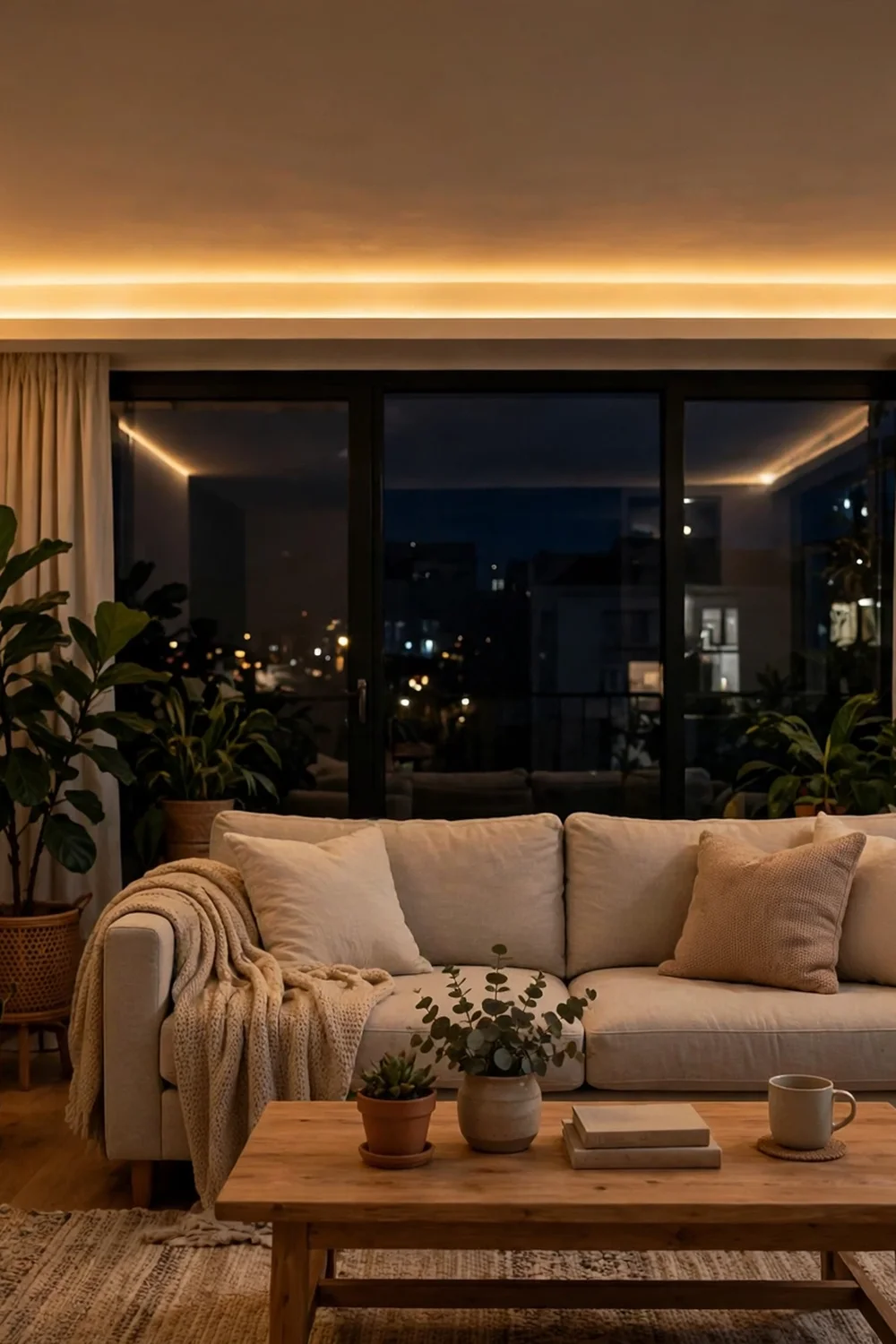
Cove lighting is a strip hidden in a ceiling recess or behind a dropped edge, throwing light up so it bounces softly back down. It is the reason hotel lobbies feel expensive — no visible fixtures, just a ceiling that seems to glow on its own. You don’t need a renovation to fake it: a simple picture-ledge-style trim mounted a few inches below the ceiling hides a strip perfectly. Run it around the whole living room and turn off every other light. You will understand immediately.
Try this: keep the wall color light where cove light lands — dark paint eats the bounce and kills the effect.
4. Behind-the-Headboard Glow
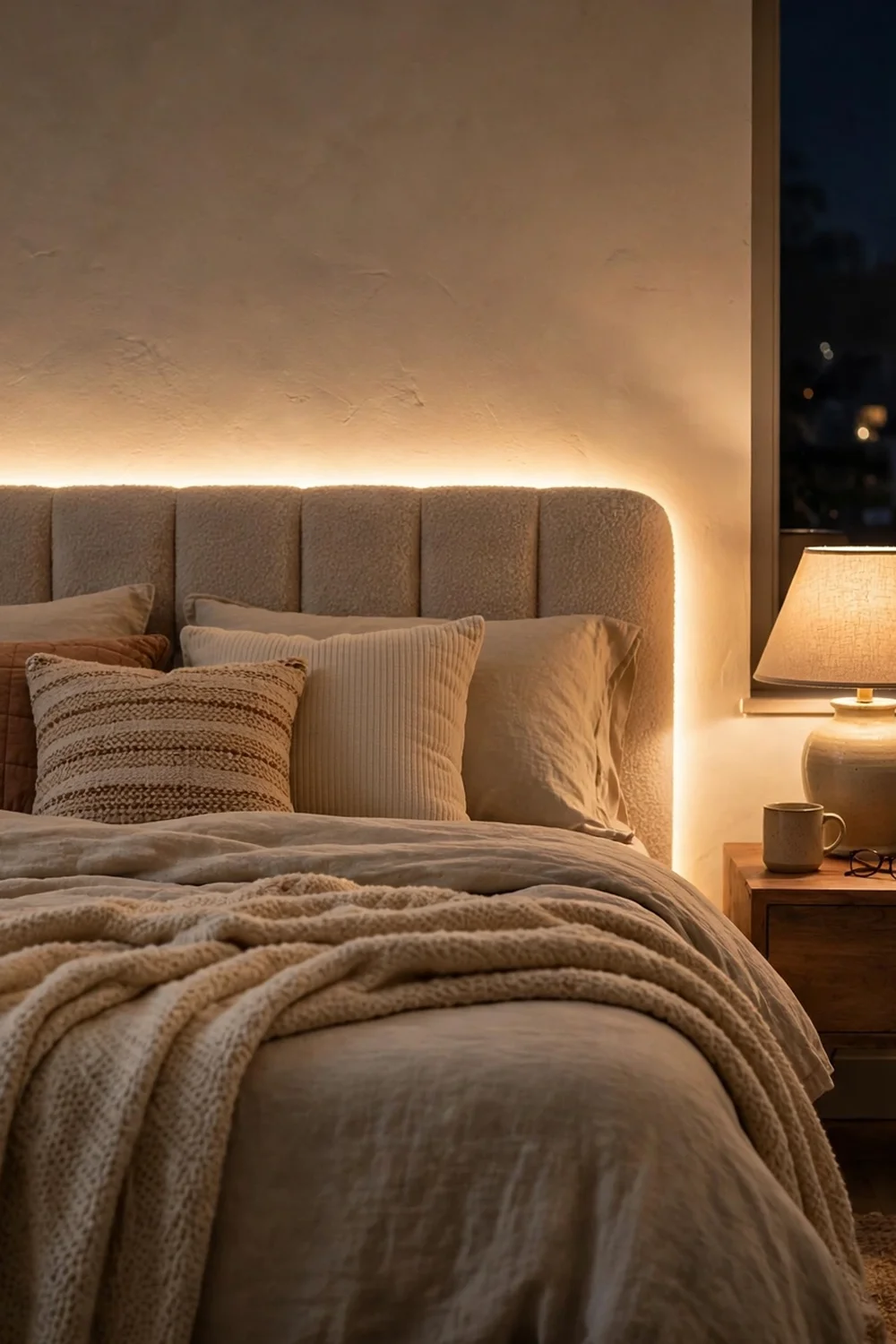
A warm strip mounted on the back of the headboard turns the wall behind the bed into a soft halo. It is the coziest reading light I own — bright enough to read by, gentle enough that it never glares in your eyes, and it makes the headboard look like it was designed with lighting built in. One strip, adhesive backing, ten minutes, done.
Try this: mount the strip a couple of inches in from the headboard edges so the halo is even all the way around.
5. Under-Bed Frame Lighting
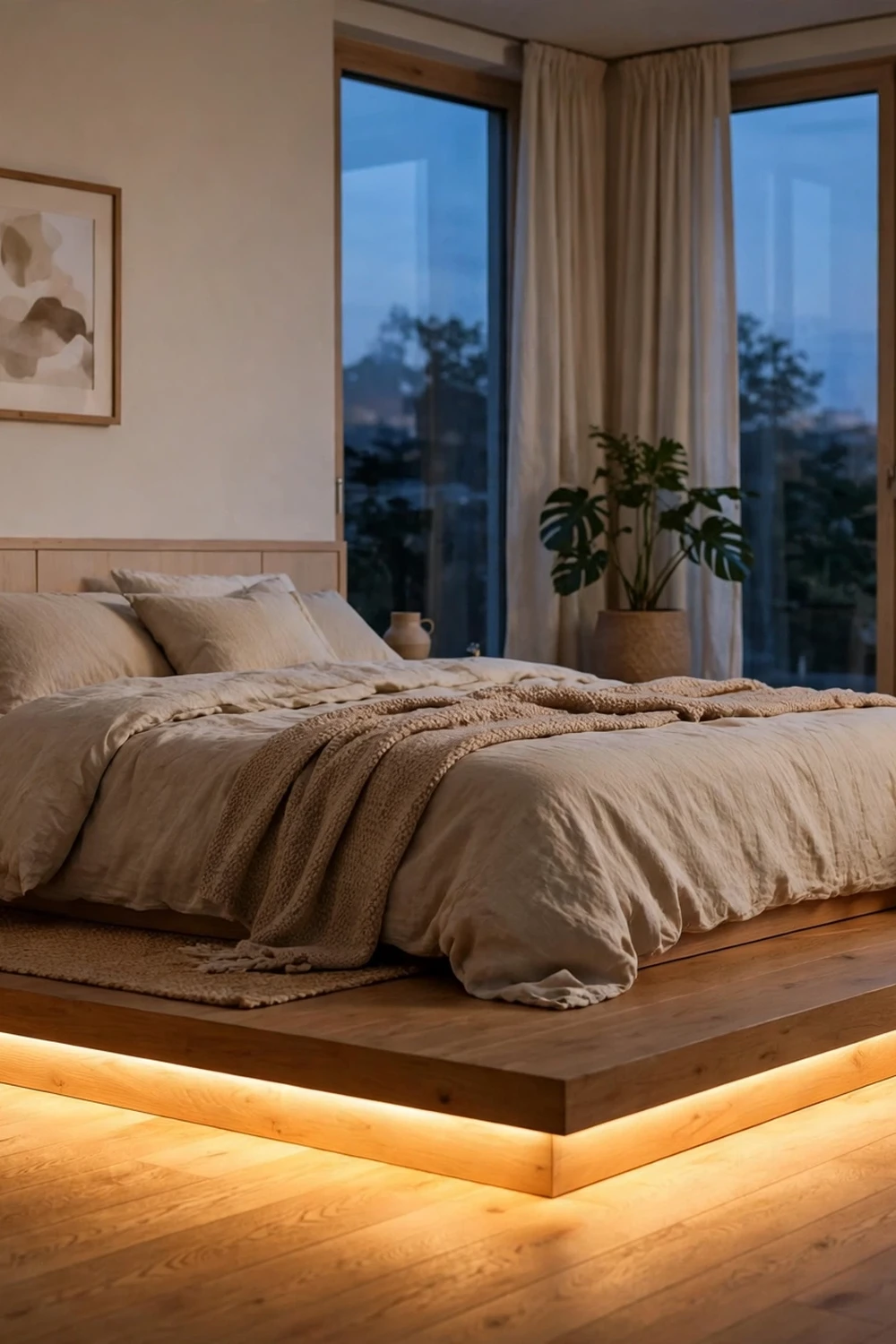
Run a strip around the underside of the bed frame and the bed appears to hover a few inches off the floor — it looks expensive and slightly futuristic, and it is the best nightlight a bedroom can have. No more stubbed toes, no more harsh lamp when someone gets up. Motion-sensor strips are perfect here: they switch on when feet hit the floor and fade out on their own.
Try this: use a motion-sensor strip with a warm color and a low brightness setting — you want a guide light, not a runway.
6. Backlit Bathroom Mirror
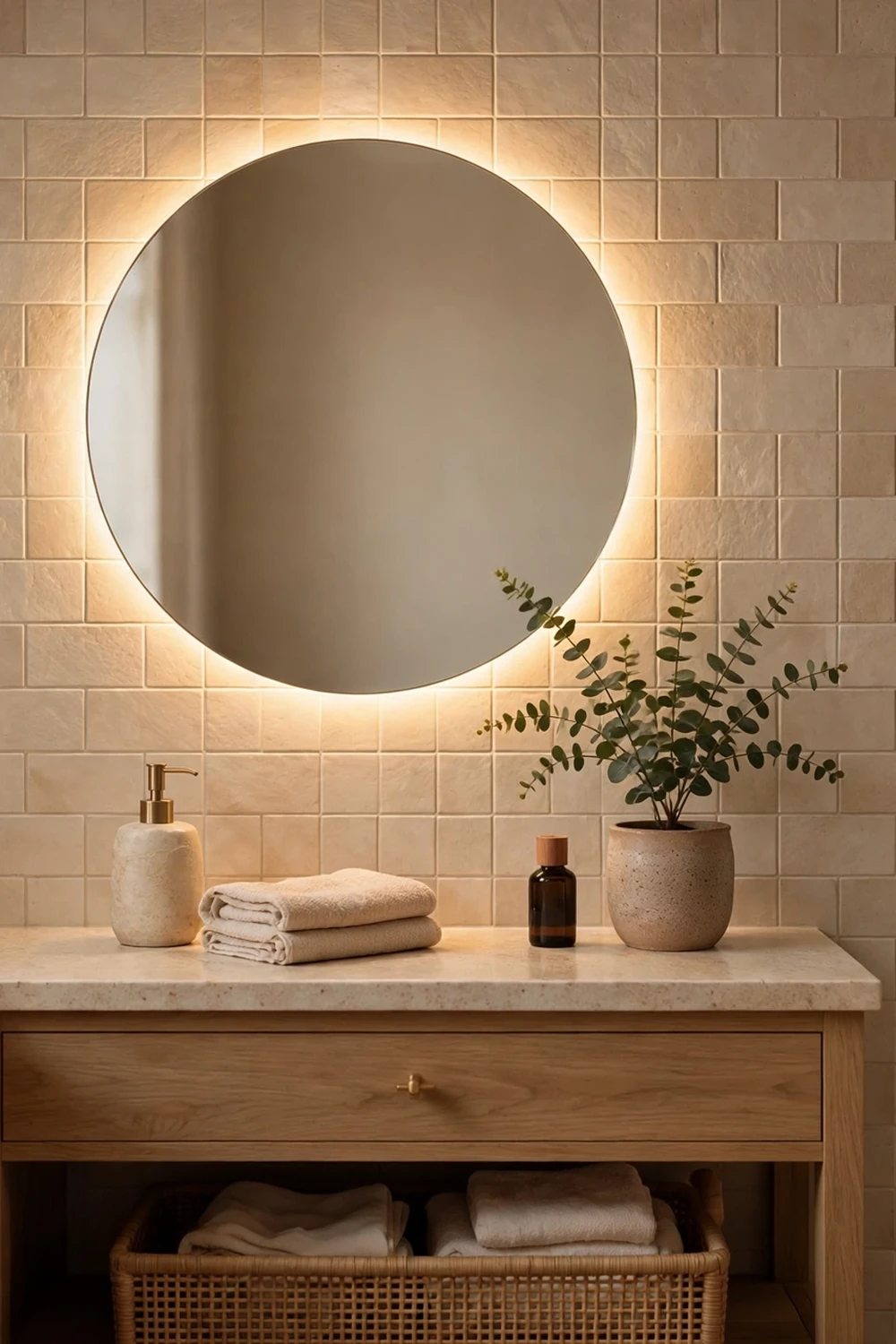
A mirror with light glowing from behind it gives the most flattering light in the house — soft, even, coming from all sides instead of one harsh bar above. If you don’t want to buy a new mirror, mount a strip in a rectangle on the wall just behind your existing mirror and let the glow spill out around the edges. Morning routines get noticeably better, and guests always ask about it.
Try this: pair it with a dimmer. Full brightness for makeup, low glow for a late-night bathroom trip that doesn’t wake you up.
7. Inside-Closet LED Strips

Closets are where good lighting matters most and exists least. A strip under each shelf — or one vertical strip on each side of the hanging rod — means you can actually see colors at 7 a.m. in January. Battery motion-sensor strips are ideal here since closets rarely have outlets; they wake up when the door opens and sleep when you leave. Your black pants will thank you.
Try this: put the strips on the underside of the shelf above, not the back wall — overhead placement lights the clothes instead of the wall behind them.
8. Under Floating Shelf Lighting
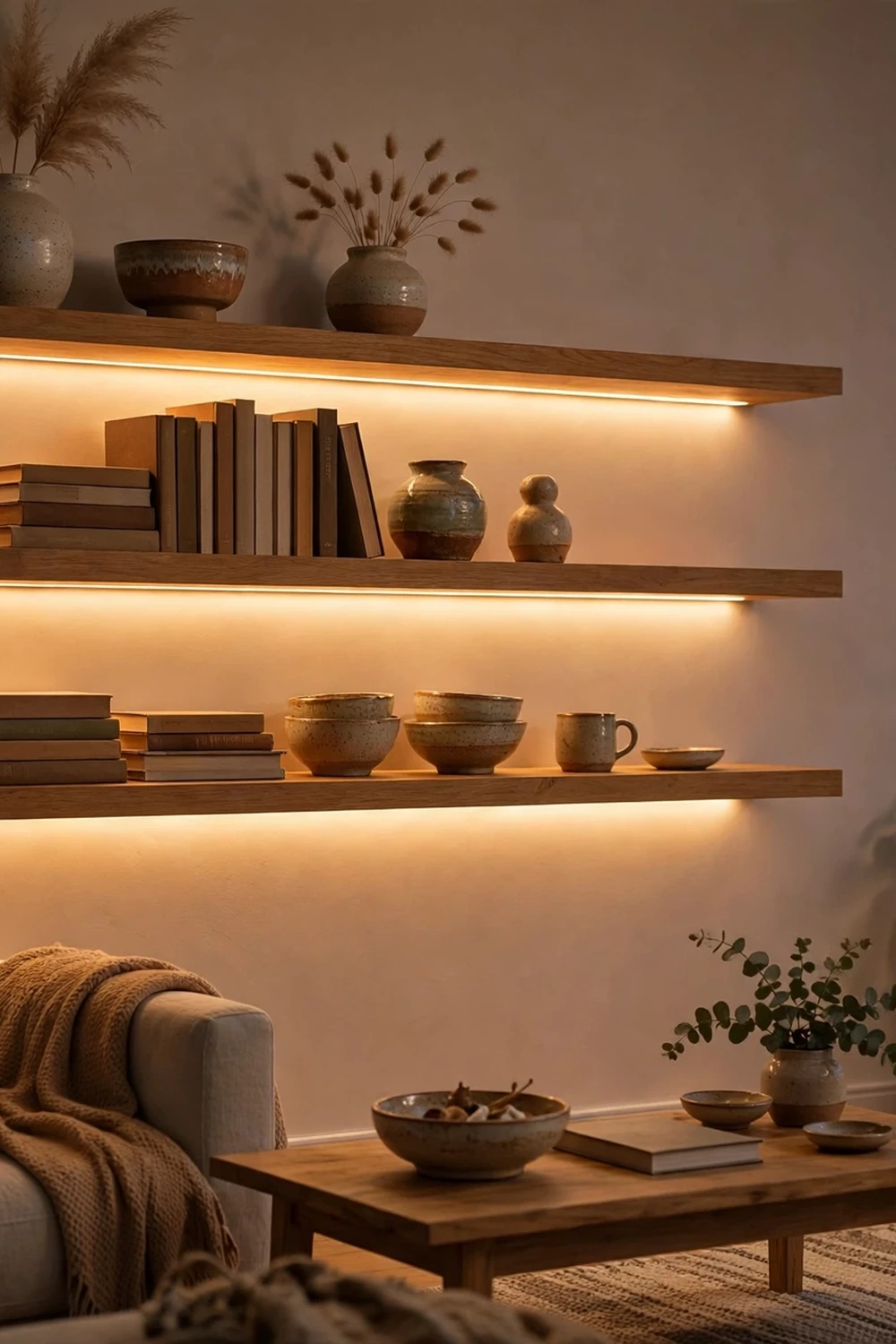
Floating shelves are pretty in daylight and dead at night — unless you light them. A slim strip under each shelf throws a warm wash down the wall and turns your ceramics, books, and photos into a little gallery after dark. It is also the easiest way to make a rented or plain wall look designed. One strip per shelf, tucked an inch back from the front edge so you never see the dots.
Try this: use a diffuser channel (a cheap aluminum strip with a frosted cover) so the light is one smooth line instead of visible dots.
9. Stair Tread Lighting
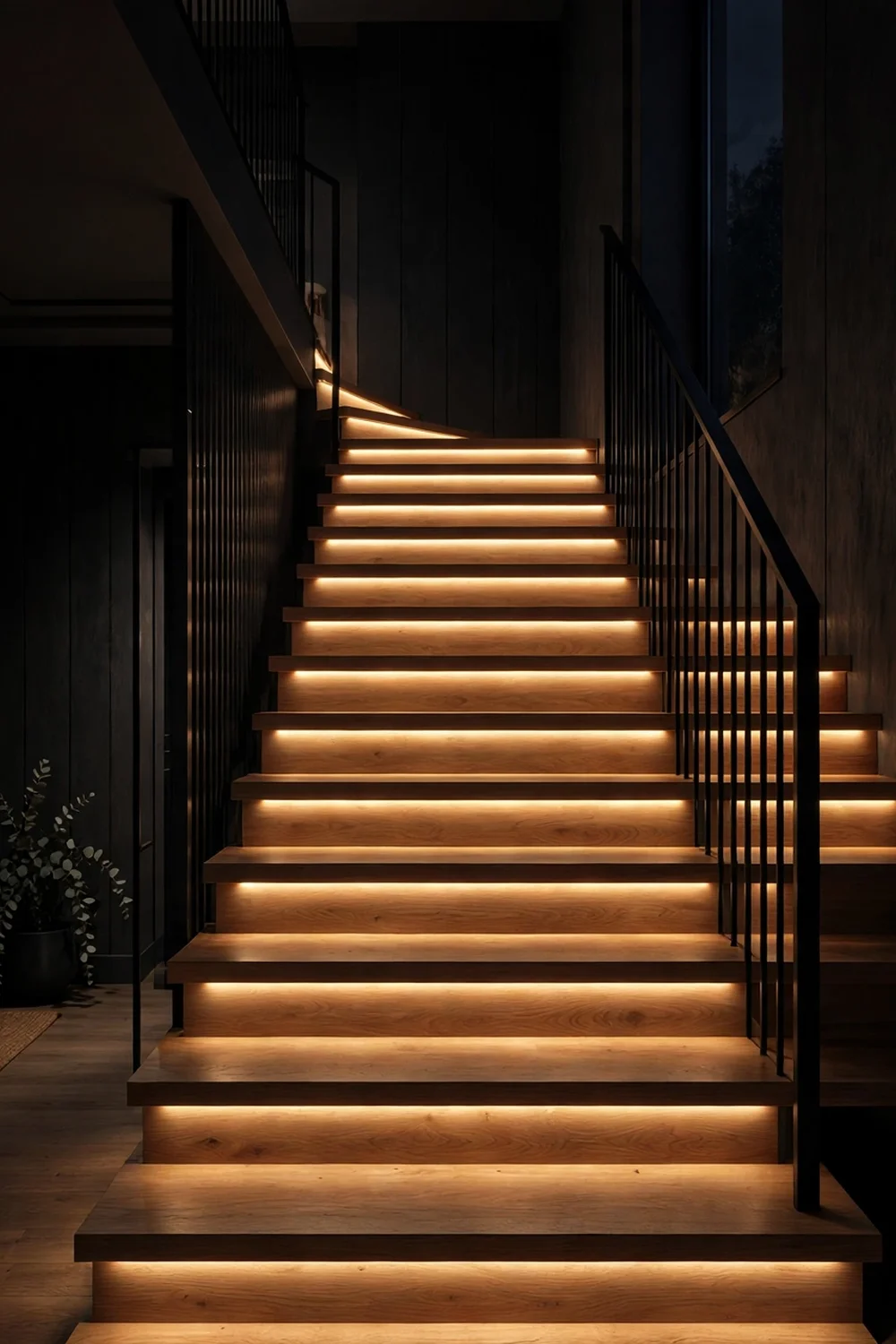
Small lights recessed under the lip of each stair tread are the safest beautiful thing you can add to a house — every step is outlined in warm light, no overhead needed. They look straight out of a design magazine and they genuinely prevent falls on dark stairs. Motion-sensor versions that light up as you approach are worth every penny.
Try this: aim for warm white, never cool — cool stair lights read “airport,” warm ones read “home.”
10. Motion-Sensor Drawer Lights
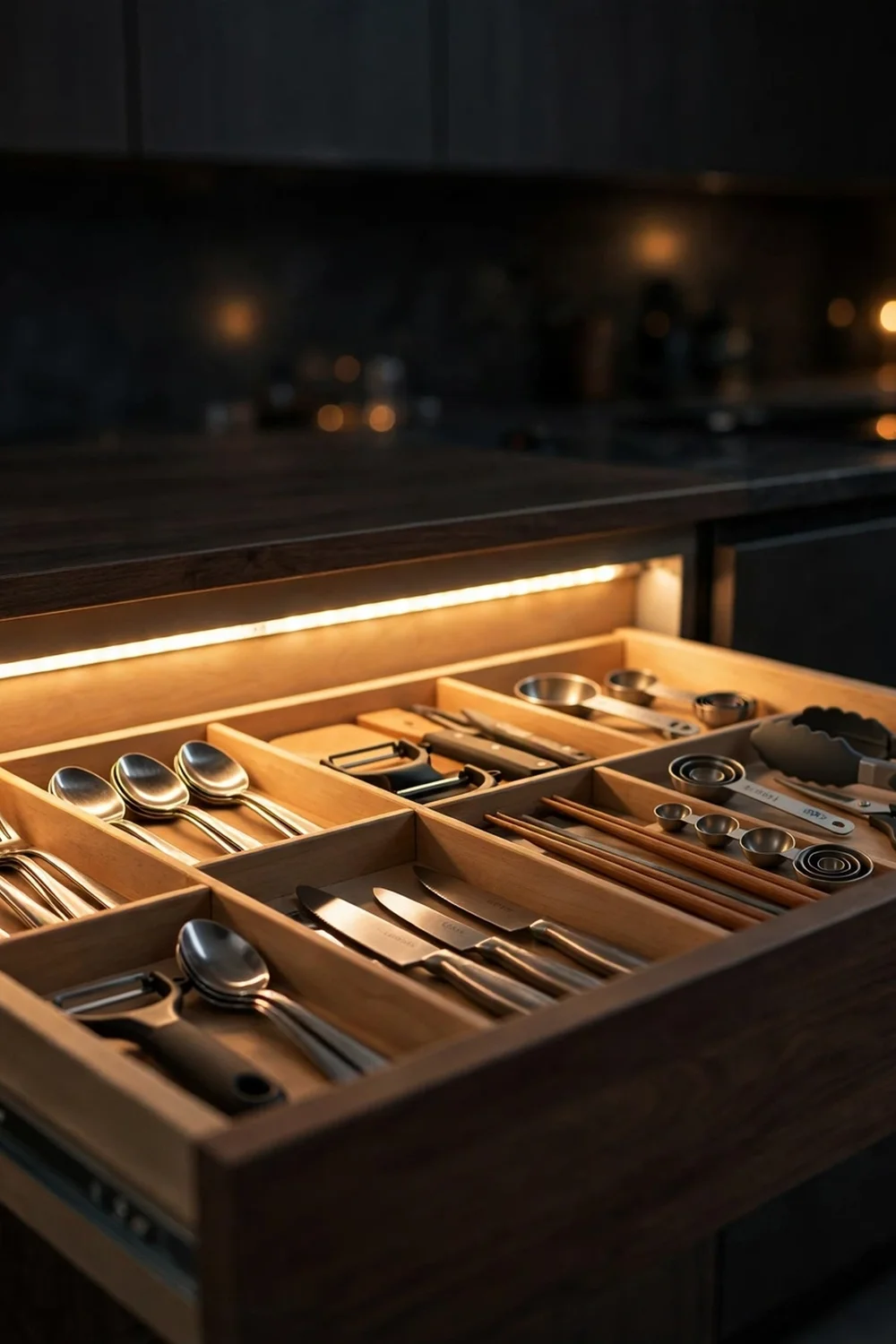
Stick a slim battery light inside the drawers you open most — the utensil drawer, the junk drawer, the bathroom drawer — and it switches on the second you pull it open. It is a tiny luxury that feels absurdly good every single time. No wiring, no tools, just a light that knows when you need it.
Try this: put them in the two drawers you open daily and skip the rest — you will notice the lit ones so much that the others won’t matter.
11. Inside Pantry Lighting
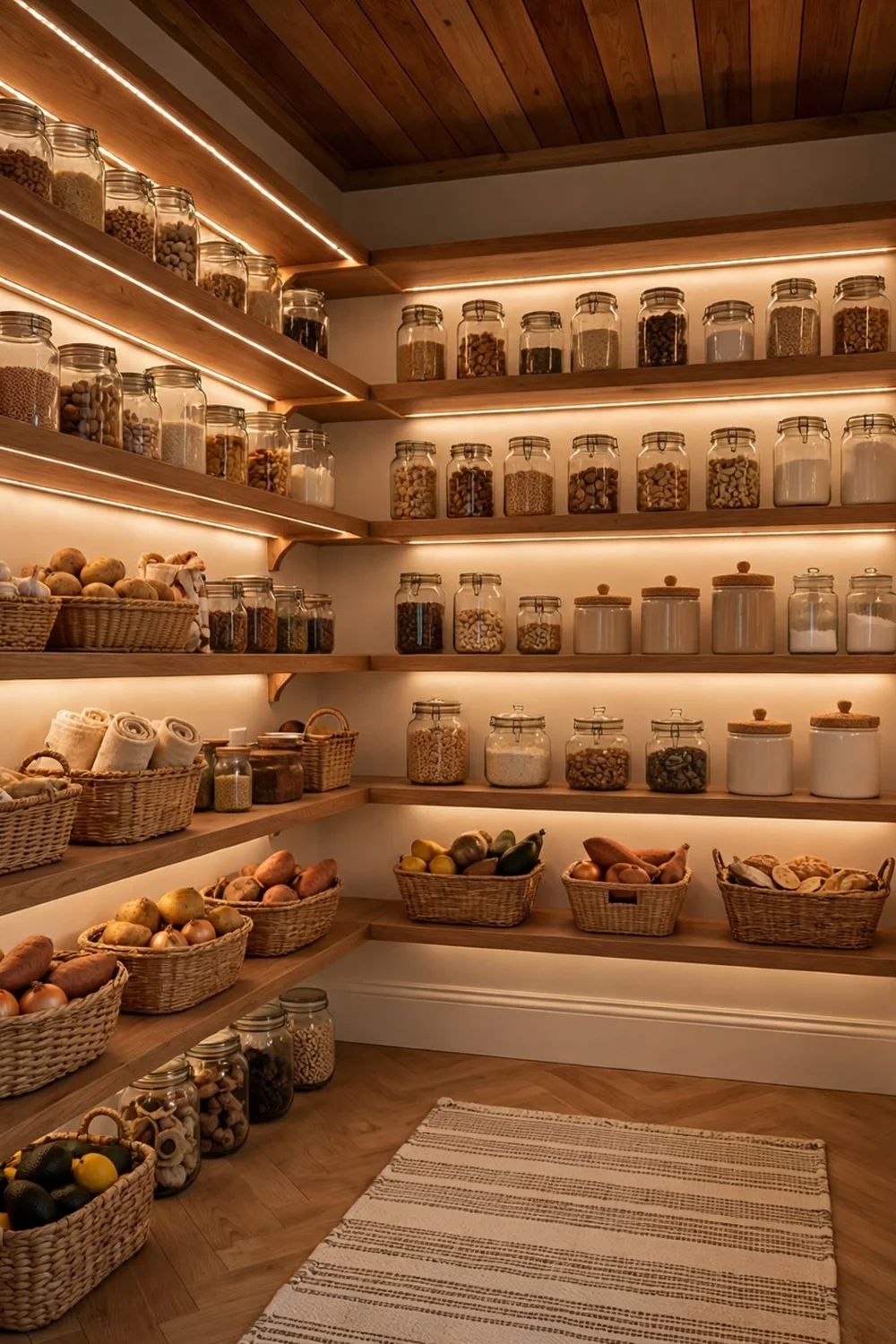
Pantries are caves. A strip under each shelf turns yours into something that looks organized even when it isn’t quite — you can see every jar, every label, every half-forgotten bag of lentils. Motion-sensor strips are the move: door opens, pantry glows, door closes, it fades. You will stop buying duplicates of things you already own.
Try this: one vertical strip down each side of the shelving works if your shelves are fixed — it lights every level at once.
12. TV Bias Lighting
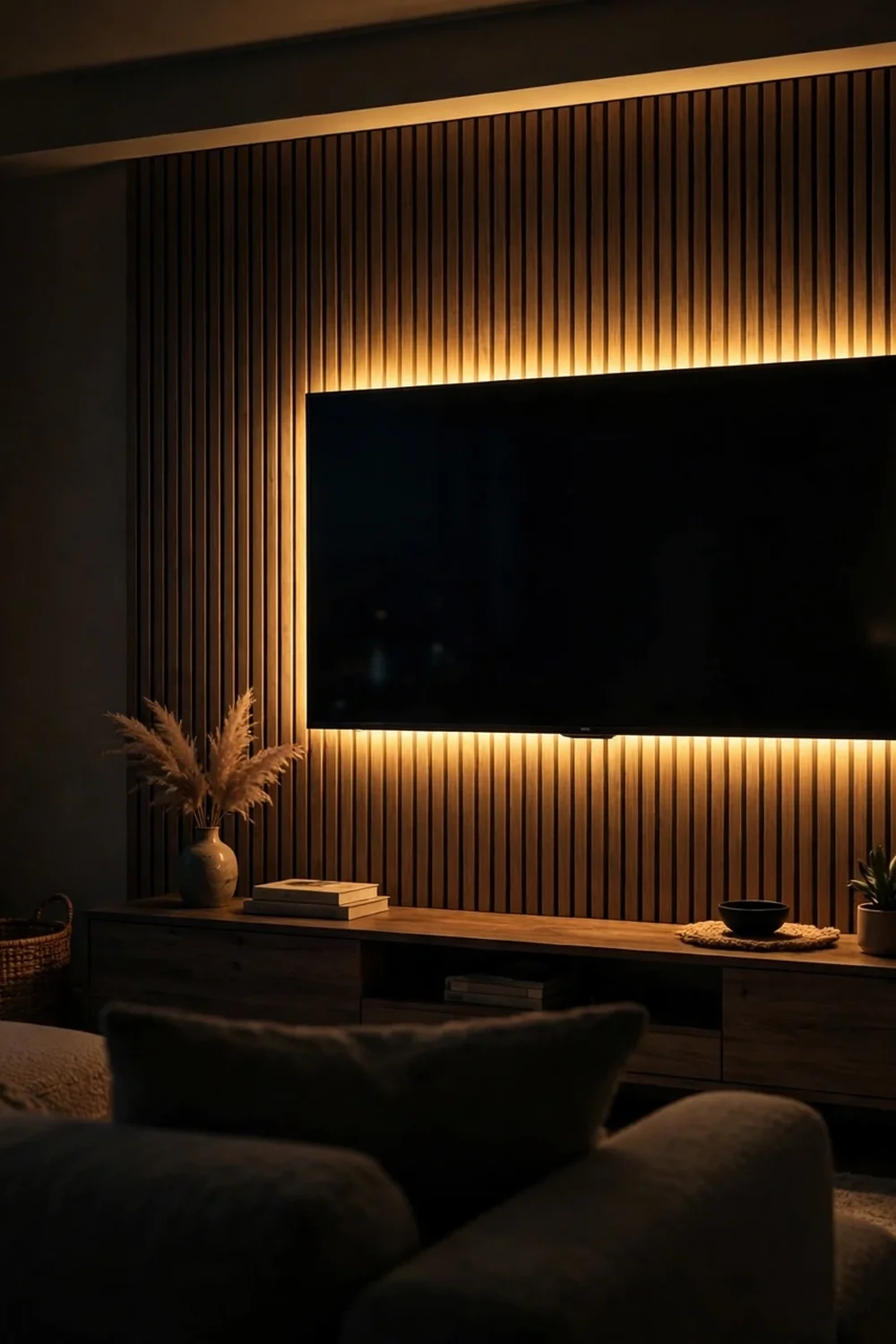
A strip on the back of the TV casting a soft glow on the wall behind it does three things at once: it reduces eye strain, it makes the picture look better, and it turns movie night into a theater. This is the cheapest home-theater upgrade that exists. Warm white is classic; if you get a color strip, keep it warm for everyday use and save the colors for parties.
Try this: plug it into the TV’s USB port so it switches on and off automatically with the TV — no remote, no remembering.
13. Crown Molding Hidden Strips
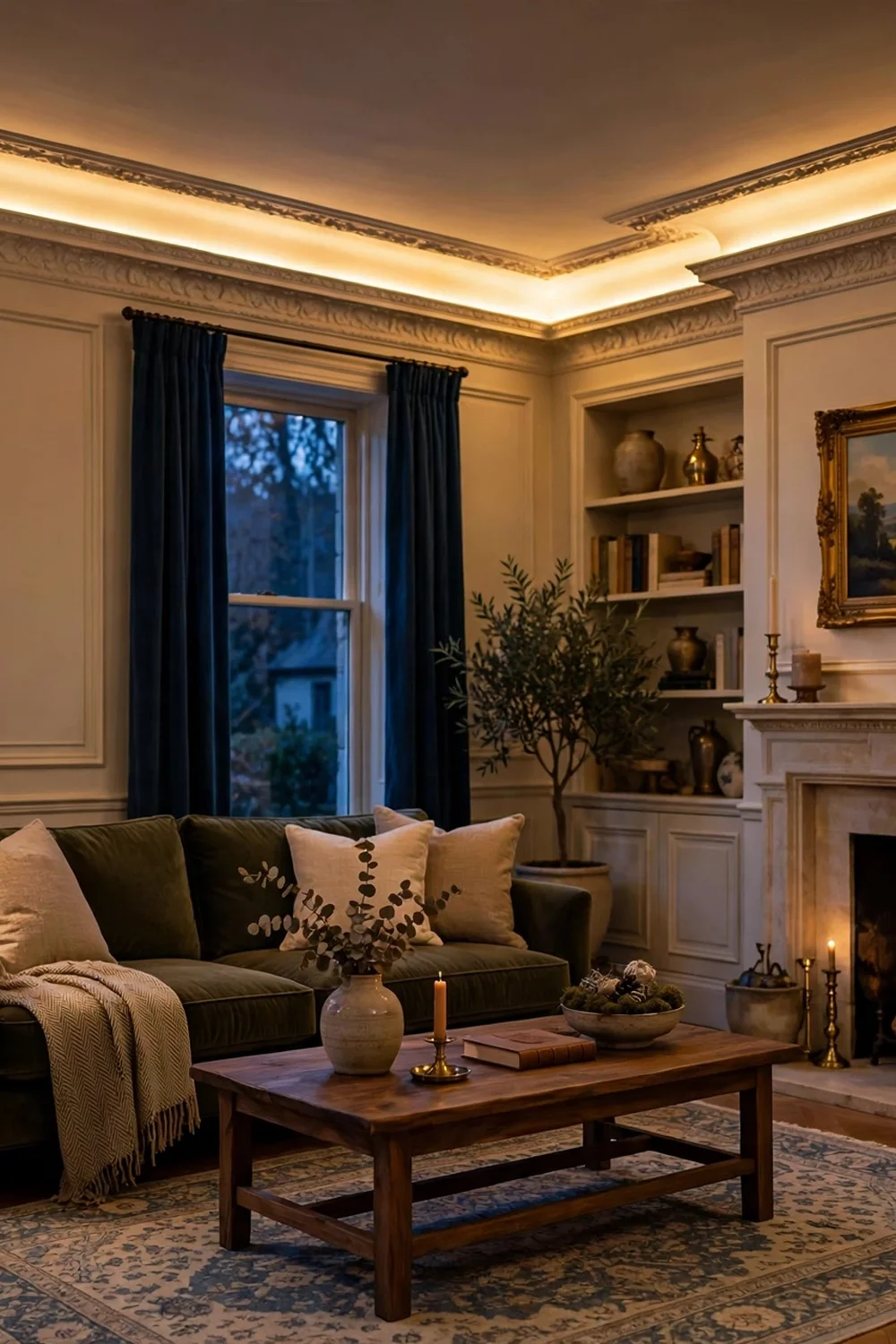
If your rooms have crown molding, you already own the perfect hiding spot — a strip tucked just behind it throws light up across the ceiling with zero visible hardware. Even without existing molding, a slim piece of trim mounted a few inches below the ceiling creates the same ledge. It is the most “how did they do that” lighting in this whole list, and it costs less than a nice dinner out.
Try this: run the strip in one continuous piece around corners rather than cutting at each corner — fewer connections, fewer failure points.
14. Bookshelf Under-Shelf Lighting
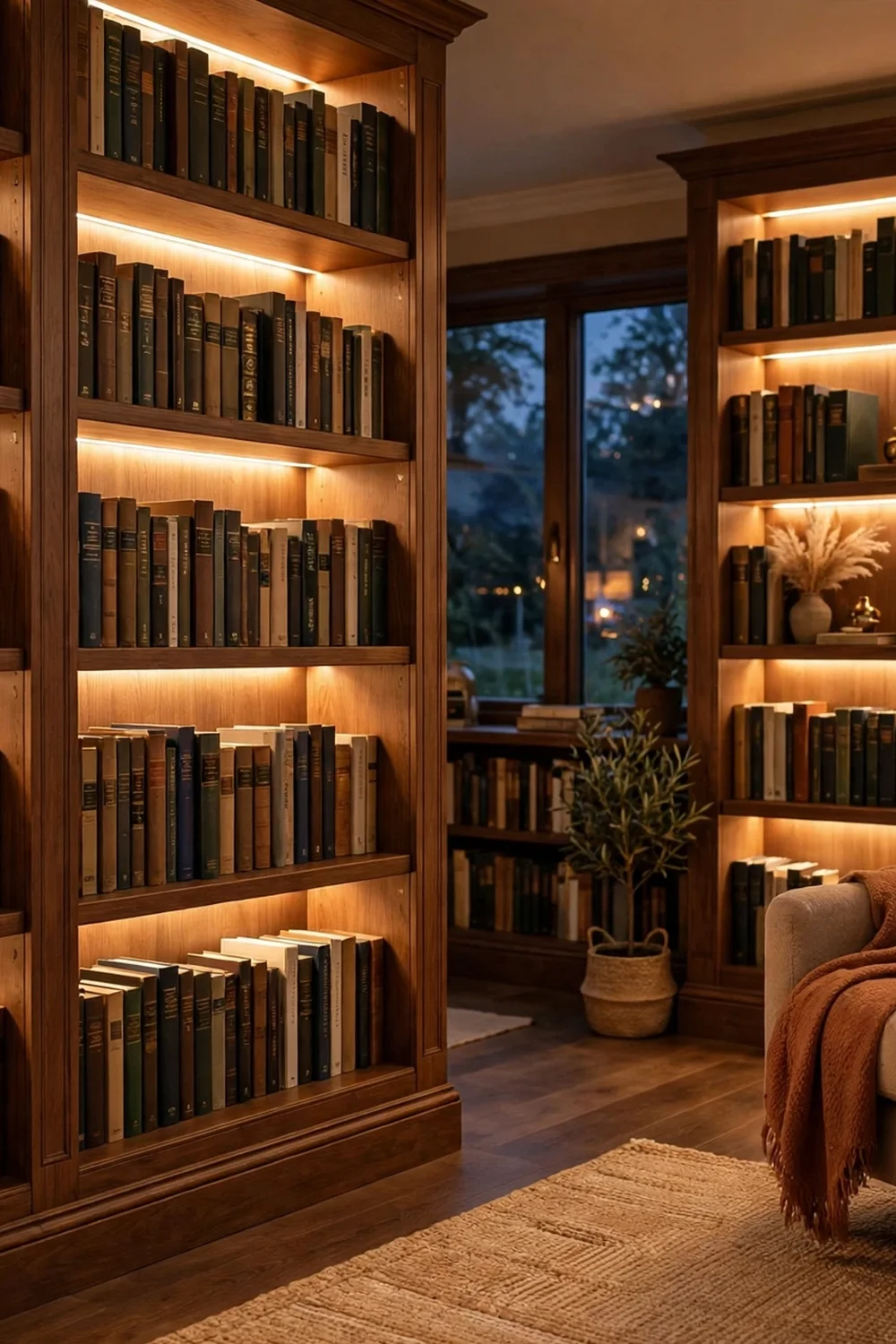
A bookcase with a warm strip under every shelf glows like a library in a film — the spines catch the light, the titles are readable, and the whole corner feels like somewhere you want to sit. This is also where diffuser channels earn their keep, because bare LED dots reflecting off glossy book covers look cheap. Frosted, even, warm: that’s the formula.
If your lit shelves have you dreaming of a bigger reading moment, these cozy library room with plants ideas show how to turn that corner into a full reading retreat.
Try this: light only every other shelf if the full run feels like too much — the rhythm of lit and unlit shelves looks intentional and calmer.
15. Glass Display Cabinet Lighting
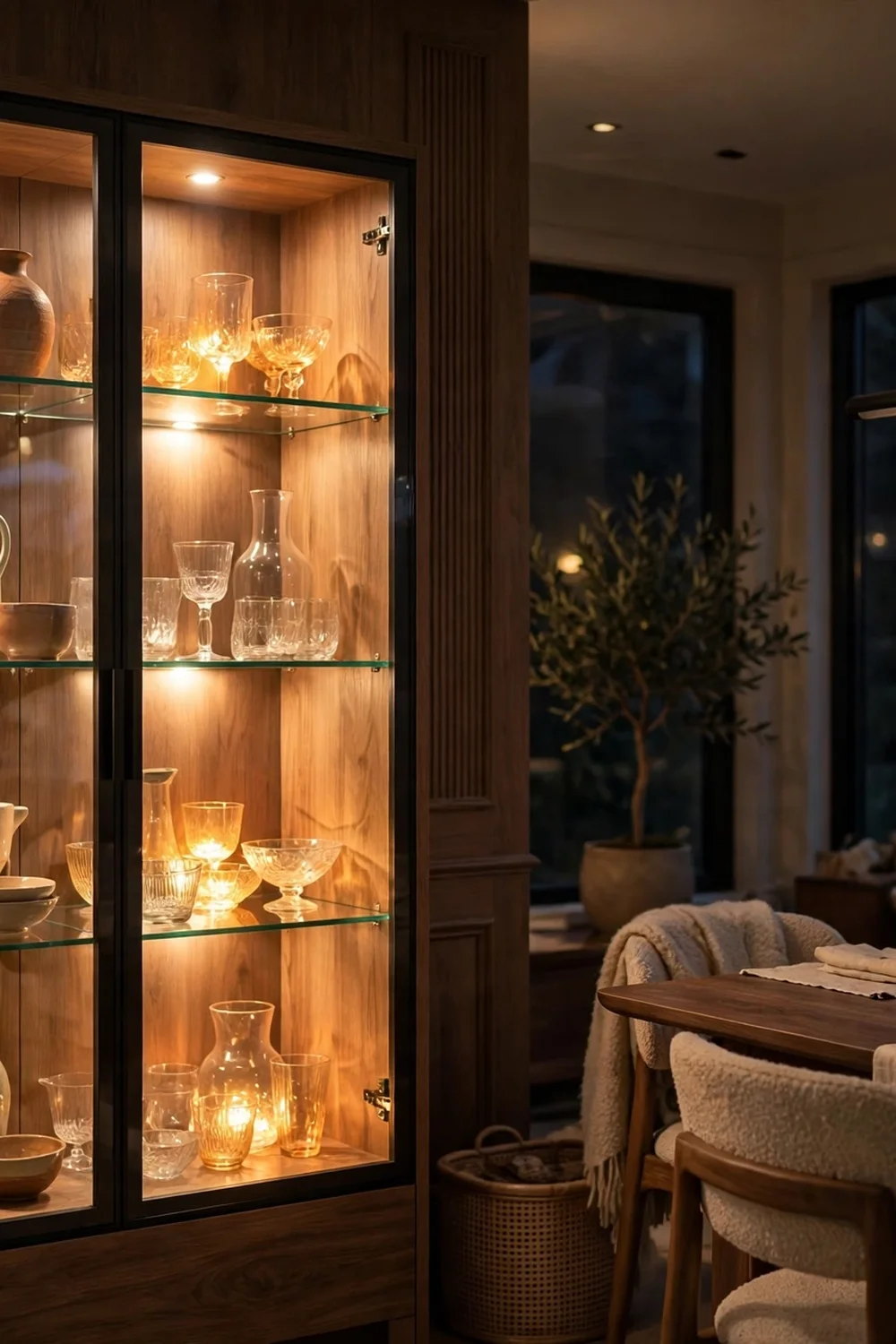
Small warm puck lights inside a glass-front cabinet turn your dishes, glassware, or collectibles into a glowing display case. Top-mounted pucks angled slightly forward work best — they wash down over everything without glaring through the glass. Battery pucks with a remote mean no wiring inside the furniture, and you can dim them for dinner parties.
Try this: three pucks across the top of a standard cabinet is the sweet spot — one leaves dark corners, five is overkill.
16. Floating Baseboard Uplighting
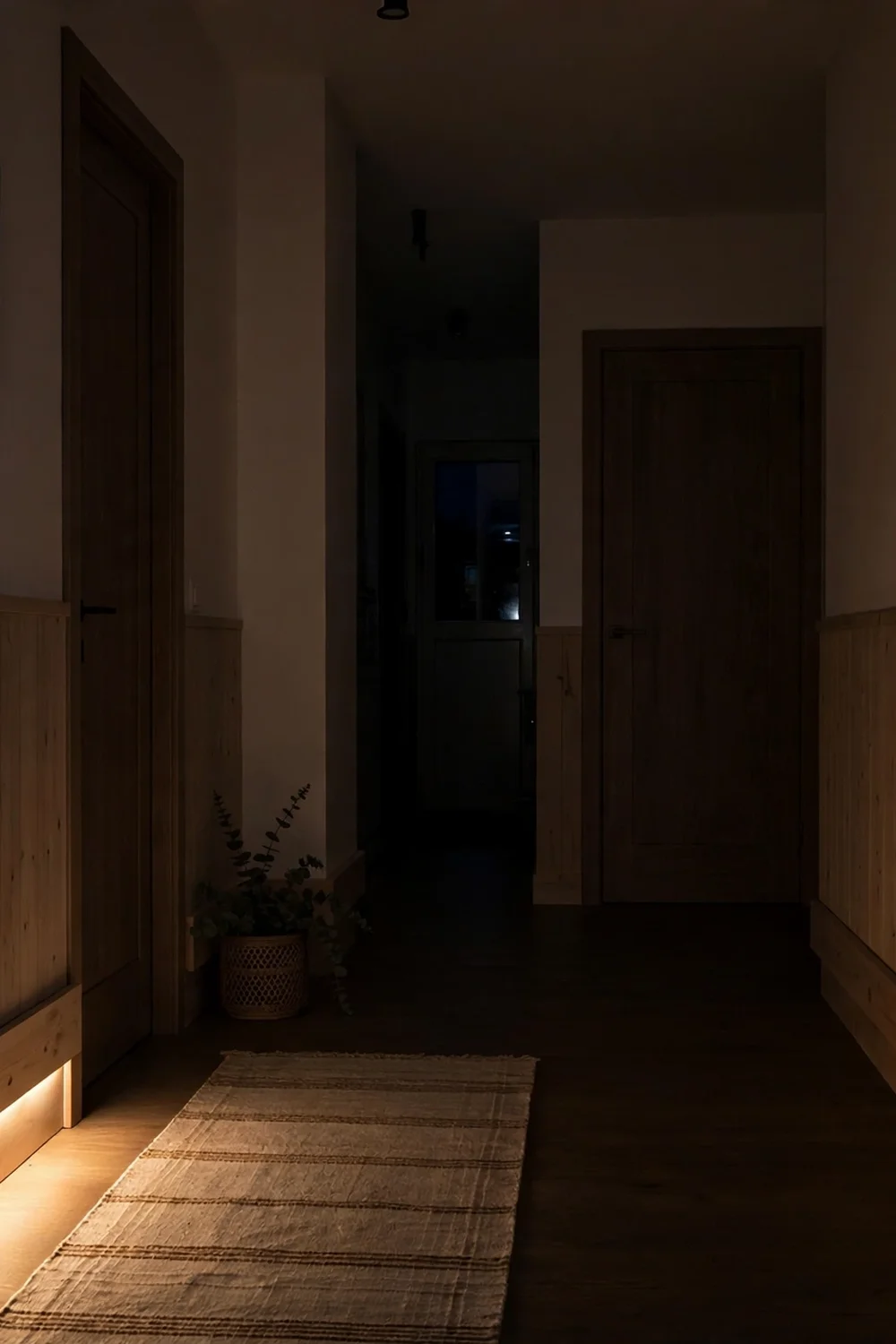
Mount the baseboard a half-inch off the wall with a strip tucked behind it and you get a ribbon of warm light tracing every hallway and room — like the floor is glowing from the edges. It is dramatic, modern, and weirdly practical: hallways stay navigable all night without a single lamp. This one takes a little more work, but the result looks like a custom build.
Try this: keep the brightness low — baseboard light at full power looks like a runway; dimmed, it looks like architecture.
17. Under-Mantel Fireplace Glow
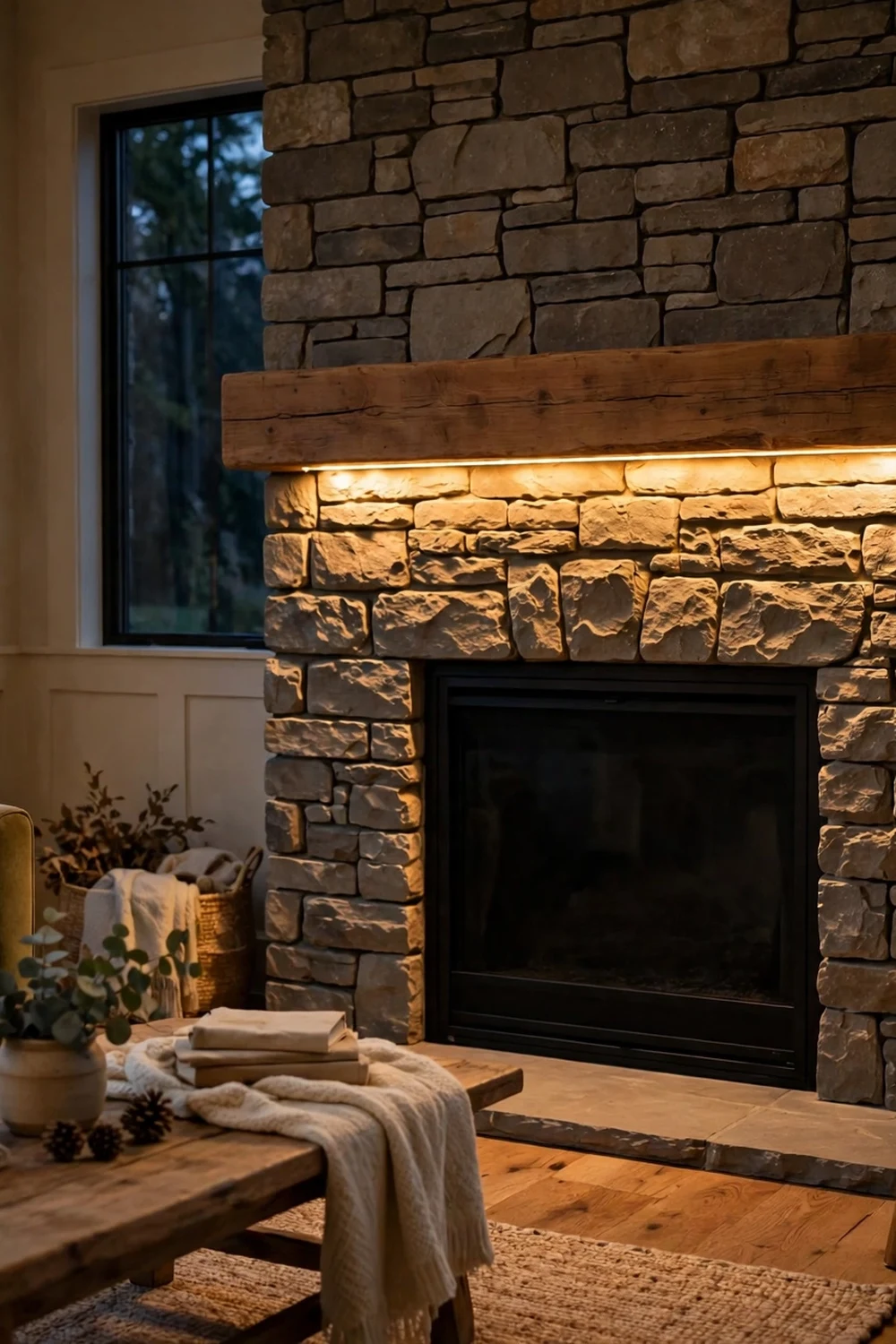
A slim strip under the mantel shelf washes warm light down the face of the fireplace and makes the whole hearth glow even when there’s no fire. It is gorgeous in every season — in summer it gives you the fireplace feeling without the heat, in winter it layers with the real flames. Keep the strip warm (2700K) so it reads as firelight, not office light.
When autumn comes, pair that glow with seasonal styling — these fall mantel decorating ideas for a cozy home are made for exactly this kind of warm, layered look.
Try this: hide the power supply inside the firebox (unplugged and unused, obviously) or behind a nearby bookcase — cords ruin the magic.
18. Vanity Toe-Kick Lighting
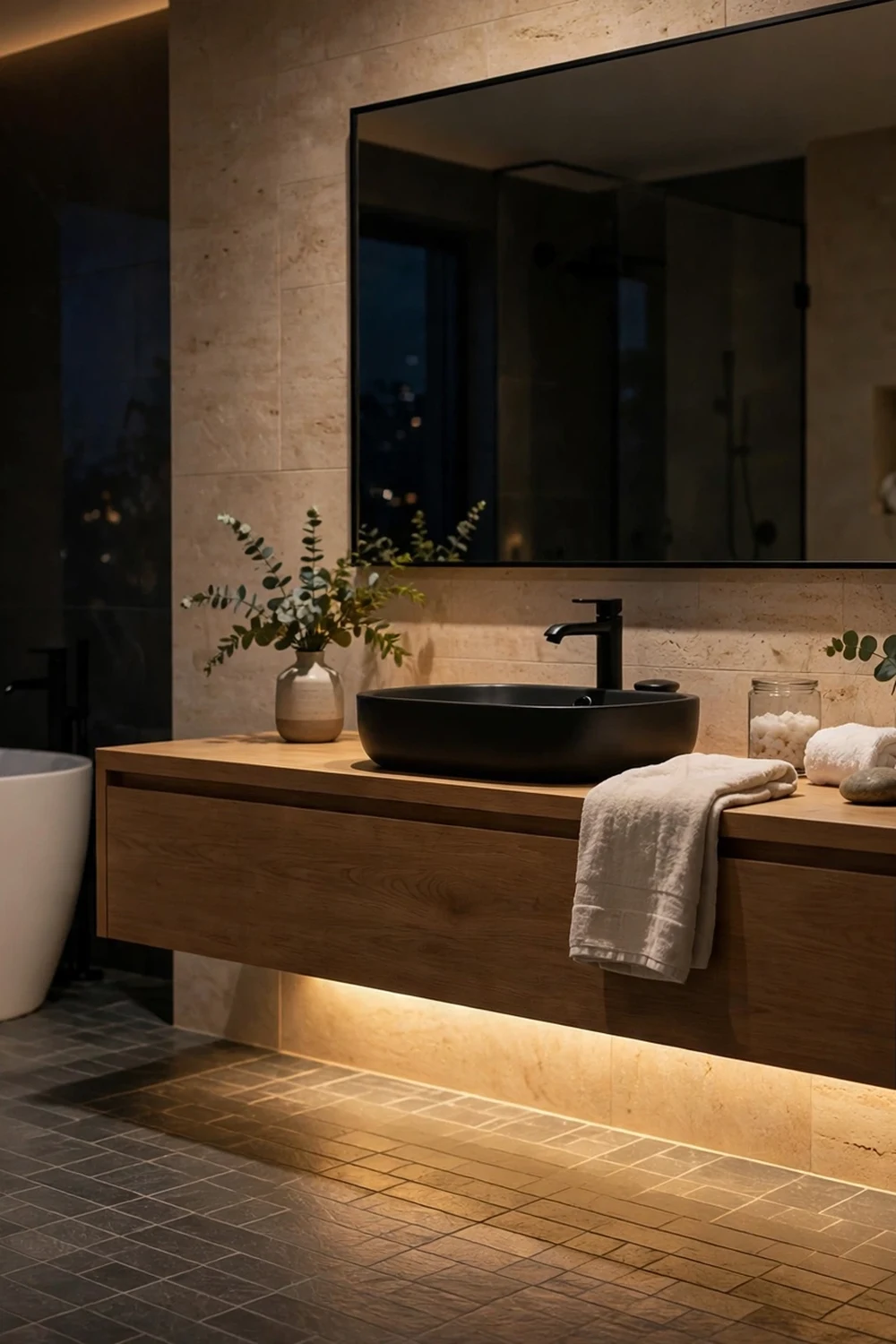
The same toe-kick trick from the kitchen works beautifully in the bathroom: a warm strip under a floating vanity makes it hover and gives you a soft floor-level glow for nighttime visits. Pair it with the backlit mirror from idea 6 and the bathroom goes from clinical to spa with two strips. Motion-sensor is ideal — the bathroom lights itself when you walk in half-asleep.
Try this: choose a strip rated for damp locations in the bathroom — the steam will kill a cheap indoor-only strip within a year.
19. Curtain Valance Uplighting
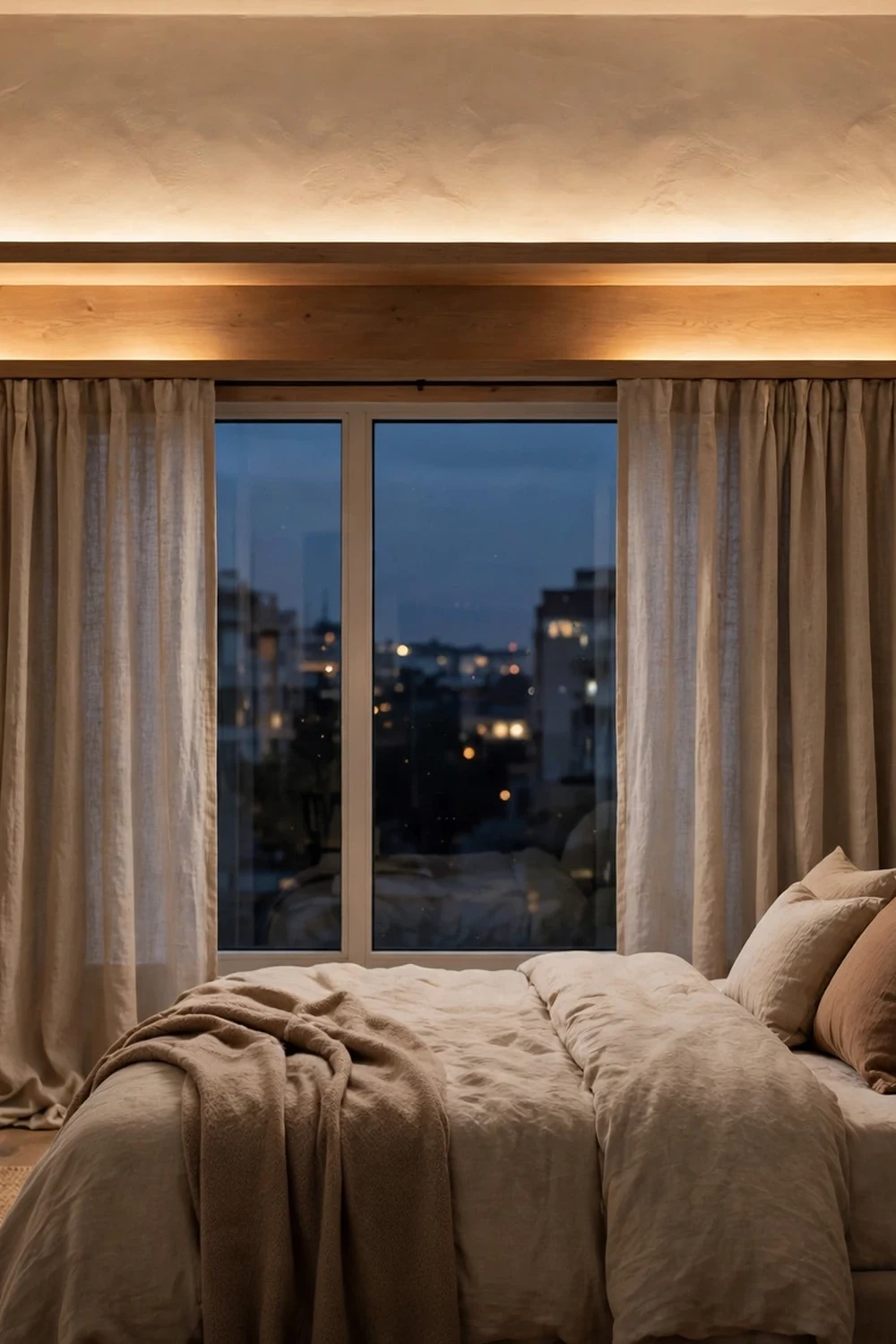
Tuck a strip behind the top of the curtain rod or inside a valance and the light washes up the wall above the window, framing the curtains in a soft glow. It makes windows look taller and the room feel finished — like the architecture itself is lit. This is one of those tricks designers use that nobody can quite place, which is exactly why it works.
Try this: aim the strip upward at the wall, not outward into the room — you want a wash of light, not a visible line.
20. Island Plinth Recessed Lighting
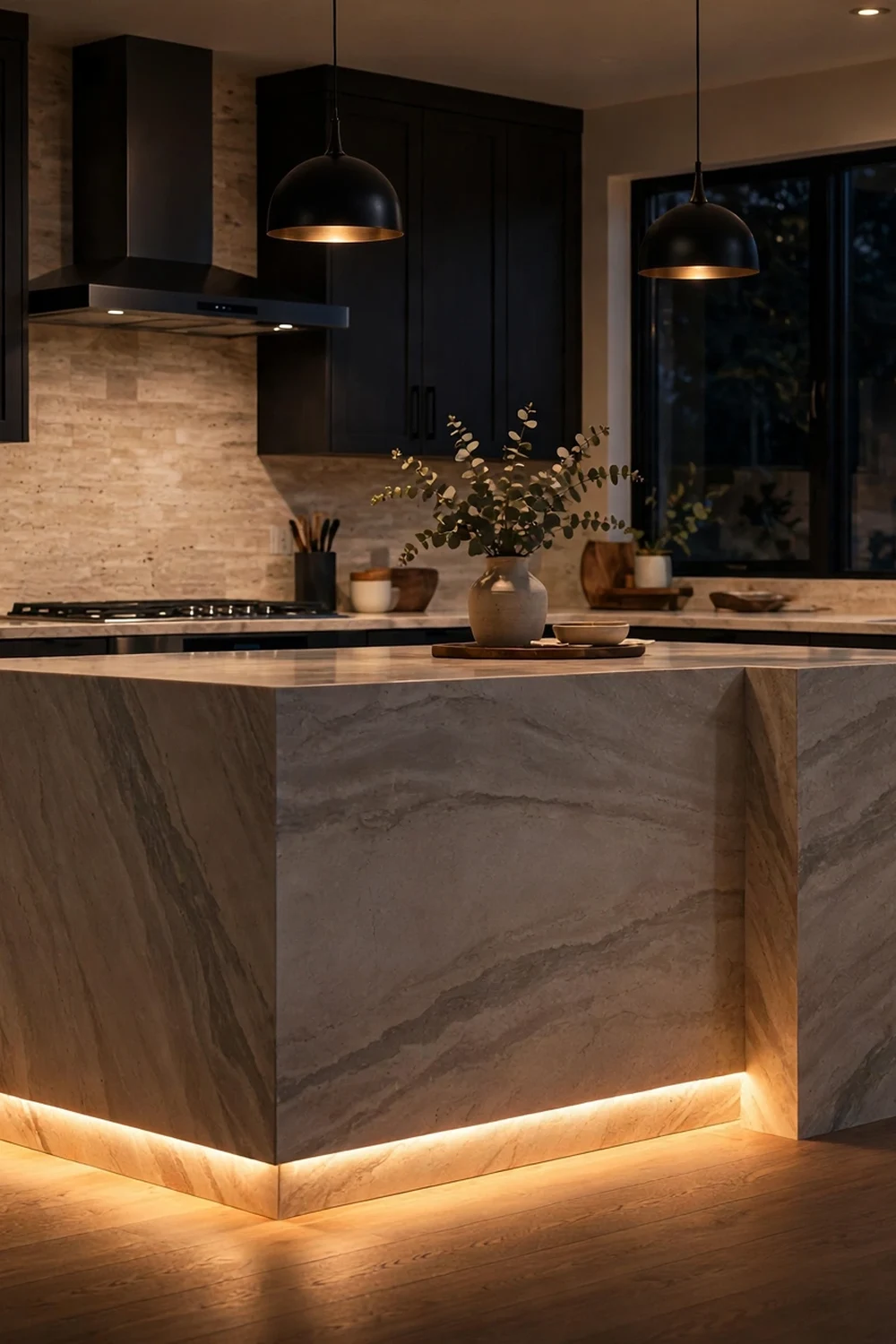
If your island has a recessed plinth (that set-back base), a strip mounted in the recess throws a clean line of light along the floor on all four sides. It defines the island as its own zone in an open-plan room and looks incredible from the living area at night. On a timer, it becomes the room’s evening signature — the kitchen glows even when nobody’s cooking.
If the kitchen is your project this season, these creative kitchen lighting transformation ideas cover the overhead and task lighting that pair perfectly with these hidden tricks.
Try this: match the color temperature to your other kitchen strips (2700K everywhere) — mixed temperatures in one room look accidentally wrong.
21. Home Office Shelf Lighting
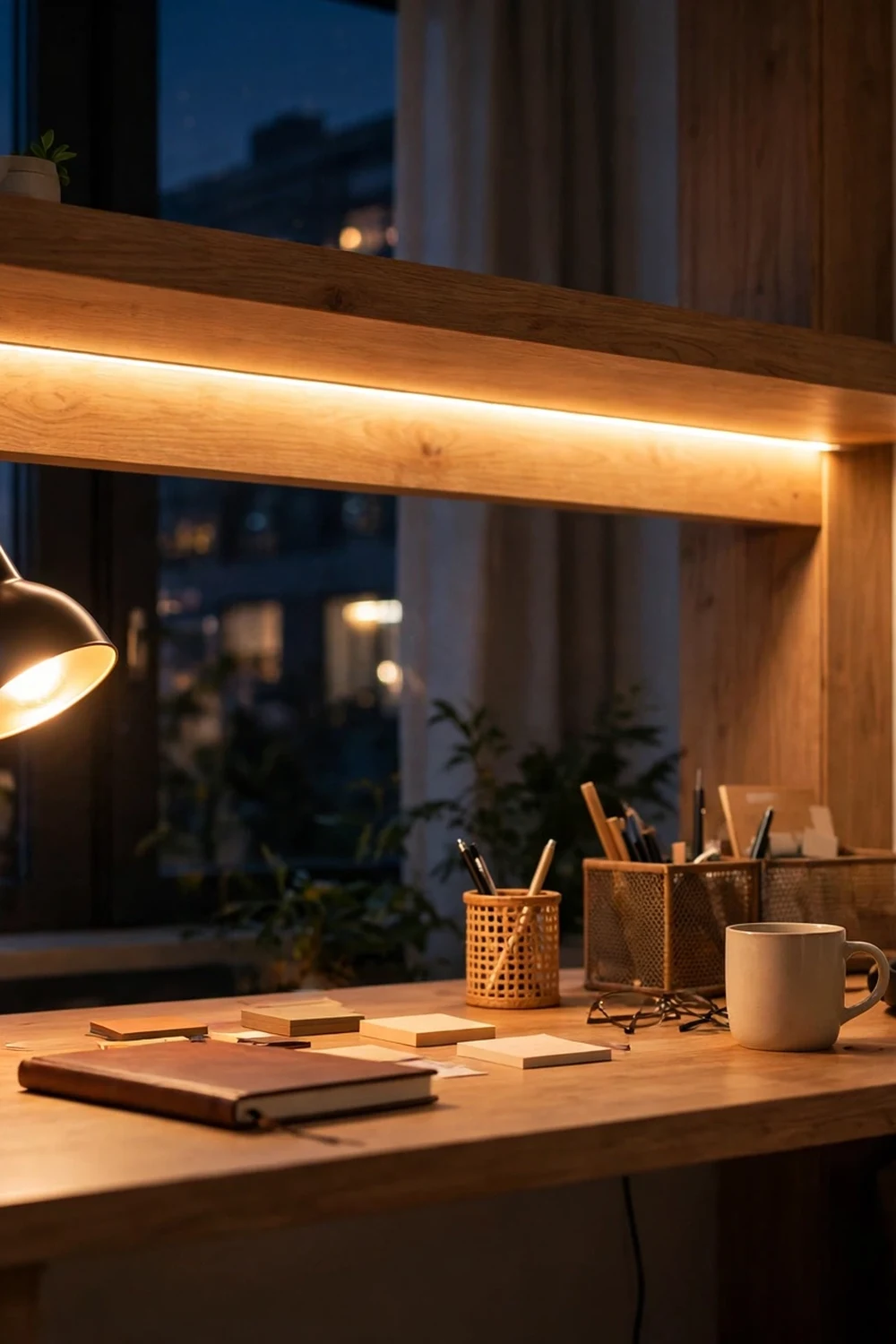
A strip under the shelf above your desk gives you task light without a desk lamp eating your workspace — the glow falls exactly where your keyboard and papers are. It is also the best video-call light going: soft, frontal, warm, and completely invisible to the camera. Your coworkers will ask what changed. It was the shelf.
Try this: get a tunable-white strip here (not just warm) so you can go brighter and cooler for focused work, warmer for evening.
22. Shower Niche Lighting
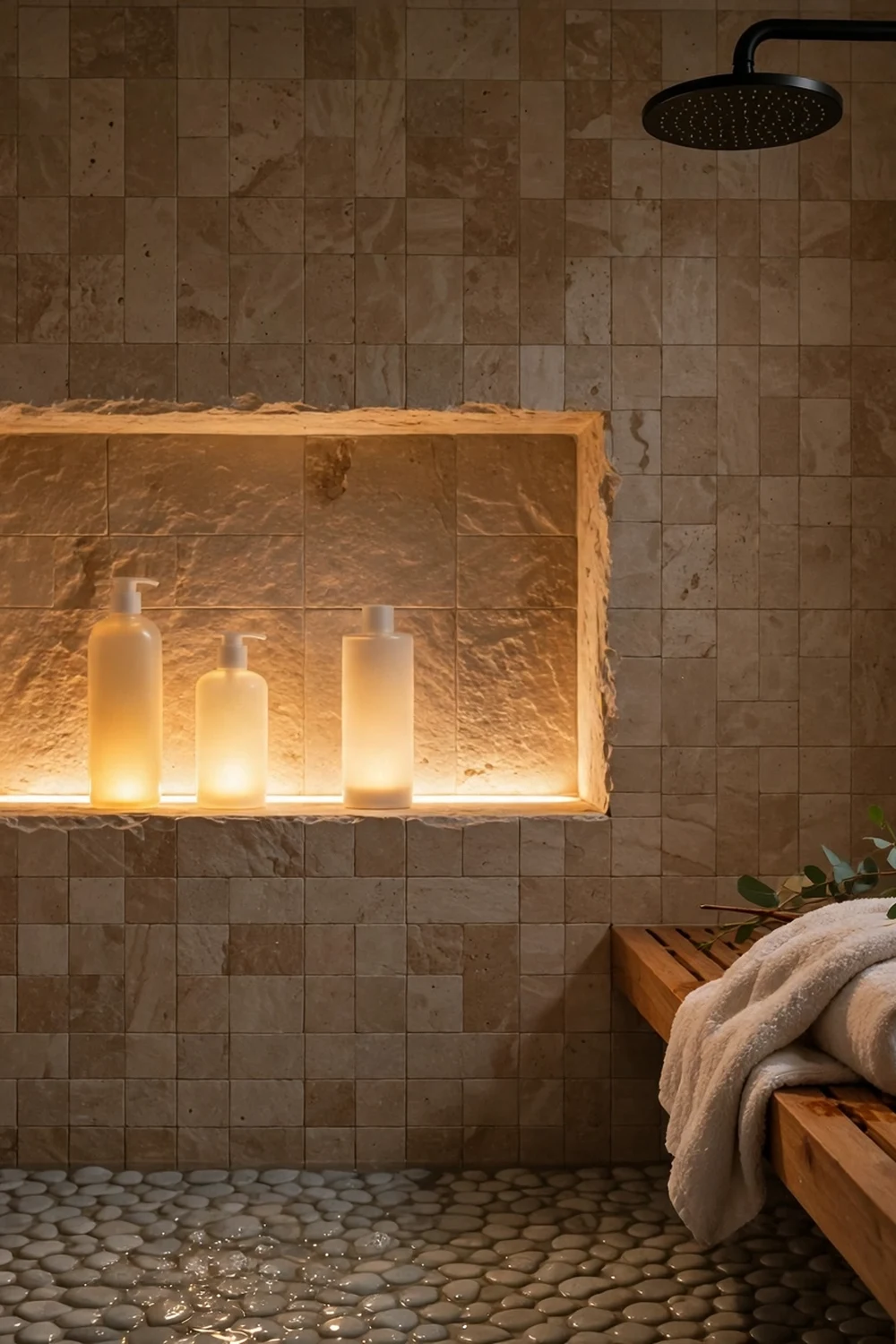
A waterproof LED strip inside the shower niche turns a plain recess into a glowing spa detail — the bottles catch the light, the tile texture shows off, and the whole shower feels designed. This one needs a properly waterproof strip (IP65 or better) and a low-voltage driver mounted outside the wet zone, so it’s worth doing carefully or hiring out. But as a daily-luxury-per-dollar ratio, almost nothing beats it.
Try this: run it on the bathroom’s main light switch with a separate dimmer — full glow for cleaning, low glow for evening showers.
23. Inside Medicine Cabinet Lighting
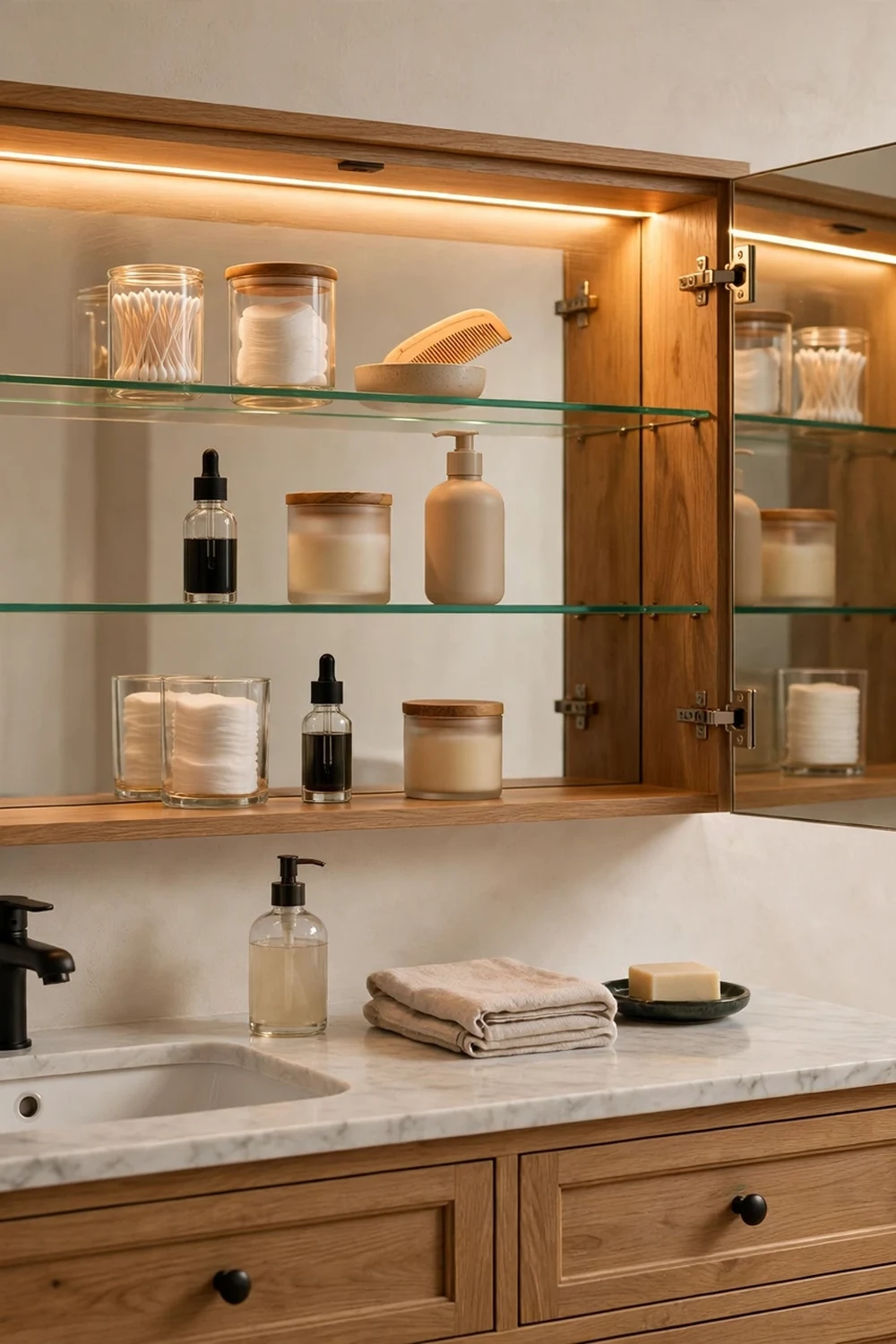
A slim strip inside the medicine cabinet means you can find the right bottle without turning on the blinding overhead at 6 a.m. Battery motion-sensor lights are perfect here — door opens, shelf glows, door closes, dark again. It is a two-minute install that you will use literally every day.
Try this: stick the light on the inside of the door frame rather than the back wall — it lights the shelves instead of your eyes.
24. Stair Handrail Lighting
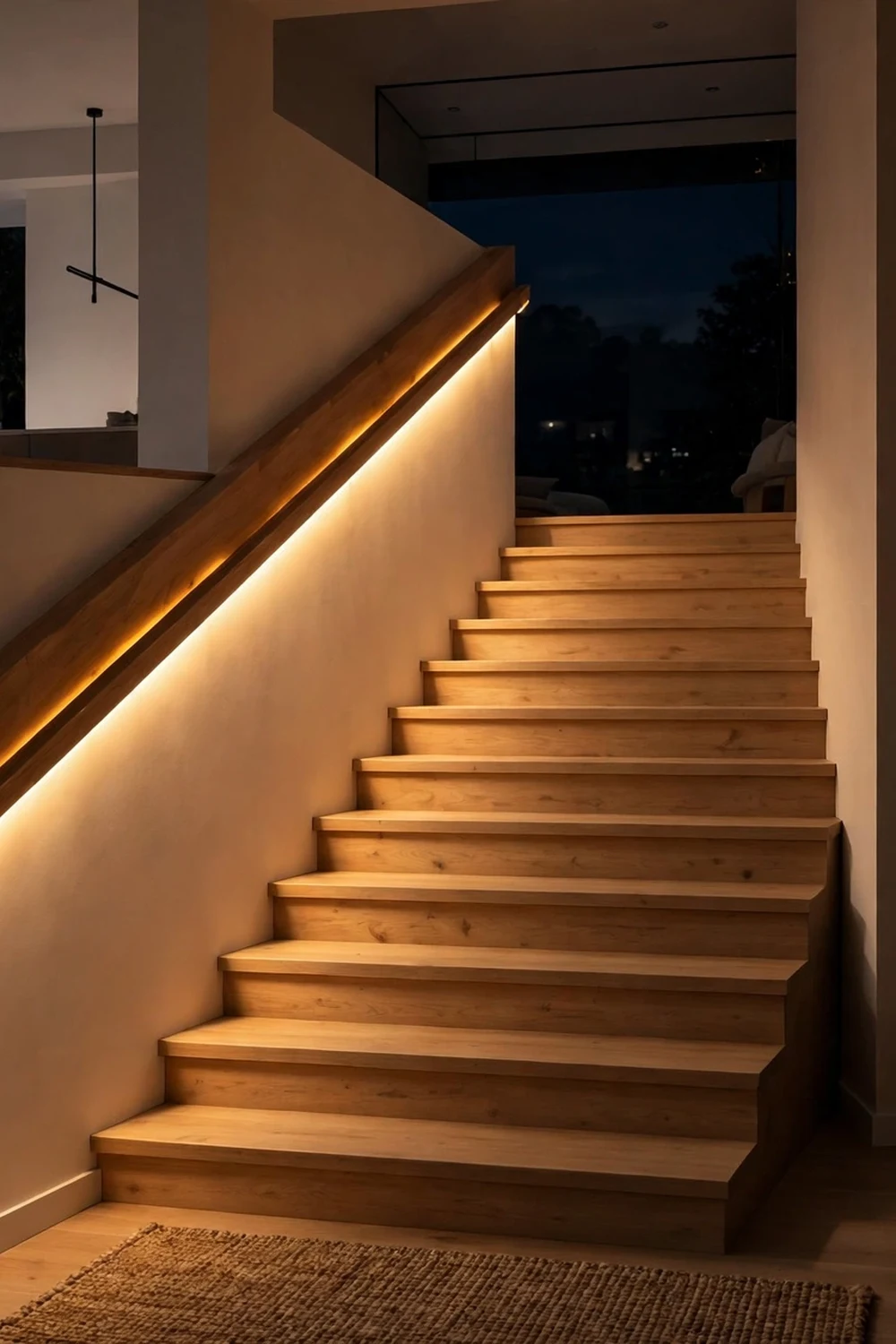
A strip recessed into the underside of the handrail throws a continuous ribbon of light down the steps — your hand is always near the light, which feels instinctively safe, and the staircase becomes a glowing sculptural line through the house. It is one of the most striking looks in this list, and once the channel is routed, the strip just drops in.
Try this: use a frosted channel so the handrail shows one smooth line of light rather than individual dots.
25. Wardrobe-Top Uplighting
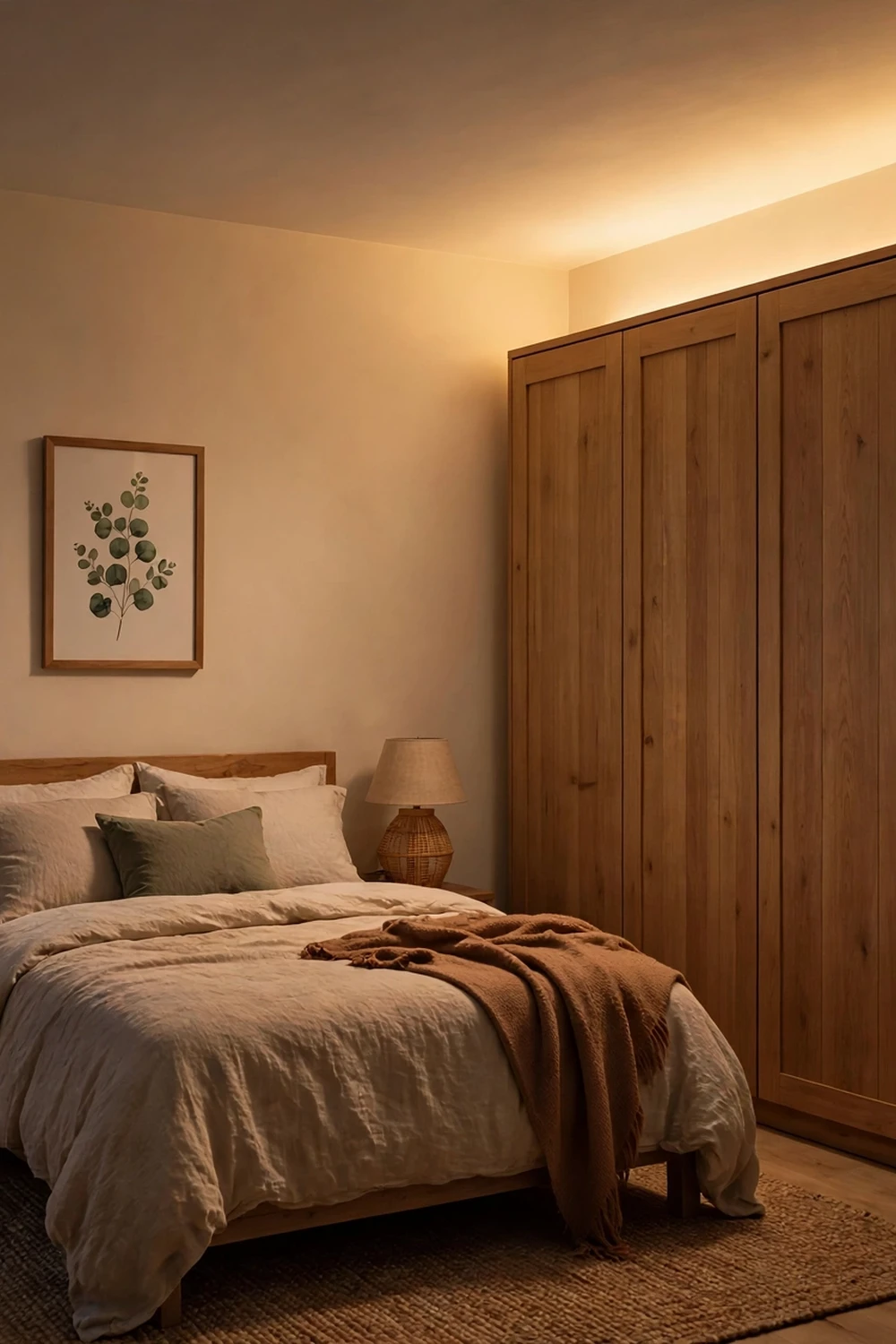
The dead space on top of a tall wardrobe is a perfect hiding spot for a strip that washes the ceiling in warm light — free cove lighting, no construction. It lifts a low ceiling visually and gives bedrooms and closets a soft ambient layer that costs almost nothing. Lay the strip flat a few inches back from the front edge so the glow spreads evenly.
If you rent, almost everything in this list still works for you — battery and rechargeable strips need no wiring at all. For more no-damage upgrades that don’t touch the walls, these creative renter-friendly upgrades are full of tricks landlords never need to know about.
Try this: dust up there first (obviously) and lay the strip on a cheap aluminum channel — it keeps the strip straight and the light even.
Renter-Friendly Hidden Lighting (No Wiring Needed)
Almost every idea in this list has a no-wiring version, and renters should lean into them: battery motion-sensor strips for closets, drawers, and pantries; rechargeable puck lights for cabinets and shelves; plug-in strips with adhesive backing for behind the TV, under cabinets, and behind the headboard. Command-style strips hold LED channels on most surfaces and peel off cleanly. You lose nothing — the glow is identical — and you take it all with you when you move.
One safety note before you start buying strips: stick to LED (they stay cool), keep power supplies ventilated and away from curtains and bedding, and don’t overload one driver with too many strips. For a clear rundown of what to watch for, this guide on whether LED strip lights are a fire hazard covers certifications, heat management, and voltage matching in plain language.
Quick-Pick Cheat Sheet
Not sure where to start? This cheat sheet matches the highest-impact moves to their cost and effort:
| Start With This | The Move | Why It Matters | Rough Cost |
|---|---|---|---|
| Under-cabinet strips | Warm LED strip under kitchen wall cabinets | Biggest coziness upgrade per dollar in any house | $15–$35 |
| Behind the TV | Bias lighting strip, USB-powered | Theater feel, less eye strain, 5-minute install | $10–$25 |
| Closet + pantry | Battery motion-sensor strips | See everything, no wiring, no electrician | $10–$30 |
| Headboard halo | Warm strip behind the headboard | Coziest reading light you’ll own | $10–$20 |
| Cove ceiling glow | Strip behind trim below the ceiling | The “how did they do that” whole-room glow | $25–$60 |
Frequently Asked Questions
What is hidden lighting in a home?
Hidden lighting (also called indirect lighting) is any light source you can’t see directly — LED strips tucked under cabinets, behind mirrors, above wardrobes, or inside coves. You see the glow on the surrounding surfaces, not the bulb or strip itself. The result is soft, glare-free light that makes rooms feel warm and layered.
Is hidden LED lighting expensive to install?
Usually not. Most of the ideas in this guide use adhesive LED strips or battery puck lights costing $10–$35 per project, and the installs take under an hour with no electrician. The pricier moves are hardwired ones — stair treads, shower niches, recessed handrails — which can run a few hundred dollars if you hire help.
What color temperature is best for cozy hidden lighting?
Warm white at 2700K is the cozy standard — it reads as candlelight and firelight, which is exactly the mood you want. Anything at 4000K or above looks blue-white and clinical. Keep every strip in a room at the same temperature; mixed temperatures look accidentally wrong.
Can I add hidden lighting as a renter?
Yes — most of it. Battery and rechargeable motion-sensor strips need no wiring and mount with adhesive or removable strips, so closets, drawers, pantries, and cabinets are all fair game. Plug-in adhesive strips work behind TVs, under cabinets, and behind headboards, and they peel off when you move.
Are LED strips safe to leave on?
LED strips run cool and use very little power, so they’re among the safest lights you can leave on — far safer than halogens or incandescents. Still, buy quality strips, keep power supplies ventilated and away from fabrics, don’t overload a single driver, and put evening strips on a timer so they aren’t running 24/7.
Final Thoughts
Here’s what three years of adding strips all over my house taught me: hidden lighting is the rare upgrade that looks expensive, costs almost nothing, and makes daily life tangibly better. The under-cabinet glow that greets me when I come downstairs. The stair treads that light themselves when the kids pad down at night. The headboard halo I read under every single evening. None of it is visible. All of it is felt.
Start with one strip this weekend — under the kitchen cabinets is my vote — and put it on a timer so the cozy happens on its own. I promise you’ll be planning the second one before the first week is out. That’s how the glow gets you.


