


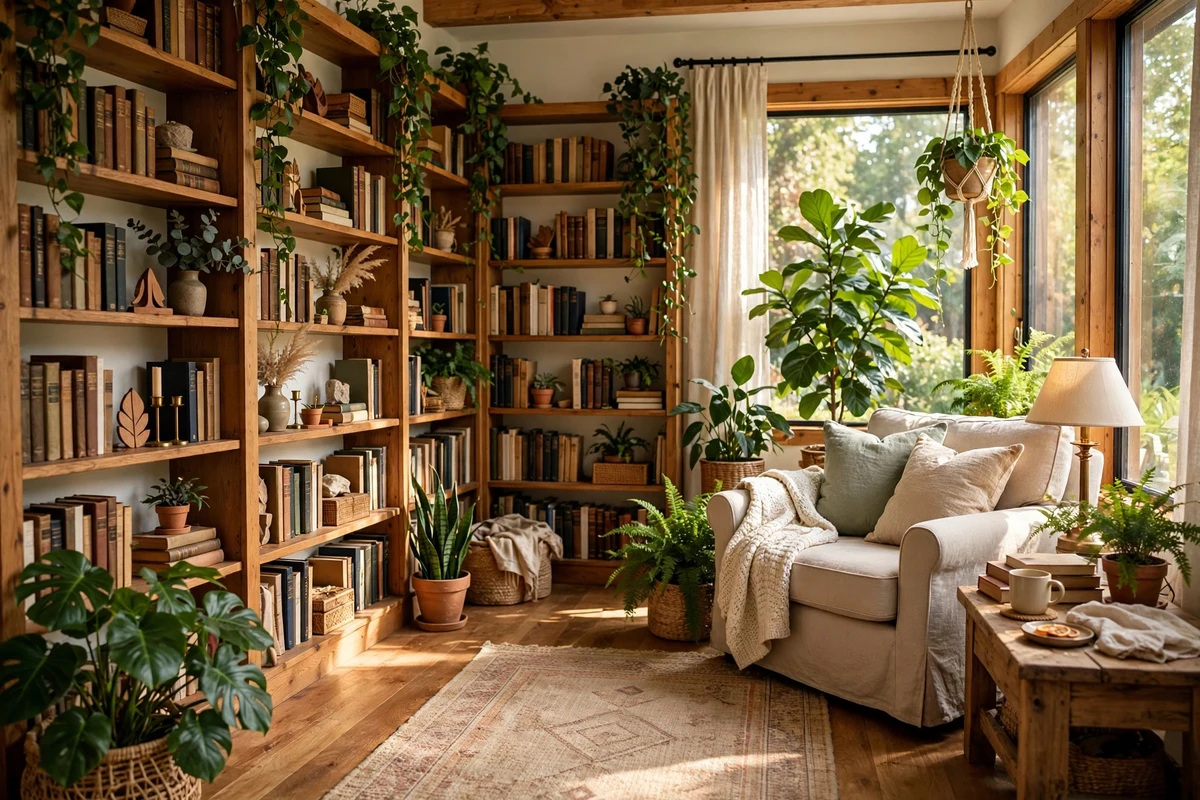
There is something magical about a room full of books — and when you add plants, it becomes pure therapy. A dull corner becomes a tiny library the moment plants join the books. The books make it cozy, but the greenery makes it *alive*.
If you have been dreaming of a reading space wrapped in leaves and stories, you are in the right place. I have gathered 30 cozy library room with plants ideas — from trailing pothos spilling over shelves to renter-friendly displays and pet-safe picks. From five-minute styling wins to bigger weekend projects, there is something here for every budget and skill level — and most ideas cost less than a new bookshelf.Let us dive in.
- Trailing pothos on bookshelves is the easiest instant win — cheap, fast-growing, thrives on neglect.
- Dark corners? Snake plants, ZZ plants, and Chinese evergreen survive with almost no light.
- Keep plants a few inches from book spines and humidity around 40–50% to protect your books.
- Pet owners: pick parlor palm or spider plants — pothos and ZZ are toxic to cats and dogs.
- Renters: leaning ladder shelves and adhesive hooks give you a full plant display with zero drilling.
Best Library Plants by Light Level
| Your Light | Best Plants | Water |
|---|---|---|
| Bright indirect (near window) | Bird of paradise, monstera, jade, aloe | Weekly |
| Medium indirect | Pothos, philodendron, peace lily, Boston fern | Weekly |
| Low light (dark corners) | Snake plant, ZZ plant, Chinese evergreen, parlor palm | Every 2–3 weeks |
1. Trailing Pothos Cascading Over Bookshelf Edges

Nothing says “cozy library with plants” like pothos vines spilling over a shelf. Place a golden or marble queen pothos on the top shelf and let it trail down — within months you will have a living green curtain framing your books. Pothos tolerates low light and forgetful watering, which makes it perfect for busy readers. Trim the vines occasionally and pop the cuttings in water to grow free plants for other shelves. Pet note: pothos is toxic to cats and dogs — keep trailing vines out of paw reach, or swap in a pet-safe trailer from idea 10.
>2. Snake Plants for Low-Light Library Corners

Got a dark corner where nothing seems to grow? A snake plant (sansevieria) will thrive there. Its tall, sculptural leaves add height next to low bookshelves and look stunning in a simple ceramic or woven pot. Snake plants need water only every 2–3 weeks and actually prefer being a little neglected — ideal for a reading room you sink into rather than maintain.
3. ZZ Plants Styled on Top of Bookshelves

The tops of bookshelves are wasted space in most libraries. A ZZ plant fixes that instantly — its glossy, deep-green leaves catch the light beautifully and it survives the dry, dim air above shelves where other plants give up. Group two or three in matching pots for a styled look, or pair one ZZ with a stack of vintage books for that effortless librarian vibe. Pet note: ZZ plants are toxic to pets, so style them up high where curious paws cannot reach.
4. Peace Lily Beside Your Reading Chair

Every reading chair deserves a companion, and a peace lily is a perfect one. Its elegant white blooms glow in soft light, and it even tells you when it is thirsty by drooping slightly — no guesswork. Tuck it into a woven basket beside your armchair with a small side table for tea, and you have the kind of corner that makes you cancel plans just to stay home and read.
5. Climbing Philodendron on a Shelf Trellis

Instead of letting vines trail down, train them up. A small wooden or brass trellis fixed to the side of a bookshelf gives a heartleaf philodendron something to climb, creating a living green column between your books. It is an unexpected detail guests always ask about, and philodendrons are just as forgiving as pothos — bright indirect light and a weekly drink.
6. Chinese Evergreen for Dark Library Corners

Chinese evergreen (aglaonema) is the unsung hero of dark rooms. Its pink, red, or silver-patterned leaves literally brighten a gloomy corner without needing much light at all. If your library has only one small window, place two or three aglaonemas of different varieties together — the mix of patterns looks like art, and they ask for almost nothing in return.
7. Hanging Planters Above the Reading Nook

When floor and shelf space run out, look up. Hanging planters suspended from ceiling hooks turn the empty air above your reading nook into a floating garden. Spider plants, string of pearls, and trailing philodendrons all look dreamy at eye level when you are curled up below. Keep a small watering can nearby — hanging plants dry out a little faster.
8. Macrame Plant Hangers Next to Tall Bookshelves

Macrame hangers soften the straight, serious lines of tall bookshelves. Hang one or two at different heights beside your shelves with ferns or spider plants, and the whole wall feels warmer and more collected. This is a five-minute styling win — no drilling into shelves, just an adhesive ceiling hook or tension-mounted bracket — nothing screwed into the shelves themselves.
9. Grow Lights for Windowless Libraries

No window? No problem. A slim LED grow light bar tucked under a shelf or a warm-toned grow bulb in a pretty floor lamp keeps plants happy in a windowless library. Modern grow lights look nothing like the purple lab lamps of the past — many glow a soft warm white that doubles as cozy reading light. Your plants get what they need, and your room gets the moodiest evening glow.
10. Pet-Safe Plants for Book Lovers With Cats and Dogs

Here is something nobody talks about: pothos and ZZ plants — two library favorites — are toxic to cats and dogs. If your reading buddy has four legs, swap in parlor palms, spider plants, Boston ferns, and calatheas instead. They are just as lush, completely non-toxic, and you will never have to choose between your plants and your pet again.
11. Propagation Station Jars on Open Shelves

A row of glass jars with pothos and philodendron cuttings rooting in water is decor that literally grows. Style them on an open shelf between books — the glass catches the light, the roots are fascinating to watch, and every few weeks you get a free new plant. It is the most satisfying (and cheapest) way to fill a library with greenery.
12. DIY Book Planters as Shelf Decor

For the true book lover: turn damaged, unreadable vintage books into planters. Hollow out the pages, line with plastic, add a succulent or small fern, and shelve it spine-out among real books. Guests will do a double take. Use only books that are falling apart — never a readable copy — or skip real books entirely and use faux book boxes from a craft store for the same look with zero guilt. Keep a saucer underneath to protect the shelf.
13. Thrifted and Upcycled Plant Pots

Library greenery does not need expensive planters. Thrift stores are full of character — vintage teacups for succulents, old tins for herbs, ceramic vases for trailing plants. A shelf of mismatched, storied pots feels personal in a way a matching set never will, and you will spend a fraction of the budget. Just add drainage holes or a layer of pebbles at the bottom.
14. Renter-Friendly No-Drill Plant Displays

Renters, this one is for you. A leaning ladder shelf needs zero wall holes and holds a dozen small plants. Adhesive ceiling hooks (the heavy-duty kind) support hanging planters, and tension rods fit inside window frames for trailing vines. When you move, everything comes down in minutes — deposit safe, plants intact.
15. Small Vertical Plant Wall in a Corner Library

You do not need a mansion for a living wall. A 2×3-foot pocket planter or a few mounted staghorn ferns on one wall creates a jaw-dropping green focal point in even the tiniest library corner. Stick to low-maintenance plants like pothos, ferns, and philodendrons, and water with a long-spout can to reach the top pockets easily.
16. Protecting Books From Plant Humidity

More plants means more moisture — and moisture is the enemy of books. The fix is simple: keep plants a few inches away from book spines, water in the morning so leaves dry by evening, crack a window or run a small fan for airflow, and never mist plants right next to shelves. A tiny hygrometer on the shelf (aim for 40–50% humidity) takes all the guesswork out.
17. Seasonal Plant Swaps to Refresh the Room

Here is a trick stylists use: rotate a few plants with the seasons. Mums and ornamental kale in fall, paperwhites and small pines in winter, fresh herbs in spring. Your library feels brand new four times a year without buying furniture. Keep the big anchor plants permanent and just swap the small accent pots on one or two shelves.
18. Pairing Plants With Books by Vibe

Style your shelves like a curator: ferns next to botanical field guides, sculptural succulents beside modern design books, trailing ivy near poetry collections. Matching plant mood to book genre makes shelves feel intentional instead of random. It is a small detail, but it is the difference between “nice shelves” and shelves people photograph.
19. Window Seat Nook With Sun-Loving Plants

If you are lucky enough to have a big window, build the library around it. A window seat with a thick cushion, a low bookshelf as the base, and sun-loving plants (jade, aloe, bird of paradise) on the sill gives you the brightest, happiest reading spot in the house. Morning readers especially — coffee, sunlight, and a good book is hard to beat.
20. Warm Fairy Lights Woven Through Trailing Vines

This is the coziest five-minute upgrade on the list. Weave warm-white fairy lights through the trailing vines on your shelves and switch them on at dusk. The light filters through the leaves and throws the softest green shadows on the wall. It turns an ordinary bookshelf into something straight out of a storybook — and it costs less than a paperback.
21. Floor-to-Ceiling Shelves Topped With Leafy Greens

Floor-to-ceiling shelves already look impressive — crown them with plants and they look unforgettable. The very top shelf is usually too high for books you actually read, so dedicate it to trailing and upright greenery instead. From below, you will see a lush green canopy over your whole collection. Use lightweight pots up there and a sturdy step stool for watering day.
22. Vintage Dark-Wood Library With Classic Ferns

For the classic look — dark wood, leather chair, brass lamp — Boston ferns are the historically perfect plant. They were the parlor plant of the Victorian era, so they belong in a traditional library the way armchairs do. Their soft, arching fronds contrast beautifully with heavy wood furniture. Keep the soil evenly moist and they will reward you with endless feathery growth.
23. Bohemian Jungle Library With Mixed Planters

Boho style and plants were made for each other. Mix monstera, calathea, rubber plants, and hanging pothos in woven baskets, patterned ceramics, and terracotta — the more eclectic, the better. Layer a patterned rug, floor cushions, and your books, and the room feels like a well-traveled collector’s jungle hideaway. There are no rules here except “more green.”
24. Minimalist Scandinavian Library With One Statement Olive Tree

Minimalists, you do not need twenty plants. One indoor olive tree in a simple white pot beside light-wood shelves gives you all the calm of greenery with none of the clutter. Its silvery leaves and sculptural branches are practically art. Give it your brightest spot and let the soil dry between waterings — restraint is the whole point of this look. One caveat: olive trees demand very bright light, so give it your sunniest spot — it is not the pick for dark corners.
25. Rustic Farmhouse Library With Terracotta Pots

Reclaimed wood shelves, a plaid throw, and a row of terracotta pots — the farmhouse library is warmth you can feel. Terracotta is naturally breathable, so plants like herbs, geraniums, and small citrus trees love it. The orange clay tones glow against wood and make even a simple shelf look styled. Bonus: terracotta is cheap, so you can go big.
26. Fireplace Reading Corner With Hearthside Greenery

A fireplace is already the coziest thing in a home — flank it with plants and it becomes irresistible. Large leafy plants (fiddle leaf fig, bird of paradise) in substantial pots on either side of the mantel frame the fire beautifully. Just keep plants at least three feet from real flames; fiddle leaf figs and bird of paradise dislike dry, hot air, so keep them back from direct heat — a pebble tray with water nearby helps with humidity.
27. Layered Rugs and Throws With Soft Fern Accents

Cozy is a texture game. Layer a jute rug under a vintage Persian-style rug, drape chunky knit throws over the chair, pile on the cushions — then add soft ferns at floor level to echo all that softness in green. The plants keep all the fabric from feeling heavy, adding fresh life to the layers. This is the “sink in and never leave” formula.
28. Emerald Green Accent Wall With Botanical Styling

Paint one wall deep emerald green and watch your plants pop like jewels. Dark green walls make foliage look more vibrant, hide shelf shadows, and give the room a cocooning, expensive feel for the price of one can of paint. Style light-colored pots and trailing plants against it — the contrast is pure drama in the best way.
29. Under-Stairs Mini Library With Compact Plants

That awkward space under the stairs? It is a library waiting to happen. Fit low built-in shelves along the slope, add a floor cushion and a reading light, and finish with compact plants — succulents, small peperomias, tiny ferns — that fit the low clearance. It becomes the house’s secret hideout, and kids especially will claim it as their own.
30. Green-Painted Built-Ins for a Botanical Library Look

The ultimate plant-lover’s library: paint your built-in shelves sage or olive green, then style them with trailing pothos, ferns, and eucalyptus (pet note: pothos is toxic to cats and dogs — keep it out of reach or choose a pet-safe trailer). The green-on-green layering — painted shelves plus living plants plus book spines — creates the biophilic “botanical library” look designers charge thousands for. It photographs beautifully too — the kind of shelfie worth framing.
Final Thoughts
You do not need to be a gardener to pull this off — just a reader with a windowsill. The secret nobody tells you: the best library plants are the ones that thrive on neglect. Start with one trailing pothos and see how it makes you feel. I promise, within a month you will be propagating cuttings in jars and eyeing the empty top shelf.
Pick two or three ideas from this list that fit your space and budget, and start this weekend. Your future self — curled up with a book, wrapped in green — will thank you. Happy styling!
Frequently Asked Questions
What are the best low-light plants for a library room?
Pothos, snake plants, ZZ plants, Chinese evergreen, and peace lilies all thrive in low light. They are also forgiving if you forget to water — perfect for a reading room.
How do I keep plants alive in a windowless library?
Use full-spectrum LED grow lights (warm white looks coziest), choose low-light tolerant plants, and water less often since soil dries slower without sun.
Will plants damage my books with humidity?
Only if overdone. Keep plants a few inches from book spines, water in the morning, ensure airflow with a window or fan, and keep humidity around 40–50%.
Which plants are safe for cats and dogs in a library?
Parlor palm, spider plant, Boston fern, and calathea are non-toxic to pets. Avoid pothos, ZZ plants, and philodendrons if your pets chew leaves.


