


Introduction
Have you ever looked at your front yard and felt like something was missing, even after mowing the lawn or planting fresh flowers? In many homes, the walkway is the missing piece. A cracked, plain, or outdated path can make the entire entrance feel unfinished, while the right walkway instantly makes your home look more welcoming and well cared for. The good news is that you don’t need a huge budget to create a beautiful first impression.
After studying popular front yard designs, landscaping trends, and the features that make homes stand out, one thing became clear: the best walkway landscaping ideas are often the simplest. Small details like the right materials, colorful borders, and thoughtful lighting can completely change the look of your entrance. In this guide, you’ll discover inspiring ideas for every budget and home style, including plenty of front walkway ideas landscaping inspiration that is both beautiful and practical.
Why You’ll Love These Walkway Landscaping Ideas
Whether you’re planning a complete front yard makeover or looking for a simple weekend project, these walkway landscaping ideas offer inspiration for every budget and home style.
Here’s why you’ll love them:
- Ideas for both small and large front yards
- Budget-friendly and luxury designs
- Easy DIY projects for beginners
- Modern, farmhouse, cottage, and traditional styles
- Low-maintenance landscaping options
- Simple ways to boost curb appeal
- Beautiful inspiration that looks great in every season
Before You Start Your Walkway Project
A little planning can save time, money, and extra work later. Before buying materials, go through this quick checklist.
Walkway Planning Checklist
- Measure the length and width of your walkway.
- Choose a material that fits your budget.
- Make sure rainwater can drain away from the path.
- Decide where flowers, shrubs, and lighting will go.
- Install landscape fabric if you’re using gravel.
- Pick edging to keep your walkway neat.
- Choose plants that grow well in your local climate.
Completing these steps first will help your project go more smoothly.
1. Natural Stone Walkway with Colorful Flower Borders

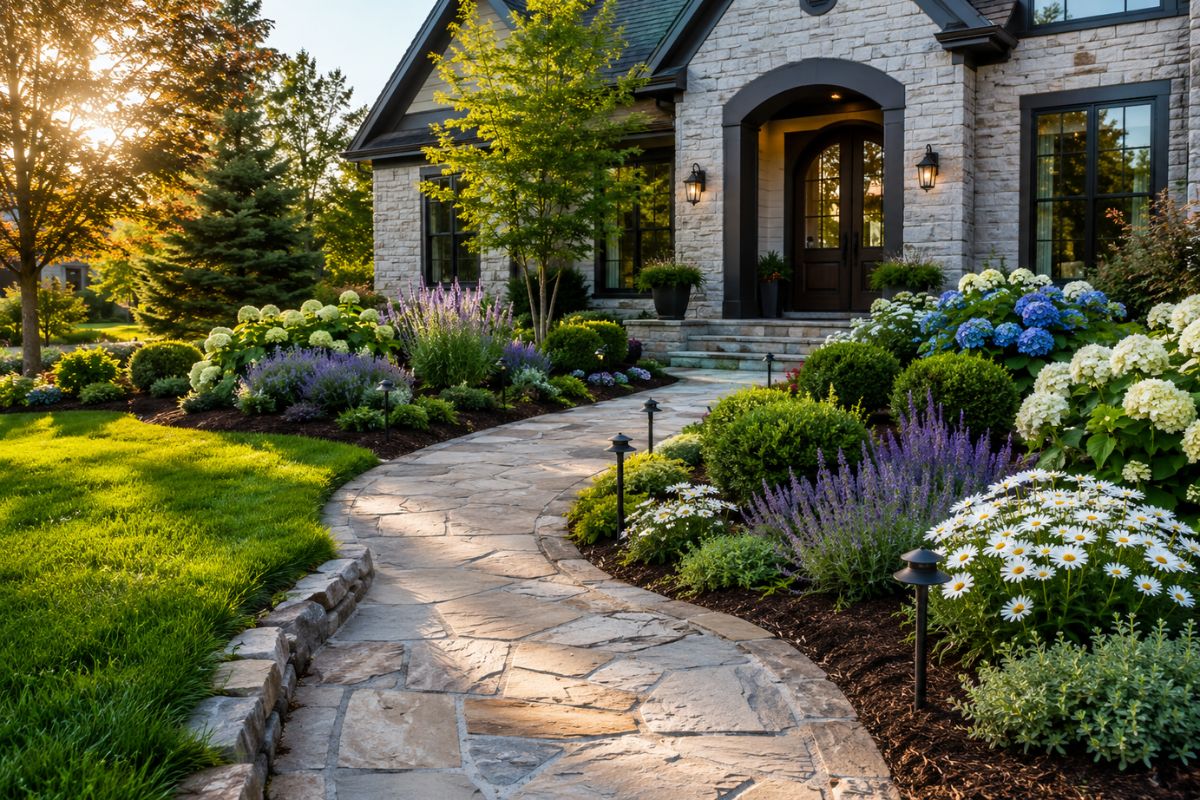
A natural stone walkway gives your front yard a timeless and elegant look. Every stone has its own shape and texture, which makes the path feel unique and full of character. This style works well with cottage homes, farmhouse exteriors, and traditional gardens.
To make the walkway stand out even more, plant colorful flowers along both sides. Lavender, salvia, black-eyed Susans, and white daisies create a bright and cheerful border that looks beautiful from spring through fall. Add a layer of dark mulch around the flowers to make the colors pop.
Natural stone also blends well with green lawns, shrubs, and small trees, creating a balanced landscape that feels peaceful and welcoming.
Best For: Cottage homes, farmhouse gardens, and traditional front yards.
Estimated Cost: $$$
Design Tip: Use stones in different sizes to create a more natural-looking walkway, and repeat the same flowers along the border for a balanced design.
2. Modern Concrete Slab Walkway with Decorative Gravel

If you love clean lines and simple landscaping, a concrete slab walkway is a great choice. Large concrete pavers create a sleek path that feels modern without looking cold or plain.
Leave even spaces between each slab and fill them with white, gray, or black decorative gravel. This small detail creates contrast while helping with drainage and reducing weeds.
Complete the look with ornamental grasses, small evergreen shrubs, and modern outdoor lights. This design is low maintenance and works especially well for busy homeowners.
Best For: Modern homes, minimalist landscaping, and new construction.
Estimated Cost: $$–$$$
Design Tip: Keep the spacing between each slab even to create a clean, organized appearance that stays attractive throughout the year.
3. Classic Brick Walkway for Timeless Curb Appeal

Brick walkways never go out of style. Their warm color and rich texture make any home feel welcoming and full of character. Whether your home is colonial, traditional, or craftsman style, brick creates a classic entrance that lasts for years.
You can arrange bricks in popular patterns like herringbone, running bond, or basket weave to add extra detail. A curved brick path also softens the look of the front yard and guides visitors naturally to your front door.
Plant evergreen shrubs, hydrangeas, or seasonal flowers along the edges to create a polished landscape that looks beautiful all year.
Best For: Traditional homes, brick houses, and classic front gardens.
Estimated Cost: $$$
Design Tip: Match the brick color with your home’s exterior for a timeless and coordinated look.
4. Curved Gravel Garden Path with Soft Greenery

A curved gravel walkway creates a relaxed and natural feeling. Instead of straight lines, gentle curves make the garden look larger and more inviting. This idea works especially well in cottage gardens and larger front yards.
Choose crushed gravel because it stays in place better than round stones. Install metal or stone edging to keep the gravel neat and prevent it from spreading into the lawn.
Surround the path with ornamental grasses, flowering shrubs, and small garden lights for a soft and welcoming appearance. Besides looking beautiful, gravel is one of the most budget-friendly walkway materials available.
Best For: Cottage gardens, natural landscapes, and DIY projects.
Estimated Cost: $
Design Tip: Add sturdy edging before spreading the gravel to keep the walkway neat and reduce maintenance.
5. Flagstone Walkway with Creeping Thyme Between the Stones

If you want your walkway to feel like it belongs in a storybook garden, flagstone is a beautiful option. The large, irregular stones create a relaxed look while still feeling elegant.
Leave small gaps between each stone and plant creeping thyme. As it grows, it fills the spaces with soft green color and tiny purple flowers. Creeping thyme grows best in full sun with well-drained soil and can also help soften the appearance of the path.
This combination creates texture, color, and natural beauty without making the yard feel crowded.
Best For: Cottage gardens, rustic homes, and nature-inspired landscapes.
Estimated Cost: $$$$
Design Tip: Keep the gaps between stones consistent so the walkway is comfortable to walk on while giving the plants enough room to grow.
6. Paver Walkway with Solar Path Lights

A paver walkway is one of the most popular choices for front yards because it is durable, easy to maintain, and available in many colors and patterns. Whether you prefer a modern or traditional look, pavers can match almost any home style.
For extra charm, install solar path lights along both sides of the walkway. These lights charge during the day and provide soft lighting at night. They work best in areas that receive several hours of direct sunlight and also make your walkway safer after dark.
Choose neutral-colored pavers like gray, beige, or charcoal for a timeless design. Add low-growing shrubs or seasonal flowers beside the path to soften the edges.
Best For: Family homes, modern landscapes, and low-maintenance gardens.
Estimated Cost: $$–$$$
Design Tip: Place pathway lights at equal distances to create balanced lighting and improve nighttime visibility.
7. Stepping Stone Walkway Through a Green Lawn

A stepping stone walkway is simple, affordable, and full of charm. Large stones placed across a healthy green lawn create a relaxed path that blends naturally with the landscape.
Use stones with a similar thickness so every step feels stable. Leave enough space between each stone for a comfortable walking distance. Around the walkway, plant ornamental grasses or colorful flowers to add texture without making the area feel crowded.
This style works well in both small and large front yards and gives your outdoor space a fresh, open feel.
Best For: Small front yards, cottage homes, and DIY landscaping.
Estimated Cost: $–$$
Design Tip: Position the stepping stones at a natural walking distance to make the path comfortable for everyday use.
8. White Pebble Walkway for a Modern Entrance

White pebbles instantly make a front yard look brighter and more elegant. Their clean appearance creates beautiful contrast with green plants, black planters, and dark mulch.
Use stone or metal edging to keep the pebbles in place. You can also combine white pebbles with large concrete slabs to create a modern walkway that feels fresh and open. White stones also reflect sunlight, helping smaller front yards appear brighter.
Keep the pebbles clean by removing leaves regularly and rinsing them occasionally to maintain their bright appearance.
Best For: Contemporary homes, minimalist landscapes, and coastal-style gardens.
Estimated Cost: $$
Design Tip: Pair white pebbles with evergreen plants for a clean design that looks attractive throughout the year.
9. Cottage Style Walkway with Lavender and Roses

If you love colorful gardens, this idea is full of charm. A simple stone or brick walkway surrounded by blooming lavender, roses, and cottage flowers creates a warm and welcoming entrance.
The soft colors, pleasant fragrance, and natural texture make the path feel peaceful throughout the growing season. You can also include a small garden bench, decorative planters, or a white picket fence to complete the cottage look.
Keep the flower beds neat with fresh mulch to reduce weeds and help the plants stay healthy.
Best For: Cottage homes, farmhouse gardens, and romantic landscapes.
Estimated Cost: $$–$$$
Design Tip: Choose plants with different blooming seasons so your walkway stays colorful for more months of the year.
10. Small Front Yard Walkway That Makes the Space Feel Bigger

A small front yard can still make a big impression with the right walkway design. Instead of using many different materials, choose one simple style that keeps the area looking open and organized.
Straight concrete pavers, light-colored gravel, and compact flower beds help create a neat appearance. Keep decorations simple and use repeating plants for a balanced look.
Vertical planters, slim shrubs, and wall-mounted lights can also add interest without taking up valuable space. A simple layout often feels larger than a crowded design.
Best For: Townhouses, small homes, and compact front gardens.
Estimated Cost: $$
Design Tip: Use light-colored materials and avoid oversized plants to help your front yard feel larger and more open.
11. Rustic Wood and Stone Walkway for Natural Charm

A rustic wood and stone walkway adds warmth and character to your front yard. The combination of natural wood and large stepping stones creates a relaxed look that blends beautifully with trees, shrubs, and flower beds. This style works especially well for farmhouse, cabin, and country homes.
Use weather-resistant wood for the borders and place flat stones in the center of the path. Fill the spaces with gravel, mulch, or low-growing plants to create a finished appearance. Regularly check the wood for signs of wear and apply a protective sealant every few years to help it last longer.
Best For: Farmhouse homes, cabins, and rustic gardens.
Estimated Cost: $$–$$$
Design Tip: Choose natural materials in similar colors to create a walkway that blends smoothly with the surrounding landscape.
12. Walkway with Decorative Stone Borders

Adding decorative borders is one of the easiest ways to upgrade a simple walkway. Stone, brick, or concrete edging creates clean lines while helping keep gravel, mulch, and soil in place.
You can use decorative borders with almost any walkway material, including concrete, pavers, brick, or gravel. Plant low-growing flowers or evergreen shrubs along the edges to give the path a finished and welcoming look.
Besides improving the appearance, edging also makes mowing and garden maintenance much easier.
Best For: Any home style looking for a clean and organized landscape.
Estimated Cost: $–$$
Design Tip: Match the border material with your walkway to create a more polished and balanced design.
13. Budget-Friendly Gravel Walkway

If you’re looking for an affordable weekend project, a gravel walkway is a smart choice. It costs less than many other materials, is simple to install, and works with almost every landscaping style.
Start by laying landscape fabric to help reduce weeds. Add a layer of crushed gravel, install edging, and finish the area with fresh mulch, flowering plants, or small shrubs. Gravel may need occasional raking to keep the surface level and looking neat.
This simple project can improve your front yard without stretching your budget.
Best For: DIY homeowners and budget-friendly landscaping projects.
Estimated Cost: $
Design Tip: Choose angular crushed gravel instead of rounded stones because it stays in place better and creates a firmer walking surface.
14. Raised Flower Bed Walkway

Raised flower beds on both sides of your walkway create a welcoming entrance filled with color and texture. They also make flowers easier to care for while improving drainage around the plants.
Fill the beds with a mix of evergreen shrubs, colorful perennials, and seasonal flowers to enjoy year-round interest. Adding fresh mulch helps the soil retain moisture while reducing weed growth.
This design creates a more defined entrance and makes the walkway feel like the focal point of your front yard.
Best For: Medium and large front yards that need more color and structure.
Estimated Cost: $$–$$$
Design Tip: Repeat the same flowers and shrubs on both sides of the walkway to create a balanced and attractive entrance.
15. Luxury Front Entrance Walkway with Modern Landscaping

If you want your home to make a lasting first impression, a luxury front entrance walkway is a great choice. Large concrete or porcelain pavers combined with decorative gravel create a clean and elegant design that never feels overcrowded.
Complete the look with neatly shaped boxwood shrubs, ornamental grasses, modern planters, and warm pathway lighting. Keeping the color palette simple with shades of gray, white, black, and green creates a timeless appearance that stays stylish for years.
Although this design usually requires a larger budget, choosing quality materials can reduce future maintenance and increase your home’s curb appeal.
Best For: Contemporary homes, luxury landscapes, and upscale front entrances.
Estimated Cost: $$$$
Design Tip: Keep decorations simple and repeat the same plants and materials throughout the landscape for a refined, high-end look.
How to Choose the Best Walkway Material
The best walkway material depends on your budget, home style, and the amount of maintenance you’re comfortable with. Some materials create a modern appearance, while others offer a more natural or traditional feel.
| Material | Best For | Cost | Maintenance |
|---|---|---|---|
| Gravel | Budget-friendly paths | Low | Low |
| Brick | Traditional homes | Medium | Low |
| Concrete Pavers | Modern front yards | Medium | Low |
| Natural Stone | Luxury landscapes | High | Low |
| Flagstone | Cottage gardens | High | Low |
| Concrete Slabs | Minimalist homes | Medium | Very Low |
If you’re creating your first DIY walkway, gravel or concrete pavers are usually the easiest materials to install while still providing attractive results.
Best Plants to Line a Front Walkway
The right plants soften hard surfaces, add color, and create a welcoming entrance. Choose plants that fit your climate and the amount of sunlight your front yard receives.
Lavender
Lavender produces fragrant purple flowers and grows well in sunny locations with well-drained soil.
Boxwood
Boxwood shrubs stay green throughout the year and create neat borders for formal and modern landscapes.
Creeping Thyme
Creeping thyme spreads between stepping stones, producing small purple flowers while helping soften the appearance of the walkway.
Hydrangeas
Hydrangeas produce large, colorful blooms during the growing season. Some varieties change flower color depending on the soil.
Ornamental Grasses
These grasses add movement, texture, and year-round interest to your landscape.
Daylilies
Daylilies are easy to grow, produce colorful flowers, and require very little maintenance.
Salvia
Salvia attracts butterflies and other pollinators while providing long-lasting color throughout the season.
Basic Materials You’ll Need
Most walkway landscaping projects use similar materials. Gathering everything before you begin makes the installation process easier.
- Landscape fabric
- Gravel or crushed stone
- Pavers, bricks, flagstone, or stepping stones
- Landscape edging
- Mulch
- Garden shovel
- Wheelbarrow
- Rubber mallet
- Hand tamper
- Level
- Garden rake
- Measuring tape
- Solar pathway lights
- Flowering plants or shrubs
Walkway Lighting Ideas for Better Curb Appeal
Outdoor lighting helps your walkway stay safe after dark while making your front yard look warm and welcoming. The right lights can also highlight plants, flowers, and landscaping features without overwhelming the space.
Solar Path Lights
Solar lights are easy to install and require very little maintenance. They charge during the day and automatically turn on at night. Place them along both sides of the walkway for balanced lighting.
Low-Voltage LED Lights
LED pathway lights provide bright, reliable lighting and use very little energy. They are a good choice for longer walkways or larger front yards.
Lantern-Style Lights
Lantern-style fixtures bring classic charm to farmhouse, cottage, and traditional homes. Their warm light creates a welcoming entrance for guests.
Recessed Walkway Lights
Recessed lights are installed directly into concrete or pavers, creating a clean and modern look without taking up extra space.
Landscape Spotlights
Spotlights can highlight trees, flower beds, decorative planters, or architectural features near your walkway to create extra visual interest at night.
Common Walkway Landscaping Mistakes to Avoid
Even beautiful materials can look untidy if the walkway is poorly planned. Avoiding these common mistakes can save time, money, and future repairs.
- Building a walkway that is too narrow.
- Skipping landscape edging.
- Forgetting to install a weed barrier beneath gravel.
- Mixing too many materials or colors.
- Planting large shrubs too close to the walkway.
- Ignoring proper drainage.
- Leaving the walkway without lighting.
- Choosing plants that quickly outgrow the space.
Taking time to plan these details before starting your project will help create a walkway that stays attractive for years.
Budget Guide for Walkway Landscaping
You can build a beautiful walkway at almost any budget. Choosing the right material helps you control costs while creating the look you want.
| Budget | Recommended Material |
|---|---|
| Under $200 | Gravel |
| $200–$500 | Stepping Stones |
| $500–$1,000 | Concrete Pavers |
| $1,000–$2,500 | Brick Walkway |
| $2,500+ | Natural Stone or Flagstone |
Adding flowers, fresh mulch, and solar lighting is an affordable way to make even a simple walkway look more attractive.
Best Walkway Materials by Climate
Choosing materials that work well in your local climate can help your walkway last longer and reduce maintenance.
| Climate | Best Materials |
|---|---|
| Cold and snowy areas | Brick, concrete pavers, natural stone |
| Hot and sunny areas | Gravel, concrete, flagstone |
| Rainy climates | Gravel, natural stone, permeable pavers |
| Dry climates | Decorative gravel, flagstone, concrete slabs |
A solid base and proper drainage are just as important as the material you choose. These two factors help prevent shifting, cracking, and standing water.
Frequently Asked Questions
What is the best material for a front walkway?
The best material depends on your budget, home style, and maintenance preferences. Concrete pavers are durable and easy to maintain, while natural stone creates a timeless appearance. Gravel is the most affordable option for many DIY projects.
How wide should a front walkway be?
Most front walkways should be between 3 and 4 feet wide. This gives enough room for two people to walk comfortably side by side.
What can I plant along a front walkway?
Lavender, boxwood, hydrangeas, salvia, daylilies, ornamental grasses, and creeping thyme are all great choices. They add color, texture, and curb appeal without making the space feel crowded.
How do I keep weeds out of my walkway?
Install landscape fabric before adding gravel or stones. You can also use polymeric sand between pavers and refresh mulch each year to reduce weed growth.
Are gravel walkways cheaper than pavers?
Yes. Gravel is usually one of the most affordable walkway materials and is easier to install than many other options.
How can I make my front walkway look more expensive?
Simple improvements such as fresh mulch, matching planters, pathway lighting, decorative edging, and healthy plants can make a walkway look more polished without a large budget.
What is the easiest DIY walkway to build?
A gravel walkway or a stepping stone path is one of the easiest projects for beginners. Both are affordable, require only basic tools, and can often be completed over a weekend.
Should a front walkway be straight or curved?
Both designs work well. A straight walkway creates a clean, modern look, while a curved walkway feels softer and more natural. Choose the style that best matches your home’s architecture and yard size.
Designer Tips for a Professional-Looking Walkway
Small details often make the biggest difference in the final result.
- Repeat the same plants instead of using many different varieties.
- Keep your color palette simple with two or three main colors.
- Refresh mulch each year to keep flower beds neat.
- Use matching planters near your front door.
- Space pathway lights evenly for balanced lighting.
- Choose edging that matches your walkway material.
- Leave enough room for plants to grow without blocking the path.
- Clean stone, brick, or concrete once a year to keep it looking fresh.
Final Thoughts
The best walkway landscaping ideas are the ones that fit your home, your budget, and the amount of maintenance you’re comfortable with. After reviewing popular landscaping styles and the design details that consistently improve curb appeal, it’s clear that beautiful results come from thoughtful planning rather than expensive materials. Whether you choose natural stone, brick, gravel, or modern pavers, focus on creating a walkway that feels inviting, blends naturally with your landscape, and reflects your personal style. Start with one idea that fits your space, improve your front yard one step at a time, and you’ll create an entrance that looks beautiful and welcomes guests in every season.


