


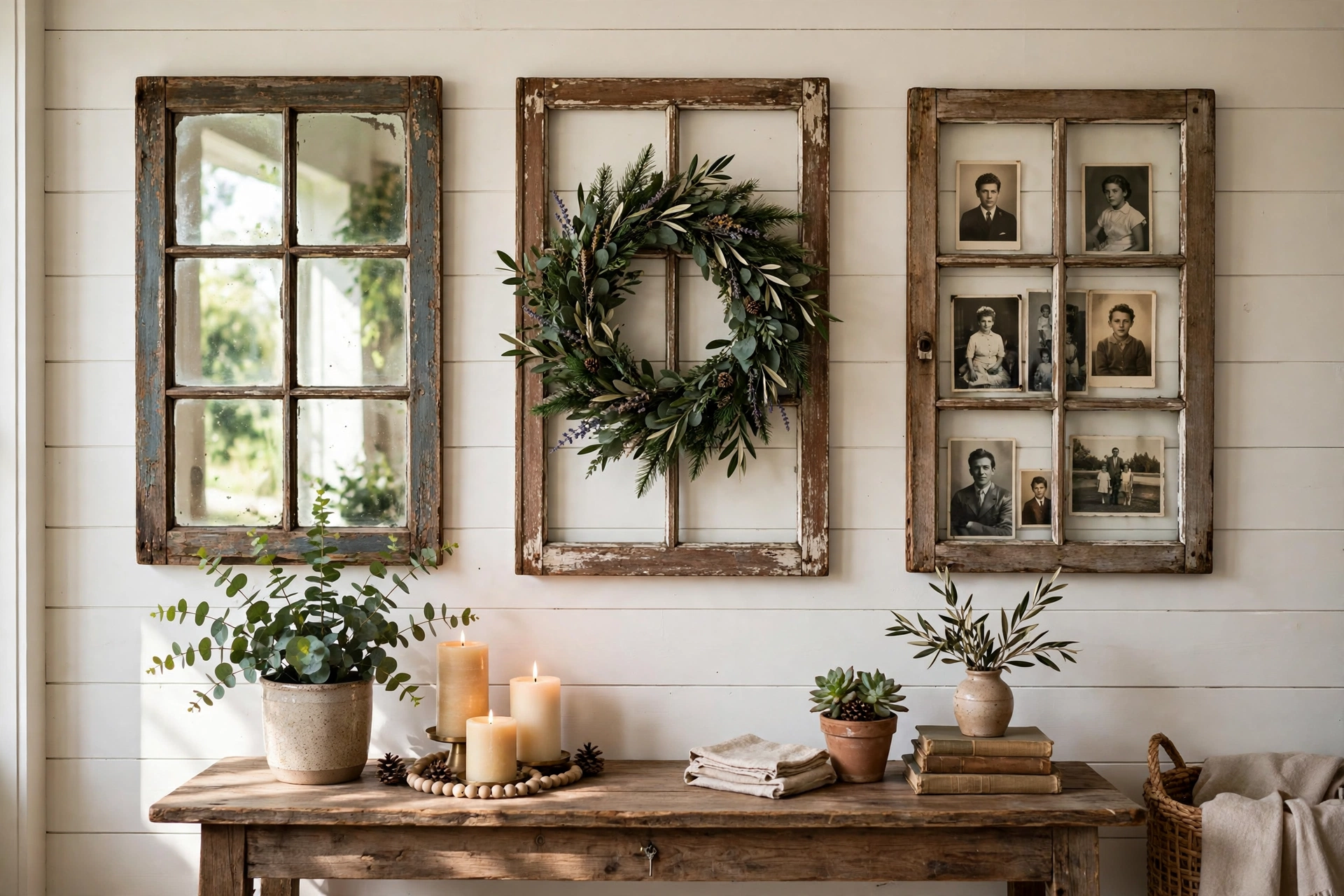
I bought my first old window for $8 at a flea market, mostly because I liked the chippy white paint. It sat in my garage for three months while I figured out what to do with it — and then one Saturday I hung it on the dining room wall with a eucalyptus wreath in the middle, and it became the single most complimented thing in my house. That is the magic of old windows: they bring instant architecture, history, and farmhouse soul to a room, usually for less than the cost of a pizza.
Over the years I have turned salvaged sashes into mirrors, chalkboards, headboards, and even a tiny greenhouse. Below are 25 beautiful farmhouse old window projects I have built, tested, or bookmarked — from five-minute lean-and-style displays to weekend furniture builds. Every one includes a practical tip so you can start with whatever window you can find.
- Find old windows at architectural salvage yards, flea markets, and Facebook Marketplace — most sell for $5–$15.
- Lead paint check: windows made before 1978 may contain lead paint. Use a cheap test kit before sanding, and never dry-sand a positive result — encapsulate or strip it safely instead.
- Chalk paint + 220-grit sandpaper is the classic farmhouse finish: paint, let dry, then distress the edges and corners.
- Hang heavy frames into wall studs with deck screws or a French cleat — drywall anchors alone will not hold them.
- For outdoor projects, seal the wood with exterior spar urethane so your window survives the weather.
1. Window-Pane Photo Gallery
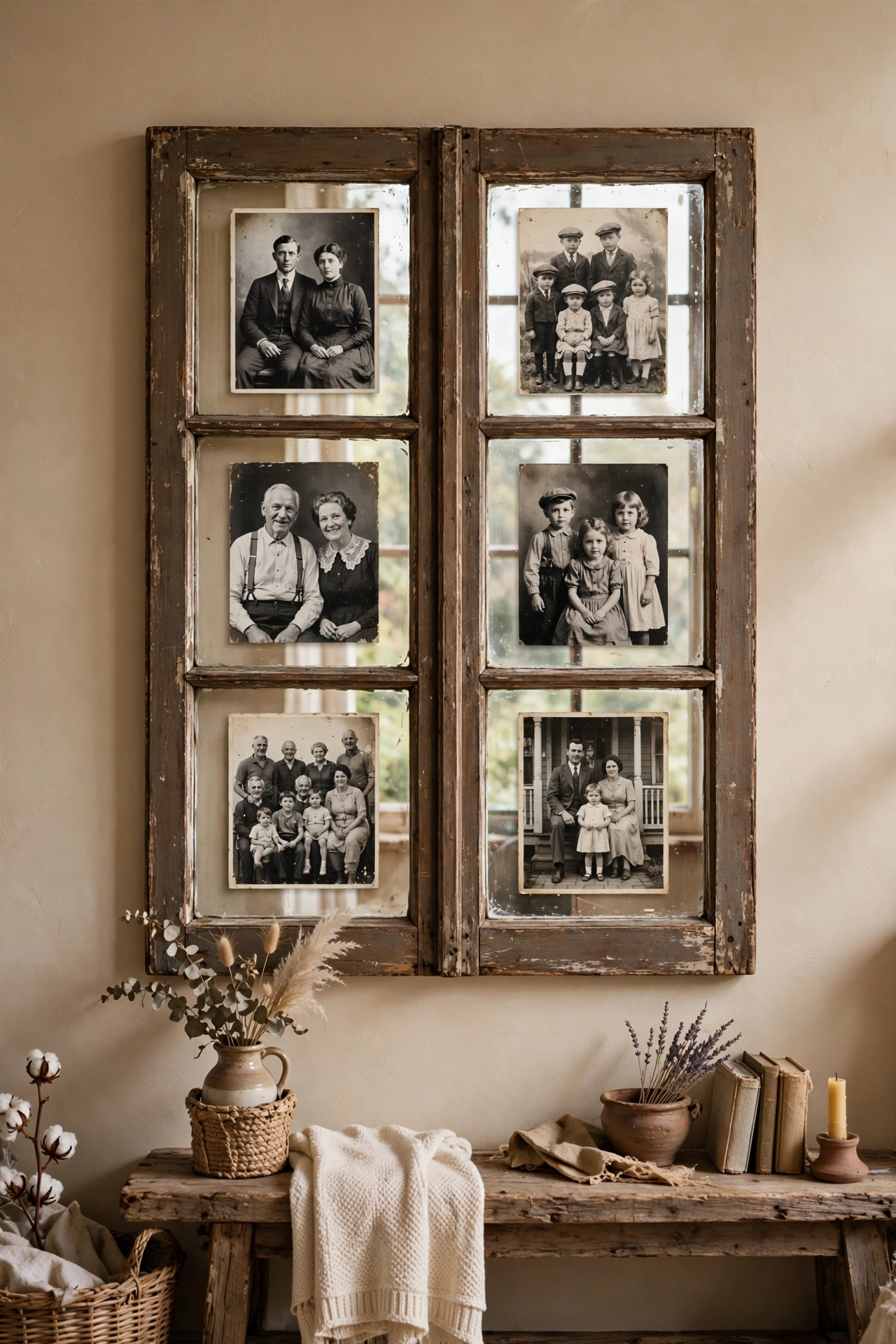
The classic for a reason: a multi-pane window turns family photos into a piece of architectural art. Print your favorites in black and white or sepia, trim them to fit behind each pane, and secure them with the original glazing points or small dabs of museum putty. The divided panes do the matting work for you — no framing shop required.
Try this: mix photo sizes across the panes and leave one or two panes empty or filled with pressed flowers so the display breathes.
2. Chalkboard Message Center
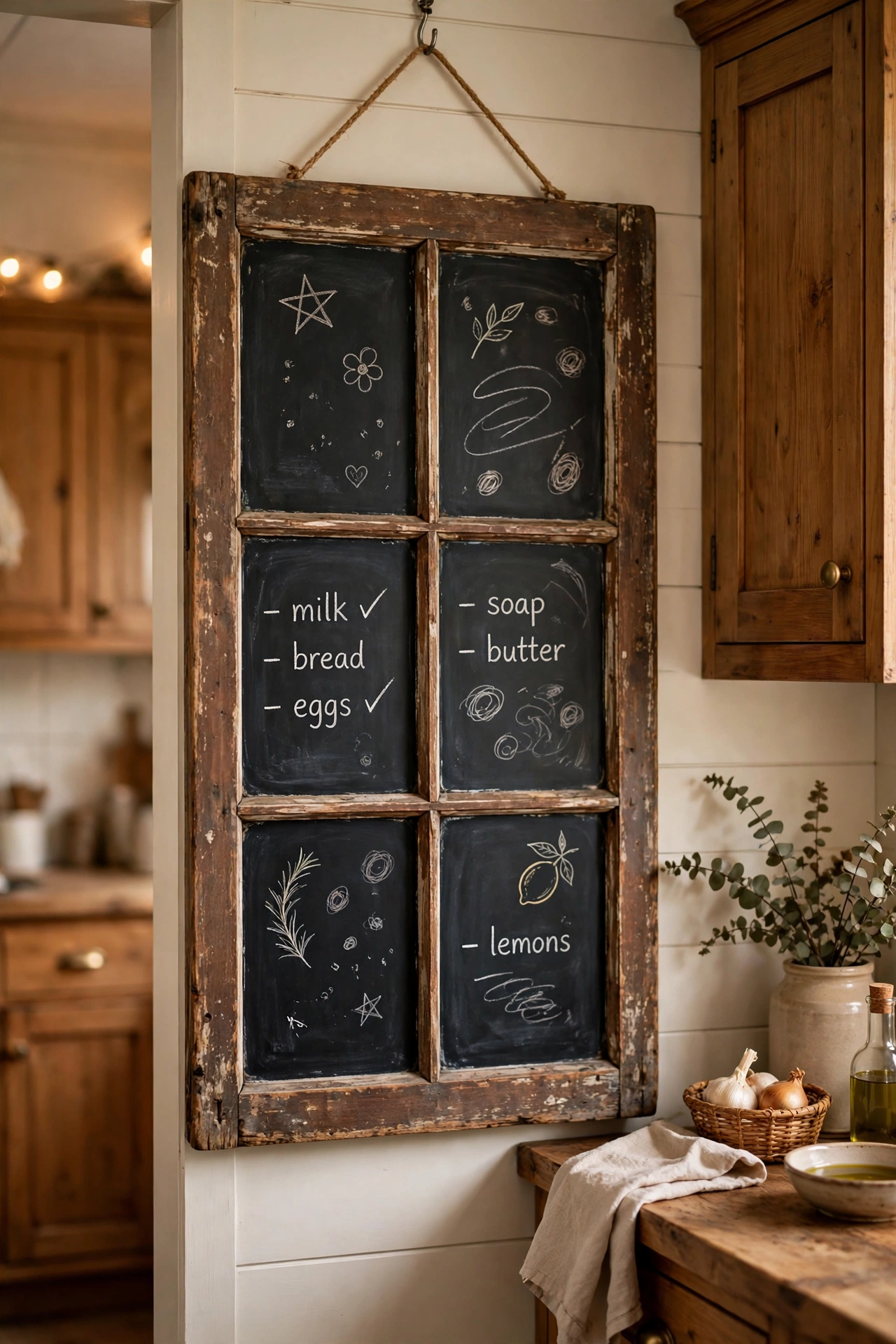
Brush chalkboard paint directly onto the glass panes and you have an instant family command center. Use each pane for a different purpose — one for the grocery list, one for the week ahead, one for a rotating doodle the kids own. It wipes clean in seconds and looks a hundred times better than a whiteboard.
Try this: “season” new chalkboard paint by rubbing the side of a chalk stick over the whole surface and erasing before the first use — it prevents ghosting.
3. Window-Pane Mirror
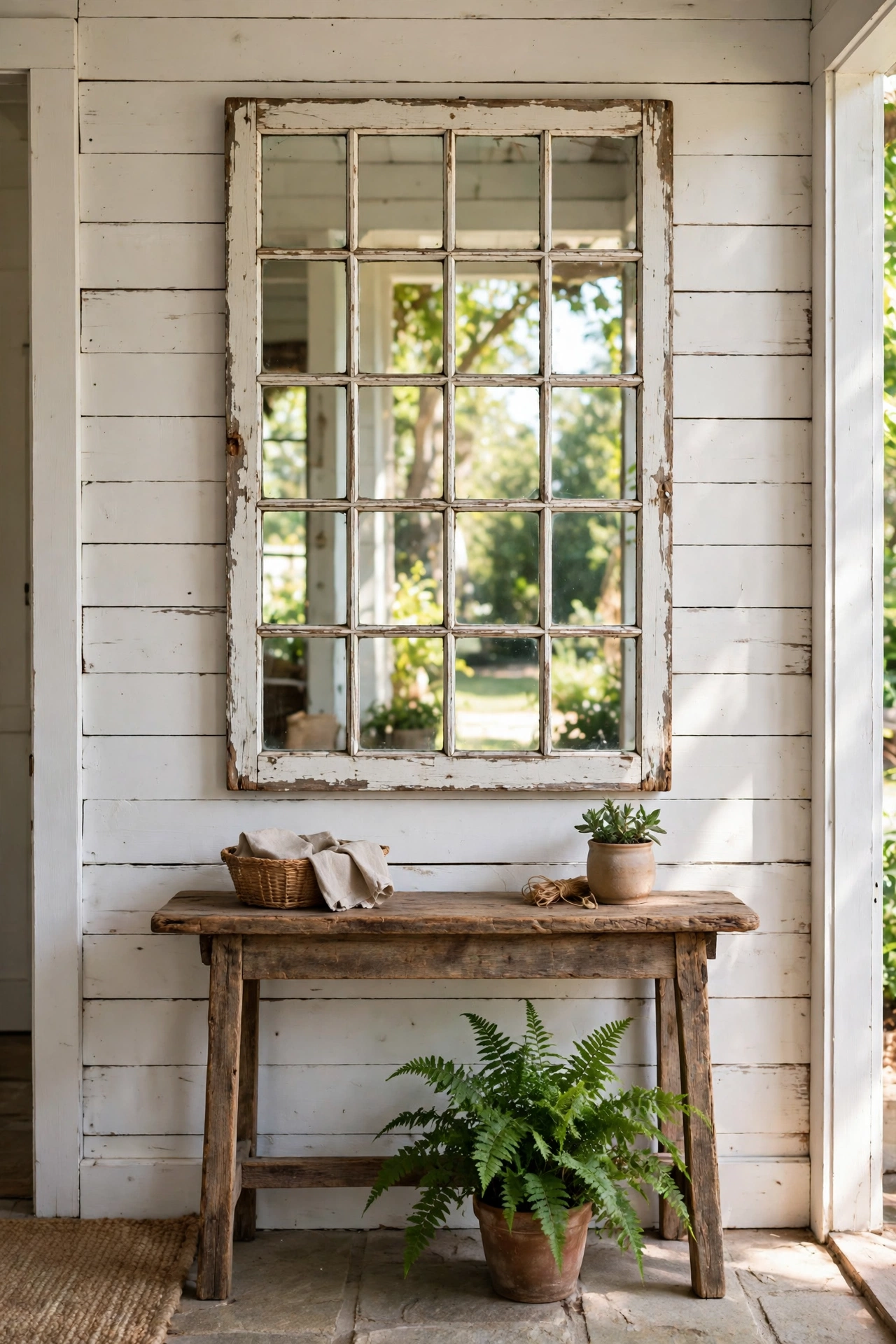
Replace the glass with mirror panes (a glass shop can cut them to size for a few dollars each, or use peel-and-stick mirror tiles for a budget version) and hang the frame where you need light and depth — an entryway, a dark hallway, or above a mantel. The divided panes keep a big mirror from feeling flat or modern.
Try this: hang it opposite a window so it bounces daylight deep into the room; the effect is like adding a second window.
4. Wreath Backdrop Window
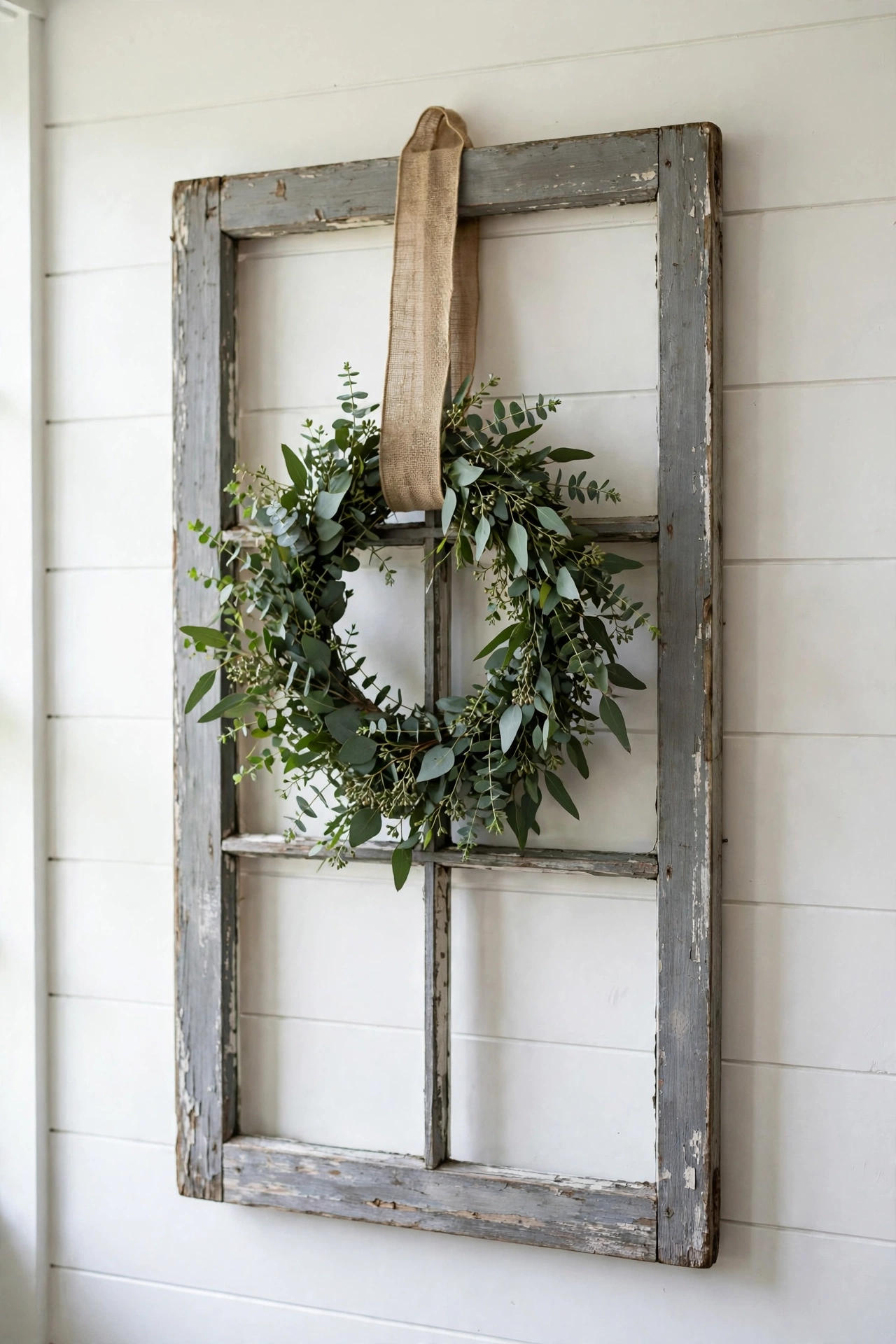
Sometimes the best project is barely a project: hang a bare, weathered window on the wall and center a wreath on it. Swap the wreath with the seasons — boxwood in spring, sunflowers in summer, eucalyptus in fall, pine in winter — and the window becomes a year-round display you never have to redesign. If you love styling seasonal focal points, these fall mantel decorating ideas pair beautifully with a wreath window hung nearby.
Try this: hang the wreath from a wide burlap or velvet ribbon looped over the top of the frame — no nails in the wood needed.
5. Chicken-Wire Memo Board
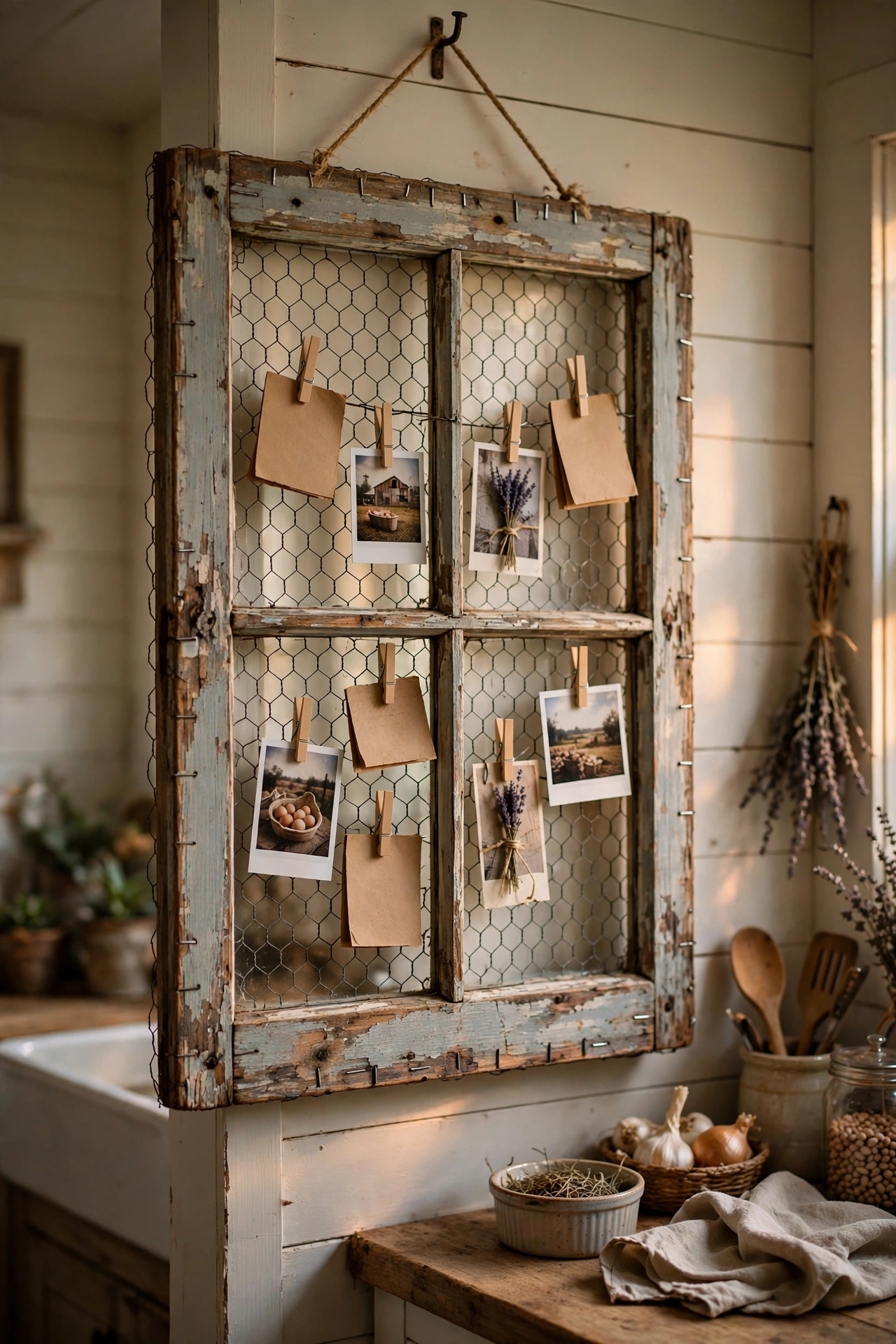
Remove the glass, staple chicken wire to the back of the frame, and clip up notes, photos, and reminders with mini clothespins. It is part organizer, part ever-changing art wall — perfect for a kitchen, mudroom, or home office. For more pin-up-and-display inspiration for a homework corner, browse these school wall decoration ideas that use the same clip-and-show spirit.
Try this: wear gloves when cutting chicken wire and fold the raw edges under before stapling — the cut ends are razor sharp.
6. Window Frame Headboard
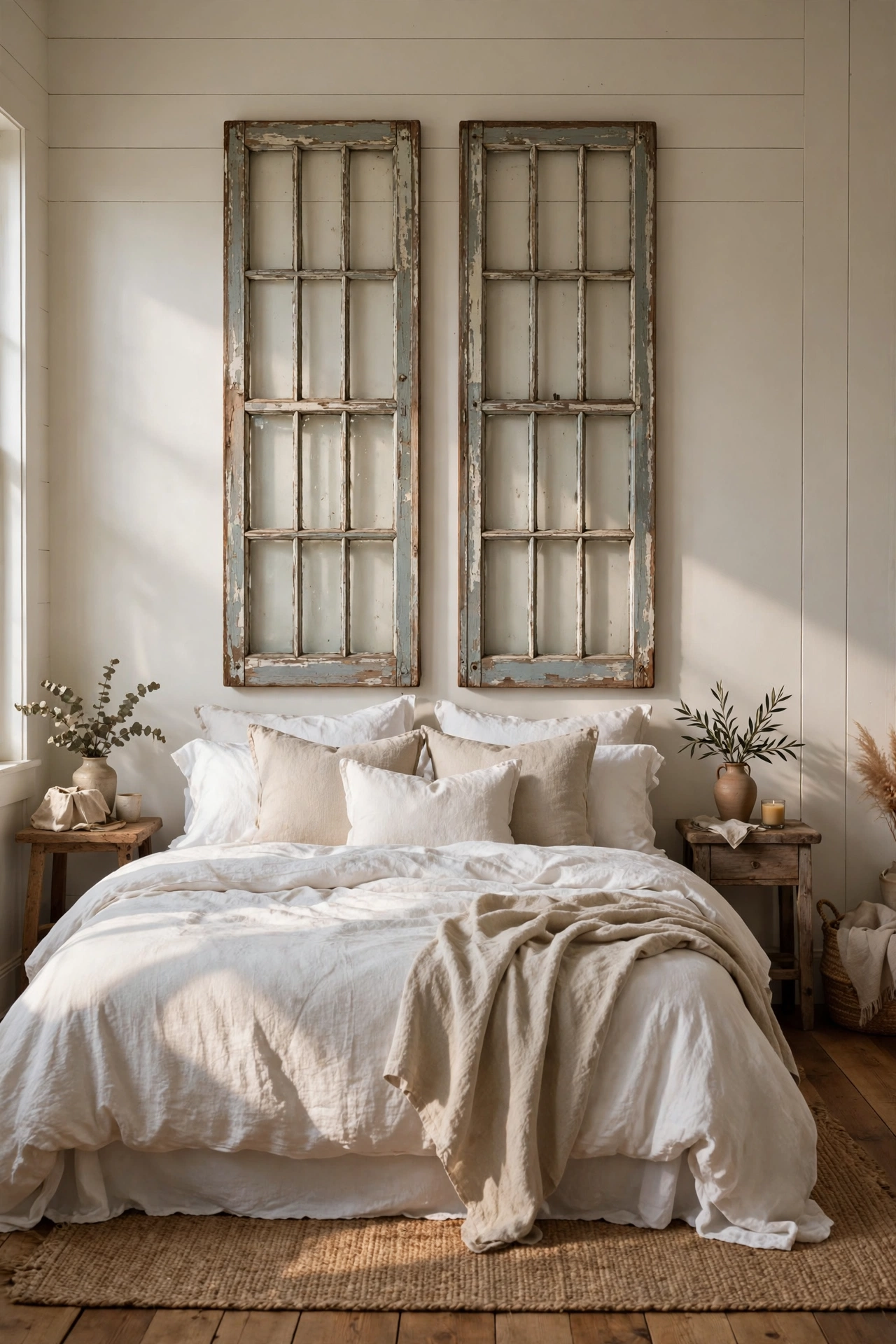
Mount two or three tall window frames side by side above the bed and you have a headboard with more character than anything at a furniture store. Leave the glass in for a formal look, remove it for an airier feel, or back a few panes with burlap or wallpaper remnants for pattern. This is one of those projects guests always ask about.
Try this: anchor headboard frames into at least two studs each — a frame falling onto a bed in the night is no joke.
7. Shadow-Box Coffee Table
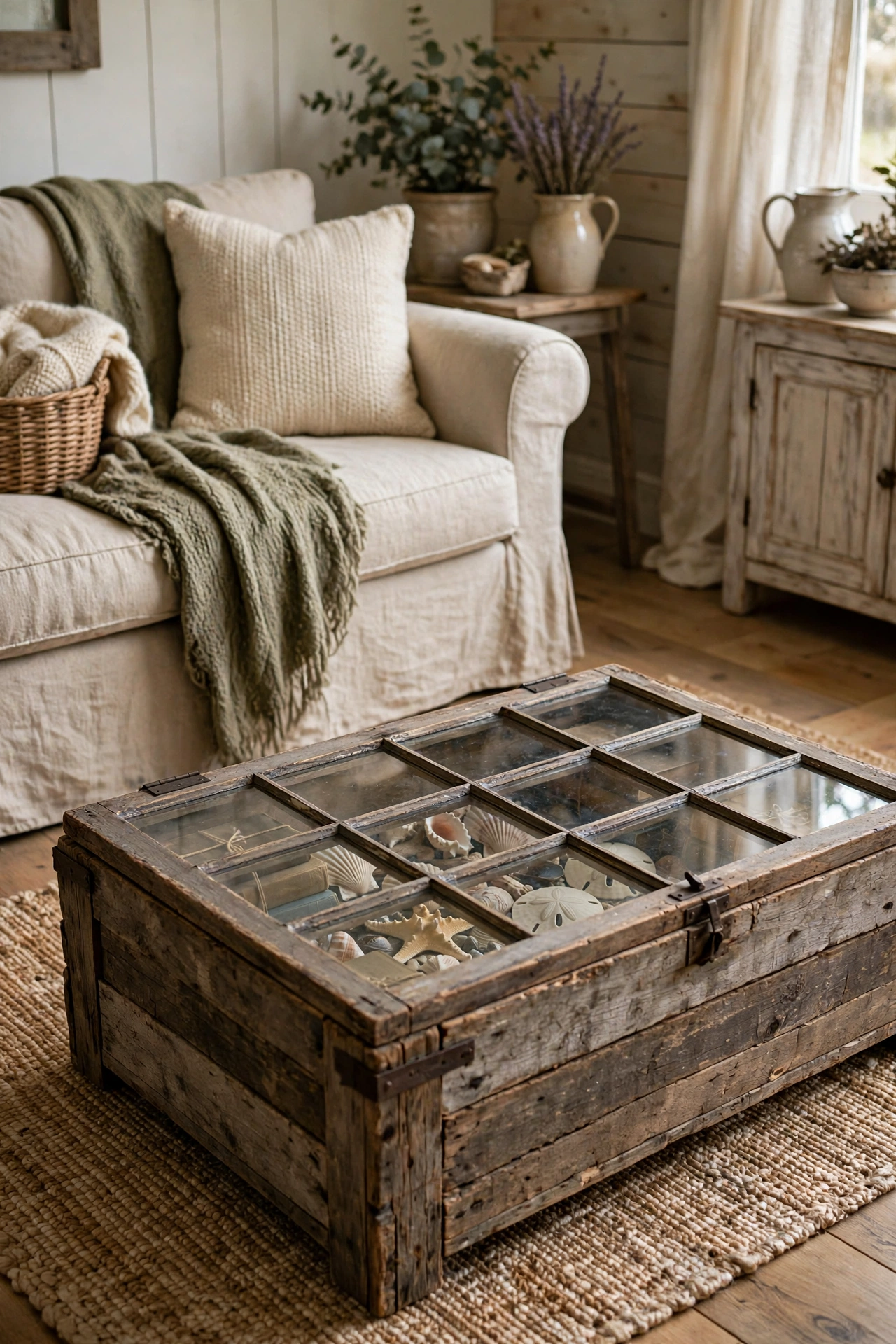
Hinge a window sash to a shallow wooden box on legs and you get a coffee table with a built-in display case. Fill the box with shells, vintage books, or kids’ rock collections, and flip the window top open when you want to rearrange. It is furniture and a conversation piece in one.
Try this: add a thin foam weatherstrip where the window meets the box so the glass top closes softly instead of rattling.
8. Window Jewelry Organizer
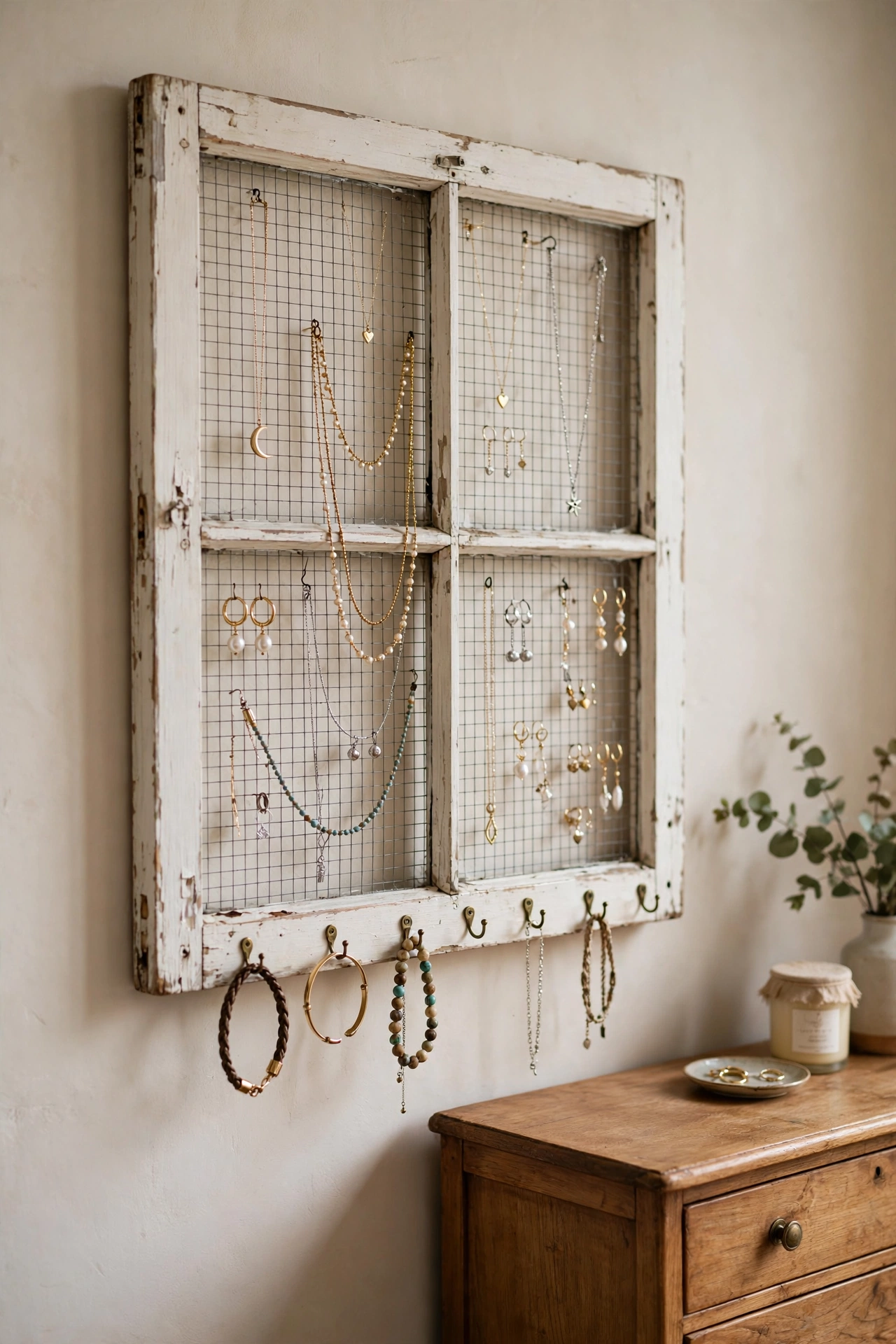
Staple wire mesh or metal screen to the back of a frame, add a row of small hooks along the bottom rail, and hang it near your dresser. Earrings hook right through the mesh, necklaces drape without tangling, and bracelets stack on the hooks. It beats digging through a jewelry box every morning.
Try this: spray-paint the mesh matte black or antique gold before attaching — it disappears behind the jewelry and looks intentional.
9. Folding Window Room Divider
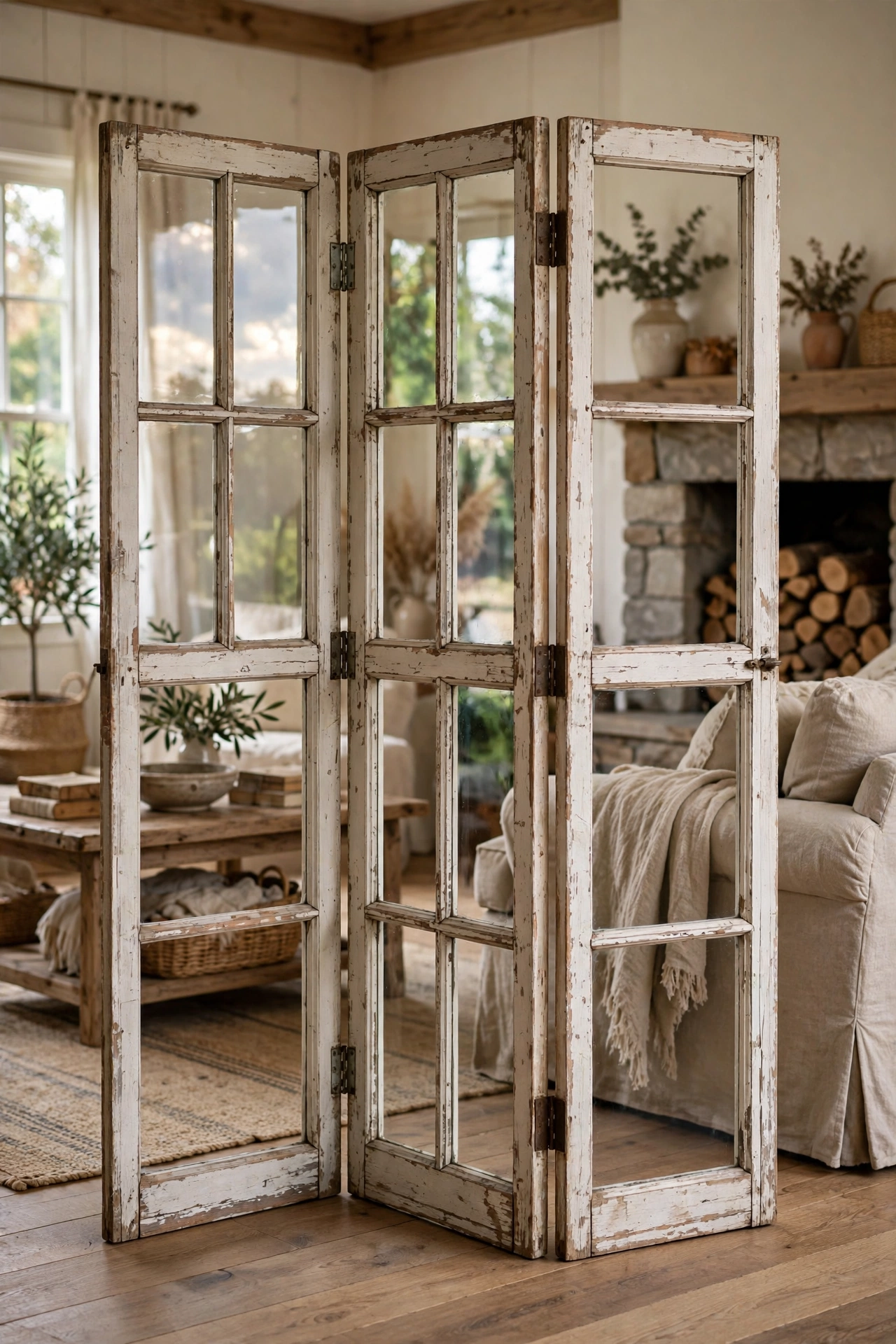
Hinge three window sashes together with sturdy hinges and you have a folding screen that divides a room, hides clutter, or creates a dressing corner. Back some panes with mirrors to bounce light, leave others open, or cover a few with linen for privacy. It folds flat when you need the space back.
Try this: alternate the hinge direction (one forward, one back) so the screen zigzags and stands on its own without feet.
10. Garden Cold Frame
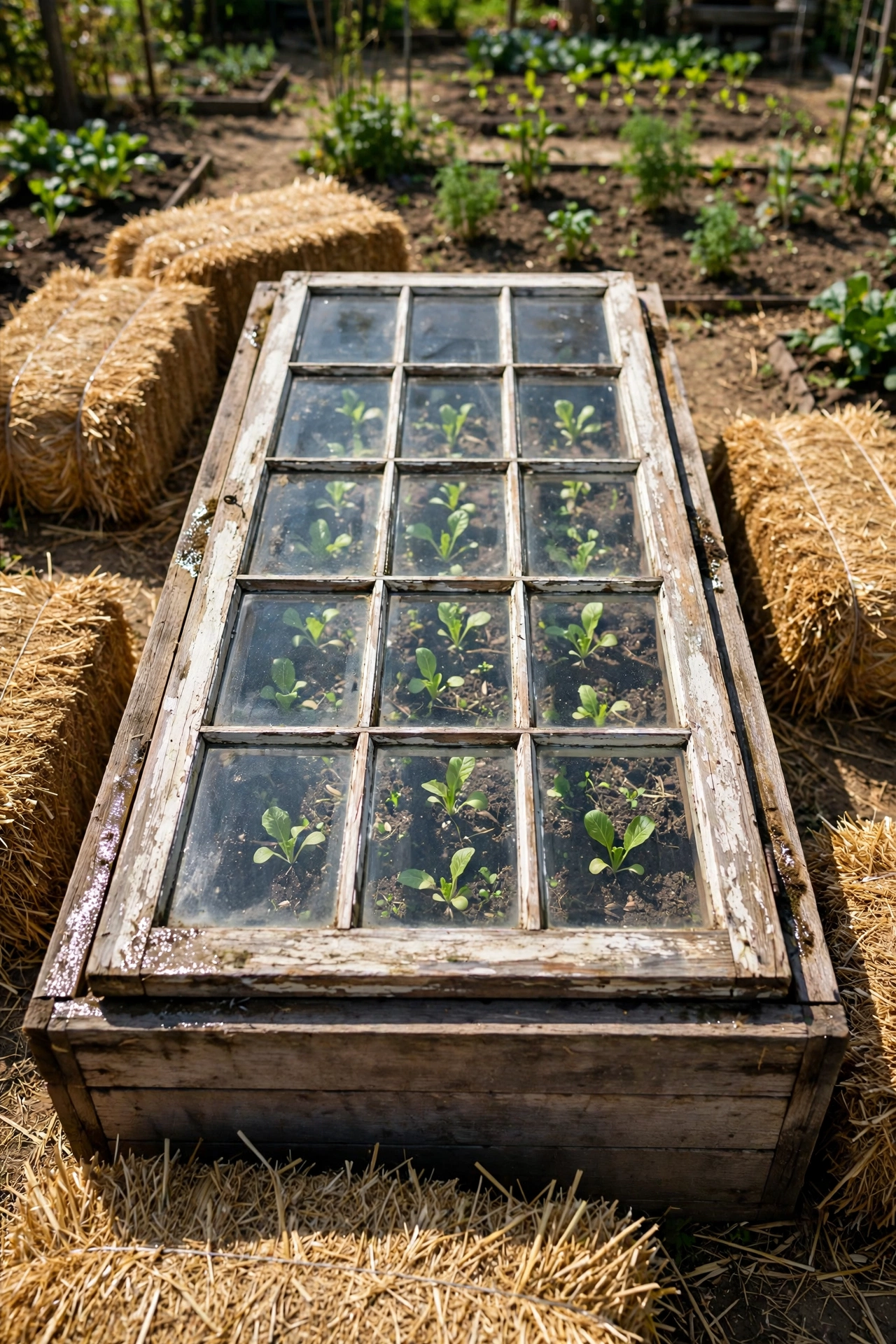
Lay an old window sash over a low wooden box in the garden and you have a cold frame that protects seedlings from frost and extends your growing season by weeks on each end. Hinge the sash on one side so you can prop it open for ventilation on warm days. It is the highest-impact garden project on this list for the money.
Try this: face the cold frame south and bank soil or straw bales around the outside of the box for extra insulation.
11. Mini Window Greenhouse
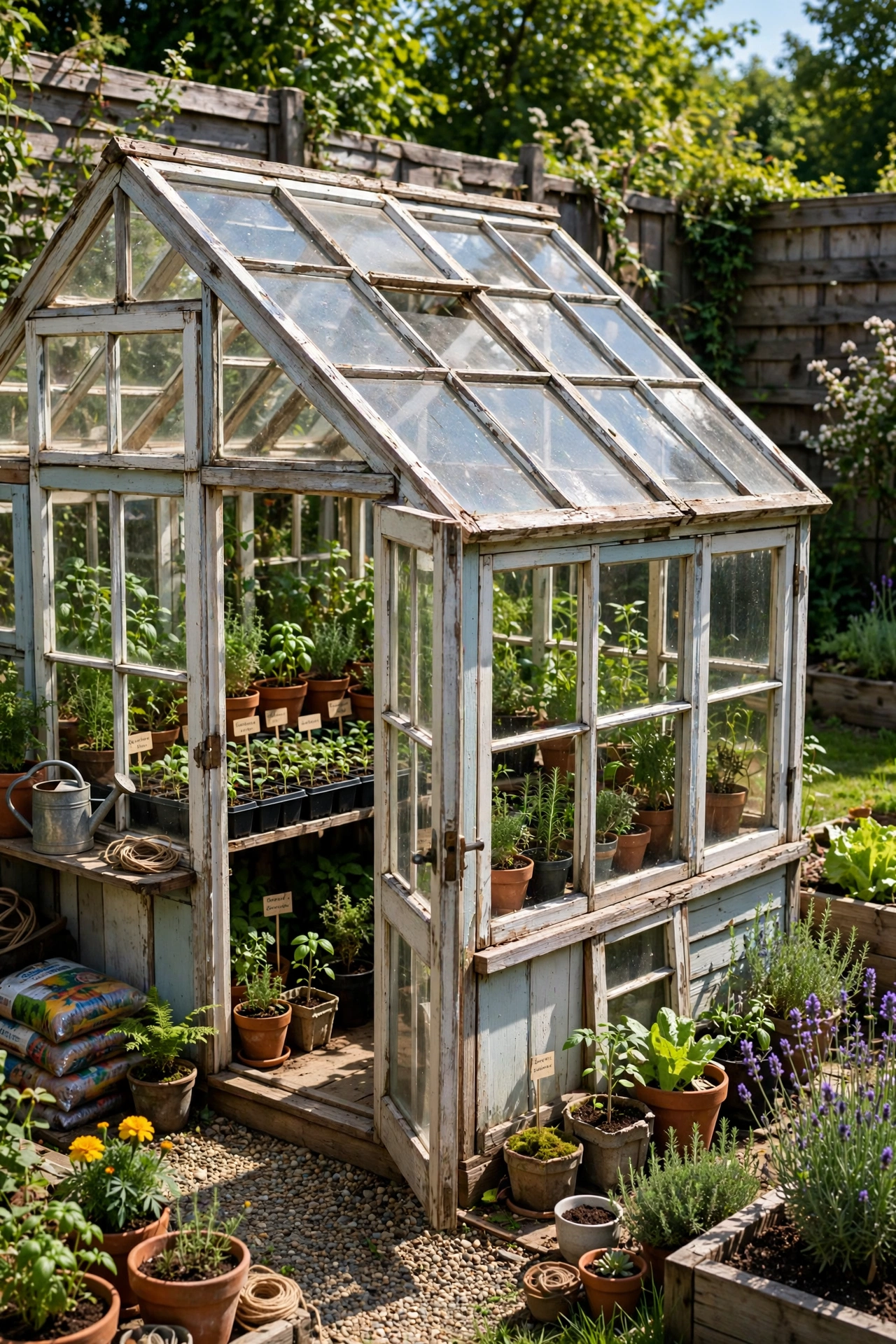
If you can collect six to eight matching sashes, screw them into a simple 2×2 frame and you have a miniature greenhouse for starting seeds or overwintering tender plants. Four walls, a sloped roof of two more sashes, and a bead of exterior caulk at every joint — a weekend build that looks like it cost hundreds.
Try this: put the greenhouse where it gets morning sun and add an automatic vent opener (about $30) so it never cooks your seedlings.
12. Entryway Coat Rack
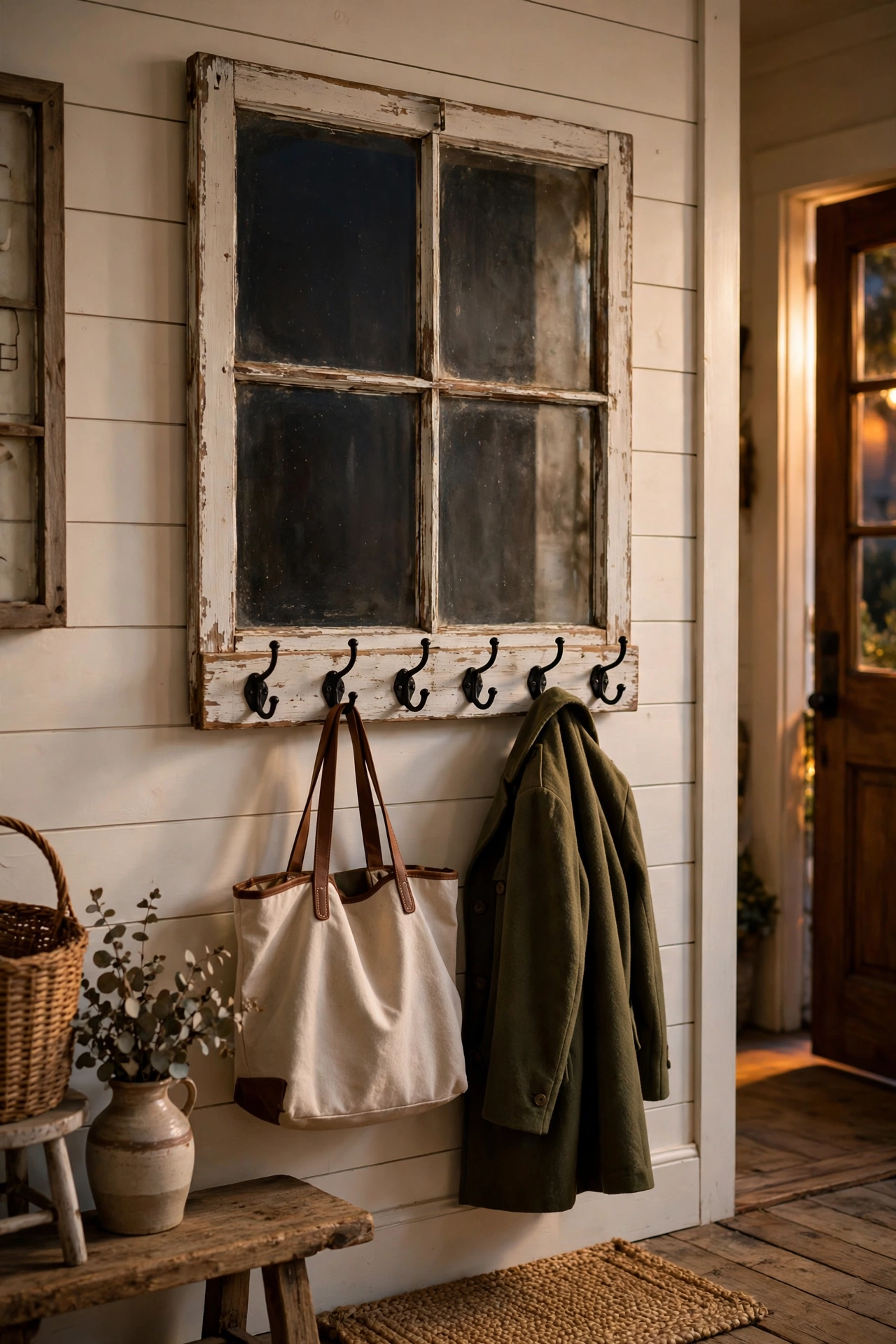
Screw a row of sturdy hooks across the bottom rail of a window frame and mount it by the front door. Coats, dog leashes, and tote bags get a home, and the panes above can hold a small chalkboard section or family photos. It turns the messiest corner of the house into a styled one.
Try this: use double hooks (one high, one low on each mount) so kids can reach their own gear without a step stool.
13. Hanging Kitchen Pot Rack
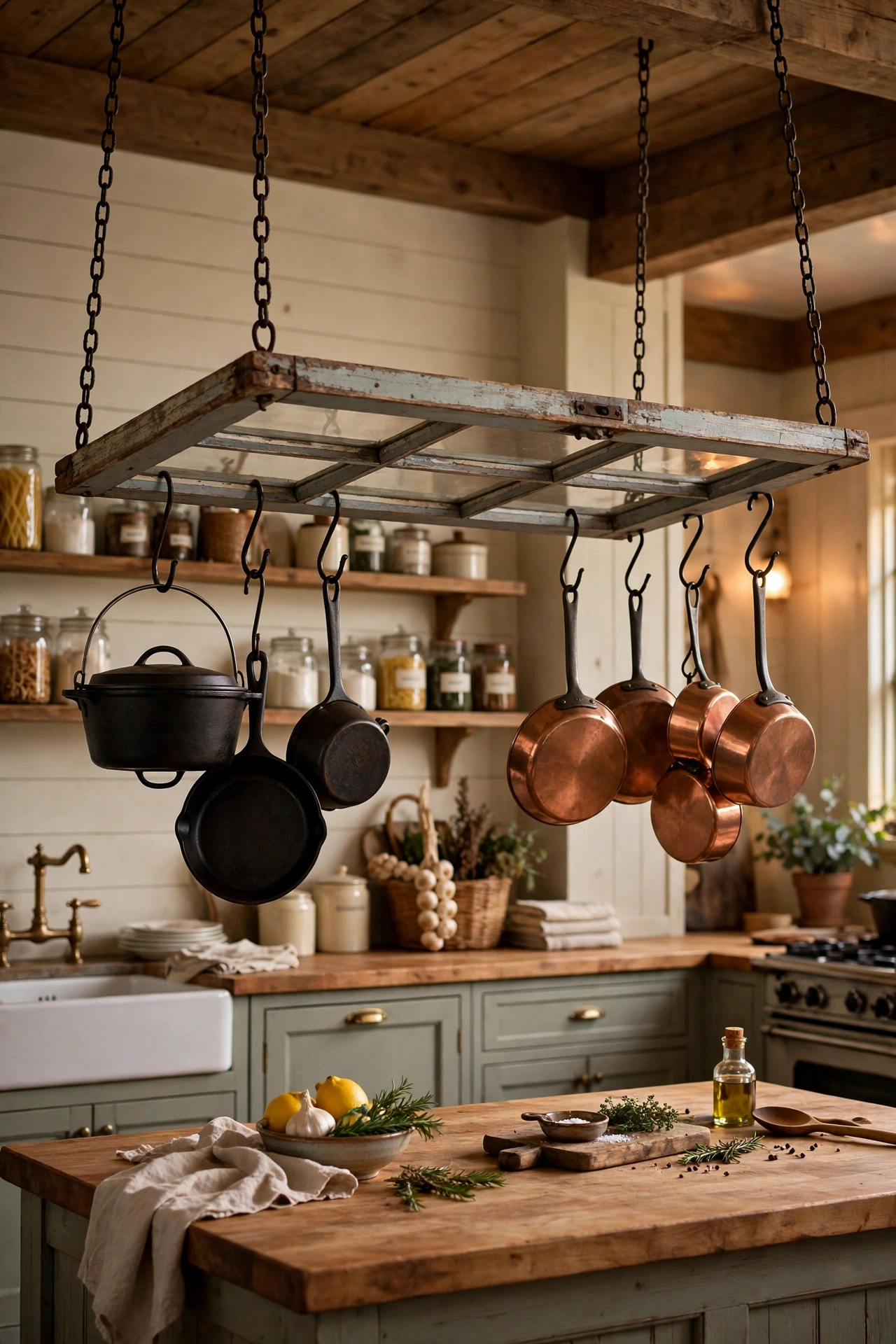
Suspend a long window frame horizontally from the ceiling with chains and S-hooks, and it becomes a rustic pot rack over a kitchen island. Cast iron and copper look incredible against old wood, and freeing up a whole cabinet of pots is a gift in a small kitchen.
Try this: screw the chains into ceiling joists — never drywall alone — and keep the heaviest pots toward the center of the frame.
14. Window Medicine Cabinet
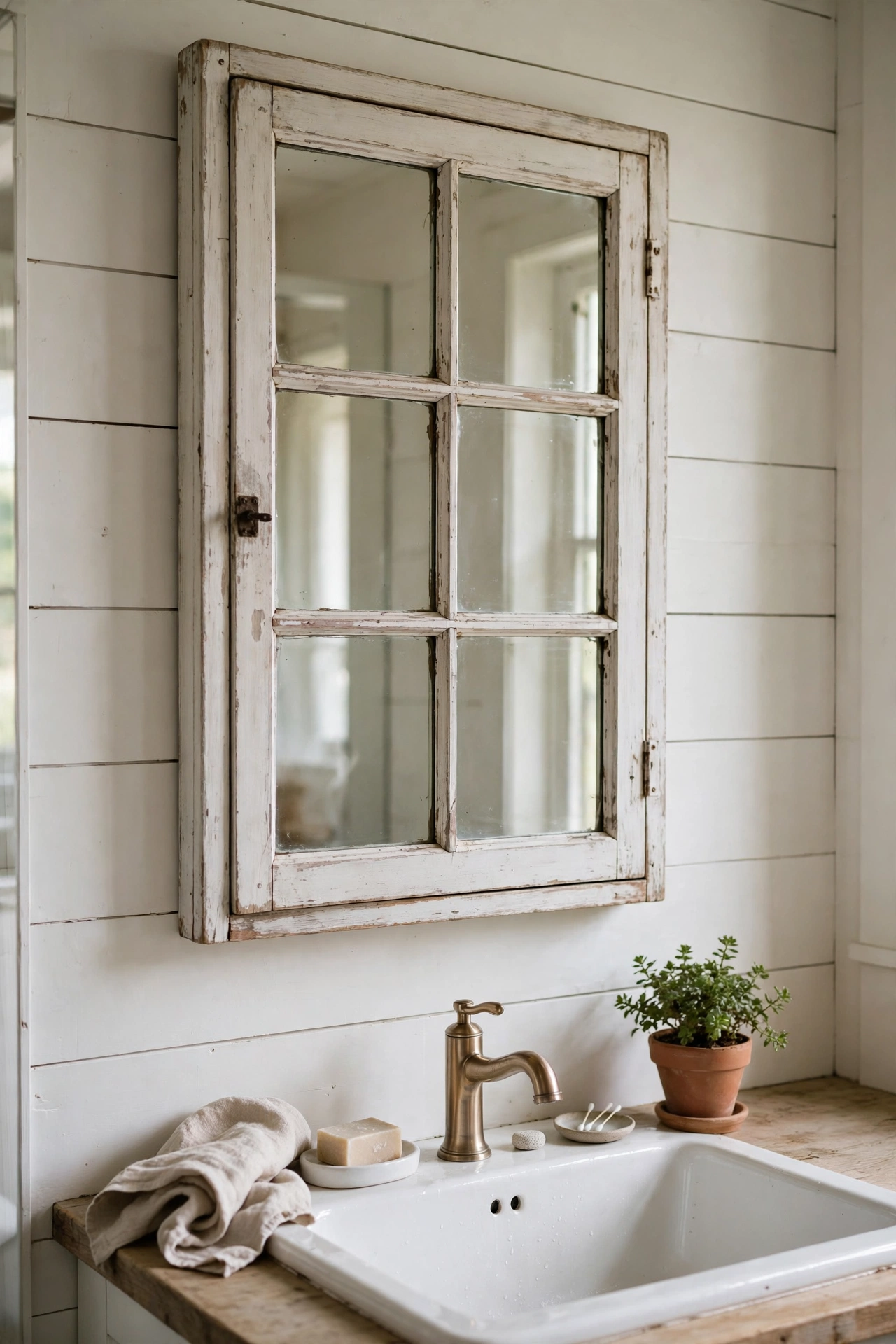
Mount a shallow cabinet box on the bathroom wall and face it with a window sash fitted with a mirror pane. You get hidden storage for toiletries behind a mirror that actually has personality — miles ahead of the builder-grade medicine cabinets most bathrooms come with.
Try this: add magnetic strips inside the door for bobby pins and tweezers; small metal items stick right to them.
15. Window Flower Box Planter
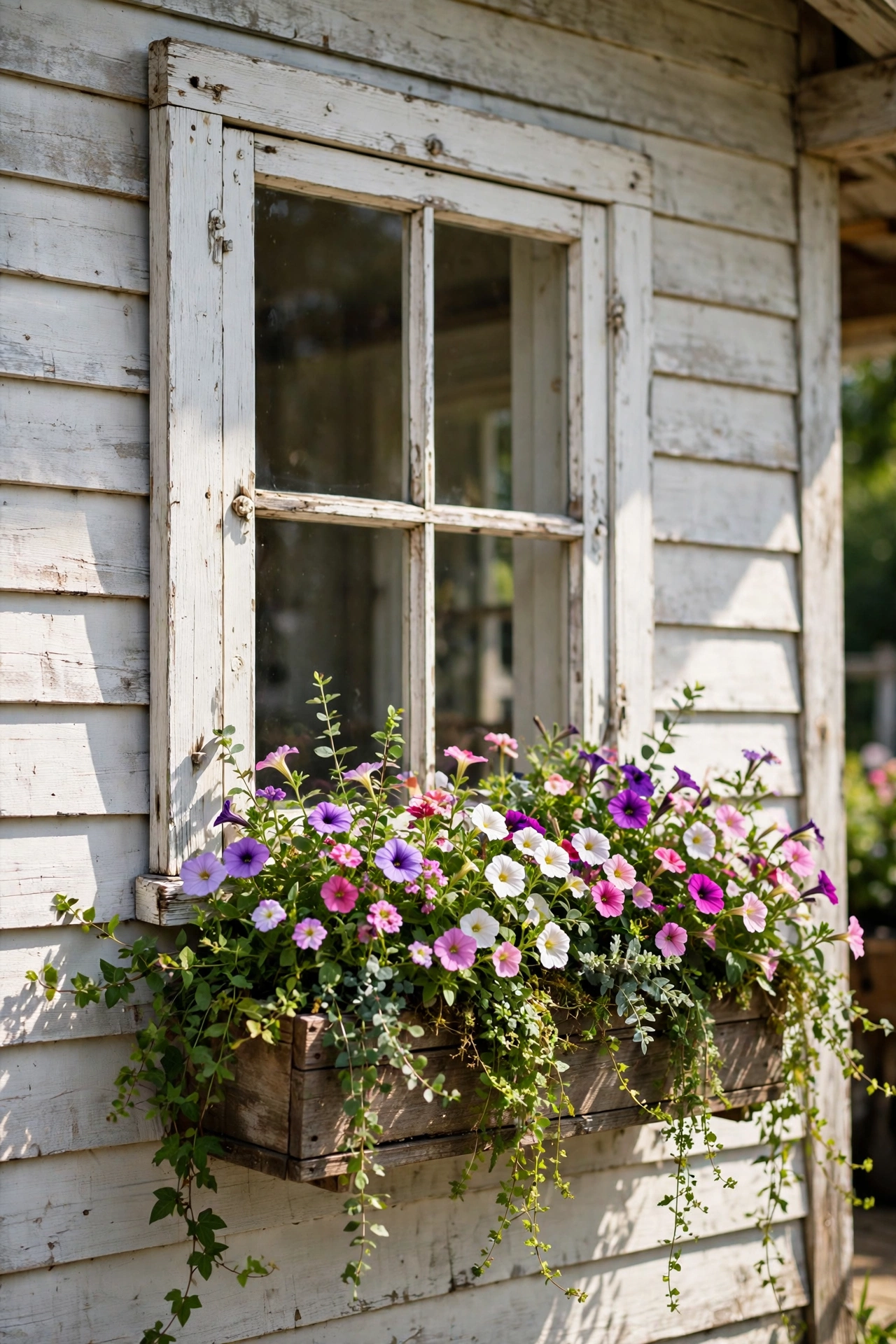
Attach a simple wooden box to the bottom rail of a window frame, fill it with trailing petunias or herbs, and hang the whole thing on a porch wall, fence, or shed. From the street it reads as a charming cottage window — no actual window opening required.
Try this: line the box with landscape fabric and drill drainage holes so the wood does not rot from the inside out.
16. Window Frame Wall Shelves
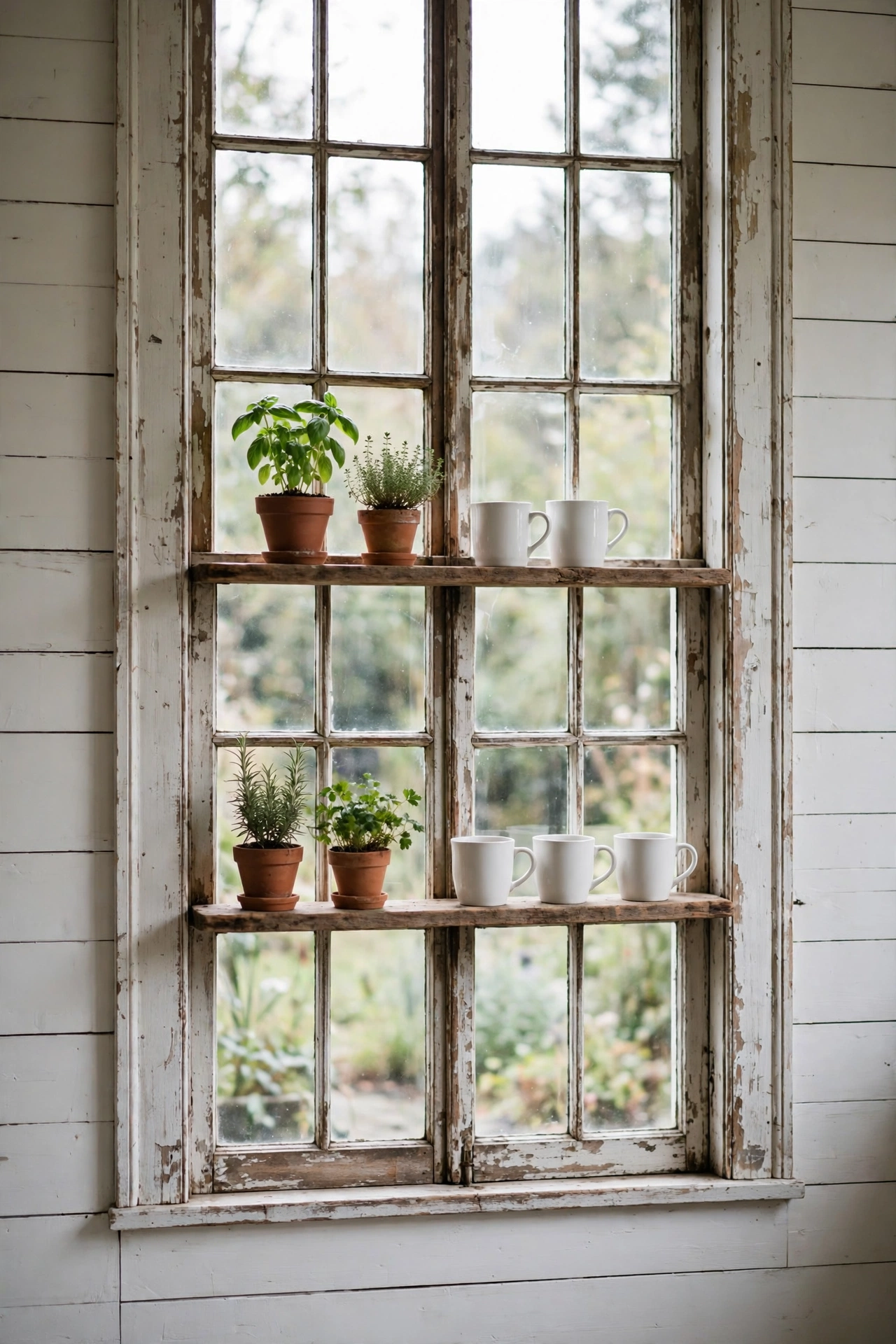
Screw two or three narrow boards horizontally across a tall window frame and you have a display shelf with built-in character — perfect for mugs in the kitchen, spices, or small plants. The frame gives the shelves a finished look that plain floating shelves never quite manage.
Try this: keep shelf depth to 4–5 inches so the frame still reads as a window and does not turn into a bookcase.
17. Cork Bulletin Board Window
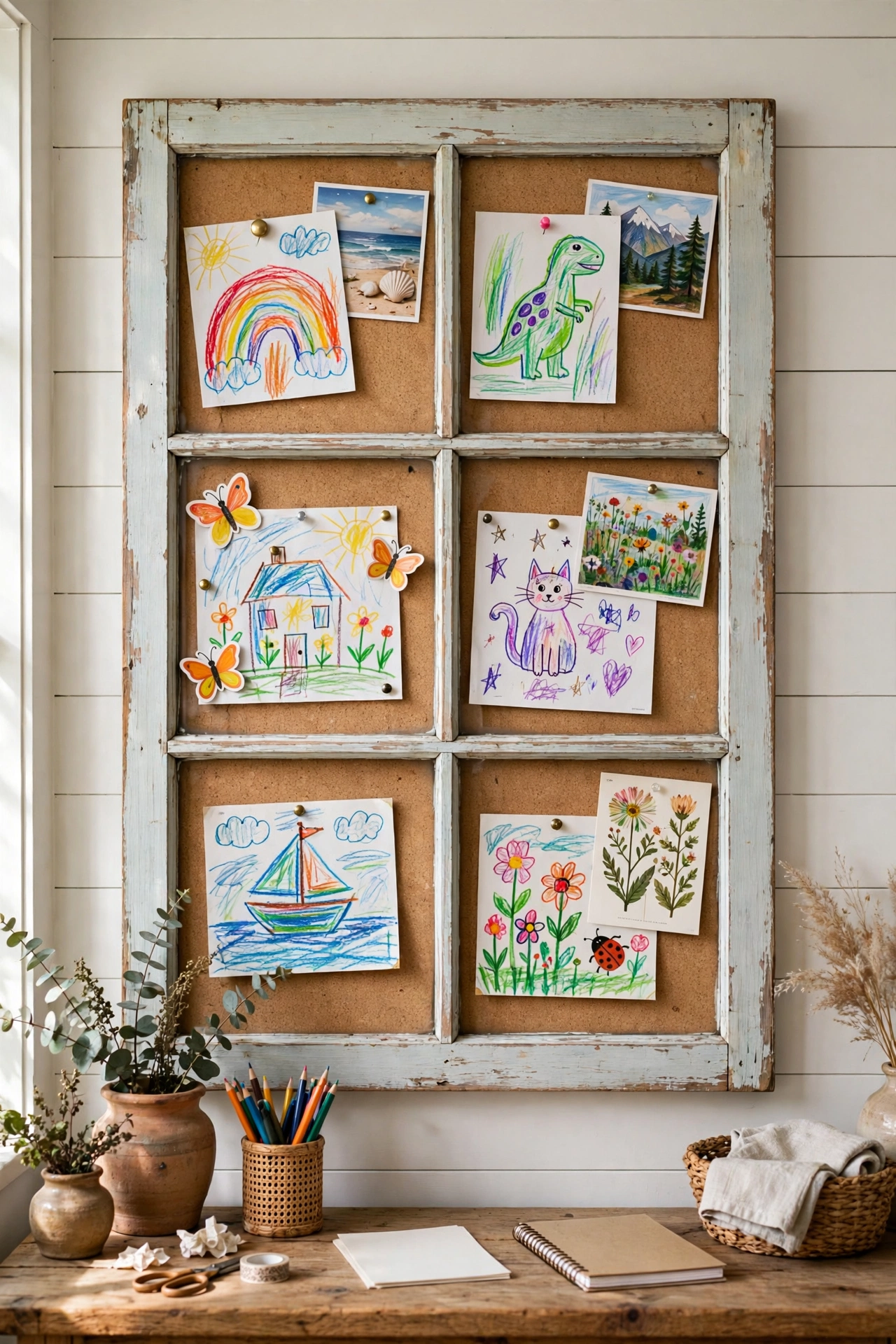
Cut cork tiles to fit behind each pane and you have a bulletin board that looks like art. Pin up kids’ artwork, invitations, and ticket stubs — the divided panes keep it organized by nature. It is a softer, quieter alternative to the chicken-wire version.
Try this: back the cork with a layer of felt in a contrasting color; the edges peeking around the cork look finished and custom.
18. Family Calendar Window
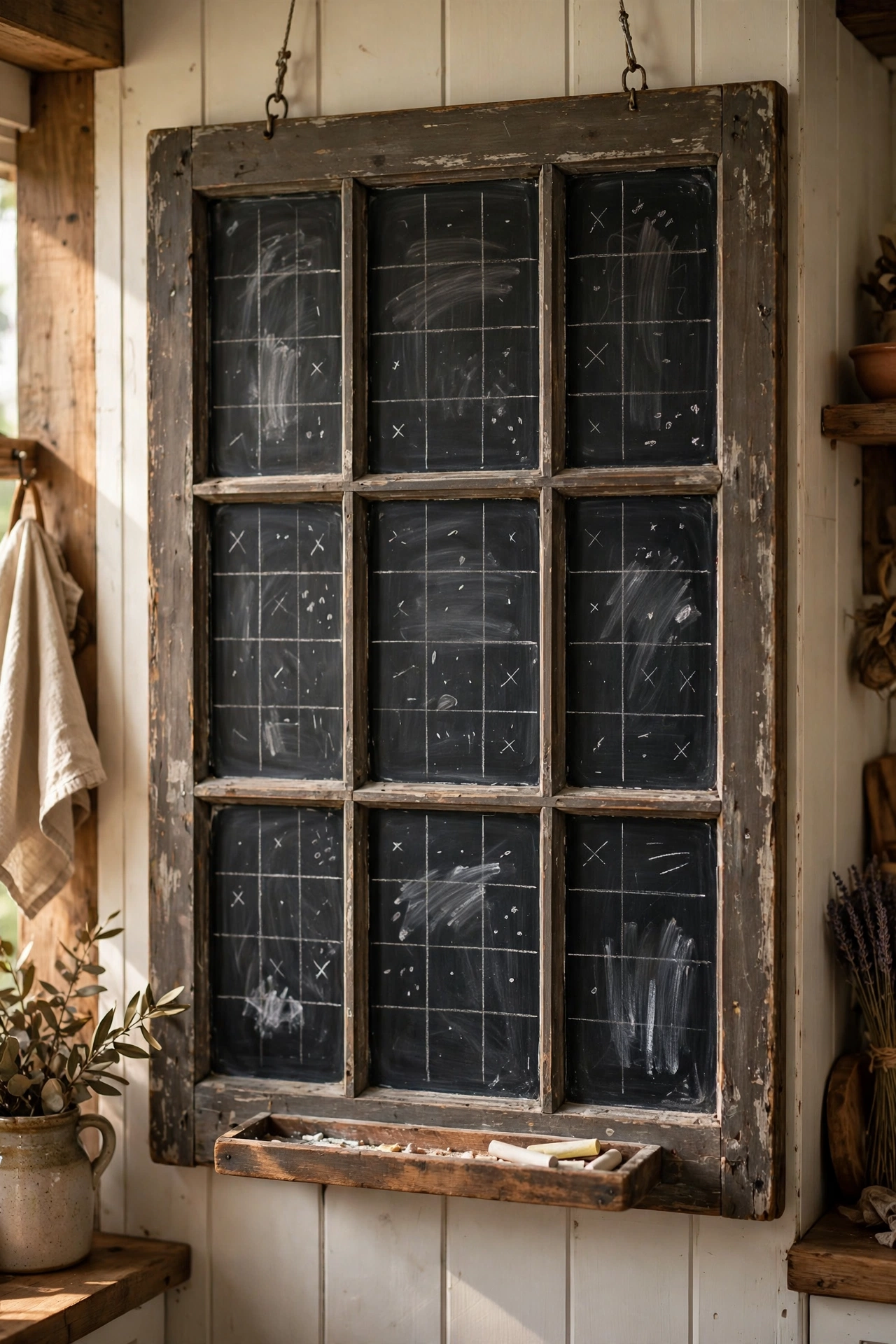
Take the chalkboard idea one step further: paint the panes with chalkboard paint, then use a white paint pen to rule one big pane into a monthly calendar grid. The whole family’s schedule lives on the wall in farmhouse style, and next month is one eraser away.
Try this: dedicate the bottom rail to a chalk tray (a narrow strip of wood) so chalk and eraser always live with the calendar.
19. Empty-Frame Gallery Wall
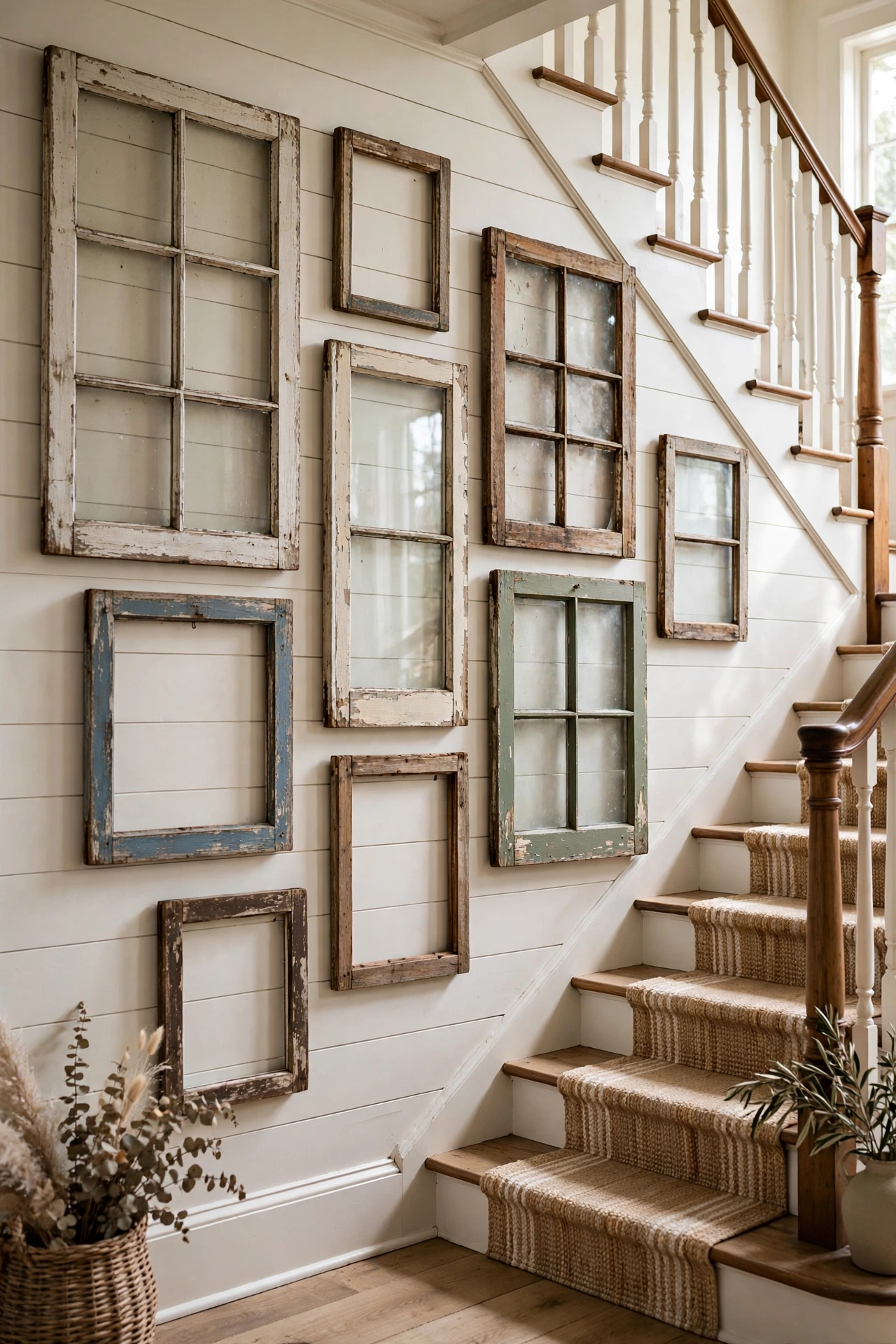
Collect empty frames in different sizes — some with glass, some without, some painted, some raw — and arrange them up a staircase wall or across a large blank wall. No two need to match; the variety is the point. It is architectural art made from other people’s trash.
Try this: lay the arrangement on the floor first and photograph it, then transfer it to the wall one frame at a time using the photo as a map.
20. Leaning Console Backdrop
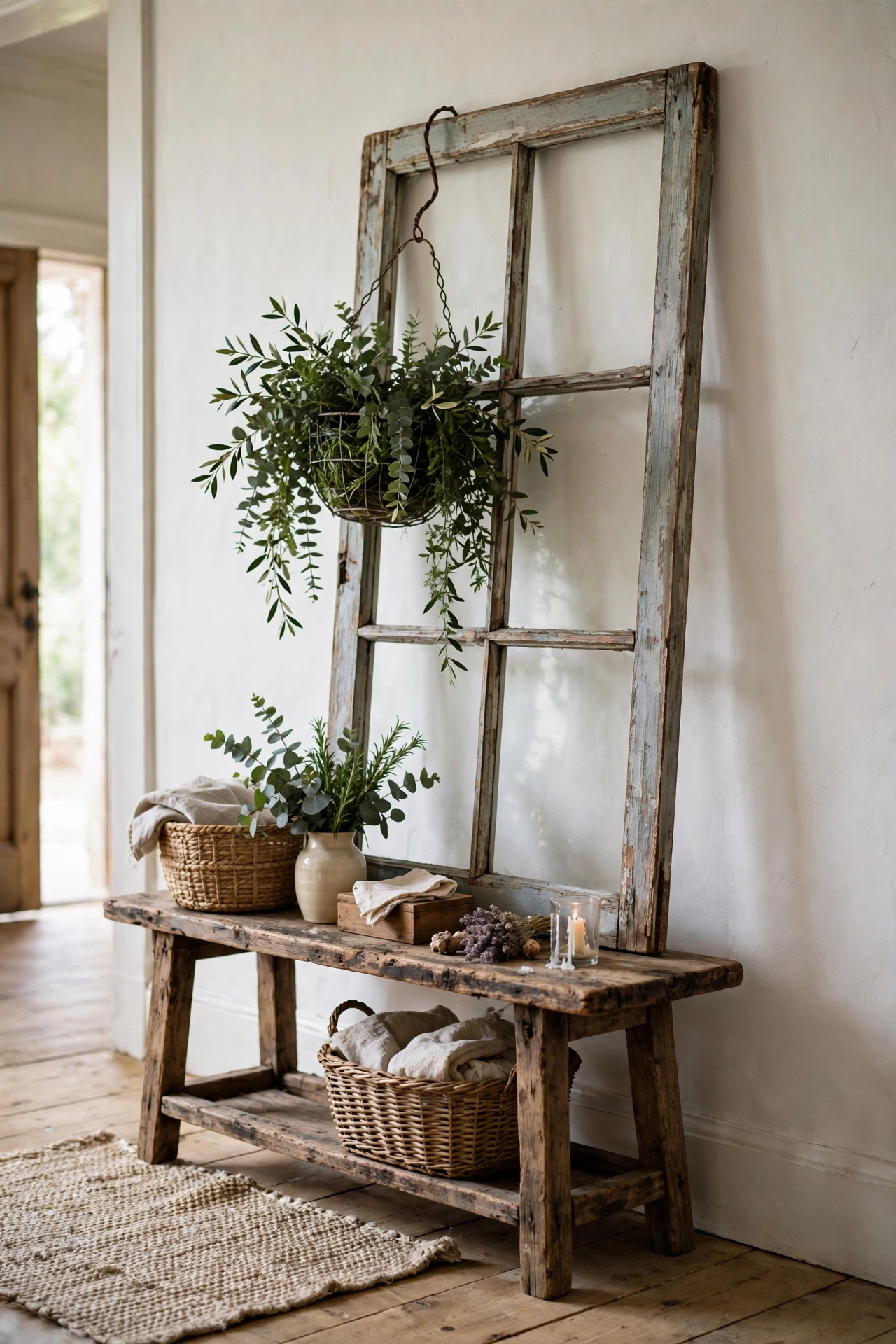
Lean a tall window against the wall behind a console table, bench, or dresser — no mounting hardware at all. Hang a small wire basket from one of the panes for mail or greenery. It is the lowest-commitment project here and one of the prettiest: instant height and texture behind furniture that used to look flat.
Try this: put adhesive rubber bumpers on the bottom corners so the frame never scratches the floor or slides.
21. Shed Window-Box Illusion
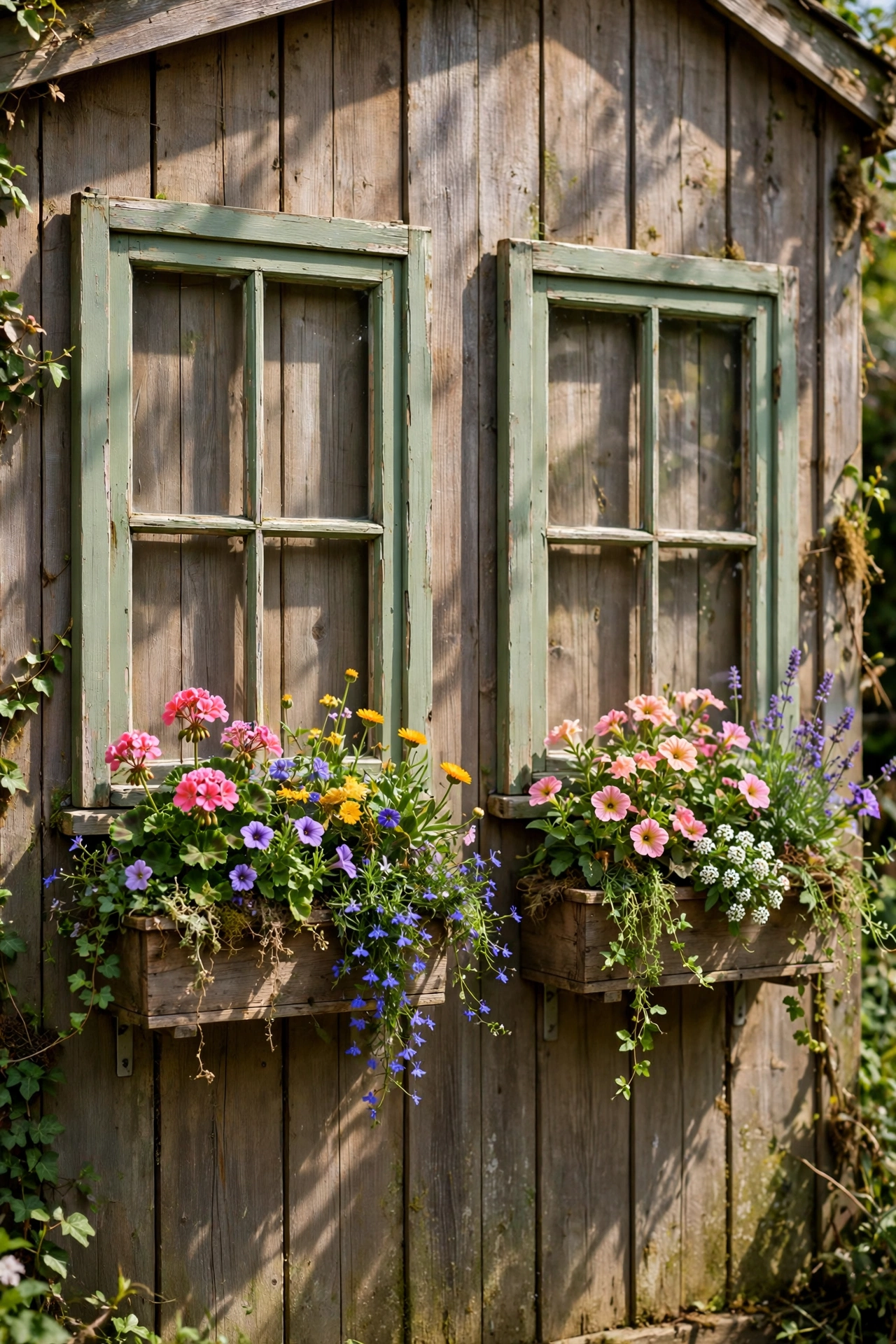
Mount a pair of windows with flower boxes on the blank side of a shed, garage, or fence, and suddenly the most boring wall in your yard looks like a cottage. Paint the frames a contrasting color — sage green or classic black against siding — and the illusion is complete.
Try this: use exterior-grade screws and add a small drip cap (a strip of angled trim) above each frame to shed rain.
22. Pergola Hanging Garden Feature
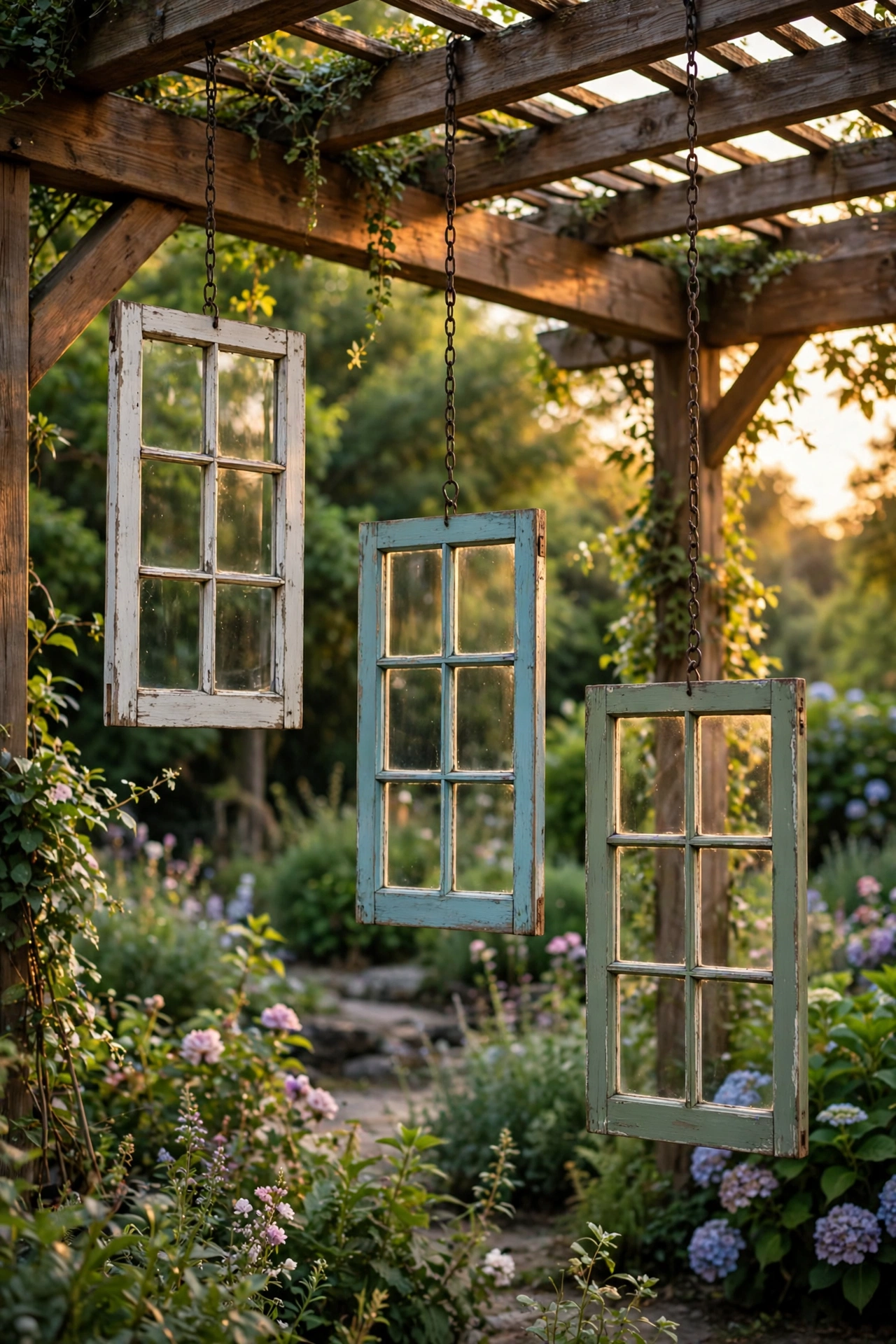
Hang mismatched windows from the rafters of a pergola or porch at varying heights using sturdy chain. They catch the light, frame the garden beyond, and turn an ordinary structure into something out of a magazine. Different paint colors — white, robin’s egg blue, sage — make it feel collected rather than chaotic.
Try this: hang them where they will not swing into anyone’s head, and use closed-link chain rather than twine for anything overhead.
23. Window Glass-Front Cabinet
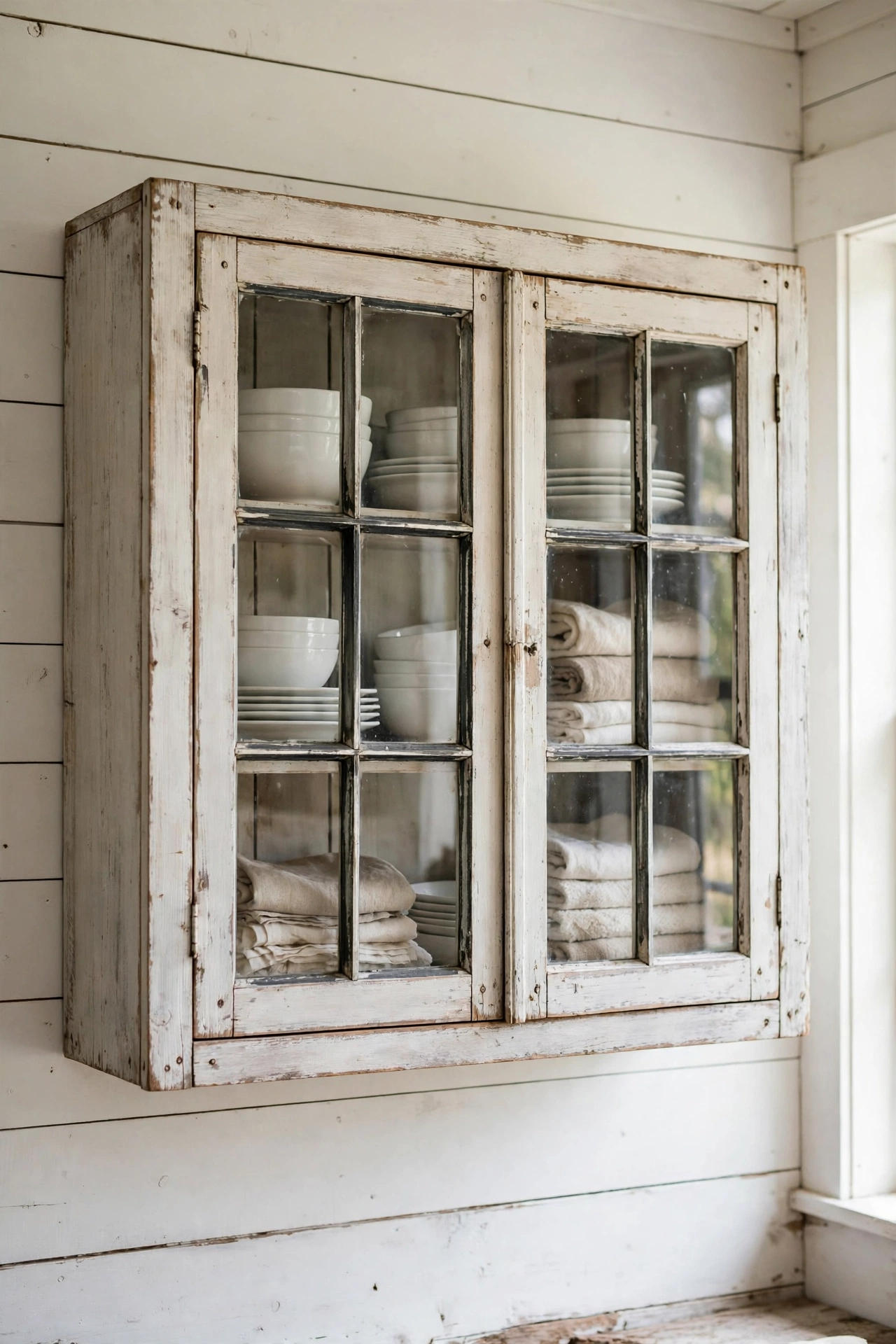
Build or buy a simple box cabinet and face it with two window sashes as doors. Dishes, linens, or pantry jars show through the old glass beautifully, and the whole piece looks like a genuine antique. Hang it in the kitchen, bathroom, or hallway — anywhere you need storage that does not look like storage.
Try this: add magnetic catches at the top of each door so the sashes stay shut without visible hardware.
24. Window-Pane Serving Tray
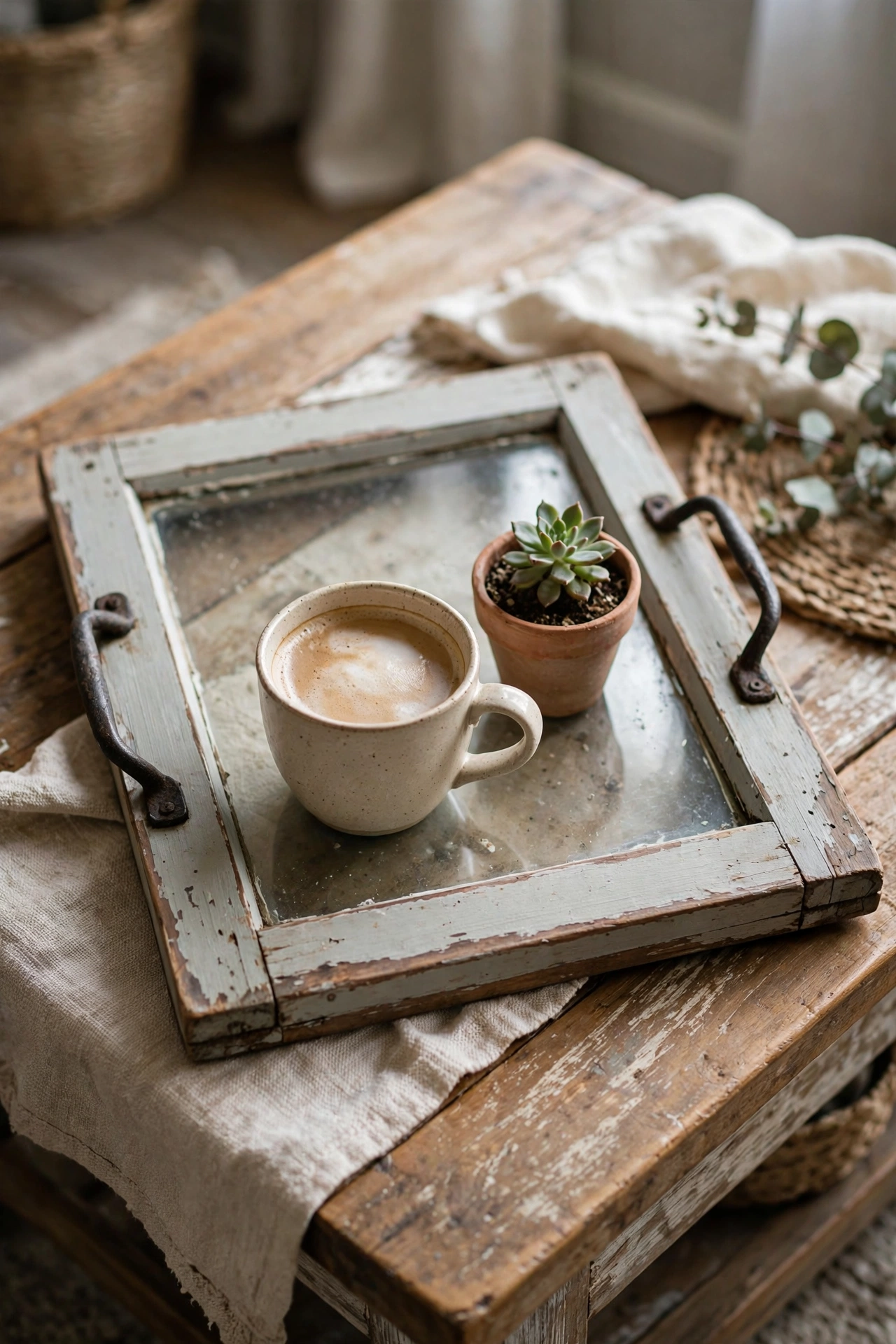
A small single window — the kind from a bathroom or shed — makes a perfect serving tray with two handles screwed to the sides. Serve coffee, carry candles to the porch, or just leave it on the coffee table styled with a plant. It is a great first project if you are nervous about power tools.
Try this: seal the tray with food-safe mineral oil or a clear topcoat if you will set drinks directly on the glass.
25. Key Holder and Mail Organizer
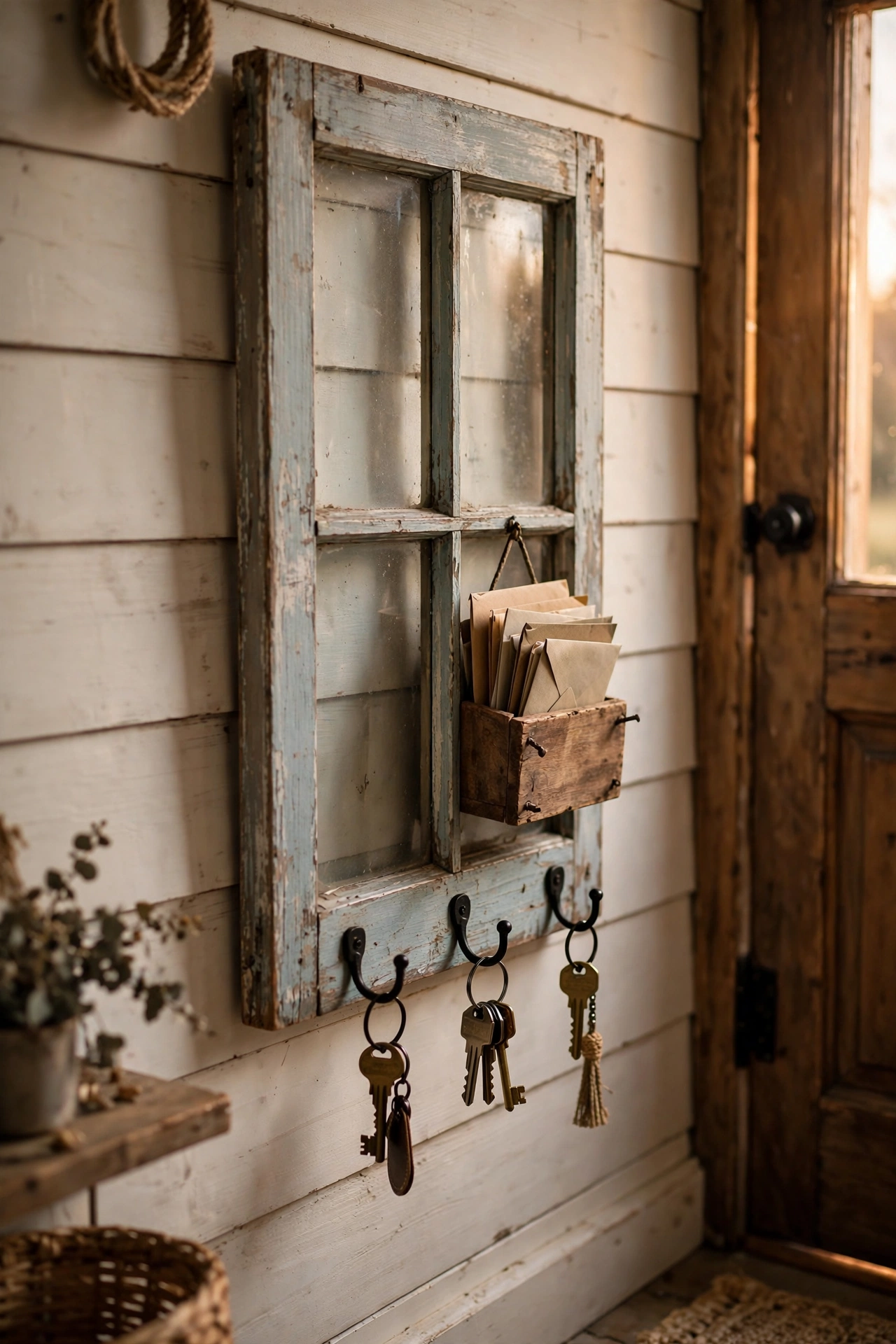
Mount a narrow window by the front door, add three or four hooks to the bottom rail for keys, and screw a small wooden pocket or wire basket to one pane for mail. Everything you grab on the way out lives in one good-looking spot instead of scattered across the counter.
Try this: label a hook for each family member with a small chalkboard tag — no more “who took my keys” mornings.
Project Cheat Sheet
Not sure where to start? Match a project to your time, budget, and comfort level:
| Project | Difficulty | Typical Cost | Time |
|---|---|---|---|
| Wreath backdrop / leaning display | Easy | $5–$15 | 30 min |
| Photo gallery / memo board | Easy | $10–$25 | 1–2 hrs |
| Chalkboard / calendar window | Easy | $15–$30 | 2–3 hrs |
| Mirror / jewelry organizer | Easy–Medium | $20–$50 | 2–4 hrs |
| Coat rack / key holder / shelves | Easy–Medium | $15–$40 | 2–3 hrs |
| Headboard / room divider | Medium | $30–$80 | Half day |
| Coffee table / cabinet | Medium–Hard | $50–$120 | Weekend |
| Cold frame / mini greenhouse | Medium | $30–$100 | Weekend |
Want even more window inspiration before you start? This roundup of 30 ways to use old window frames is a great browse for extra ideas. And if you have never distressed furniture before, this step-by-step window wall decor tutorial walks through the chalk-paint-and-distress technique used in half the projects above.
Frequently Asked Questions
Where can I find old windows for projects?
Architectural salvage yards are the gold mine — they sell vintage sashes for $5–$15 each. Also check Facebook Marketplace, Craigslist, flea markets, and Habitat for Humanity ReStores. If neighbors are replacing windows, ask before the old ones hit the dumpster; contractors often give them away free.
Is it safe to use old windows? What about lead paint?
Windows made before 1978 may contain lead-based paint, so test first with an inexpensive swab kit from any hardware store. If the test is positive, do not dry-sand or scrape — either encapsulate the paint with a sealing primer and fresh topcoat, or strip it using a chemical stripper while wearing a respirator. The EPA’s lead safety guidance explains the precautions in detail. Once sealed or stripped, the wood is perfectly safe for indoor projects.
How do I hang a heavy window frame on the wall?
Always anchor into wall studs, not drywall alone. Use a stud finder, then drive 2.5–3 inch deck screws through the frame’s stiles into the studs — two screws per stud contact. For very heavy multi-sash pieces, a French cleat (one beveled board on the wall, one on the frame) distributes the weight and makes leveling easy.
What is the best paint for old window frames?
Chalk paint or mineral paint is the farmhouse favorite: it adheres well to old finishes, dries matte, and distresses beautifully with 220-grit sandpaper on edges and corners. Finish with a clear wax or matte polycrylic for pieces that get handled. For outdoor projects, use exterior acrylic paint plus spar urethane.
Can I use old windows outdoors?
Yes, with weatherproofing. Seal all sides of the wood — including the backs and edges — with exterior spar urethane or marine varnish, and use exterior-grade screws. Projects under a porch roof or eave will last for years; fully exposed pieces need resealing every couple of seasons.
Final Thoughts
Old windows are one of the few decor materials that get more beautiful the more worn they are — every chip and crack is proof of a previous life. That is why a $8 flea-market sash can outshine a $200 store-bought frame: it has a story, and now it has yours too.
Start with the window you can find, not the project you think you should build. Hang it, lean it, or paint it this weekend, and let the next idea come from living with the first one. The best farmhouse homes are not decorated all at once — they are collected, one rescued window at a time.


