


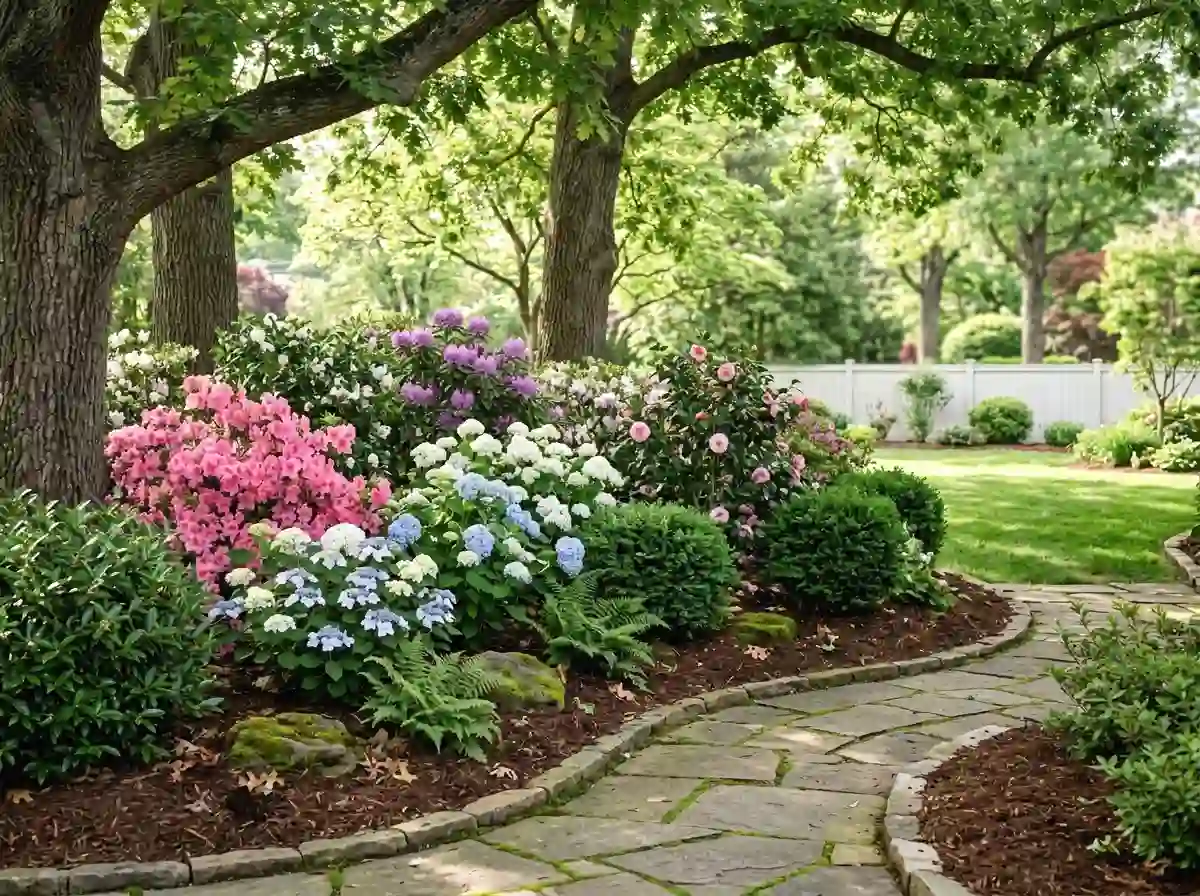
Finding plants that grow well beneath large trees can be frustrating. I remember trying to fill a shady area in a garden where grass stayed thin, colorful flowers quickly faded, and the space always looked unfinished. No matter what I planted, it never seemed to thrive because the area simply didn’t get enough sunlight.
After learning which shrubs naturally grow in woodland conditions, everything started to change. Instead of trying to make sun-loving plants survive, I chose shade loving shrubs that actually prefer lower light. The result was a greener, healthier garden with far less maintenance. If you’re dealing with a dark corner, an empty space under trees, or a shady garden bed, these shrubs can help you create a landscape that stays beautiful throughout the year.
What Is a Shade Loving Shrub?
A shade loving shrub is a woody plant that grows well with limited sunlight. These shrubs naturally thrive in woodland areas where they receive partial shade, full shade, or filtered sunlight beneath mature trees. Many also offer colorful flowers, evergreen leaves, or attractive foliage, making them a great choice for brightening darker parts of your yard.
For more low-light ideas, see our guide to 16 foolproof perennials that thrive in the shade.
Expert Tip: Before planting any shrub, check the plant label or nursery information for its mature height, width, and USDA Hardiness Zone. Choosing the right plant for your climate and giving it enough room to grow will reduce future maintenance and improve long-term success.
Understanding Different Types of Shade
Before choosing a shrub, it’s helpful to know how much sunlight your planting area receives.
| Shade Type | Daily Sunlight | Best For |
|---|---|---|
| Full Shade | Less than 3 hours | Dense tree cover and north-facing gardens |
| Partial Shade | About 3 to 6 hours | Most flowering shade shrubs |
| Dappled Shade | Filtered sunlight through tree branches | Woodland gardens and natural landscapes |
Most shade loving shrubs perform best in partial or dappled shade rather than complete darkness.
For a complete guide to shade types and shade-tolerant plant lists, see the University of Minnesota Extension’s guide to gardening in the shade.
Quick Comparison of Shade Loving Shrubs
| Shrub | Evergreen | Flowers | Best Light |
|---|---|---|---|
| Azalea | No | Yes | Partial Shade |
| Hydrangea | No | Yes | Partial Shade |
| Camellia | Yes | Yes | Partial Shade |
| Boxwood | Yes | No | Partial to Full Shade |
| Yew | Yes | No | Full Shade |
| Rhododendron | Yes | Yes | Partial Shade |
| Pieris | Yes | Yes | Partial Shade |
| Mahonia | Yes | Yes | Partial to Full Shade |
| Fothergilla | No | Yes | Partial Shade |
| Viburnum | Varies | Yes | Partial Shade |
| Sweet Box | Yes | Yes | Full Shade |
| Leucothoe | Yes | No | Partial to Full Shade |
| Japanese Skimmia | Yes | Yes | Partial to Full Shade |
| Virginia Sweetspire | No | Yes | Partial Shade |
| Oakleaf Hydrangea | No | Yes | Partial Shade |
| Mountain Laurel | Yes | Yes | Partial Shade |
How to Choose the Best Shade Loving Shrub
Not every shade shrub is the right fit for every yard. Before buying a plant, think about how much space you have, how much sunlight reaches the area, and the type of soil in your garden.
If you want color throughout the year, choose evergreen shrubs like Boxwood, Camellia, or Sweet Box. If spring and summer flowers are your priority, Azaleas, Hydrangeas, and Rhododendrons are excellent choices. For the best results, always match the shrub to your USDA Hardiness Zone and planting conditions.
Azalea

Azaleas are one of the most loved flowering shrubs for shady gardens. They produce large blooms in spring that come in shades of pink, red, white, purple, and coral. These colorful flowers brighten areas that receive filtered sunlight beneath mature trees. Morning sun and afternoon shade usually produce the healthiest plants and the best blooms.
They grow best in partial shade with moist, well-drained, acidic soil. Adding compost before planting helps keep the roots healthy and encourages more blooms each year.
Why You’ll Love It
- Stunning spring flowers
- Perfect for woodland gardens
- Great under mature trees
- Easy to grow with the right soil
Growing Tip: Apply a layer of mulch around the base to help the soil stay cool and moist during summer.
Hydrangea

Hydrangeas bring large, eye-catching flower clusters to shady landscapes. Oakleaf and bigleaf varieties perform especially well in partial shade, while oakleaf hydrangeas are generally more tolerant of shadier locations.
Their blooms can last for weeks during summer, while oakleaf hydrangeas also offer beautiful fall foliage. These shrubs look wonderful along fences, under tall trees, or beside shaded patios.
Why You’ll Love It
- Huge colorful blooms
- Long flowering season
- Beautiful fall leaves
- Excellent focal plant
Growing Tip: Water deeply during dry weather, especially in the first growing season.
Camellia

Camellias add color when many other plants are resting. Their glossy evergreen leaves stay attractive all year, while elegant flowers bloom from late fall through early spring, depending on the variety.
These shrubs prefer partial shade and rich, slightly acidic soil. They grow slowly, making them a great long-term choice for shaded landscapes.
Why You’ll Love It
- Evergreen all year
- Beautiful winter blooms
- Perfect for elegant gardens
- Long-lasting landscape plant
Growing Tip: Plant camellias where they are protected from strong afternoon sun and drying winds.
Boxwood

Boxwood is a classic evergreen shrub that works in almost any garden style. It grows well in partial to full shade and keeps its rich green leaves throughout the year.
Many homeowners use boxwood for borders, foundation plantings, or neat hedges. It responds well to pruning, so you can keep it natural or shape it into tidy forms.
Why You’ll Love It
- Evergreen foliage
- Low maintenance
- Easy to shape
- Looks attractive year-round
Growing Tip: Trim lightly once or twice each year to encourage dense, healthy growth.
Yew

Yews are one of the best evergreen shrubs for deep shade. Their soft, dark green needles create a rich background for flowering plants and brighten shady areas throughout the year.
They grow slowly but live for many years, making them a smart choice for permanent landscaping. Yews also handle pruning very well if you want formal hedges. Keep in mind that all parts of the plant except the red berry-like flesh are poisonous if eaten.
Why You’ll Love It
- Thrives in deep shade
- Evergreen beauty
- Excellent privacy shrub
- Long lifespan
Growing Tip: Plant in well-drained soil because yews do not like standing water.
Rhododendron

Rhododendrons create a dramatic display every spring with their large clusters of colorful flowers. Their broad evergreen leaves also add texture during every season.
These shrubs naturally grow in woodland settings, so they perform well beneath tall trees where they receive filtered sunlight and rich, acidic soil.
Why You’ll Love It
- Large spring flowers
- Evergreen foliage
- Ideal for woodland gardens
- Creates a bold landscape feature
Growing Tip: Add pine bark mulch each year to help keep the soil slightly acidic.
Pieris

Pieris, also called Japanese andromeda, is an elegant evergreen shrub with hanging clusters of white or soft pink flowers in early spring. New leaves often emerge with shades of red or bronze before turning deep green.
Its graceful shape adds interest to shaded flower beds throughout the year.
Why You’ll Love It
- Attractive spring flowers
- Colorful new growth
- Evergreen leaves
- Excellent for woodland planting
Growing Tip: Feed with a fertilizer made for acid-loving plants in early spring.
Mahonia

Mahonia stands out with its bold, glossy leaves and bright yellow flower spikes that appear during late winter or early spring. After flowering, blue berries develop and attract birds to the garden.
It grows well in partial to full shade and adds year-round texture to woodland landscapes.
Why You’ll Love It
- Bright yellow flowers
- Evergreen foliage
- Bird-friendly berries
- Deer resistant
Growing Tip: Keep the soil evenly moist and apply mulch to protect the roots.
Fothergilla

Fothergilla is a beautiful native shrub that offers something special in every season. In spring, it produces soft white bottlebrush flowers with a light honey scent. During fall, its leaves change into bright shades of orange, red, and yellow.
This shrub grows best in partial shade with rich, well-drained soil. It is a great choice if you want colorful foliage without a lot of maintenance.
Why You’ll Love It
- Fragrant spring flowers
- Brilliant fall color
- Native to North America
- Easy to care for
Growing Tip: Mix compost into the soil before planting to help roots grow strong.
Viburnum

Viburnum is a versatile shrub that brings beauty through every season. Many varieties produce creamy white flowers in spring, colorful berries in summer, and attractive foliage in fall. Most varieties bloom best in partial shade, where they receive a few hours of gentle sunlight each day.
It works beautifully as a privacy screen, border, or focal point in a woodland garden.
Why You’ll Love It
- Pretty spring flowers
- Colorful berries for birds
- Beautiful fall foliage
- Great for larger landscapes
Growing Tip: Water regularly during the first year so the shrub can develop a healthy root system.
Sweet Box

Sweet Box is one of the best shrubs for deep shade. Although its small white flowers may not stand out, they fill the garden with a rich, sweet fragrance during winter.
Its glossy evergreen leaves keep the garden looking fresh throughout the year, making it a perfect choice for dark corners and shady walkways.
Why You’ll Love It
- Wonderful winter fragrance
- Evergreen foliage
- Thrives in deep shade
- Low maintenance
Growing Tip: Plant it near a path or patio where you can enjoy its sweet scent.
Leucothoe

Leucothoe is an evergreen shrub with graceful arching branches and shiny green leaves that often turn bronze or red during cooler months.
It grows naturally in woodland areas and enjoys moist, shady locations where many other shrubs struggle.
Why You’ll Love It
- Colorful evergreen foliage
- Elegant arching branches
- Excellent woodland plant
- Great for shaded borders
Growing Tip: Keep the soil evenly moist, especially during hot summer weather.
Japanese Skimmia

Japanese Skimmia is a compact evergreen shrub that adds beauty all year long. It produces fragrant white flowers in spring, while female plants develop bright red berries that last through winter when a male plant is nearby for pollination.
This shrub grows best in partial to full shade and is perfect for small gardens or foundation beds.
Why You’ll Love It
- Evergreen leaves
- Fragrant spring flowers
- Bright winter berries
- Compact growth
Growing Tip: Plant both male and female varieties if you want colorful berries.
Virginia Sweetspire

Virginia Sweetspire is a native shrub that shines in every season. It produces long clusters of fragrant white flowers in late spring, followed by stunning red and orange foliage in autumn.
It adapts well to moist soils and partial shade, making it a dependable choice for woodland gardens.
Why You’ll Love It
- Fragrant white flowers
- Outstanding fall color
- Native shrub
- Attracts pollinators
Growing Tip: Water regularly during dry periods to encourage healthy growth and more blooms.
Oakleaf Hydrangea

Oakleaf Hydrangea is one of the most attractive shrubs for shady landscapes. It features large white flower clusters during summer and bold oak-shaped leaves that turn deep red and purple in fall.
Its peeling bark also adds winter interest after the leaves have dropped, giving your garden year-round appeal.
Why You’ll Love It
- Large summer blooms
- Spectacular fall foliage
- Attractive winter bark
- Great for woodland gardens
Growing Tip: Add organic mulch every spring to help the soil hold moisture.
Mountain Laurel

Mountain Laurel is a beautiful evergreen shrub with unique star-shaped flower buds that open into clusters of pink or white blooms during late spring.
It naturally grows in woodland settings, making it an excellent choice for planting beneath mature trees where it receives filtered sunlight. Like Azaleas and Rhododendrons, it grows best in acidic, well-drained soil.
Why You’ll Love It
- Unique spring flowers
- Evergreen leaves
- Long-lasting landscape plant
- Perfect for natural gardens
Growing Tip: Avoid planting in heavy clay soil, which can hold too much water around the roots.
Tips for Planting Shrubs Under Trees
Planting beneath mature trees takes a little extra care because tree roots compete for water and nutrients. Following a few simple steps will help your new shrubs become established more quickly.
- Dig the planting hole between large roots whenever possible.
- Mix compost into the soil before planting.
- Add 2 to 3 inches of mulch around the shrub, but keep it away from the stem.
- Water deeply during the first growing season.
- Leave enough space for the shrub to reach its mature size.
Healthy roots are the key to long-lasting shrubs, so avoid cutting large tree roots while planting.
For detailed planting steps, see the UMN Extension guide to planting and transplanting trees and shrubs.
Best Shade Loving Shrubs by Garden Need
| If You Want… | Best Shrubs |
|---|---|
| Year-round greenery | Boxwood, Yew, Sweet Box |
| Bright spring flowers | Azalea, Rhododendron, Camellia |
| Summer blooms | Hydrangea, Oakleaf Hydrangea |
| Winter interest | Sweet Box, Camellia, Japanese Skimmia |
| Bird-friendly garden | Viburnum, Mahonia, Virginia Sweetspire |
| Low-maintenance landscaping | Boxwood, Yew, Leucothoe |
Caring for Shrubs in Dry Shade
Many mature trees absorb most of the available water, leaving very little moisture for nearby plants. Even shade-loving shrubs can struggle if the soil becomes too dry.
Water deeply instead of lightly, especially during the first year after planting. Add organic mulch to help the soil hold moisture, and check the soil before watering to avoid overwatering. A yearly layer of compost also helps improve soil quality and supports healthy root growth.
Frequently Asked Questions
What shrubs grow best in full shade?
Several shrubs grow well in full shade, especially those that naturally grow in woodland areas. Sweet Box, Yew, Leucothoe, Japanese Skimmia, and Mahonia are excellent choices for dark spaces beneath mature trees.
Can I plant shrubs under large trees?
Yes. Choose shrubs that enjoy partial or full shade and plant them carefully between large tree roots. Adding compost and mulch helps the shrubs become established without disturbing the tree.
Which evergreen shrubs are best for shade?
Boxwood, Camellia, Yew, Sweet Box, Japanese Skimmia, Pieris, and Mountain Laurel are excellent evergreen choices for shady gardens.
What flowering shrubs grow in shade?
Azaleas, Rhododendrons, Hydrangeas, Camellias, Mountain Laurel, Fothergilla, and Viburnum all produce beautiful flowers while growing in partial shade.
For even more shade-loving color, see our guide to shade perennials for a lush garden.
How often should I water shade loving shrubs?
Newly planted shrubs need regular watering during their first growing season. Once established, most shade-loving shrubs only need extra water during long dry periods.
Do shade loving shrubs need fertilizer?
Most shade shrubs benefit from a slow-release fertilizer in early spring. Acid-loving shrubs such as Azaleas, Camellias, Pieris, Rhododendrons, and Mountain Laurel grow best with fertilizer made for acid-loving plants.
Can shade loving shrubs grow in containers?
Yes. Smaller shrubs like Japanese Skimmia, Boxwood, Sweet Box, and Camellia grow well in large containers with good drainage and regular watering.
Which shade loving shrub is the easiest to grow?
Boxwood is one of the easiest shrubs for beginners because it is hardy, evergreen, and requires very little maintenance once established.
My Top Picks for Most Home Gardens
If you’re not sure where to start, these shrubs are reliable choices for many home landscapes.
- Best Overall: Hydrangea
- Best Evergreen: Boxwood
- Best Flowering Shrub: Azalea
- Best for Deep Shade: Sweet Box
- Best Low-Maintenance Choice: Yew
- Best Fall Color: Fothergilla
- Best for Small Gardens: Japanese Skimmia
Conclusion
From my experience, the secret to a beautiful shade garden isn’t planting more flowers but choosing plants that naturally enjoy lower light. Once I started using shade loving shrubs in difficult areas, those once-empty spaces became some of the most attractive parts of the landscape. With the right shrub, healthy soil, and regular watering during the first growing season, you can create a lush, low-maintenance garden that adds color, texture, and year-round beauty to even the shadiest parts of your yard.


