


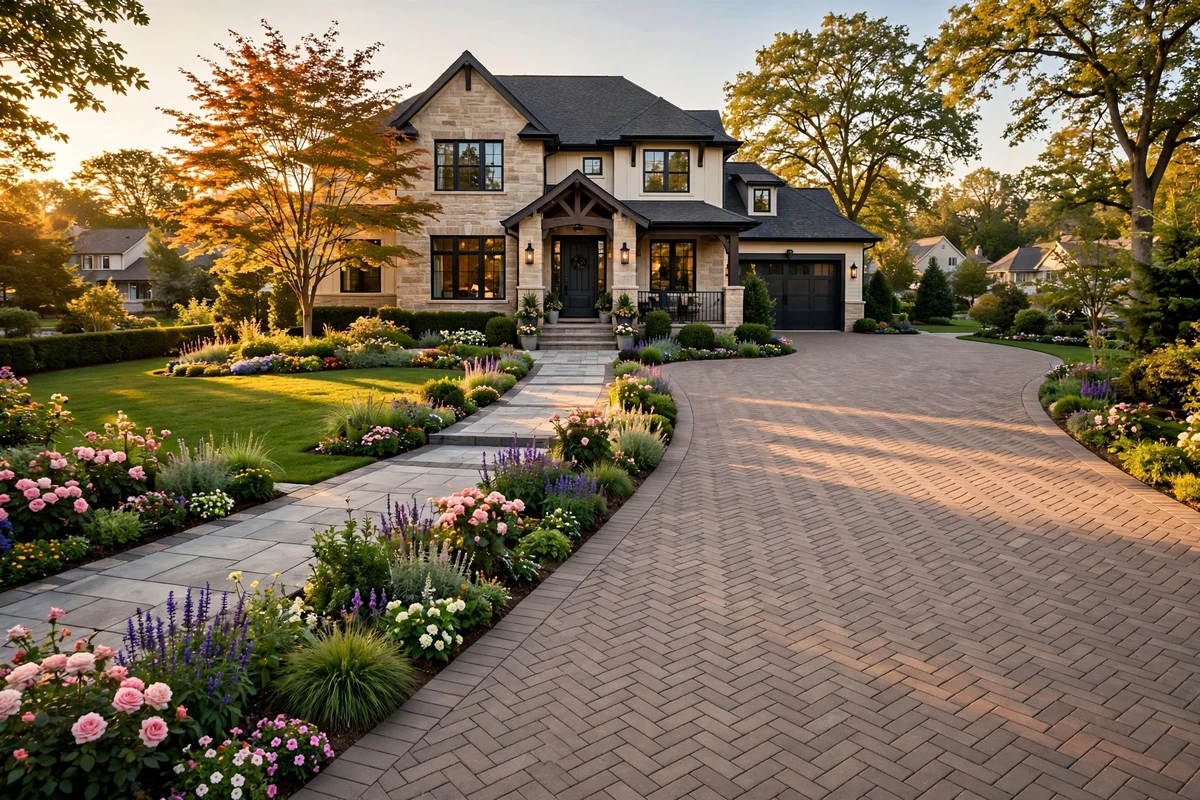
Your front yard is the first thing guests notice and the last thing you see when you pull into the driveway — yet for many of us, it’s just a patch of grass and a cracked concrete path. Concrete pavers change that equation completely. They’re affordable, durable, endlessly customizable, and forgiving for DIYers, which is exactly why they’ve become one of the most popular front yard upgrades in recent years.
After comparing dozens of real front-yard paver projects and installation guides, I pulled together the 25 ideas below — covering walkways, driveways, patios, and the small details (borders, lighting, inlays) that make a yard look professionally designed. Each idea includes a practical tip so you know what you’re getting into before you buy a single paver.
Quick Takeaways
- Start with the walkway. A front path delivers the biggest curb-appeal return for the smallest budget.
- Match the pattern to the job: herringbone for driveways (strength), running bond for walkways (simplicity), stack bond for modern looks.
- Base prep is everything. 4–6 inches of compacted gravel plus 1 inch of bedding sand keeps pavers level for years.
- Soften hard edges with plants. Ground covers, ornamental grasses, and flower borders keep paver designs from feeling cold.
- Budget realistically: expect roughly $10–$30 per square foot professionally installed, or $4–$12 per square foot in materials if you DIY.
1. Modern Minimalist Walkway
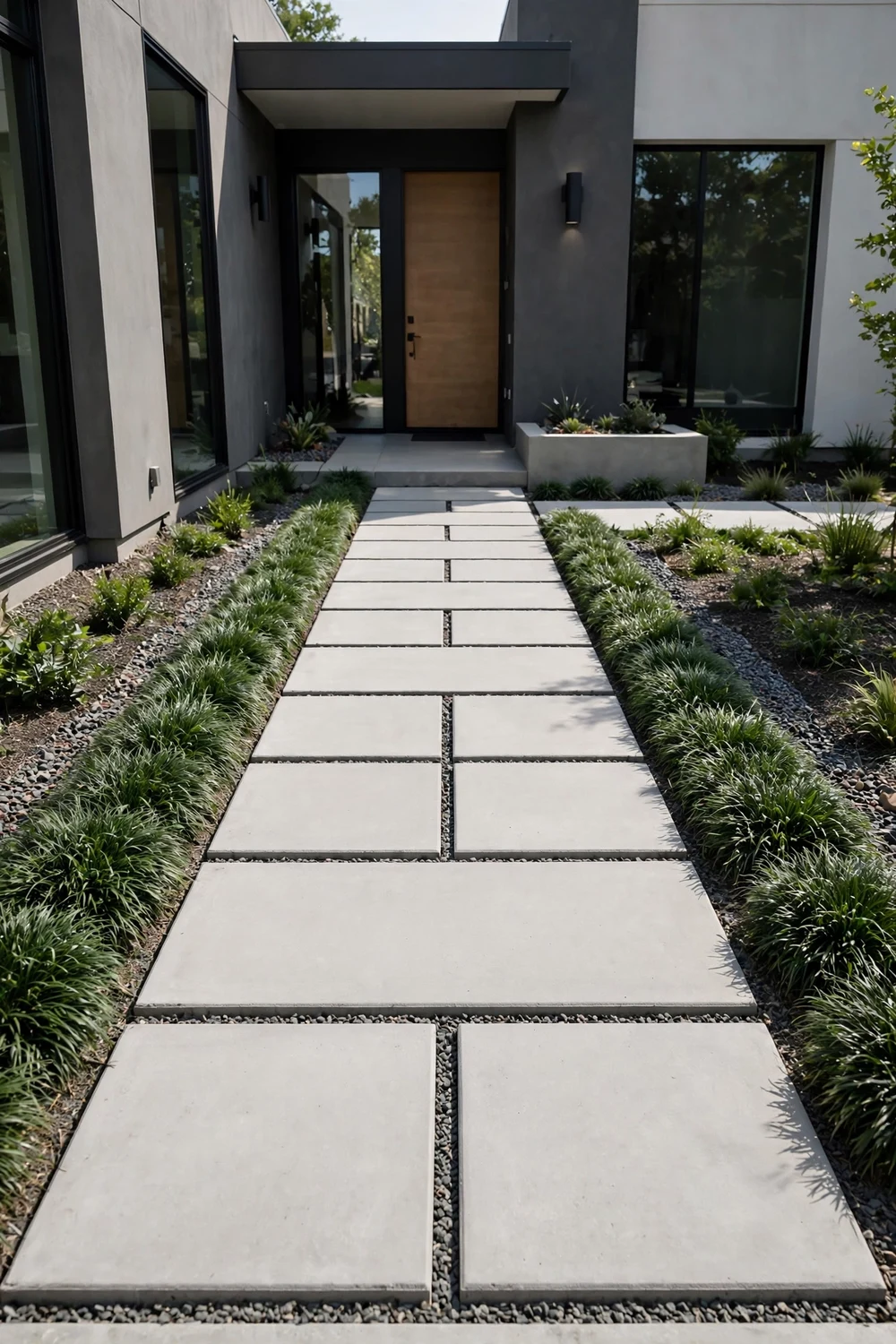
Oversized rectangular pavers laid in a clean stack-bond pattern create the sleek, architectural look modern homes crave. Keep the gaps narrow and fill them with dark gravel or black sand for sharp contrast, and let the walkway run perfectly straight from sidewalk to front door — minimalism is all about confident lines. For more path inspiration, browse these walkway landscaping ideas to pair with your hardscape.
Try this: flank the pavers with low mondo grass or liriope — the tidy green edging makes the geometry pop without any extra maintenance.
2. Classic Herringbone Driveway
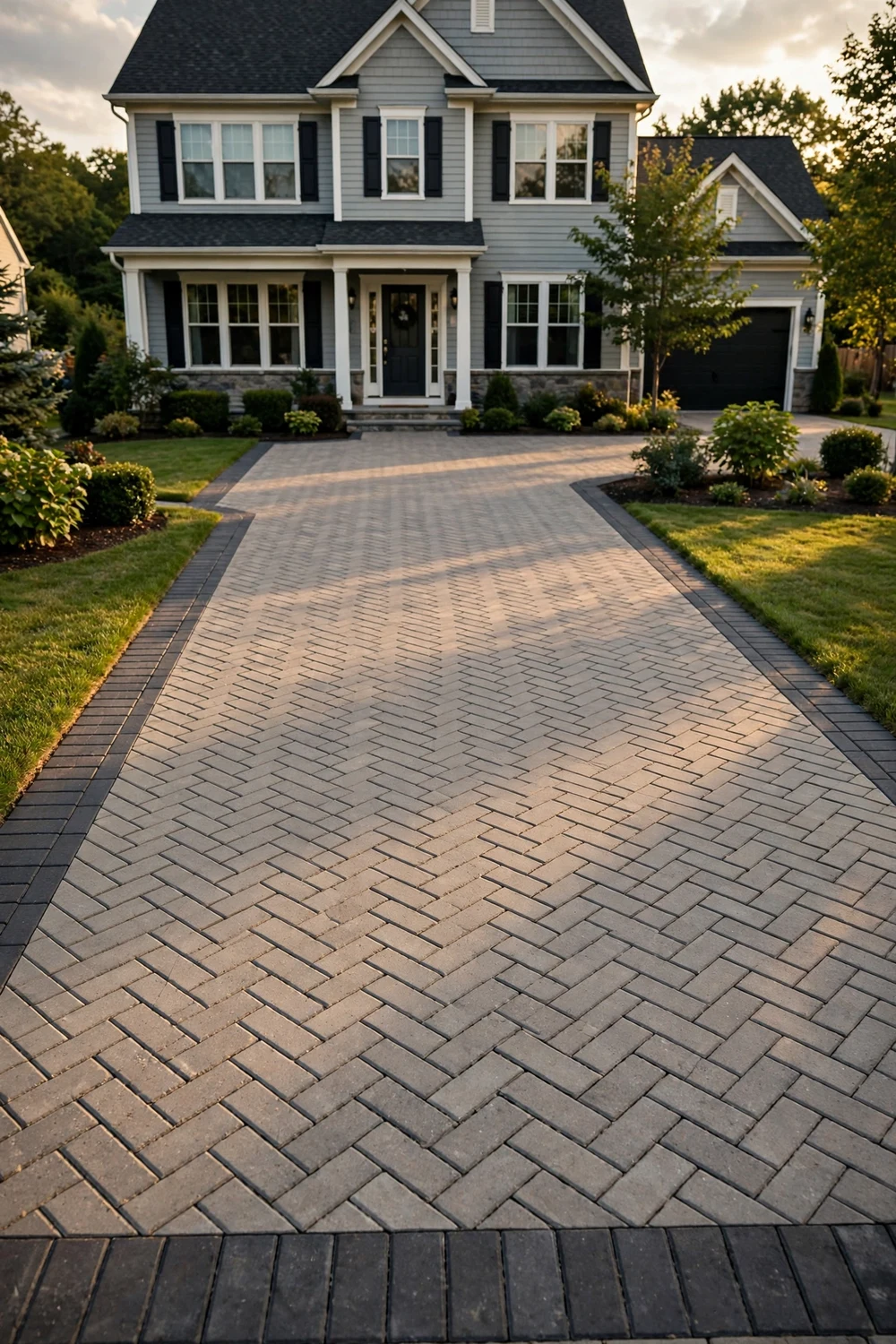
Herringbone isn’t just pretty — the interlocking 90-degree pattern is the strongest paver layout for driveways because it resists shifting under vehicle weight. Choose a warm gray or charcoal paver and watch an ordinary asphalt drive transform into a genuine design feature. It’s more cutting work than a simple running bond, so budget extra time (or hire a pro for this one).
Try this: add a soldier-course border (pavers stood on end around the perimeter) in a contrasting shade to frame the driveway like a picture.
3. Stepping Stones with Grass Infill
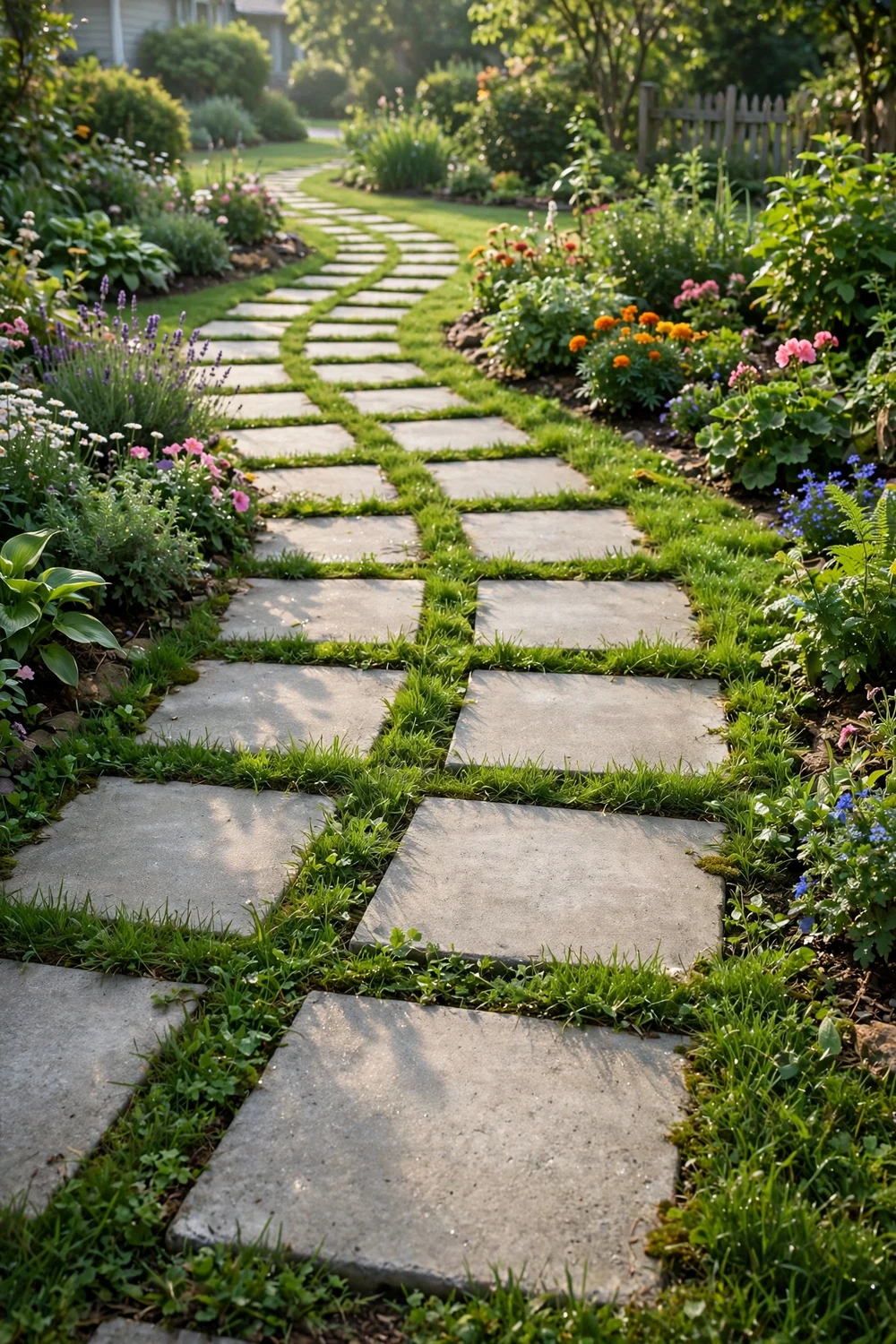
Large square pavers with wide gaps of living grass balance hardscape and lawn beautifully — and cost less, since you need far fewer pavers than a solid patio. Use a sturdy turf or low-growing ground cover like creeping thyme between stones — it handles foot traffic and smells amazing when stepped on.
Try this: in shady yards, swap grass for moss or dwarf mondo grass, which thrive where turf struggles.
4. Circular Paver Medallion
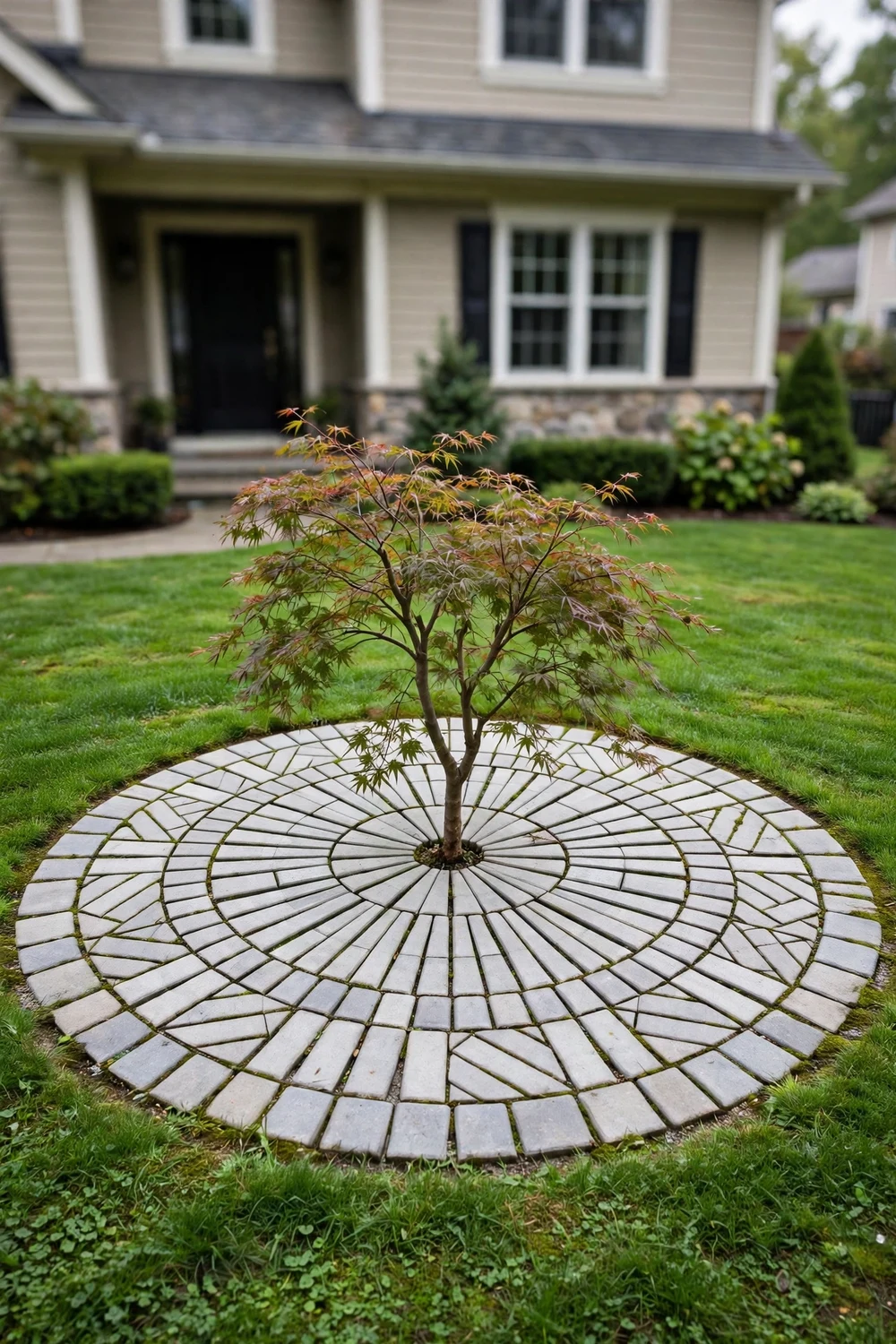
A circular medallion of pavers set into the lawn instantly creates a focal point — no patio required. Center it on a specimen tree, a sculpture, or simply the middle of the yard, and radiate the pattern outward like a compass rose. Paver manufacturers sell circle kits with pre-cut pieces, which removes the hardest part of the geometry.
Try this: ring the medallion with landscape lighting to turn it into an evening showpiece visible from the street.
5. Paver and River Rock Mosaic
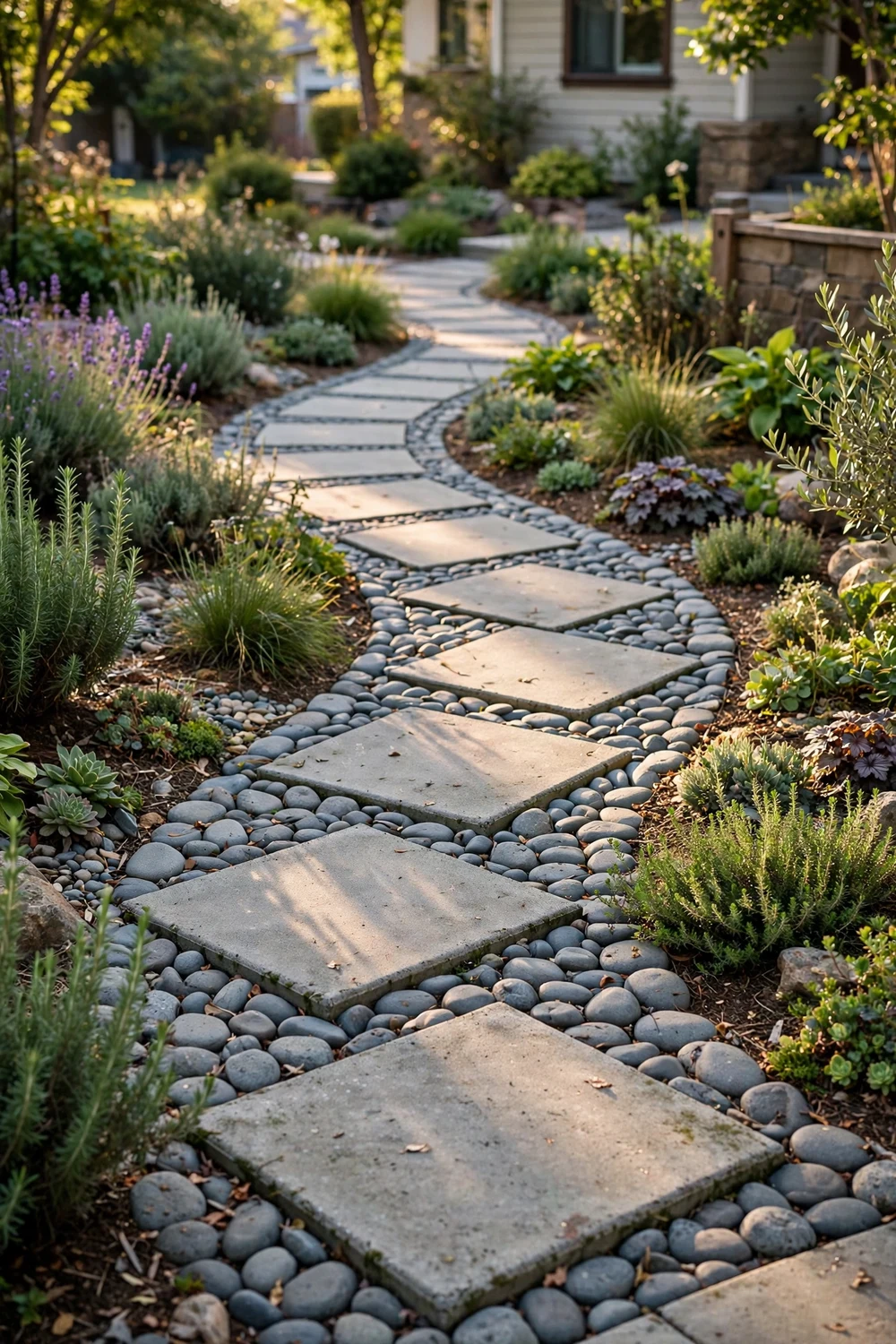
Alternate large pavers with bands of smooth river rock to create a mosaic pathway that’s equal parts art and engineering — the rock sections double as drainage channels during heavy rain. Sketch your pattern on paper first, then dry-lay everything before setting a single stone. If you love this natural-stone look, these river rock landscaping ideas show even more ways to use stone instead of mulch.
Try this: use a polymeric sand or a clear binding agent in the rock sections so pebbles stay put underfoot.
6. Terraced Front Yard with Paver Steps
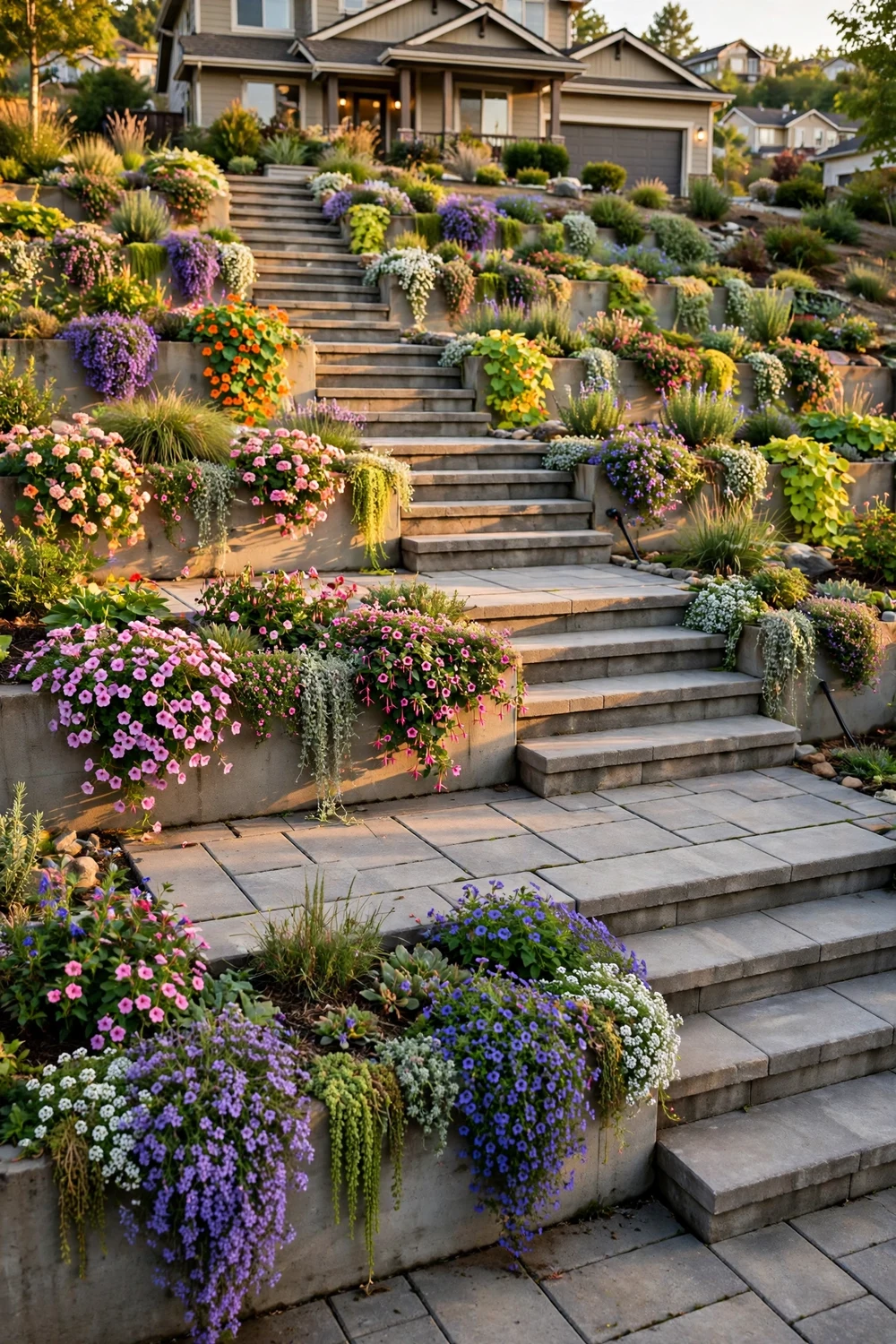
Got a sloped front yard? Stop fighting it and terrace it. Wide, shallow paver steps (each doubling as a mini retaining wall) turn an awkward hill into layered planting beds with a grand staircase feel. Keep each riser under 6 inches so the climb feels effortless, and plant cascading ground covers on each level to soften the structure.
Try this: run low-voltage step lights along each riser — terraced yards look spectacular after dark. Big-picture note: terracing is one of the bigger projects on this list. For retaining walls over 2 feet tall, check local codes for drainage and permit requirements, and consider hiring a pro for the structural work.
7. Permeable Paver Driveway
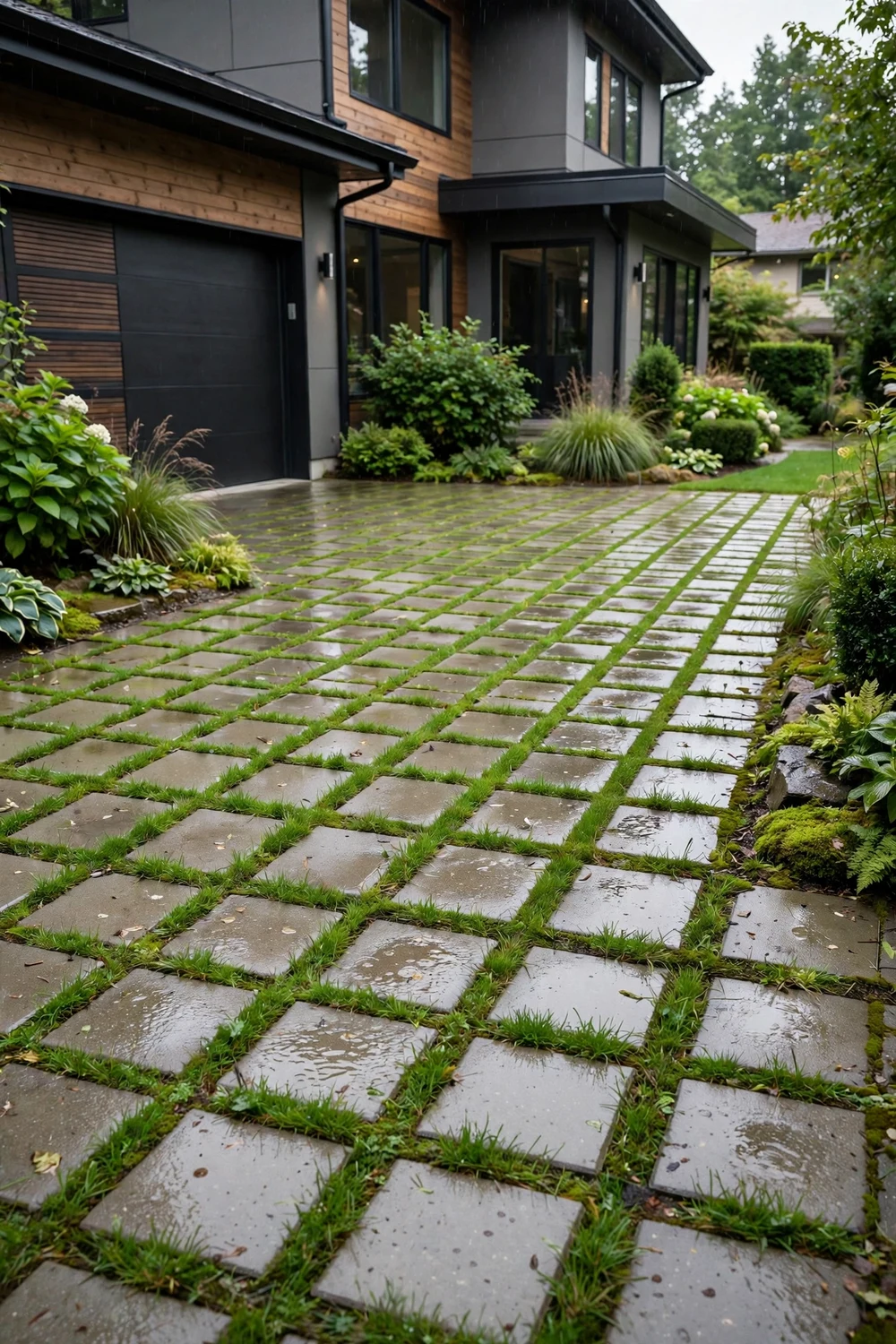
Permeable pavers have wider joints filled with gravel or grass, letting rainwater soak through instead of running off into the street. It’s an EPA-recognized green infrastructure approach — the agency notes permeable pavements reduce runoff and filter pollutants while recharging groundwater. They cost a bit more upfront but can reduce drainage problems (and in some areas, stormwater fees).
Try this: check local codes first — some municipalities offer rebates for permeable installations.
8. Checkerboard Paver-and-Turf Design
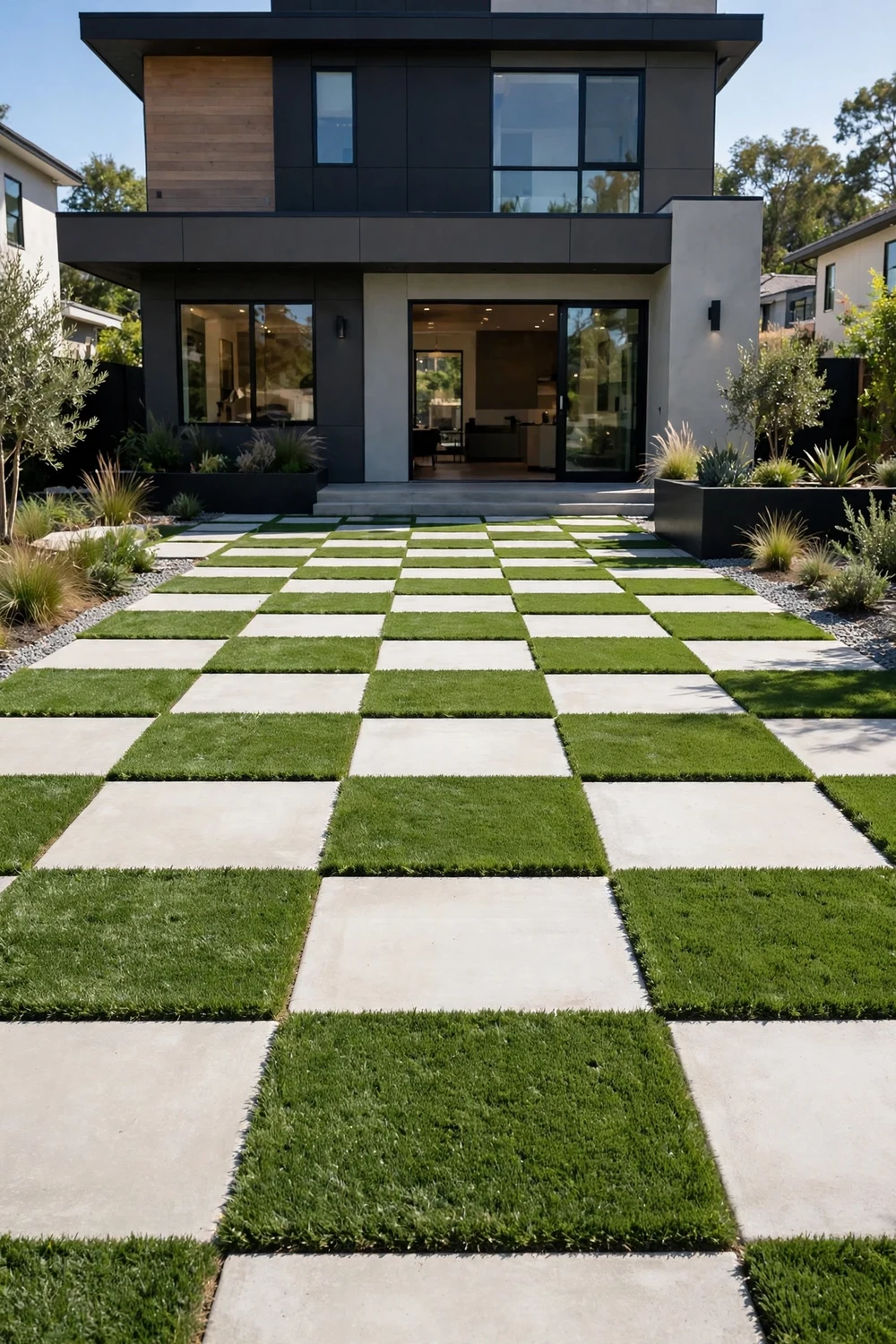
Alternate square pavers with square turf panels in a giant checkerboard for a look that’s playful, graphic, and impossible to ignore from the curb. It uses roughly half the pavers of a solid patio — a genuine budget win — and looks sharpest on flat yards where the grid stays crisp. Mow on a high setting so the grass squares stay lush against the concrete.
Try this: for a lower-maintenance version, replace turf squares with artificial grass panels or creeping ground cover.
9. Zen Gravel Garden with Paver Pads
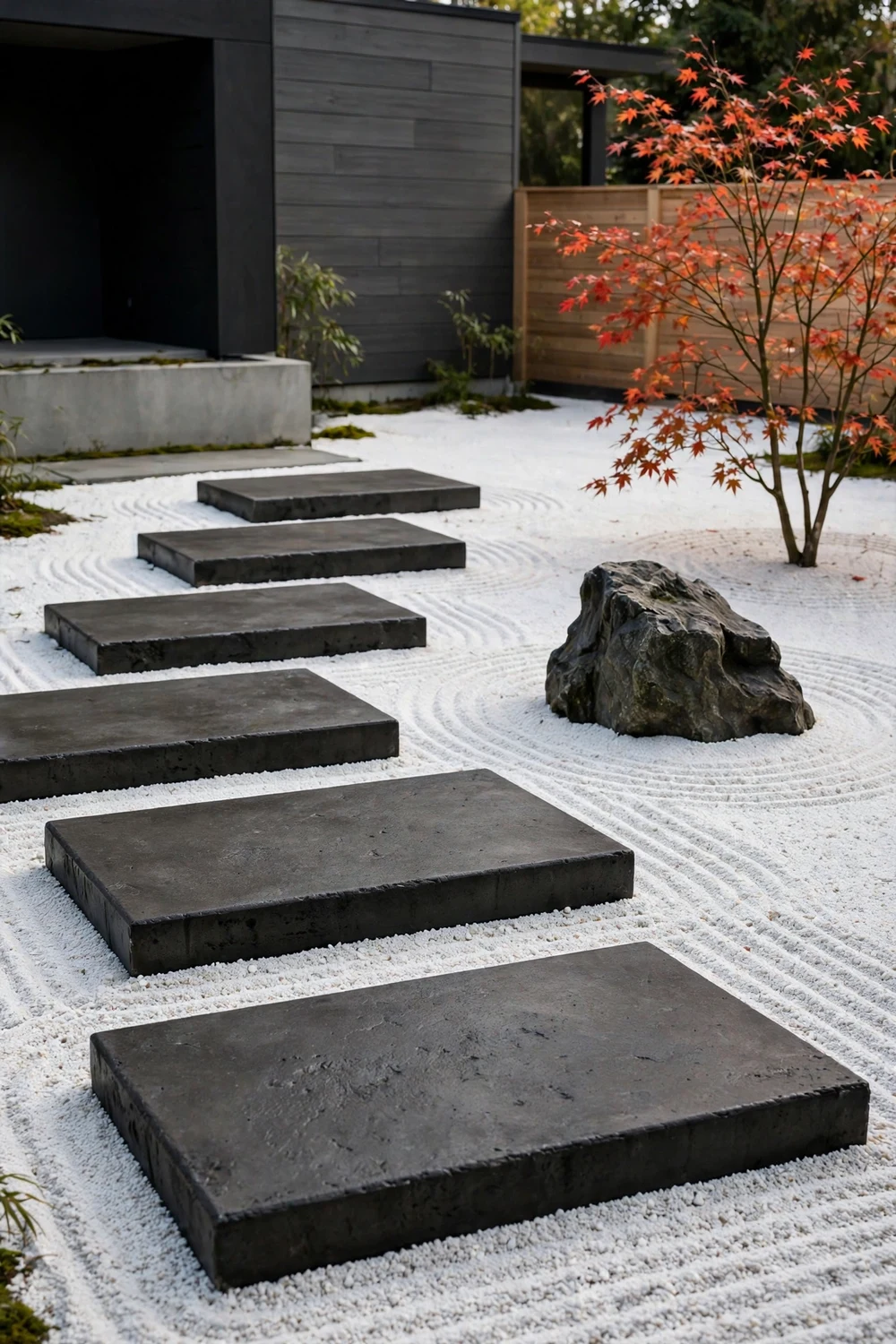
Channel Japanese garden calm with oversized paver pads floating in a sea of raked gravel. The formula is restraint: three to five pads, one sculptural rock, one carefully chosen plant (a Japanese maple or cloud-pruned pine), and nothing else. It’s strikingly low-maintenance — no lawn to mow, no beds to weed — and it makes even a small front yard feel intentional and serene.
Try this: lay landscape fabric under the gravel to keep weeds from ruining the clean look.
10. Curved Cottage Walkway with Flower Borders
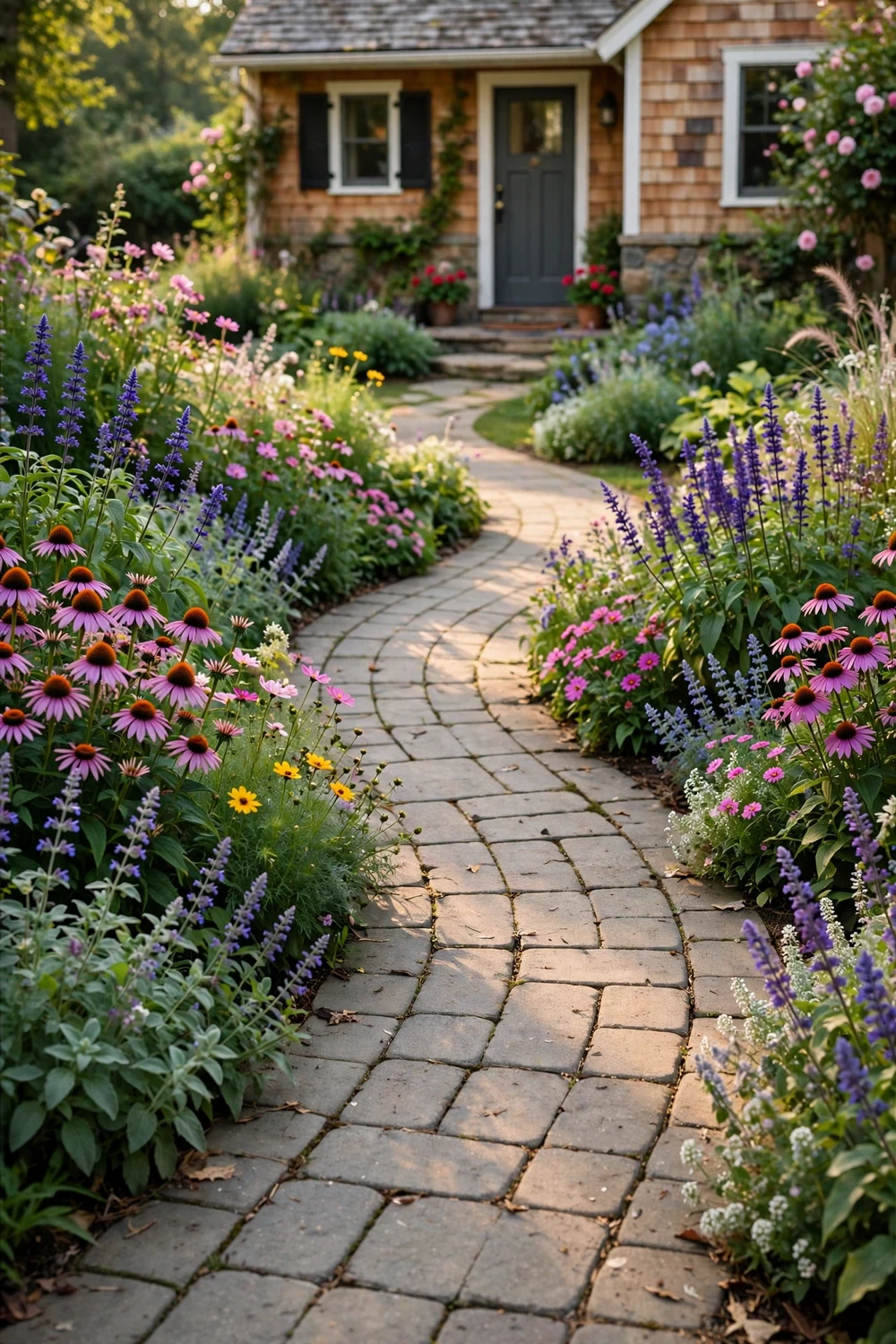
A gently curving paver path edged with billowing flower borders is pure cottage-garden charm. Curves slow the eye (and the visitor), making the journey to your front door feel like a stroll rather than a commute. Plant in drifts — coneflowers, salvia, and daylilies give months of color with minimal fuss. Need planting inspiration? These front yard flower bed ideas pair beautifully with winding paths.
Try this: keep the curve gentle — paths that wiggle too much look fussy and waste pavers on cuts.
11. Paver Porch Landing Upgrade
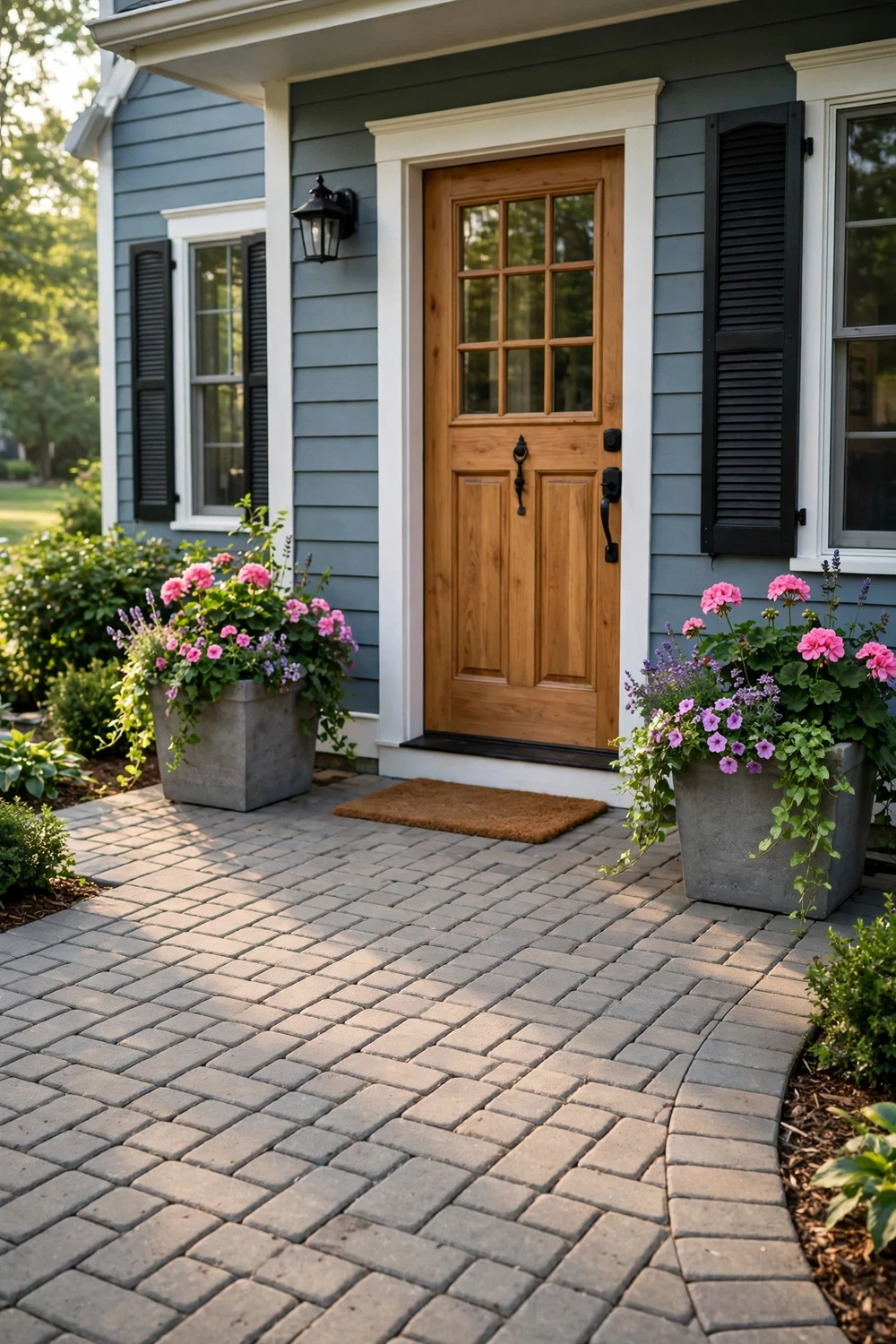
You don’t need to redo the whole yard — replacing a tired concrete stoop with a patterned paver landing instantly upgrades your entrance. Extend it a few feet wider than the door on each side so it reads as a deliberate stone “welcome mat,” in a pattern (basketweave is a classic) that contrasts with the walkway leading to it.
Try this: flank the new landing with matching planters for a symmetrical, pulled-together entry.
12. Contrasting Driveway Border and Apron
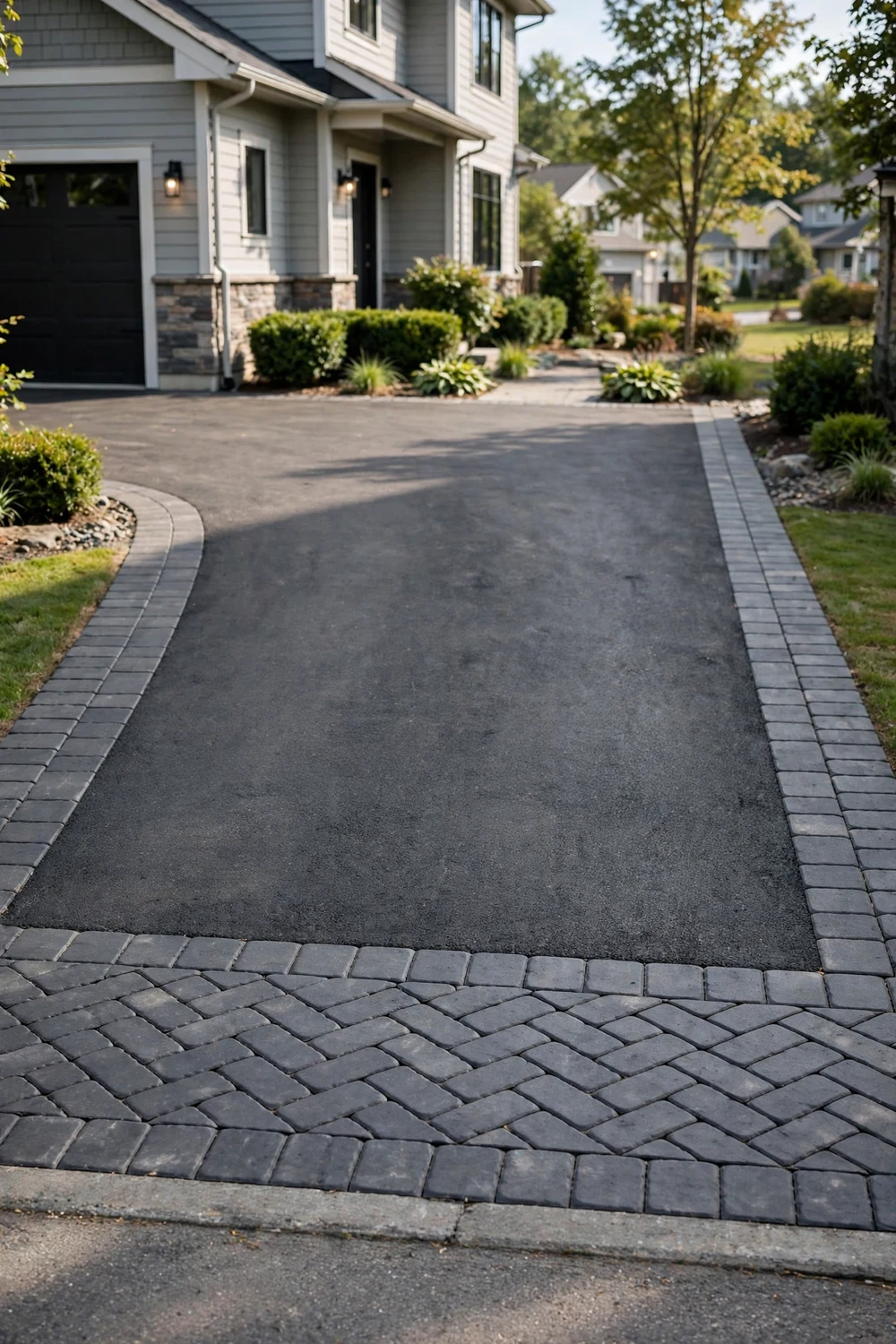
Keep your existing driveway but give it a designer frame: a paver border along both edges plus a decorative apron where the drive meets the street. It’s a fraction of the cost of a full paver driveway, yet it delivers most of the visual impact. A charcoal border against light concrete (or vice versa) creates the crisp definition that makes neighbors slow down for a second look.
Try this: extend the border into a walkway to the front door for one continuous, cohesive design.
13. Front-Yard Paver Seating Nook
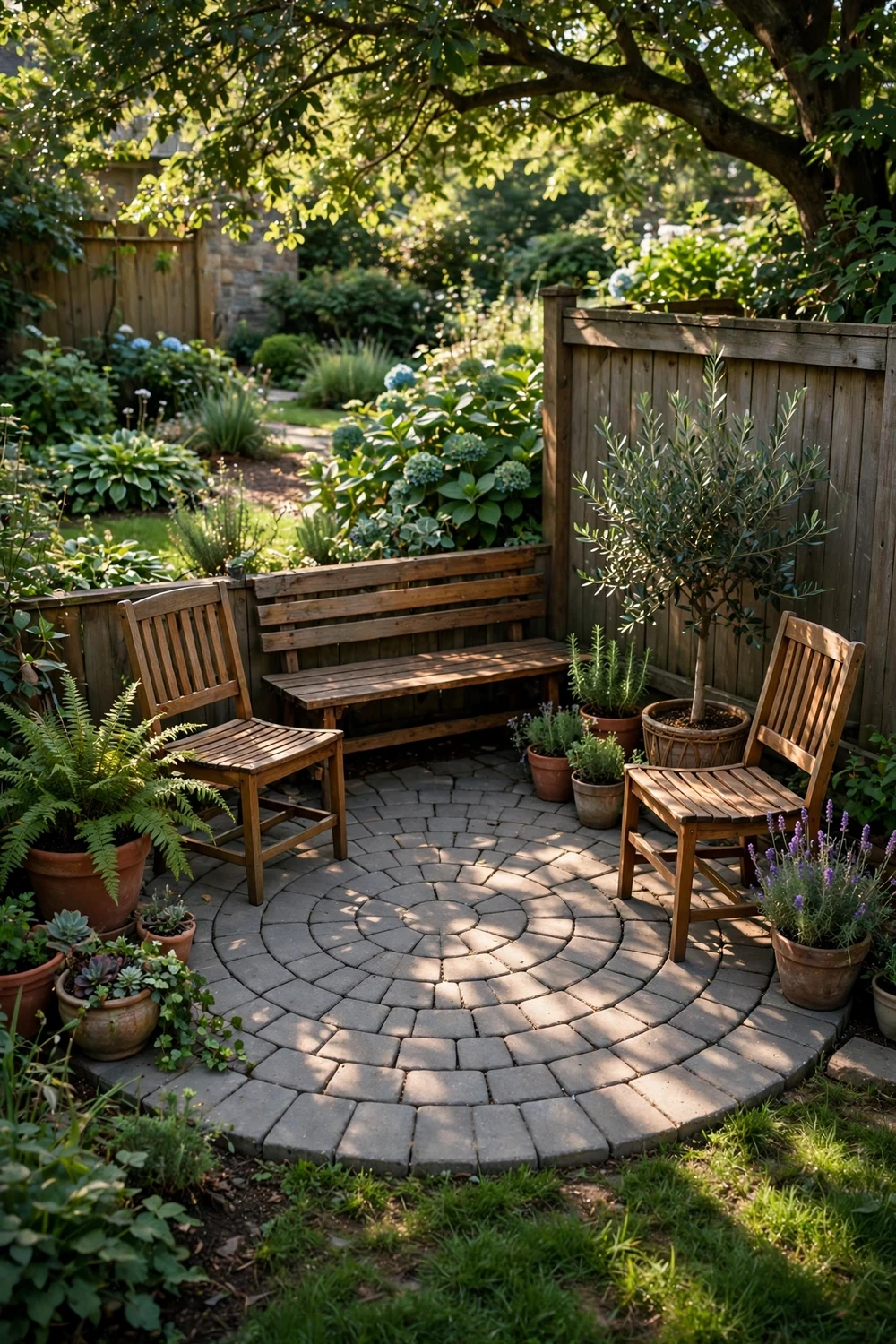
Even an 8×8-foot pad is enough for a bench, two chairs, and a view of the garden — a lovely spot for morning coffee and chats with neighbors.
Try this: add a small bistro set and a container of fragrant herbs — instant charm for under $200 beyond the pavers.
14. Stamped Concrete Pavers (Faux Stone Look)
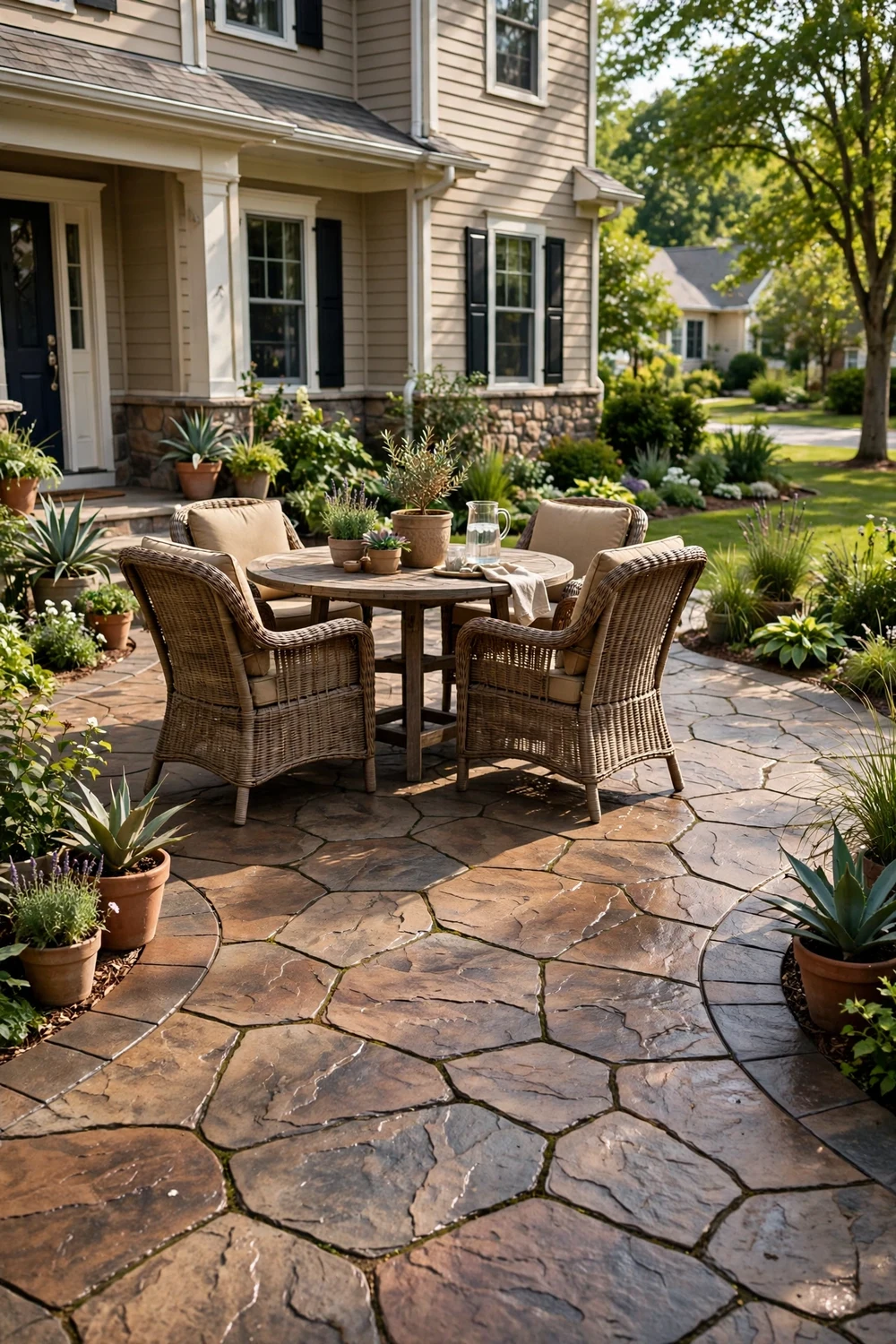
Love the look of natural flagstone but not the price? Stamped concrete pavers are molded and colored to mimic stone, slate, or even wood plank — at a fraction of the cost of the real thing. They’re uniform in thickness (easier to lay than irregular stone) and widely available at home centers. See more convincing faux-stone options in these stamped concrete patio ideas.
Try this: sealing is non-negotiable here — it protects the stamped color from fading in the sun.
15. Mixed Materials: Pavers Meet Wood
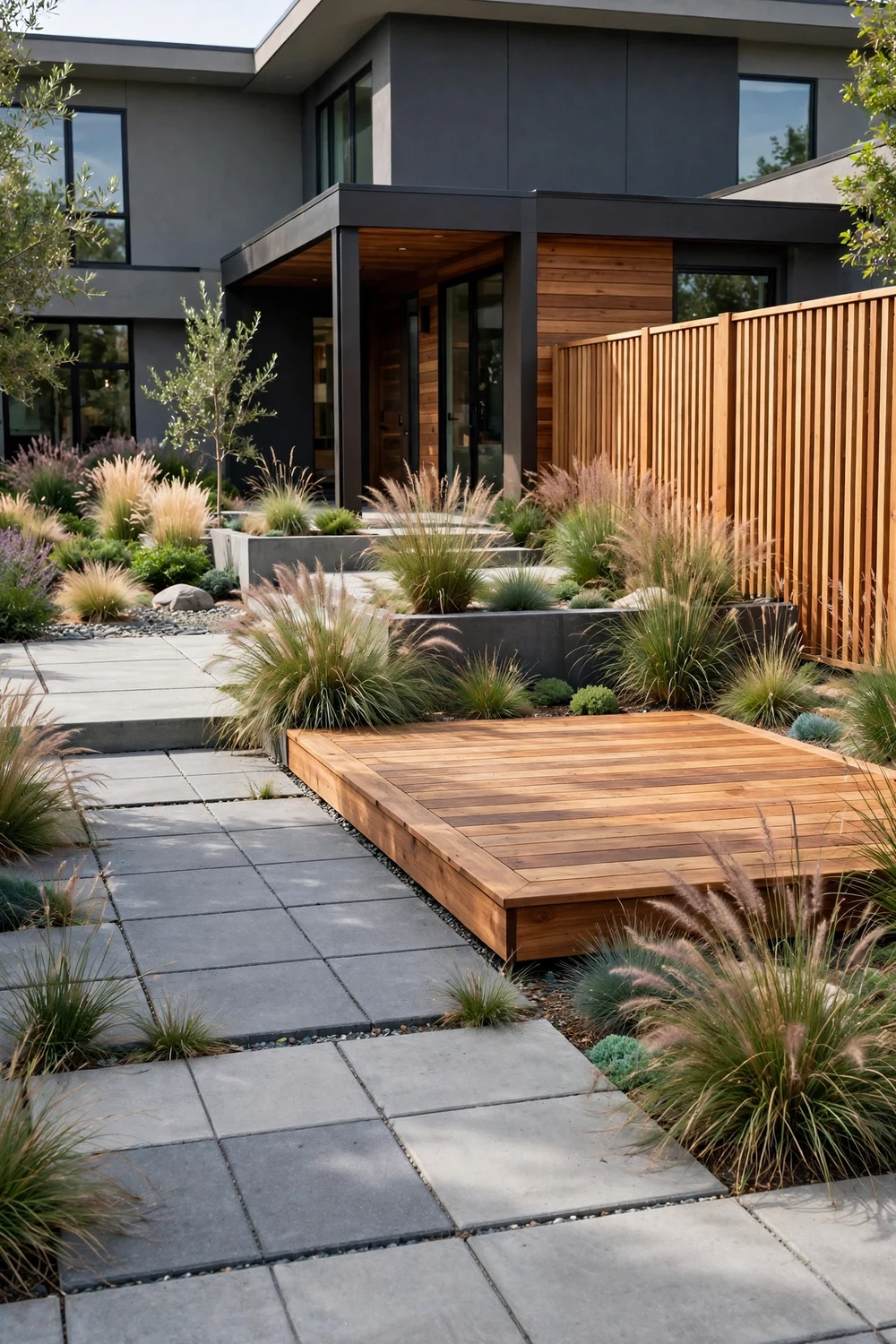
Pair cool gray pavers with warm wood (deck boards, a wood-slat fence, or cedar planter boxes) for a modern look with soul. That stone-against-timber contrast keeps contemporary yards from feeling sterile — just keep wood to 20–30% of the design so the pavers remain the star.
Try this: use the same wood tone on the front door or house numbers to tie the whole facade together.
16. Lighted Paver Pathway
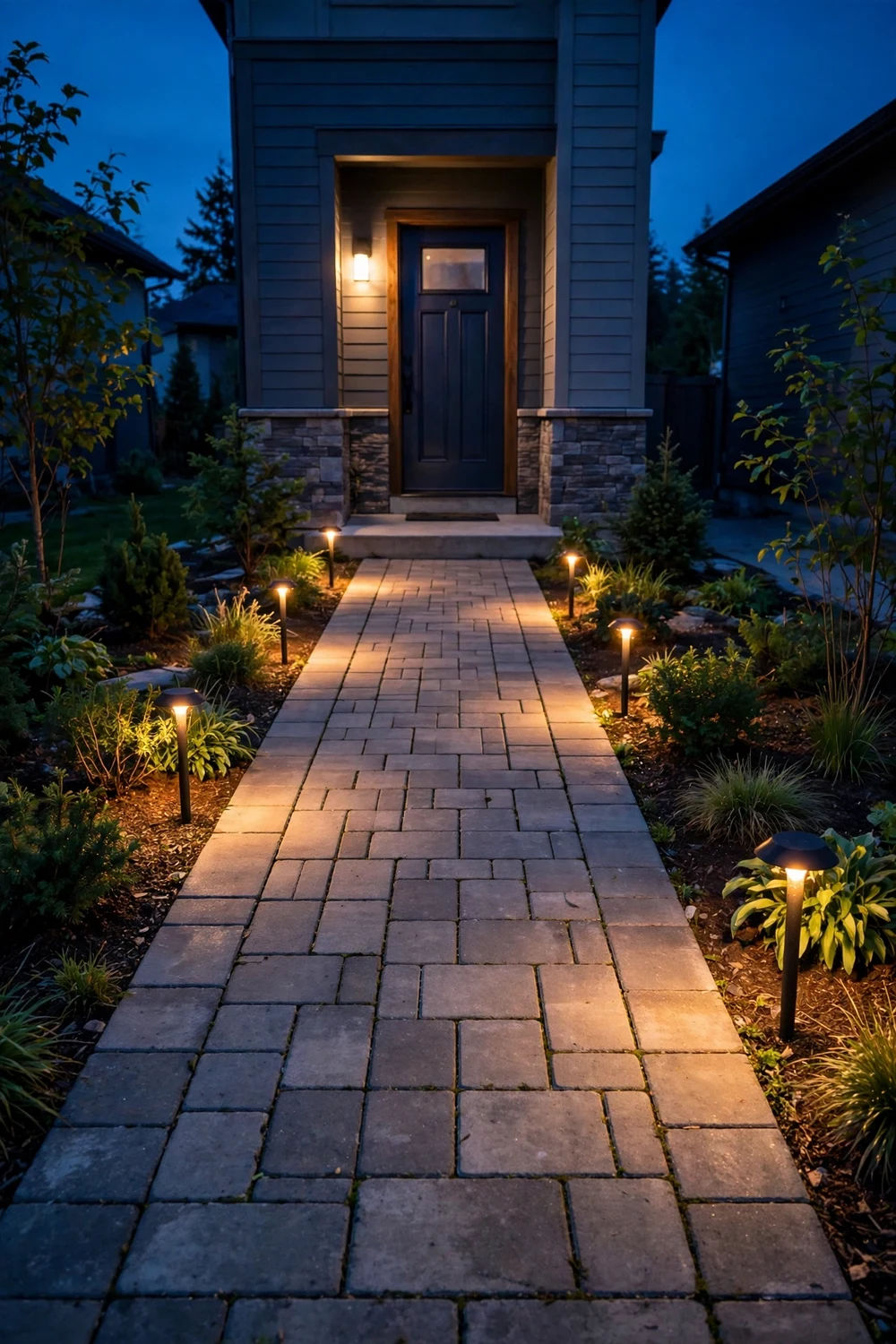
A paver path is only half the story after sunset. Low-voltage path lights, recessed paver lights, or simple solar stakes along the edges turn your walkway into a glowing guide for evening visitors — and it’s one of the best safety upgrades you can make. Space lights 6–8 feet apart and alternate sides for a natural, non-runway look.
Try this: warm-white (2700K) bulbs flatter both pavers and plants; cool-white light can make concrete look harsh.
17. Paver-Edged Raised Garden Beds
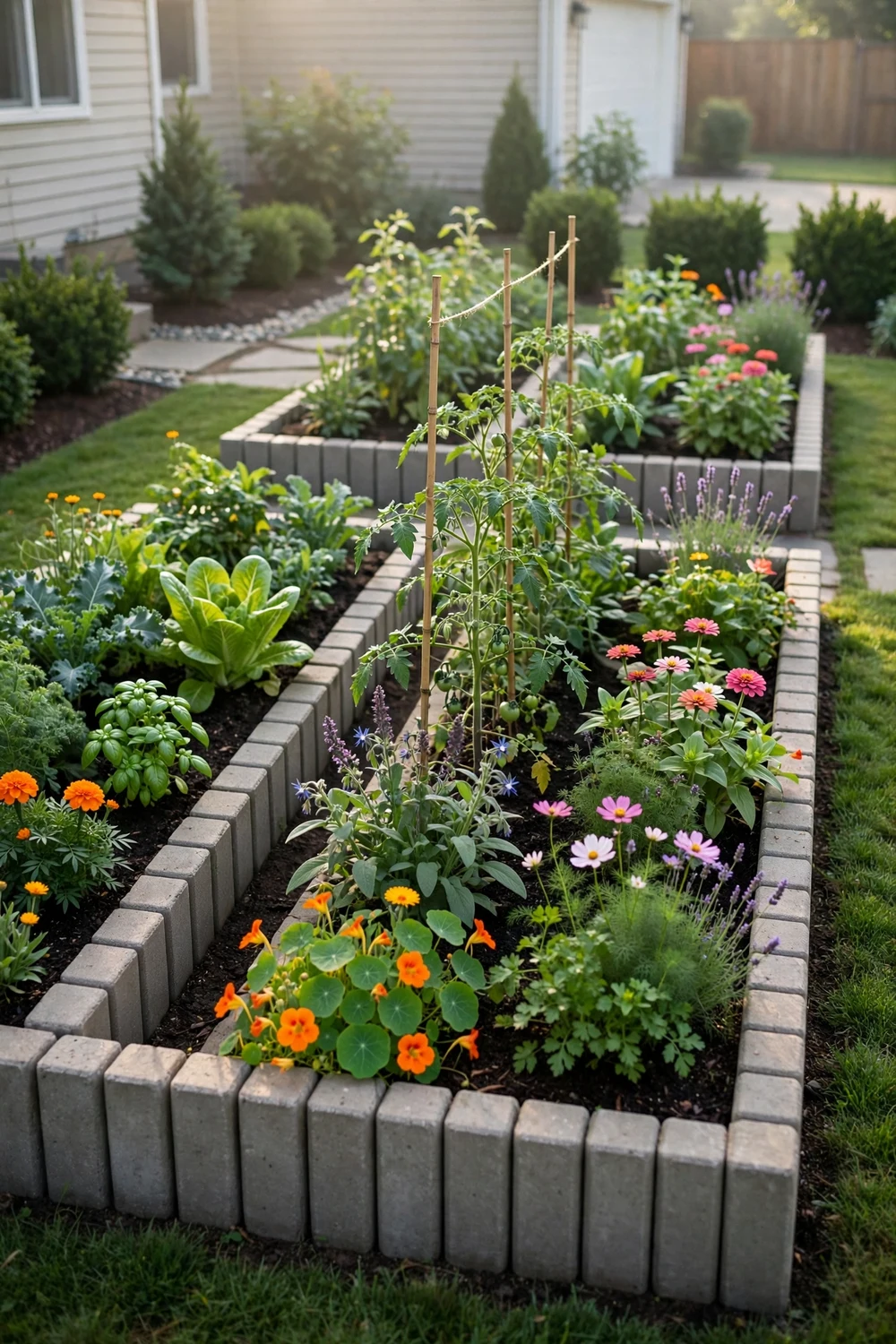
Stand pavers on end (soldier course) to edge raised beds, and you get crisp, permanent borders that never rot like wood or rust like metal. The uniform height makes mowing and trimming around beds effortless, and the look bridges traditional and modern styles. Backfill behind the pavers with a few inches of gravel so frost can’t push them out of line.
Try this: cap the edging with flat pavers laid horizontally for a finished ledge you can sit on while gardening.
18. Paver Mowing Strip Along Lawn Edges
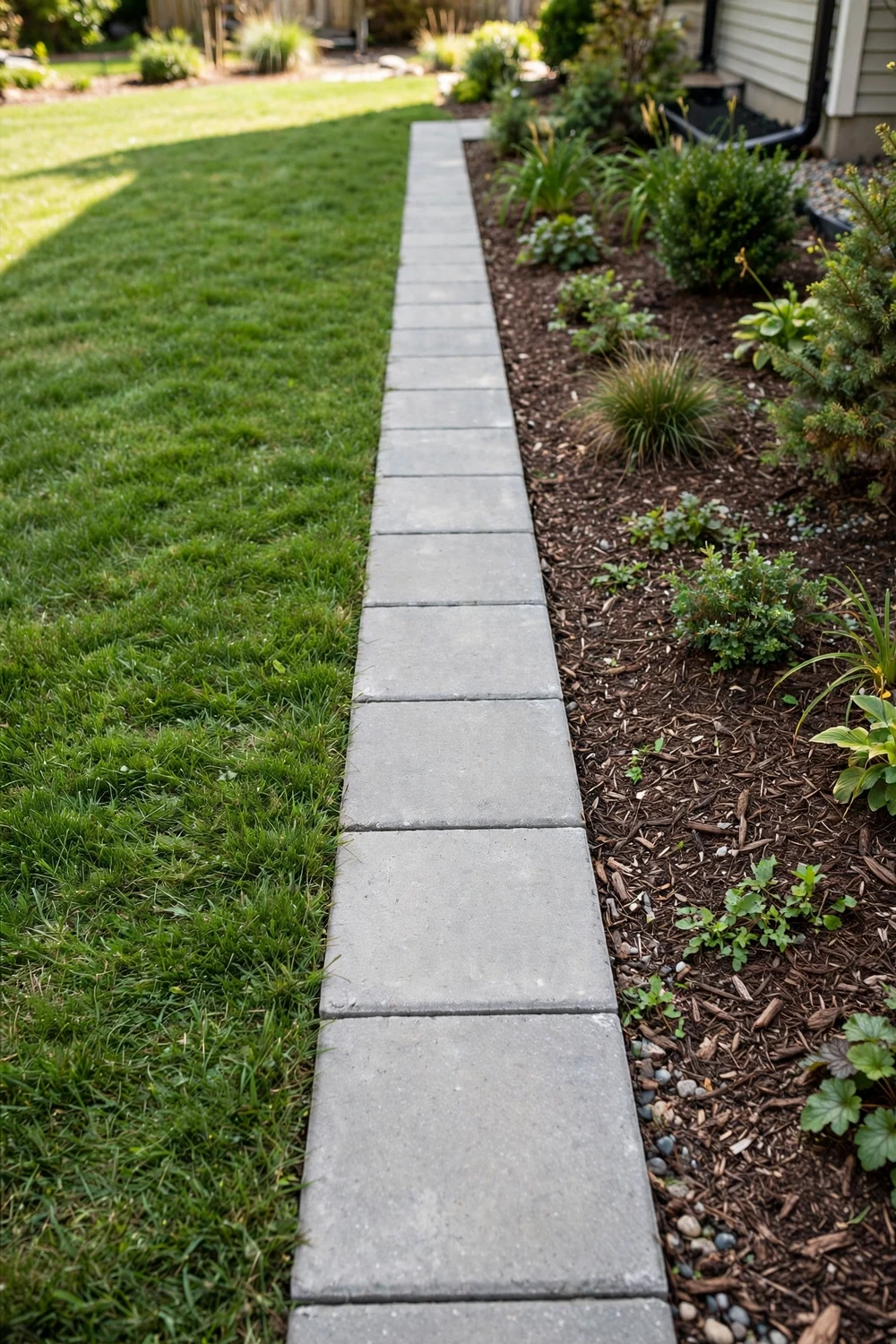
One of the simplest paver projects with the biggest neatness payoff: a single row of pavers set flush with the lawn between grass and garden beds. Your mower wheel rides right on the pavers, eliminating the need for string-trimming, and the crisp line makes the whole yard look professionally maintained. It’s a perfect weekend project — no base deeper than a couple of inches of sand needed.
Try this: set the pavers about half an inch below the grass height so the mower glides over without catching.
19. Grand Entrance Walkway with Planters
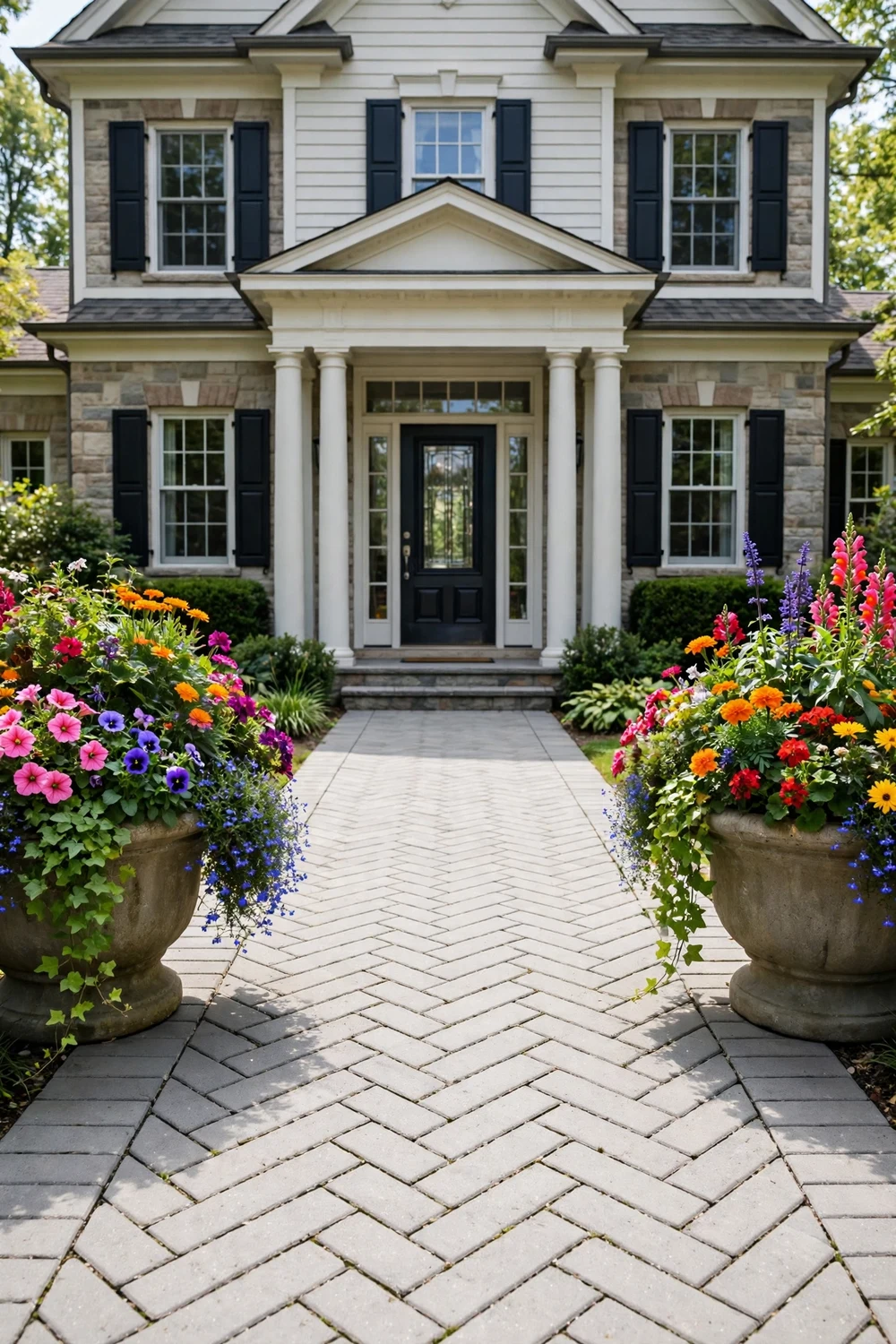
Go wide — a 5- to 6-foot paver walkway flanked by oversized planters makes even a modest home feel grand. Two people can walk side by side comfortably, while the planters add seasonal color you can swap in minutes. Choose planters in a material that echoes your home’s trim for a custom-designed feel.
Try this: plant the containers with a “thriller, filler, spiller” combo — one tall focal plant, mounding flowers, and trailing vines over the edge.
20. Paver Fire-Pit Gathering Circle
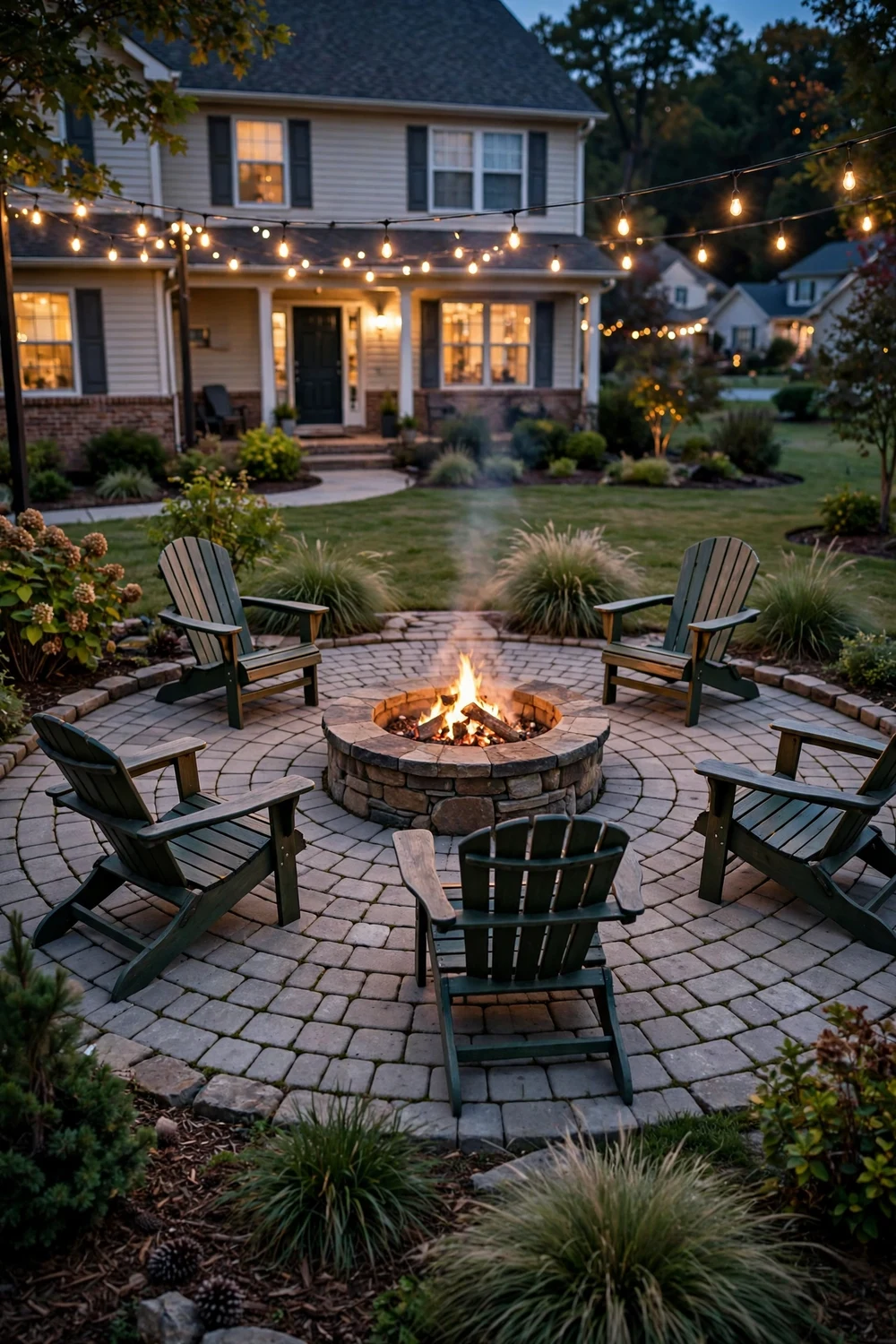
A circular paver pad with a fire pit at its center turns an unused patch of front lawn into the neighborhood’s favorite gathering spot. Keep the circle at least 10 feet across so chairs sit comfortably around the fire, and check local burn regulations before you build. For the fire feature itself, this DIY fire pit landscaping guide walks through the basics step by step.
Try this: use heat-rated pavers or a metal fire ring insert — standard pavers can crack under direct, repeated heat.
21. Water Feature Surround
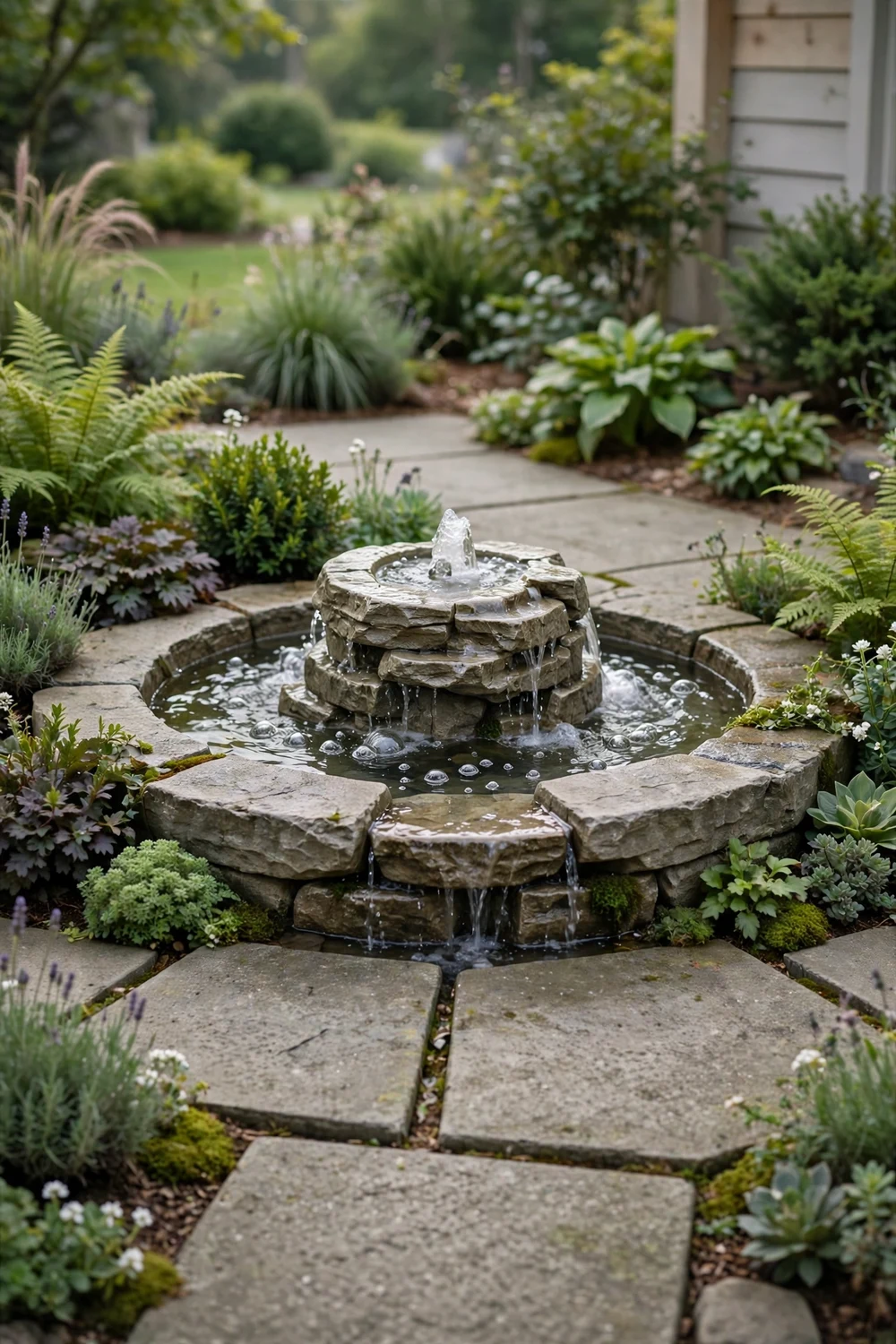
Frame a bubbling fountain or small pond with large pavers and the whole front yard exhales. The sound of moving water masks street noise, and the stone surround keeps the area mud-free and tidy. Choose pavers with a textured, non-slip finish for the ring closest to the water, and seal them to prevent mineral staining from splashes.
Try this: a simple recirculating urn fountain needs no plumbing — just a weekend afternoon. Plug it into a GFCI-protected outlet and keep all electrical connections weatherproof and above the waterline.
22. Xeriscape Front Yard with Pavers and Succulents
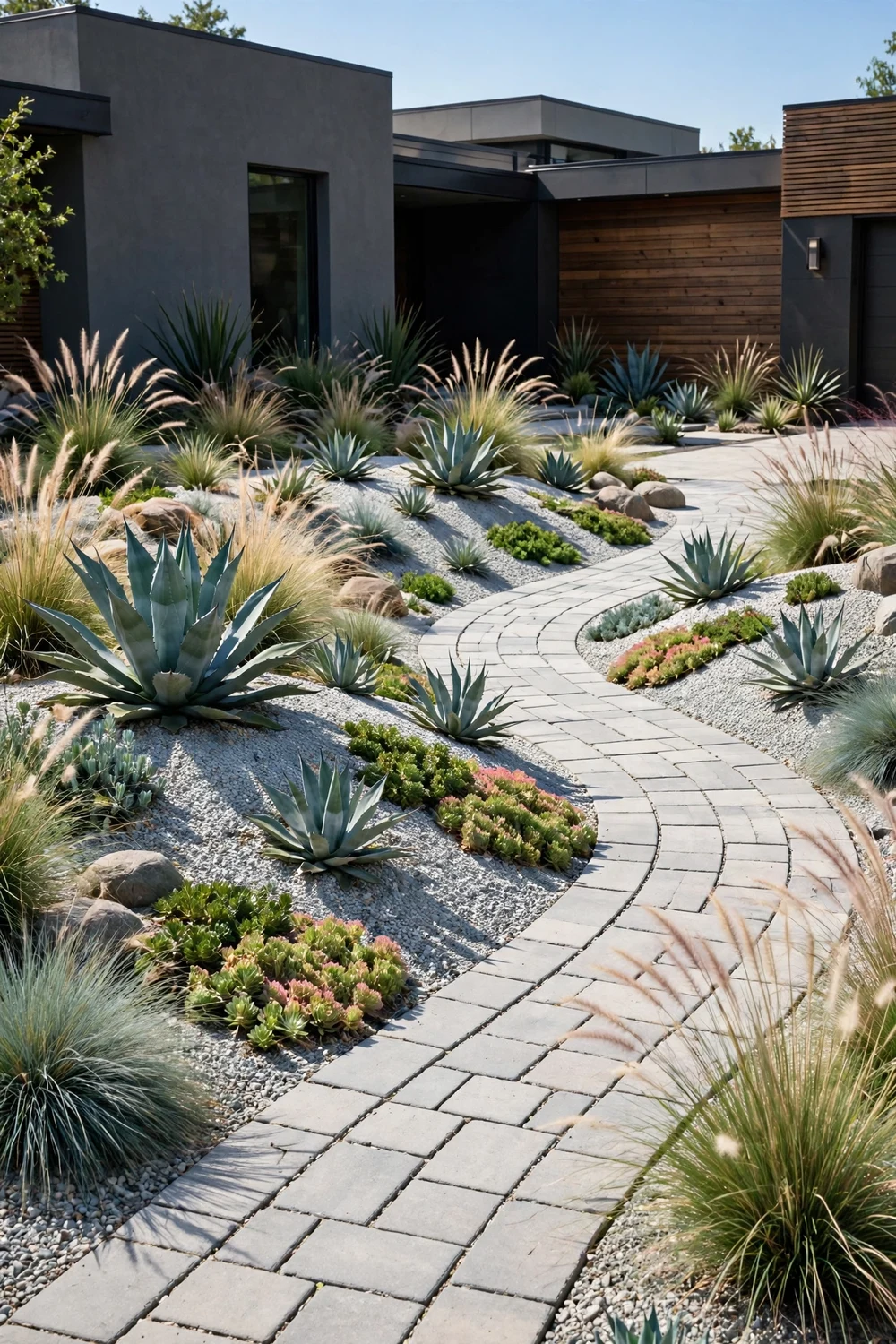
In dry climates (or for anyone tired of watering), replace thirsty lawn with a paver-and-succulent xeriscape. Wide paver paths wind between mounds of gravel planted with agave, sedum, and ornamental grasses — dramatic, modern, and far less thirsty than turf. Group plants with similar water needs together so irrigation (if any) stays simple.
Try this: a 2–3 inch layer of gravel mulch suppresses weeds and shows off the sculptural plants.
23. House-Number Paver Inlay
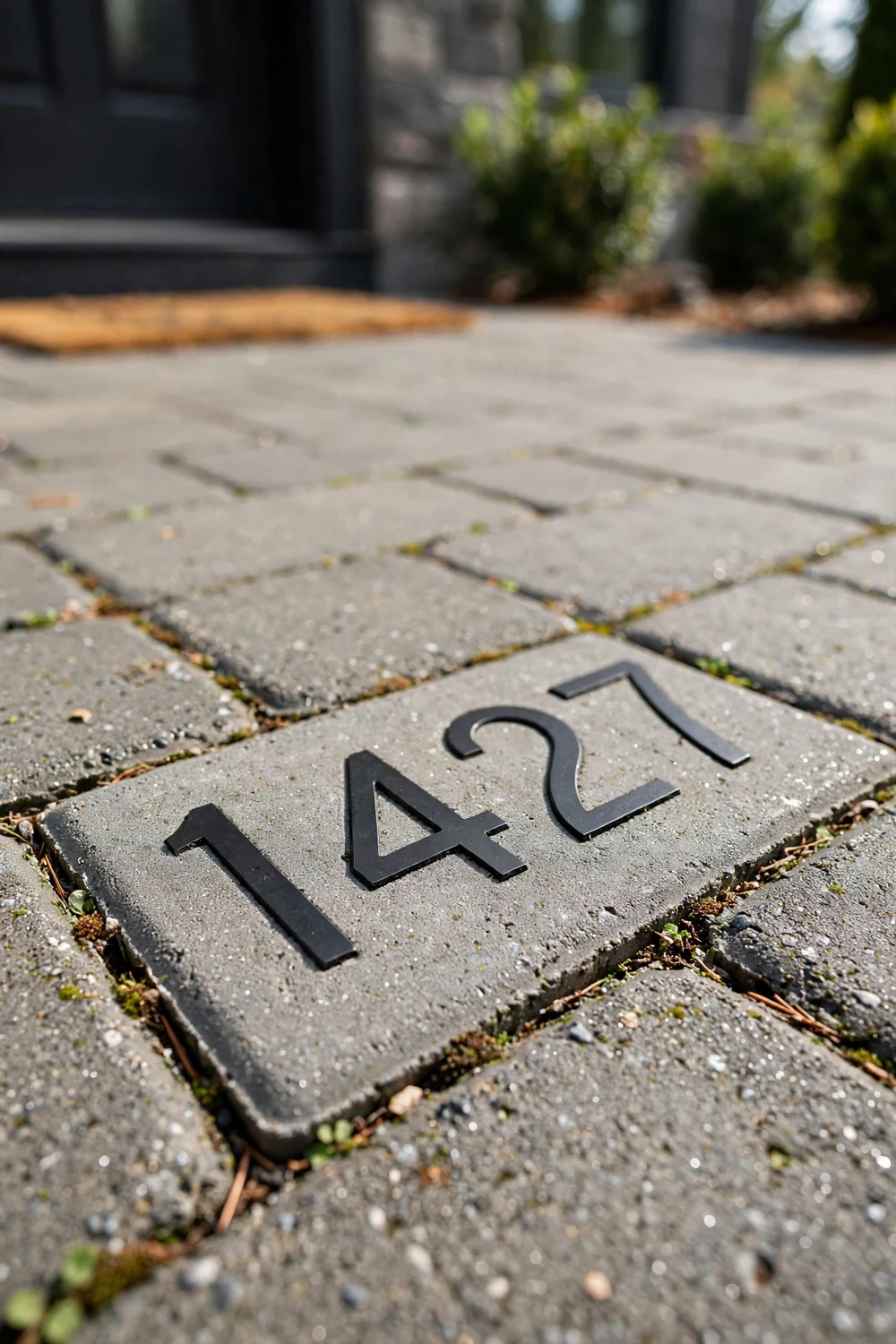
Inlay your house numbers directly into the walkway using metal numerals, contrasting paver cuts, or stencil-and-stain techniques. It’s a small detail with outsized charm — delivery drivers will thank you, and it photographs beautifully for listings. Brass or matte-black numerals set into a light paver read clearly from the street, day or night.
Try this: position the numbers where they’re lit by your path lights so they’re visible after dark.
24. Two-Tone Border Inlay Design
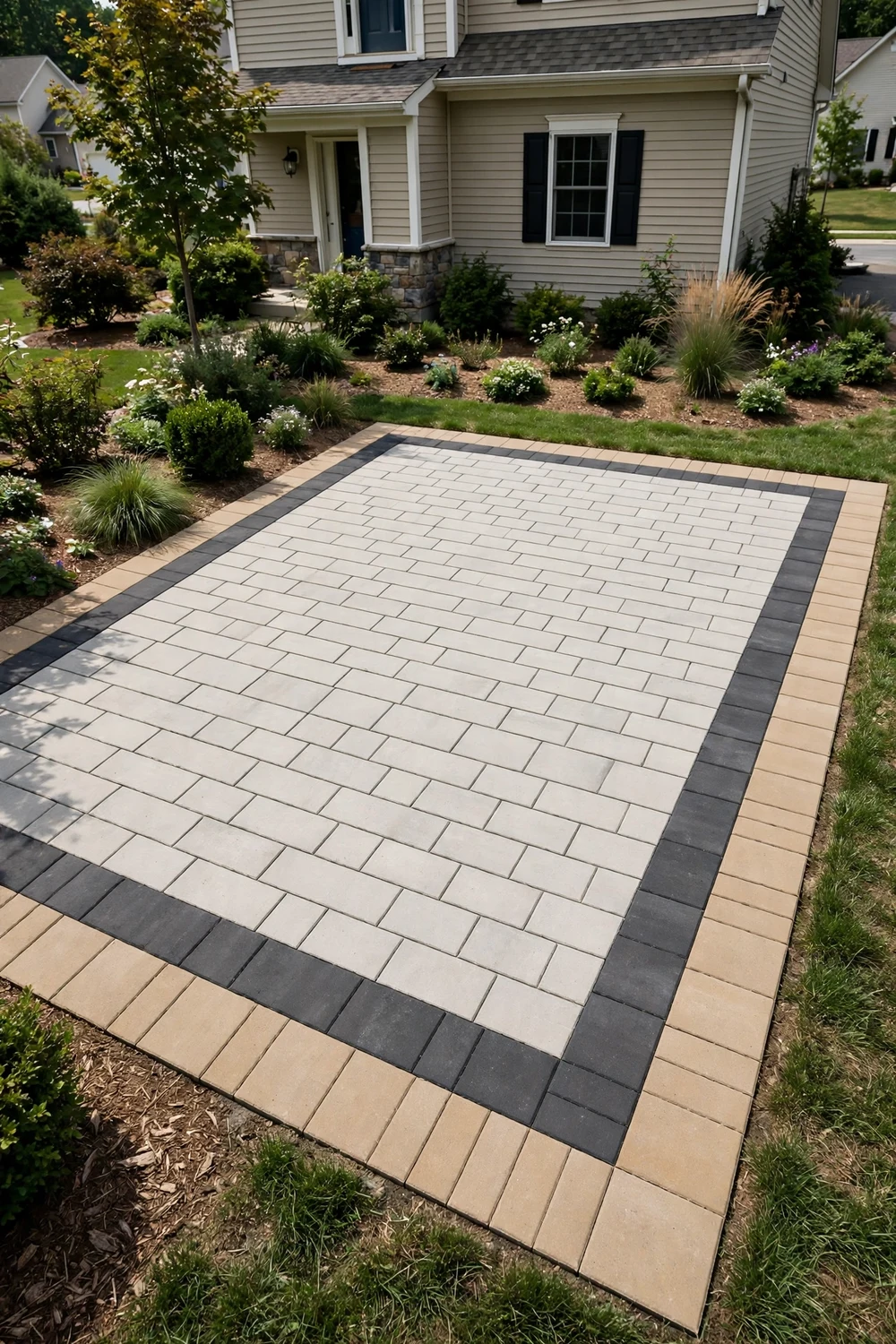
A double border — say, charcoal inside, sand outside — gives even a simple running-bond patio a custom, designed feel. The inlay trick costs almost nothing extra (you’re just ordering two paver colors) but reads as high-end craftsmanship. Draw the border layout to scale before ordering so you buy the right ratio of each color.
Try this: echo one of the border colors in your front door paint or shutters for a coordinated facade.
25. Reclaimed Paver Garden Path
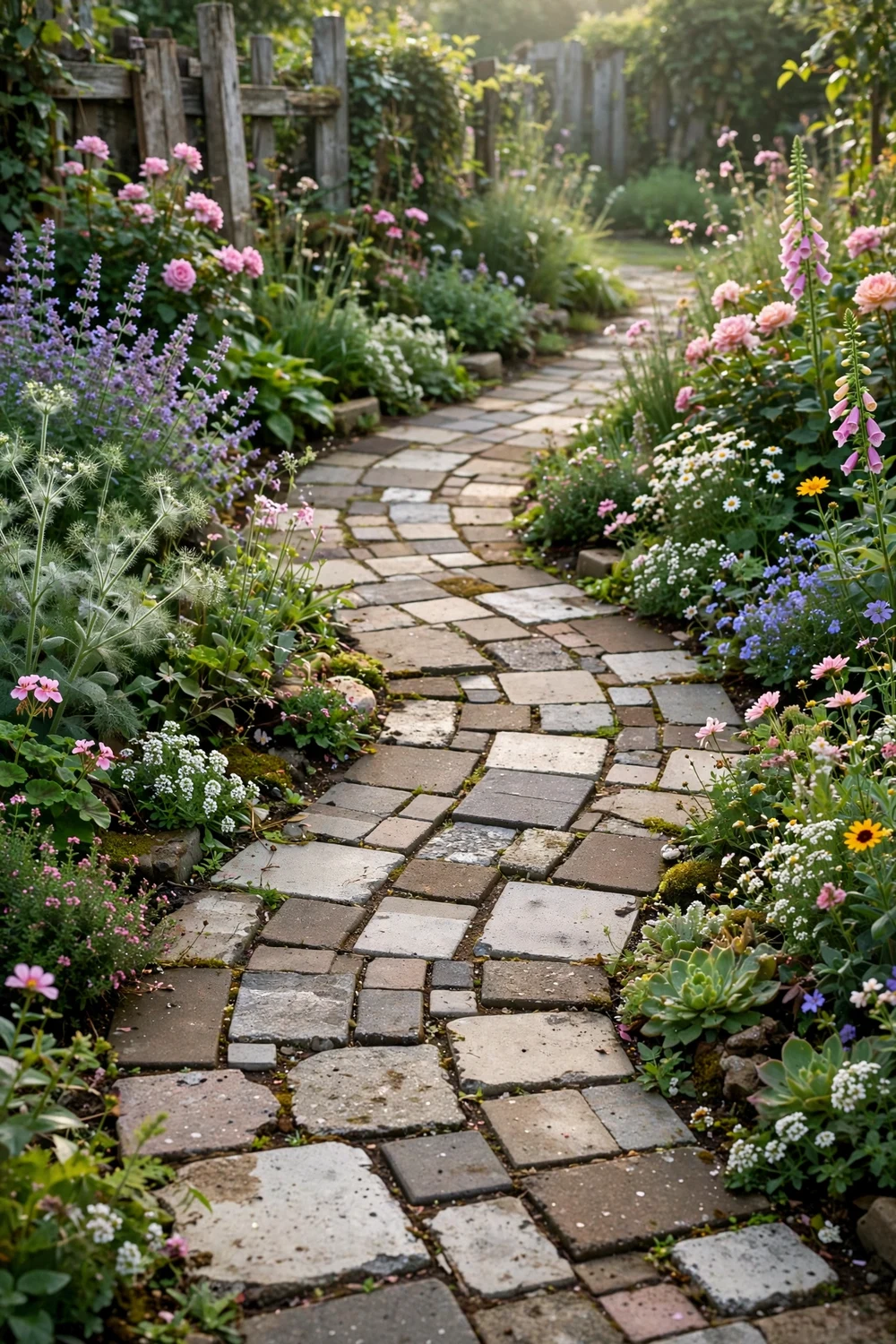
Salvaged pavers — from demolition sites, salvage yards, or marketplace listings — bring instant character (and serious savings) to a winding garden path. The slight mismatches in tone and size are the whole point: embrace the patchwork. Pressure-wash each piece before laying, and reject any with deep cracks. It’s the most sustainable idea on this list, keeping tons of concrete out of landfills.
Try this: sort salvaged pavers by thickness and lay the thickest ones first, shimming thinner ones up with extra sand.
Paver Pattern Cheat Sheet
Choosing a pattern? This quick reference matches common layouts to the right job:
| Pattern | Best For | DIY Difficulty | Relative Cost |
|---|---|---|---|
| Running bond | Walkways, patios | Easy | $ |
| Herringbone | Driveways (strongest) | Hard (consider a pro) | $$ |
| Basketweave | Small patios, borders | Easy | $ |
| Stack bond | Modern minimalist looks | Easy | $$$ |
| Circular / radial | Focal points, medallions | Hard (consider a pro) | $$$ |
For driveways and other load-bearing areas, this paver installation walkthrough covers edge restraints, bedding sand depth, and compaction — the details that keep heavy-use surfaces level.
Frequently Asked Questions
How much does a concrete paver front yard cost?
Expect roughly $10–$30 per square foot professionally installed, depending on your region, paver choice, and site prep needs. DIY projects typically run $4–$12 per square foot in materials (pavers, gravel base, sand, edging). Simple walkways and borders sit at the low end; driveways and terraced designs at the high end.
Can I install concrete pavers myself?
Yes — walkways, patios, edging, and mowing strips are very achievable DIY projects with basic tools (a shovel, tamper, level, and rubber mallet cover most jobs). If you’re new to it, this step-by-step DIY paver installation guide walks through the whole process. Driveways and large terraced areas involve heavier compaction and drainage considerations, so many homeowners hire a pro for those. Whatever you tackle, don’t skip base prep: 4–6 inches of compacted gravel plus 1 inch of screeded bedding sand.
How do I keep weeds from growing between pavers?
Three lines of defense: lay landscape fabric under the base, sweep polymeric sand (not regular sand) into the joints — it hardens and blocks weed seeds — and seal the surface every few years. For grass-infill designs, the “weeds” are intentional; just edge the pavers cleanly a few times a season.
Do concrete pavers need to be sealed?
Sealing isn’t strictly required, but it’s strongly recommended every 3–5 years. A quality sealer deepens color, resists oil and rust stains (important near driveways), and slows fading from UV exposure. It’s especially worthwhile for stamped or colored pavers, where the finish is the whole point.
Final Thoughts
Concrete pavers remain one of the smartest front-yard investments because they sit at the intersection of beauty, durability, and DIY-friendliness — few materials give you this much design range per dollar. Whether you start small with a mowing strip or a porch landing, or go big with a herringbone driveway, the fundamentals don’t change: plan the layout, prep a proper base, and soften the stone with plants.
Pick the one idea that made you picture your own house, and start there. Curb appeal isn’t built in a weekend — but a single paver path is a pretty great first step.


