
Introduction
If your backyard feels empty or boring, you are not alone. Many people dream of having a cozy fire pit area where they can relax with family or invite friends over, but they often think the project will be too expensive or too hard to build. It is also easy to feel stuck after scrolling through Pinterest and seeing beautiful designs without knowing where to begin.
After looking at many successful DIY backyard makeovers and common landscaping ideas, one lesson stands out: simple planning leads to better results. A well-placed fire pit, paired with the right stone, gravel, plants, and seating, can completely change the look and feel of your outdoor space. This guide shares four easy steps to help you build a fire pit landscape that is safe, practical, and stylish without making the process feel overwhelming.
Quick Planning Checklist
Before you start building, spend a few minutes planning your project. Good preparation can help you avoid mistakes and save money.
- Measure the space available in your backyard.
- Check local fire rules or homeowner guidelines.
- Choose heat-resistant materials for the fire pit.
- Plan where chairs and walkways will go.
- Gather all tools and supplies before starting.
- Make sure there are no underground utility lines in the digging area.
Step 1: Choose the Best Spot for Your Fire Pit

The first step is finding a safe and practical location. A well-chosen spot makes your fire pit easier to use and helps protect nearby structures.
Keep these tips in mind:
- Leave at least 10 feet between the fire pit and your home, fence, shed, or trees.
- Pick a flat area with good drainage.
- Stay away from low hanging branches.
- Make sure there is enough room for people to walk around comfortably.
- Think about the usual wind direction so smoke does not blow into seating areas.
- Check local building codes or fire regulations before construction.
A little planning at this stage can prevent expensive changes later.
Step 2: Build a Strong Foundation

A strong base keeps your fire pit level and helps it stay in good condition for years.
Mark the shape using spray paint or a rope. Remove the grass and dig several inches into the ground. Add crushed gravel and compact it firmly to create a stable foundation. Many DIY builders also add a thin layer of sand to help level pavers or flagstones.
Popular materials for building the fire pit include:
- Fire bricks
- Concrete retaining wall blocks
- Natural flagstone
- Landscape pavers
Always choose materials that are made to handle high temperatures.
Why Fire Bricks and Good Drainage Matter
Fire bricks are built to withstand repeated heat and are an excellent choice for the inner wall of a fire pit. They can help prevent damage that may occur when regular bricks are exposed to high temperatures.
Good drainage is just as important. A compacted gravel base allows water to drain away instead of collecting under the fire pit. This helps keep the structure stable and reduces the chance of shifting over time.
How Much Does DIY Fire Pit Landscaping Cost?
Your total cost will depend on the size of the project and the materials you select.
| Project Style | Estimated Cost |
|---|---|
| Basic gravel fire pit with simple seating | $200 to $500 |
| Mid-range stone fire pit with landscaping | $500 to $1,500 |
| Premium landscaped fire pit area | $1,500 to $3,500 or more |
You can lower costs by using locally available materials, shopping seasonal sales, or completing the project over several weekends.
Step 3: Landscape Around the Fire Pit

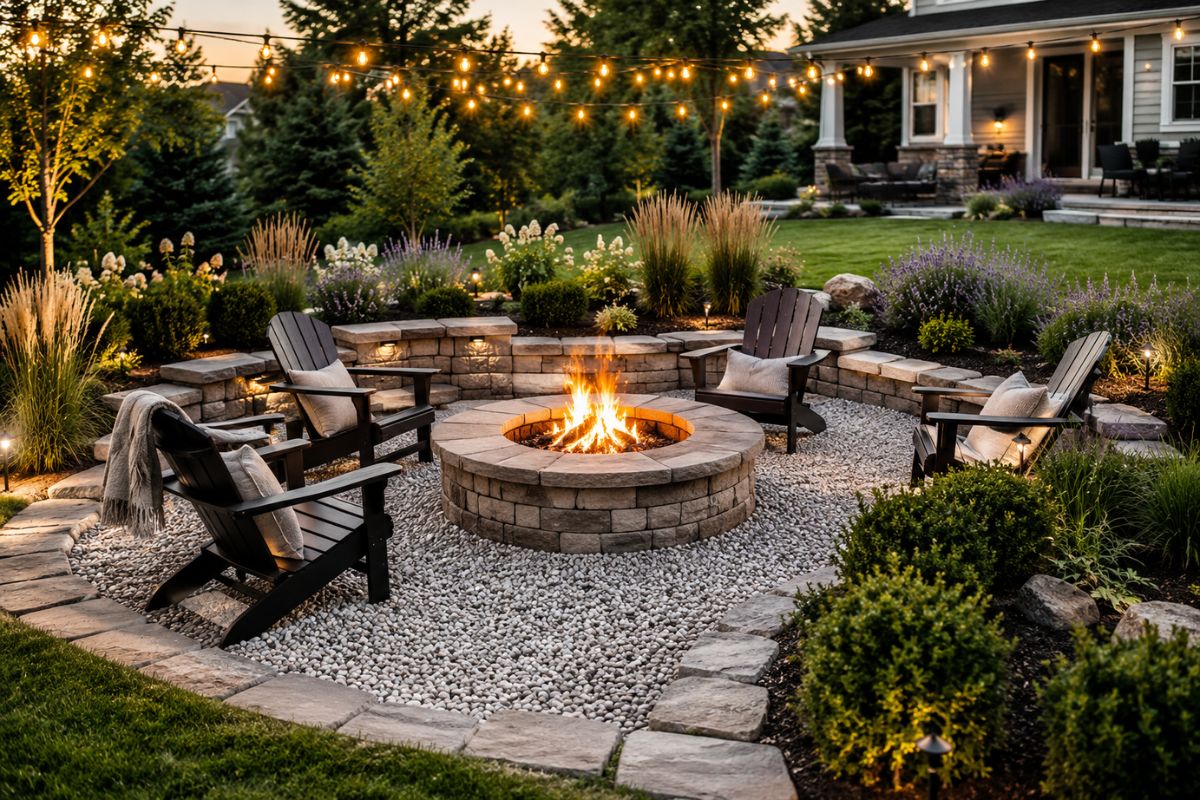
Once the fire pit is built, it is time to make the surrounding area look inviting. Thoughtful landscaping creates the cozy backyard style that is popular on Pinterest.
Add Gravel or Decorative Stone
Gravel is affordable, low maintenance, and provides excellent drainage. Pea gravel, crushed granite, and decorative stone are all attractive choices for fire pit areas.
Create Clean Borders
Stone edging or bricks can separate the fire pit space from the lawn and planting beds. This simple detail gives the backyard a finished appearance.
Plant Heat-Friendly Greenery
Choose plants that can tolerate warm conditions and require little maintenance.
Some great options include:
- Lavender
- Boxwood shrubs
- Sedum
- Coneflowers
- Ornamental grasses placed at a safe distance
Keep all plants and mulch far enough away from open flames for added safety.
Add a Simple Walkway
A walkway made from pavers or stepping stones makes it easier to reach the fire pit and helps protect the surrounding grass from heavy foot traffic.
Step 4: Add Comfortable Seating and Finishing Touches

The last step is creating a space where people actually want to spend time. Comfortable seating and simple decorations can make your fire pit feel like an outdoor living room.
Popular seating options include:
- Adirondack chairs
- Wooden benches
- Built-in stone seating
- Weather-resistant patio chairs
You can make the area even more inviting by adding:
- String lights hung well above the fire pit and away from flames
- Solar lanterns along pathways
- A neat firewood storage rack
- Outdoor rugs for nearby seating areas
- Large planters with seasonal flowers
- Cozy throw blankets for cool evenings
Best Materials for DIY Fire Pit Landscaping
Choosing durable materials helps your project stay attractive and safe for years.
| Material | Best Use |
|---|---|
| Fire brick | Inner wall of the fire pit |
| Flagstone | Patios, borders, and natural pathways |
| Gravel | Ground cover and drainage |
| Concrete pavers | Walkways and seating areas |
| River rock | Decorative accents |
| Crushed stone | Base layer under the fire pit |
Mixing stone, gravel, and greenery creates a timeless backyard design that works with many home styles.
Budget Friendly Fire Pit Landscaping Ideas
You do not need a large budget to build a beautiful fire pit area. Small changes can make a big difference.
Here are a few ways to save money:
- Use gravel instead of installing a full stone patio.
- Buy landscape materials from local suppliers.
- Reuse bricks or pavers from previous projects.
- Add mulch around flower beds instead of expensive hardscaping.
- Complete the project one section at a time.
- Shop for outdoor furniture during end-of-season sales.
With careful planning, even a simple design can look polished and welcoming.
Seasonal Decorating Ideas for Your Fire Pit Area
You can refresh your backyard throughout the year with a few easy updates.
Spring
Place colorful flowers in planters and brighten the seating area with fresh greenery.
Summer
Add outdoor cushions, lanterns, and lightweight blankets for evening gatherings.
Fall
Decorate with pumpkins, plaid throws, and warm lighting to create a cozy atmosphere.
Winter
Use evergreen planters and keep extra blankets nearby so guests stay comfortable on chilly nights.
Fire Pit Safety Tips
A safe fire pit is one you can enjoy with peace of mind.
Follow these simple guidelines:
- Keep a bucket of water or a fire extinguisher nearby.
- Never leave a burning fire unattended.
- Burn only approved wood or fuel.
- Remove ashes after they have cooled completely.
- Keep children and pets a safe distance away.
- Follow local fire regulations before lighting a fire.
- Avoid burning on very windy days.
Easy Maintenance Schedule
Regular care helps your fire pit stay in great shape.
- Remove cooled ashes after every use.
- Inspect stones and bricks every few months for cracks.
- Add more gravel if the surface becomes uneven.
- Pull weeds before they spread around the seating area.
- Cover the fire pit during long periods of rain or snow when possible.
A few minutes of maintenance can help prevent costly repairs later.
Common DIY Mistakes to Avoid
Many first-time builders run into the same problems. Knowing what to avoid can save time and frustration.
Common mistakes include:
- Building too close to the house or fence
- Skipping the gravel foundation
- Using bricks that are not heat resistant
- Placing plants too close to the fire pit
- Forgetting about drainage
- Making the seating area too cramped
Frequently Asked Questions
How big should a DIY fire pit be?
Most backyard fire pits are between 3 and 5 feet in diameter, providing enough room for a safe and enjoyable fire.
Is gravel a good choice around a fire pit?
Yes. Gravel improves drainage, reduces mud, and creates a clean, finished appearance around the seating area.
Can I build a fire pit in a small backyard?
Yes. A compact fire pit with two to four chairs can work well in smaller outdoor spaces while still creating a cozy gathering area.
What plants should I avoid near a fire pit?
Avoid placing dry grasses, highly flammable plants, or overhanging shrubs too close to open flames. Leave enough space for safety and easy maintenance.
Conclusion
Creating a DIY fire pit landscape is one of the most rewarding backyard projects because it combines function, comfort, and style in one space. From reviewing popular outdoor designs and proven building practices, it is clear that success comes from choosing the right location, using durable materials, planning for safety, and adding thoughtful finishing touches. Whether you are updating a small corner of your yard or creating a brand-new gathering space, these four easy steps can help you build a fire pit area that looks beautiful, lasts for years, and becomes a favorite place to spend time with the people you love.