


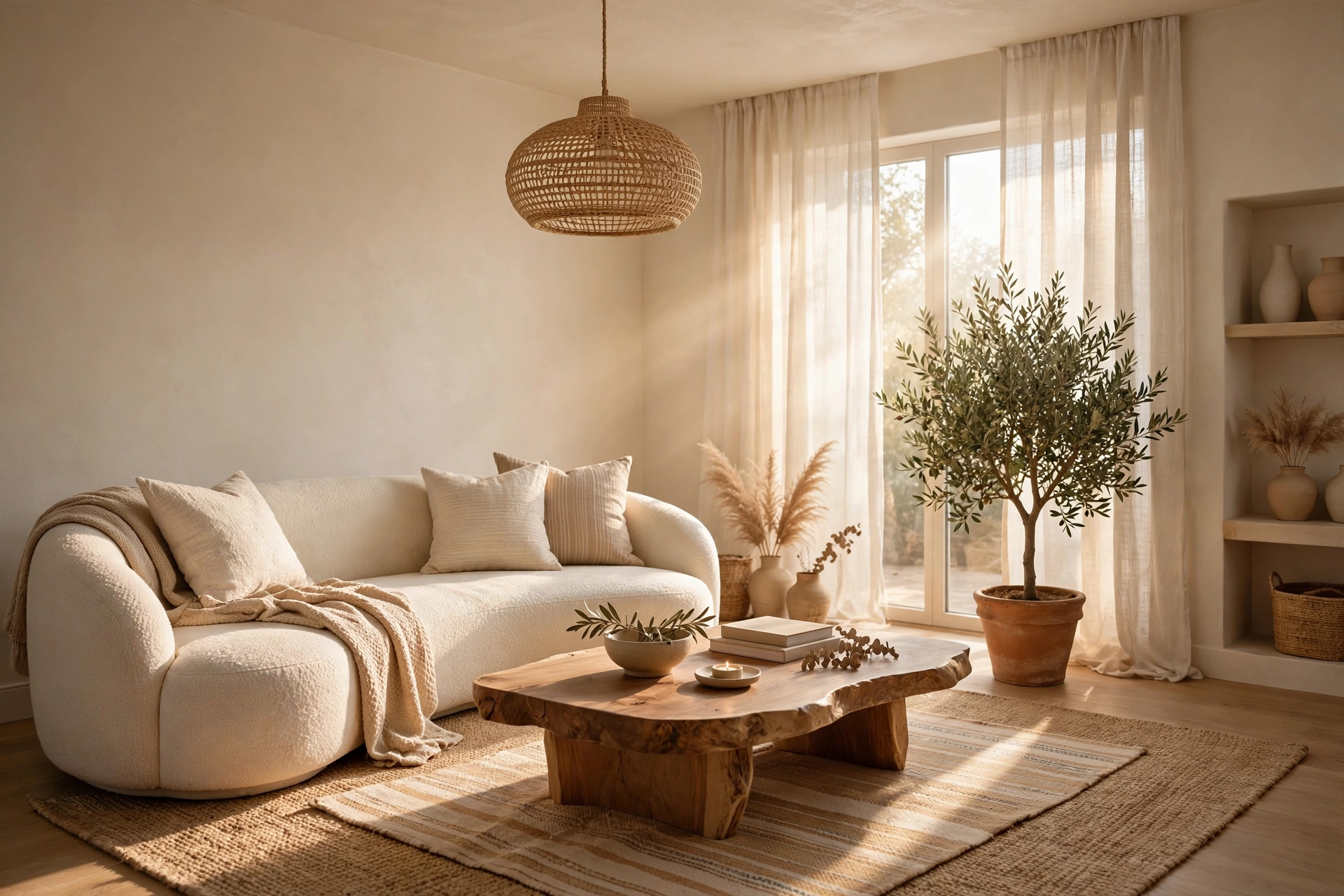
My living room used to be the coldest room in the house, and I don’t mean the temperature. Gray walls, a black leather sofa I bought because it looked “modern” in the store, one sad overhead light. Guests would sit down and somehow end up perched on the edge of the couch, like the room was telling them not to get comfortable. I spent a whole Saturday scrolling through design accounts trying to figure out what was wrong, and every room I actually wanted to live in had the same three things: wood you could see the grain in, fabric that looked soft enough to touch, and something green growing in a corner.
That is organic modern in a nutshell, and it turned out to be the easiest style I have ever decorated in. No rules about matching sets, no expensive designer pieces required, no color theory degree. You just layer natural materials over clean modern shapes and let texture do the talking. I rebuilt my living room piece by piece over about two months, mostly with secondhand finds and weekend projects, and it is now the room everyone gravitates to. Below are the 25 easy organic modern living room ideas that made the biggest difference, each one simple enough to do in a weekend.
- Organic modern = clean modern shapes + natural materials (wood, stone, linen, rattan, wool). Warmth comes from texture, not color.
- Start with the big three: a neutral warm-white base, one good wood piece, and something alive (a plant).
- Vary texture, not color. Keep the palette tight (warm whites, beige, camel, olive, charcoal) and let materials create the depth.
- Every piece should earn its place. Fewer, better things beat a room full of decor.
- Warm white bulbs (2700K) everywhere. Daylight bulbs will make your oak look blue and undo all your work.
1. Paint It Warm White (Not Stark White)
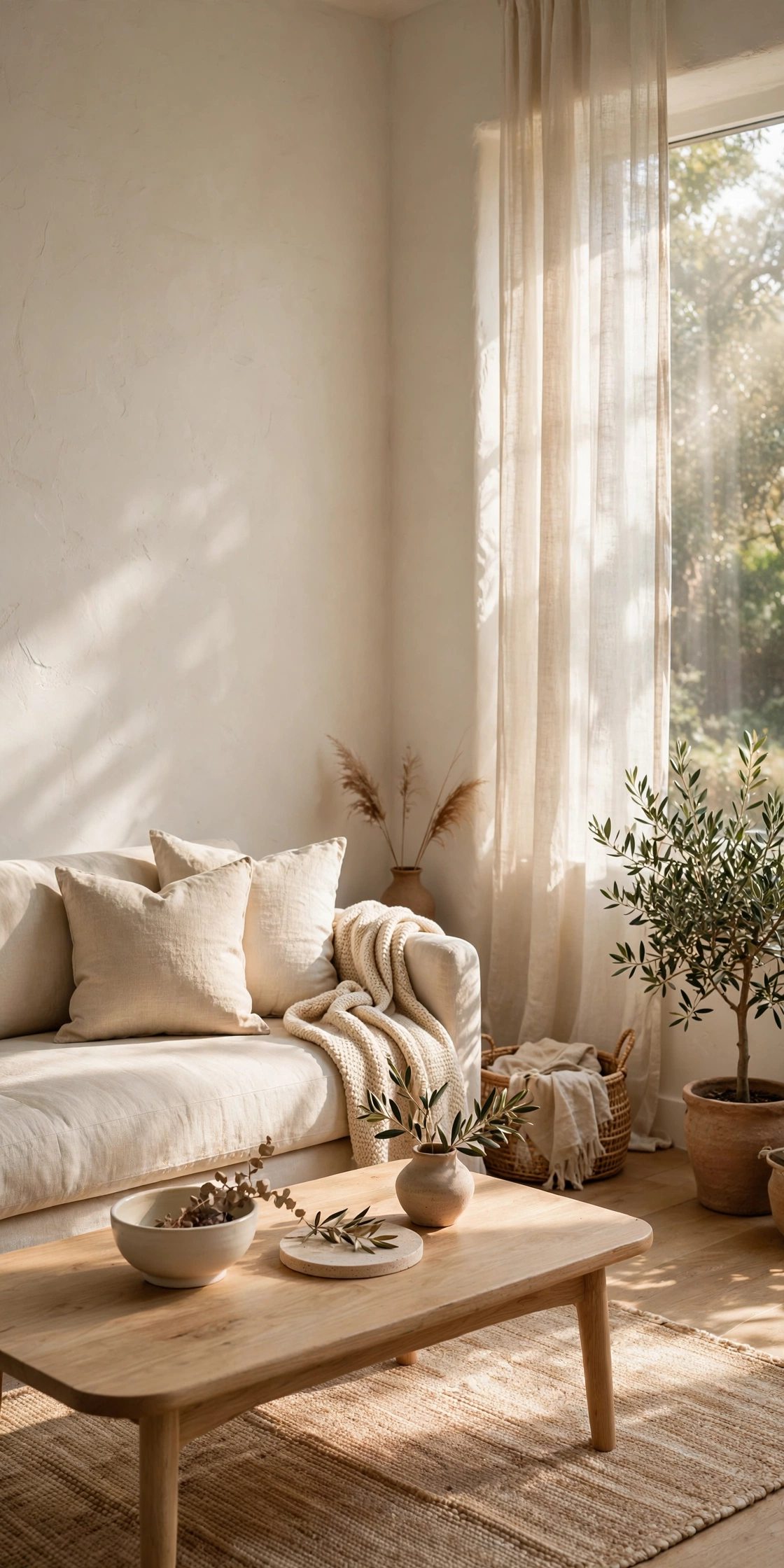
The single cheapest transformation in this whole list. Stark, blue-white paint is the enemy of organic modern; it makes wood look cold and linen look gray. Repaint in a warm white — something with a creamy, slightly yellow undertone — and the whole room instantly relaxes. I did my living room in a warm off-white on a Saturday morning for the cost of two gallons of paint, and my oak coffee table looked like a different piece of furniture by afternoon.
If you rent and can’t paint, large warm-white curtains or a big cream rug can fake most of the effect. For more no-paint ways to warm up a rental, these creative renter-friendly upgrades are full of tricks that don’t touch the walls.
Try this: test three warm whites on the wall and live with them for two days before committing. Paint looks completely different in morning light versus lamplight.
2. A Curved Bouclé Sofa as the Anchor
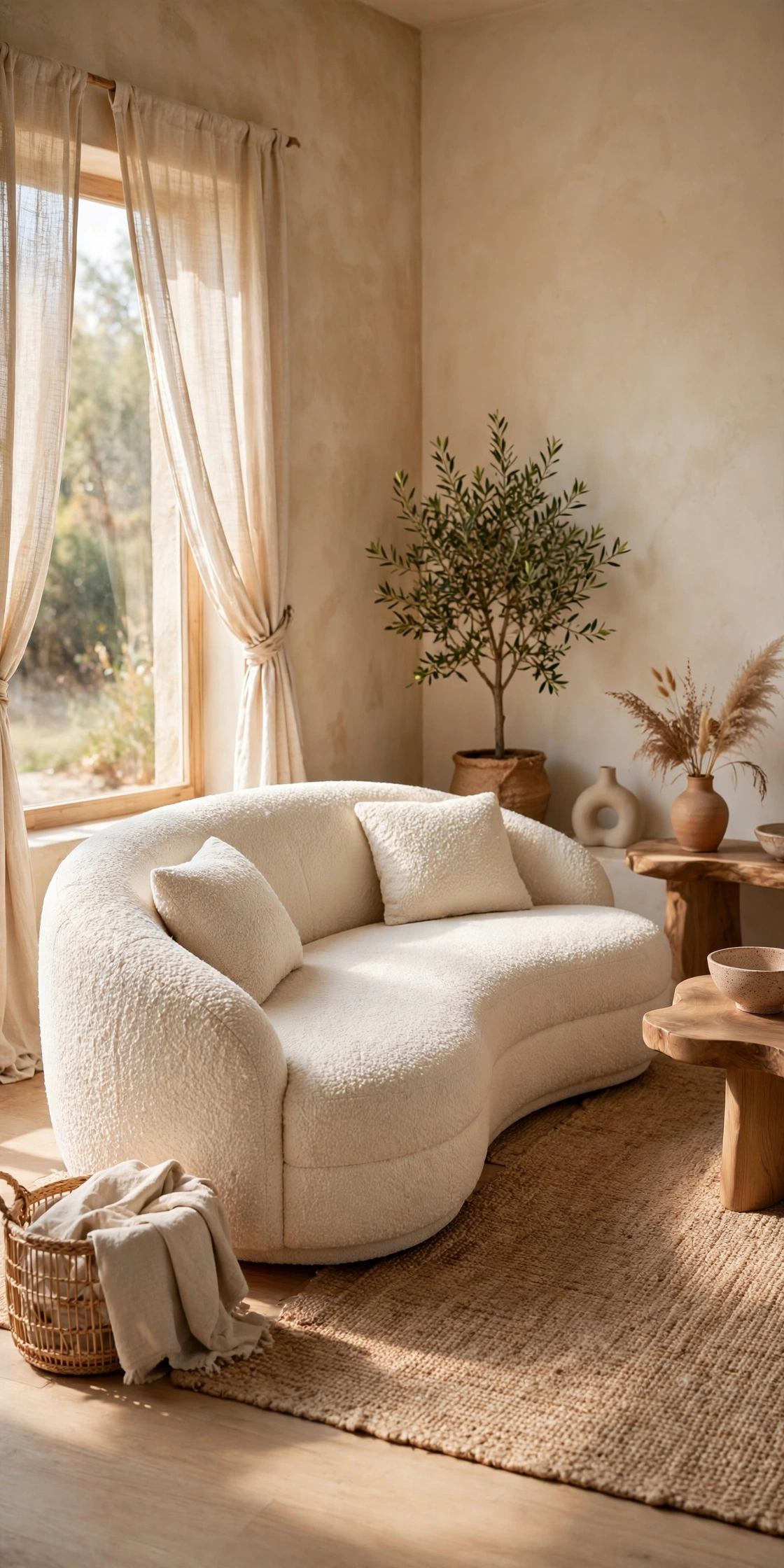
If you buy one thing, make it this. A curved sofa in cream or oatmeal bouclé is the signature piece of organic modern — soft silhouette, nubby texture, modern but not sharp. The curve does something magical in a rectangular room: it breaks up all the straight lines and makes the seating area feel like it is hugging you. Bouclé hides wear well and the texture reads expensive even at budget prices. Keep the color light and let the shape be the statement.
If you want to see how designers break down the style room by room, Havenly’s organic modern living room guide is a great visual reference for getting the proportions right.
Try this: a curved loveseat works just as well in a small room — you get the signature shape without giving up floor space.
3. A Live-Edge Wood Coffee Table
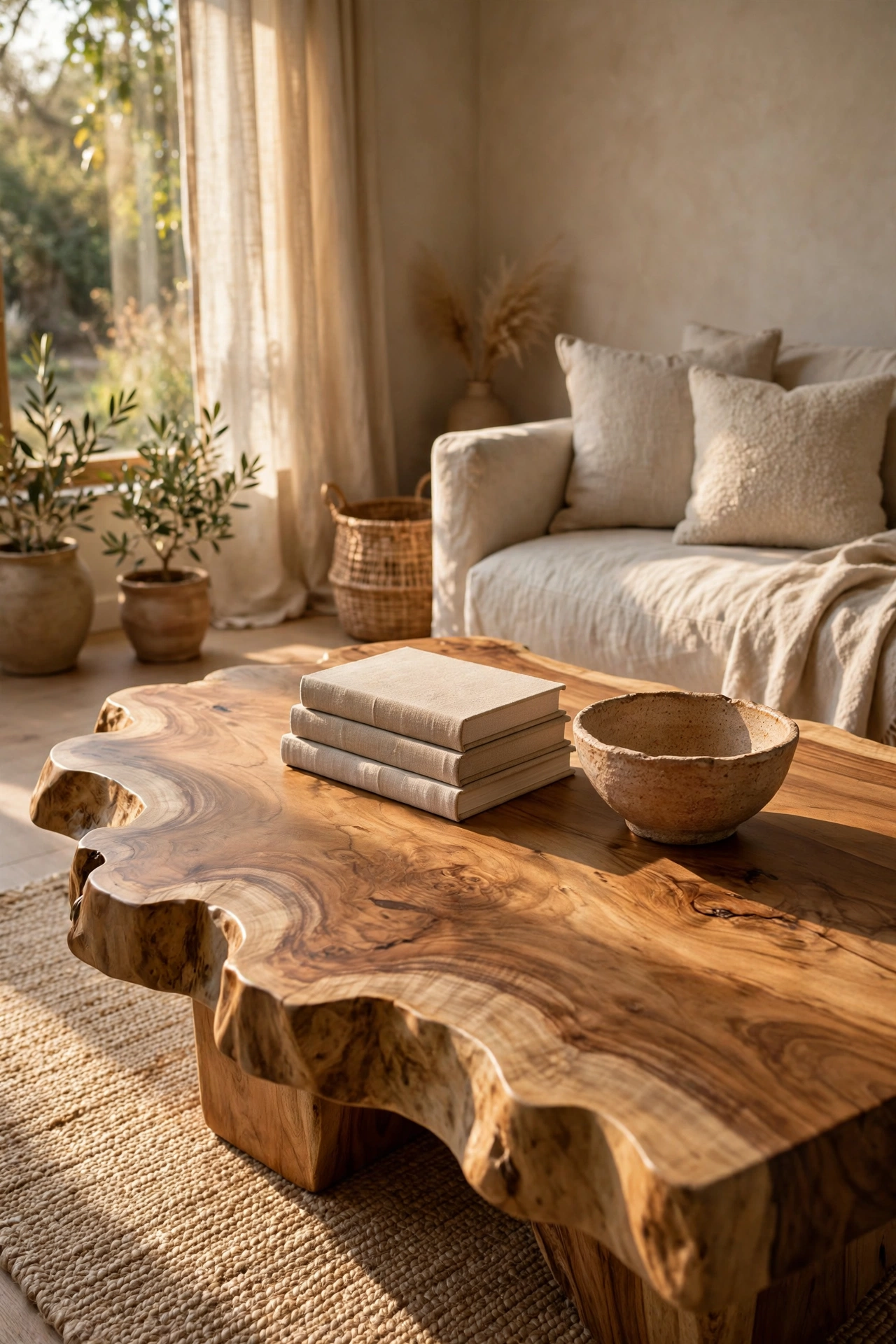
Nothing says “organic” faster than a slab of wood with its natural edge still on it. A live-edge coffee table brings the outside in and gives you that one honest, imperfect piece every organic modern room needs. Look for acacia or oak; even a small one works. Style it simply — a stack of two or three linen-covered books, one ceramic bowl, done. The wood is the decor; don’t cover it up with clutter.
Try this: oil the wood once a year with a food-safe wood oil to keep the grain rich and protect it from coffee rings.
4. Layer a Jute Rug Under a Softer Rug
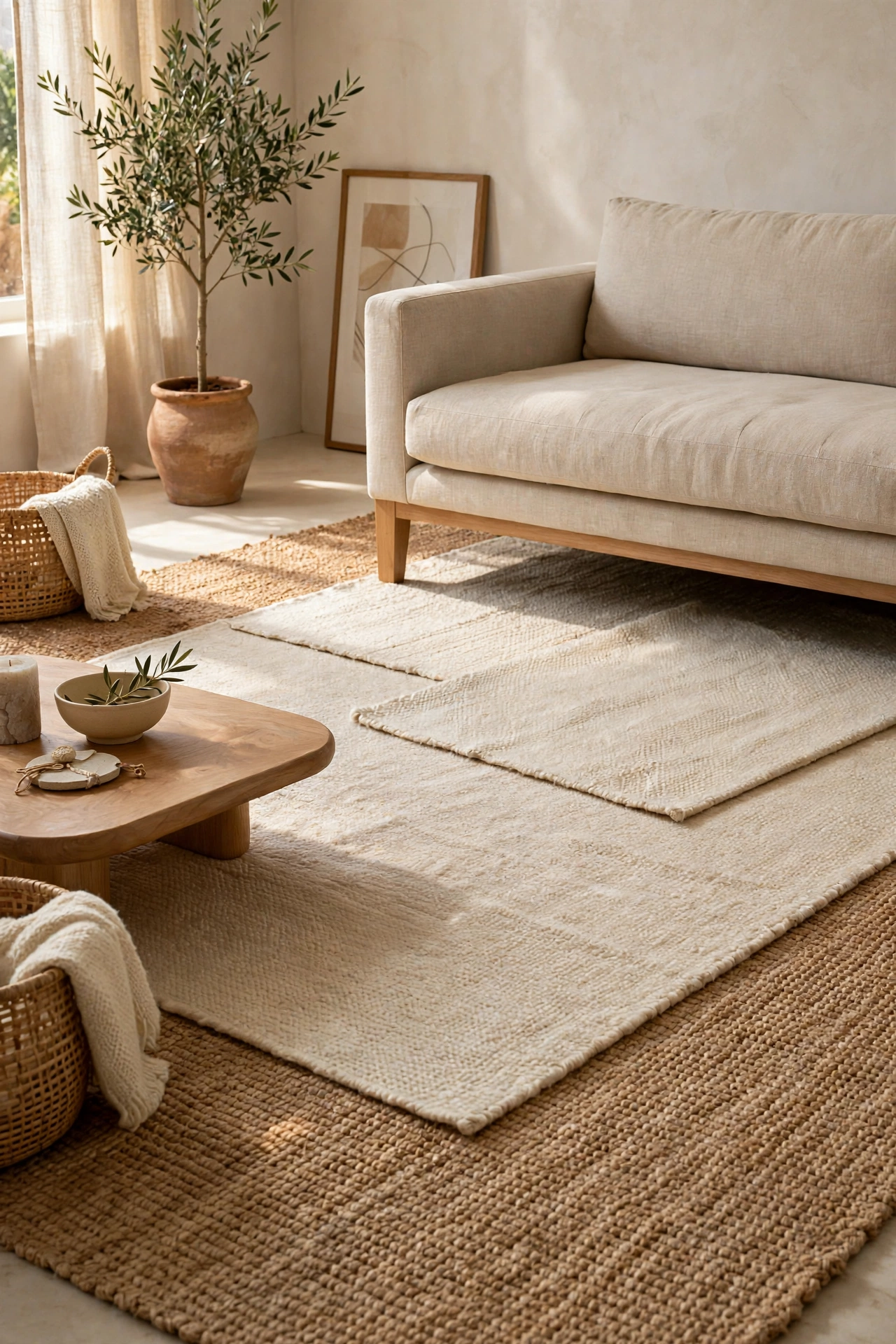
This is the designer trick that costs almost nothing. Start with a big, affordable jute or sisal rug as the base layer — it grounds the room and adds that earthy texture underfoot. Then layer a smaller, softer rug (wool or cotton, cream or oatmeal) on top, slightly off-center. The two textures together look intentional and collected, and your feet get the soft landing while the room gets the organic base.
Try this: make sure the front legs of the sofa sit on the rugs so the seating area feels connected instead of floating.
5. Hang a Rattan or Woven Pendant Light
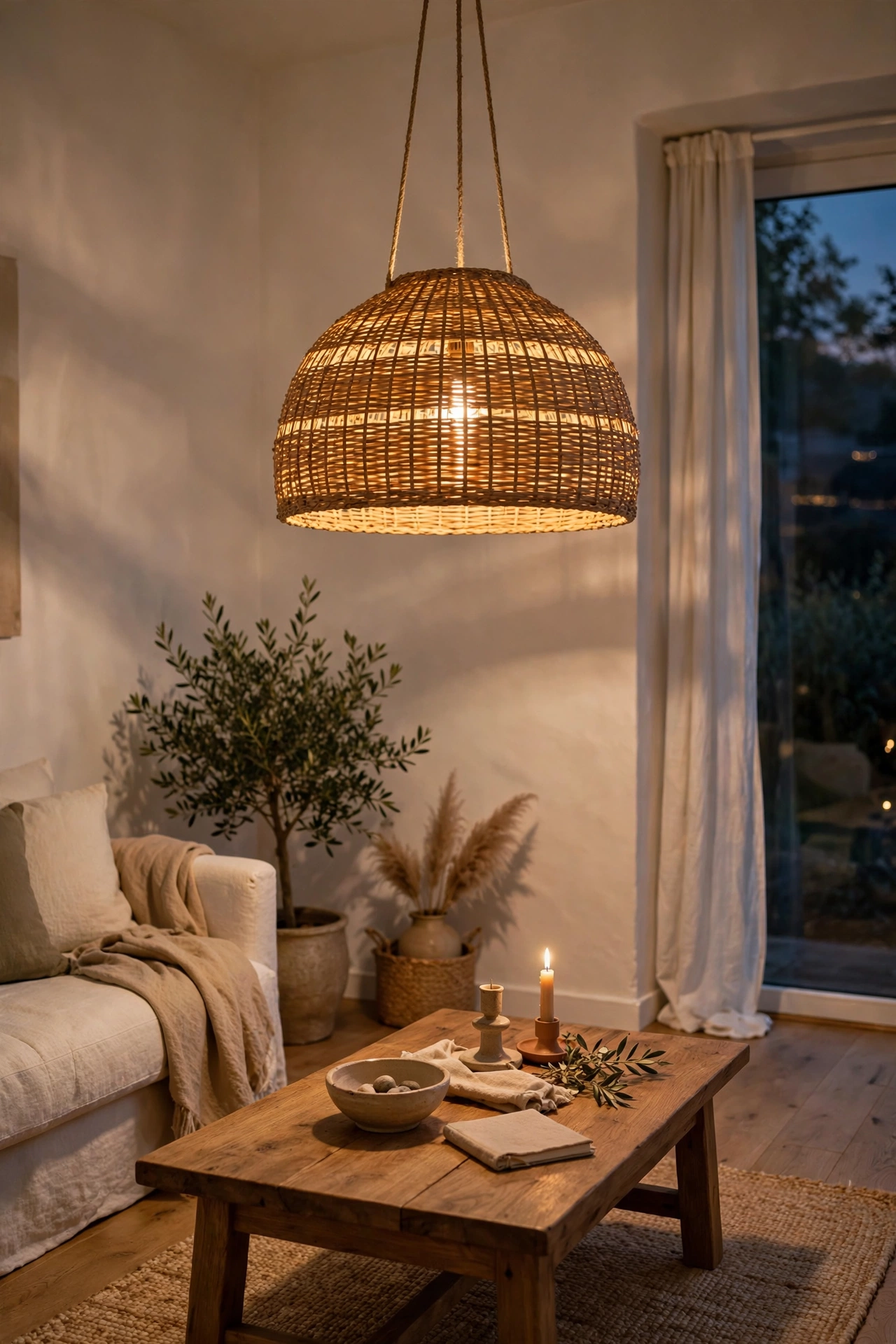
Overhead lighting is where most living rooms go wrong — one harsh ceiling light flattens everything. A rattan pendant, hung low over the coffee table or reading corner, instantly adds warmth and a sculptural shape. Woven shades diffuse light beautifully, throwing soft patterned shadows in the evening. They are also one of the most affordable statement lights you can buy.
Try this: hang it on a dimmer if you can; being able to lower the light at night changes the whole mood of the room.
6. A Travertine Side Table
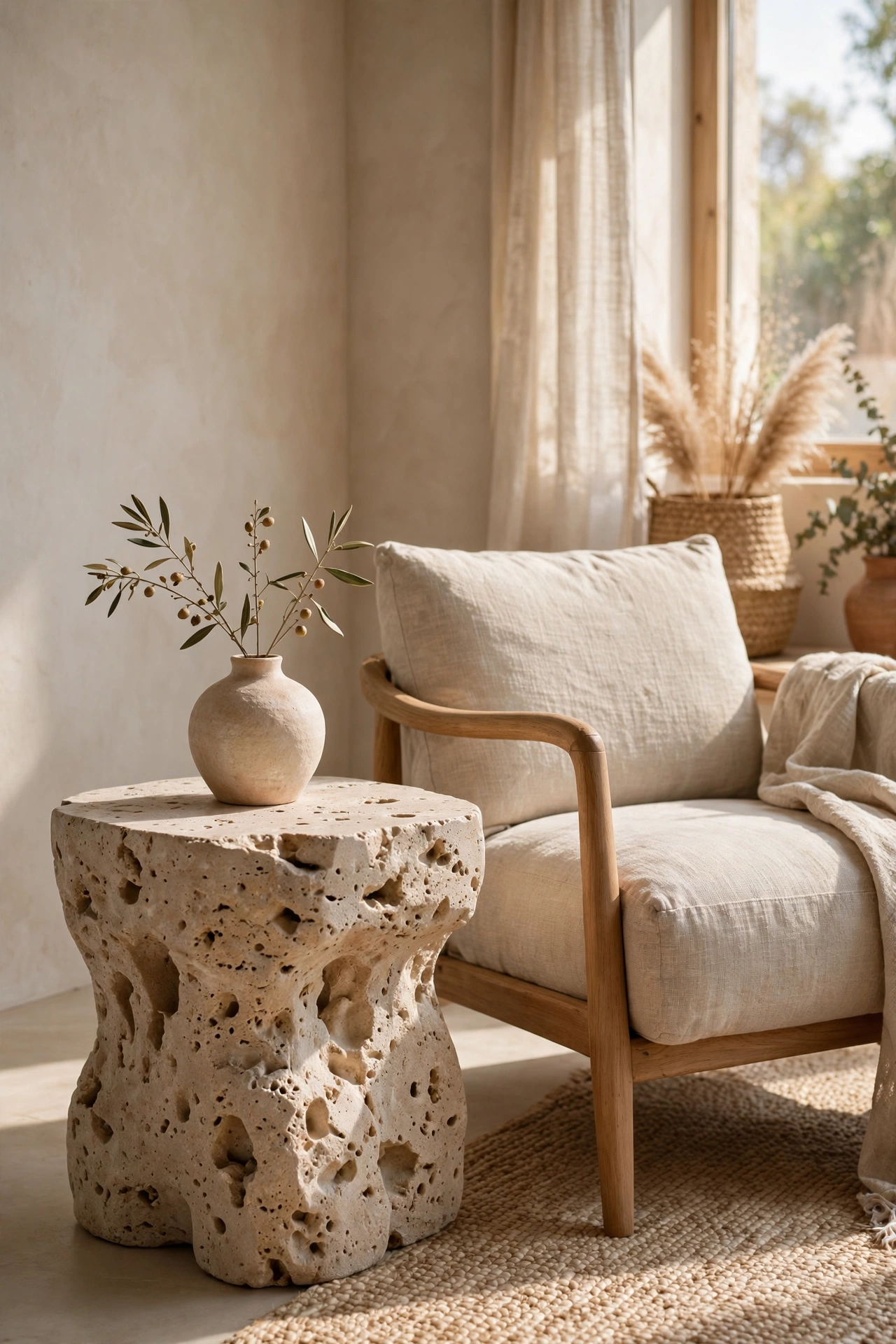
Travertine is having a moment, and for good reason — the soft pitted stone adds cool, natural weight that balances all the warm wood and fabric. A small travertine side table next to the sofa or armchair is functional sculpture. It is heavy enough to feel substantial and the natural variation means no two are alike. If travertine is out of budget, a handmade-look ceramic garden stool does the same job.
If you love building with wood instead, these creative DIY wooden side table ideas will give you a weekend project that fits the same warm aesthetic.
Try this: seal the stone once with a stone sealer so coffee rings don’t become permanent residents.
7. A Linen Slipcovered Armchair
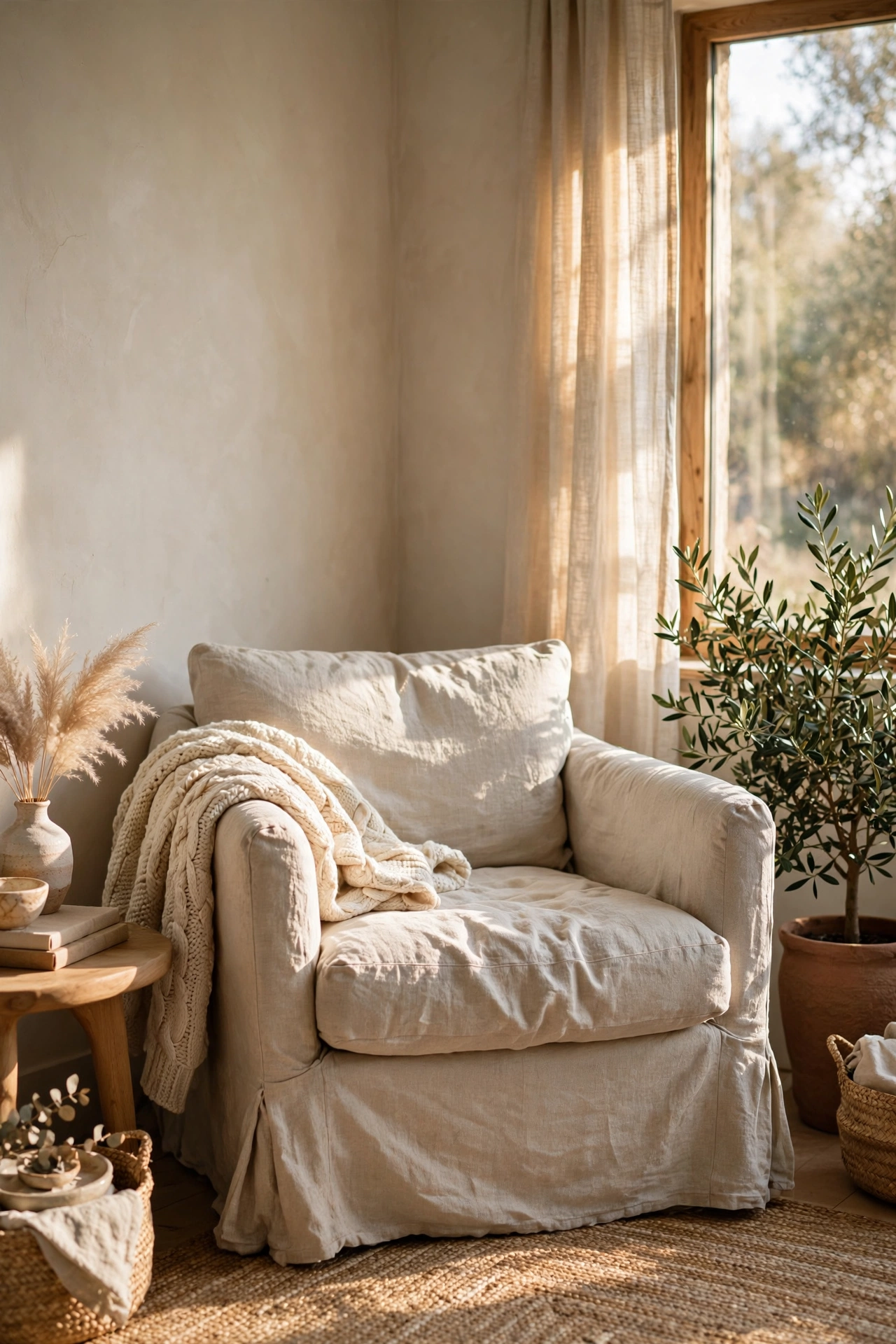
There is something about slightly rumpled linen that signals a relaxed, real home. A slipcovered armchair in natural or oatmeal linen is forgiving (the slipcover comes off for washing), comfortable, and perfectly on-style. The casual drape of the fabric softens the modern lines around it. Tuck a chunky knit throw over one arm and it becomes the seat everyone fights over.
Try this: wash the slipcover and put it back on slightly damp — it dries smooth and skips the ironing entirely.
8. One Olive or Sage Green Accent Chair
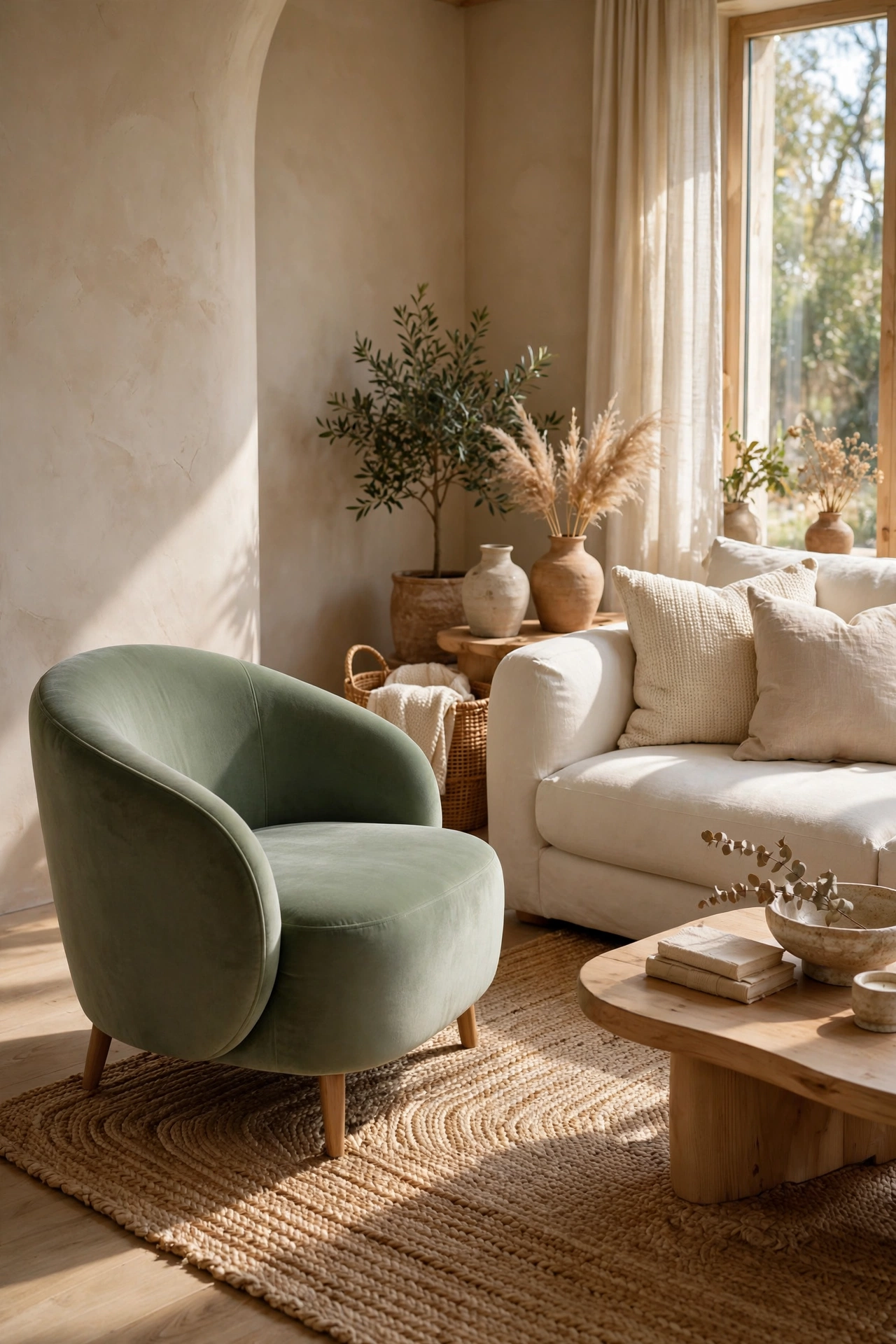
Organic modern rooms are mostly neutral, but one muted green chair keeps them from feeling beige-on-beige. Olive, sage, or eucalyptus green connects to the plants in the room and adds depth without shouting. A curved accent chair in a soft green velvet or linen, placed at an angle to the sofa, gives the seating arrangement movement. One is enough — this is an accent, not a theme.
Try this: echo the green once more with a small plant or a single cushion so the chair feels connected to the room.
9. Put a Real Tree in the Corner
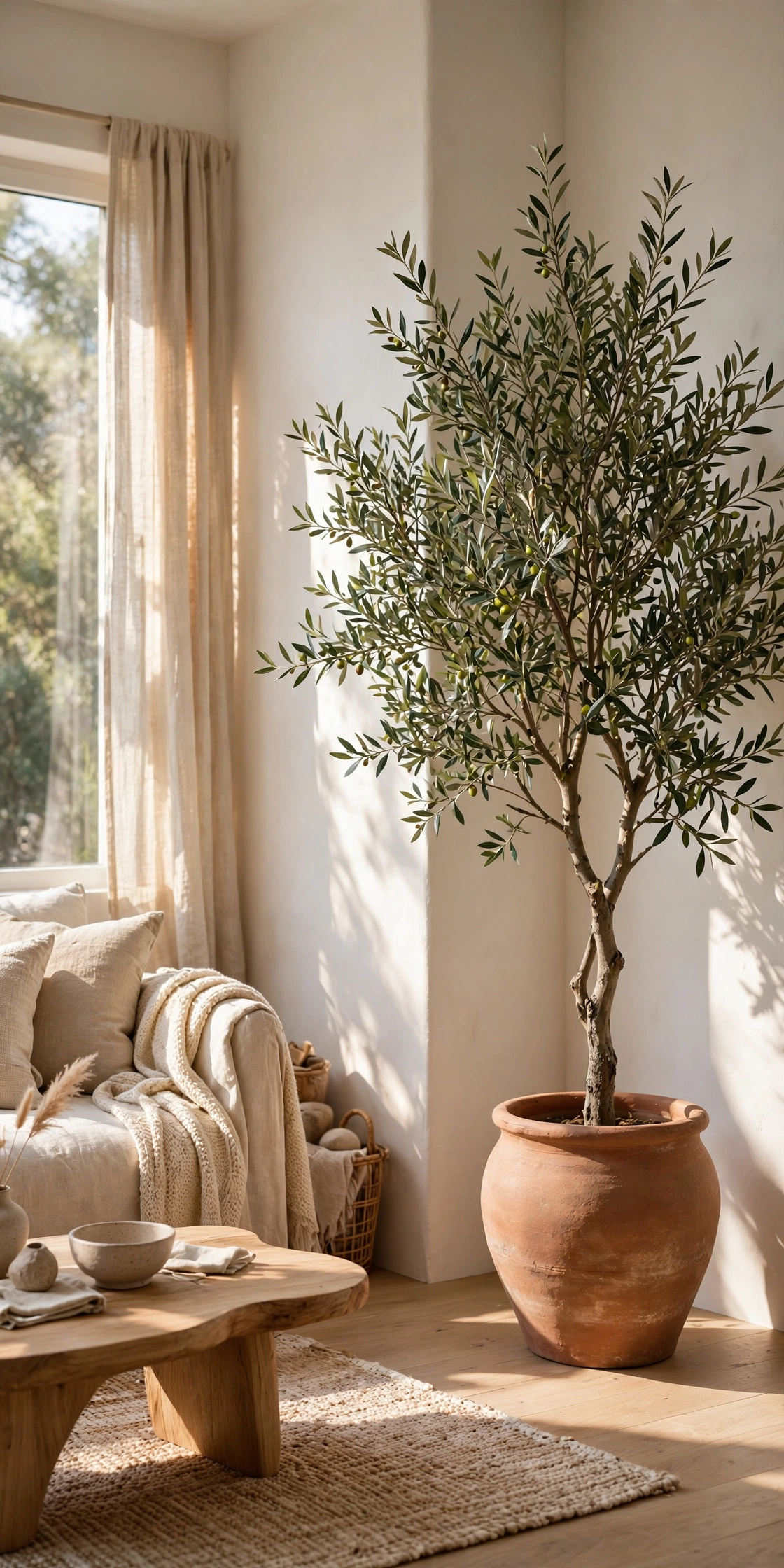
Every organic modern living room needs something alive, and a small indoor tree does more than any decor object. An olive tree, fiddle-leaf fig, or rubber plant in a big empty corner fills vertical space, softens the architecture, and literally brings nature inside. Put it in a large terracotta or ceramic pot (never the plastic nursery pot — that kills the look instantly). If your corner is dark, a snake plant or ZZ plant survives almost anything.
If you’re carving out a reading spot near your plants, these cozy library room with plants ideas show how to turn that corner into the best seat in the house.
Try this: rotate the tree a quarter turn every month so it grows evenly instead of leaning toward the window.
10. Group Handmade-Look Ceramics
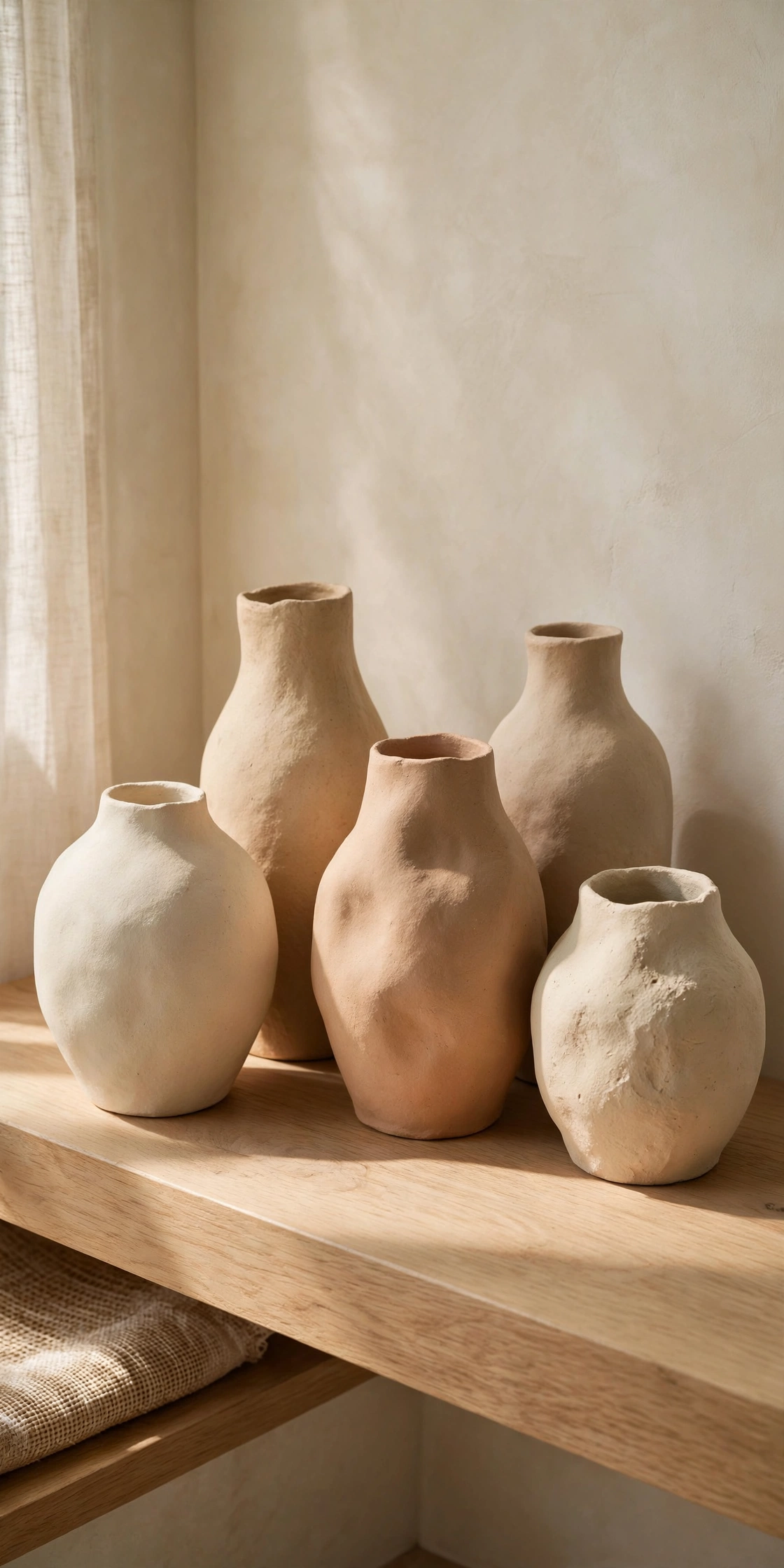
A cluster of three or five matte ceramic vases in cream, sand, and clay tones is the easiest styling win in this style. The handmade look — slightly irregular, visible texture — is exactly what organic modern celebrates. Group them on the coffee table, mantel, or open shelf in odd numbers, varying the heights. Leave a couple empty; not everything needs flowers. The shapes themselves are the art.
Pop Maison has a clear breakdown of the materials and shapes that define the look, and their modern organic style guide is worth a read if you want to understand why these textures work together.
Try this: thrift stores are full of handmade-look ceramics for a few dollars — the slight imperfections are the whole point.
11. Hide the Clutter in Seagrass Baskets
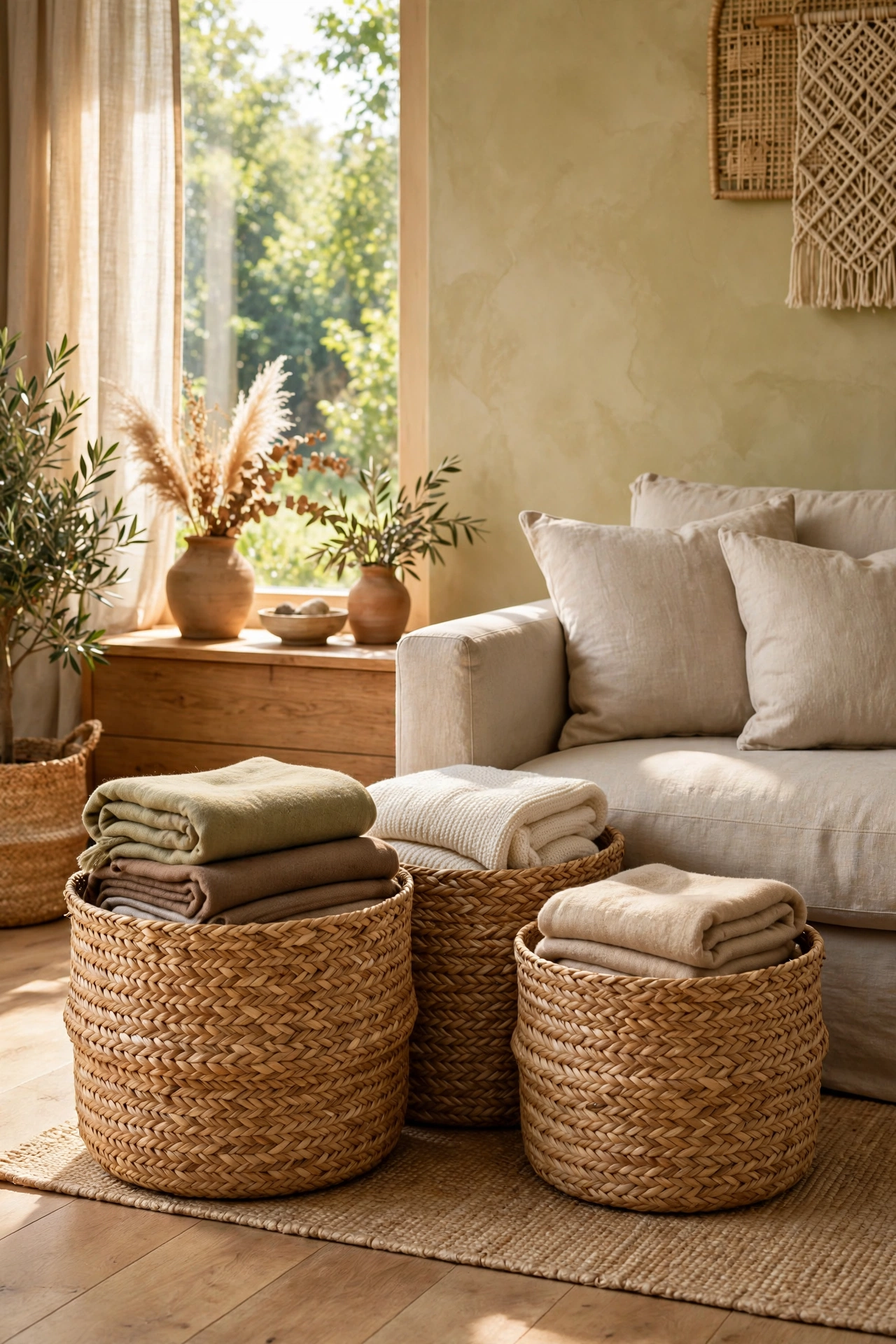
Organic modern rooms look calm because you can’t see the mess. Big seagrass or wicker baskets are the style-approved hiding place for throw blankets, kids’ toys, remotes, and the random stuff that accumulates on a coffee table. Tuck one beside the sofa, one under the console table. They add texture while they work, which is the whole point — storage that is also decor.
Try this: choose lidded baskets for the things you never want to see; open ones are fine for blankets that look good folded.
12. Drape One Chunky Knit Throw
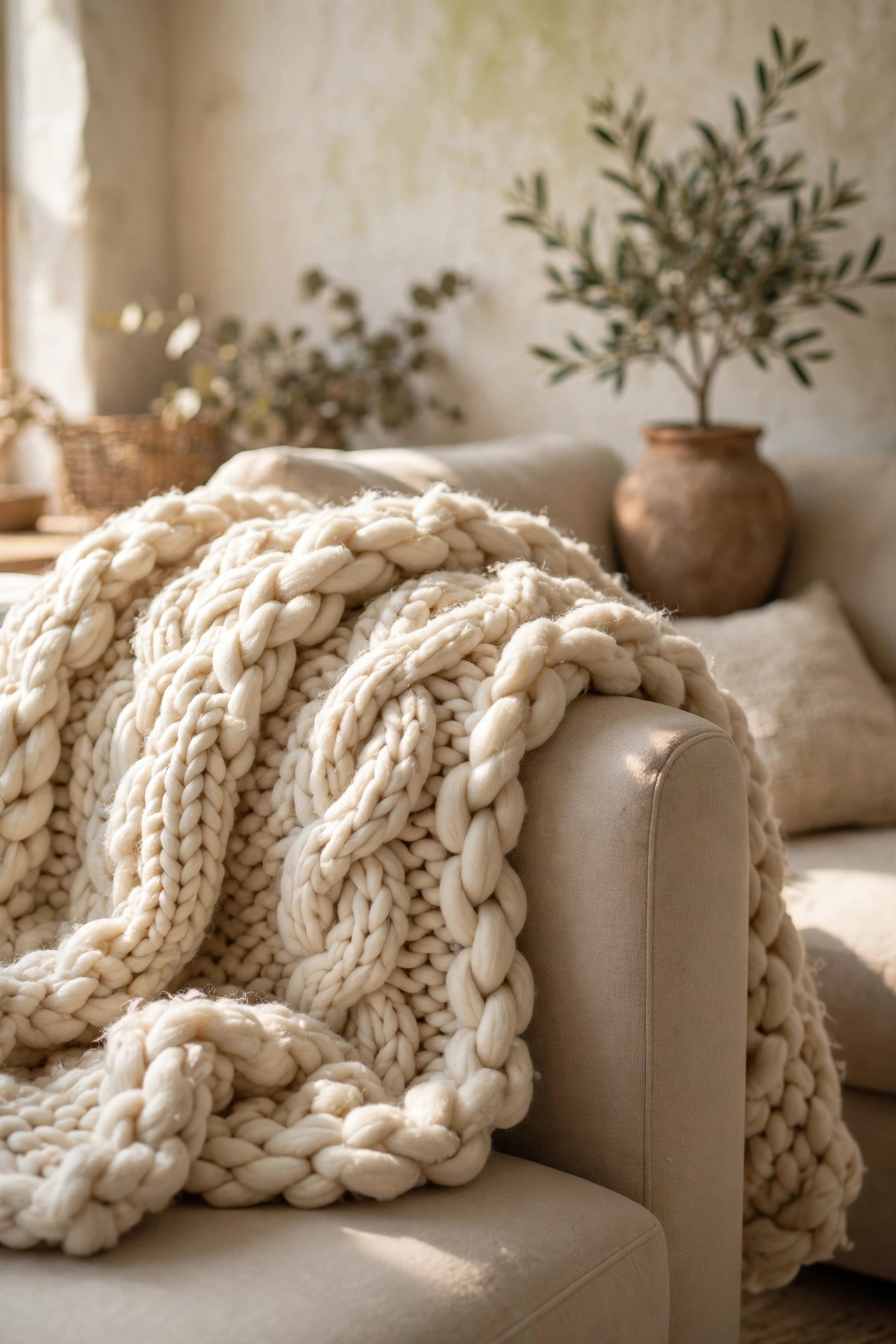
You don’t need ten pillows. One heavy, chunky knit wool throw, folded over the arm of the sofa or draped across the back, adds more warmth than a pile of accessories ever could. The thick texture is the star — it catches light and shadow and makes the whole sofa look inviting. Stick to cream, oatmeal, or soft camel so it stays in the palette. This is a five-minute upgrade with outsized impact.
Try this: fold it in thirds lengthwise before draping so it looks intentional rather than tossed.
13. Lean an Arched Mirror Against the Wall
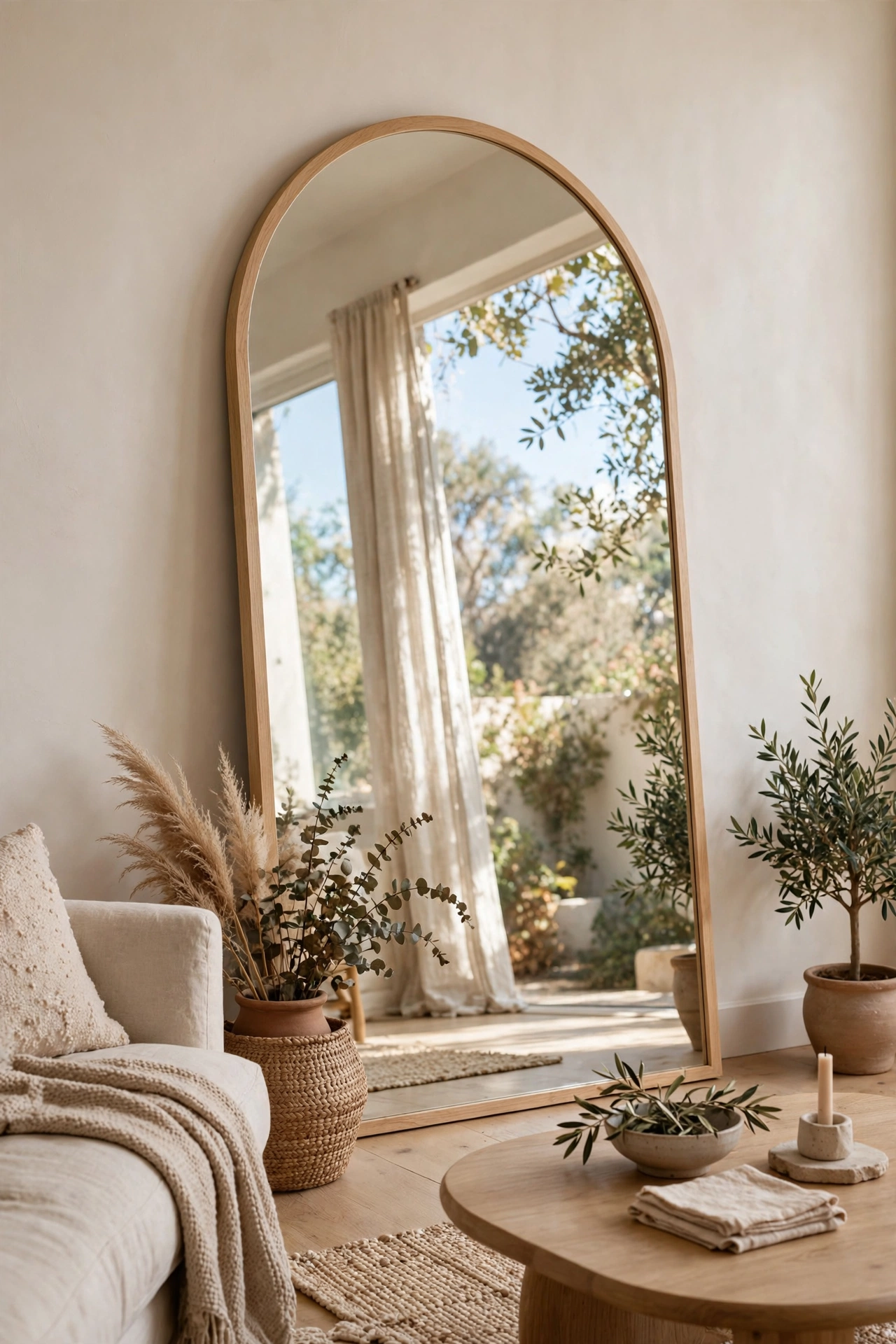
An arched mirror softens a room the way a curved sofa does — no sharp corners, just a gentle shape that bounces light around. Lean a large one against the wall behind a console table or in a dark corner instead of hanging it; the casual lean feels more organic and modern than a formal hang. It doubles the light from your windows and makes the room feel bigger, and the arch echoes all the other curves in the space.
Try this: angle it to reflect the window or your plants, not the TV — you want it to bounce light and green, not glare.
14. Put Up Simple Oak Open Shelving
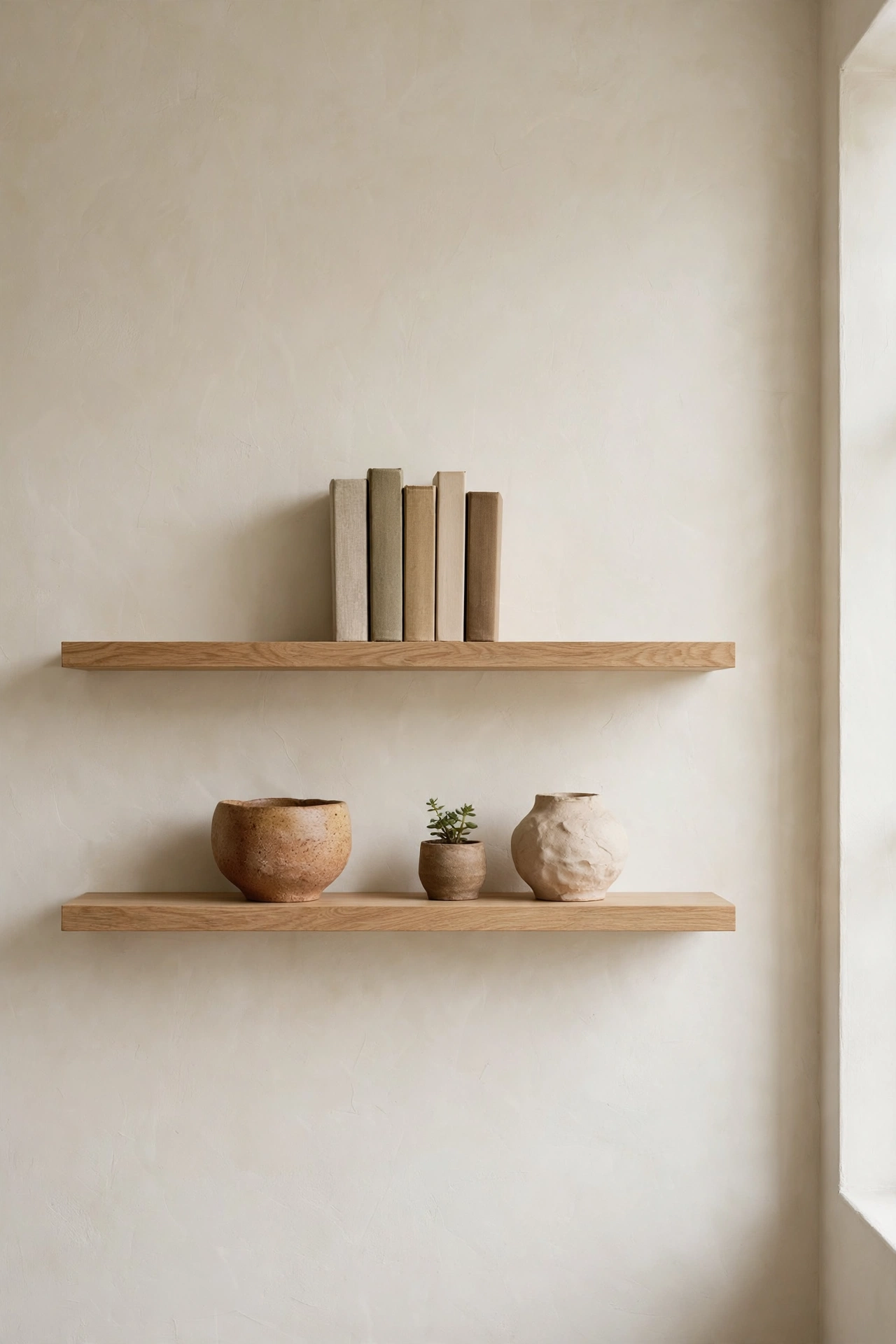
One or two floating oak shelves on a blank wall give you display space without the bulk of a bookcase. The key word is restraint: style them with a short row of books, two or three ceramics, and one small plant, then stop. Open shelves turn into clutter fast, so give everything generous breathing room. The warm wood against a warm-white wall is quietly beautiful on its own.
Try this: use a small level and painter’s tape to mark placement before drilling — crooked shelves ruin the calm instantly.
15. Hang One Big Textured Abstract Painting
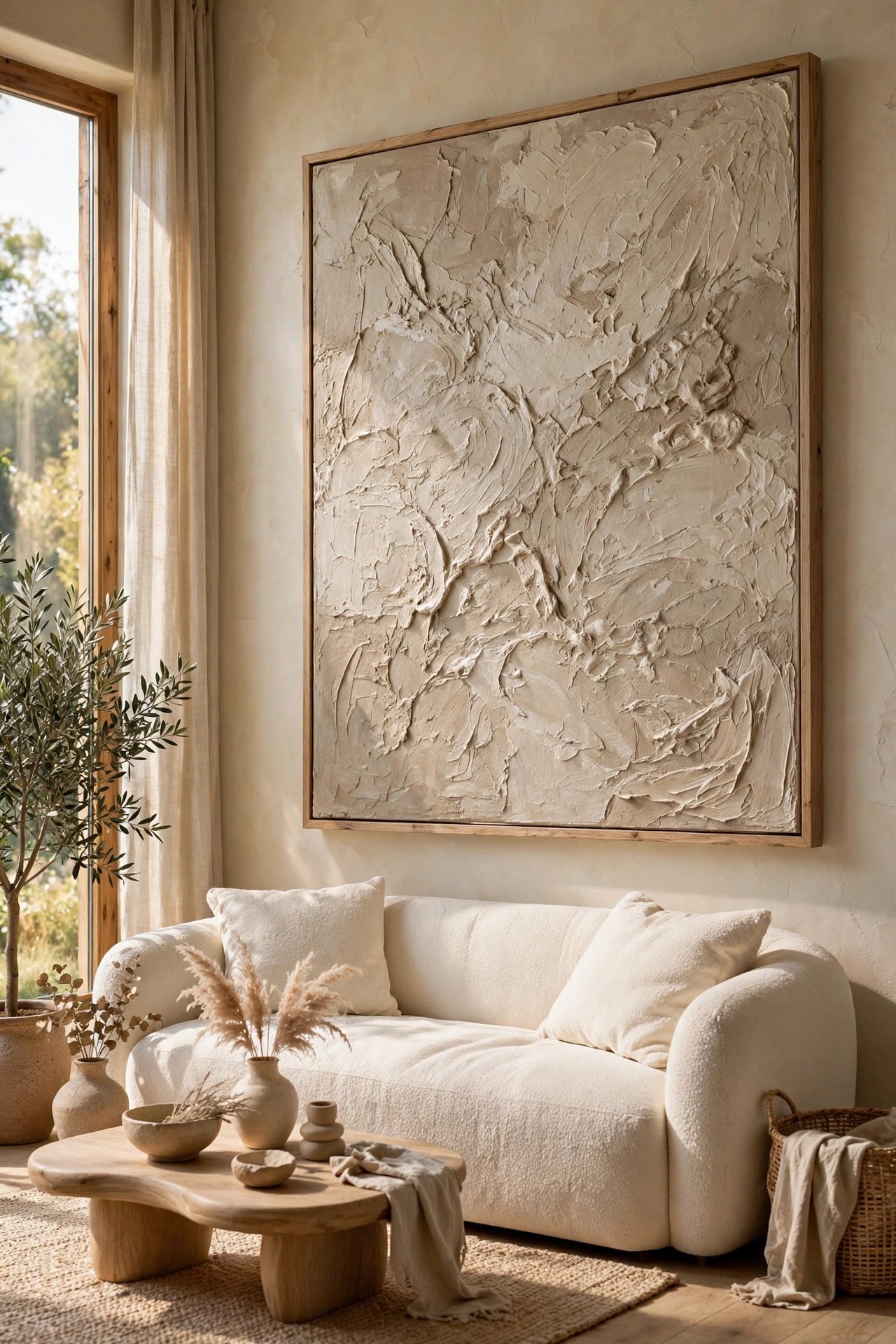
In organic modern rooms, walls should not be crowded — one large piece beats a gallery wall. Look for abstract art in neutral tones with heavy texture: plaster art, limewash-style canvases, or anything with visible brushwork you can almost feel. Hang it low over the sofa, about six to eight inches above the back cushions, roughly two-thirds the sofa’s width. A light wood frame or no frame at all keeps it raw.
For more ways to fill blank walls without cluttering them, these decorative wall ideas are full of calm, simple options that fit this style.
Try this: you can DIY plaster art with joint compound and a putty knife on a cheap canvas — it looks genuinely good and costs under twenty dollars.
16. Style the Mantel with Stone and Wood
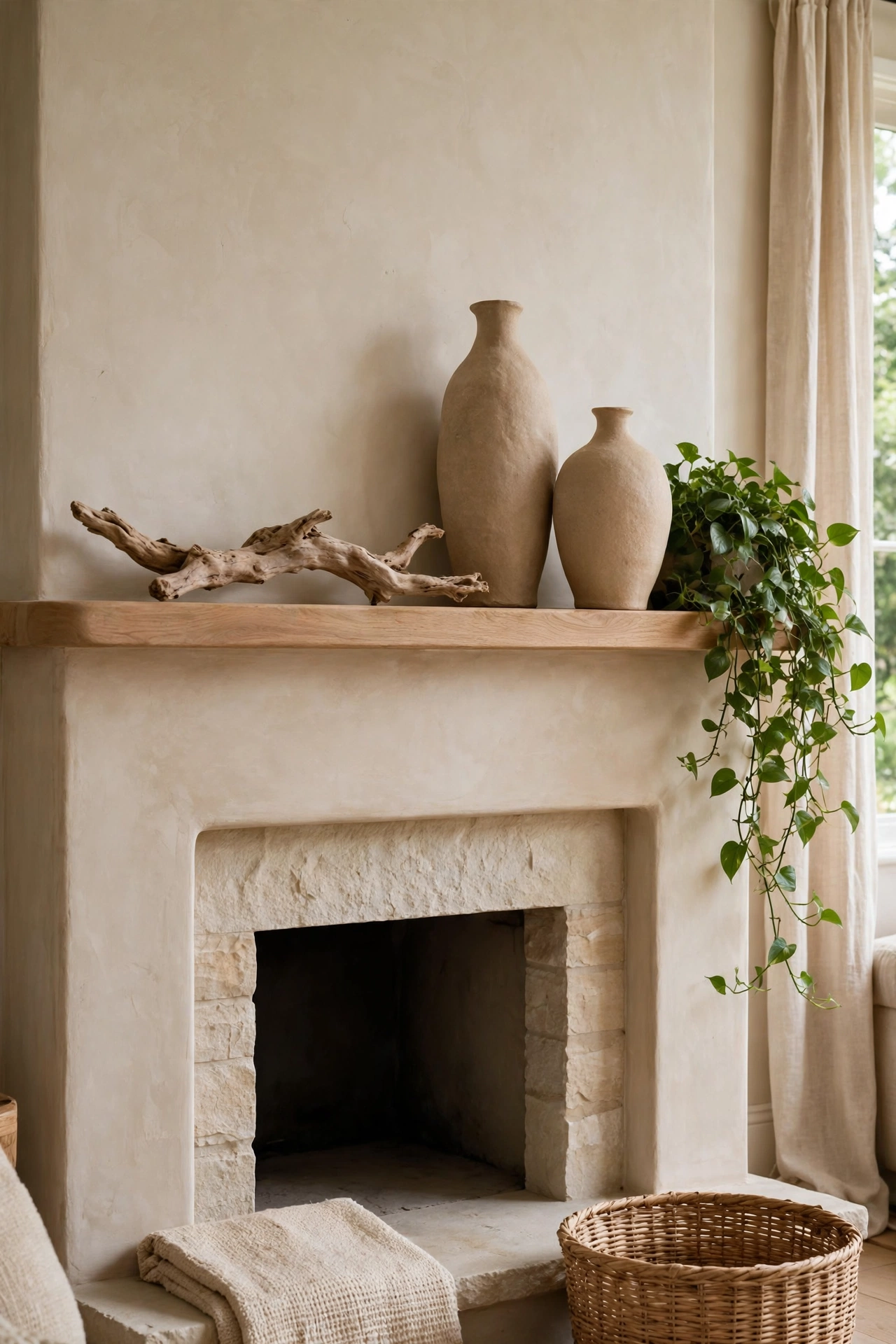
If you have a fireplace, the mantel is your natural focal point — treat it like a still life. A piece of driftwood or a sculptural branch, two or three ceramics of different heights, and one trailing plant is all you need. Keep the palette tight and the arrangement asymmetrical; organic modern is never symmetrical. Swap in seasonal touches (dried grasses in fall, fresh eucalyptus in winter) to keep it alive through the year.
When autumn comes around, these fall mantel decorating ideas show exactly how to dress a mantel without losing the calm neutral look.
Try this: start with the tallest piece slightly off-center, then build outward — asymmetry is what makes it look collected, not staged.
17. Swap Heavy Curtains for Sheer Linen
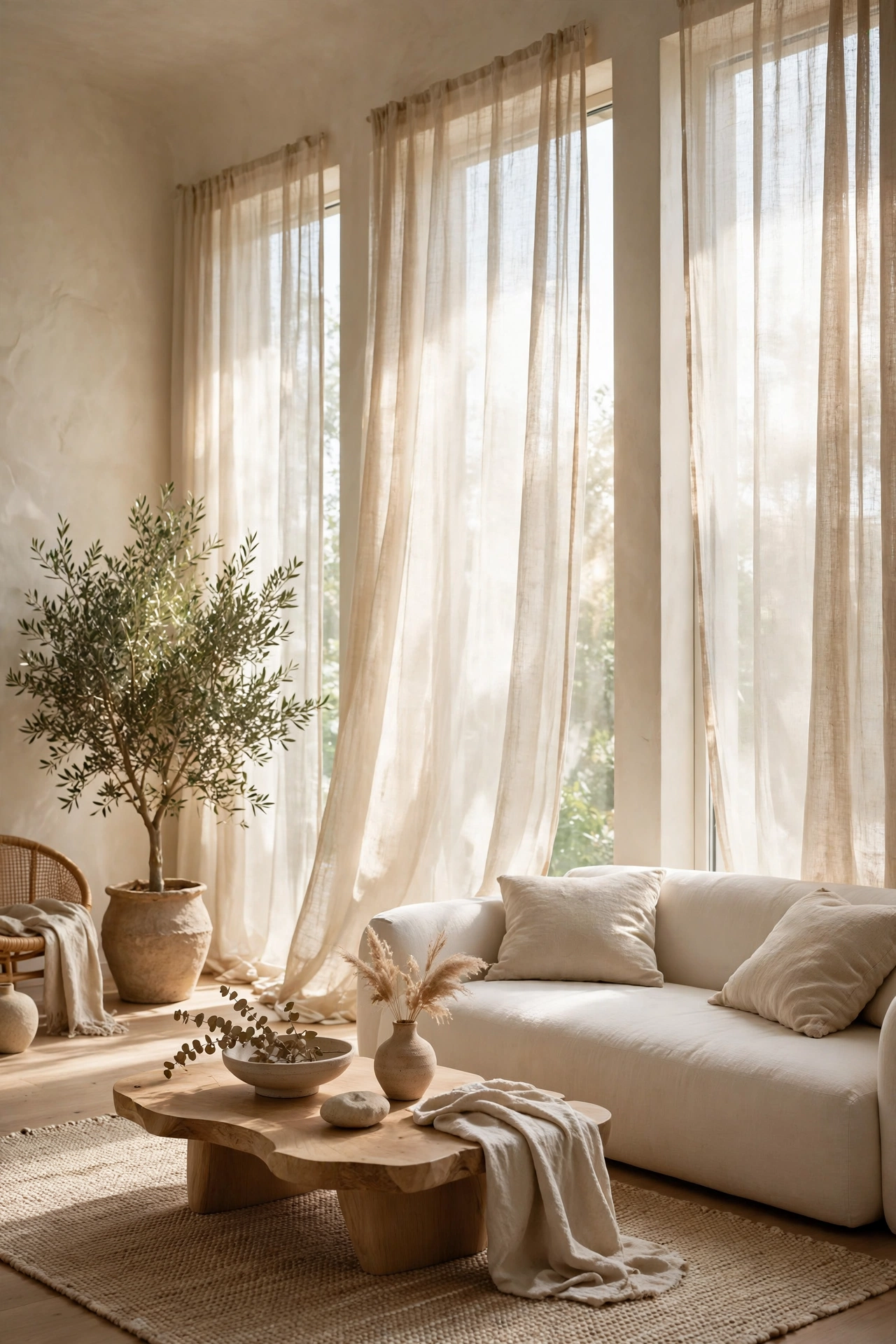
Heavy drapes chop up the light; sheer linen curtains let it pour through while still giving you privacy. The fabric filters sunlight into that soft, diffused glow that makes every material in the room look better. Hang them high and wide — the rod should extend well past the window frame so the curtains frame the window instead of covering it. Slightly rumpled is the goal; ironing linen is against the spirit of this style.
Try this: mount the rod four to six inches above the frame and eight to twelve inches wider on each side for the fullest look.
18. Add One Cognac Leather Piece
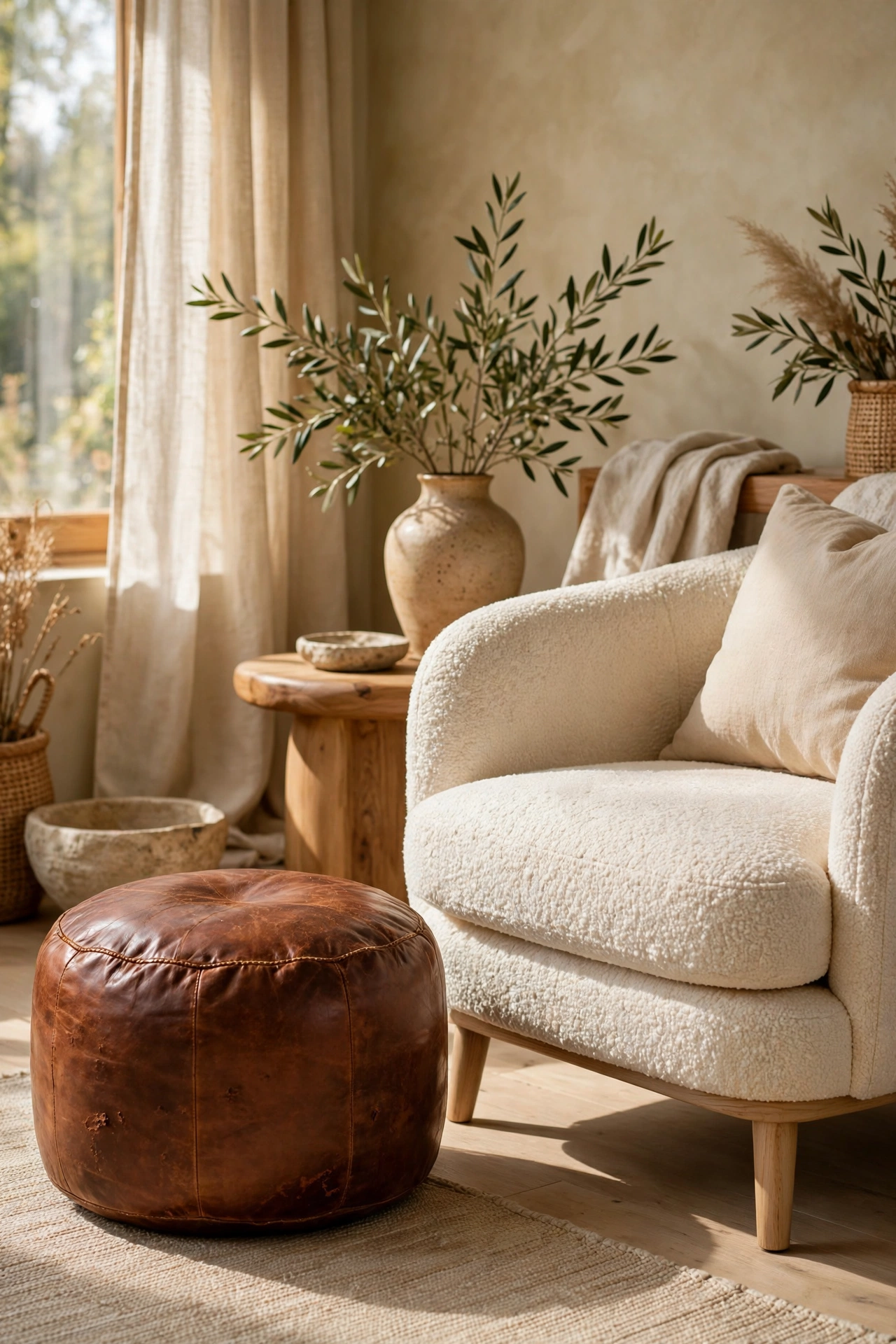
A single leather accent — a cognac pouf, a worn leather sling chair, or even just a leather tray on the coffee table — adds richness and a patina that gets better with age. The warm brown is the perfect bridge between all the creams and the darker wood tones. One piece is the rule; leather is strong stuff and two pieces can tip the room from organic to masculine-rustic fast. Look for secondhand — aged leather has character new leather can’t fake.
Try this: condition secondhand leather once with leather balm and it will look cared-for instead of tired.
19. Hang a Woven Wall Hanging or Carved Wood Panel
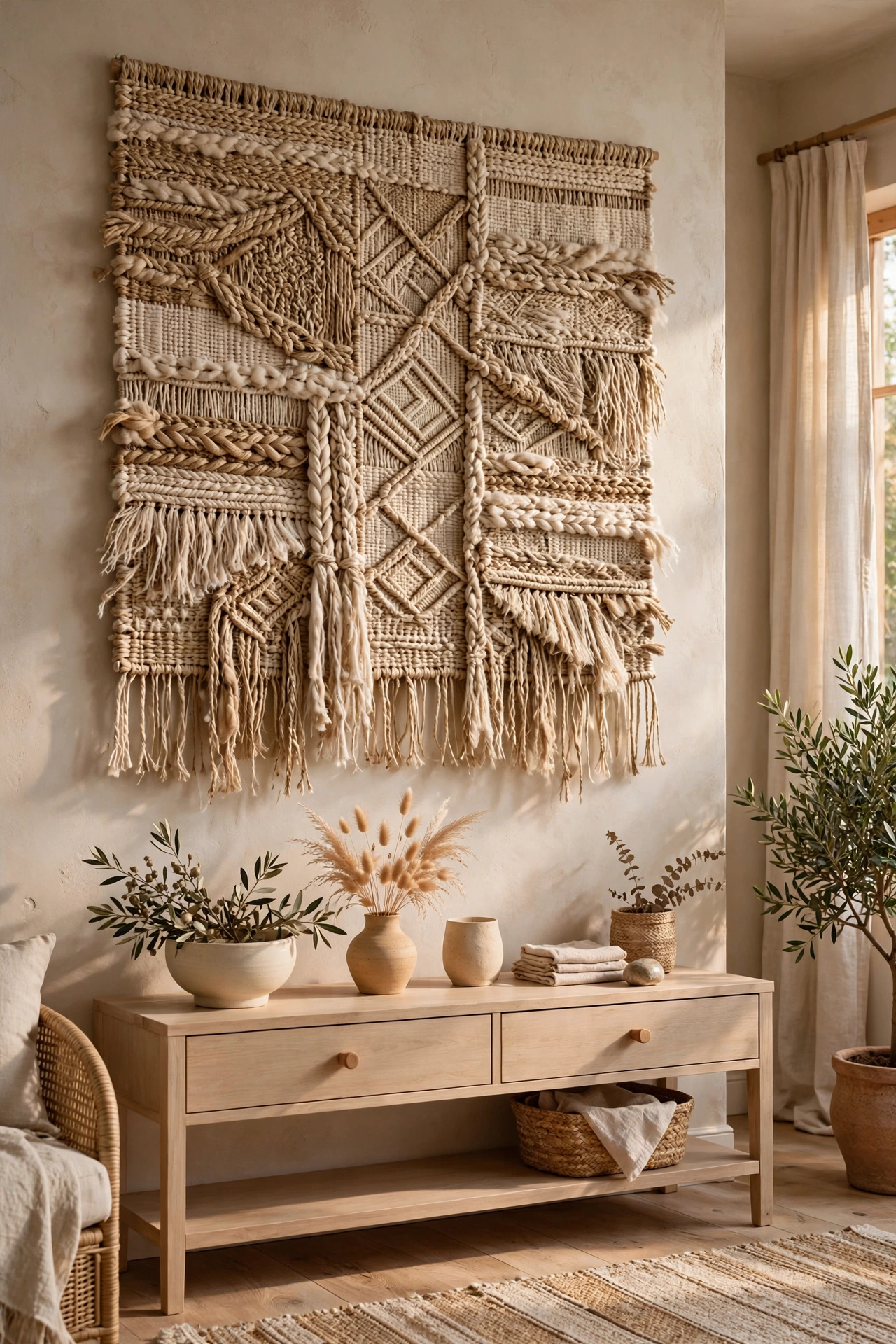
Not every wall needs a painting. A large woven wall hanging, a carved wood panel, or a handmade macramé piece adds softness and craft that flat art can’t. The texture catches light differently through the day, so the wall feels alive. Hang it on the narrow wall, the hallway-facing wall, anywhere a painting would feel too formal. One textile piece per room is plenty.
Try this: hang it a little lower than you think — textile art looks best when it sits closer to the furniture below it.
20. Style the Coffee Table Like a Still Life
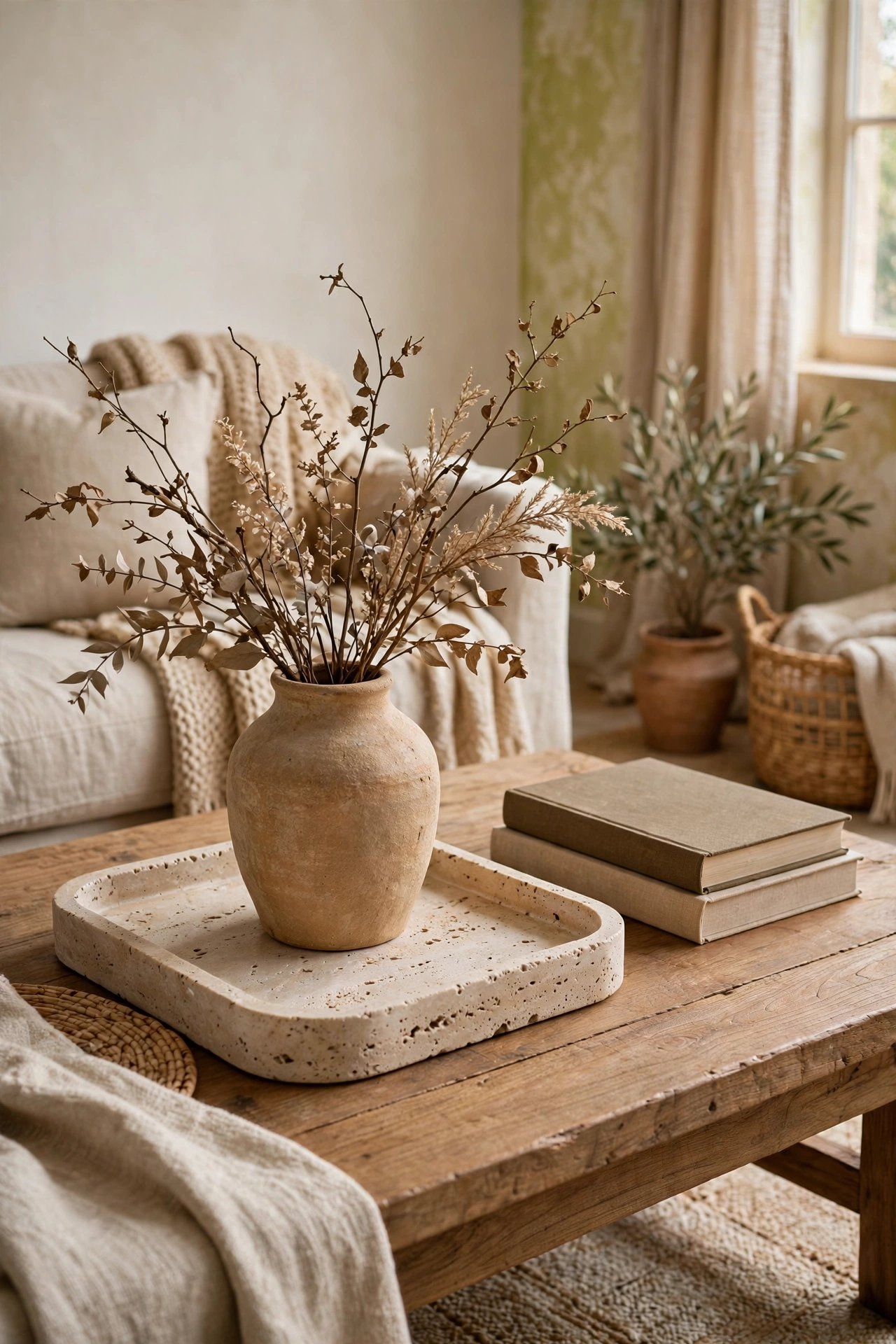
Stop decorating the coffee table and start composing it. The formula: something tall (a vase with branches), something flat (a stack of two books), something small and organic (a stone, a ceramic bowl, a candle). Three objects, three heights, one tray to hold them together if the table is large. Then leave the rest of the table empty — negative space is what makes it look styled instead of stored-on.
Try this: use branches instead of flowers — they last for months and the sculptural shapes suit the style perfectly.
21. Choose a Low, Warm-Wood Media Console
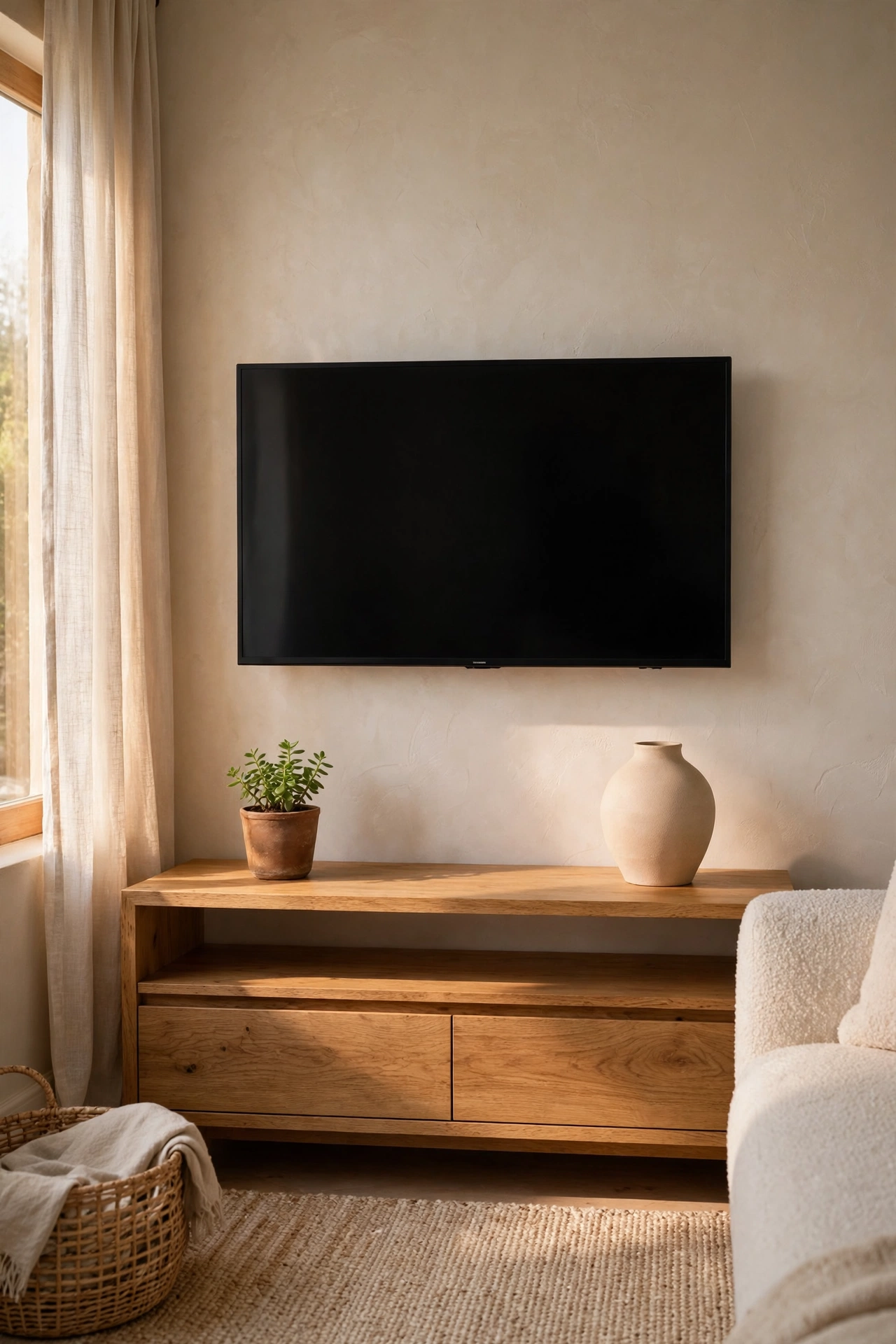
The TV wall is where living rooms usually fall apart visually — a big black rectangle floating on a wall. A low media console in warm oak or walnut grounds it: the wood softens the tech, the low profile keeps sightlines open, and closed cabinets hide the boxes and cables. Style the top with one plant and one ceramic, nothing else. If the TV must be the focus, at least let it sit on something beautiful.
Try this: run all cables through a single cord cover painted the wall color — visible cables undo the calm faster than anything.
22. Cluster Terracotta Pots with Easy Plants
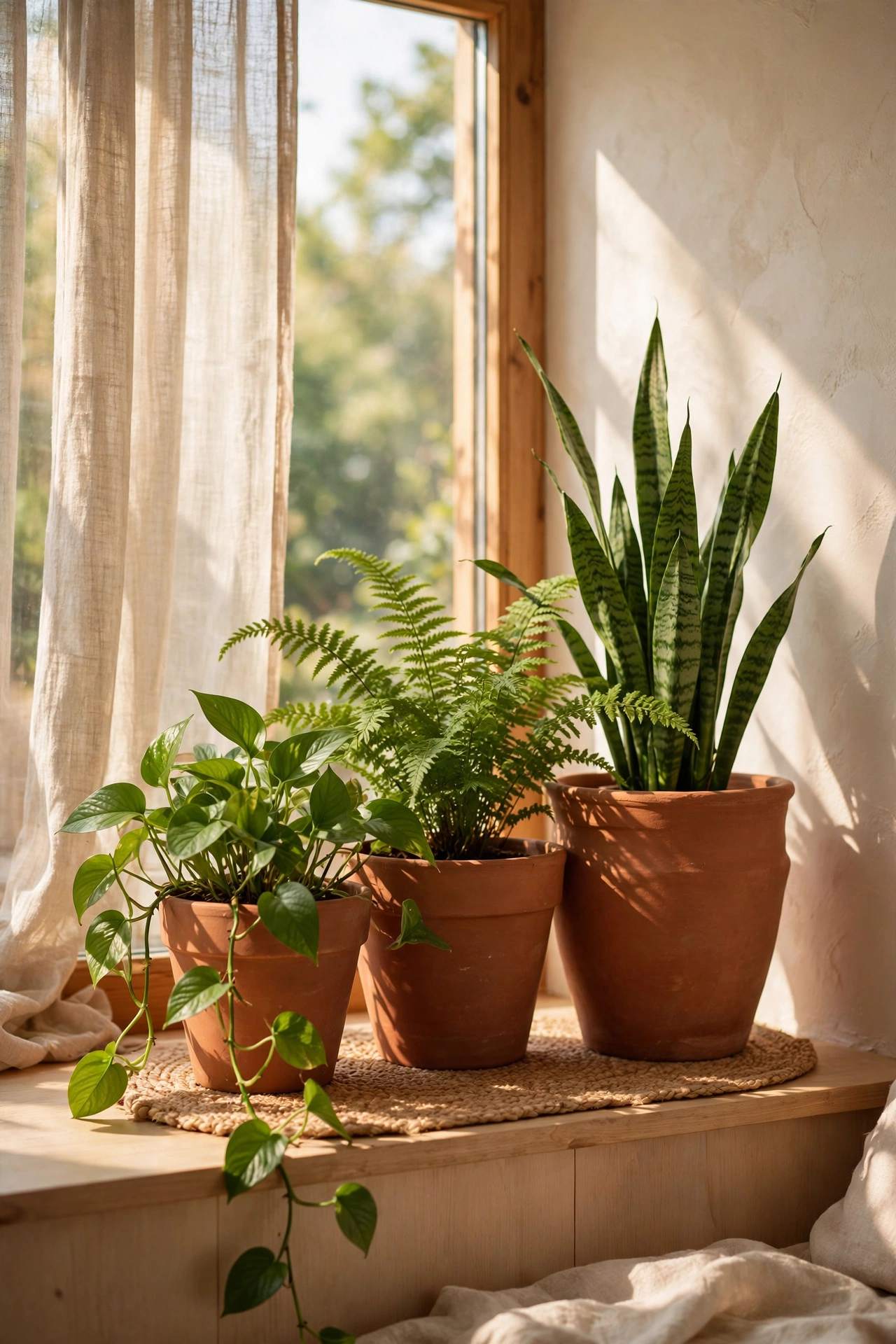
Terracotta is the original organic material — earthy, warm, imperfect in the best way. Group three or five terracotta pots of different sizes on the floor by the window or on a plant stand, filled with easy plants like pothos, snake plants, or ferns. The repetition of the same material in different sizes looks collected rather than decorated. Water everything on the same day and it becomes a ritual instead of a chore.
Try this: put the pots on a large tray or boot mat to protect wood floors from water rings.
23. Layer Warm Lighting at Three Heights
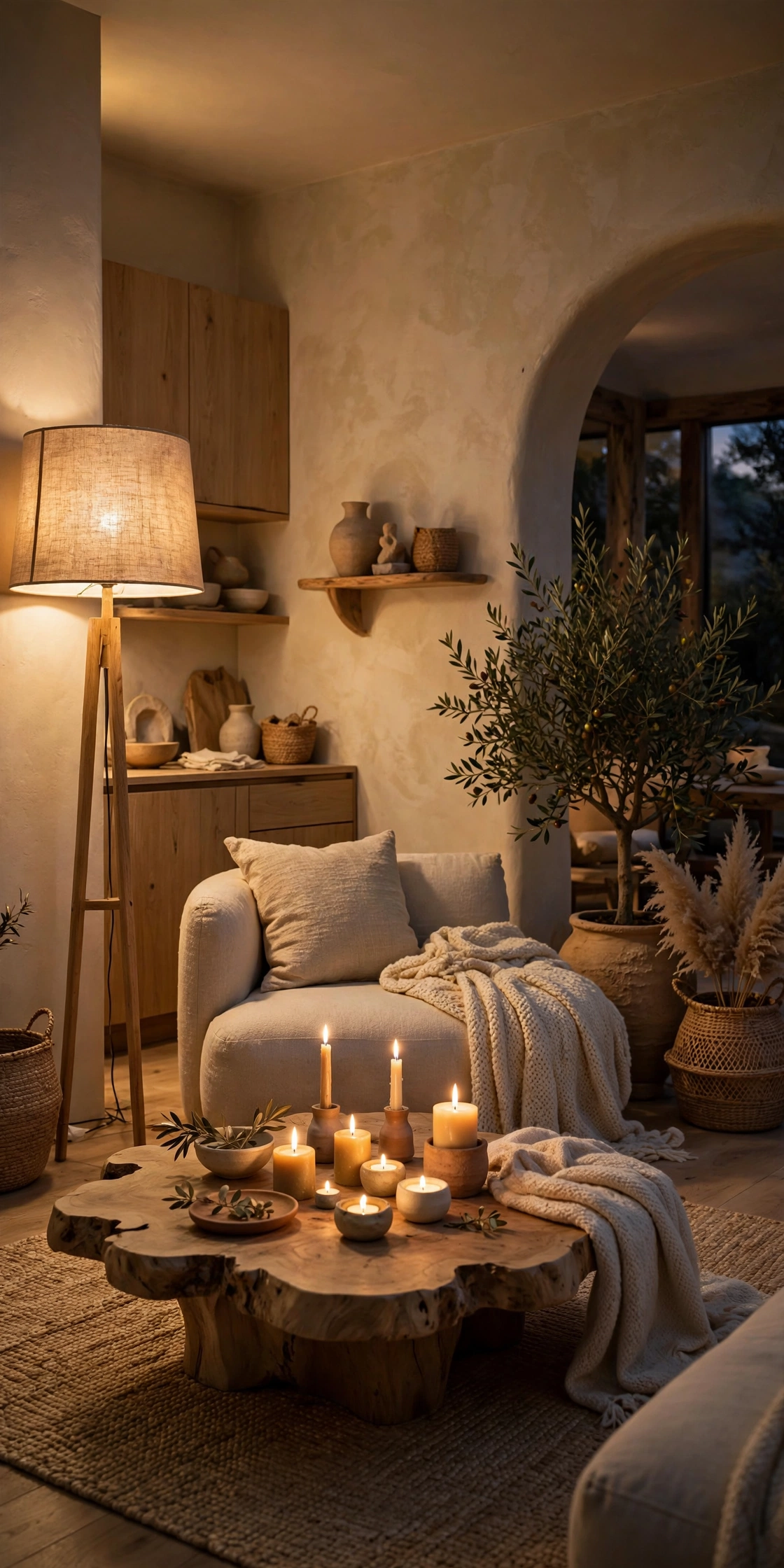
Overhead light alone makes any room feel flat. The fix is three layers: something high (your rattan pendant or a floor lamp with a linen shade), something low (a table lamp on the console), and something living (candles on the coffee table). Put them all on warm-white bulbs — 2700K, never daylight — and add dimmers where you can. In the evening, turn off the overhead entirely and let the low layers do the work. The room will feel like a different place.
For a deeper dive on getting the glow right, this warm minimalism living room guide nails the lighting rules, including the bulb temperatures that make natural wood look its best.
Try this: smart bulbs set to a warm schedule give you the evening glow automatically — no remembering to dim.
24. Add a Natural-Fiber Pouf for Flexible Seating
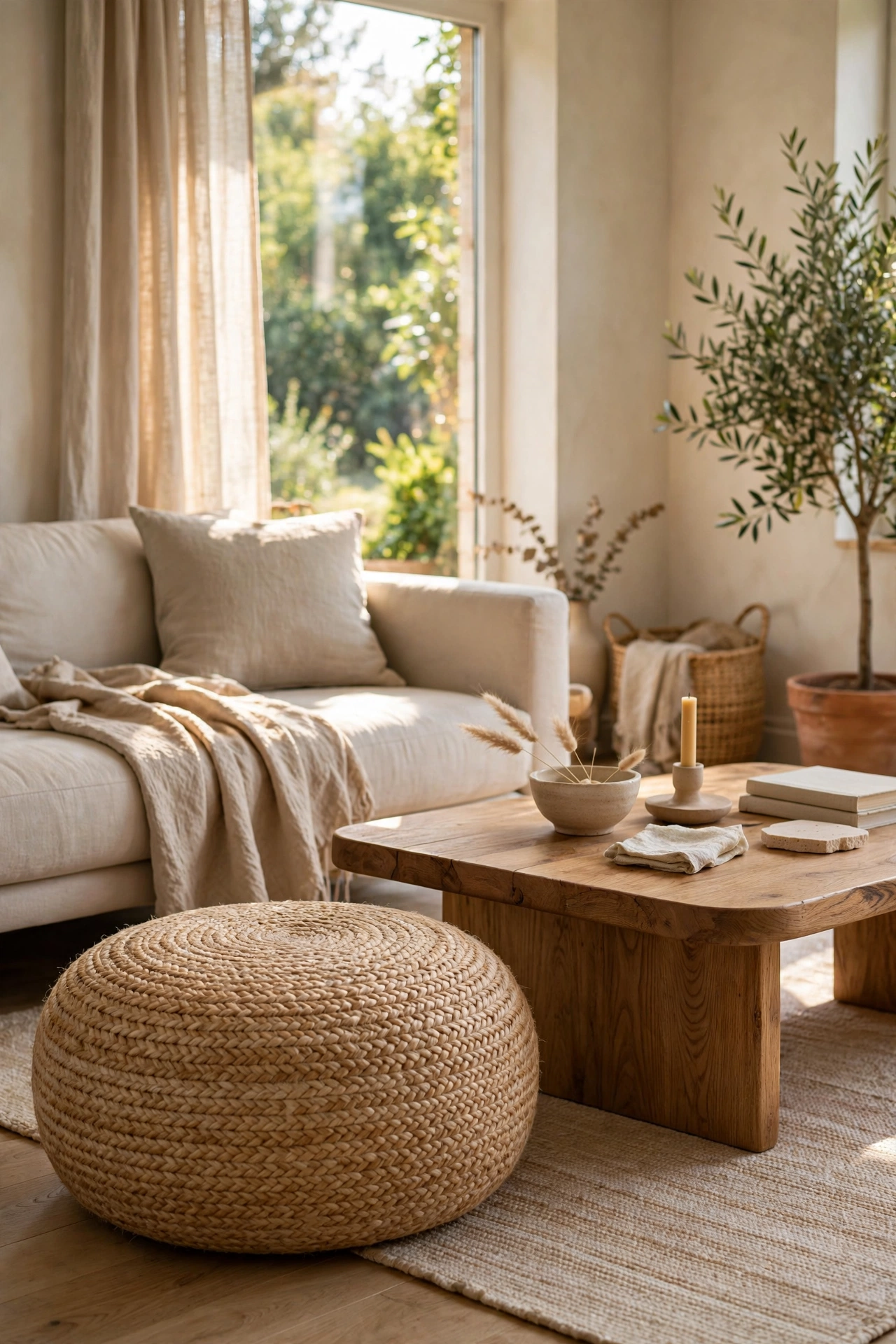
A jute or wool pouf is the hardest-working small piece in an organic modern room: extra seat when guests come, footrest every day, and a soft round shape that echoes the curves elsewhere. Unlike a stiff ottoman, you can drag it anywhere, and unlike a chair it doesn’t block light or sightlines. Tuck it beside the armchair or float it near the coffee table.
Try this: pick one with a removable cover so you can wash away the footprints of daily life.
25. Curate One Small Shelf, Then Stop
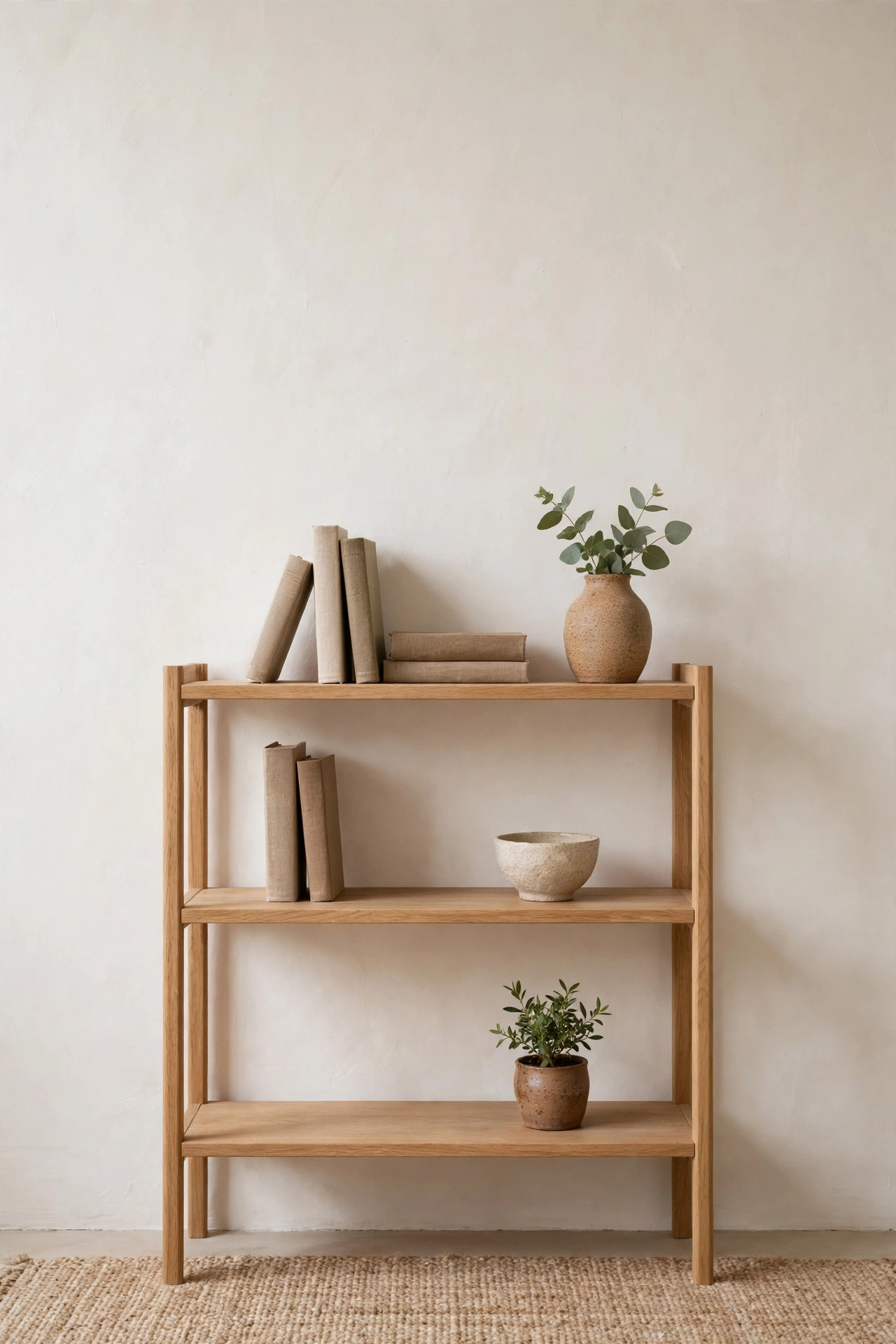
The final idea is about restraint. Pick one shelf — the oak floating shelf, the top of the console, one section of a bookcase — and style it with five to seven objects max: books, one plant, two ceramics, one personal thing. Step back. If it looks calm, you’re done. Organic modern is an edited style; the empty space around your objects is doing as much work as the objects themselves. When in doubt, take one thing away.
Try this: photograph the shelf with your phone — the camera shows clutter your eyes have learned to ignore.
Quick-Pick Cheat Sheet
Not sure where to start? This cheat sheet matches the highest-impact moves to their cost and effort:
| Start With This | The Move | Why It Matters | Rough Cost |
|---|---|---|---|
| Warm-white paint | Two gallons, creamy undertone | Resets the whole room’s temperature | $60–$100 |
| One big texture | Jute rug or chunky throw | Instant warmth underfoot and on the sofa | $40–$120 |
| One wood anchor | Live-edge table or oak shelf | The honest natural piece every room needs | $80–$250 |
| One living thing | Olive tree or pothos cluster | Nothing decorates like something alive | $25–$80 |
| One curve | Arched mirror or curved chair | Softens every straight line in the room | $70–$200 |
Frequently Asked Questions
What is organic modern style in a living room?
Organic modern pairs clean, contemporary shapes with natural materials like wood, stone, linen, rattan, and wool. Think of it as warm minimalism — simple and uncluttered, but cozy instead of cold. The palette stays neutral and earthy (warm whites, beige, camel, olive, charcoal) while texture does the visual heavy lifting.
What colors work best in an organic modern living room?
Stick to warm, earthy neutrals: warm white, cream, beige, sand, camel, terracotta, sage or olive green, and soft charcoal for contrast. Avoid stark whites and cool grays — they fight the natural materials. If you want color, pull it from nature: clay, moss, mushroom, wheat.
How do I make my living room feel organic modern on a budget?
Start with the cheapest wins: warm-white paint, a jute rug, sheer linen-look curtains, and a big plant in a terracotta pot. Then thrift the wood — secondhand oak and teak pieces are everywhere and already have the patina this style loves. Add texture (a chunky throw, woven baskets) before you buy any new furniture.
What is the difference between organic modern and Japandi?
They overlap a lot, but Japandi leans more minimal and structured with Japanese and Scandinavian influences, often darker and moodier. Organic modern is looser and more relaxed — more curves, more texture layering, more “collected over time” feeling. If Japandi is a quiet gallery, organic modern is a warm, sunlit room with better furniture.
Which plants are best for an organic modern living room?
Go for sculptural, architectural plants: olive trees, fiddle-leaf figs, and rubber plants for corners; snake plants and ZZ plants for dark spots; pothos and ferns for shelves. Display them in terracotta, handmade ceramic, or woven basket planters — never leave them in plastic nursery pots.
Final Thoughts
I won’t pretend my living room looks like a magazine spread — there are still toy cars under the sofa and a coffee ring on the side table I’m choosing to call patina. But the shift to organic modern changed how the room feels to live in, and that happened long before it looked “done.” The warm white walls, the wood table with its wobbly natural edge, the olive tree I nearly killed twice — they all add up to a room that feels calm without feeling precious.
Start with one idea from this list this weekend. Paint the walls, or hang the rattan pendant, or just bring home a tree in a terracotta pot. You don’t need all 25 to feel the difference — three or four honest natural pieces will do it. The style rewards patience and real life, which is exactly why it works in a real home.


