


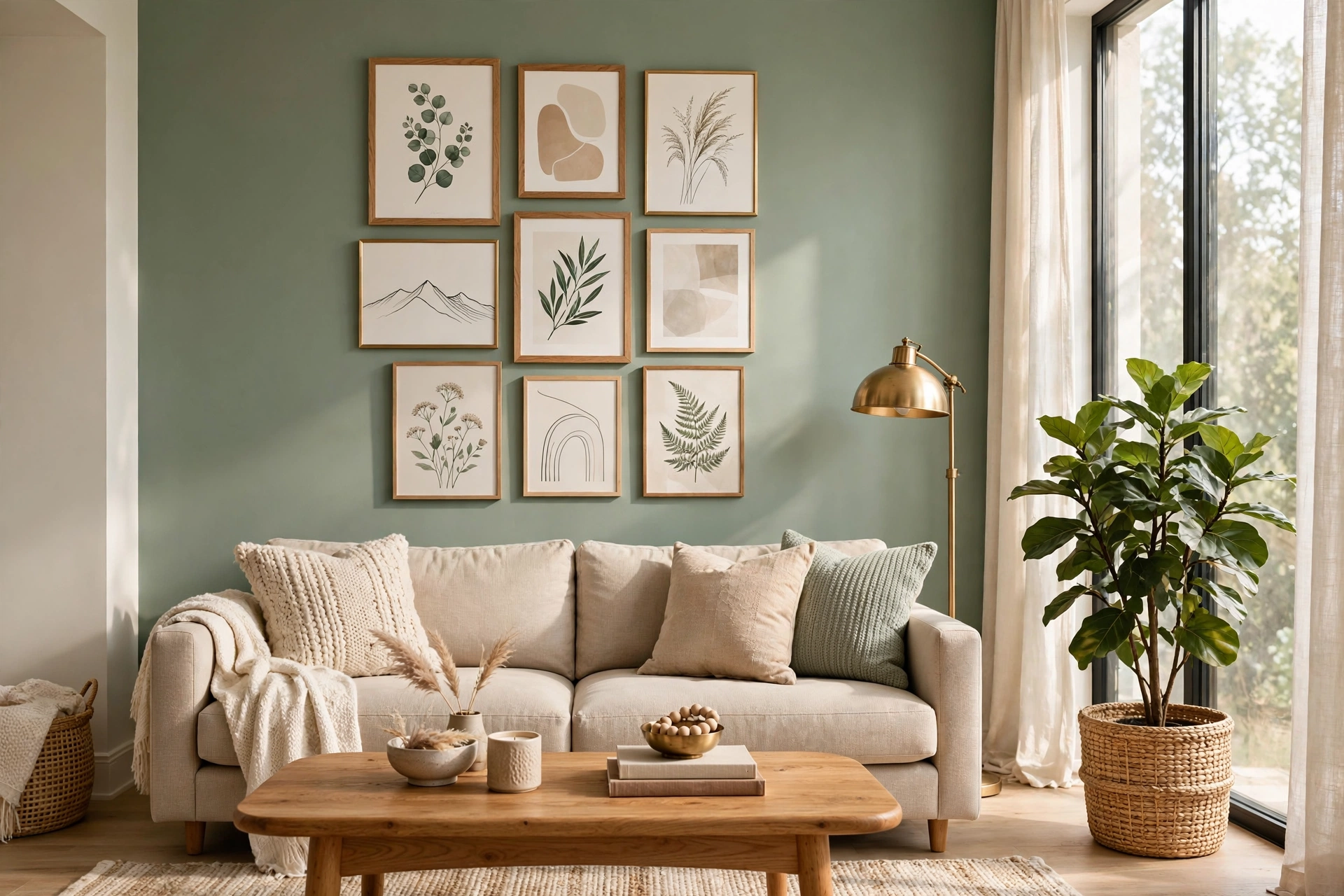
Every home has that one wall. The big, blank, slightly awkward one you notice every time you walk past — too plain to ignore, too big to fix with a single picture frame. I have stared down more of those walls than I can count, and here is what I learned: a wall doesn’t need expensive art or a contractor to come alive. It needs one decision — a color, a texture, a collection, a story.
Below are the 25 best decorative wall ideas to liven up your home, pulled from real projects, designer tricks, and my own trial-and-error. Painted accents, gallery walls, renter-friendly wallpaper, molding, murals, mirrors, shelving — every idea includes a realistic cost sense and a practical tip so you can pick the one that fits your wall, your budget, and your weekend.
- Paint is still the cheapest transformation: one accent wall costs a single gallon and changes the whole room.
- Pick ONE wall as the focal wall — usually the one you face when you enter, or the one behind the sofa or bed.
- Hang art at eye level: the center of the piece should sit about 57 inches from the floor.
- Renters, you are not stuck: peel-and-stick wallpaper, decals, lean-and-layer frames, and washi tape all come off clean.
- Texture beats flatness. Wood slats, limewash, molding, or even plates add dimension paint alone can’t give.
1. A Bold Accent Paint Wall
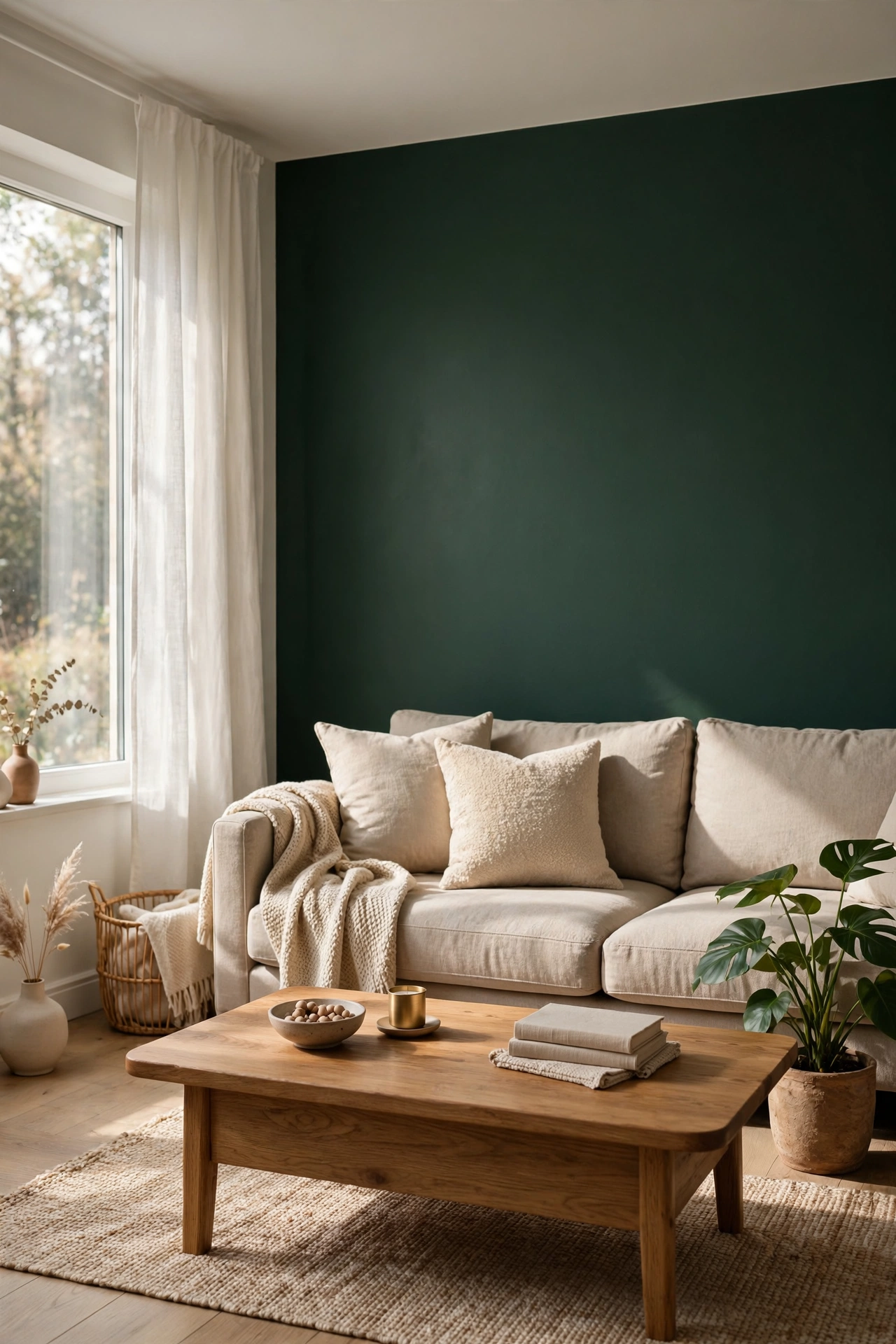
The classic for a reason: one wall in a rich, saturated color — deep green, navy, terracotta, even near-black — gives a room instant depth and a built-in focal point. It costs one gallon of paint and an afternoon, and it makes everything in front of it (your sofa, your art, your plants) look more intentional. Choose the wall you face when you walk in, and keep the other three walls light so the accent does the talking.
Try this: paint a large swatch and live with it for two days, checking it in morning and evening light before you commit to the gallon.
2. A Curated Gallery Wall
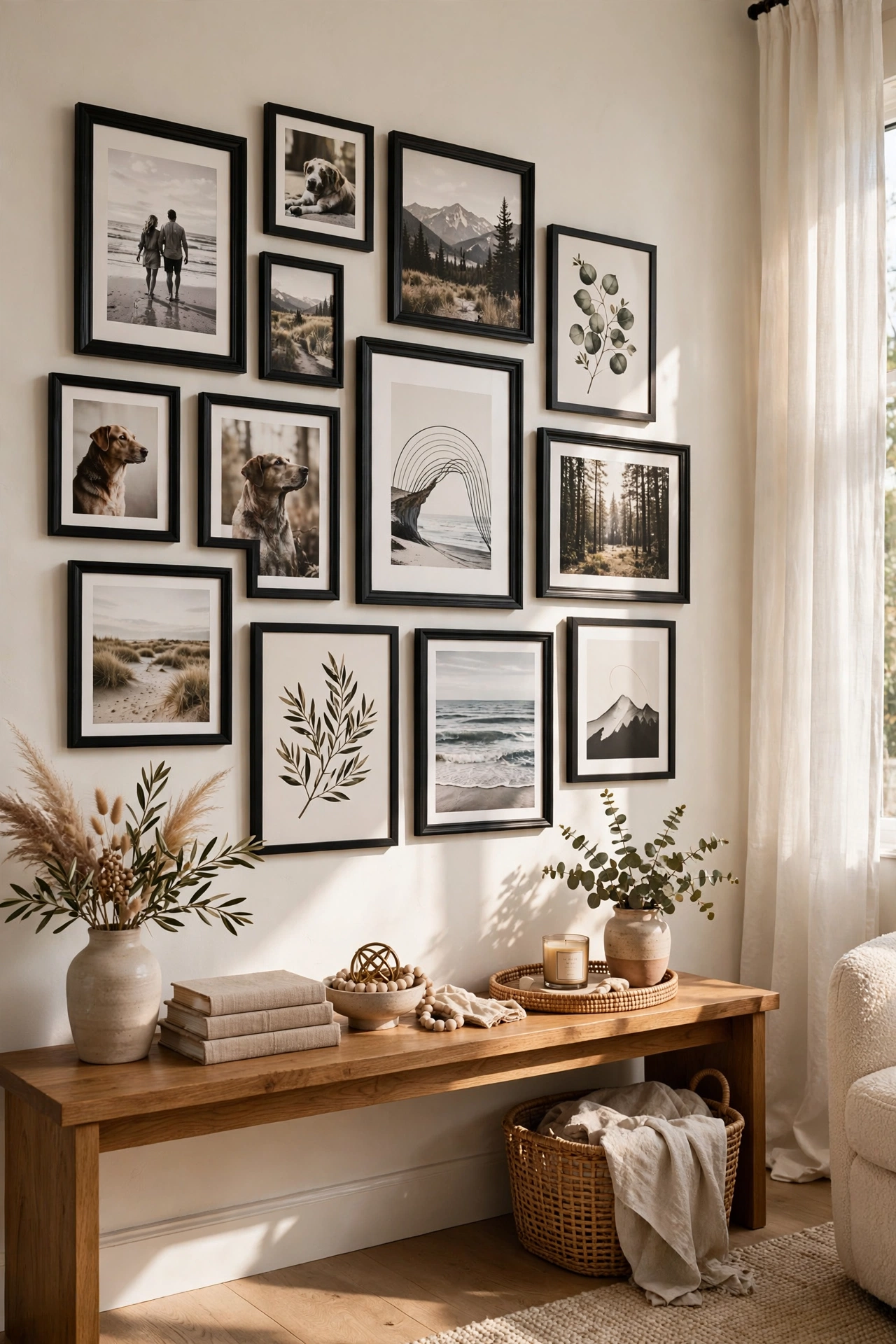
Nothing fills a big blank wall like a gallery wall done with intention. Mix family photos, art prints, and one or two dimensional pieces (a small mirror, a woven hanging) in frames that share a common thread — same color frames, same mat color, or a tight color palette. Lay the whole arrangement on the floor first and photograph it before a single nail goes in. For a deep dive into layouts that actually work, this gallery wall roundup from The Spruce shows dozens of arrangements from grid to salon-style.
Try this: trace each frame onto kraft paper, tape the paper to the wall, and live with the layout for a day before hanging anything.
3. Picture Ledge Shelves
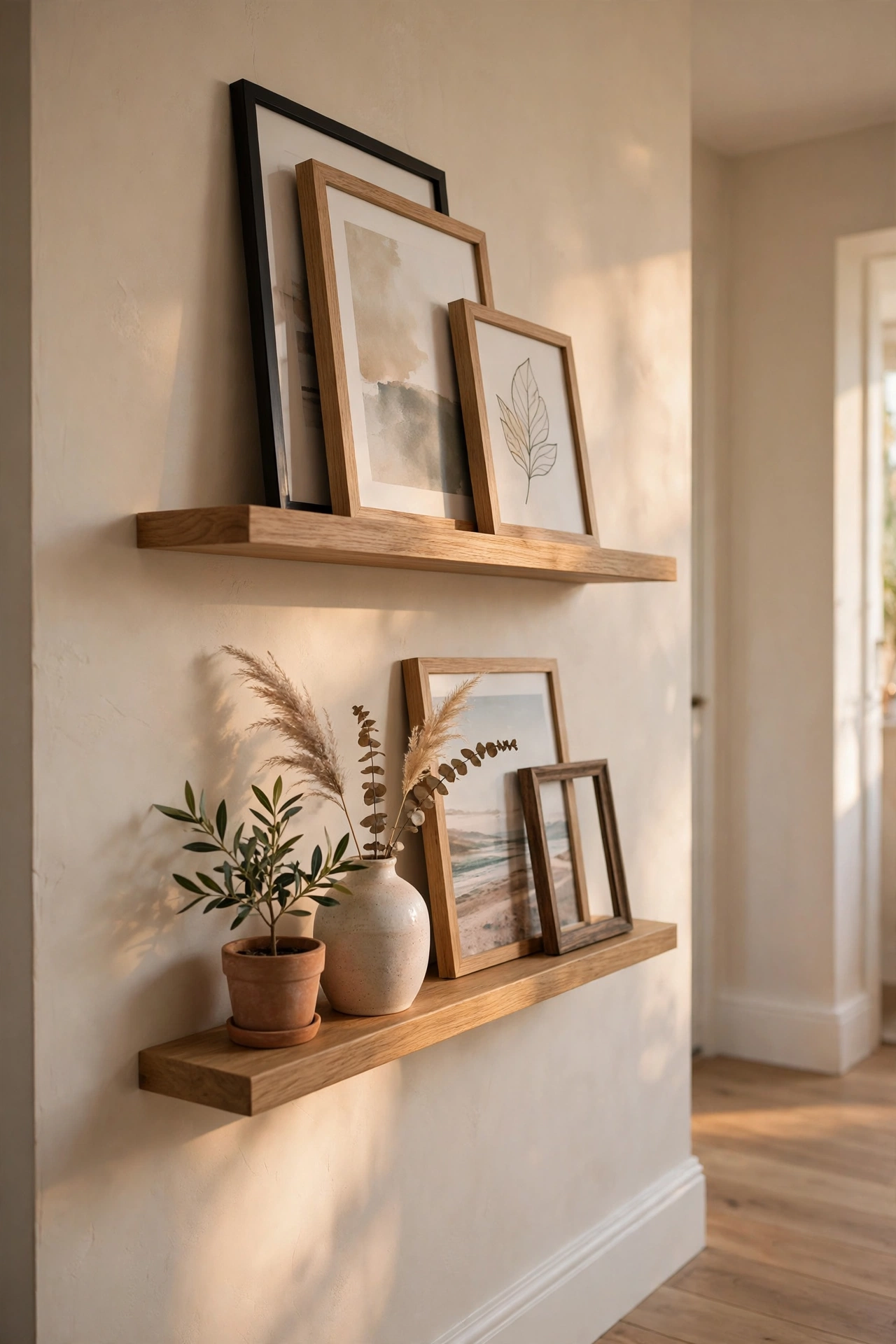
Gallery walls are great until you want to change one piece — then it’s spackle and paint touch-ups. Picture ledges solve that: two or three narrow shelves let you lean and layer frames, swap art seasonally, and restyle in minutes with zero new holes. Hang two ledges in a hallway or above a console, and you have a gallery wall you can rearrange whenever the mood strikes.
Try this: anchor ledges into studs, and overlap frames front-to-back (tallest in back) for a layered, collected look.
4. Peel-and-Stick Wallpaper Accent Wall
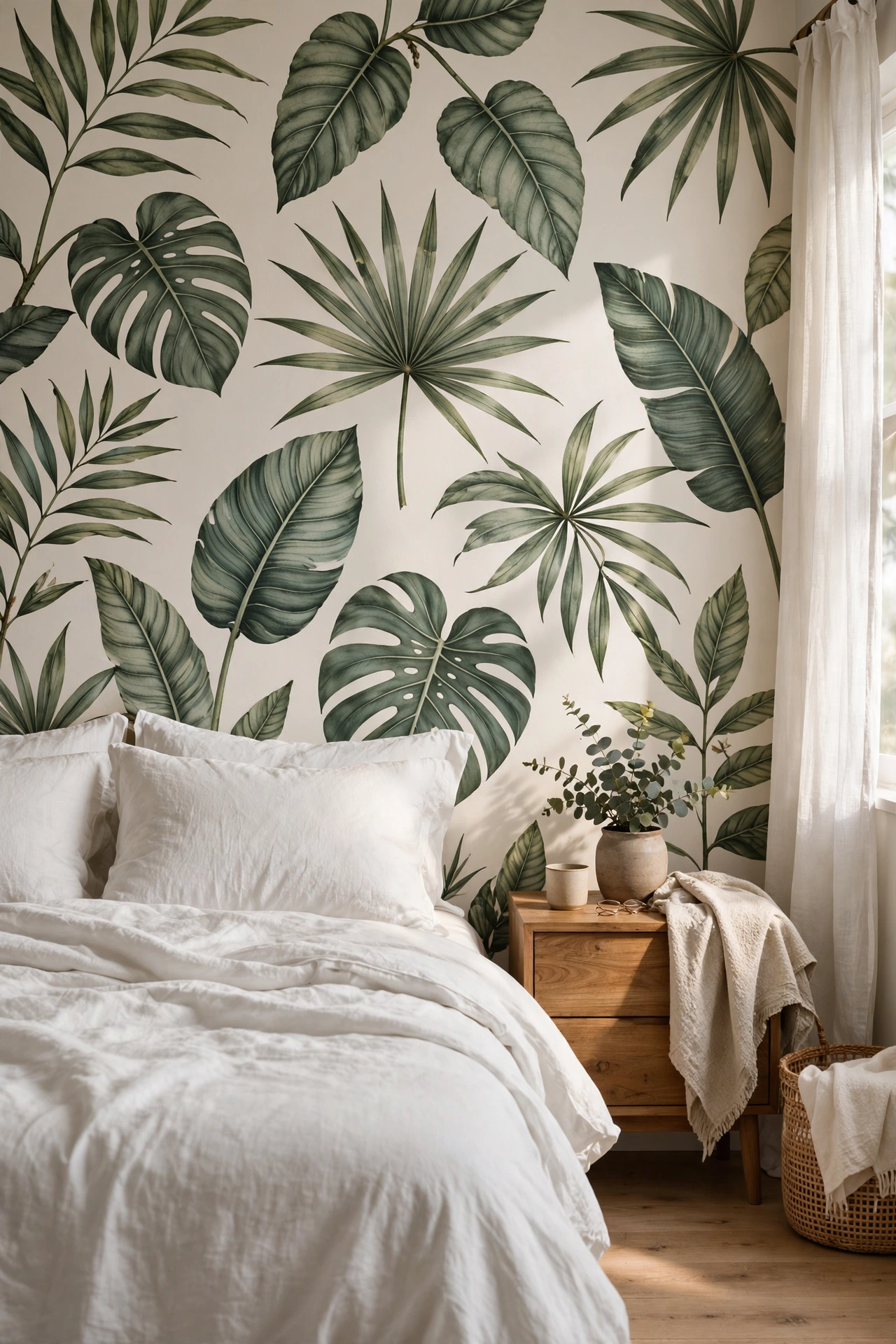
Peel-and-stick wallpaper is the renter’s superpower and the commitment-phobe’s best friend. One accent wall — behind the bed, in the entryway, or in a powder room — delivers pattern, color, and texture in an afternoon, and it peels off clean when you move or change your mind. Go bold on that one wall: oversized botanicals, moody florals, or graphic geometrics. Small patterned walls are also a classic move in powder rooms — these powder room wallpaper ideas show how a tiny room can handle the biggest patterns.
Try this: order samples first and stick them up for a week — scale and color look very different on a full wall than on a phone screen.
5. Board and Batten Paneling
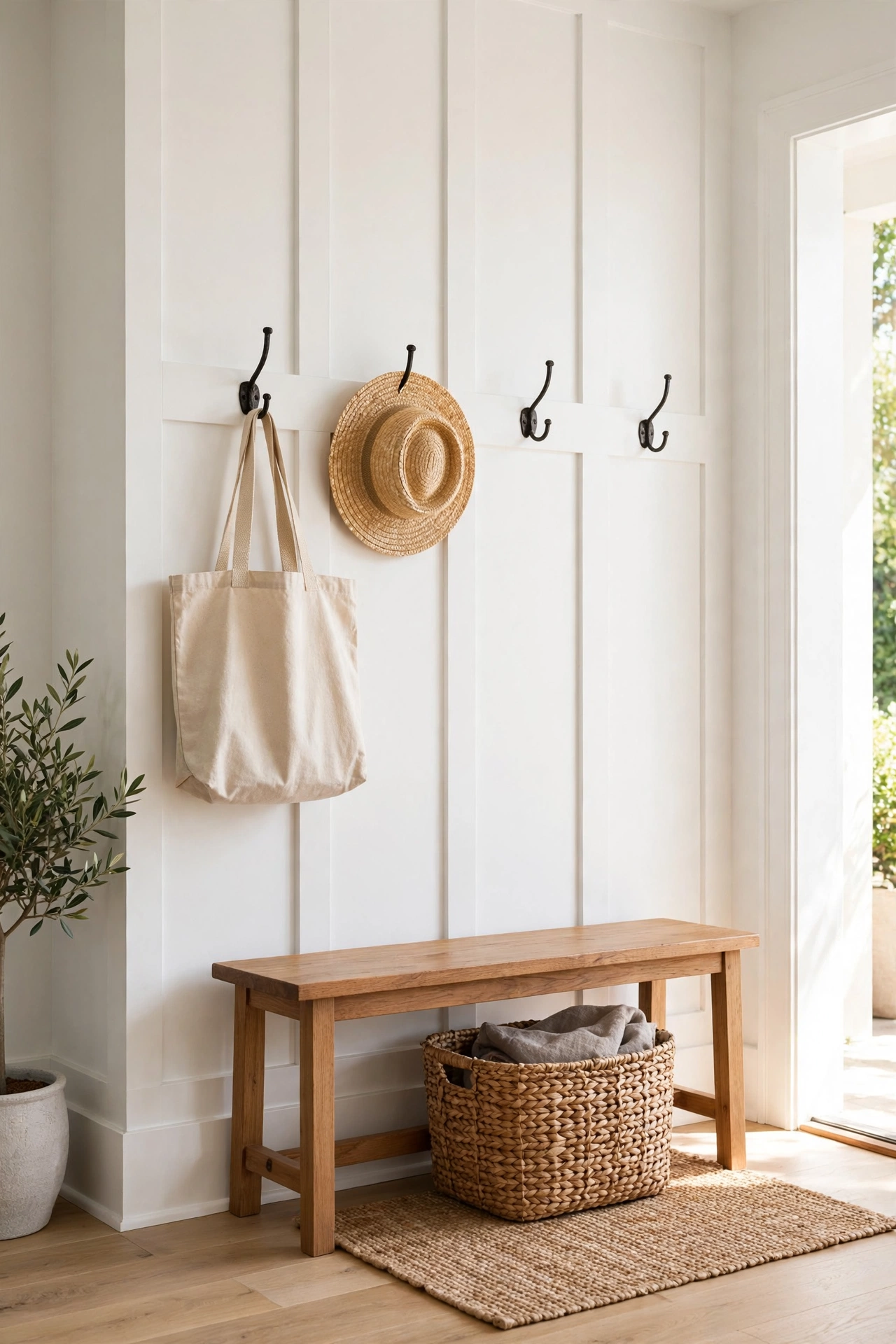
Few weekend projects add as much character per dollar as board and batten. Vertical boards with horizontal rails, painted crisp white (or a moody color for drama), turn a flat drywall expanse into architecture. It’s beginner-friendly — straight cuts, a nail gun, and caulk hide a multitude of sins — and it works in entryways, dining rooms, bedrooms, and stairwells alike.
Try this: keep battens 12 to 16 inches apart for a classic look; wider spacing reads modern, tighter spacing reads traditional.
6. Picture-Frame Wall Molding
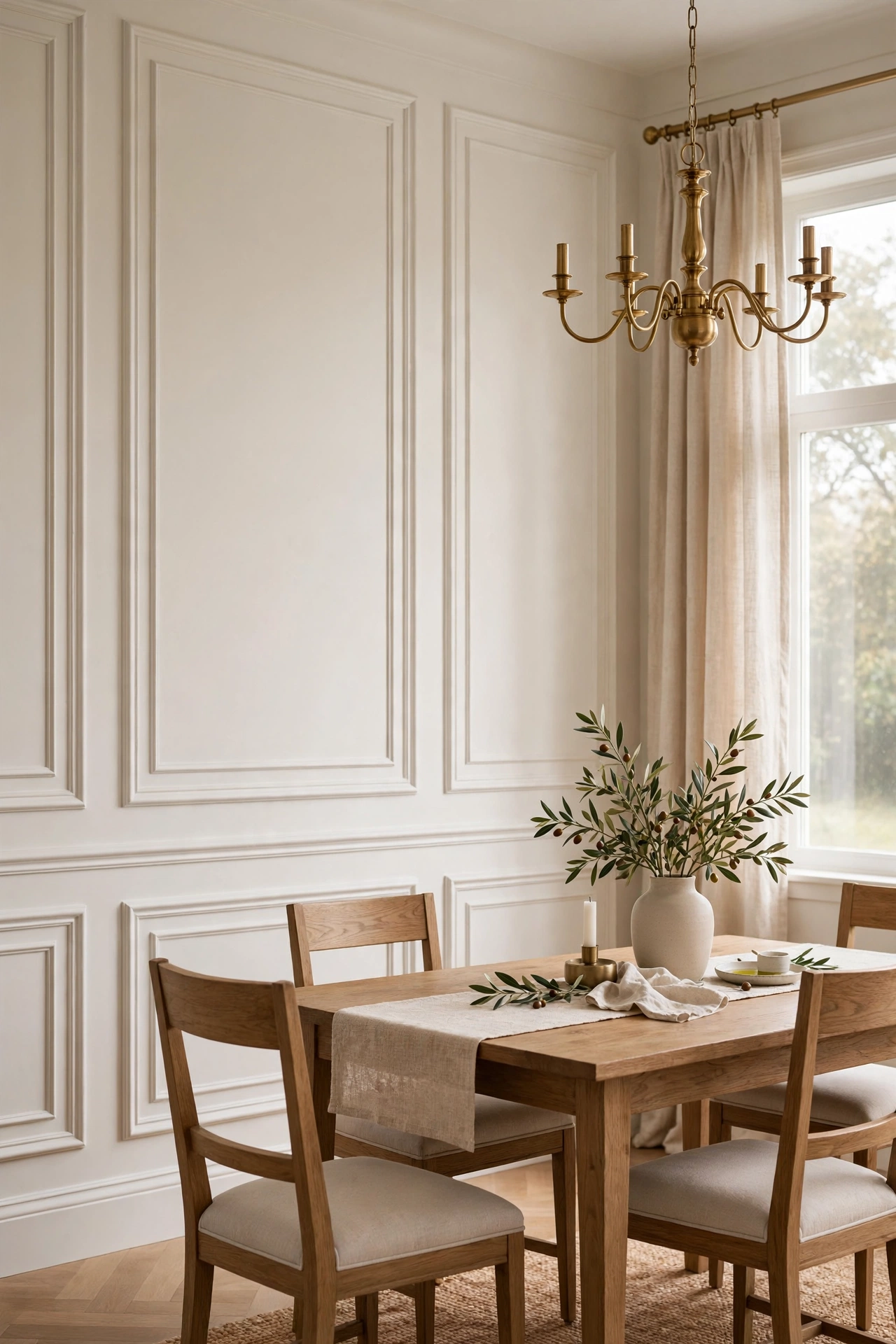
Thin trim applied in rectangles — the classic “picture frame molding” — gives walls the tailored, high-end look of a Paris apartment for the price of some molding strips and paint. Paint it the same color as the wall for subtle texture, or go one shade darker for quiet drama. If you want the full playbook, these wall molding ideas walk through styles from simple rectangles to full wainscoting.
Try this: use a laser level (or a phone level app and patience) — crooked rectangles ruin the effect faster than anything else.
7. An Oversized Statement Mirror
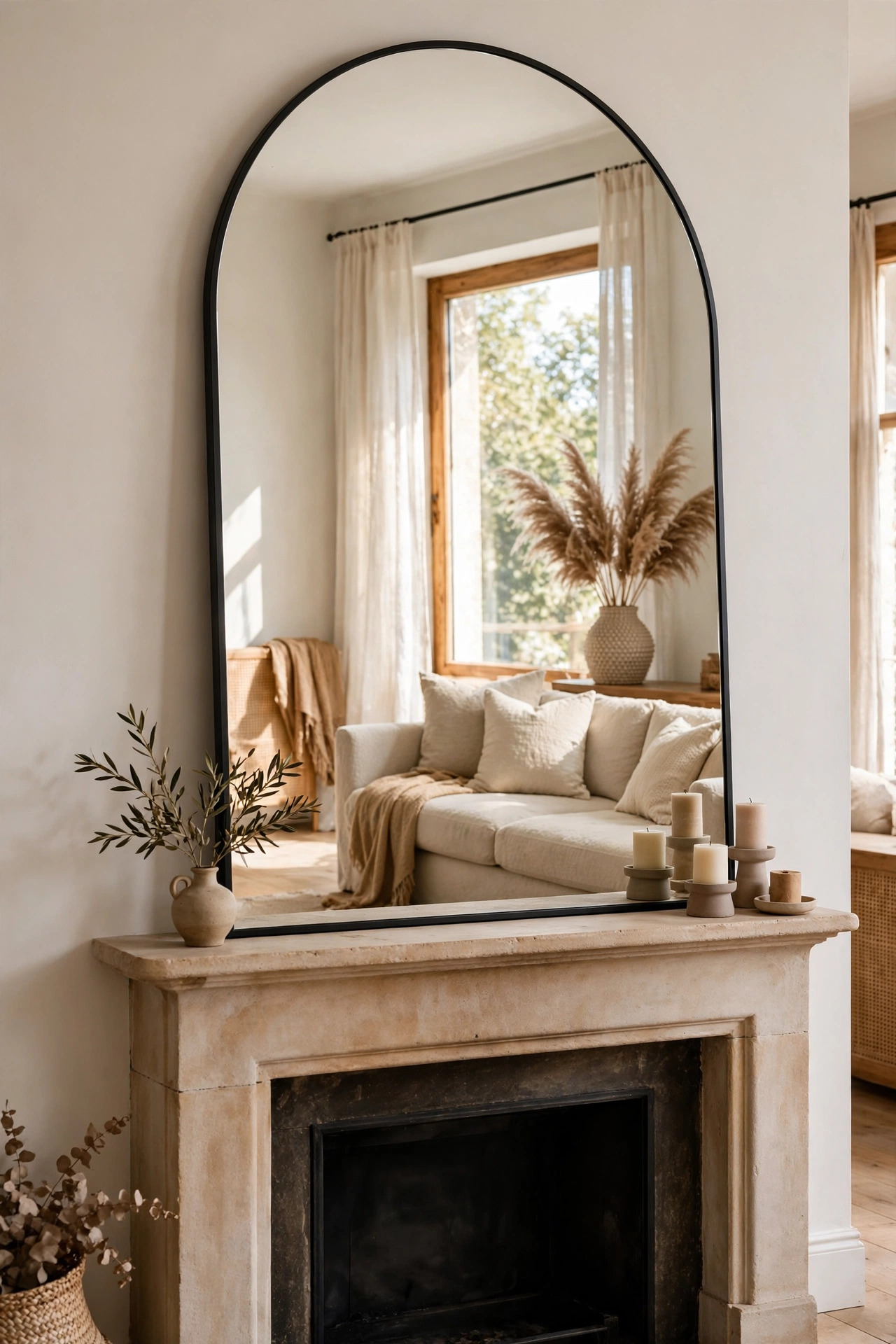
One huge mirror does triple duty: it bounces light around the room, makes the space feel twice as big, and acts as art in its own right. Lean an arched or round oversized mirror against the wall (no hanging hardware needed) above a mantel, console, or dresser. It reflects your prettiest view — so position it to catch a window, not the TV.
Try this: for a leaning mirror, place felt pads behind the frame and make sure the bottom sits on a rug or non-slip pad, not bare hardwood.
8. A Large-Scale Wall Mural
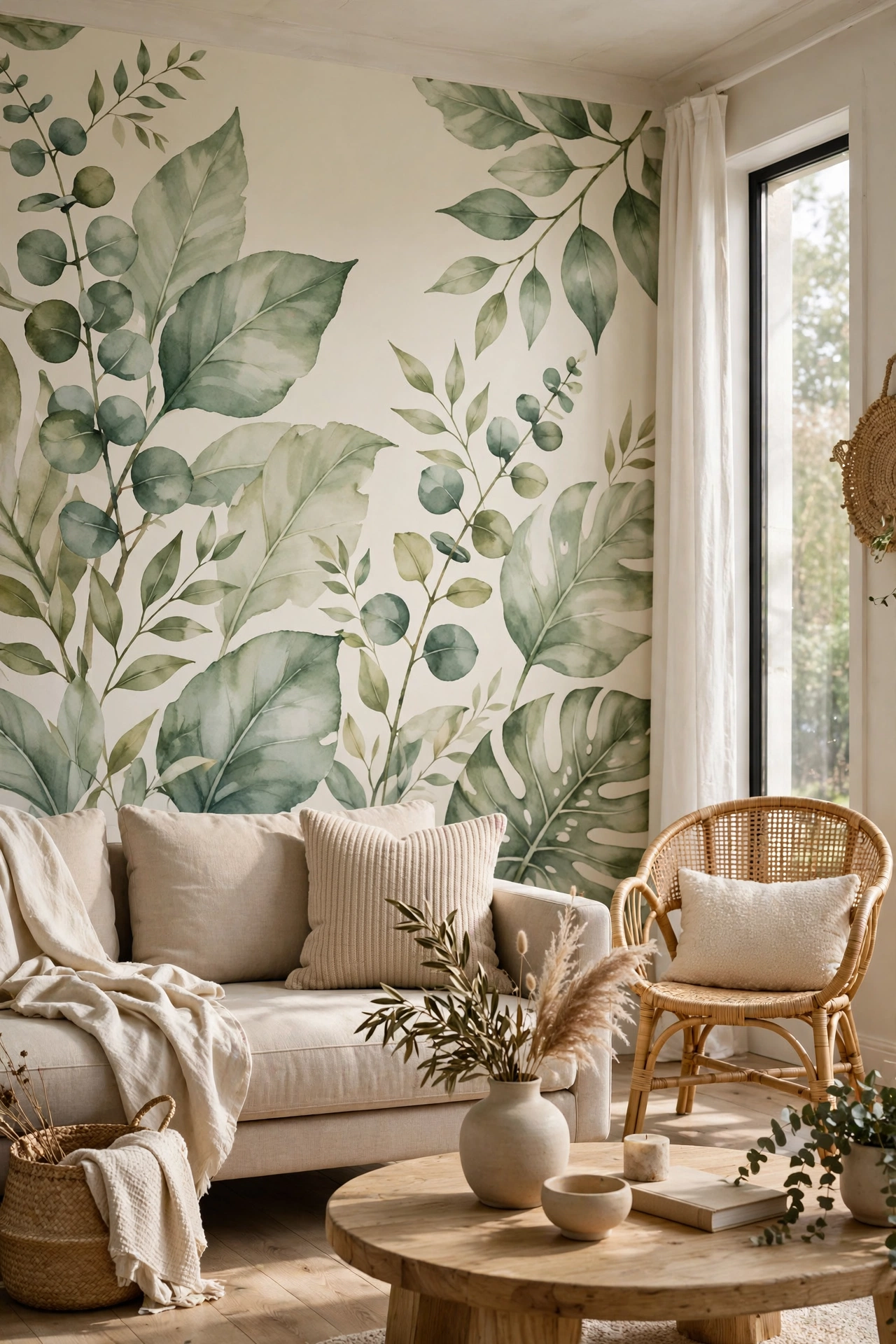
A mural is wallpaper’s dramatic older sibling: one continuous scene — misty mountains, oversized botanicals, an abstract wash of color — that turns a wall into a destination. Peel-and-stick mural panels make it renter-friendly and DIY-able in a few hours. In a bedroom or dining room, a mural behind the main furniture piece creates a backdrop no amount of small art can match.
Try this: measure twice and order 10% extra; mural panels must align perfectly, and one miscut strip can stall the whole project.
9. Limewash or Textured Plaster Finish
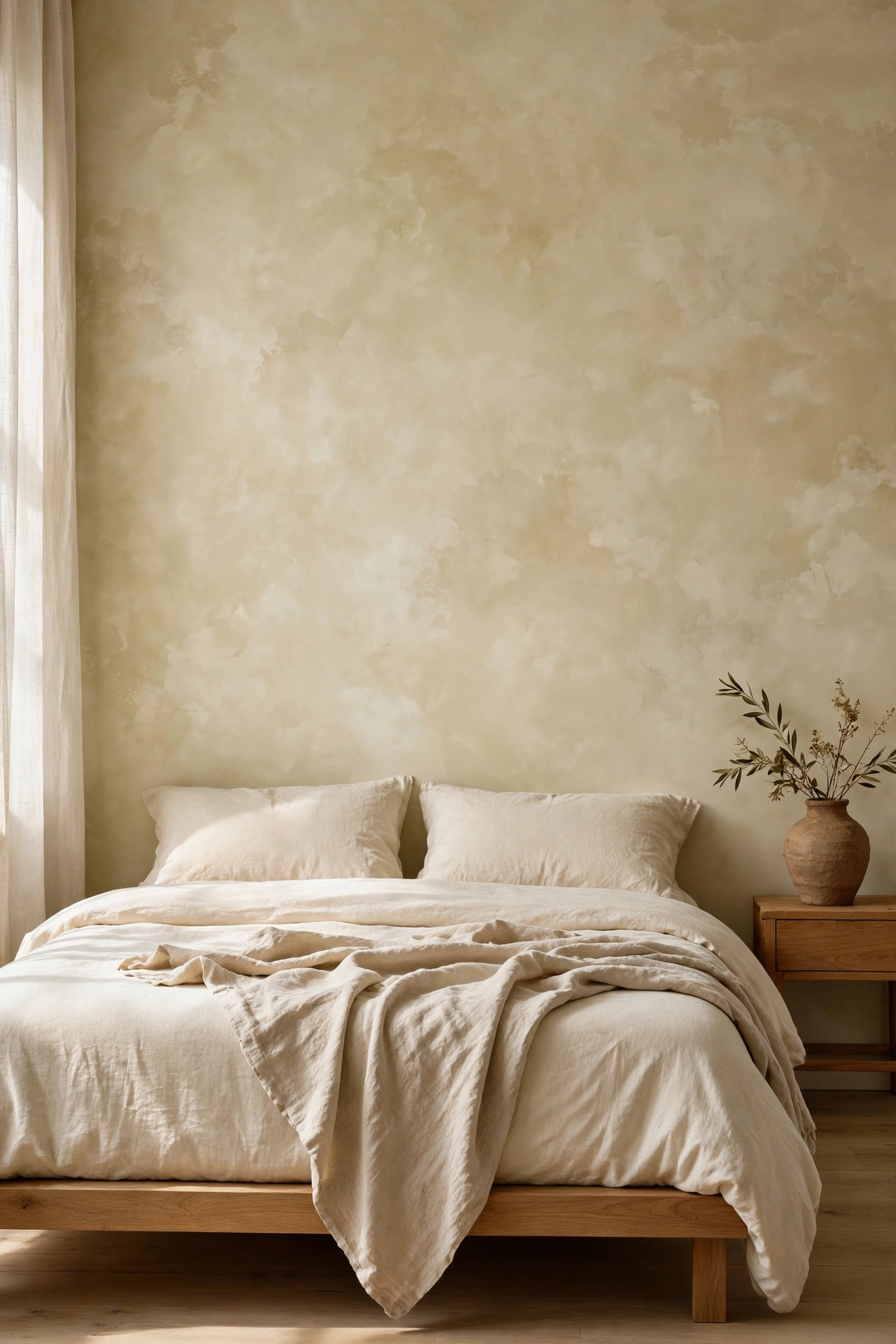
If flat paint feels boring but patterns feel like too much, limewash is the middle path. The cloudy, movement-filled finish adds depth and old-world softness that shifts with the light throughout the day. It’s forgiving to apply — the mottled look is the point, so brush marks are a feature — and it works beautifully in bedrooms, living rooms, and anywhere you want calm texture.
Try this: apply it in random crisscross strokes with a block brush; trying to be neat defeats the purpose.
10. Floating Shelves, Styled Like a Pro
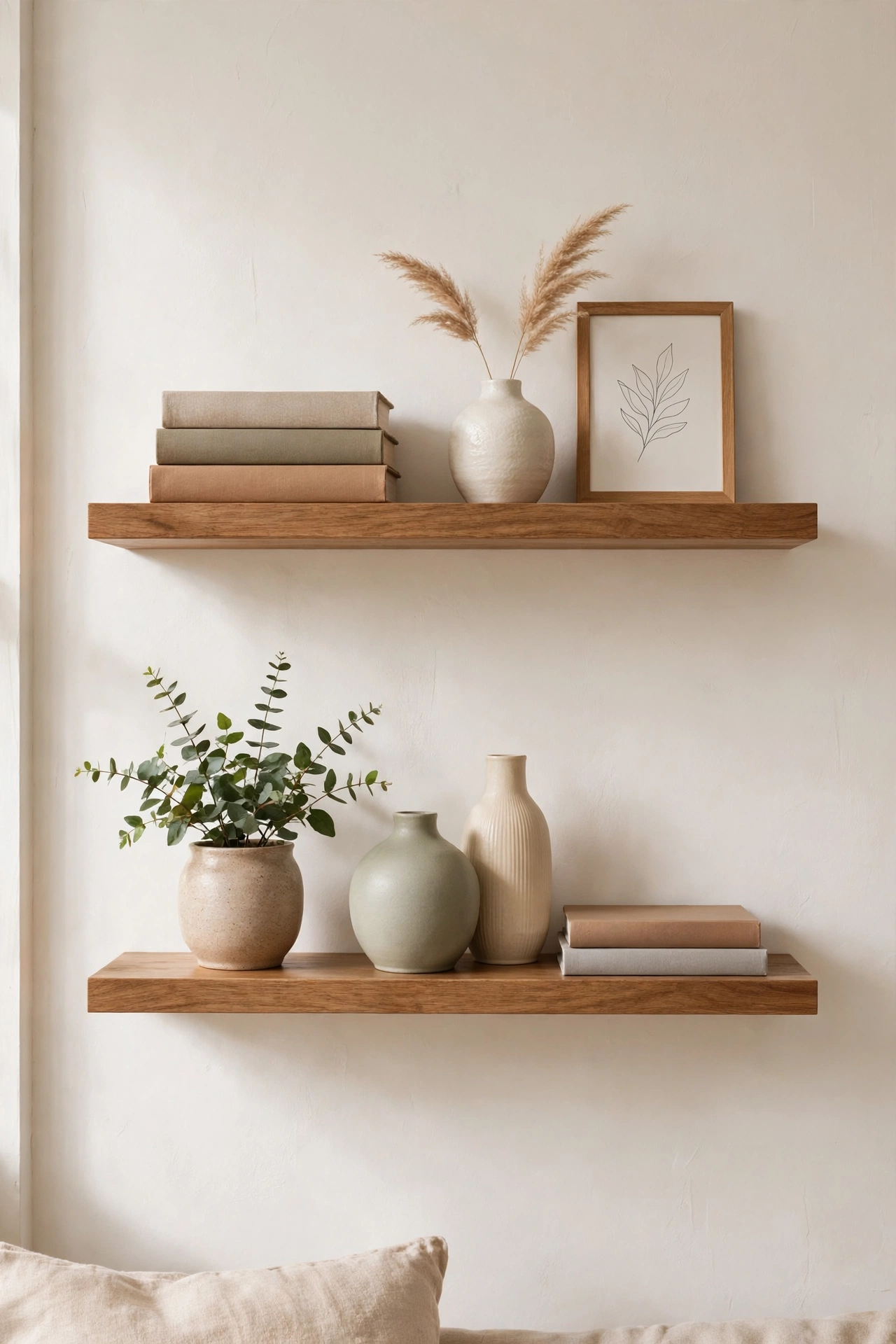
Floating shelves turn a blank wall into a rotating display for books, vases, plants, and collected objects. The styling formula that never fails: something tall, something short, something green, something with texture — and leave breathing room between groups. Two or three shelves in a kitchen, office, or living room give you decor that evolves with the seasons. Need styling inspiration? these bookshelf styling ideas cover the layering tricks that make shelves look collected rather than cluttered.
Try this: style in odd numbers — groups of three read as intentional; groups of two read as accidental.
11. A Decorative Plate Wall
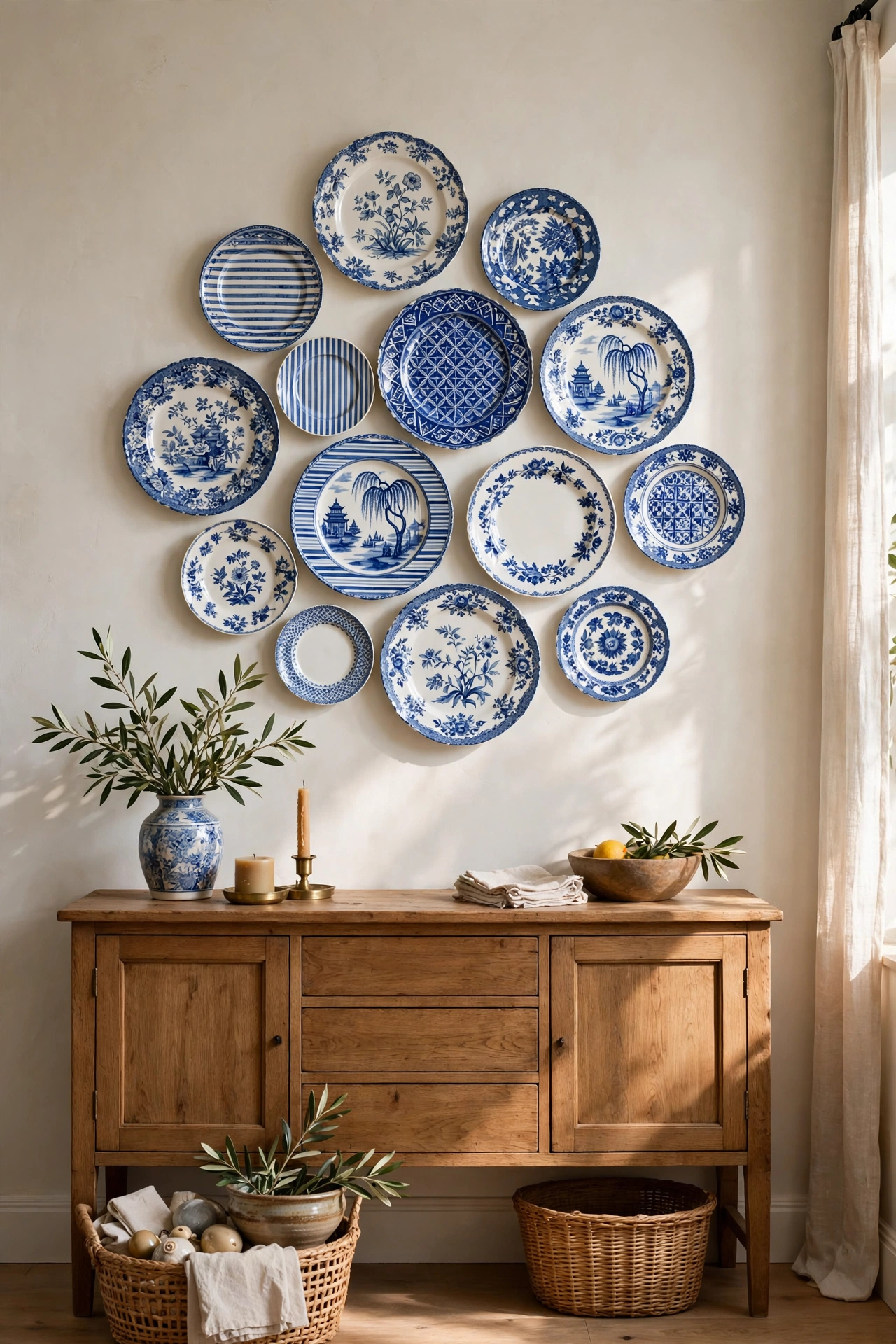
Grandmillennial style made the plate wall cool again, and honestly it never should have left. A collection of plates — thrifted, inherited, or new — in a loose organic cluster adds color, pattern, and a personal story to dining rooms and kitchens. Plate hangers are cheap and invisible, and the whole wall can be built one flea-market trip at a time.
Try this: stick to one color family (blues, or greens, or neutrals) so a mixed collection still reads as one deliberate composition.
12. A Living Green Wall
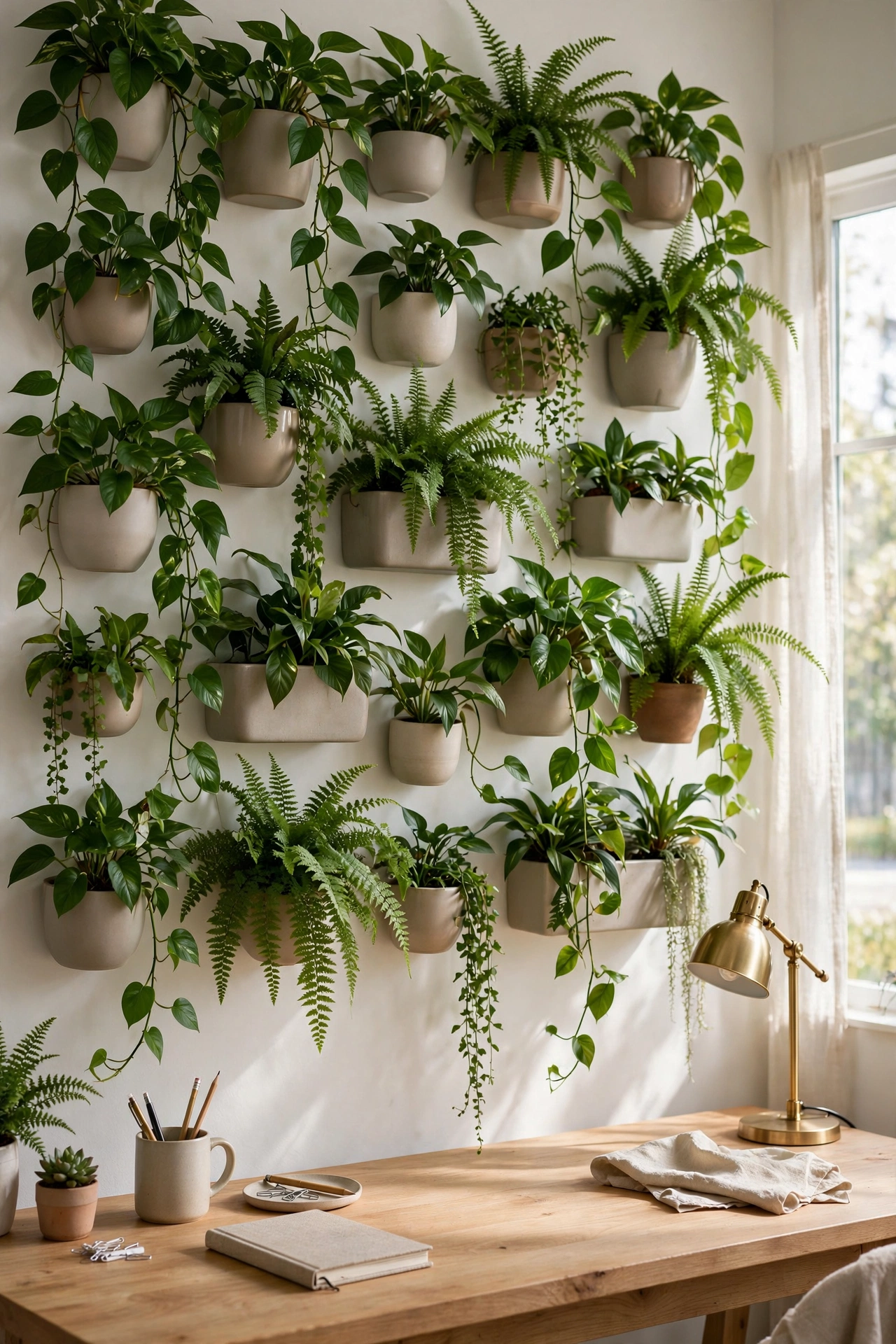
Walls don’t have to be inanimate. Wall-mounted planters, a grid of trailing pothos, or a full pocket-planter living wall bring literal life to a blank expanse — plus cleaner-feeling air and a hit of calm. Start small: three staggered planters with easy trailing plants (pothos, philodendron) above a desk or in a bright hallway. Self-watering planters keep maintenance to a monthly chore.
Try this: put a waterproof backing or drip trays behind any living wall — your drywall will thank you in a year.
13. A Woven Tapestry or Textile Hanging
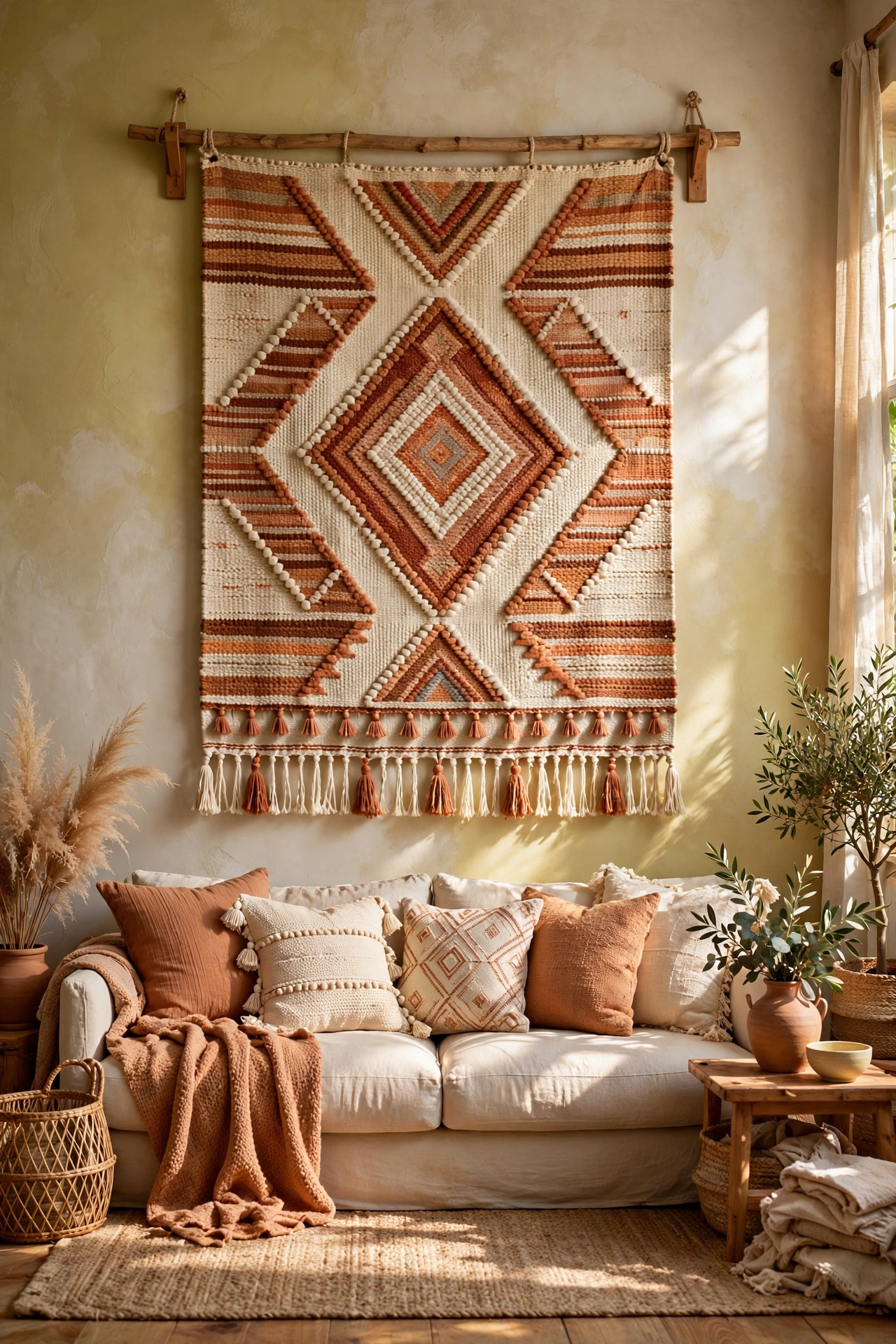
Big art is expensive; big fabric is not. A large tapestry, woven wall hanging, or even a beautiful flat-weave rug hung on the wall fills a huge expanse for a fraction of framed art prices — and it softens sound, which hard-walled rooms desperately need. Hang it from a simple wooden dowel or brass rod, and center it like you would a painting.
Try this: steam out packaging creases before hanging, and keep textiles out of direct sun so the colors don’t fade unevenly.
14. A Vertical Wood Slat Wall
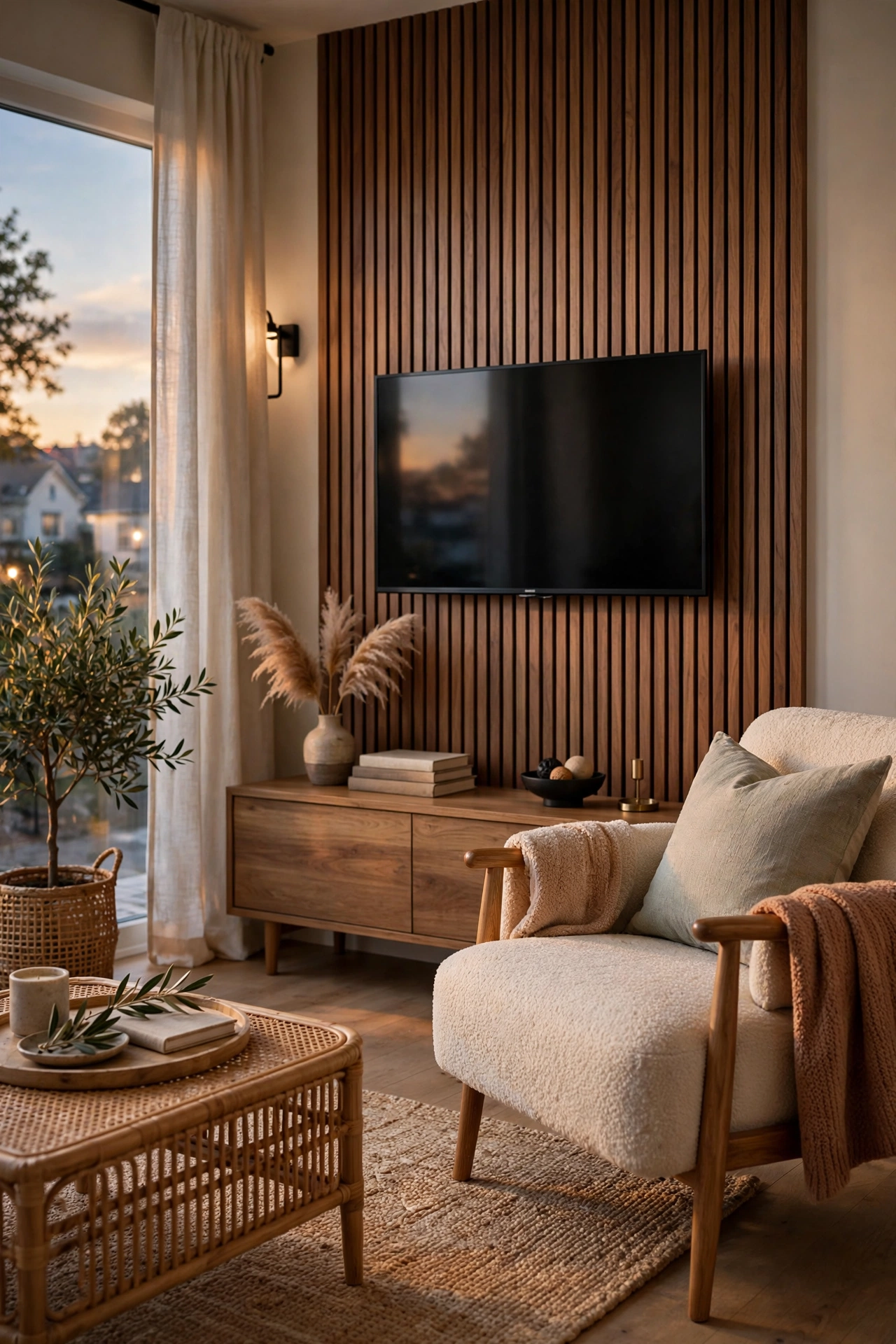
Vertical wood slats — walnut-toned, oak, or painted black — are the accent wall of the moment, and they earn it: the rhythm of the slats adds warmth and texture, hides TV cables behind the gaps, and even improves room acoustics. Peel-and-stick slat panels make it a one-day, no-saw project; real wood battens over a dark backing board give the richest look.
Try this: paint the wall behind the slats matte black first — the dark gaps between slats are what create the depth.
15. A Chalkboard Wall
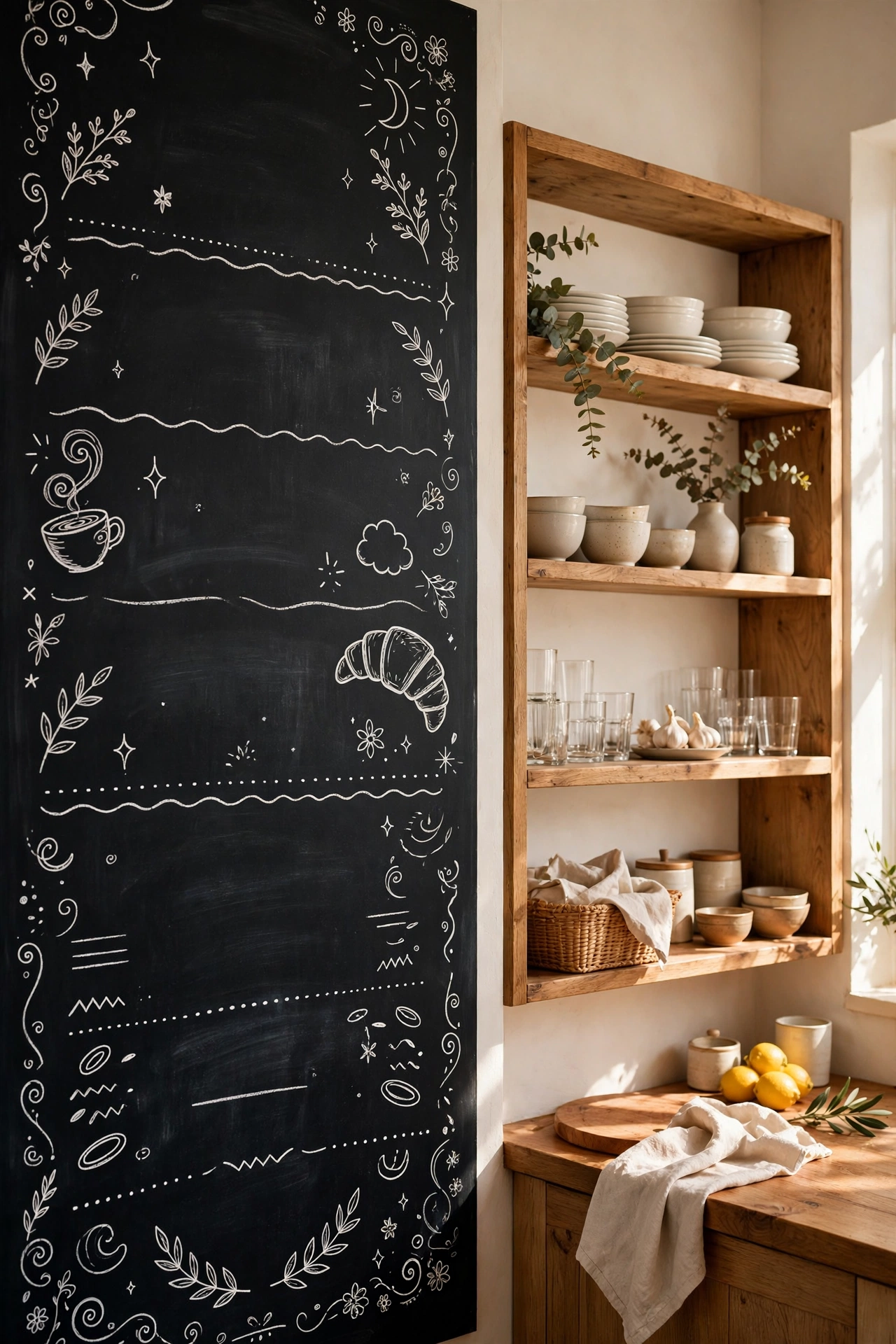
A chalkboard wall turns dead wall space into the family’s command center: weekly menus, grocery lists, kids’ doodles, and the occasional inspirational quote that survives about three days. Chalkboard paint on one kitchen or mudroom wall (or a large framed chalkboard if paint feels permanent) is endlessly erasable decor that actually gets used. Season the wall by rubbing chalk over the whole surface first so the first drawings erase cleanly.
Try this: use chalk markers for the permanent bits (the menu grid) and regular chalk for the daily stuff — markers erase with a damp cloth, chalk with a dry eraser.
16. A Pegboard Organizer Wall
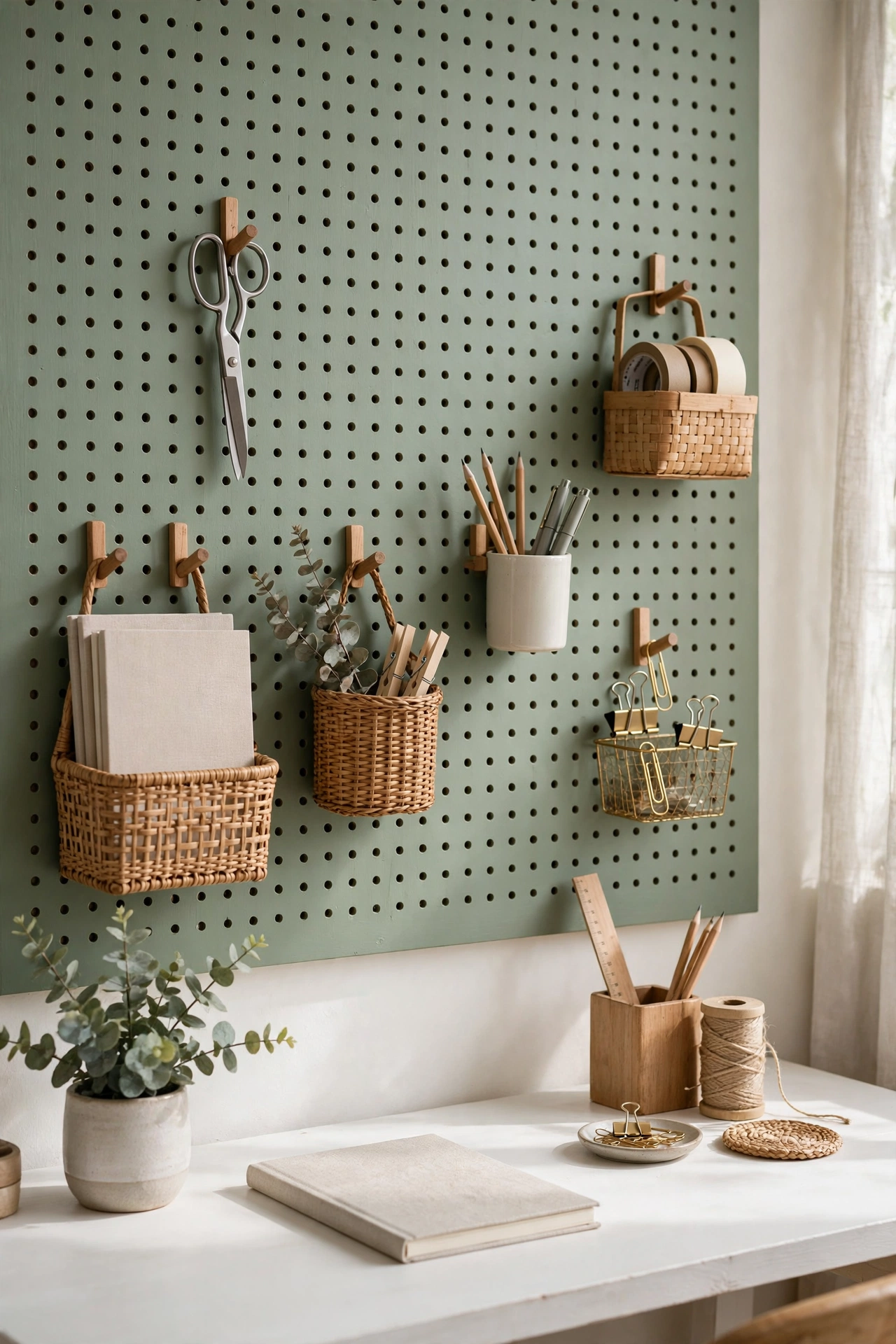
Pegboard isn’t just for garages anymore. A painted pegboard panel above a desk, in a craft room, or in the kitchen turns a blank wall into flexible storage that looks genuinely good — hooks, small shelves, and cups rearranged whenever your needs change. Paint it the wall color for a seamless built-in feel or a bold accent color to make it a feature.
Try this: mount it on 1×2 furring strips so there’s a gap behind the board — hooks need that space to seat properly.
17. Framed Wallpaper Panels
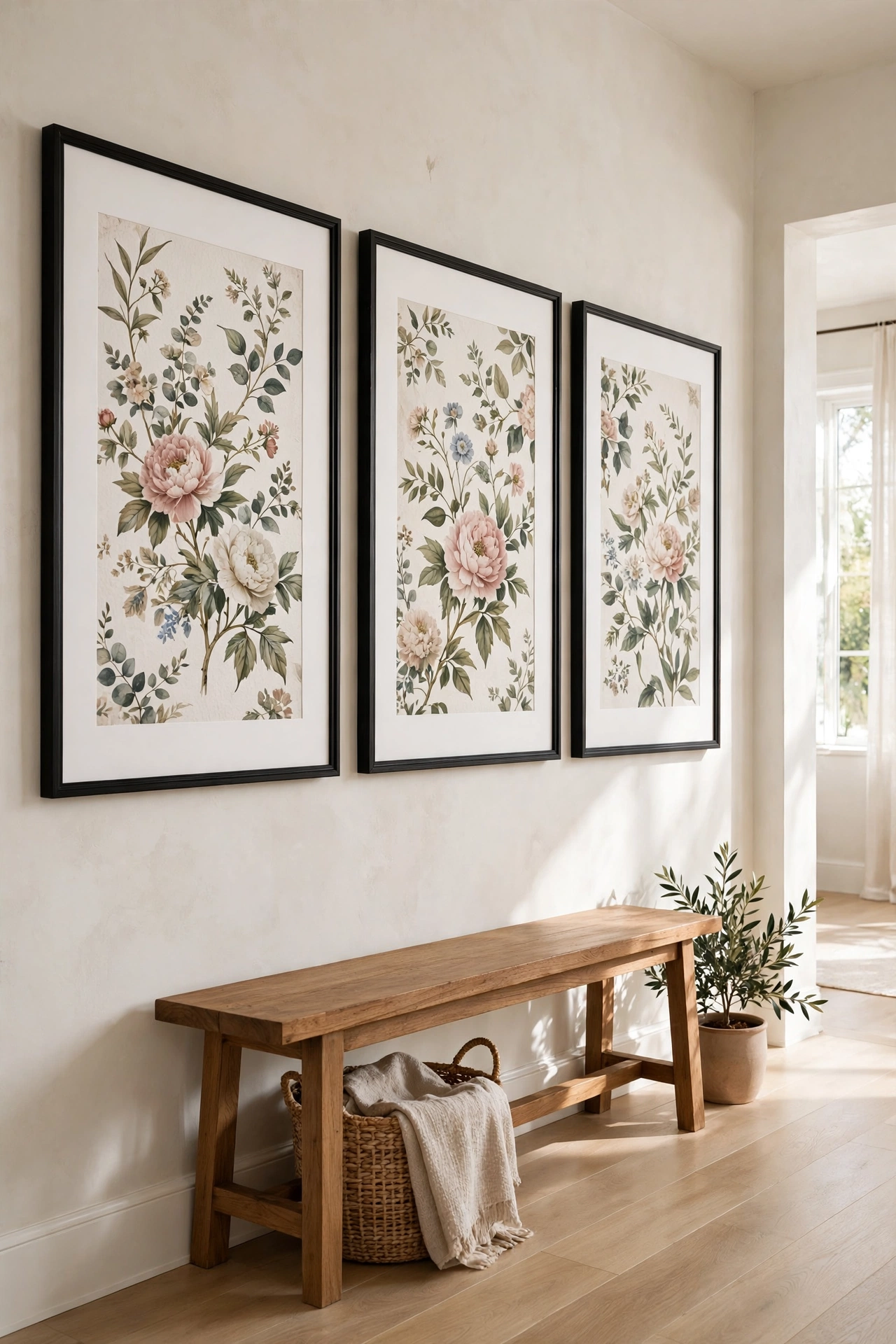
Love an expensive wallpaper but not the price (or the commitment)? Buy a single roll and frame large cuts of it as art. Three matching frames of the same pattern in a hallway or above a bed give you the wallpaper look for the cost of one roll plus frames — and you can take it with you when you move. This is also the smartest way to test-drive a bold pattern before wallpapering a whole room.
Try this: use frames with wide mats; the white space around the pattern makes it read as gallery art, not a sample.
18. A Painted Arch or Color Block
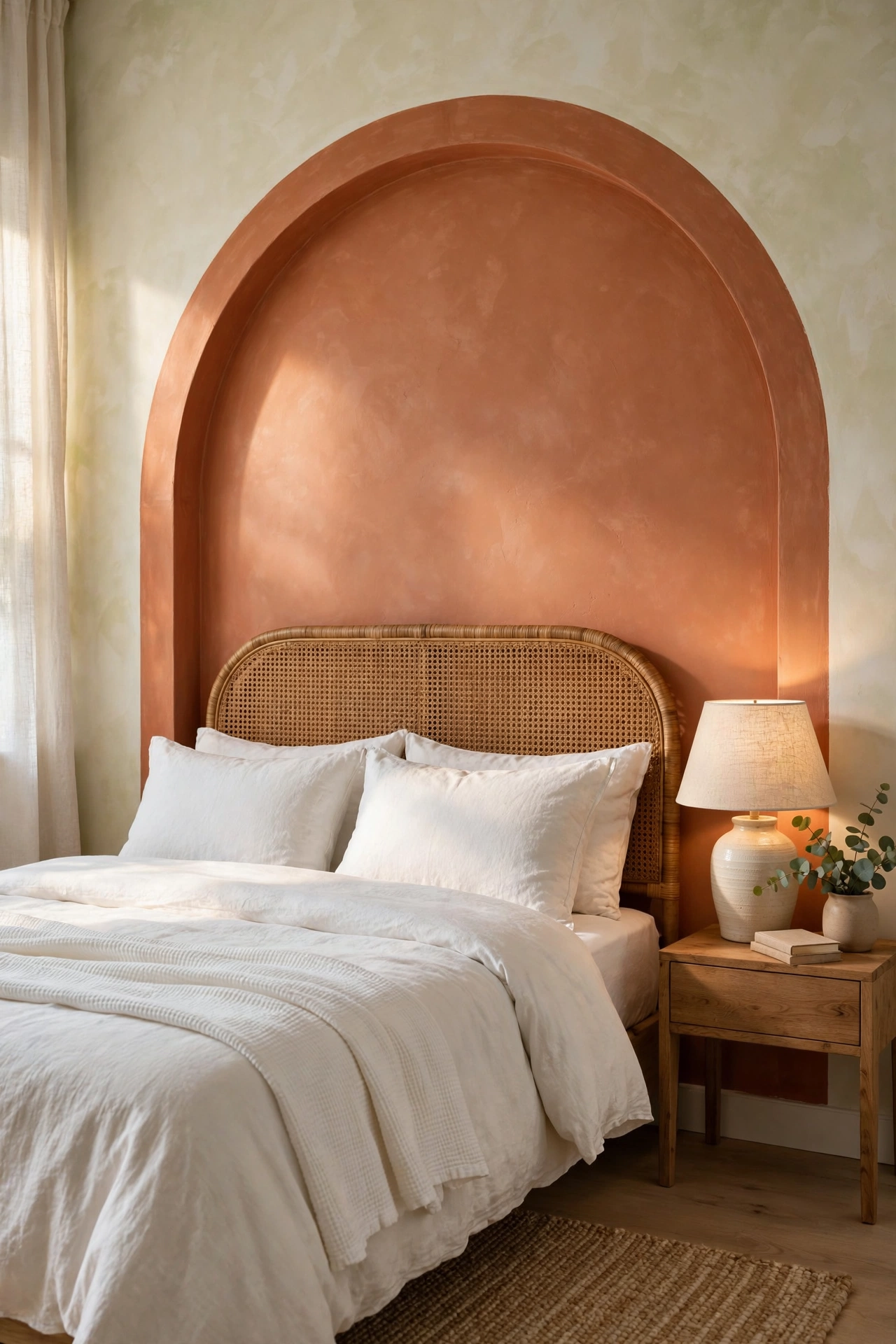
You don’t need to paint a whole wall — paint a shape. A large arch behind the bed acts as a headboard, a circle behind a reading chair creates a nook, a half-wall of color grounds a console table. All it takes is painter’s tape (or a steady hand), leftover paint, and an afternoon. It’s the cheapest idea on this list and one of the most charming.
Try this: sketch the arch with a pencil tied to a string pinned at the center point — a perfect curve in under a minute.
19. Faux Brick Veneer
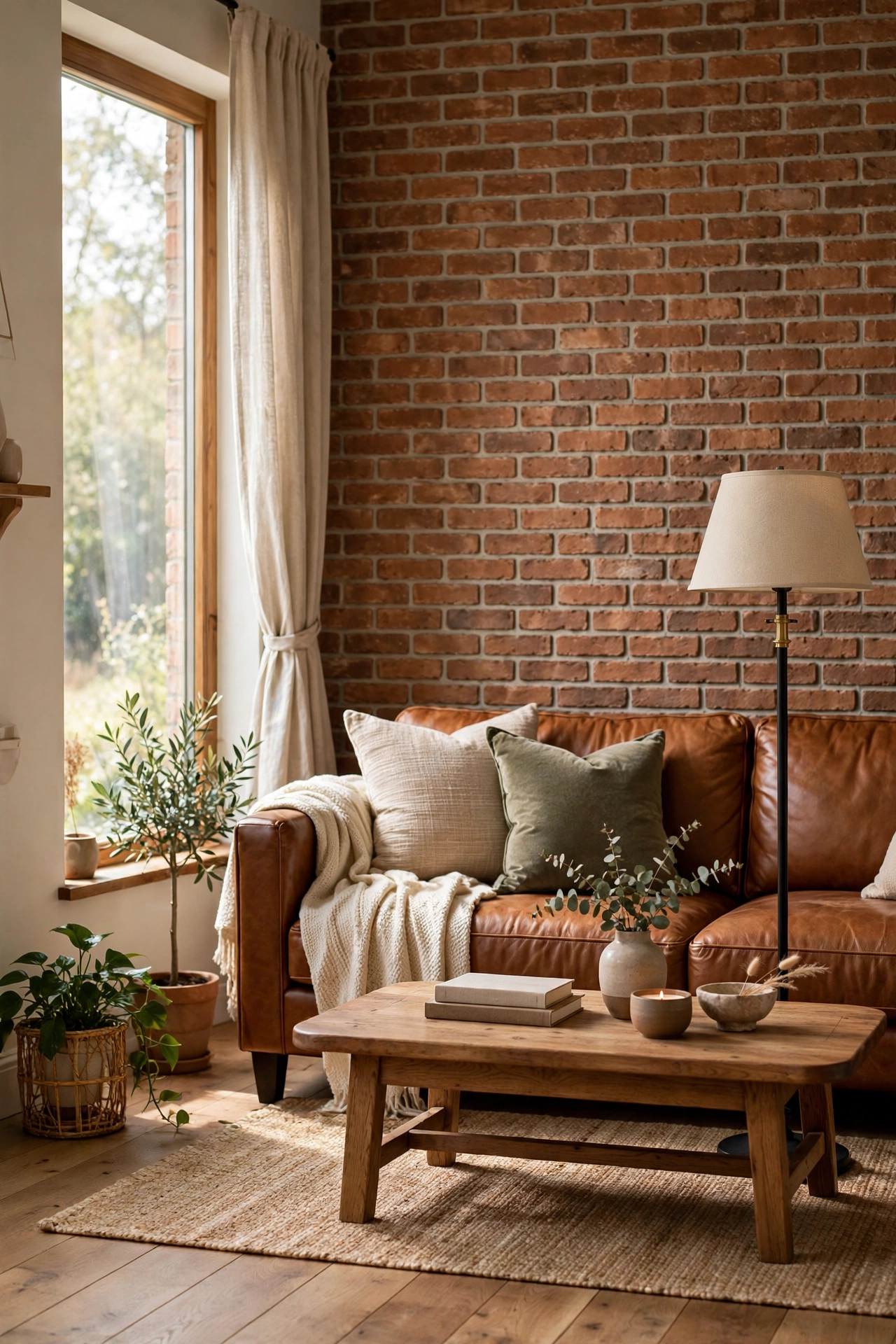
Exposed brick is everyone’s dream wall and almost nobody’s reality. Thin brick veneer panels — or surprisingly convincing peel-and-stick faux brick — give you the loft look without the structural renovation. One wall in a living room or behind the bed adds warmth and texture that flat drywall can’t touch. Whitewash it with diluted paint for a softer, modern-farmhouse take.
Try this: stagger the panel seams like real brickwork and fill them with a little mortar-colored caulk — it’s the detail that sells the illusion.
20. A Collected Mirror Gallery
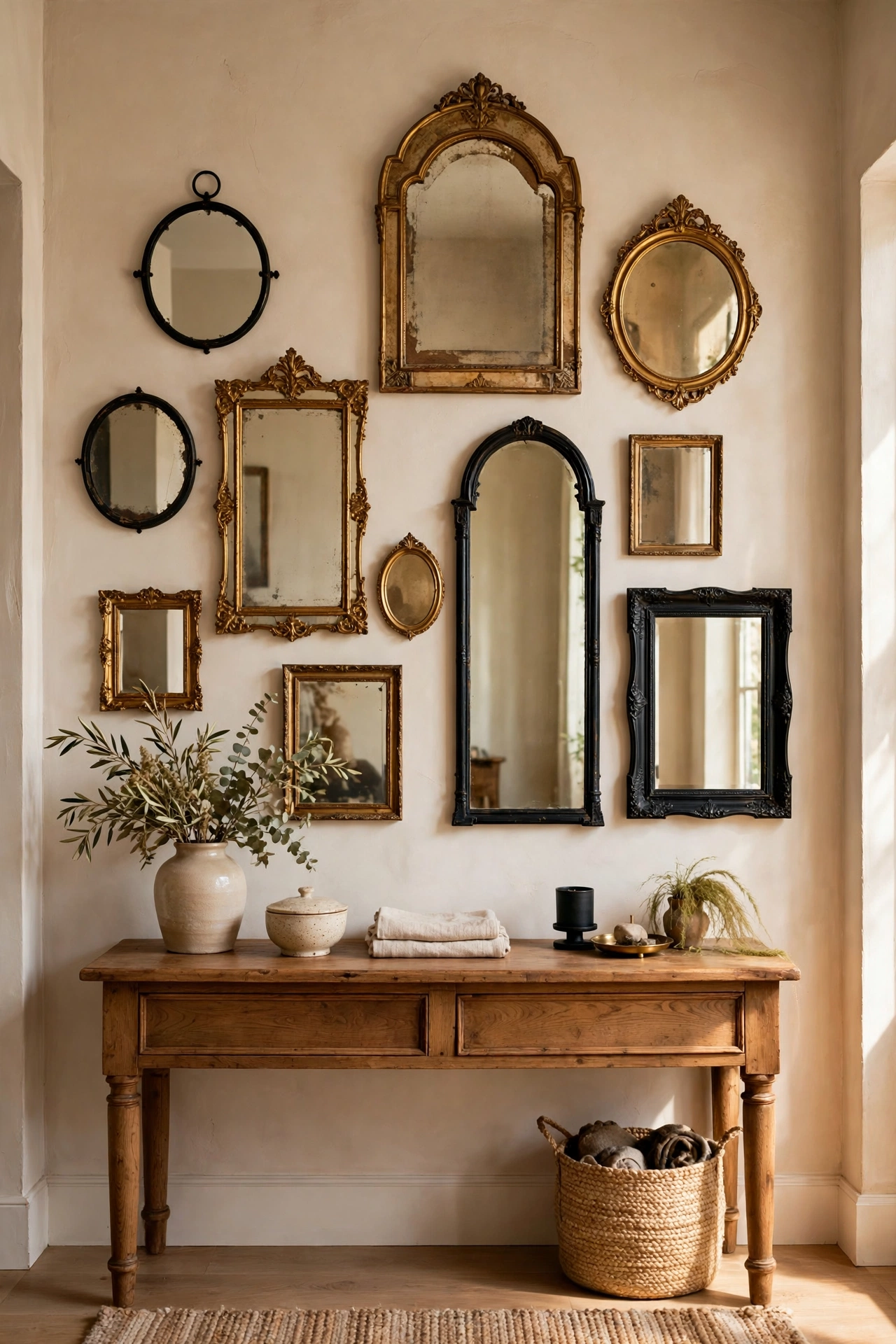
Can’t decide on art? Collect mirrors instead. A salon-style cluster of vintage and new mirrors in different shapes — rounds, arches, ovals, ornate rectangles — turns a hallway or stairwell wall into a light-bouncing installation. Thrift stores are full of interesting mirrors for a few dollars each; a coat of matching spray paint unifies the most eclectic finds.
Try this: keep two or three mirrors at different heights rather than one straight line — the asymmetry is what makes it feel collected, not catalog.
21. One Oversized Piece of Art
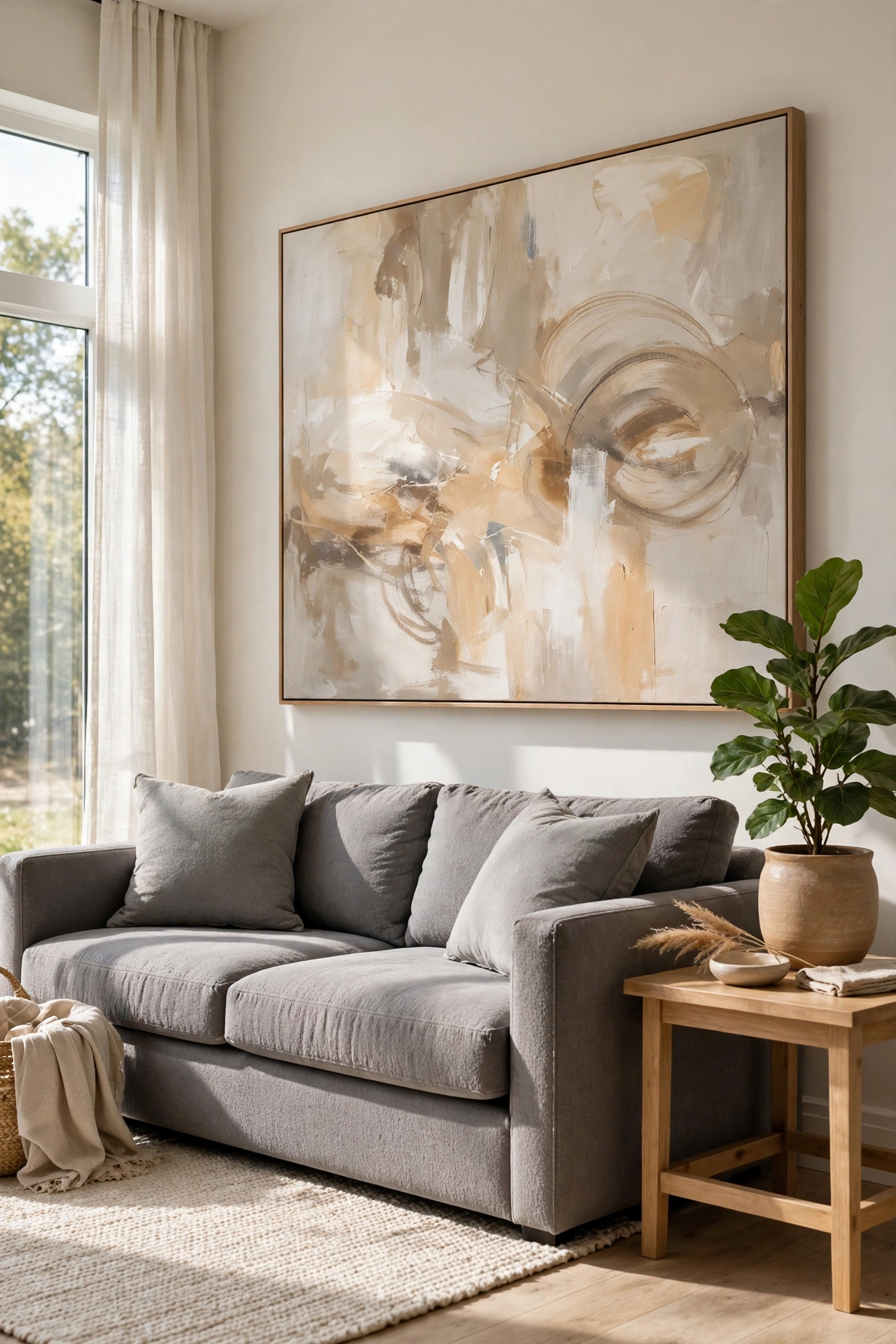
Sometimes the answer to a big blank wall is one big answer. A single oversized canvas — two-thirds the width of the sofa below it is the designer rule — fills the space with one confident gesture instead of a fussy cluster. Abstract prints, thrifted canvases you paint over, or even a stretched textile all work. Bigger is almost always better here; undersized art is the most common wall-decor mistake.
Try this: tape out the art’s dimensions on the wall with painter’s tape first — most people are shocked how big “big enough” really is. If flat canvas feels too safe, these easy DIY 3D wall art ideas add sculptural, touchable texture that fills a big wall even faster.
22. A Built-In Bookcase Wall
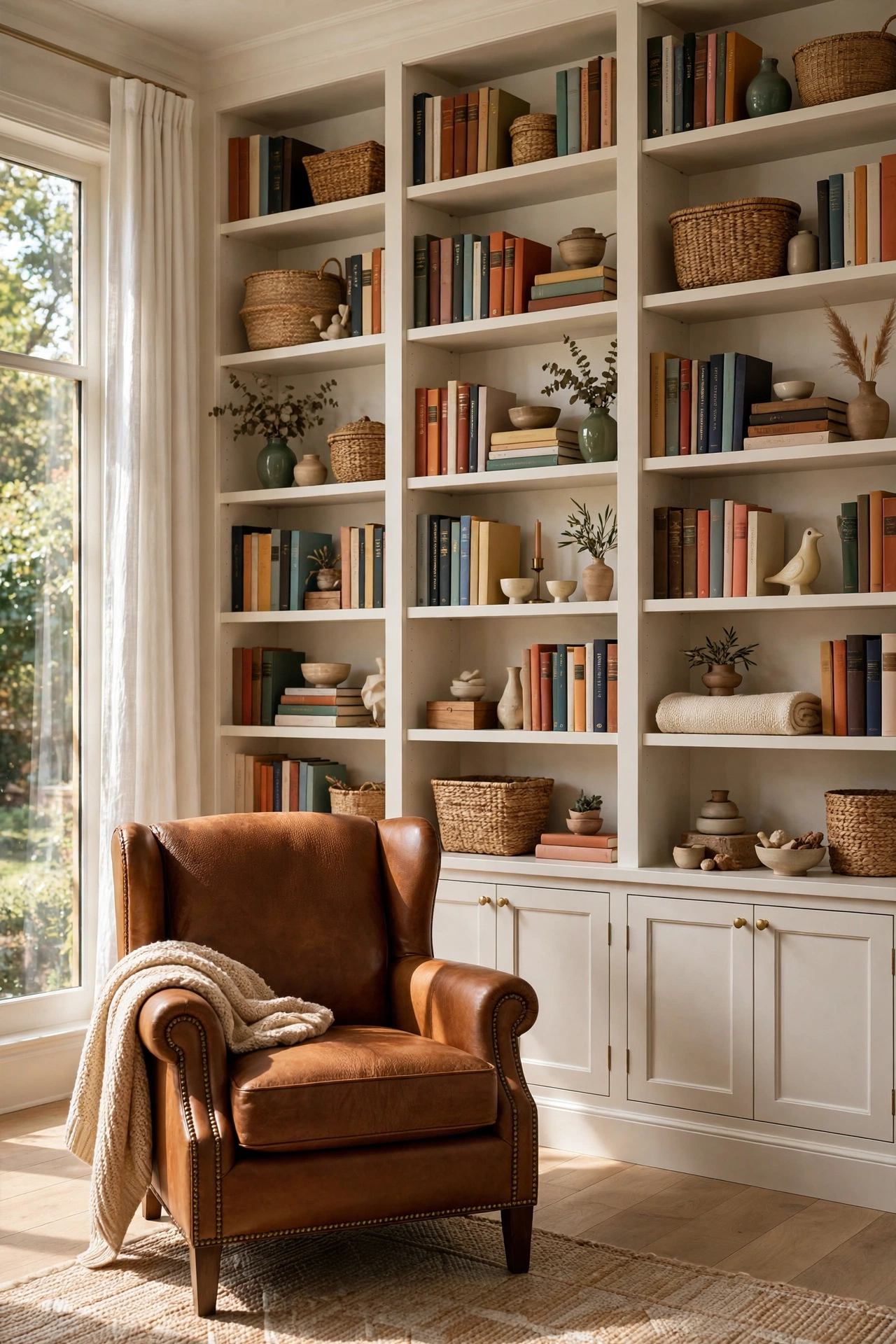
The ultimate wall: floor-to-ceiling bookshelves that turn a blank expanse into a library. Off-the-shelf bookcases ganged together, trimmed out with molding and painted one color, read as custom built-ins for a fraction of the price. Fill them with books, baskets, and objects — the wall becomes decor, storage, and a conversation piece in one.
Try this: leave 20% of the shelves partially empty or styled with objects; wall-to-wall books look heavy, styled shelves look designed.
23. A Photo Clip Display with String Lights
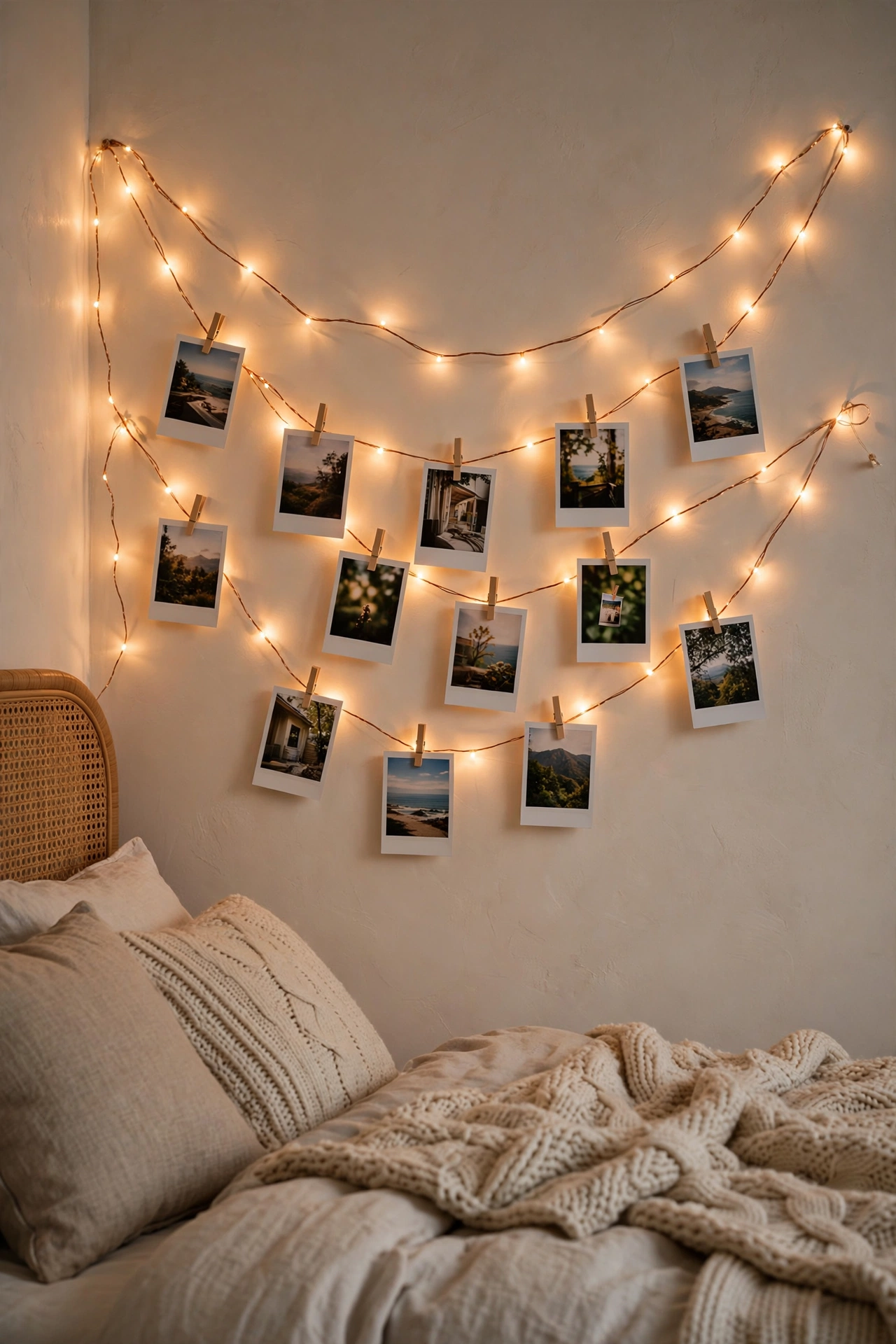
For bedrooms, dorms, and teen rooms, few things beat the warmth of photos clipped to string lights. It’s inexpensive, endlessly changeable, and glows beautifully at night. Run copper-wire fairy lights in loose swags across the wall and clip prints with tiny wooden clothespins. Print photos in batches (drugstore prints cost pennies) and swap them as life happens.
Try this: use LED fairy lights, not old incandescent strings — they stay cool against paper and photos.
24. Wall Sconces Flanking Art
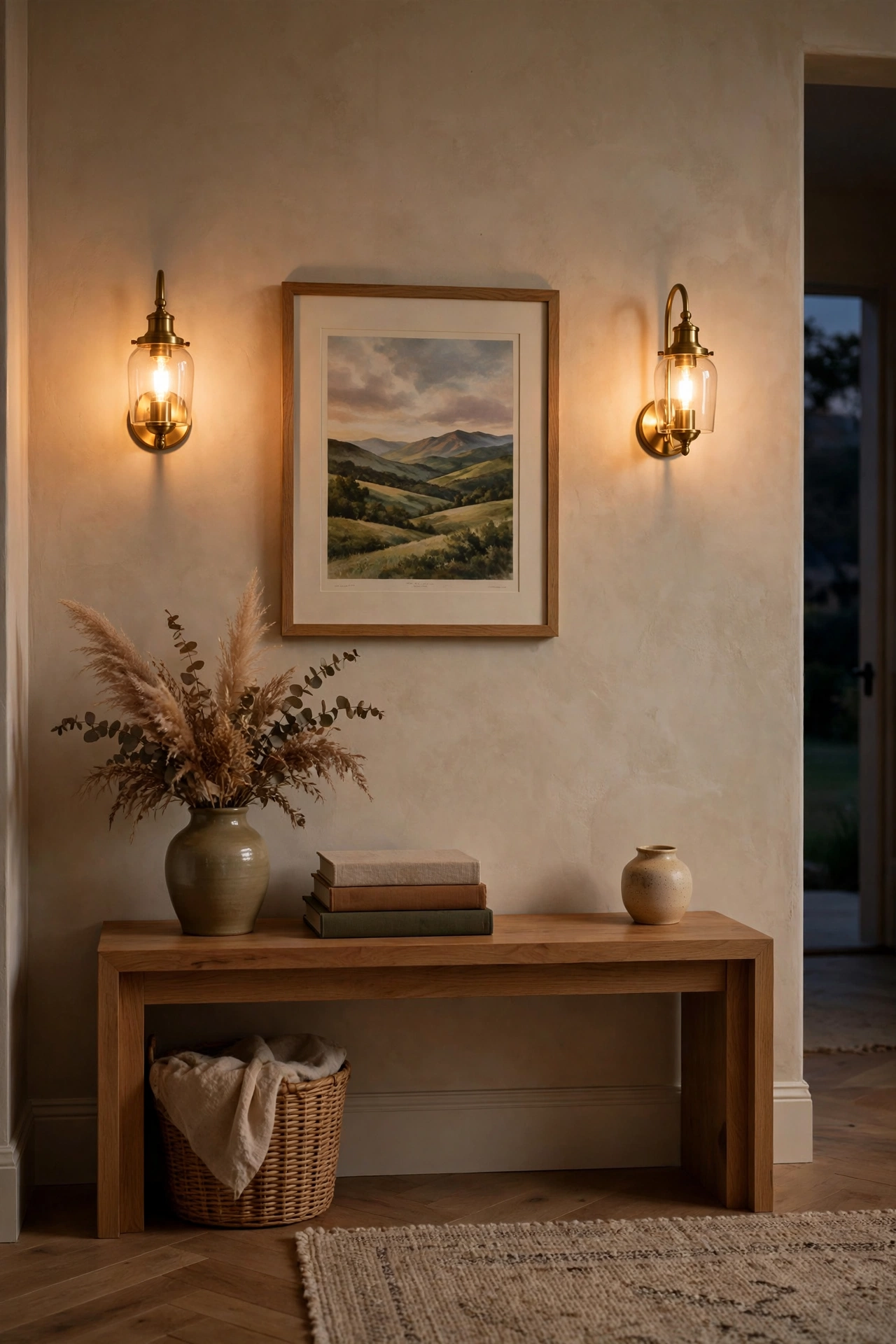
Art looks twice as good lit. A pair of sconces flanking a painting, mirror, or console vignette adds the gallery glow and makes an ordinary wall feel considered after dark. Battery-powered and plug-in sconces with cord covers mean no electrician and no wall damage — a genuinely renter-friendly upgrade. Warm 2700K bulbs keep the light flattering.
Try this: mount sconces so the light washes the art, not the viewer’s eyes — about 60 inches high and 6 to 12 inches from the frame edges.
25. A Rotating Kids’ Art Gallery
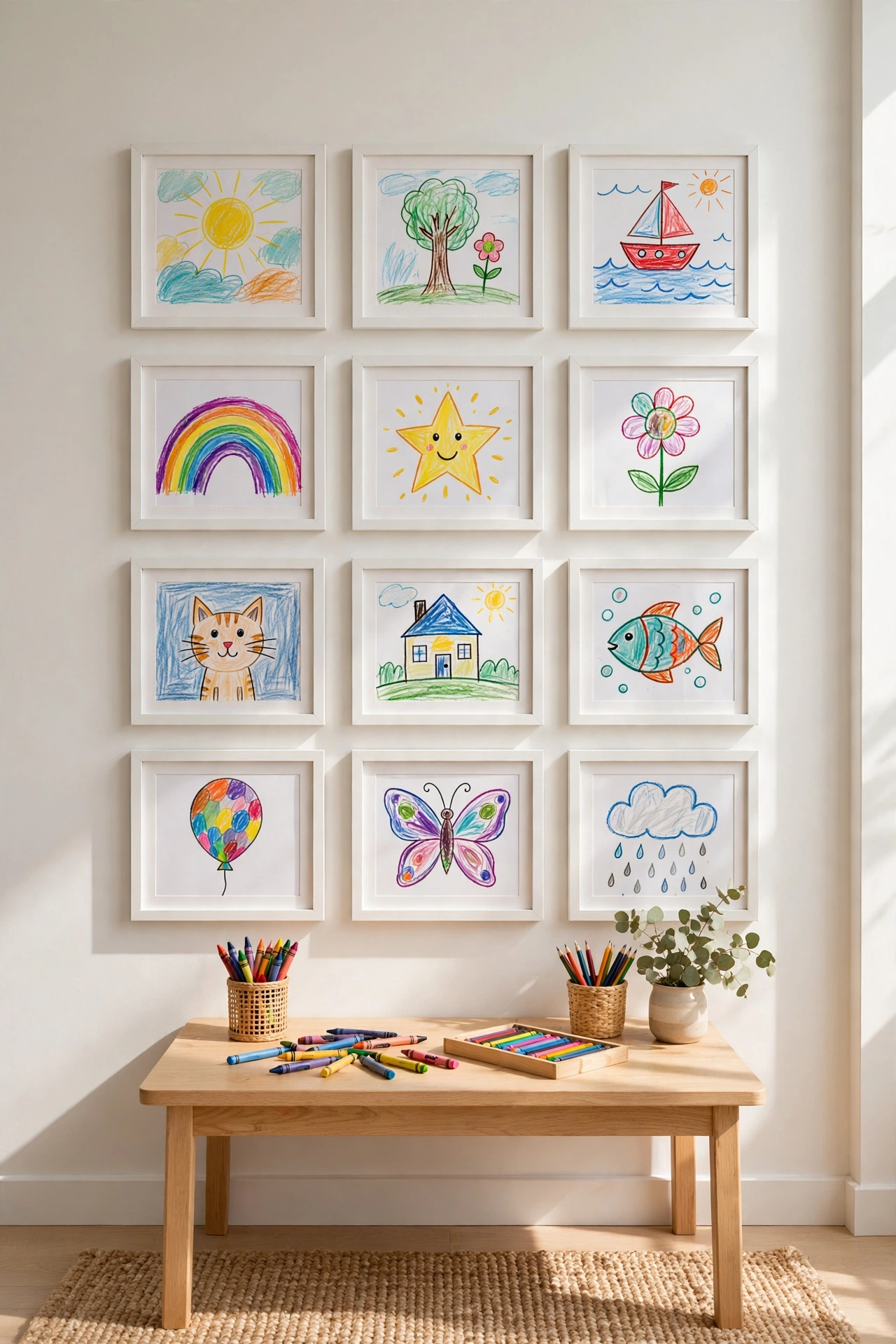
The fridge is not a gallery. Give kids’ masterpieces the respect they deserve with a dedicated wall: matching frames with easy-open backs, clipboards in a row, or a wire with clips — all designed so art rotates in seconds as new work arrives. A playroom, hallway, or stairwell wall becomes the most joyful spot in the house, and kids beam seeing their work framed like real art.
Try this: photograph each piece before it rotates out and keep a digital album — you get to keep everything without keeping everything.
Wall Idea Cheat Sheet: Pick by Room, Budget & Commitment
Not sure which idea fits your wall? Match your situation to the best picks:
| Your Situation | Best Ideas | Est. Cost | Renter-Friendly? |
|---|---|---|---|
| Big blank living room wall | Gallery wall, oversized art, wood slats | $30–$300 | Yes, with ledges |
| Boring bedroom wall | Painted arch, peel-and-stick wallpaper, tapestry | $15–$150 | Yes |
| Dark hallway or stairwell | Mirror collection, picture ledges, sconces | $40–$200 | Yes |
| Kitchen or mudroom wall | Chalkboard wall, plate wall, pegboard | $15–$80 | Mostly yes |
| Home office wall | Pegboard, floating shelves, framed wallpaper panels | $25–$150 | Yes |
| Kids’ room or playroom | Kids’ art gallery, photo clips, painted shapes | $10–$60 | Yes |
| Want texture without pattern | Limewash, board and batten, wall molding, slats | $40–$250 | No — owners |
| Tiny budget, big impact | Accent paint, painted arch, tapestry, photo clips | $10–$50 | Yes |
Renters worried about getting their deposit back have more options than ever. For a masterclass in damage-free decorating, this Apartment Therapy roundup of clever wall art ideas is full of washi tape, decals, and lean-and-layer tricks that come off clean.
Renters: Your Walls Are Not a Lost Cause
If you rent, every idea above marked renter-friendly works — and a few deserve special mention. Peel-and-stick wallpaper and murals peel off clean. Picture ledges need only a few screws (spackle fixes everything). Leaning mirrors, tapestries on removable hooks, washi-tape frames, and photo-clip lights need zero holes at all. Landlords care about damage, not style — so decorate boldly, keep the original paint intact, and patch the handful of holes when you leave. For room-by-room renter strategies beyond the walls, these innovative living room decor ideas for renters cover the rest of the space.
Frequently Asked Questions
What is the cheapest way to decorate a large blank wall?
Paint. One gallon of accent paint ($30–$50) or a painted arch using leftover paint (nearly free) transforms a large wall in an afternoon. After paint, the best budget moves are a large tapestry, a thrifted mirror collection, or photo-clip string lights — all under $50 and all renter-friendly.
How do I choose which wall should be the accent wall?
Pick the wall your eye lands on when you enter the room — usually the one behind the sofa, the bed, or the fireplace. Avoid walls broken up by lots of doors and windows; an accent needs an uninterrupted expanse to read as intentional. If every wall competes, none of them wins.
How do I hang a gallery wall without filling the wall with holes?
Use picture ledges instead of hanging every frame — two ledges need a handful of screws total and let you rearrange freely. For hung pieces, adhesive picture-hanging strips hold most frames damage-free. And always lay out the arrangement on the floor (or with kraft-paper templates on the wall) before committing.
Will peel-and-stick wallpaper damage my walls or paint?
On properly cured paint (at least 30 days old) and smooth walls, quality peel-and-stick wallpaper removes cleanly with slow, steady peeling and a little heat from a hairdryer. It struggles on fresh paint, heavy texture, and flat-finish paint — test a hidden corner first and leave it a week before committing to the whole wall.
How big should art be above my sofa?
The classic designer rule: art (or a gallery grouping) should span about two-thirds the width of the sofa below it, with the bottom edge 6 to 8 inches above the sofa back. A single piece should have its center around 57 inches from the floor. When in doubt, go bigger — undersized art is the most common wall-decor mistake. For more living room wall styling guidance, Better Homes & Gardens’ living room wall decor guide has room-by-room examples worth browsing.
Final Thoughts
Blank walls are not a design failure — they’re an unfinished sentence. And the good news is that finishing it rarely requires a big budget or a professional. A gallon of paint, a thrifted mirror, a weekend of peel-and-stick wallpaper: small moves, finished rooms.
Start with the wall that bothers you most and pick the idea that made you think “I could actually do that.” Do one wall completely — styled, hung, done — and let it teach you what the rest of the house wants. Walls remember the attention you give them; make it count.


