
Keeping young children busy in a meaningful way is not always easy. Many parents and teachers have watched a child lose interest in a worksheet after just a few minutes or ask for more screen time instead. I have faced the same challenge and found that learning becomes much easier when it includes something kids already love, like toy cars, dolls, blocks, puzzles, or stuffed animals. That simple change can turn an ordinary lesson into an activity children are excited to try.
After spending time with preschool and early elementary learners, I noticed that toy-themed printables often hold their attention longer and encourage them to practice important skills without feeling pressured. That is why I enjoy using toys worksheets for kids for counting, matching, coloring, and early reading activities. In this guide, I am sharing easy worksheet ideas that have worked well for engaging young learners while making learning feel like play instead of work.
Why Use Toys Worksheets for Kids?

Children learn best when they are interested in what they are doing. Worksheets based on familiar toys feel exciting because they connect learning with play.
Some of the biggest benefits include:
- Building vocabulary
- Improving counting skills
- Strengthening fine motor skills
- Supporting reading and writing practice
- Encouraging creativity
- Reducing unnecessary screen time
- Helping children stay focused for longer
Many of these activities can be printed at home and used in classrooms, homeschooling, or daycare settings.
Quick Learning Skills at a Glance
| Worksheet Idea | Main Skill |
|---|---|
| Toy Picture Matching | Vocabulary |
| Color the Toy | Color recognition and fine motor skills |
| Count the Toys | Early math |
| Toy Word Search | Reading and spelling |
| Alphabet and Toys | Letter recognition |
| Toy Sorting | Categorizing and observation |
| Toy Maze Challenge | Problem-solving |
| Toy Pattern Practice | Pattern recognition |
| My Favorite Toy Writing Page | Creativity and writing |
| Toy Bingo Printable | Listening and visual recognition |
Supplies You May Need
You do not need expensive materials to enjoy these activities. A few basic supplies are enough.
- Printed worksheets
- Crayons or colored pencils
- Markers
- Pencil and eraser
- Child-safe scissors
- Glue stick
- Laminator or sheet protectors for reuse (optional)
1. Toy Picture Matching Worksheet

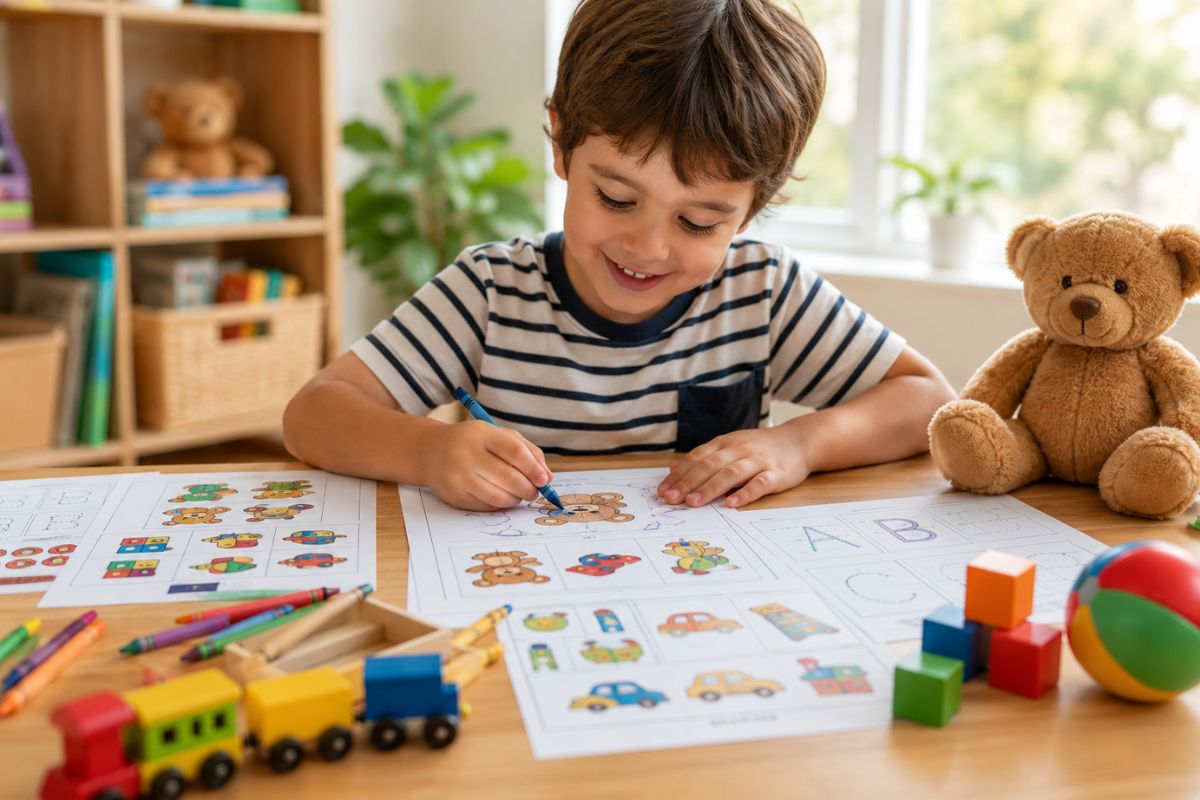
Print pictures of common toys such as teddy bears, dolls, building blocks, toy cars, puzzles, and balls. Place the matching words beside them and ask children to connect each picture with the correct name.
This simple activity helps young learners recognize words, build vocabulary, and improve observation skills.
2. Color the Toy Worksheet

Create coloring pages with different toys and include easy instructions like:
- Color the teddy bear brown.
- Color the toy train blue.
- Color the ball red.
- Color the kite yellow.
Children practice reading directions while improving hand control and color recognition.
3. Count the Toys Activity

Fill a worksheet with groups of toys and ask children to count them.
For example:
- Count the blocks.
- Count the toy cars.
- Count the stuffed animals.
- Count the dolls.
This activity supports early math skills while keeping children engaged.
4. Toy Word Search

Hide toy-related words inside a puzzle grid. Include words like:
- Doll
- Robot
- Puzzle
- Ball
- Train
- Blocks
- Truck
- Kite
Word searches encourage spelling practice, concentration, and letter recognition.
5. Alphabet and Toys Worksheet

Help children connect letters with familiar toy names.
Examples include:
- B for Ball
- D for Doll
- K for Kite
- P for Puzzle
- T for Train
This worksheet works especially well for preschool and kindergarten learners who are practicing the alphabet.
6. Toy Sorting Worksheet

Show pictures of different toys and ask children to place them into categories such as:
- Soft toys
- Building toys
- Vehicles
- Outdoor toys
- Learning toys
Sorting activities strengthen thinking skills and help children notice similarities and differences.
7. Toy Maze Challenge

Create a simple maze where a teddy bear finds its picnic basket or a toy robot reaches its charging station.
Mazes improve attention, planning, and problem-solving while giving children a fun challenge.
8. Toy Pattern Practice

Show repeating picture sequences such as:
Ball → Car → Ball → Car → ?
Ask children to identify what comes next and explain why.
Pattern practice helps develop logical thinking and prepares children for early math concepts.
9. My Favorite Toy Writing Page

Give children a chance to express themselves with a simple writing activity. Ask questions like:
- What is your favorite toy?
- Why do you like it?
- Who gave it to you?
- Where do you like to play with it?
Leave space at the bottom of the page for a drawing. This worksheet encourages creativity, sentence building, and confidence in writing.
10. Toy Bingo Printable

Create bingo cards with pictures of common toys instead of numbers. Call out toy names while children mark the matching pictures on their cards.
This game works well for classrooms, homeschool lessons, birthday parties, or family game nights. It also helps children improve listening and visual recognition skills.
More Printable Toy Worksheet Ideas
If your child enjoys these activities, try adding a few more printable pages to keep learning fresh.
- Trace the names of common toys.
- Circle the correct toy after reading a clue.
- Cut and paste toy pictures into matching groups.
- Spot the difference between two toy scenes.
- Draw your favorite toy and write one sentence about it.
- Connect the dots to reveal a hidden toy.
- Complete simple toy-themed puzzles.
These ideas work well for preschool, kindergarten, and early elementary learners.
Best Activities by Age
Every child develops at their own pace, but this guide can help you choose age-appropriate activities.
| Age Group | Recommended Activities |
|---|---|
| 3 to 4 years | Coloring pages, picture matching, simple counting |
| 4 to 5 years | Alphabet practice, sorting, patterns, easy mazes |
| 5 to 7 years | Word searches, bingo, writing prompts, counting challenges |
| 7 to 8 years | Story writing, classification activities, vocabulary practice |
Tips for Making Learning More Fun
A few simple changes can make worksheets even more enjoyable.
- Rotate different activities throughout the week.
- Use stickers or stamps as small rewards.
- Pair worksheets with real toys for hands-on learning.
- Keep sessions short to match your child’s attention span.
- Let children color and decorate their finished pages.
- Celebrate effort instead of focusing only on correct answers.
These small steps can help children stay excited about learning.
Who Can Use Toys Worksheets for Kids?
These printable activities are helpful for many different settings, including:
- Parents teaching at home
- Homeschool families
- Preschool teachers
- Kindergarten classrooms
- Daycare centers
- Babysitters planning quiet-time activities
- After-school programs
Most worksheets can be adjusted to match different ages and learning levels.
Frequently Asked Questions
What age is best for toys worksheets for kids?
Most toy-themed worksheets work well for children between 3 and 8 years old. You can make them easier or more challenging depending on your child’s abilities.
Can I use these worksheets in a classroom?
Yes. Teachers often use toy worksheets for individual practice, learning stations, small groups, or homework activities.
Do toys worksheets help children learn?
Yes. They can support vocabulary, counting, reading, writing, observation, pattern recognition, and fine motor skills while keeping learning enjoyable.
Do I need to print them in color?
No. Black-and-white worksheets work just as well and give children an extra opportunity to color the pictures themselves.
Final Thoughts
From my experience, the most successful learning activities are the ones children actually enjoy. Toy-themed worksheets have been a reliable way to keep young learners engaged while helping them practice counting, vocabulary, pattern recognition, creativity, and early reading skills. Whether you are a parent planning a screen-free afternoon or a teacher preparing classroom activities, these toys worksheets for kids offer a simple and enjoyable way to mix play with learning. Start with one or two ideas, follow your child’s interests, and celebrate every small step as they grow in confidence and skills.