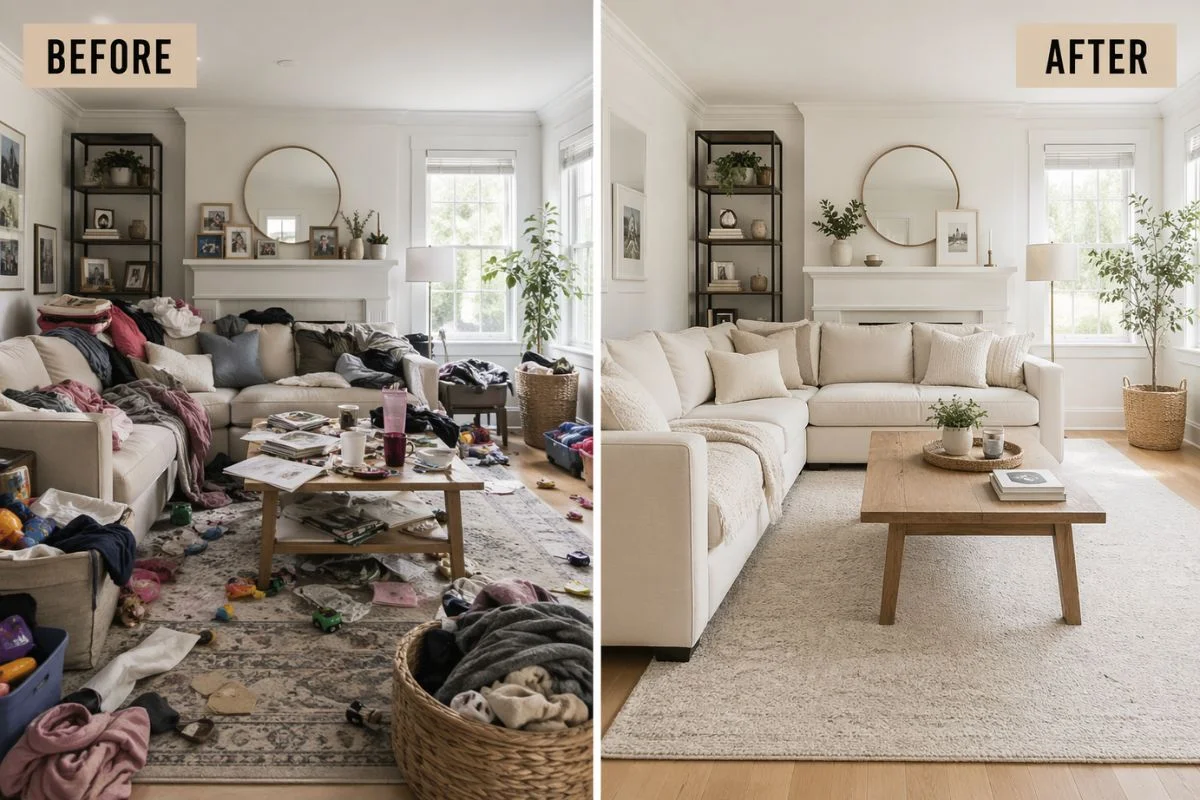
Have you ever cleaned your home and still felt like it was cluttered? I have. I used to put things away, clean the surfaces, and organize my drawers, but the same mess would slowly return. I had clothes I rarely wore, papers I did not need, and small items taking up space in places I used every day. The more things I had to manage, the more time I spent cleaning and looking for things.
What helped me was realizing that I did not need a perfect home or a minimalist lifestyle. I needed fewer things to manage and a simple system for deciding what was worth keeping. That is what makes learning how to simplify your life and declutter so useful. In this guide, I will walk you through simple steps to remove unnecessary clutter, make your home easier to manage, and build habits that can help keep the mess from coming back.
How Can You Simplify Your Life and Declutter Your Home?
Start by choosing one small area instead of trying to clean the whole house at once. Sort your belongings into keep, donate, and trash groups. Remove things you no longer use, need, or value, then give the items you keep a simple place. Next, declutter areas such as your closet, kitchen, papers, and digital files. Finally, use small daily habits and the one-in-one-out rule to help prevent new clutter from building up.
Quick Takeaway
You do not need to declutter your whole home in one day.
Start small → Decide what stays → Remove what you do not need → Organize what remains → Build simple habits.
The goal is a home that is easier to manage, not a home with almost nothing in it.
What Does It Mean to Simplify Your Life and Declutter?
Simplifying your life means removing things that take up time, space, or attention without adding much value. Decluttering your home means getting rid of items you no longer use, need, or value.
The goal is not to own as little as possible. It is to create a home that works better for your daily life.
You can start with one drawer, shelf, closet, or room. Small changes can make a big difference.
1. Decide What You Want Your Home to Feel Like
Before you start decluttering, think about what you want from your home.
Do you want less cleaning? More open space? An easier morning routine? A home that feels calm and simple?
Write down one or two goals. For example:
- Spend less time cleaning.
- Find things more easily.
- Have less clutter on counters.
- Make the closet easier to use.
- Create more open space.
Your goal will help you decide what should stay and what can go.
2. Start Small and Simple
One of the biggest mistakes is trying to declutter the entire house at once. This can quickly become too much.
Instead, choose one small area.
You could start with:
- One kitchen drawer
- One closet shelf
- Your bathroom counter
- A nightstand
- One section of your closet
- A small area near the front door
Set a timer for 15 or 20 minutes. Remove the obvious clutter first. When the timer ends, you can stop or continue if you feel ready.
Starting small makes the decluttering process easier to handle.

3. Use the 3-Box Method
The 3-box method is a simple way to sort your belongings.
Use three boxes, bags, or areas:
Keep: Items you use, need, or truly value.
Donate: Useful items that you no longer need.
Trash: Broken, damaged, expired, or unusable items.
Selling and returning items can be handled as separate piles when needed.
Try not to create a large “maybe” pile. It can make decisions harder.
Once you finish, deal with each box right away. Take donations out of the house. Throw away trash. Put the items you are keeping back in their proper places.

A Simple Guide for Deciding What to Do With Each Item
| If the item is… | Consider… |
|---|---|
| Something you use often | Keep it |
| Something useful you no longer need | Donate it |
| Valuable but unused | Sell it |
| Broken or unusable | Throw it away |
| Accepted by a local recycling program | Recycle it |
| Borrowed from someone | Return it |
| Meaningful but rarely used | Keep it, take a photo, or place it in a small memory box |
4. Ask Simple Questions Before Keeping Something
Knowing what to get rid of can be harder than cleaning the space.
Before you keep an item, ask yourself:
- Do I use this?
- Do I need this?
- Have I used it in the past year?
- Do I already own another one?
- Would I buy this again today?
- Does it fit my current life?
- Is it worth the space it takes?
You do not need to throw away everything you do not use often. Some items are useful only once in a while.
The goal is to make a thoughtful choice instead of keeping everything by default.
5. Know What to Declutter First
If you are unsure where to start, look for easy items.
Start with things that are clearly unnecessary.
These may include:
- Broken items
- Empty containers
- Expired products
- Old magazines
- Duplicate items
- Clothes that no longer fit
- Unused kitchen gadgets
- Old receipts
- Items you forgot you owned
- Things you never plan to use
Removing easy clutter gives you more space and makes the rest of the process feel easier.
6. Declutter One Room at a Time
Room-by-room decluttering can help you stay focused.
Bedroom
Look at clothes, shoes, bedside tables, drawers, and decorations.
Remove things you no longer use or enjoy.
Kitchen
Check duplicate tools, unused appliances, old food, containers without lids, and gadgets you rarely use.
Keep the items that make cooking and daily meals easier.
Bathroom
Check expired products, expired or unused makeup, old bottles, and products you never use.
Keep your most-used items easy to reach.
Living Room
Look at magazines, decorations, cables, old electronics, and items that do not belong in the room.
Clear open surfaces first.
Entryway
Remove shoes, bags, mail, and other items that have collected near the door.
Keep only what you use regularly.
You do not need to finish every room in one day. Work at a pace that feels manageable.
Focus on the Areas That Collect the Most Clutter
Some areas collect clutter faster than others. These are good places to check during your decluttering process.
Look at kitchen counters, dining tables, entryways, bathroom counters, bedside tables, and other surfaces where items are often left.
Remove things that do not belong there. Put useful items back where they belong. If you rarely use something, ask if it still needs space in that area.
Clearing these busy areas can make your home feel simpler without requiring a full-house cleanout.
7. Clean Out Your Closet
Closet clutter can make getting dressed harder than it needs to be.
Take out a small section of your clothes at a time. Look at each item and ask if you wear it.
Consider removing clothes that:
- Do not fit
- Are damaged beyond use
- You never wear
- You bought but never liked
- You have several versions of
- No longer match your lifestyle
Keep the clothes you wear and feel good in.
Do not fill the empty space right away. Let the extra space stay open.

8. Simplify Your Kitchen and Other Busy Areas
Some areas collect clutter faster than others.
Kitchen counters, dining tables, bathroom counters, and entryways often become drop zones.
Choose one busy surface and clear it.
Return items to their proper places. Remove things that do not belong there. Keep only the items you use often within easy reach.
An open surface is also easier to clean.
9. Declutter Your Digital Life
Clutter is not always physical.
Your phone and computer can also become crowded with unused apps, old photos, emails, and files.
Try these simple steps:
- Delete apps you no longer use.
- Remove duplicate photos.
- Delete old screenshots.
- Unsubscribe from unwanted emails.
- Remove unnecessary apps, files, and notifications.
- Organize important files.
- Clear your computer desktop.
You do not need to clean your entire digital life in one sitting. Choose one area and spend 10 or 15 minutes on it.

10. Deal With Paper and Mail Clutter
Paper clutter can build up quickly.
Start by sorting your papers into a few groups.
Keep important documents in one safe place. Recycle junk mail and old papers you no longer need. Shred documents that contain private information before throwing them away.
Scan important papers where appropriate, but keep original documents when an original is required.
For more guidance on documents that contain personal or financial information, see the FTC guide on which documents to keep and which to shred.
Try to deal with new mail soon after it arrives.
A simple paper system can stop piles from growing again.
11. Handle Sentimental Items With Care
Sentimental items can be difficult to declutter because they are connected to memories.
You do not have to get rid of everything.
Instead, choose the items that mean the most to you. If an item is large or takes up too much space, consider taking a photo of it before letting it go.
You can also keep one small memory box for special items.
The memory is still meaningful even if you no longer own the object.
12. Keep Storage Simple
Good storage can help, but buying more storage is not always the answer.
If you have too many things, storage can simply hide the clutter.
Declutter first. Then organize what remains.
Avoid buying storage containers until you have finished removing unnecessary items.
Use simple storage that makes sense for your home. Keep everyday items where you can reach them easily.
Clear labels, open shelves, baskets, and small containers can help keep similar items together.
If you want more ideas for keeping a home organized after decluttering, see these easy ideas to get organized at home.
The best storage system is one you can maintain without much effort.

13. Follow the One-In, One-Out Rule
One simple way to prevent clutter is the one-in, one-out rule.
When you bring a similar item into your home, consider removing one you no longer need.
For example, if you buy a new sweater, consider donating an old sweater.
This rule works well for:
- Clothes
- Shoes
- Kitchen items
- Books
- Toys
- Home decorations
It helps control how many things enter your home.
14. Simplify Your Schedule and Spending
Simplifying your life is about more than physical clutter.
Your schedule can also become crowded.
Look at your weekly commitments. Ask yourself which activities are useful and which ones take time without adding much value.
You can also simplify spending.
Before buying something, ask:
Do I need it, or do I simply want it right now?
Wait before making non-essential purchases. Avoid buying duplicates. Think about where the item will live in your home before bringing it inside.
Fewer unnecessary purchases can mean less clutter later.
15. Build Small Daily Decluttering Habits
You do not need to spend hours cleaning every day.
Small habits can keep your home under control.
Try a simple daily reset:
- Put things back after using them.
- Clear kitchen counters.
- Deal with new mail.
- Put clothes where they belong.
- Return items to their proper rooms.
- Spend five to ten minutes clearing one small area.
These habits take little time but can prevent clutter from building up.
If you want a more structured routine for keeping up with everyday cleaning, see these daily working mom cleaning schedule ideas.
What Should You Do With the Things You Remove?
Decluttering is not finished when items leave a drawer or closet.
Decide what happens next.
Donate: Give useful items in good condition to a local charity.
Sell: Sell items that are valuable and worth the effort.
Recycle: Use local recycling programs for items they accept.
Trash: Throw away items that are broken, unsafe, or unusable.
Return: Return borrowed items to their owners.
For U.S. recycling guidance, the EPA guide to recycling common household items explains that local programs can have different rules, so check what your local program accepts.
Try to move donations and unwanted items out of your home quickly. Otherwise, they can become another pile of clutter.
Decluttering vs. Organizing: What Comes First?
Decluttering and organizing are two different steps.
Decluttering means deciding what you no longer need and removing it.
Organizing means finding a useful place for the things you decide to keep.
Declutter first, then organize. There is little benefit in creating storage for things you do not use.
Once you have fewer items, it becomes easier to keep your home organized.
Do You Have to Become a Minimalist?
No.
Simplifying your life does not mean living with an empty home.
You can keep books, decorations, clothes, family items, hobbies, and other things you enjoy.
The goal is to remove unnecessary clutter and keep the things that support your life.
Your home should work for you.
How to Prevent Clutter From Coming Back
Getting rid of clutter is only one part of simplifying your home. You also need a simple way to manage new items.
Try these habits:
- Think before buying something new.
- Use the one-in-one-out rule.
- Deal with mail soon after it arrives.
- Put things back after using them.
- Keep a donation bag in an easy-to-reach place.
- Do a short reset each evening.
- Check one small area each month.
These habits can help you keep the progress you have made.
How to Keep Your Home Clutter-Free
Decluttering is easier when you reduce the amount of new clutter entering your home.
- Follow the one-in-one-out rule.
- Do a short daily reset.
- Put things away after using them.
- Deal with mail quickly.
- Keep a donation bag ready.
- Review clutter once a month.
- Pause before buying new items.
- Give every frequently used item a simple home.
You do not need to keep your home perfect. You just need a system that is easy enough to follow.
Simple Decluttering Checklist
Use this checklist as you work through your home:
- ☐ Choose one small area.
- ☐ Set a 15–20 minute timer.
- ☐ Remove broken and expired items.
- ☐ Remove duplicates.
- ☐ Decide what you use and need.
- ☐ Sort items into keep, donate, sell, recycle, or trash.
- ☐ Put kept items in simple storage.
- ☐ Clear one busy surface.
- ☐ Check your closet.
- ☐ Clean up digital clutter.
- ☐ Deal with paper and mail.
- ☐ Set aside sentimental items carefully.
- ☐ Take donations and unwanted items out of the house.
- ☐ Use the one-in-one-out rule.
- ☐ Do a short daily reset.
Frequently Asked Questions
How do I simplify my life and declutter my home?
Start with one small area. Remove things you do not need, use a simple sorting method, and organize what remains. Then build small daily habits to prevent new clutter.
What should I declutter first?
Start with easy items such as broken things, expired products, duplicates, empty containers, and items you never use. These are usually easier to remove than sentimental belongings.
How do I decide what to keep?
Ask if you use the item, need it, value it, or would buy it again today. Also think about how much space it takes.
How can I declutter without feeling overwhelmed?
Work on one small area at a time. Set a 15- or 20-minute timer and stop when the time is up. You do not need to finish your entire home in one day.
How do I stop clutter from coming back?
Use the one-in-one-out rule, avoid unnecessary purchases, put things away after use, and do a short daily reset.
Do I need to become a minimalist to simplify my life?
No. You can simplify your home while keeping the things you use, need, and love. The goal is a home that is easier to manage.
Final Thoughts
I learned that simplifying your life and decluttering is much easier when you stop trying to fix everything at once. Starting with one small area helped me make better decisions without feeling overwhelmed. Once I removed things I no longer used, organizing became easier because I had less to manage. Simple habits, such as putting things back after use and thinking before buying something new, also helped me keep that progress.
You do not need to own very little to have a simpler home. Start with one drawer, shelf, closet section, or surface today. Decide what you use and value, remove what you do not need, and give the things you keep a practical place. With steady small steps, your home can become easier to manage and your daily routine can feel much simpler.