
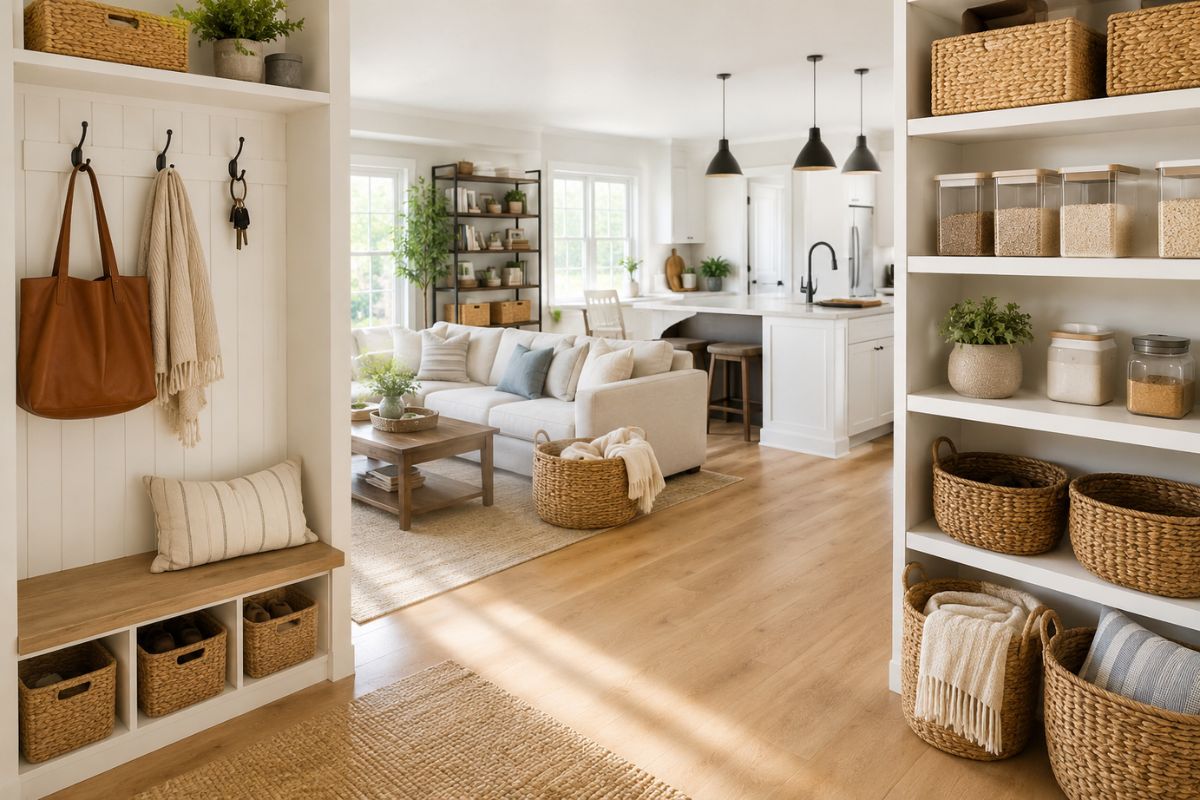
Introduction
Have you ever cleaned your house only to find it messy again a day later? I know that feeling well. There was a time when I wasted precious minutes searching for keys, important papers, or everyday items because nothing had a proper place. The clutter made simple tasks feel frustrating, and the constant mess added stress to my daily routine. If you have ever looked around your home and wondered where to even begin, you are not alone.
What changed everything for me was realizing that getting organized does not require a huge budget or an entire weekend of cleaning. Small habits, simple storage solutions, and easy routines made my home feel more peaceful and much easier to manage. In this guide, I am sharing practical ideas that have helped me stay organized and can help you create a cleaner, less stressful home one step at a time.
Key Takeaways
- Small changes can make a big difference in home organization.
- Decluttering before buying storage saves money and space.
- Labels, baskets, and clear bins help keep items easy to find.
- Daily habits prevent clutter from building up again.
- Every room can become more functional with simple storage ideas.
Why Getting Organized at Home Matters
An organized home helps you spend less time searching for misplaced items and more time enjoying your day. Many people also find that a tidy space feels calmer and easier to manage.
When everything has a designated place, cleaning becomes quicker and family members can easily return items where they belong.
How to Start Organizing Without Feeling Overwhelmed
If your home feels messy, do not try to organize everything in one day. Start with one small area, such as a kitchen drawer, a bathroom cabinet, or a single shelf. Set a timer for 15 minutes and focus only on that space.
As you finish each small task, you will build momentum and feel motivated to keep going. Small, steady progress is easier to maintain than trying to organize your entire home at once.
1. Create a Family Command Center
Choose one spot near the entrance or kitchen for daily essentials. Add hooks for keys, a tray for wallets, and a small board for reminders or shopping lists. This keeps everything in one place and cuts down on last-minute searching.

2. Label Storage Bins and Containers
Use labels on bins, baskets, jars, and drawers so everyone knows where items belong. Labels make cleanup faster and help maintain organization.

3. Use Vertical Space
Take advantage of empty walls by installing shelves, hooks, or hanging organizers. This keeps floors clear and adds valuable storage without taking up extra room.

4. Choose Clear Storage Containers
Transparent containers let you see what is inside without opening every box. They work well for pantry goods, toys, seasonal clothing, and craft supplies.

5. Set Up a Paper Organization System
Keep bills, receipts, manuals, and school papers in labeled folders or files. Sorting paperwork regularly prevents piles from growing.

6. Add Drawer Dividers
Drawer organizers separate small items and make them easy to find. They are useful in kitchens, bathrooms, bedrooms, and home offices.

7. Donate Items You No Longer Use
Go through your belongings every few months and donate things you no longer need. Fewer items make your home easier to organize and clean.

8. Create Zones for Different Activities
Keep work supplies together, hobby materials in one area, and reading items on their own shelf. Giving each activity its own space reduces clutter.

9. Store Similar Items Together
Group related items in the same place. Keep baking tools with baking supplies, pet products together, and office materials in one organizer.

10. Use Baskets in Every Room
Baskets are an easy way to collect blankets, toys, books, or everyday items while keeping rooms neat and tidy.

11. Organize Kitchen Cabinets with Turntables
Rotating trays make it easier to reach spices, sauces, and jars stored in deep cabinets without moving everything around.

12. Pick Furniture with Hidden Storage
Storage benches, ottomans, and beds with built-in drawers help maximize space while keeping extra items out of sight.

13. Clear Surfaces Every Evening
Spend five minutes each night putting away loose items from countertops, tables, and bathroom sinks. This simple habit keeps clutter under control.

14. Store Seasonal Items Separately
Pack holiday decorations, winter blankets, and out-of-season clothes into labeled bins and store them away until needed.

15. Use Color-Coded Storage for Kids
Assign each child a color for baskets or storage bins. This makes cleanup easier and encourages independence.

16. Install a Pegboard
Pegboards provide flexible storage for tools, craft supplies, and cleaning equipment while keeping frequently used items visible.

17. Save Space with Vacuum Storage Bags
Vacuum-sealed bags compress bulky blankets, comforters, and winter clothing, making them easier to store in closets or under beds.

18. Follow the One-In, One-Out Rule
Whenever you bring something new into your home, remove one similar item. This simple habit helps prevent clutter from building over time.

Easy Organization Ideas for Small Spaces
Small homes can still feel open and organized with smart storage.
- Use over-the-door organizers.
- Add floating shelves above furniture.
- Store extra items under the bed.
- Stack storage bins inside closets.
- Choose furniture that doubles as storage.
You Do Not Need Expensive Storage Products
Getting organized does not have to cost a lot of money. Reuse glass jars, shoe boxes, and simple baskets before buying expensive organizers. After decluttering, you may discover you already have enough storage solutions at home.
Room-by-Room Organization Checklist
Kitchen
- Group similar pantry items together.
- Keep countertops as clear as possible.
- Add shelf risers for extra storage.
- Store everyday cooking tools within easy reach.
Living Room
- Use baskets for blankets and toys.
- Store remotes in one tray.
- Limit decorative clutter.
Bedroom
- Organize closets by category.
- Use under-bed storage containers.
- Keep bedside tables simple.
Bathroom
- Throw away expired products.
- Use labeled bins under the sink.
- Organize makeup and grooming items in drawers.
Entryway
- Add hooks for coats and bags.
- Keep shoes on a rack.
- Place keys and mail in one designated spot.
10-Minute Daily Reset Routine
Spend just a few minutes each evening doing these tasks:
- Put away misplaced items.
- Wash or load dishes.
- Fold blankets.
- Sort incoming mail.
- Return shoes and bags to their place.
- Wipe busy surfaces if needed.
This quick routine helps stop clutter from piling up.
Quick Home Organization Checklist
- Donate or recycle five unused items.
- Label one storage container.
- Organize one drawer.
- Clear the kitchen counter.
- Sort paperwork.
- Store seasonal items.
- Return misplaced belongings.
- Empty trash from busy areas.
- Tidy one shelf.
- Spend five minutes resetting your home before bed.
Daily Habits That Keep Your Home Organized
Simple habits often make the biggest difference.
- Make your bed each morning.
- Put things away after using them.
- Finish small cleanup tasks before they become large ones.
- Review clutter once a week.
- Keep a donation box for items you no longer need.
Common Organization Mistakes to Avoid
Many people buy storage containers before removing unnecessary items. Others create systems that are too difficult to maintain.
Focus on keeping only what you use, create simple routines, and choose storage solutions that fit your lifestyle.
Frequently Asked Questions
How do I start organizing my home?
Start with one small area, such as a drawer or shelf. Completing one task builds confidence and motivation.
What should I declutter first?
Begin with broken items, duplicates, expired products, and things you no longer use.
How can I stay organized long term?
Develop daily habits like putting items back in place and reviewing clutter regularly.
Do I need expensive organizers?
No. Affordable baskets, recycled containers, and basic labels can organize your home just as effectively.
Conclusion
In my experience, the secret to an organized home is not buying more storage products or trying to make every room perfect overnight. The biggest difference comes from building simple habits that are easy to stick with, like putting things back where they belong and clearing small areas every day. If you start with just one idea from this list and stay consistent, you will slowly create a home that feels calmer, works better for your family, and is much easier to keep organized in the long run.