
Turning an attic into a bedroom for your child can feel exciting at first, but the challenges show up quickly. Sloped ceilings, awkward corners, and limited floor space can make it hard to arrange furniture or add enough storage. Many parents worry that the room will feel too small or uncomfortable, and buying the wrong furniture can make the space even more crowded. If you’ve been searching for easy attic bedroom ideas for kids, you’re likely looking for simple ways to create a room that is both practical and fun.
After researching family-friendly bedroom layouts and seeing what works best in real homes, I have found that attic rooms can become some of the coziest spaces in the house with the right approach. The key is to work with the attic’s unique shape instead of trying to fight it. The ideas below focus on smart layouts, space-saving storage, and kid-friendly decor that help transform even a small attic into a bright, comfortable bedroom where your child can sleep, play, read, and grow.
Cozy House Bed Under the Sloped Ceiling
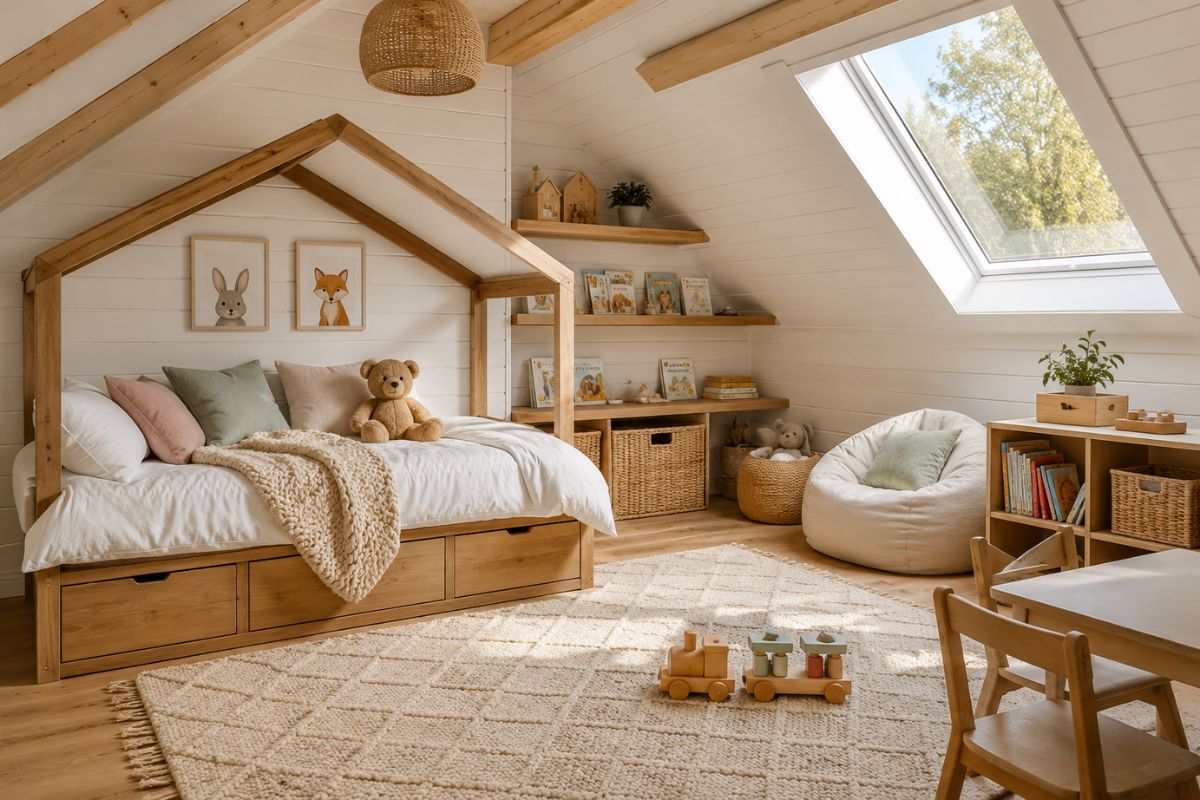
A house-shaped bed is one of the easiest ways to make an attic bedroom feel warm and inviting. Its simple wooden frame follows the cozy feeling of an attic while giving the room a playful touch that kids enjoy every day.
Placing the bed beneath the lower part of the sloped ceiling helps use space that might otherwise stay empty. It also leaves the taller part of the room open for walking, playing, or adding other furniture.
Choose light-colored bedding, soft pillows, and a few stuffed animals to make the space feel calm and comfortable. A small rug beside the bed adds warmth and creates a cozy place for reading or playing.

Tip: Add a string of warm fairy lights around the house bed frame for a magical look that is perfect for both daytime and bedtime.
Built-In Bed with Storage Drawers
Attic bedrooms often have limited floor space, so every piece of furniture should serve more than one purpose. A built-in bed with storage drawers underneath is a smart solution that keeps the room neat without taking up extra space.
The drawers can hold clothes, extra blankets, toys, books, or seasonal items that would normally fill the closet. This helps reduce clutter and keeps everything within easy reach.
Adding matching shelves beside the bed creates even more storage while making the room look custom built. Keeping furniture fitted to the attic’s shape also makes the room feel larger and more organized.
Choose simple wood finishes or painted cabinets in white, beige, or light gray to brighten the room and reflect natural light.

Tip: Use labeled storage bins inside the drawers so kids can easily find and put away their belongings.
Reading Nook by the Skylight
A quiet reading corner can quickly become your child’s favorite place in the attic. If your attic has a skylight or dormer window, use that natural light to create a peaceful space for books and quiet time.
Place a cushioned bench, a bean bag chair, or a soft floor mattress beneath the window. Add fluffy pillows and a warm throw blanket to make the space feel extra comfortable.
Install a few floating bookshelves nearby so favorite stories are always within reach. A small basket for books keeps the area tidy while encouraging children to read more often.
Natural sunlight during the day makes the reading nook feel bright, while a small table lamp keeps it useful in the evening.

Tip: Choose washable cushion covers so the reading area stays clean even with everyday use.
Loft Bed with a Play Area Below
A loft bed is a great choice when you want to create separate sleeping and play areas without needing a larger room. Raising the bed leaves valuable space underneath for fun activities.
The area below can become a small playroom, an art station, a toy storage corner, or even a quiet homework space as your child gets older. A soft rug helps define the area while making it comfortable for play.
Keep the design simple with open shelving and storage baskets to avoid making the room feel crowded. Light colors also help the attic appear more open.
Always choose a sturdy loft bed with secure guardrails and an easy-to-climb ladder that matches your child’s age.

Tip: Hang soft curtains under the loft bed to create a cozy hideaway that feels like a private little fort.
Shared Attic Bedroom for Siblings
Sharing an attic bedroom can work beautifully when the space is planned well. Even a small attic can feel comfortable for two children by giving each child their own sleeping, storage, and personal space.
Twin beds placed on opposite sides of the room create balance while leaving the center open. If the attic is narrow, bunk beds can save valuable floor space and provide extra room for play.
Give each child their own shelf, wall hooks, or small bedside table to help them stay organized. Using matching furniture with different bedding colors also helps each child express their own style.
Soft neutral walls make the room feel bigger, while colorful rugs, pillows, and artwork add personality without making the space feel busy.

Tip: Use matching storage baskets with name labels so each child has an easy place to keep toys, books, and everyday items.
Window Seat with Hidden Storage
A window seat is a simple way to turn an unused attic corner into a cozy place to relax. If your attic has a dormer window, you already have the perfect spot for this idea.
Build a bench with storage inside to keep toys, blankets, board games, or extra pillows out of sight. Add a thick seat cushion and a few colorful throw pillows to make it comfortable for reading, drawing, or watching the rain.
Choose light fabrics and soft colors to keep the room feeling bright and open. A nearby basket can hold favorite books or stuffed animals for easy access.

Tip: Pick cushions with removable, washable covers so cleaning is quick and easy.
Floating Shelves Along the Sloped Wall
The space under a sloped ceiling often goes unused, but floating shelves can turn it into practical storage. They are perfect for displaying books, toys, framed artwork, or small decorations without taking up floor space.
Install shelves at different heights to follow the angle of the ceiling. This creates a custom look while making every inch of the attic useful.
Keep decorations simple to avoid making the room feel crowded. A mix of books, plants, and storage baskets gives the shelves a neat and cheerful appearance.
Wood shelves in natural oak or painted white match almost any bedroom style.

Tip: Place heavier items on the lower shelves and lighter decorations on the higher ones for added safety.
Compact Study Corner
Every child needs a quiet place to read, draw, or finish homework. Even a small attic can fit a simple study corner with the right layout.
Place a narrow desk against the tallest wall where there is enough headroom. Add a comfortable chair and a few floating shelves above the desk to store school supplies.
A corkboard or pegboard above the workspace is useful for hanging artwork, reminders, or weekly schedules. Good lighting is also important, especially if the attic has limited natural light.
Keeping the desk free of clutter helps children stay focused while studying.

Tip: Choose a desk with built-in drawers to keep pencils, notebooks, and craft supplies neatly organized.
Soft Neutral Colors with Bright Accents
Light colors can make a small attic bedroom feel much bigger. White, cream, light gray, and soft beige reflect natural light and create an airy look.
Instead of painting every wall with bold colors, add bright accents through bedding, rugs, curtains, wall art, or throw pillows. This keeps the room cheerful without making it feel busy.
Colorful accessories are also easy to replace as your child grows and their favorite colors change.
A few green plants or nature-inspired decorations can make the space feel fresh and welcoming.

Tip: Stick to two or three accent colors for a clean and balanced design.
Woodland Theme Bedroom
A woodland theme brings the beauty of nature indoors and creates a peaceful bedroom that children enjoy for years. This style works especially well in attic spaces because the sloped ceilings already feel warm and cozy.
Decorate with tree wall decals, woodland animal prints, wooden furniture, and soft green or earthy brown accents. A forest-themed rug and leaf-shaped cushions complete the look.
Natural materials like wood, cotton, and woven baskets help create a calm and relaxing atmosphere.
Keep the decorations simple so the room still feels open and spacious.

Tip: Add a small canopy over the bed to make the sleeping area feel like a cozy forest hideaway.
Fairy Lights for a Cozy Glow
Fairy lights can make an attic bedroom feel warm and magical with very little effort. They work especially well on sloped ceilings because they highlight the shape of the room and create a soft glow at night.
Wrap the lights around a bed frame, along ceiling beams, or around a reading corner. Warm white lights are a great choice because they create a calm and relaxing atmosphere before bedtime.
Pair the lights with soft bedding, fluffy pillows, and a cozy blanket for a bedroom that feels inviting in every season.

Tip: Choose LED fairy lights with a timer so they turn off automatically after your child falls asleep.
Painted Wooden Ceiling Beams
If your attic has exposed wooden beams, turn them into a beautiful design feature instead of hiding them. A fresh coat of paint can brighten the room while adding character.
White beams create a clean and airy look, while soft pastel colors bring a playful touch to a child’s bedroom. Natural wood finishes also work well for a cozy farmhouse style.
Keep the rest of the decor simple so the beams remain the main feature of the room.
Matching the beam color with furniture or decor helps create a balanced design.

Tip: Use low-sheen paint to reduce glare and keep the room looking soft and comfortable.
Low Furniture for Safety and Comfort
Attic bedrooms often have low ceilings, so choosing the right furniture is important. Low-profile beds, dressers, and toy cabinets help children move around safely without bumping their heads.
Furniture that sits closer to the floor also makes the room feel more open. It gives children easy access to their books, toys, and clothes without needing to climb or stretch.
Round-edged furniture is another smart choice because it helps reduce the risk of bumps during playtime.
Leave enough open floor space so kids have room to play safely.

Tip: Place taller furniture only where the ceiling is highest to make the best use of the available space.
Smart Layered Lighting
Good lighting can completely change the look and feel of an attic bedroom. Since many attic rooms have fewer windows, using different types of lighting helps keep the space bright and welcoming.
Start with a ceiling light for general lighting. Then add a bedside lamp for reading and a small desk lamp if your child has a study area. Wall sconces or fairy lights can provide a soft evening glow.
Using several light sources lets you adjust the brightness for different activities throughout the day.
Warm white bulbs create a relaxing atmosphere that feels comfortable for both playtime and bedtime.

Tip: Install dimmable lights if possible so you can easily change the brightness as needed.
Toy Storage with Cube Shelves
Keeping toys organized is much easier with cube storage shelves. They fit neatly against attic walls and help make the most of smaller spaces.
Use colorful fabric bins inside the cubes to separate building blocks, puzzles, dolls, craft supplies, and books. This makes cleanup simple and teaches children how to organize their own belongings.
Open shelves also let kids see their toys easily, making it quicker to find what they want without creating a mess.
Choose sturdy shelves that can be secured to the wall for added safety.

Tip: Rotate toys every few weeks to keep the room tidy while making old favorites feel exciting again.
Quick Tips Before You Decorate an Attic Bedroom
Before you start decorating, take a little time to plan the layout. A few smart choices can make the room feel bigger, safer, and easier for your child to enjoy every day.
- Measure the ceiling height before buying furniture.
- Place taller furniture where the ceiling is highest.
- Choose light wall colors to brighten the room.
- Add built-in storage to make the most of every inch.
- Keep walkways clear so kids can move around safely.
- Pick washable rugs, bedding, and cushion covers for easy cleaning.
- Use a mix of ceiling lights, table lamps, and night lights for better lighting.
- Always put safety first by securing heavy furniture to the wall.
Best Colors for Kids Attic Bedrooms
The right colors can make an attic bedroom feel larger, brighter, and more welcoming. Since attic rooms often have sloped ceilings and limited natural light, lighter shades work best. They reflect light and help the space feel open instead of cramped.
White, warm beige, soft gray, sage green, dusty blue, and pale pink are all great choices for kids’ attic bedrooms. These colors create a calm background while making it easy to update the room as your child grows.
Bring in brighter colors through bedding, wall art, rugs, curtains, or storage baskets. This keeps the room playful without making it feel too busy.
Tip: Choose two or three accent colors and repeat them throughout the room for a clean and coordinated look.
Common Mistakes to Avoid
Even a beautiful attic bedroom can feel uncomfortable if the layout is not planned carefully. Avoiding a few common mistakes can help you create a space that is safe, practical, and enjoyable for your child.
- Buying oversized furniture that does not fit under sloped ceilings.
- Blocking skylights or windows with tall cabinets.
- Using dark paint colors that make the room feel smaller.
- Forgetting to include enough storage for toys, books, and clothes.
- Depending on only one light source instead of layered lighting.
- Leaving sharp furniture corners in busy play areas.
- Placing the bed where there is not enough headroom.
- Ignoring safety features like guardrails and secured furniture.
Keeping these simple points in mind will help you create an attic bedroom that looks great, stays organized, and grows with your child’s needs.
Frequently Asked Questions
How do you make a small attic bedroom look bigger?
Use light wall colors, simple furniture, and smart storage solutions. Mirrors, natural light, and keeping the room free of clutter can also make the space feel larger.
Where should a bed go in an attic bedroom?
The best place is usually along the lower sloped ceiling if there is enough sleeping space. This leaves the tallest part of the room open for walking and other furniture.
What colors work best for a kids’ attic bedroom?
Soft white, cream, light gray, sage green, pale blue, and warm beige are great choices. Add brighter colors through bedding, rugs, artwork, and cushions.
How can I add more storage to an attic bedroom?
Use built-in drawers under the bed, floating shelves, cube storage units, window seats with hidden storage, and baskets that fit neatly under sloped ceilings.
Are attic bedrooms safe for kids?
Yes, they can be very safe when designed carefully. Use sturdy guardrails, secure furniture to the wall, keep walkways clear, and choose furniture that fits the ceiling height.
Conclusion
After exploring many attic bedroom designs and practical layouts, one thing is clear: a small attic does not have to limit what you can create. With thoughtful planning, smart storage, child-friendly furniture, and cozy decor, an attic can become one of the most loved rooms in your home. From my experience researching space-saving solutions and family-focused interiors, the best results come from making simple changes that improve both comfort and function instead of filling the room with unnecessary furniture. Start with the ideas that fit your space and budget, then build on them over time to create an attic bedroom your child will enjoy for years to come.