


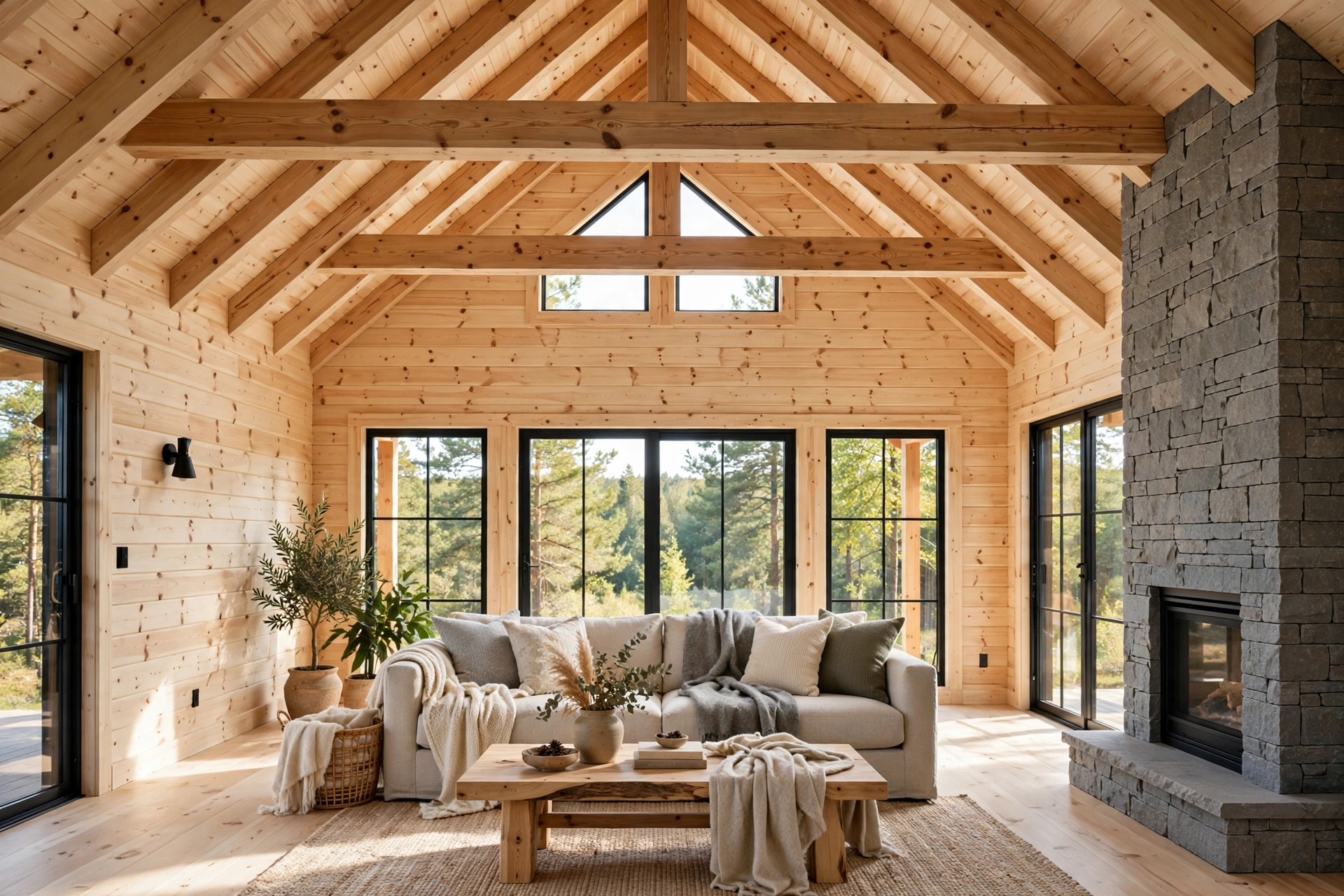
I grew up visiting a pine cabin that looked like every 1990s cabin you’ve ever seen: orange varnished walls, a bear carved out of a stump by the door, and curtains with actual moose on them. I loved that place, but I never once thought it looked good. Then a few years ago I stayed in a renovated A-frame where the same knotty pine had been whitewashed, paired with black window frames and a low gray sofa — and it stopped me in my tracks. Same wood. Completely different feeling.
That is the whole trick of the modern pine cabin look: let the pine be the warmth, and let everything else be calm and current. Light finishes instead of orange varnish, black accents instead of antler chandeliers, clean-lined furniture instead of overstuffed lodge recliners. Nothing about it fights the wood — it just edits out everything that made cabins feel dated.
Below are 25 trendy modern pine cabin interior ideas I have collected from real renovations, designer projects, and my own trial and error — covering walls, windows, kitchens, textiles, lighting, and the small decisions that separate “modern cabin” from “themed gift shop.” Every idea includes a practical tip so you know exactly where to start.
- Lighten the pine first — whitewash or a clear matte seal beats orange varnish every time.
- Black is the modern cabin’s best friend: window frames, faucets, lighting, and hardware.
- Keep furniture low and simple so the wood walls stay the star of the room.
- Layer texture (wool, linen, jute, sheepskin) instead of themed decor — cozy without the kitsch.
- Skip the bear statues and pinecone crafts; one or two natural touches are plenty.
1. Whitewashed Pine Shiplap Accent Wall
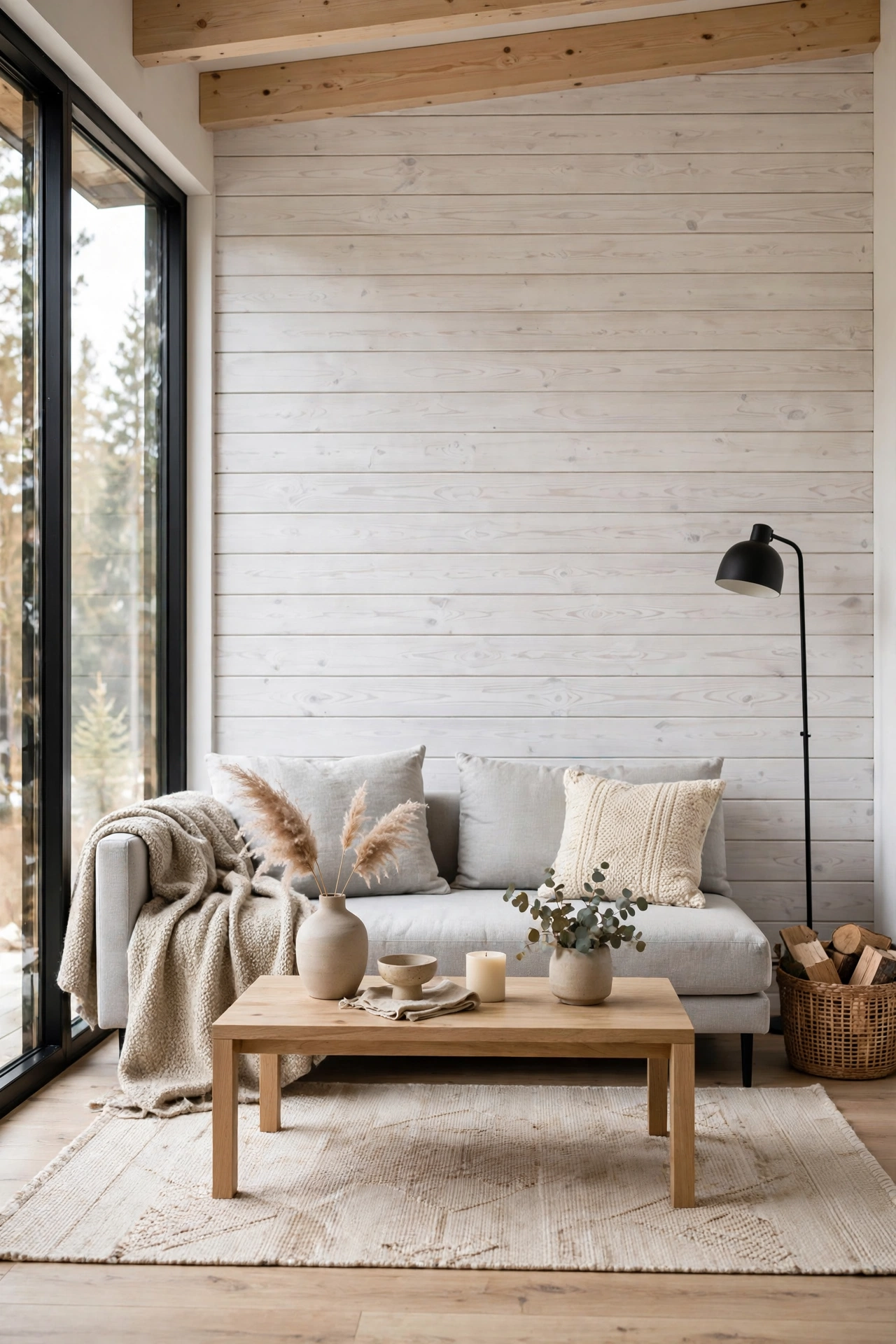
If your pine has gone that glossy 90s orange, whitewash is the fastest rescue. A thinned coat of white paint lets the grain show through while knocking the color back to something soft and Scandinavian. Do one wall — usually the fireplace wall or the one behind the bed — and leave the rest alone; a whole house of whitewash can feel flat. For the exact mixing ratios and technique, this guide to whitewashing pine paneling walks through the whole process on paneling just like cabin walls.
Try this: test your wash on a panel inside a closet first — pine takes whitewash unevenly depending on how much resin is in the boards.
2. Black-Framed Floor-to-Ceiling Windows
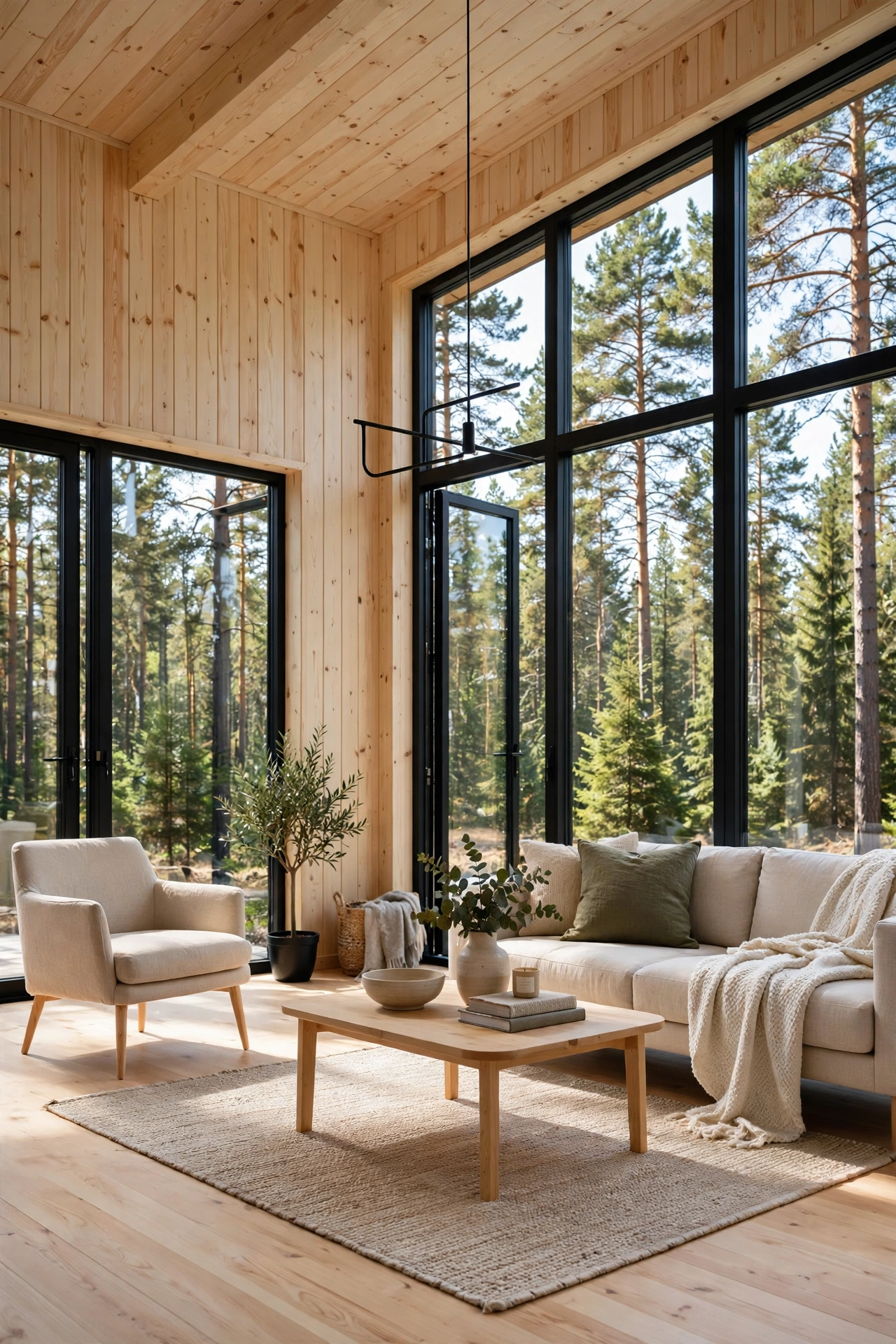
Nothing modernizes a pine interior faster than black window frames. Against honey-toned wood, slim black frames read crisp and architectural — and floor-to-ceiling glass turns the forest outside into your wallpaper. If full window replacement is out of budget, painting existing trim and sashes matte black gets you 80 percent of the look for the cost of a quart of paint. Love the dark-frame look on a budget? These farmhouse old window projects show how to get the style with salvaged frames and simple DIY builds.
Try this: skip the curtains on the big glass and use simple linen roller shades — you want the view, not the fabric.
3. Modern Stone Fireplace with Clean Lines
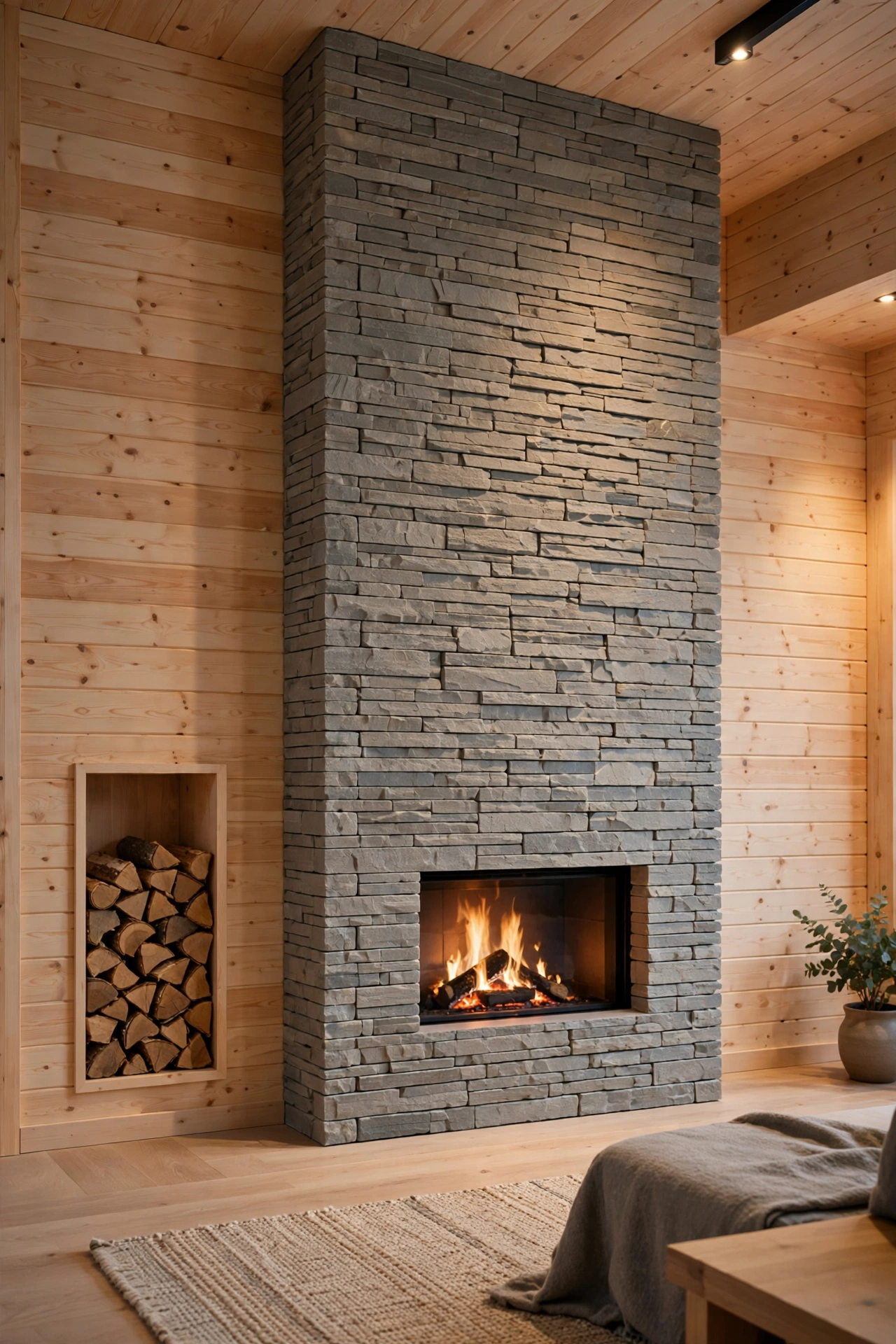
The modern cabin fireplace is a quiet monolith: stacked stone or smooth concrete running straight to the ceiling, no chunky wood mantel, no fussy surround. Let it sit directly against the pine wall so the two textures — rough stone, smooth wood — do all the talking. Keep the hearth flush and the firebox simple; a linear gas insert or a clean wood stove both work. Once the fireplace is in, the mantel styling is half the fun — these fall mantel decorating ideas are full of garland, candle, and wreath tricks that work in every season if you swap the pumpkins for greenery.
Try this: stack the firewood itself as decor — a neat niche of split logs beside the fireplace beats any art you’d hang there.
4. Pine Ceiling with Matte Black Beams
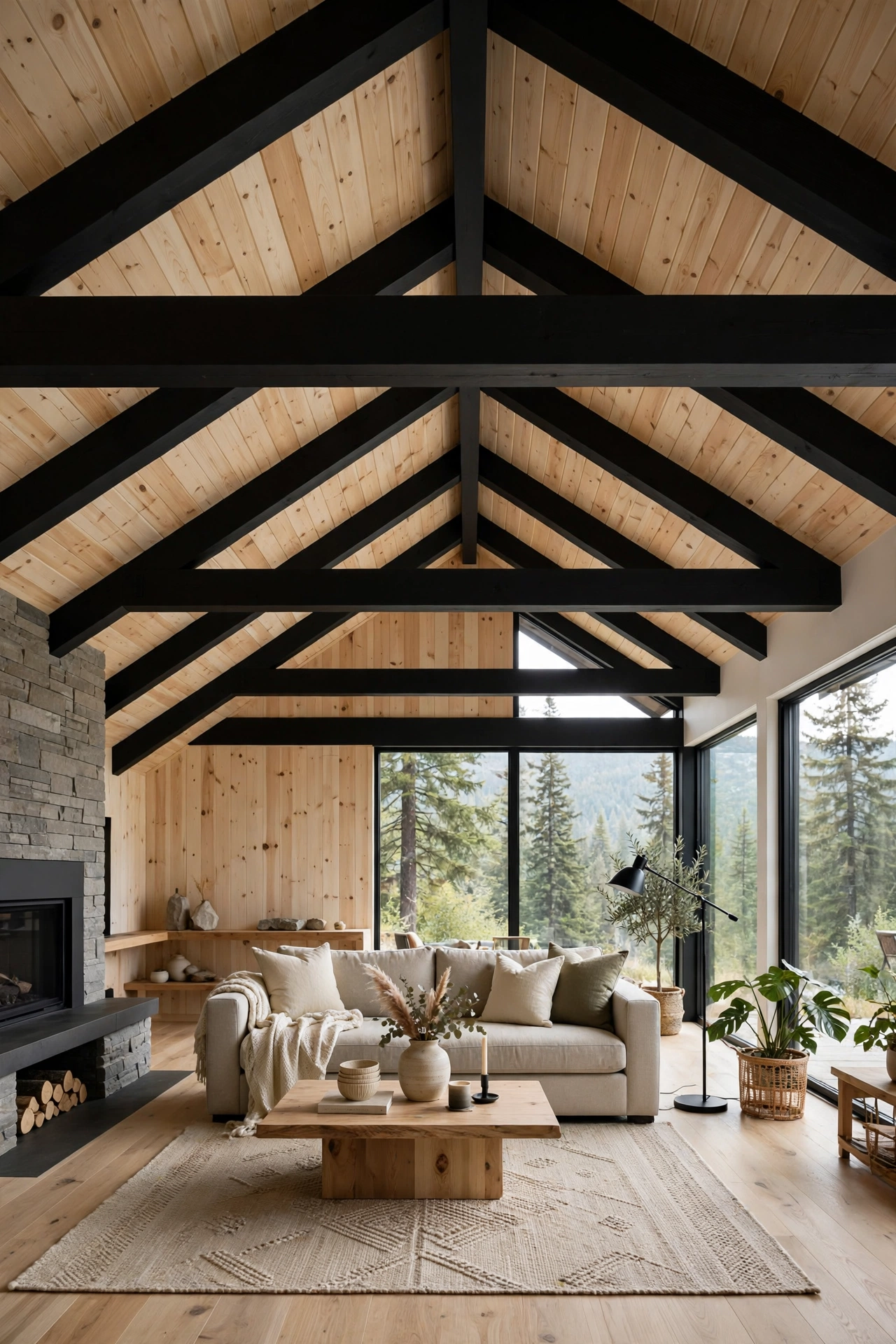
Vaulted pine ceilings are a cabin’s best feature and its biggest risk — too much matching wood overhead can feel like living inside a guitar. The fix designers keep using: keep the ceiling boards light and natural, and paint or clad the structural beams matte black. The dark lines draw the eye up and give the whole room a graphic, architectural rhythm. It works on flat ceilings too — even two or three faux beams change the geometry of a low room.
Try this: run a slim black track light along one beam and you have solved both the contrast and the lighting in one move.
5. Minimalist Pine Kitchen with Quartz Counters
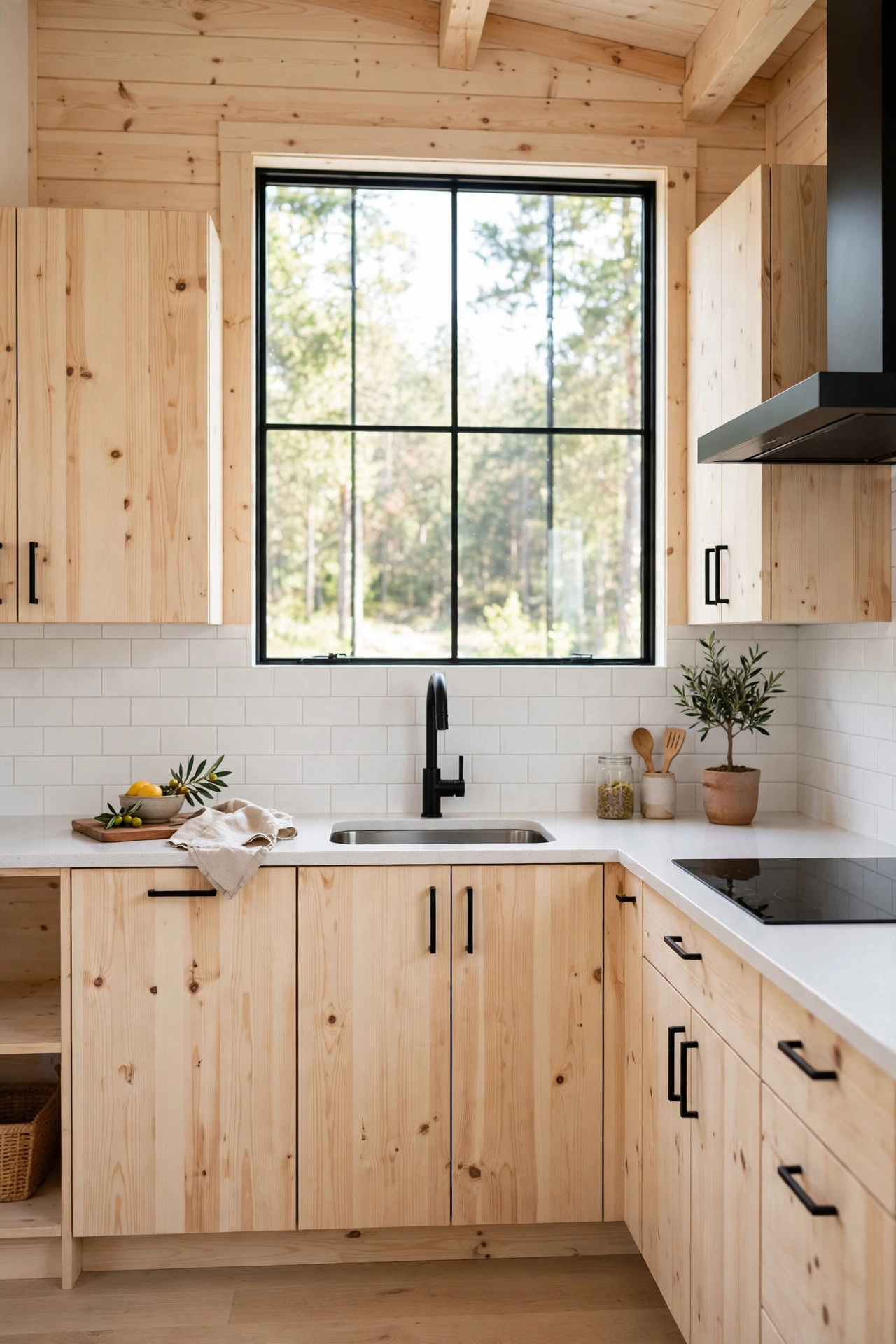
Pine cabinetry gets a bad rap from the honey-oak 2000s, but in a light, matte finish with slab fronts it looks completely current. Pair it with white quartz counters, a simple backsplash, and black bar pulls — suddenly the kitchen reads Scandinavian, not dated. Skip the upper cabinets on at least one wall; open space keeps a small cabin kitchen from feeling like a wooden box.
Try this: seal pine counters and cabinet fronts near the stove with a hardwax oil — pine dents easily, and the oil makes touch-ups invisible.
6. Layered Wool and Plaid Textiles
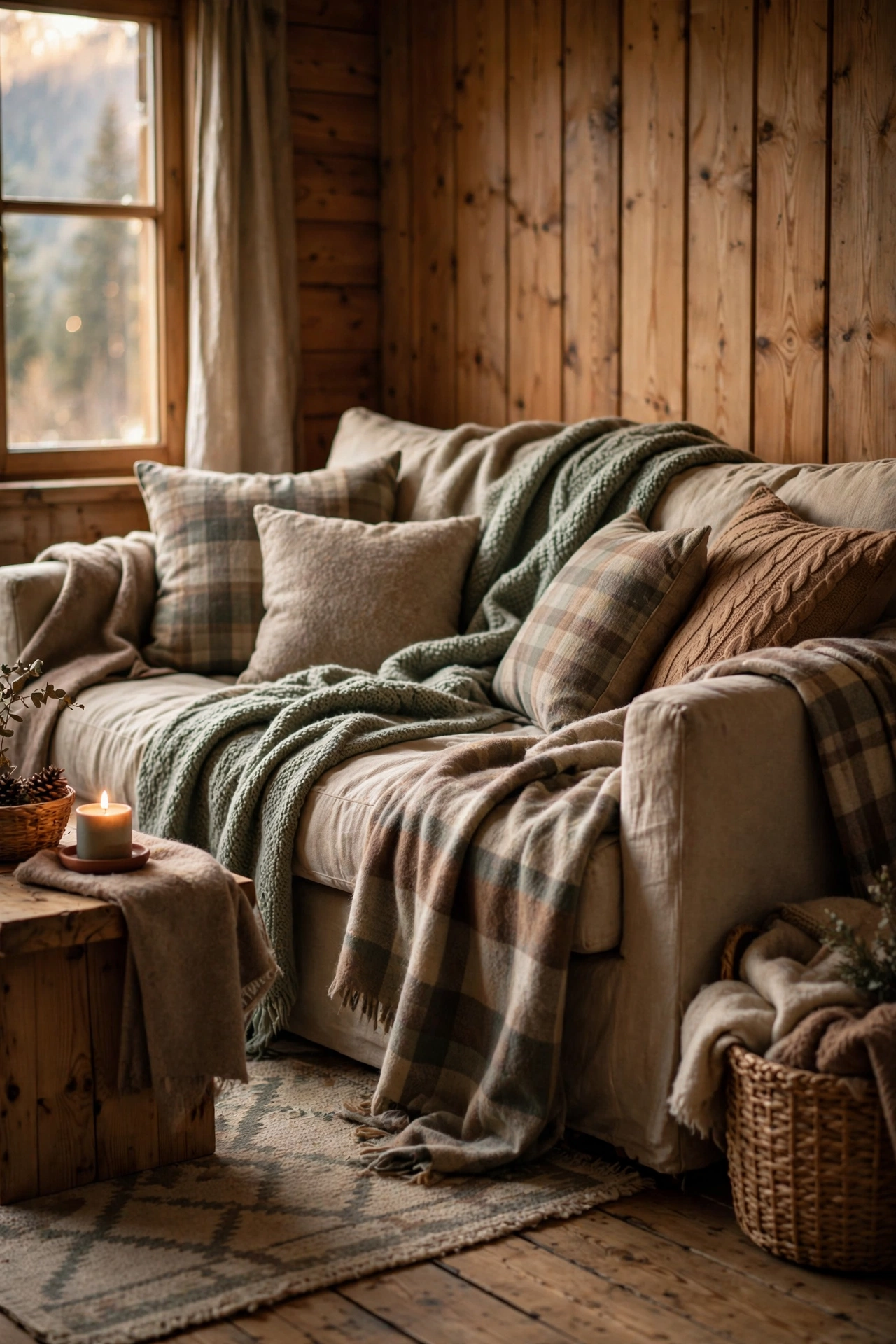
Pine walls are smooth and visually quiet, which means textiles have to do the heavy lifting for coziness. Layer a wool throw over a linen sofa, add plaid cushions in muted reds or forest greens, and ground it with something nubby underfoot. The rule: mix at least three textures in every seating area. This is also where you get your cabin “theme” without a single bear — plaid and wool say mountain lodge all by themselves.
Try this: stick to a tight palette of three colors across all your textiles so the layering looks collected, not chaotic.
7. Floating Pine Staircase with Glass Railing
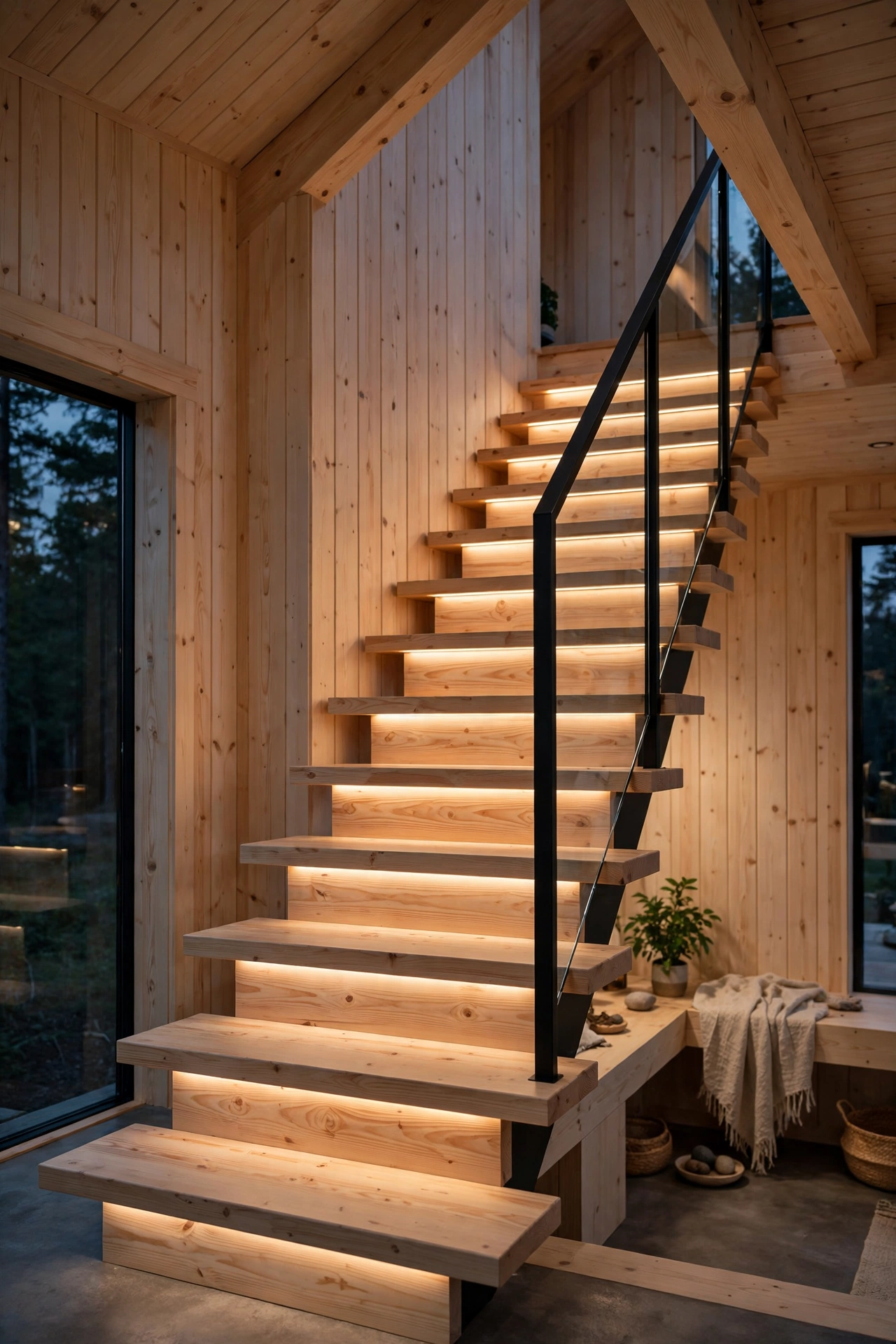
A staircase is a sculpture if you let it be. Floating pine treads cantilevered from the wall, paired with a slim black metal or frameless glass railing, turn the most functional thing in the house into the focal point. Stain the treads a few shades darker than the wall pine so the stairs read as a separate element rather than blending into the walls. Under-stair lighting — a simple LED strip under each tread — makes it glow at night.
Try this: leave the wall behind the stairs completely bare; the floating treads need visual breathing room to look sculptural.
8. Cozy Reading Corner by the Window
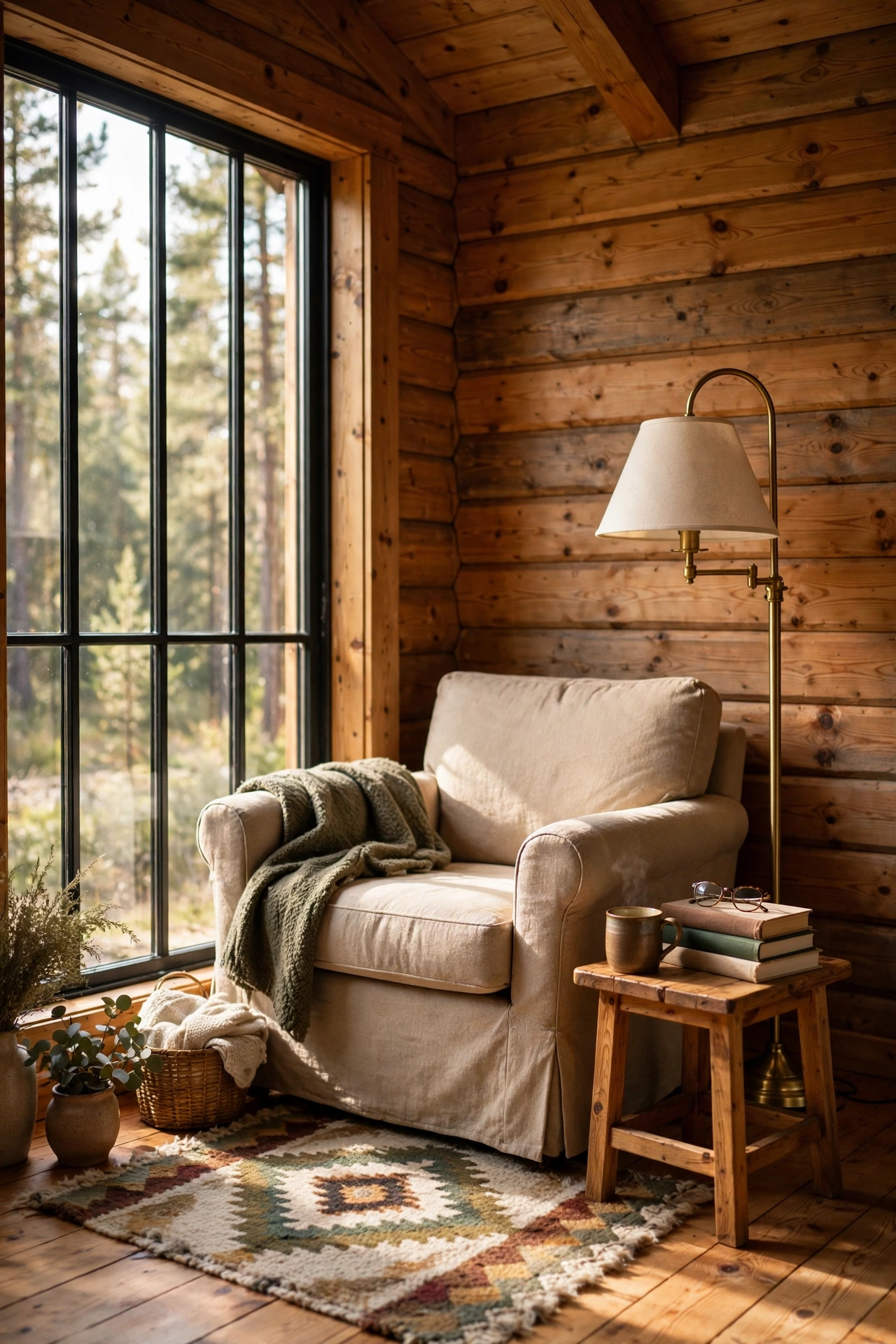
Every cabin needs one chair that nobody is allowed to claim. Tuck a comfortable armchair — linen or bouclé, nothing shiny — into the brightest corner, add a floor lamp with a warm bulb, and stack a small side table with whatever you are reading. Against pine walls, a reading corner feels like it was always meant to be there. If you want to take the bookish side further, these cozy library room ideas with plants show how a few shelves, soft light, and greenery can turn any corner into a private library.
Try this: a small wool rug under the chair defines the corner and keeps feet warm on pine floors.
9. Matte Black Fixtures Throughout
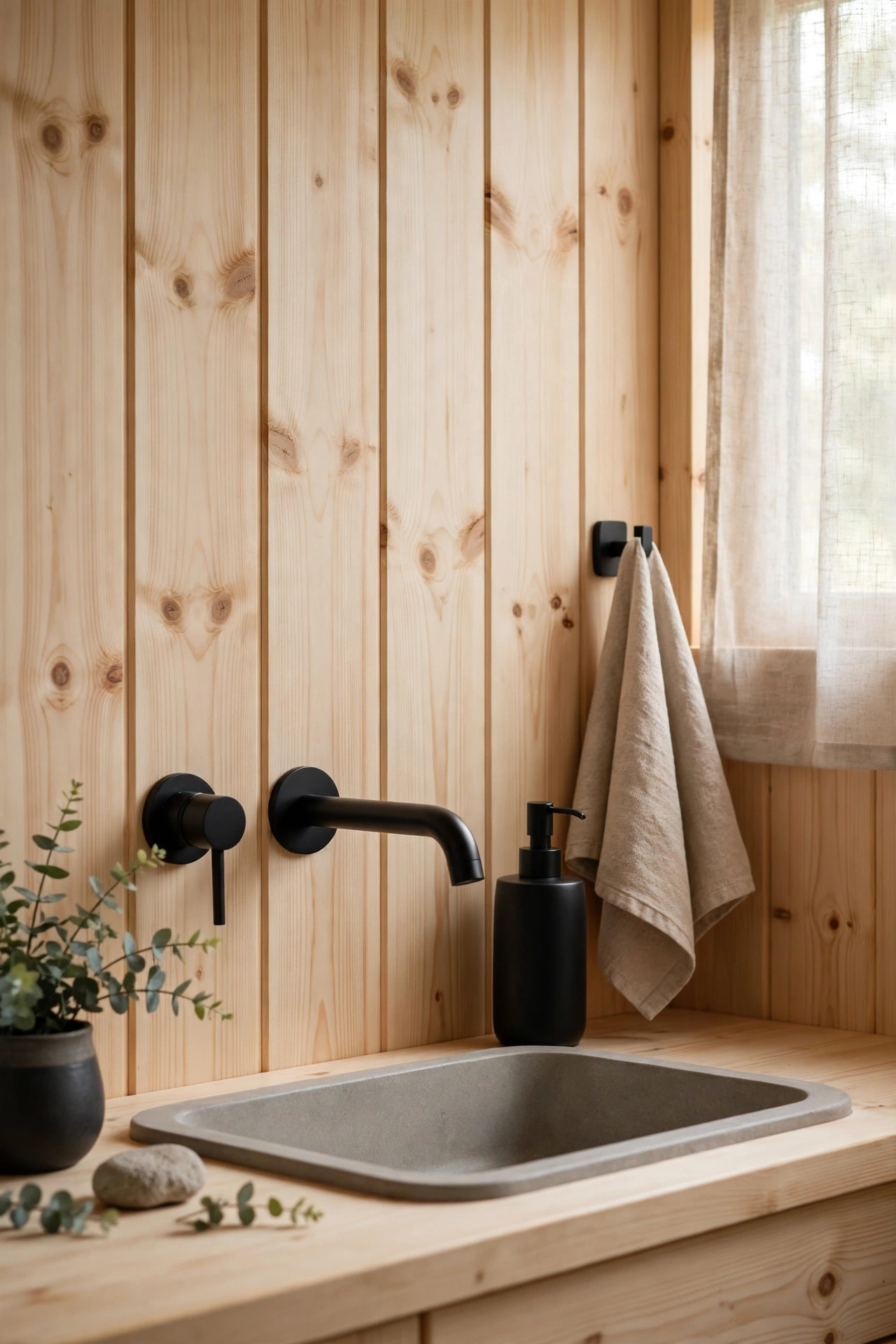
Here is the cheapest modernization in this whole list: swap every visible fixture to matte black. Faucets, cabinet pulls, curtain rods, light switch plates, door handles — black hardware against pine is the contrast that makes everything look intentional. Do it in one weekend, one room at a time, and the whole cabin will feel five years newer. Matte, not glossy; glossy black reads 80s, matte reads 2026.
Try this: start with the kitchen and bathrooms, where fixtures are most visible and the swap is literally a screwdriver job.
10. Built-In Pine Bunk Room
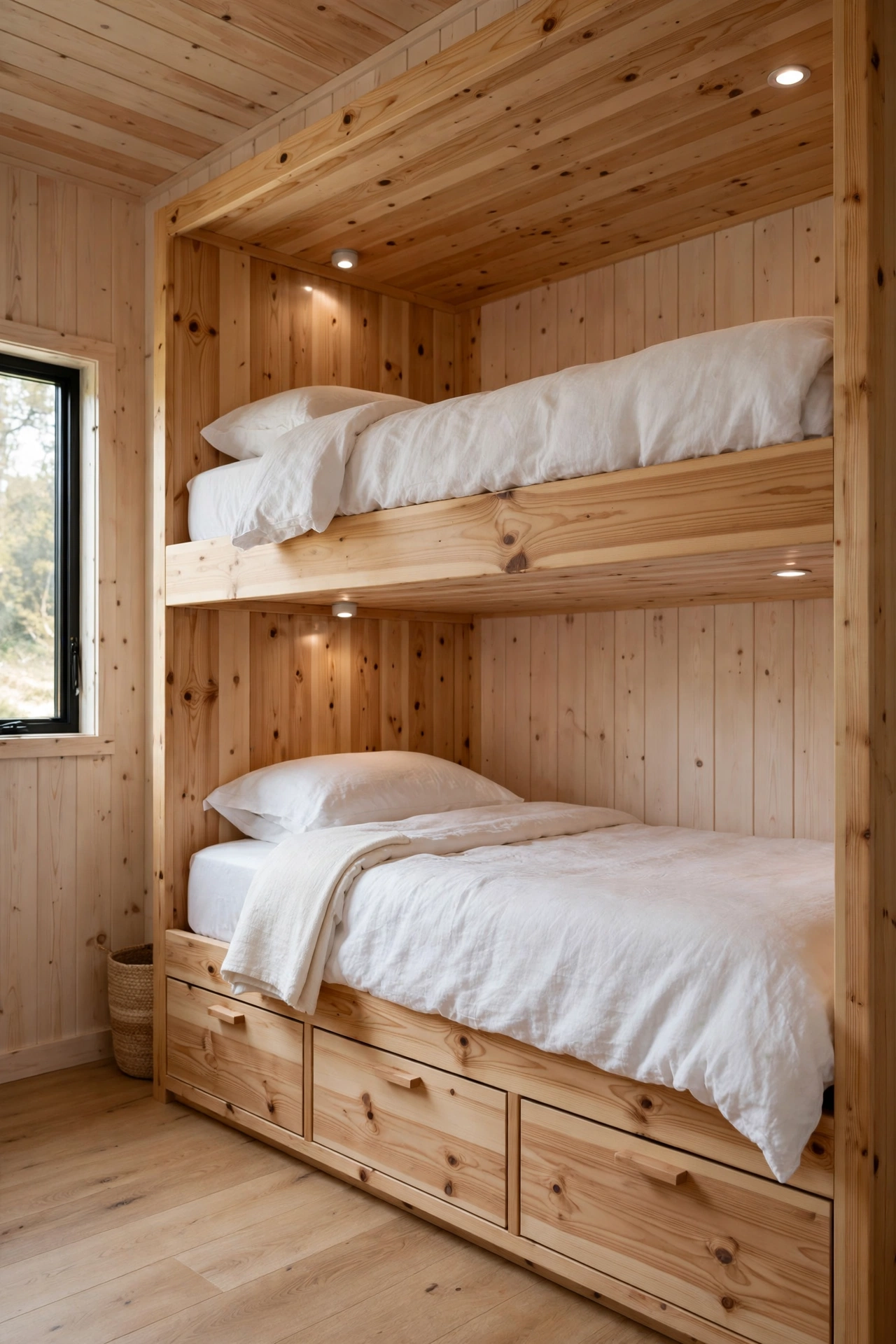
Cabins sleep crowds, and bunks are how you do it without a room full of mismatched air mattresses. Build the bunks from the same pine as the walls so they read as architecture, not furniture — recessed reading lights, a small shelf per bunk, and deep drawers under the bottom bunk for linens. Keep bedding simple: white or oatmeal linen, one wool throw each. It sleeps six and still looks calm.
Try this: add a privacy curtain on a ceiling track per bunk — kids (and light sleepers) will love you for it.
11. Concrete and Pine Bathroom
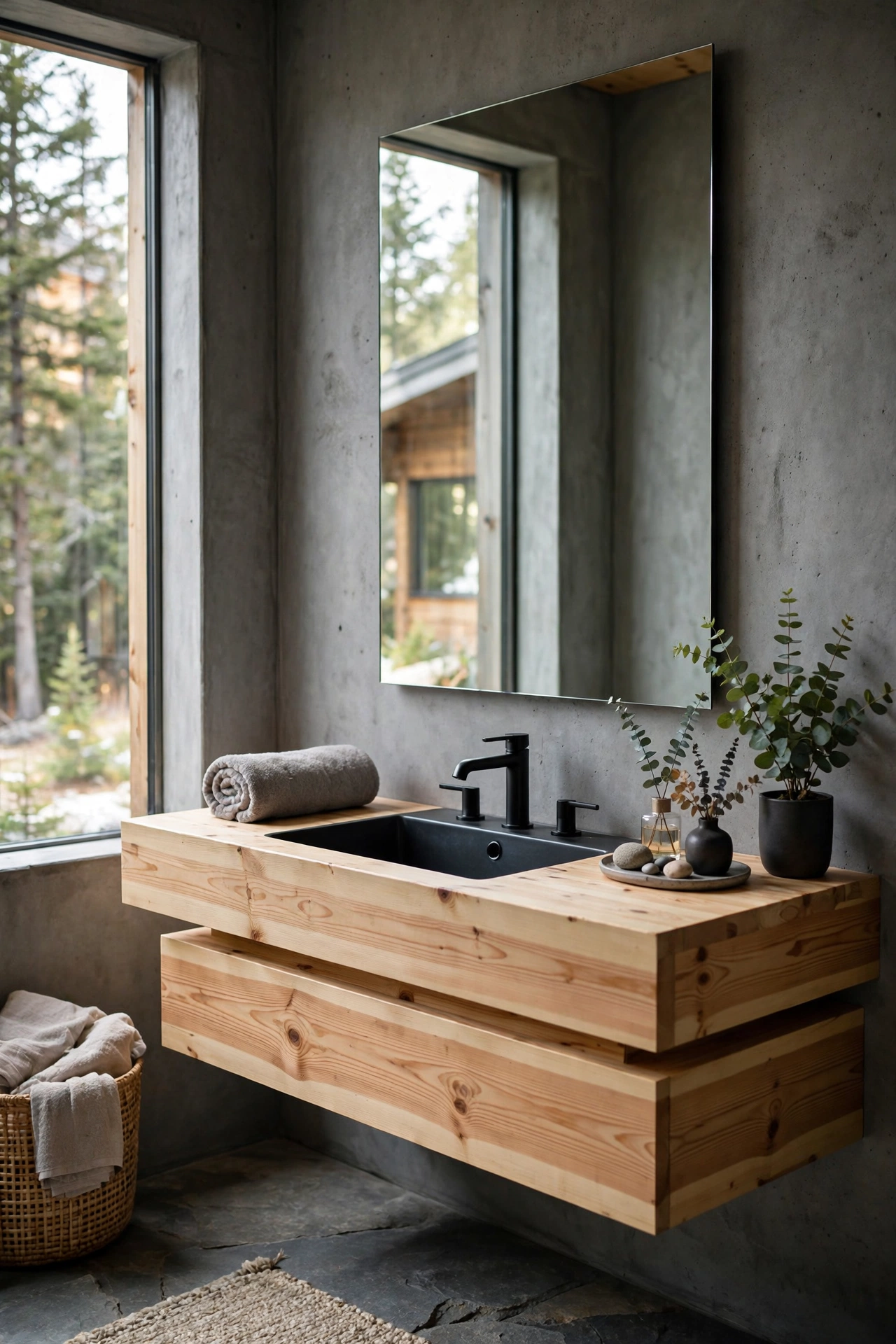
The most striking cabin bathrooms pair cool concrete with warm pine: a concrete or microcement shower, a floating pine vanity, black fixtures tying them together. The contrast makes both materials look better — the pine feels warmer next to the gray, the concrete feels softer next to the wood. Seal the pine well in wet zones; a marine-grade finish on the vanity handles the steam.
Try this: a pine slat ceiling in the bathroom (properly vented) is the one luxury that makes the whole room feel like a spa.
12. Low-Profile Sofa Against Pine Walls
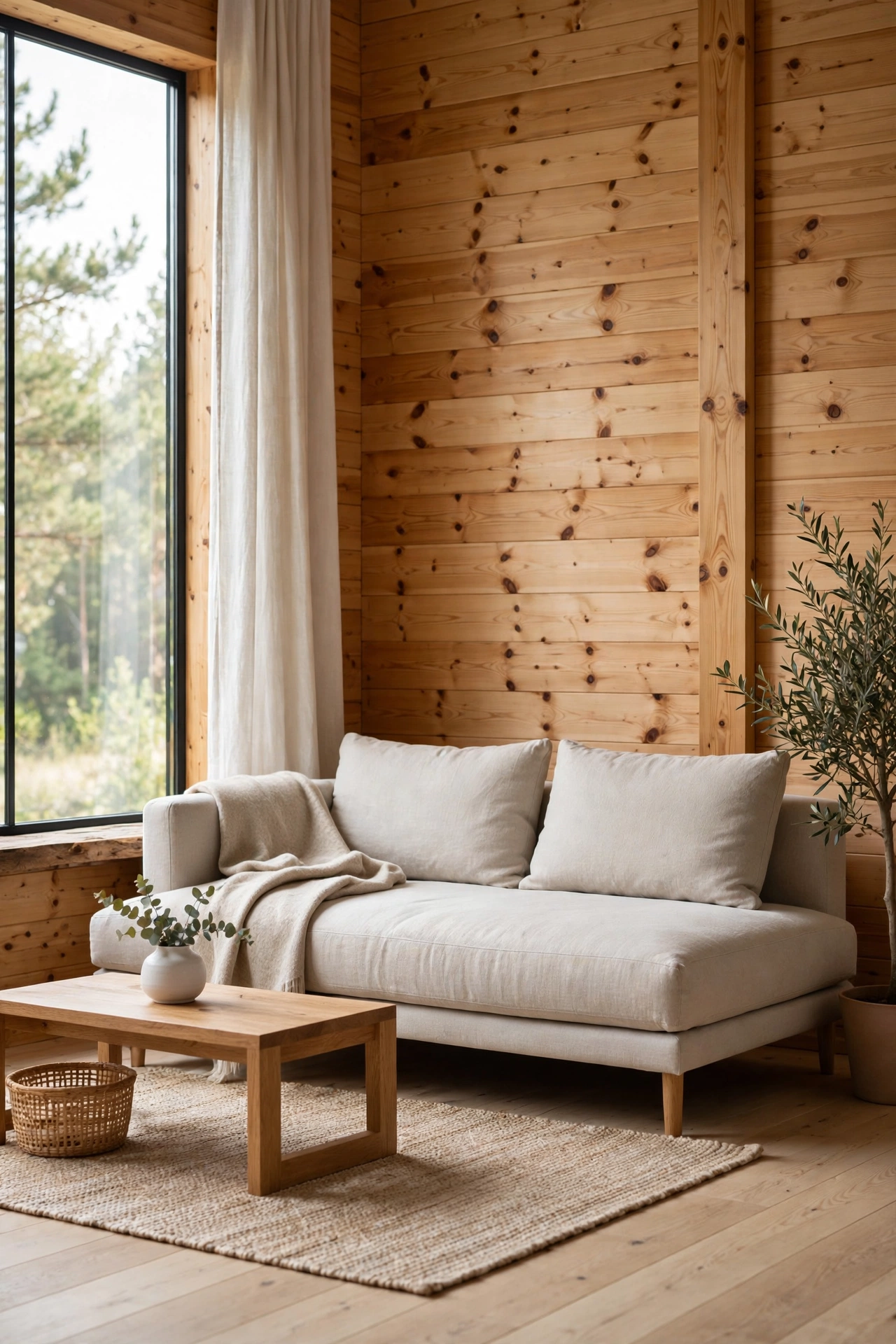
Pine walls have a lot of visual texture, so furniture should stay quiet. A low-profile sofa — clean lines, solid linen or performance fabric, legs you can barely see — sits under the sightline and lets the wood be the pattern in the room. Tall, bulky furniture fights the walls; low furniture lets the ceiling height do the drama. This is the single easiest furniture rule for any wood-paneled room.
Try this: pull the sofa a foot off the wall and put a narrow console behind it — instant depth in a flat-walled room.
13. Edison Bulb Pendant Cluster
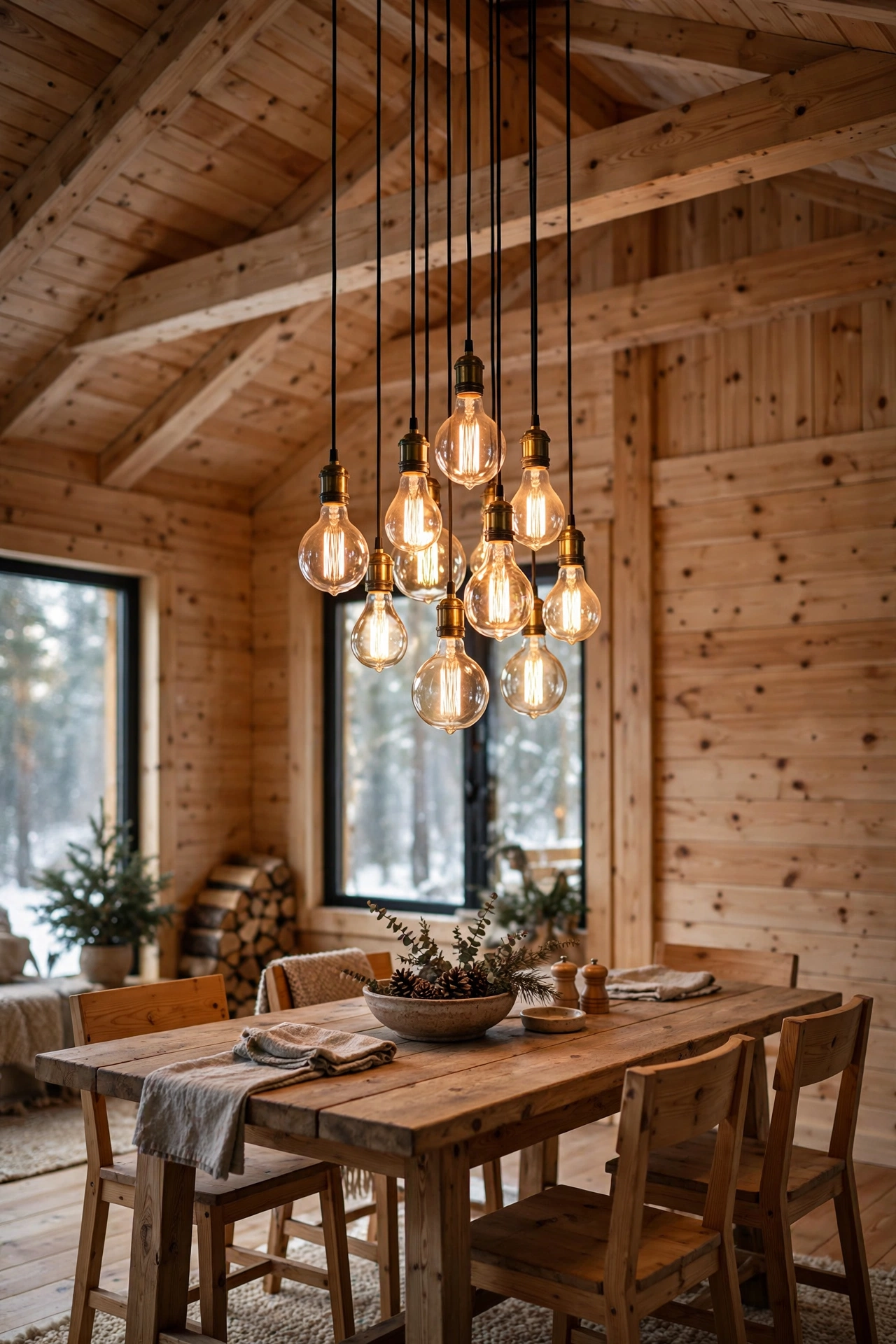
High pine ceilings swallow ordinary light fixtures, so go bold overhead: a cluster of Edison-bulb pendants at staggered heights over the dining table or kitchen island. Black cords, warm 2700K bulbs, and simple metal or glass shades keep it modern rather than steampunk. In a tall space, hang them lower than feels natural — pendants should hover just above sightline, not disappear into the rafters. For more ways to layer light over work zones, this creative kitchen lighting transformation is packed with before-and-after ideas that work in cabins too.
Try this: put the pendants on a dimmer — bright for cooking, low and warm for dinner, with one switch.
14. Open Pine Shelving in the Kitchen
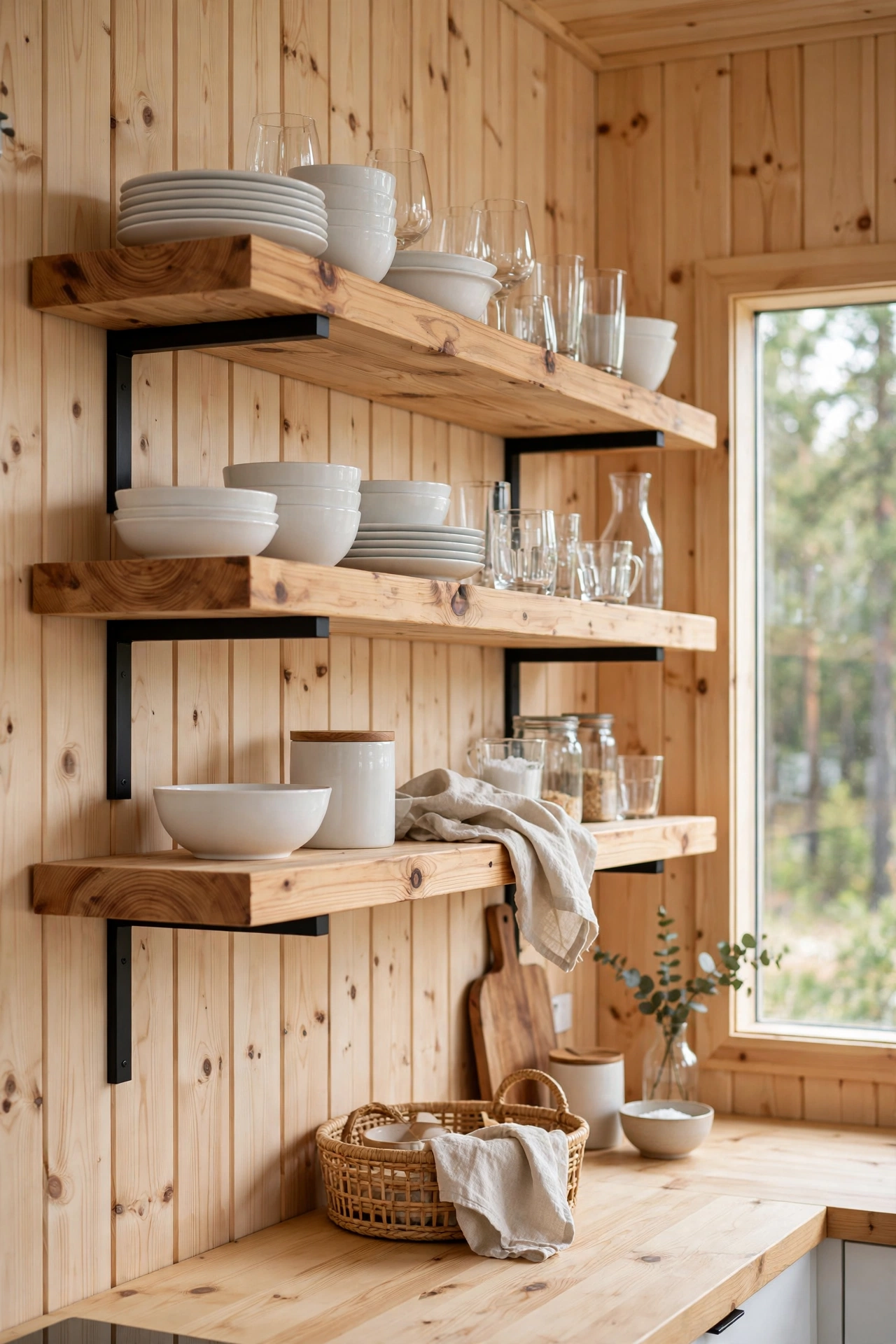
Instead of upper cabinets, run two or three thick pine shelves along the kitchen wall. Open shelving keeps a small cabin kitchen airy, shows off pretty dishes, and costs a fraction of custom uppers. The trick to keeping it from looking cluttered: edit ruthlessly. Everyday dishes and glasses only, everything else behind closed doors. Thick 2-inch shelves with black brackets tie the whole black-and-pine palette together.
Try this: keep a small step stool nearby — open shelves only work if you can actually reach the top one.
15. Sheepskin and Faux Fur Layers
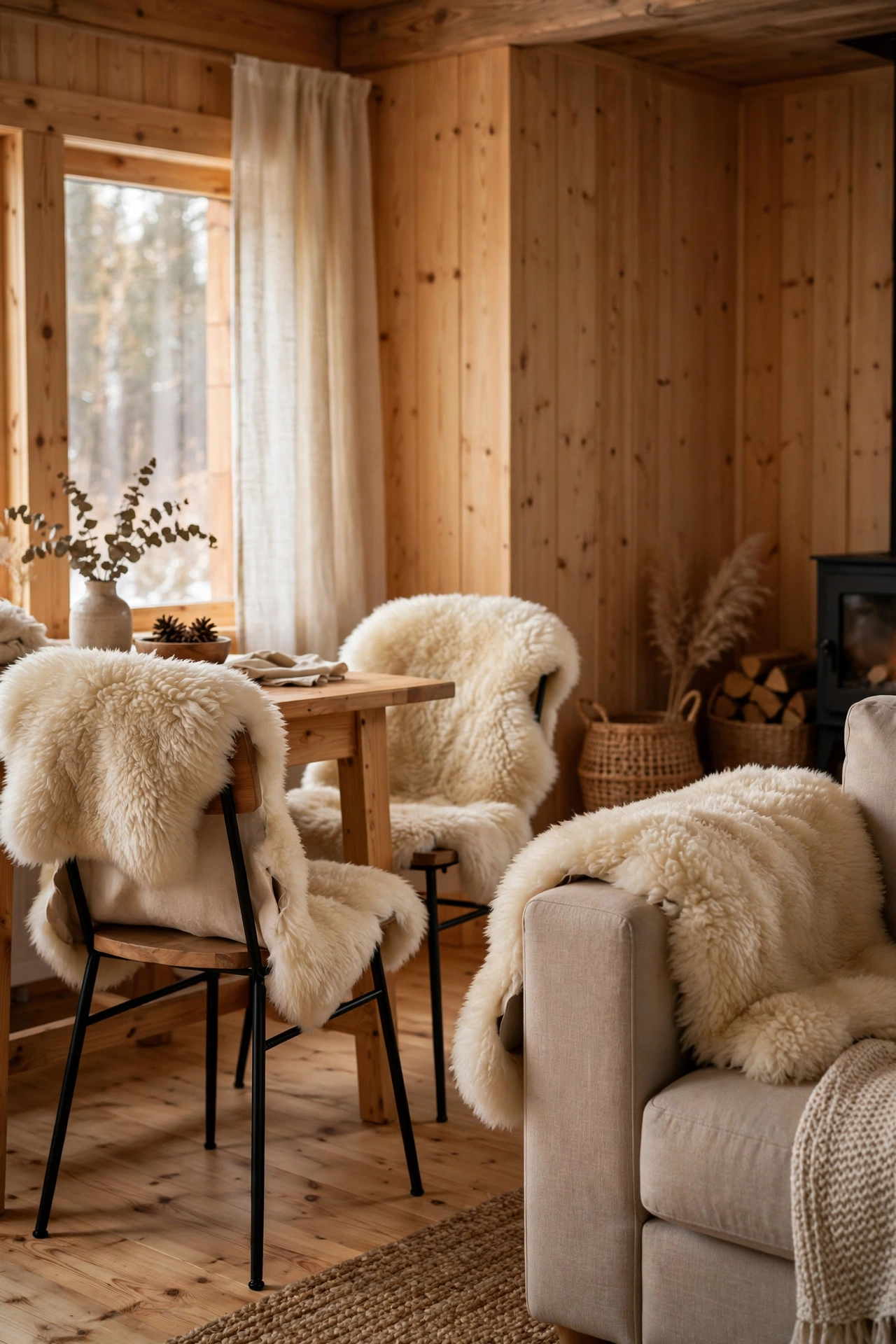
Nothing says cozy-modern like a sheepskin tossed over a dining chair or draped across the foot of the bed. Against smooth pine, that shaggy texture is irresistible — it is also the fastest way to make a modern chair feel cabin-appropriate without buying “rustic” furniture. One or two is perfect; more than that starts to look like a ski lodge gift shop. Faux versions are nearly indistinguishable now and far easier to wash.
Try this: drape one over the back of your reading chair from idea #8 — instant invitation to sit down.
16. Pine Dining Table with Modern Chairs
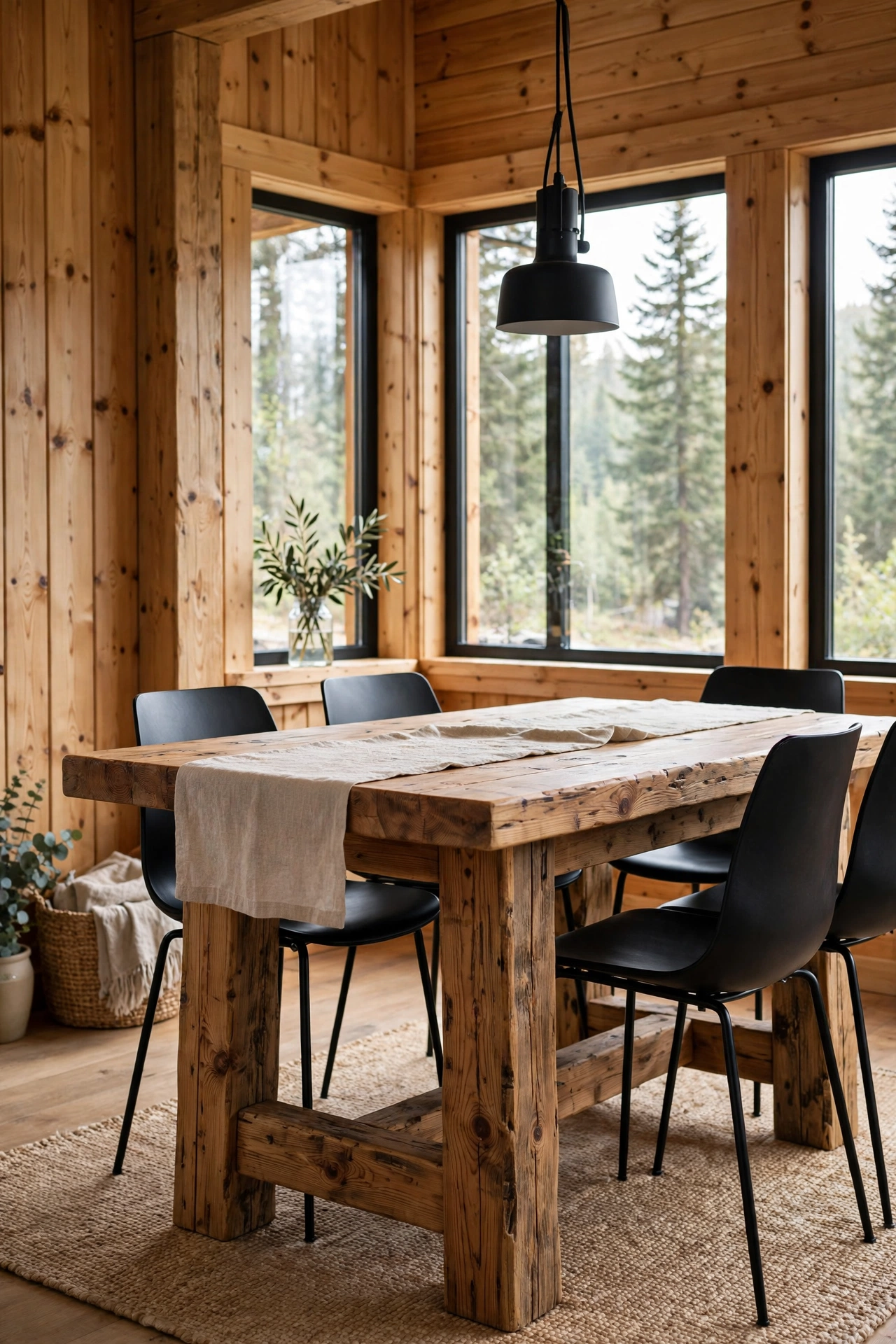
The dining table is where the high-low mix shines: a chunky solid-pine farmhouse table paired with sleek modern chairs in black, or molded white seats, or even clear acrylic. The heavy wood grounds the space; the light chairs keep it from feeling like a medieval hall. A simple linen runner and a low bowl of greenery is all the centerpiece you need — the table itself is the statement.
Try this: mix two chair styles (say, black side chairs and linen end chairs) for a collected look that still feels deliberate.
17. Mudroom with Pine Lockers
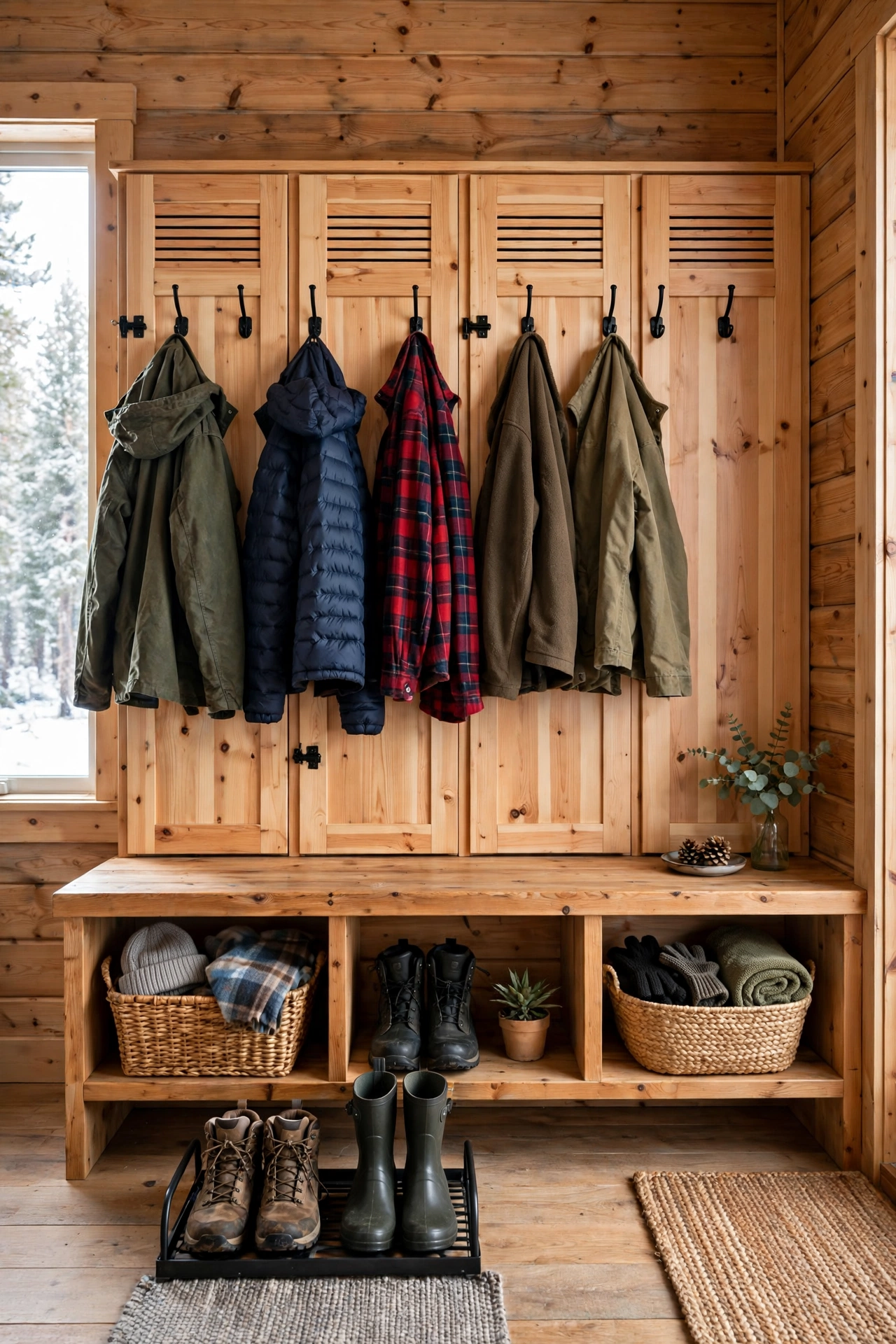
Cabin life means boots, coats, and gear — and without a mudroom, all of it ends up in a pile by the door. Build simple pine lockers: a bench with cubbies below, hooks above, one locker per person. Paint the interior of each cubby a dark charcoal so the inevitable scuffs disappear, and leave the pine fronts natural. It is the hardest-working ten square feet in the house.
Try this: add a boot tray with a lip under the bench — melted snow stays off your pine floors.
18. Modern Wood Stove Nook
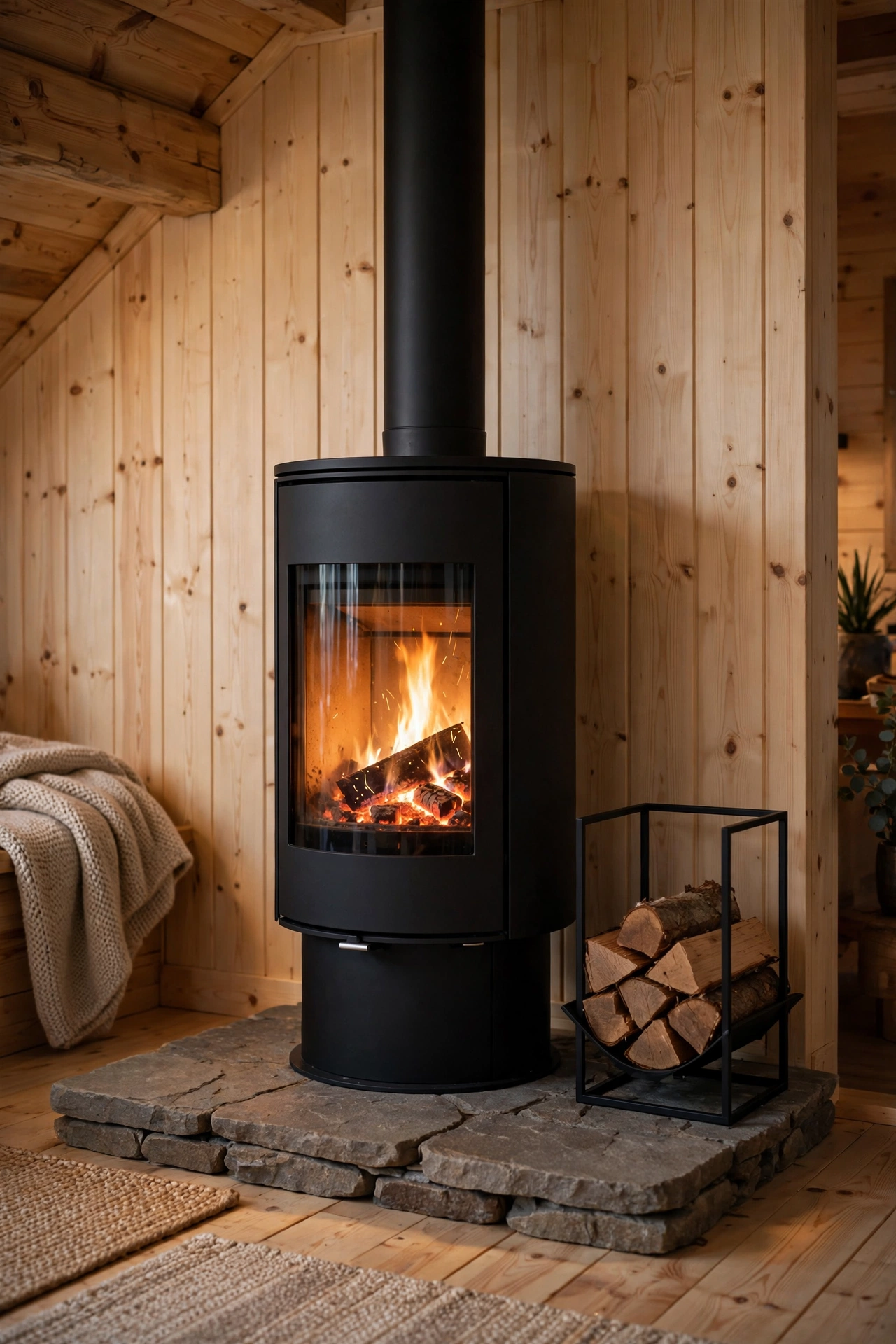
A wood stove is the soul of a cabin, but the old potbelly look isn’t the only option. Modern stoves are compact black cylinders or boxes with huge glass fronts — sculptural, efficient, and far cleaner-burning than grandpa’s model. Set it on a stone or tile hearth pad against the pine wall with proper clearances, and it becomes both heater and art. Before you fall in love with a placement, this wood stove safety guide from the Insurance Information Institute explains the NFPA 36-inch clearance standard and the other rules that keep a stove safe against wood walls.
Try this: a small stack of split wood in a black metal log holder beside the stove is decor and fuel in one.
19. Jute and Wool Rugs over Pine Floors
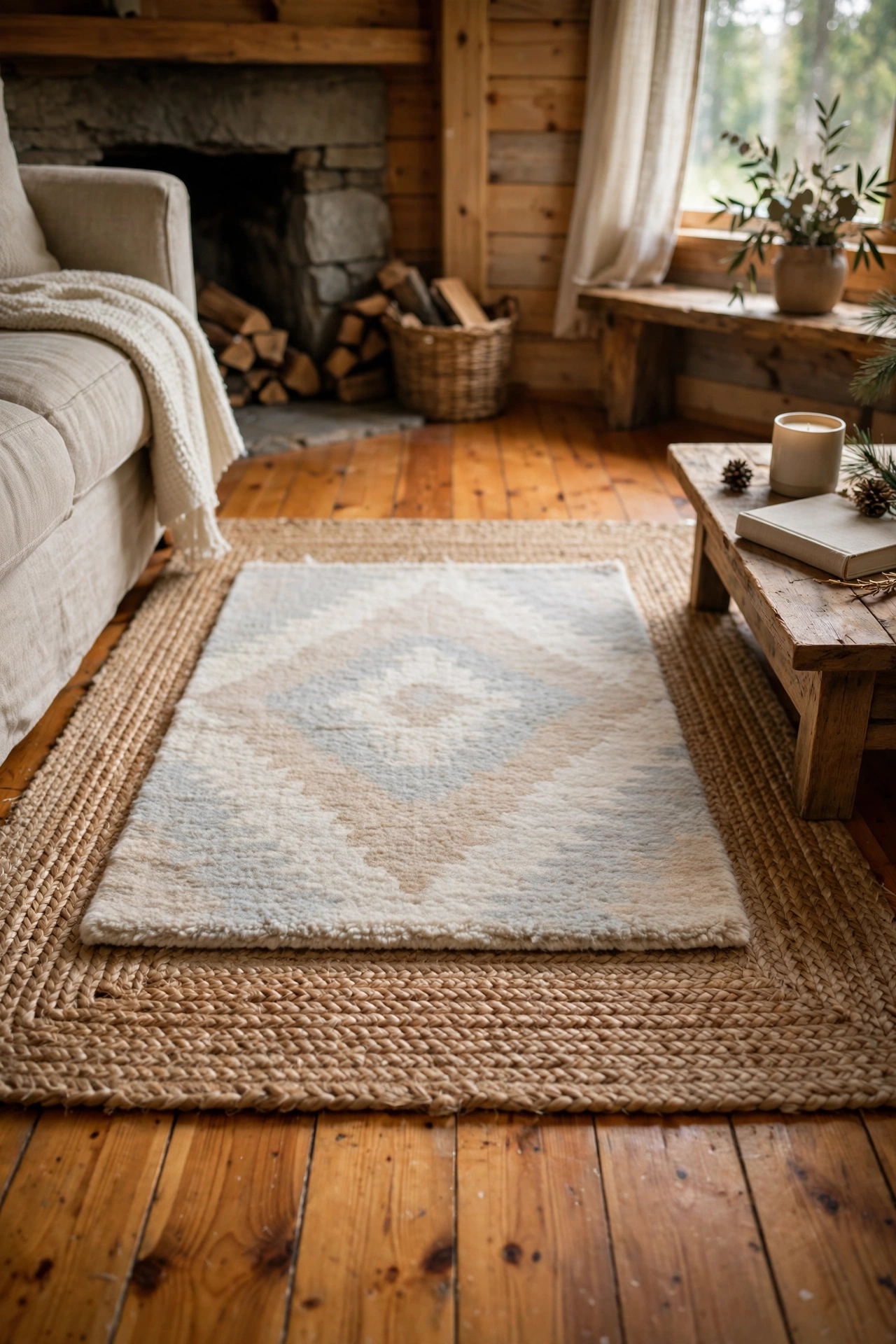
Pine floors are beautiful and brutally hard underfoot, so rugs aren’t optional — they’re the comfort layer. Start with a large flat-weave jute rug for texture and coverage, then layer a smaller, softer wool rug on top in the seating zone. The double layer looks designer-intentional and feels incredible in socks. Stick to naturals — jute, wool, cotton — and let the pine’s warmth carry the color.
Try this: use a thick rug pad under both layers; it stops the sliding and adds the cushioning pine floors lack.
20. Pine-Wrapped Home Office Nook
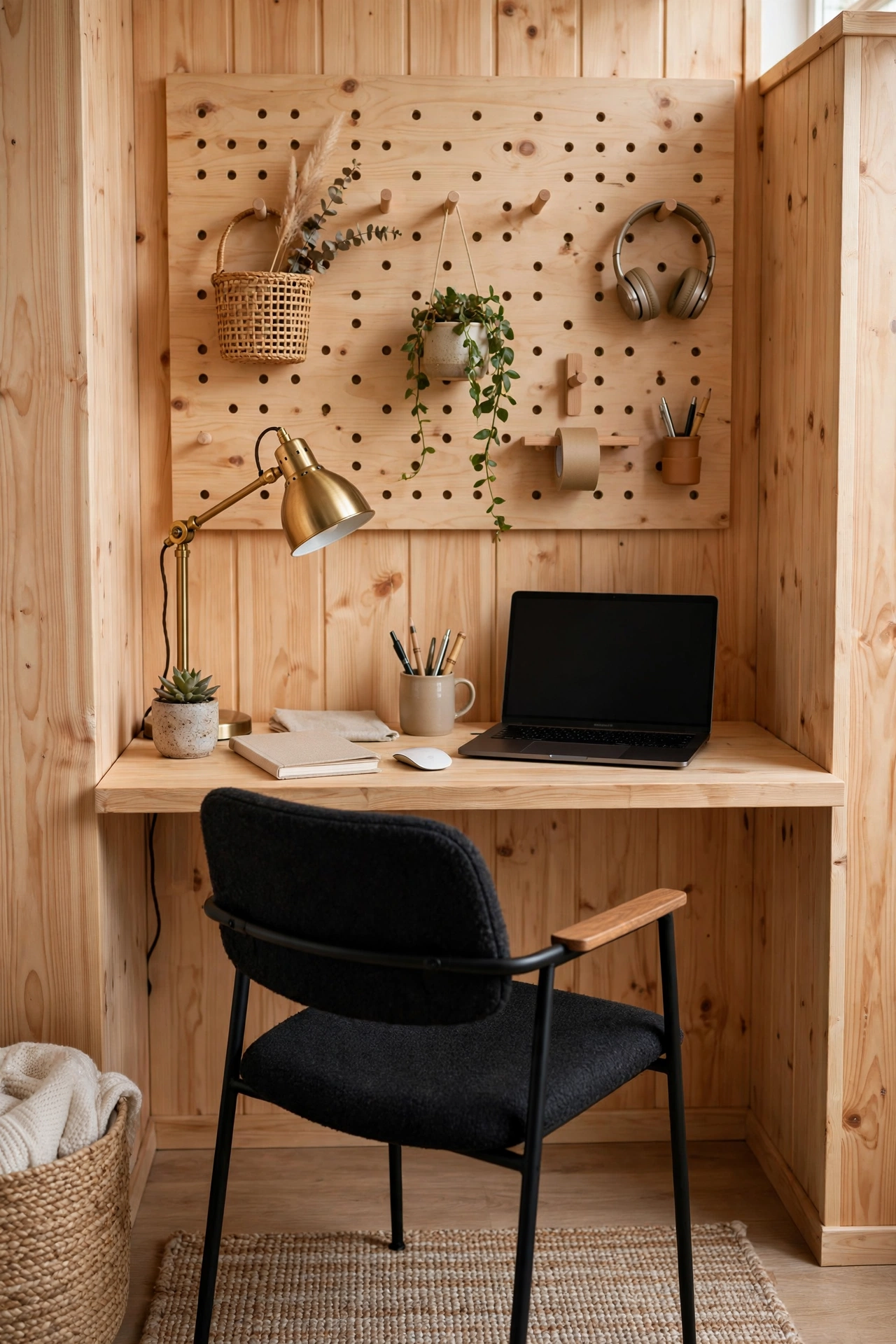
Remote work from a cabin is the dream, but a laptop on the dining table gets old fast. Carve out a nook — under the stairs, in a wide hallway, at the end of a bedroom — and wrap it in pine with a floating desk shelf, a good task lamp, and one closed cabinet for the mess. Pine makes even a 4-foot nook feel like a real office instead of an afterthought. Face the desk toward the room, not the wall, if you can; cabin views beat drywall.
Try this: a pine pegboard above the desk holds headphones, notebooks, and cables without drilling into the log walls.
21. Black Kitchen Island with Pine Cabinetry
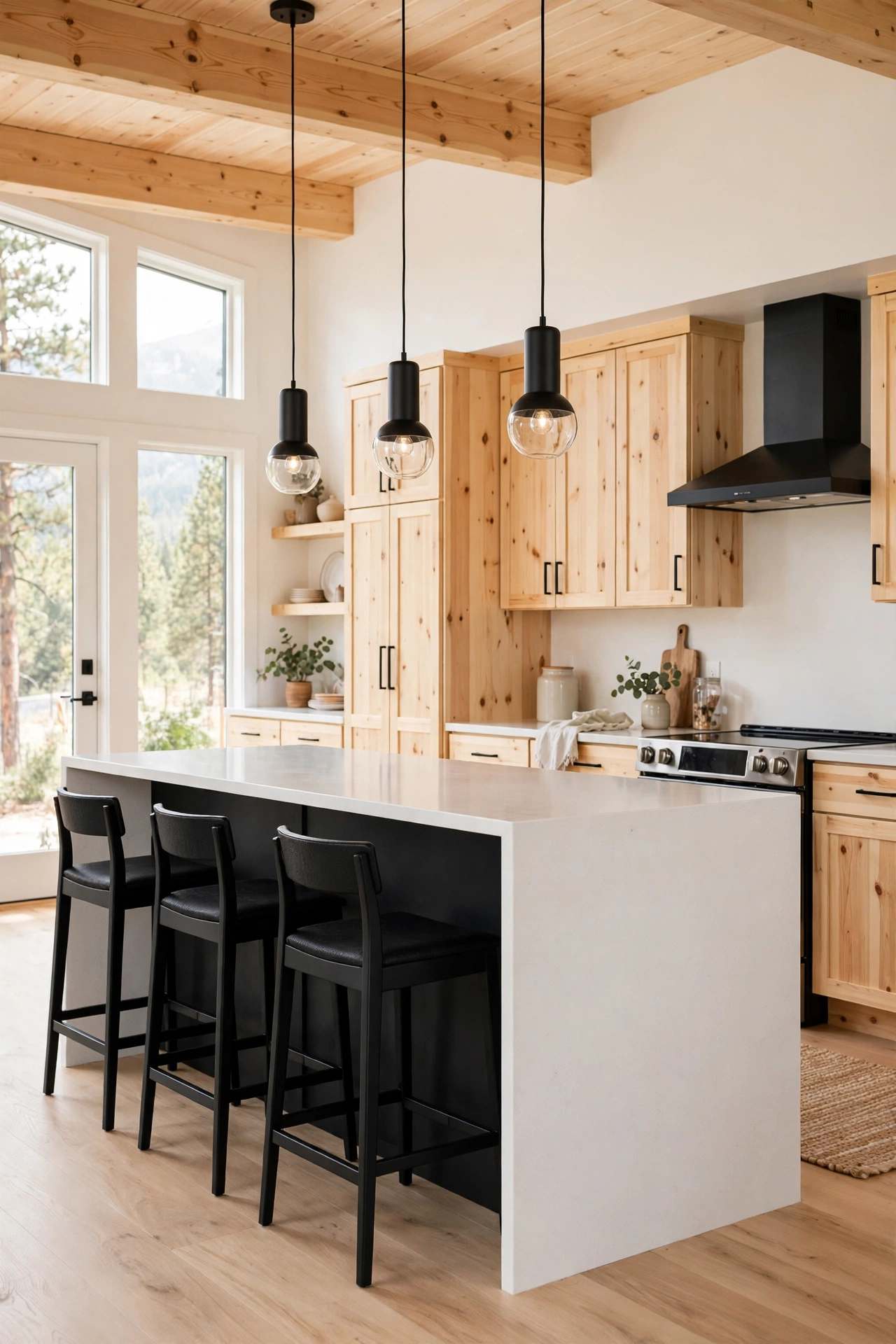
If an all-pine kitchen feels like too much wood, break it with one bold move: paint the island matte black. The dark anchor in the middle of light pine cabinetry is the contrast that makes the whole kitchen look designed rather than default. Keep the island simple — waterfall quartz on the ends if the budget allows, black bar stools, and those Edison pendants from idea #13 above it.
Try this: carry the black to one more spot — the range hood or the faucet — so the island doesn’t feel like the only dark thing in the room.
22. Loft Bedroom under the Eaves
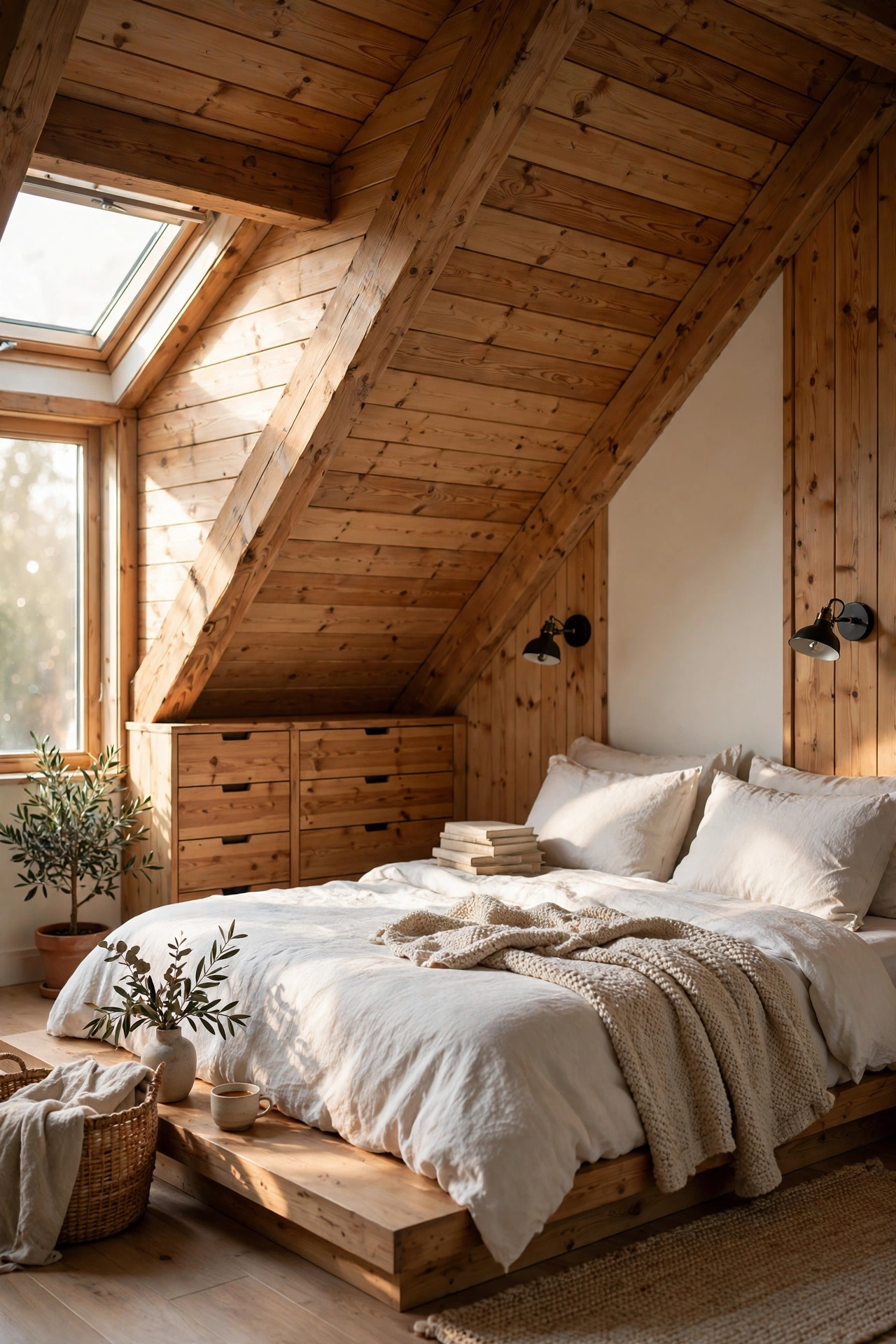
The sleeping loft is the most romantic square footage in any cabin — and the trickiest to get right. Keep the bed low (a platform, not a tall frame) so you can sit up under the slope, and put the lowest part of the eave to work with built-in drawers or open cubbies. A simple linen duvet, one reading sconce per side, and a small rug are all the decor it needs. The pine overhead does the rest.
Try this: add a blackout roller shade on the loft window — sunrise through pine trees is lovely at 7 a.m. on vacation and brutal at 5:30 a.m. every day.
23. Minimal Gallery Wall on Pine
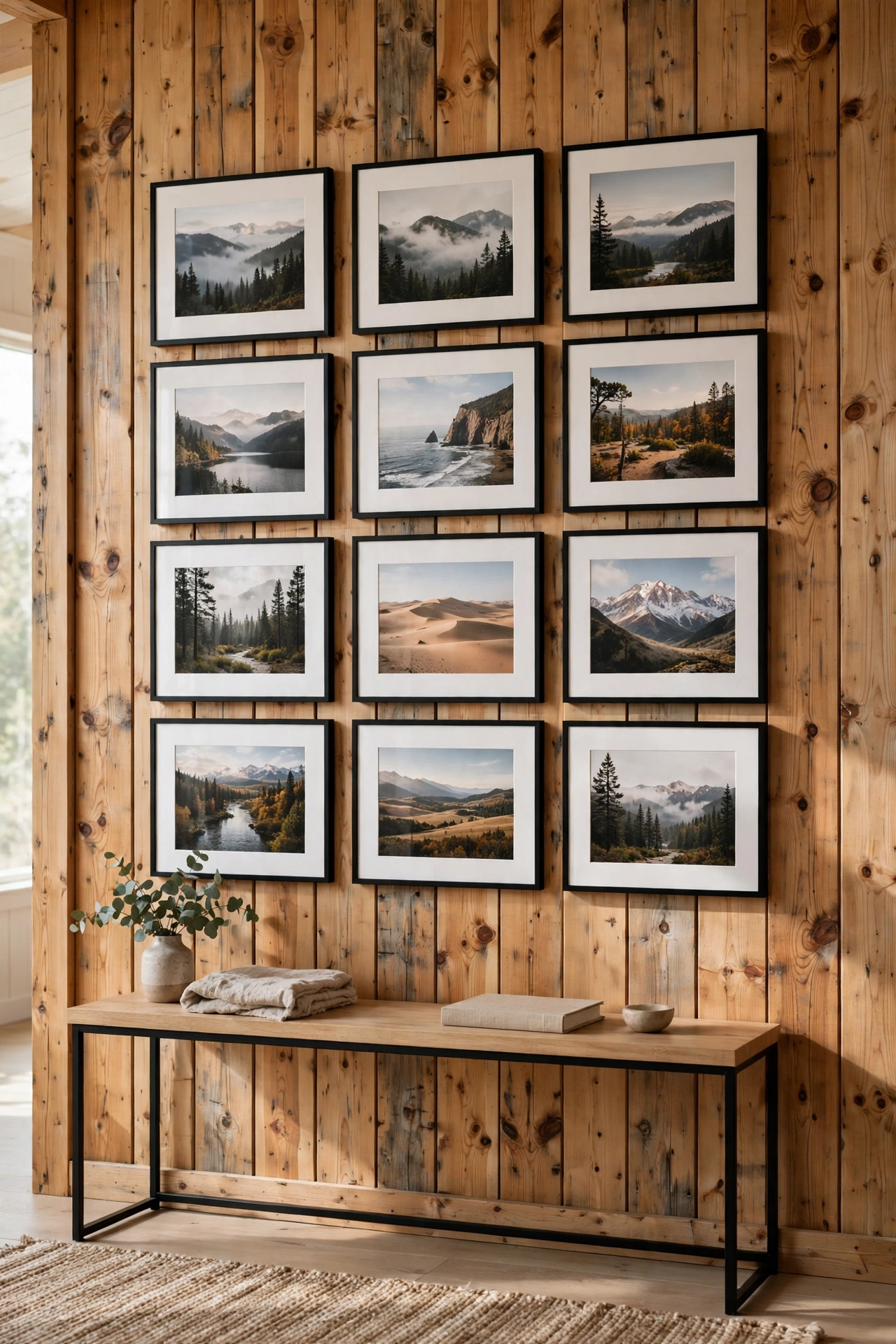
Art on pine walls works if you keep it disciplined: thin black frames, generous white mats, and a tight grid or a single row. Landscapes, abstract line work, and black-and-white photography all sit beautifully against wood grain; busy colorful prints fight it. One gallery wall per cabin is plenty — let the windows handle the rest of the art, because the view outside is doing more work than anything you’d hang.
Try this: use paper templates on the wall first — hanging into pine paneling means every nail hole is permanent.
24. Pine-Wrapped Primary Bedroom
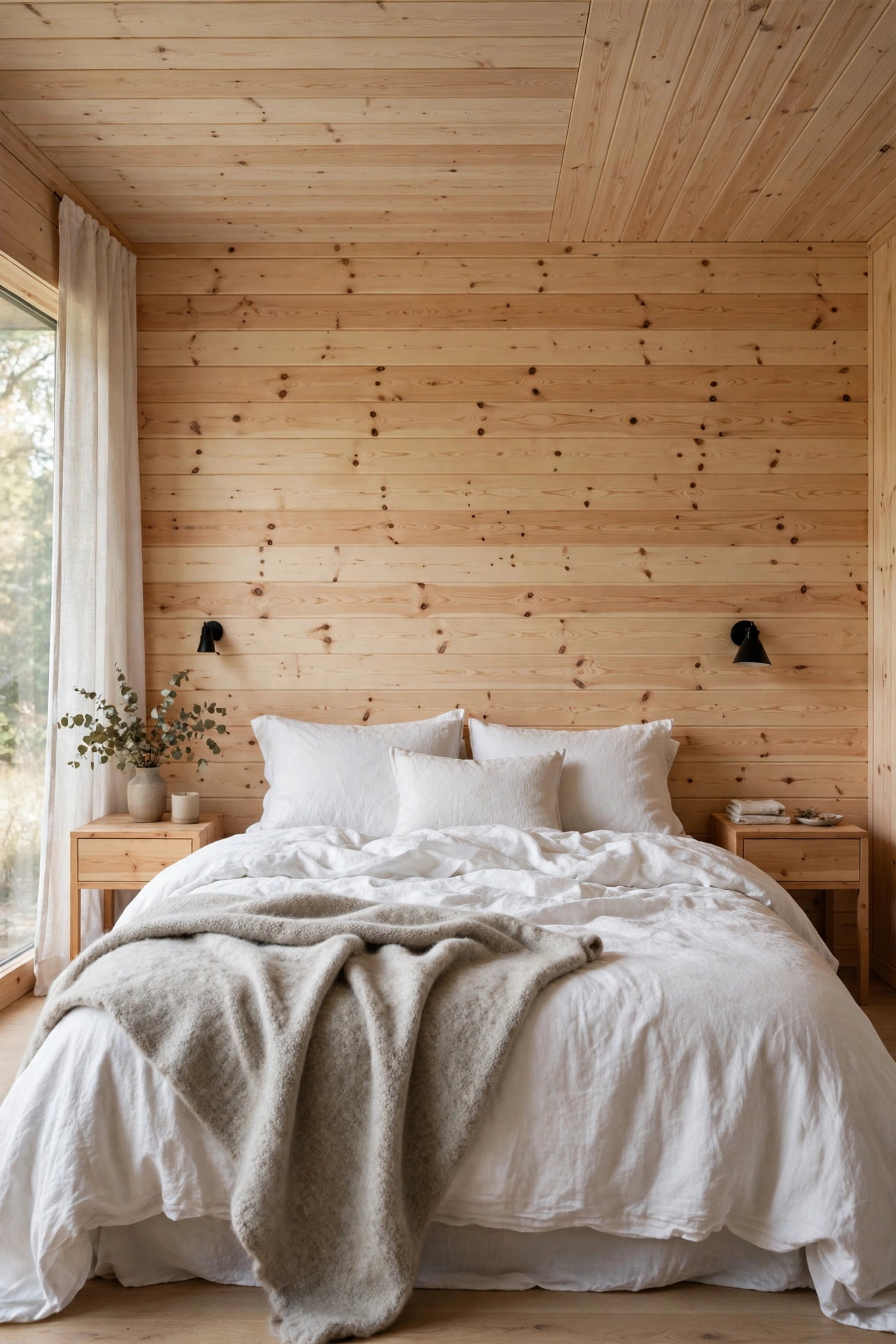
The bedroom is the one room where you can go all-in on pine — walls and ceiling — because you want it to feel like a cocoon. Keep everything else whisper-quiet: white or oatmeal linen bedding, one wood nightstand per side, a single wool throw at the foot. No TV, no clutter, no bright colors. It should feel like the inside of a very comfortable wooden box, in the best way.
Try this: two small black sconces instead of table lamps free up the nightstands completely.
25. Pine-Framed Glass Doors to the Deck
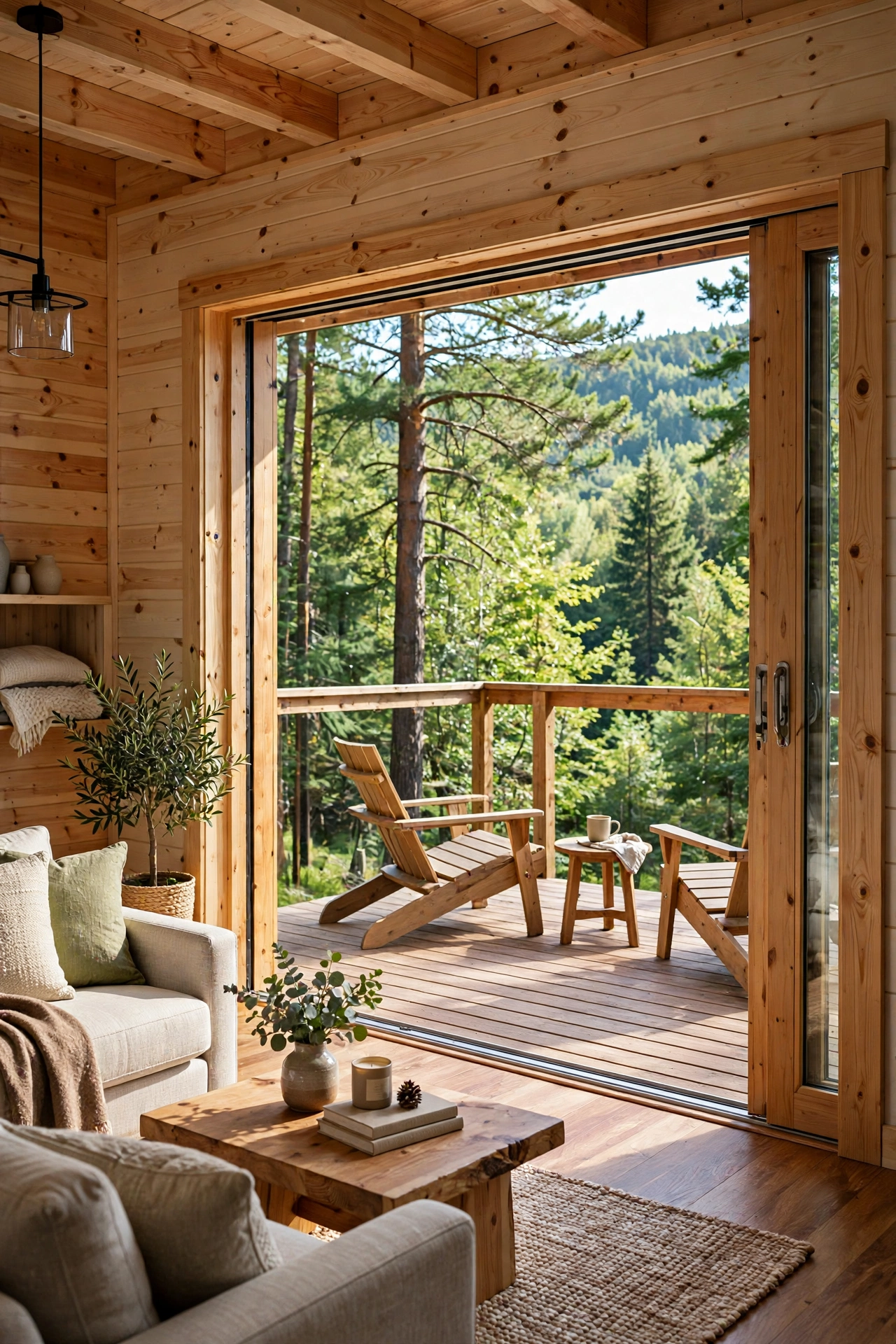
The final idea is about erasing the line between inside and outside: wide sliding glass doors framed in pine, opening straight onto the deck. When they’re open, the living room doubles in size; when they’re closed, the forest is still the backdrop. Match the door frame stain to your interior pine so it reads as one continuous surface, and run the same flooring from inside to the deck boards for the full seamless effect.
Try this: a simple outdoor rug and two chairs on the deck, visible through the glass, make the interior feel bigger even in winter.
Pine Finish Cheat Sheet
Choosing a finish is the highest-leverage decision in a pine cabin. This quick reference matches finishes to the job:
| Finish | Best for | DIY difficulty | Cost |
|---|---|---|---|
| Clear matte seal | New pine you already love — keeps the honey tone, kills the plastic shine | Easy | $ |
| Whitewash | Dated orange paneling; best on one accent wall | Easy–Medium | Easy |
| Light natural stain | Evening out color differences between old and new pine | Medium | $$ |
| Matte black paint | Beams, island, window trim — contrast pieces only | Easy | $ |
| Limewash (heavier) | Full rooms that need serious lightening | Medium | $$ |
Frequently Asked Questions
How do you keep pine walls from looking dated or orange?
It almost always comes down to finish. Glossy orange varnish is what reads “dated” — swap it for a clear matte seal or a whitewash and the same boards look current. Then add contrast: matte black window frames, faucets, and lighting keep the eye from drowning in wood tone. Finally, edit the decor — themed items (bears, moose, pinecone crafts) age a cabin faster than anything else.
Can I whitewash pine paneling myself?
Yes — it is one of the most forgiving DIY finishes because unevenness looks intentional. The basics: light sanding, a thinned coat of white paint or whitewash stain wiped back with a rag, and a clear topcoat. Always test inside a closet first, since resin-heavy pine boards take the wash unevenly. One accent wall is a weekend project; a whole house is a bigger commitment, so start small.
What colors go best with pine interiors?
Black and white are the workhorses — black for contrast, white for breathing room. Beyond that, stick to muted, natural tones: oatmeal, charcoal, forest green, warm gray, and dusty rust. Avoid anything that competes with the pine’s own warmth (bright oranges, cherry reds) and anything icy-cool that clashes with it. When in doubt, pull your palette from the view outside the window.
Does pine work in kitchens and bathrooms?
Absolutely, with the right protection. In kitchens, seal cabinet fronts near the stove and sink with hardwax oil, which is easy to spot-repair when pine dents. In bathrooms, use a marine-grade finish on vanities and make sure the room is properly vented — pine handles humidity fine as long as moisture doesn’t sit on it. A pine slat ceiling in a well-vented bathroom is a favorite designer move.
How do I brighten a dark pine cabin without painting everything?
Start with the cheapest levers: whitewash a single wall, swap heavy curtains for linen shades, and add mirrors opposite windows. Then layer light — pendants on dimmers, sconces, and LED strips under shelves — because dark wood absorbs light and needs more of it. Matte black accents paradoxically help too: they add crisp contrast so the pine reads as a choice rather than a cave.
Final Thoughts
The modern pine cabin isn’t a style you buy — it’s a series of edits. Lighten the finish, add black contrast, lower the furniture, layer real texture, and remove everything with a cartoon animal on it. Do those five things and the pine you already have becomes the warm, calm backdrop it was always meant to be.
Start with the single change that bothers you most when you walk in the door. For most people that’s the orange walls or the lighting — fix one, and the rest of the list starts to feel less like a renovation and more like a really satisfying weekend.


