


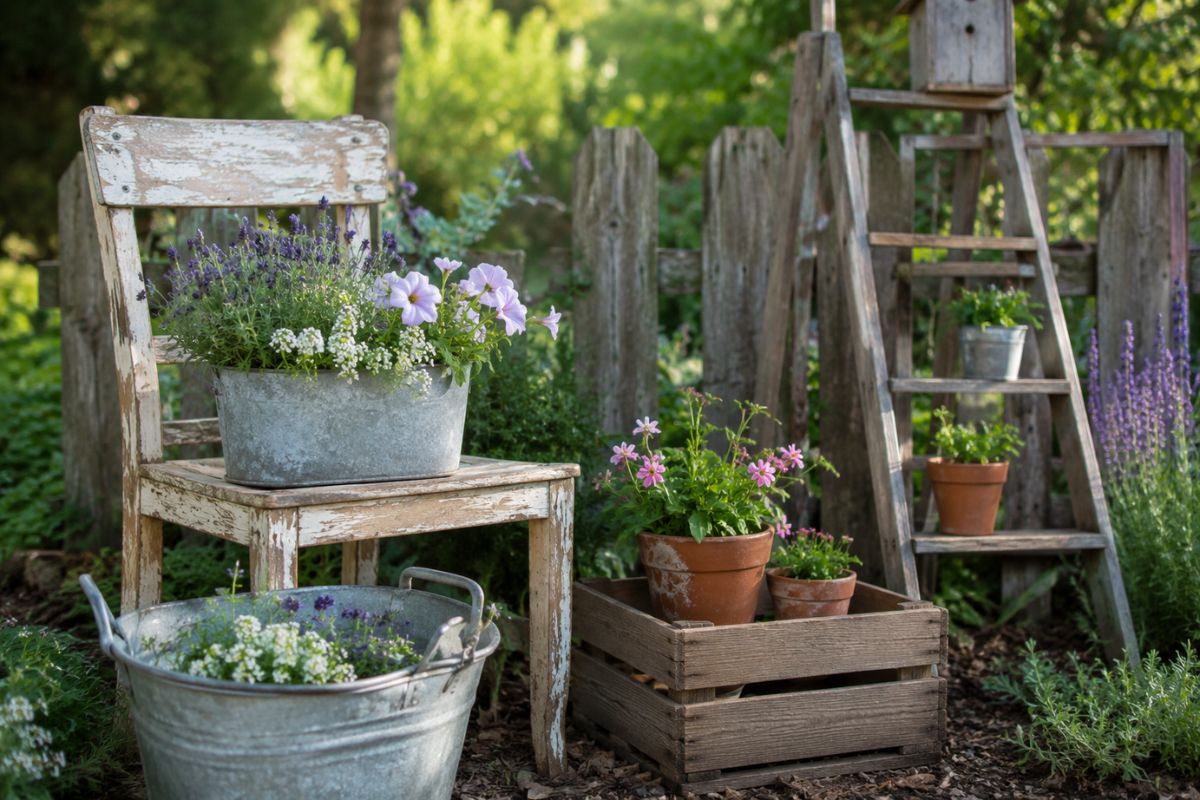
When I first looked into vintage garden projects, I thought creating a charming outdoor space would require costly antiques, advanced DIY skills, and a large backyard. The real challenges were much simpler: finding affordable pieces, choosing plants that could grow well in containers, adding proper drainage, and making sure old objects were safe enough to use outdoors. A beautiful idea can quickly become frustrating when a planter holds too much water, a ladder feels unstable, or an old painted surface starts to peel.
After comparing different projects and practical container-gardening methods, I found that the best ideas are often the easiest ones. Old chairs, wooden crates, teapots, window frames, and metal tubs can add real character without making a garden look crowded. These easy vintage garden projects focus on simple materials, safe preparation, suitable plants, and displays that are attractive and easy to maintain.
Why Vintage Garden Projects Are So Popular
Vintage garden décor feels warm, personal, and welcoming. Small signs of age can make an outdoor space more interesting.
Faded paint, worn wood, chipped enamel, and aged metal can all add charm. These details help a garden feel collected over time instead of decorated in one day.
Vintage projects can also be budget-friendly. You may find useful items at:
- Flea markets
- Thrift stores
- Charity shops
- Garage sales
- Estate sales
- Online marketplaces
- Your garage, attic, or storage room
Before throwing an old item away, think about how it could be used outdoors. A damaged drawer may become a planter. An old window may support climbing flowers. Even a chipped bowl can hold a small group of succulents.
Basic Supplies You May Need
Most of these projects can be completed with a few simple gardening and DIY supplies.
You may need:
- Quality container potting mix
- Gardening gloves
- A drill with a suitable bit
- Landscape fabric or coconut liner
- Exterior screws, chains, or hooks
- Small nursery pots
- Outdoor wood sealant
- Metal protective coating
- Plants suited to your garden conditions
You will not need every item for every project. Always check that an old object is clean, strong, and safe before using it in the garden.
Important Safety Tips Before You Begin
Check Old Painted Surfaces
Do not sand, scrape, or disturb paint when you do not know what type of paint was used. Some older painted furniture and containers may have unsafe coatings.
Choose an unpainted item, a newer secondhand object, or a piece with a stable finish. You can also have questionable paint tested before working on it.
Avoid growing edible herbs directly inside a container with peeling or damaged paint. Place a clean nursery pot inside the vintage container instead.
Check Strength and Stability
Examine wooden items for rot, cracks, and weak joints. Check metal objects for sharp edges, deep rust, and loose parts.
Secure tall items, hanging baskets, ladders, windows, and doors so they cannot fall during wind or rain.
Add Proper Drainage
Most outdoor planters need open drainage holes. These allow extra water to escape and help protect plant roots.
Use a small piece of mesh or screen over larger holes to stop potting mix from falling out. Do not fill the bottom of a planter with a thick layer of stones because this reduces the growing space available to the roots.
Easy Vintage Garden Projects
Old Chair Flower Planter
An old wooden chair can become a lovely flower planter and a strong focal point in the garden.
Remove the center of the seat if needed. Place a flowerpot, wire basket, or coconut-lined planter inside the opening.
Fill the planter with flowers that can grow over the edges. Petunias, lobelia, ivy, and sweet alyssum are good choices.
You can keep the chair’s existing finish if it is stable and safe. You can also paint a newer or unfinished chair in a soft shade such as cream, pale blue, sage green, or light pink.
Place the finished chair beside a garden path, porch, shed, or flower bed.

Vintage Garden Tip
Let trailing flowers grow around the seat and chair legs. This will give the display a soft cottage-garden appearance.
Vintage Teapot Herb Garden
Old teapots can make sweet and useful herb planters. This project works well on a patio table, outdoor shelf, or kitchen windowsill.
Choose a chipped or unused teapot. Add a drainage hole if the material allows it.
When you cannot safely make a hole, place a small nursery pot inside the teapot. Remove the inner pot when watering and allow the extra water to drain before returning it.
Small teapots work best for compact herbs such as:
- Thyme
- Chives
- Dwarf oregano
You can also use small flowers or succulents.
Larger herbs may quickly outgrow a small teapot. Keep mint in its own larger container because it spreads quickly.
Arrange several mismatched teapots, cups, and milk jugs together. Different shapes and patterns can make the display feel collected and personal.

Vintage Garden Tip
Mix floral teapots with simple white or enamel pieces. This keeps the display charming without making it feel too busy.
Wooden Crate Flower Display
Wooden crates are perfect for creating a rustic flower display. They are easy to move and can be arranged in several ways.
Use one crate as a planter or stack several crates at different heights. A layered arrangement can make a plain garden corner more interesting.
When planting directly inside a crate, line it with landscape fabric or coconut fiber. Keep the drainage openings clear so extra water can escape.
Fill the crates with bright flowers such as geraniums, marigolds, pansies, or daisies.
You can also place regular flowerpots inside the crates. This makes it easier to change the plants with the seasons.
Check the wood before stacking the crates. Weak or damaged crates should be used only as decorative covers around lightweight nursery pots.

Vintage Garden Tip
Leave some of the weathered wood visible. The worn surface is part of the vintage style.
Galvanized Tub Mini Garden
An old galvanized tub can hold a large and colorful plant display. It works well in a backyard, on a patio, or beside a porch.
First, drill several drainage holes in the bottom of the tub. Place a small piece of mesh or screen over the openings to keep the potting mix from falling out.
Fill the tub with quality container potting mix. Avoid using heavy garden soil because it may become compacted inside the container.
Choose plants with similar sunlight and watering needs.
For a sunny display, you could combine:
- Geraniums
- Petunias
- Sweet alyssum
For a partly shaded display, try:
- Begonias
- Ivy
- Shade-friendly foliage plants
You can also turn a clean and safe tub into an herb garden. Keep strong spreading plants, such as mint, in their own pots.

Vintage Garden Tip
Raise the tub on bricks, a strong wooden stool, or a low bench. The extra height will make the arrangement easier to notice and can improve airflow below the container.
Old Window Frame Trellis
An old window frame can become a beautiful garden trellis. It adds shape and height without taking up much ground space.
Remove all broken or loose glass before using the frame. Check for sharp edges, weak wood, and damaged paint.
Secure the frame against a fence, wall, or strong garden post. Then plant a climbing flower near the bottom.
Suitable climbing plants may include:
- Clematis
- Sweet peas
- Morning glories
- Climbing roses
- Jasmine
Choose a plant that suits your local climate and the amount of sunlight available.
As the plant grows, guide the stems gently through the open sections of the frame. Do not tie the stems too tightly.

Vintage Garden Tip
A faded white frame creates a romantic cottage look, while a natural wooden frame feels more rustic. Only keep the old finish when it is stable and safe.
Vintage Ladder Plant Stand
A weathered ladder can become a simple vertical plant display. This idea is useful for small patios, balconies, and narrow garden areas.
Open the ladder securely or lean it against a strong wall. Make sure it cannot move, slide, or fall over.
Place small pots on each step. You can use:
- Terracotta pots
- Enamel containers
- Metal buckets
- Small baskets
Choose plants with different shapes and heights. Herbs, succulents, pansies, ferns, and trailing ivy can all work well.
Place larger and heavier pots near the bottom. Keep small and lightweight containers near the top.
You can also hang light pots from the sides with strong outdoor hooks. Avoid adding more weight than the ladder can safely support.

Vintage Garden Tip
Use pots in similar colors or materials to connect the display. This will help the ladder look styled rather than cluttered.
Enamel Basin Succulent Garden
Old enamel bowls and wash basins can make beautiful succulent planters. Their simple shapes work well with small plants that have different colors and textures.
Add drainage holes before planting. Succulents do not grow well when their roots remain wet for long periods.
Fill the container with potting mix made for cacti or succulents. Arrange plants with different shapes, heights, and leaf forms.
Leave a little space between each plant because they may spread as they grow.
Add a thin layer of gravel or small decorative stones over the surface of the soil. This can create a neat finish, but it should not replace the drainage holes at the bottom.
White enamel basins with dark edges suit farmhouse gardens. Colored or floral enamelware can add more personality.

Vintage Garden Tip
Group the basin with clay pots, old bottles, or a small watering can to create a complete garden scene.
Rustic Toolbox Centerpiece
An old wooden toolbox can become a portable garden centerpiece. Its handle makes it easy to move around the outdoor space.
Place small potted plants inside the toolbox. You can also line the box and plant directly inside it when the wood is strong and suitable for outdoor use.
Fill it with herbs, flowers, or succulents. Choose plants with similar sunlight and watering needs.
A toolbox planter can decorate:
- A patio table
- A porch
- A potting bench
- An outdoor dining area
- A garden shelf
You can also add seed packets, small garden tools, and wooden plant labels.
Change the display with the seasons. Use pansies in spring, colorful annuals in summer, and small pumpkins or dried flowers in autumn.

Vintage Garden Tip
Keep the original handle, scratches, and worn edges when they are safe. These details give the toolbox its character.
Antique Colander Hanging Basket
An old metal colander already has drainage holes, which makes it a practical garden planter.
Line the inside with coconut fiber, moss, or landscape fabric. This will stop the potting mix from falling through the holes.
Add quality potting mix and choose trailing flowers, compact herbs, or small strawberry plants.
Suitable choices may include:
- Petunias
- Lobelia
- Ivy
- Creeping thyme
- Compact strawberries
If you grow strawberries, choose a compact variety and check the soil often. Shallow hanging containers can dry out quickly.
Attach strong chains or outdoor rope to the handles. Hang the planter from a secure porch beam, garden hook, or strong support.
You can also place the colander on an old chair or garden table instead of hanging it.

Vintage Garden Tip
A lightly weathered metal colander will look more natural than a bright new container. Make sure the metal is still strong enough to hold wet soil.
Weathered Door Garden Backdrop
An old wooden door can transform a plain garden corner. It adds height, color, and the feeling of a secret entrance.
Secure the door against a fence, wall, or strong wooden post. It must remain stable during wind and rain.
Place flowerpots, lanterns, crates, and watering cans around the base. You can also attach hooks for small hanging baskets.
A door with faded paint, an old handle, or carved details can create an authentic vintage look. However, do not sand or scrape an unknown painted finish.
Plant climbing flowers near the sides. Roses, jasmine, or clematis can slowly grow around the frame.
You may not need to repaint the door if its existing finish is stable and safe. A suitable exterior coating can help protect newer or unfinished wood.

Vintage Garden Tip
Add a small garden sign or a simple wreath to make the door feel like part of the outdoor space.
How to Style Easy Vintage Garden Projects
The best vintage gardens look relaxed but not crowded. A few simple styling choices can help connect all your projects.
Choose a Soft Color Palette
Use two or three main colors throughout the garden.
Good vintage color choices include:
- Faded white
- Cream
- Sage green
- Dusty blue
- Pale pink
- Natural brown
- Galvanized gray
Repeating these colors will make different objects feel connected.
Repeat Similar Materials
Use the same materials in several parts of the garden.
For example, repeat terracotta pots, weathered wood, enamelware, or galvanized metal. This creates a clear style even when the objects are different.
Use Different Heights
Place some decorations on the ground and raise others on stools, crates, shelves, or ladders.
You can also hang baskets from walls, trees, and porch beams. Different heights make the garden more interesting.
Leave Open Space
Do not fill every empty area with decorations. Leave space around your best pieces.
An old chair planter or weathered door will stand out more when it has room around it.
Add Trailing Plants
Trailing plants soften the edges of old containers. They also help new projects feel more established.
Ivy, lobelia, petunias, and sweet alyssum are useful choices. Always check whether the plant suits the sunlight and watering conditions in that location.
Best Plants for Vintage Garden Containers
Choose plants based on the sunlight, container size, and watering conditions in your garden.
These are general suggestions. Always check the plant label because growing needs may vary by variety and climate.
Plants for Sunny Locations
Try:
- Lavender
- Geraniums
- Petunias
- Marigolds
- Rosemary
- Thyme
- Succulents
Plants for Partial Shade
Try:
- Ivy
- Ferns
- Pansies
- Mint
- Begonias
- Sweet alyssum
Keep in mind that small containers dry out faster than garden beds. Check the soil regularly during warm or windy weather.
Avoid combining plants in one container unless they need similar amounts of water and sunlight.
How to Protect Vintage Garden Décor
Old garden decorations need regular care if you want them to last.
Clean each item before using it. Remove loose dirt and check for sharp metal, weak wood, and unstable parts.
Use an outdoor wood sealant on suitable wooden pieces. A clear protective coating made for exterior metal may help slow down further damage on some metal objects.
Do not cover every harmless sign of age. Small scratches and faded finishes are part of the vintage look.
Move delicate objects under a covered porch during heavy rain. You may also need to store them indoors during winter or severe weather.
Check hanging planters and tall decorations often. Make sure hooks, chains, screws, and supports remain secure.
Frequently Asked Questions
What Items Can I Use for Vintage Garden Projects?
You can use old chairs, teapots, crates, ladders, window frames, enamel bowls, toolboxes, buckets, doors, and metal kitchen items.
Choose objects that are no longer useful indoors but are still safe and strong enough for outdoor use.
Do Vintage Planters Need Drainage Holes?
Most outdoor planters need drainage holes. These openings allow extra water to escape and help protect the roots from rot.
When you cannot safely drill into a decorative container, place a smaller nursery pot inside it.
How Can I Make New Garden Items Look Vintage?
Apply exterior paint in a soft, muted shade to a newer or unfinished item. After the new paint dries, you can gently distress the new topcoat if desired.
Do not sand or scrape unknown paint on genuinely old furniture because it may contain unsafe materials.
Where Can I Find Affordable Vintage Garden Decorations?
Check flea markets, thrift stores, charity shops, garage sales, estate sales, and online marketplaces.
You may also find useful items in your attic, shed, basement, or garage.
Can I Use Rusty Metal Items in My Garden?
You can use lightly weathered metal when the item is still strong and safe. Avoid pieces with sharp edges, deep rust, holes, or serious structural damage.
Wear protective gloves when cleaning old metal.
Can I Grow Herbs in Vintage Containers?
Yes, but the container should be clean, safe, large enough for the herb, and able to drain properly.
When the inside surface is damaged or uncertain, keep the herb inside a clean nursery pot and place that pot inside the decorative container.
Final Thoughts
After reviewing and planning these projects, I have learned that successful vintage garden décor depends on function as much as appearance. Proper drainage, stable supports, safe surfaces, and suitable plants should always come before decorative details. Start with one simple project using an item you already own, see how it works in your space, and then add more pieces over time. These easy vintage garden projects can help you create a warm and personal outdoor area without a large budget, but each idea should be adjusted for your climate, sunlight, available materials, and level of gardening experience. Save your favorite project so you can return to it when you are ready to begin.


