


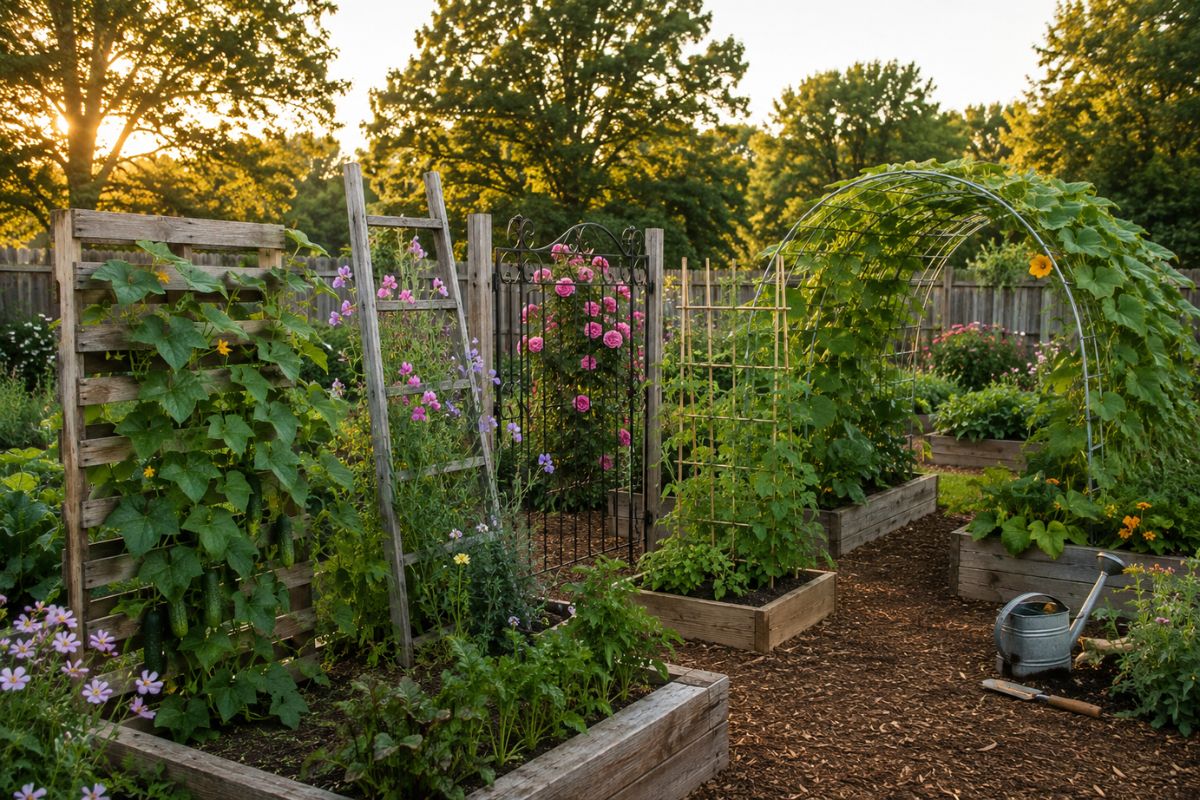
Have you ever planted cucumbers, beans, or climbing flowers only to find the vines spreading across the ground instead of growing upward? I ran into the same problem in my own garden. The plants became tangled, harvesting took longer, and the garden looked messy. After pricing a few store-bought trellises, I realized outfitting the whole garden would cost more than I wanted to spend. That challenge pushed me to look at old items I already had instead of buying something new.
Over time, I discovered that recycled materials often make some of the strongest and most attractive garden trellises. An old pallet, a worn ladder, or even a reclaimed door can give climbing plants the support they need while adding character to the garden. In this guide, I’m sharing the recycled garden trellis ideas that I’ve found to be practical, budget-friendly, and easy to recreate, so you can grow healthier plants and create a garden you’ll enjoy all season.
Why Choose a Recycled Garden Trellis?
A recycled garden trellis does much more than support climbing plants. It gives old materials a second life and helps create a garden with unique character. Many recycled items are already strong enough for vegetables and flowering vines, making them a smart choice for DIY gardeners.
Some of the biggest benefits include:
- Save money by using materials you already have.
- Reduce household and garden waste.
- Add rustic charm and farmhouse style.
- Create more growing space in small gardens.
- Support healthier plants with better airflow and sunlight.
- Make harvesting vegetables easier.
- Build one-of-a-kind garden features that stand out.
Whether your garden is large or small, a recycled trellis can help you grow more while making your outdoor space look beautiful.
Quick Comparison of Recycled Garden Trellis Ideas
If you’re not sure which recycled trellis is right for your garden, this quick guide makes choosing much easier.
| Trellis Idea | Cost | DIY Level | Best For |
|---|---|---|---|
| Wooden Pallet | Low | Easy | Cucumbers, Beans |
| Branch and Twine Teepee | Free | Easy | Pole Beans, Peas |
| Old Ladder | Low | Easy | Climbing Flowers |
| Window Frame | Low | Easy | Sweet Peas, Clematis |
| Bamboo Grid | Low | Easy | Cucumbers, Beans |
| Recycled Metal Gate | Medium | Medium | Climbing Roses, Grapes |
| Reclaimed Door | Low | Medium | Clematis, Jasmine |
| Pipe Arch | Medium | Medium | Gourds, Squash |
| Twig and Willow | Free | Easy | Peas, Morning Glories |
| Hog Wire or Cattle Panel | Medium | Easy | Pumpkins, Melons |
Wooden Pallet Trellis
An old wooden pallet can become a beautiful garden trellis in just a few minutes. Stand it upright against a fence, wall, or raised garden bed, then secure it firmly in place. The wide wooden slats give climbing plants plenty of space to grab as they grow.
This simple DIY project is perfect if you want a rustic farmhouse look without spending much money. You can leave the pallet weathered for natural charm or paint it to match your garden style.

Best for: Cucumbers, peas, pole beans, sweet peas, and black-eyed Susan vines.
Pro Tip: Sand rough edges before using the pallet and choose heat-treated pallets marked “HT” for a safer garden project.
Branch and Twine Teepee
If you have fallen branches in your yard, you already have everything you need for this natural trellis. Gather several strong branches, place them in a circle, and tie the tops together with garden twine. Wrap extra twine around the frame to create more climbing points.
This teepee shape adds height without taking up much space, making it a great choice for vegetable gardens. It also creates a cozy, cottage-style look that blends beautifully with flowers and greenery.

Best for: Pole beans, cucumbers, morning glories, and climbing peas.
Pro Tip: Push the branches at least 10 to 12 inches into the soil so the structure stays steady during windy weather.
Old Ladder Trellis
A weathered wooden ladder is one of the easiest items to recycle into a garden trellis. Simply lean it against a fence or let it stand on its own if it is stable. The ladder rungs naturally guide vines upward while adding vintage charm to your garden.
This idea also gives you extra space for decorating. You can place small flower pots, lanterns, or garden signs on the steps while plants climb around them.

Best for: Climbing roses, peas, beans, clematis, and flowering vines.
Pro Tip: Use metal stakes to anchor the ladder if you plan to grow heavy vegetables or large flowering vines.
Window Frame Trellis
An old wooden window frame can become a charming garden feature with very little effort. Stand it upright against a fence or attach it to wooden posts for extra support. If the glass is still in place, remove it first, then stretch garden wire or twine across the open sections to give vines something to climb.
This trellis brings classic farmhouse style to any garden. As flowers grow through the frame, it creates a picture-perfect view that looks beautiful in every season.

Best for: Sweet peas, nasturtiums, clematis, jasmine, and other light climbing flowers.
Pro Tip: Paint the frame with outdoor paint if you want extra weather protection, or leave the aged finish for a rustic look.
Bamboo Grid Trellis
Leftover bamboo poles are a great choice for a lightweight but sturdy garden trellis. Arrange the poles in a grid pattern and tie each joint tightly with garden twine. Secure the finished panel in the ground or against a raised garden bed.
The simple lattice design gives plants plenty of places to climb while keeping the garden neat and organized. Bamboo also blends naturally with flowers, herbs, and vegetable beds.

Best for: Cucumbers, beans, peas, small melons, and flowering vines.
Pro Tip: Use thicker bamboo poles around the outside of the frame to make the trellis stronger and last longer.
Recycled Metal Gate Trellis
An old wrought iron or metal garden gate can become a beautiful statement piece. Stand it between two sturdy posts or attach it to a fence where climbing plants can easily cover the decorative metalwork.
The strong frame holds much heavier plants than many wooden trellises. As vines grow through the metal pattern, the gate becomes a stunning focal point in the garden.

Best for: Climbing roses, wisteria, jasmine, grapes, and hardy flowering vines.
Pro Tip: Clean away loose rust and apply an outdoor metal paint to help protect the gate from the weather.
Reclaimed Door Trellis
An old wooden door can become a stunning garden trellis with very little work. Stand it upright and secure it with sturdy posts so it stays in place. If the door has open panels, weave garden twine through them to create even more places for climbing plants.
A reclaimed door adds vintage charm and becomes a beautiful backdrop for flowers and greenery. It looks especially attractive in cottage, farmhouse, and rustic gardens.

Best for: Clematis, climbing roses, jasmine, sweet peas, and ivy.
Pro Tip: Choose a solid wood door that can handle outdoor weather, and seal it with an exterior wood finish for longer life.
Pipe Arch Trellis
Leftover metal or PVC pipes can be turned into a beautiful garden tunnel. Bend the pipes into an arch shape, secure both ends into the ground, and connect them with crossbars for extra support.
As plants grow over the arch, they create a lush green walkway that adds height and beauty to your garden. This project works well in both large backyards and smaller vegetable gardens.

Best for: Pole beans, cucumbers, gourds, climbing squash, and climbing roses.
Pro Tip: Space the arches evenly and anchor them well so they stay stable when plants become heavy.
Twig and Willow Trellis
Twigs and flexible willow branches can be woven into a natural trellis that blends perfectly with the garden. Create a fan shape, lattice, or simple woven panel, then tie the branches together with strong garden twine.
This eco-friendly project uses materials that are often already available after pruning trees or shrubs. The finished trellis has a handcrafted look that works beautifully in wildlife and cottage gardens.
Best for: Peas, nasturtiums, jasmine, morning glories, and other lightweight climbers.
Pro Tip: Use fresh willow branches when possible because they bend more easily without breaking.
Hog Wire or Cattle Panel Trellis
Hog wire and cattle panels are some of the strongest recycled materials you can use for a garden trellis. Secure the panel between sturdy wooden or metal posts, or bend it into a tunnel for an eye-catching garden feature.
This heavy-duty trellis easily supports large vegetables while giving your garden a clean and organized look. It is a great long-term option for gardeners who grow climbing crops every year.

Best for: Pumpkins, winter squash, gourds, cucumbers, melons, and pole beans.
Pro Tip: Leave enough space under the tunnel so you can comfortably walk through and harvest vegetables throughout the season.
Best Plants for Recycled Garden Trellises
Different climbing plants need different levels of support. Choosing the right trellis helps plants grow healthier and makes harvesting much easier.
| Plant | Best Trellis |
|---|---|
| Cucumbers | Wooden Pallet, Bamboo Grid, Pipe Arch |
| Pole Beans | Branch Teepee, Pipe Arch, Cattle Panel |
| Garden Peas | Window Frame, Bamboo Grid, Twig Trellis |
| Sweet Peas | Window Frame, Reclaimed Door |
| Climbing Roses | Metal Gate, Old Ladder |
| Clematis | Window Frame, Reclaimed Door |
| Gourds | Pipe Arch, Cattle Panel |
| Pumpkins | Cattle Panel Trellis |
Common Mistakes to Avoid
A recycled garden trellis works best when it is built with safety and stability in mind. Avoid these common mistakes to keep your plants healthy.
- Using weak materials for heavy vegetables.
- Forgetting to anchor tall trellises securely.
- Leaving sharp metal edges exposed.
- Using damaged or rotting wood.
- Placing trellises where plants receive too little sunlight.
- Building trellises too close together, making harvesting difficult.
How to Make Your Recycled Trellis Last Longer
A recycled garden trellis can last for many growing seasons with a little care. Taking a few minutes each year to maintain it will keep your plants supported and your garden looking its best.
- Tighten loose screws, nails, or fasteners before each growing season.
- Replace worn garden twine when it starts to fray.
- Seal wooden trellises with an outdoor wood protector to reduce weather damage.
- Remove loose rust from metal trellises and apply outdoor metal paint if needed.
- Check that every trellis is firmly anchored before heavy vines begin to grow.
- Store lightweight bamboo or twig trellises in a dry place during winter if possible.
Safety Tips for DIY Recycled Trellises
Before using recycled materials in your garden, take a few simple safety steps.
- Wear gloves when working with old metal, wire, or rough wood.
- Remove broken glass from old windows and doors before building a trellis.
- Sand rough wooden edges to help prevent splinters.
- Avoid using wood that has been treated with unknown chemicals.
- Make sure tall trellises are securely anchored before adding heavy climbing plants.
Frequently Asked Questions
What is the best recycled material for a garden trellis?
Wooden pallets, cattle panels, old ladders, and metal gates are some of the best recycled materials. They are strong, easy to find, and provide excellent support for climbing vegetables and flowering vines.
Can recycled trellises support heavy vegetables?
Yes. Cattle panels, hog wire, and sturdy metal gates can easily support heavy crops like pumpkins, squash, gourds, and melons. Lightweight trellises made from twigs or bamboo are better for peas, beans, and flowering vines.
Is it safe to use old wood in the garden?
Yes, as long as the wood is in good condition. Heat-treated pallets marked “HT” are a safer choice. Avoid wood that has been treated with unknown chemicals or has signs of rot.
Which climbing plants grow best on recycled trellises?
Many climbing plants grow well on recycled trellises, including cucumbers, pole beans, peas, sweet peas, clematis, climbing roses, jasmine, gourds, and morning glories.
How do I make a recycled trellis last longer?
Anchor the trellis securely, replace damaged twine when needed, and protect wood or metal with an outdoor sealant or paint. Checking the structure before each growing season will also help extend its life.
Can recycled trellises stay outside all year?
Yes, many recycled trellises can stay outdoors year-round if they are built with durable materials. Metal gates, cattle panels, and sturdy pipe arches handle outdoor weather very well. Wooden trellises can also last for years when they are sealed with an exterior wood finish and checked for damage at the beginning of each growing season.
Conclusion
After experimenting with different recycled trellis projects over the years, I’ve learned that you don’t need expensive supplies to build a beautiful and productive garden. Some of my most reliable trellises have been made from items that would have otherwise been thrown away, and they continue to support healthy vegetables and flowering vines season after season. If you’re looking for a simple way to save money, reduce waste, and add more charm to your outdoor space, start with one of these recycled garden trellis ideas and make it your own. Even a small DIY project can make a big difference in how your garden looks and grows.


