
Introduction
Building a raised garden sounds exciting until you start looking at the cost and upkeep. Wooden garden beds can look beautiful, but they often need repairs or replacement after a few seasons. I faced the same challenge when I wanted to create a backyard garden that was affordable, durable, and easy to maintain. I needed a solution that would last without turning into another weekend project every year.
That search led me to cinder block garden beds, and they completely changed the way I looked at raised gardening. After trying different layouts and seeing how well they held up through changing weather, I found they were one of the easiest and most budget-friendly options for growing vegetables, herbs, and flowers. In this guide, I’m sharing my favorite creative cinder block garden bed ideas along with practical tips that have worked well for me, so you can create a garden that is both beautiful and built to last.
Why Choose Cinder Block Garden Beds?
Cinder block garden beds have become a favorite choice for many homeowners because they are affordable, practical, and simple to build. You do not need advanced DIY skills or expensive tools to create a beautiful raised bed.
Here are a few reasons why they are worth considering:
- Last much longer than wood.
- Budget friendly for large gardens.
- Easy to expand later.
- Great for vegetables, herbs, and flowers.
- Help keep weeds under control.
- Improve soil drainage.
- Create a neat and organized garden.
- Can be painted to match your outdoor style.
- The open block spaces can hold herbs, flowers, or small succulents.
With a little planning, cinder blocks can become both a functional garden bed and an attractive landscape feature.
Things to Know Before You Build
A little preparation will help your garden bed last longer and give your plants the best growing conditions.
Pick a Sunny Location
Most vegetables and flowering plants grow best with at least six to eight hours of sunlight each day. Watch your yard for a few days before choosing the perfect spot.
Level the Ground
Place your blocks on flat ground to keep the bed stable. A level base also helps prevent shifting over time.
Use Quality Soil
Fill the bed with nutrient-rich garden soil mixed with compost. Healthy soil leads to healthier plants and better harvests.
Add Good Drainage
If your soil drains poorly, adding gravel beneath or around the bed may improve drainage. Many gardeners simply build directly on soil without gravel.
Fill the Block Openings
The holes in each cinder block are perfect for growing herbs, colorful flowers, or trailing plants. This simple trick makes your garden look fuller without taking up more space.
Tools You’ll Need
Before you start building your garden bed, gather a few basic supplies. Most of these items are easy to find at your local home improvement or garden store.
- Cinder blocks
- Garden soil
- Compost
- Shovel
- Garden rake
- Level
- Landscape fabric (optional)
- Gravel (if needed for drainage)
- Mulch
- Gardening gloves
- Watering can or garden hose
Having everything ready before you begin will make the project quicker and more enjoyable.
Are Cinder Block Garden Beds Safe?
Many gardeners use concrete cinder blocks to grow vegetables, herbs, and flowers with great results. New concrete blocks are a common choice for raised garden beds and are widely available at home improvement stores.
If you are using old or second-hand blocks, make sure they are in good condition and avoid blocks from unknown industrial sites. Always fill your raised bed with fresh, high-quality garden soil and compost to give your plants the best growing conditions.
Simple Soil Mix for Healthy Plants
The right soil helps your garden grow stronger and produce better flowers, herbs, and vegetables. A rich soil mix also improves drainage while giving roots plenty of nutrients.
A simple mix that works well for most raised garden beds includes:
- 40% compost
- 40% garden soil
- 20% topsoil
Mix everything together before filling your cinder block garden bed. You can also add a small amount of perlite if you want even better drainage.
How Much Does a Cinder Block Garden Bed Cost?
One reason many homeowners choose cinder blocks is that they offer a budget-friendly way to build raised garden beds.
The total cost depends on the size of your garden, the number of blocks you need, and whether you already have soil and compost. Smaller beds are affordable for beginners, while larger layouts are still less expensive than many pre-built raised garden bed kits.
If you want to save money, build one garden bed first and expand your layout over time as your garden grows.
Modern White Cinder Block Garden Bed
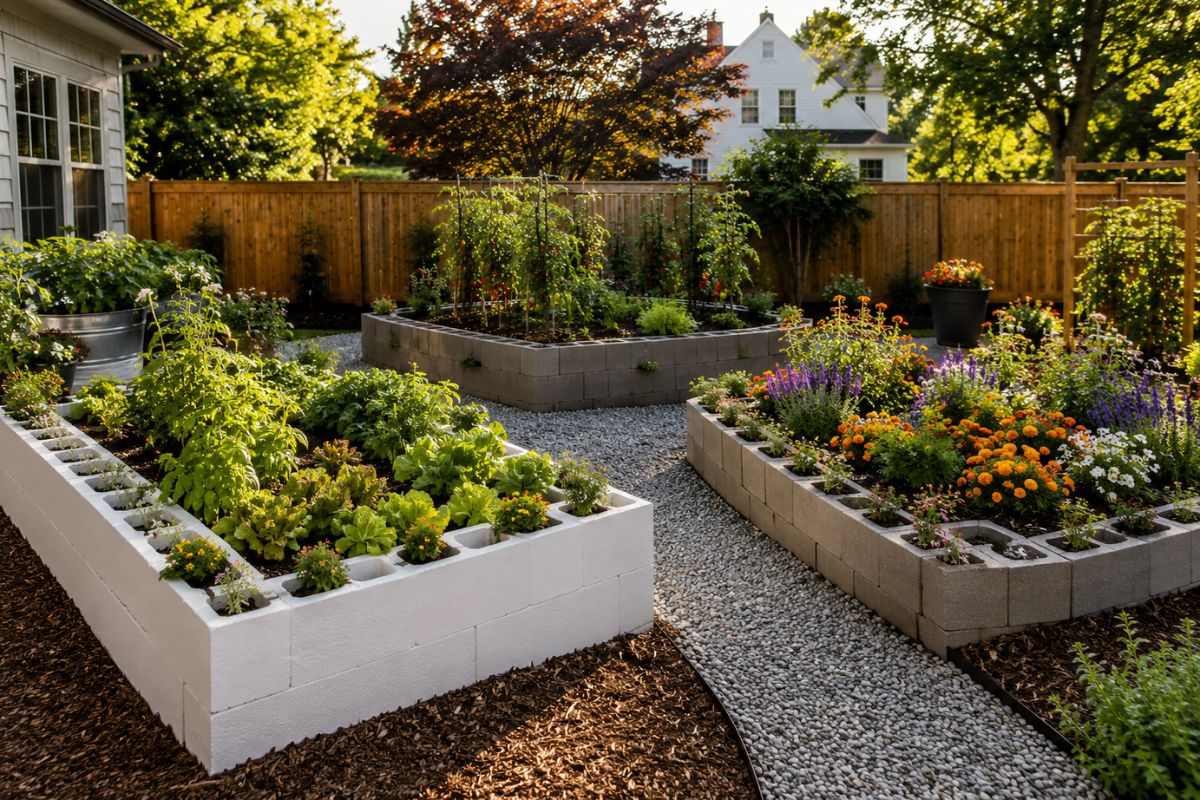
A fresh coat of white outdoor paint gives ordinary cinder blocks a clean and modern look. This simple design fits beautifully into contemporary backyards with gravel paths, wooden fences, and neat landscaping.
The bright color creates a brighter appearance and blends well with modern landscaping. Pair the bed with black mulch or natural wood planters for a stylish contrast.

Best for: Herbs, lettuce, spinach, and white flowering plants.
Helpful Tip: Choose weather-resistant masonry paint so the finish stays bright through every season.
Rustic Farmhouse Garden Bed
If you love cozy outdoor spaces, a rustic farmhouse garden bed is a wonderful choice. Leave the cinder blocks their natural gray color and surround them with wooden barrels, vintage watering cans, and simple terracotta pots.
This relaxed style feels warm and welcoming while giving vegetables and flowers plenty of room to grow.

Best for: Tomatoes, peppers, basil, lavender, and wildflowers.
Helpful Tip: Add straw mulch around your plants to keep the soil cool and reduce weeds.
Cottage Flower Garden Bed
Turn simple cinder blocks into a colorful flower garden filled with blooms from spring through fall. Plant flowers inside the bed while filling the block openings with smaller blooms for extra color around the edges.
The result is a cheerful garden that attracts butterflies and brightens the entire yard.

Best for: Zinnias, daisies, cosmos, coneflowers, and marigolds.
Helpful Tip: Mix flowers with different heights to create a fuller and more natural look.
Vegetable Garden Bed for Fresh Harvests
A simple cinder block garden bed is one of the easiest ways to grow fresh vegetables at home. The raised design gives your plants loose soil, better drainage, and more room for healthy roots.
Grow different vegetables together to enjoy fresh meals throughout the season while keeping your garden neat and easy to maintain.

Best for: Tomatoes, peppers, cucumbers, beans, carrots, and lettuce.
Helpful Tip: Place taller vegetables along the back of the bed so they do not block sunlight from smaller plants.
Herb Garden with Built-In Planters
The openings in cinder blocks are perfect for growing herbs. Fill the main bed with vegetables while using the block pockets for herbs that you use often in your kitchen.
This smart layout saves space and keeps fresh herbs within easy reach.

Best for: Basil, parsley, rosemary, thyme, oregano, sage, and chives.
Helpful Tip: Plant herbs with similar watering needs together to make care easier.
L-Shaped Corner Garden Bed
An L-shaped garden bed is a great choice if you want to make the most of an empty backyard corner. It creates more planting space without making the yard feel crowded.
The shape also gives you easy access to every plant, making watering, pruning, and harvesting much more comfortable.
Best for: Mixed vegetables, flowers, herbs, and berry plants.
Helpful Tip: Leave enough walking space inside the corner so you can reach every plant with ease.
Tiered Cinder Block Garden Bed
A tiered garden bed adds height, texture, and visual interest to your landscape. By stacking blocks at different levels, you create separate planting areas that make the garden feel larger.
This design looks beautiful on sloped yards or anywhere you want a standout feature.

Best for: Flowers, strawberries, herbs, succulents, and leafy greens.
Helpful Tip: Place sun-loving plants on the highest level and shade-tolerant plants on the lower sections.
Raised Garden Bed with Gravel Walkway
Adding a gravel path around your cinder block garden bed instantly makes the space look clean and organized. It also keeps your shoes out of the mud after watering or rain.
The contrast between the gravel and greenery creates a beautiful backyard that feels professionally landscaped.
Best for: Vegetable gardens, flower beds, and herb gardens.
Helpful Tip: Lay landscape fabric under the gravel to reduce weeds and keep the walkway looking tidy.
Painted Colorful Garden Bed
Who says cinder blocks have to stay gray? Paint each block in soft earth tones, cheerful pastels, or bold colors that match your outdoor style.
A colorful garden bed becomes a fun focal point, especially when paired with bright flowers and decorative pots.
Best for: Family gardens, cottage gardens, and flower beds.
Helpful Tip: Let the paint cure completely before filling the bed with soil.
Pollinator-Friendly Garden Bed
Create a garden that welcomes bees, butterflies, and other helpful pollinators. Fill the center with flowering plants and use the cinder block openings for smaller blooms that attract beneficial insects.
Besides looking beautiful, pollinator gardens help nearby fruits, vegetables, and flowers produce better blooms.

Best for: Lavender, salvia, coneflowers, black-eyed Susans, zinnias, and marigolds.
Helpful Tip: Choose flowers that bloom at different times so pollinators have food throughout the growing season.
Circular Flower Garden Bed
A circular cinder block garden bed creates a beautiful focal point that stands out in any backyard. The rounded shape softens straight fence lines and patios, making the garden feel more inviting.
Fill the center with tall flowers and plant shorter blooms around the edges for a full, layered look.
Best for: Sunflowers, dahlias, zinnias, black-eyed Susans, and ornamental grasses.
Helpful Tip: Add a layer of mulch to help the soil hold moisture and keep weeds under control.
Backyard Garden Bed with Built-In Bench
Turn your garden into a relaxing outdoor retreat by adding a wooden bench across one side of the cinder blocks. This simple upgrade gives you a comfortable place to enjoy your flowers or take a break while gardening.
The bench also makes your raised bed look like a custom landscape feature.
Best for: Flower gardens, herb gardens, and decorative backyard spaces.
Helpful Tip: Choose treated wood that is made for outdoor use so it lasts through every season.
Vertical Herb Wall Garden
If you have a small yard or patio, build upward instead of outward. Stack cinder blocks with some openings facing forward to create a vertical herb wall that saves space while adding lots of greenery.
This design keeps herbs easy to reach and adds texture to plain walls or fences.

Best for: Basil, mint, thyme, oregano, parsley, and trailing herbs.
Helpful Tip: Fill each opening with well-draining potting mix so herbs stay healthy.
Modern Black Cinder Block Garden Bed
Painting cinder blocks matte black creates a bold and modern garden that looks beautiful against green plants. The dark color pairs well with wood, stone, and gravel for a clean backyard design.
Simple landscaping around the bed gives it a high-end look without a large budget.

Best for: Ornamental grasses, white flowers, shrubs, and leafy vegetables.
Helpful Tip: Pair black blocks with light-colored gravel or mulch to create eye-catching contrast.
Decorative Mosaic Garden Bed
Give your garden a personal touch by decorating the outside of the cinder blocks with colorful tiles, smooth stones, or broken ceramic pieces. Even a simple mosaic border can turn a basic raised bed into a unique piece of garden art.
This is also a fun weekend DIY project for the whole family.
Best for: Flower gardens, succulent gardens, and decorative landscape beds.
Helpful Tip: Use outdoor tile adhesive and weather-resistant grout to help the design last longer.
Small Backyard Space Garden
Even a compact backyard can have a productive garden. Arrange cinder blocks into a narrow raised bed along a fence or property line to create growing space without taking over the yard.
This simple layout keeps the center of your backyard open while giving you plenty of room for plants.
Best for: Lettuce, spinach, peppers, herbs, strawberries, and compact flowers.
Helpful Tip: Add a trellis behind the bed so climbing vegetables can grow upward instead of spreading across the ground.
Luxury Landscape Garden Bed
Create a garden that looks like it belongs in a professionally designed backyard. Pair painted cinder blocks with decorative gravel, pathway lighting, large planters, and neatly trimmed shrubs for an elegant finish.
This design blends beauty and function, making your raised bed one of the most attractive features in your outdoor space.

Best for: Mixed flowers, ornamental grasses, evergreen shrubs, herbs, and seasonal plants.
Helpful Tip: Repeat the same plant colors throughout the bed to create a polished and balanced landscape.
Best Plants for Cinder Block Garden Beds
One of the biggest advantages of cinder block garden beds is that you can grow almost anything in them. Choose plants based on how much sunlight your garden gets and how much space each plant needs.
Vegetables
- Tomatoes
- Bell peppers
- Cucumbers
- Lettuce
- Spinach
- Carrots
- Green beans
- Radishes
Herbs
- Basil
- Rosemary
- Thyme
- Oregano
- Parsley
- Sage
- Chives
- Mint
Flowers
- Marigolds
- Zinnias
- Lavender
- Coneflowers
- Petunias
- Black-Eyed Susans
- Cosmos
- Salvia
Helpful Tip: Mix flowers with vegetables and herbs to attract pollinators and add more color to your garden.
Common Mistakes to Avoid
A few simple mistakes can keep your plants from growing their best. Avoid these problems before you start building your raised bed.
Building on Uneven Ground
If the ground is not level, your cinder blocks may shift over time. Always level the area before placing the first block.
Using Poor Soil
Plants grow best in loose, nutrient-rich soil. Mix compost into your garden soil for better growth and healthier roots.
Forgetting Mulch
Mulch helps the soil stay cool, holds moisture longer, and reduces weeds. A thin layer of straw, bark, or shredded leaves makes a big difference.
Planting Too Close Together
Crowded plants compete for sunlight, water, and nutrients. Follow the recommended spacing for each plant.
Ignoring Sunlight
Most vegetables need at least six hours of direct sunlight each day. Watch how the sun moves across your yard before choosing a location.
Skipping Regular Watering
Raised beds can dry out faster than gardens planted directly in the ground. Check the soil often, especially during hot summer weather.
Frequently Asked Questions
Are cinder block garden beds safe for growing vegetables?
Yes. Standard concrete cinder blocks are commonly used for raised garden beds. Many home gardeners successfully grow vegetables, herbs, and flowers in them.
How deep should a cinder block garden bed be?
A depth of about 10 to 12 inches is enough for most vegetables, herbs, and flowers. Root vegetables may benefit from deeper soil.
Do cinder blocks get hot in summer?
They can become warm during very hot weather. Adding mulch and watering regularly helps keep the soil cooler for your plants.
Should I line my cinder block garden bed?
A landscape fabric liner is optional. It can help reduce weeds while still allowing water to drain naturally.
Can I paint cinder blocks?
Yes. Use high-quality outdoor masonry paint made for concrete surfaces. Let the paint dry completely before filling the bed with soil.
What can I plant in the holes of the cinder blocks?
The openings are perfect for herbs, succulents, small flowers, or trailing plants that add extra color around the edges.
How long do cinder block garden beds last?
One of their biggest benefits is durability. With proper installation, they can last for many years with very little maintenance.
Conclusion
After using cinder block garden beds for different planting projects, I can confidently say they are one of the most practical choices for any home garden. They are strong, budget friendly, easy to customize, and simple to expand as your garden grows. Whether you choose a modern design, a colorful flower bed, or a productive vegetable garden, the ideas in this guide can help you create an outdoor space that looks beautiful and works well for years. Start with the design that fits your yard today, make it your own with plants and personal touches, and enjoy watching your garden grow season after season.