



Shade is the hardest spot in the garden to fill with height. Most tall plants demand full sun, leaving north-facing beds and tree-canopied corners stuck with low groundcovers. The result is a flat, dark garden that never quite looks finished.
This guide covers 16 tall shade plants that actually thrive with little direct sun, from 2-foot hostas to 12-foot camellias. I planted ostrich ferns and oakleaf hydrangeas along my shaded fence three years ago, and that strip went from bare mulch to the lushest part of the yard. Each plant includes its mature height, zones, and a “Try this” tip.
Quick takeaways
- Know your shade type. Dappled light under trees suits more plants than deep shade beside a north wall.
- Layer heights. Put 5 to 6 foot shrubs at the back, 3 to 4 foot perennials in the middle, and 2 foot plants at the front.
- Feed the soil. Shady spots under trees compete with roots, so add compost yearly.
- Water deeply. Shade does not mean moist. Check soil 3 inches down before assuming it is fine.
- Check pet safety. Several classic shade plants are toxic if chewed, so plan placements with pets in mind.
1. Ostrich fern

Ostrich fern is the tallest easy fern for shade, sending up vase-shaped fronds 3 to 6 feet high each spring. It loves moist, rich soil and spreads by underground runners to form a colony. Give it room, since a happy clump reaches 4 feet wide. The emerging fiddleheads are edible when cooked, a spring delicacy in the Northeast. Cut the fronds back in late fall after they brown. Zones 3 to 7. Non-toxic to pets according to the ASPCA, a safe pick for family yards.
Try this: plant it where a downspout keeps the soil damp. Difficulty: easy | Height: 3 to 6 ft
2. Hosta Sum and Substance
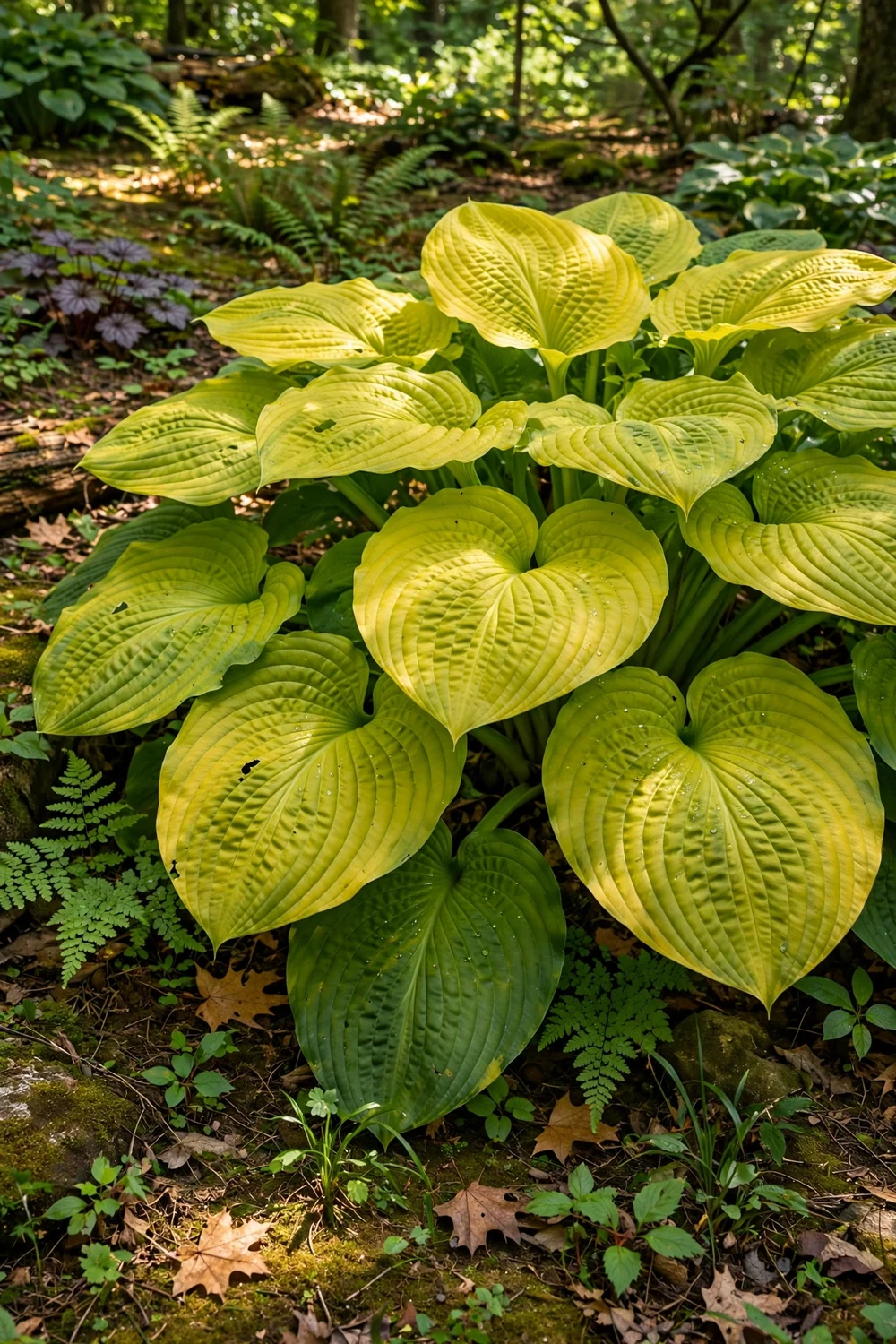
Most hostas stay under 2 feet, but Sum and Substance is the giant of the family, reaching 3 feet tall and 6 feet wide with huge chartreuse leaves. It tolerates deep shade and fills space fast. Slugs love hostas, so set out beer traps or iron phosphate bait in spring. Water at the base to keep leaves dry and reduce slug damage. Zones 3 to 9. Note: hostas are toxic to cats and dogs if eaten, so site them away from pet play areas.
Try this: pair it with dark heuchera for a striking leaf contrast. Difficulty: easy | Height: 2 to 3 ft
3. Astilbe
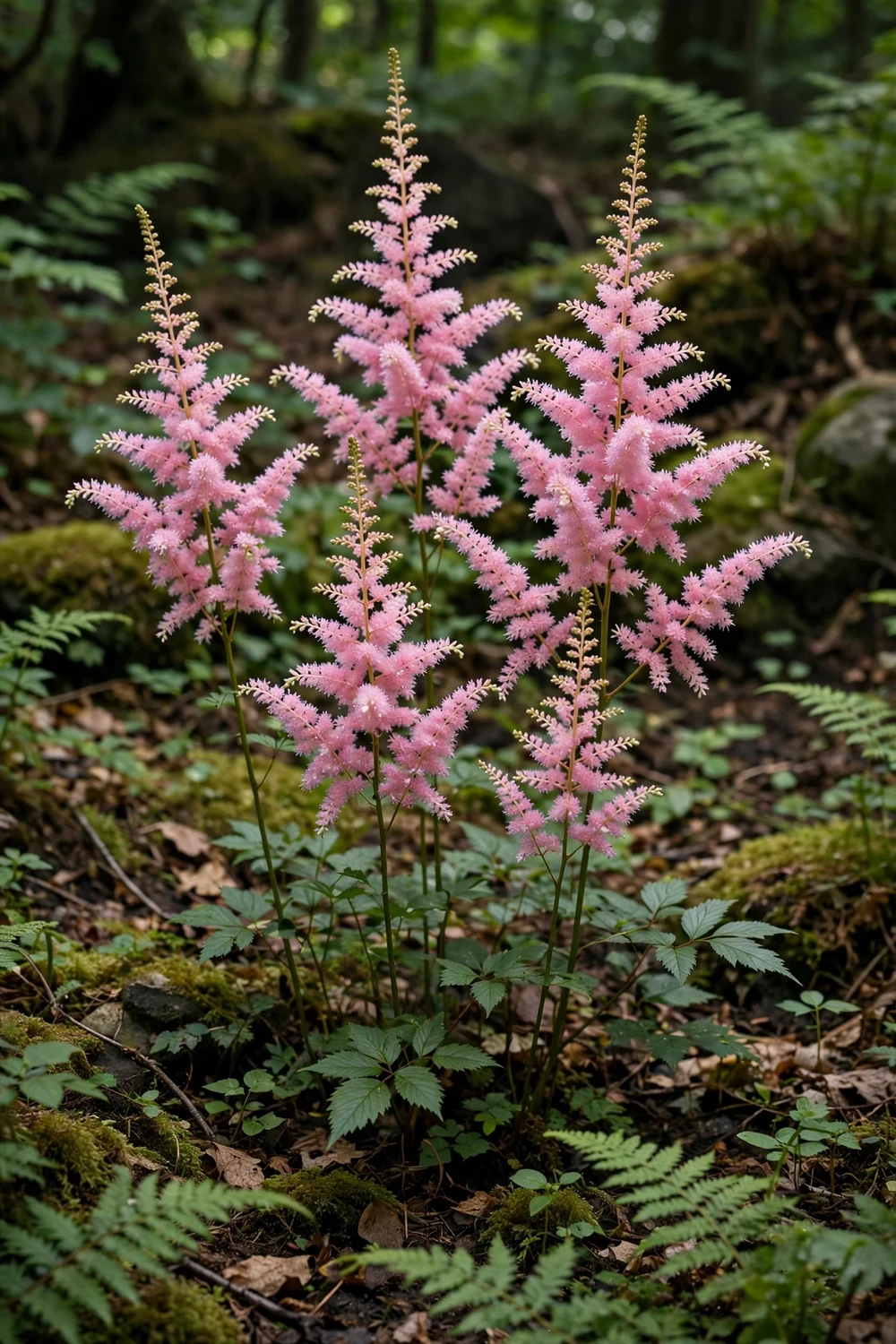
Astilbe brings feathery flower plumes in pink, red, and white to shade where few plants bloom. Varieties like Astilbe chinensis reach 2 to 4 feet tall on sturdy stems. It needs consistently moist soil and sulks in dry shade, so mulch heavily and water through dry spells. Deadhead spent plumes or leave them standing for winter texture. Divide crowded clumps every 3 to 4 years in spring. Zones 4 to 9. Generally pet-safe.
Try this: plant it at the edge of a rain garden or low spot. Difficulty: easy | Height: 2 to 4 ft
4. Oakleaf hydrangea

Oakleaf hydrangea is a native shrub that reaches 6 to 8 feet in shade, with big white flower clusters that age to pink. Its oak-shaped leaves turn red and burgundy in fall, and the peeling cinnamon bark adds winter interest. It needs no pruning except to remove dead wood, since it blooms on old wood. Give it room to reach its natural vase shape. Zones 5 to 9. Note: hydrangeas are toxic to pets if ingested.
Try this: plant it where you see the fall color from a window. Difficulty: easy | Height: 6 to 8 ft
For the front of the house, these beautiful plants to decorate your home entrance include more statement shrubs for entries.
5. Japanese kerria
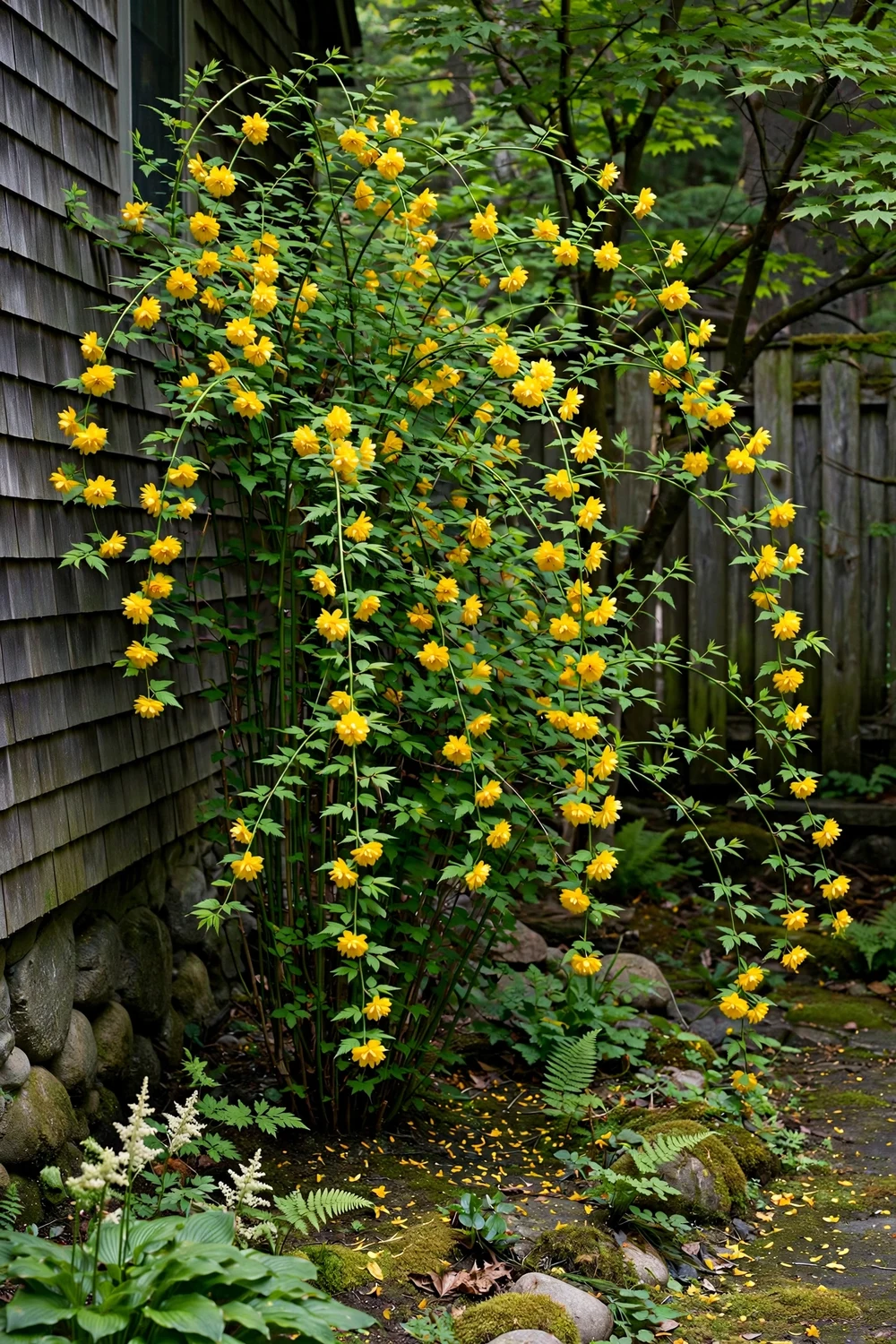
Japanese kerria brightens shade with cheerful yellow spring flowers on arching green stems that stay green all winter. It grows 6 to 10 feet tall and suckers gently to form a thicket. Prune right after flowering, since it blooms on old wood. It tolerates neglect, poor soil, and deep shade better than almost any flowering shrub. The single-flowered type looks more natural than the double. Zones 4 to 9. Non-toxic to pets.
Try this: use it to hide an ugly fence in a shady side yard. Difficulty: easy | Height: 6 to 10 ft
6. Camellia

Camellia is the evergreen anchor of Southern shade gardens, reaching 6 to 12 feet with glossy dark leaves and rose-like winter flowers. It needs acidic, well-drained soil and shelter from harsh morning sun in winter, which can damage buds. Mulch with pine straw to keep roots cool and add acidity. Choose cold-hardy varieties like the April series for zone 6. Zones 6 to 9, some to zone 7 with protection. Non-toxic to pets.
Try this: plant it on the east side of the house for gentle morning light. Difficulty: moderate | Height: 6 to 12 ft
7. Fatsia japonica

Fatsia japonica looks like a tropical plant that wandered into a shade garden, with huge glossy lobed leaves on stems up to 10 feet tall. It thrives in full shade with moist soil and even tolerates urban pollution. White ball-shaped flower clusters appear in fall, followed by black berries. It can look leggy with age, so prune hard in spring to force bushy regrowth. Zones 7 to 10. Mildly toxic to pets if chewed in quantity.
Try this: grow it in a large pot to overwinter indoors in cold zones. Difficulty: easy | Height: 6 to 10 ft
8. Rodgersia

Rodgersia is the boldest perennial for wet shade, with horse-chestnut-like leaves on plants 3 to 5 feet tall and pink or white flower plumes in summer. It demands consistently moist soil and wilts fast in dry spots, so site it near water or in a low area. The bronze spring foliage is as showy as the flowers. It spreads slowly into an impressive clump. Zones 5 to 8. Non-toxic to pets.
Try this: plant it beside a shaded stream or pond edge. Difficulty: moderate | Height: 3 to 5 ft
9. Foxglove
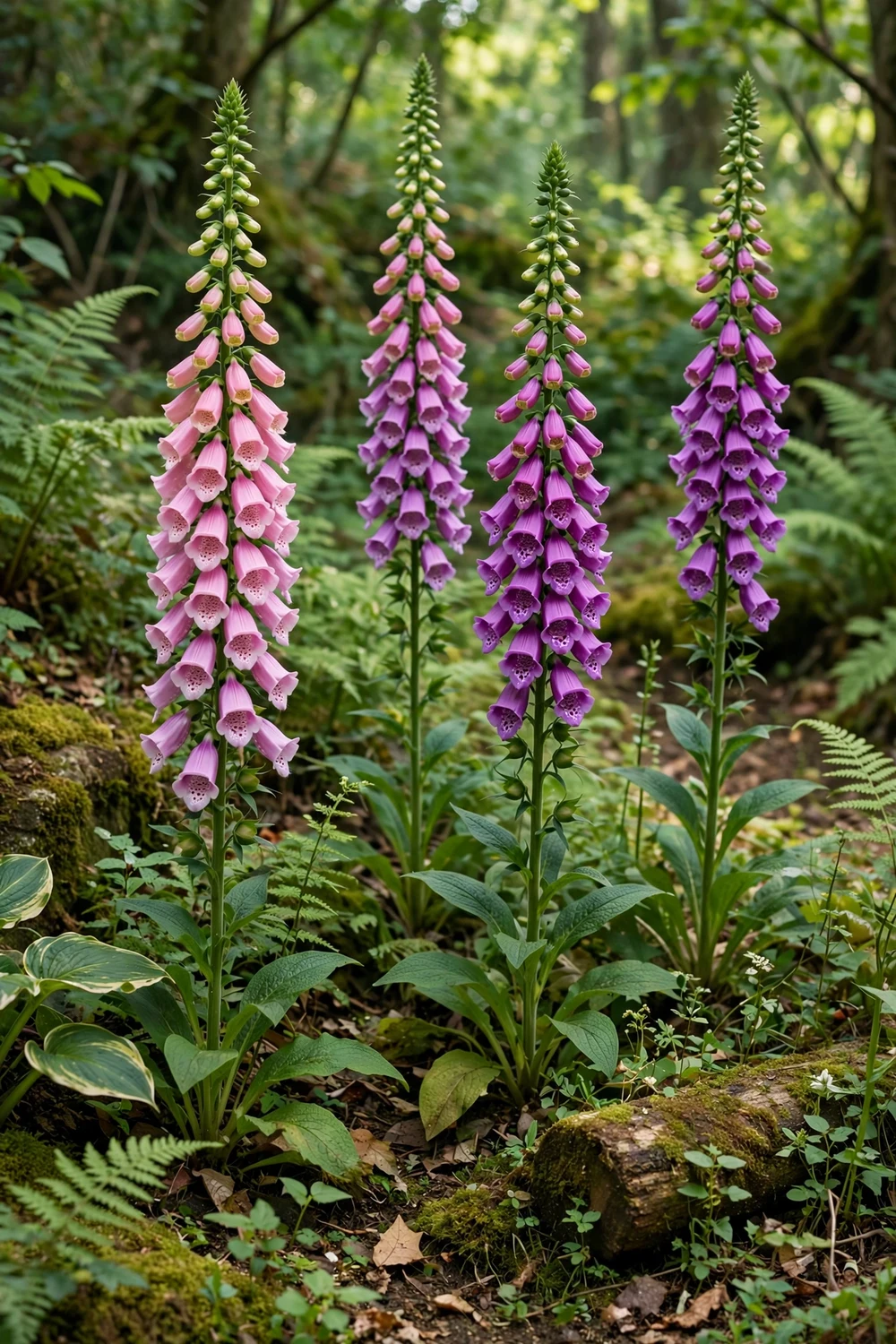
Foxglove sends up spectacular spires of tubular flowers 4 to 6 feet tall in partial shade. It is a biennial, flowering in its second year, then self-sowing to return. Let a few seed heads ripen and scatter for a permanent colony. It prefers moist, well-drained soil and some morning sun for the best bloom. Deadhead the main spike to encourage side shoots. Zones 4 to 8. Important: all parts are highly toxic to people and pets. Wear gloves and site away from play areas.
Try this: plant behind shorter perennials so the spires rise above them. Difficulty: easy | Height: 4 to 6 ft
10. Hellebore
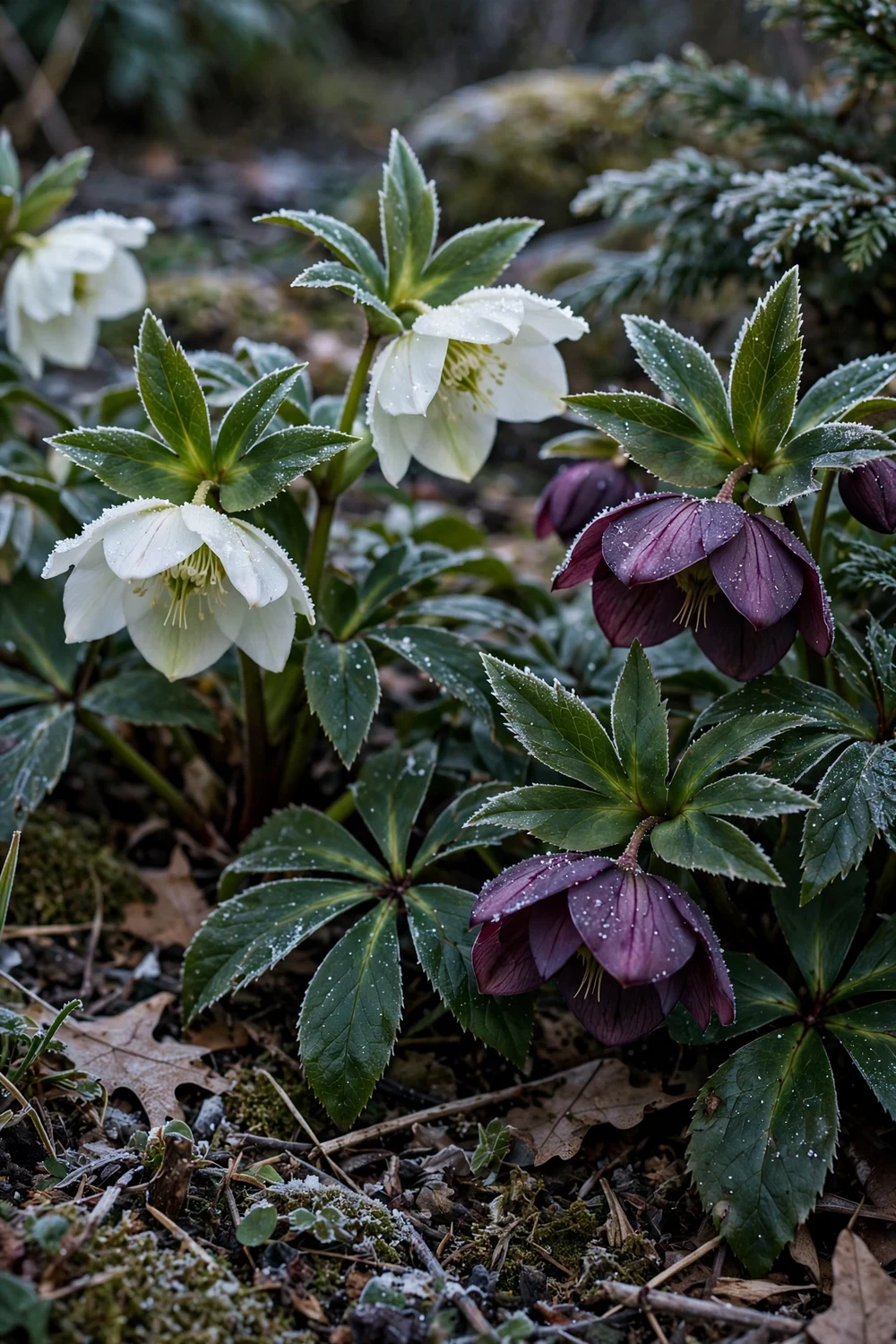
Hellebore, or Lenten rose, is the first flower of the shade garden, blooming in late winter when nothing else dares. Evergreen foliage reaches 1 to 2 feet, with nodding flowers in white, pink, purple, and near-black. It needs well-drained soil and resents being moved once established. Remove last year’s tattered leaves in late winter to show off the blooms. Zones 4 to 9. Note: all parts are toxic to pets and people if eaten.
Try this: plant it along a path you walk in February for maximum joy. Difficulty: easy | Height: 1 to 2 ft
11. Holly fern

Holly fern is the evergreen fern for shade, holding glossy, holly-shaped fronds about 2 to 3 feet tall through winter. Unlike deciduous ferns, it gives the shade garden structure in January. It tolerates dry shade better than most ferns once established, a rare and useful trait. Plant it in well-drained soil and avoid waterlogged spots. Remove only damaged fronds in spring. Zones 6 to 10. Non-toxic to pets.
Try this: use it as a winter-green edge along a shaded walkway. Difficulty: easy | Height: 2 to 3 ft
12. Ligularia

Ligularia, or golden groundsel, brings drama to wet shade with huge round leaves and tall spikes of golden-yellow daisy flowers reaching 3 to 6 feet. It wilts dramatically in afternoon heat even in shade, then perks up by evening, so consistent moisture is key. The variety Britt-Marie Crawford has stunning chocolate-purple foliage. Divide in spring if the clump gets congested. Zones 4 to 8. Check with your vet for pet concerns, as toxicity data is limited.
Try this: site it where you will see the wilt-and-recover show from the patio. Difficulty: moderate | Height: 3 to 6 ft
13. Goatsbeard
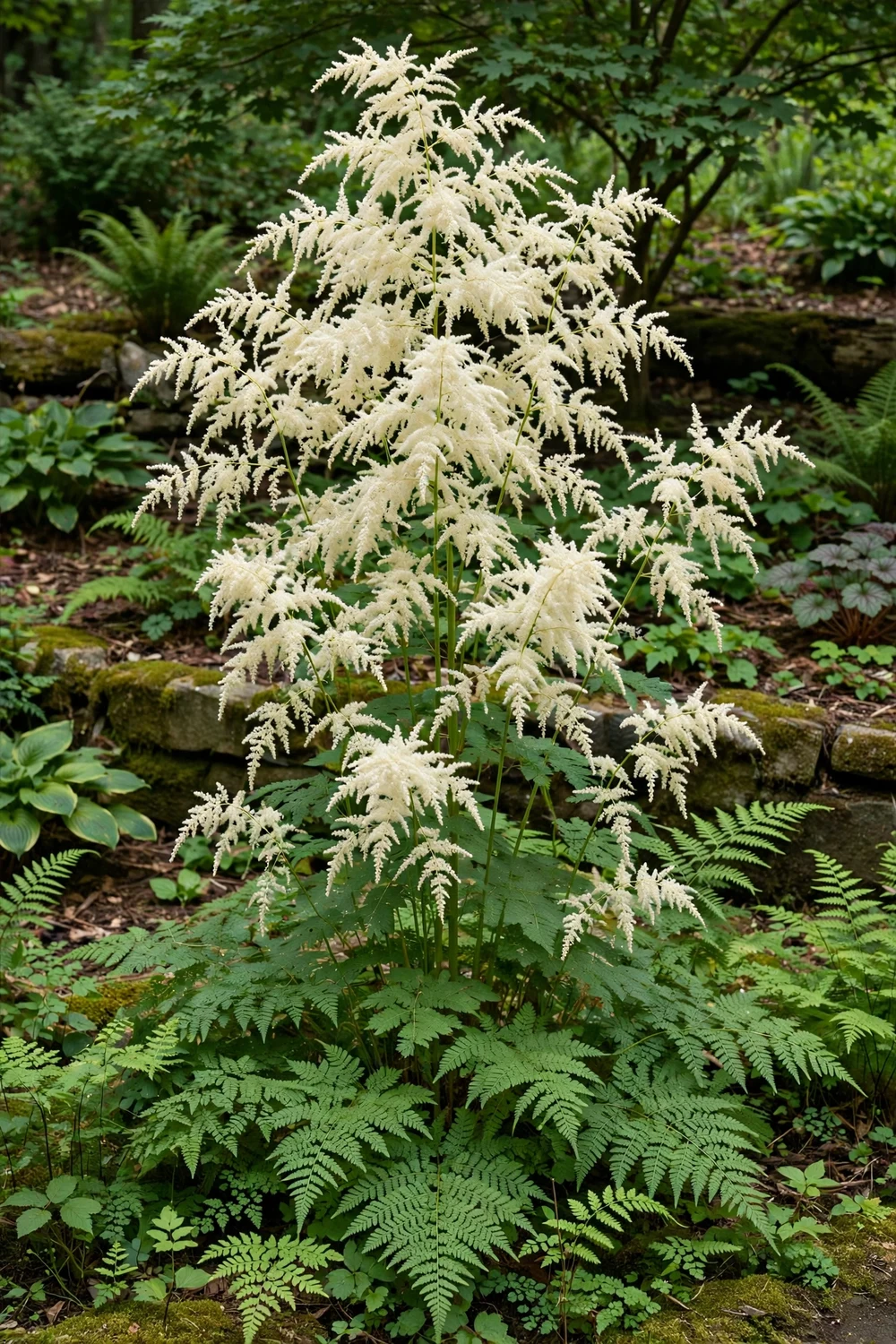
Goatsbeard is like a giant astilbe, sending up creamy white plumes 4 to 6 feet tall over ferny foliage in early summer. Male plants have the showiest flowers. It needs moist soil and space, since a mature clump spans 4 feet. Once established it is long-lived and trouble-free. Cut the whole plant back in late fall. It looks best at the back of a shade border where its height shows. Zones 3 to 8. Non-toxic to pets.
Try this: plant three in a triangle for a full, woodland look. Difficulty: easy | Height: 4 to 6 ft
14. Black cohosh

Black cohosh, or Actaea, is the native star of late-summer shade, with bottlebrush white flower spikes rising 4 to 6 feet above dark divided foliage. The variety Brunette has purple-black leaves that glow in shade. It needs rich, moist soil and resents drought. The flowers have a distinctive scent that some love and some do not, so sniff before you commit to a big drift. Zones 3 to 8. Toxic to pets if ingested, so site carefully.
Try this: plant it where evening light backlights the white spikes. Difficulty: moderate | Height: 4 to 6 ft
15. Mountain laurel
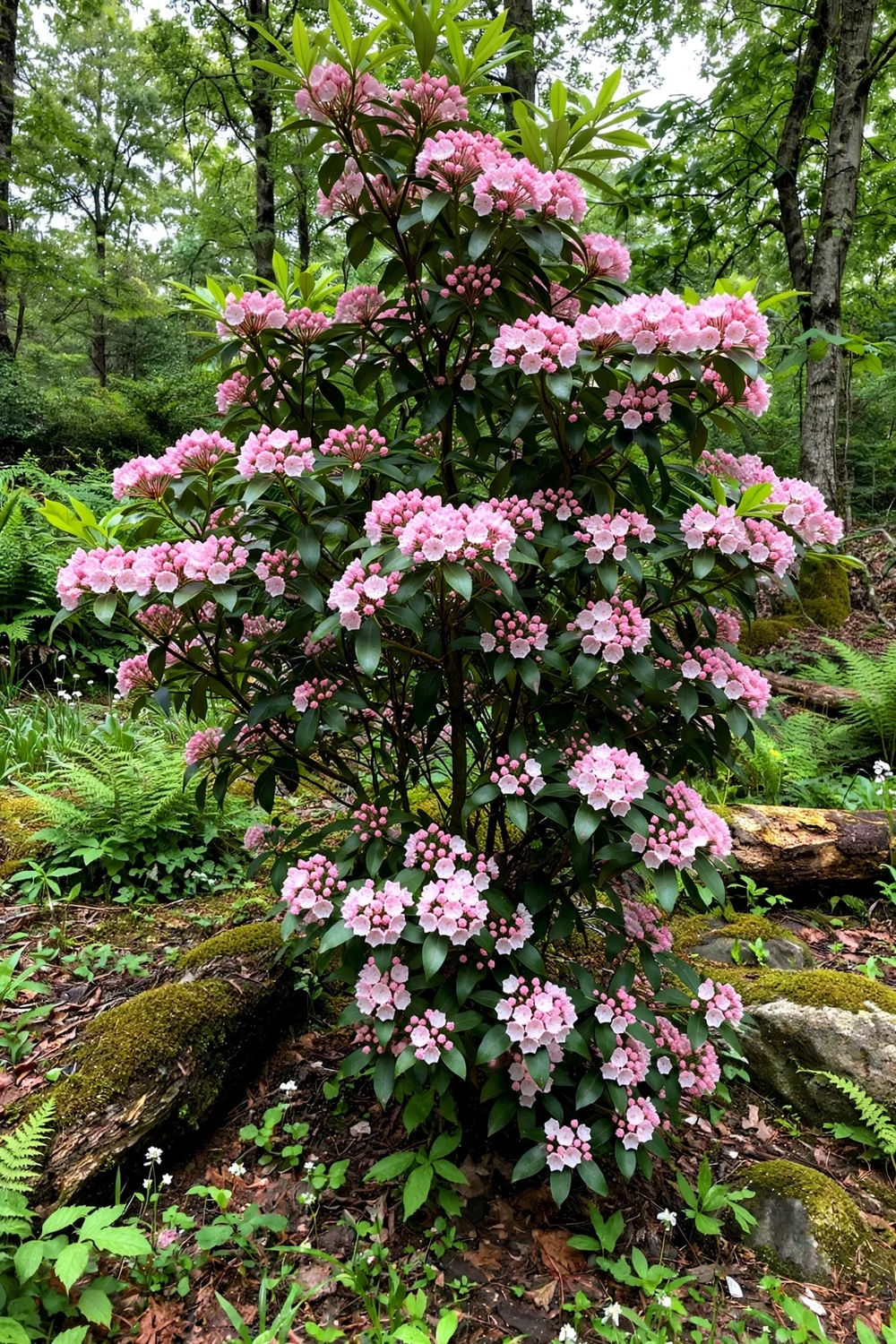
Mountain laurel is a native evergreen shrub reaching 5 to 15 feet in partial shade, with spectacular clusters of pink or white cup-shaped flowers in late spring. It needs acidic, well-drained soil and does not tolerate wet feet. Prune lightly after flowering to shape. It is slow-growing but extremely long-lived. Zones 4 to 9. Important: all parts are highly toxic to people, pets, and livestock. Never plant where animals browse.
Try this: underplant with ferns to cover its naturally leggy base. Difficulty: moderate | Height: 5 to 15 ft
16. Solomon’s seal

Solomon’s seal arches gracefully 2 to 3 feet tall in shade, with dangling white bell flowers in spring and blue-black berries in fall. The variegated form lights up dark corners. It spreads slowly by rhizomes into elegant colonies and needs almost no care once established. Sawfly larvae can chew the leaves in some years, but the plant recovers. Cut stems to the ground in late fall. Zones 3 to 8. Berries are toxic to pets if eaten.
Try this: let it naturalize under deciduous trees for a woodland floor. Difficulty: easy | Height: 2 to 3 ft
How to read your shade before planting
Not all shade is equal, and matching the plant to the shade type is half the battle. Dappled shade under high tree branches suits the widest range, including foxglove, astilbe, and camellia. Partial shade with 3 to 6 hours of gentle morning sun works for hydrangeas and kerria. Deep, all-day shade beside a north wall limits you to the toughest plants: ferns, hostas, hellebores, and fatsia. Watch your spot through one full day before buying, noting when, if ever, direct sun arrives.
If you want the same low-light tolerance indoors, these indoor plants for low light thrive almost anywhere in the house.
Shade garden mistakes to avoid
The most common mistake is planting sun-lovers in shade and hoping for the best. Check the tag’s light requirement and believe it. Second, forgetting that tree roots drink first. Soil under maples and oaks is dry even in shade, so amend with compost and water new plants deeply their first year. Third, skipping mulch. A 3-inch layer of shredded bark keeps roots cool and moist. Fourth, planting toxic beauties like foxglove and mountain laurel where pets or toddlers roam. Put a fence or a dense border between them and play areas.
Frequently asked questions
What is the tallest plant that grows in full shade?
For perennials, ostrich fern and ligularia reach 6 feet in full shade with moist soil. For shrubs, Japanese kerria and fatsia japonica reach 10 feet, and camellia reaches 12 feet in partial shade. True deep shade limits height, so the tallest options need at least dappled light or a few hours of morning sun.
Can tall shade plants grow under trees?
Yes, but tree roots compete hard for water and nutrients. Choose tough competitors like hostas, ferns, and hellebores, amend the planting hole with compost, and water deeply the first year. Avoid piling soil against the tree trunk, which can harm the tree.
Which tall shade plants are safe for pets?
Ostrich fern, holly fern, astilbe, Japanese kerria, camellia, goatsbeard, and rodgersia are considered non-toxic. Avoid foxglove, mountain laurel, hellebore, and hostas where pets chew plants. The ASPCA maintains a searchable database of toxic and non-toxic plants worth checking before you plant.
Do shade plants need fertilizer?
Most need less than sun plants, but shade under trees is nutrient-poor. Top-dress with compost each spring, which feeds gently and improves the soil. Heavy feeders like astilbe and ligularia appreciate a balanced slow-release fertilizer in spring. Skip fertilizing after midsummer so new growth hardens before winter.
How do I add color to a shady garden?
Use foliage color first: chartreuse hostas, purple-black actaea, and variegated Solomon’s seal glow in shade. For flowers, astilbe plumes, foxglove spires, camellia blooms, and kerria’s yellow flowers carry the color. White and pale flowers show best in low light, so favor them over deep reds and purples. These best purple perennials add more color options for partly shaded beds.
Shade does not have to mean short and boring. With the right plants, a dark corner can hold 6-foot ferns, flowering shrubs, and winter evergreens. Start by reading your shade type, pick two or three plants from this list that match it, and plant this season. The lush part of your yard is waiting.
Keep the inspiration going with 15 Creative Shade Plants That Deer Avoid.


