


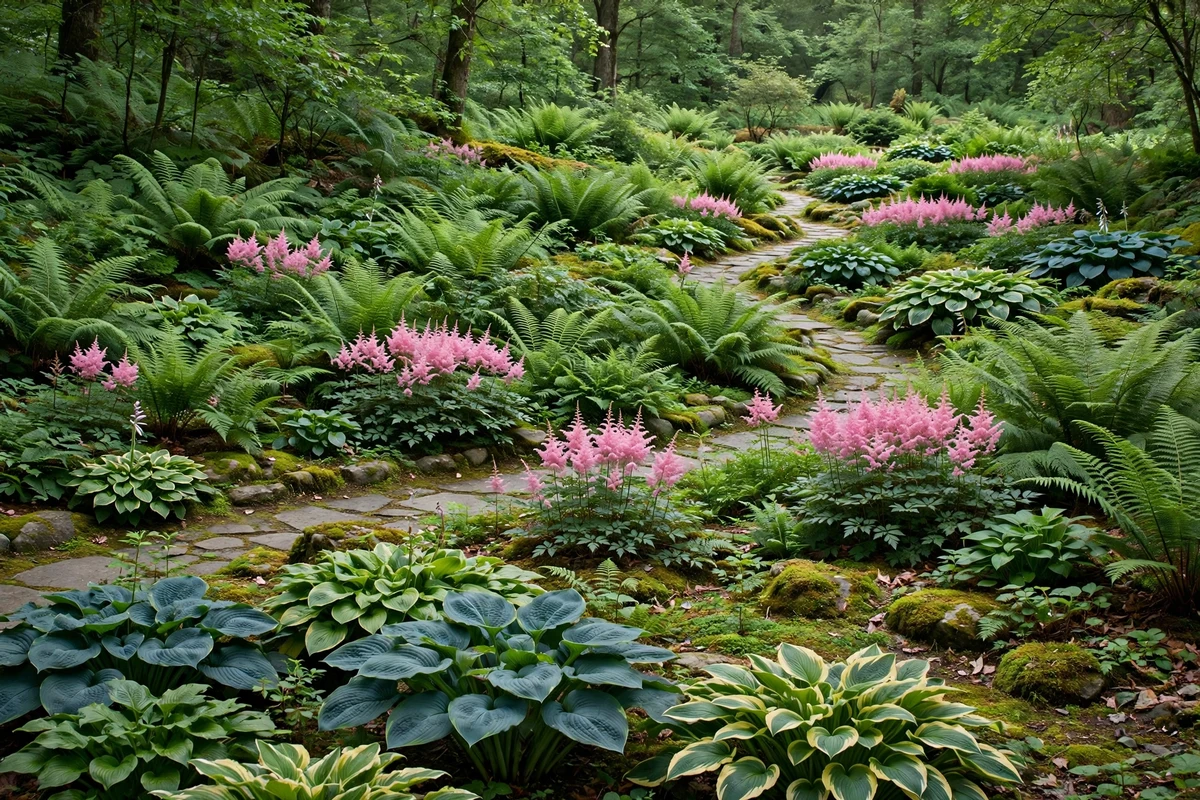
A shady corner of the yard can feel like a dead zone. Grass turns patchy, flowers refuse to bloom, and every trip to the garden center ends with another sun-loving plant that dies within a month. If your yard sits under big trees or faces north, you know this frustration well.
These 20 full shade landscaping ideas are built for spots that get less than 3 hours of direct sun a day. You will find layered planting plans, ground covers that replace struggling lawn, paths and seating ideas, and the mistakes that ruin most shade gardens. Most projects cost under $150 and suit a beginner.
Quick takeaways
- Full shade means under 3 hours of direct sun daily. Dappled light under trees often counts as part shade instead.
- Layer plants by height: ground cover in front, mid-size perennials in the middle, ferns and shrubs at the back.
- Texture and leaf color carry a shade garden. Gold, lime, and variegated foliage read as “flowers” in low light.
- Never pile mulch against a tree trunk. Keep a 3 to 4 inch ring pulled back several inches from the bark.
- Water shade beds under trees more than you expect. Tree roots drink first.
1. Layer hostas from large to small
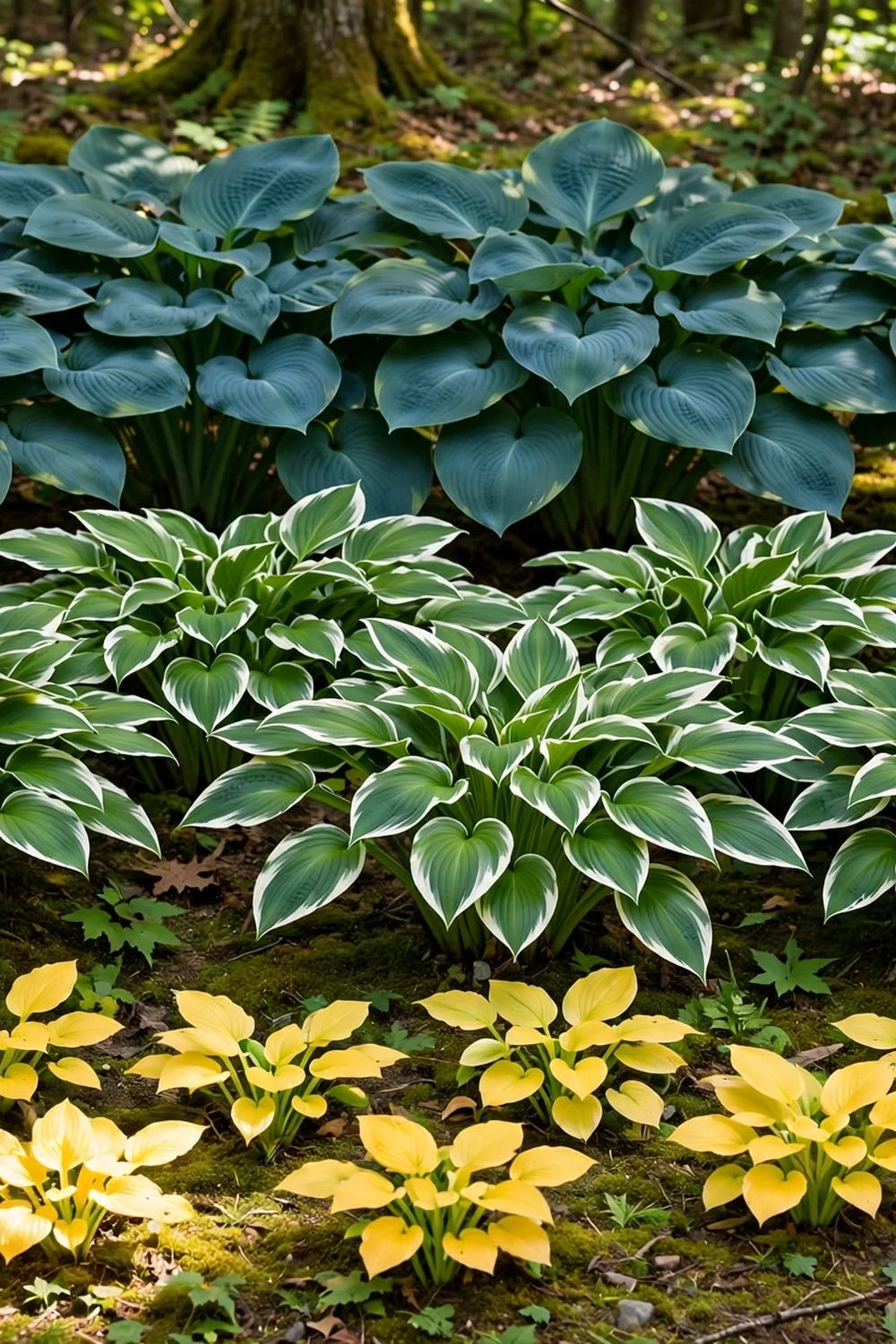
Hostas are the backbone of most shade gardens because they ask for almost nothing and give back big, bold leaves. The trick is layering: plant giant varieties like ‘Blue Angel’ or ‘Sum and Substance’ at the back, medium ones like ‘Patriot’ with its white edges in the middle, and small gold types like ‘Fire Island’ up front. Space large hostas 3 feet apart and small ones 18 inches. They spread fast, so buy fewer than you think you need. Most hostas grow in zones 3 to 9 and return bigger every spring.
If you want to go deeper on hosta care, our hosta gardening tricks cover dividing, slug control, and variety picks in detail.
Try this: divide an established hosta clump in early spring and replant the divisions for free plants that fill gaps by summer. Cost: $$. Difficulty: Easy. Safety note: hosta leaves are toxic to dogs and cats, so keep curious pets from chewing them.
2. Drift of ferns under a tree

Few things look more natural in deep shade than a sweeping drift of ferns. Ostrich ferns grow 3 to 4 feet tall and spread by underground runners, which means five plants can become a lush colony in two seasons. Plant them 18 inches apart in spring and water deeply the first summer while roots establish. Once settled, they need almost no care beyond cutting brown fronds in late winter. They pair well with hostas because the fine fern texture contrasts with broad hosta leaves. Zones 3 to 8.
Try this: tuck spring bulbs like daffodils among the ferns. The bulbs bloom before fern fronds unfurl, then the ferns hide the dying bulb foliage. Cost: $$. Difficulty: Easy.
3. Astilbe plumes for summer color

Shade gardens often bloom in spring and then go quiet, but astilbe fixes that with feathery plumes in June and July. Colors range from white and soft pink to deep red and purple. ‘Fanal’ gives dark red flowers on bronze foliage, while ‘Bridal Veil’ stays pure white. Astilbe needs consistent moisture, so plant it where downspouts drain or soil stays damp. Mulch with 2 inches of shredded bark to hold water. Deadhead spent plumes or leave them for winter interest. Zones 4 to 9.
Try this: plant astilbe near a drip line or low spot where water collects after rain, and it will bloom harder with less watering from you. Cost: $$. Difficulty: Easy to moderate.
4. Heuchera for year-round foliage color
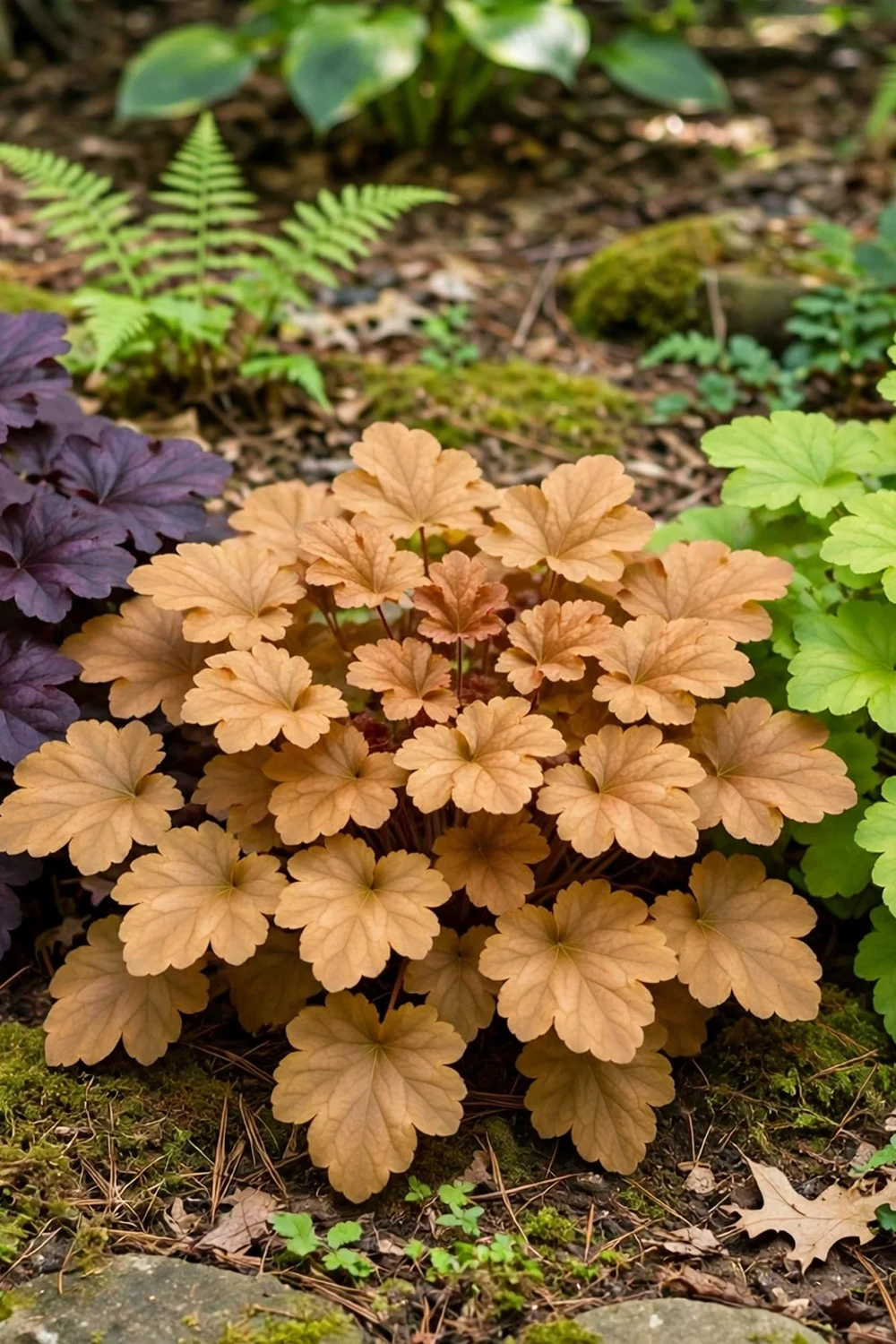
When flowers are scarce, heuchera (coral bells) carries the color load with leaves in purple, caramel, lime, and near-black. Unlike many shade plants, it looks good in winter too, since the foliage is semi-evergreen in mild climates. ‘Palace Purple’ is a classic dark variety, and ‘Caramel’ glows amber in dim corners. Plant crowns exactly at soil level, not buried, or they rot. Give them morning light if any is available and afternoon shade. Zones 4 to 9.
For more color ideas in low light, see our purple perennials roundup, which pairs well with shade foliage.
Try this: pair dark ‘Obsidian’ heuchera with golden Japanese forest grass. The light-dark contrast looks intentional and high-end. Cost: $$. Difficulty: Easy.
5. Golden Japanese forest grass ribbons
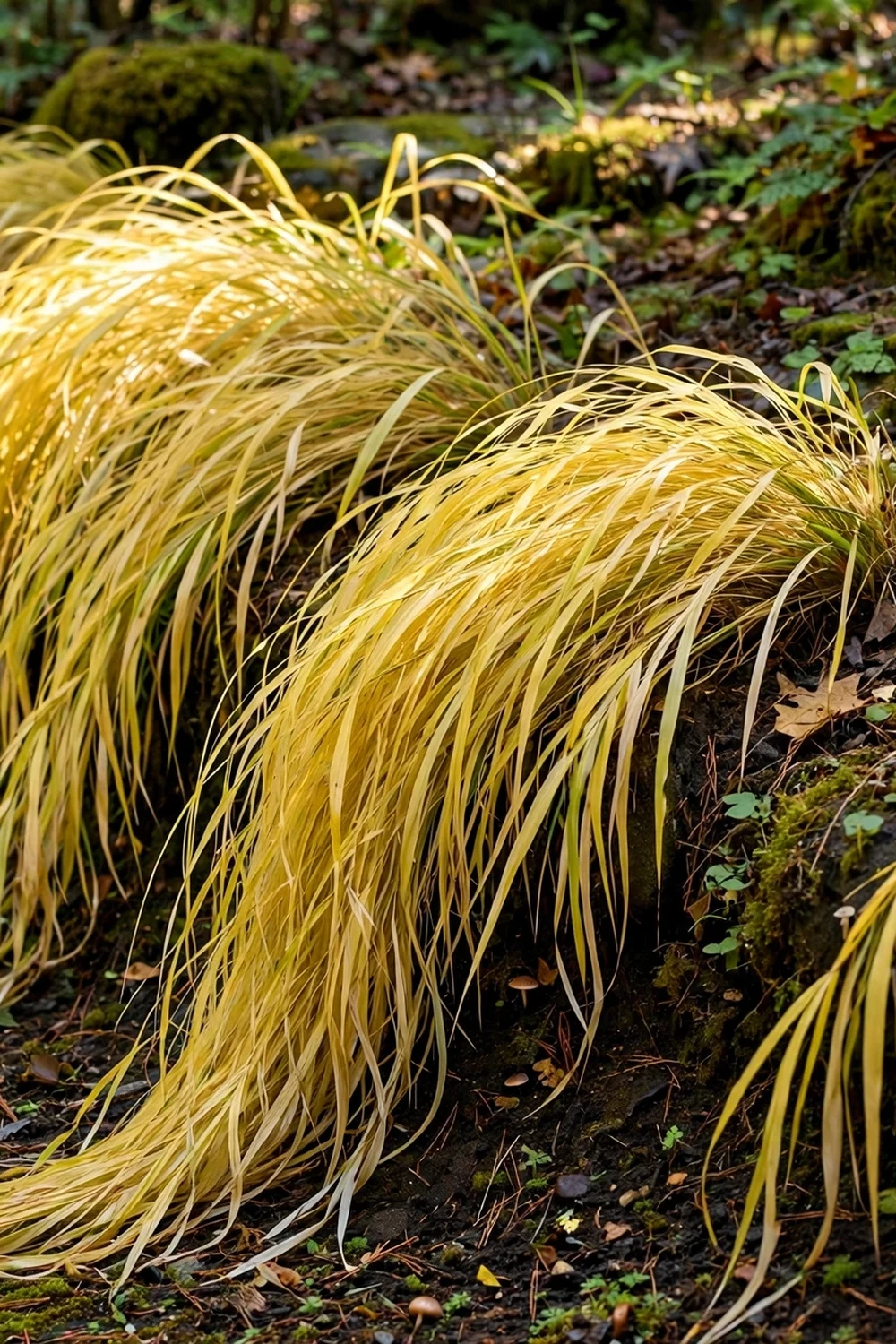
Japanese forest grass (Hakonechloa macra ‘Aureola’) does something rare: it brings glowing gold color into full shade. Its arching blades cascade like a slow waterfall, softening path edges and the fronts of beds. It grows slowly, reaching about 18 inches tall, so plant in groups of three or five for impact. It prefers moist, rich soil and sulks in dry shade until established. Cut it to the ground in late winter before new growth starts. Zones 5 to 9.
Try this: edge a stepping-stone path with forest grass so the gold blades spill over the stones. It reads like a designed landscape feature. Cost: $$. Difficulty: Easy.
6. Hellebores for late-winter flowers

Hellebores bloom when nothing else dares, often pushing flowers through late-winter snow. The cup-shaped blooms in white, pink, plum, and green last for weeks because they are actually modified leaves, not true petals. Plant them where you will see them from a window, since you will enjoy them most in cold months. They are slow to settle but then live for decades and self-sow gently. Cut old foliage in late winter to show off the flowers. Zones 4 to 9.
Try this: plant hellebores along the path to your front door. Winter blooms greet you every time you come home. Cost: $$. Difficulty: Easy. Safety note: all parts of hellebore are toxic if eaten, so site it away from play areas and pets.
7. Bleeding heart as a spring focal point
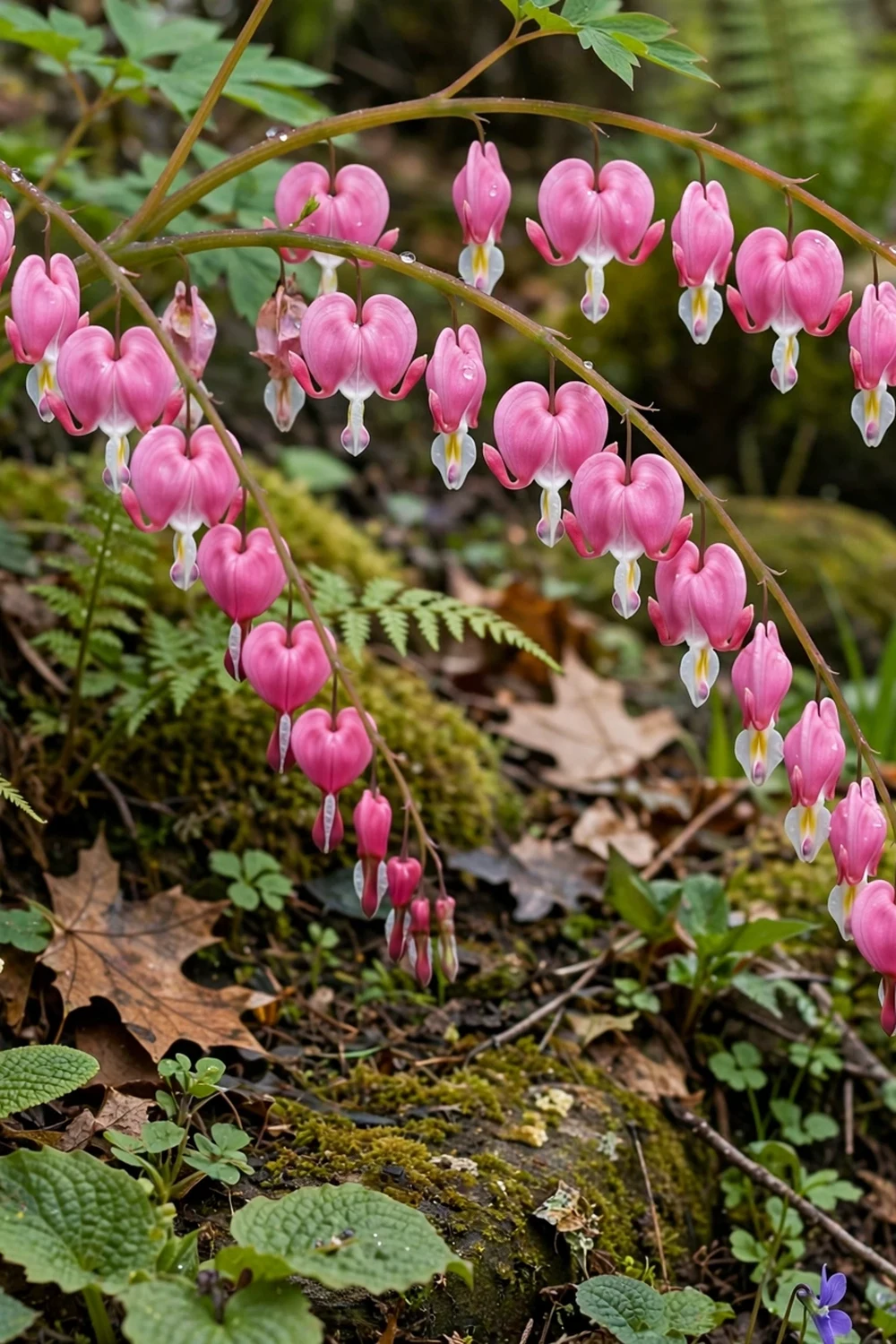
Old-fashioned bleeding heart (Lamprocapnos spectabilis) earns its place with arching stems of heart-shaped pink flowers every spring. It grows 2 to 3 feet tall and wide, so give it room at the middle of the border. The foliage dies back by midsummer, which looks alarming but is normal. Plan for this by planting ferns or hostas nearby to fill the gap. The white form ‘Alba’ glows in deep shade. Zones 3 to 9.
Try this: mark the spot with a small stake when you plant it, so you do not dig into the dormant roots in summer. Cost: $$. Difficulty: Easy. Safety note: bleeding heart is toxic to pets and people if ingested.
8. Solomon’s seal for graceful arches

Solomon’s seal sends up arching 2 to 3 foot stems lined with small white bell flowers in spring, followed by blue-black berries. The variegated form has cream-edged leaves that light up dark corners. It spreads slowly into polite colonies and asks for nothing once established. Plant rhizomes 2 inches deep in fall or spring. It tolerates dry shade better than most perennials, making it a good pick under thirsty trees. Zones 3 to 9.
Try this: let it naturalize at the back of a woodland bed where its arching shape softens a fence line. Cost: $$. Difficulty: Easy.
9. Swap failing lawn for a moss path
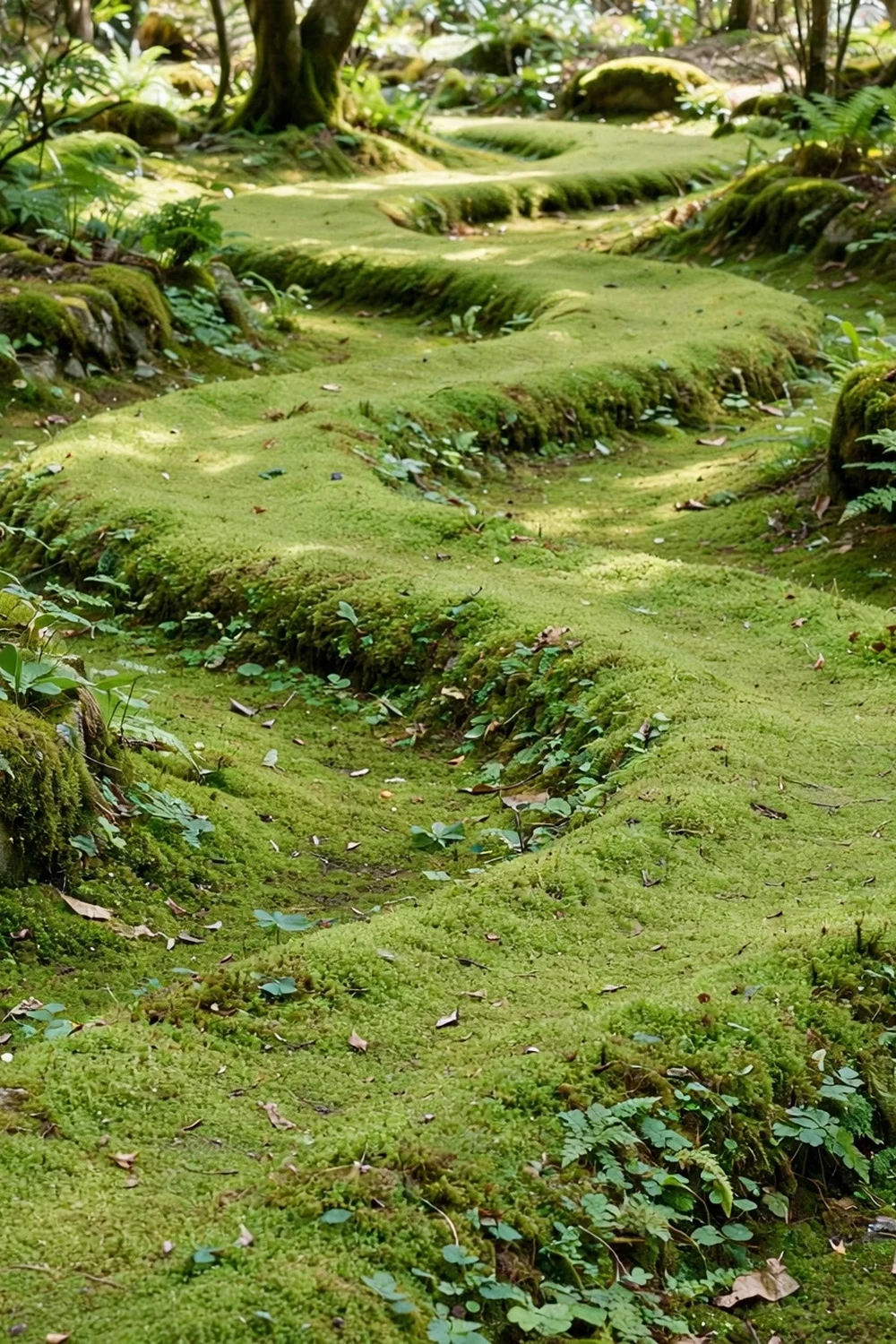
Grass needs sun, and fighting for a lawn in deep shade wastes water and weekends. Moss loves exactly what grass hates: shade, moisture, and acidic soil. Clear the patchy grass, press sheet moss or moss fragments onto bare damp soil, and keep it watered for the first month. It knits into a soft green carpet that never needs mowing. It handles light foot traffic, so it works for secondary paths. For main walkways, set stepping stones into the moss.
Try this: collect moss from your own roof or stones (where it already grows) instead of buying it, and press the pieces onto prepared soil. Cost: $$. Difficulty: Easy. Safety note: moss gets slippery when wet, so add stone steps on any slope.
10. Stepping-stone path through the bed
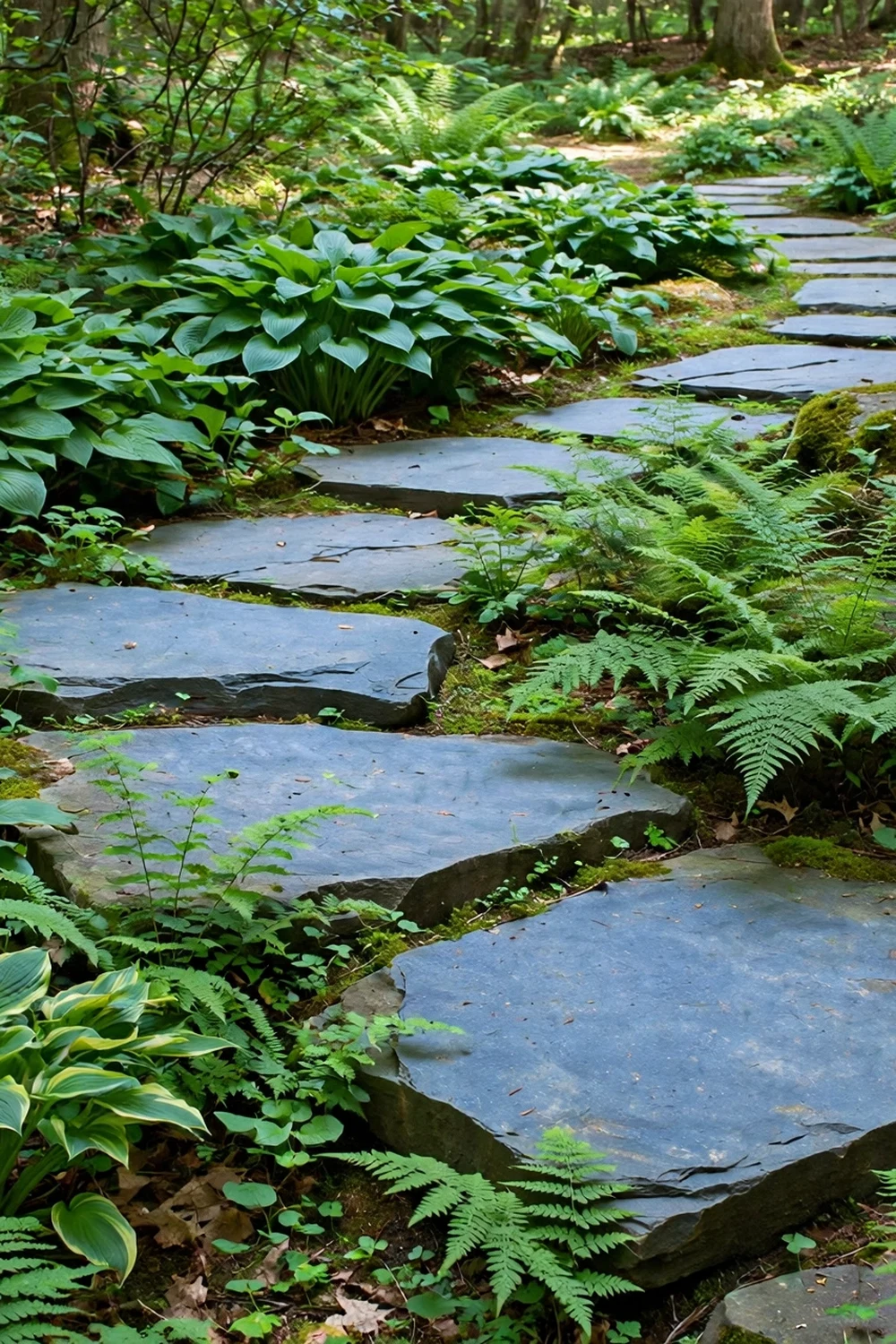
A path turns a shade bed from “look only” into a place you walk through and enjoy. Set large flat stones directly on the soil with 2 to 3 inches of space between them, then plant low ground cover like creeping jenny or moss in the gaps. Lay the stones before planting so you do not crush new plants. Keep the path slightly crowned so water runs off instead of pooling. A curved path looks more natural than a straight one in a woodland setting.
Try this: rent a sod cutter for a day if you are converting lawn. It lifts turf cleanly and saves hours of digging. Cost: $$$. Difficulty: Moderate.
11. Proper mulch ring around tree trunks
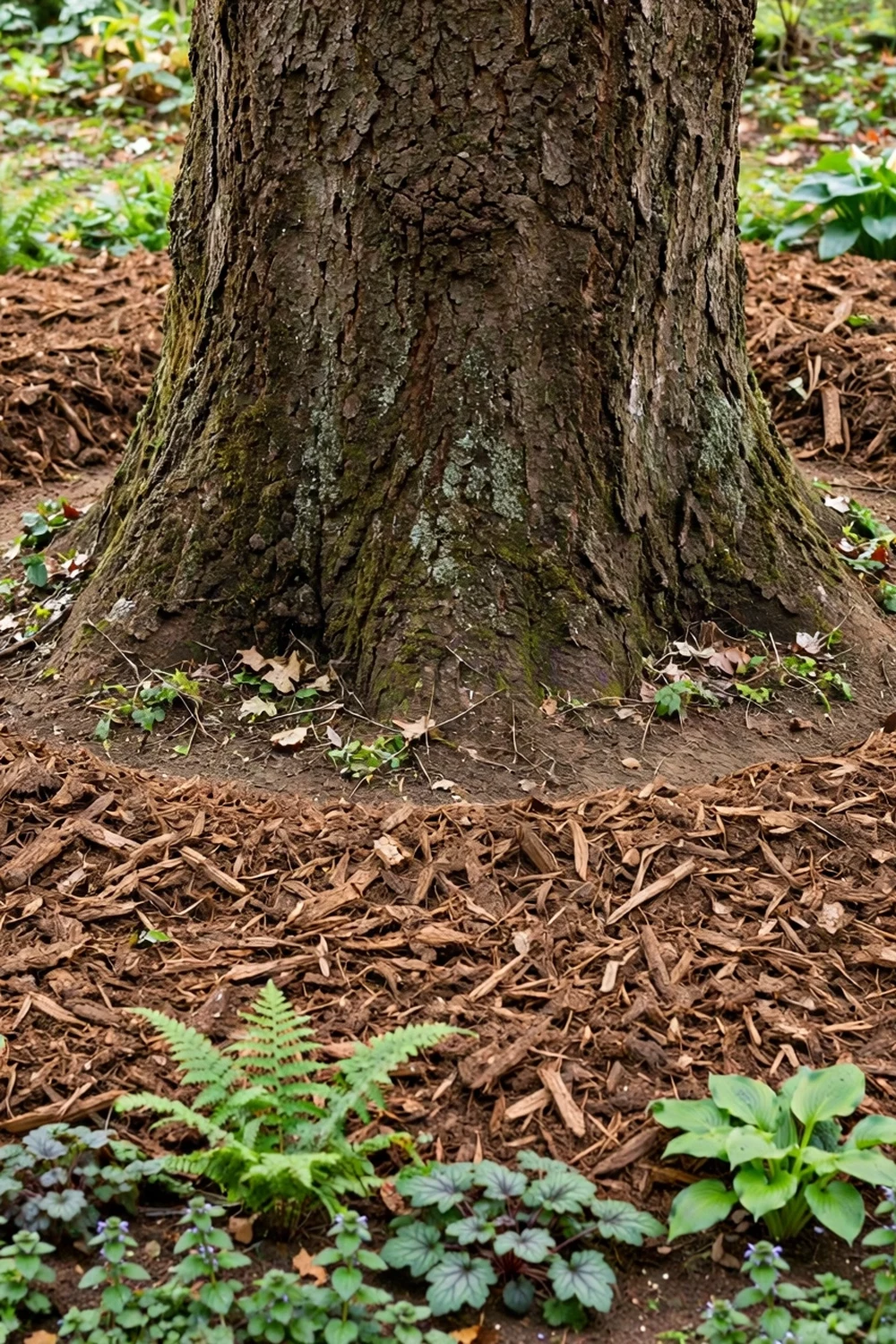
The area under a tree is the hardest shade spot, and a wide mulch ring solves two problems at once: it protects surface roots from mower damage and gives you a defined bed. Spread 3 inches of shredded bark in a ring that extends to the drip line if you can, and pull the mulch back 4 to 6 inches from the trunk. Piling mulch against bark (a “mulch volcano”) traps moisture and rots the trunk. Plant shade perennials in quart-size pots at the outer edge where roots are thinner.
Try this: use arborist wood chips if a local tree service offers them free. They break down slowly and feed the soil. Cost: $$. Difficulty: Easy.
12. Shade container planters for patios
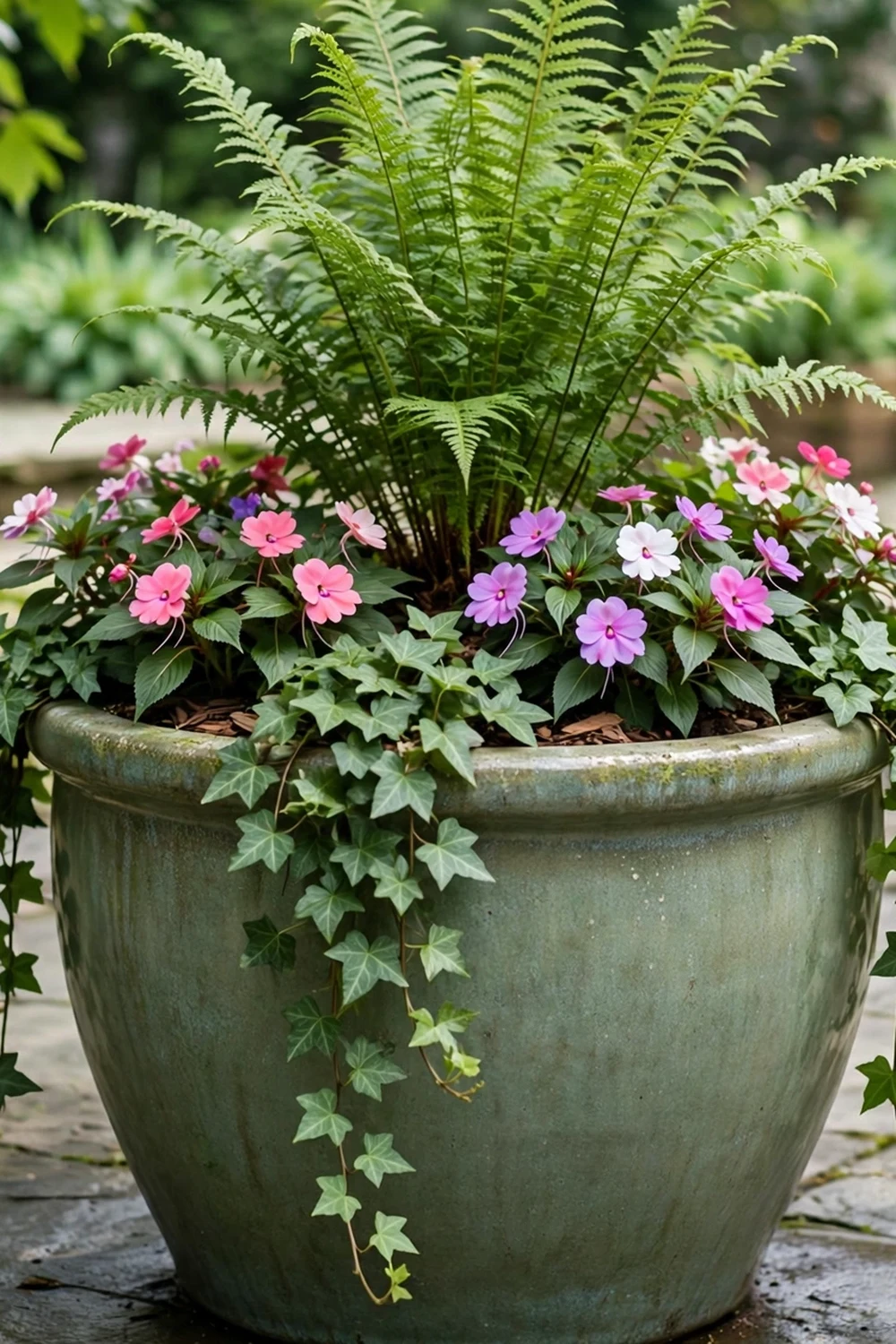
Containers let you garden in shade even where tree roots make digging impossible. Fill a 16-inch pot with a thriller (upright fern), fillers (impatiens or begonias), and a spiller (trailing pothos or ivy). Use potting mix, not garden soil, and check water often because pots under trees dry out fast. Group three pots of different heights for a designed look. Refresh the planting each spring since most shade annuals are one-season plants.
Containers also work beautifully at the front of the house; our home entrance plant ideas show how to style them by the door.
Try this: slip a plastic saucer under each pot on a wood deck to prevent water stains on the boards. Cost: $$. Difficulty: Easy.
13. Caladiums for tropical punch

Caladiums deliver the boldest foliage color of any shade plant, with heart-shaped leaves splashed in pink, red, and white. They thrive in heat and humidity where other shade plants fade. Buy bulbs in spring and plant 2 inches deep after nights stay above 60°F. In zones 9 to 11 they return yearly; elsewhere lift the bulbs in fall or treat them as annuals. White varieties like ‘Moonlight’ brighten the darkest corners.
Try this: start bulbs indoors in pots 4 weeks before the last frost for bigger plants by June. Cost: $. Difficulty: Easy. Safety note: caladium leaves are toxic to pets.
14. Impatiens border for instant color
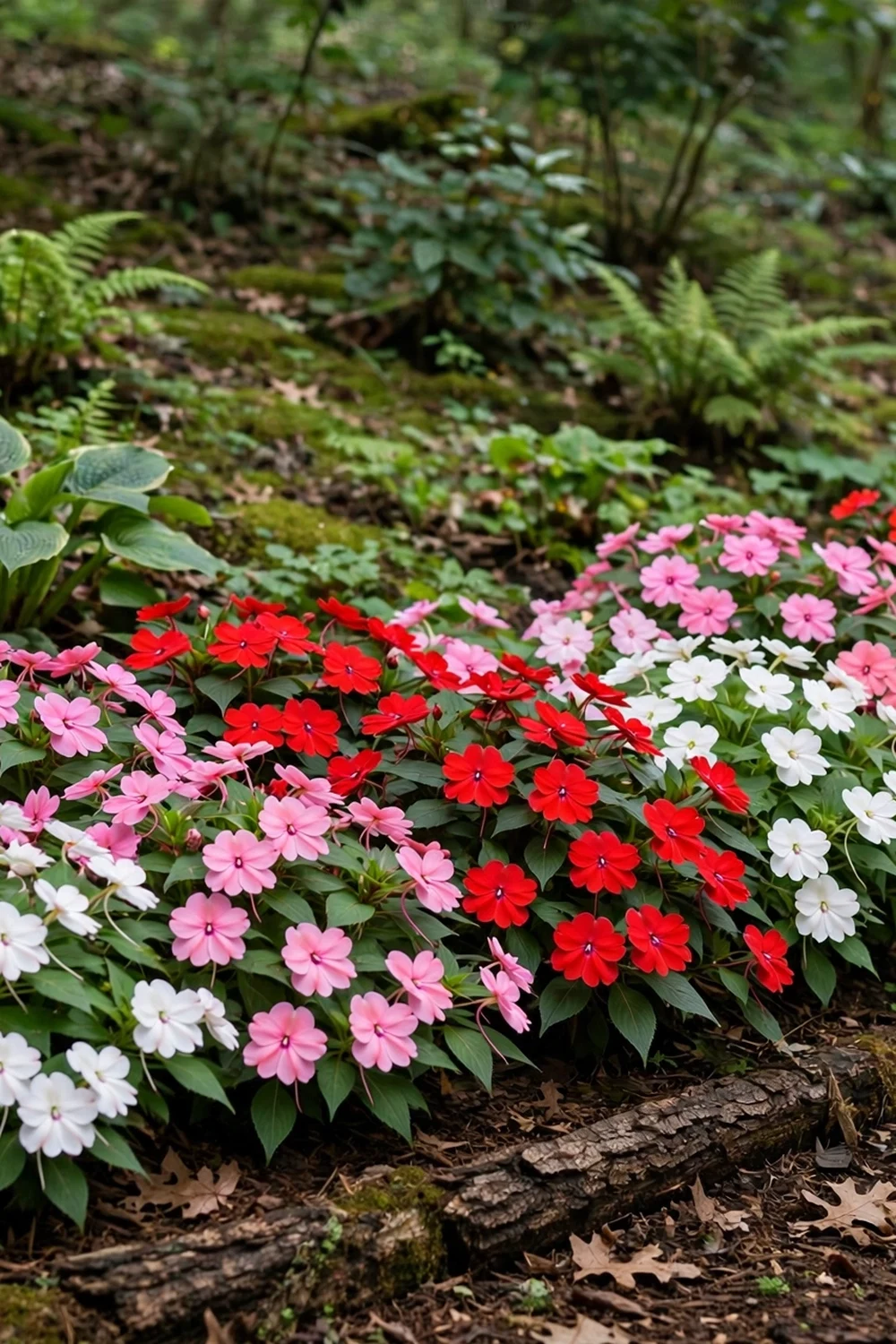
When you need color fast, nothing beats a flat of impatiens. They bloom nonstop from planting until frost in red, pink, white, orange, and purple. Space them 8 to 10 inches apart and they knit into a solid ribbon of flowers within a month. Choose disease-resistant varieties (look for “Beacon” or “Imara” on the tag) to avoid the downy mildew that wiped out older types. Keep them watered in the first two weeks; after that they are forgiving.
Try this: plant a single color in a long drift instead of mixing. A solid band of white impatiens looks far more designed than a rainbow jumble. Cost: $. Difficulty: Easy.
15. Native woodland bed

Native woodland plants are already adapted to your region’s shade, soil, and rainfall, which means less watering and fewer replacements. Foamflower (Tiarella) gives foamy spring blooms and semi-evergreen leaves. Wild ginger makes a dense ground cover with heart-shaped leaves. Trillium adds spring flowers but spreads slowly, so buy nursery-propagated plants, never wild-dug. Check your state extension service for a native plant list matched to your county, and confirm your zone on the USDA Plant Hardiness Zone Map before ordering. Zones vary by species.
Try this: top-dress the bed with shredded leaves each fall. It mimics the forest floor and feeds the soil for free. Cost: $$. Difficulty: Easy.
16. Mirror or light-colored art to bounce light
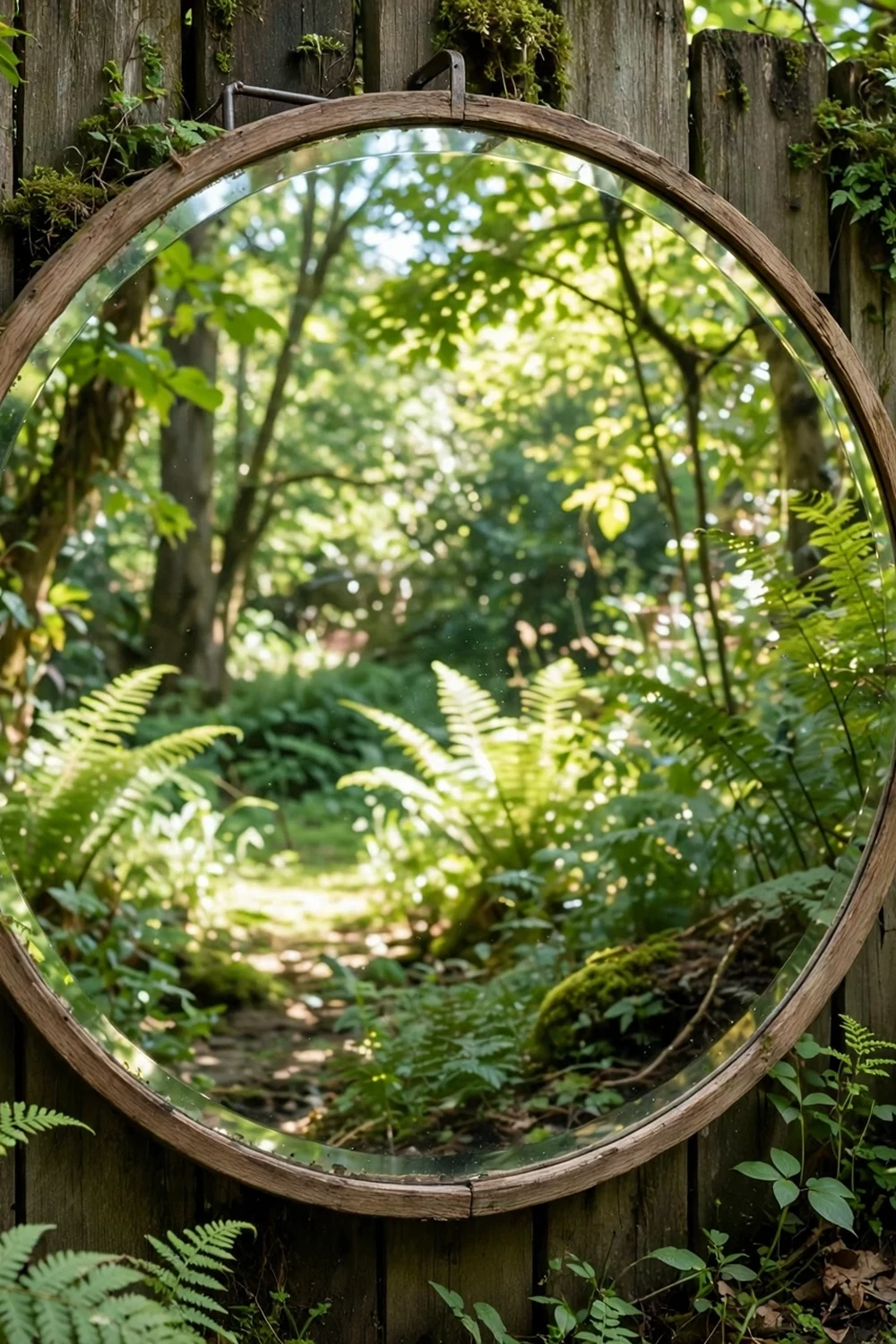
Dark corners feel darker because light gets absorbed. A weatherproof mirror or a pale sculptural piece bounces the available light around and makes the space feel larger. Mount an acrylic mirror (safer than glass outdoors) on a fence or wall where it catches dappled light. White or pale-blue garden art does the same job without reflection. Keep the piece simple; in a small shade garden one focal object beats a collection.
Try this: angle the mirror so it reflects plants, not the house wall. Reflected greenery doubles the lush feeling. Cost: $$. Difficulty: Easy.
17. Seating nook under a pergola
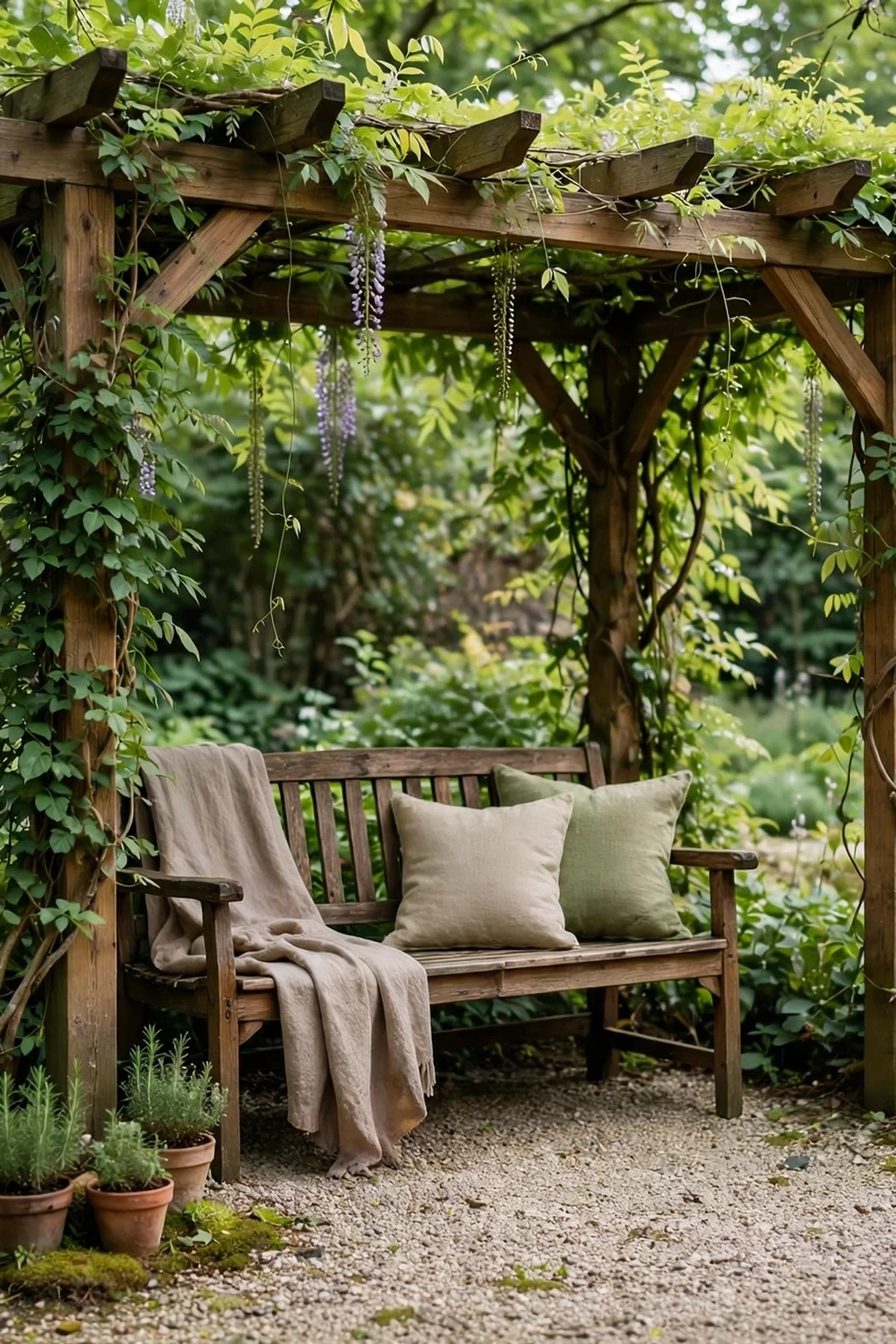
Shade is a gift on hot afternoons, so claim it with a seating nook. A simple 8-foot pergola kit over a bench or two chairs turns dead space into the coolest spot in the yard. Grow a shade-tolerant vine like climbing hydrangea up the posts for softness. Lay gravel or pavers underfoot so the seating area stays mud-free. Face the bench toward the best view of the garden, not the fence.
Try this: add a small outdoor rug rated for damp locations. It defines the nook and feels good underfoot. Cost: $$$. Difficulty: Moderate. Safety note: anchor the pergola posts with concrete footings so wind cannot topple it.
18. Stone bench as a focal point

Every garden needs a destination, and a stone bench at the end of a path gives the eye somewhere to land. Natural stone or cast-stone benches weather well in damp shade and need zero maintenance. Place it where the path naturally ends, then plant fragrant shade plants like sweet woodruff nearby so sitting there is a full-sense experience. A bench also signals that the shade garden is intentional, not neglected.
Try this: set the bench on a compacted gravel pad so it sits level and stays out of the mud. Cost: $$$. Difficulty: Easy.
19. Small bubbling water feature
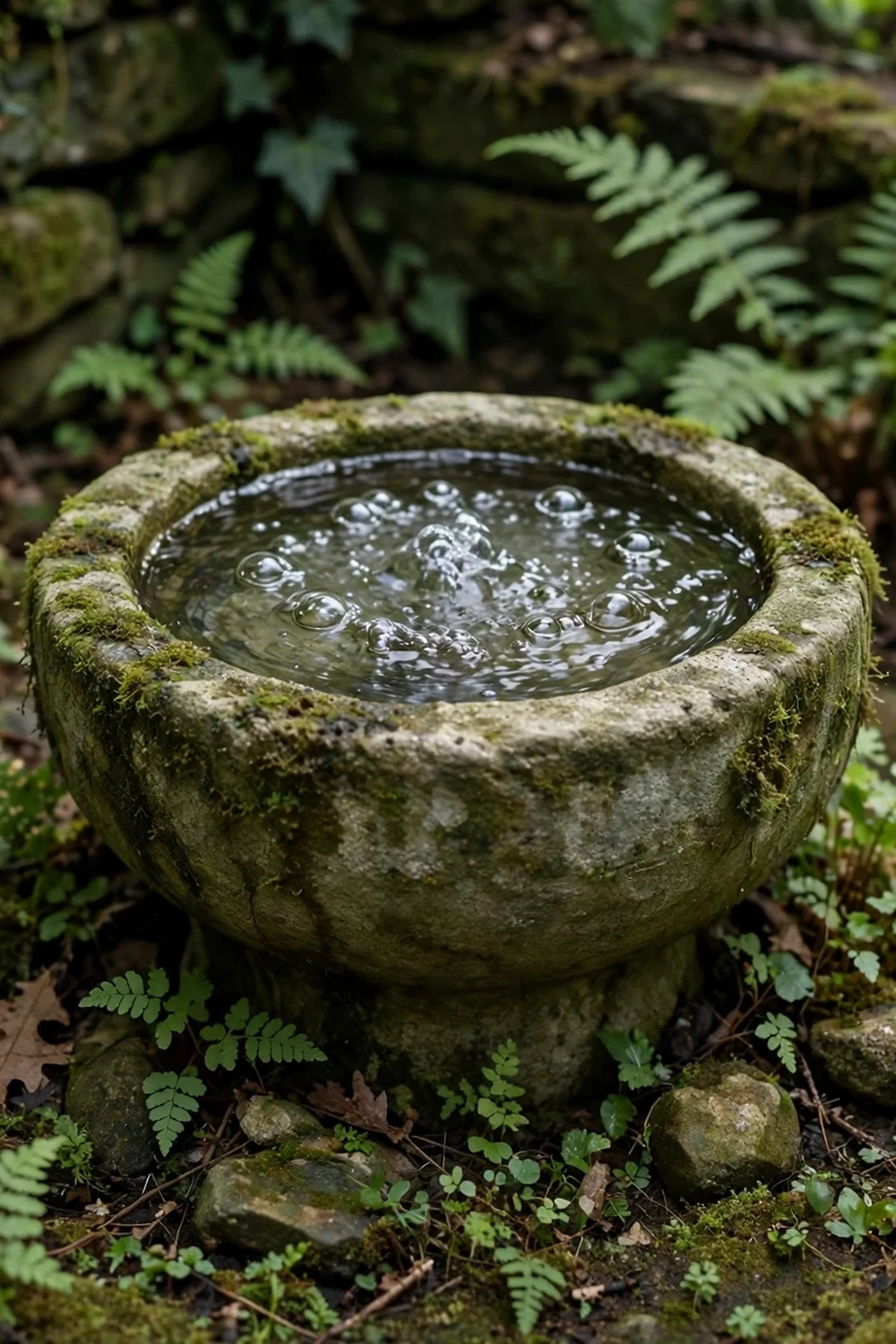
Moving water adds sound and movement to still shade, and a small bubbling urn needs no pond. A self-contained kit (urn, basin, pump) installs in an afternoon: dig the basin level, set the urn, fill, and plug in the pump. The sound masks street noise and draws birds. In shade, algae grows slower, so the water stays clearer with less cleaning. Run the pump on a timer to save electricity.
Try this: hide the power cord under mulch and plug into a GFCI outdoor outlet for safety. Cost: $$$. Difficulty: Moderate. Safety note: use a GFCI-protected outlet and keep electrical connections out of standing water.
20. Whimsical corner with garden art
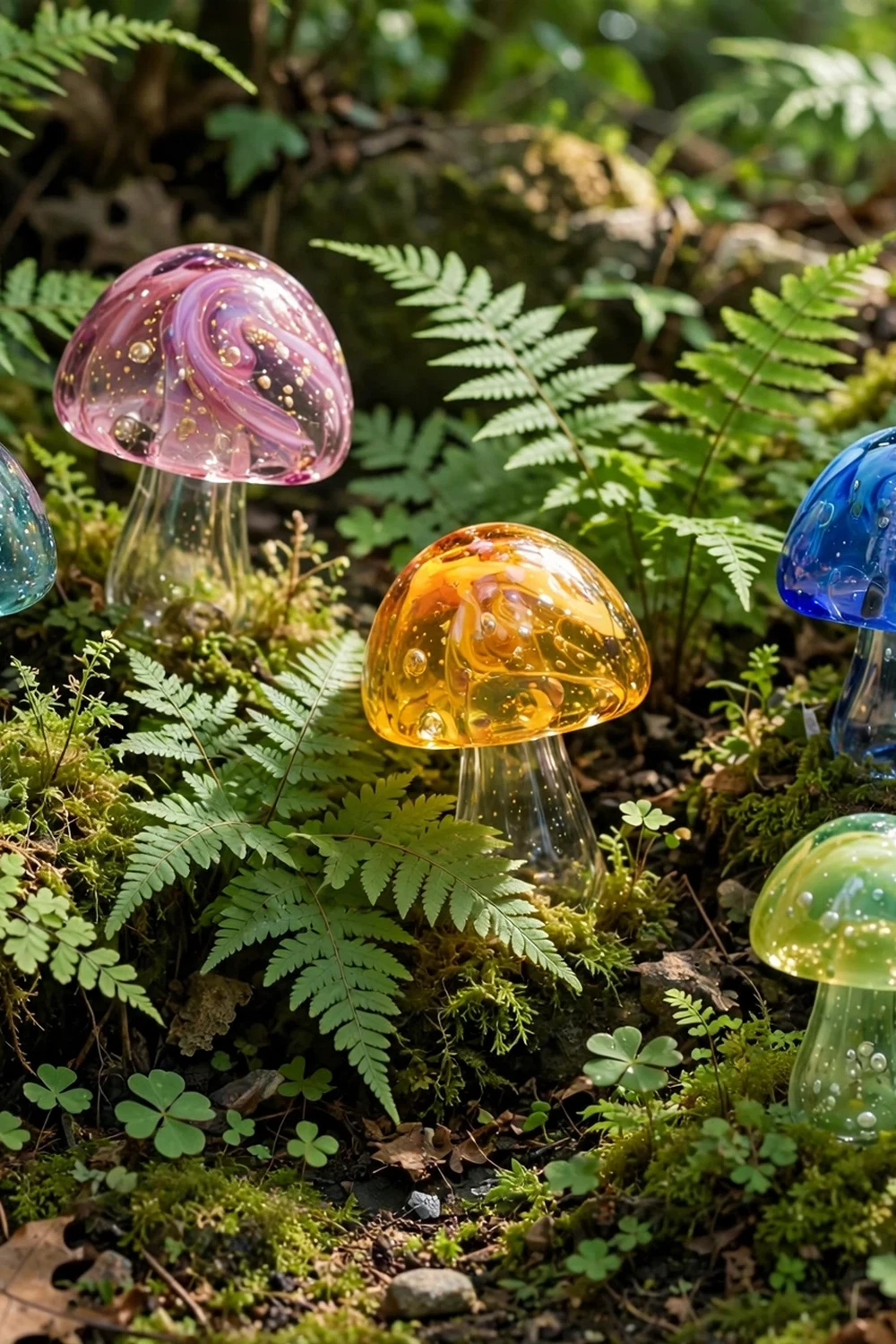
Shade gardens suit a little playfulness because the soft light flatters colorful objects. A cluster of glass mushrooms, a painted toadstool stool, or a small fairy door on a tree stump gives kids a reason to explore. Tuck art among ferns so it reads as discovered, not displayed. Choose weatherproof materials like glass, glazed ceramic, or powder-coated metal. One themed cluster beats scattered single pieces.
Try this: light the corner with one small solar spotlight. It turns the art into an evening feature for almost no cost. Cost: $$. Difficulty: Easy.
Shade plant picker: what to plant where
How to tell full shade from part shade
Plant tags say “full shade” and “part shade” like everyone knows the difference. Full shade means less than 3 hours of direct sun per day, or dappled light all day under a tree canopy. Part shade means 3 to 6 hours, ideally morning sun with afternoon shade. To test your spot, check it at 9 a.m., noon, and 4 p.m. on a sunny day and note when direct sun hits. Morning sun is gentler than afternoon sun, so a spot with 4 hours of morning light suits part-shade plants. Match the plant to the real light, not the light you wish you had.
Mistakes that ruin shade gardens
The most common mistake is planting sun lovers in shade and hoping for the best. Roses, lavender, and most vegetables will sulk and die; the plant list in this article exists so you can skip that experiment. Second is the mulch volcano: piled mulch rots bark and invites disease. Keep mulch flat and pulled back from trunks. Third is underwatering under trees. A mature tree drinks dozens of gallons a day, so new plantings beneath one need deep watering twice a week their first summer. Fourth is planting too deep. Shade perennials rot when crowns sit below soil level, so plant high and mulch around, not over.
Shade garden safety notes
Several classic shade plants are toxic if eaten. Hostas, bleeding heart, hellebores, caladiums, and foxglove can harm dogs, cats, and curious toddlers. The ASPCA’s searchable database of toxic and non-toxic plants is worth checking before you plant. Site risky plants behind a low border or in the back of beds, and teach kids that garden plants are look-only. Before you dig for paths, edging, or a water feature, call 811 (the national utility locator) a few days ahead so buried lines get marked. It is free in the US and prevents dangerous surprises.
Frequently asked questions
What grows best in full shade landscaping?
Hostas, ferns, astilbe, heuchera, hellebores, and Solomon’s seal are the most reliable full-shade perennials. They return every year, need little care, and handle low light without stretching or flopping. For instant color, add impatiens or begonias as annuals.
How many hours of sun counts as full shade?
Full shade means under 3 hours of direct sunlight per day. Dappled light filtering through tree leaves all day also counts as full shade for most plant tags. If your spot gets 3 to 6 hours, shop for part-shade plants instead for better results.
Can I plant flowers directly under a tree?
Yes, but work with the roots, not against them. Use small starter plants, dig shallow holes between roots instead of cutting them, and water new plantings deeply the first season. A 3-inch mulch ring (kept off the trunk) reduces competition from grass.
Do shade gardens need less water?
Not always. Shade reduces evaporation, but tree roots compete hard for moisture. Beds under mature trees often need more water than sunny beds. Check soil 2 inches down; if it is dry, water deeply rather than sprinkling.
What is the best ground cover for deep shade?
For foot-traffic-free areas, try wild ginger, foamflower, or pachysandra. For paths, moss works where grass fails. All three spread steadily and smother weeds once established, usually within two growing seasons.
How do I add color to a shade garden without many flowers?
Lean on foliage color: gold Japanese forest grass, purple heuchera, variegated Solomon’s seal, and pink-splashed caladiums read as color from across the yard. One or two bright containers of impatiens add flower color exactly where you want it.
Conclusion
Shade stops being a problem the moment you plant for it instead of against it. Pick a few ideas from this list that fit your light and your budget, start with the layers (ground cover, mid-plants, tall backdrop), and let the garden fill in over two seasons. Your darkest corner is about to become your favorite one.


