


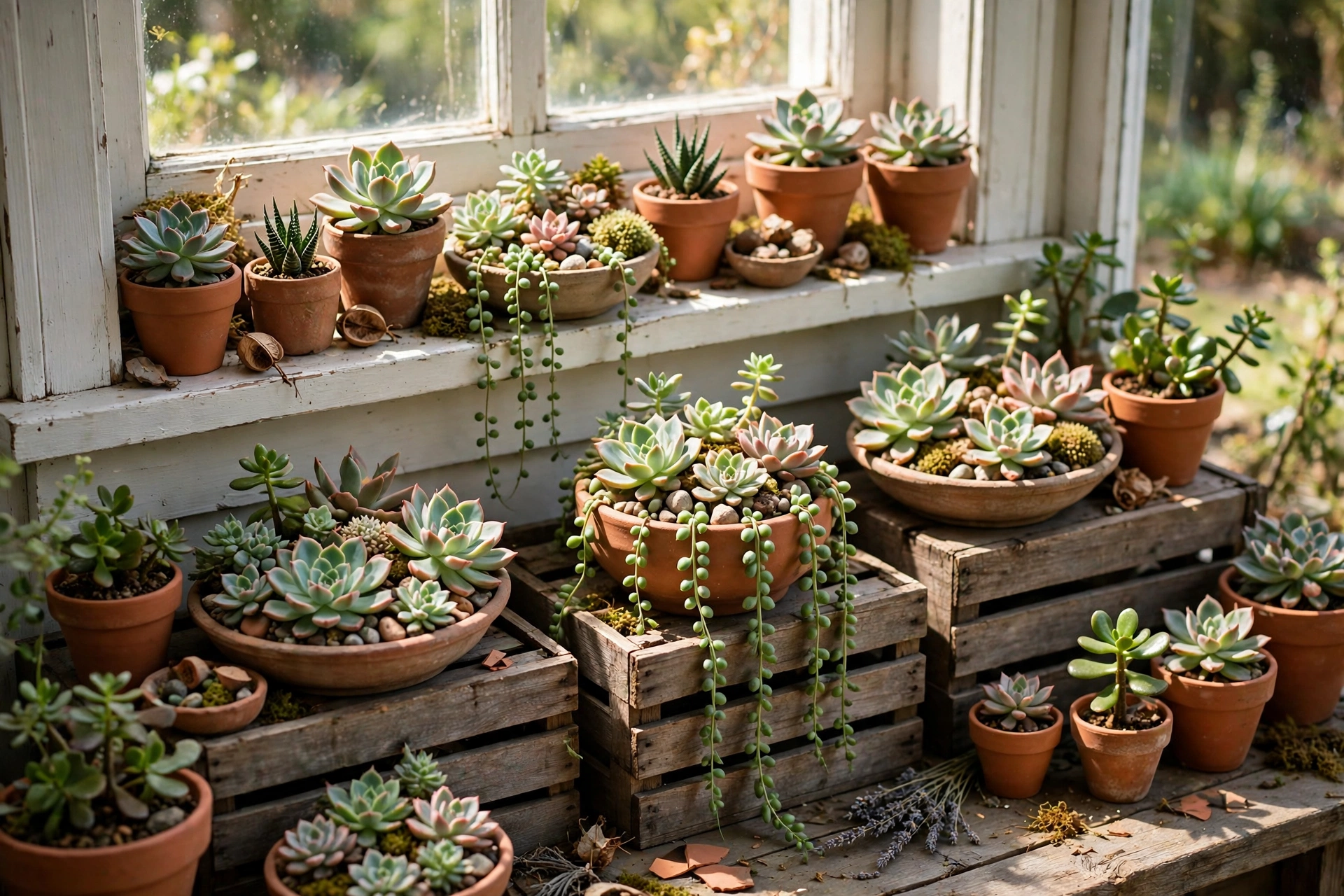
Succulents die in cute pots more often than in plain ones. The pot looks right, the plant sits on a sunny sill, and three weeks later the leaves turn soft and drop. The cause is almost always the same: water with nowhere to go, soil that stays wet, and light that is weaker than it looks.
This guide fixes that first, then gives you 15 planter ideas that actually suit how succulents grow. Every idea lists a cost and a difficulty level, and each one works with shallow roots, gritty soil, and a pot that drains. Most cost under $30, and most take an afternoon or less.
Quick takeaways
- Drainage holes matter more than the pot itself. No hole means you must water with a spoon and accept a shorter plant life.
- Succulents want gritty soil, not regular potting mix. One part potting soil to one part coarse sand, perlite, or pumice drains fast enough.
- Most succulents need 6 or more hours of bright light a day. A dim corner stretches them tall and pale within weeks.
- Water only when the soil is fully dry, then soak until water runs out the bottom. Then wait again.
- Shallow roots mean shallow pots work fine. Wide and low beats tall and deep for almost every rosette type.
1. Shallow ceramic bowl garden

A wide, low ceramic bowl is the easiest first succulent planter. Plant 3 to 5 rosettes of different heights, with echeveria in the middle, haworthia at the sides, and a trailing sedum near the rim. A 10 inch bowl holds a full arrangement and still fits a windowsill. If the bowl has no drainage hole, drill one with a diamond bit, or keep it as a cachepot with a nursery pot inside.
Try this: Top the soil with small pebbles. The stones keep leaves off wet soil and slow evaporation from the surface.
Difficulty: Easy | Cost: $$
2. Thrifted teacup minis

One small succulent per teacup is all a teacup can hold, and that limit is the charm. Hens-and-chicks fit vintage cups well, and a row of mismatched cups on a sill reads as a collection rather than clutter. Teacups hold very little soil, so they dry out fast, which suits succulents. Drill a small hole in the base or water with a tablespoon at a time. A saucer under each cup catches stray drips and keeps the sill clean between waterings.
Try this: Line up 3 cups on a narrow tray. The tray catches drips and turns singles into a display.
Difficulty: Easy | Cost: $$
3. Stacked terracotta tower

Thread 4 to 5 terracotta pots onto a metal rod or wooden stake, largest at the bottom, and tilt each pot slightly so its opening faces out. Plant trailing succulents in the openings and one upright rosette on top. The tower gives you 5 planters in one square foot of patio. Terracotta breathes, so soil dries faster than in glazed pots, which helps in humid summers. A steel rod lasts longer outdoors than a wooden stake, which can rot at the soil line.
Try this: Set the rod in a heavy base pot filled with gravel so the tower cannot tip in wind.
Difficulty: Medium | Cost: $$
4. Spilled pot display
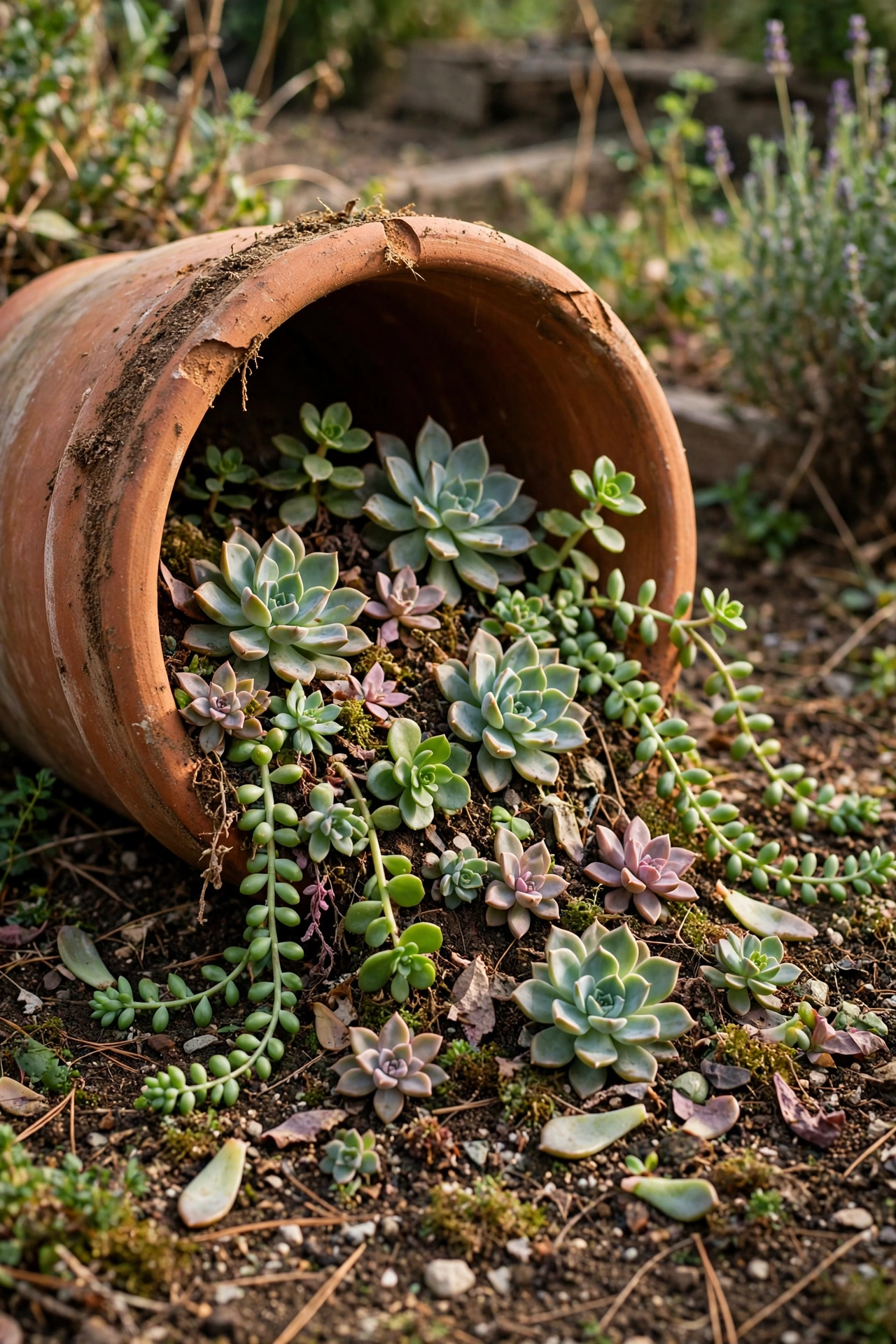
Tip a large pot on its side and plant succulents so they flow from the mouth across the soil, as if the pot poured them out. Mix lime green sedum with purple echeveria for a clear color contrast. The trick takes about 20 minutes once the pot is placed, and it works on patios, in beds, and beside steps. Bury the pot rim slightly so it looks settled, not dropped.
Try this: Use a pot at least 12 inches wide. Small pots make the spill look thin.
Difficulty: Easy | Cost: $$
5. Driftwood planter
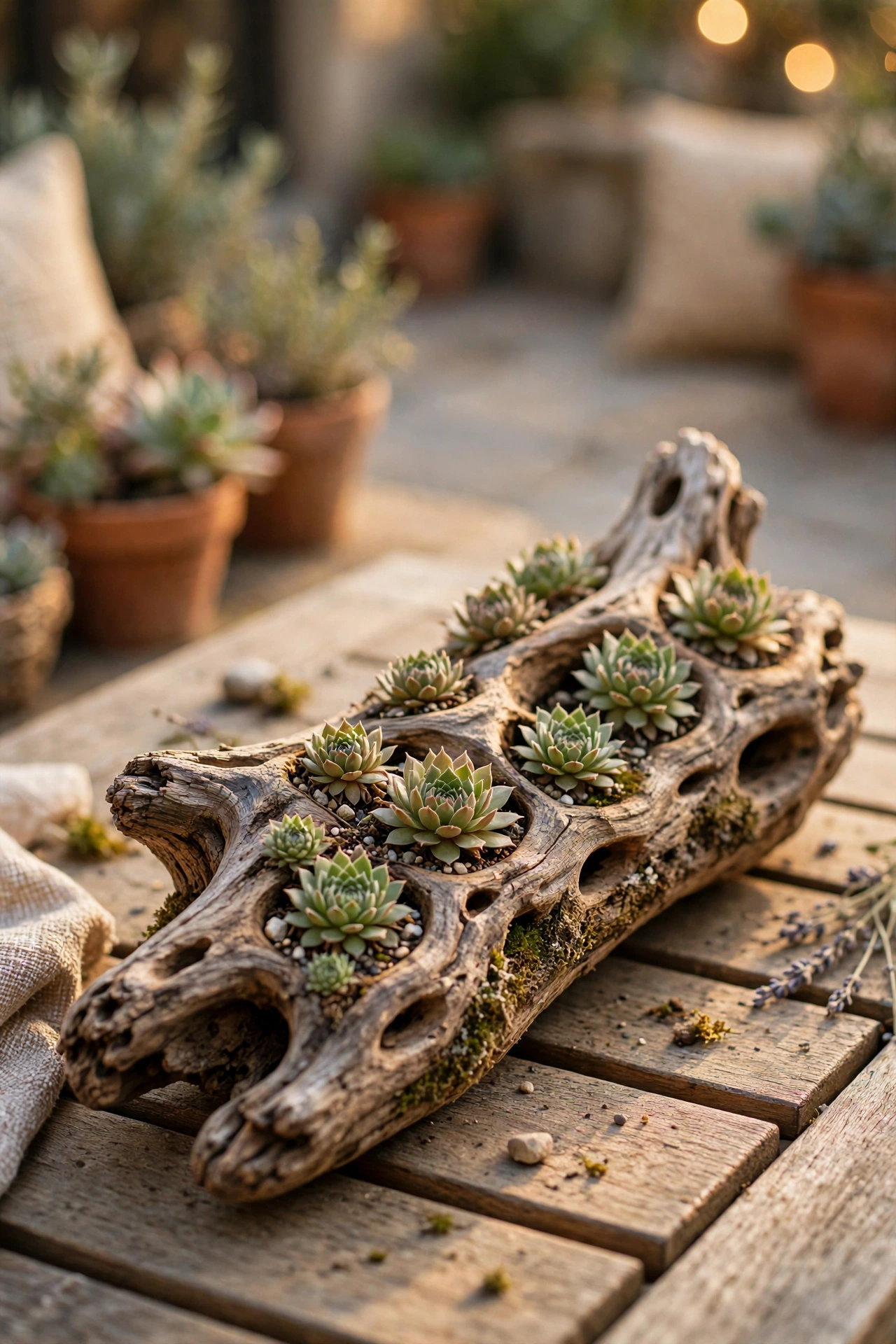
Driftwood gives succulents the tight, rocky pockets they like. Drill shallow holes with a spade bit, add a spoonful of gritty mix to each, and tuck in small sempervivum rosettes. The wood dries fast and the roots stay shallow, which matches how these plants grow on rock faces. Lay the piece flat on a table or mount it upright on a fence for a vertical accent, and check it after rain since wood holds water longer than stone.
Try this: Seal cut ends with wood sealer so the piece lasts more than one season outdoors.
Difficulty: Medium | Cost: $$
6. Wooden crate arrangement

Line an old wooden crate with landscape fabric, fill it with gritty mix, and pack it with succulents in color blocks. One crate holds 8 to 12 plants, and two crates stacked at different angles make a stepped display. Cedar and weathered pine handle outdoor use well, and the fabric liner holds soil in while letting water drain out the slat gaps. Set the crate on bricks so air moves under it and the base dries between waterings.
Try this: Plant one color per section, such as blue-green echeveria beside red-tipped sedum, so the crate reads as planned rather than random.
Difficulty: Easy | Cost: $$
7. Birdcage planter
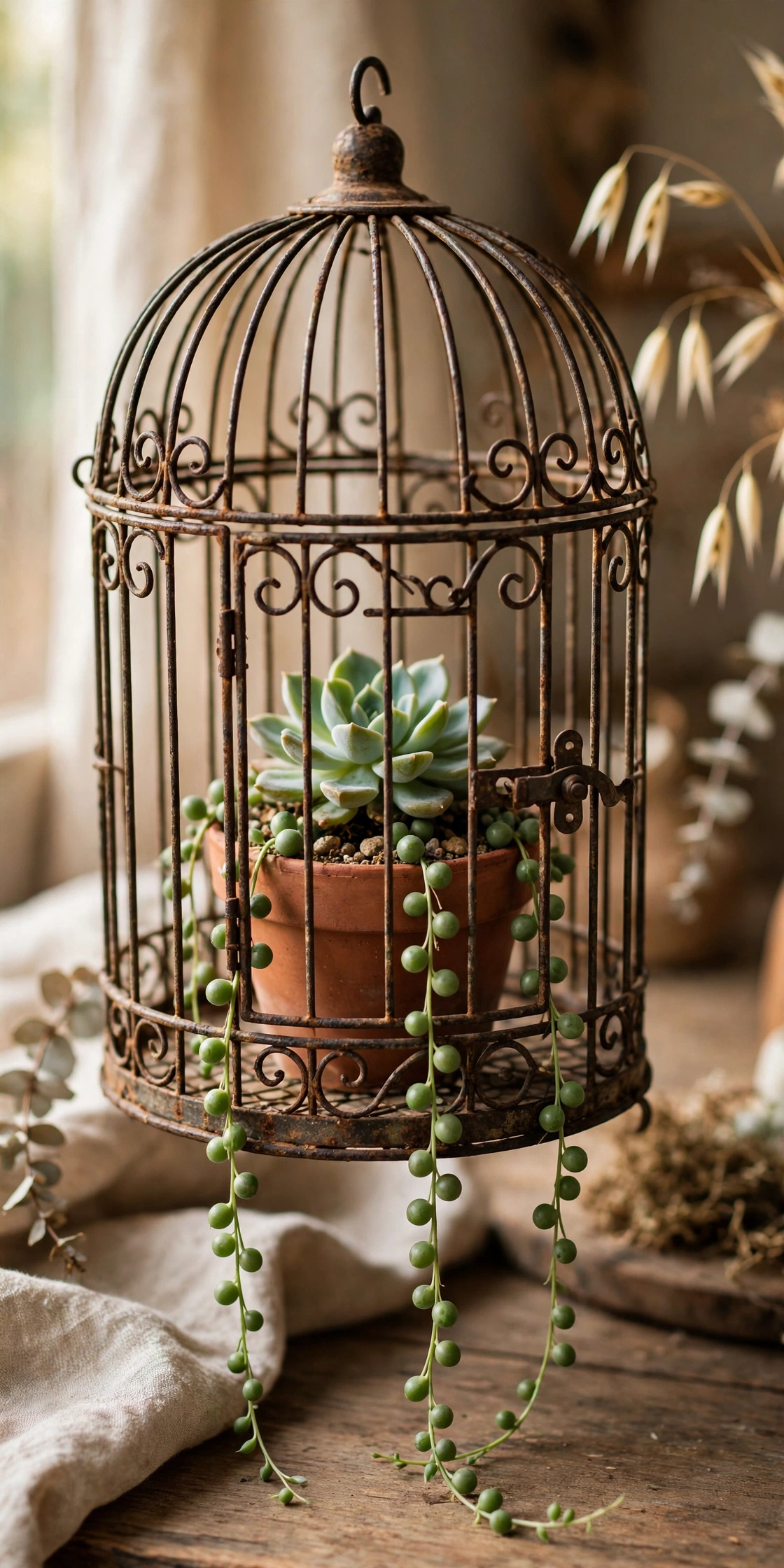
A vintage birdcage turns one potted succulent into a hanging display. Set a small pot inside the cage and let string of pearls or burro’s tail trail through the bars, or fill the cage base with soil and plant directly. Hang it from a porch beam where it gets morning sun, or set it on a side table as a centerpiece. The open bars give airflow, which succulents like.
Try this: Keep the plant in its own pot inside the cage. Watering and repotting stay simple that way.
Difficulty: Easy | Cost: $$
8. Living succulent wreath

Pack a wire wreath frame with sphagnum moss, tuck succulent rosettes into the moss from the outside in, and pin them with floral wire. Lay the wreath flat for a week so roots grip the moss before you hang it. A 12 inch frame holds about 20 small cuttings and stays good for months, since succulents root into moss and keep growing. Mist lightly rather than soaking, or the moss stays wet.
Try this: Use cuttings, not rooted plants. Cuttings are cheaper, and they root straight into the moss.
Difficulty: Medium | Cost: $$
9. Vertical pallet garden
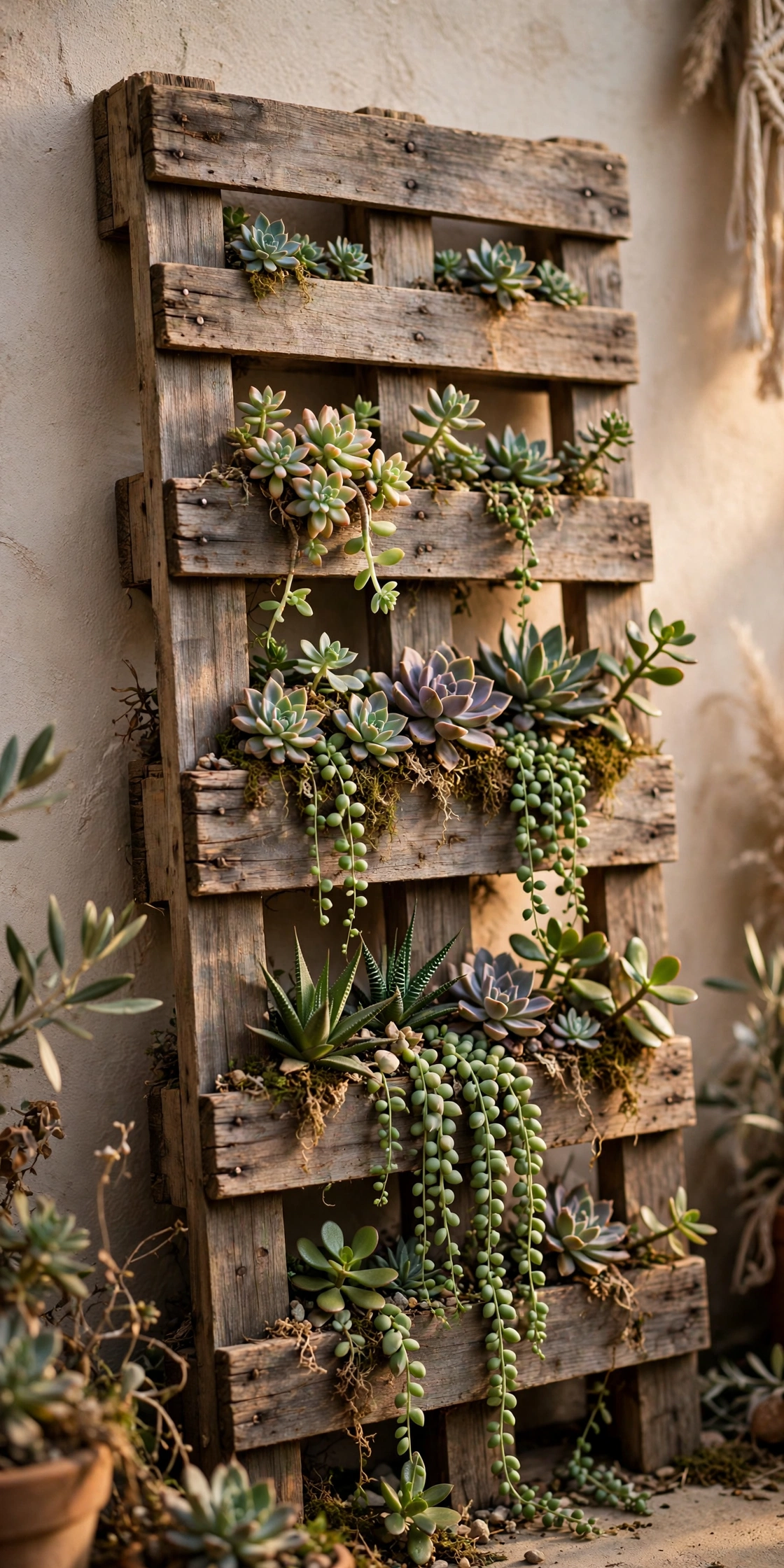
Stand a pallet upright, staple landscape fabric across the back and bottom of each slat row, fill with gritty mix, and plant succulents in the gaps. Lean it against a sunny wall and you have a vertical garden in 2 square feet of floor space. The slats drain freely, which is the whole point for succulents. Free pallets from garden centers or hardware stores keep the cost near zero.
Try this: Water from the top row down with a slow pour, and let each row drain before you move on.
Difficulty: Medium | Cost: $$
10. Cinder block wall
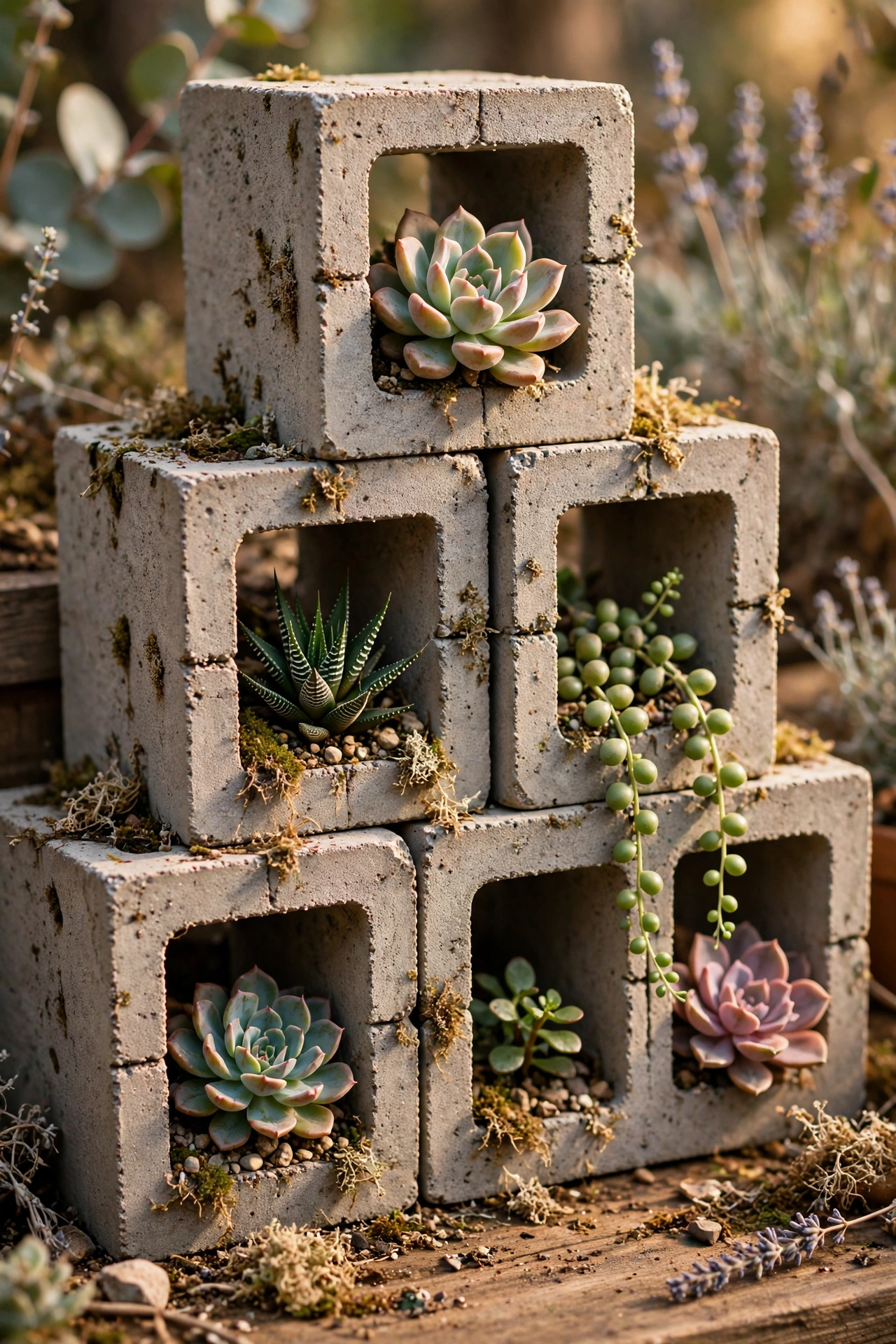
Stack cinder blocks on their sides and plant one succulent in each opening. The result is a living patchwork wall with built-in drainage, since each pocket drains out the bottom. Paint the blocks or press mosaic tiles on the faces if raw concrete looks too plain. A 3 block wide, 4 block high wall holds 24 plants and costs less than one large ceramic planter, and it doubles as a low garden divider.
Try this: Put the wall where it gets at least 6 hours of sun. Shaded blocks stay damp and invite rot.
Difficulty: Medium | Cost: $$
11. Colander planter

A colander is the rare kitchen castoff that already drains. Line it loosely with landscape fabric or moss, add gritty mix, and plant trailing succulents at the rim with one upright rosette in the middle. The handles make it easy to hang from a porch hook or a branch. Metal colanders last outdoors, and enamel ones add color for a few dollars at thrift stores, where they turn up in every size.
Try this: Hang it where drips fall on soil or gravel, not on a deck you want to keep clean.
Difficulty: Easy | Cost: $$
12. Old boot planters

Worn leather or rubber boots hold one trailing succulent each, and a pair on porch steps reads as a joke that also grows. Cut a few drainage slits in the sole, add gritty mix, and plant sedum or string of pearls so it spills from the top. Boots are narrow, so they dry fast, and they cost nothing if the pair is already headed for the trash.
Try this: Prop each boot against a step or wall. A full boot tips easily on flat ground.
Difficulty: Easy | Cost: $
13. Letter monogram planter

A wooden or metal letter form filled with moss and small succulents turns an initial into living art. Pack sphagnum moss into the form, tuck in 2 inch rosettes until the surface is covered, and mist to settle them. Letters make strong gifts and wedding decor, and a single initial on a mantel needs only 8 to 12 small plants. Keep the letter indoors or under cover, since moss dries unevenly in wind.
Try this: Start with a flat-backed letter. Open-backed forms drop moss and soil.
Difficulty: Medium | Cost: $$
14. Kokedama moss balls

Kokedama wraps a succulent’s roots in soil, then covers the ball with moss and twine. Hang several at different heights for a floating garden effect, or set one in a shallow dish on a table. Each ball takes about 15 minutes to make, and watering means dunking the ball until it stops bubbling, then letting it drain fully. The moss holds shape well, but it also holds water, so dunk only when the ball feels light.
Try this: Use small rosettes under 3 inches. Large plants unbalance the ball.
Difficulty: Medium | Cost: $$
15. Fairy garden in a wide shallow pot

A wide, shallow pot becomes a miniature landscape with small succulents, tiny furniture, and decorative stones. Sedum and dwarf echeveria stay in scale, and the shallow pot keeps the whole scene in view. This is the best succulent project to do with kids, since nothing about it is fragile or fussy. Keep the scene in bright light and water the soil, not the miniatures.
Try this: Leave one patch of bare pebbles in the scene. It gives the eye a rest and marks where to water.
Difficulty: Easy | Cost: $$
How to choose the right succulent planter
Match the pot to the plant, not the room. Rosettes like echeveria want wide, shallow pots. Trailing types like string of pearls want a rim they can spill over. Upright types like aloe and agave want a heavier pot that will not tip as they grow.
Check three things before you buy or build. First, drainage: a hole in the bottom, or a plan for one. Second, size: a pot only 1 to 2 inches wider than the root ball, since extra soil stays wet. Third, light: the spot must give 6 or more hours of bright light, or the plant stretches no matter how good the pot is.
Material matters less than drainage, but it changes watering. Terracotta dries fastest, glazed ceramic holds water longer, and metal heats up in full sun. If you tend to overwater, pick terracotta. If you forget to water, pick glazed ceramic and a deeper pot.
Compare all 15 ideas
| Idea | Cost | Difficulty | Best for |
|---|---|---|---|
| Shallow ceramic bowl garden | $10 to $25 | Easy | First planters, tabletops |
| Thrifted teacup minis | $3 to $12 | Easy | Windowsills, gifts |
| Stacked terracotta tower | $20 to $40 | Medium | Small patios, vertical space |
| Spilled pot display | $15 to $30 | Easy | Garden beds, steps |
| Driftwood planter | $0 to $20 | Medium | Natural style, table accents |
| Wooden crate arrangement | $10 to $25 | Easy | Porches, color blocks |
| Birdcage planter | $10 to $30 | Easy | Hanging displays, porches |
| Living succulent wreath | $15 to $35 | Medium | Front doors, gifts |
| Vertical pallet garden | $0 to $20 | Medium | Small yards, walls |
| Cinder block wall | $15 to $30 | Medium | Large collections, patios |
| Colander planter | $5 to $15 | Easy | Hanging spots, kitchens |
| Old boot planters | $0 to $10 | Easy | Porch steps, fun accents |
| Letter monogram planter | $15 to $30 | Medium | Gifts, mantels |
| Kokedama moss balls | $10 to $20 | Medium | Indoor hanging displays |
| Fairy garden in a wide shallow pot | $15 to $30 | Easy | Kids, tabletops |
Common mistakes to avoid
No drainage hole, no plan. A sealed pot holds water at the roots, and succulents rot fast in standing water. Drill a hole, use a nursery pot inside, or water by the spoonful and accept the risk.
Regular potting soil. Standard mix stays wet for days. Cut it with coarse sand, perlite, or pumice until it falls apart when squeezed, or buy bagged cactus mix.
Watering on a schedule. Weekly watering kills more succulents than neglect. Check the soil first. Water only when it is dry all the way through, then soak and drain.
Too little light. A plant that stretches tall, pales, and leans toward the window needs more light, not more water. Move it to the brightest spot you have, and shift outdoor plants into sun over a few days so leaves do not scorch.
A pot far too big. Extra soil holds extra water. Keep the pot 1 to 2 inches wider than the root ball and size up only when roots fill the pot.
Skipping frost protection. Most succulents come from warm climates and fail in a freeze. Move outdoor planters inside before the first frost, and keep them near a bright window through winter.
Pet-toxic picks in reach. Jade plant, aloe vera, and kalanchoe can sicken dogs and cats if chewed. Echeveria and haworthia are safer picks for homes with pets that nibble plants. Hang toxic types out of reach or skip them.
More garden ideas
If you like turning castoffs into planters, the repurposed planter roundup covers other plants and containers that suit the same thrifty approach.
For more container ideas in general, see these repurposed planter ideas.
For planters you can build from scrap, see these recycled DIY plant pots.
For patio containers beyond succulents, see these container gardening on patio ideas.
For arranging tall, medium, and trailing plants in one pot, see these thriller filler spiller ideas for planters.
For shade-loving planter displays, see these fern planter ideas.
For the care basics behind every idea here, university extension guides back the same rules: drainage holes, gritty soil, and bright light. The University of Minnesota extension guide on cacti and succulents covers light and potting mix, and the South Dakota State extension guide on how to care for succulents indoors covers watering and feeding.
Frequently asked questions
Do succulent planters need drainage holes?
Yes, in almost every case. Pots with drainage holes let excess water escape, and trapped water rots succulent roots fast. If a pot has no hole, drill one with a diamond bit for ceramic or a standard bit for wood and plastic, or keep the plant in a nursery pot set inside the decorative pot and empty the outer pot after watering.
What soil should I use for succulents in planters?
Use a gritty mix that drains fast. Bagged cactus and succulent mix works, or mix one part potting soil with one part coarse sand, perlite, or pumice. A good test: moisten the mix, squeeze it in your hand, and watch it fall apart on release. Garden soil is too dense and stays wet too long.
How often should I water succulents in planters?
Water only when the soil is fully dry, then soak until water runs out the drainage holes. Indoors that often means every 2 to 3 weeks in summer and once a month in winter, but the soil check matters more than any calendar. Small pots and terracotta dry faster than large glazed pots.
How much light do succulent planters need?
Most succulents need 6 or more hours of bright light a day. A south or west facing window suits most types indoors, and outdoor planters want morning sun with some afternoon shade in very hot climates. Stretching, paling, or leaning toward the window means the plant needs more light.
Can succulent planters stay outside in winter?
Most cannot survive a hard freeze. Move planters indoors before the first frost and keep them near the brightest window through winter. Cold-hardy types like hens-and-chicks tolerate frost, but tender types like echeveria and jade do not.
Final thoughts
Start with one planter that drains, one bag of gritty mix, and a spot with real light. My first bowl garden sat on a kitchen sill that got morning sun, and it taught me the whole routine in a month: check the soil, soak, drain, wait. Pick the idea that fits a pot you already own, and let the plants do the rest.
For dog water bowl planter ideas, see our guide to 20 Dog Water Bowl Planter Ideas for a Tidy, Leafy Drinking Spot for a classic succulent center-bowl planter, a raised wooden crate station, a self-watering wick planter, a splash-catching pebble tray, and a herb garden water station.


