


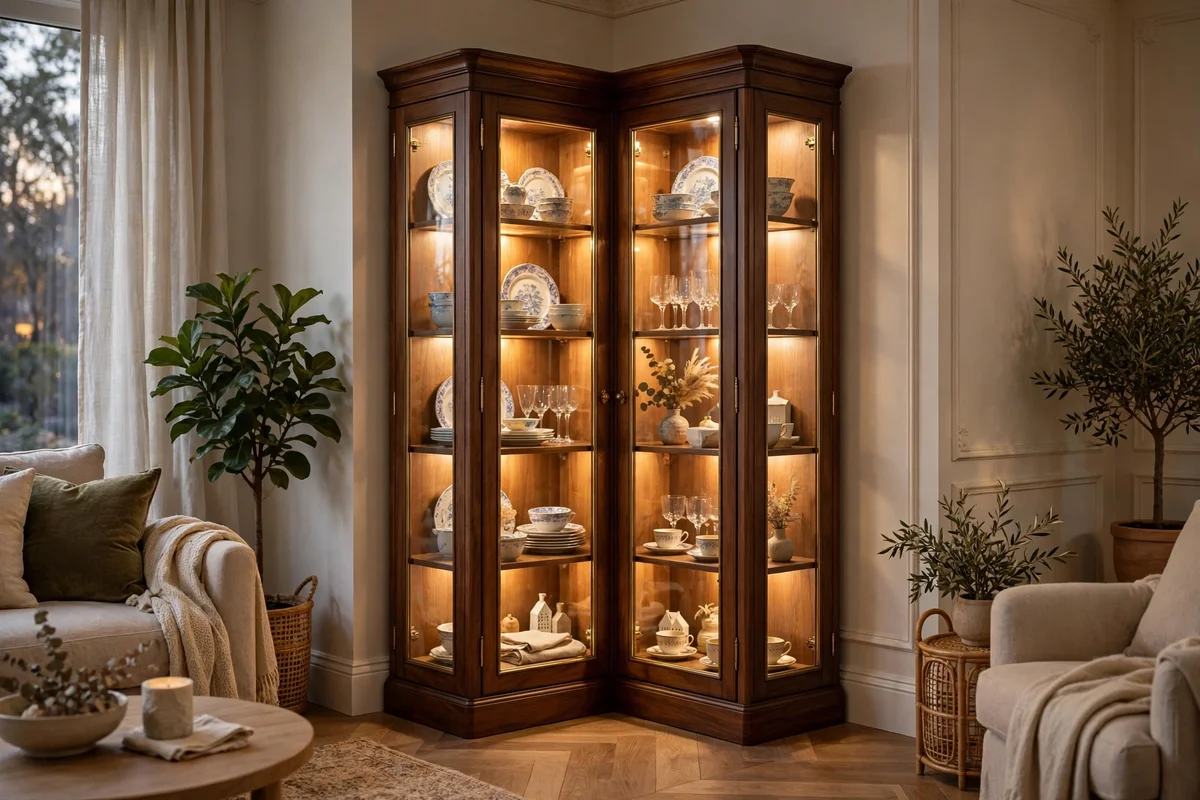
Every home has one: that corner where two walls meet and nothing happens. In the kitchen it collects the blender you never use. In the living room it holds a sad plant that is slowly giving up. Corners are the hardest-working dead space in a house — and a corner cabinet is the simplest way to make them earn their keep.
I have put corner cabinets in four houses now, and they always end up being the piece people ask about. Not because they are grand — because they make an awkward spot look like it was always meant to be there. A corner cabinet does two jobs at once: it steals back storage from space you were wasting, and it gives you a frame for the pretty things you already own.
Below are 25 beautiful corner cabinet ideas across kitchens, living rooms, dining rooms, bathrooms, entryways, and bedrooms — from lazy Susan base cabinets to thrifted makeovers you can finish in a weekend. Every one includes a practical tip so it works in real life, not just in a photo. I covered the same “steal back dead space” philosophy for closets in these easy DIY closet loft ideas, and the corner cabinet is the room-by-room version of that trick.
- The deadest kitchen corners are fixed with hardware, not remodeling: lazy Susans and pull-out shelves unlock them.
- Glass-front corner cabinets make corners look lighter; solid doors make them look grounded. Pick based on what the room needs.
- Style what’s on top and inside with the rule of threes — groups of odd numbers look intentional, even numbers look cluttered.
- Always measure both walls and the swing of nearby doors before buying — corner cabinets need more clearance than they look like.
- A thrifted corner cabinet plus paint and new hardware is the fastest budget win on this list.
1. Lazy Susan Turntable Base Cabinet
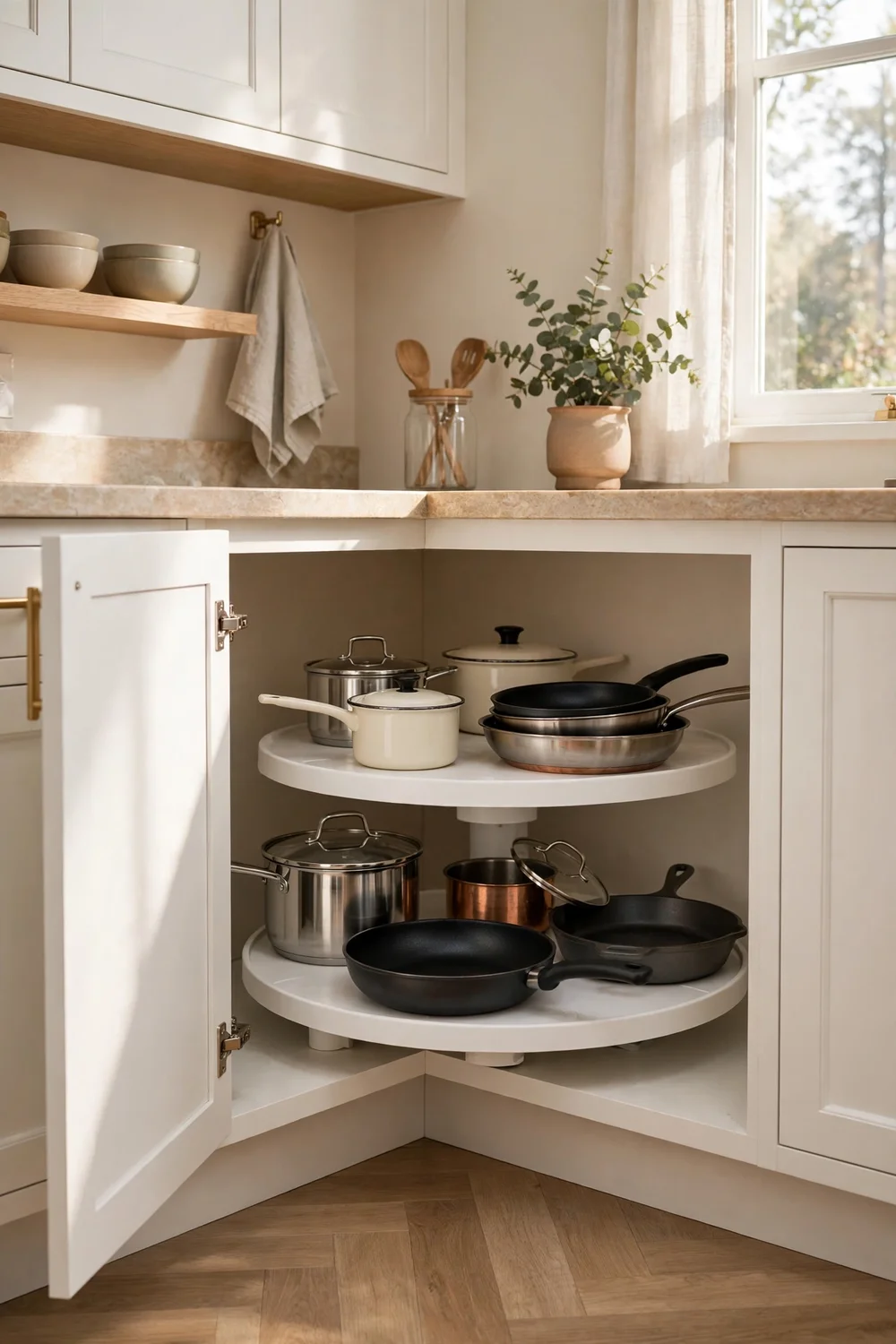
The classic for a reason. A lazy Susan turntable inside a corner base cabinet turns the black hole of the L-shaped kitchen into the easiest-to-reach spot in the room. Spin it and the stockpot you need appears — no more lying on the floor fishing out the blender. Full-circle trays work best; the D-shaped ones leave dead zones at the back.
Try this: store heavy items (cast iron, mixers) on the bottom tier and lighter stuff up top, so the spin stays smooth and nothing tips.
2. Blind Corner Pull-Out Shelves
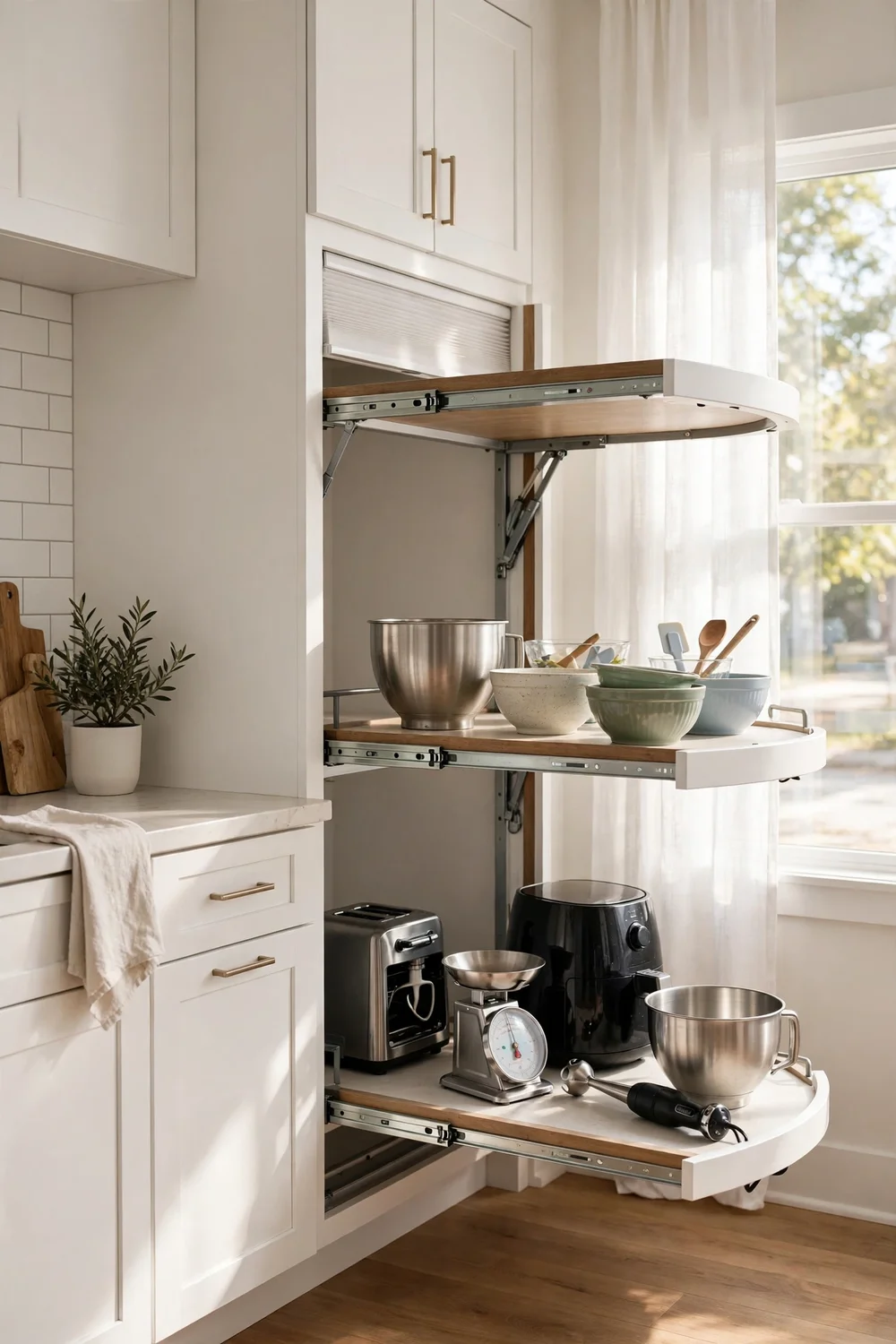
If the lazy Susan feels dated, the “magic corner” pull-out system is the modern answer. Shelves swing out and toward you when you open the door, bringing the entire contents of a blind corner out where you can see them. It is genuinely transformative for deep corner cabinets — and the cheapest way to get it is a retrofit wire kit that screws into your existing cabinet box.
Try this: these mechanisms have weight ratings — check yours before loading every shelf with canned goods and small appliances.
3. Corner Drawer Stack
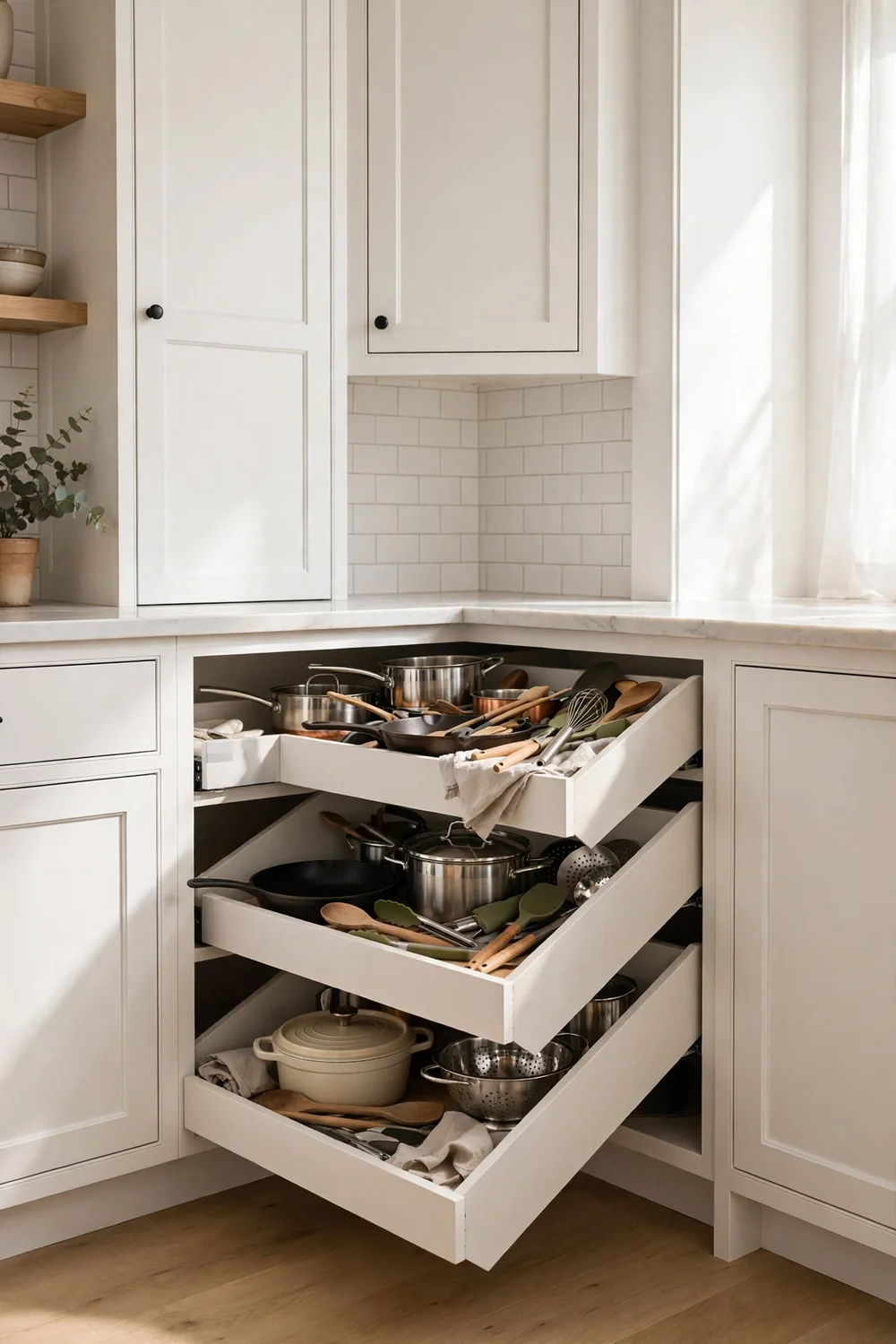
Instead of fighting the corner with a door, turn it into drawers. A diagonal corner drawer stack gives you three deep drawers that pull straight out — pots, lids, and baking sheets become grab-and-go instead of dig-and-pray. If you are planning a kitchen remodel, ask your cabinet maker about this option before the boxes are built; it is much harder to retrofit than to plan.
Try this: line the top drawer with non-slip liner so utensils do not slide into the corners of the drawer itself.
4. Glass-Front Diagonal Corner Cabinet
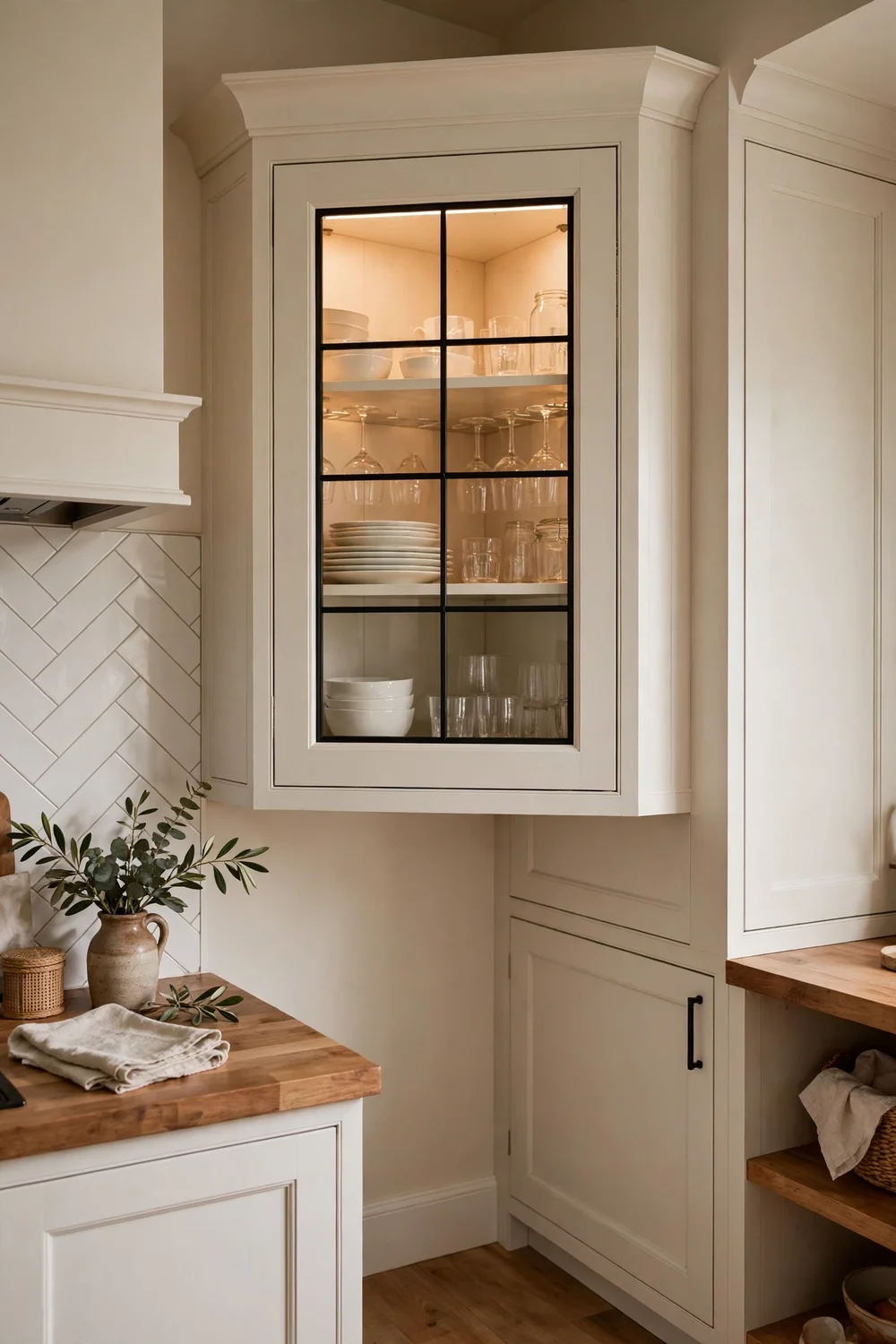
A diagonal upper corner cabinet with a glass front does double duty: it softens the hard angle of the corner and gives you a display case for your prettiest dishes. It reads as furniture rather than cabinetry, which is exactly why it works — the corner stops being a storage problem and becomes a style moment. Add a small light inside and it glows after dark. For how to light small zones like this well, these creative kitchen lighting ideas cover puck lights and LED strips that make glass-front cabinets look custom.
Try this: keep what is inside genuinely pretty — glass fronts show clutter, so commit to the good dishes only.
5. Open Corner Floating Shelves
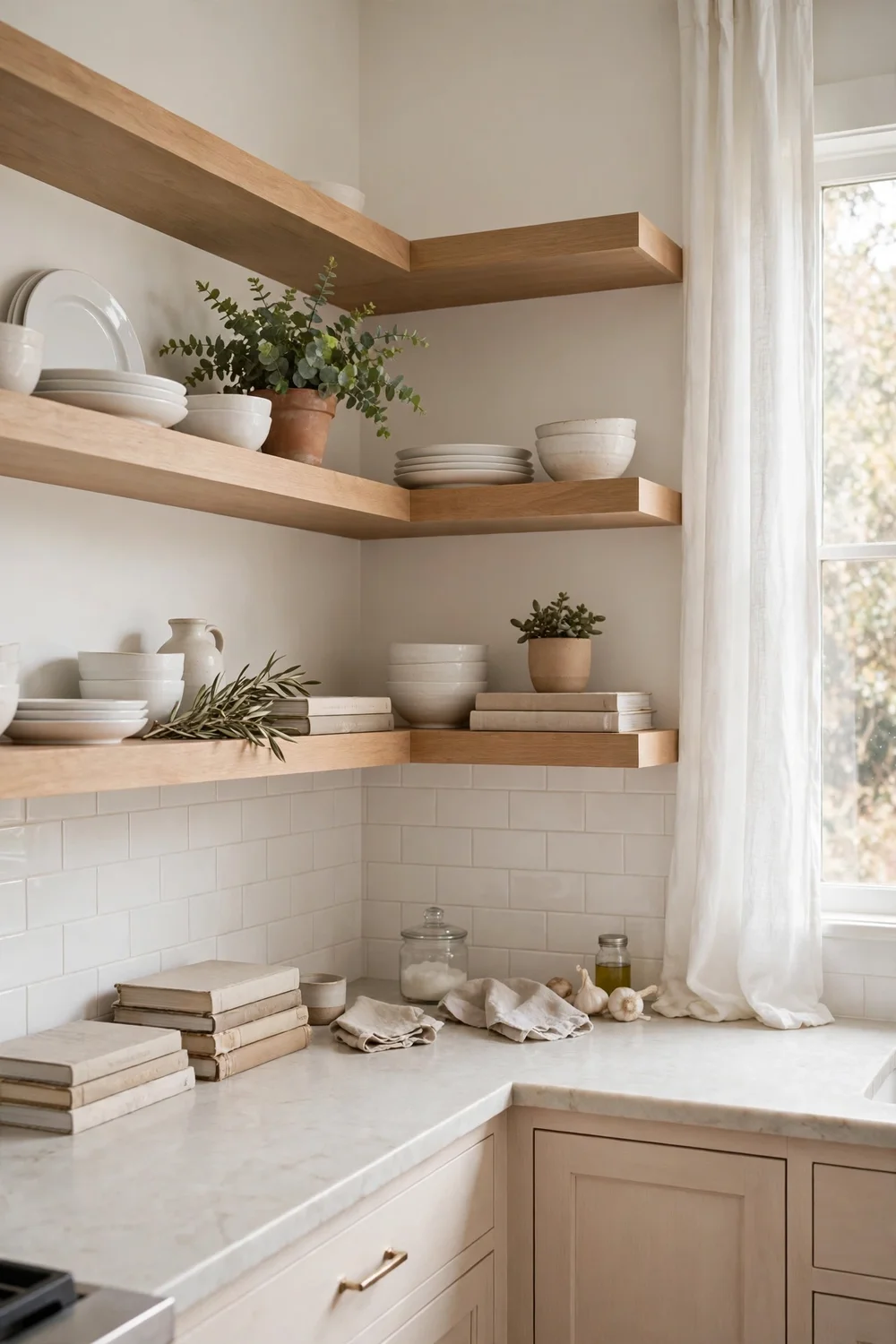
Sometimes the best corner cabinet is no cabinet at all. Two floating shelves meeting at the corner keep a small kitchen feeling open while giving you display space for everyday dishes, a plant, and a stack of cookbooks. L-shaped brackets or a mitered corner shelf both work — the mitered version looks seamless and more custom.
Try this: style shelves with things you actually use weekly. Pretty dust-collectors will make you resent the open look within a month.
6. Tall Corner Pantry Cabinet
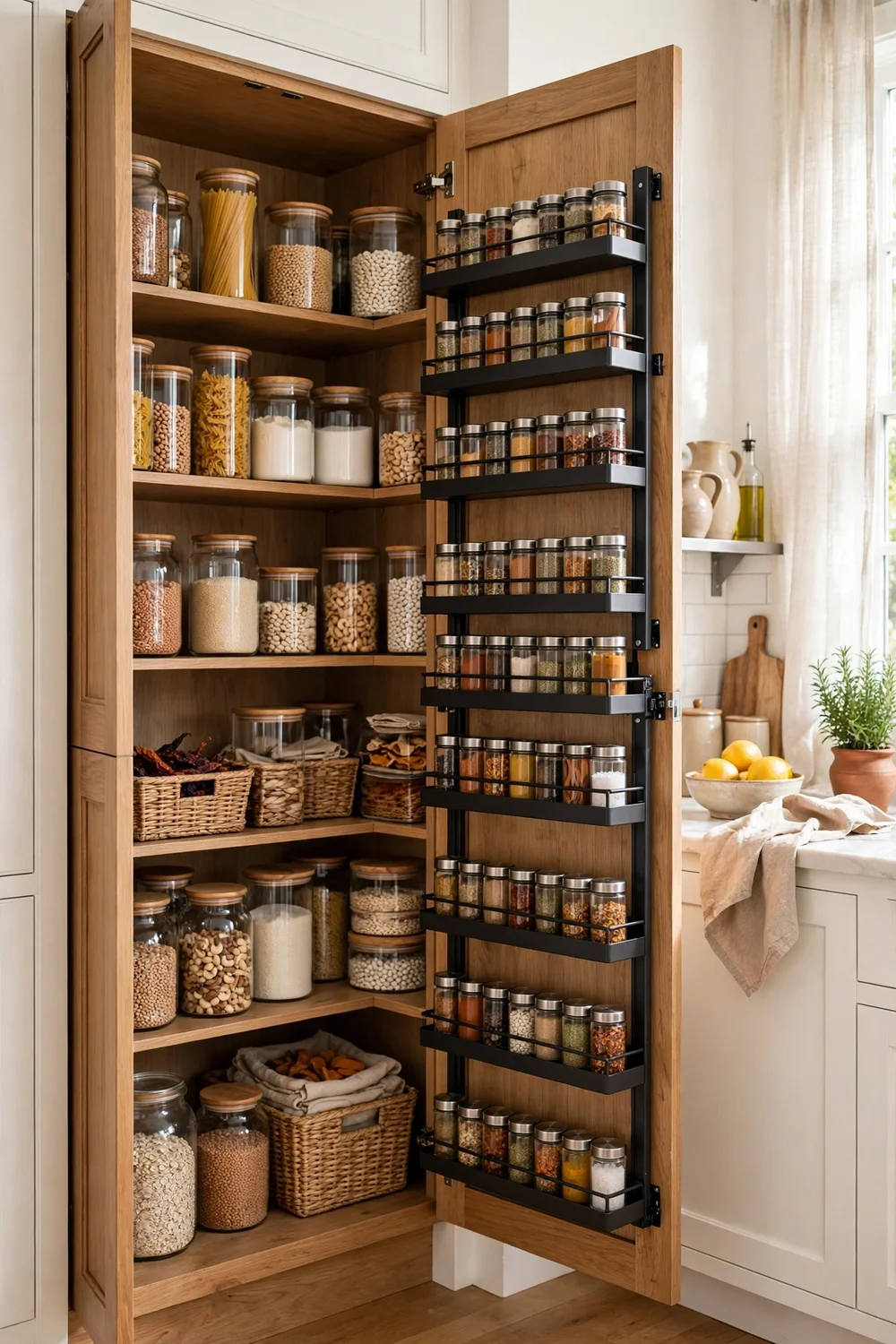
A floor-to-ceiling corner pantry swallows an astonishing amount: dry goods, small appliances, cleaning supplies, the stuff that otherwise colonizes your counters. Pull-out racks on the inside of the doors add a second layer of storage to the same footprint. This is the single highest-impact storage upgrade for a kitchen with a dead corner and no walk-in pantry.
Try this: put a small motion-sensor light inside — tall pantries are dark, and you will stop losing things in them.
7. Corner Appliance Garage
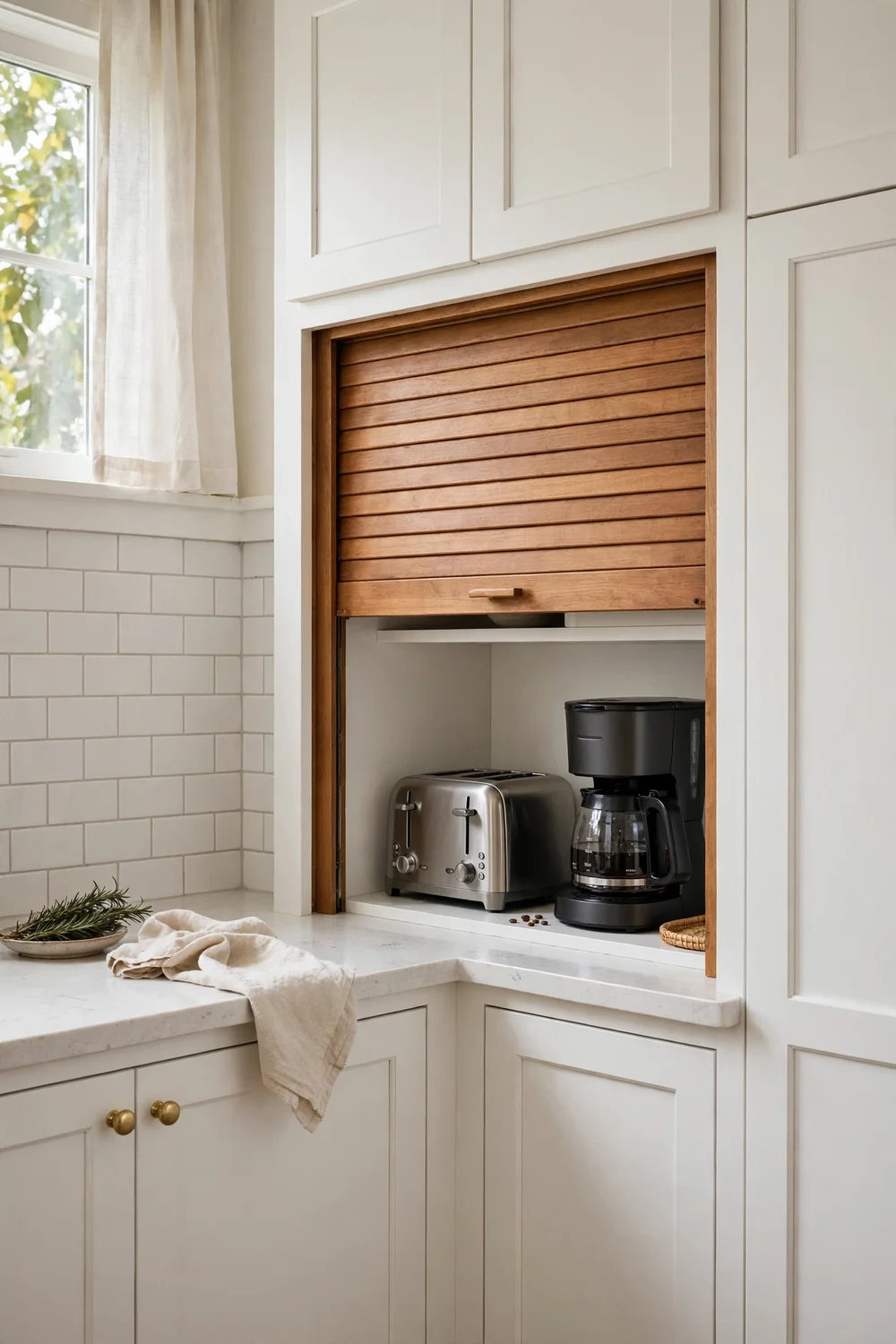
The corner of the countertop is where small appliances go to clutter. An appliance garage — a little cabinet with a roll-up or flip-up door that sits on the counter — hides the toaster, the coffee maker, and the stand mixer while keeping them plugged in and ready. When company comes, you close the door and the counter looks clean.
Try this: add an outlet inside the garage so appliances stay plugged in behind the closed door.
8. Corner Sink Cabinet
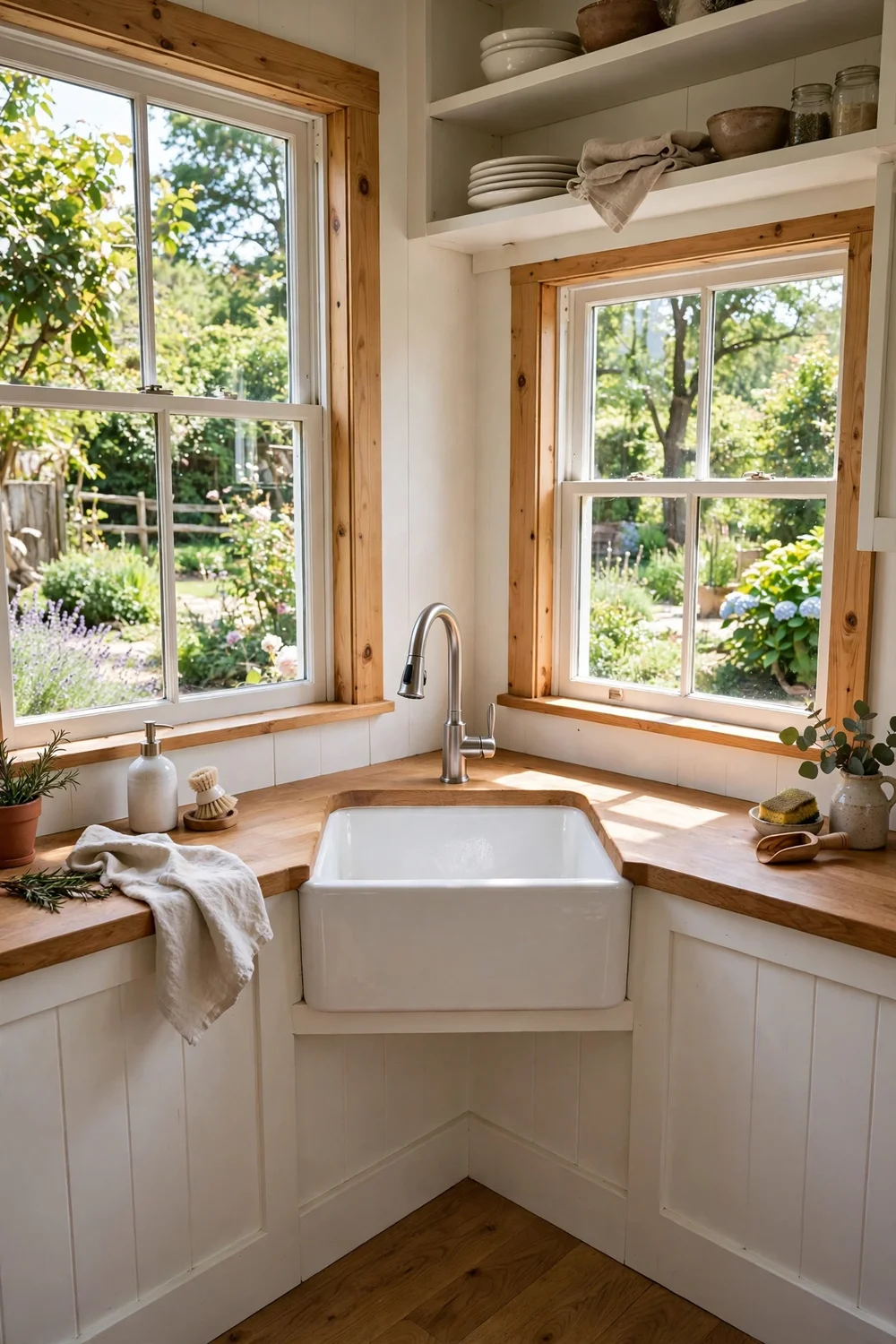
If your kitchen corner has windows on both walls, put the sink there. A corner sink under wraparound windows gives you the best view in the house while you do dishes, and the cabinet below fills an otherwise wasted base. The angled front does eat some counter space, so this works best in kitchens with counter to spare — but the daily payoff is enormous.
Try this: choose a faucet with a high arc so both sides of the corner sink are easy to reach.
9. Corner Display Hutch
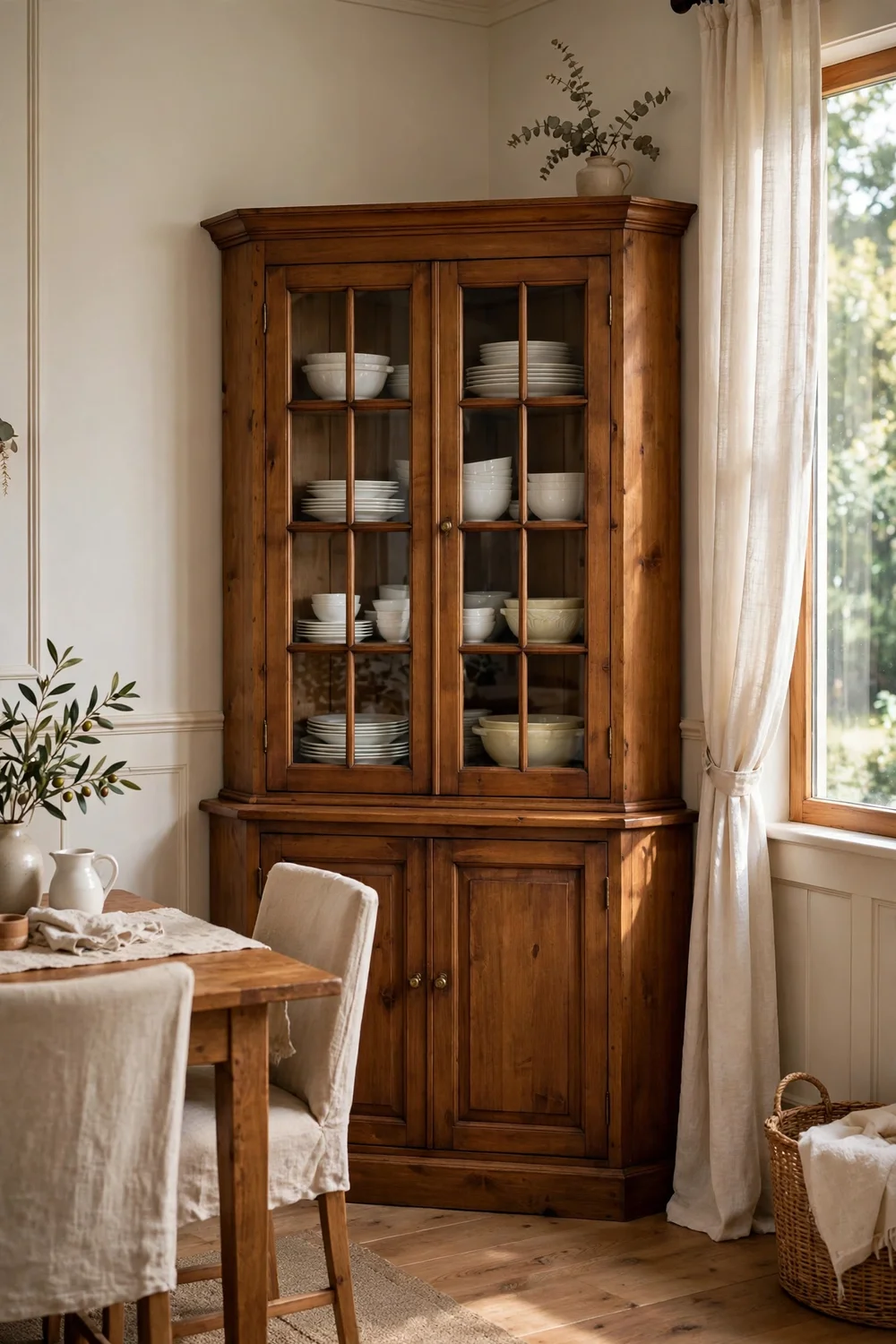
The dining room corner hutch is a design classic: glass doors on top for your china and serving pieces, closed doors below for the table linens and the platters that do not photograph well. It turns a dining room from “a table in a room” into a finished space. Vintage hutches are everywhere on the secondhand market and were built to last generations.
Try this: arrange the shelves by height — tall pieces at the back, small ones forward — so every shelf reads as layered, not lined up like soldiers.
10. Corner Curio Cabinet with LED Lighting
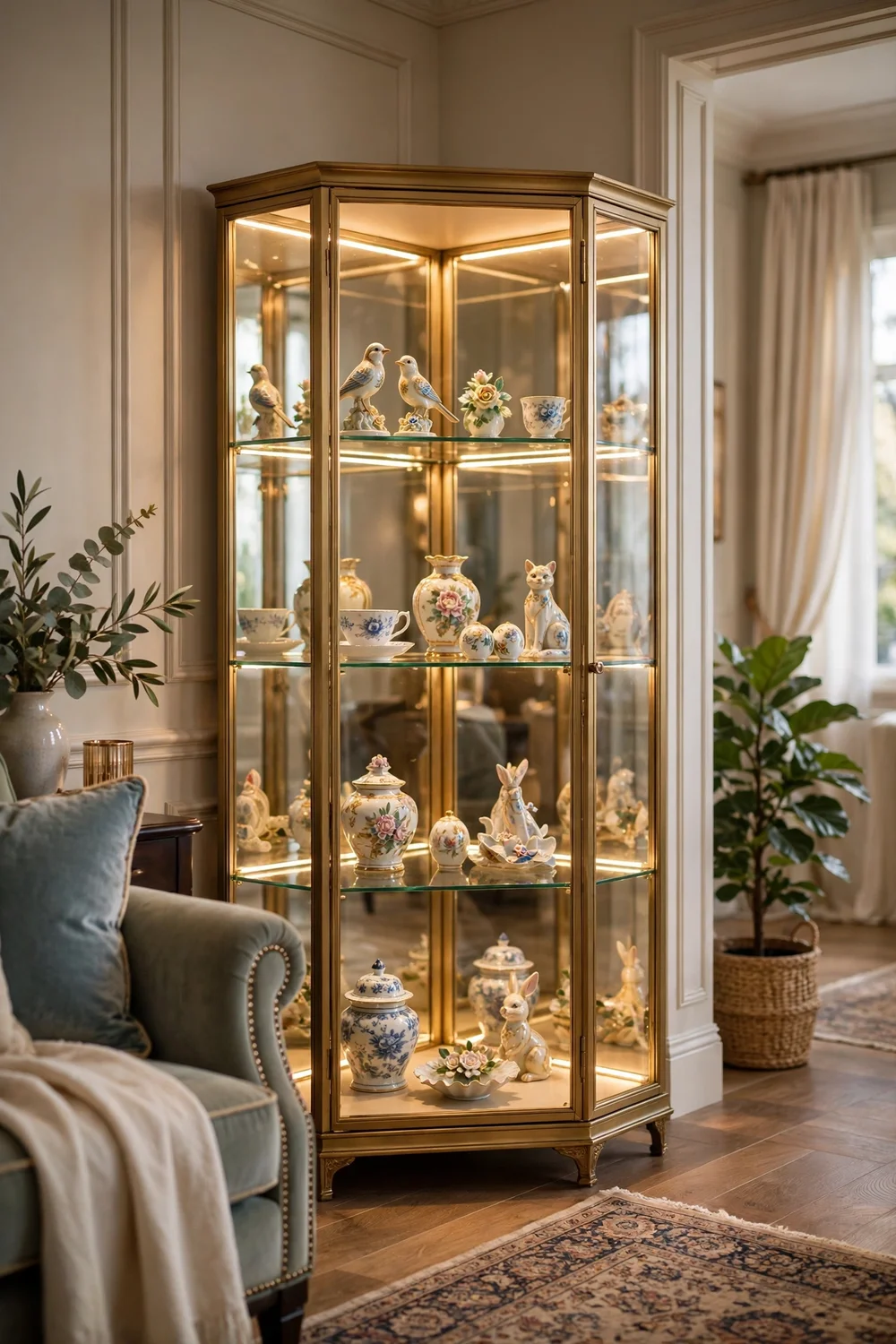
A curio cabinet is the glass-front idea taken all the way: glass on three sides, mirrored back, lights top and bottom. It makes collections — porcelain, crystal, vintage toys — look museum-worthy instead of cluttered. The mirrored back doubles whatever light is in the room, so the corner glows instead of sitting dark. Secondhand stores are full of these at a fraction of retail.
Try this: switch the bulbs to warm 2700K LEDs. Cool white bulbs make collectibles look like a dentist’s office.
11. Corner Bookcase Tower
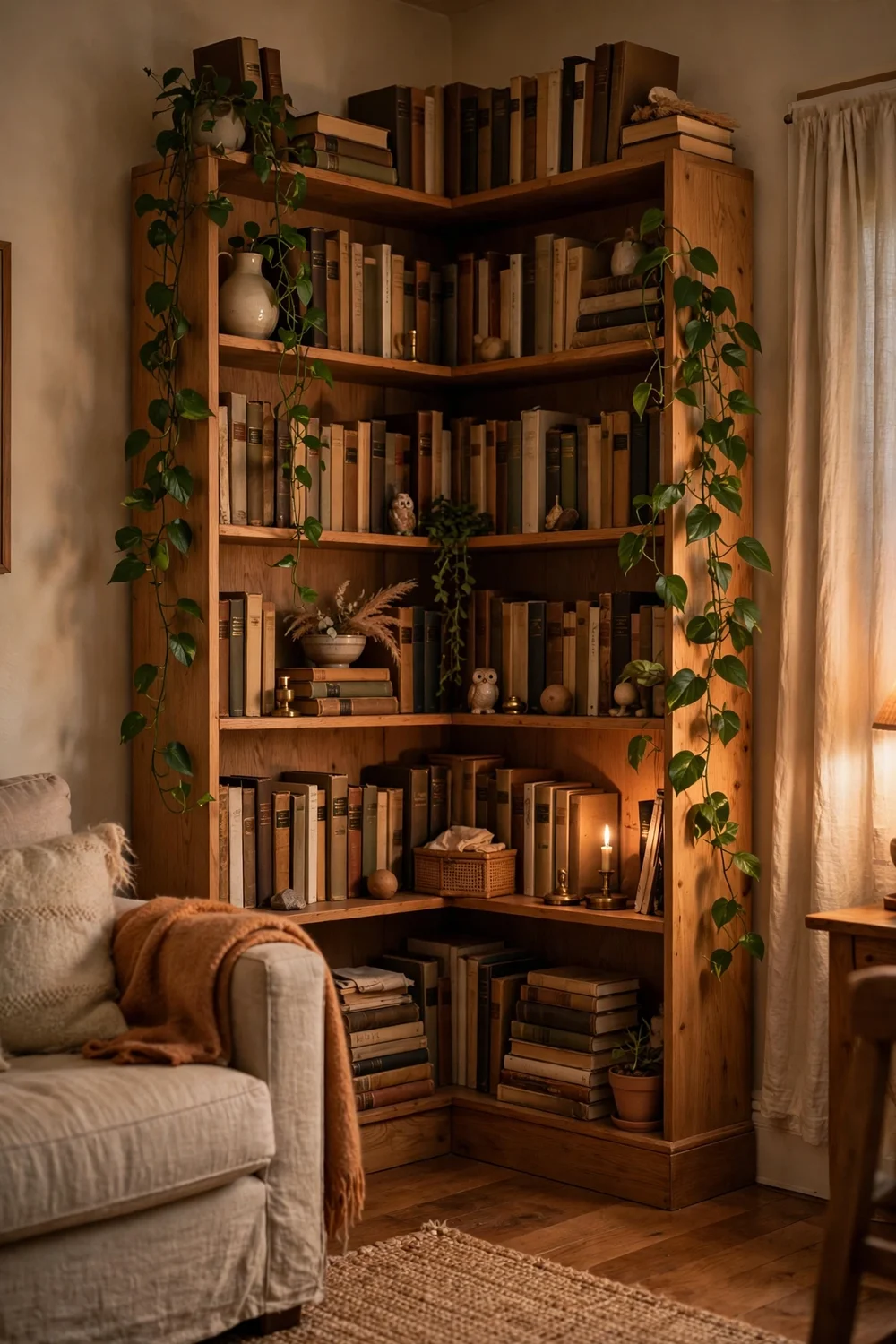
A tall corner bookcase holds a shocking number of books in a footprint barely two feet square — and it becomes the visual anchor of a living room or bedroom corner. Style it with the books you actually reread, a trailing plant on top, and a few meaningful objects mixed into the shelves. If you want to lean into the reading-nook energy, these cozy library room ideas with plants show how shelves, soft light, and greenery turn any corner into a private library.
Try this: anchor tall bookcases to the wall with the included anti-tip hardware — especially in kids’ rooms, this is non-negotiable.
12. Corner Bar Cabinet
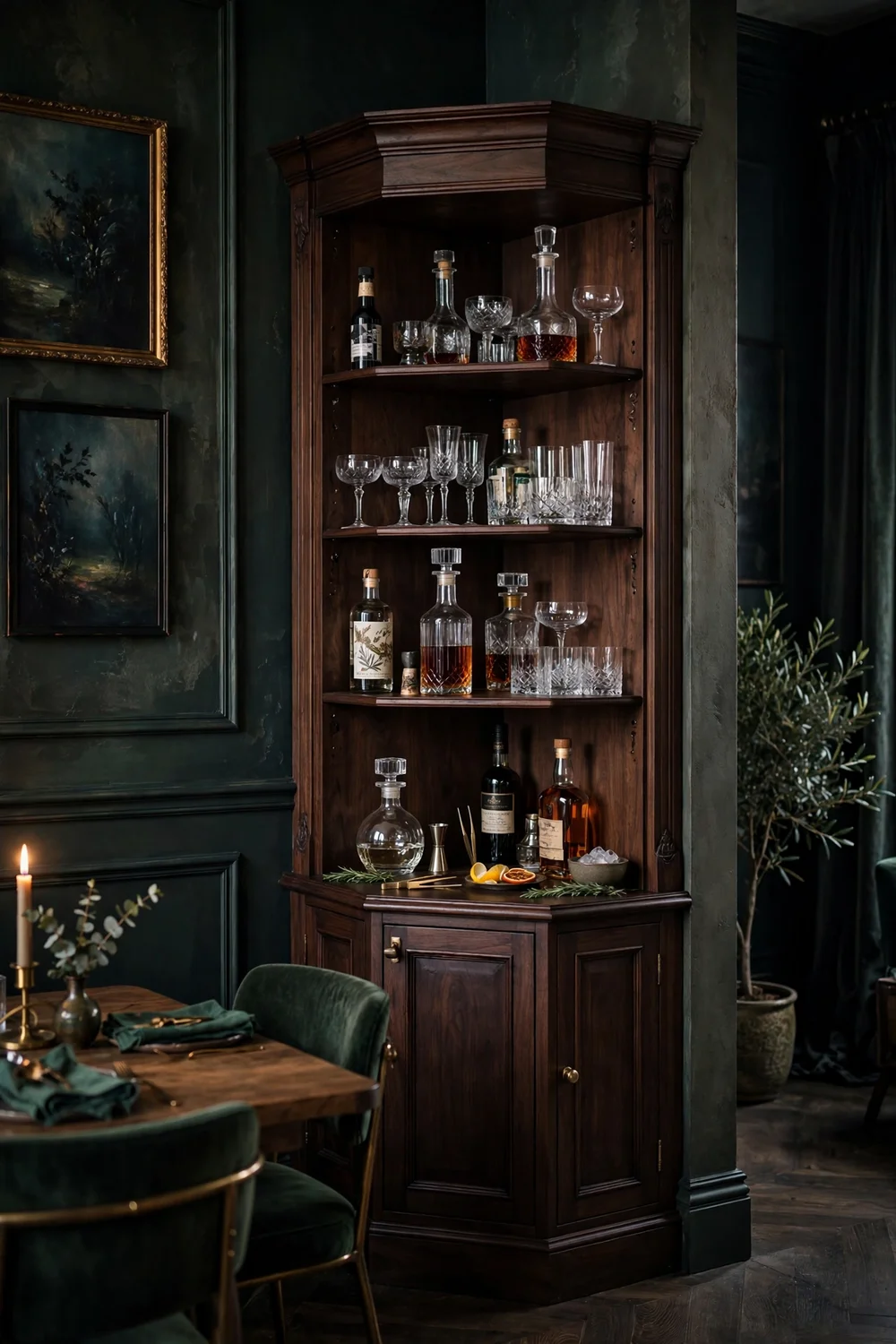
Give one living room or dining corner to entertaining: a corner bar cabinet with glassware up top, bottles and a decanter on the open shelf, and the cocktail tools in a drawer. It keeps the party supplies out of the kitchen cabinets and gives guests a natural gathering spot. Even a small cabinet works — a bar cart tucked into a corner does the same job in a tighter space.
Try this: put a small tray on the top surface to corral the decanter and glasses — trays make any collection look intentional.
13. Corner Media Console
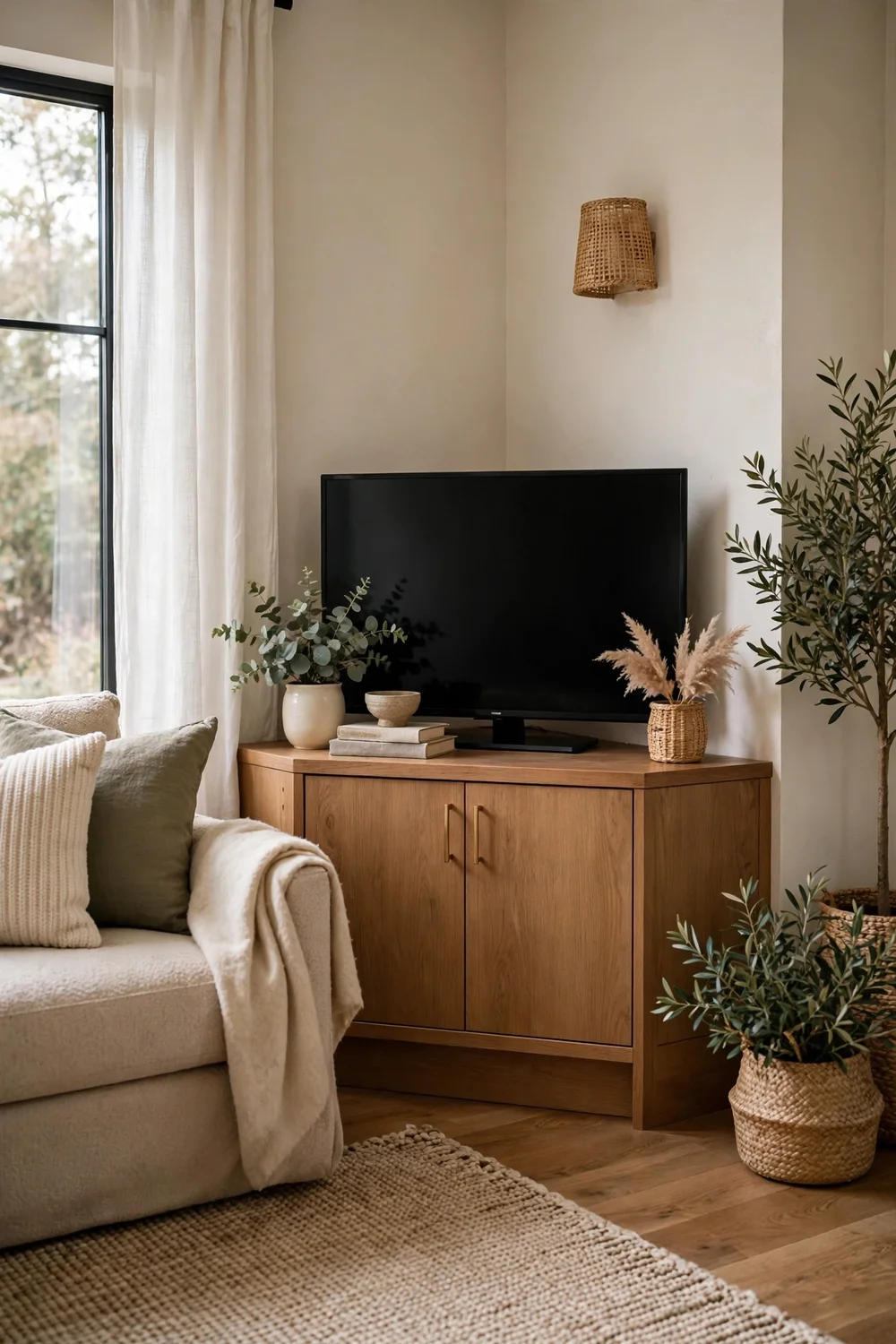
In living rooms where the sofa layout points at a corner, a corner media console solves the TV problem elegantly. The angled front fits the corner perfectly, the TV sits at the right viewing angle, and the closed cabinets swallow remotes, consoles, and the tangle of cables. Look for one with ventilated back panels so electronics do not overheat.
Try this: run a cable raceway from the console to the wall outlet so the cord mess disappears completely.
14. Corner Secretary Desk
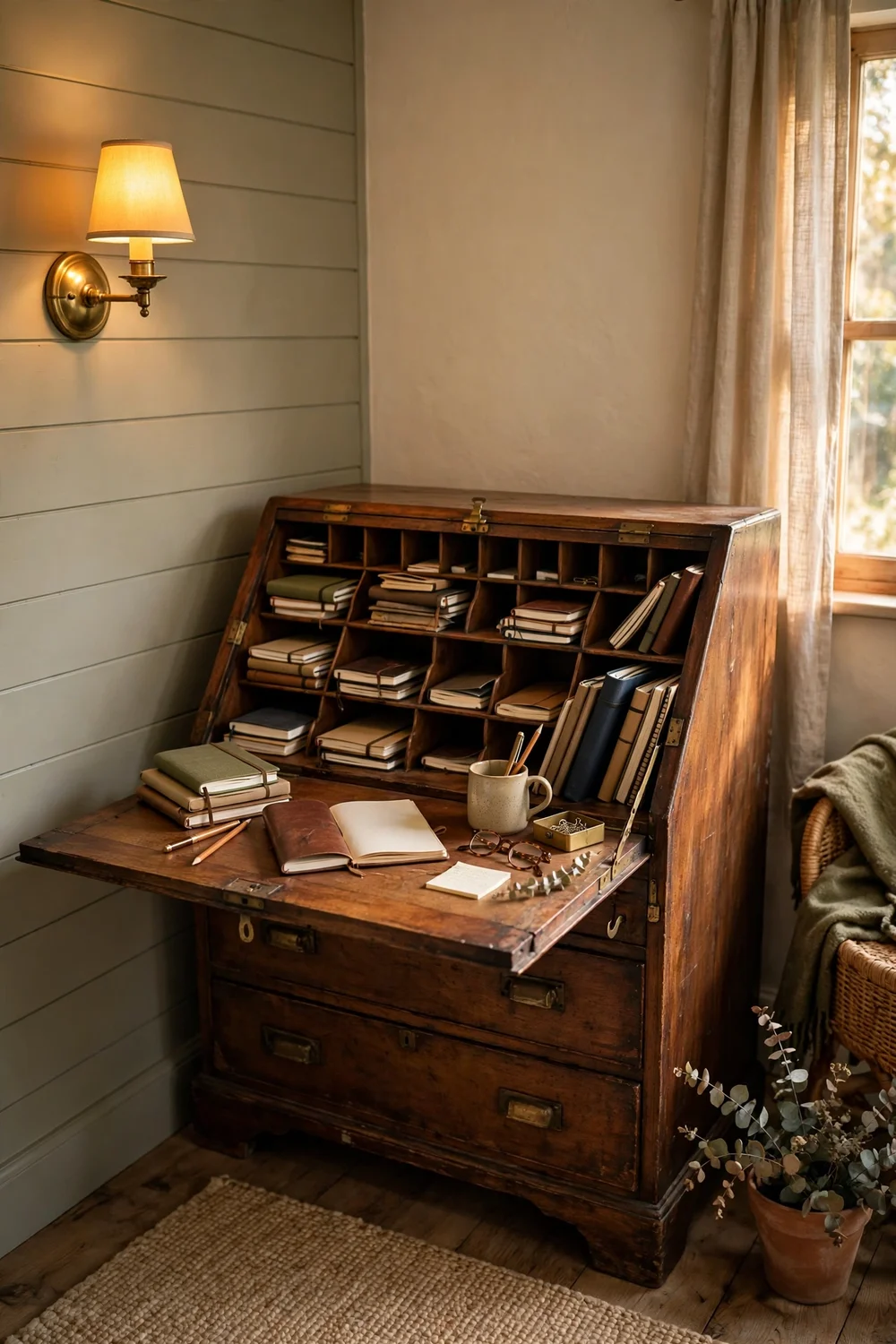
A corner secretary desk — the kind with a fold-down writing surface — turns any bedroom or living room corner into a home office that disappears. Fold it up and it is a pretty cabinet; fold it down and you have a desk with cubbies for bills, chargers, and notebooks. It is the renter-friendly office: one piece of furniture, zero construction.
Try this: add a slim task lamp that lives on the desktop permanently, so the “office” is ready the moment you fold it down.
15. Farmhouse Corner Cupboard
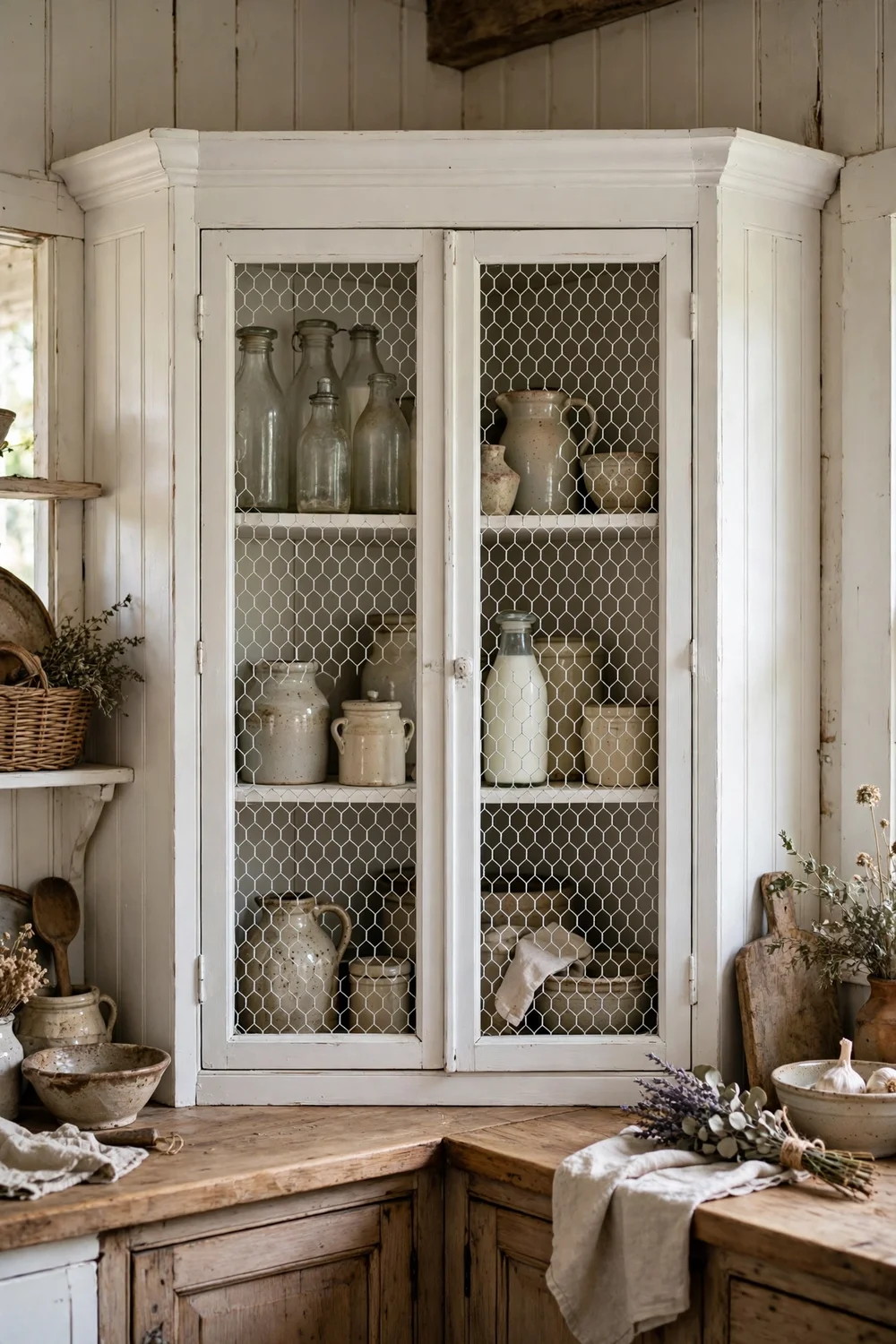
For farmhouse style, nothing beats a tall pine corner cupboard with chicken-wire or seeded-glass doors. It brings texture and that collected-over-time feeling a brand-new kitchen lacks. The wire fronts keep it light visually while hiding the everyday mess inside — and vintage milk bottles or stoneware look perfect behind them. It pairs beautifully with reclaimed-wood projects like these farmhouse old window projects for a whole-house farmhouse layer.
Try this: back the wire panels with sheer linen if you want the texture of the wire without showing the contents.
16. Bold Painted Corner Cabinet
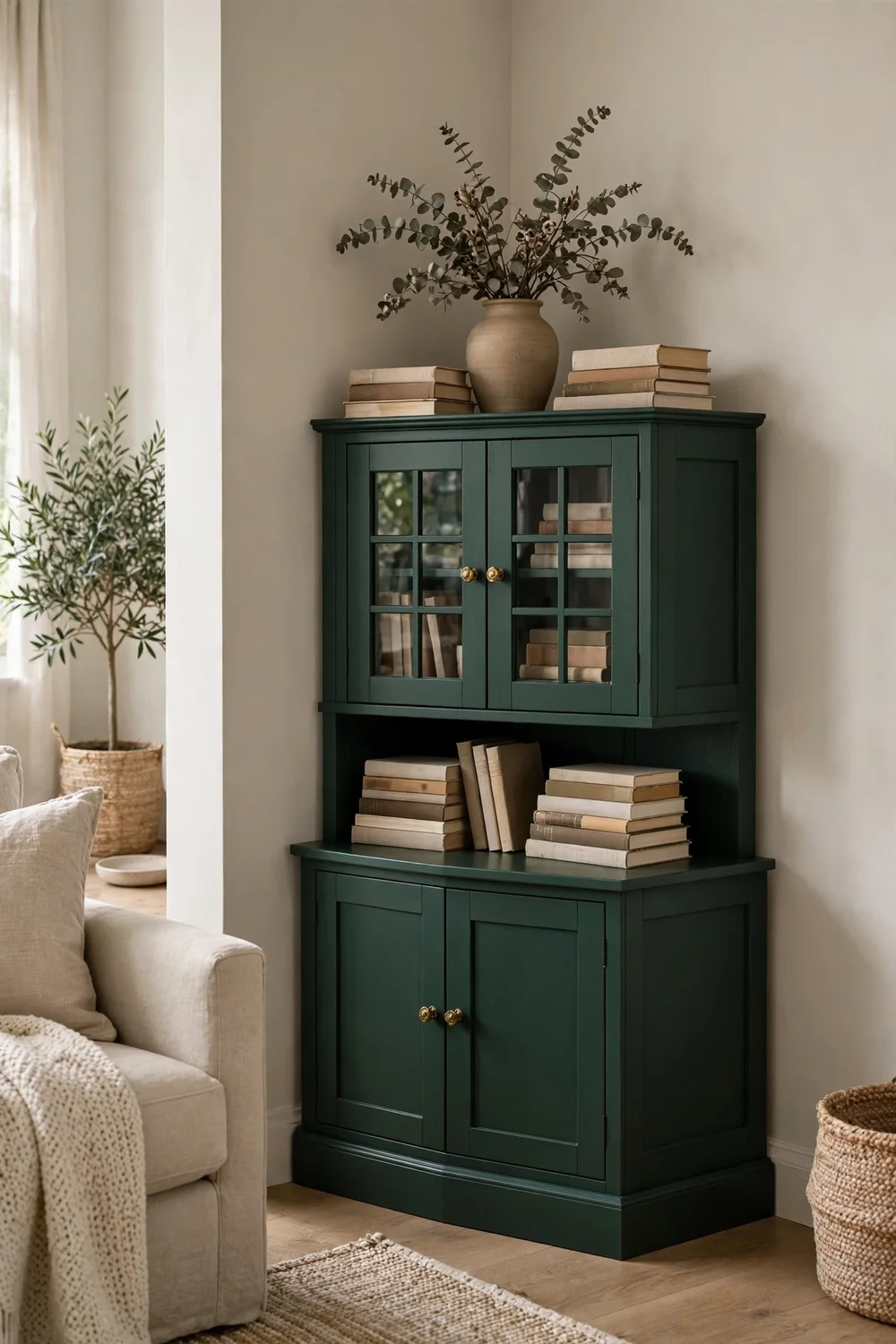
Paint is the cheapest way to make a corner cabinet look like it was designed for the room. A deep forest green, navy, or black cabinet becomes the focal point of a neutral room — the corner stops being dead space and becomes the color moment. One quart of cabinet paint covers most small cabinets, and the transformation takes a weekend.
Try this: use a bonding primer and an enamel paint meant for cabinets; regular wall paint will chip on doors within months.
17. Wallpaper-Lined Corner Cabinet
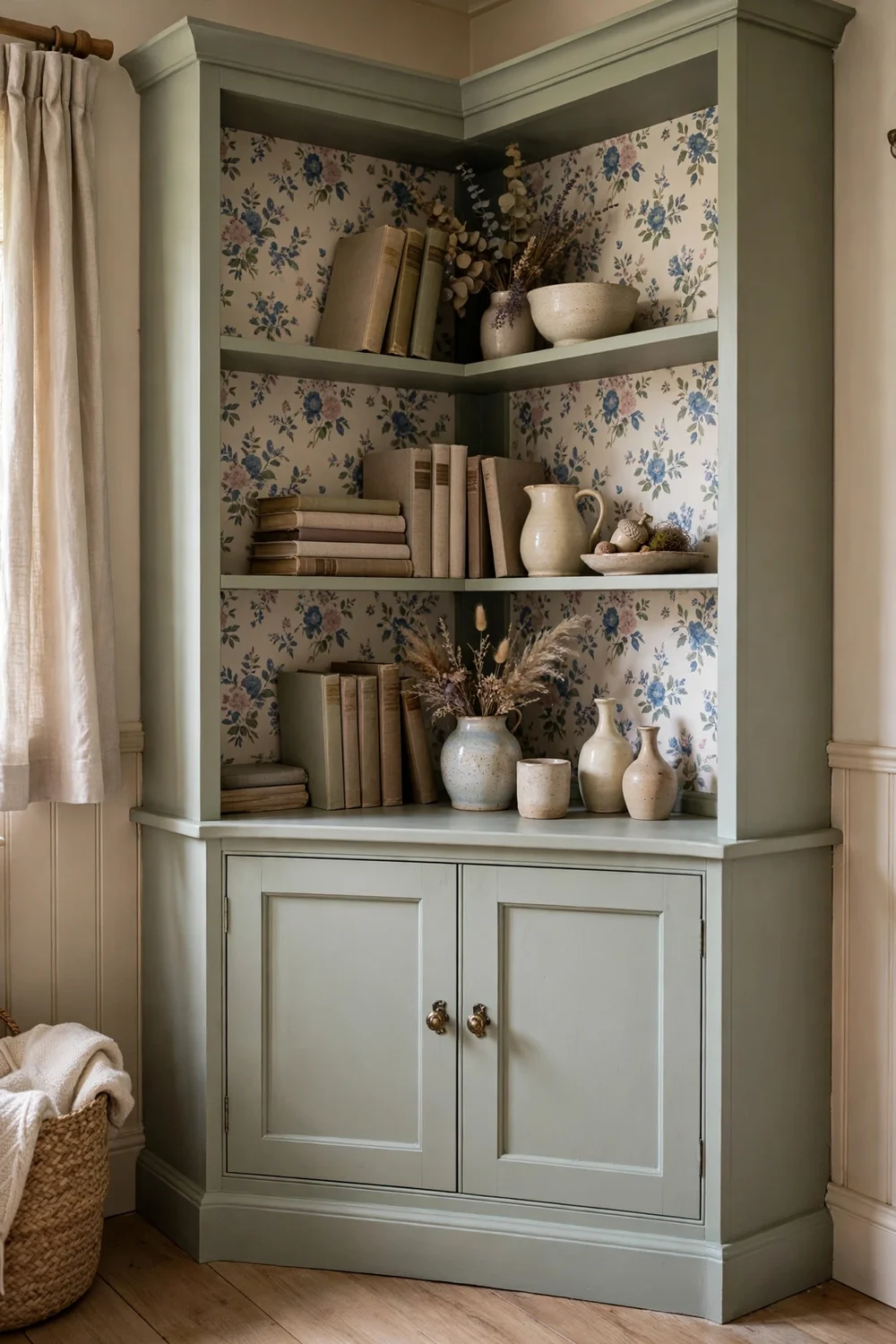
Line the back panel of a corner cabinet with wallpaper and the whole piece comes alive — florals for cottage style, a bold geometric for modern rooms, grasscloth for texture. It is a ten-dollar, one-afternoon upgrade that makes the cabinet look custom. Peel-and-stick wallpaper works perfectly here since the back panel is flat and small.
Try this: pull one color from the wallpaper for the cabinet’s paint or accessories so the whole piece feels designed, not random.
18. Small Corner Accent Cabinet with Styled Top
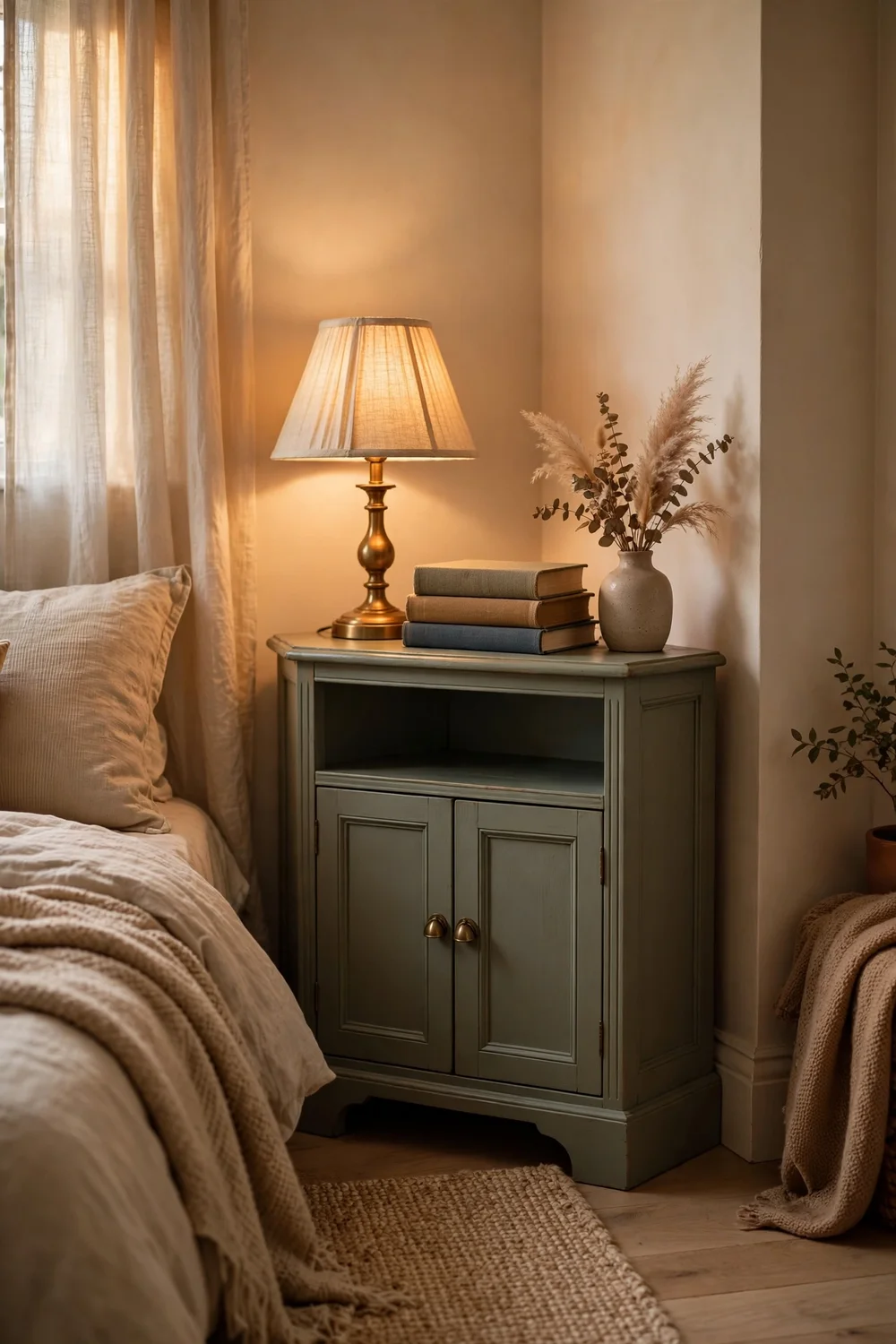
Not every corner cabinet needs to be huge. A small two-door accent cabinet in a bedroom or hallway corner works as a landing spot — lamp, stack of books, a vase — with closed storage below for the chargers, remotes, and clutter you do not want to see. Style the top in threes: a lamp for height, a stack of books for middle, a small plant or object for the finish.
Try this: swap what is on top with the seasons — a small pumpkin in fall, greenery in winter — and the corner stays fresh all year.
19. Entryway Corner Bench with Storage
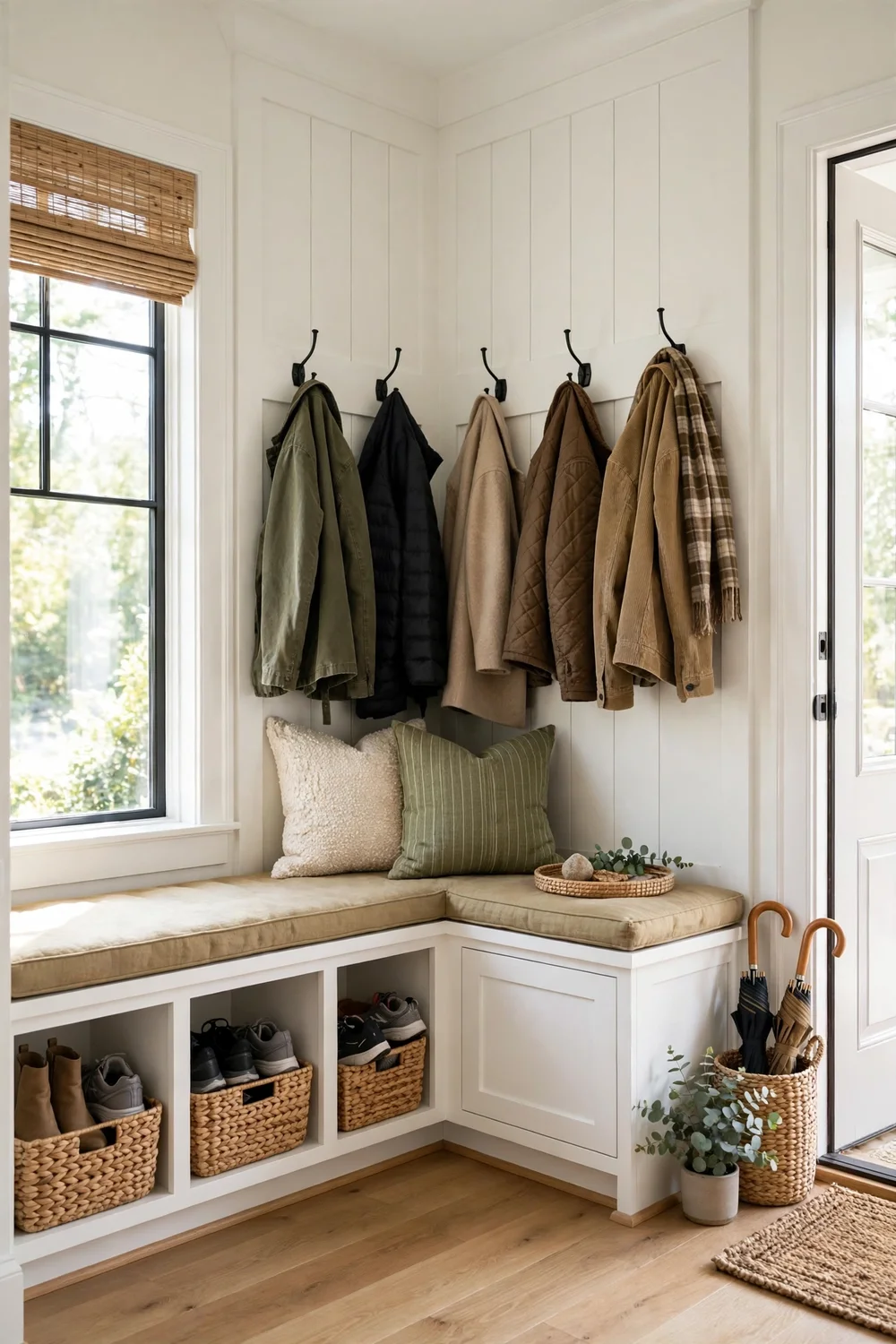
The entryway corner is the hardest-working corner in the house. A corner bench with cubbies underneath gives everyone a place to sit and put on shoes, with baskets below for the daily chaos — backpacks, sports gear, the dog leash. Add hooks on the wall above for coats and the whole entryway finally has a system.
Try this: give each family member their own cubby or basket. Shared entryway storage always becomes one big pile; assigned spots actually get used.
20. Bathroom Tall Corner Linen Cabinet
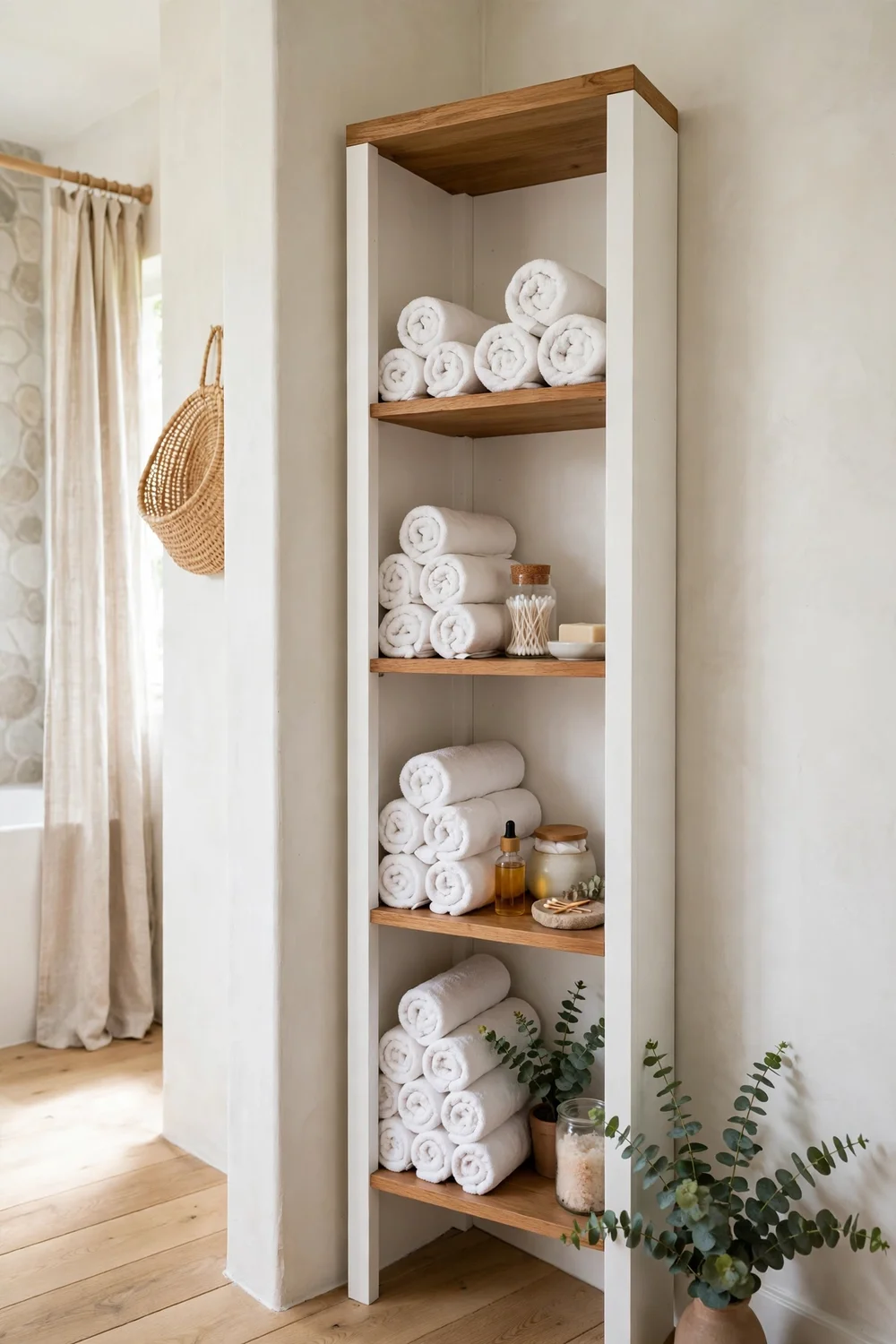
Bathrooms have corners and never enough towel storage — a tall, narrow corner linen cabinet solves both. Folded towels on the open shelves, toiletries and spare toilet paper behind the doors. Freestanding corner towers are made for exactly this and cost less than a dinner out. Just make sure the finish is moisture-resistant.
Try this: roll instead of fold the towels on open shelves — they look better, take less space, and you can see every color at a glance.
21. Corner Vanity Storage
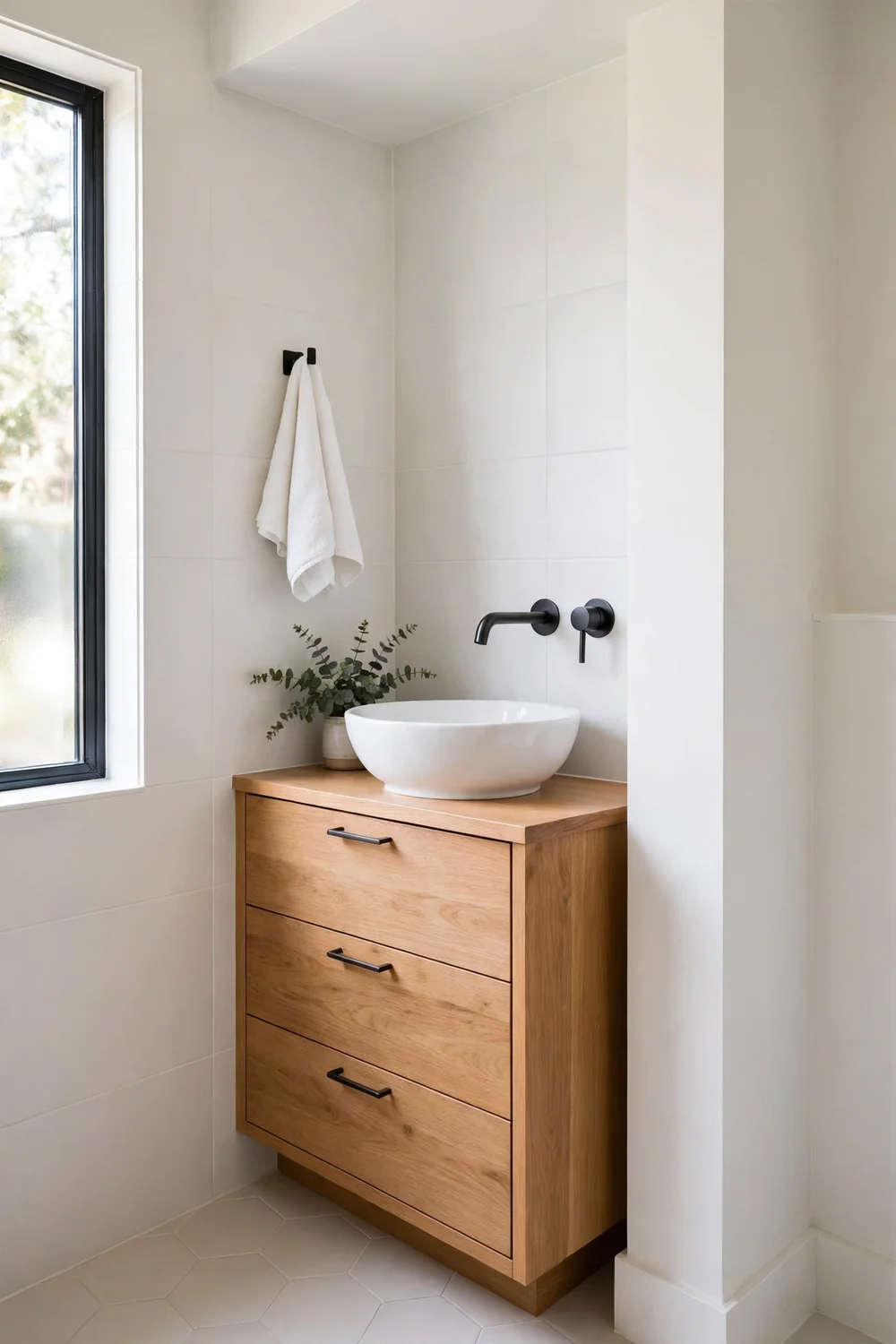
In a small bathroom, a corner vanity puts the sink where nothing else fits and frees the rest of the wall. The angled front keeps the walkway clear, and the cabinet below holds cleaning supplies and toiletries. Pair it with a corner mirror above and the whole setup feels intentional rather than cramped.
Try this: wall-mount the faucet to free the tiny corner countertop for soap and a plant.
22. Kids’ Corner Toy Cabinet
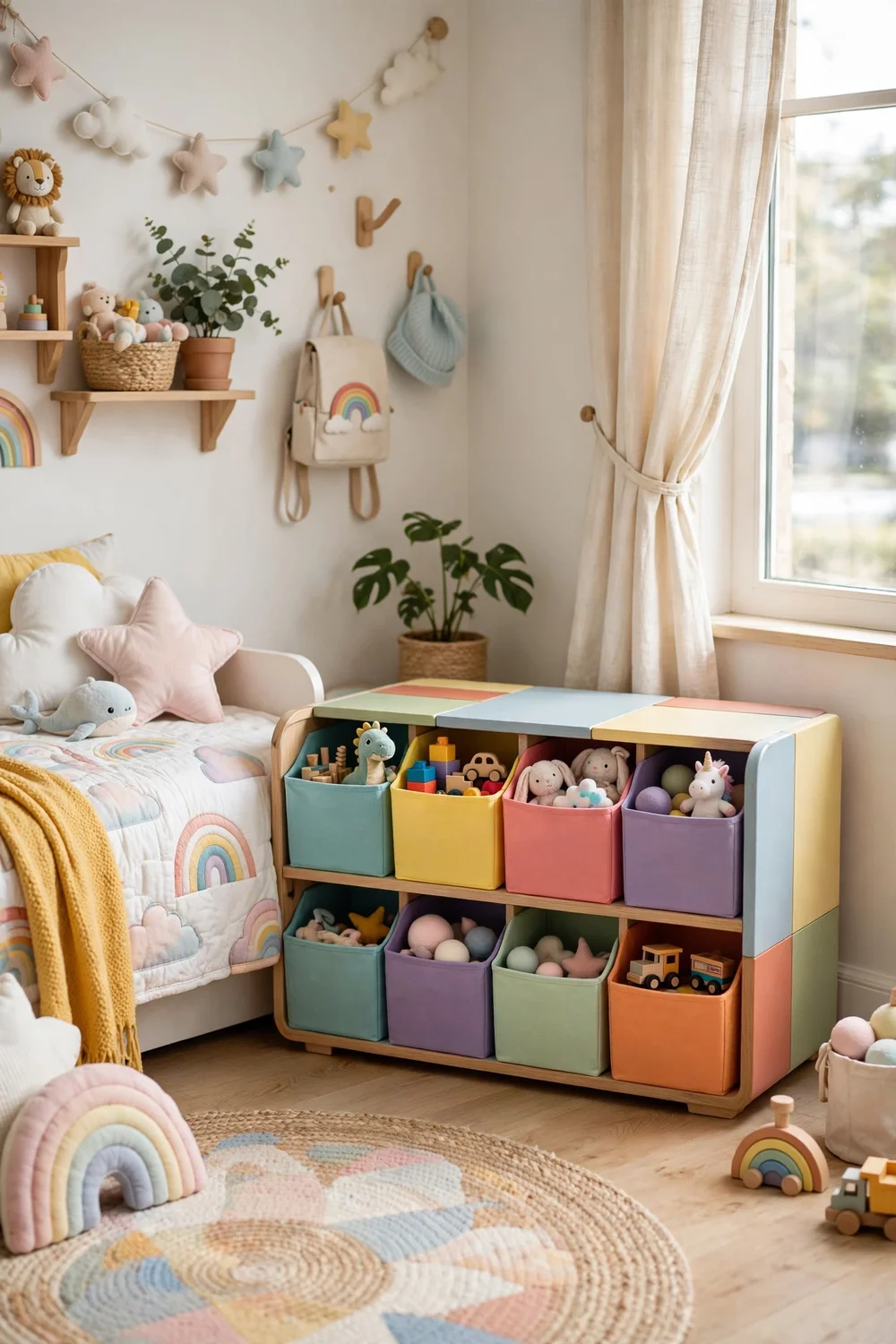
Give the toy sprawl a home: a low corner cabinet with labeled bins in a kid’s room or play corner. One bin per category — blocks, cars, art supplies — and cleanup becomes a sorting game instead of a shoving match. Keep it low so kids can reach everything, and skip the doors entirely if little fingers get pinched.
Try this: label bins with pictures, not words, for pre-readers — a photo of a block on the block bin.
23. Corner Nightstand Cabinet
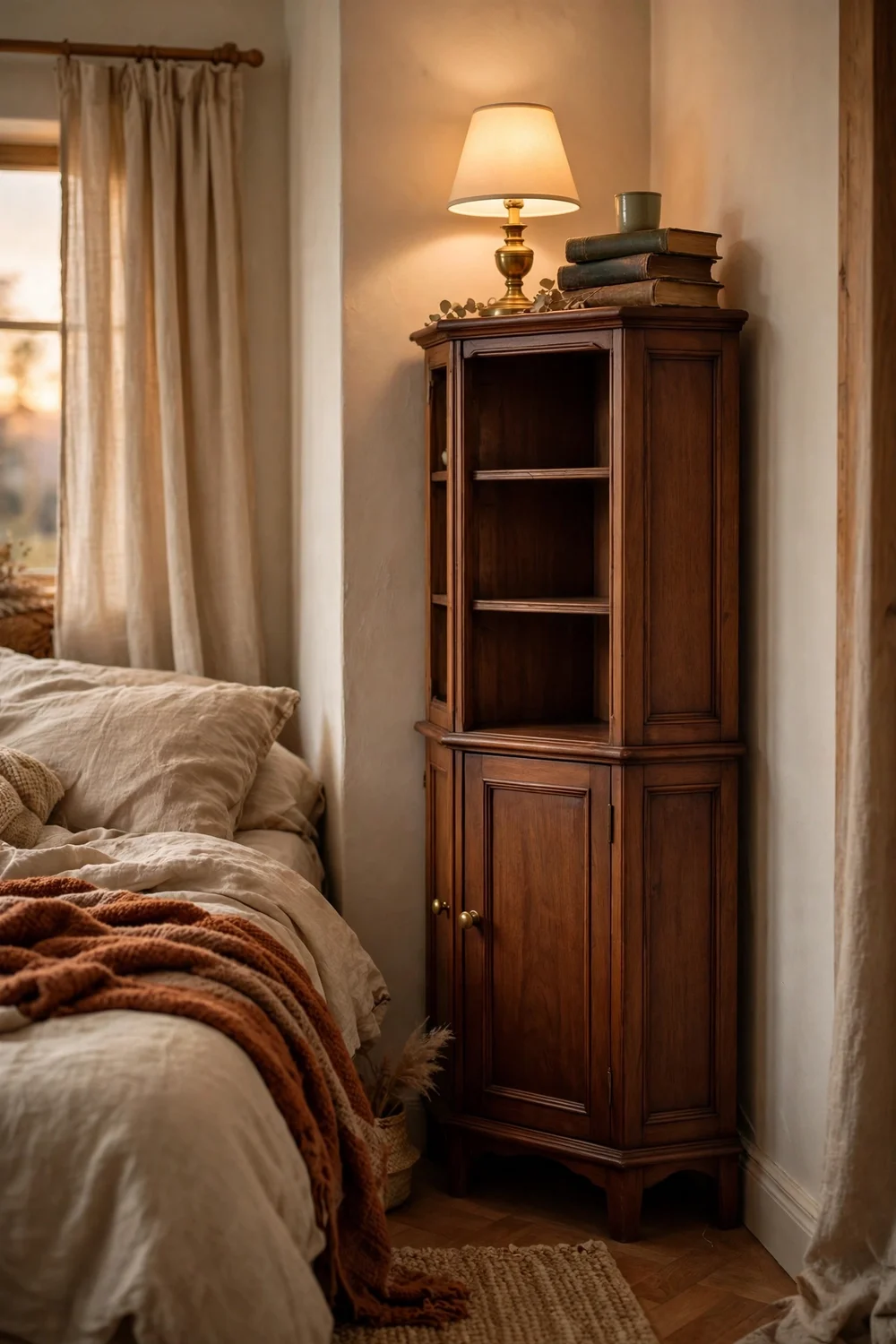
When the bed sits against a wall and there is no room for a full nightstand, a tall narrow corner cabinet fits the gap beside the bed. Lamp on top, books and water within reach, and closed storage below for the things that migrate to bedside tables. It works in guest rooms too, where a little extra closed storage is always welcome.
Try this: run a small power strip up the back of the cabinet so the phone charger and lamp plug in out of sight.
24. Corner Plant Display Cabinet
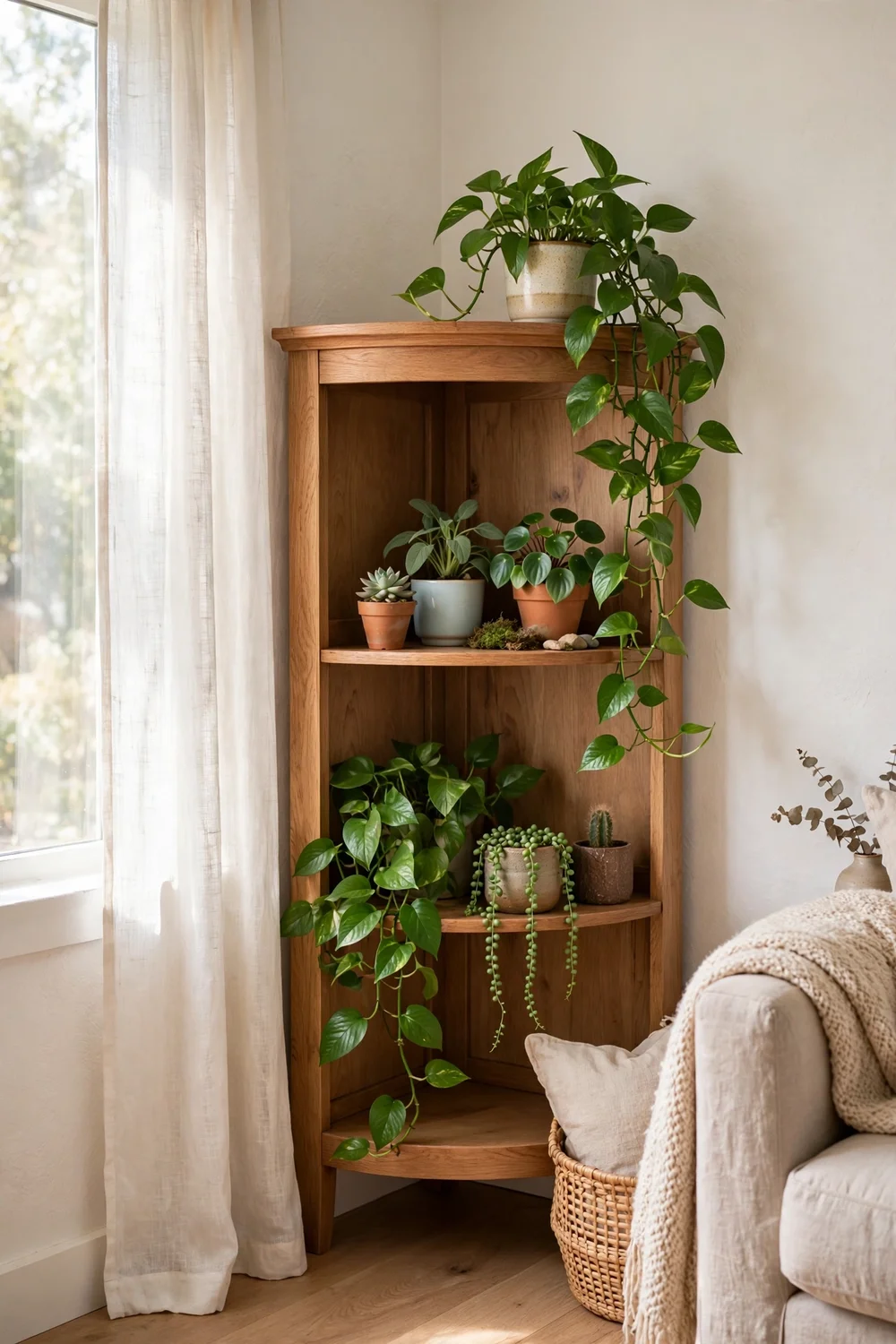
Turn a corner cabinet into a plant stage: open shelves at different heights, a trailing pothos up top, a few small pots below, maybe a grow light tucked underneath a shelf for the dark corners. Plants make any corner feel alive, and a cabinet gives them a frame — the corner stops being empty and starts being the greenest spot in the room.
Try this: put a waterproof tray under every pot. Cabinet wood and plant water are not friends.
25. Thrifted Corner Cabinet Makeover
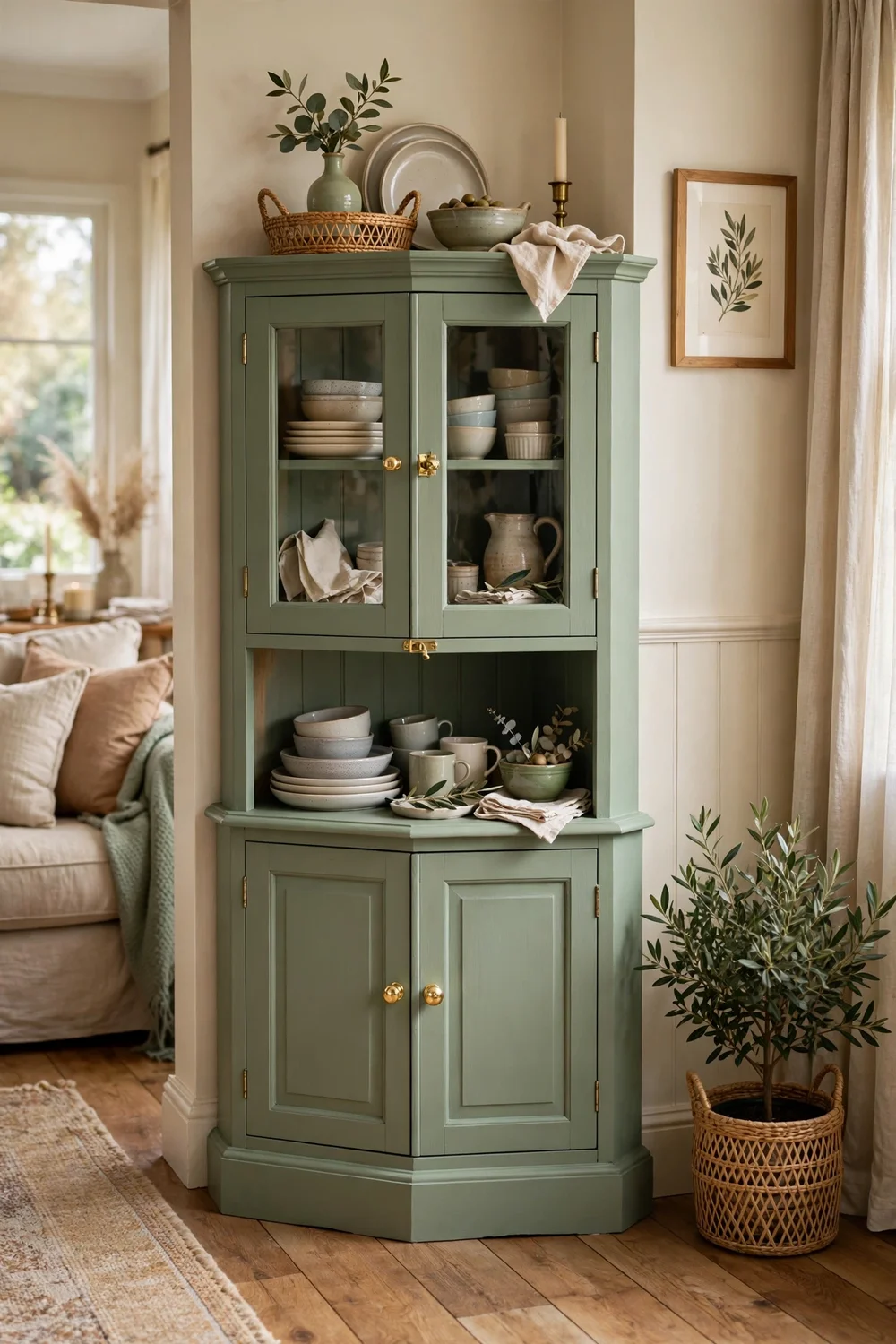
The best corner cabinet deal is the one already sitting in a thrift store for forty dollars. Old corner cabinets are solid wood, built like tanks, and take paint beautifully. Clean it, scuff-sand, prime, two coats of cabinet enamel, new knobs — and you have a piece that looks like it cost ten times more. Check the hinges and shelf pins before you buy; everything else is cosmetic.
Try this: replace the hardware before you decide the piece is done. New knobs are the jewelry that makes a painted cabinet look finished.
Corner Cabinet Quick-Pick Cheat Sheet
Match the cabinet to the corner — this cheat sheet pairs the most common dead corners with the fix that works best:
| Your Corner | Best Cabinet Idea | Est. Cost | Difficulty |
|---|---|---|---|
| Kitchen L-shape dead zone | Lazy Susan or pull-out shelves | $50–$250 | Easy–Medium |
| Dining room empty corner | Corner hutch or curio cabinet | $100–$600 | Easy |
| Living room dark corner | Glass-front curio with lighting | $150–$500 | Easy |
| Small kitchen, no pantry | Tall corner pantry cabinet | $200–$800 | Medium |
| Bathroom towel overflow | Tall corner linen tower | $60–$200 | Easy |
| Entryway shoe chaos | Corner bench with cubbies | $100–$400 | Easy–Medium |
| Bedroom no nightstand space | Narrow corner nightstand cabinet | $50–$200 | Easy |
| Kid room toy sprawl | Low corner cabinet with bins | $60–$250 | Easy |
| Tight budget, any room | Thrifted cabinet makeover | $40–$150 | Easy |
| Home office in a corner | Corner secretary desk | $100–$400 | Easy |
For more professional takes on which solution fits which kitchen layout, this roundup of corner cabinet ideas from The Spruce walks through pull-out shelving, glass-front uppers, and paint tricks with designer examples.
Frequently Asked Questions
What is the best way to use a corner kitchen cabinet?
It depends on the cabinet. For a standard blind corner, a lazy Susan or a pull-out “magic corner” mechanism makes everything reachable. For an angled corner, deep drawers or a diagonal cabinet with a glass front work better. The worst option is doing nothing — an inaccessible corner cabinet just becomes a graveyard for appliances you forgot you owned.
Are corner cabinets out of style?
No — awkward corners are not going anywhere, and neither is the need to fill them. What changes is the look: chunky 90s corner hutches feel dated, but slim glass-front curios, painted accent cabinets, and floating corner shelves fit right into modern rooms. Update the finish and the hardware and almost any corner cabinet looks current.
How do I measure for a corner cabinet?
Measure the width of both walls from the corner, the floor-to-ceiling height, and the depth you can afford without blocking walkways or door swings. Then measure again. Corner cabinets are deeper than they look, and the number one mistake is buying one that blocks a nearby door or juts into the walking path.
What should I display in a glass-front corner cabinet?
Things that look good in groups: matching dish sets, glassware, a small collection, pretty cookbooks, or folded linens. Stick to one color family per shelf and leave some breathing room — a glass cabinet crammed full looks like storage, while one styled with space looks like decor.
How do I make a cheap corner cabinet look expensive?
Three upgrades do most of the work: paint it a rich color with proper cabinet enamel, swap the hardware for something with weight and finish, and line the back or add lighting inside. Those three changes can make a $60 thrift find look like a $600 piece.
Final Thoughts
The corner was never the problem — the problem was treating it like leftover space. A corner cabinet turns it into the hardest-working, and often the prettiest, square footage in the room. Start with the corner that bothers you most: the kitchen black hole, the dining room void, the entryway pile. One cabinet, styled with things you already love, and that dead corner becomes the spot people notice.
You do not need a renovation. You need one piece of furniture that fits the angle, a coat of paint if you want it, and the rule of threes on the shelves. Corners have been waiting patiently in every house I have owned — and every time, the cabinet was the answer.


