


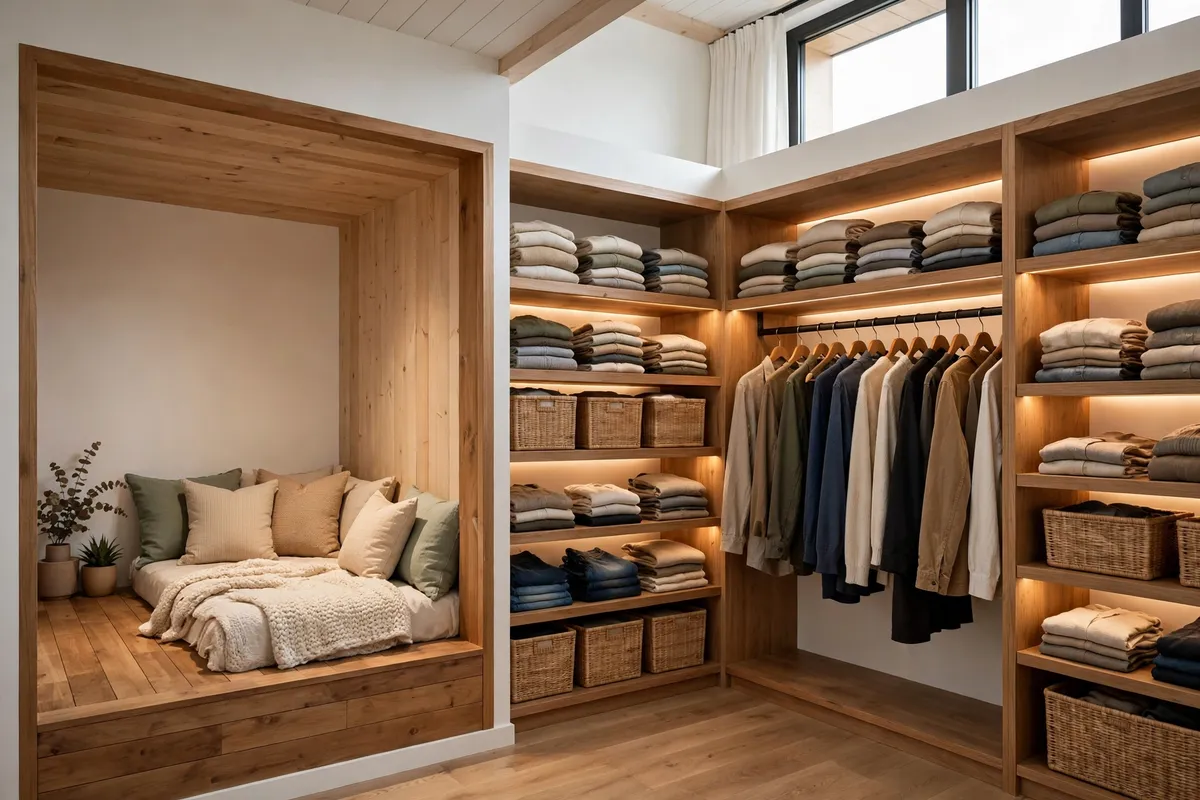
Most closets waste their best real estate: the air above your head. I learned this the hard way in a rental with a closet barely wider than my shoulders — one afternoon, a shelf above the door and a second rod underneath doubled what I could store, and I have been a closet-loft convert ever since.
“Closet loft” actually means two things, and this guide covers both. Sometimes it is a loft built inside a closet — a raised platform that turns a reach-in closet into a reading nook, a play space, or a second storage level. Sometimes it is a closet built in a loft space — clever storage tucked under eaves, above beds, or into attic slopes. Either way, the goal is the same: steal back the cubic feet most people never touch.
Below are 25 easy DIY closet loft ideas I have built, borrowed, or bookmarked over the years — from a $20 above-door shelf to a full under-eave wardrobe. Every one includes a practical tip so you can start this weekend with whaever tools you already own.
- The fastest win is a shelf above the closet door — bins up top, everyday stuff below.
- Always screw platforms and heavy shelves into wall studs; use rated drywall anchors only for light loads.
- Leave at least 12 inches of clearance above a loft platform you plan to sit or sleep on.
- Renters: tension rods, freestanding towers, and curtains give you the loft look with zero holes.
- Light it up — a $10 LED strip turns a dark closet loft from cave to cozy.
1. Above-Door Loft Shelf
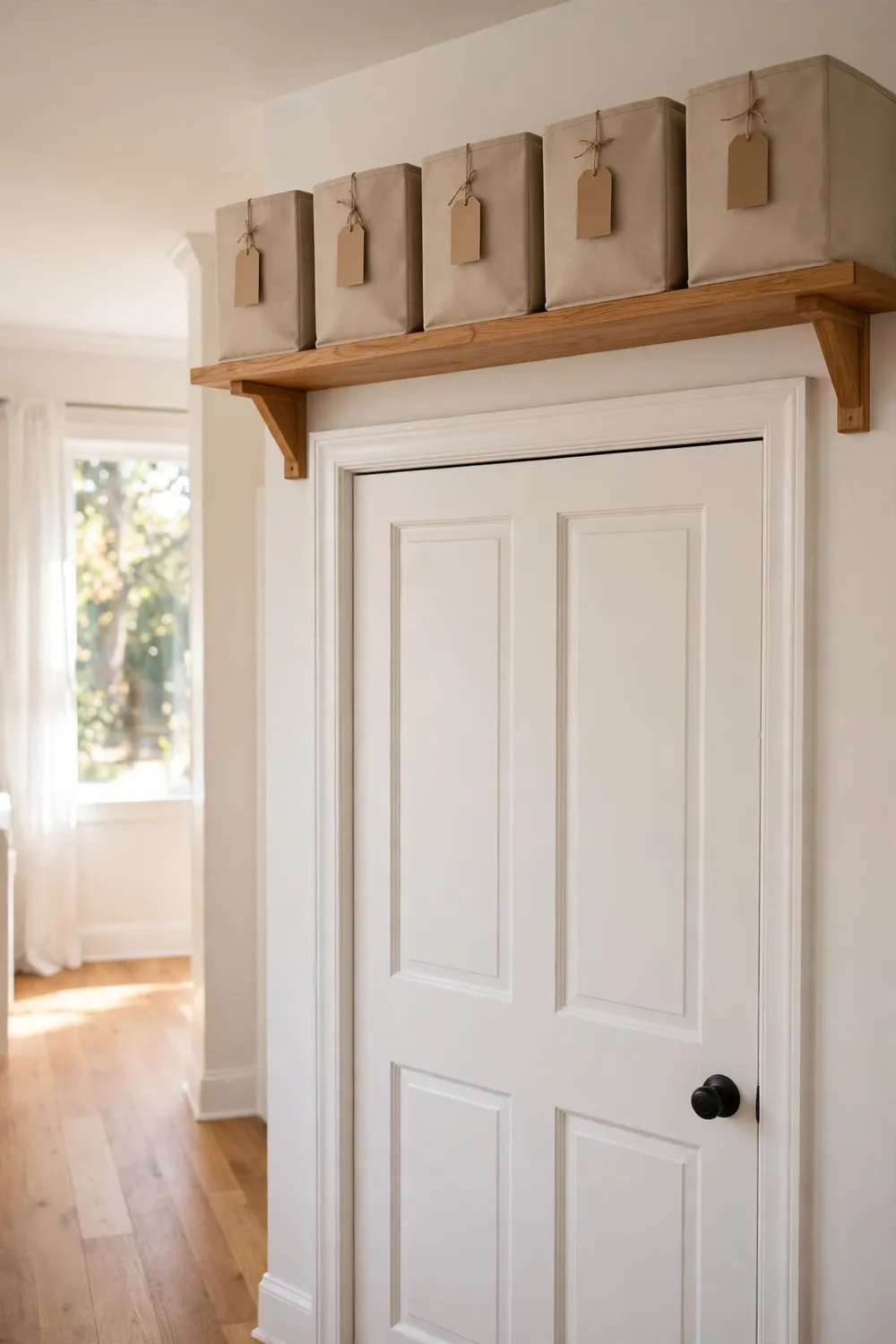
The single highest-return closet project I know. A 12-inch-deep shelf mounted above the door frame holds out-of-season clothes, luggage, or gift wrap — things you need twice a year. Use a stud finder and drive 2.5-inch screws into at least two studs; that shelf will hold more than you think. I keep mine in matching fabric bins so it looks intentional instead of like overflow.
Try this: label every bin on the short end facing out, so you can identify them at a glance without pulling anything down.
2. Platform Reading Loft Inside a Reach-In Closet
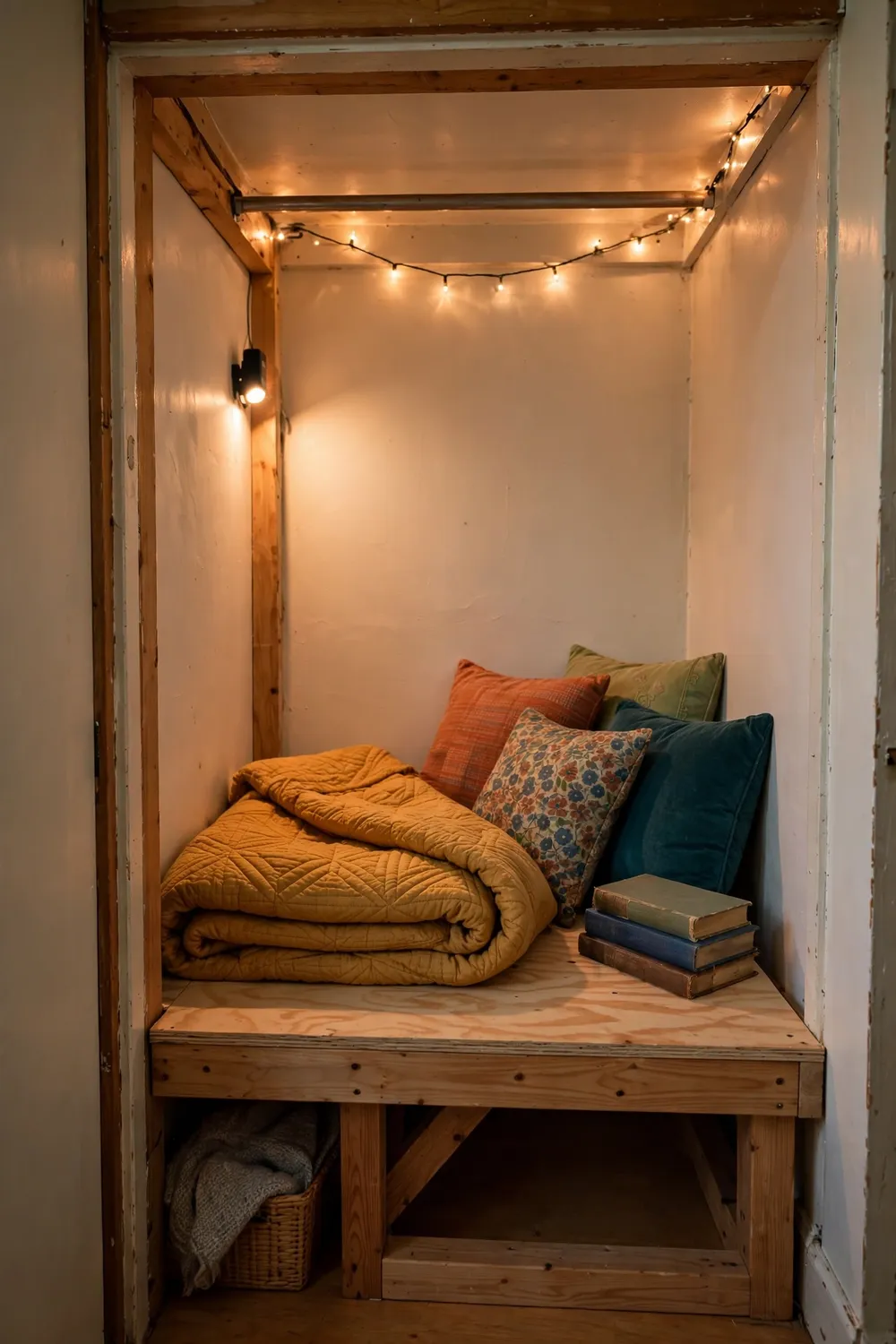
This is the classic Hometalk-style build: remove the rod and shelf, frame a platform from 2x4s screwed into the studs about 50 inches off the floor, top it with plywood and a foam pad, and you have a reading loft a kid will fight you for. One family did the whole thing for under $75. For a full step-by-step of this exact build, this Hometalk tutorial on making a DIY closet loft shows the 2×4 framing, measurements, and cost breakdown.
Try this: add a small battery lantern and a wall-mounted book sling so readers don’t have to climb down for the next chapter.
3. Under-Eave Loft Closet for Sloped Ceilings
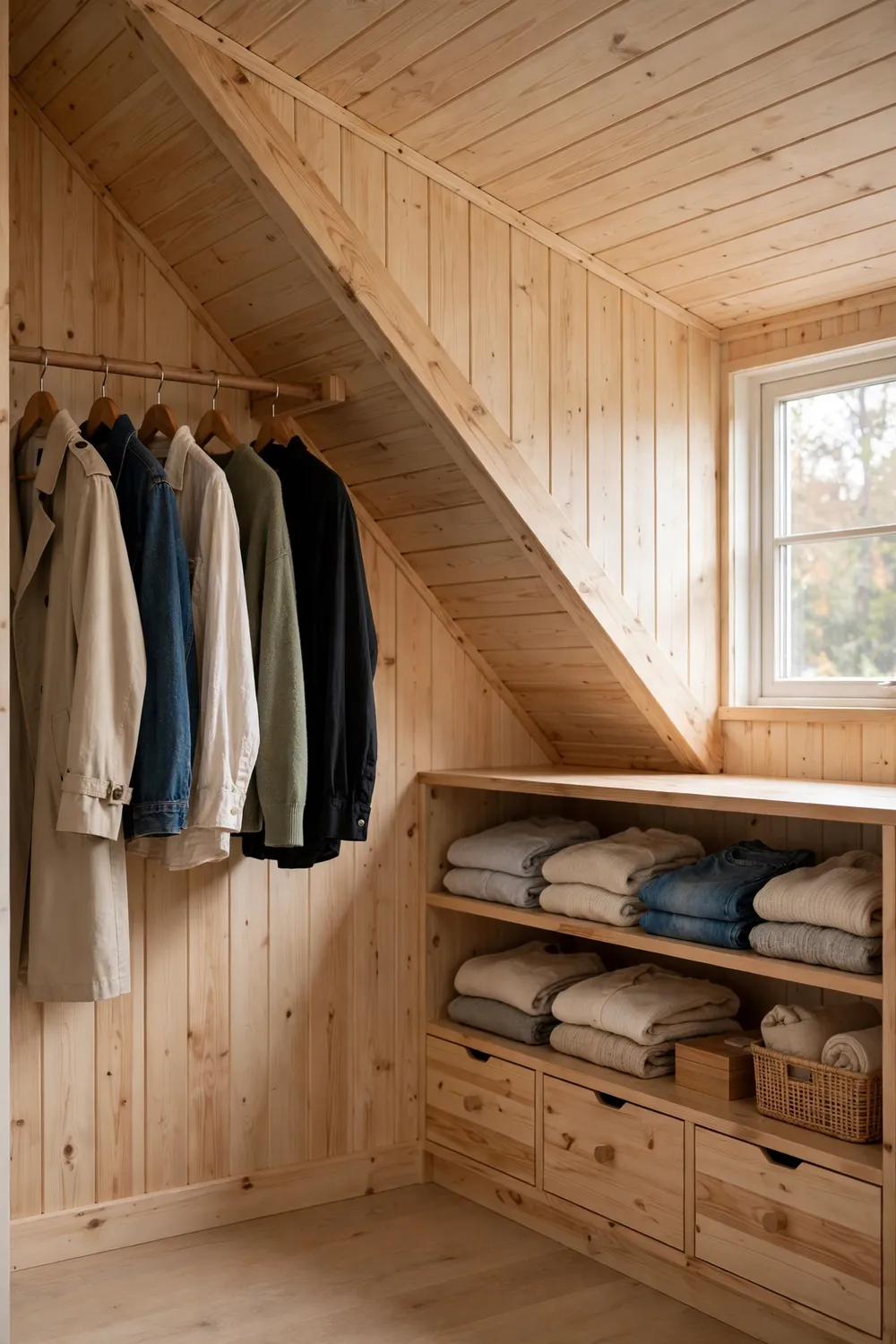
Attic bedrooms and loft apartments waste the triangle under the slope. Frame a low closet right into the eave: short hanging rods where the ceiling is tallest, open shelving or drawers where it pinches down. A miter saw handles the angled cuts, and pine paneling goes up fast over the framing. Plan your zones first — tall items in the middle, shoes and bins in the shallow edges.
Try this: stick battery puck lights to the underside of the slope; sloped closets are always darker than you expect.
4. Double-Hang Rod Loft Upgrade
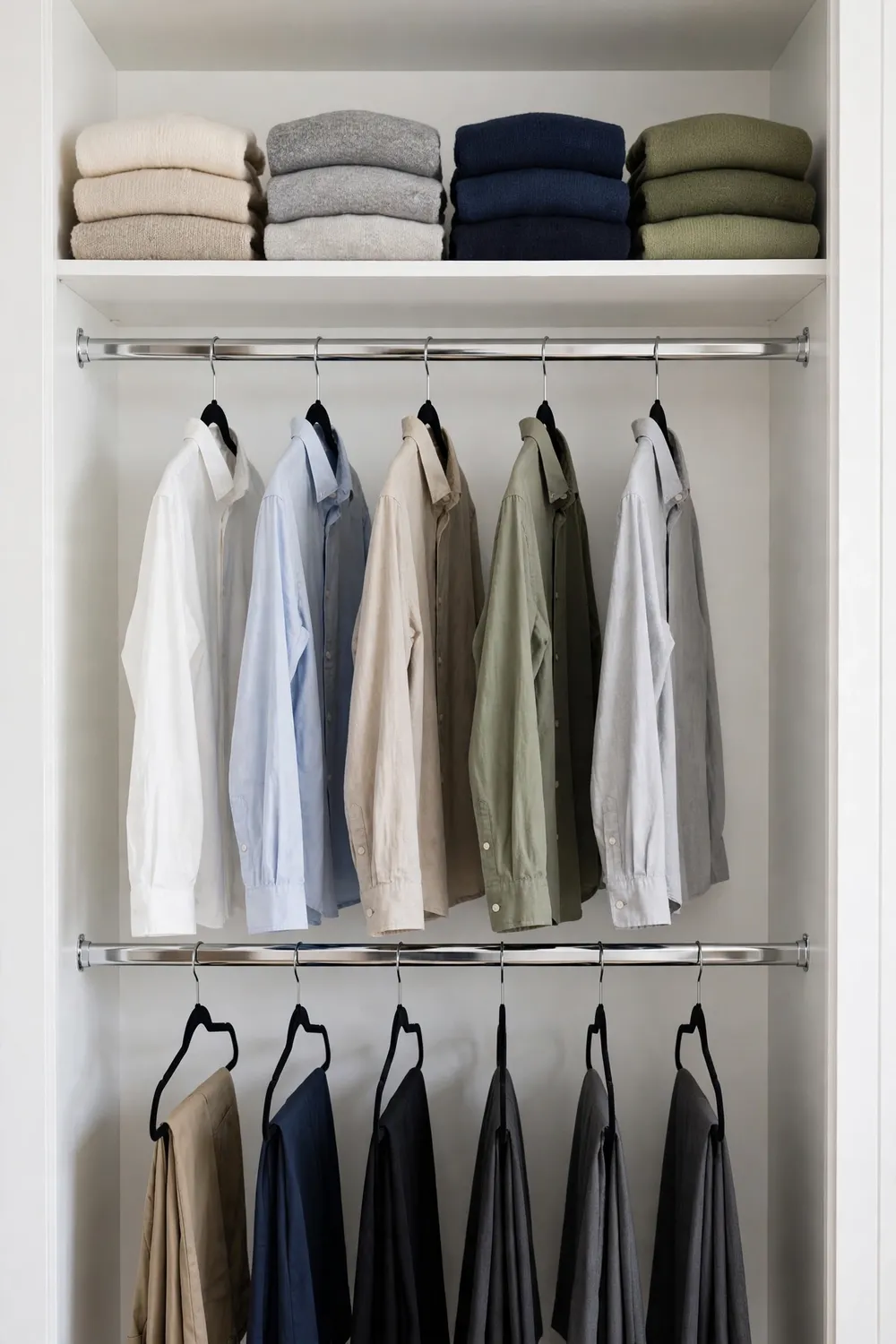
No building required: hang a second rod below the existing one and you have instantly doubled hanging space. Shirts and folded pants live on the double rods; keep one tall section open for dresses and coats. A freestanding double-rod garment rack works the same way if you can’t drill at all.
Try this: match all your hangers — slim velvet ones take up less room and keep everything hanging at the same height so the row looks tidy.
5. Slanted Shoe Loft Wall
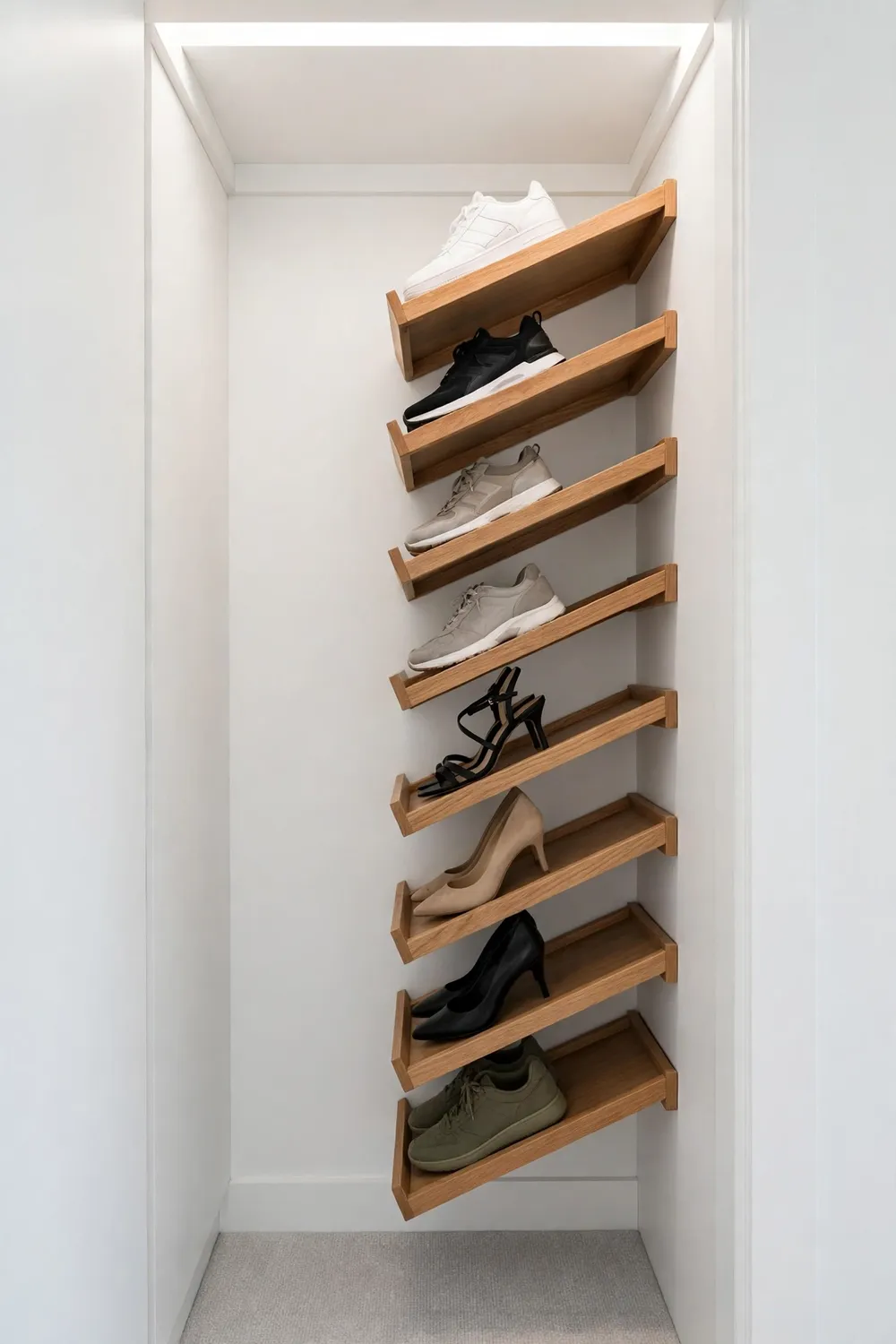
Shoes on the floor eat a shocking amount of closet width. Mount 4-inch-deep slanted shelves up one wall and every pair gets a visible slot — a full column can hold a dozen pairs in a footprint barely wider than the shoes themselves. Angle each shelf about 30 degrees and add a small lip so heels don’t slide off.
Try this: put today’s pair at eye level and rotate seasonally; the bottom shelf catches the muddy ones.
6. Kids’ Play Loft in a Spare Closet
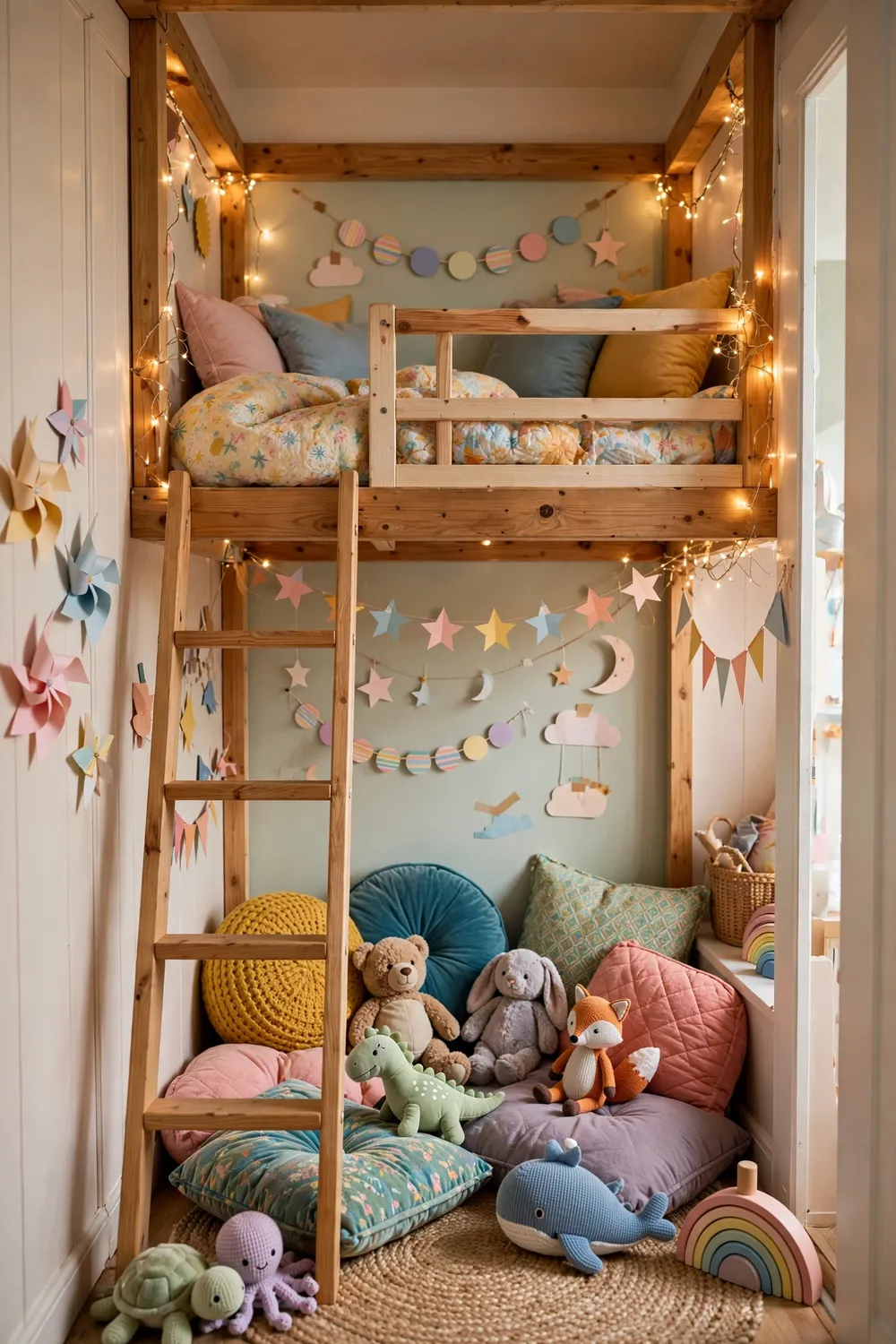
A spare reach-in closet is roughly the size of a play tent — so lean into it. Pad the floor, add a low platform for a “stage” or puppet theater, string some lights, and let the walls be the art gallery. For cheap wall decor the kids can help make, these school wall decoration ideas with paper are perfect for dressing up the loft walls on a near-zero budget.
Try this: use interlocking foam mats on the floor — soft for play, and they lift out in seconds when you need the closet back.
7. The Cloffice Loft: Desk Under a Raised Shelf
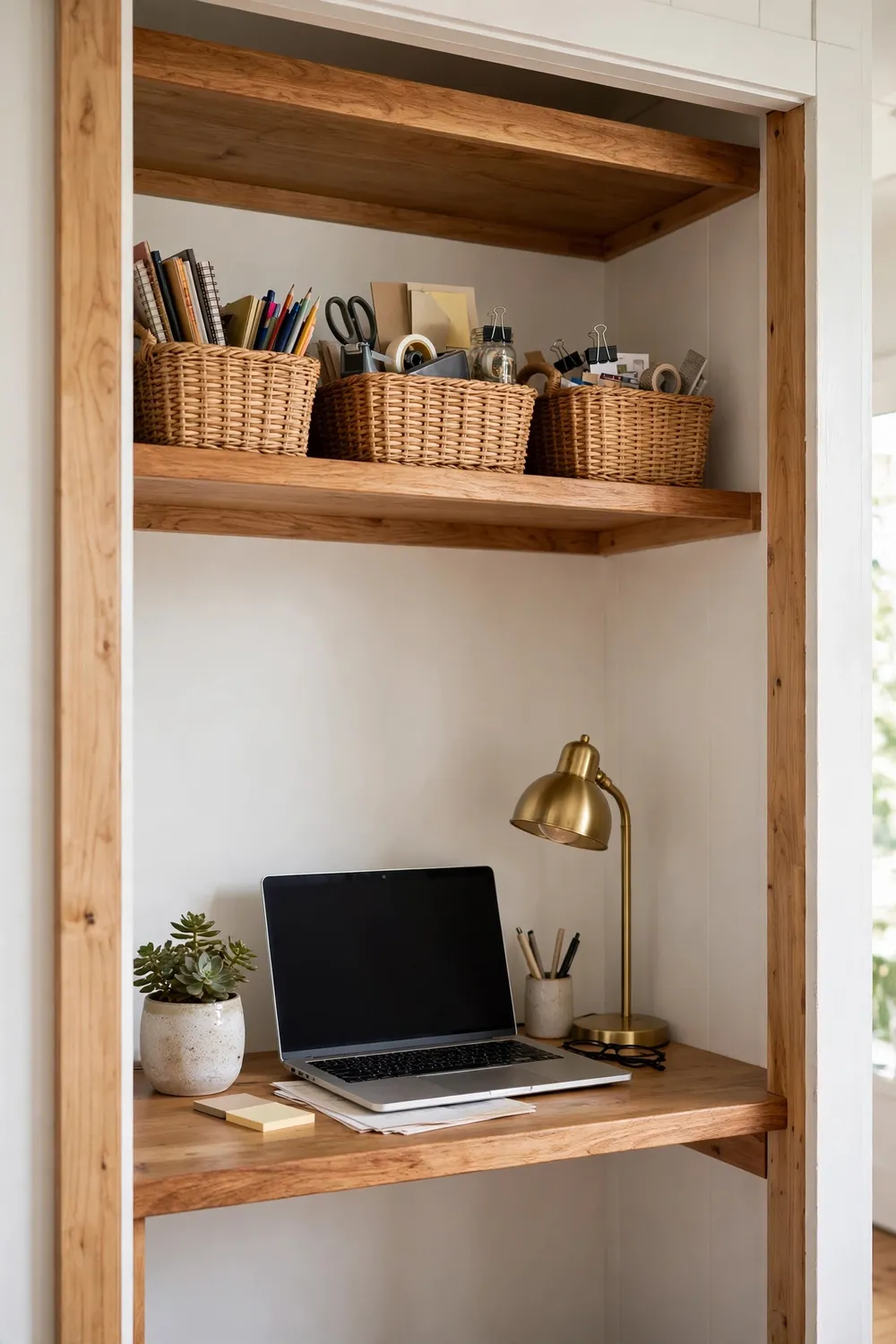
Raise the top shelf to 72 inches, drop a 24-inch-deep desktop at 30 inches, and your closet is now a cloffice. The shelf above holds office supplies; a curtain on a tension rod closes the “office” at 5 pm. Add a power strip and a clip-on lamp and you’re working from home in a space that used to hold winter coats.
Try this: mount a small cork board on the side wall for notes — it keeps the desktop clear in a tight footprint.
8. Corner Loft Shelves for Dead Angles
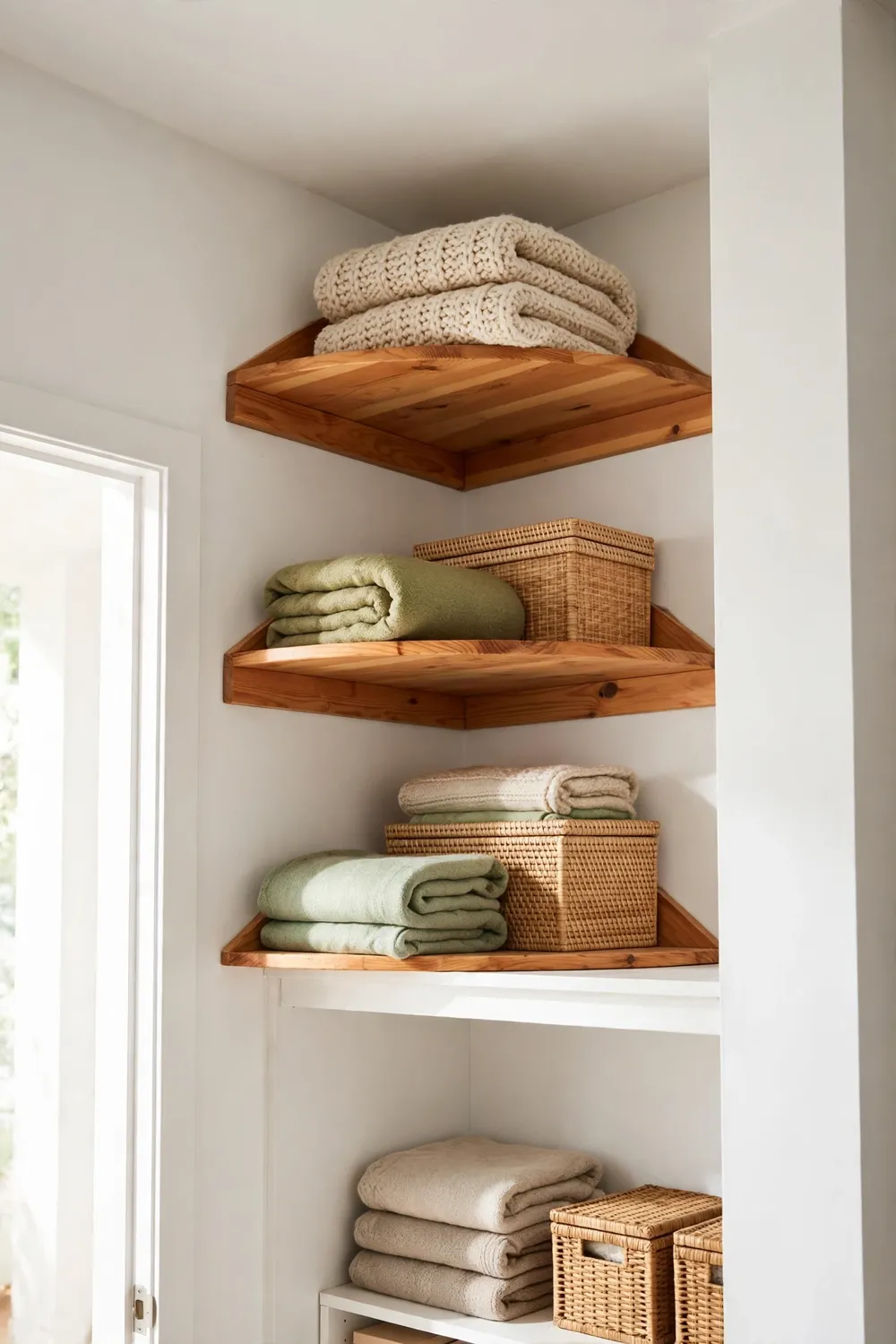
Walk-in closet corners are where hangers go to die. Mount L-shaped corner shelves in the upper reaches and the dead angle becomes prime real estate for bins, bags, and boxes. Cut the shelves with a jigsaw for a tight fit, or buy pre-cut corner units that screw into both walls for rock-solid support.
Try this: reserve corner shelves for the least-used items — they’re the hardest to reach, so make the inaccessibility a feature.
9. Tension-Rod Shelf Dividers
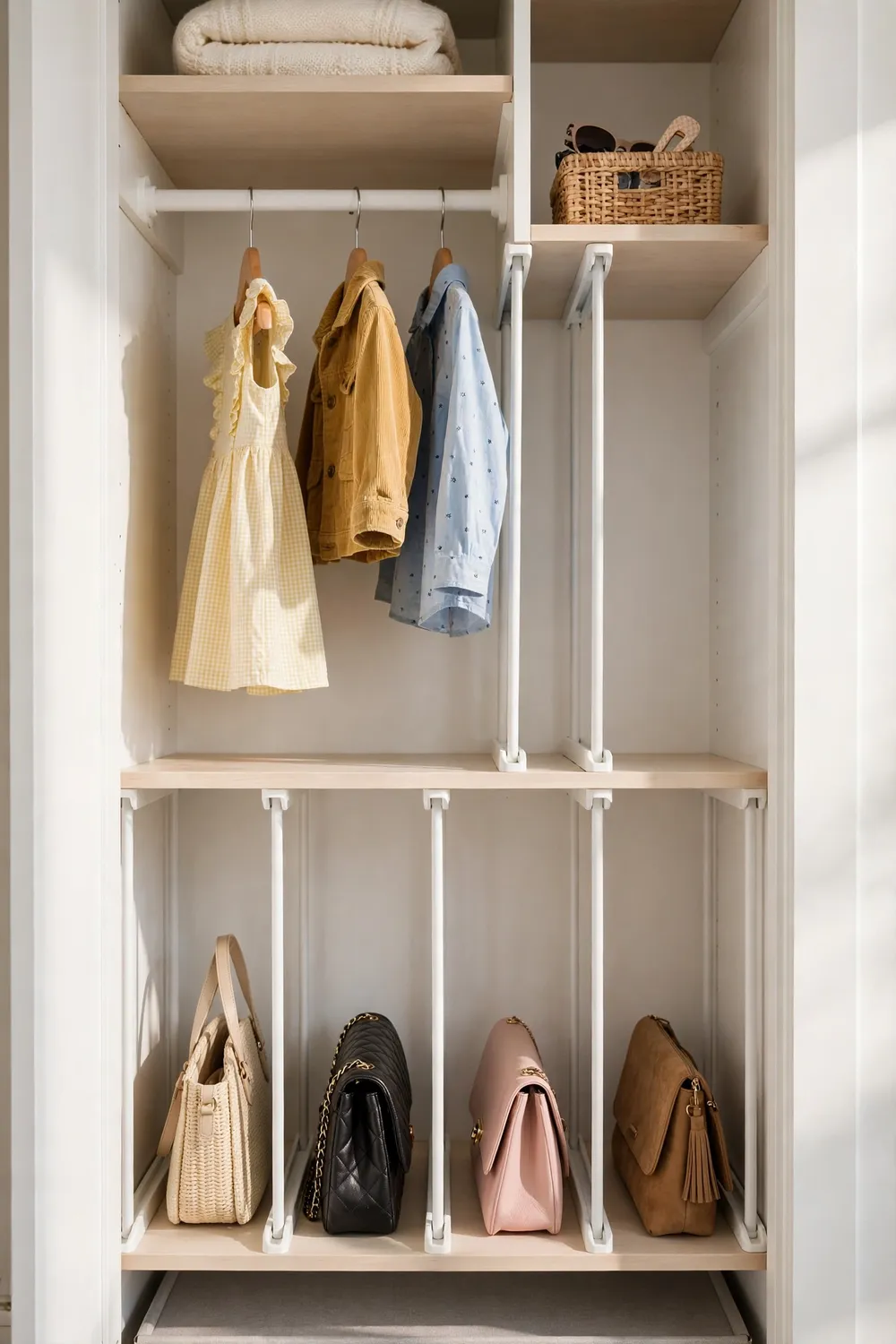
Tall stacks of folded clothes always topple. Wedge short tension rods vertically between shelves to create dividers that keep stacks upright — no drilling, no brackets, totally renter-friendly. They also work horizontally under a shelf to hang a second tier of short items like kids’ clothes.
Try this: wrap the rod ends in a bit of shelf liner so they grip better and don’t mark the walls.
10. Pull-Out Drawer Tower in a Loft Closet
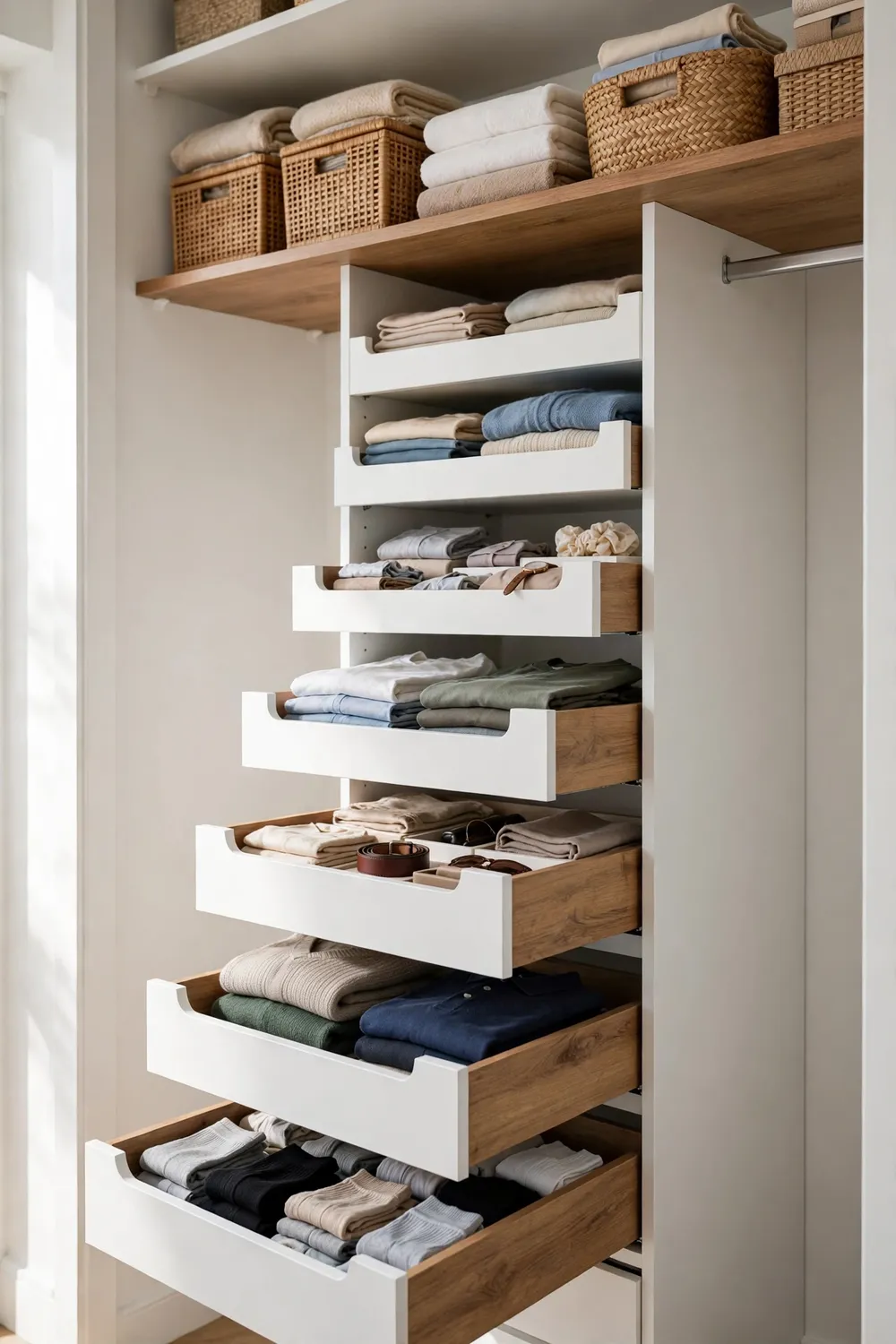
A narrow rolling drawer tower turns a deep closet section into accessible storage — pull it out, grab what you need, roll it back. The vertical format is perfect for socks, underwear, accessories, and craft supplies. Measure the opening before you buy; a tower that’s an inch too wide is an expensive paperweight.
Try this: label each drawer with a label maker — the tower only stays organized if everyone in the house knows where things live.
11. Fairy-Light Reading Nook Loft
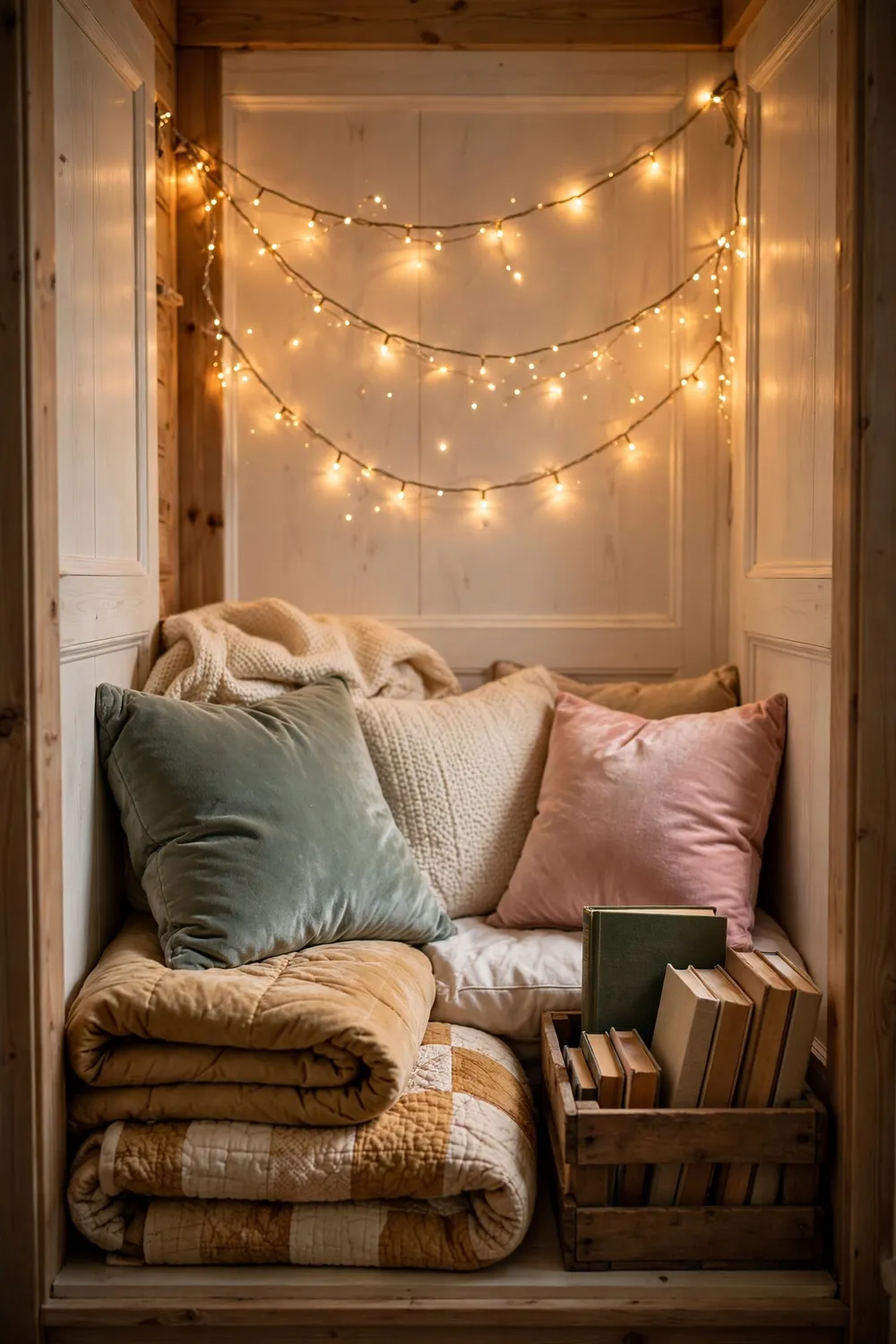
Take the platform reading loft and make it magical: drape warm-white fairy lights along the back wall, pile on cushions and a throw, and add a small shelf for the current book stack. The enclosed closet shape makes it feel like a secret hideout — kids and adults both love it. If you want more reading-nook inspiration for the rest of the house, these cozy library room ideas with plants show how to build the same cocoon feeling in a full-size room.
Try this: use battery fairy lights with a built-in timer so the nook lights itself every evening without you remembering.
12. Budget Center Tower with Rods
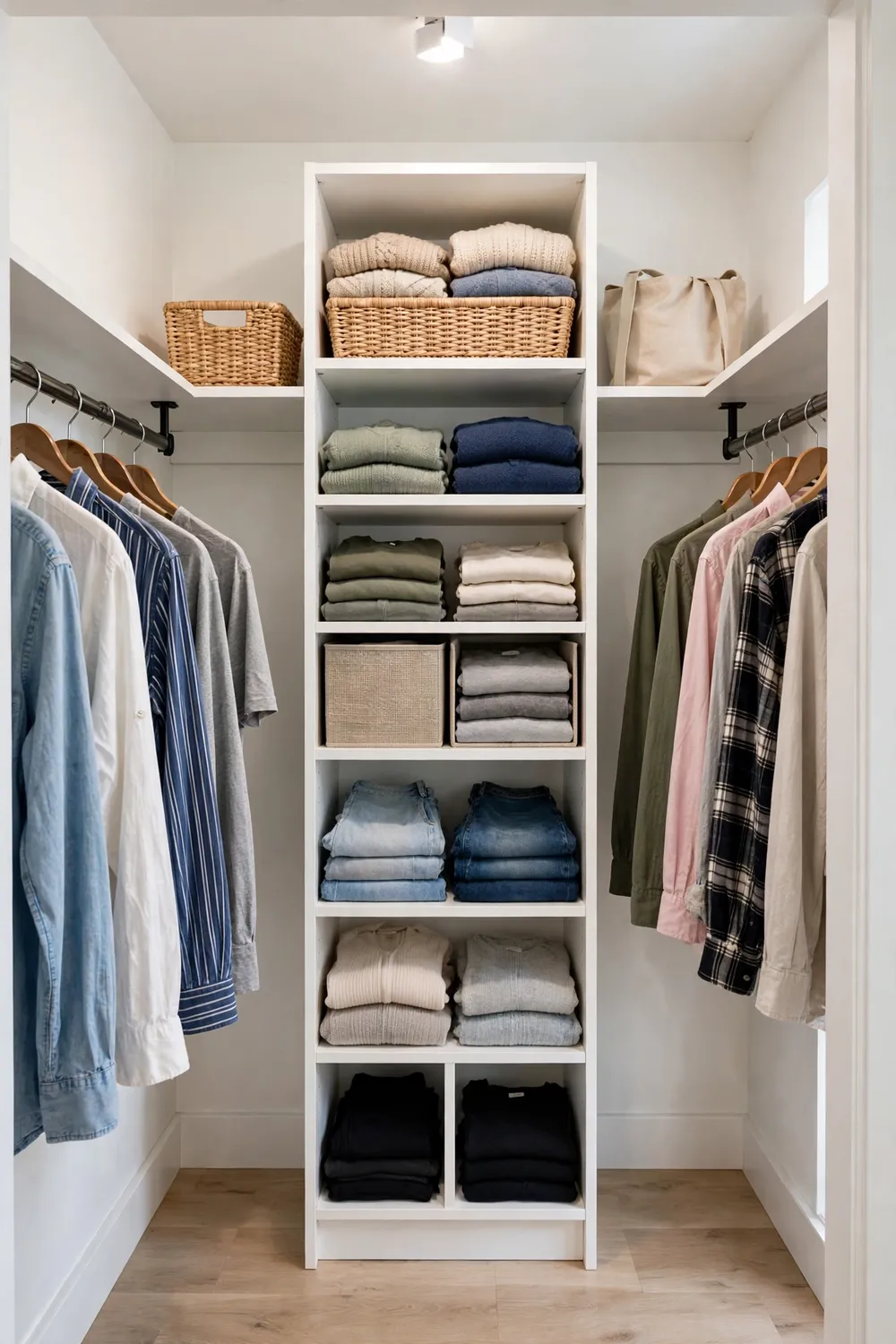
The classic big-box closet system, DIY’d: a center tower of shelves flanked by hanging rods on both sides. Buy the tower flat-pack, assemble it in the room (not the hallway — ask me how I know), and anchor it to a stud. One weekend, basic tools, and a walk-in that finally works. For a detailed walkthrough of building closet shelving from scratch, this Family Handyman guide to building closet shelves covers measuring, cutting, and mounting.
Try this: leave one tower section rod-free for long dresses and guest coats — you’ll miss it if every inch is double-hang.
13. LED Strip Lighting Under Every Loft Shelf
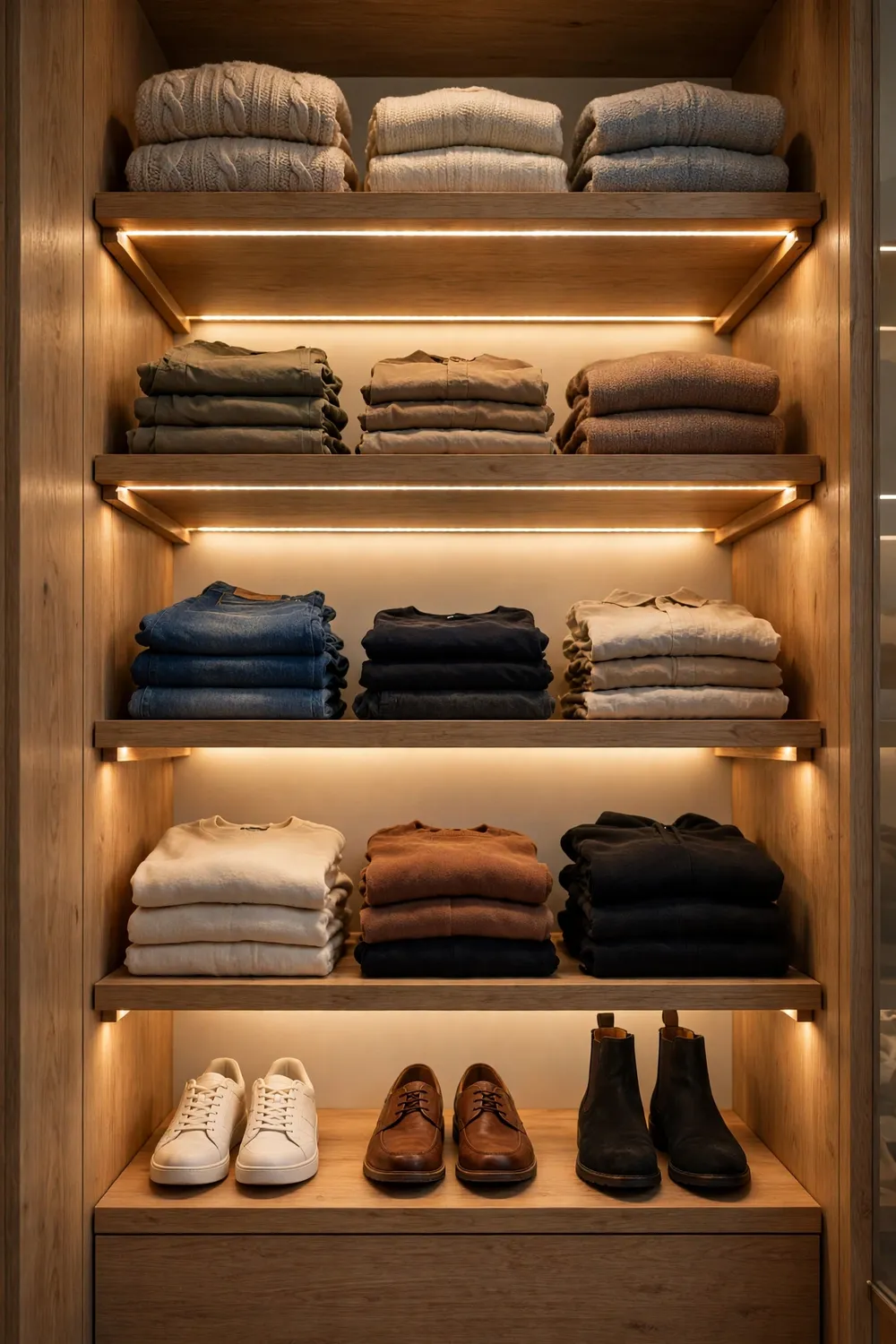
Closets are dark; loft shelves make them darker. A $10 adhesive LED strip under each shelf turns every level into a lit display. Go for motion-sensor strips so the lights greet you when the door opens. Stick to warm white (3000K) — cool white makes clothes look washed out.
Try this: run the strips along the front edge of each shelf, not the back — front-edge light washes over the contents instead of glaring in your eyes.
14. Pegboard Back Wall Loft
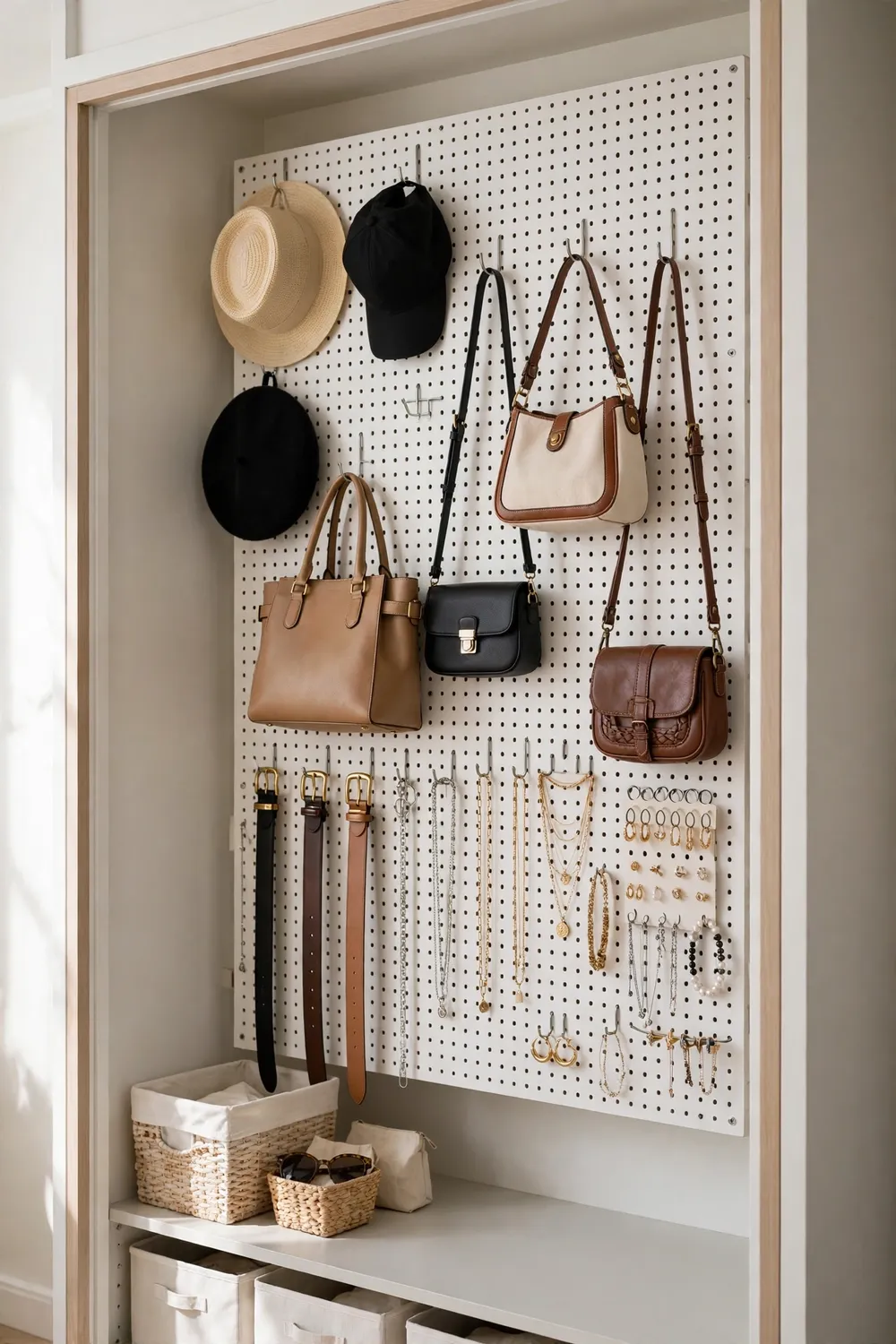
Screw a pegboard panel to the closet back wall and the whole wall becomes adjustable storage: hooks for bags and hats, baskets for accessories, small shelves for folded items. Paint it the wall color for a built-in look, or a bold accent for a pop. The beauty is reconfigurability — rearrange the hooks in minutes as needs change.
Try this: use metal pegboard in a garage-adjacent closet — it holds heavier tools and gear without flexing.
15. Curtain Door for an Open Loft Closet
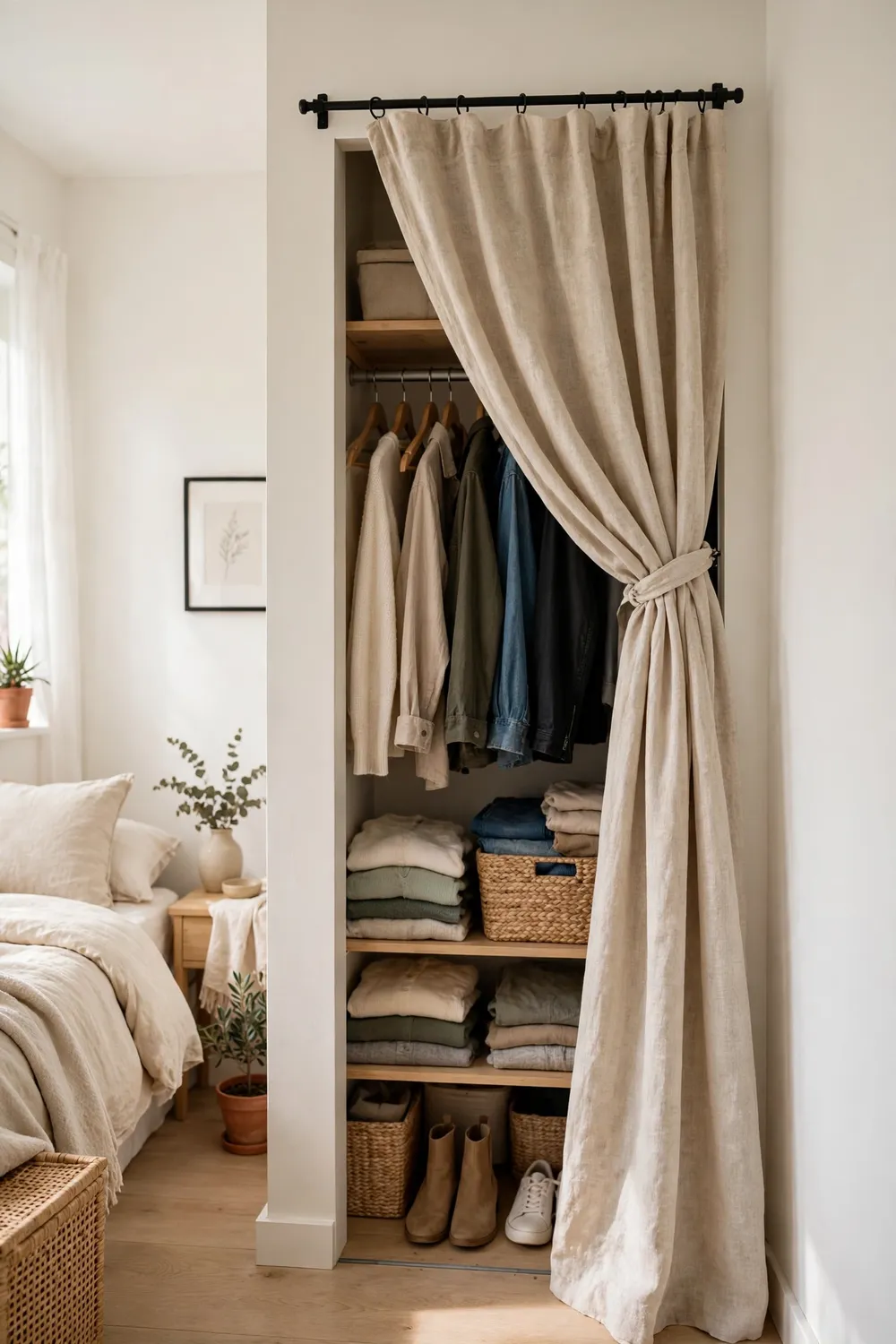
Bi-fold doors are the enemy of small rooms — they need clearance to swing and they always come off track. Replace them with a curtain on a tension rod: zero swing space, soft texture, and you can change the look in minutes. Choose a heavy fabric that hangs straight and hides clutter.
Try this: hang the curtain rod as close to the ceiling as possible — the extra height makes the whole closet feel taller.
16. His-and-Hers Split Loft Closet
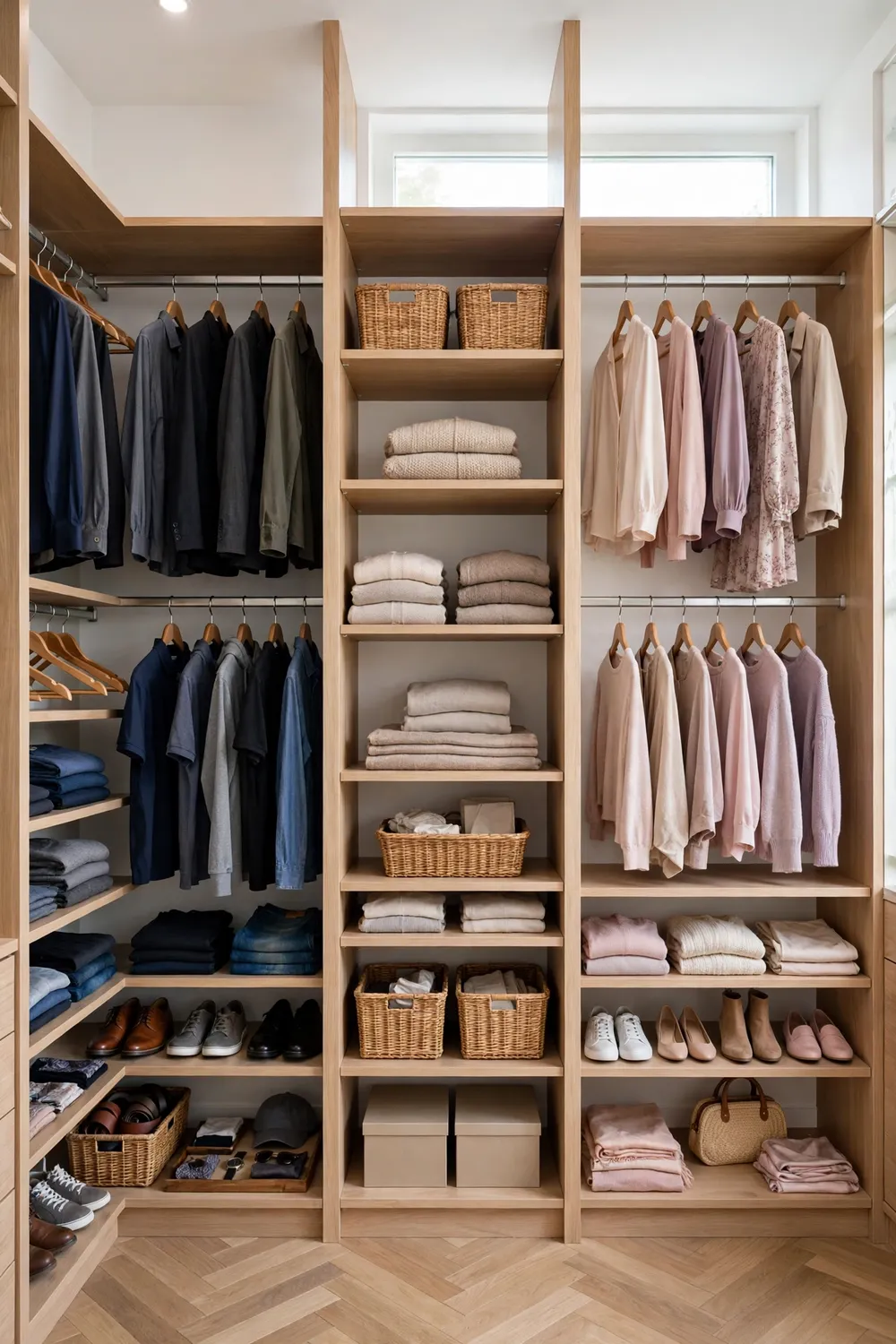
Sharing one closet? Split it down the middle with a floor-to-ceiling divider or a tall shelving unit, and give each side its own rod-and-shelf layout. Label nothing — the physical divide does the diplomacy. Mirror the layouts so neither side feels like the worse half.
Try this: give the taller person’s side the higher rod — small ergonomic wins add up every single morning.
17. Sliding Barn Door Loft Closet
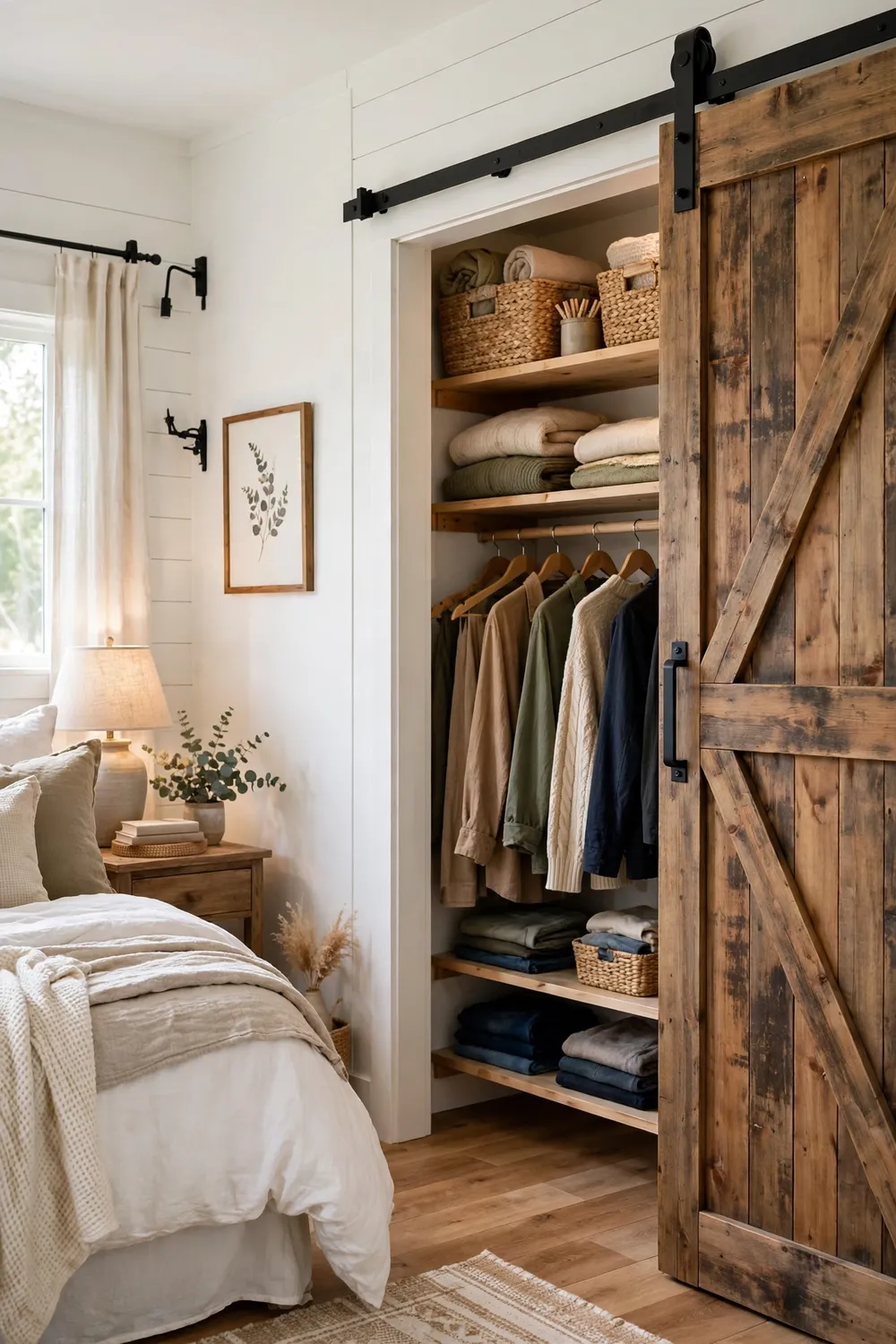
A sliding barn door on an exterior rail covers a wide closet opening without eating swing space, and it looks fantastic. The hardware kits are widely available and install in an afternoon — just make sure the rail is screwed into studs or solid blocking, because the door is heavy. Leave a few inches of wall on one side for the door to park when open.
Try this: add a soft-close attachment to the rail — it stops the satisfying-but-loud barn-door slam.
18. Entryway Mudroom Loft Closet
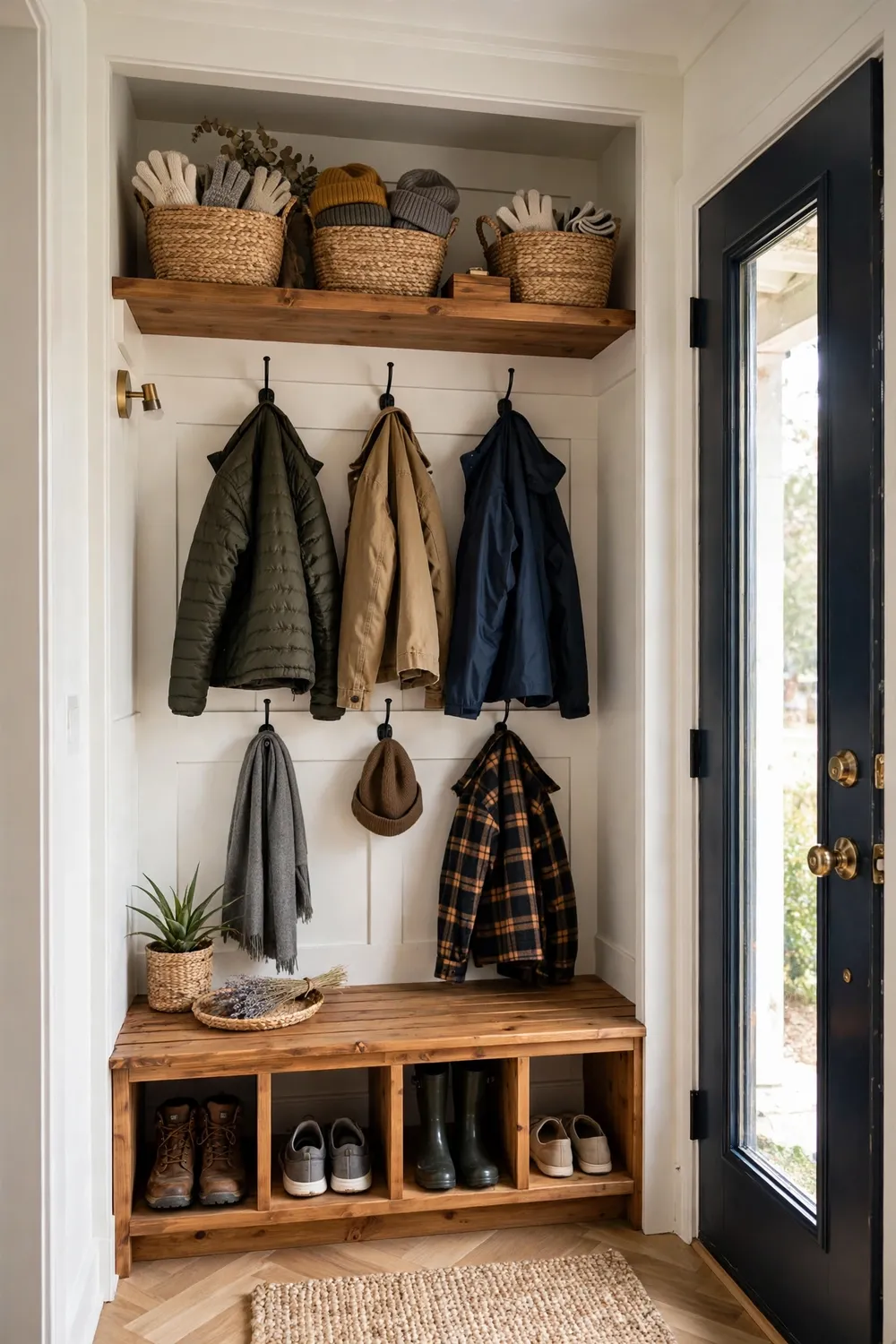
Convert the coat closet by the front door into a mudroom: a bench at sitting height, hooks above at kid and adult heights, and a loft shelf up top for the stuff you grab twice a year. The bench top doubles as a drop zone for bags. This one project tames the morning chaos for the whole household.
Try this: put a boot tray under the bench — wet shoes stay off the floor and the closet stays clean.
19. Loft Bed with Wardrobe Underneath
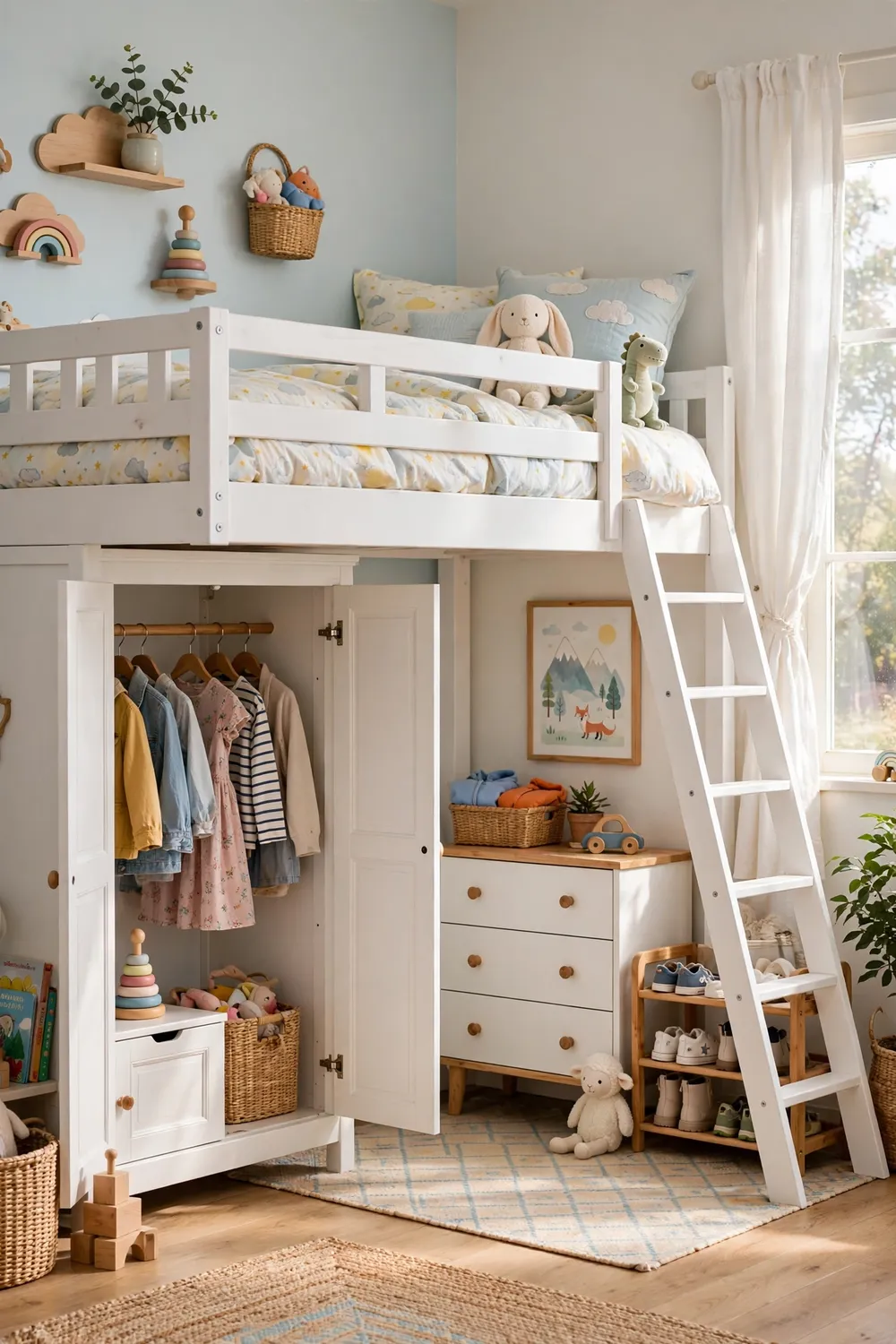
The ultimate space hack for small bedrooms: raise the bed on a loft frame and build the closet underneath — hanging rods, shelves, even a dresser. You’re sleeping above your wardrobe, and the floor space you freed up is enormous. Buy a sturdy metal loft frame rated for the mattress plus a safety margin; this is not the place to under-build.
Try this: add a curtain around the under-bed wardrobe — it hides the clothes and makes the sleeping loft feel like a separate room.
20. Mirrored Back Wall Loft
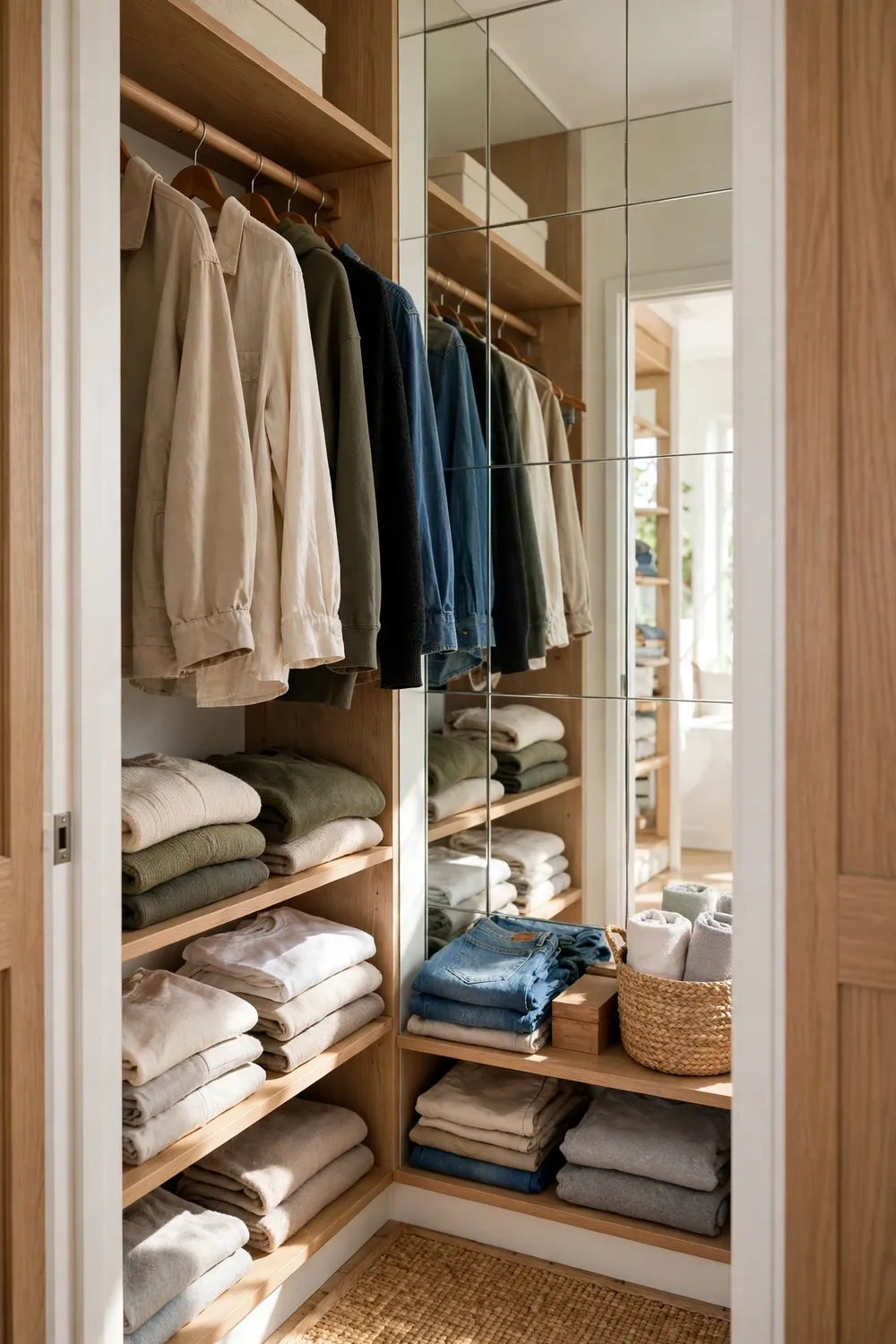
A dark closet feels twice as big with mirrors on the back wall. Use lightweight mirrored panels (not real glass — too heavy and fragile for a closet interior) stuck on with construction adhesive. They bounce the LED strip light around and let you check your outfit without leaving the closet.
Try this: mirror only the upper back wall above the rods — you get the brightness boost without mirrors getting scuffed by hangers.
21. Rolling Cart Loft Companion
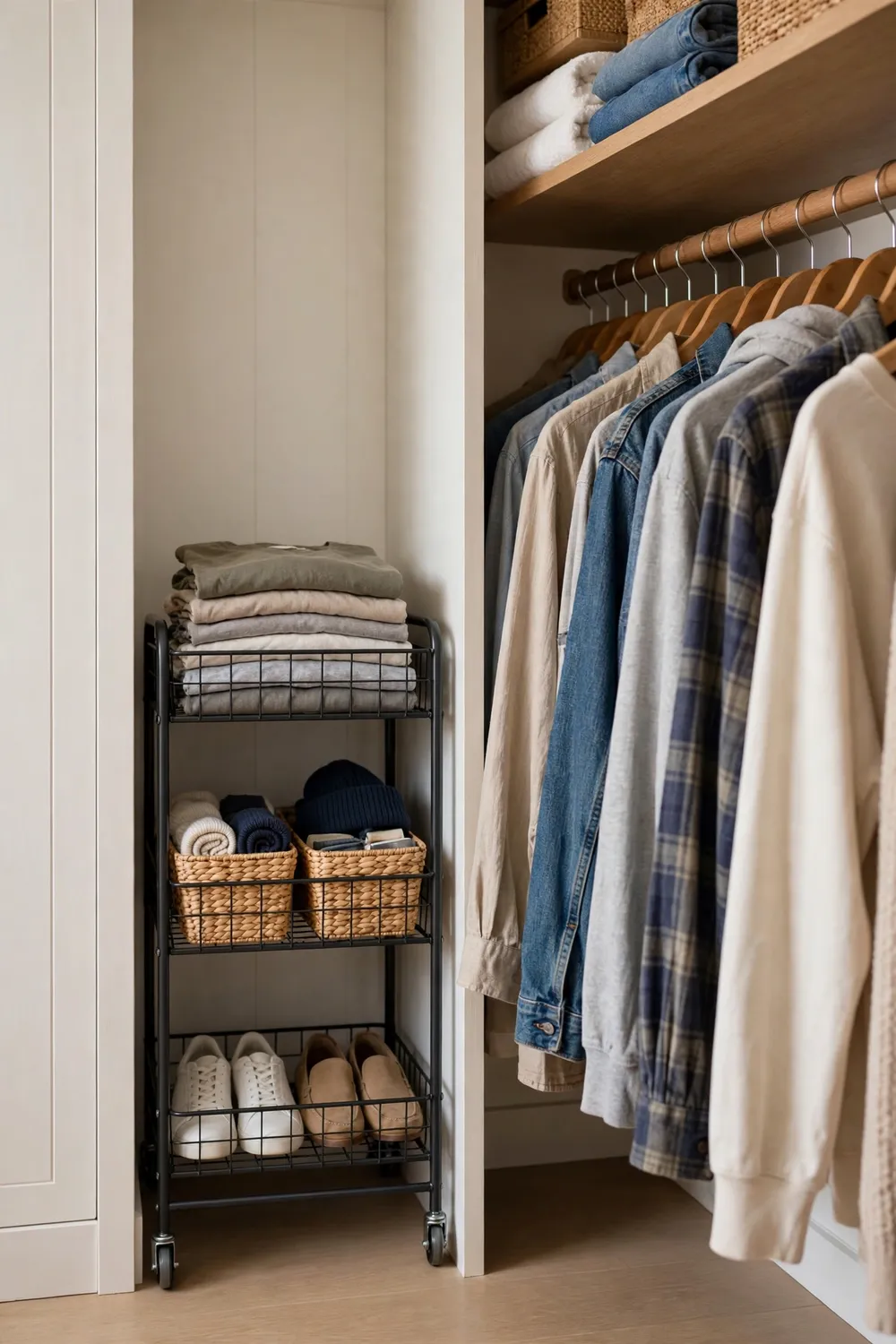
A slim rolling cart (the 3-tier kind) slides into the 6-inch gap beside any shelving unit and holds accessories, scarves, or craft supplies. Pull it out when you need it, tuck it away when you don’t. It’s the cheapest way to add “one more shelf” without any tools at all.
Try this: dedicate one cart tier to “outfits in progress” — tomorrow’s clothes staged tonight, no morning digging.
22. Seasonal Bin Loft Shelf
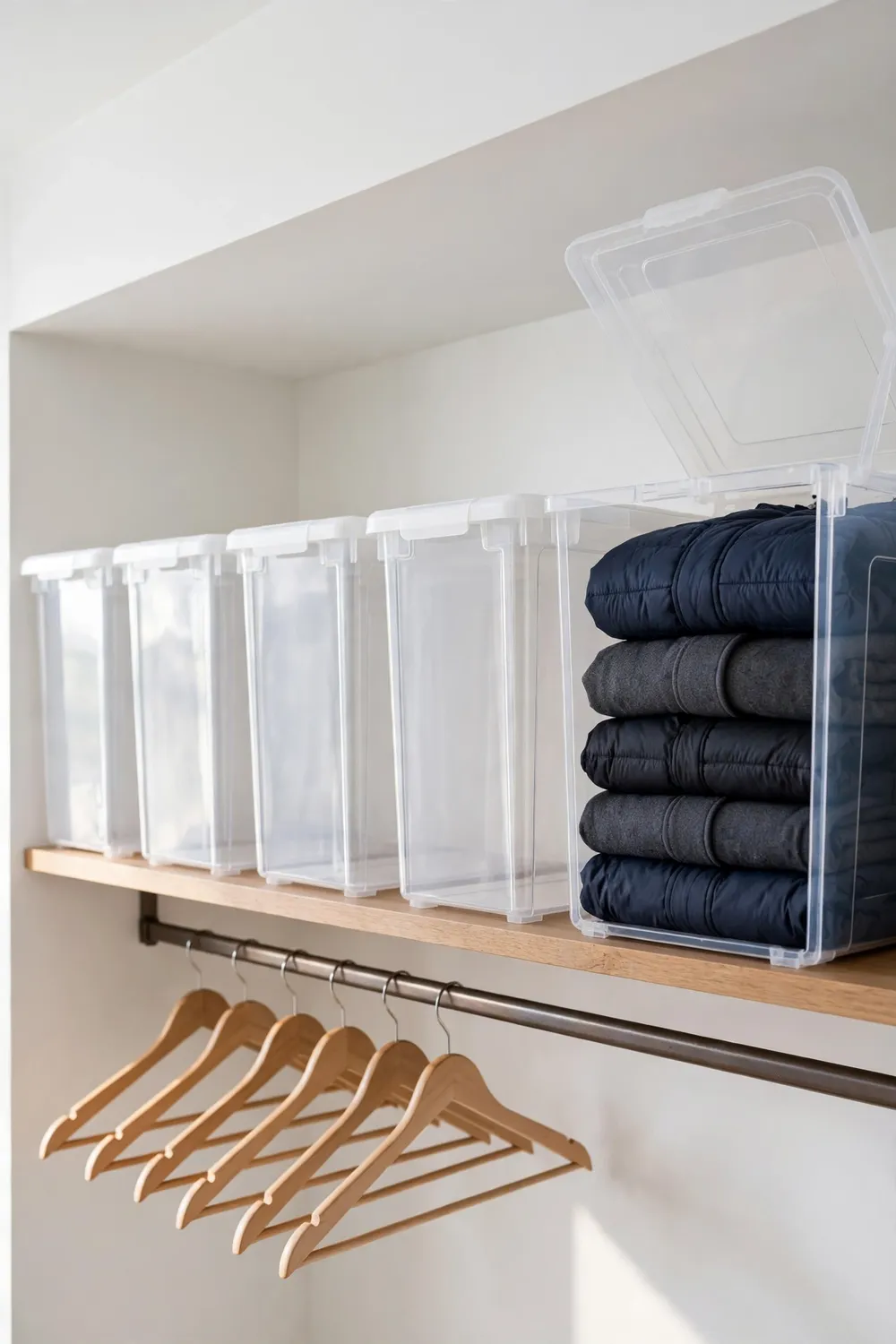
The top shelf of any closet loft should be seasonal-bin territory: winter coats in summer, beach gear in winter. Use clear bins or label opaque ones on two sides. Rotate twice a year and the everyday zones never get crowded by off-season stuff.
Try this: do the seasonal swap the same weekend you flip the clocks — the routine sticks when it’s tied to something.
23. Quilt and Linen Loft Storage
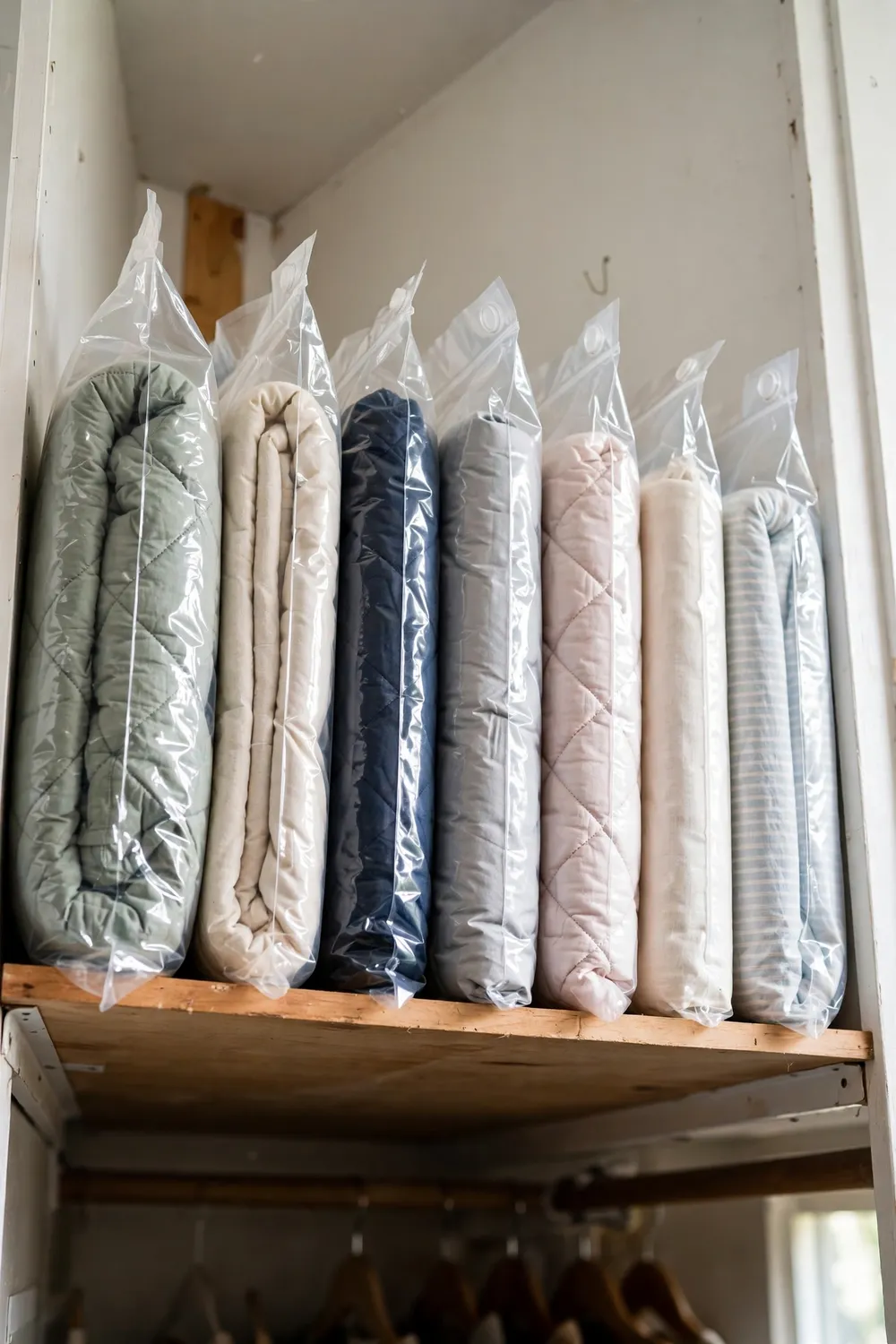
Guest bedding and quilts are bulky and rarely needed — perfect loft-shelf residents. Fold them in thirds, store them in breathable cotton bags (not plastic, which traps moisture), and keep them on the highest shelf. Cedar blocks nearby keep everything smelling fresh.
Try this: store each bedding set inside one of its own pillowcases — grab one bundle and you have the whole set.
24. Backpack and Hook Wall Loft
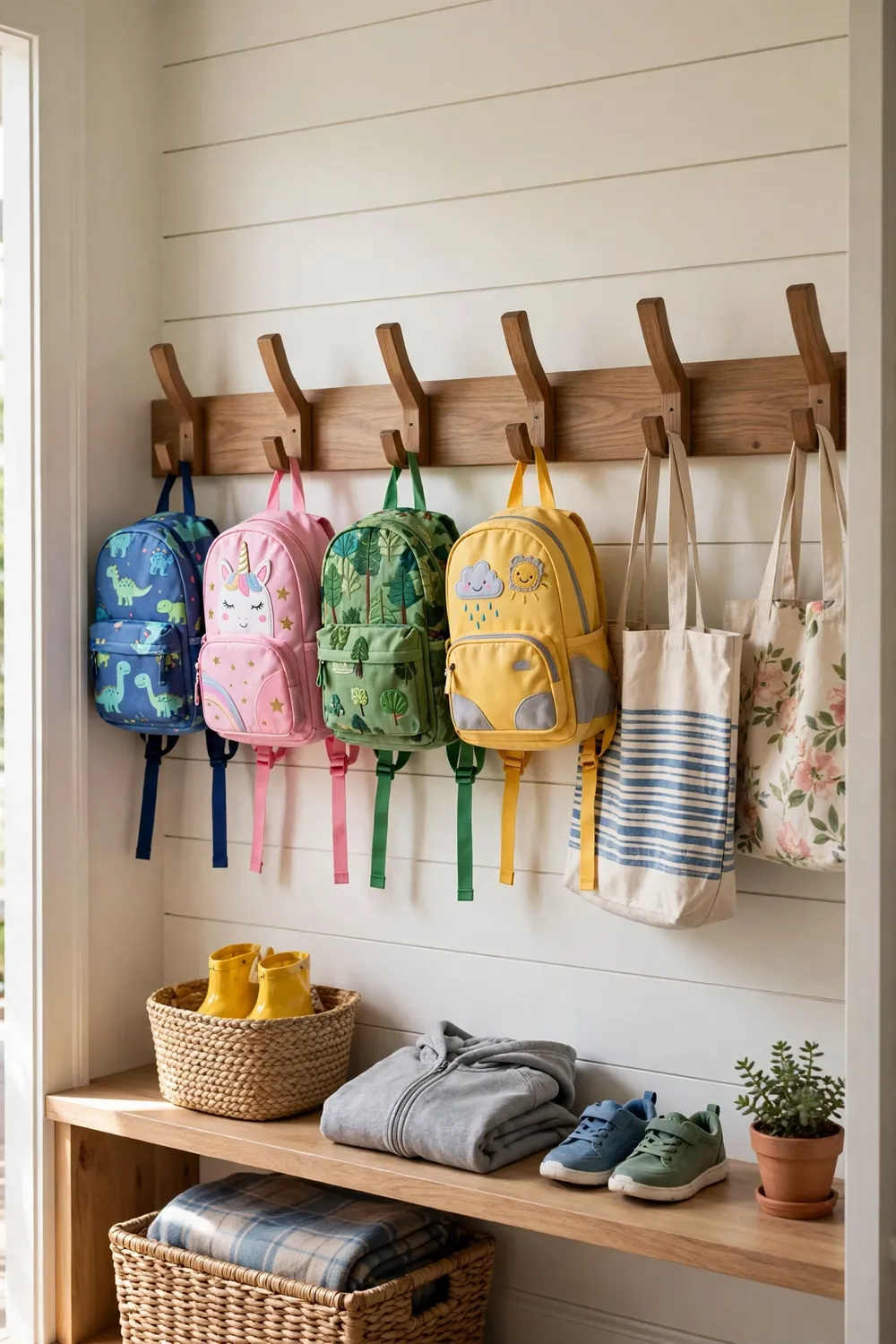
One wall of heavy-duty hooks holds backpacks, gym bags, and tomorrow’s jacket — all visible, all grabbable. Mount a horizontal board into the studs first, then screw the hooks into the board; the board spreads the load so a heavy backpack never rips out. This is the fastest fix for the “bag pile on the closet floor” problem.
Try this: assign one hook per family member at their height — kids actually hang things up when the hook is theirs.
25. Fold-Down Dressing Loft Shelf
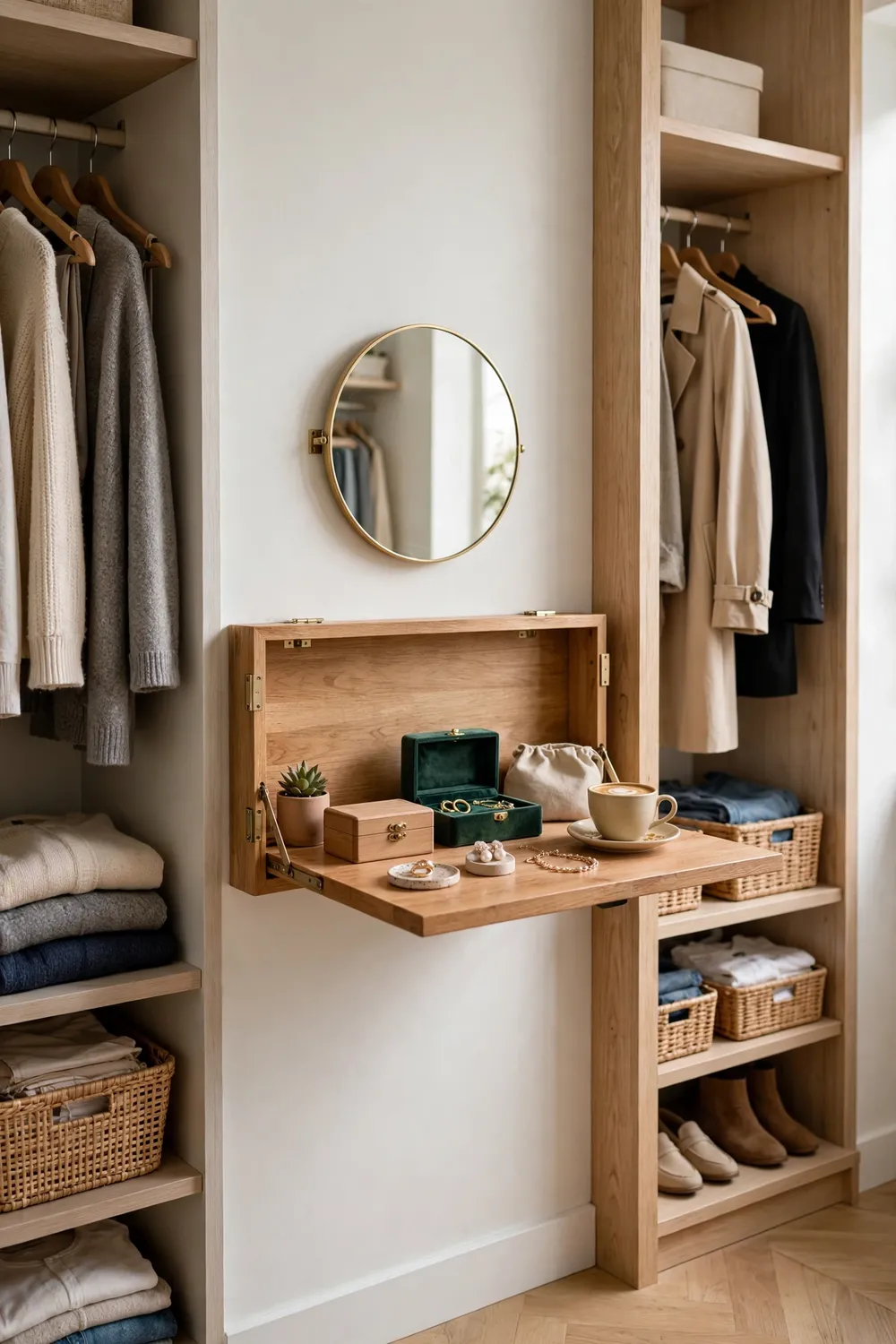
A wall-mounted fold-down shelf becomes a dressing table, wrapping station, or laptop perch — then folds flat when you’re done. Use sturdy folding brackets rated for at least 50 pounds and screw them into studs. Pair it with a small stool that tucks underneath.
Try this: mount a small mirror on the wall above the fold-down shelf so it doubles as a vanity.
Closet Loft Build Cheat Sheet
Not sure where to start? Match the build to your time, budget, and skill level:
| Build | Best For | Cost | Time | Skill |
|---|---|---|---|---|
| Above-door shelf | Renters, instant storage | ~$20 | 1 hour | Beginner |
| Platform reading loft | Kids’ hideout, reading nook | ~$75 | Weekend | Intermediate |
| Double-hang rods | Doubling hanging space | ~$30 | 30 min | Beginner |
| Cloffice conversion | Work-from-home nook | ~$100 | Weekend | Intermediate |
| Under-eave wardrobe | Attic/loft bedrooms | ~$200 | 2 weekends | Advanced |
Frequently Asked Questions
How much weight can a DIY closet loft shelf hold?
A shelf screwed into two wall studs with 2.5-inch screws can typically hold 50–100 pounds, depending on the bracket and shelf material. For heavy storage like books or tools, add a third bracket and use 3/4-inch plywood rather than particleboard. When in doubt, this Apartment Therapy closet upgrade walkthrough shows how a renter reinforced shelving on a $140 budget.
Can I build a closet loft in a rental without drilling?
Yes. Tension rods, freestanding drawer towers, over-door hooks, and rolling carts all add loft-style storage with zero holes. For overhead space, a pressure-mounted shelf unit wedged between floor and ceiling works in standard 8-foot closets. Just keep heavy items low and check your lease for weight or modification clauses.
What is the cheapest way to add a loft to my closet?
An above-door shelf costs around $20 in lumber and brackets and takes about an hour. After that, tension-rod dividers and a second hanging rod (about $30 total) double your usable space for very little money. The most expensive part of most closet lofts is impatience — plan the layout on paper first.
How do I light a dark closet loft?
Battery-powered LED strips or puck lights are the easiest fix — no wiring needed. Stick warm-white (3000K) strips along the front edge of each shelf so light washes over the contents. Motion-sensor versions turn on when you open the door and off when you leave.
Is it safe to put a bed or sitting platform inside a closet?
Yes, if you build it right: frame with 2x4s screwed into wall studs (never drywall alone), use 3/4-inch plywood decking, and leave at least 12 inches of clearance above the platform. Keep the total span under 6 feet or add a center support leg. If you’re unsure about the structure, a freestanding loft bed frame is the safer choice.
Final Thoughts
Closets are the most underused square footage in most homes, and a loft is the cheapest way to claim it back. You don’t need a renovation budget or a contractor — a Saturday, a stud finder, and twenty dollars of lumber will change how your mornings feel.
Start with the above-door shelf this weekend. Once you see how much fits up there, the rest of the closet starts looking like opportunity instead of clutter.


