



I started with two buckets on a rented patio, one tomato plant and one very hopeful pepper, because the yard was mostly concrete and the soil under it was not worth digging. Both plants gave us salads all summer, and that small win turned into a full row of buckets along the fence. A 5-gallon bucket holds enough soil for most vegetables to grow real roots, and you can move it to chase the sun or dodge a storm.
This guide covers 17 vegetables that grow well in buckets, with how many plants fit in one 5-gallon bucket, what each one needs, and what it costs to start. Every pick below works in a standard 5-gallon bucket, and each one notes its difficulty and starting cost so you can match the list to your space, your sun, and your budget.
Quick takeaways
- Use food-grade buckets only, and drill 4 to 6 drainage holes in the bottom before you fill them.
- Fill buckets with potting mix, not garden soil, so roots get air and water drains freely.
- Fruiting vegetables need 6 to 8 hours of direct sun; leafy greens manage with less.
- One large plant per bucket beats three crowded ones for tomatoes, peppers, eggplant, and broccoli.
- Buckets dry out fast, so check the top 2 inches of soil daily in warm weather.
1. Tomatoes
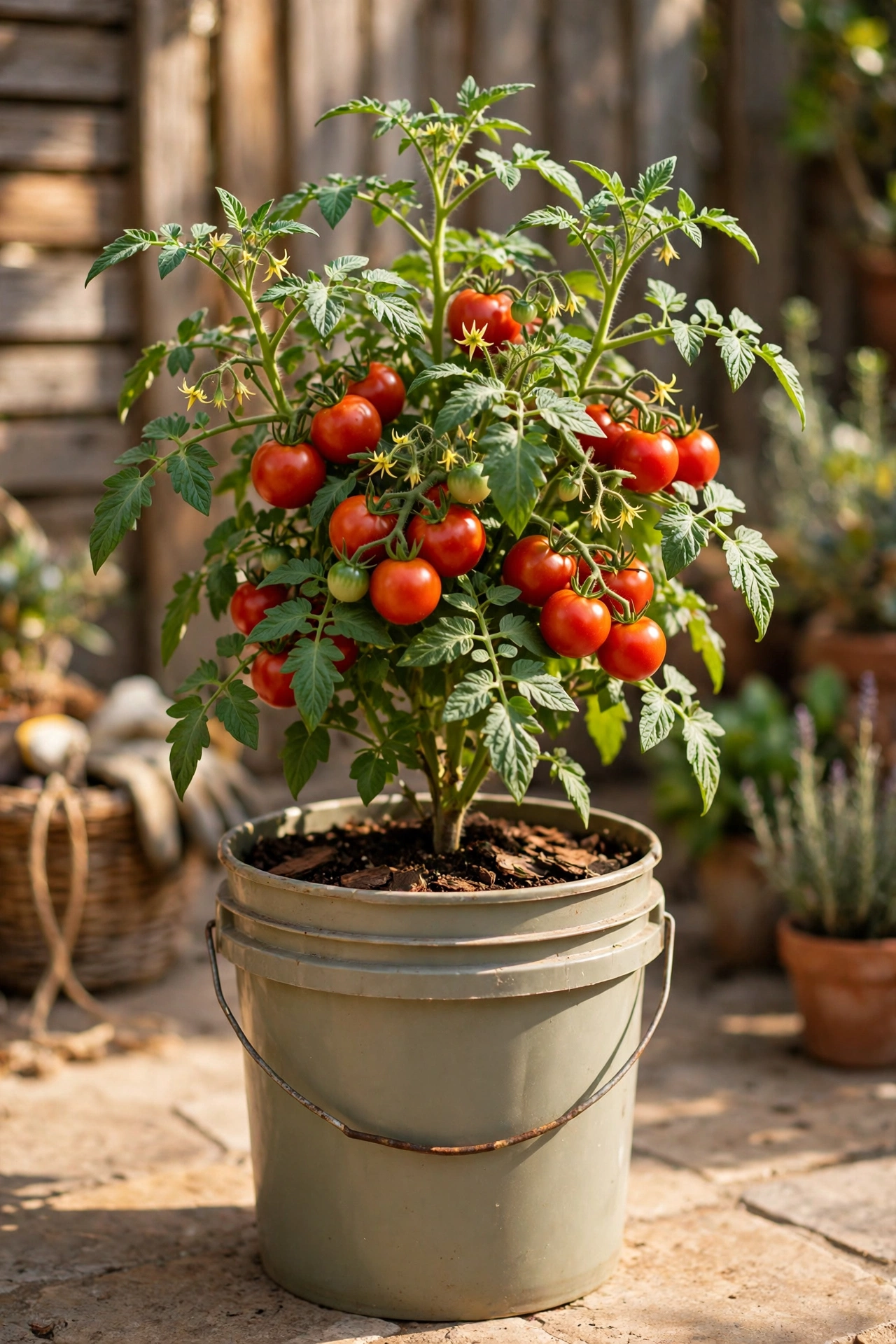
Tomatoes are the classic bucket crop, and one determinate or bush variety fills a 5-gallon bucket. Determinate types stop at a set height, so they stay manageable instead of outgrowing the bucket. Give the plant a small cage or stake at planting time, and set the bucket where it gets at least 6 hours of direct sun. Water until it runs from the drainage holes, and feed every two weeks once fruit sets. One plant per bucket.
Difficulty: Easy to moderate. Starting cost: about $8–$15.
Try this: pick a variety with “patio,” “bush,” or “dwarf” on the tag, and mulch the surface with straw to slow drying.
2. Peppers
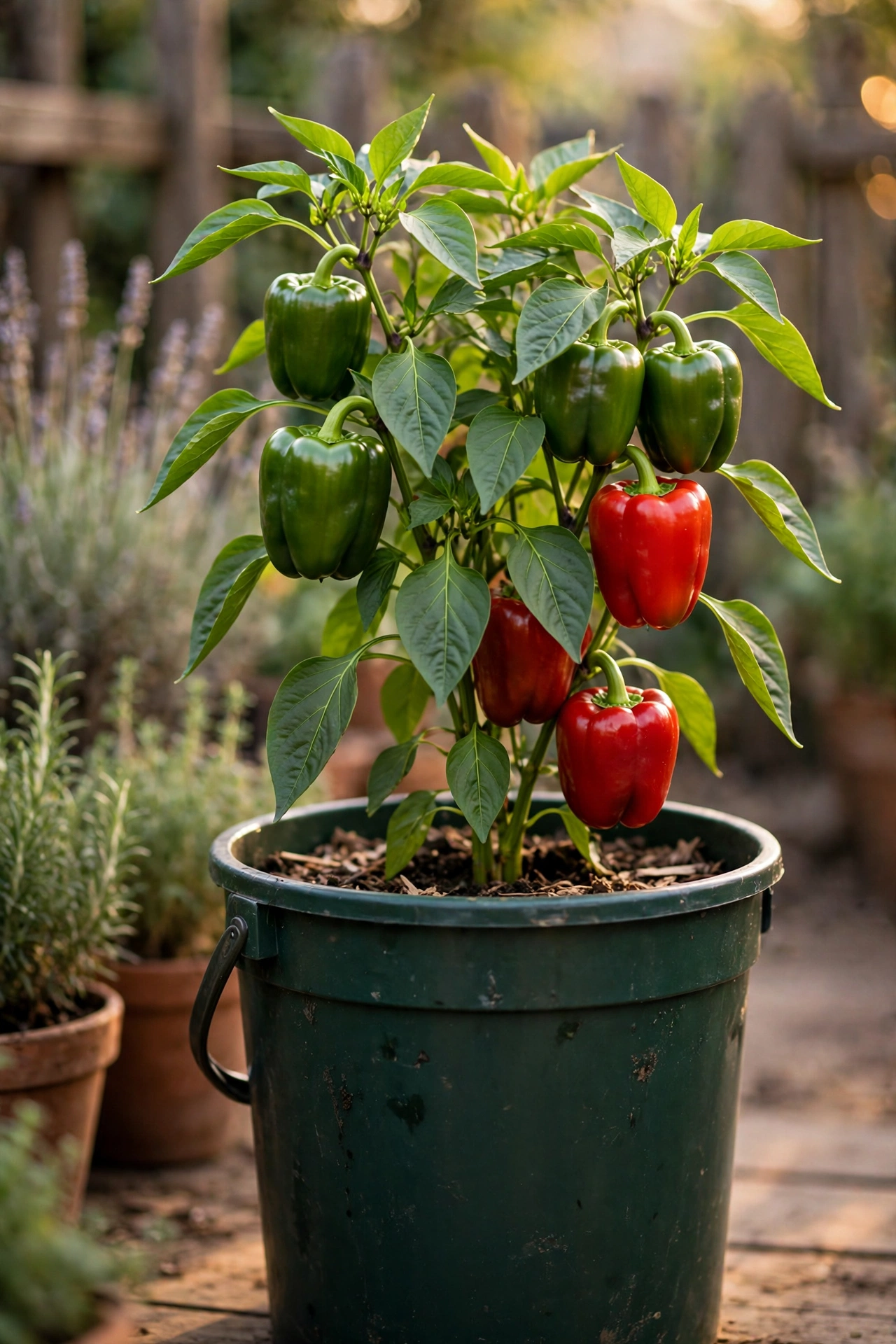
Bell peppers and hot peppers both grow well in buckets because their root systems stay compact. One pepper plant per 5-gallon bucket gives it room to branch and set fruit through the warm months. Peppers want warm soil and steady moisture, so wait until nights stay warm before you move buckets outside for good. A short stake helps once the plant loads up with fruit. Peppers also handle a patio well, since the bucket warms faster than garden soil in spring. One plant per bucket.
Difficulty: Easy. Starting cost: about $6–$12.
Try this: use a light-colored bucket in a hot climate so the roots stay cooler on scorching afternoons.
3. Eggplant
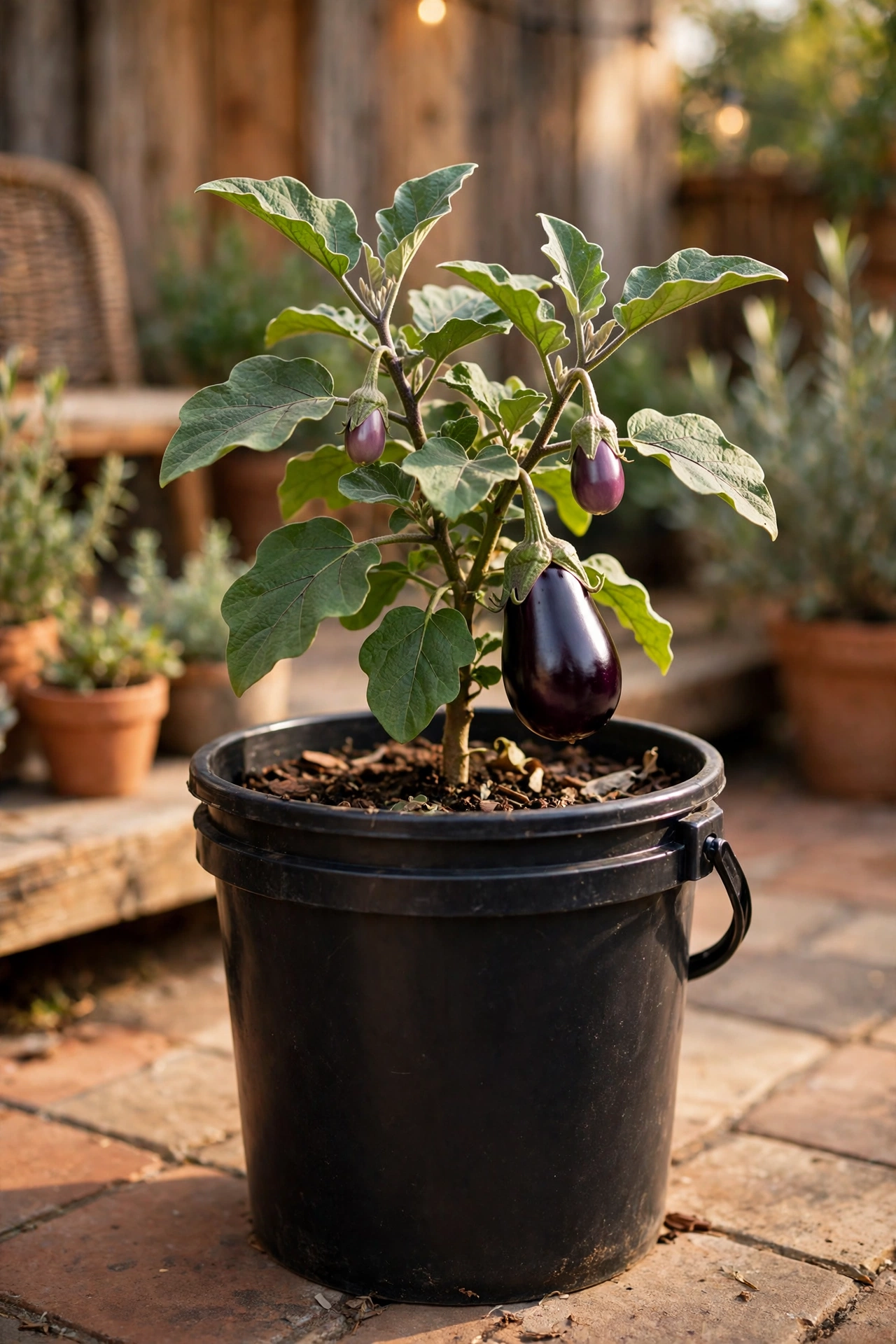
Eggplant needs heat, sun, and a full bucket of soil, which makes it a strong match for a 5-gallon container on a sunny patio. Choose a compact variety, plant one per bucket, and stake it early, since a loaded plant gets top-heavy fast. Keep the soil evenly moist, because dry spells lead to bitter fruit and dropped blossoms. Eggplant grows slowly in cool weather, so give it the warmest spot you have and do not rush it outside in spring. One plant per bucket.
Difficulty: Moderate. Starting cost: about $8–$14.
Try this: set the bucket against a south-facing wall, where reflected heat gives the plant a few extra degrees.
4. Bush cucumbers

Bush cucumbers stay compact enough for a bucket, while vining types need a trellis and a lot more patience. Plant one compact variety, such as Bush Pickle or Spacemaster, per 5-gallon bucket, and keep the soil consistently moist from the day you sow. Cucumbers wilt fast in a dry bucket, and uneven watering gives you bitter fruit. A small trellis or tomato cage still helps, since it lifts leaves off the soil and keeps air moving around the plant. One plant per bucket.
Difficulty: Easy. Starting cost: about $6–$12.
Try this: mulch the top of the bucket with straw so summer heat does not dry the root zone by noon.
5. Bush beans

Bush beans are one of the fastest payoffs in a bucket garden, going from seed to picking in about 50 to 60 days. Sow 2 to 3 bush bean plants per 5-gallon bucket, spacing them so air moves between the plants, and skip the trellis, since bush types hold themselves up. Beans fix nitrogen in the soil, so they need less fertilizer than tomatoes or peppers. Pick pods often, because regular picking keeps new pods coming for weeks. Two to 3 plants per bucket.
Difficulty: Easy. Starting cost: about $4–$8.
Try this: sow a second small batch two weeks after the first so the harvest stretches into a second round.
6. Peas

Peas love cool weather, so they fit the spring and fall ends of a bucket garden. Sow 4 to 6 pea seeds per 5-gallon bucket and give them a trellis, bamboo canes, or netting to climb. Sugar snap types earn their keep because you eat the whole pod, and kids pick them straight off the vine. Peas slow down fast in summer heat, so plan them for cool months and pull them when they fade. Four to 6 plants per bucket.
Difficulty: Easy. Starting cost: about $4–$8.
Try this: plant peas in a bucket that will later hold a pepper, so the same soil works twice in one season.
7. Carrots

Carrots work in buckets only when the bucket is deep enough and the mix stays loose and stone-free. A standard 5-gallon bucket gives about 12 inches of depth, which suits short or round varieties such as Parisian, Thumbelina, or Little Finger. Sow seeds thinly, then thin seedlings to about 2 inches apart so each root has room to swell. Long varieties fork or stunt in a bucket, so match the variety to the depth you actually have. Ten to 12 plants per bucket.
Difficulty: Easy. Starting cost: about $3–$6.
Try this: mix a handful of sand into the top half of the potting mix for straighter roots.
8. Radishes
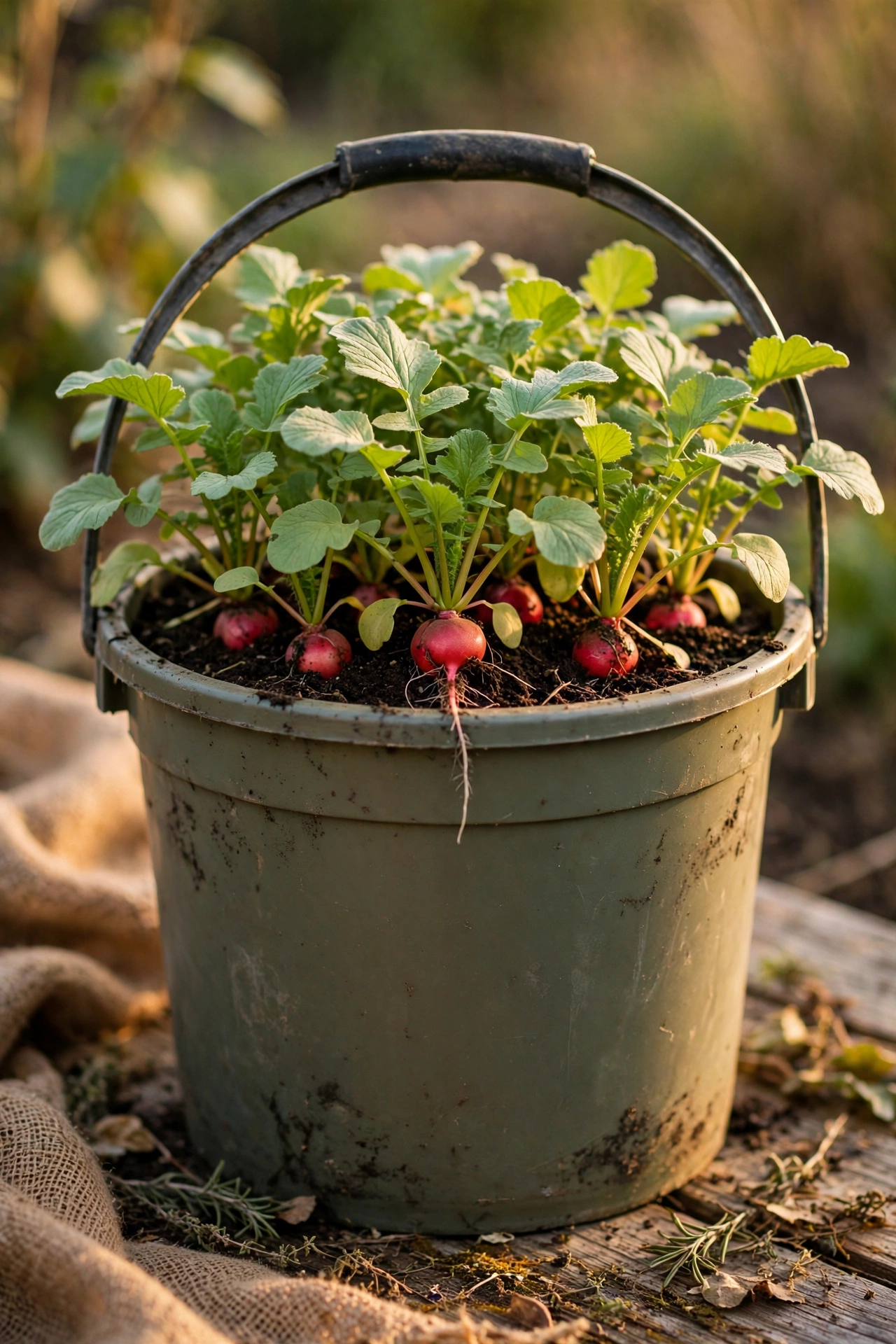
Radishes are the quickest win, ready to pull in 3 to 4 weeks. Sow 12 to 16 radish seeds per 5-gallon bucket, thin them to 1 to 2 inches apart, and keep the soil moist for crisp roots. Radishes fill gaps well: sow them around a slower crop, such as a young pepper, and pull them before the bigger plant needs the space. Hot weather turns radishes sharp and pithy, so grow them in spring and fall. Twelve to 16 plants per bucket.
Difficulty: Easy. Starting cost: about $3–$5.
Try this: sow a fresh pinch of seed every 10 days for a steady supply instead of one big flush.
9. Beets
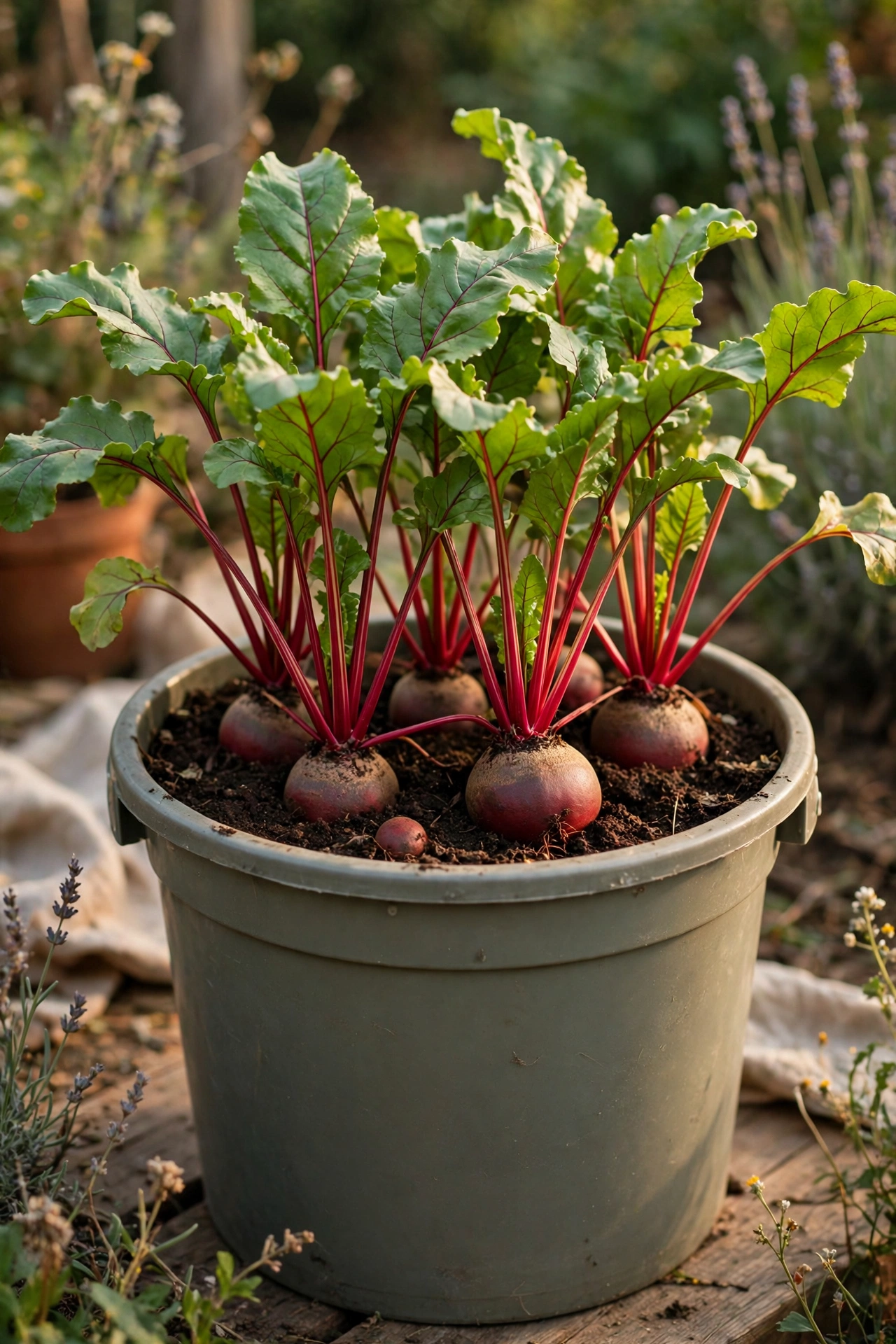
Beets give two harvests from one bucket: the roots and the young greens. Sow seeds in a 5-gallon bucket, then thin seedlings to about 3 inches apart so the roots have room to round out. Beets prefer cool weather and even moisture, and they turn woody or bitter when they dry out or bake in summer heat. A bucket of beets also looks good on a patio, with red stems and broad green leaves that hold up for weeks. Four to 6 plants per bucket.
Difficulty: Easy. Starting cost: about $3–$6.
Try this: snip a few outer leaves for salads while the roots keep sizing up below.
10. Lettuce
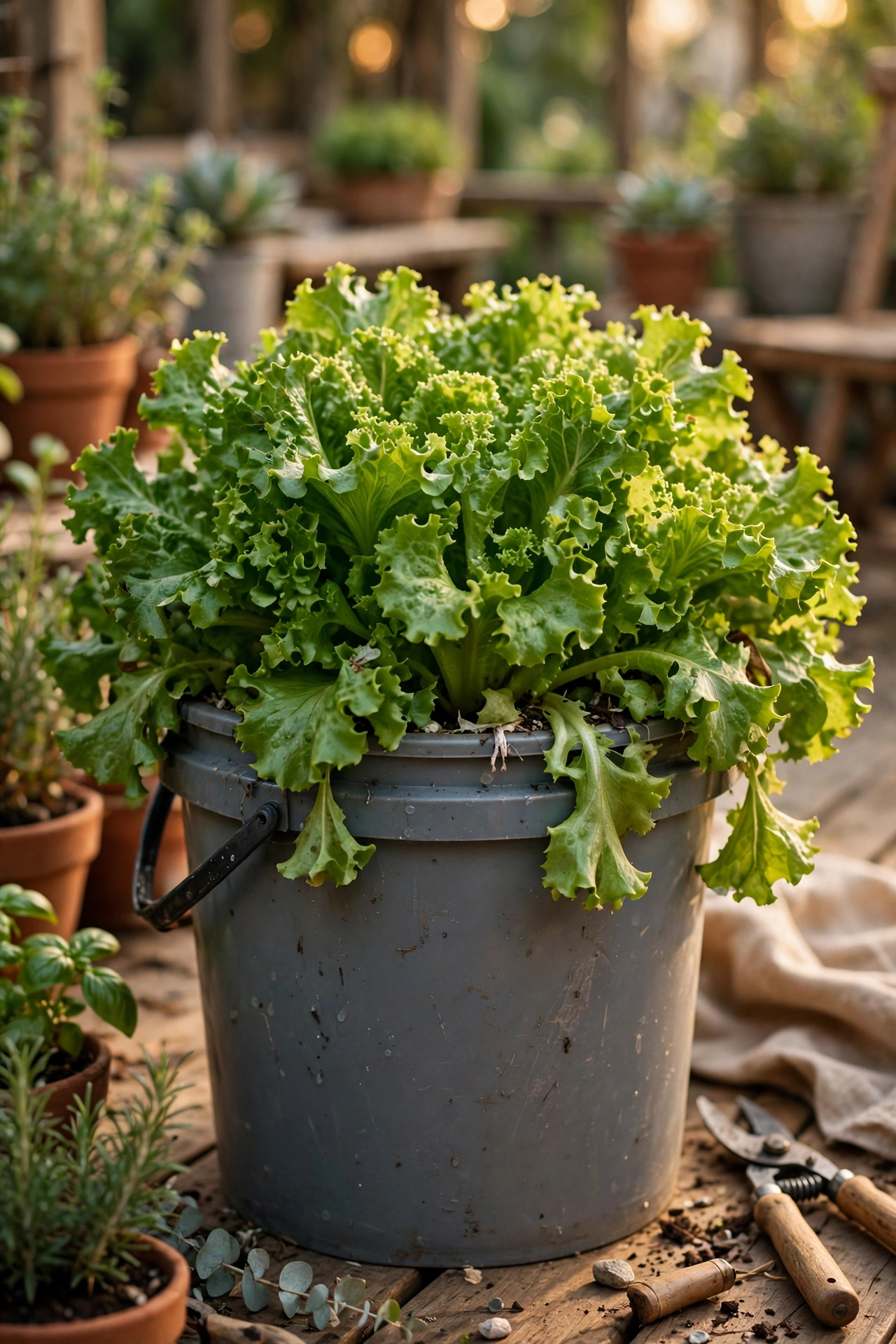
Lettuce is a natural bucket crop because its roots stay shallow and it grows fast. Plant 3 to 4 lettuce plants per 5-gallon bucket, or sow a loose-leaf mix across the surface and snip outer leaves as you need them. Lettuce prefers cool weather and bolts in summer heat, so move the bucket into afternoon shade once days turn hot. Cut-and-come-again types keep producing for weeks if you leave the center growing point intact. Three to 4 plants per bucket.
Difficulty: Easy. Starting cost: about $3–$6.
Try this: tuck a lettuce bucket beside a taller tomato bucket, where it gets dappled shade in the afternoon.
11. Spinach
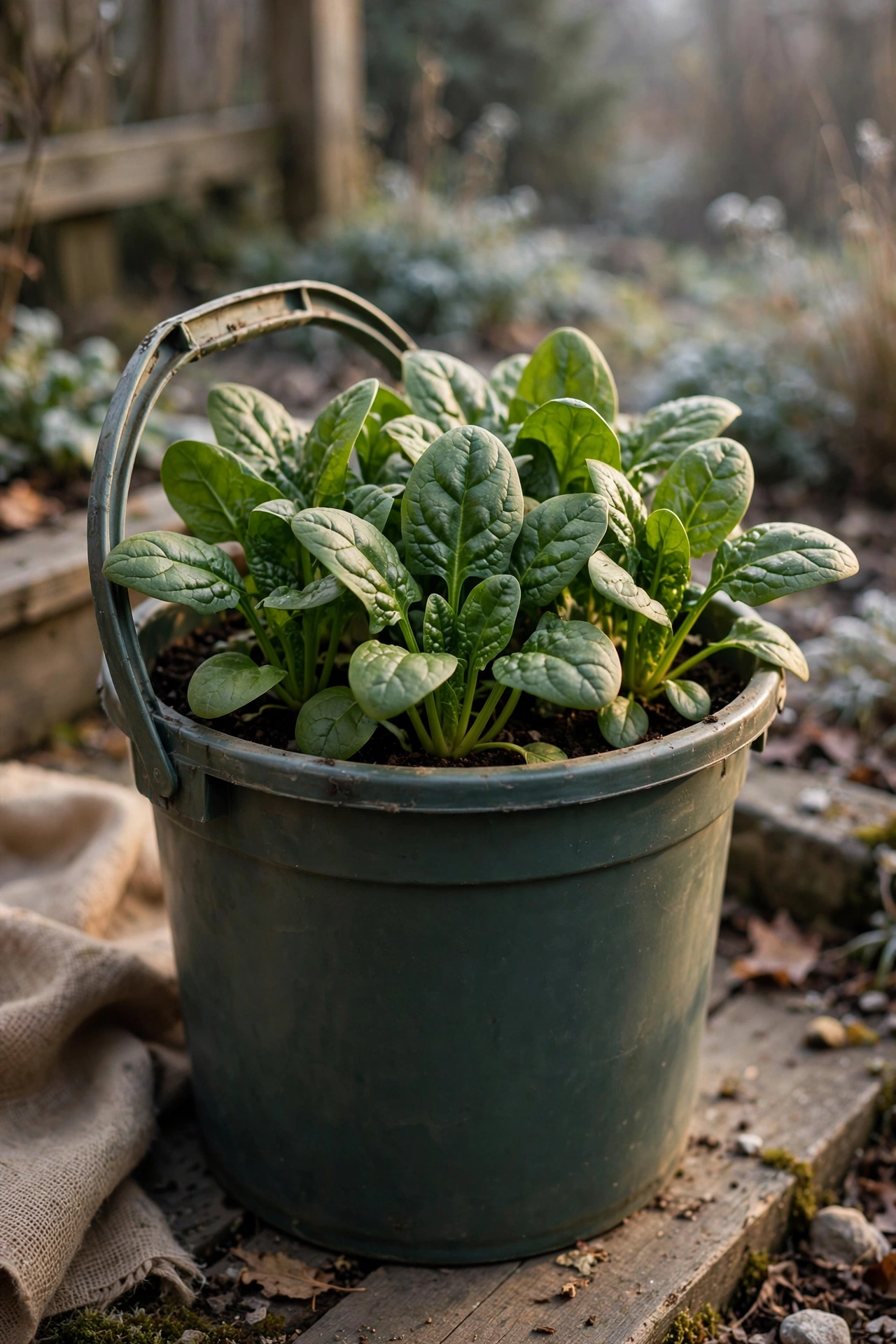
Spinach grows best in the cool months, which makes it a good bucket crop for spring and fall. Sow 4 to 6 spinach plants per 5-gallon bucket in loose, moist potting mix, and harvest outer leaves first so the center keeps growing. Spinach bolts quickly once heat arrives, so plan it as a short-season crop and sow again when nights cool down. A bucket of spinach also suits a partly shaded balcony. Four to 6 plants per bucket.
Difficulty: Easy. Starting cost: about $3–$6.
Try this: water spinach in the morning so the leaves dry before evening, which keeps disease down.
12. Kale
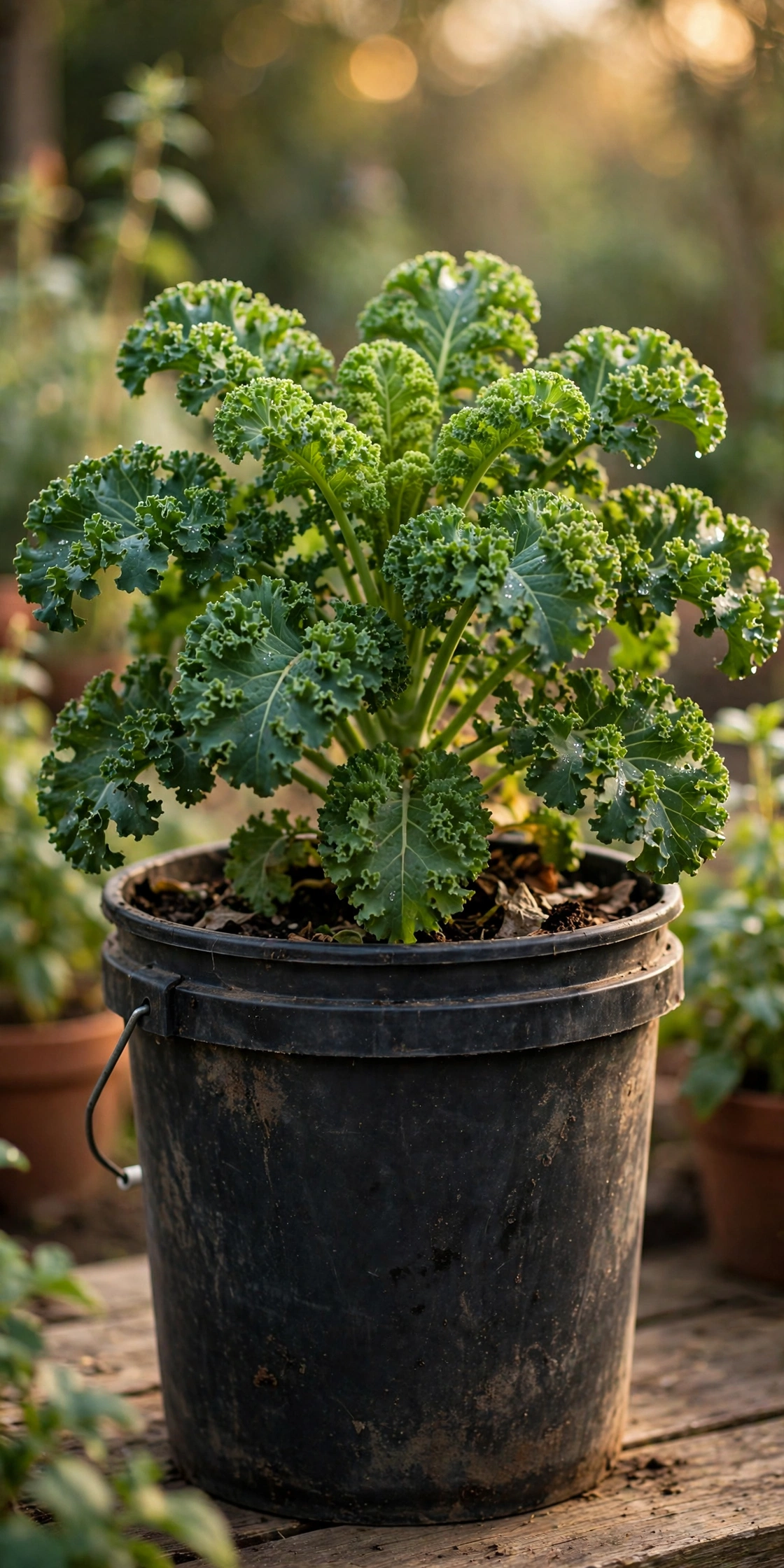
Kale holds up in a bucket through cool weather and light frost, so it stretches the growing season past most summer crops. Plant 1 to 2 kale plants per 5-gallon bucket, giving each one room to spread its leaves wide. Pick outer leaves regularly, and the plant keeps making new growth from the center for months. Kale handles partial shade, which makes it a good pick for a patio that loses direct sun in the afternoon. One to 2 plants per bucket.
Difficulty: Easy. Starting cost: about $4–$8.
Try this: strip the tough center rib from older leaves and cook them, while young leaves go straight into salads.
13. Swiss chard
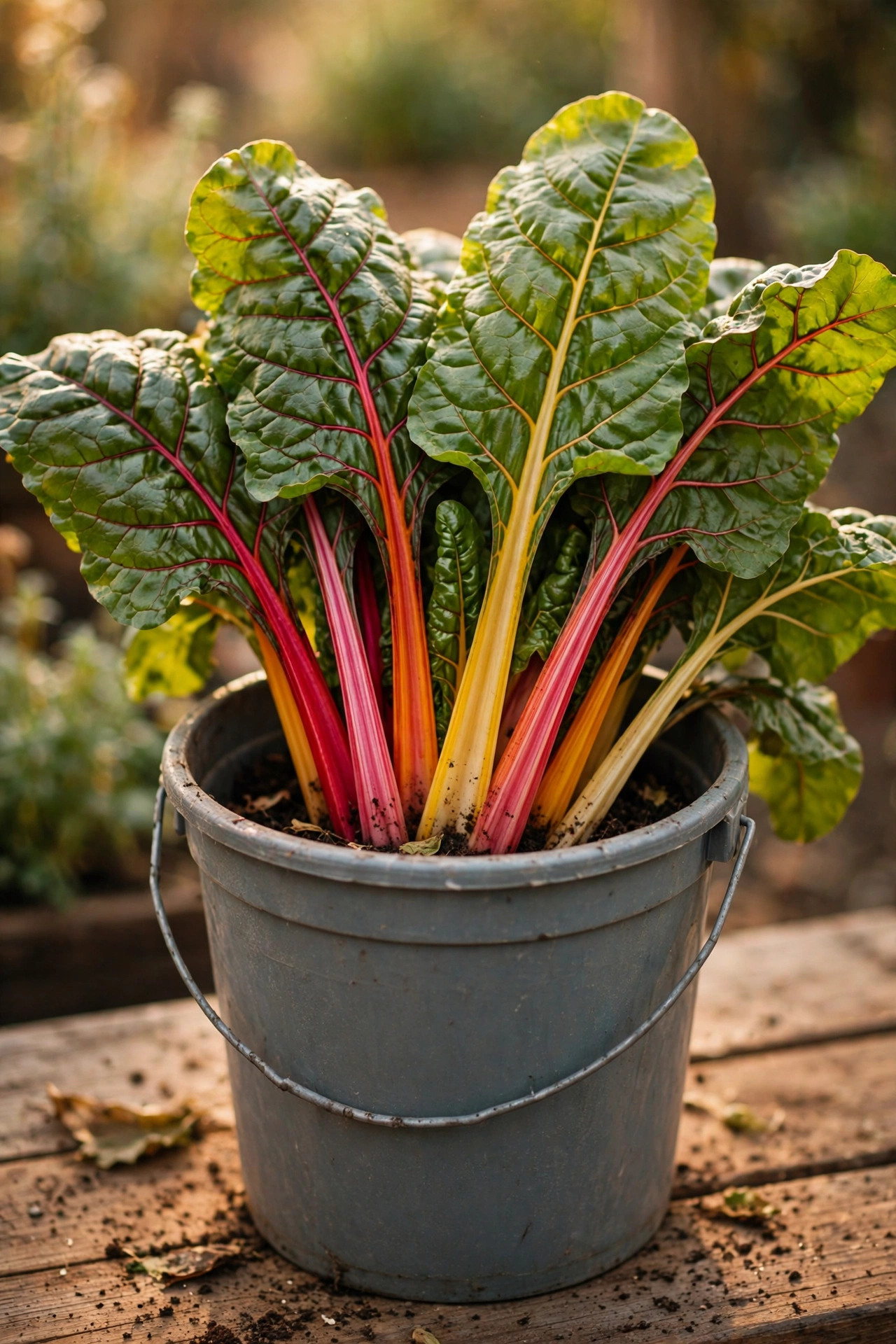
Swiss chard is a forgiving bucket vegetable, since it tolerates heat better than lettuce or spinach and keeps producing after repeated picking. Plant 2 to 3 chard plants per 5-gallon bucket, and harvest outer leaves often so the plant stays compact and keeps growing. Chard also adds color to a patio, with stems in white, yellow, pink, or red depending on the variety. It handles a missed watering better than most greens, though steady moisture still gives you tender leaves. Two to 3 plants per bucket.
Difficulty: Easy. Starting cost: about $4–$8.
Try this: cut the stems into soups and sautés, and use the leaves anywhere you would use spinach.
14. Broccoli
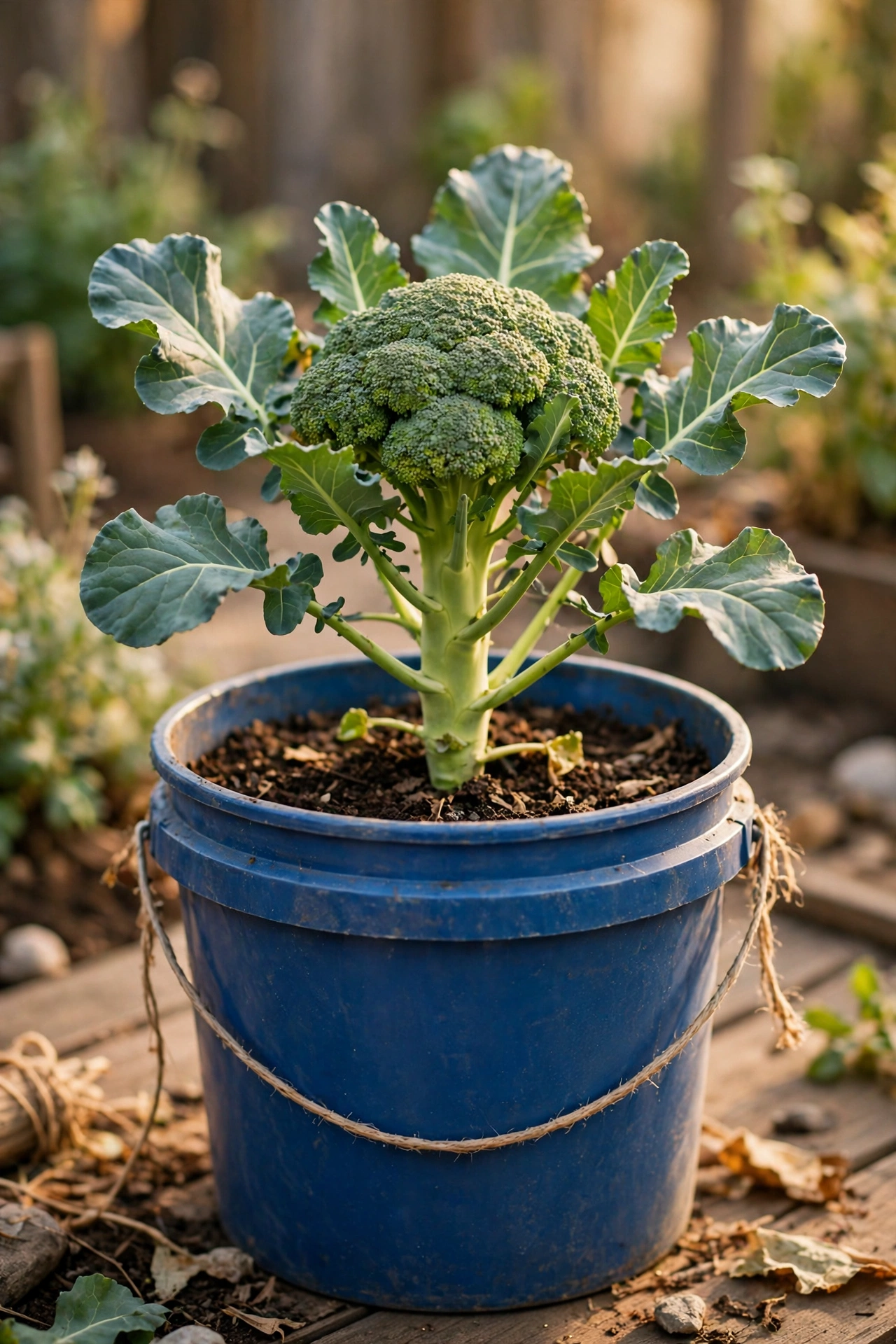
Broccoli grows well in a bucket with one plant per container and steady water. A 5-gallon bucket suits a single broccoli plant, which needs room for its wide leaves and deep roots. Broccoli prefers cool weather, so start it in spring or late summer for a fall harvest, and keep the soil evenly moist so the head stays tight instead of splitting into loose florets. After you cut the main head, the plant often sends out small side shoots for a second round. One plant per bucket.
Difficulty: Moderate. Starting cost: about $5–$9.
Try this: cover young plants with garden fabric if cabbage moths are active in your area.
15. Cauliflower
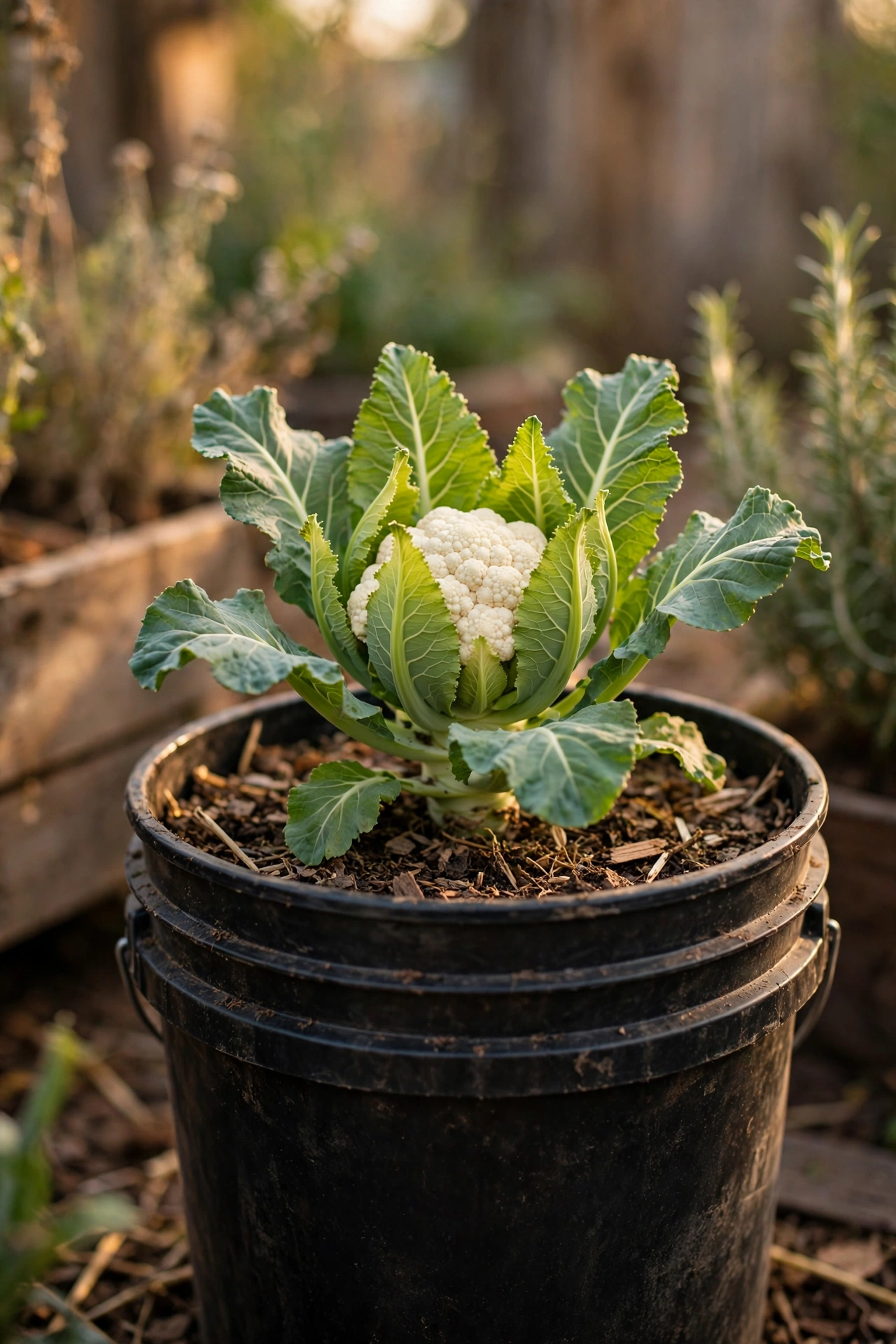
Cauliflower asks more than broccoli, but one plant in a 5-gallon bucket can still form a solid head. Plant one per bucket in cool weather, keep the soil evenly moist, and feed lightly every two to three weeks, since a hungry plant stalls into a tiny head. When the head starts to show, pull outer leaves over it for shade, which keeps it white and tender. Cauliflower hates heat and drought, so spring and fall plantings do best. One plant per bucket.
Difficulty: Moderate. Starting cost: about $5–$9.
Try this: choose a variety bred for containers or short seasons if your summers arrive early.
16. Green onions
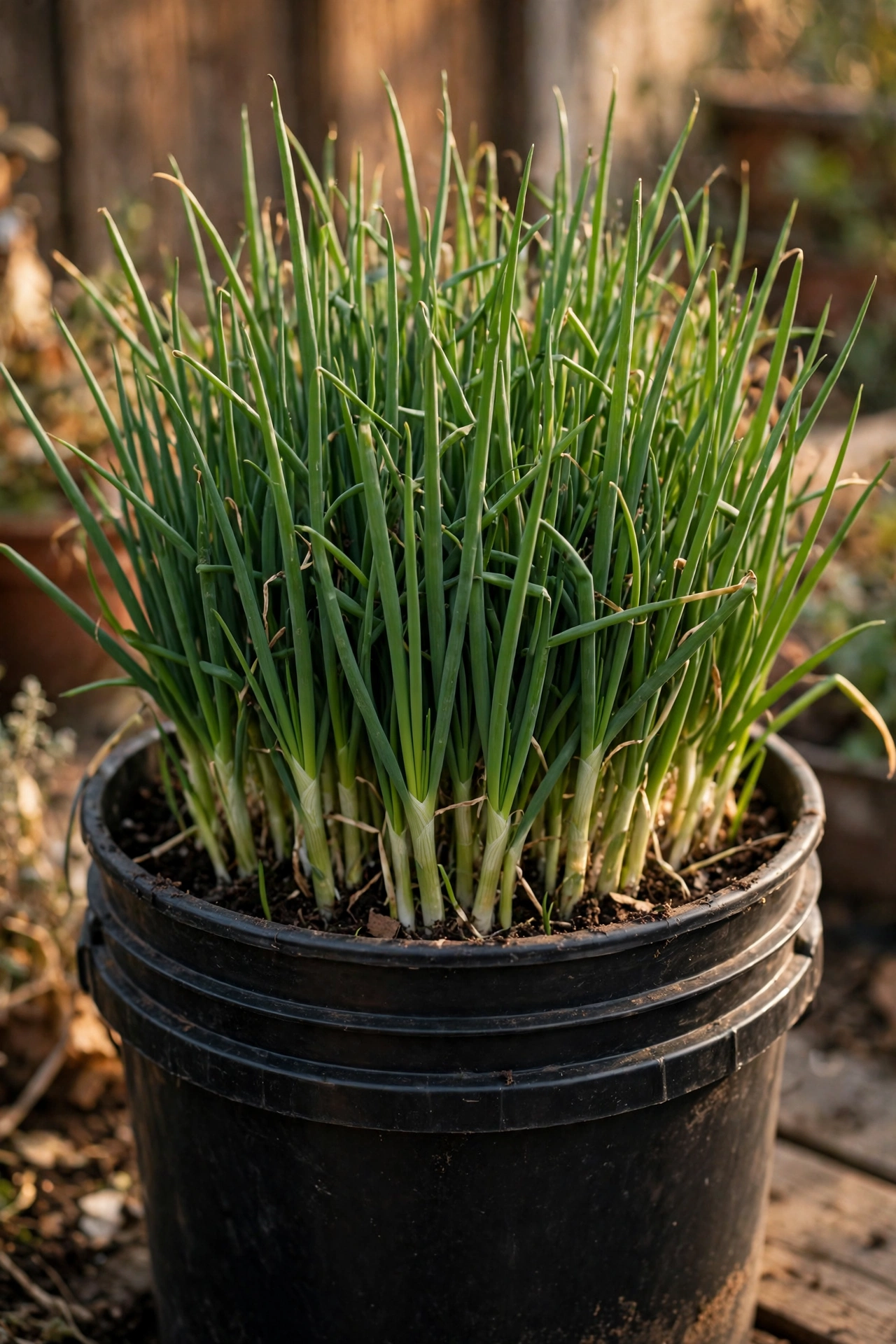
Green onions are the easiest crop, since their roots stay shallow and they ask for little more than sun and water. Plant 8 to 12 green onion sets or seedlings per 5-gallon bucket, spacing them about 2 inches apart, and snip the tops as you need them. The bulbs regrow after cutting, so one bucket keeps giving for weeks. Green onions fit into gaps around bigger plants, and they grow well on a sunny windowsill-height ledge or balcony rail. Eight to 12 plants per bucket.
Difficulty: Easy. Starting cost: about $3–$5.
Try this: save the root ends from store-bought green onions, plant them in a bucket, and watch them regrow.
17. Garlic
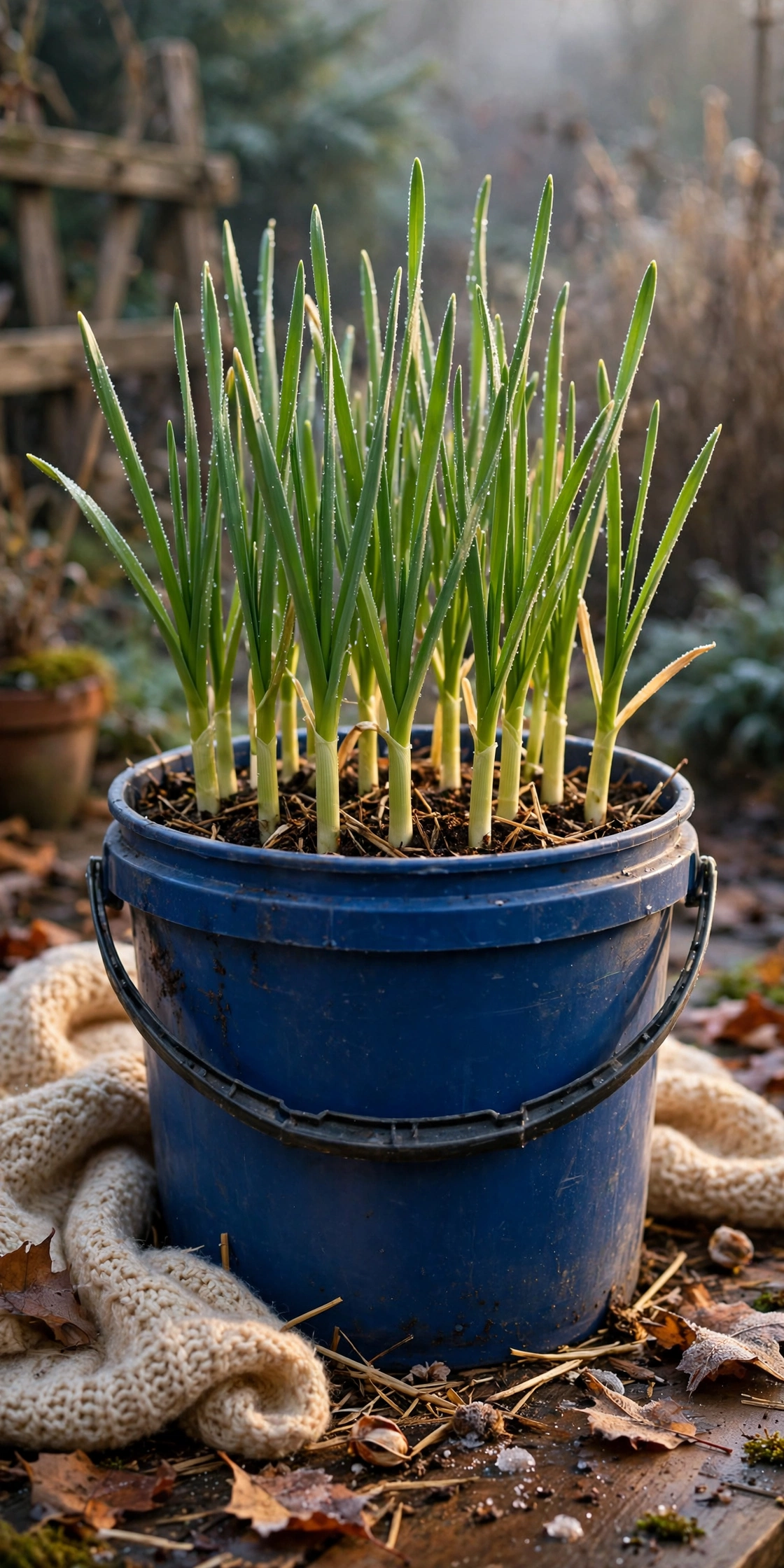
Garlic suits buckets because it grows slowly, stays compact, and needs little attention. Plant 6 to 8 cloves per 5-gallon bucket in fall, pointed end up and about 2 inches deep, then leave the bucket in a sunny spot through winter and spring. Garlic needs a cold period to form bulbs, so fall planting matters in most climates. By early summer the tops yellow and fall over, which tells you the bulbs are ready to dig. Six to 8 cloves per bucket.
Difficulty: Easy. Starting cost: about $4–$7.
Try this: use the largest cloves from a grocery or seed bulb for planting, and cook with the smaller ones.
How to set up a bucket garden
Start with a food-grade bucket, marked HDPE #2 or PP #5, that never held paint, detergent, or chemicals. Washing does not make a chemical bucket safe for food crops, so use a new food-grade bucket when you do not know the bucket’s history. Drill 4 to 6 holes, about 1/4 to 1/2 inch wide, in the bottom, and set the bucket where water can drain away freely. Fill it with potting mix, not garden soil, since garden soil compacts in a container and chokes roots. A simple mix is equal parts potting soil, compost, and perlite. Leave about an inch of space at the top so water soaks in instead of running off the sides.
Place fruiting vegetables in the sunniest spot you have, with 6 to 8 hours of direct sun, and leafy greens where they get morning sun and afternoon shade. Check the soil daily in warm weather, and water when the top 1 to 2 inches feel dry, until water runs from the drainage holes. Feed with a balanced liquid fertilizer every two to three weeks, since nutrients wash out of buckets faster than they leave garden beds. A soaked 5-gallon bucket can weigh 40 pounds or more, so set it where it will live before you water it, or put it on a plant dolly.
Common mistakes to avoid
Skipping drainage holes is the fastest way to kill a bucket garden, since roots rot in standing water within days. Crowding is the second mistake: three tomato plants in one bucket give you less fruit than one plant with room to grow. Using garden soil instead of potting mix is another common failure, because it packs down and holds too much water. Forgetting to feed also hurts, since bucket plants use up the nutrients in a small volume of mix within weeks. Finally, keep large crops out of 5-gallon buckets: corn, pumpkins, full-size melons, and large squash need far more root room, and even compact zucchini does better in a bigger container.
Bucket vegetable comparison table
| Vegetable | Plants per 5-gallon bucket | Difficulty | Starting cost | Best for |
|---|---|---|---|---|
| Tomatoes | 1 | Easy to moderate | $8–$15 | Sunny patios |
| Peppers | 1 | Easy | $6–$12 | Warm, sunny spots |
| Eggplant | 1 | Moderate | $8–$14 | Hottest corner of the patio |
| Bush cucumbers | 1 | Easy | $6–$12 | Summer salads |
| Bush beans | 2–3 | Easy | $4–$8 | Fast harvests |
| Peas | 4–6 | Easy | $4–$8 | Cool spring and fall |
| Carrots | 10–12 | Easy | $3–$6 | Short varieties only |
| Radishes | 12–16 | Easy | $3–$5 | Quickest first harvest |
| Beets | 4–6 | Easy | $3–$6 | Roots plus greens |
| Lettuce | 3–4 | Easy | $3–$6 | Cut-and-come-again salads |
| Spinach | 4–6 | Easy | $3–$6 | Cool-season greens |
| Kale | 1–2 | Easy | $4–$8 | Long cool-season harvests |
| Swiss chard | 2–3 | Easy | $4–$8 | Heat-tolerant greens |
| Broccoli | 1 | Moderate | $5–$9 | Cool-season heads |
| Cauliflower | 1 | Moderate | $5–$9 | Patient cool-season growers |
| Green onions | 8–12 | Easy | $3–$5 | Smallest spaces |
| Garlic | 6–8 cloves | Easy | $4–$7 | Plant in fall, harvest in summer |
More vegetable garden ideas
For more container growing ideas beyond buckets, see these container gardening ideas for patios, which cover pots, planters, and small-space layouts.
Potatoes need deeper containers than most bucket crops, so read these ideas for growing potatoes in containers before you plant them.
Pairing the right crops together helps a small garden produce more, and these companion planting ideas for vegetables show which neighbors help each other.
Timing matters as much as container size, so check these vegetables to plant in May when you plan your spring buckets.
If you like the low-cost spirit of bucket gardening, these recycled DIY plant pots turn things you already own into planters.
For the setup basics behind this guide, Clemson Cooperative Extension explains container vegetable gardening, including soil mixes, watering, and feeding. The University of Massachusetts also covers container gardening with vegetables, with notes on container size and drainage.
Frequently asked questions
Can you grow vegetables in any 5-gallon bucket?
No. Use food-grade buckets marked HDPE #2 or PP #5, and never use a bucket that held paint, detergent, pesticides, or other chemicals. Washing does not make a chemical bucket safe for food crops, so pick a new food-grade bucket when you do not know what the bucket held before.
How many drainage holes does a bucket need?
Drill 4 to 6 holes, about 1/4 to 1/2 inch wide, in the bottom of the bucket before you fill it. Without drainage, water pools at the bottom and roots rot within days, even if the top of the soil looks dry.
How often should you water vegetables in buckets?
Check the soil daily in warm weather, and water when the top 1 to 2 inches feel dry, until water runs from the drainage holes. Buckets dry out much faster than garden beds, so daily watering is normal in summer, while cool weather may need watering only every few days.
What soil should you use in a bucket?
Use potting mix, not garden soil. Garden soil compacts in a container and holds too much water, which chokes roots. A simple mix is equal parts potting soil, compost, and perlite, which drains freely while holding enough moisture for steady growth.
Which vegetables should you not grow in a 5-gallon bucket?
Skip corn, pumpkins, full-size melons, and large squash, since they need far more root room than a 5-gallon bucket gives. Even compact zucchini does better in a bigger container, so save your buckets for the 17 vegetables on this list and crops of a similar size.
Final thoughts
Start with three or four buckets, one tomato, one pepper, and a couple of greens, and let that first season teach you how fast your patio dries out and how much sun each corner really gets. Buckets make those lessons cheap and easy to fix, and a row of them can feed a household salads and sides all season long.
Keep the inspiration going with 20 Pollinator Flowers That Grow Well in Shade.


