


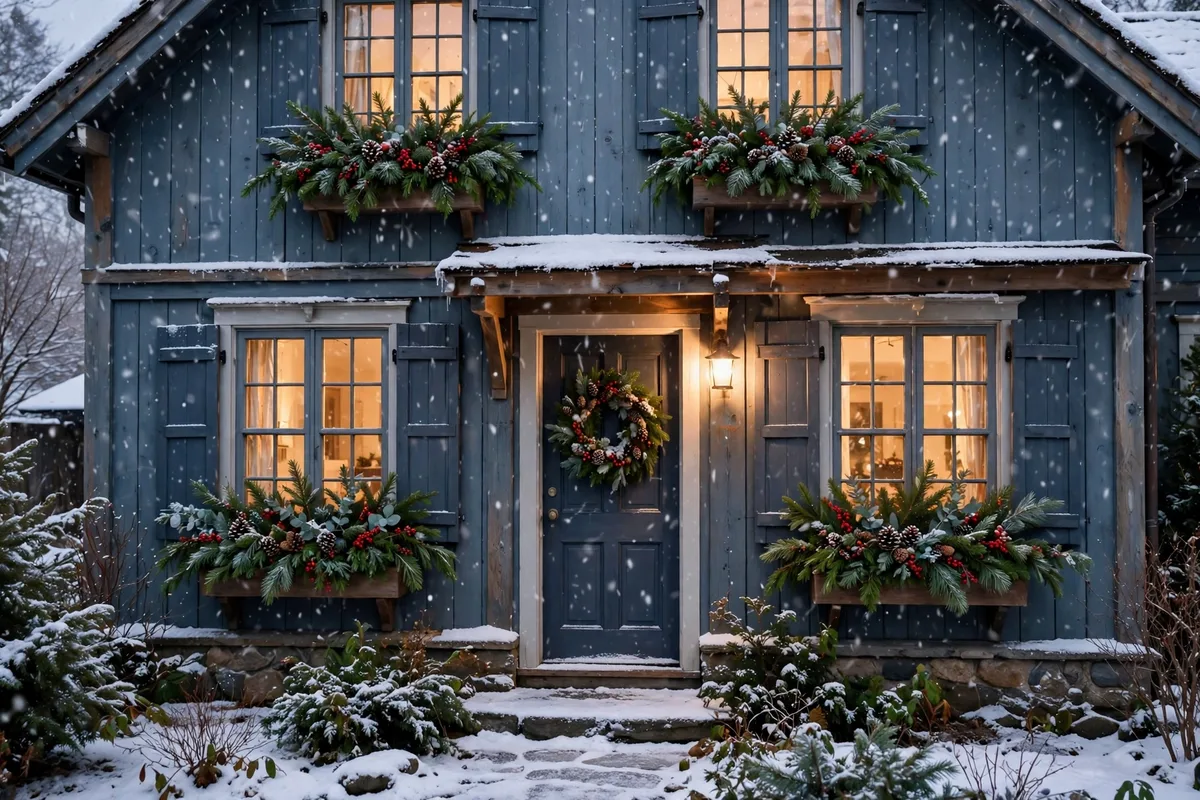
Empty window boxes in December make a whole house look abandoned. I learned this the hard way one year when I took down my summer flowers, got busy, and left bare boxes up until February. The house looked unfinished all winter, and it took me exactly one afternoon to fix it the next year.
Winter planter boxes are one of the easiest seasonal upgrades you can make. A box of evergreens, berries, and pinecones takes an hour to put together and looks good from late November through February with almost no care. These 15 winter planter box ideas cover window boxes, railing boxes, and wall-mounted planters, with plant names and build tips for each.
Quick takeaways
- Evergreen branches, berries, pinecones, and red twig dogwood are the backbone of winter boxes.
- Cut greenery needs no special soil. Old soil or floral foam just holds stems in place.
- Living plants like dwarf conifers and ornamental cabbage can go into the garden in spring.
- Secure every box well, especially ones mounted above walkways.
- Several winter berries are toxic to pets, so keep boxes out of reach of curious animals.
1. Classic evergreen window box
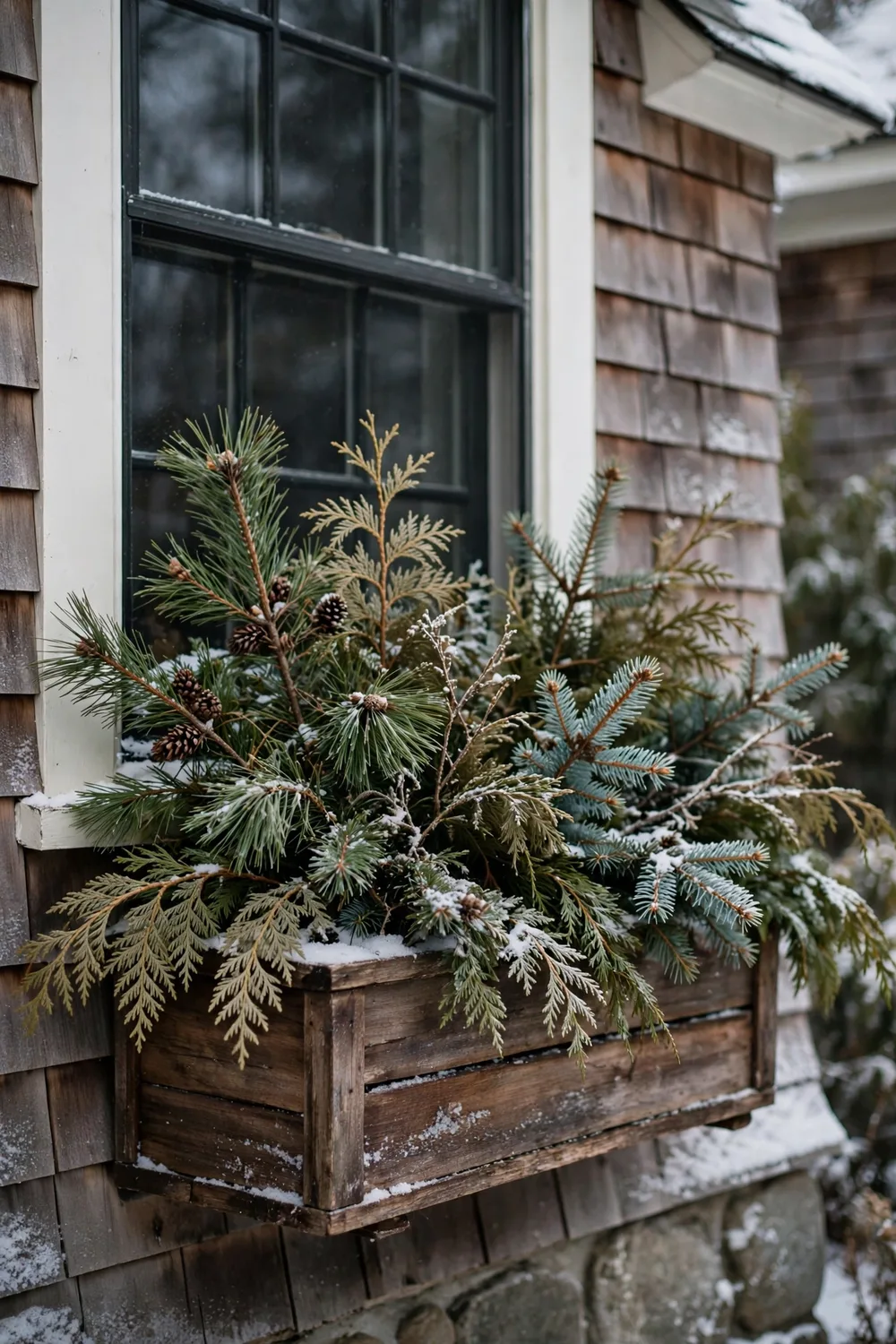
A mix of pine, cedar, and spruce branches is the foundation of almost every winter box, and it looks good on its own. Fill the box with old soil or floral foam, push in the tallest spruce at the back, layer cedar in the middle, and let pine spill over the front edge. The different textures keep it interesting with zero flowers. Mist the branches every week or two if the winter is dry.
Try this: clip branches from your own yard or ask a Christmas tree lot for trimmings. Most lots give them away free. Difficulty: Easy. Cost: $
2. Red twig dogwood and white pine

Red twig dogwood stems against white pine is the highest-contrast winter combination you can make. The coral-red stems glow against the soft green needles, and the look works from December through March. Push 5 to 7 stems into the back of the box at varying heights, fill around them with white pine boughs, and let a few pine branches trail over the front.
Try this: cut dogwood stems in late fall after the leaves drop. The color is brightest on first-year wood. Difficulty: Easy. Cost: $$
3. Ornamental cabbage and kale box

Ornamental cabbage and flowering kale are living plants that actually look better after frost. The cold triggers their purple, pink, and cream centers, and they hold their color well below freezing. Plant 3 to 5 in a 24-inch box in real potting soil, water them in, and tuck pine sprigs between them to hide the soil. They last until a hard sustained freeze.
Try this: choose the coldest spot for this box. A north-facing box keeps the colors vivid longer than a warm south wall. Difficulty: Easy. Cost: $
4. Holly and winterberry box
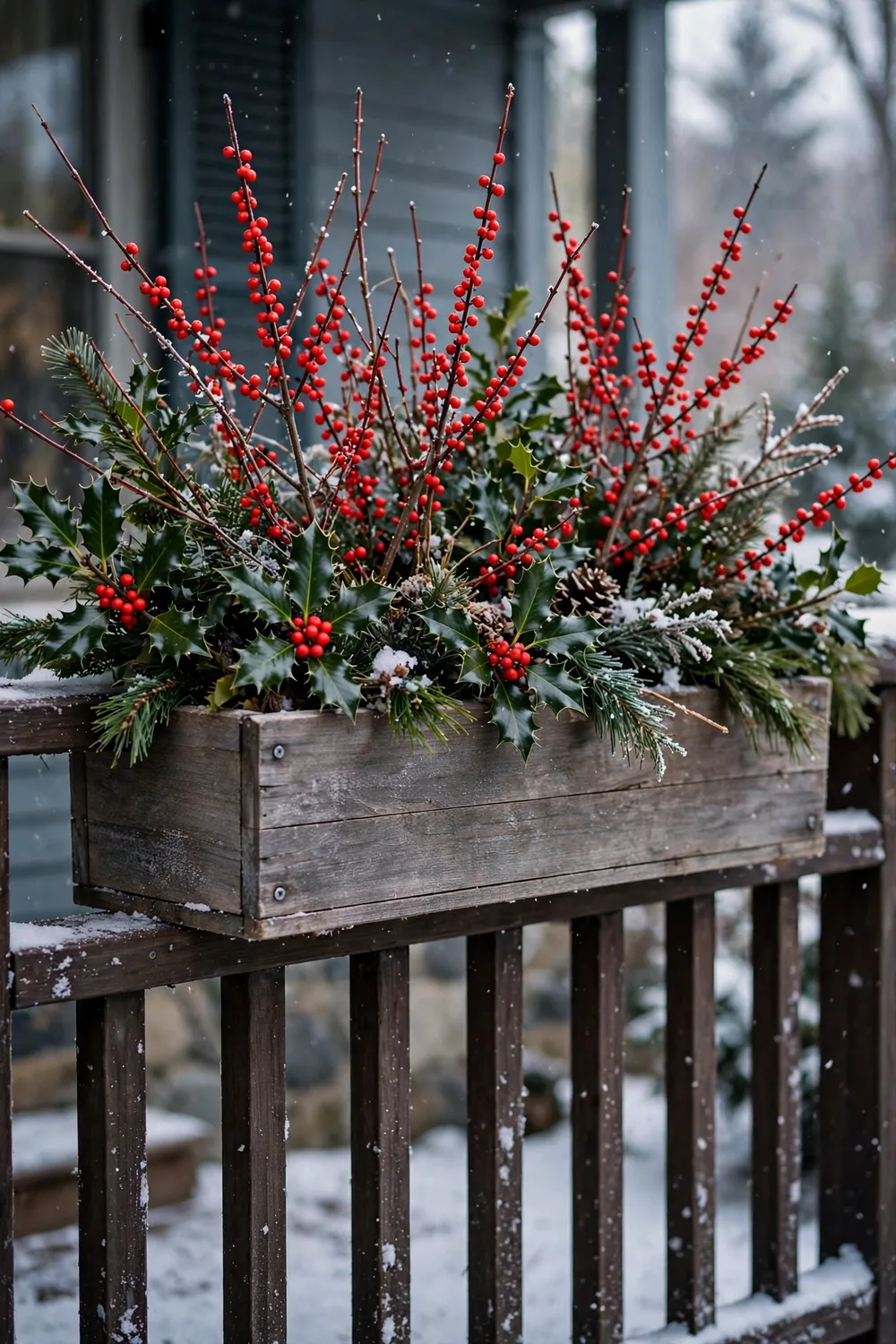
Holly branches with red winterberry stems make a festive railing box that needs no other decoration. The glossy holly leaves and bright berries carry the whole design. Arrange holly as the base, push winterberry stems in at angles for height, and add a few pinecones wired to sticks. Winterberry holds its berries into January, which keeps the box colorful for weeks.
Try this: wear gloves. Holly leaves are sharp enough to scratch, and winterberry stems can be stiff. Difficulty: Easy. Cost: $$
5. Mini Alberta spruce trio
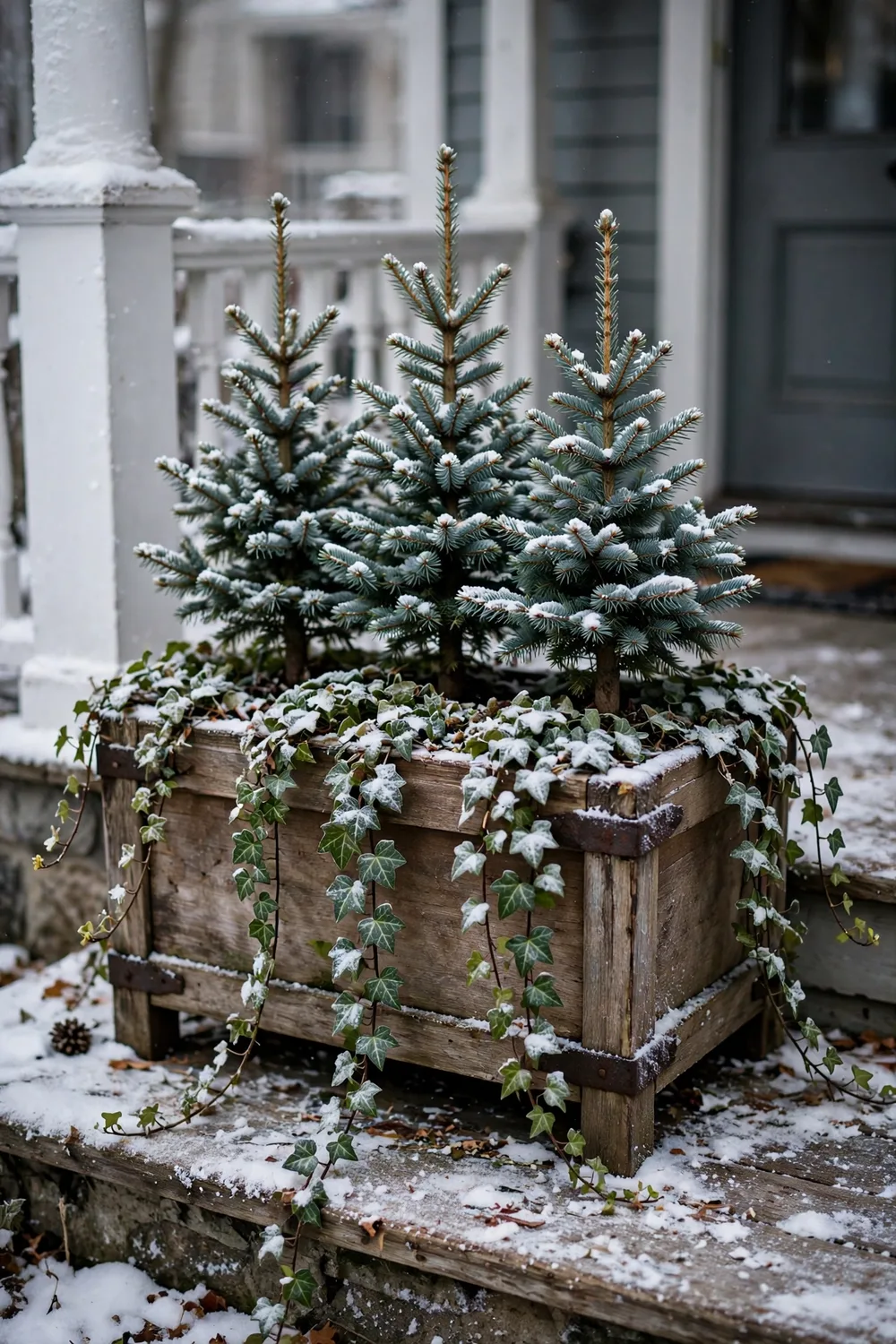
Three dwarf Alberta spruces in a row make a living window box that you can plant in the garden come spring. Use one-gallon nursery pots, set them in the box with the pots hidden, and tuck trailing ivy around the bases to spill over the edge. Water the spruces whenever the soil thaws enough to absorb it. In spring, each tree goes straight into the landscape.
Try this: wrap the box in burlap for extra insulation. The roots are more exposed in a box than in the ground. Difficulty: Easy. Cost: $$
6. Lantern and greenery box

A lantern nestled into evergreens turns a window box into an evening feature. Fill the box with cedar and pine, set a metal lantern in the center, and surround it with pinecones. Use a battery candle or LED fairy lights inside the lantern, never a real flame near dried greenery. The glow through the branches at dusk is the whole point of this one.
Try this: put the lantern on a timer. Six hours each evening gives you the effect without running batteries down. Difficulty: Easy. Cost: $$
7. Birch log and pinecone box

Short birch log sections stood upright among cedar branches and pinecones make a rustic box with real presence. The white bark pops against dark green cedar, and the whole thing looks like a woodland scene. Cut logs 6 to 10 inches tall, pack them tightly so they support each other, and fill gaps with cedar sprigs and pinecones. Nothing in this box needs water.
Try this: seal the cut ends of the logs with clear outdoor sealant. It keeps them from splitting through freeze and thaw cycles. Difficulty: Easy. Cost: $
8. Frosted eucalyptus modern box
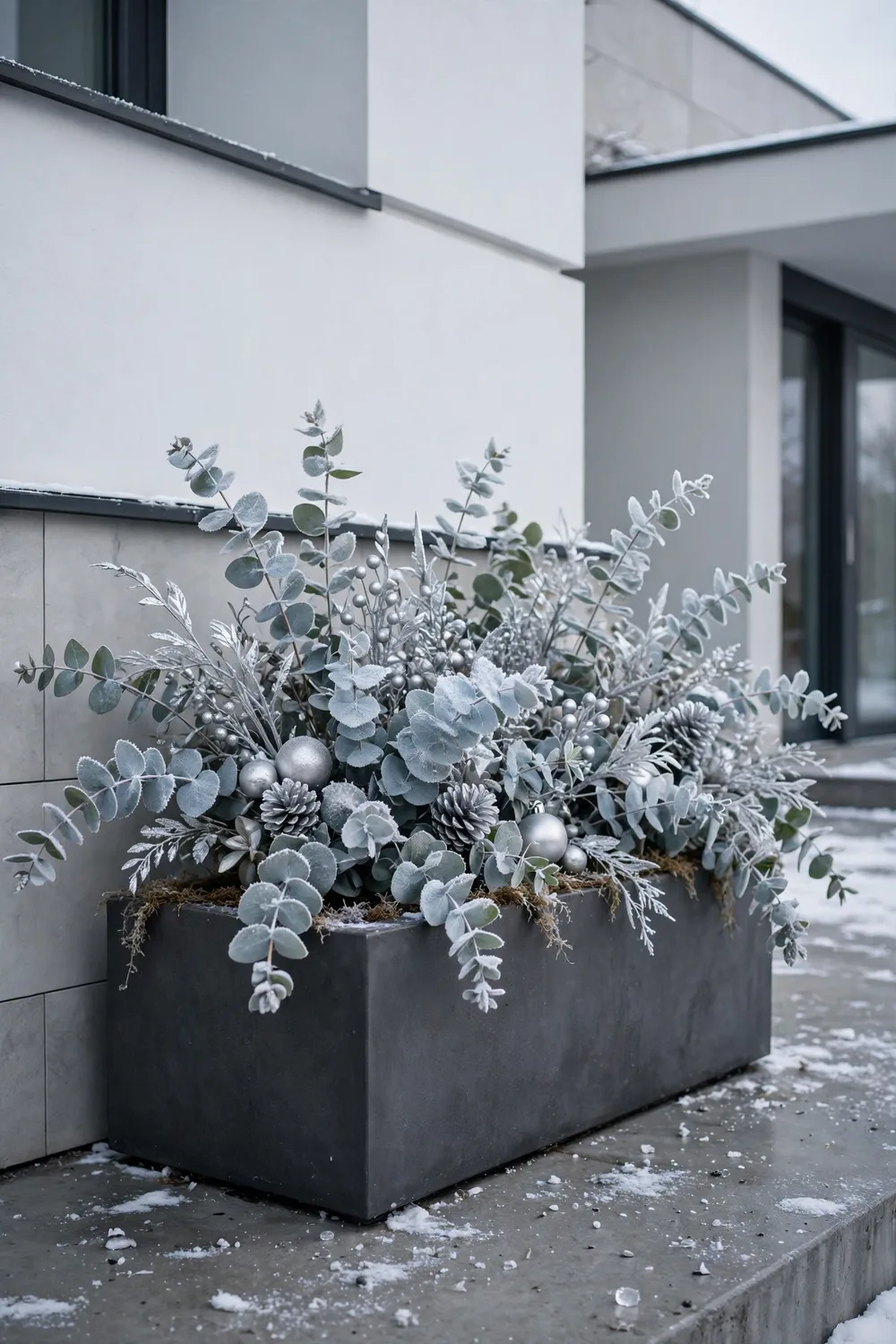
For a modern home, silvery eucalyptus with a dusting of faux snow reads winter without any holiday baggage. Arrange tall eucalyptus stems in the back, shorter ones in front, and add a few silver-painted pinecones for sparkle. Eucalyptus dries gracefully, so this box lasts all season. Keep it simple: this style works because of restraint, not abundance.
Try this: spray the faux snow outdoors on a calm day. The fine mist drifts farther than you expect. Difficulty: Easy. Cost: $$
9. Living dwarf conifer box
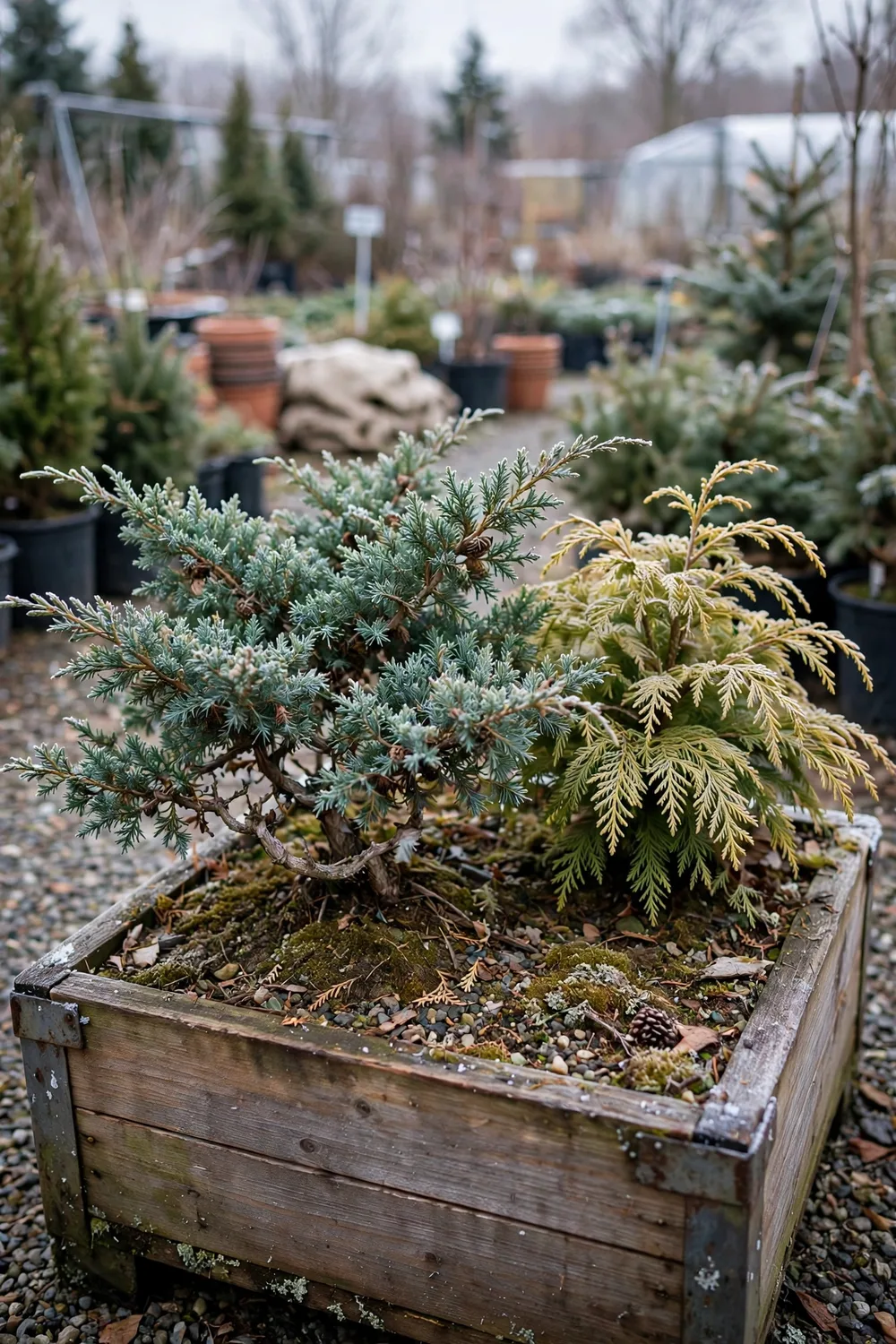
A box planted with living dwarf conifers is an investment that pays off for years. Mix ‘Baby Blue’ false cypress, ‘Goldcrest’ Monterey cypress, and a low juniper for varied color and texture. Plant them in real potting soil, water through winter thaws, and move the whole box to a sheltered spot in the worst cold snaps. In spring, transplant each conifer to the garden.
Try this: choose conifers hardy to at least one zone colder than yours. Roots in a box freeze harder than roots in the ground. Difficulty: Easy. Cost: $$
10. Ivy cascade with red branches
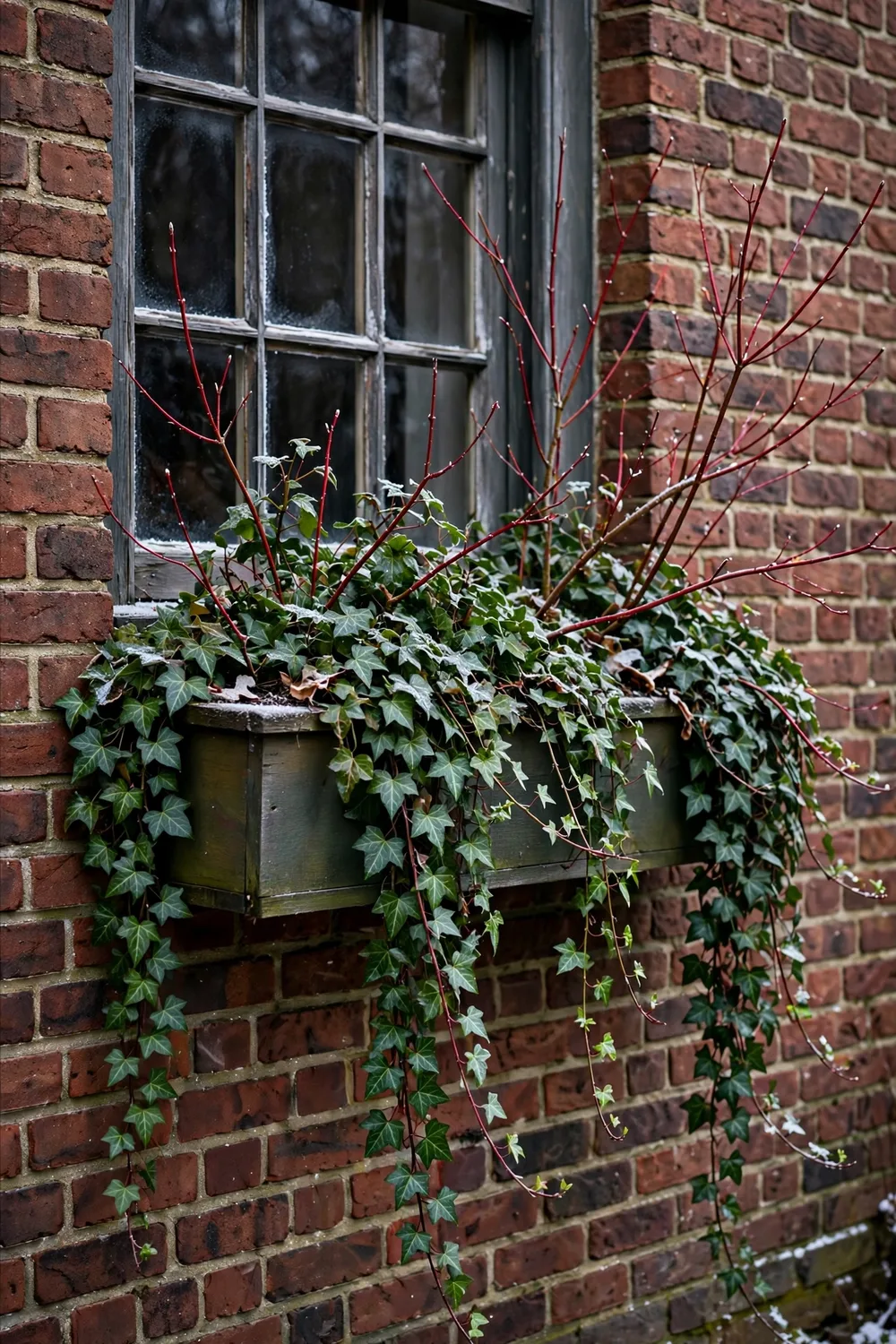
English ivy trailing 2 feet over the front of a box looks lush even in January, and red branches behind it add winter color. Plant ivy in potting soil along the front edge so it spills naturally, push red twig dogwood or red-painted branches into the back, and fill the middle with cedar. Ivy is evergreen and hardy, so this box stays green all winter.
Try this: trim the ivy in late fall so the trails are even. It grows slowly in winter and the shape you set now lasts for months. Difficulty: Easy. Cost: $
11. Magnolia and cotton southern box

In the South, magnolia leaves with cotton bolls make a winter box that feels regional and elegant. The big glossy leaves hold up well in mild winters, and cotton stems add soft white texture. Layer magnolia as the base, push cotton stems in at angles, and add pine for filler. This combination lasts for months in zones 7 and warmer.
Try this: wipe magnolia leaves with a damp cloth before arranging. Dust dulls the gloss that makes this combination shine. Difficulty: Easy. Cost: $$
12. Fairy light evergreen box

Warm white fairy lights woven through evergreen branches make a window box glow after dark. Use outdoor-rated battery lights with a built-in timer, weave them loosely through cedar and pine so the bulbs peek out, and add pinecones for daytime interest. The lights turn an ordinary greenery box into the prettiest window on the street.
Try this: choose warm white, not cool white. Cool white lights make greenery look blue and flat, while warm white looks like candlelight. Difficulty: Easy. Cost: $$
13. Dried hydrangea and grass box

Dried hydrangea heads and ornamental grasses in soft beige tones make a winter box for neutral-style homes. The dried flowers hold their shape all winter, grasses add movement in the wind, and the whole thing needs zero water. Cut hydrangeas after they dry on the plant in fall, and leave grass plumes standing for the same effect.
Try this: spray the arrangement with clear matte sealant. It keeps the dried heads from shattering in wind and rain. Difficulty: Easy. Cost: $
14. Blue spruce cool-toned box
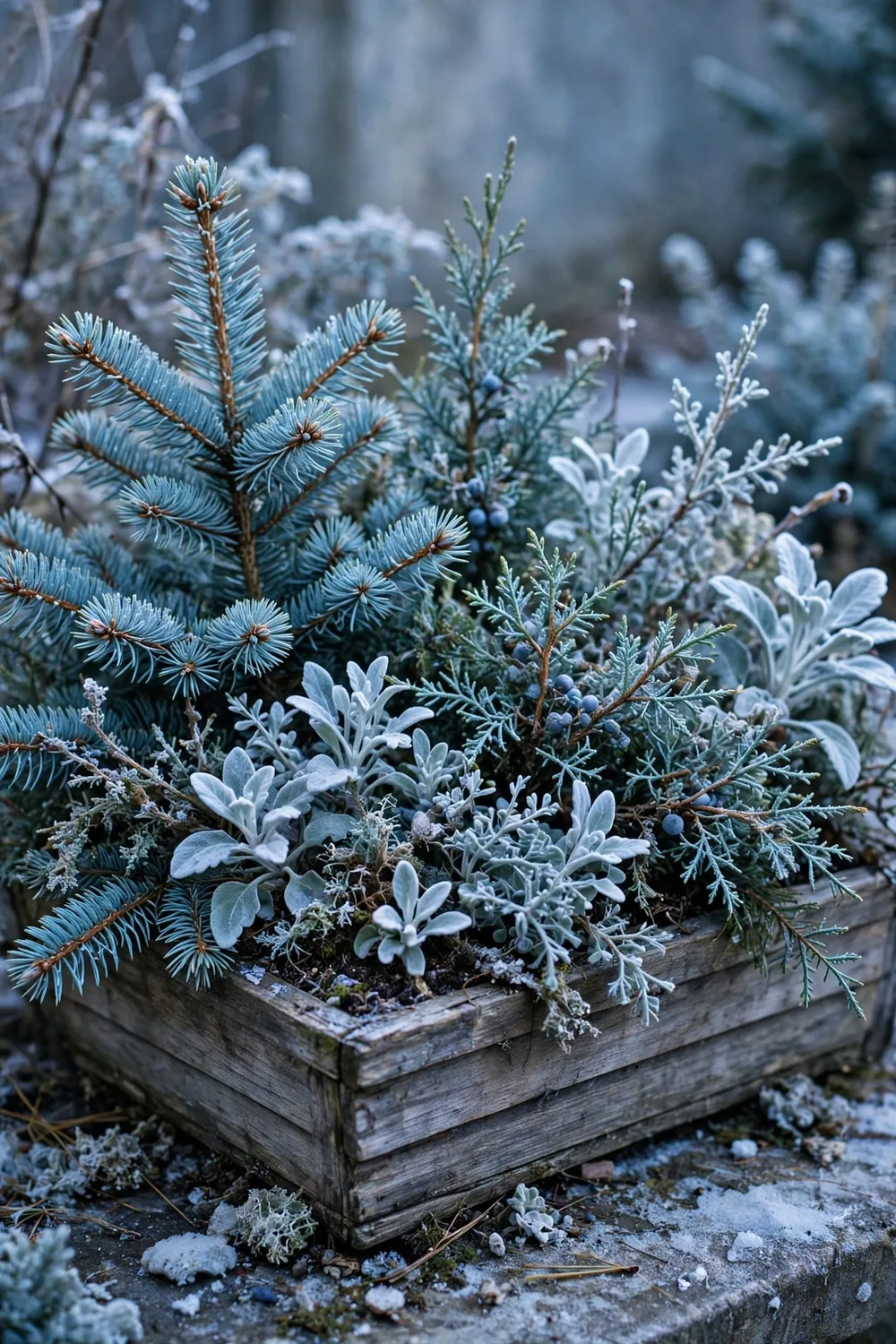
Blue spruce and juniper in silvery-blue tones make a cool, frosty box that looks like winter itself. Layer blue spruce branches as the base, add juniper with its blue berries for texture, and finish with a few silver-painted twigs. This palette suits gray and white houses especially well, where green boxes can look too warm.
Try this: add one white element, like a birch twig or white pinecone. A single light accent keeps the cool tones from looking flat. Difficulty: Easy. Cost: $$
15. Minimalist birch twig box

Sometimes less is more. A white planter box with a few white birch twigs and two or three pine sprigs is all a modern entryway needs. The restraint is the design. Use a simple rectangular box, keep the twigs tall and sparse, and resist the urge to fill every gap. This style takes 15 minutes and looks intentional, not unfinished.
Try this: cut the twigs to three different heights. Even in a minimal design, varied heights keep it from looking flat. Difficulty: Easy. Cost: $
Winter planter boxes at a glance
| Box idea | Key materials | Living or cut | Cost |
|---|---|---|---|
| Classic evergreen | Pine, cedar, spruce | Cut | $0-10 |
| Red twig + white pine | Dogwood stems, pine | Cut | $0-12 |
| Ornamental cabbage | Cabbage, kale, pine sprigs | Living | $9-25 |
| Holly + winterberry | Holly, winterberry, cones | Cut | $10-15 |
| Spruce trio | Dwarf Alberta spruce, ivy | Living | $30-45 |
| Lantern box | Greenery, lantern, battery candle | Cut | $10-30 |
| Birch log rustic | Birch logs, cedar, cones | Cut | $0-10 |
| Frosted eucalyptus | Eucalyptus, silver cones | Cut | $12-18 |
| Dwarf conifers | False cypress, juniper | Living | $24-45 |
| Ivy cascade | Ivy, red branches, cedar | Living + cut | $10-20 |
| Magnolia + cotton | Magnolia, cotton, pine | Cut | $10-15 |
| Fairy lights | Greenery, LED lights | Cut | $8-22 |
| Dried hydrangea | Hydrangea, grasses | Cut/dried | $0-10 |
| Blue spruce tones | Blue spruce, juniper | Cut | $8-12 |
| Minimalist birch | Birch twigs, pine sprigs | Cut | Under $10 |
How to build a winter planter box that lasts
Start with a sturdy box. Winter arrangements get heavy with wet greenery and snow, so use brackets rated for the weight and check that the box drains. Fill the bottom with old soil, sand, or floral foam to anchor stems. Push in the tallest pieces at the back first, work forward with shorter greens, and finish with trailing pieces over the front edge. Step back and look from the street, since that is the view that matters most.
Cut greenery needs no fertilizer and very little water, but living plants do. Water dwarf conifers, ivy, and ornamental cabbage whenever the soil thaws enough to absorb moisture. A north-facing box dries slower than a south-facing one, so check the sunny boxes more often. For the bigger picture of winter curb appeal, these charming winter planter ideas for the front porch pair perfectly with dressed-up window boxes.
Mistakes to avoid (and safety notes)
The biggest mistake is using a box that cannot handle winter. Thin plastic boxes crack in freezes, and unsecured boxes become projectiles in windstorms. Use frost-proof containers and solid brackets, especially for boxes mounted above walkways where a falling box could hurt someone. Second, do not overwater cut greenery. Soggy stems rot, and a box of mushy branches looks worse than an empty box.
On safety: never put real candles or open flames in a box full of dried greenery and pinecones. Battery candles and outdoor-rated LED lights give you the glow without the fire risk, per the National Fire Protection Association candle safety guidance. Also note that holly berries, winterberry, and yew are toxic to dogs and cats, so keep boxes out of reach of pets that chew plants, and check the ASPCA toxic plant list if you are unsure about a material. The design principles carry indoors too: my winter flower arrangement ideas use the same layering techniques for tabletop displays.
Frequently asked questions
What do you put in planter boxes in winter?
Evergreen branches like pine, cedar, and spruce form the base. Add red twig dogwood, holly, winterberry, pinecones, and birch for color and texture. Living options include dwarf conifers, ivy, and ornamental cabbage.
Do winter planter boxes need watering?
Cut greenery needs almost none, just an occasional misting in dry spells. Living plants like conifers, ivy, and ornamental cabbage need water whenever the soil thaws enough to absorb it.
How do you keep winter window boxes from blowing away?
Use sturdy brackets screwed into the wall or window frame, not just hooks. Fill the box with heavy soil or sand at the base, and wire tall branches to the box so wind cannot pull them out.
Can you use real plants in winter planter boxes?
Yes. Dwarf Alberta spruce, dwarf conifers, English ivy, and ornamental cabbage all survive winter in boxes in most zones. Choose plants hardy to at least one zone colder than yours, since roots in boxes freeze harder than roots in the ground.
When should I take down my winter planter box?
Late February to March, when the greenery starts looking tired. Living plants can go straight into the garden, and the box is ready for spring flowers.
Are winter planter boxes safe for pets?
Some common materials are not. Holly berries, winterberry, and yew are toxic to dogs and cats. If pets can reach the box, stick to pine, cedar, spruce, pinecones, and birch, and check the ASPCA list for anything else.
A dressed-up window box is the fastest way I know to make a house look loved in winter. Pick one idea, gather your greenery this weekend, and enjoy the view every time you pull into the driveway.
Keep the inspiration going with 15 Winter Vegetables Ideas.


