


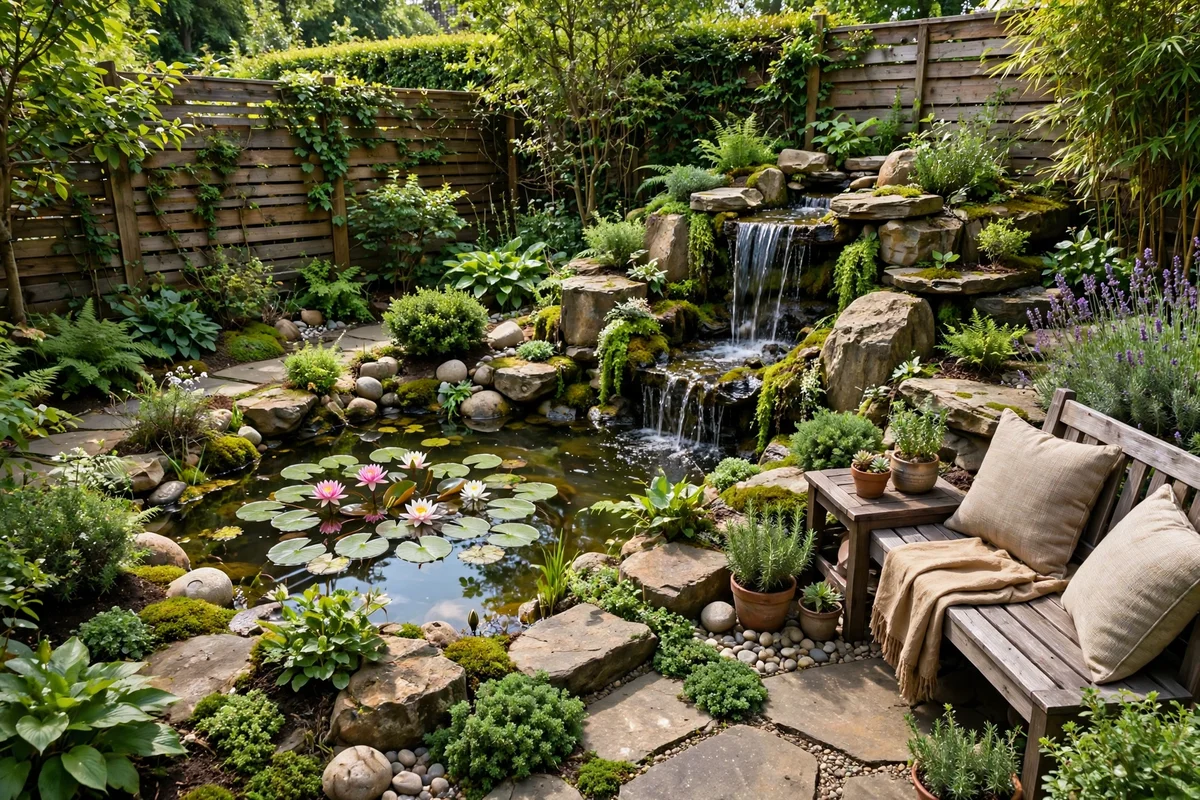
A pond sounds like a big-yard luxury, but some of the prettiest ones are barely 3 feet across. Small gardens just need a different approach: containers instead of excavations, and vertical interest instead of square footage. Our first pond was a half whiskey barrel on the patio, and the frogs found it within a week.
These 8 pond ideas fit patios, courtyards, and small yards. Each one lists the realistic cost, the build difficulty, and the one detail that makes it work, plus safety notes for kids, pets, electricity, and buried utilities.
Quick takeaways
- Most small ponds cost $30 to $300 and need no digging at all.
- Fish need at least 18 inches of depth and 50 gallons; plants are happy in 12 inches.
- A small pump ($25 to $50) keeps water moving, which prevents mosquitoes and algae.
- Call 811 before you dig, and plug every pump into a GFCI-protected outlet.
- Open water and small children do not mix. Plan barriers or choose a pondless design.
1. Half whiskey barrel pond

A half whiskey barrel is the classic starter pond: about 26 inches across, holds 20 to 30 gallons, and costs $40 to $70 at garden centers. Line the inside with pond liner to stop leaks, fill it, and add 2 or 3 floating plants like water lettuce plus one dwarf water lily. Drop in a mosquito dunk monthly; the Bti bacteria kill larvae but stay harmless to pets, birds, and plants. Set the barrel where it gets 4 to 6 hours of sun.
Try this: rest the barrel on bricks to level it and keep the wood off wet ground.
Cost: $$· Difficulty: easy
2. Galvanized stock tank pond

A 100-gallon galvanized stock tank makes an instant pond with zero digging and a clean modern look. Add a $30 solar fountain for movement and sound, a few bunches of anacharis for oxygen, and 3 or 4 feeder goldfish to eat mosquito larvae. The metal sides warm the water, so float a few water lettuce plants for shade. In freezing climates, move the fish indoors or add a floating de-icer for winter.
Try this: wrap the tank’s lower half in burlap or reed fencing for a softer look.
Cost: $$$· Difficulty: easy
3. Ceramic bowl water garden

A glazed ceramic bowl 18 to 24 inches wide holds 5 to 10 gallons: enough for one dwarf water lily and a tuft of dwarf papyrus. Seal any drainage hole with silicone, since unglazed interiors leak. Bowls this small heat up fast, so keep them in part shade and top up the water weekly in summer. They work on balconies and tiny patios where nothing else fits, and they cost less than a dinner out.
Try this: set the bowl on a sturdy plant stand to lift the water to eye level.
Cost: $$$· Difficulty: easy
4. Corner pond
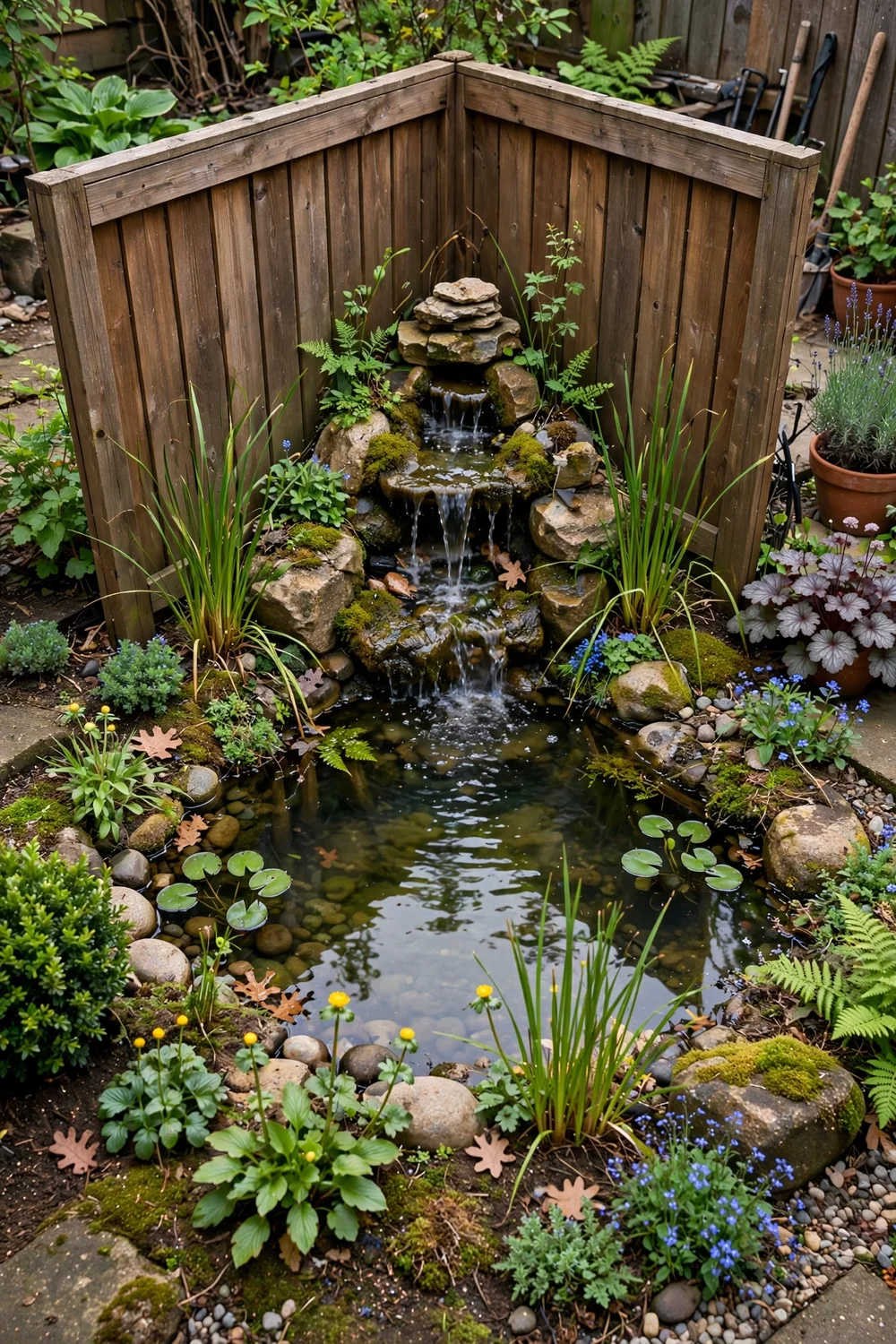
Corners are the most wasted space in small gardens, and a preformed triangular pond shell turns one into a water feature. Dig the shell in so the rim sits an inch above grade, backfill with sand for support, and add a 200-gallon-per-hour pump feeding a mini waterfall of stacked stones. Corner ponds use every square foot well and look intentional rather than squeezed in. Expect an afternoon of digging for a 3-foot shell.
Try this: plant tall marginals like iris behind the waterfall to hide the pump cord.
Cost: $$$· Difficulty: moderate
5. Raised timber sleeper pond
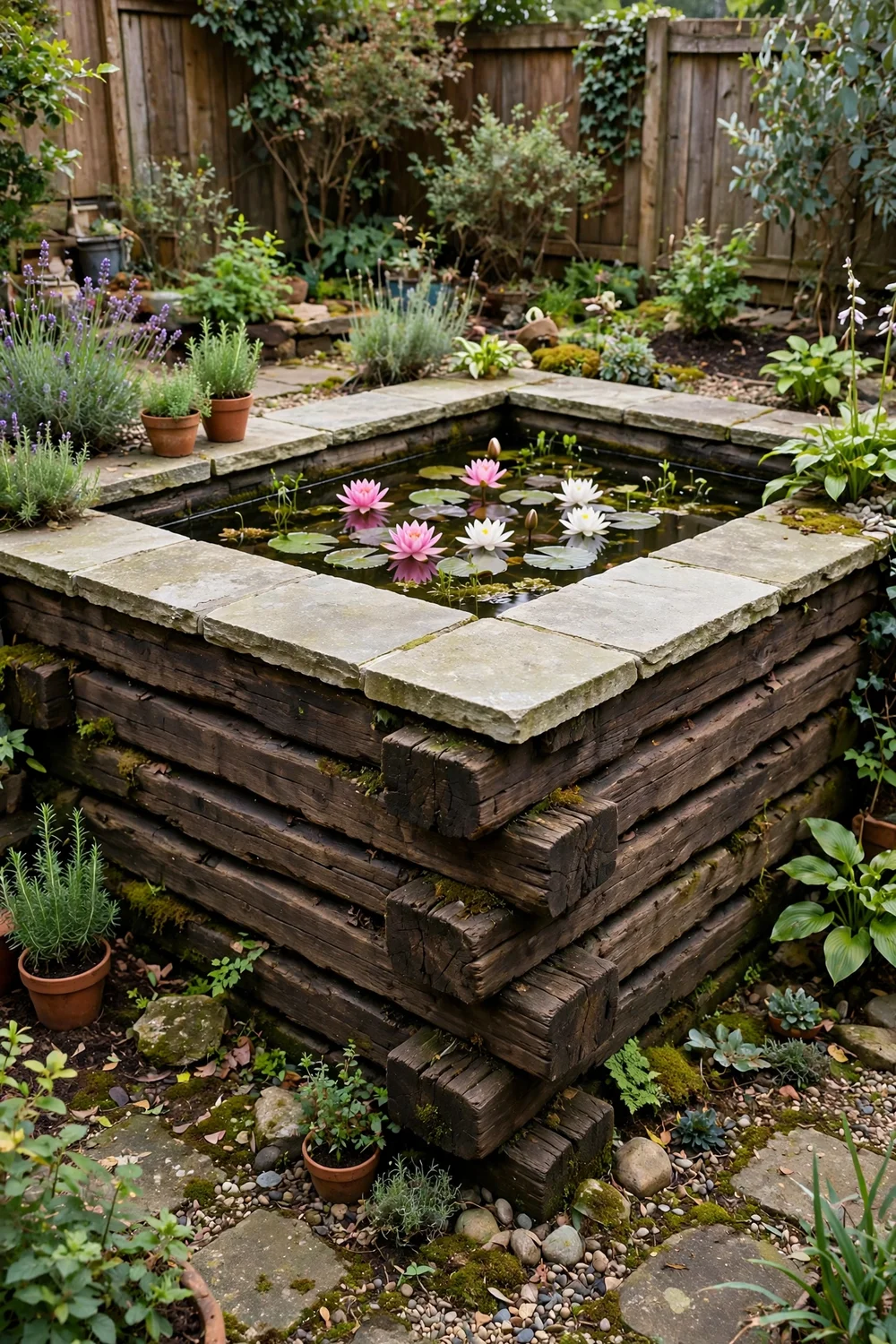
Stacked landscape timbers form a raised rectangular pond 18 to 24 inches deep, deep enough for a few goldfish, with a wide coping edge that doubles as seating. Line the inside with 45-mil EPDM liner, fold the corners neatly, and cap the top with flat stones. Because it sits above ground, there is no digging and maintenance is back-friendly. Screw the timbers together with timber screws and add a small pump for circulation.
Try this: build it 2 feet wide so you can reach the middle from either side.
Cost: $$$· Difficulty: moderate
6. Pondless waterfall
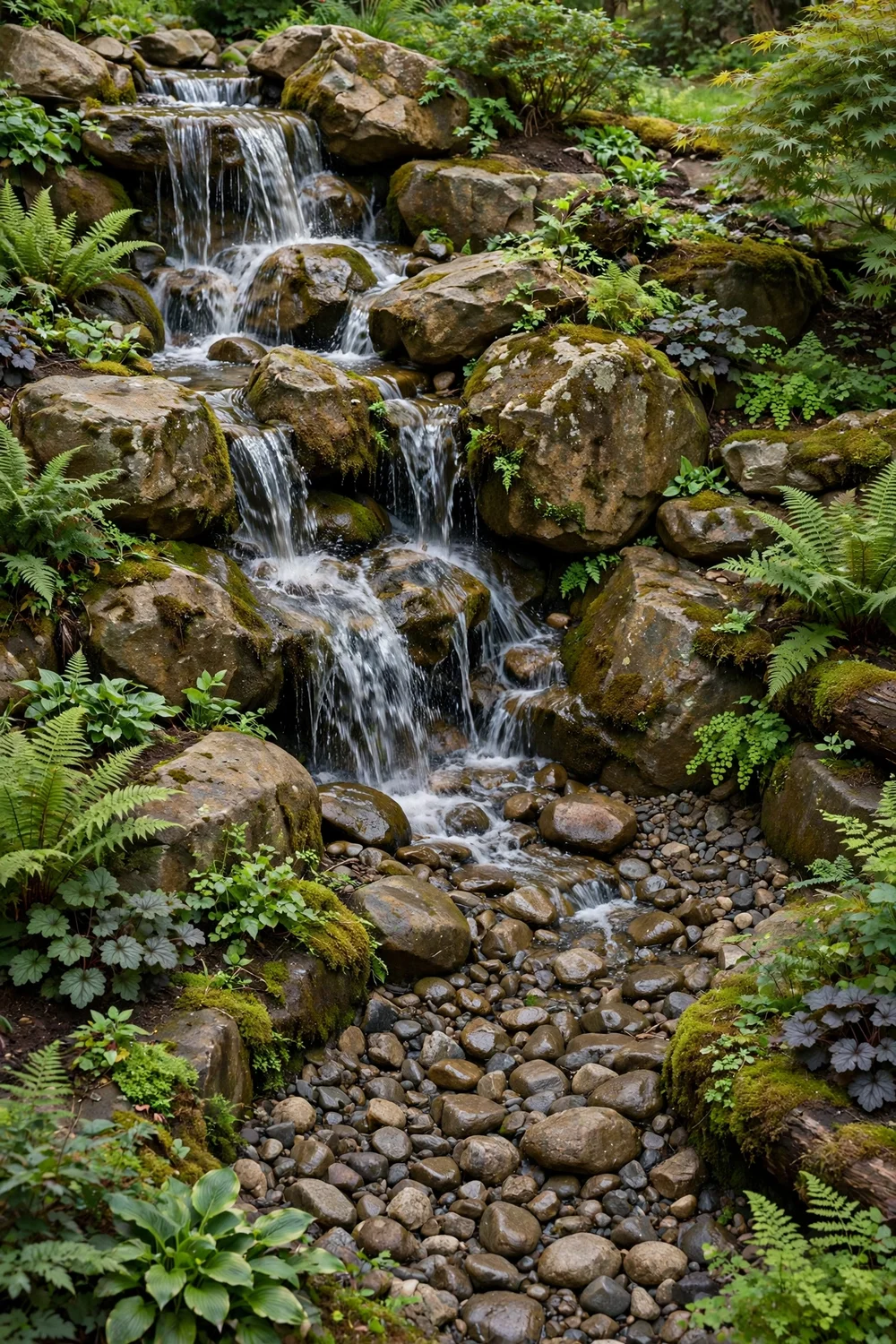
A pondless waterfall gives you the sound and movement of water with no open pool: water tumbles over boulders and vanishes into a bed of river rocks covering a hidden reservoir. A pump recirculates it from below. This is the safest option for households with toddlers or dogs, and it needs less maintenance than a real pond since there is no standing water to go green. Dig a 2-foot-deep pit for the reservoir basin and line it.
Try this: use 3 sizes of rock, large, medium, and gravel, for a natural look.
Cost: $$$· Difficulty: moderate to hard
7. Sunken preformed pond
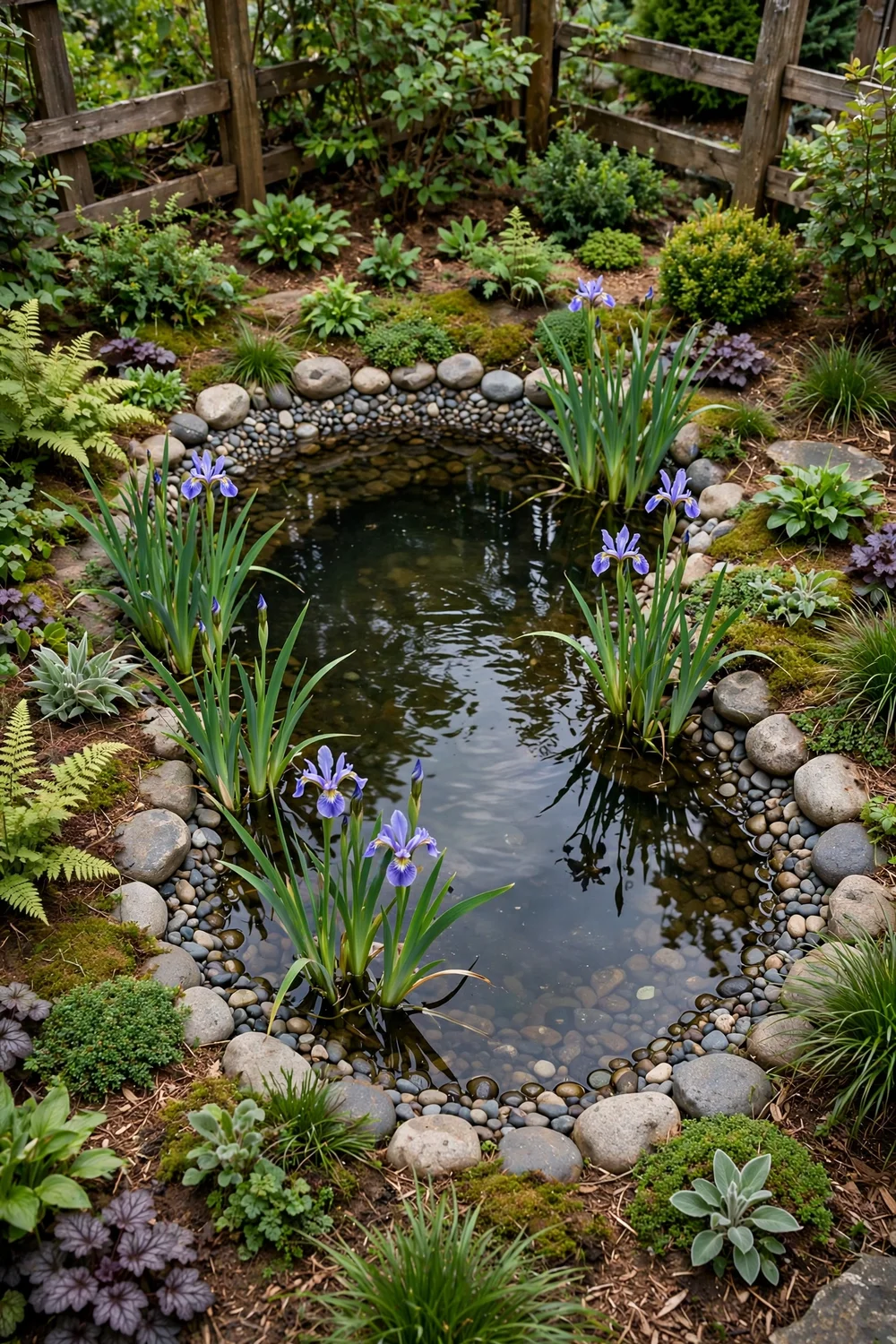
A preformed rigid pond shell, about 4 by 3 feet and 18 inches deep, is the simplest true in-ground pond. Mark the outline, dig 2 inches deeper than the shell, and bed it on sand so it sits perfectly level; an unlevel pond shows a liner edge on one side forever. Backfill around the shell with soil as you fill it with water to prevent bowing. Edge with pebbles and plant marginals like marsh marigold in the shallow shelf.
Try this: call 811 a few days before digging so utilities get marked first.
Cost: $$$· Difficulty: moderate
8. Tiered container cascade

Stack 3 large pots in descending sizes, run a small pump’s tubing up through the middle, and water spills from the top pot down through each level into the bottom reservoir. The whole feature fits in a 2-by-2-foot footprint on a patio or balcony. Use frost-proof pots if it stays out in winter, and hide the pump cord under the bottom pot. The gentle trickle sound is surprisingly soothing for such a small feature.
Try this: add a water lettuce rosette to the bottom pot to soften the look.
Cost: $$$· Difficulty: easy
Small pond ideas at a glance
How deep should a small pond be?
For plants alone, 12 inches of water is enough. If you want fish, go 18 to 24 inches deep with at least 50 gallons of volume; shallower ponds swing too hot in summer and freeze solid in winter, both of which kill fish. Koi are off the table for small ponds since they need 1,000 gallons or more, but feeder goldfish and mosquito fish do well. Texas A&M’s guide to water garden construction methods covers pumps, liners, and depth in more detail, and Oklahoma State’s low-management water garden fact sheet is a solid planning read.
Mistakes that ruin small ponds
The most common failure is no water movement. Stagnant small ponds turn green within weeks and breed mosquitoes; a $25 pump fixes both. Second, overstocking fish: two or three small goldfish per 50 gallons is plenty. Third, placing the pond under a tree, where leaves and roots foul the water and puncture liners. Fourth, using garden soil for aquatic plants instead of aquatic planting media, which clouds the water. Keep it simple and the pond mostly takes care of itself.
Safety: kids, electricity, and digging
Take three precautions before you build. First, any pond deeper than a few inches is a drowning risk for toddlers and pets. If small children visit, choose the pondless waterfall, fence the pond, or cover it with rigid mesh just under the surface. The federal Pool Safely campaign notes that drowning is fast and silent, and its layers-of-protection advice applies to ponds as well as pools. Second, plug every pump into a GFCI-protected outdoor outlet, and have an electrician add one if the circuit lacks it. Third, call 811 at call811.com a few days before any digging so buried utilities get marked.
More small garden ideas
A pond looks best as part of a designed corner, and these courtyard garden ideas show how to fit water, plants, and seating into tight spaces.
Place your pond where you will actually hear it. These garden nook seating ideas help you build a quiet spot right beside the water.
Rocks, pebbles, and edging make or break a small pond, and these rustic garden decor ideas give you natural materials that blend a pond into the landscape.
Frequently asked questions
How small is too small for a pond?
A 2-foot-wide container holding 10 to 15 gallons works fine for aquatic plants. For fish, treat 50 gallons and 18 inches of depth as the minimum. Anything smaller heats up too fast in summer and freezes solid in winter.
Do I need a filter or pump for a small pond?
A pump is strongly recommended. Moving water deters mosquitoes, adds oxygen, and keeps the water clearer. A filter matters most if you keep fish; a plant-only pond can run on a small circulation pump alone.
Will a small pond attract mosquitoes?
Only if the water sits still. A pump that ripples the surface stops mosquitoes from laying eggs, and fish eat any larvae that appear. For pump-free container ponds, drop in a mosquito dunk monthly; the Bti bacteria target larvae and are safe for pets, birds, and plants.
Can I keep fish in a small pond?
Yes, in ponds of 50 gallons or more and at least 18 inches deep. Feeder goldfish and mosquito fish are the best choices. Skip koi entirely; they need 1,000 gallons or more and will outgrow a small pond within a couple of years.
Do I need a permit for a garden pond?
Most cities do not require permits for small ornamental ponds, but check your HOA rules and local codes. Some areas require barriers around any open water deeper than 18 inches, and a few restrict pond size or placement near property lines.
How do I keep the water clear?
Shade about 60 percent of the surface with floating plants, circulate the water with a pump, avoid overfeeding fish, and remove fallen leaves promptly. Clear water follows from balance, not chemicals.
You do not need a big yard or a big budget to enjoy a pond. Pick the idea that fits your space, from a $60 bowl to a raised timber pond with seating, and you can have water in the garden this weekend. Our barrel pond took one Saturday afternoon, and the sound of that tiny waterfall still greets us every morning.


