


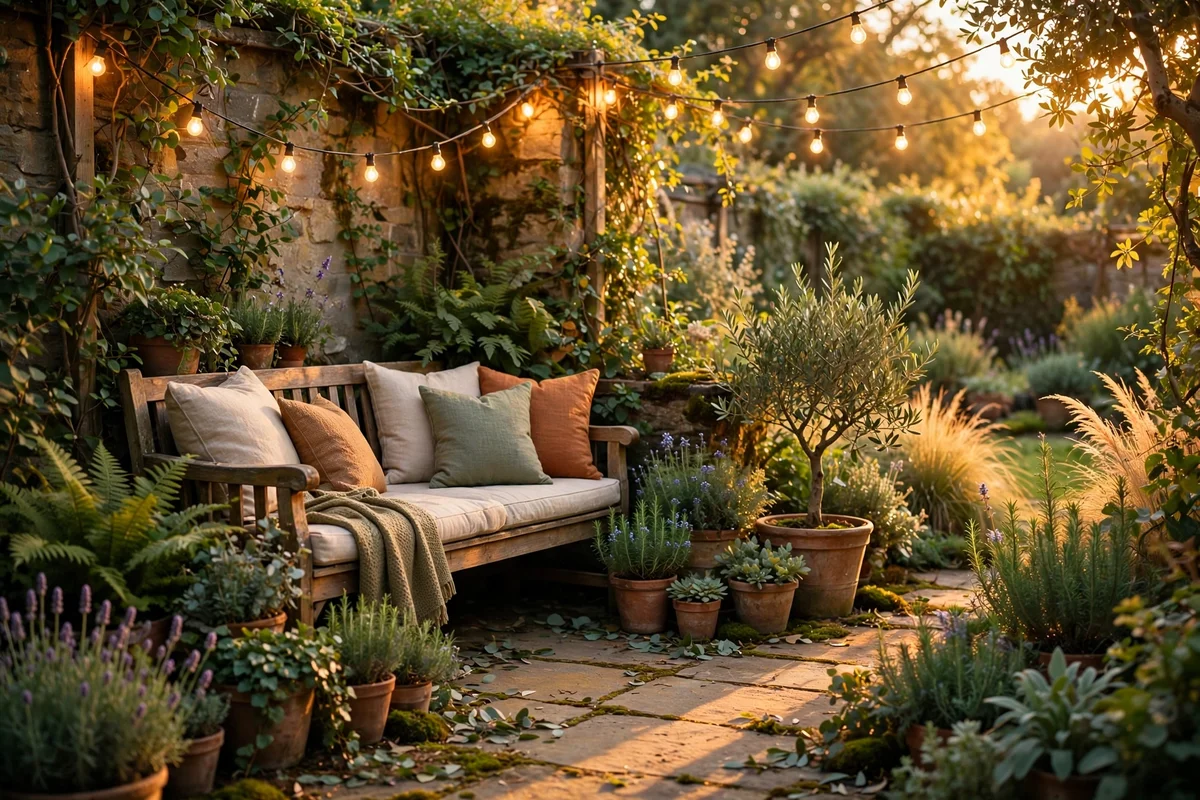
Every garden has one spot that feels better than the rest. Maybe it catches the morning sun, sits just out of the wind, or looks back at the house from the prettiest angle. Most of us walk past that spot for years without putting a chair in it.
This guide collects 25 garden nook seating ideas that turn overlooked corners into places you will actually use. You will find options for tiny patios and big backyards, sunny spots and shady ones, plus honest notes on cost and effort for each. I finally put a bench in the corner of our yard I had ignored for three years, and it became my favorite seat in the house within a week.
Quick takeaways
- Pick the nook location first: morning sun, afternoon shade, and a good view back toward the garden matter more than the furniture.
- Define the space with a rug, gravel pad, or low edging so it reads as a destination, not leftover lawn.
- Weather-resistant seating and quick-dry cushions cut maintenance to almost nothing.
- One light source, like solar string lights, makes a daytime nook usable after dark.
- Keep fire features at least 10 feet from structures and plants, and hang swings and hammocks only from sound, rated supports.
1. Rose-covered bench hideaway

Tuck a simple wooden bench against a fence and train a climbing rose over it for a nook that smells as good as it looks. Choose a repeat-blooming climber like ‘New Dawn’ or ‘Eden’ so you get flowers from June to frost rather than one spring flush. Give the rose a trellis or wires to grip, and prune lightly each February. A basic cedar bench costs $80 to $150, and a potted climbing rose runs $20 to $35.
Try this: face the bench toward your best garden view, not toward the fence, so you sit looking at flowers.
Cost: $$ | Difficulty: Easy
2. Hammock haven between trees

Two healthy trees about 12 to 15 feet apart are all you need for the most relaxing seat in the garden. Hang the hammock with wide tree straps, not rope or nails, to protect the bark, and set the hang so the hammock sits about 18 inches off the ground when weighted. A sturdy Brazilian-style cotton hammock costs $60 to $120. Bring fabric hammocks indoors over winter to double their life.
Try this: add a small side table, even a stump, within arm’s reach for a book and a drink.
Cost: $$ | Difficulty: Easy
3. Wicker loveseat tucked in a corner

A compact wicker loveseat turns an awkward L-shaped corner into a proper sitting spot for two. Look for all-weather resin wicker over an aluminum frame, which will not rust or unravel like natural rattan outdoors. A 48-inch loveseat fits corners as small as 5 by 5 feet and costs $200 to $400. Choose solution-dyed acrylic cushions so the fabric resists fading for several seasons.
Try this: anchor the corner with one tall planter behind the loveseat to make the nook feel enclosed.
Cost: $$$ | Difficulty: Easy
4. Bistro set for morning coffee

A two-chair bistro set is the classic small-space nook, and it earns its reputation. The 24-inch round table holds two mugs and a small pot of herbs with room to spare, and folding chairs tuck away when you need the space. Cast aluminum sets handle rain without rusting and cost $100 to $250. Place yours where the morning sun lands first to build a coffee ritual you will keep.
Try this: set the table on a 3-foot square of gravel or pavers so chair legs stop sinking into soil.
Cost: $$ | Difficulty: Easy
5. Hanging egg chair nook

A hanging egg chair on its own stand creates an instant cocoon, no trees or beams required. The stand models need about a 4-foot square footprint, so they fit patios and roomy balconies. Check the weight rating, most hold 250 to 350 pounds, and sit in it at the store if you can, because the recline angle varies a lot. Expect $150 to $300 for a stand chair with cushion.
Try this: drape a throw over one side to soften the rattan look and add evening warmth.
Cost: $$ | Difficulty: Easy
6. Curved stone bench in the border

A low curved stone bench set right inside a flower border puts you at bloom level, surrounded by color and scent. Dry-stack the bench from flat fieldstone or use a precast curved bench, which costs $150 to $300 and needs no mortar. Set it on a compacted gravel base so it stays level. This nook needs no cushions and shrugs off every season.
Try this: plant fragrant stock or lavender at both ends of the bench for scent at sitting height.
Cost: $$ | Difficulty: Easy to moderate
7. Adirondack pair around a fire bowl

Two Adirondack chairs angled toward a small fire bowl make the nook that gets used on chilly evenings. Polywood or recycled plastic Adirondacks cost $120 to $200 each and never need paint. Keep the fire bowl at least 10 feet from the house, fences, and overhanging branches, and place it on pavers or gravel, never directly on a wood deck. A basic steel fire bowl runs $60 to $120.
Try this: keep a lidded metal bucket of sand nearby as a simple way to douse the fire.
Cost: $$$ | Difficulty: Easy
8. Porch swing under a small pergola

A porch swing hung from a freestanding pergola brings front-porch charm to any corner of the yard. The pergola needs solid footings and a beam rated for the swing’s dynamic load, so use through-bolts, not screws, for the hangers. A 4-foot cedar swing costs $150 to $300, and a simple 8×8-foot pergola kit runs $400 to $800. Train a fast vine like clematis up the posts for shade within two seasons.
Try this: add cup-holder armrests to the swing for the full porch experience.
Cost: $$$ | Difficulty: Moderate
9. Outdoor daybed with canopy

A daybed with a fabric canopy is the closest thing to an outdoor bedroom, and it seats three for daytime lounging. Look for a rust-proof frame and a canopy rated for UV, and take the curtains in during storms so they do not turn into sails. Daybeds cost $300 to $600. This nook wants a sheltered corner, since wind is the enemy of canopy fabric.
Try this: use outdoor-rated sheer curtains so the canopy filters sun without blocking the breeze.
Cost: $$$ | Difficulty: Easy
10. Tree stump stool circle

Three or four tree stump stools around a small clearing make a woodland nook for almost nothing. Cut stumps 16 to 18 inches tall, level the tops, and sand them smooth; a coat of exterior wood sealer slows cracking. Ask a local tree service for fresh-cut rounds, which are often free. This is the easiest group seating on the list and kids love it.
Try this: top each stump with a round outdoor cushion in the same color for a pulled-together look.
Cost: $ | Difficulty: Easy
11. Built-in corner bench with storage

An L-shaped bench built into a fence corner seats four and hides garden clutter inside. Frame it from pressure-treated 2x4s, top it with cedar decking boards, and hinge the seat lids for storage of cushions and toys. A 6-foot L-bench costs $150 to $300 in materials and takes a weekend to build. Line the storage bays with landscape fabric to keep soil off stored items.
Try this: add a 2-inch foam pad cut to fit, covered in outdoor fabric, for comfort that stores inside.
Cost: $$ | Difficulty: Moderate
12. Vintage metal glider refresh

A secondhand metal glider, sanded and repainted, glides as smoothly as the day it was made. Check thrift stores and salvage yards; solid frames often sell for $30 to $80. Strip rust with a wire brush, prime with a rust-inhibiting metal primer, and finish with two coats of exterior enamel. New glider cushions cost $40 to $80 and transform the comfort completely.
Try this: paint it a soft garden color like sage or dusty blue instead of default white.
Cost: $ | Difficulty: Easy to moderate
13. Boho floor cushion corner

Layered outdoor floor cushions around a low table make a relaxed, lounge-style nook that packs away in minutes. Choose cushions with removable, washable covers in outdoor-rated fabric, and store them in a deck box when rain threatens. Four large floor cushions cost $80 to $160 total. A weatherproof rug underneath defines the space and keeps cushions off damp ground.
Try this: mix two patterns with one solid color so the corner looks styled, not random.
Cost: $$ | Difficulty: Easy
14. Reading chair under a flowering tree

One comfortable chair, one small table, one flowering tree: the simplest reading nook there is. Pick a chair with a high back and wide arms that hold a book and a mug, like a deep-seated Adirondack or a cushioned sling chair ($100 to $250). Site it where falling petals become a feature, not a mess, and add a solar path light so you can find it after dusk.
Try this: keep a small waterproof box on the table for the book you are currently reading.
Cost: $$ | Difficulty: Easy
15. Shed-side seating nook

The blank wall of a shed is free real estate for a nook. Set a bench or two chairs against it, hang a trellis for a climbing plant, and string solar lights overhead between the shed and a post. The wall blocks wind and gives the nook a sheltered, secret feel. A simple bench and trellis setup costs $120 to $250. Paint the shed wall a soft color first if it needs it; the backdrop makes the whole nook.
Try this: mount a small outdoor shelf on the shed wall as a drink ledge.
Cost: $$ | Difficulty: Easy
16. Balcony-scale folding nook

Narrow balconies get a nook too. Two folding bistro chairs and a hanging rail table use zero floor space when folded, and the setup costs $80 to $150. Choose a rail table rated for your railing width, and secure pots so wind cannot knock them over the edge. A vertical planter on the wall adds green without stealing floor space.
Try this: add an outdoor rug runner to make the narrow floor feel intentional.
Cost: $ | Difficulty: Easy
17. Water feature side bench

A bench beside even a tiny pond or bubbling fountain becomes a meditation spot. The sound of moving water masks street noise, which is the real luxury here. A small solar fountain kit costs $30 to $60 and needs no wiring; a preformed pond starts around $100 plus a pump. Site the bench so you look across the water, not down into it.
Try this: add one marginal plant like dwarf cattail to soften the pond edge near the bench.
Cost: $$ | Difficulty: Easy to moderate
18. Gravel patio nook with cafe chairs

A 6-by-6-foot square of pea gravel edged with steel landscape edging is the fastest patio you will ever build. It drains instantly, costs $100 to $200 in materials, and needs no concrete skills. Set two metal cafe chairs and a small table on top, and surround it with pots. Rake it level once a season and top up the gravel every couple of years.
Try this: lay landscape fabric under the gravel to stop weeds without chemicals.
Cost: $$ | Difficulty: Easy
19. Rustic log bench nook

A halved log on two stump legs makes a bench that looks like it grew there. Split a straight log 10 to 12 inches in diameter, flatten the top face, and set it 17 inches off the ground. Seal the end grain, where water enters fastest, with exterior wood sealer. If you buy the log milled, expect $100 to $200; a fallen tree on your own land costs nothing but labor.
Try this: char the legs lightly with a torch, an old Japanese technique, for extra rot resistance.
Cost: $ | Difficulty: Moderate
20. Corner sofa with outdoor rug

A sectional corner sofa plus a weatherproof rug reads as an outdoor living room, and it seats the whole family. Modular resin-wicker sectionals start around $600 and let you rearrange the pieces as the nook evolves. The rug, $60 to $120 for a 5×7, is what makes it feel like a room; choose polypropylene, which hoses clean. Weight the rug corners so wind does not flip them.
Try this: pull the sofa 6 inches off the fence so air circulates and cushions dry faster.
Cost: $$$$ | Difficulty: Easy
21. Tiered planter backdrop bench

Back a plain bench with a tiered planter stand and the nook gains a living wall of color. Three-tier wooden planters cost $60 to $120 and hold a surprising number of pots. Plant the top tier with trailers that spill down behind the bench, the middle with color, and the bottom with herbs you can pick while seated. Water the planters, not the bench, to protect the wood.
Try this: use self-watering inserts in the top tier so it does not dry out first.
Cost: $$ | Difficulty: Easy
22. Sunken fire pit nook

A shallow sunken circle with a curved wall bench around a fire bowl feels like a destination, even in a small yard. Dig down 12 to 18 inches, retain the edge with stone or block, and pave the floor with gravel for drainage. Keep the whole nook at least 10 feet from structures and check local burn rules first; some towns restrict wood fires. Budget $400 to $900 for a DIY build.
Try this: add a steel spark screen over the bowl to stop embers on breezy nights.
Cost: $$$ | Difficulty: Moderate to hard
23. Shade sail reading nook

A triangular shade sail turns a too-sunny corner into a cool reading spot in an afternoon. Sails cost $30 to $80; the real work is the anchors, which must be solid posts set in concrete or lag-bolted to the house, since wind loads are serious. Hang the sail with a slight tilt so rain runs off one corner. Pair it with a deep armchair and a side table for a nook you will use daily.
Try this: take the sail down before winter in snowy climates to protect the fabric.
Cost: $$ | Difficulty: Moderate
24. Repurposed church pew bench

A salvaged church pew brings instant history and seats three in a narrow footprint. Architectural salvage yards sell them for $100 to $300 depending on length and condition. Sand lightly, seal with marine-grade spar varnish, and put the pew on pavers, not soil, so the legs stay dry. The high back makes it one of the most comfortable straight benches you will sit on.
Try this: add two flat cushions instead of one long pad so they stay put and wash easily.
Cost: $$ | Difficulty: Easy
25. String-light courtyard nook

When the furniture is simple, the lighting does the decorating. Drape warm-white string lights overhead in a catenary swag between two anchor points, and a pair of basic chairs becomes the prettiest spot in the yard after dark. Solar string lights cost $15 to $30 per strand and need no outlet; for plug-in strands, use outdoor-rated lights on a GFCI-protected circuit installed by a licensed electrician. This nook costs almost nothing and photographs beautifully.
Try this: choose 2700K warm white bulbs; cool white reads harsh in a garden.
Cost: $ | Difficulty: Easy
Nook styles compared
Match the nook to the space you actually have.
How to choose your nook spot
Walk your yard at three times of day before you place a single chair. Morning people want the east side; evening sitters want the west. Note where the wind comes from and which corner stays driest after rain. The University of Minnesota Extension yard and garden guides have solid advice on reading sun and drainage in a home landscape.
Then check the view in both directions: what you look at, and what the nook looks like from the house, since you will see it from the window all winter. If your whole yard needs a style direction first, these easy cottagecore backyard ideas help a nook feel part of a bigger plan. For a wilder, collected feel, these rustic garden decor ideas pair well with log benches and stump stools.
Mistakes to avoid
The classic mistake is buying furniture before choosing the spot, then shoehorning chairs where they do not fit. Measure first, buy second. The second mistake is skipping a ground surface: chairs sink into soil, wobble on grass, and kill the lawn underneath. A gravel pad, a few pavers, or an outdoor rug solves it for very little money.
Do not forget the sun’s path across seasons. A nook that is perfect in May can be brutal by August, so plan for a shade sail, an umbrella, or a fast-growing vine from the start. And if fire is part of the plan, read these 4 easy steps to DIY fire pit landscaping before you dig or build.
Nook safety basics
Most nook projects are low risk, but a few deserve respect. Hang hammocks, swings, and hanging chairs only from healthy limbs at least 8 inches in diameter or from stands and beams rated for the load; a dead branch is not a support. Keep fire bowls and pits at least 10 feet from the house, fences, sheds, and overhanging branches, and check local burn rules before the first fire.
For lighting, solar strings are the easy DIY route. Anything plug-in outdoors should be outdoor-rated and on a GFCI-protected circuit, and new outdoor circuits belong to a licensed electrician. If you want lighting that is kind to the night sky as well as your eyes, the DarkSky International site explains warm, shielded outdoor lighting that cuts glare.
Frequently asked questions
Where is the best place for a garden seating nook?
Look for a spot with the sun exposure you prefer at the time of day you will sit there, some wind protection, and a pleasant view. Corners near fences, sheds, or large shrubs naturally feel enclosed and private.
How do I make a small garden nook feel bigger?
Keep furniture scaled to the space, use a light-colored rug or gravel to define it, and add one vertical element like a tall planter or trellis. A mirror on a fence can double the sense of depth.
What seating lasts longest outdoors?
Resin wicker over aluminum, recycled plastic lumber, and powder-coated metal last longest with the least care. Natural wood lasts well too if you reseal it yearly and keep it off wet soil.
How do I keep nook cushions from getting ruined?
Choose solution-dyed acrylic fabrics, bring cushions into a deck box during heavy rain, and stand them on edge after storms so they drain. Never leave non-outdoor cushions outside overnight.
Can I put a seating nook on grass?
You can, but chair legs sink and kill the grass underneath. A small gravel pad, a few pavers, or a section of outdoor rug gives you a stable, dry surface for very little money.
What is the cheapest way to create a garden nook?
Stump stools or a secondhand bench, a gravel or mulch pad, and a strand of solar string lights can build a charming nook for under $100 total.
Conclusion
A garden nook does not need much: a good spot, a comfortable seat, and one thoughtful detail like lighting or scent. Start with the corner you already love, keep the build simple, and you will wonder why you waited so long to sit in your own garden.
For a lazier kind of nook seating, try these hammock ideas for the backyard.


