



My vegetable garden used to shut down in October. I pulled everything, spread mulch, and waited for spring. Then a neighbor showed me her January kale, standing green under a thin row cover, and I realized I had been skipping a whole season. Winter vegetables are not a gamble; they are a different set of crops with their own timing.
These 15 winter vegetable ideas cover what to grow, when to plant it, and how to protect it through the cold. Each idea is one crop with real timing, spacing, and harvest guidance, plus a cost and difficulty label. Most need nothing more than mulch and a simple row cover.
Quick takeaways
- Plant winter vegetables 6 to 10 weeks before your first fall frost so roots establish.
- Kale, spinach, carrots, leeks, and garlic are the most reliable winter crops across zones.
- A simple floating row cover adds about 4 degrees of frost protection and costs under $15.
- Cold sweetens many crops; kale and carrots taste better after a frost.
- Wash all winter harvests well and keep fresh manure away from edible beds.
1. Kale that sweetens after frost

Kale is the backbone of winter vegetable gardening. Plant it in late summer, 6 to 8 weeks before first frost, spacing plants 12 to 18 inches apart. It survives temperatures well below freezing, and its flavor genuinely improves after frost converts starches to sugars. Harvest outer leaves from the bottom up, leaving the central growing point; one planting feeds you from October into March. Varieties like Winterbor and Red Russian are bred for cold.
Try this: cover with a floating row cover when nights drop below 15°F to keep leaves tender for picking.
Cost: $ · Difficulty: Easy
2. Spinach under row cover

Spinach overwinters as small plants and then explodes with growth in late winter. Sow in early fall, 4 to 6 weeks before first frost, in rows 12 inches apart. It stops growing below about 28°F but revives when days lengthen. A low tunnel of row cover fabric keeps it harvestable through most winters in zones 6 and up. Pick outer leaves and the plant keeps producing for months.
Try this: sow a second patch in late October under cover for an early-spring cut while the first patch rests.
Cost: $ · Difficulty: Easy
3. Carrots stored in the ground
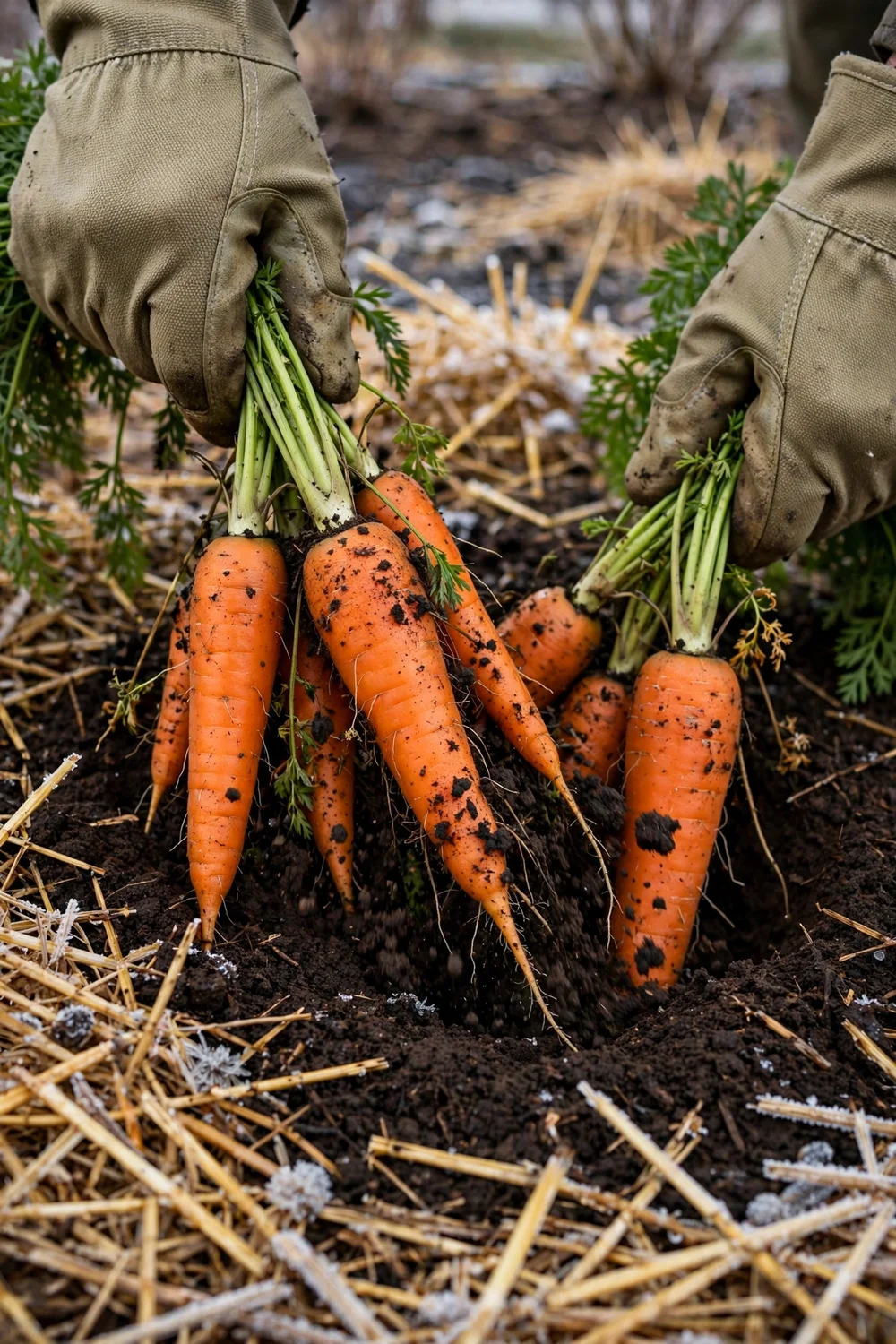
Carrots planted in midsummer size up by fall and then simply wait in the ground. Mulch the bed 6 inches deep with straw once the soil cools, and dig roots as needed all winter; cold converts their starches to sugar, so January carrots taste sweeter than October ones. Use a digging fork, not a trowel, to avoid snapping roots in cold soil. Raised beds drain better and make winter digging easier.
Try this: mark the row ends with tall stakes before the mulch goes on, or you will lose the row under snow.
Cost: $ · Difficulty: Easy
4. Garlic planted in fall

Garlic is the ultimate plant-it-and-forget-it winter crop. Push individual cloves 2 inches deep and 6 inches apart in October, pointy end up, then mulch 4 inches deep with straw. The cloves root in fall, sleep through winter, and resume in spring for a July harvest. Hardneck varieties suit cold zones; softneck suits mild ones. One $8 bag of seed garlic plants a 4 by 8 foot bed.
Try this: buy seed garlic from a garden supplier, not the grocery store, which may carry disease or the wrong type for your zone.
Cost: $ · Difficulty: Easy
5. Leeks for the deep winter harvest

Leeks tolerate cold that kills lesser alliums. Start seeds indoors in spring or buy transplants, setting them 6 inches apart in a trench 6 inches deep; fill the trench gradually as they grow to blanch the shafts white. By winter the thick stems stand through snow. Harvest by loosening with a fork anytime from November to March. They sweeten in the cold like kale does.
Try this: hill soil or mulch around the shafts in fall for longer white sections.
Cost: $ · Difficulty: Moderate
6. Swiss chard that keeps giving
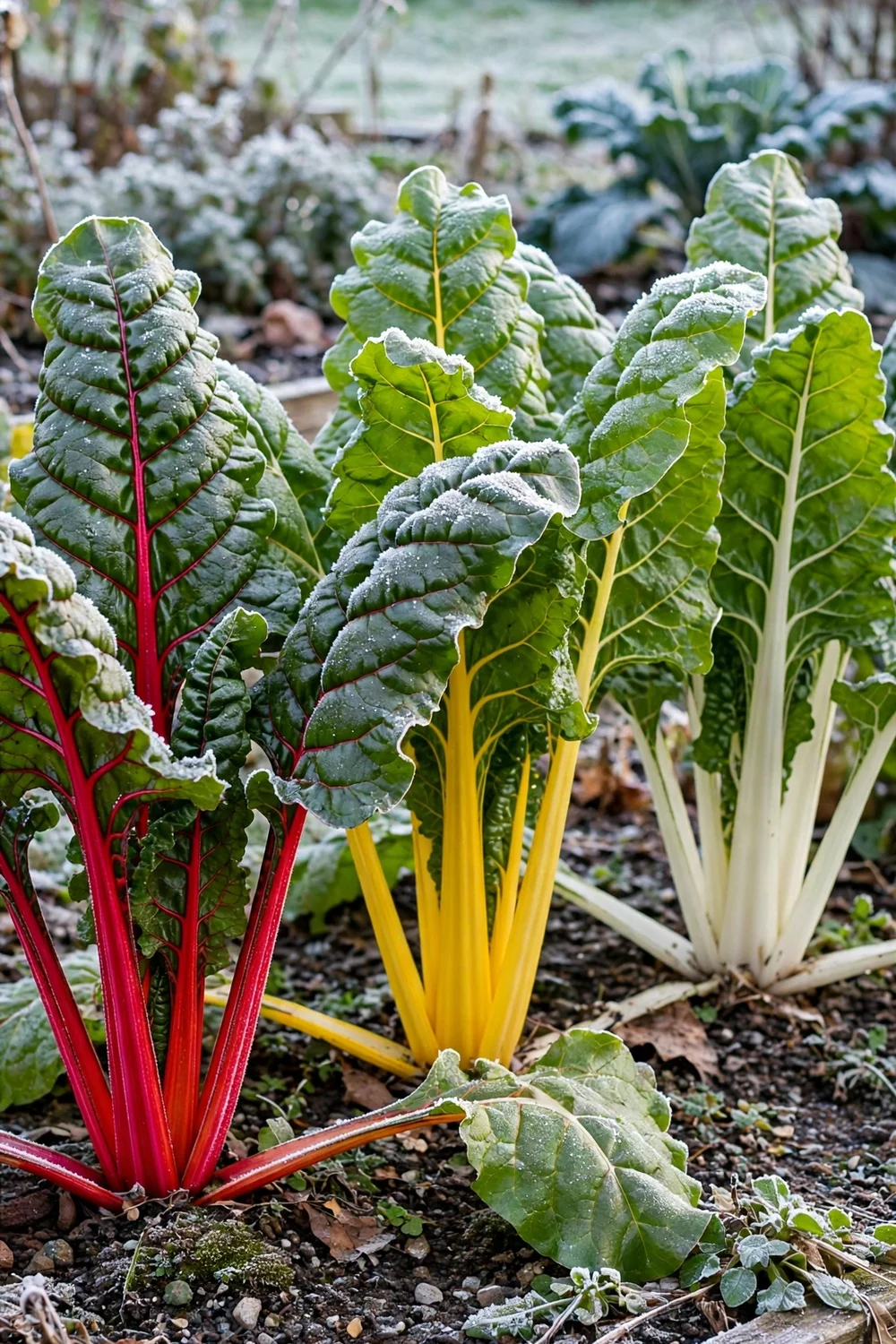
Swiss chard bridges fall and winter with colorful stems in red, yellow, and white. Sow in midsummer for fall harvests that continue until hard freezes; with row cover it survives into winter in zones 7 and up. Harvest outer stems at the base and the center keeps producing. It also ornamental enough for the flower border, which matters when the vegetable garden is the only green left.
Try this: the variety Bright Lights gives the full stem-color range from one seed packet.
Cost: $ · Difficulty: Easy
7. Brussels sprouts sweetened by frost

Brussels sprouts need a long season, so start them in early summer, but the payoff is a winter harvest. The sprouts sweeten after frost, so wait until November or later to pick. Remove the top of the stalk in early fall to push energy into the sprouts, and snap off yellowing lower leaves. Space stalks 24 inches apart; they grow 2 to 3 feet tall and appreciate staking in windy sites.
Try this: harvest from the bottom of the stalk upward; the lowest sprouts mature first.
Cost: $ · Difficulty: Moderate
8. Cabbage heads for winter storage

Late cabbage varieties form dense heads that hold in the garden for weeks in cold weather. Transplant in midsummer, spacing 18 inches apart in rich soil; cabbage is a heavy feeder, so work compost in at planting. Harvest before the ground freezes solid, or protect heads with a thick straw mulch and cut as needed. A 10-foot row of storage cabbage can fill a winter’s worth of slaws and soups.
Try this: choose late varieties listed as storage types; early summer cabbages split in fall rains.
Cost: $ · Difficulty: Easy
9. Radishes for the fastest harvest

Radishes go from seed to harvest in 25 to 30 days, making them the fastest winter crop. Sow in early fall in loose soil, thinning to 2 inches apart. They prefer cool weather and turn woody in heat, so fall is their season. Sow a short row every two weeks for a continuous supply. Pull them young; oversized radishes get pithy.
Try this: French Breakfast types stay crisp longer in the ground than round red types.
Cost: $ · Difficulty: Easy
10. Turnips for roots and greens

Turnips give two harvests: the roots and the greens. Sow in late summer, thinning to 4 inches apart. Pull roots when they reach 2 to 3 inches across; larger ones turn woody. The tops cook like collards. Mulch heavily in late fall and roots keep in the ground for weeks. Hakurei types are sweet enough to eat raw.
Try this: harvest greens lightly and the roots keep sizing up; strip the plant bare and both stop.
Cost: $ · Difficulty: Easy
11. Arugula for cut-and-come-again salads
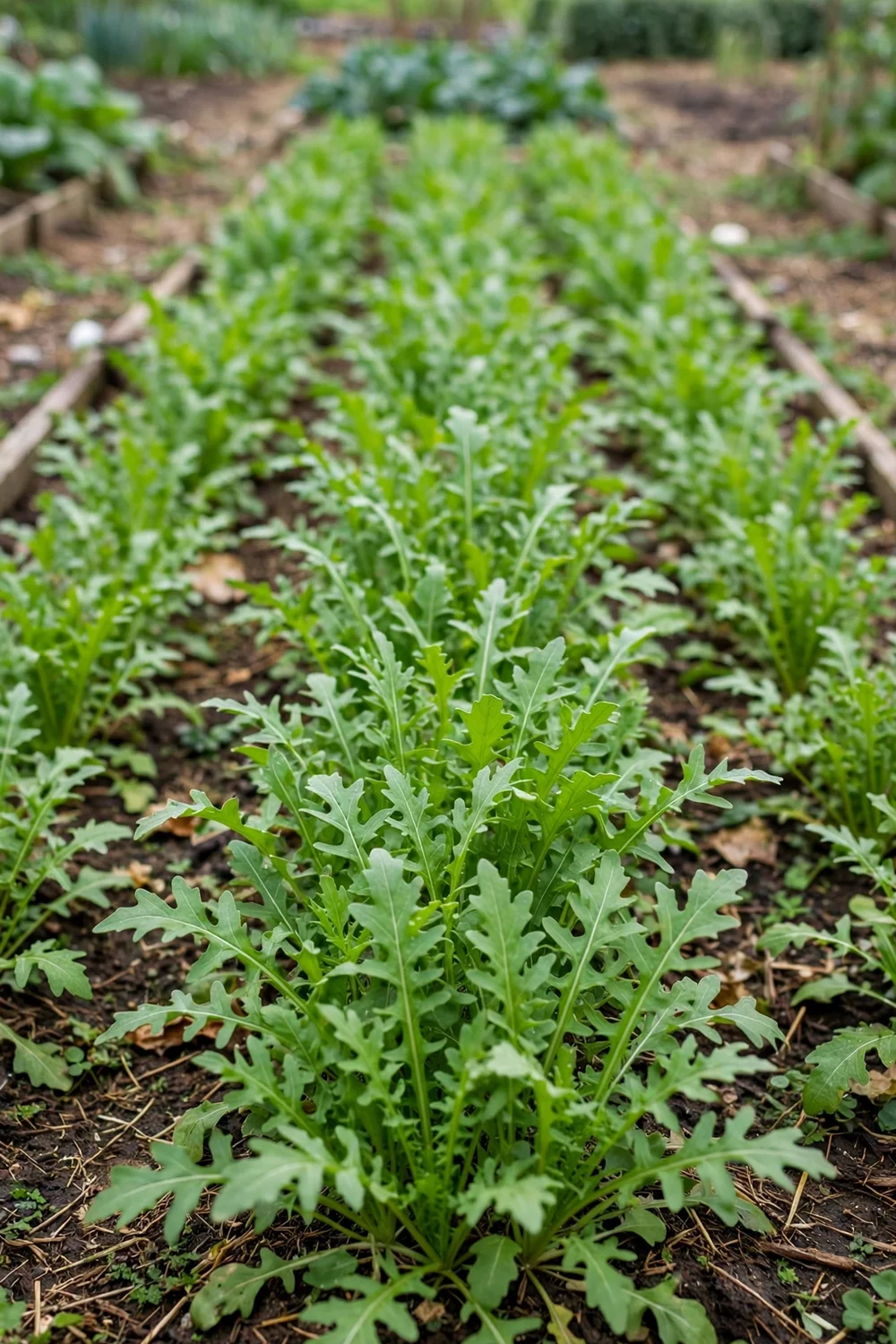
Arugula thrives in cool weather and sulks in summer heat, so fall is its prime time. Sow thickly in early fall and cut outer leaves when they reach 3 to 4 inches; the centers regrow for repeated harvests. A simple row cover extends picking into winter in most zones. Its peppery bite intensifies in cold weather.
Try this: sow a 2-foot row every 3 weeks from September for salads into December.
Cost: $ · Difficulty: Easy
12. Mache, the hardiest salad green
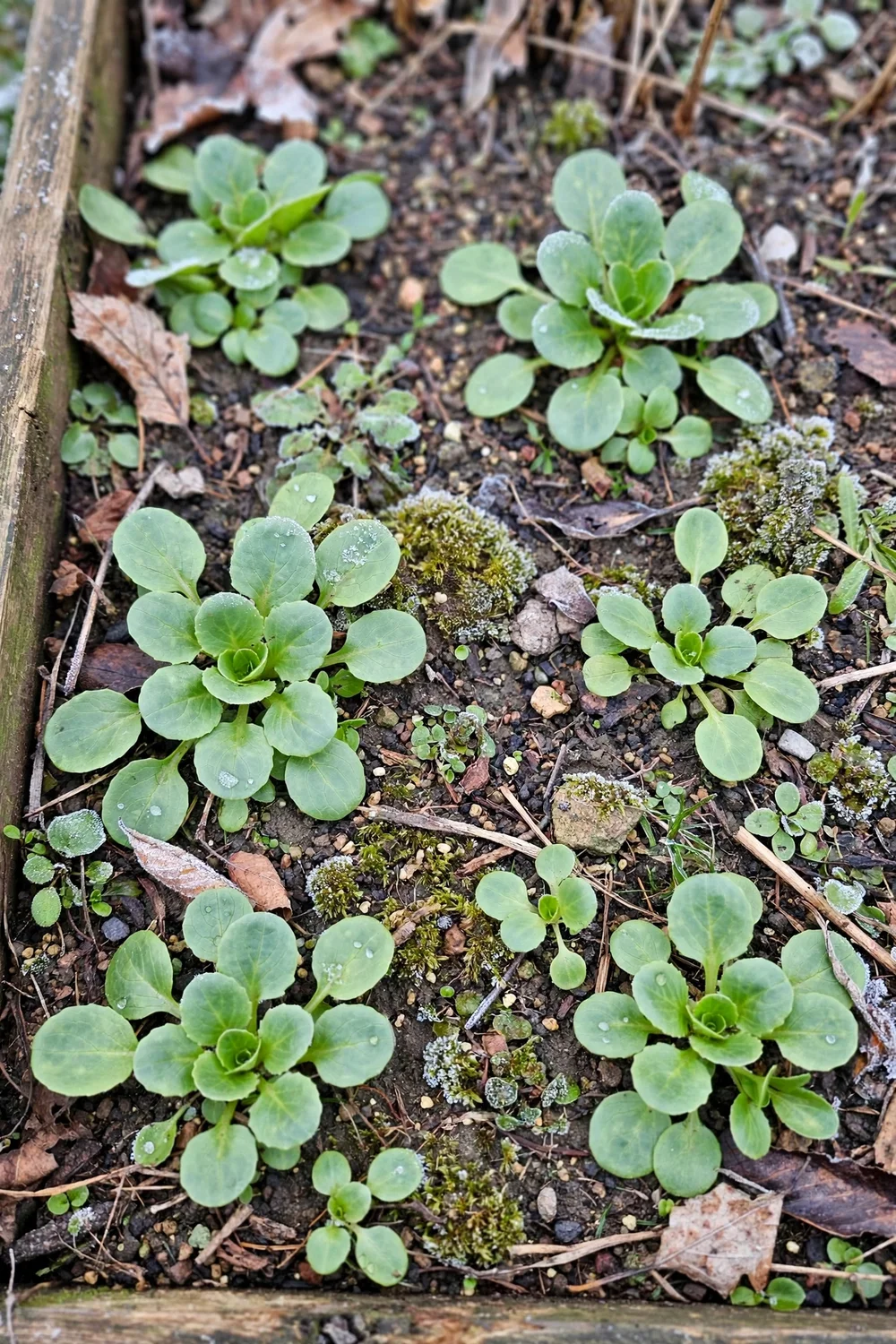
Mache (corn salad) survives temperatures that kill lettuce outright. Sow in early fall in a sheltered bed; the small rosettes sit low and dodge wind. It grows slowly through winter and then produces generously in late winter and early spring, exactly when you crave fresh greens. The mild, nutty leaves need no dressing up.
Try this: let a few plants go to seed in spring; mache self-sows and returns yearly.
Cost: $ · Difficulty: Easy
13. Claytonia for late-winter greens

Claytonia (miner’s lettuce) stays tiny through deep winter, then grows fast as days lengthen. Sow in fall under a cold frame or low tunnel; it tolerates hard freezes under cover. The round, mild leaves make excellent early-spring salads weeks before anything else is ready. It self-sows freely once established.
Try this: plant it at the edge of the cold frame where you can reach it without opening the whole cover.
Cost: $ · Difficulty: Easy
14. Overwintering onions for spring

Overwintering onions are planted in fall for an early-summer harvest, months ahead of spring-planted sets. Set transplants or sets 4 inches apart in October and mulch heavily. They sit dormant through winter and surge in March. Choose varieties bred for overwintering (listed as such in catalogs); standard storage onions often bolt instead of bulbing.
Try this: in zones 6 and below, add a row cover over the mulch for insurance against bare-ground freezes.
Cost: $ · Difficulty: Moderate
15. Parsnips, the patient crop
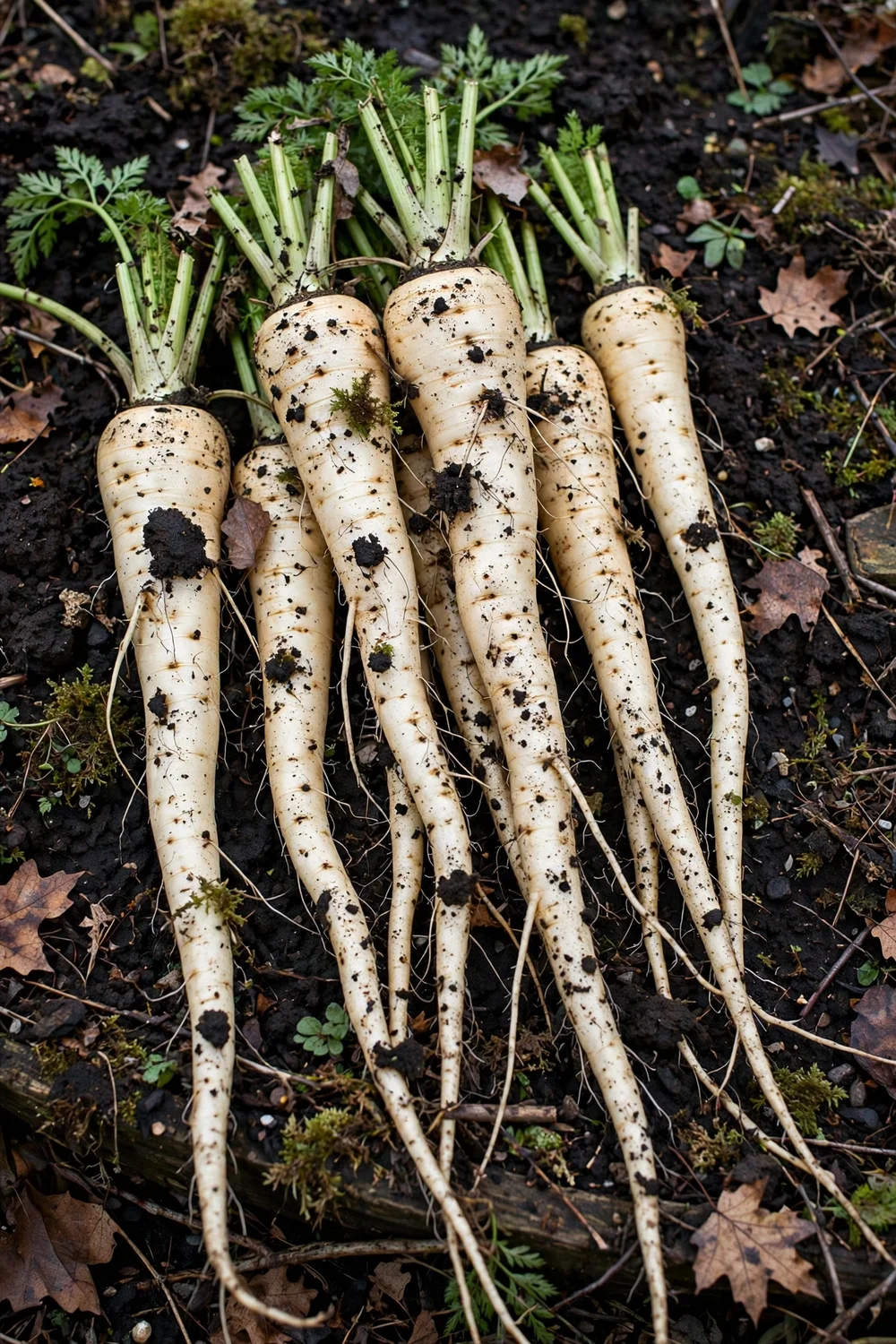
Parsnips demand patience: sow in spring, harvest after frost. The roots need a full season to size up, but frost converts their starches to sugar, making them one of the sweetest winter vegetables. Leave them in the ground under mulch and dig through winter. Mark the row well; the ferny tops die back and the row vanishes under mulch.
Try this: soak seeds overnight before sowing; parsnip seed germinates slowly and unevenly.
Cost: $ · Difficulty: Moderate
Winter vegetable timing at a glance
Use this table to plan planting dates relative to your first fall frost.
| Vegetable | Plant | Harvest | Cold notes |
|---|---|---|---|
| Kale | 6 to 8 weeks before frost | Oct to Mar | Survives deep freezes; sweetens |
| Spinach | 4 to 6 weeks before frost | Fall; again late winter | Needs cover below 28°F |
| Carrots | 10 to 12 weeks before frost | Fall through winter | Mulch 6 inches; dig as needed |
| Garlic | October | July | Needs winter chill to bulb |
| Leeks | Spring transplant | Nov to Mar | Stands through snow |
| Radishes | Early fall, succession | 25 to 30 days | Cool weather only |
| Mache | Early fall | Late winter to spring | Hardier than lettuce |
How to time your winter vegetable planting
Count backward from your average first fall frost date, which you can find through your local extension service or the USDA Plant Hardiness Zone Map resources. Most winter vegetables need 6 to 10 weeks of growth before hard cold arrives; they do not grow much once daylight drops below 10 hours a day. Planting too late is the number one reason winter gardens fail. When in doubt, plant two weeks earlier than you think necessary.
Prepare beds in late summer: clear spent crops, work in 2 inches of compost, and check drainage. Soggy winter soil rots roots faster than cold kills tops. Raised beds or mounded rows pay off in wet climates. Clemson Extension’s fall and winter vegetables guide walks through soil prep, mulching, and variety notes in detail.
Protection: row covers, cold frames, and mulch
You do not need a greenhouse. A floating row cover (lightweight fabric draped over hoops or directly on plants) adds about 4 degrees of frost protection and costs under $15 for a 10 by 20 foot piece. A simple cold frame, even one made from straw bales topped with an old window, keeps greens harvestable through hard freezes. Straw mulch 4 to 6 inches deep protects root crops in the ground.
Vent covers on sunny days; trapped heat followed by a hard freeze damages plants more than steady cold. Water before a freeze if soil is dry, since moist soil holds heat better than dry soil. Remove snow loads from low tunnels so the fabric does not collapse onto the plants.
Food safety for winter harvests
Food safety note: wash all winter vegetables thoroughly before eating, since soil splashes onto low-growing leaves in winter rain. Never apply fresh manure to beds within 120 days of harvest; use finished compost instead. If you garden in an urban lot with unknown history, get a soil test for lead through your local extension service before growing food crops.
For help choosing what grows in your soil type, see the best plants for clay soil with poor drainage. If you grow berries near your vegetable beds, the best strawberry companion plants guide covers pairings that share bed space well. And to support vining crops, these recycled garden trellis ideas keep plants off damp winter soil.
Frequently asked questions
What is the easiest winter vegetable to grow?
Kale. Plant it in late summer, mulch it in fall, and harvest outer leaves from October into March with almost no care. Garlic is equally easy: plant cloves in October and ignore them until July. Both tolerate neglect that would kill fussier crops.
When should I plant winter vegetables?
Most winter vegetables go in 6 to 10 weeks before your first fall frost, typically August through September in most zones. Garlic is the exception, planted in October. Planting too late is the most common failure; crops need time to establish roots before daylight drops below 10 hours a day.
Do I need a greenhouse to grow vegetables in winter?
No. Hardy crops like kale, spinach, carrots, and leeks grow outdoors with only mulch and a floating row cover for protection. A simple cold frame extends the range further. Greenhouses help with tender crops but are not required for the vegetables on this list.
Why do vegetables taste better after frost?
Cold triggers many vegetables to convert starches into sugars, which act as a natural antifreeze in their cells. Kale, carrots, parsnips, and Brussels sprouts all taste noticeably sweeter after a frost or two. This is a real, documented plant response, not folklore.
Can I grow winter vegetables in containers?
Yes. Kale, spinach, arugula, radishes, and garlic all grow well in deep containers (12 inches or more). Use frost-proof pots, cluster them near the house wall for warmth, and mulch the surface. Containers freeze harder than ground soil, so choose crops hardy to at least one zone colder than yours.
Is it safe to eat vegetables grown in winter soil?
Yes, with normal precautions. Wash all produce thoroughly, use finished compost rather than fresh manure, and keep pets out of edible beds. In urban gardens with unknown soil history, test for lead through your local extension service before planting food crops.
Start with kale and garlic this year. They ask almost nothing and teach you the rhythm of winter growing: plant early, mulch well, and let the cold do the sweetening. By March, when the seed catalogs arrive, you will already be harvesting.


