



Store-bought strawberries look perfect and taste like damp cardboard. Homegrown berries taste like the idea of a strawberry, but most people assume they need a big garden to grow them. They do not. Strawberries are shallow-rooted, compact, and happy in containers of all kinds.
These 11 DIY strawberry planter ideas turn pallets, gutters, barrels, and baskets into berry factories for balconies, patios, and small yards. Most cost under $40, every one keeps fruit off the soil where rot and slugs find it, and day-neutral varieties will fruit from June until frost in a single planter.
- Strawberries need at least 6 hours of direct sun and about 1 inch of water per week, per University of Minnesota Extension.
- Keep the crown at soil level when planting. Buried crowns rot and exposed crowns dry out.
- Vertical planters save the most space: a 4-foot PVC tower holds as many plants as a 4×4 raised bed.
- Only use heat-treated pallets (marked HT). Chemically treated wood can leach into soil.
- Pinch off flowers for the first few weeks after planting so plants build strong roots before fruiting.
1. Vertical pallet planter

Stand a heat-treated pallet upright, staple landscape fabric across the back and bottom to form pockets, and fill each slat row with potting mix. Tuck strawberry plants between the slats and water from the top so moisture trickles down through every level. One pallet holds 20 to 30 plants in about 6 square feet of floor space. Lean it against a sunny fence or wall at a slight angle, and secure the top so wind cannot push it over.
Try this: plant the top row with trailing alpine strawberries that cascade over the edge as they fruit.
Cost: $$. Difficulty: Easy, one hour.
2. Tiered pyramid boxes

Three square boxes in decreasing sizes, stacked like a wedding cake, give every plant its own sunny edge. Build the boxes from rot-resistant lumber, line them with landscape fabric, and fill each tier with potting mix. Plant around the outer edges of every level so berries hang over the sides instead of sitting on soil. A 3-tier pyramid holds 24 to 30 plants and harvests at waist height, which saves your back.
Try this: leave a hollow center column and drop a perforated PVC pipe down it for deep watering to every tier at once.
Cost: $$. Difficulty: Moderate, half a day.
3. PVC pipe strawberry tower

A 4-inch PVC pipe, 4 to 5 feet tall, becomes a vertical berry tower. Cut 2-inch planting holes in staggered rows, cap the bottom, fill with potting mix, and tuck a plant into each hole. Water from the top and it filters down to every level. The tower holds 15 to 20 plants in one square foot of patio, which makes it the densest planter on this list. Anchor it to a wall or drive a stake beside it, because a full tower is top-heavy.
Try this: run a drip emitter into the top of the pipe on a timer so the tower waters itself in July heat.
Cost: $$. Difficulty: Easy to moderate, one hour.
4. Hanging basket berries

Strawberries were made for hanging baskets: the fruit dangles over the edge, stays clean, and ripens evenly in the sun. Use a wide, shallow basket lined with coconut coir, fill with potting mix, and plant around the edges and top. Hang where the basket gets morning sun and afternoon shade in hot climates, because baskets dry out fast. Water daily in summer, since a hanging basket can go from moist to bone-dry in one hot afternoon.
Try this: hang baskets at different heights along a porch beam for a curtain of berries.
Cost: $$. Difficulty: Easy, 20 minutes.
5. Gutter garden on the fence
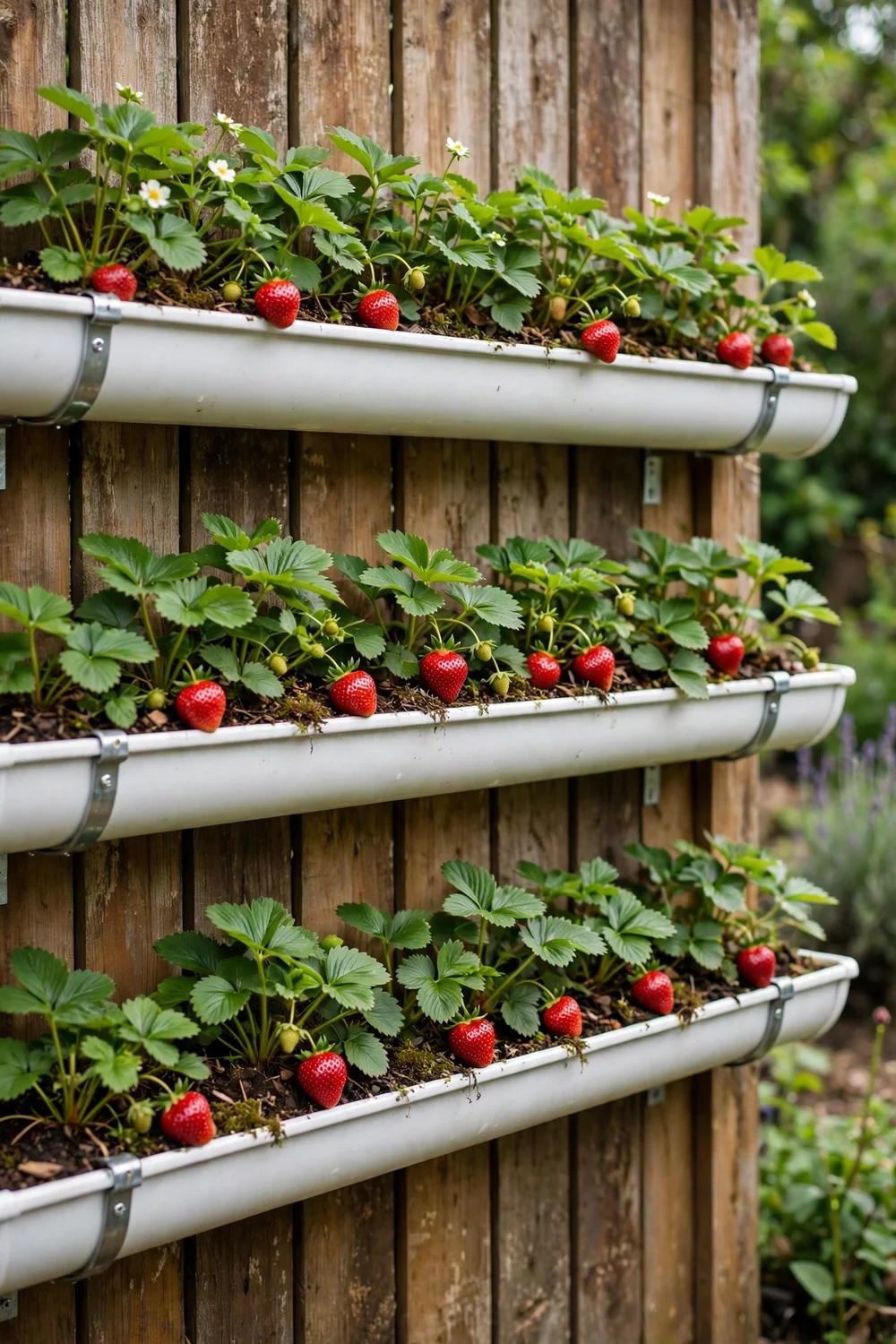
Old rain gutters screwed horizontally to a fence make shallow strawberry troughs at perfect picking height. Drill drainage holes every 6 inches, cap the ends, fill with potting mix, and plant in a row. Gutters are shallow, so this suits alpine and day-neutral varieties with smaller root systems. Mount the brackets into fence posts or studs, because wet soil is heavy: a 10-foot gutter holds over 50 pounds.
Try this: run two or three gutters in vertical rows 18 inches apart for a full fence of berries.
Cost: $$. Difficulty: Easy, one hour.
6. Classic strawberry tower pots

Stackable strawberry pots with side pockets are sold everywhere for a reason: they work. Stack three to five pots, fill the center column with soil, and tuck plants into every side pocket and the top. The pockets keep each plant’s roots separate, which reduces competition. These dry out faster than any other planter here, so check moisture daily and consider a self-watering insert for the center.
Try this: rotate the tower a quarter turn every few days so every side gets equal sun.
Cost: $$. Difficulty: Easy, 30 minutes.
7. 4×4 raised bed
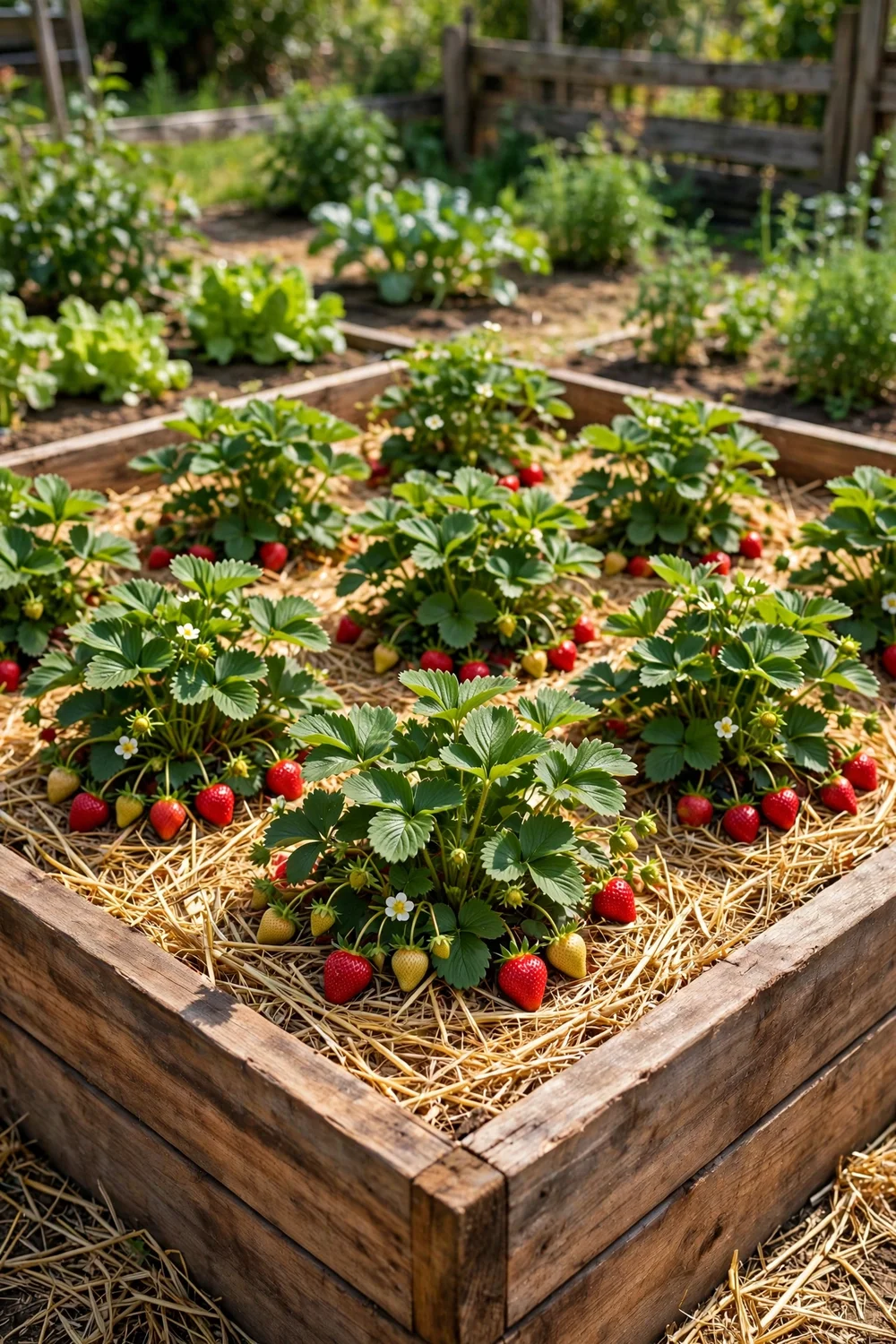
A simple 4-by-4-foot raised bed, 8 to 12 inches deep, is the highest-yield option on this list. Fill with a mix of topsoil and compost, space plants 12 inches apart in a grid, and mulch with straw to keep berries clean. The University of Minnesota Extension recommends about 1 inch of water per week and pinching flowers for the first few weeks after planting so plants establish strong roots; see their strawberry growing guide for the full calendar. A 4×4 bed holds 16 plants and can produce for three to four years.
Try this: plant ever-bearing varieties for two crops a year, or day-neutrals for fruit all season.
Cost: $$. Difficulty: Easy to moderate, half a day.
8. Old wheelbarrow planter
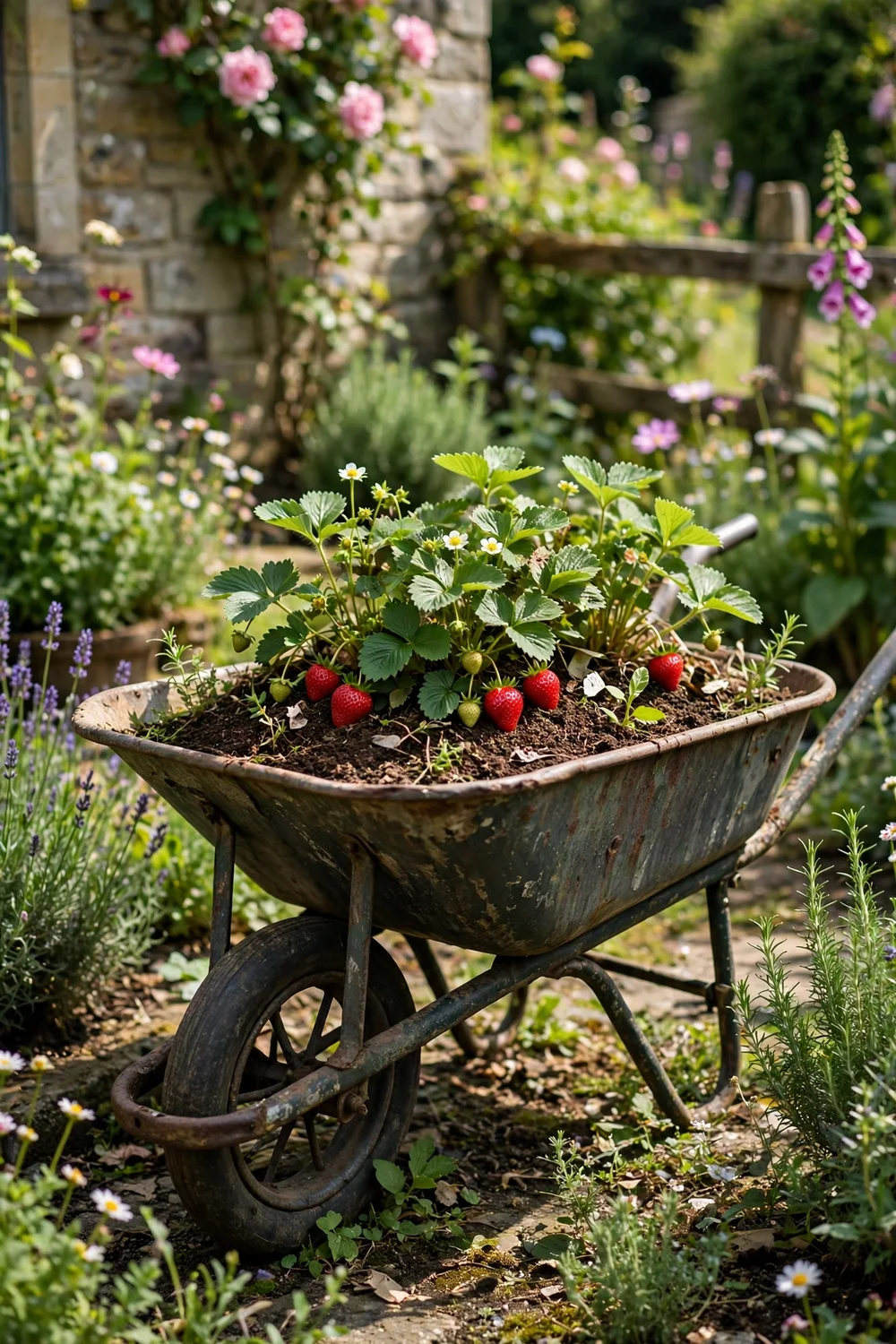
A retired wheelbarrow with a rusted-out bottom is a charming strawberry planter with built-in drainage. Fill it with potting mix, plant in rows, and let the berries spill over the sides. The metal warms early in spring, which gives plants a head start. Drill extra drainage holes if the bottom is still solid, and park it in full sun: wheelbarrows roll, so you can chase the sunniest spot in the yard.
Try this: paint the outside a bright color to turn a junk find into a garden focal point.
Cost: $$. Difficulty: Easy, 30 minutes.
9. Laundry basket planter

A tall plastic laundry basket lined with landscape fabric becomes a strawberry tower for a few dollars. Cut small slits in the fabric on the sides, push plants through from the inside, and fill with potting mix as you go. The basket’s holes give every plant light and air, and the whole thing costs less than lunch. This is a one-or-two-season planter, since sun makes cheap plastic brittle, but at this price that is fine.
Try this: set the basket inside a decorative pot to hide the plastic and add stability.
Cost: $. Difficulty: Easy, 45 minutes.
10. Half whiskey barrel

A half whiskey barrel is the most attractive strawberry planter you can buy, and it holds 10 to 12 plants comfortably. Drill drainage holes if it lacks them, fill with potting mix, and plant in concentric rings. The thick wood insulates roots against temperature swings, which extends the season on both ends. A full barrel is extremely heavy, so place it in its final sunny spot before you add soil.
Try this: underplant the edge with trailing nasturtiums. They look good and their flowers are edible too.
Cost: $$. Difficulty: Easy, 30 minutes.
11. Stacked wooden crates

Three or four wooden crates stacked in stair steps make a rustic strawberry display for a patio corner. Line each crate with landscape fabric, fill with potting mix, and plant the front edge of every step so berries hang where you can see them ripen. Sand rough edges to avoid splinters during harvest. Crates last two to three seasons outdoors before the wood softens, which is plenty of time for several harvests.
Try this: screw the crates together at the back so the stack cannot shift when you brush past it.
Cost: $$. Difficulty: Easy, one hour.
Strawberry planters compared
How to choose the right strawberry planter
Match the planter to your space and your watering habits. Small-space gardeners get the most berries per square foot from vertical options like the PVC tower, pallet, or pyramid. Forgetful waterers should pick the raised bed or whiskey barrel, which hold moisture far longer than baskets and tower pots. Whatever you choose, give it full sun: the University of Minnesota Extension notes strawberries need at least 6 hours of direct sun daily to fruit well. Strawberries pair beautifully with other plants, so check these strawberry companion planting ideas to fill the gaps.
Short on ground space overall? This vertical vegetable garden guide shows how to grow upward beyond berries too.
Strawberry planter safety notes
Three cautions. First, wood: use only heat-treated pallets stamped HT, never chemically treated lumber, and skip containers with old peeling paint that could contain lead. Second, weight: wet soil is heavy, so mount gutter gardens and wall planters into studs or solid posts, and keep tall towers staked or braced against tipping. Third, berries themselves are fine for kids and pets, but the fertilizers and pest sprays people use around them are not: keep chemicals away from any planter within reach of children or dogs.
Strawberry planter FAQs
How deep should a strawberry planter be?
Eight to 12 inches is ideal. Strawberry roots are shallow, so they do not need deep soil, but shallow planters like gutters dry out fast and need daily watering in summer. Deeper planters like barrels and raised beds hold moisture longer and forgive a missed watering.
How many strawberry plants fit in one planter?
It depends on the planter. A 4-by-4-foot raised bed holds 16 plants at 12-inch spacing. A 4-foot PVC tower holds 15 to 20, a pallet holds 20 to 30, and a half whiskey barrel holds 10 to 12. Crowding reduces airflow and invites disease, so resist the urge to squeeze in extras.
Do strawberries need full sun in containers?
Yes. Container strawberries need at least 6 hours of direct sun daily, and 8 to 10 is better for heavy fruiting. Containers in partial shade produce leaves but few berries. The one advantage of containers is mobility: you can move them to chase the sun through the season.
Can you grow strawberries in a wooden pallet?
Yes, and it is one of the best space-savers. Use a heat-treated pallet marked HT, line the back and bottom with landscape fabric to hold soil, and plant between the slats. Water from the top daily in summer, since vertical planters dry quickly.
What is the best soil for strawberry planters?
A quality potting mix with compost worked in, not heavy garden soil. Containers need the drainage and lightness of potting mix. Strawberries like slightly acidic soil, and a straw mulch on top keeps berries clean and the soil moist.
When should I plant strawberries in planters?
Plant in spring after the last frost, as soon as the soil is workable. Pinch off flowers for the first few weeks so plants put energy into roots. June-bearing types fruit the following year, while day-neutral and ever-bearing types often fruit the same summer you plant them.
Pick the planter that fits your sunniest spot, plant day-neutrals for fruit all summer, and keep the water coming. The first warm berry you pick will ruin store-bought strawberries for you forever.


