



Fall gardening has a space problem most people never notice until October. The beds are still full of finishing summer crops, but the cool-weather stuff needs to go in now. I ran into this exact jam last year, staring at tomato plants I was not ready to pull while my kale seedlings waited in their trays.
Growing up instead of out solves it. A vertical vegetable garden for fall lets you tuck greens, peas, and herbs into structures that fit in the gaps, and there is a bonus: cold air sinks, so plants lifted a foot or two off the ground often dodge the first light frosts entirely. Here are 15 ways to grow fall vegetables vertically, with build notes and what to plant in each.
Quick takeaways
- Vertical plantings sit above the coldest air, so they often survive light frosts that damage ground-level beds.
- Fall peas, pole beans, kale, lettuce, spinach, and herbs are the best crops for vertical structures.
- Anchor every trellis, arch, and tower well. Fall winds are stronger than summer breezes.
- Vertical planters dry out faster, so plan on more frequent watering than in-ground beds.
- Most of these builds cost under $30 and take an afternoon.
1. Pallet garden for fall kale
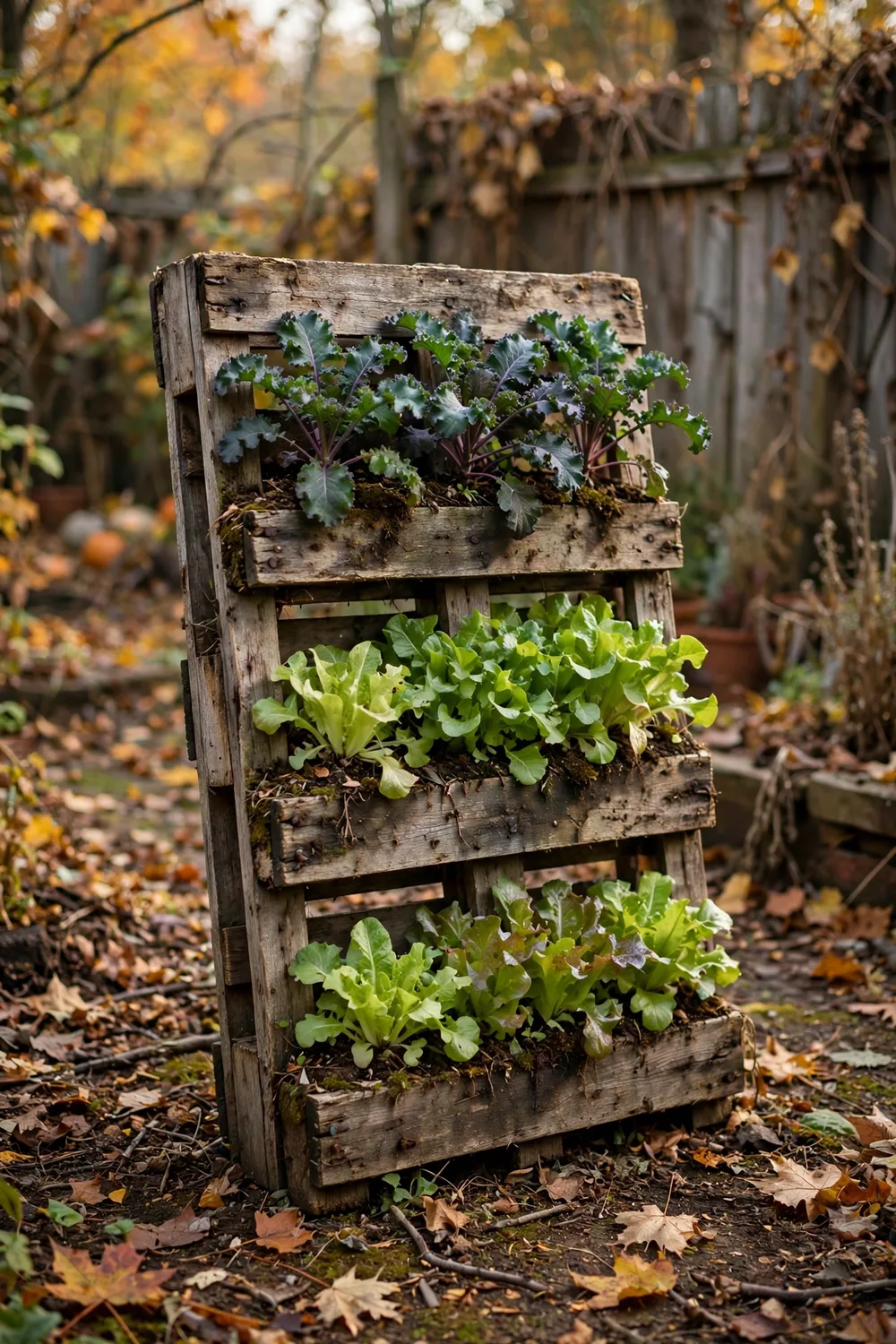
A wooden pallet stood upright and lined with landscape fabric becomes a shallow vertical bed that is perfect for kale and lettuce. Fill the slat pockets with potting mix, tuck in kale seedlings, and lean the pallet against a sunny wall. The plants stay off the cold ground and get great air circulation, which means less mildew in damp fall weather. Use a heat-treated pallet (marked HT), not a chemically treated one, since you are growing food.
Try this: plant the top pockets with kale and the lower ones with lettuce, since the lower rows stay a touch warmer near the ground. Difficulty: Easy. Cost: $
2. Fence trellis for fall peas
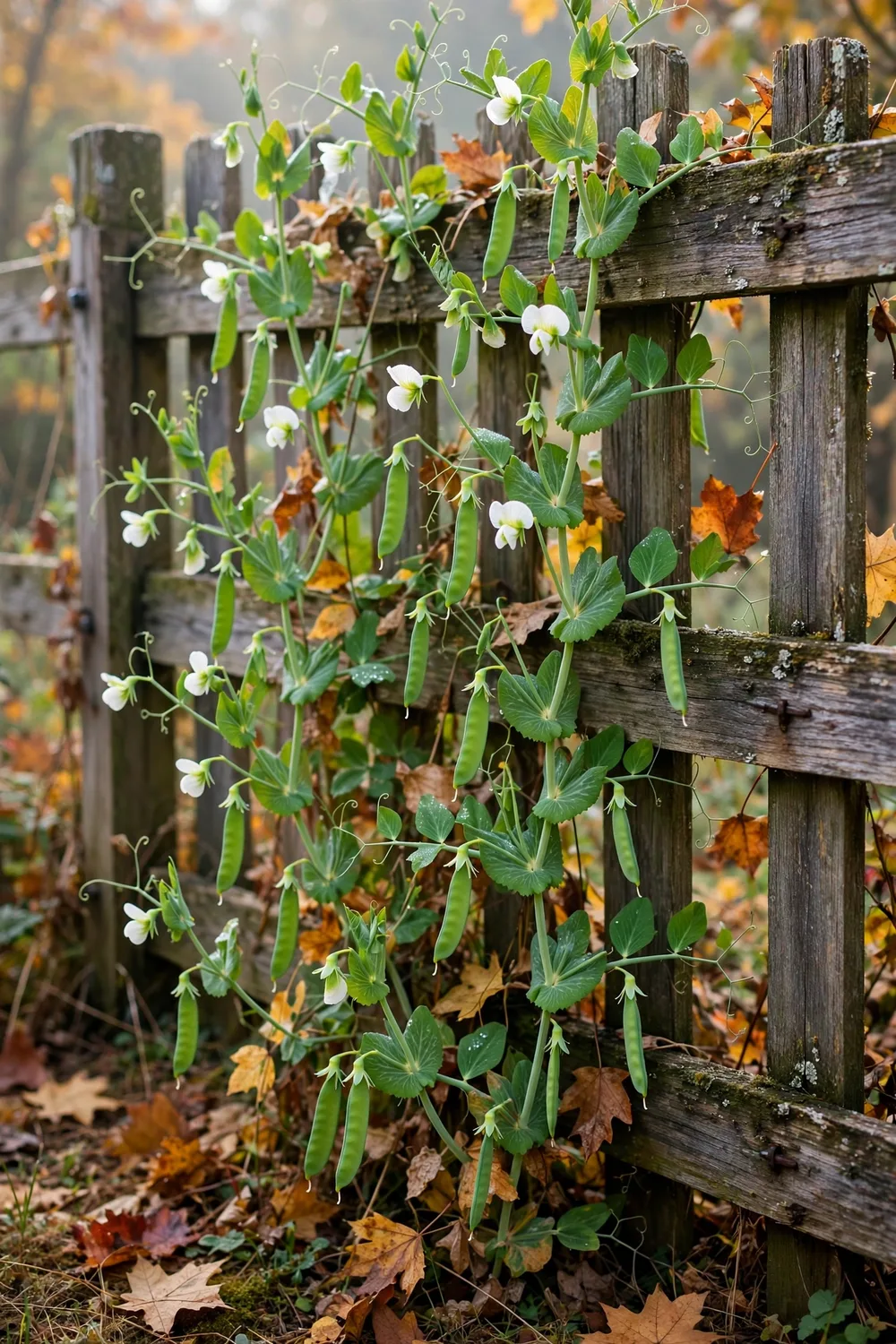
Fall peas are one of the best-kept secrets of autumn gardening, and a plain fence is all the support they need. Sow sugar snap peas along the base in early September, and the vines will twine up 5 to 6 feet on their own tendrils. Peas love cool weather and will keep producing after temperatures turn cold. Stretch a row cover over the fence when frost threatens to stretch the harvest further.
Try this: sow peas where summer beans grew. Both are legumes, and the soil is already in good shape for them. Difficulty: Easy. Cost: $
3. Stacked tower for spinach and lettuce

A stacked strawberry-style tower planter holds a surprising amount of salad in one square foot of patio. Fill each pocket with potting mix and plant spinach in the lower pockets and lettuce up top, where it gets the most sun. Water from the top so moisture trickles down through the whole column. In zones 7 and warmer, you can keep harvesting from a tower like this into early winter.
Try this: rotate the tower a quarter turn every few days so all sides get even light as the sun drops lower. Difficulty: Easy. Cost: $$
4. Hanging gutter herb garden

Old rain gutters screwed to a fence in horizontal rows make shallow trough planters that suit parsley, arugula, and thyme. Drill drainage holes every 6 inches, add 3 inches of potting mix, and sow directly. Because the troughs are narrow, the soil warms quickly on sunny fall days, which keeps herbs growing when nights turn cold. Mount the lowest gutter at waist height for easy snipping.
Try this: plant arugula in the sunniest gutter and parsley in the shadiest. Both are fall crops, but arugula grows faster with more light. Difficulty: Easy. Cost: $
5. A-frame trellis for pole beans
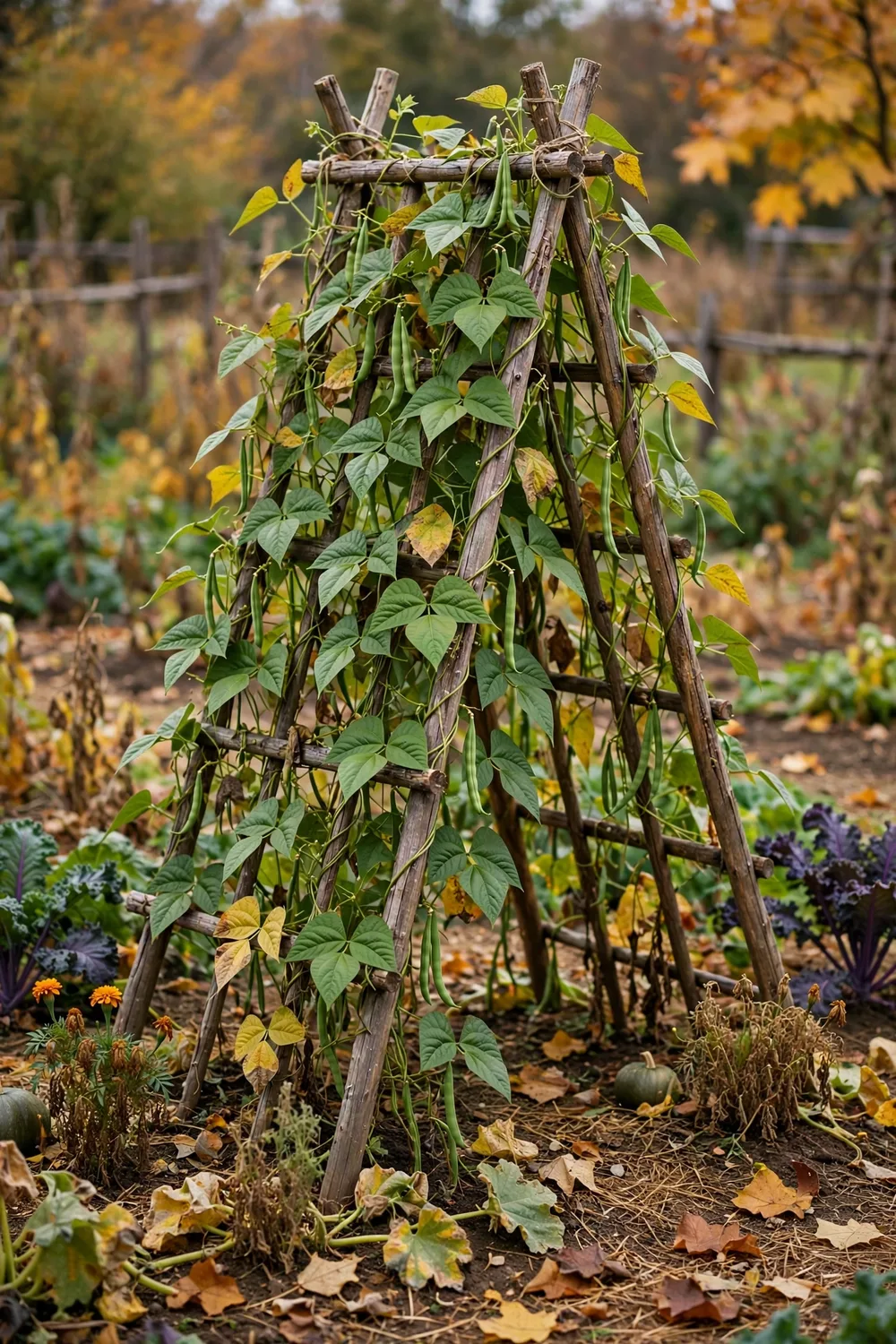
Two lattice panels hinged at the top into an A-frame give pole beans a sturdy climbing structure that stands up to fall wind. Plant beans at the base of each side in late summer for a fall crop, and the vines will cover the frame in weeks. The A shape is naturally stable, and you can drape a frost blanket right over the whole thing on cold nights. Beans keep producing until a hard freeze stops them.
Try this: pick beans every two days. Regular picking keeps the vines producing instead of shutting down to make seed. Difficulty: Moderate. Cost: $$
6. Wall pocket planters for kitchen herbs
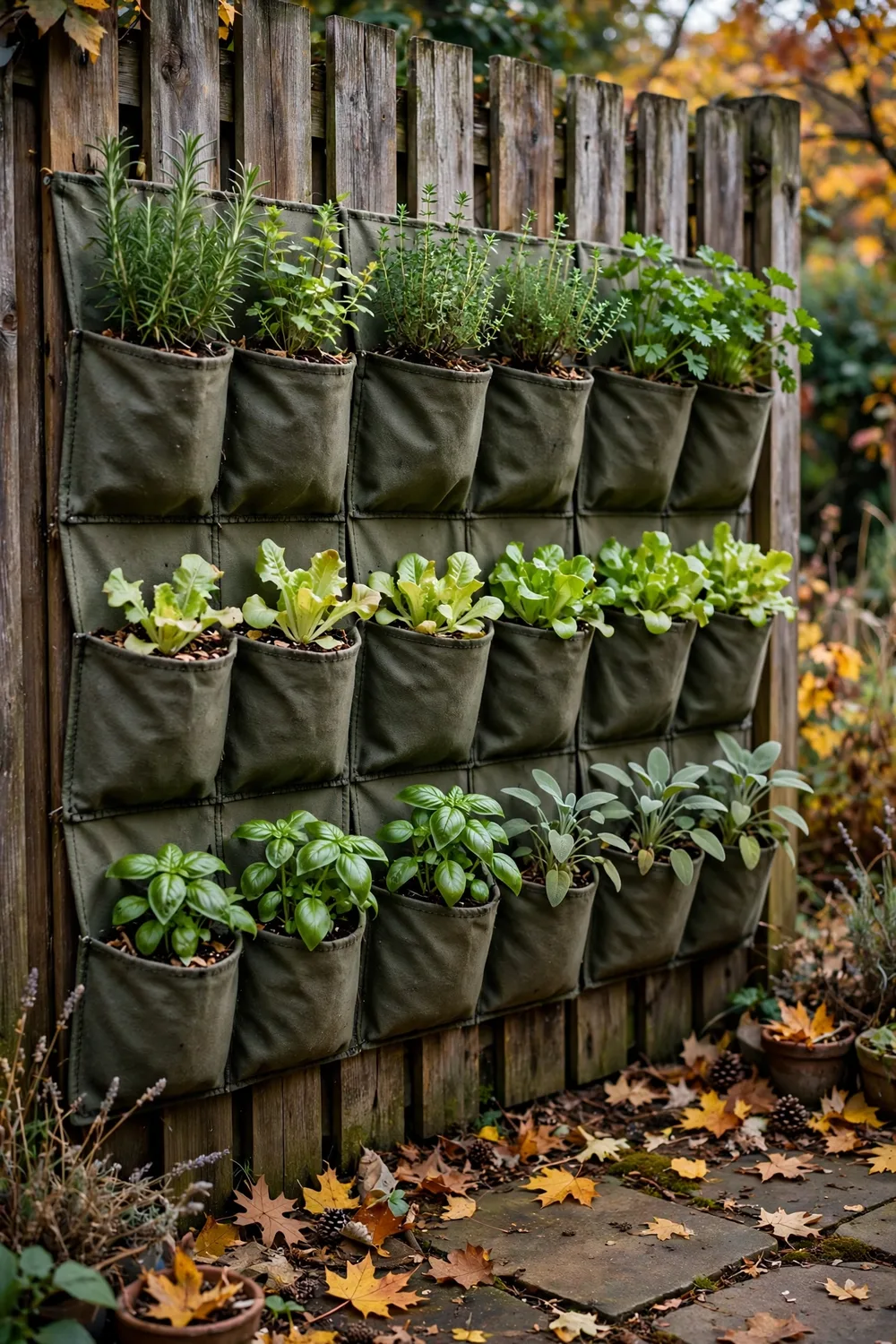
Fabric pocket planters hung on a sunny fence or wall put a whole herb garden at arm’s reach. Fill each pocket with potting mix and plant chives, parsley, thyme, and small lettuces. The fabric breathes, so roots stay healthy, and you can unhook the whole planter and carry it indoors when a hard freeze is forecast. That portability is the real win for fall.
Try this: group herbs by water needs. Thyme and rosemary like it drier, so keep them in the top pockets that drain fastest. Difficulty: Easy. Cost: $$
7. Obelisk tower for climbing peas

A wooden obelisk in the center of a raised bed turns one square foot into a 5-foot pea tower. Build it from four 6-foot stakes tied at the top with crossbars, or buy a ready-made metal one for about $20. Fall peas twine right up the legs, and the open structure lets air flow through, which cuts down on the mildew that plagues peas in damp autumn weather.
Try this: plant nasturtiums at the base of the obelisk too. They climb a little, bloom into fall, and lure aphids away from your peas. Difficulty: Easy. Cost: $$
8. Ladder shelf for potted greens

An old wooden ladder leaned against a wall becomes instant shelving for pots of fall greens. Set a board across each pair of rungs to make shelves, then load them with pots of lettuce, spinach, mustard greens, and herbs. Each shelf gets slightly different light, so put sun-lovers up top and shade-tolerant greens lower down. When frost threatens, you can carry the pots inside in minutes.
Try this: use 6-inch pots so each plant has enough soil to stay moist between waterings. Tiny pots dry out too fast in fall wind. Difficulty: Easy. Cost: $
9. Cattle panel arch for cucumbers

A 16-foot cattle panel bent into an arch between two beds is the strongest trellis you can build, and fall cucumbers love it. The vines climb 6 feet up and over, the fruits hang straight down where they are easy to pick, and air circulation under the arch keeps leaves dry. Anchor each end with two T-posts driven 18 inches into the ground. Plant a fall cucumber variety in late summer so vines are covering the arch by September.
Try this: grow lettuce in the shade under the arch. The cucumber canopy cools the bed below, which fall greens appreciate. Difficulty: Moderate. Cost: $$
10. Stacked window boxes for radishes
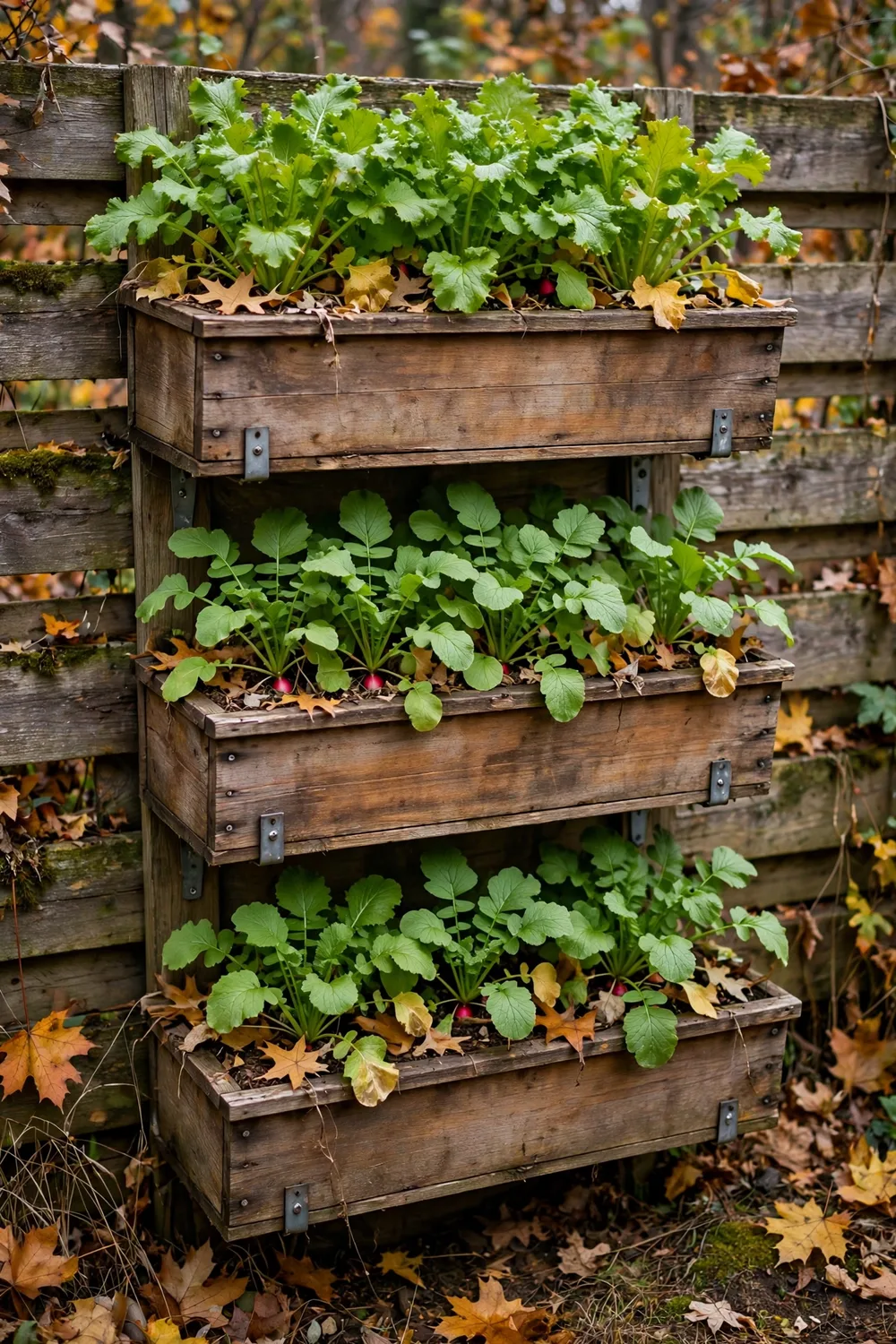
Three window boxes mounted one above the other on a fence give you a vertical bed for shallow-rooted fall crops. Radishes, mustard greens, and baby lettuce all thrive in 6 inches of soil. Space the boxes 12 inches apart vertically so each row gets light, and stagger them slightly so water drips from one to the next instead of drowning the lower boxes. A south-facing fence is ideal.
Try this: sow radishes in the top box and greens in the lower two. Radishes finish fastest, so the top box frees up first for a second sowing. Difficulty: Easy. Cost: $$
11. Tomato cage tower for peas

Those wire tomato cages gathering dust in the shed make fine fall pea towers. Push a large cage firmly into the soil, sow peas in a circle around the base, and the vines will climb the rings to 4 feet. It is not fancy, but it works, and you already own the cages. Wrap the bottom ring with twine to give young tendrils more to grab.
Try this: stake the cage with a bamboo pole on the windy side. Fall gusts can topple a pea-covered cage that seemed stable in August. Difficulty: Easy. Cost: $
12. Pergola hanging baskets

Hanging baskets under a pergola beam put lettuce and herbs at picking height and well above frost pockets. Line 14-inch wire baskets with coco liners, fill with potting mix, and plant leaf lettuce around the edges with parsley in the center. Baskets dry out fast in fall wind, so check them daily. The payoff is salad you can snip without bending over, plus baskets you can unhook and move indoors on freezing nights.
Try this: hang baskets on the south side of the pergola so they catch the low autumn sun for as many hours as possible. Difficulty: Easy. Cost: $$
13. Bean teepee for fall peas
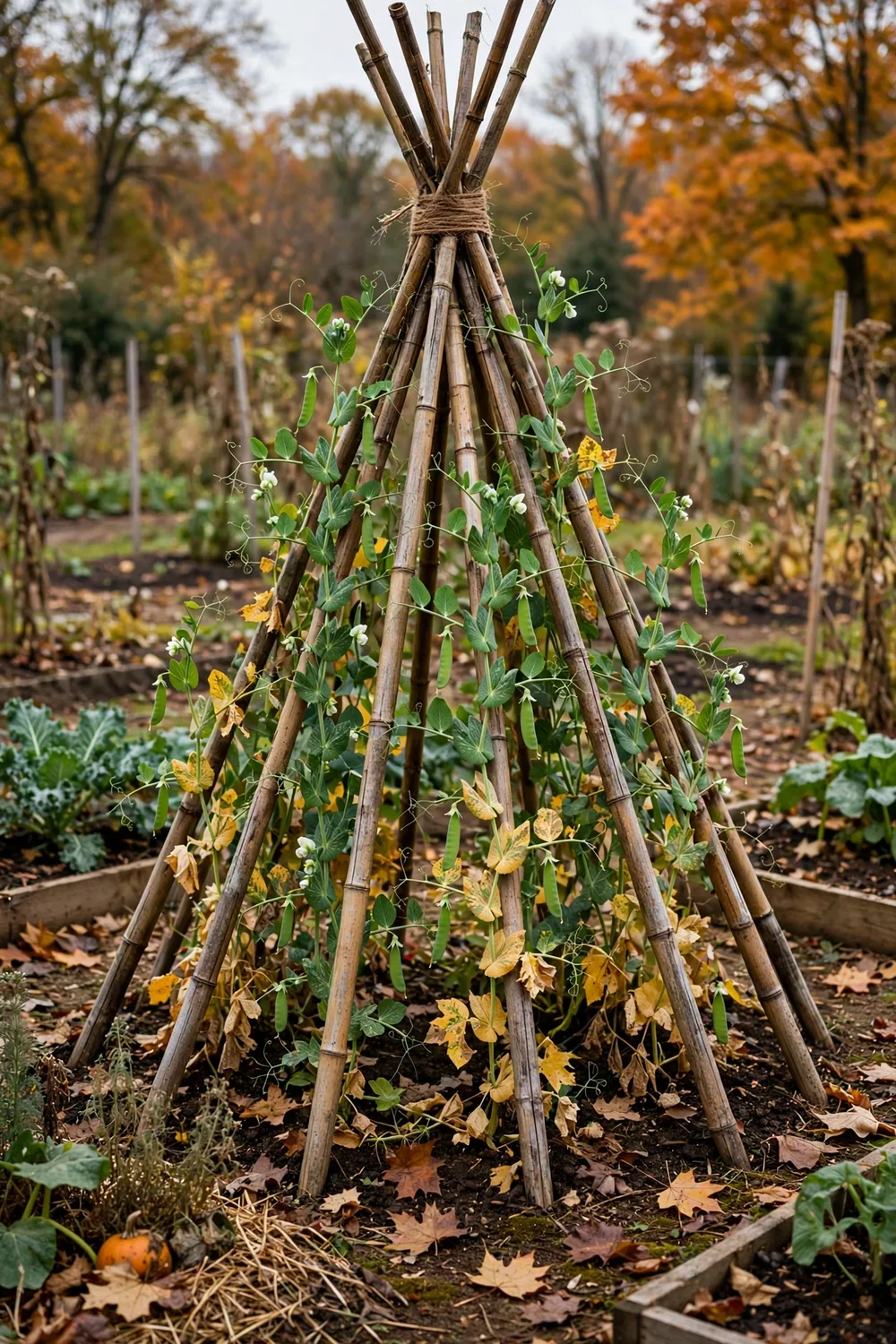
Six 8-foot bamboo poles tied at the top into a teepee create a climbing structure kids love and peas cover fast. Space the pole bases 12 inches apart in a circle, sow peas around each pole in early September, and the vines will meet at the top within a month. The open center stays accessible for picking from inside, which is half the fun.
Try this: push each pole 6 inches into the soil and tie the tops with garden twine in two places. A single tie loosens as the poles flex in wind. Difficulty: Easy. Cost: $
14. PVC pipe planter for lettuce

A 4-inch PVC pipe with planting holes cut along its length, capped at the bottom and stood upright, becomes a slim vertical planter for lettuce and parsley. Cut 2-inch holes every 8 inches with a hole saw, fill the pipe with potting mix, and tuck seedlings into the holes. One 5-foot pipe holds 8 to 10 plants in a 4-inch footprint. Water slowly from the top so it soaks down evenly.
Try this: set the pipe inside a heavy pot of soil for stability. A tall pipe full of wet mix is top-heavy and tips in wind. Difficulty: Moderate. Cost: $$
15. Tiered crate tower

Wooden crates stacked in a pyramid, each one smaller than the last, make a tiered tower with planting space on every level. Line the crates with landscape fabric, fill with potting mix, and plant kale and chard in the bottom crates, lettuce and spinach in the middle, and herbs on top. The stepped design means no level shades out the one below it, which matters as the fall sun drops lower.
Try this: screw the crates together from the inside so the tower cannot shift. Three crates of wet soil are heavier than they look. Difficulty: Moderate. Cost: $
Vertical fall gardens at a glance
| Idea | Best fall crops | Cost | Difficulty |
|---|---|---|---|
| Pallet garden | Kale, lettuce | $0-10 | Easy |
| Fence trellis | Fall peas | $3 | Easy |
| Stacked tower | Spinach, lettuce | $15-25 | Easy |
| Gutter planters | Herbs, arugula | $0-10 | Easy |
| A-frame trellis | Pole beans | $20-30 | Moderate |
| Pocket planters | Herbs, lettuce | $12-20 | Easy |
| Obelisk | Peas, nasturtiums | $15-25 | Easy |
| Ladder shelf | Potted greens | $0+ | Easy |
| Cattle panel arch | Cucumbers | $35 | Moderate |
| Window boxes | Radishes, greens | $30-45 | Easy |
| Tomato cage tower | Peas | $0-5 | Easy |
| Hanging baskets | Lettuce, herbs | $8-12 each | Easy |
| Bean teepee | Fall peas | $10 | Easy |
| PVC pipe planter | Lettuce, parsley | $15 | Moderate |
| Crate tower | Kale, chard, herbs | $15-30 | Moderate |
Why vertical works better in fall
There is real science behind growing up in autumn. Cold air sinks, so on a still night the coldest air pools at ground level while the air a foot or two higher stays several degrees warmer. Plants on trellises, in towers, and in hanging baskets sit in that warmer band, which means they often sail through the first light frosts that nip ground-level beds. Better air circulation around vertical plants also dries leaves faster, cutting down on the fungal problems that thrive in damp fall weather.
The other advantage is purely practical. In September, most beds are still occupied by finishing summer crops. Vertical structures fit into corners, against fences, and on patios, so you can start fall crops without waiting for a bed to clear. For a full list of what to grow in these structures, see my 15 veggies to plant in September, which covers timing and varieties for every cool-season crop.
Mistakes to avoid with vertical fall gardens
The biggest mistake is underestimating wind. A trellis covered in vines catches far more wind than a bare frame, and fall storms are stronger than summer breezes. Anchor arches with T-posts, stake cages and pipes, and screw stacked crates together. The second mistake is forgetting how fast vertical planters dry out. Pockets, gutters, and baskets hold little soil, so check them daily and water more often than you would an in-ground bed.
Third, match the crop to the structure. Heavy plants like full-size cabbage do not belong in hanging pockets, and shallow gutters will not support deep-rooted carrots. And a safety note: if you are driving T-posts or digging holes for a pergola or arch, call your utility locator at 811 first to mark buried lines. For more structural inspiration, these recycled garden trellis ideas show how to build supports from salvaged materials, and these cinder block garden bed ideas pair well with vertical elements at the bed corners.
Wash everything you harvest, as with any edible garden, and keep the structure notes from the University of Minnesota Extension planting guides and Penn State Extension vegetable gardening resources in mind when planning your fall layout.
Frequently asked questions
What vegetables grow best in a vertical garden in fall?
Climbing crops like fall peas and pole beans are naturals for trellises and teepees. Leafy greens such as kale, lettuce, spinach, and chard do well in towers, pockets, pallets, and stacked planters. Herbs like parsley, thyme, and chives suit gutters and hanging baskets.
Do vertical gardens really avoid frost?
They help with light frosts. Cold air sinks to ground level, so plants raised a foot or two up often stay several degrees warmer than bed-level plants. A vertical setup plus a row cover gives you the best protection short of a greenhouse.
How often should I water a vertical fall garden?
More often than an in-ground bed. Small planters, pockets, and baskets dry out quickly, especially in fall wind. Check soil moisture daily and water when the top inch is dry.
Can I build a vertical garden on a balcony?
Yes. Pocket planters, stacked towers, ladder shelves, and hanging baskets are all balcony-friendly since they need no ground space. Just confirm your railing or wall can hold the weight of wet soil before you load it up.
What is the cheapest way to start a vertical fall garden?
Use what you have. A spare pallet, old tomato cages, a wooden ladder, or scrap gutters cost nothing. Seeds for fall peas, radishes, and greens run about $3 a packet, so a productive setup can cost under $10 total.
When should I take down my vertical garden for winter?
After a hard freeze ends the harvest, usually late November to December in most zones. Clean off dead vines, scrub pots and planters, and store fabric pockets and wood structures somewhere dry so they last for next year.
I started with one pallet and a packet of pea seeds, and now half my fall harvest comes from structures instead of beds. Pick the one idea that fits the space you have, build it this weekend, and get your fall crops climbing before the first frost.


