


Laundry piles up in every home, yet the room where it gets done often gets the least attention. Machines crowd against bare walls, detergent bottles live on top of the dryer, and folding happens on the bed because no flat surface stays clear. A few planned changes fix that pattern for good.
This guide covers 25 laundry room ideas for rooms of every size, from a hallway closet to a full utility room. You get layout rules, storage builds, drying setups, decor moves, and budget options, with a cost and difficulty label on each idea so you can pick what fits your weekend and your wallet.
Quick takeaways
- Plan the room around four jobs in order: sort, wash, fold, and put away.
- Keep a 36-inch clear aisle and a folding surface 34 to 36 inches high.
- Put supplies within one arm’s reach of the machines and drying space on a wall, not on the floor.
- A drain pan and a leak sensor cost under $50 and guard the floor below.
- Most ideas here cost under $300 and need no contractor.
1. Open shelves with labeled jars

Open shelves above the machines keep detergent, stain remover, and dryer sheets where you can see them. Two pine boards, each 8 feet long and 10 inches deep, hold a full set of supplies for a family of four. Decant liquids into clear glass jars with chalk labels so levels stay visible at a glance. Keep the bottom shelf at shoulder height so heavy jugs never travel above your head. Leave one shelf empty for the basket you are working from.
Try this: Label one jar “stain kit” and keep a brush, a white cloth, and a small spray bottle inside it.
Cost: $ Difficulty: Easy
2. Closed wall cabinets with lift-up doors
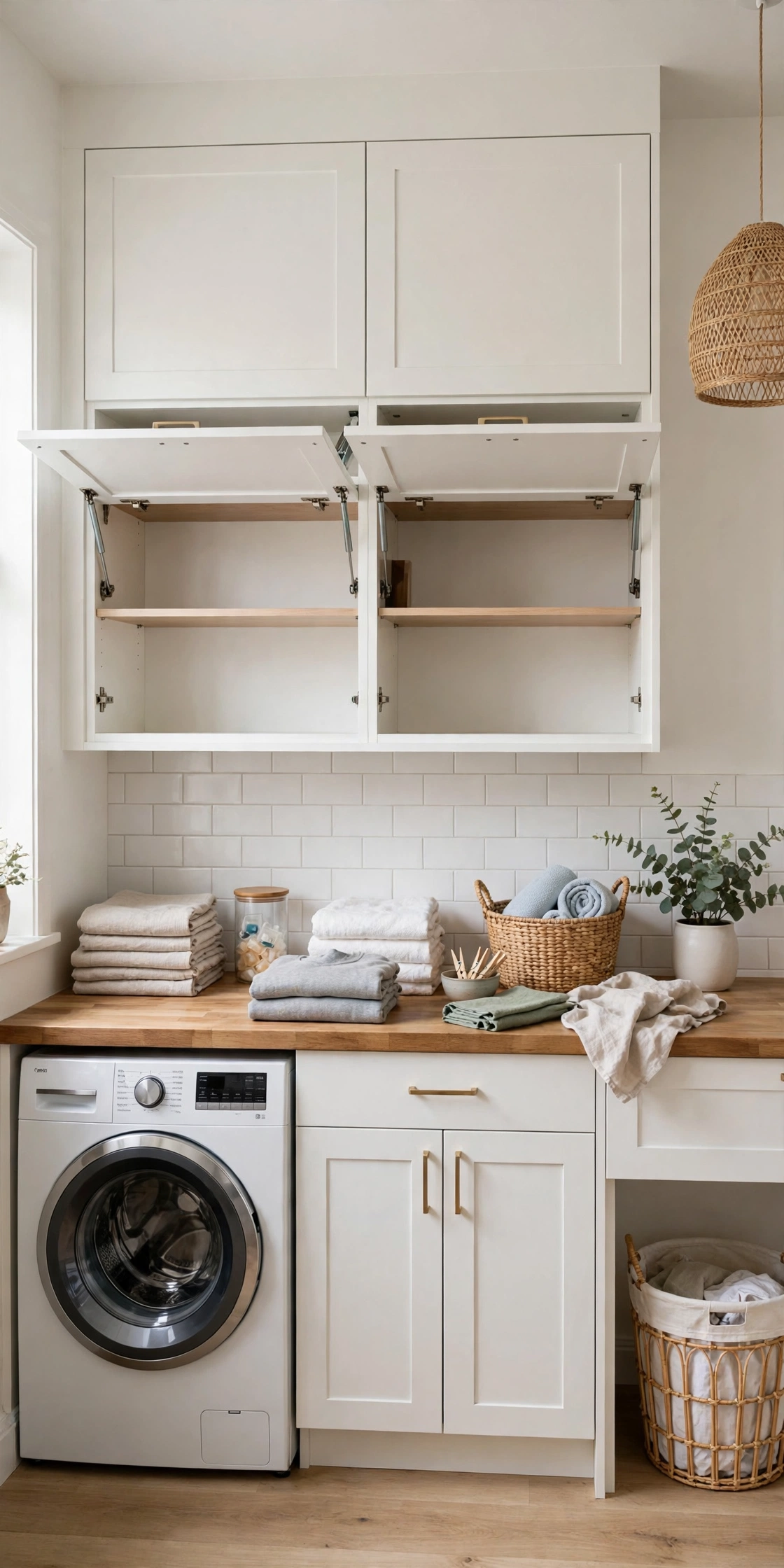
Closed cabinets hide the visual noise that open shelves collect. Lift-up doors work better than swinging doors here because they stay open on their own while you reach in with both hands. Mount the cabinet bottoms 18 inches above the counter so you can fold underneath without ducking. Reserve the top shelf for backup stock you buy twice a year, like extra detergent and dryer balls. Keep daily supplies on the lowest shelf, inside labeled bins that slide out.
Try this: Put a small step stool on a hook beside the cabinets for the top shelf.
Cost: $$ Difficulty: Moderate
3. Full-wall folding counter with a stain corner

A counter that runs the full wall, past the machines and around the corner, gives folding room plus a dedicated spot for stain treatment. Butcher block, 24 inches deep and 1.5 inches thick, handles hot items from the dryer and wipes clean with a damp cloth. Set one end aside for a small tray, a spray bottle, and a brush so stained clothes never sit on the folding zone. Leave a 2-inch gap at the back for hoses and cords. Seal the wood twice so splashes bead instead of soaking in.
Try this: Mark the stain corner with a different tray color so family members know where to drop stained items.
Cost: $$ Difficulty: Moderate
4. Three-bin sorting station by the door

Sorting at the door stops the pile on the floor. Three bins, each about 14 inches wide, cover darks, lights, and towels plus delicates for most households. When a bin fills, it holds one load, so no one has to guess what goes in next. Canvas liners lift out for carrying, and a chalk label on each bin front keeps kids sorting right. Place the station within two steps of the door so dirty clothes land there first, not on the counter.
Try this: Wash one bin liner with each load on a rotating schedule so the station never smells musty.
Cost: $ Difficulty: Easy
5. Deep utility sink with a pull-down faucet
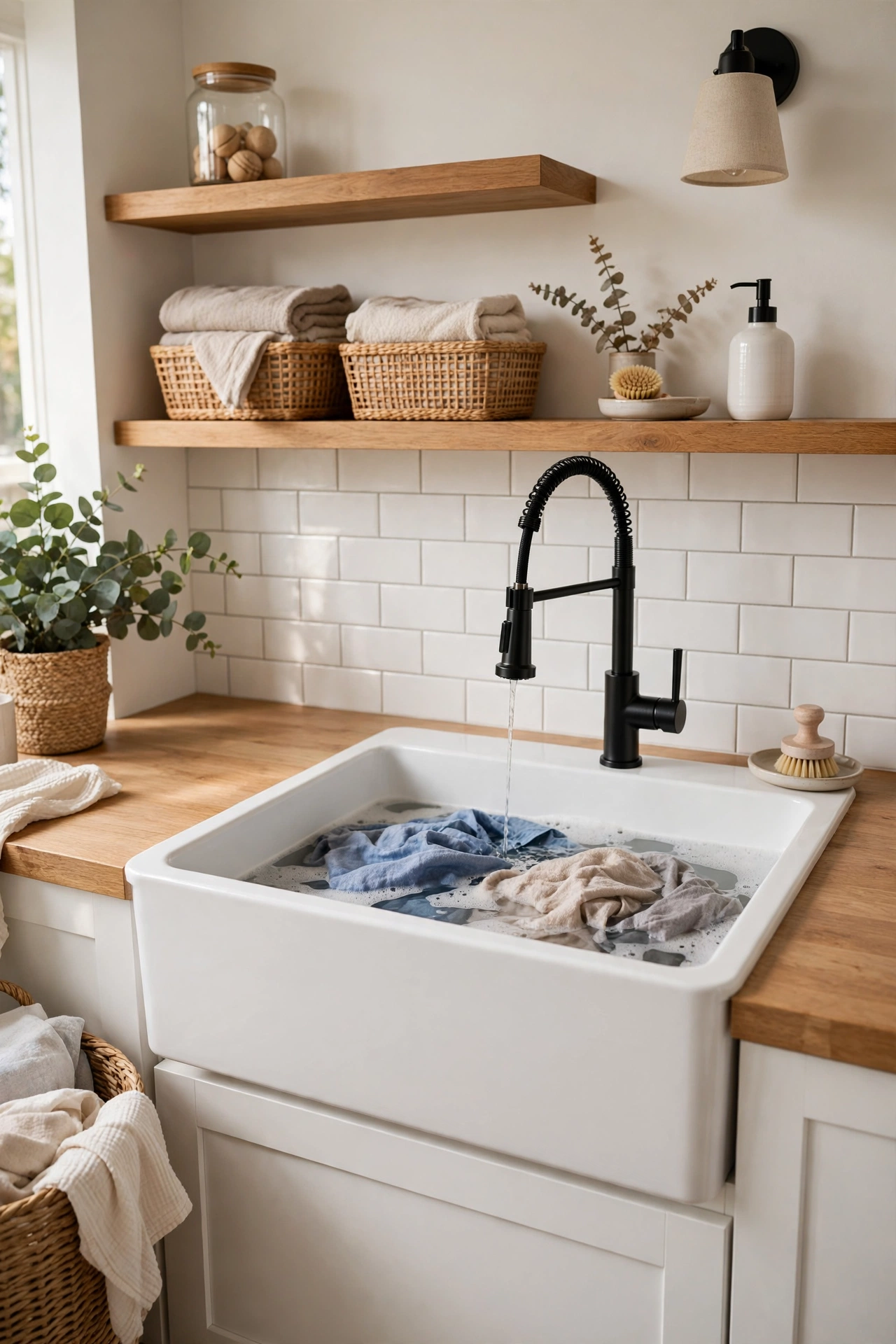
A deep utility sink changes how you handle hand-wash items, muddy shoes, and soaked stains. A 24-inch basin with a pull-down faucet reaches every corner of the tub and rinses tall boots without splashing the wall. Add a small grate on the bottom so delicates sit above grit. If plumbing already runs nearby, this install often costs less than a new cabinet run. Keep a bottle of oxygen soak and a scrub brush on the rim in a suction caddy.
Try this: Soak stained shirts for 30 minutes in the sink before they go in the machine.
Cost: $$ Difficulty: Moderate
6. Wall drying rod above the counter
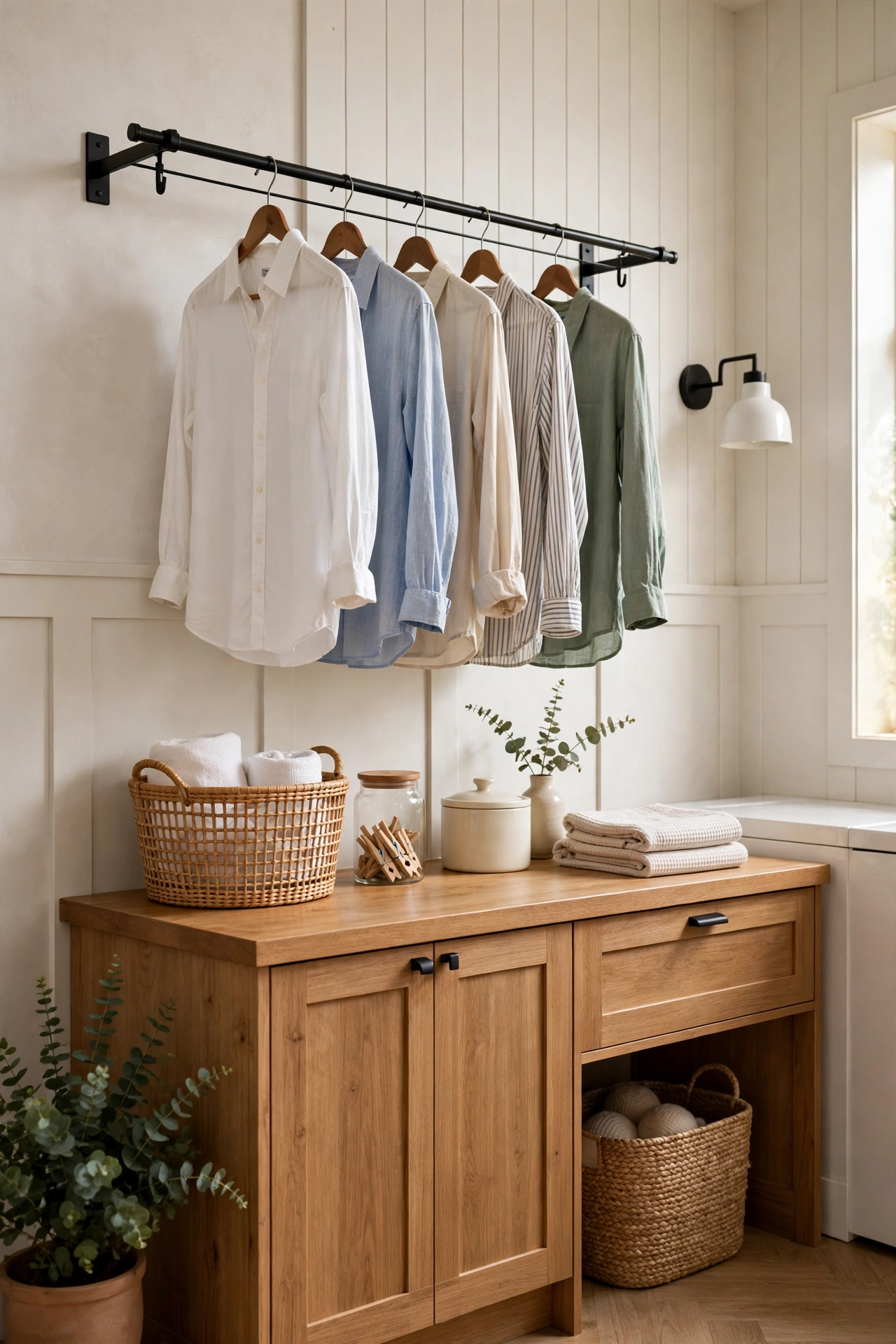
A wall rod above the counter gives drip-dry shirts a home that costs no floor space. Mount a 48-inch stainless rod 18 inches above the counter and at least 12 inches out from the wall so hangers swing free. Hang shirts straight from the washer and let them drip into a narrow tray on the counter below. This setup handles about 10 hangers, enough for one load of work clothes. Choose a rod rated for 25 pounds so wet denim never bends it.
Try this: Button the top button of each shirt before hanging so shoulders keep their shape.
Cost: $ Difficulty: Easy
7. Ceiling pulley drying rack
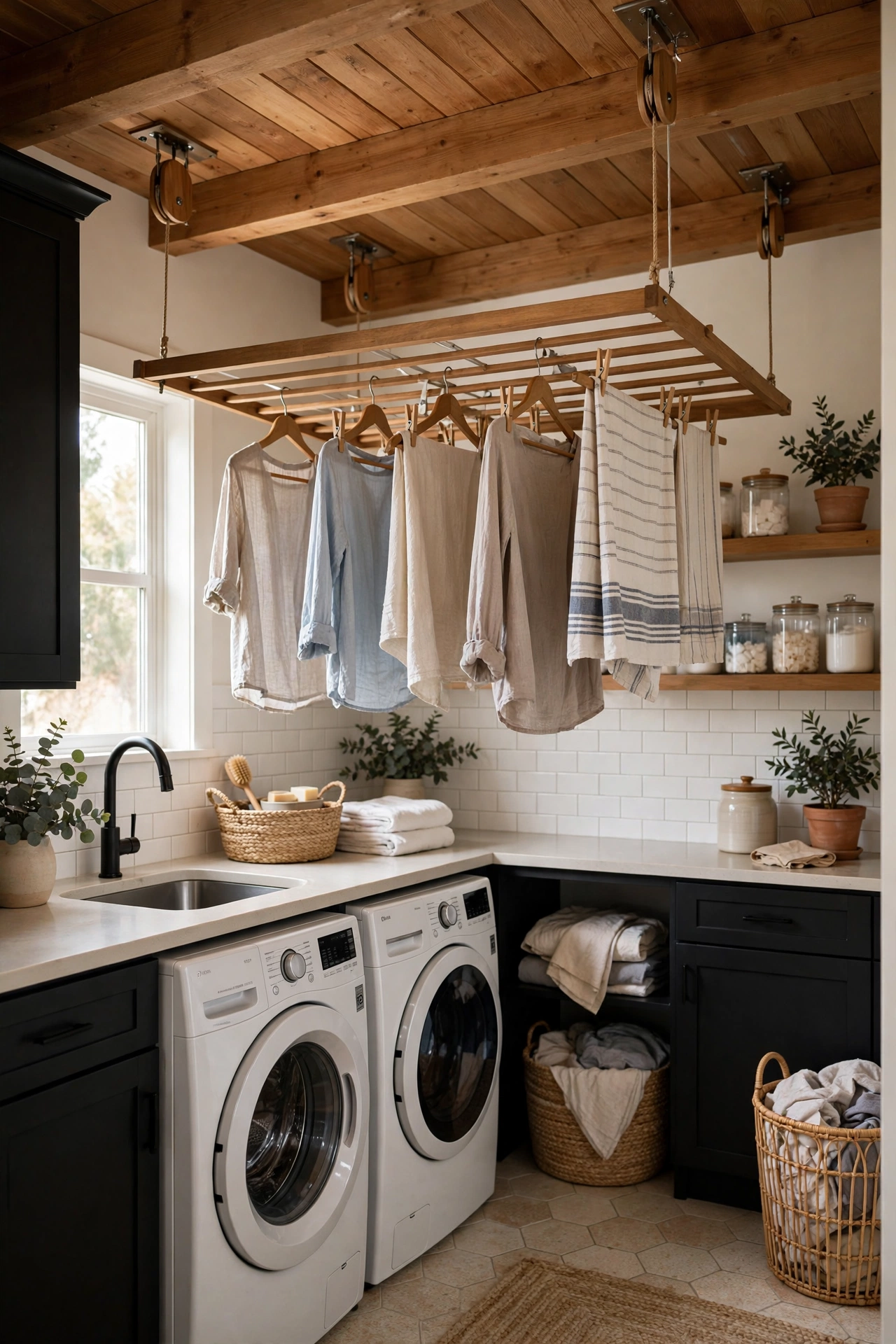
A ceiling rack uses warm air near the ceiling to dry clothes faster than a floor rack, then lifts out of the way. Four wooden slats on ropes and pulleys lower to chest height for loading and rise to the ceiling when done. The rack holds a full load of delicates, about 15 pounds, and needs two ceiling joists for safe anchoring. Mount it over a tile or vinyl floor section so drips never reach wood. Lower it each evening so morning loads start dry.
Try this: Hang heavier items on the outer slats where the ropes carry the most load.
Cost: $$ Difficulty: Moderate
8. Pegboard wall for tools and small supplies

A pegboard wall gathers the small tools that vanish into drawers: scissors, lint rollers, stain pens, measuring cups, and clothespins. One 4-by-4-foot painted board on the side wall, with hooks and small baskets, holds a full kit in plain sight. Rearrange hooks as needs change, and outline each tool in chalk so missing items show at once. Keep the board at eye level and away from the sink splash zone. Paint it the wall color for a built-in look.
Try this: Hang a small basket on the pegboard for single socks waiting for their match.
Cost: $ Difficulty: Easy
9. Pull-out ironing board drawer
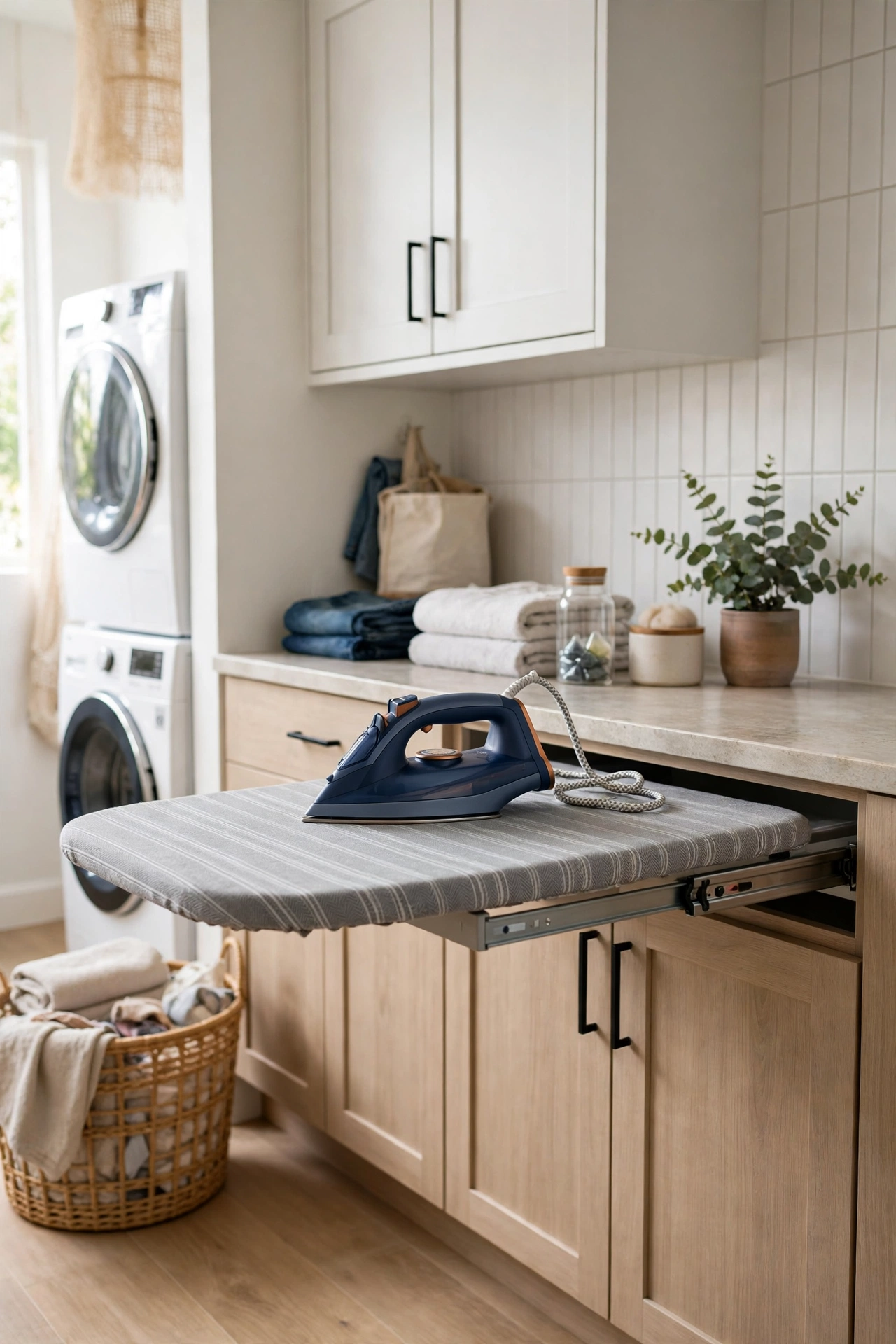
An ironing board drawer hides the bulkiest laundry tool inside the counter run. The board folds out of a standard drawer box, locks flat at counter height, and slides back when the job ends. A heat-resistant pad on top protects the drawer, and a small compartment beside it holds the iron and a spray bottle. This build suits rooms where a freestanding board blocks the aisle. Measure your drawer box before ordering, since widths vary by cabinet brand.
Try this: Iron shirts straight from the dryer while they still hold a little warmth.
Cost: $$ Difficulty: Moderate
10. Tilt-out hamper cabinet

A tilt-out hamper cabinet keeps dirty clothes hidden and one hand away. The cabinet front tips forward on hinges, and a canvas bag inside lifts out for carrying to the machines. One 18-inch-wide cabinet holds a full load for two people, and two cabinets side by side split darks from lights. Line the bag with a washable liner and add a cedar sachet to keep the cabinet fresh. Mount the cabinet near the door so clothes land there first.
Try this: Keep a second liner in the cabinet so a full bag never waits for laundry day.
Cost: $$ Difficulty: Moderate
11. Drying cabinet for delicates

A drying cabinet gives sweaters, swimwear, and wool items a gentle drying spot with no tumble heat. Vented shelves inside a tall cabinet let air move around each piece, and a small fan at the base speeds the process. One cabinet, 24 inches wide and 72 inches tall, holds about 20 pounds of delicates. Line the shelves with mesh bags for small items like socks and bras. Place the cabinet away from the washer vibration so shelves stay quiet.
Try this: Reshape wool sweaters on the shelf while they are still damp so they dry true to size.
Cost: $$$ Difficulty: Moderate
12. Under-cabinet LED task lighting

Overhead lights cast shadows right where you sort stains and fold dark clothes. Plug-in LED strips under the wall cabinets, rated near 4000K, light the counter evenly and reveal stains before the wash sets them. One 24-inch strip covers a standard folding zone, and two strips cover a full-wall counter. Stick the strips to the cabinet underside, hide the cord in a small channel, and plug into a switched outlet. The install takes about 30 minutes with no wiring work.
Try this: Check dark loads under the task light before they go in, since stains hide in dim rooms.
Cost: $ Difficulty: Easy
13. Patterned tile backsplash
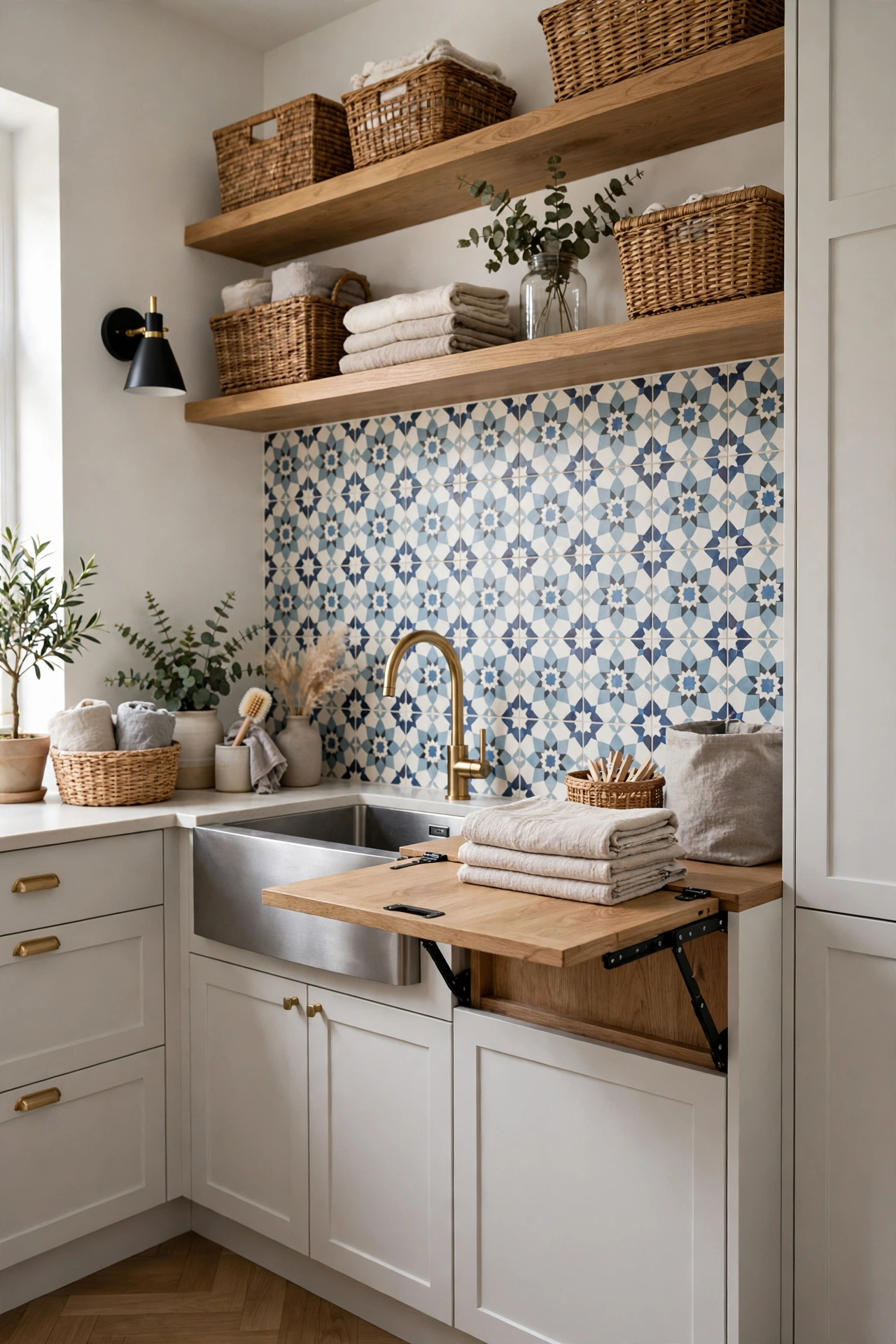
A patterned backsplash turns the wall behind the machines into the room’s focal point and guards it from splashes. Cement-look porcelain tiles in a herringbone or star pattern cost less than stone and wipe clean with a damp cloth. Tile from the counter to the cabinet bottoms, about 18 inches high, and seal grout lines twice in a splash zone. Pick one bold pattern and keep cabinets plain so the wall carries the room. Order 10 percent extra tile for cuts.
Try this: Tape a few sample tiles to the wall for a week before committing to the pattern.
Cost: $$ Difficulty: Moderate
14. Painted cabinets in sage green
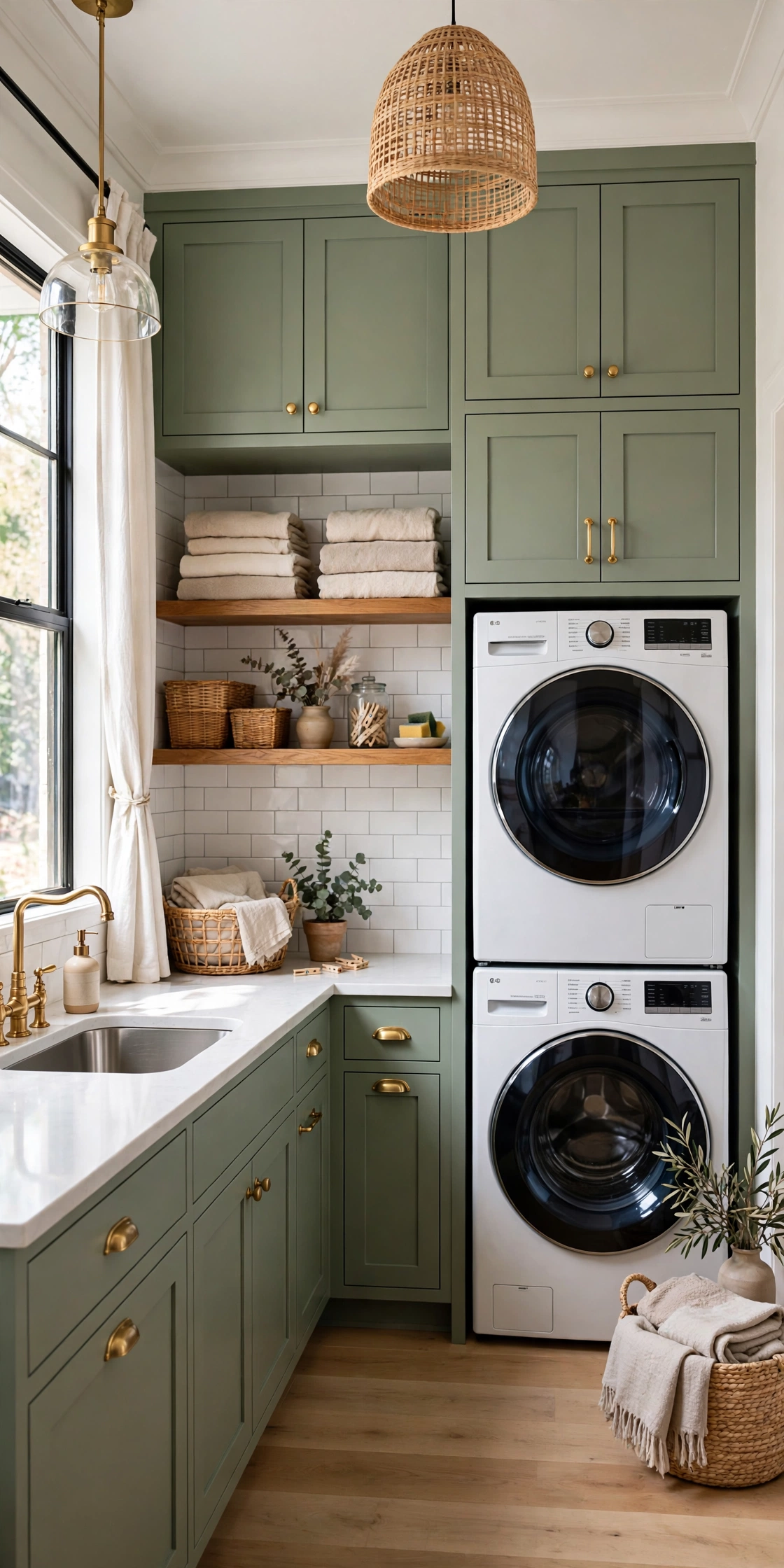
Sage green cabinets warm a white laundry room without darkening it. Two coats of cabinet paint in a satin finish, plus new brass pulls, change the whole room for the price of paint and hardware. Sand lightly, prime with a bonding primer, and let each coat cure a full day before rehanging doors. Keep walls white and the counter light wood so the green stays calm. This color hides dust better than pure white and pairs well with woven baskets.
Try this: Paint one door first and live with it for three days before painting the rest.
Cost: $ Difficulty: Easy
15. Washable wallpaper accent wall

Washable vinyl wallpaper adds pattern to one wall without the upkeep worry of paper in a damp room. One accent wall behind the machines, in a small floral or geometric print, lifts the whole space for under $100 in materials. Paste-the-wall types hang in an afternoon and peel off cleanly when tastes change. Keep the other walls plain paint so the pattern reads as an accent, not a crowd. Wipe splashes with a damp cloth the same day.
Try this: Start the first strip in the least visible corner so seams land where eyes rarely go.
Cost: $ Difficulty: Easy
16. Three-bag rolling sorter under the counter
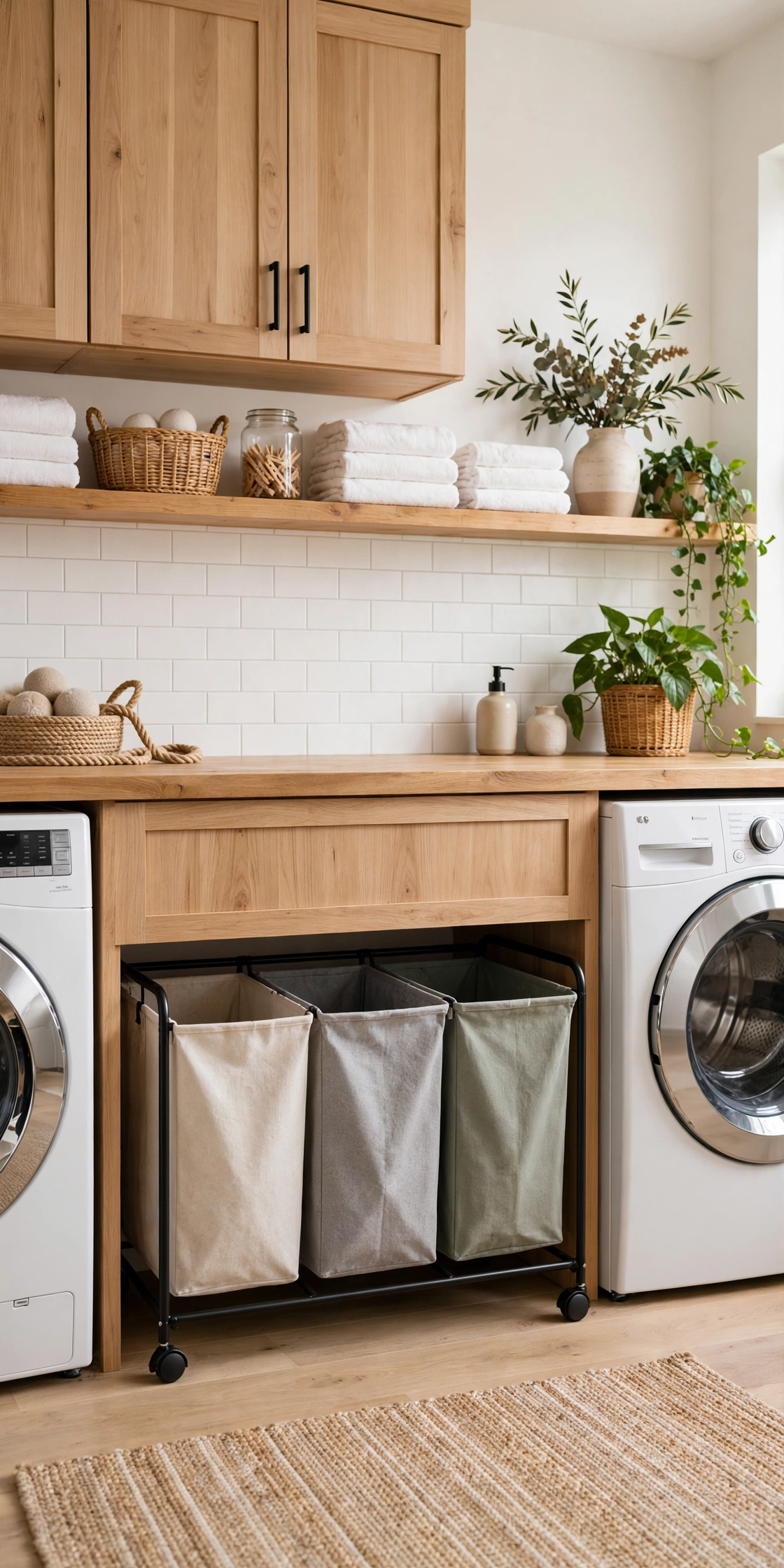
A three-bag rolling sorter parks under the counter and rolls to the machines when a bag fills. Each bag holds one load, labeled darks, lights, and towels, and lifts off its frame for carrying. The frame, about 30 inches wide, fits under a standard counter overhang with room to spare. Locking casters keep it still while you load, and canvas bags wash with the towels. This sorter suits families where each person tosses clothes in one shared spot.
Try this: Assign each family member one bag color in a shared sorter to end sorting arguments.
Cost: $ Difficulty: Easy
17. Folding island for big rooms

A folding island gives a large laundry room a second work surface and a gathering spot for sorting. A 36-by-24-inch island with a marble or quartz top, open shelves below for baskets, and locking casters moves where the work is. Fold on top, store clean stacks below, and roll it aside when floor space matters. Keep the island height at 34 to 36 inches to match the counter so stacks slide across without lifting. Add a small hanging rod on one end for shirts.
Try this: Park the island near the dryer door on folding days to cut carrying to zero.
Cost: $$ Difficulty: Easy
18. Pet wash station

A pet wash station in the laundry room keeps muddy paws out of the bathtub. A low tiled basin, 24 inches wide, with a handheld sprayer on a long hose, handles dogs up to 60 pounds. Add a non-slip mat on the basin floor and a shelf above for shampoo, towels, and a brush. Plumb the basin into the same drain line as the utility sink to keep costs down. Dry the basin with a squeegee after each wash so tile stays spot-free.
Try this: Keep a stack of old towels in a basket beside the basin so bath time never waits on laundry.
Cost: $$$ Difficulty: Hard
19. Stacked tower with a side cabinet column

A stacked tower plus a tall cabinet column fits a full laundry setup into a narrow dedicated room. The tower takes 27 inches of width, and a 12-inch cabinet column beside it holds detergent, a folding rack, and a small ironing pad. Anchor the tower to the wall with the stacking kit and keep the shutoff valves reachable from the front. Leave 4 inches of air behind the machines for hoses and venting. This layout leaves the rest of the room free for a counter.
Try this: Store the step stool in the bottom of the cabinet column for reaching high shelves.
Cost: $$ Difficulty: Moderate
20. Mudroom combo with hooks and cubbies

A laundry room near the back door can double as a mudroom with a bench, hooks, and cubbies. One wall of cubbies, each 15 inches wide, holds a backpack, a coat, and shoes per person, while the bench below gives a seat for changing shoes. Hang hooks at two heights so kids reach theirs and adults reach theirs. Keep the mudroom zone on the door side and the machines on the far wall so wet coats never drip on clean loads. Add a boot tray under the bench.
Try this: Give each cubby a small basket for gloves, hats, and keys that otherwise scatter.
Cost: $$ Difficulty: Moderate
21. Smart machines with cycle alerts

Smart washers and dryers send a phone alert when a cycle ends, so loads never sit damp for hours. Many models also sense load size and adjust water use, which cuts waste on small loads. Look for an ENERGY STAR certified pair when you shop, since certification marks tested efficiency rather than a marketing claim. Set alerts for cycle end and for the lint filter reminder. Keep the machines on a dedicated circuit so a tripped breaker never stops a load mid-cycle.
Try this: Turn on the “finished” alert only, and mute the rest, so the phone stays useful.
Cost: $$$ Difficulty: Easy
22. Drain pan, leak sensor, and shutoff valve

Laundry rooms leak sooner or later, and a small kit limits the damage. A drain pan under the washer catches slow drips, a battery leak sensor on the floor sounds an alarm at the first puddle, and a single-lever shutoff valve lets you cut water in one motion. The full kit costs under $50 and installs in under an hour with no plumber visit. Check the sensor battery each spring and replace washer hoses every five years, since old hoses cause most floods.
Try this: Tape the shutoff instructions to the wall above the valve so any family member can use it.
Cost: $ Difficulty: Easy
23. Framed art and a chalkboard chore chart
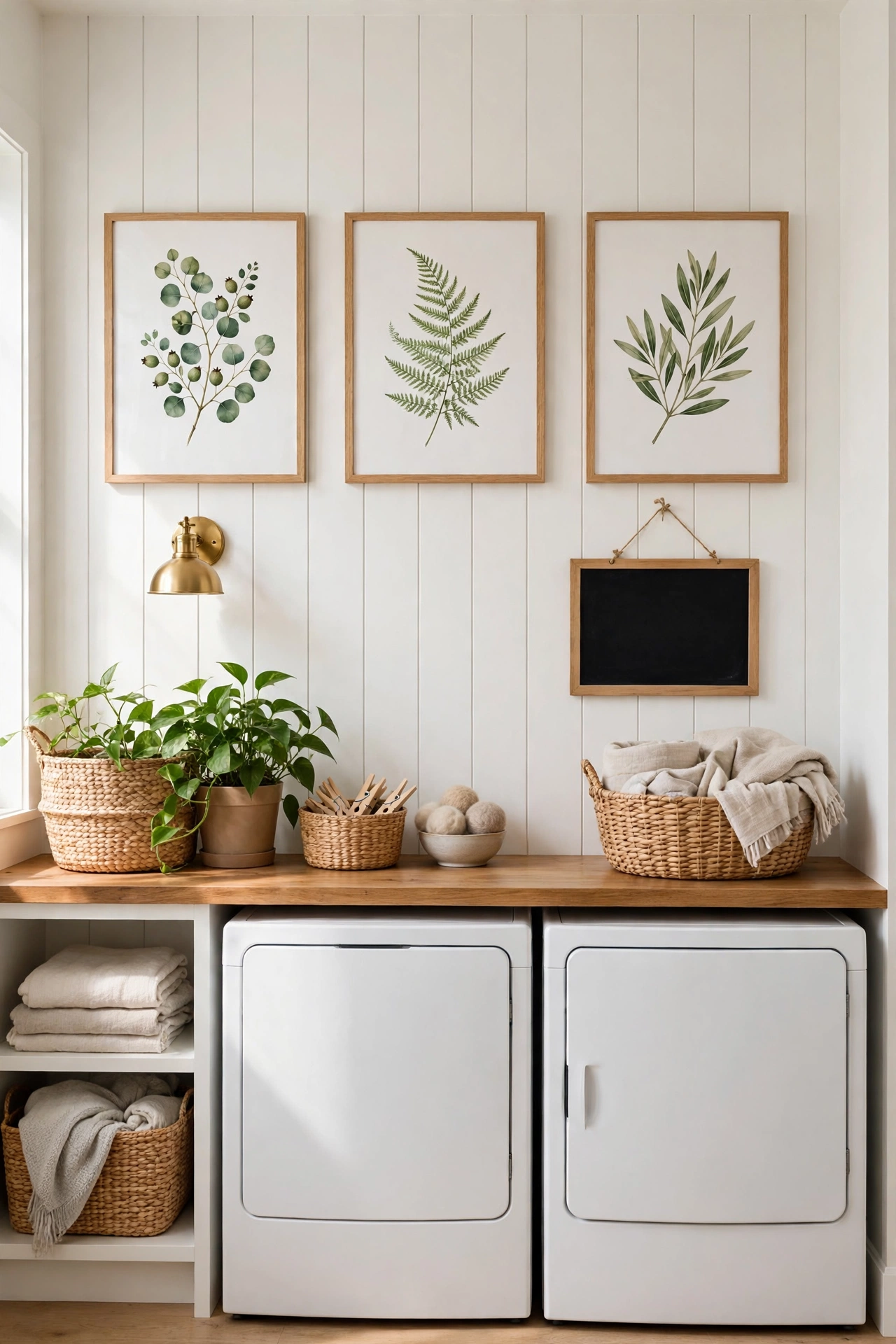
Framed prints and a small chalkboard chart make the room feel finished rather than purely utilitarian. Two botanical prints in simple frames, hung above the counter at eye level, add color without clutter. A 12-by-16-inch chalkboard lists the weekly load plan, like sheets on Sunday and towels on Wednesday, so no one wonders what runs next. Use framed glass over prints near the sink so steam never warps them. Change the chart each Monday in under a minute.
Try this: Let kids pick one print each so the room feels like theirs too.
Cost: $ Difficulty: Easy
24. Storage bench for folding breaks

A storage bench gives tired legs a seat and hides out-of-season supplies in one piece. A 36-inch bench with a hinged lid holds spare linens, seasonal tablecloths, and the ironing pad below, while the top works as a seat during long folding sessions. Place it against the wall opposite the machines so it never blocks the aisle. Add a cushion in washable fabric and two baskets underneath for shoes or cleaning rags. Keep the bench top clear so it stays usable.
Try this: Store the “donate” bag in the bench so outgrown clothes leave the house on time.
Cost: $ Difficulty: Easy
25. Garage laundry corner from leftover cabinets
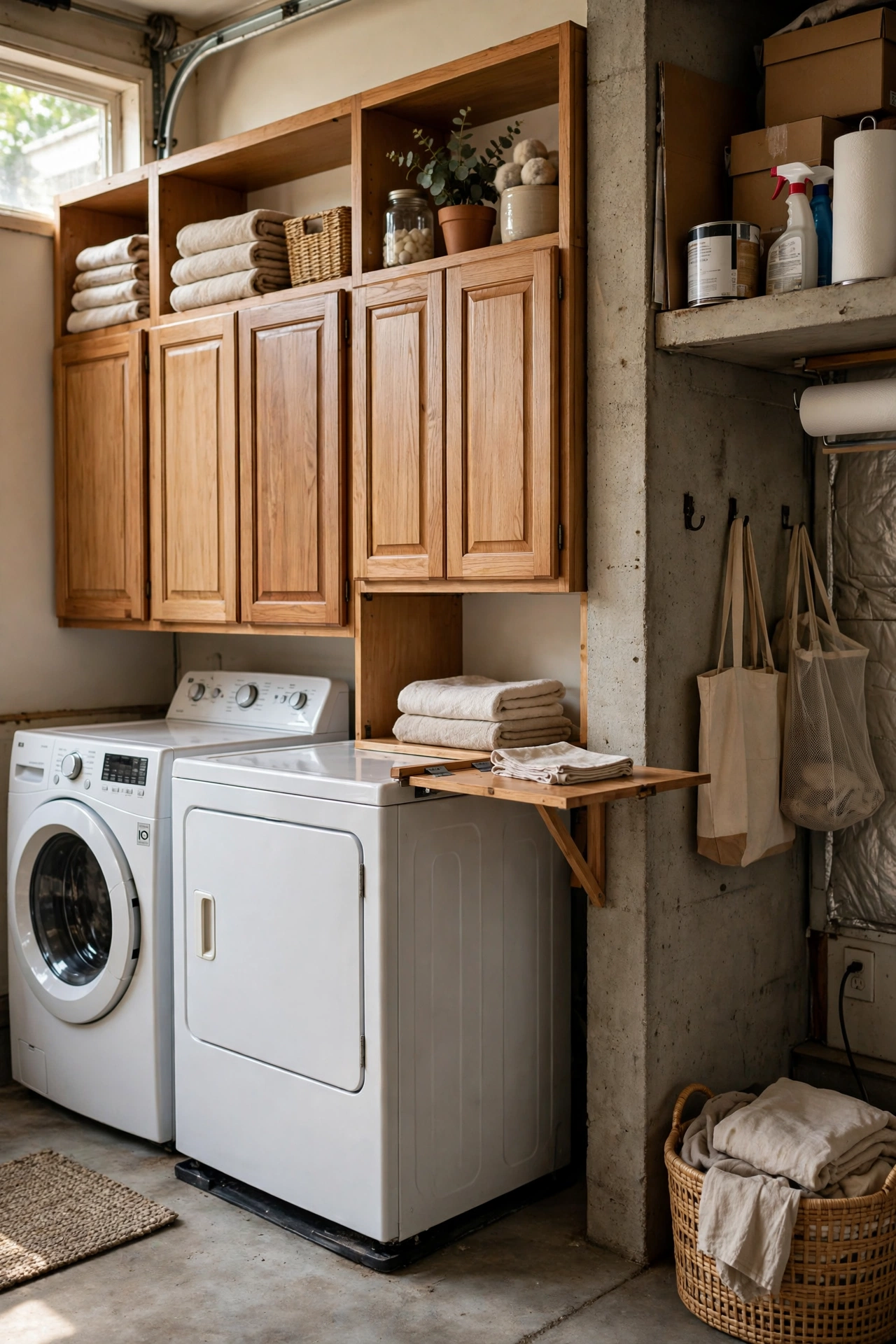
A garage laundry corner built from leftover kitchen cabinets gives an old set a second life. Upper cabinets from a kitchen remodel, mounted above the machines, hold detergent and cleaning gear, while a plywood shelf across the cabinets forms a folding ledge. Add a utility sink at one end if a drain line runs nearby, and a rubber mat underfoot for cold concrete. Insulate exposed pipes before winter so a freeze never bursts a line. This corner costs little beyond fasteners and paint.
Try this: Paint the leftover cabinets one color so the corner reads as planned, not patched.
Cost: $ Difficulty: Moderate
How to choose your layout
Match the layout to the room width before buying anything. A closet or hallway nook, about 3 by 3 feet, fits a stacked tower with a fold-down shelf on the nearest wall. A galley room, about 5 by 6 feet, fits side-by-side machines on one wall with a 36-inch aisle in front and a counter on the opposite wall. An L-shaped room, about 6 by 8 feet, runs machines along the long wall with the folding counter turning the corner, which gives the easiest sort-to-fold path. In every shape, keep the folding surface 34 to 36 inches high and the aisle at least 36 inches wide so a full basket passes without a shuffle.
Compare the ideas at a glance
| Idea | Cost | Difficulty | Best for |
|---|---|---|---|
| Open shelves with labeled jars | $ | Easy | Seeing supplies at a glance |
| Closed wall cabinets with lift-up doors | $$ | Moderate | Hiding visual clutter |
| Full-wall folding counter with a stain corner | $$ | Moderate | Big folding jobs |
| Three-bin sorting station by the door | $ | Easy | Families that pre-sort |
| Deep utility sink with a pull-down faucet | $$ | Moderate | Soaking and hand-washing |
| Wall drying rod above the counter | $ | Easy | Drip-dry shirts |
| Ceiling pulley drying rack | $$ | Moderate | Small floors, high ceilings |
| Pegboard wall for tools and small supplies | $ | Easy | Small tools that vanish |
| Pull-out ironing board drawer | $$ | Moderate | Rooms with no board space |
| Tilt-out hamper cabinet | $$ | Moderate | Hidden dirty clothes |
| Drying cabinet for delicates | $$$ | Moderate | Wool and swimwear |
| Under-cabinet LED task lighting | $ | Easy | Spotting stains early |
| Patterned tile backsplash | $$ | Moderate | Splash protection plus style |
| Painted cabinets in sage green | $ | Easy | A fast color refresh |
| Washable wallpaper accent wall | $ | Easy | Renter-friendly pattern |
| Three-bag rolling sorter under the counter | $ | Easy | Shared family sorting |
| Folding island for big rooms | $$ | Easy | Large rooms with floor space |
| Pet wash station | $$$ | Hard | Dog owners |
| Stacked tower with a side cabinet column | $$ | Moderate | Narrow dedicated rooms |
| Mudroom combo with hooks and cubbies | $$ | Moderate | Back-door entries |
| Smart machines with cycle alerts | $$$ | Easy | Forgetting loads in the washer |
| Drain pan, leak sensor, and shutoff valve | $ | Easy | Every laundry room |
| Framed art and a chalkboard chore chart | $ | Easy | Making the room feel finished |
| Storage bench for folding breaks | $ | Easy | Seating plus hidden storage |
| Garage laundry corner from leftover cabinets | $ | Moderate | Budget garage setups |
Cost key: $ means $1 to $10, $$ means $11 to $99, $$$ means $100 to $999, $$$$ means $1,000 and up.
Mistakes to avoid
- Skipping the fold zone. Without a flat surface, clean clothes end up on the bed and wrinkle again.
- Putting daily supplies above 72 inches. Anything that high turns into a spot things go to be forgotten.
- Blocking the aisle with a freestanding board or basket. Keep the clear path at 36 inches or wider.
- Placing the drying rack in the dryer door path. Racks belong on a side wall or above the counter, never where doors swing.
Safety notes for laundry rooms
- Anchor tall shelves and cabinet columns into studs with hardware rated above the load, and use anti-tip brackets on stacked towers. The CPSC Anchor It! program explains how to anchor heavy furniture and appliances: CPSC Anchor It!
- Use GFCI outlets near sinks and washers, and hire a licensed electrician for new outlets or hardwired lights.
- Clean the dryer lint filter after every load and the vent duct at least once a year to cut fire risk.
- Keep cords away from walkways and never run an extension cord under a rug in a damp room.
- Test for lead paint and follow lead-safe rules before sanding or drilling in a pre-1978 home. The EPA Renovation, Repair and Painting program covers the rules for contractors and DIY work: EPA Renovation, Repair and Painting program
- Keep detergent pods and small items like clothespins away from toddlers, and store them in latched containers.
More laundry and home ideas
If your laundry shares space with a bathroom, the small bathroom laundry ideas show how to fit machines into a bathroom without losing the vanity.
For the full room plan, see our guide to 13 Stunning Small Bathroom With Laundry Ideas for a Room That Does Double Duty.
If your laundry room sits near the entry, the mudroom ideas pair hooks, benches, and cubbies with the wash zone.
For that pairing, see our guide to 14 Mudroom Ideas for an Entry That Finally Stays Tidy.
For shelf systems that carry over to the laundry room, the clothing shelf organization ideas cover bins, dividers, and labels in detail.
For those systems, see our guide to 30 Genius Clothing Shelf Organization Ideas for Shelves That Stay Tidy.
For built-in closet storage that uses the same cabinet logic, the built-in closet storage ideas show how to plan a full run.
For that planning, see our guide to 25 Smart Built In Closet Storage Ideas for a Closet That Works Harder.
For funding a bigger laundry remodel, the home renovation on a budget ideas rank projects by cost and payoff.
For that ranking, see our guide to 25 Creative Home Renovation Ideas on a Budget for the Whole House.
Frequently asked questions
What is the best laundry room layout?
A galley or L-shaped layout works best for most homes. Machines sit side by side on one wall, a folding counter sits next to or across from them, and a 36-inch aisle keeps the path clear. Closet nooks suit a stacked tower with a fold-down shelf on the nearest wall.
How much space do you need for a laundry room?
A room about 5 by 6 feet is a workable minimum for side-by-side machines and a short counter. Two 27-inch machines need about 56 inches of wall, and you want a 36-inch aisle in front for carrying baskets.
How high should a laundry room counter be?
Aim for 34 to 36 inches high. That matches standard kitchen counter height and keeps your back straight while you fold. If you are taller or shorter than average, adjust by an inch or two.
Do I need a utility sink in the laundry room?
A utility sink earns its place if you hand-wash delicates, soak stains, or rinse muddy gear more than once a week. A 20 to 24 inch basin with a pull-down faucet covers all three jobs. If your machines already sit near a bathroom sink, you can skip it.
How do I keep a small laundry room from feeling cramped?
Use the walls: open shelves, a wall rod, and a pegboard move storage off the floor. Keep the palette light, add LED task lighting under the cabinets, and park a rolling sorter under the counter so the floor stays clear.
Final thoughts
Start with the layout rules, then add one storage build and one drying setup before spending on decor. A clear aisle, a counter at the right height, and supplies within reach change laundry day more than any paint color, and the rest of these ideas layer on top whenever the budget allows.

For countertop organization, see our guide to 20 Laundry Room Countertop Organization Ideas for a Counter That Finally Stays Clear for a daily-supply tray, a stain kit caddy, a wall rail for spray bottles, a turntable for detergents, and a renter-friendly no-drill kit.


