


Our back door used to collect shoes in a slow drift across the floor, and every morning started with someone hunting for a missing backpack. The fix was giving every item one obvious home right where we walk in, so coats, bags, and wet boots stop before they reach the rest of the house.
This guide covers 14 mudroom ideas for full rooms, narrow halls, closets, and rentals, with costs and difficulty for each. Use the ones that fit your door, your household, and your budget, and skip the rest.
Quick takeaways
- Assign one spot per person so gear stops migrating across the floor.
- A bench, hooks at two heights, and a wet-weather tray solve most mudroom chaos for under $200.
- Closed storage calms a small space, while open cubbies work best for items used every day.
- Renters can build a full drop zone with freestanding pieces and no drilling at all.
- A twice-yearly reset keeps off-season gear from slowly taking over the daily spots.
1. One locker bay per person

Divide one wall into vertical bays, one per person, with a bench at the base, two hooks above, and a shelf or cabinet up top. Each bay holds that person’s coat, bag, and daily shoes, so nobody has to sort through a shared pile at 7 a.m. Stock cabinets from a home improvement store give the same look as custom built-ins for a fraction of the price. Paint the units the same color as the trim so the row reads as furniture. Add a small name tag above each bay.
Try this: Start with two bays for the heaviest door users, then add more only if the pile moves elsewhere.
Cost: $$$ · Difficulty: Hard
2. A floating bench that leaves the floor clear
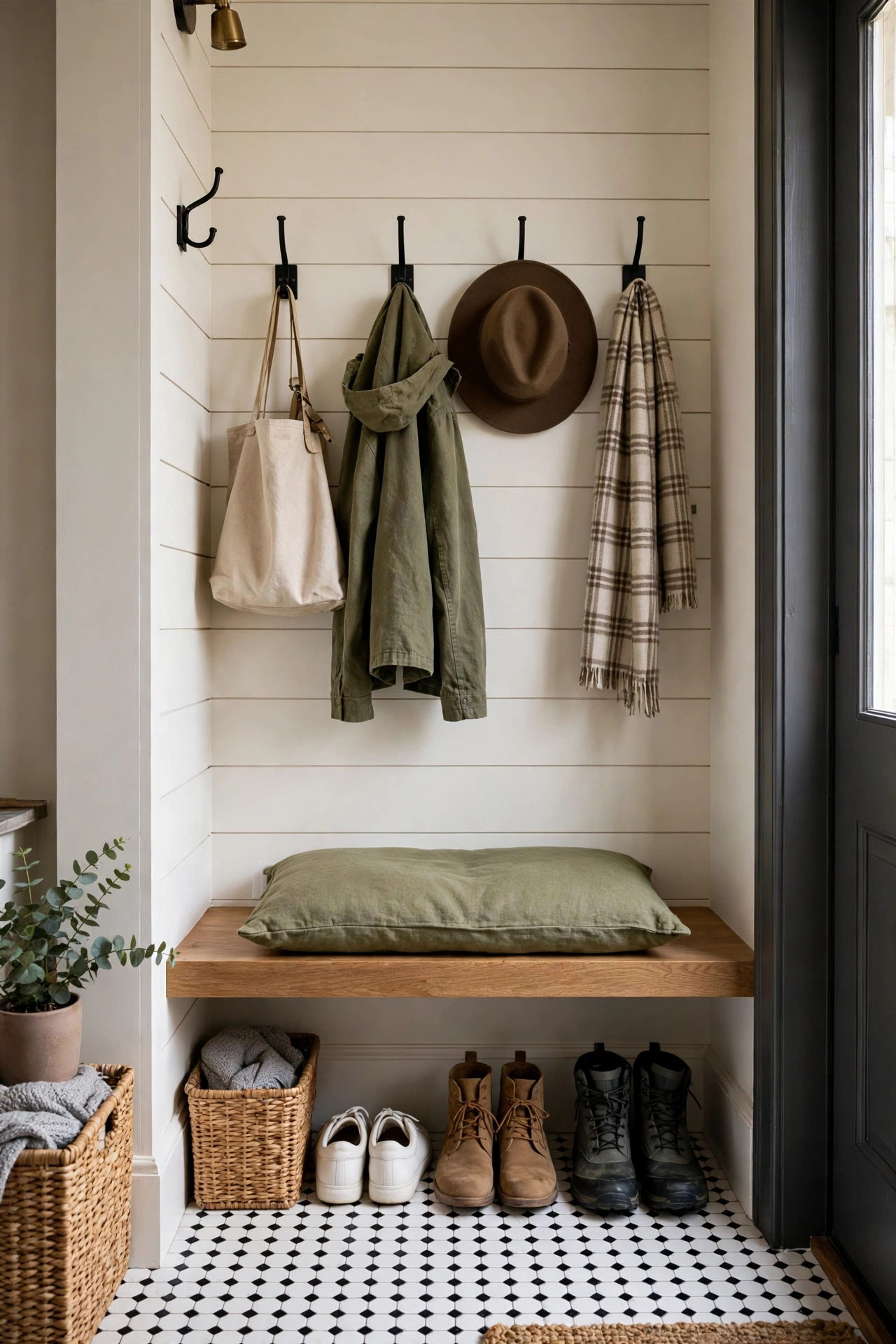
Mount a bench to wall studs instead of letting it stand on legs, and the floor underneath stays open for sweeping, mopping, and a robot vacuum. A floating bench works well in narrow entries where a legged bench would crowd the walkway. Choose a solid wood or plywood seat at least 1.5 inches thick, and anchor it with brackets rated above the weight of two seated adults. Keep the seat 17 to 18 inches high so kids and older adults can sit and stand with ease. Slide a low tray beneath it for wet shoes.
Try this: Leave a 4-inch gap below the bench so a mop head fits underneath without moving anything.
Cost: $$ · Difficulty: Medium
3. Hooks at two heights, spaced wide

Hang one row of hooks at about 60 inches for adults and a second row near 40 inches for kids, so every coat and bag has a reachable home. Space hooks 8 to 10 inches apart, because bulky winter jackets need room or they slide off in a heap. Double hooks earn their place on tight walls, since one hook can hold a coat plus a bag. Match the finish across the whole row, matte black for a modern room or oil-rubbed bronze for a warmer one. A narrow shelf above the hooks holds sunglasses and sunscreen.
Try this: Count two to three hooks per person, one for a coat, one for a bag, and one spare for guests.
Cost: $ · Difficulty: Easy
4. Overhead cabinets for off-season gear
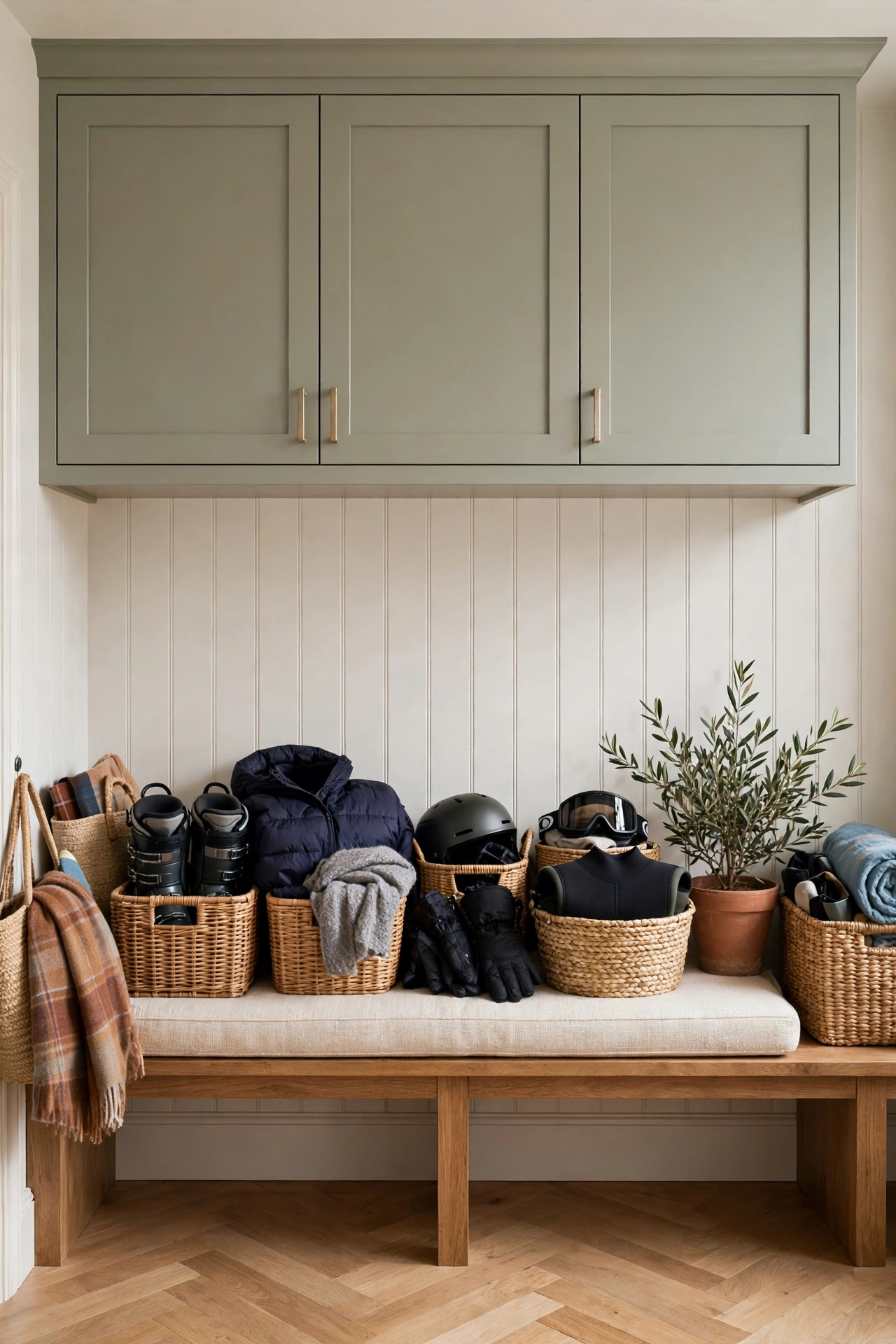
Build up when floor space runs out. Closed cabinets above the bench or locker row swallow beach bags in winter and heavy scarves in summer, so daily items stay at arm’s reach. Keep the doors solid to hide visual noise, and reserve the topmost shelf for rarely touched items like luggage or camping duffels. Label each door or shelf so everyone knows what lives where. Leave a small gap between the cabinet tops and the ceiling so a tall row feels less heavy in a small room.
Try this: Add battery puck lights inside deep cabinets so the top shelves stay usable after dark.
Cost: $$ · Difficulty: Medium
5. Labeled baskets for small gear
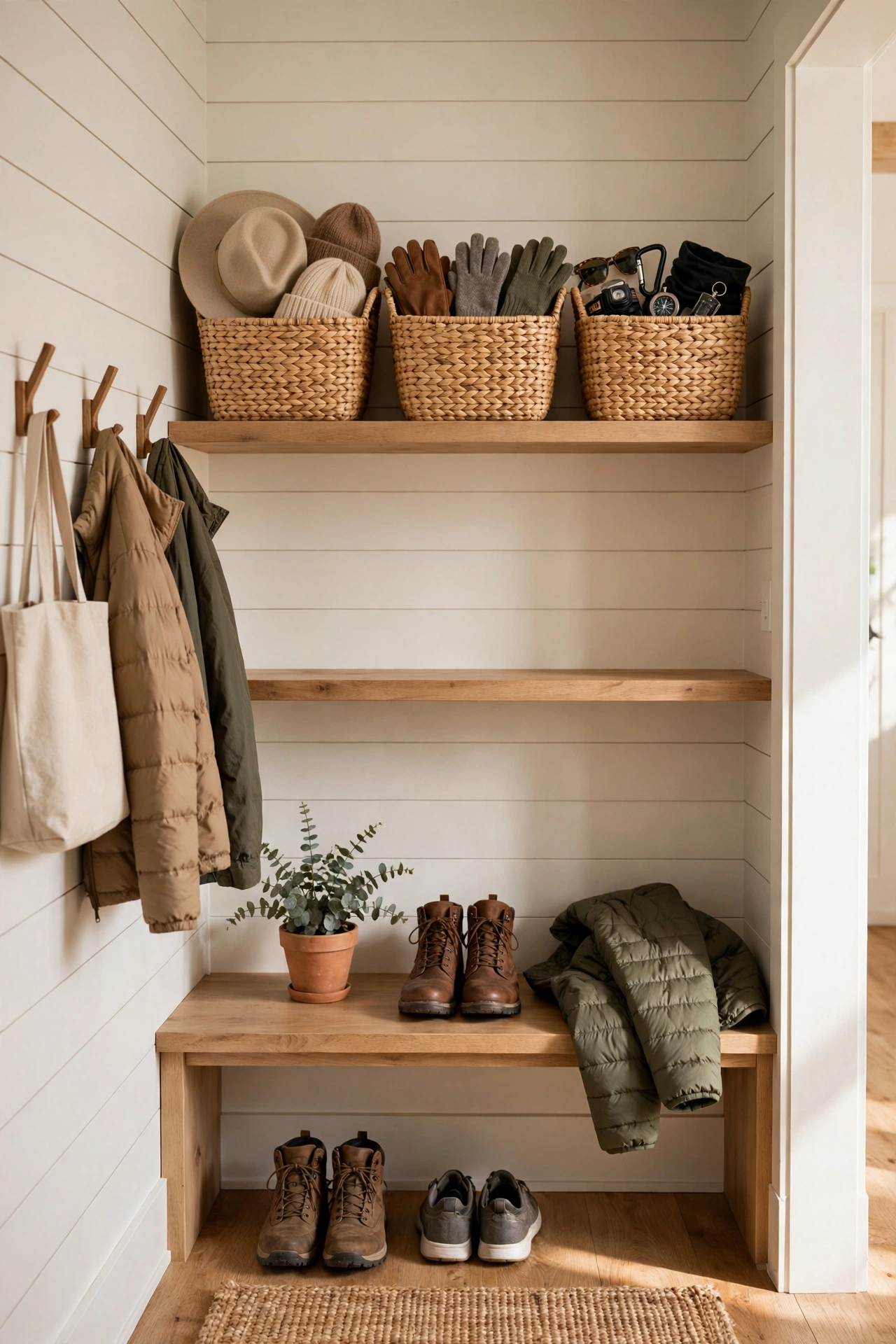
Open shelving only works when everything on it has a container. Group hats, gloves, sunscreen, hand sanitizer, and pet treats into labeled baskets on shelves above the bench, one basket per category. Woven seagrass baskets warm up a white mudroom, while clear bins make contents obvious for kids. Match basket sizes to the shelf openings for a built-in look, and leave one basket empty as an overflow catch-all you clear each week. Chalk or adhesive labels let you rename bins as seasons change without buying new ones.
Try this: File bins front-facing like folders on deep shelves so nothing gets lost in the back.
Cost: $ · Difficulty: Easy
6. A family command center by the door
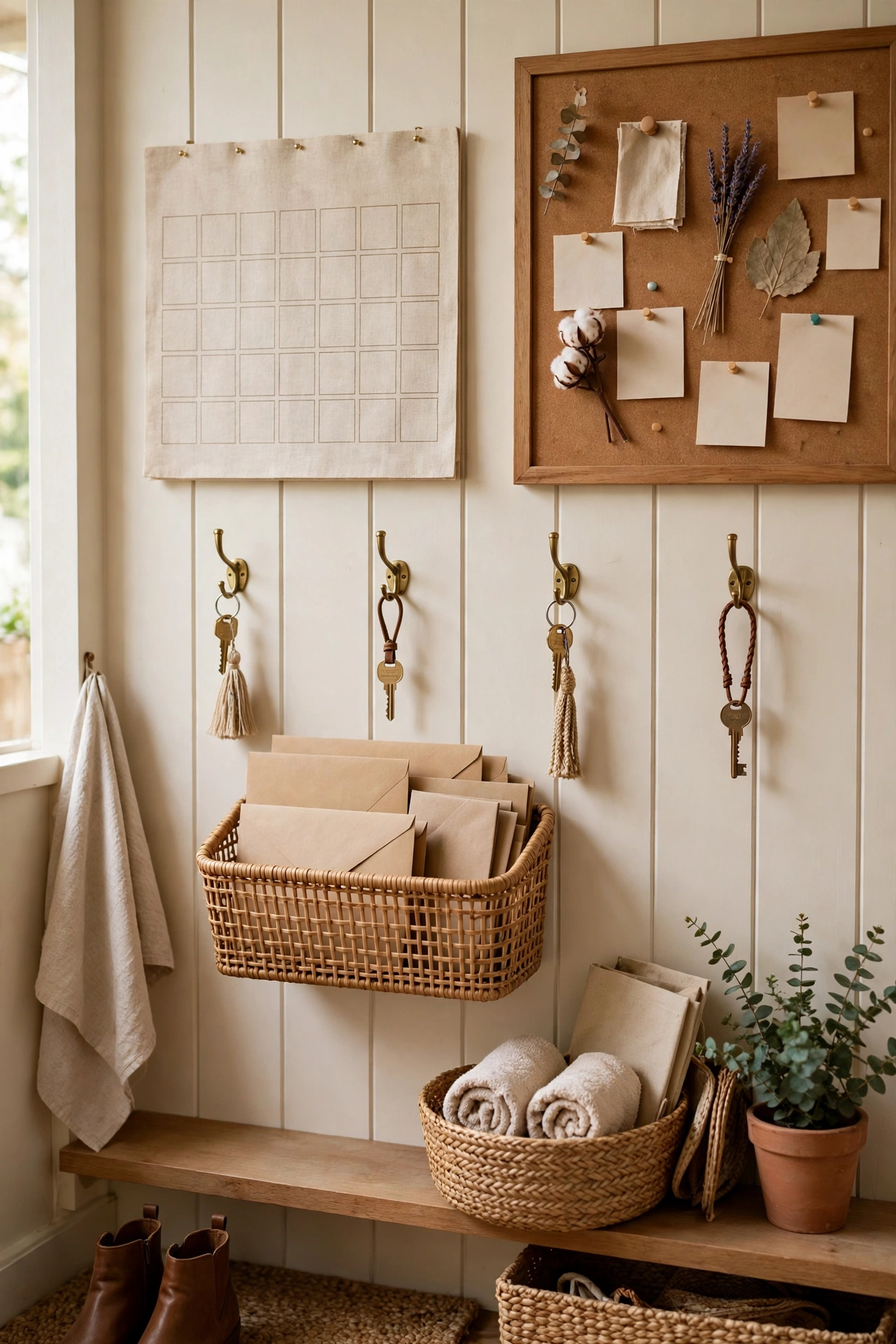
The mudroom is the last stop before the front door, which makes it the right place for a command center. Mount a wall calendar or weekly planner at eye level, add a small bulletin board for permission slips and takeout menus, and screw in a row of key hooks with a label for each driver. A magnetic whiteboard handles quick daily reminders like practice times and trash day. A charging strip in a shallow drawer keeps phones topped up without cable tangles. Keep a slim basket for outgoing mail and library books.
Try this: Keep the whole station within the first few feet of the door so it fits the natural grab-and-go flow.
Cost: $ · Difficulty: Easy
7. A wet-weather station at the threshold
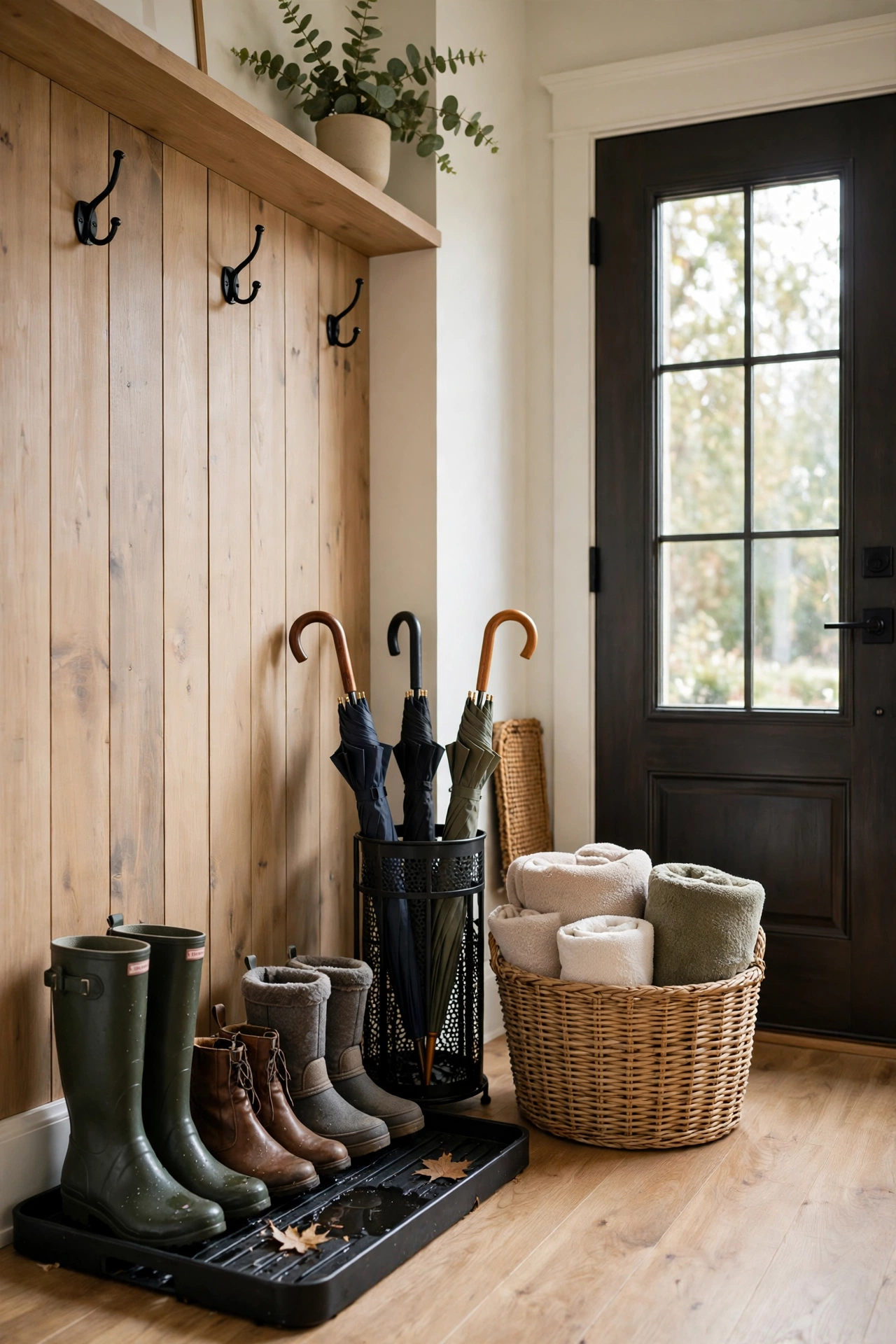
Wet weather is a mudroom’s biggest test. A heavy-duty boot tray with a raised rubber surface catches drips and mud before they reach your floors, and an umbrella stand with a drip tray keeps soggy canopies contained. Place both within two steps of the door so wet gear lands there automatically. Add a small basket of old towels beside the tray for wiping muddy paws, and a washable runner from the door to the tray as a second line of defense. Empty the umbrella drip tray after every rainy day so mildew never starts.
Try this: Size the tray for one more pair than your household count, since guests arrive wet too.
Cost: $ · Difficulty: Easy
8. A kid-height station with picture labels
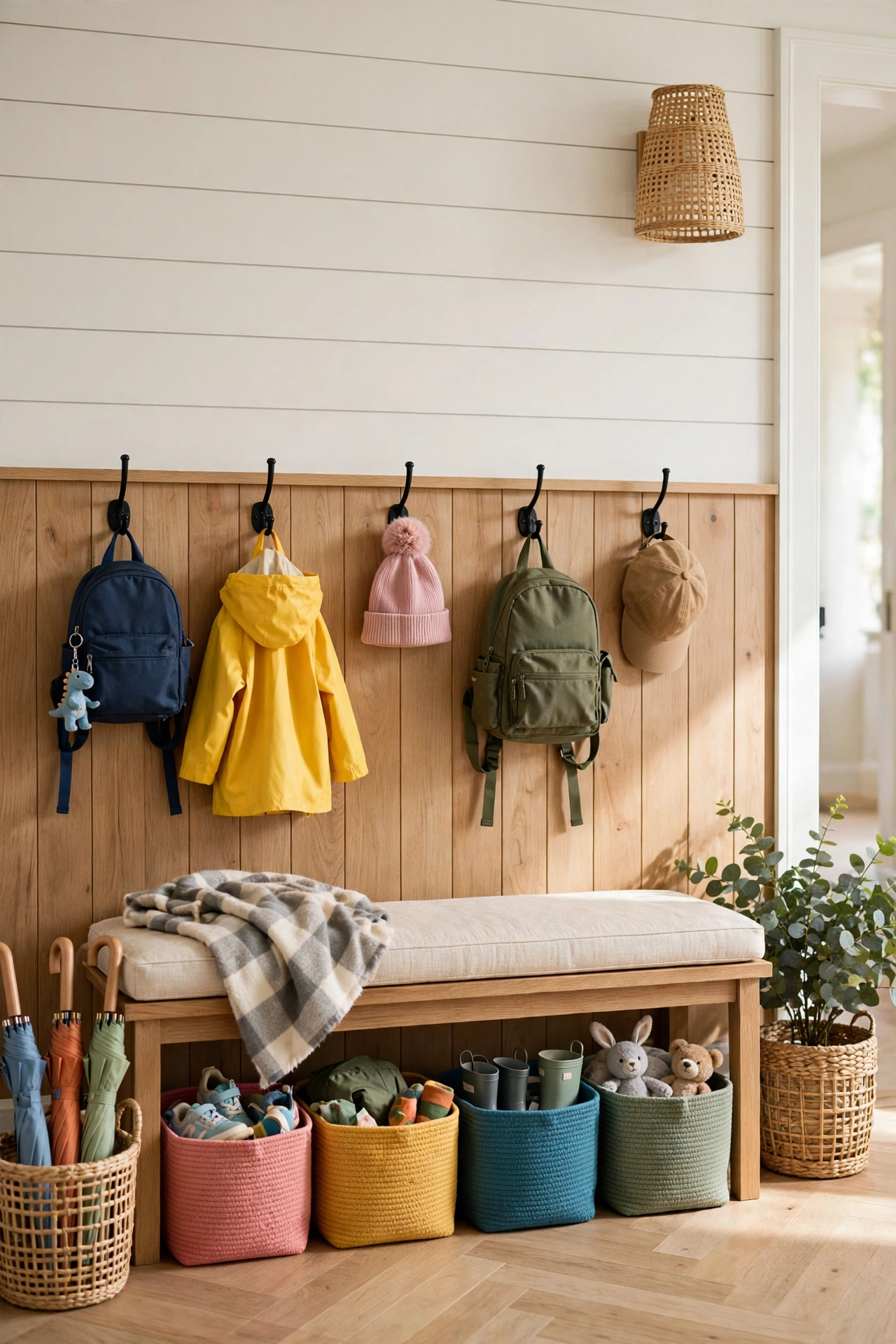
Kids use a system only when they can reach it. Set hooks, baskets, and shoe slots at their height, roughly 36 to 40 inches for elementary-age kids, and let each child claim one zone. Picture labels work better than words for pre-readers: a photo of their backpack taped to their hook removes all guesswork. Add a low open shelf for lunchboxes and water bottles so kids can pack their own bags the night before. Keep a step stool nearby for kids who want the higher shelves. When everything is reachable, hanging up a coat becomes a two-minute habit.
Try this: Praise the habit in week one and it usually sticks for the whole school year.
Cost: $ · Difficulty: Easy
9. A fold-down bench for narrow nooks
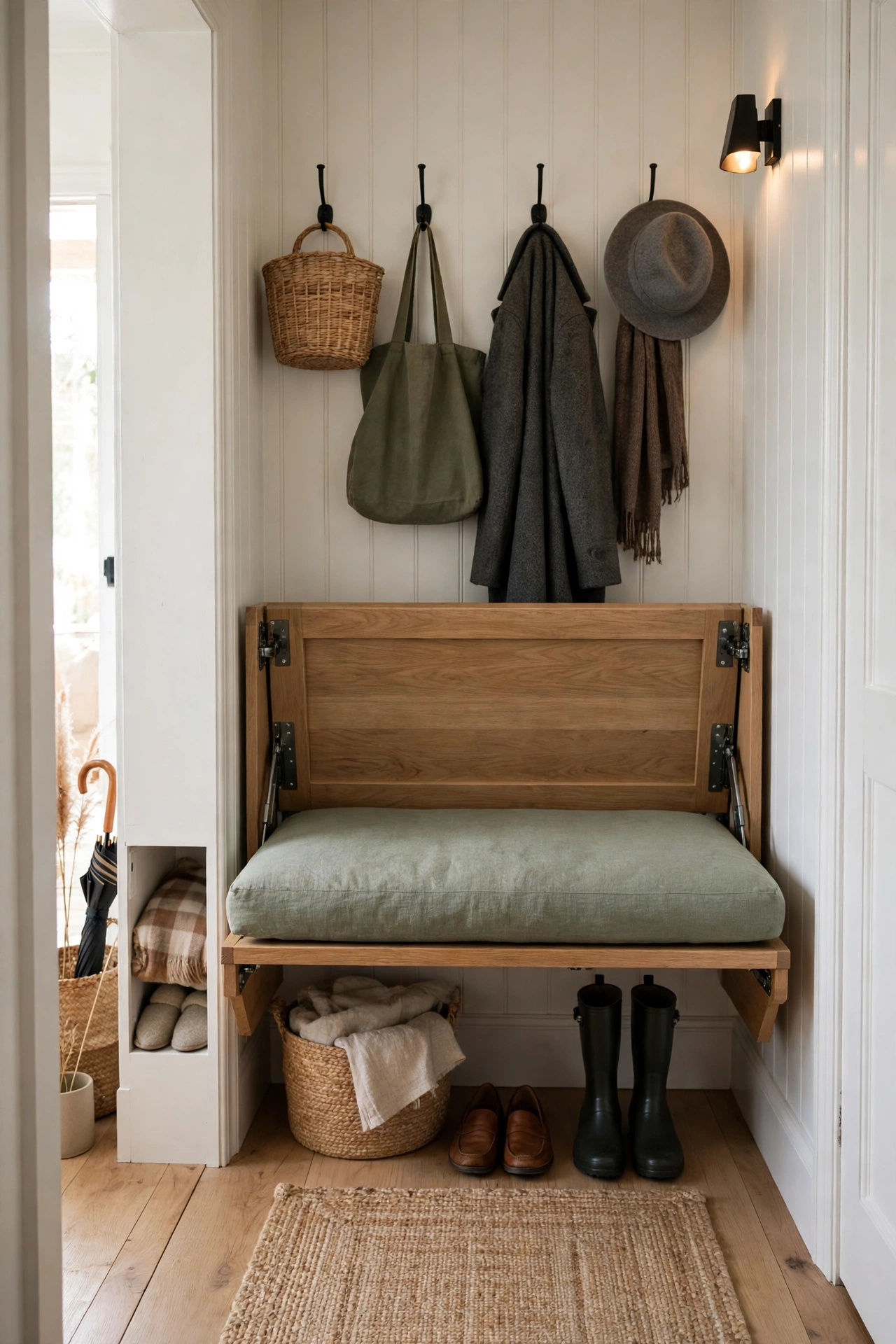
When a mudroom is really a hallway, a laundry corner, or a garage nook, a fold-down wall bench gives seating only when you need it. Mounted to a stud, a sturdy fold-down seat supports an adult and folds flat against the wall afterward, freeing the floor for bins or a bike. Choose a bench rated for at least 200 pounds so adults can actually use it. Pair it with a wall-mounted hook rail and a slim shoe rack so the whole setup takes up less than a foot of depth. Add a battery-powered motion light above so the nook stays bright without wiring.
Try this: Mount the seat at 17 inches high and test it with your heaviest winter boots on before you call it done.
Cost: $$ · Difficulty: Medium
10. A coat closet turned into a mini mudroom

Many homes have no mudroom at all, only a coat closet near the front door. That closet can do double duty with the right organizer kit. Remove the door if the opening feels tight, then add a hook rail at two heights, a stackable shoe rack, and fabric bins for gloves and scarves. An over-the-door hook rack on the inside of the closet door adds bag storage without taking wall space. Because you work with space that already exists, this is one of the cheapest ways to get a real drop zone, and a good starting point before committing to furniture.
Try this: Keep one bin per person in the closet so the system survives even when the bench idea waits.
Cost: $ · Difficulty: Easy
11. A pet station by the door they use
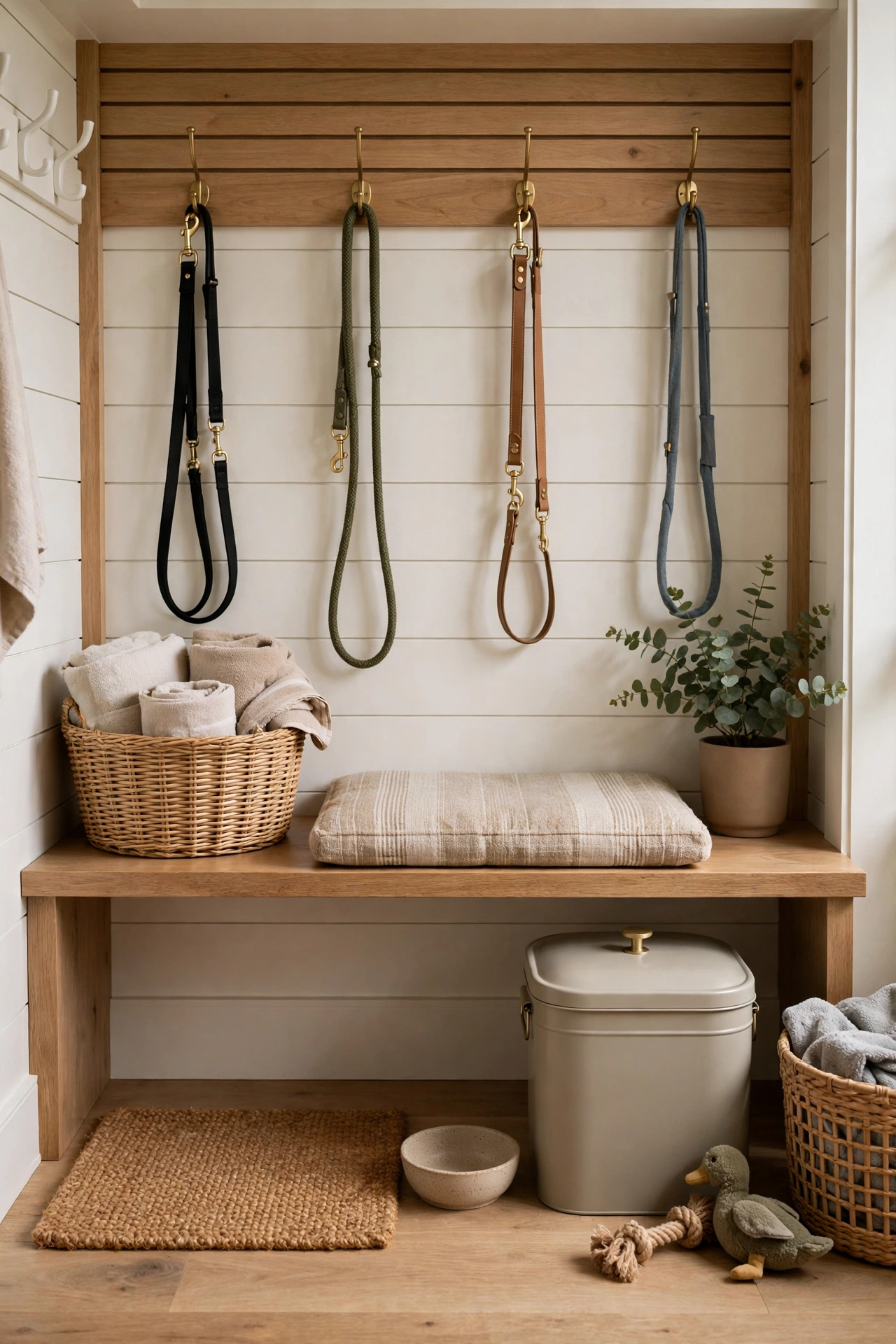
When the mudroom doubles as the door your dog uses, pets deserve their own small setup. Hang leash and collar hooks beside the door, keep a lidded bin for food or spare towels, and set a washable mat where muddy paws land first. A small basket of old towels by the boot tray handles wet paws before they reach the rug. In a larger room, a low drawer or pull-out bin under the bench keeps food contained and out of sight. Keeping pet supplies in one station means fewer leashes tangled around coats and bags.
Try this: Hang the leash hook at your own hand height so grabbing it on the way out takes one motion.
Cost: $ · Difficulty: Easy
12. A mudroom and laundry combo
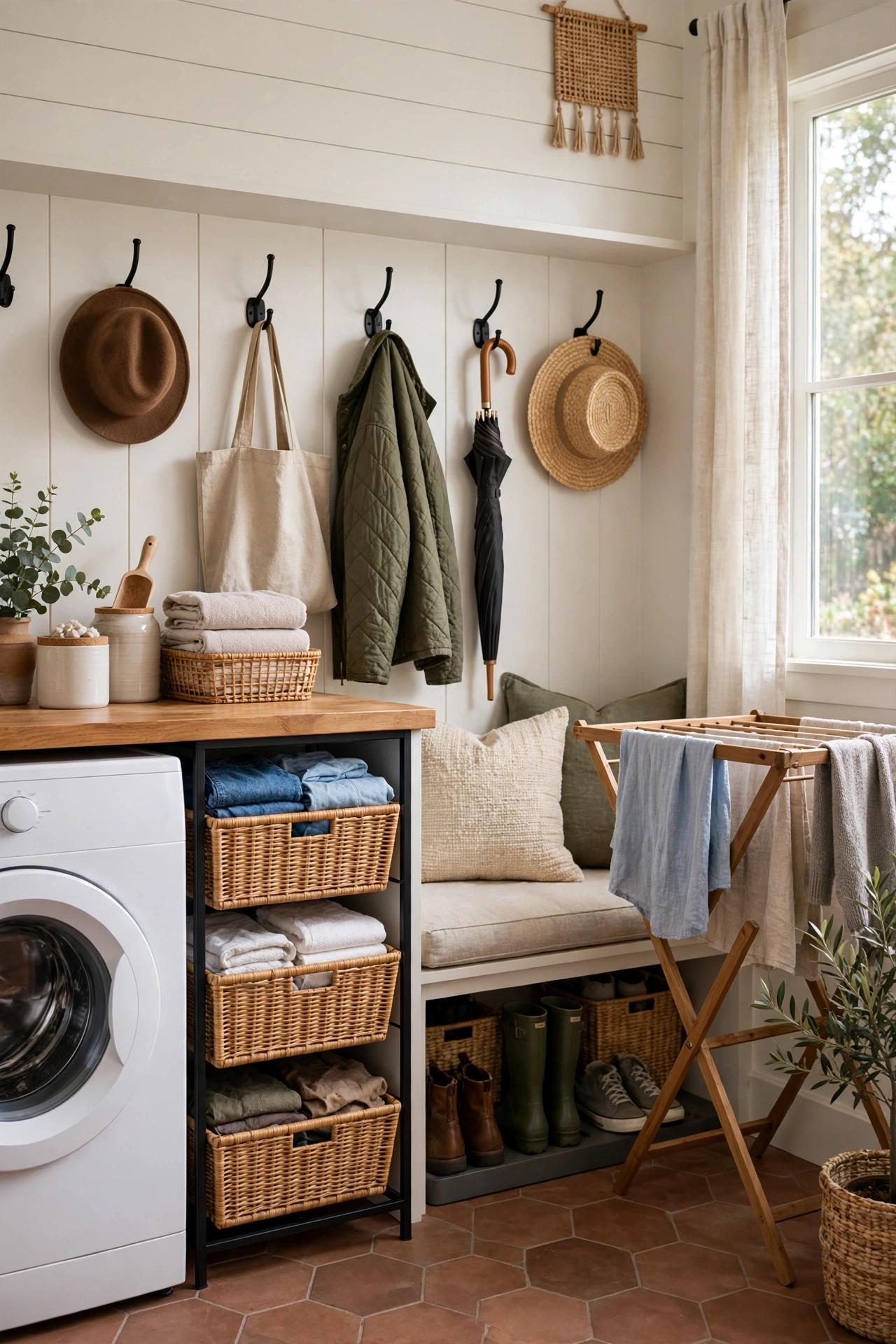
Pairing the mudroom with the laundry room saves steps and plumbing. Put the washer and dryer on one wall, a sorting bin set beside them, and a wall-mounted drying rack above for wet jackets and gym clothes. A small utility sink handles muddy shoes, paint brushes, and pet bowls without a trip to the kitchen. Waterproof surfaces matter here: tile or luxury vinyl plank on the floor, and a washable paint on the walls. Fold-down drying racks and a narrow ironing board that hangs on the door keep the combo room working without crowding it.
Try this: Keep one bin labeled for mudroom laundry only, so dirty towels and sports gear never mix with bedroom loads.
Cost: $$$ · Difficulty: Hard
13. A garage-entry zone with tough surfaces

Garage entries take the hardest wear in the house, so build this zone for it. Use tile or sealed concrete on the floor, washable wall panels up to chair height, and heavy-duty hooks for sports gear and tool bags. A wide bench here earns its size, since two people often come in at once with groceries or gear. Add a tall cabinet for seasonal sports equipment and a wall grid for bikes or skateboards. Keep a small dustpan and brush mounted inside the cabinet door, because this is the room where dirt arrives first and should also leave first.
Try this: Run a washable runner from the garage door to the bench so grit stops on the runner.
Cost: $$ · Difficulty: Medium
14. A renter-friendly drop zone with no drilling
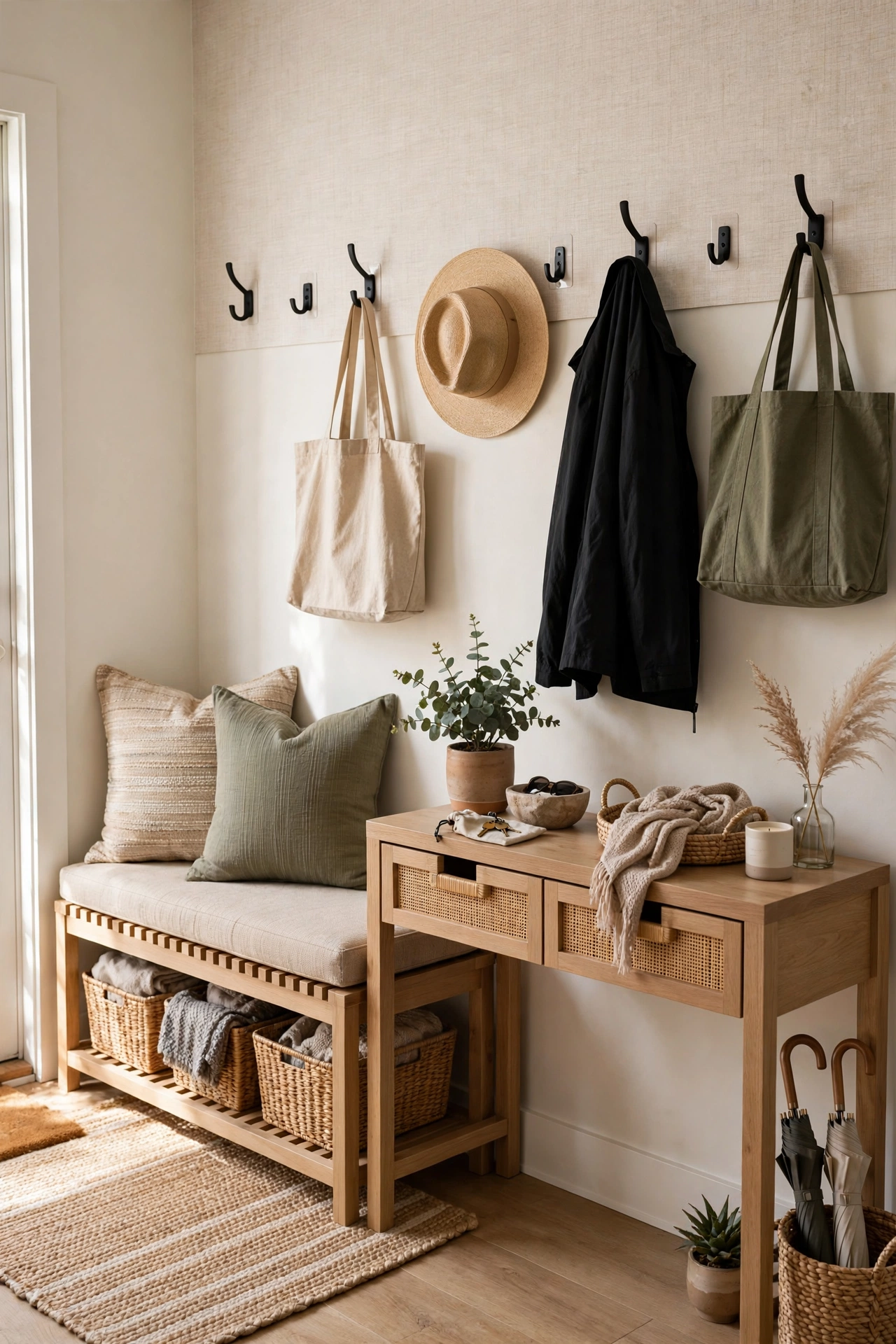
Renters can build a full drop zone without putting holes in the wall. Start with a freestanding bench or a slim console table, add adhesive hook strips rated above the weight of a winter coat, and set a boot tray and a basket beside it. An over-the-door hook rack on the front door holds bags and jackets, and a freestanding coat rack covers overflow when guests arrive. Everything here moves with you, so the system survives the next apartment. Choose pieces that look like furniture, so a front-door drop zone still feels like part of the home.
Try this: Test one adhesive hook with a loaded bag for a week before hanging the full row.
Cost: $ · Difficulty: Easy
How to pick your mudroom layout
Measure the wall first, then count the people who use that door daily. A wall under 4 feet fits a hook rail, a boot tray, and a slim bench at most. A wall of 6 to 8 feet holds two locker bays or a bench with overhead cabinets. A full room can carry lockers, a laundry combo, and a pet station without crowding the walkway. Keep at least 36 inches of clear walking space in front of any bench or cabinet, since a mudroom that blocks the path gets bypassed. Pick closed storage for a front door guests see, and open cubbies for a garage door only the family uses.
Mudroom ideas at a glance
| Idea | Cost | Difficulty | Best for |
|---|---|---|---|
| One locker bay per person | $$$ | Hard | Families of 3 or more |
| Floating bench, clear floor | $$ | Medium | Narrow entries |
| Hooks at two heights | $ | Easy | Any home, any budget |
| Overhead cabinets | $$ | Medium | Off-season gear |
| Labeled baskets | $ | Easy | Small gear and kids |
| Family command center | $ | Easy | Keys, mail, and schedules |
| Wet-weather station | $ | Easy | Rainy or snowy climates |
| Kid-height station | $ | Easy | Young kids |
| Fold-down bench | $$ | Medium | Hallways and nooks |
| Coat closet mini mudroom | $ | Easy | No dedicated room |
| Pet station | $ | Easy | Dog owners |
| Mudroom and laundry combo | $$$ | Hard | Larger homes |
| Garage-entry zone | $$ | Medium | Heavy daily wear |
| Renter-friendly drop zone | $ | Easy | Rentals and apartments |
Cost key: $ means $1 to $10, $$ means $11 to $99, $$$ means $100 to $999, $$$$ means $1,000 and up.
Mistakes to avoid with a mudroom
One shared basket for the whole family is the fastest way back to a pile, since nobody wants to sort through other people’s gear. Open shelving without containers has the same problem, because small items slide to the back and vanish. Skipping the wet-weather tray costs more later, since standing water and salt damage floors that a $20 tray would have protected. Forgetting the twice-yearly reset lets off-season gear slowly take over the daily spots, so empty the room twice a year, keep the current season in place, move the rest upstairs, and donate the worn-out pile the same week.
Safety notes
Anchor tall lockers, bookcases, and shelves into wall studs with hardware rated above the load, since a climbing child can tip a freestanding unit. Keep cords from charging stations and lamps clipped along baseboards and away from walkways and the bench. Near a laundry sink, use GFCI outlets and keep electrical items away from water. In homes built before 1978, test for lead paint and follow lead-safe rules before sanding or drilling. Hire a licensed electrician for new outlets or hardwired lights. Keep candles away from coats and curtains, and use battery candles near fabric.
Related reading
For a deeper look at shoe storage alone, see our guide to 15 Perfect Mudroom Shoe Storage Ideas for an Entry That Stays Tidy.
For built-in storage ideas that work beyond the entry, see our guide to 25 Smart Built In Closet Storage Ideas for a Closet That Works Harder.
For a polished front entry to pair with a hardworking mudroom, see our guide to 30 Perfect Mid Century Modern Foyer Ideas for a Warm, Retro Entry.
For a grander entry style, see our guide to 24 Stunning Luxury Foyer Design Ideas for a Grand First Impression.
For storage ideas in tight bedrooms that pair well with a small mudroom, see our guide to Small Bedroom Storage Ideas.
For anchoring safety guidance, see the CPSC Anchor It! guidance. For lead-safe renovation rules, see the EPA Renovation, Repair and Painting program.
Frequently asked questions
Do I need a bench for a mudroom to work?
No. A bench helps when you have floor space, but a hook rail, a boot tray, and a basket can carry a small entry on their own. Add seating only when the walkway still keeps 36 inches clear with the bench in place.
What is the cheapest way to organize a mudroom?
Start with hooks, baskets, and a boot tray. Those three solve most mudroom chaos for under $50 total. Add a freestanding bench next, and label everything so the system survives busy mornings.
How many hooks does a mudroom need?
Plan two to three hooks per person: one for an everyday coat, one for a bag, and one spare. Space hooks 8 to 10 inches apart, with a lower row near 40 inches for kids.
What should live in a mudroom instead of a closet?
The mudroom holds the active rotation: today’s coat, this week’s shoes, backpacks, keys, and current-season gear. Off-season or rarely used items like dress coats and luggage belong in a bedroom closet.
How do I keep a mudroom organized with kids?
Give each child one hook, one basket, and one shoe slot at their height, with picture labels for pre-readers. Add a two-minute evening reset, coats, shoes, and bags, small enough to finish before dinner.
Final thoughts
Start with the idea that fits your door. Hooks, a tray, and one spot per person beat a room nobody uses, and you can add lockers or a laundry combo later once the daily habit sticks.
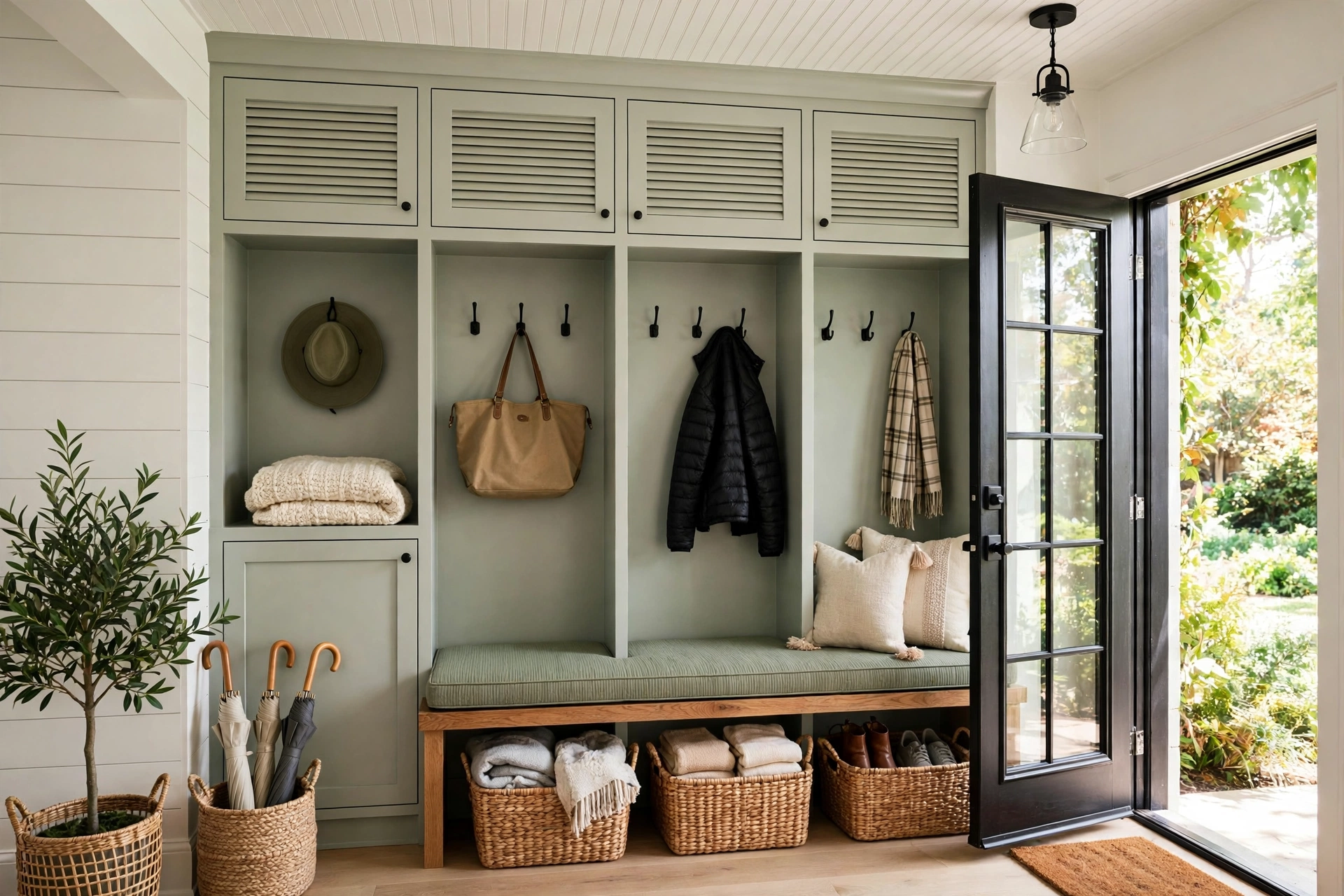
For a dedicated laundry room, see our guide to 25 Laundry Room Ideas for a Room That Finally Works as Hard as You Do for a full-wall folding counter, a deep utility sink, a ceiling pulley drying rack, a pet wash station, and a garage laundry corner.


