

Two people, one small bedroom, and a daily negotiation over floor space, closet room, and who gets the outlet by the bed. That is the reality for siblings, roommates, and couples making a small room work, and it gets tense fast when the room has no plan. The fix is not a bigger room. It is a layout that gives each person a clear sleeping spot, a clear storage spot, and a little privacy, all without blocking the door or the walkways.
This guide covers 15 small shared bedroom ideas that do exactly that, from bunk beds and trundle beds to curtain privacy, split storage, and shared desks. Each idea includes a real cost range and a difficulty label, so you can pick what fits your budget, your room size, and the ages of the people sharing it. It is written for siblings sharing a kids room, teens sharing with a younger brother or sister, and adults sharing a small rental bedroom.
- Give each sleeper the same amount of bed, storage, and wall space, or arguments start fast.
- Stack beds or push them into corners to free the middle of the room for moving around.
- Use curtains, bookcases, or color zones for privacy instead of building walls.
- Label every bin, drawer, and shelf so shared storage stays fair and easy to find.
- Anchor every bunk bed, bookcase, and tall dresser into wall studs before anyone sleeps in the room.
1. Standard bunk bed with storage stairs
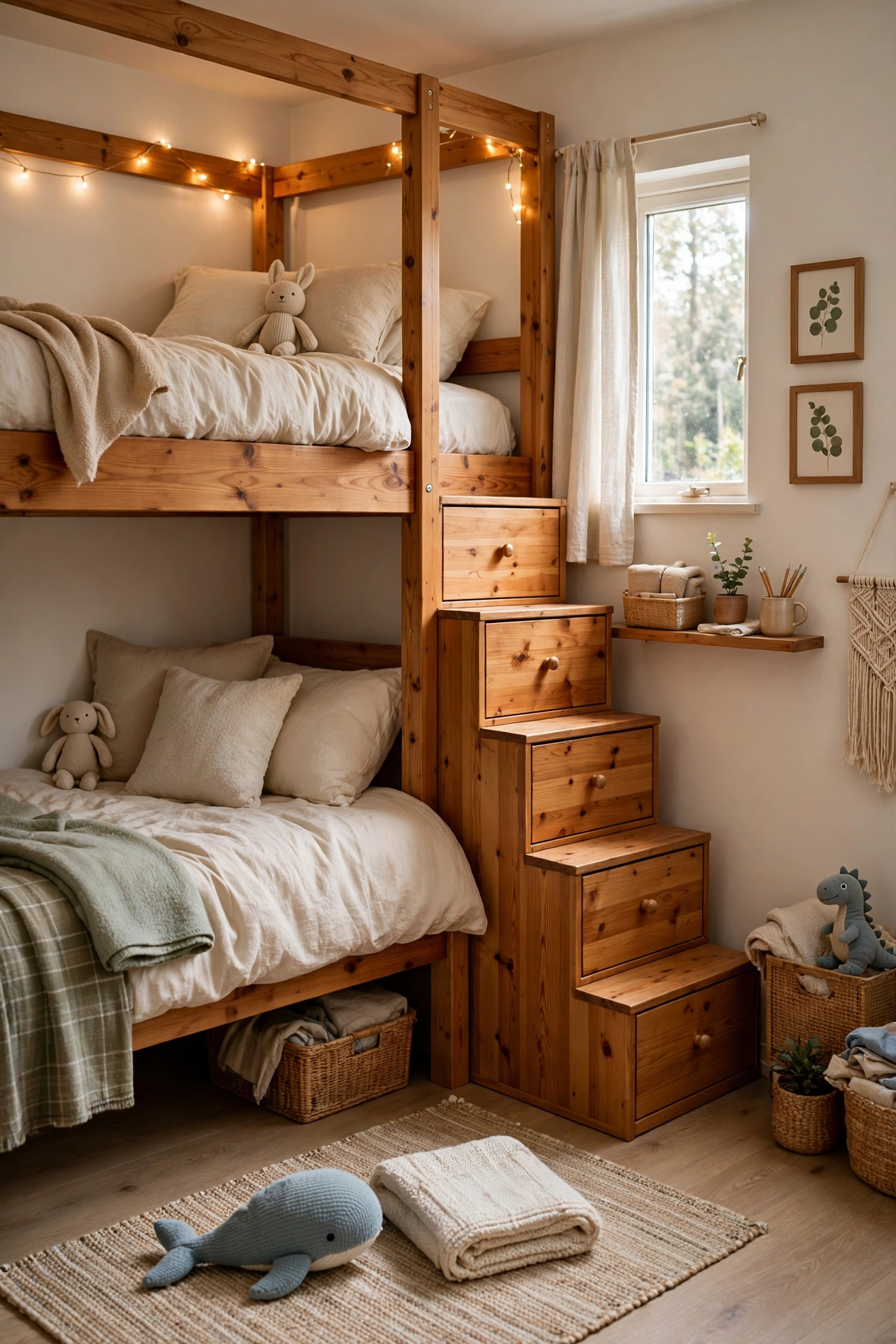
A standard twin over twin bunk bed sleeps two people on the floor space of one bed, which is why it stays the top pick for small shared rooms. Choose a model with stairs instead of a straight ladder, because each stair step can hold a drawer for socks, pajamas, or school supplies. That turns the climb into storage and removes the need for a separate dresser in a tight room. Pick a frame rated for the weight of the sleeper plus mattress, and check that the top bunk has guardrails on both sides, even the side against the wall.
Try this: Put a small clip light on each bunk rail so each sleeper controls their own reading light without waking the other.
Cost: $$ ($300 to $800). Difficulty: Weekend project.
2. L-shaped twin beds in a corner

Place one twin bed along each wall of a corner so the beds form an L, and each sleeper gets their own wall to lean against. The corner where the beds meet becomes a natural shared nightstand spot, with room for one lamp, two water bottles, and two phone chargers. This layout suits siblings who do not want a bunk bed but still need floor space, because the middle of the room stays open for a rug or a small desk. It also gives each sleeper a slightly different view of the room, which helps the room feel less like a dorm.
Try this: Use one long narrow nightstand in the corner instead of two small ones, and split it down the middle with tape or paint so each side is clearly owned.
Cost: $ (under $200 for the nightstand and bedding swap). Difficulty: Easy.
3. Trundle bed that rolls out at night
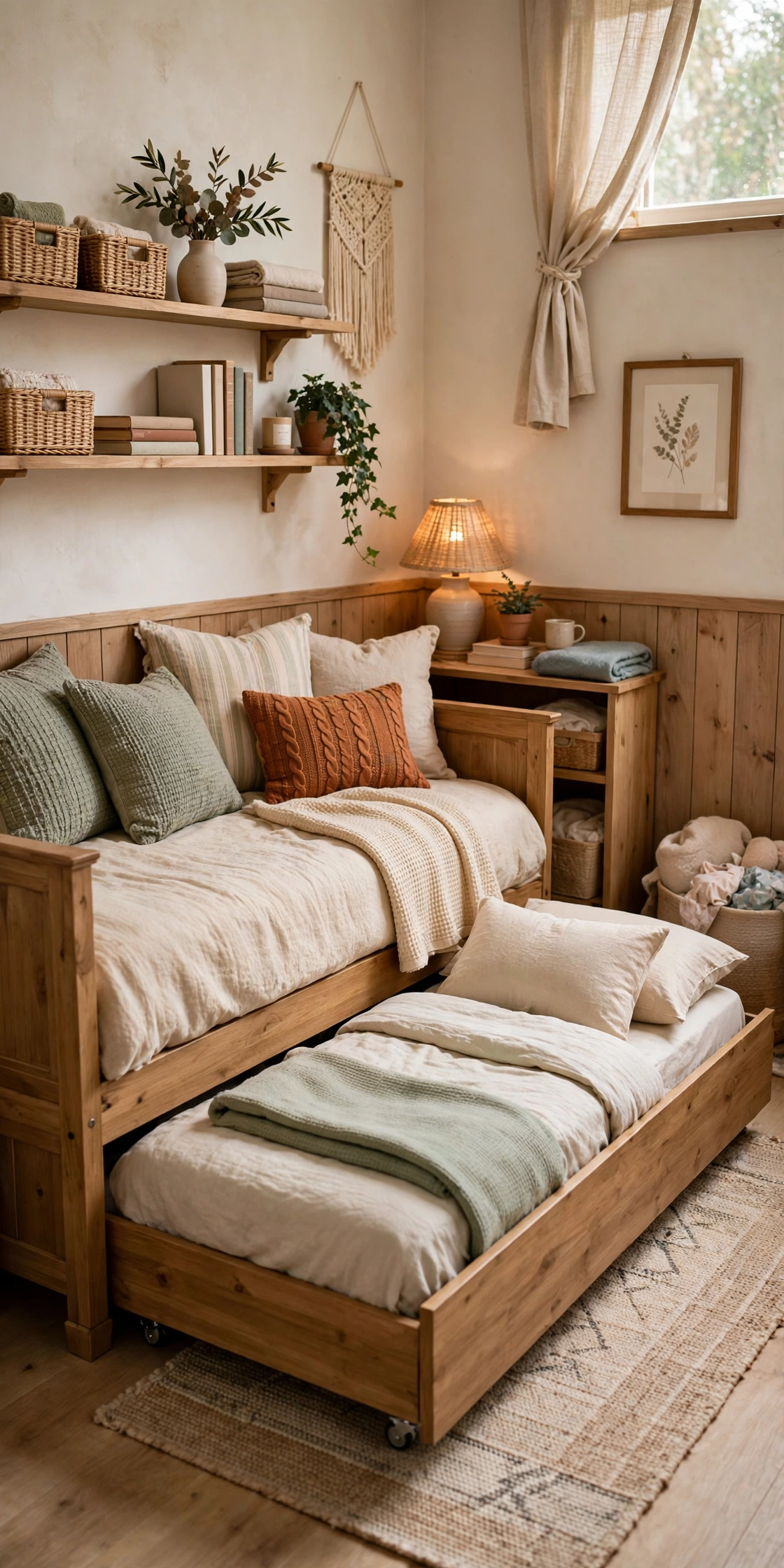
A trundle bed hides a second mattress under a daybed or a low twin bed, and it rolls out only at bedtime. During the day the room reads as a single bed plus open floor, which matters in rooms under 120 square feet where a second permanent bed eats the whole floor. This setup works well for a guest who stays often, a younger sibling who is not ready for a bunk, or roommates in a studio style room. Keep the trundle mattress thinner than the main mattress, usually 6 to 8 inches, so it slides back without catching.
Try this: Store the trundle bedding in a lidded bin under the daybed so making the second bed takes under two minutes.
Cost: $$ ($250 to $600). Difficulty: Easy.
4. Loft bed over a desk zone
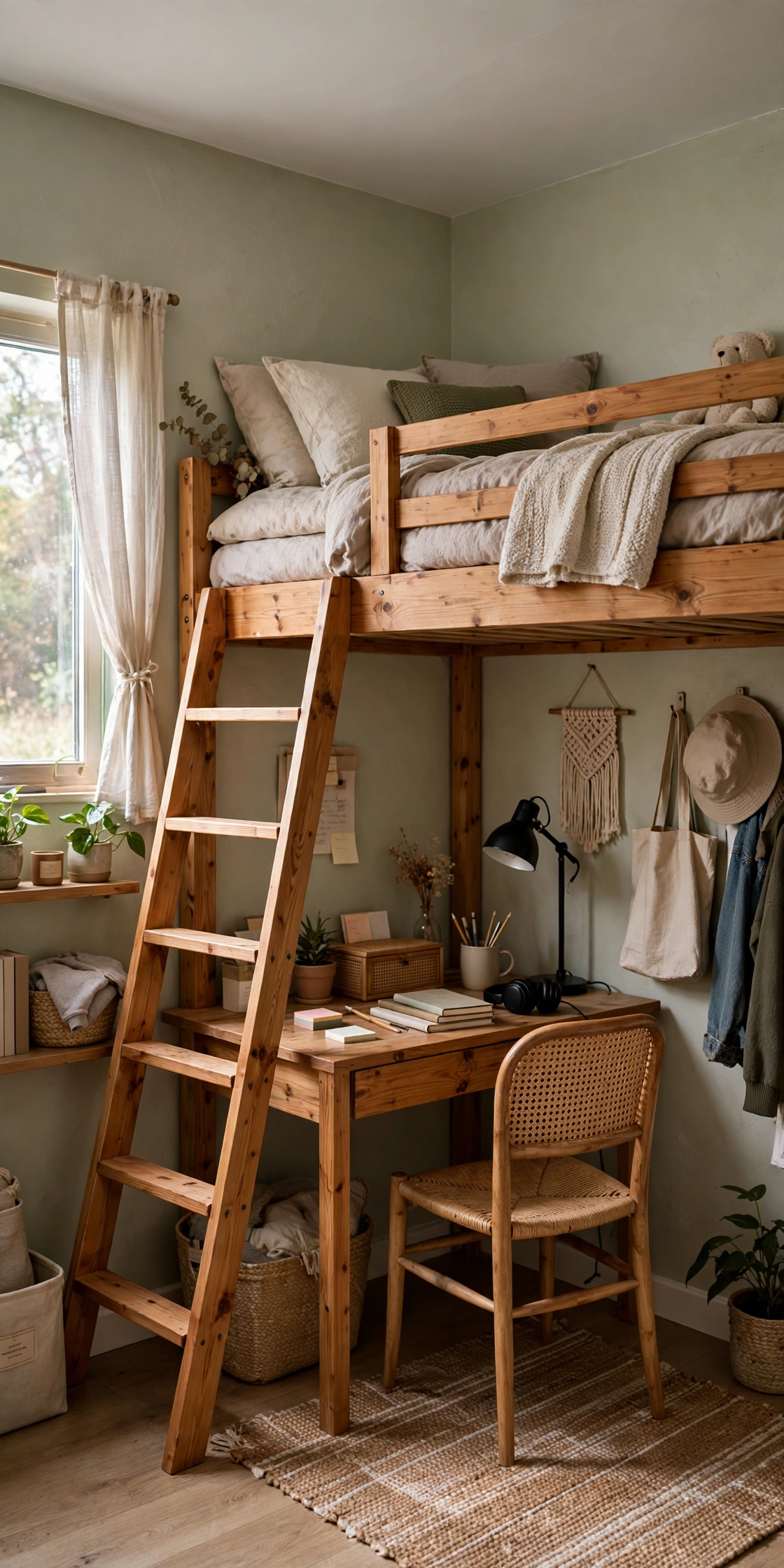
A loft bed lifts one sleeper up high and leaves the floor below free for a desk, a dresser, or a reading chair. This is the best pick when one person needs a study spot and the other needs floor space, because both zones exist in the same footprint. It suits teens best, since climbing up and down every night is tiring for younger kids, and the ceiling needs at least 30 inches of clearance above the mattress for sitting up. Anchor the loft frame into wall studs, and keep the desk lamp on the wall side so cords stay out of the walkway.
Try this: Hang a small curtain on the open side of the loft so the sleeper above gets privacy while the desk user works below.
Cost: $$ ($400 to $900). Difficulty: Weekend project.
5. Matching twin beds with separate lamps

Two matching twin beds placed side by side, with a slim table between them, gives both sleepers equal space and equal status. That fairness matters more than it sounds, because most shared room arguments start with one person feeling they got the worse bed. Give each sleeper their own lamp, their own charging spot, and their own side of the table, and the shared table stops being a fight. Matching frames and different bedding let each person show their own taste without breaking the calm look of the room.
Try this: Run a small power strip behind the table, one outlet per sleeper, and label each charger with colored tape.
Cost: $ (under $150 for the table and lamps). Difficulty: Easy.
6. Curtain privacy around each bed

A ceiling mounted curtain track around one bed, or both beds, gives each sleeper a door they can close without building anything permanent. This is the cheapest real privacy fix for shared rooms, and it helps most when sleep schedules differ, like one teen who reads late and one younger sibling who sleeps early. Use light cotton or linen curtains so air still moves, and mount the track into ceiling joists, not just drywall, so a pulled curtain does not bring the track down. Keep curtains clear of heaters and lamps with hot bulbs.
Try this: Pick one curtain color per sleeper so each bed reads as its own zone even when the curtains are open.
Cost: $ ($40 to $120 per bed). Difficulty: Easy.
7. Open bookcase as a room divider
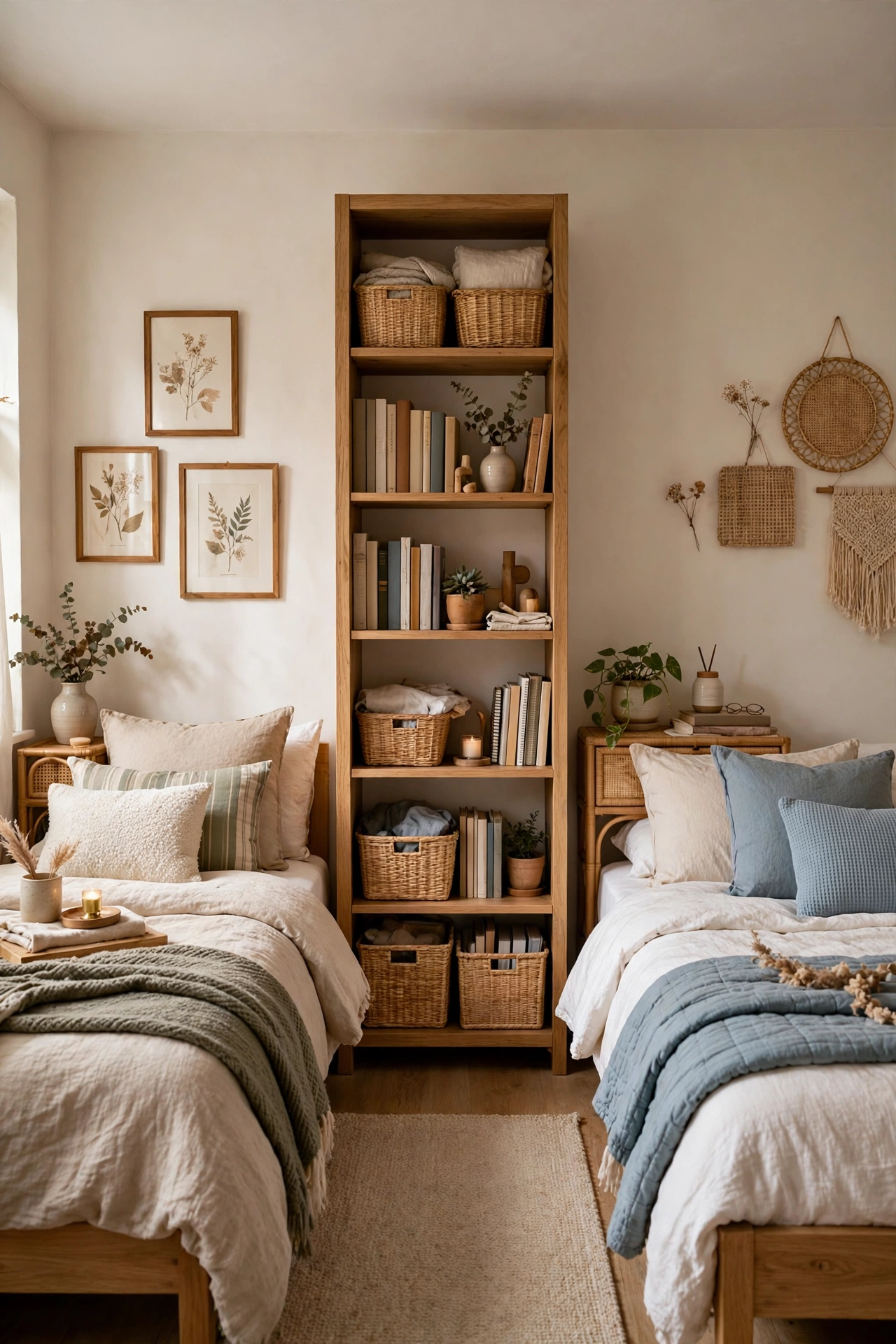
A tall open bookcase placed between two beds splits the room into two zones while still letting light pass through, which a solid wall or a tall wardrobe cannot do. Each sleeper gets one side of the shelves for books, chargers, and small personal items, and the bookcase itself adds storage the room would otherwise lack. Anchor the bookcase into wall studs at the top, because a climbing child or a bumped shelf can tip a tall unit fast. Leave the top shelf for light items only, and keep heavy books on the lowest shelves.
Try this: Face one row of shelves toward each bed so neither sleeper has to cross into the other side to reach their things.
Cost: $$ ($150 to $400). Difficulty: Easy.
8. Color zones on one neutral base

Paint the room one calm neutral, then give each sleeper their own accent color through bedding, a rug, and one wall shelf. This keeps the room looking unified while each side still feels owned, which is the balance most shared rooms miss. Let each person pick their accent from a short list that works together, like sage green and warm sand, or navy and soft peach, so the two sides do not clash. Paint one narrow stripe or one small wall section per side if you want the zones to read even stronger.
Try this: Repeat each accent color in three places on that side, bedding, rug, and shelf bin, so the zone reads clearly.
Cost: $ (under $150 for bedding and bins). Difficulty: Easy.
9. Rolling drawers under each bed
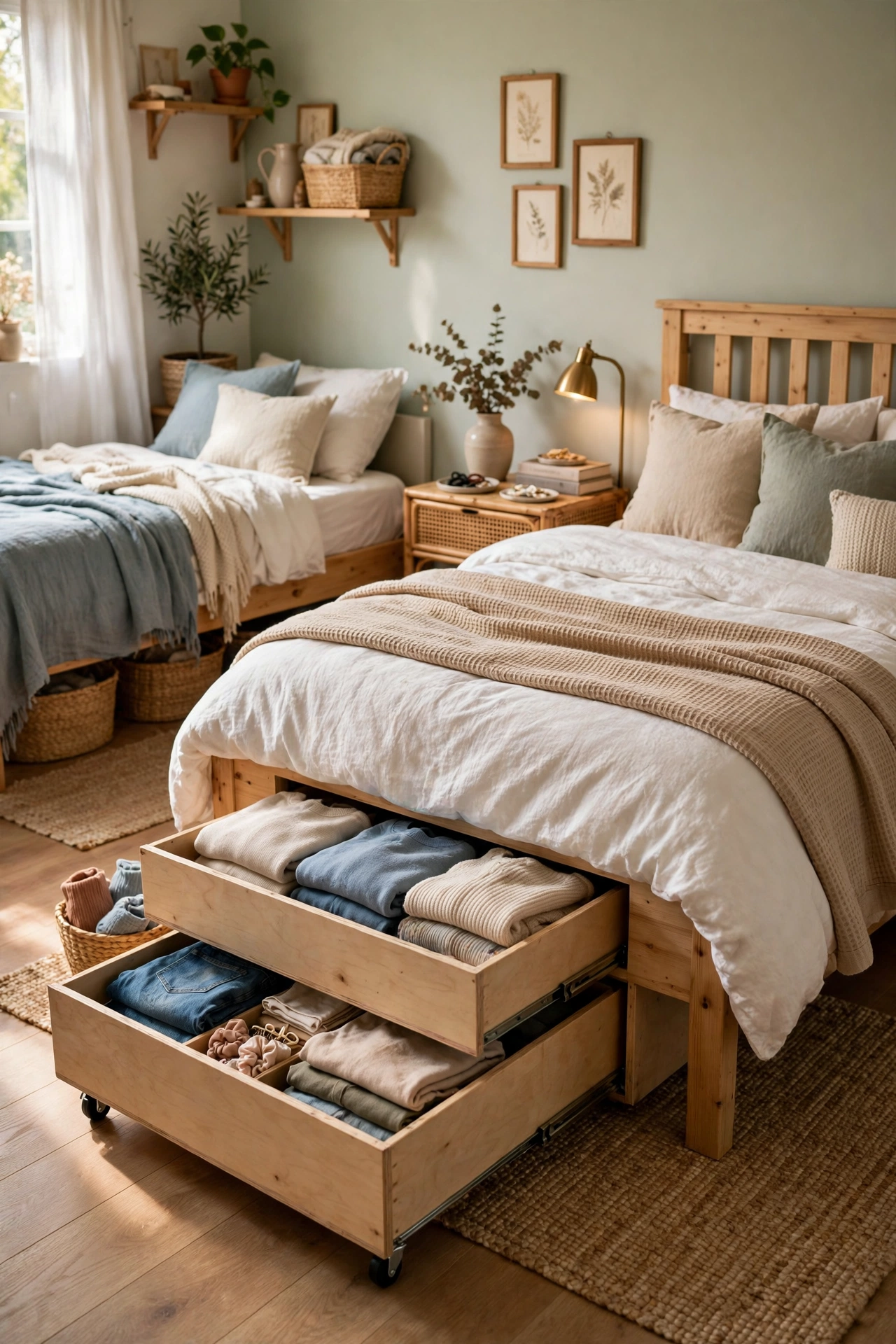
Rolling drawers that slide under each bed turn dead space into a full dresser drawer set, one set per sleeper. This works in rooms where a shared dresser would block the door swing or eat the last free wall, and it keeps each person’s clothes separate without extra furniture. Label each drawer front with the sleeper’s name or color, and keep the drawers shallow enough to roll out fully without hitting the opposite bed. Measure the clearance under the bed frame first, since most rolling drawers need at least 8 inches of height.
Try this: Assign one drawer per category, tops, bottoms, and sleepwear, so morning routines do not need a search.
Cost: $ ($60 to $180 for two sets). Difficulty: Easy.
10. One wall shelf above each bed

A single wall shelf above each bed gives each sleeper a personal display spot for books, a clock, and one or two keepsakes, without taking any floor space. This matters in small rooms where a nightstand per person will not fit, because the shelf replaces the nightstand for the items each sleeper reaches for most. Mount each shelf into wall studs with brackets rated above the load, and keep heavy items off the shelf above a sleeping head. A small clip light on each shelf doubles as a reading light.
Try this: Keep each shelf to one row of items so it stays a display spot and does not turn into overflow storage.
Cost: $ (under $80 for two shelves and brackets). Difficulty: Easy.
11. Long shared desk along one wall

One long desk along a full wall seats two people with far less wasted space than two separate desks, and it leaves the rest of the room free. Split the desk down the middle with a small shelf or a desk organizer so each person has a clear side, and give each side its own task lamp and pencil cup. This setup suits homework age siblings and roommates who work from home, because both people can work at once without elbowing each other. Keep the desk depth at 20 to 24 inches so chairs still leave a clear walkway behind them.
Try this: Add a cable tray under the desk so two laptops and two chargers do not turn into a tangle on the floor.
Cost: $$ ($200 to $500). Difficulty: Weekend project.
12. Fold down wall desks for tight rooms

Fold down wall desks mount flat against the wall and drop down only when someone needs to work, which frees the floor the rest of the day. In a room where two full desks will not fit, mount one fold down desk per sleeper on the same wall, each with a small shelf above for books. Check the wall first, since fold down desks need stud mounting to hold a laptop and books safely. This pick suits older kids and adults best, because younger kids can pinch fingers in folding hardware.
Try this: Mount a small hook beside each desk for the chair, so the chair hangs flat on the wall when the desk folds up.
Cost: $$ ($150 to $400 for two desks). Difficulty: Weekend project.
13. Murphy bed for daytime floor space

A wall mounted Murphy bed folds up into a cabinet during the day and pulls down at night, which turns a small bedroom into a playroom or study room for most of the day. This is the strongest pick for rooms that must serve two jobs, like a kids room that doubles as a homework room, or a guest room that doubles as an office. Murphy hardware needs wall anchoring and a clear floor zone for the bed to fold down into, so measure the swing path before buying. Strap the bedding to the frame so folding it up takes one motion.
Try this: Put a fold down desk on the face of the Murphy cabinet so the room gains a desk when the bed is up.
Cost: $$$ (over $1,000). Difficulty: Needs help.
14. Rolling cart per sleeper
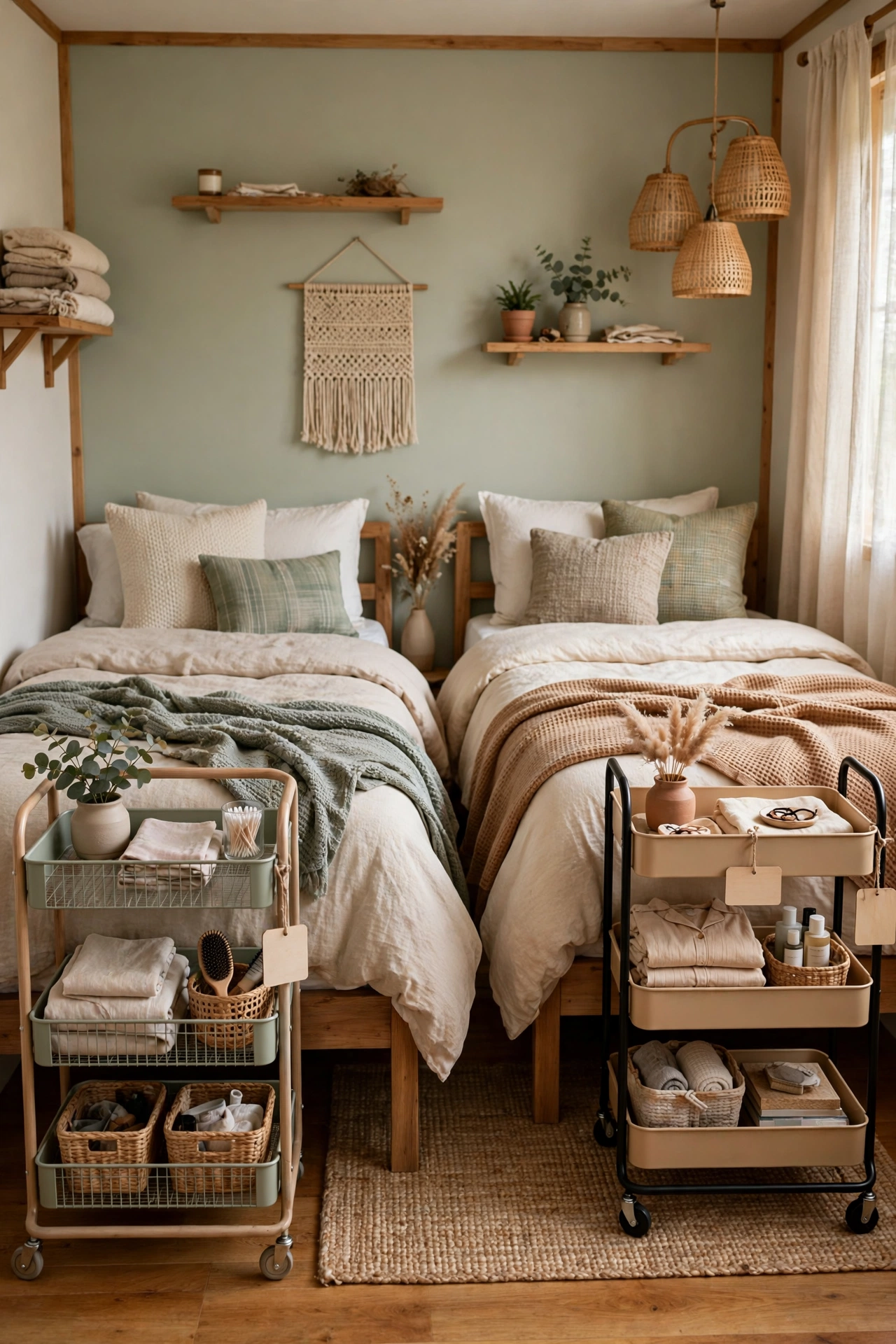
A three tier rolling cart per sleeper holds school supplies, art supplies, or chargers, and it rolls to the bed, the desk, or the closet as needed. This solves the small room problem where two people need the same supplies at different times, because each person owns a cart and stops borrowing from the other. Label each cart with a color or a name tag, and park each cart at the foot of its owner’s bed so the room stays tidy. Pick carts with locking wheels so they stay put overnight.
Try this: Keep the top tier for daily items and the bottom tier for bulky extras, so the cart stays useful instead of turning into a junk pile.
Cost: $ (under $80 for two carts). Difficulty: Easy.
15. Shared rules board and labeled bins

A small whiteboard or cork board with the room rules, quiet hours, and a cleaning rota stops most shared room arguments before they start, because the rules are visible instead of argued about. Pair the board with labeled bins on one shelf, one bin per sleeper for toys, chargers, or school gear, so shared storage stays fair. Review the rules together once a month and change what is not working, since a rule both people agreed to holds far better than one imposed on them. Keep the board near the door so it is seen every day.
Try this: Let each sleeper pick one rule for the board, so both people feel the system belongs to them.
Cost: $ (under $50 for the board and bins). Difficulty: Easy.
How to choose the right setup for your room
Start with the ceiling height and the door swing, because those two facts rule out options fast. Bunk beds and loft beds need ceiling clearance and a safe ladder path, while Murphy beds need a clear fold down zone. Next, count how many people sleep in the room every night versus sometimes, since a trundle or a Murphy bed suits an occasional sleeper better than a permanent second bed. Then check ages: kids under 6 should not sleep on a top bunk, and younger kids need low storage they can reach without climbing. Finally, agree on the fairness rules before buying furniture, because equal bed space, equal storage, and equal wall space prevent most fights.
Small shared bedroom ideas compared
| Idea | Cost | Difficulty | Best for |
|---|---|---|---|
| Bunk bed with storage stairs | $$ | Weekend project | Two kids, tight floor space |
| L-shaped twin beds in a corner | $ | Easy | Siblings who skip bunks |
| Trundle bed | $$ | Easy | Occasional second sleeper |
| Loft bed over a desk | $$ | Weekend project | Teens who need a study zone |
| Matching twin beds, separate lamps | $ | Easy | Fairness first rooms |
| Curtain privacy around beds | $ | Easy | Different sleep schedules |
| Open bookcase divider | $$ | Easy | Privacy plus storage |
| Color zones on neutral base | $ | Easy | Personal taste, shared room |
| Rolling drawers under beds | $ | Easy | No room for a dresser |
| Wall shelf above each bed | $ | Easy | No nightstand space |
| Long shared desk | $$ | Weekend project | Two homework stations |
| Fold down wall desks | $$ | Weekend project | Tiny rooms, adult or teen users |
| Murphy bed | $$$ | Needs help | Rooms with two jobs |
| Rolling cart per sleeper | $ | Easy | Shared supplies, no borrowing |
| Rules board and labeled bins | $ | Easy | Stopping arguments early |
Cost key: $ means $1 to $10, $$ means $11 to $99, $$$ means $100 to $999, $$$$ means $1,000 and up. Costs cover typical furniture and hardware only, not room renovation.
Common mistakes to avoid
The most common mistake is giving one sleeper the better bed, the bigger closet, and the window side, then wondering why the room feels unfair. Measure each side before buying, and keep the split as even as the room allows. Another mistake is blocking the door swing or the walkway to the closet with a second bed, which turns every morning into a squeeze. A third mistake is buying tall furniture without anchoring it, which is a real tip risk in kids rooms. Finally, do not skip the privacy talk: two people sharing a room need agreed quiet hours and a way to ask for alone time, or even the best layout will feel crowded.
Safety notes for a shared bedroom
Anchor bunk beds, loft beds, bookcases, and tall dressers into wall studs with hardware rated above the furniture weight, following the guidance in the CPSC Anchor It program. Keep guardrails on both sides of every top bunk, keep bunk beds away from ceiling fans and windows, and keep the ladder path clear at night. Keep walkways to the door clear for a safe exit, and keep cords clipped to walls and away from beds and walkways. For homes built before 1978, test for lead paint and follow lead safe work rules before drilling or sanding, as described in the EPA Renovation, Repair and Painting program. Hire a licensed electrician for new outlets or hardwired lights.
More bedroom and home ideas
If you want help arranging the furniture itself, see these useful bedroom layouts with different furniture for room arrangements by size.
For the storage side of sharing, these smart built in closet storage ideas show how closet interiors can work harder for two people.
To give each sleeper their own wall personality, these stunning bedroom photo wall collage ideas turn personal photos into a feature wall.
For shared study space that actually works, these beautiful desk setup ideas cover desks, lighting, and organization in one place.
And if you want the room to feel current without a full redo, these perfect bedroom trends for 2026 list the trends worth borrowing.
Frequently asked questions
What is the best layout for a small shared bedroom?
Bunk beds or an L-shaped twin bed layout usually work best, because both free the middle of the room while giving each sleeper a clear zone. Bunks suit kids who are old enough for a top bunk, while the L-shape suits siblings who prefer separate beds. In both cases, keep a clear walkway to the door and the closet, and give each sleeper equal storage.
How do you give privacy in a shared bedroom without building a wall?
Ceiling track curtains around each bed are the cheapest real privacy fix, and an open bookcase between beds adds privacy plus storage while still letting light through. Color zones and separate lamps also help, because each side starts to read as its own space even without a physical barrier.
What age is safe for a top bunk?
Most bunk bed makers and safety guidance set age 6 as the minimum for a top bunk, with guardrails on both sides and a secured ladder. Younger kids should sleep on the bottom bunk or on a low bed, and bunk beds should stay away from ceiling fans and windows.
How do you stop arguments over storage in a shared room?
Split storage evenly and label it, one drawer set, shelf, or bin per person, so ownership is visible. A shared rules board with quiet hours and a cleaning rota also helps, because rules both people agreed to hold better than rules imposed on them.
Can two adults share a small bedroom comfortably?
Yes, with matching twin beds or a trundle setup, a long shared desk, and strict storage labels. Adults sharing a small room should agree on sleep schedules and desk hours early, since different routines cause more friction than the room size itself.
Final thoughts
A small shared bedroom works when each person gets the same deal: a bed that fits them, storage they can reach, and a little space that feels like theirs. Pick one layout idea and one storage idea from this list, agree on the rules together, and anchor everything tall before the first night.
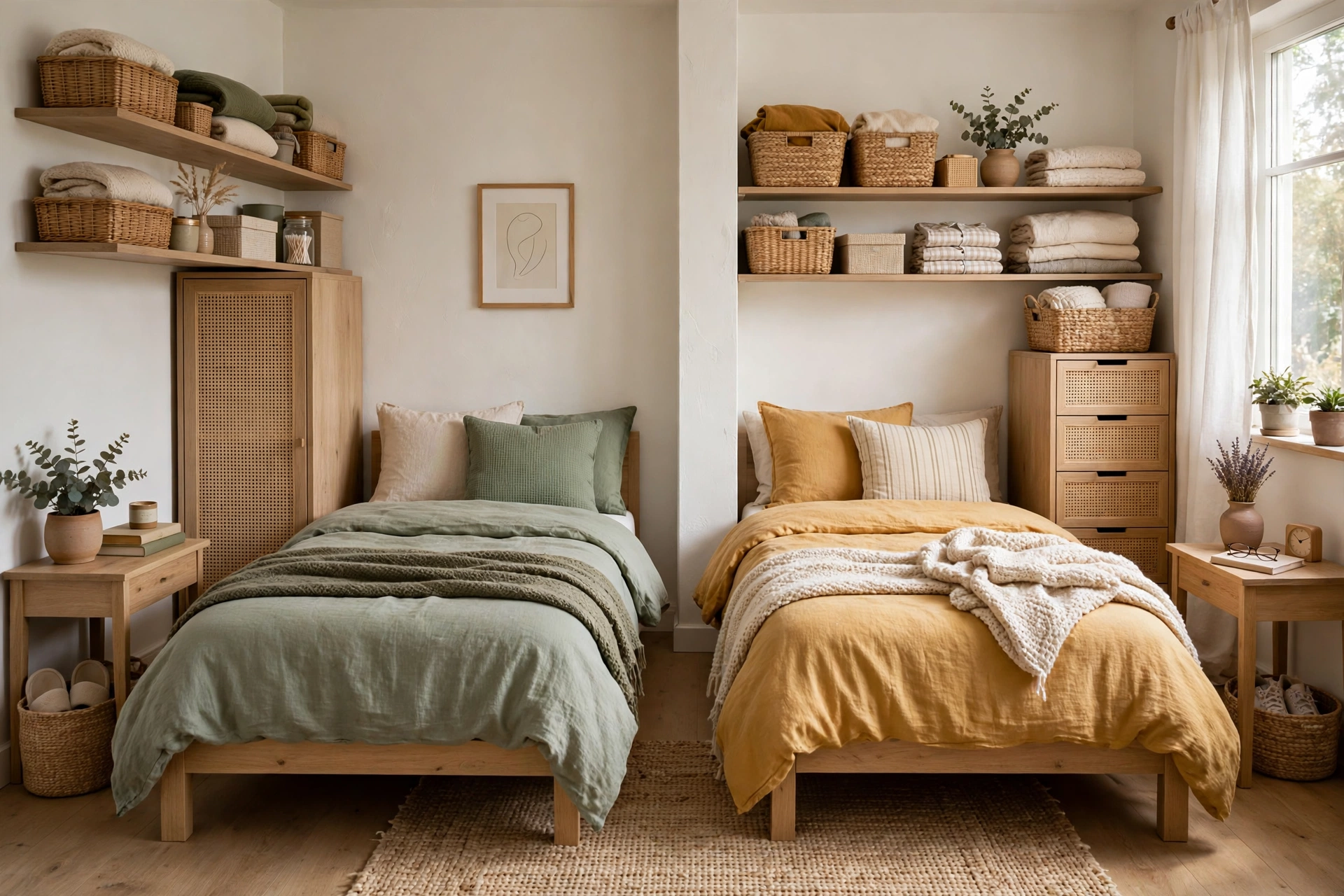
For stunning bunk room ideas for kids, teens, and guests, see these stunning bunk room ideas.
For a room built around a toddler, see our guide to 23 Toddler Bedroom Ideas for a Room That Works for Sleep, Play, and Growing Up for a low floor bed with safety rails, front-facing book ledges, a teepee reading nook, a chalkboard art wall, and storage a toddler can actually use.


