

Setting up a toddler bedroom can feel like a puzzle. The room has to work for sleep, wild play, and early reading, all in a space your little one will climb, explore, and rearrange daily.
This guide covers 23 toddler bedroom ideas that handle all three jobs: beds that are safe to climb into, storage a small child can actually use, and themes that stay easy to update. Every idea includes a cost and difficulty label, so you can pick what fits your room, your budget, and your weekend.
Quick takeaways
- Keep the bed low with a guard rail, and keep the floor beside it soft.
- Store toys low in labeled bins so cleanup is a game your toddler can win.
- Let bedding, prints, and small decor carry the theme, not big furniture.
- Anchor every tall piece of furniture into studs before decorating.
- A neutral base with swappable accents lasts well past the toddler years.
1. Low floor bed with safety rails

A bed that sits close to the floor takes the worry out of nighttime climbs. Your toddler can get in and out on their own, and a short fall matters far less than a fall from a tall frame. Add a low guard rail on the open side and a soft rug beside the bed for bare feet in the morning. Choose a simple wooden frame with rounded corners and a firm mattress that fits snug, with no gaps at the edges. Keep the bedding light: a fitted sheet, one flat blanket, and a single pillow.
Try this: Place the bed against one wall so only one side needs a rail.
Cost: $$ | Difficulty: Easy
2. House-frame bed nook

A house-shaped frame turns a plain bed into a little hideaway without changing the mattress or the room layout. The open frame holds a light fabric drape or a string of soft lights on the outside, and a small clip-on lamp gives your toddler control over bedtime reading. Keep the roof area clear of hanging toys or heavy fabric so nothing can fall during the night. A plain wooden frame in white or natural pine works with almost any bedding, which makes the next theme change cheap.
Try this: Hang the drape on the outside of the frame only, never wrapped around the sleeping area.
Cost: $$ | Difficulty: Easy
3. Half-painted wall
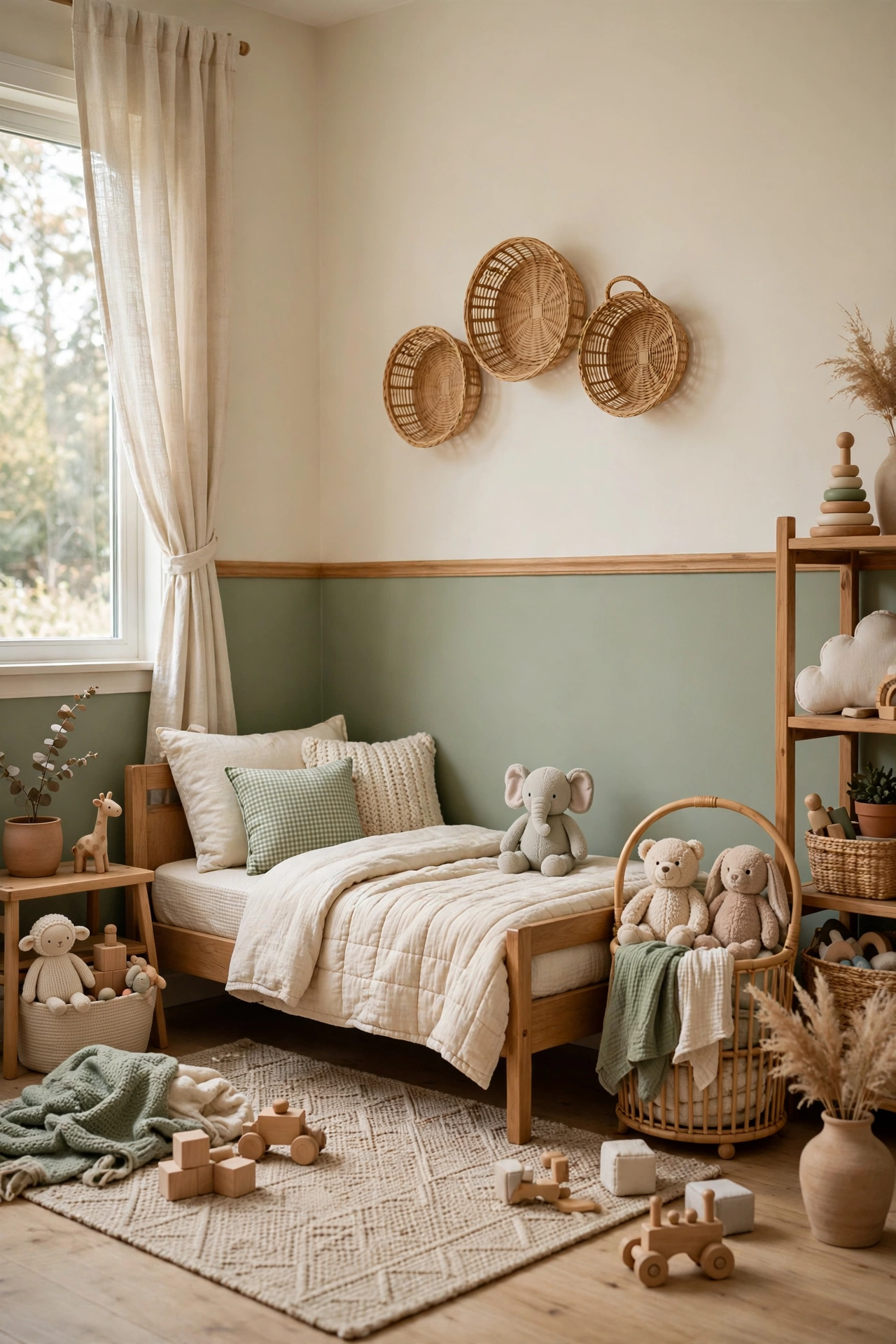
Painting only the lower half of the wall adds color without making the room feel busy. Try muted sage, dusty blue, warm clay, or soft beige on the bottom, and leave the upper half cream or soft white. A simple chair rail strip or a clean painted line marks the split. Framed prints or removable stickers can sit above the line, and the painted section hides scuffs from toys and shoes far better than a full white wall. This treatment also looks good behind a book ledge or a small table.
Try this: Paint the wall behind the bed first, then decide if the rest of the room needs it.
Cost: $ | Difficulty: Easy
4. Painted arch behind the bed

One large painted arch can give a plain bedroom enough color on its own. Try a wide arch in olive, mustard, dusty blue, or warm terracotta, and slide the bed partly in front of it so the paint feels connected to the furniture. The rest of the room can stay simple: plain bedding, one rug, and a few prints. An arch costs little more than a small can of paint and a steady hand with painter’s tape, and it repaints easily when tastes change. Keep the shape simple and the edges clean.
Try this: Mark the arch with a pencil and string compass before taping, so both sides match.
Cost: $ | Difficulty: Easy
5. Front-facing book ledges

Front-facing book ledges turn book covers into wall decor on their own. Mount two or three low ledges where your toddler can reach them, and face out a few covers at a time. Because the covers keep changing, the wall never looks exactly the same for long, and you need far less extra artwork. A small cushion and a rug below the ledges make a reading corner with no extra furniture. Rotate the books weekly so old favorites come back as surprises.
Try this: Keep five or six books out and store the rest in a bin nearby for rotation.
Cost: $ | Difficulty: Easy
6. Low open shelves with labeled bins

Low open shelves with bins make cleanup a job your toddler can actually finish. Use fabric or plastic bins with picture labels, so a child who cannot read yet still knows where blocks, cars, and stuffed animals belong. Keep the shelf at your toddler’s height and the heaviest bins on the bottom for stability. Limit what stays out to one bin per toy type, and rotate the rest from a closet stash. Fewer visible toys mean calmer play and faster tidying.
Try this: Photograph the bin contents for the label, so matching toys to bins feels like a game.
Cost: $$ | Difficulty: Easy
7. Rolling drawers under the bed
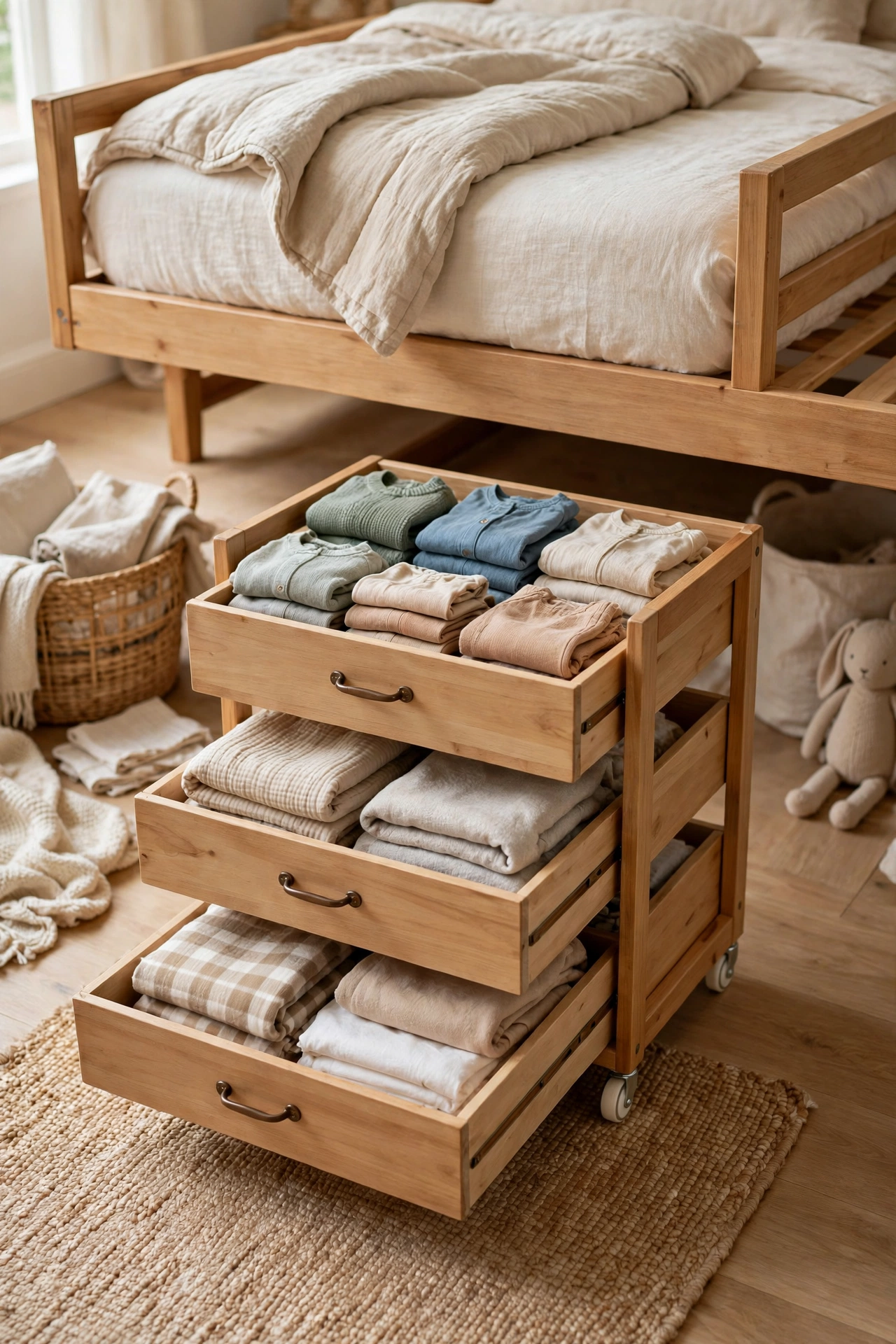
The space under a low bed holds more than dust. Flat rolling drawers fit spare bedding, out-of-season clothes, and backup pajamas, and they slide out without lifting anything heavy. Choose drawers with smooth casters and low handles your toddler cannot pinch fingers on. Label each drawer with a picture so older toddlers can help fetch their own clothes. Keep one drawer empty on purpose, so new clothes and toys always have a home instead of piling on the floor.
Try this: Store the next size up of clothes here, so growth spurts never catch you without a drawer ready.
Cost: $ | Difficulty: Easy
8. Soft play mat zone
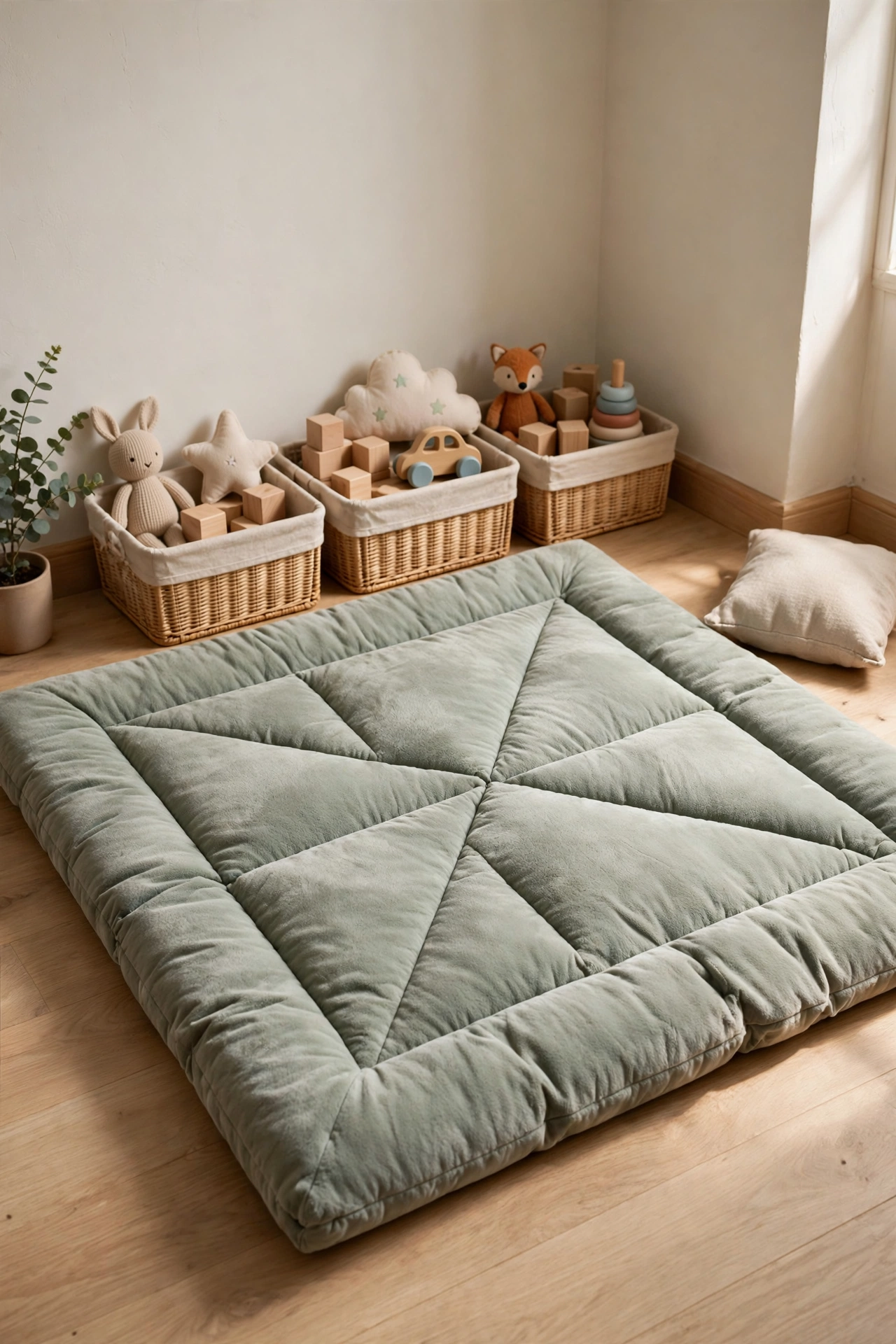
A thick play mat marks where play happens and where it stops. Choose a wipeable mat in a soft tone that matches the room, thick enough to cushion tumbles from a low height. Place it in a corner with a low bin of toys beside it, so play stays in one area instead of spreading across the whole floor. A mat also protects wood floors from blocks and ride-on toys. Pick a foldable mat if the room doubles as a guest space, and wipe it down weekly.
Try this: Layer a smaller washable rug on top of the mat for a soft landing spot.
Cost: $ | Difficulty: Easy
9. Teepee reading nook

A small teepee in a corner gives your toddler a quiet retreat for books, cuddles, and calm play. Set it on a plush rug with two or three cushions and a small basket of books or plush toys. Keep the teepee poles stable and the fabric light, and skip any hanging cords or long ties inside. A clip-on reading light on the outside of the fabric makes evening stories feel special. When the teepee folds away, the corner returns to open floor in seconds.
Try this: Keep the book basket to five books and swap them weekly to keep the nook fresh.
Cost: $$ | Difficulty: Easy
10. Chalkboard art wall

One chalkboard section gives your toddler a place to draw big without touching the rest of the walls. Use chalkboard paint on one framed panel or a ready-made board hung at your child’s height, with a small tray for chalk and an eraser. Chalk wipes clean and costs little, which beats scrubbing crayon off painted walls. Pair the board with a small art table and a wipeable mat underneath to catch chalk dust. Limit chalk colors to a handful so the wall stays cheerful, not chaotic.
Try this: Draw a simple border of shapes on the board each Monday as a fresh starting prompt.
Cost: $ | Difficulty: Easy
11. Name wall above the bed

Wooden letters spelling your toddler’s name make the room feel personal and can stay up for years. Mount them above the bed or the reading corner with secure hardware, high enough that little hands cannot pull them down. Keep the surrounding decor simple so the name stays the focus: plain bedding, one rug, and a single framed print nearby. A photo strip or two small frames beside the letters adds meaning without crowding the wall. Peel-and-stick letters work well for renters.
Try this: Paint the letters in the room’s accent color so they tie the whole palette together.
Cost: $ | Difficulty: Easy
12. Woodland animal prints

A woodland look can feel calm without filling every wall with foxes, bears, and trees. Sage green, beige, and natural wood do most of the work, with two or three framed animal prints as the only themed pieces. Add a small shelf with woodland toys or a leafy garland on one wall, and keep the bedding plain so the prints stand out. This base stays easy to update later, since the wall color and furniture work long after the animal pieces move on.
Try this: Hang prints at your toddler’s eye level, not adult height, so they can enjoy them.
Cost: $ | Difficulty: Easy
13. Friendly dinosaur corner
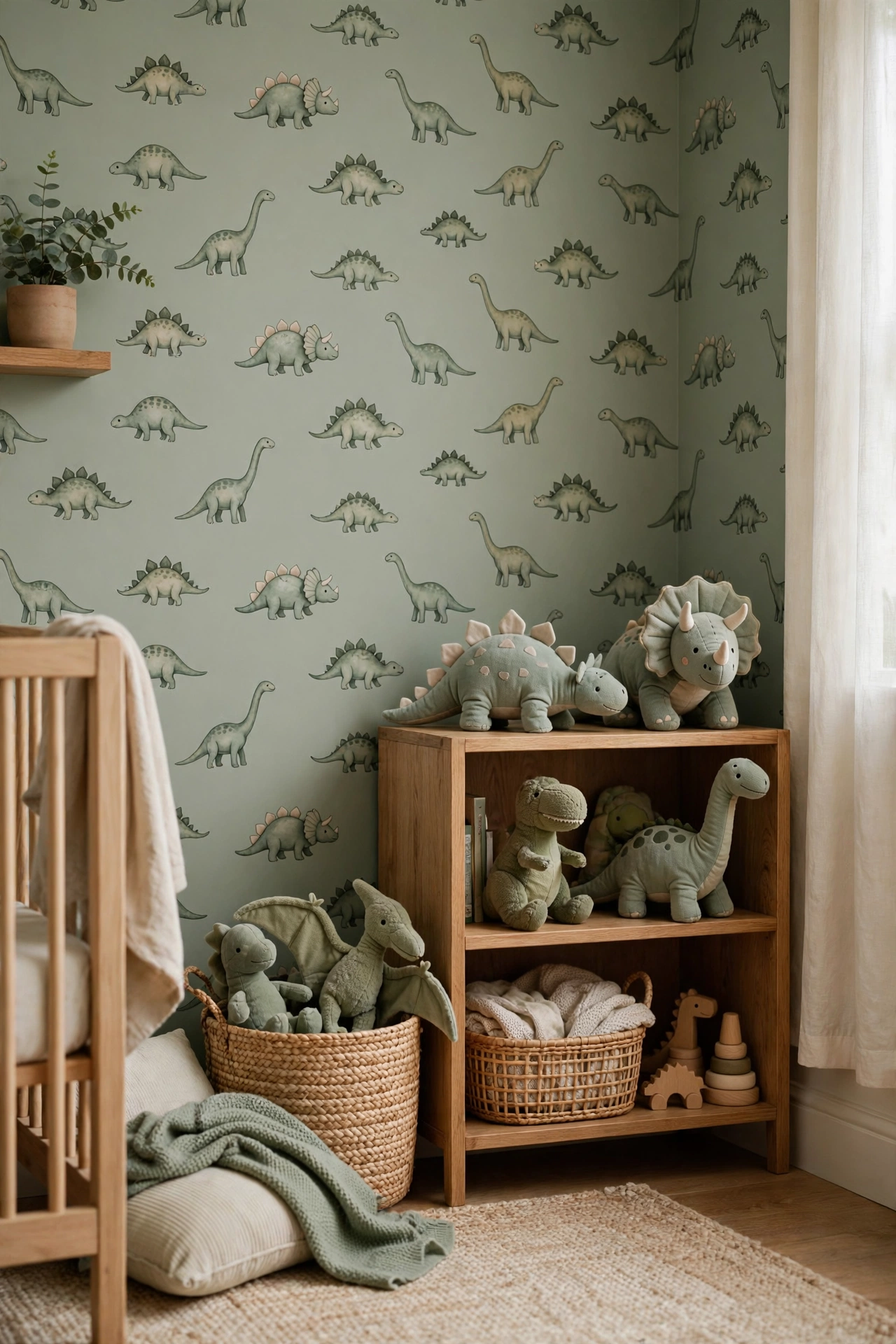
Dinosaurs bring energy to a room, but muted greens and earthy tones keep the space calm enough for sleep. Use friendly dinosaur prints, one plush dinosaur, and bedding in a soft green, then leave the rest of the room neutral. Add a small shelf with dinosaur books or figures, and label the bin where they live so cleanup stays simple. Skip loud wall murals: a few prints carry the theme, and they come down easily when the next obsession arrives.
Try this: Add dinosaur names on small cards beside the prints to mix early learning into the decor.
Cost: $ | Difficulty: Easy
14. Stars on the ceiling
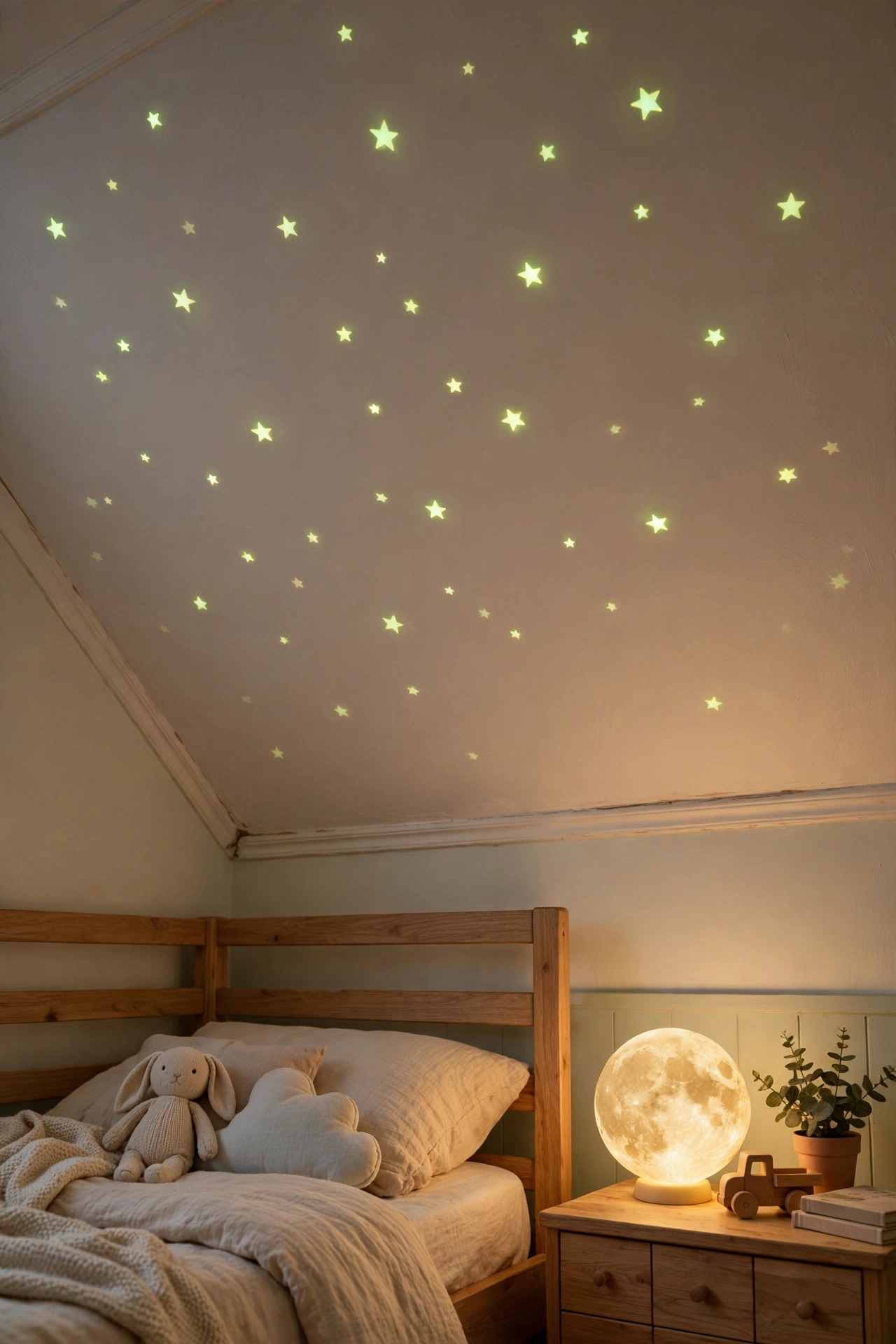
Space themes feel much calmer when the main detail sits overhead. A ceiling dotted with small glow stars works well above pale walls and simple furniture, and a moon lamp on the nightstand adds a soft glow at bedtime. Keep the rest of the room restrained with plain bedding and one or two space prints, so rockets and planets do not cover every surface. Glow stars peel off cleanly later, which makes this one of the easiest themes to undo.
Try this: Charge the stars with a bright lamp for ten minutes before bedtime for the strongest glow.
Cost: $ | Difficulty: Easy
15. Vintage sports pennants

A sports room can take a quieter route with old-style pennants, number prints, and stripes instead of bright team logos everywhere. Cream walls and a wood or navy bed give a simple backdrop, and a striped rug adds one more sports reference without shouting. Keep soft balls in a basket and a few favorite pieces on open shelves so the theme feels lived-in, not staged. Pennants hang with small hooks and come down in minutes when interests shift to something new.
Try this: Frame one pennant instead of hanging a full row, for a calmer focal point.
Cost: $ | Difficulty: Easy
16. Road rug and car shelf

A road-pattern rug gives toy cars a track to follow and keeps play in one visible spot. Pair it with a narrow display shelf above a dresser or along one wall, where a small car collection can sit out of reach of rolling wheels. A plain wooden bed leaves room to play with the car theme elsewhere: road prints, checkered bedding, and traffic-inspired colors carry the idea. This setup works well for a current favorite, since the small pieces swap out easily later.
Try this: Keep five cars on the shelf and the rest in a bin, rotating the display monthly.
Cost: $$ | Difficulty: Easy
17. Rainbow wall decals
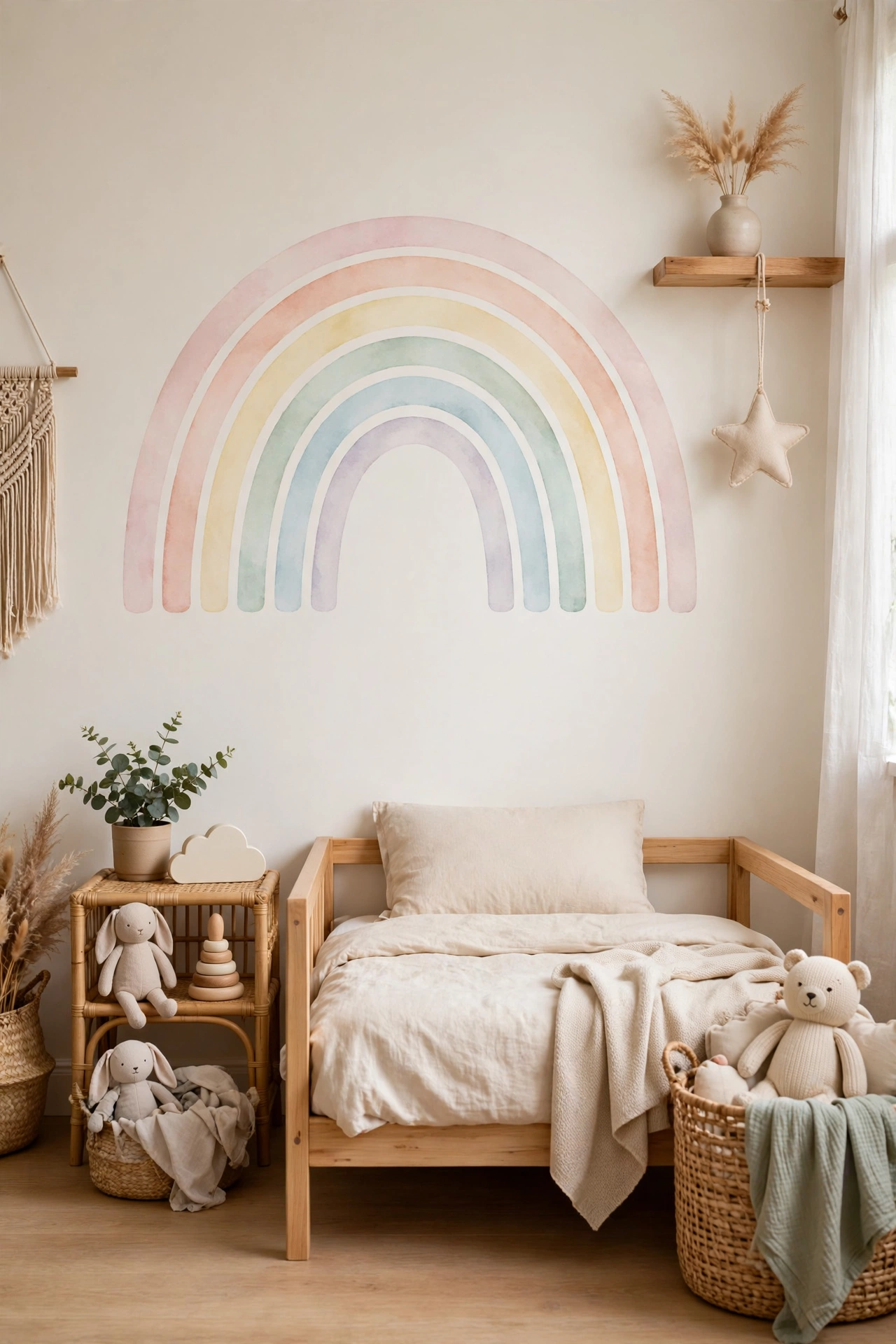
A large rainbow decal adds instant color with zero paint and zero commitment. Stick one rainbow on the wall above the bed, then pull the room’s palette from its soft pastels: blush, butter yellow, sage, and sky blue. Keep bedding plain and add one patterned cushion or rug in a matching tone. Decals peel off cleanly, which makes them ideal for renters and for rooms that change themes often. Place the decal where it catches morning light for the happiest effect.
Try this: Match the bedding to the palest stripe of the rainbow for a soft, pulled-together look.
Cost: $ | Difficulty: Easy
18. Dress-up corner
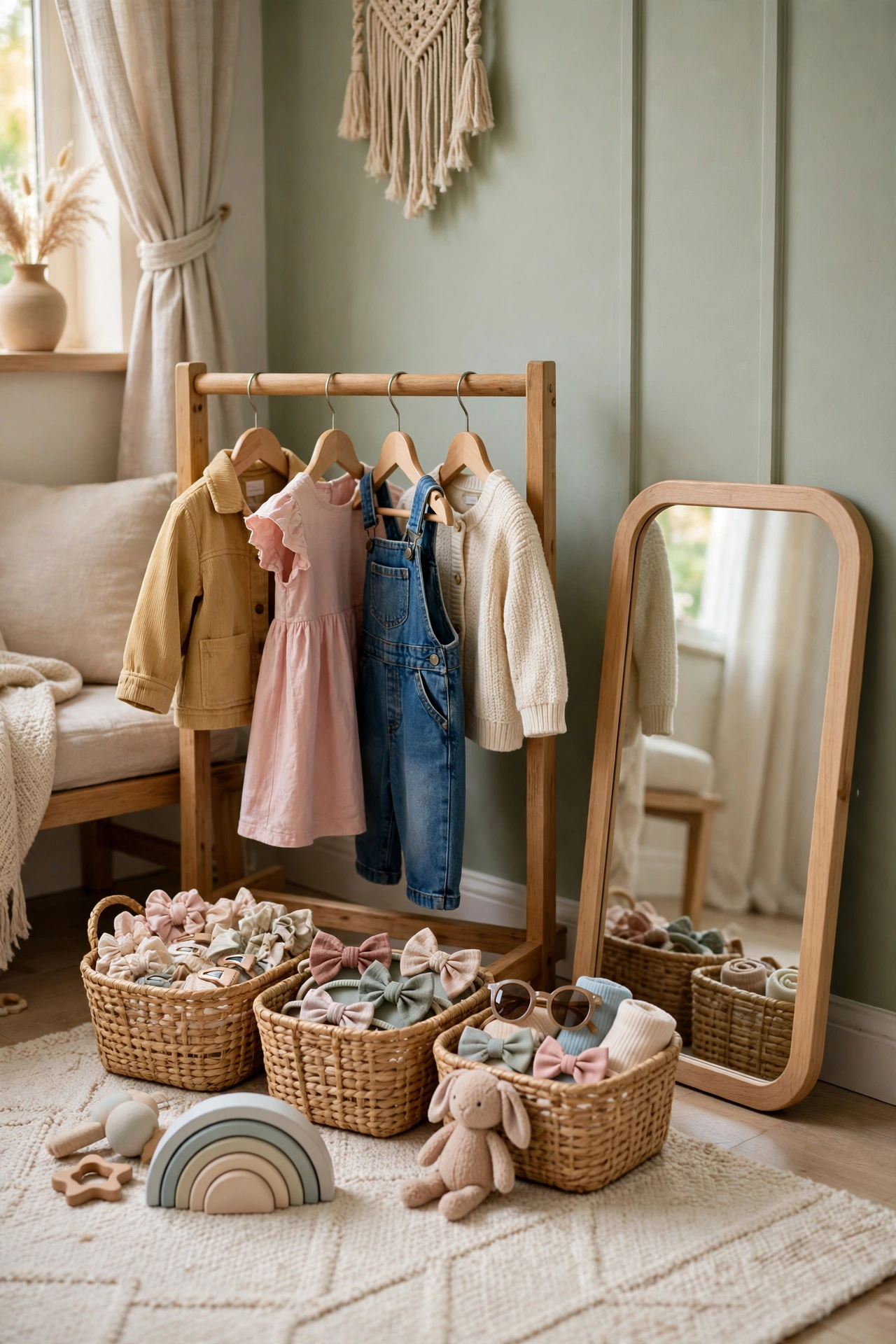
A dress-up corner brings daily fun while keeping costumes under control. Use a low rack for a few favorite outfits and store extras in labeled bins so the corner never overflows. Add a safe, shatterproof mirror and a small stool for an easy getting-ready spot, and keep accessories in small baskets with lids. Limit what stays out to what fits on the rack, and rotate costumes monthly so old favorites feel new again. This corner also builds independence at getting dressed.
Try this: Hang one full outfit per hook, ready to grab, to cut down on morning decisions.
Cost: $ | Difficulty: Easy
19. Small art station

A small art station keeps creativity in one wipeable spot instead of across every surface. Use a child-size table with rounded edges, a wipeable mat, and a few cups for crayons and markers. Hang a short row of clips or frames above the table to display your child’s latest drawings, so the wall becomes a changing gallery. Limit supplies to what you actually use each week, and store the rest out of reach. Washable crayons and markers keep the station low stress for everyone.
Try this: Date the displayed art lightly on the back, so favorites are easy to file later.
Cost: $ | Difficulty: Easy
20. Layered soft lighting
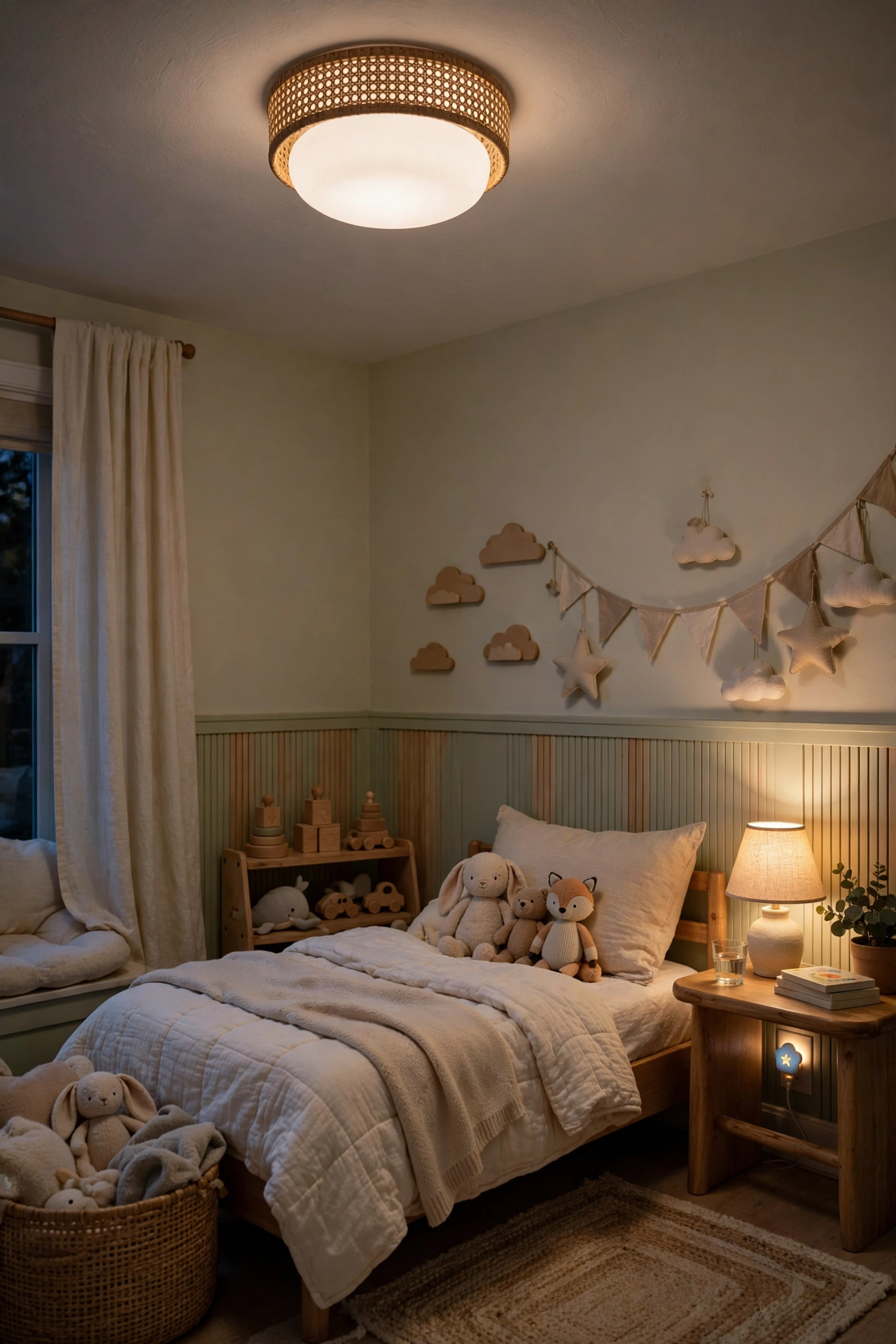
Layered lighting makes bedtime calmer and helps the room shift from play to sleep. Use a soft ceiling light for playtime, a small lamp beside the bed for stories, and a gentle night light for reassurance after lights out. Warm-toned bulbs feel more relaxing than bright white ones, and a dimmer lets the room move from bright to soft in steps. Keep cords behind furniture and out of reach, and choose lamps with stable bases that cannot tip easily.
Try this: Put the night light on a timer so it fades out after your toddler falls asleep.
Cost: $$ | Difficulty: Easy
21. Washable everything
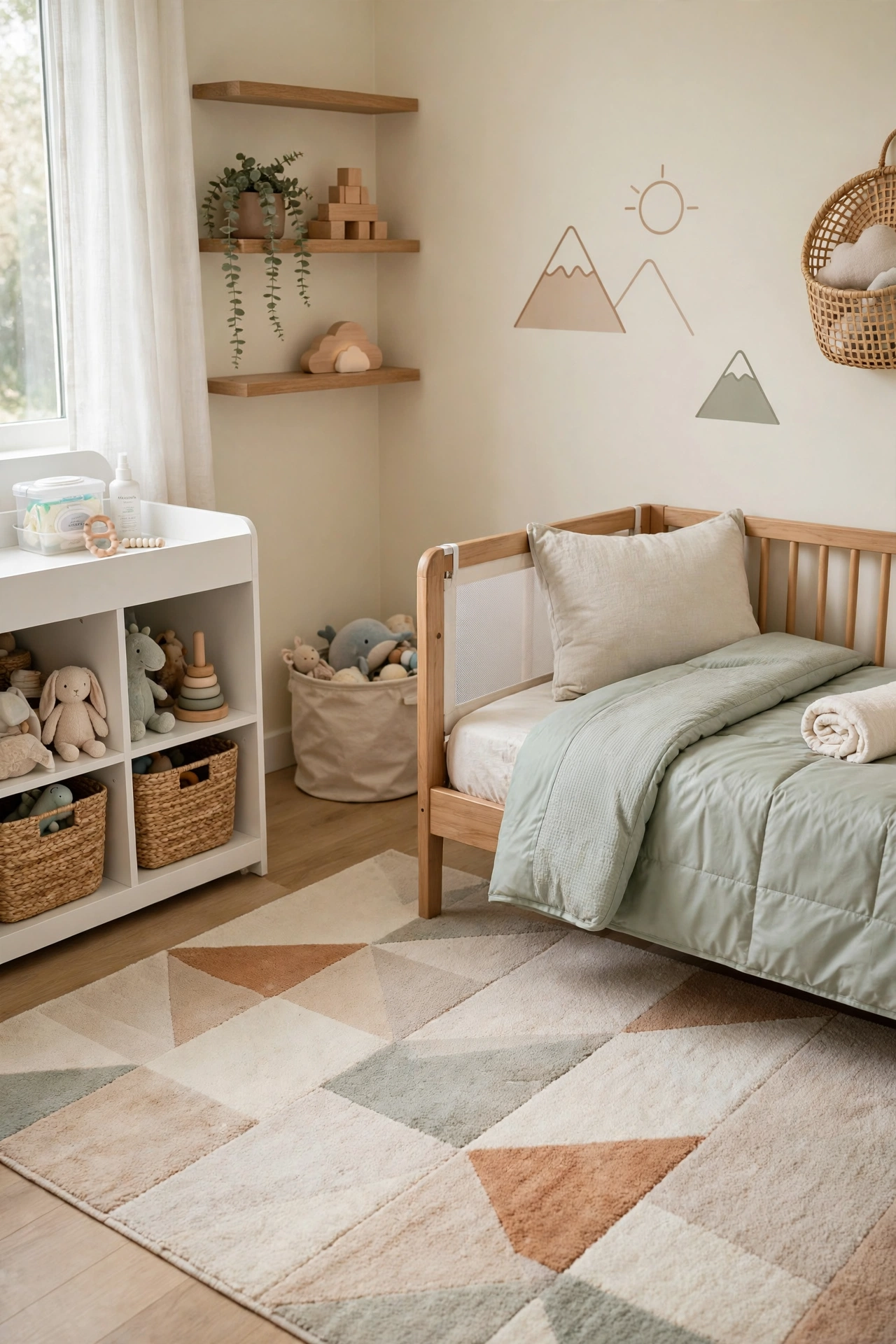
Toddlers spill, smear, and track things in, so washable surfaces save more sanity than any single decoration. Choose a machine-washable rug, wipeable paint on the lower walls, and bedding that survives frequent hot washes. Slipcovers on cushions and the reading nook let you refresh the room in one laundry load. Keep one spare set of bedding and one spare rug cover ready, so accidents never leave the room bare while laundry runs. This idea pairs with every theme on this list.
Try this: Wash the rug and bedding together every Sunday so the room always starts the week fresh.
Cost: $$ | Difficulty: Easy
22. Vertical storage for small rooms

Small rooms feel bigger when storage climbs the walls instead of covering the floor. Use wall hooks at toddler height for bags and dress-up clothes, a door organizer for shoes and small toys, and one high shelf for parent-only items like spare batteries and craft supplies. Keep the floor clear for an open play area, and move anything climbable away from windows. Low book ledges and under-bed drawers pair well with this setup, since they use wall and under-bed space instead of floor space.
Try this: Hang hooks in a row at exactly your toddler’s shoulder height so they can hang things up alone.
Cost: $ | Difficulty: Moderate
23. Neutral base that grows

The longest-lasting toddler rooms start with a neutral base and let small pieces carry the personality. Choose plain walls, simple wooden furniture, and a neutral rug, then add color through bedding, prints, baskets, and a lamp. When interests change, swap the bedding and the prints instead of repainting or replacing furniture. This approach also keeps the room calm for sleep, since the big surfaces stay quiet. It is the cheapest way to survive three theme changes in three years.
Try this: Buy bedding and prints in one accent color family so swaps always look intentional.
Cost: $$ | Difficulty: Easy
How to pick your toddler bedroom palette
Start with one calm base color for the walls, such as warm white, soft beige, or pale sage. Then pick two accent colors from bedding, rugs, or prints, and repeat those accents in at least two spots each so the room feels connected. Limit the palette to three main colors: more than that can make a small room feel busy and restless. If your toddler has a strong favorite color, use it in bedding and small decor rather than on all four walls, so the room can change with the next favorite.
Ideas at a glance
| Idea | Cost | Difficulty | Best for |
|---|---|---|---|
| Low floor bed with safety rails | $$ | Easy | First big-kid bed |
| Half-painted wall | $ | Easy | Quick color on a budget |
| Front-facing book ledges | $ | Easy | Reading corners |
| Low open shelves with labeled bins | $$ | Easy | Independent cleanup |
| Teepee reading nook | $$ | Easy | Quiet time |
| Chalkboard art wall | $ | Easy | Creative toddlers |
| Road rug and car shelf | $$ | Easy | Vehicle lovers |
| Vertical storage for small rooms | $ | Moderate | Small rooms |
Cost key: $ means $1 to $10, $$ means $11 to $99, $$$ means $100 to $999, $$$$ means $1,000 and up.
Mistakes to avoid with a toddler bedroom
The most common mistake is filling the room with a full theme at once: a themed bed, themed bedding, themed walls, and themed toys leave nowhere for the room to grow and cost a lot to undo. Another is placing tempting items on top of tall furniture, which invites climbing. A third is buying storage your toddler cannot reach or open alone, which guarantees that cleanup falls to you. Keep furniture simple, store temptations low or locked away, and let small decor carry the theme.
Safety notes for a toddler bedroom
Anchor every dresser, bookcase, and shelf into wall studs with hardware rated above the piece’s weight, and keep heavy items in the lowest drawers. The U.S. Consumer Product Safety Commission explains how to prevent furniture tip-overs in its Anchor It! guidance. Use cordless window coverings, keep cords for lamps and monitors behind furniture and away from the bed, and move climbable furniture away from windows. Choose toddler bed rails that fit snug with no gaps, remove small parts and choking hazards from reach, and store toys with small pieces up high. For homes built before 1978, test for lead paint and follow lead-safe rules before sanding or drilling, as the EPA Renovation, Repair and Painting program explains. Hire a licensed electrician for new outlets or hardwired lights, keep candles out of the room or use battery candles only, and keep cords away from walkways.
Related reading
If your toddler shares a room, these ideas help two children share one small space: 15 Small Shared Bedroom Ideas for Two People in One Small Room.
For a room built around stacked beds for older kids and guests, see: 29 Stunning Bunk Room Ideas for Kids, Teens, and Guests.
When play keeps spilling out of the bedroom, a dedicated play space helps: 25 IKEA Kids Playroom Ideas for a Cute, Organized and Fun Space.
Toy clutter is the hardest part of a toddler room, and a clear system makes it manageable: The Ultimate Guide to Decluttering Toys.
For more ways to stretch a tight floor plan, see: 12 Small Bedroom Storage Ideas That Make Every Inch Count.
Frequently asked questions
What age is a toddler bed right for?
Most families move to a toddler bed between 18 months and 3 years, but readiness matters more than age. Signs include climbing out of the crib, asking for a big-kid bed, or simply outgrowing the crib’s size. A low bed with guard rails and a soft rug beside it makes the change safer, and keeping the same bedding and bedtime routine helps the transition feel familiar.
How do I keep a toddler bedroom safe?
Anchor all tall furniture into studs, use cordless window coverings, and keep cords behind furniture and away from the bed. Move climbable pieces away from windows, remove small parts from reach, and store tempting items low only if they are safe to play with. Check the room at your toddler’s eye level once a month, since climbing skills change fast.
How can I decorate a toddler bedroom without a theme?
Start with color, pattern, and texture instead of characters. Striped bedding, a patterned rug, framed prints, books, baskets, and one painted wall can make the room feel finished without tying it to one interest. This approach also survives the next obsession, since only small pieces need swapping.
How do I make a small toddler bedroom work?
Keep some floor space open and move storage upward where it is safe to do so. Low book ledges, under-bed drawers, wall hooks, and a door organizer add storage without eating floor space. A limited color palette and one clear play zone keep a small room from feeling crowded.
What bedroom themes last beyond the toddler years?
Nature, simple stripes, stars, muted sports decor, geometric patterns, and book-based rooms update easily. You can replace smaller themed pieces while keeping the main colors and furniture, which avoids a full redo every time interests change.
Final thoughts
Start with safety and one strong idea, then let the room grow with your toddler. A low bed, reachable storage, and a few swappable accents will carry you through years of changing favorites without a full redo.

When your baby outgrows the crib, see our guide to 6 Moves to Transition a Nautical Nursery Into a Toddler Room for converting the crib to a boat bed, swapping baby bedding, moving the gallery wall down, and re-checking safety.
Give kids a spot of their own too — see these 11 magical hideaway spaces for kids from blanket forts to secret reading caves.
Want systems kids can actually keep up? See these 15 kids organization hacks, from toy rotation to backpack stations.
Want a more polished look for a child’s room? See these 29 luxury kids bedroom ideas, from velvet beds to star ceilings.


