
Kids do not make messes on purpose. They make messes because their stuff has no clear home, the bins are too high, and the cleanup rules change every day. Our hallway used to collect shoes, backpacks, and single socks by 8 a.m., and every evening ended with the same hunt for a missing library book. The fix was not a bigger house or stricter rules. It was smaller systems that kids could run themselves, with one spot for each kind of thing and labels they could read at a glance.
This list gives you 15 kids organization hacks that work in real homes, from toy rotation and picture labels to backpack stations and morning charts. Each hack names what you need, what it costs, and how long setup takes, so you can start with one small win today and add more as the system sticks. These ideas suit toddlers through grade school, and most of them need no tools at all.
Quick takeaways
- Give every kind of item one home at your child’s height, or cleanup will not happen.
- Picture labels work for kids who cannot read yet, and word labels work for older kids.
- Toy rotation keeps half the toys stored away, so the ones out get played with more.
- A backpack station and a school paper inbox end most morning scrambles.
- A 10-minute family reset each evening keeps the system working without a weekend overhaul.
1. Toy rotation bins
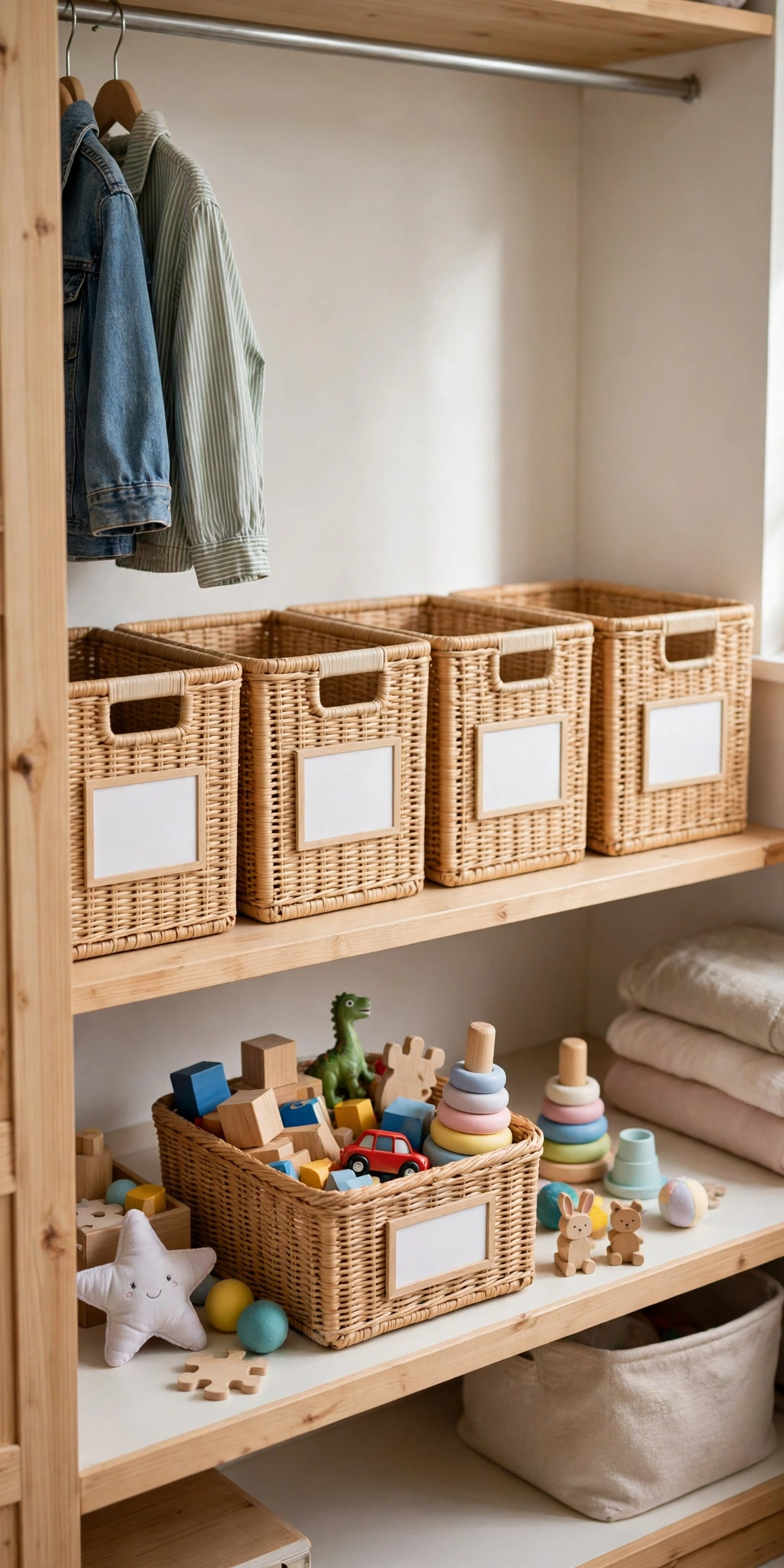
Toy rotation means half the toys stay out and half wait in labeled bins on a closet shelf. You swap one bin each week, so the toys that come back feel fresh and the floor never holds the full collection at once. Sort toys by type first, then pack each group into its own bin with a label on the front. Keep the bins where you can reach them but kids cannot dump them all at once. Most families find that fewer toys out at one time leads to longer play and faster cleanup, because kids can see what they have and know where it goes back.
Try this: start with just two bins, one for building toys and one for pretend play, and swap them on Sunday night.
Cost: $$| Difficulty: Easy | Time: 1 hour to sort and label
2. Picture labels on every bin

Kids who cannot read yet still need to know where things go, and a photo label beats a written one every time. Take a phone photo of the toys inside each bin, print it small, and tape it to the front where your child can see it. Older kids can use word labels in large print, and you can mix both on the same bin while a child learns to read. Labels work best when each bin holds one kind of toy, because a mixed bin with a blocks photo still ends up holding cars, dolls, and snack wrappers by Friday.
Try this: let your child take the label photos, since kids remember their own pictures better than yours.
Cost: $| Difficulty: Easy | Time: 30 minutes
3. One treasure box per child

Every child collects small treasures, and without a limit those treasures spread across every shelf and drawer in the house. Give each child one box, sized to fit on a shelf, and make one rule: the box holds what fits, and when it fills up, something leaves before anything new goes in. Let the child choose the box and decorate it, because a box they picked feels like theirs to protect. This hack works for rocks, ticket stubs, small toys, and drawings, and it ends the daily argument about which little things matter enough to keep.
Try this: review the treasure box together once a month, and let your child pick what stays.
Cost: $| Difficulty: Easy | Time: 15 minutes
4. Backpack station by the door

A backpack station is one hook per child at kid height, plus a small tray or basket beside it for papers that need a parent signature. When kids come home, the backpack goes on its hook and the papers go in the tray, so nothing lands on the kitchen counter or the floor by the couch. Put the station near the door your family actually uses, not the front door nobody opens. Add a small bin for shoes right under the hooks if your entryway allows it, and mornings get simpler because everything leaves from the same spot it came home to.
Try this: add a hook for each child’s lunch bag too, so the whole school kit hangs in one place.
Cost: $$| Difficulty: Easy | Time: 30 minutes to mount hooks
5. School paper inbox
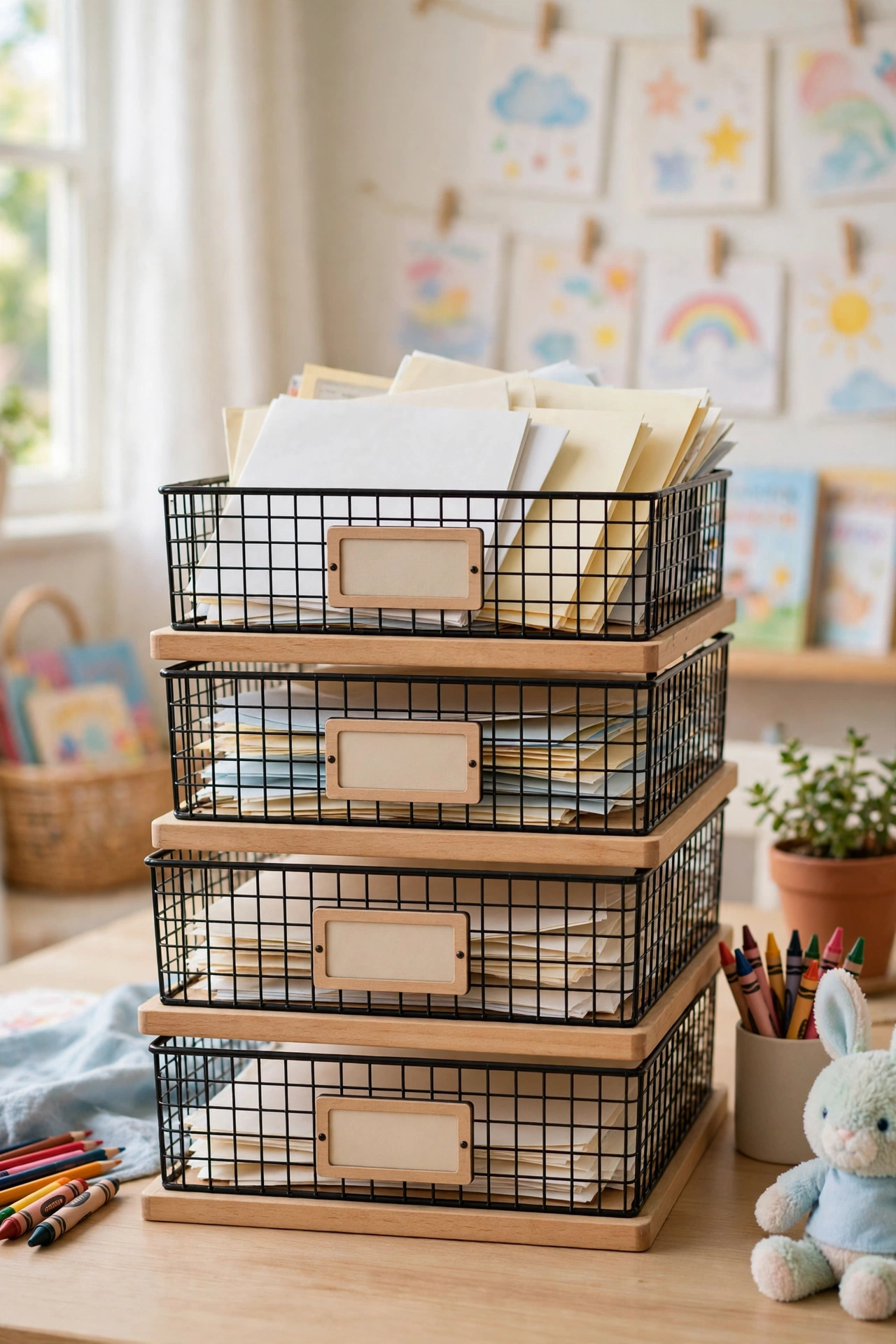
School papers multiply fast, and a single inbox per child keeps permission slips, art, and notices from vanishing into a pile. Use one letter tray or magazine holder per child, labeled with a name or a color, and set a weekly clear-out on Friday after school. Art worth keeping goes in a folder or on display, and the rest gets recycled the same day. Parents sign what needs signing straight from the tray, which beats digging through a backpack at 7 a.m. when the bus leaves in ten minutes.
Try this: keep a pen clipped to the inbox so signatures happen on the spot, not later.
Cost: $$| Difficulty: Easy | Time: 20 minutes to set up
6. Rolling art cart
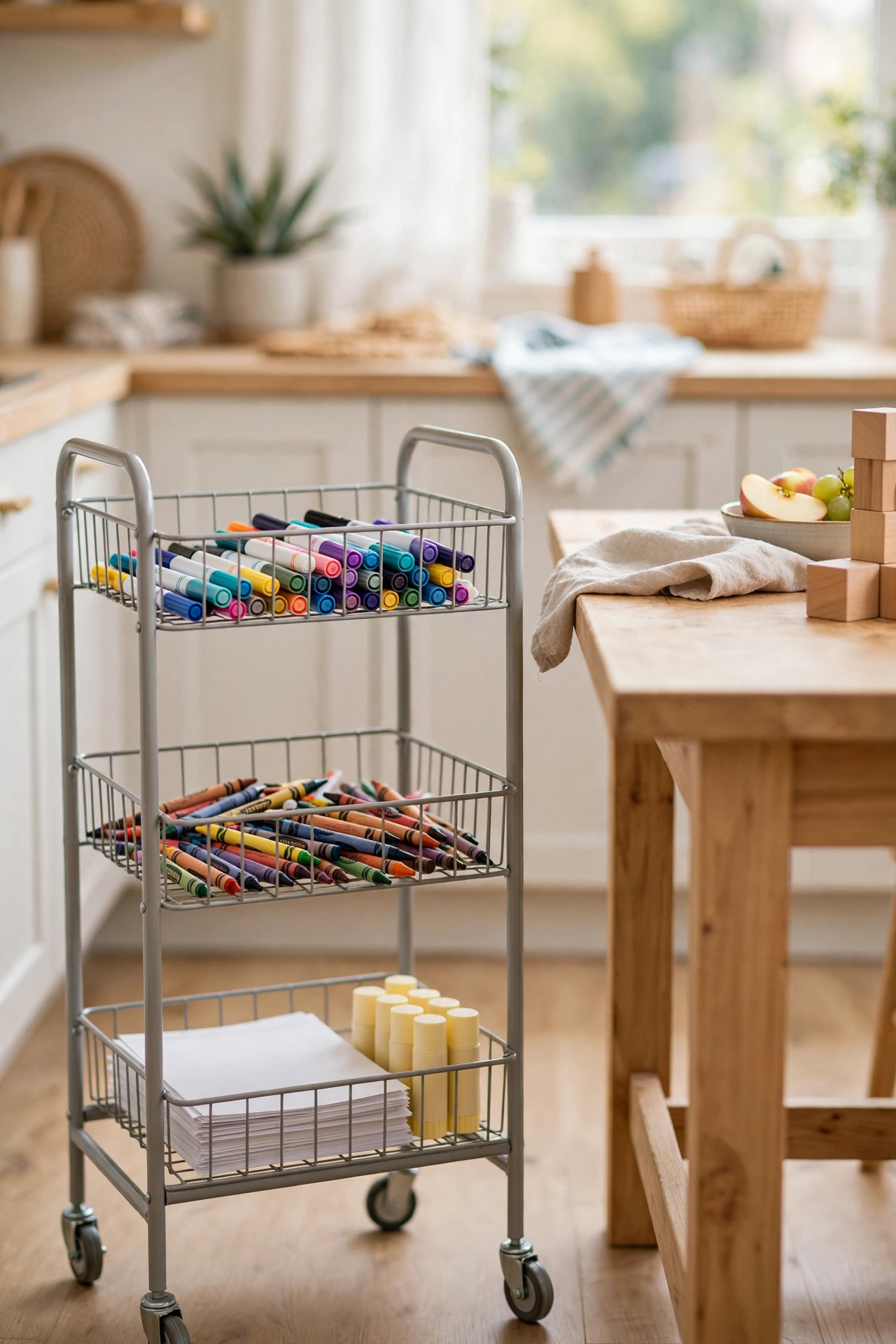
Art supplies spread because they live in five different drawers, so a rolling cart gives them one home that moves to the table and parks in a corner when done. Sort supplies by type, one tier for drawing tools, one for paper and stickers, and one for glue, scissors, and paint. Keep the cart stocked with only what your kids use each week, and store refill stock elsewhere. Kids learn to wheel the cart out, work, and wheel it back, which keeps glitter and marker caps off the floor and off the couch cushions.
Try this: add a small cup on the top tier for pencils that need sharpening, so dull tools never stall a project.
Cost: $$| Difficulty: Easy | Time: 30 minutes to sort and load
7. Low closet rod and kid-height hooks
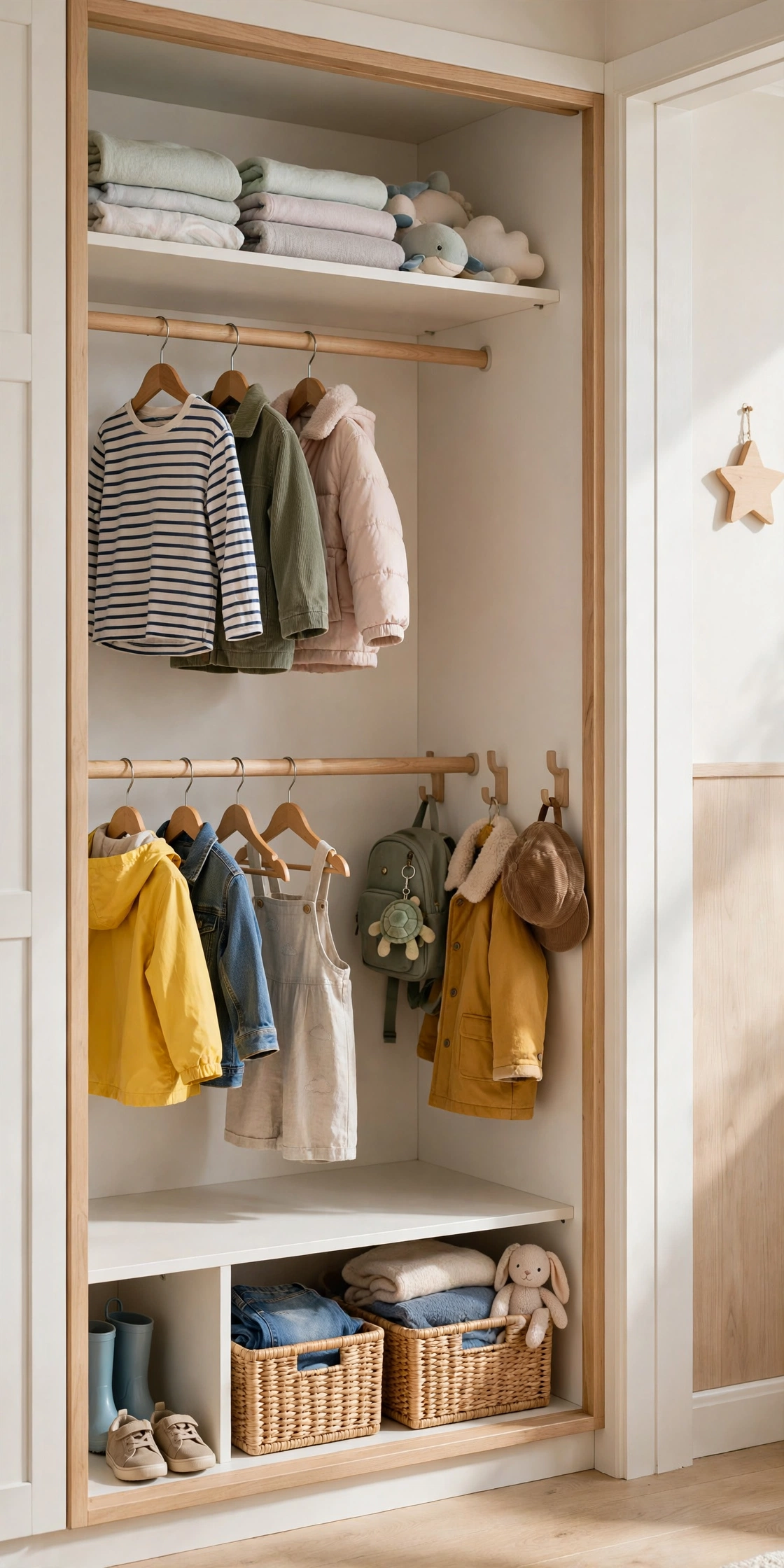
Closets built for adults fail kids, because a high rod and a tall shelf mean only parents can reach the clothes. Add a second, lower rod at your child’s shoulder height and a row of hooks beside it for jackets and tomorrow’s outfit. Move daily clothes to the low rod and keep out-of-season clothes in labeled bins on the high shelf. Kids who can reach their own clothes start dressing themselves sooner, and they can hang things back up because the rod is right where their hands are.
Try this: hang five outfits on the low rod on Sunday, one for each school day, and let your child pick from those.
Cost: $$| Difficulty: Easy | Time: 45 minutes to install
8. Five-day outfit organizer
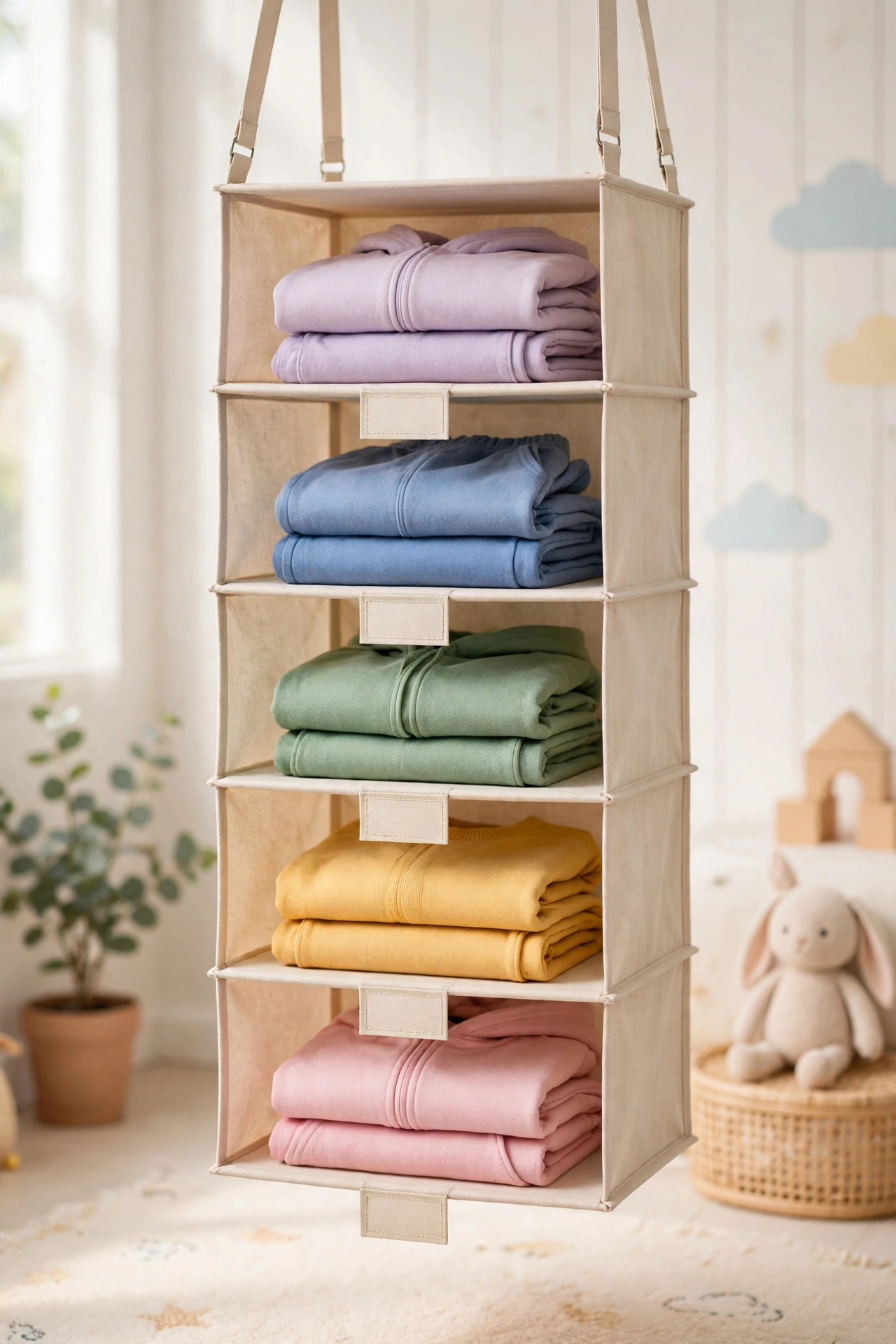
A five-day outfit organizer is a hanging shelf unit with one compartment per school day, and it turns morning dressing into a grab-and-go job. On Sunday, you and your child pick five outfits together and fold each one into its day slot, including socks and underwear. Kids who pick their own outfits on Sunday argue less on Monday, and the organizer shows at a glance if a day is missing socks before the morning rush starts. This hack pairs well with a low closet rod, since the organizer hangs right beside the daily clothes.
Try this: let younger kids pick from two parent-approved outfits per day instead of the whole closet.
Cost: $$| Difficulty: Easy | Time: 20 minutes each Sunday
9. One shoe bin by the door

Shoe racks fail kids because lining shoes up in pairs on a rack takes care that kids do not have at the end of the day. One wide, open bin by the door works better, since shoes just get tossed in and pulled out in pairs. Pick a bin big enough for each child’s daily shoes but small enough that it fills up and forces a clear-out when outgrown pairs sneak in. Place it where shoes actually come off, by the door your family uses most, and skip the lid so kids never have an excuse to leave shoes on the floor beside it.
Try this: mark one side of the bin for each child with a color dot, so pairs stop migrating.
Cost: $$| Difficulty: Easy | Time: 10 minutes
10. Morning routine chart

A morning routine chart turns a list of nagging reminders into steps kids can check off themselves. Use pictures for younger kids and short words for readers, and list only the steps that matter: get dressed, eat breakfast, brush teeth, pack the bag, shoes on. Hang the chart where mornings happen, at your child’s eye level, and let kids move a magnet or check a box as each step finishes. Charts work when the steps stay the same each day, so resist adding new jobs until the current ones run without reminders.
Try this: start with four steps only, and add a fifth step after two smooth weeks.
Cost: $| Difficulty: Easy | Time: 30 minutes to make
11. Forward-facing book bins

Kids pick books by their covers, but spine-out shelving hides those covers and makes books hard to return. Low, forward-facing bins fix both problems, since kids see the cover, pull the book out, and slide it back into the same slot. Use one bin per kind of book, such as picture books, early readers, and bedtime stories, and keep the bins on a low shelf kids can reach alone. Rotate the books in the bins every few weeks, just like toy rotation, so old favorites cycle back and the shelf never overflows.
Try this: keep a small basket of library books apart from owned books, so returns never get mixed in.
Cost: $$| Difficulty: Easy | Time: 30 minutes to sort
12. Small parts up high
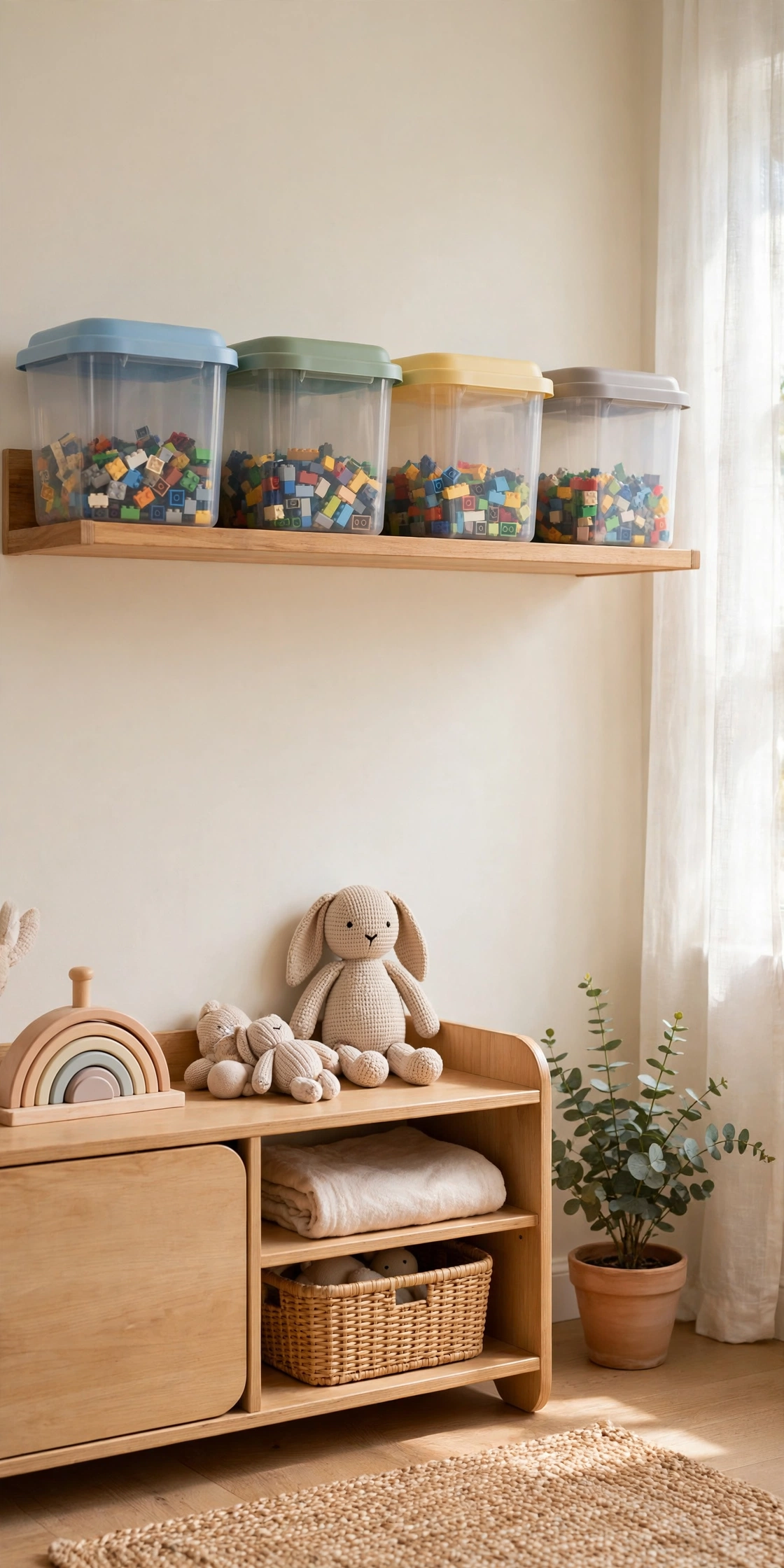
Small building pieces, beads, and tiny figures need a home that toddlers cannot reach, or they end up on the floor and in mouths. Store these in lidded bins on a high shelf, clearly labeled, and bring one bin down only for supervised play at a table. Older kids learn that small-part toys come with a table rule: pieces stay on the table and go back in the bin before anything else comes out. This hack keeps toddlers safe and keeps tiny pieces from vanishing into carpet, couch cushions, and vacuum cleaners.
Try this: count the pieces back into the bin together at cleanup time, and treat a full count as part of the game.
Cost: $$| Difficulty: Easy | Time: 20 minutes to sort
13. Under-bed rolling bins
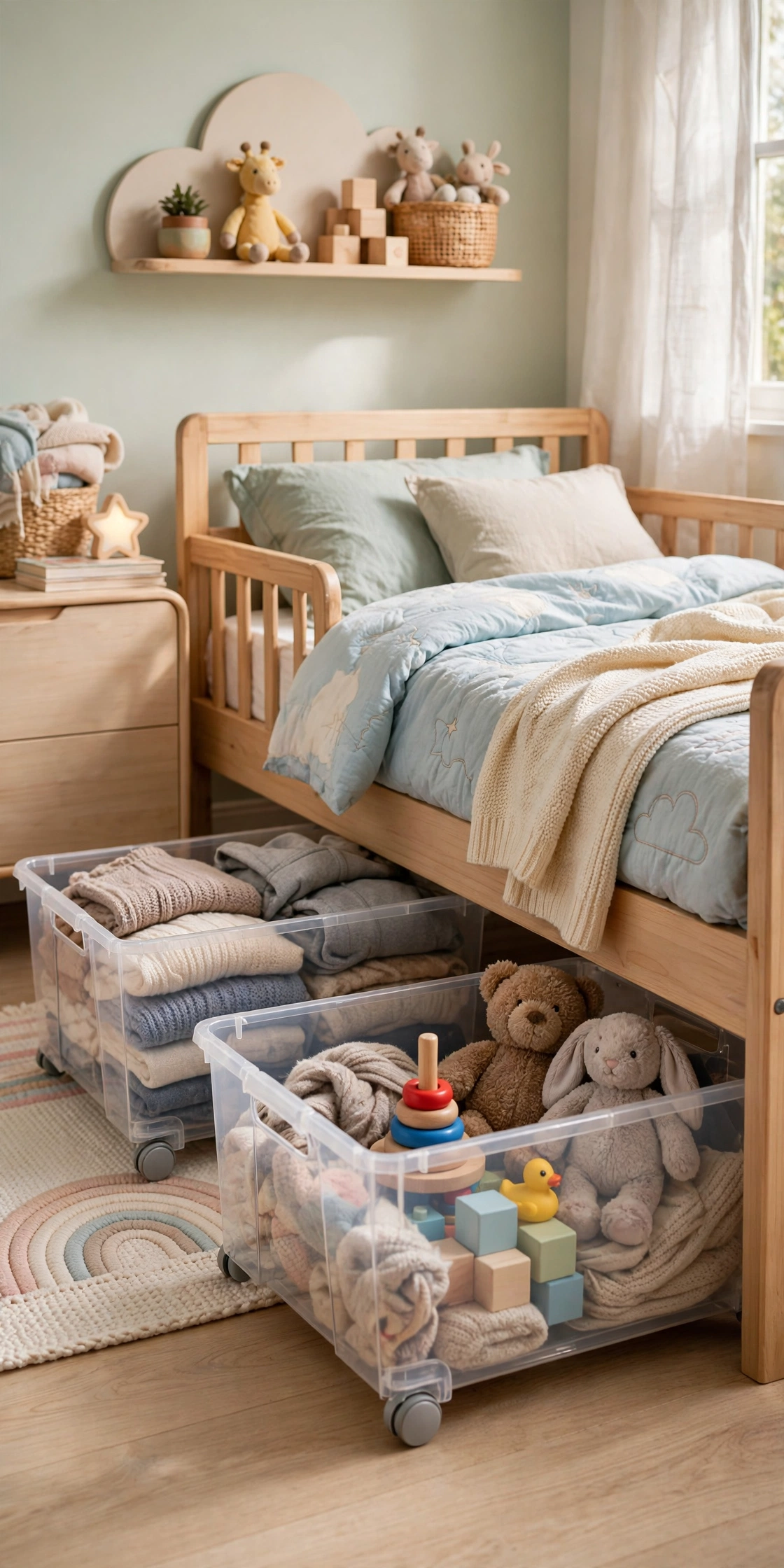
Under-bed space is wasted in most kids’ rooms, and rolling bins turn it into storage kids can actually use. Use clear, low bins with wheels for off-season clothes, spare bedding, and toys waiting for rotation, and label the ends so kids can see what each bin holds without pulling them all out. Keep daily items out of under-bed bins, since dragging a bin out each morning gets old fast. Reserve this space for the overflow that only changes with the seasons or the toy rotation swap.
Try this: put one bin per season for clothes, so the swap takes ten minutes instead of a full closet day.
Cost: $$| Difficulty: Easy | Time: 45 minutes to sort and load
14. Ten-minute family reset

A ten-minute family reset beats a weekend cleaning marathon, because kids will help for ten minutes and resist for an hour. Set a visible timer before dinner, give each person one zone, and race the clock instead of nagging through a chore list. Keep the reset short and daily, so mess never builds past what ten minutes can fix. End with a quick check of the backpack station and the shoe bin, since those two spots cause most morning trouble when they drift out of order.
Try this: play one song instead of setting a timer, and stop when the song ends.
Cost: $| Difficulty: Easy | Time: 10 minutes daily
15. Always-out donation box
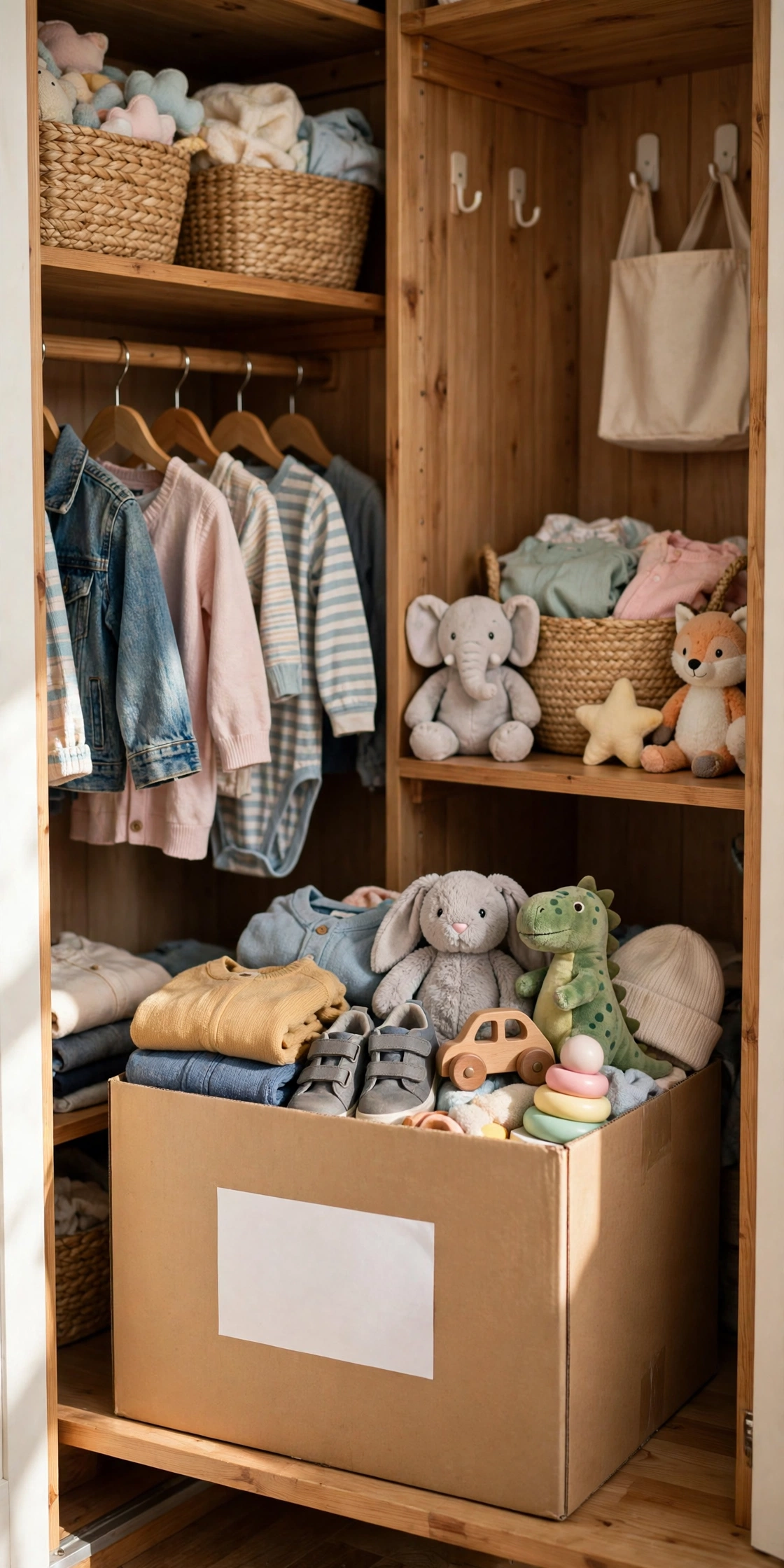
An always-out donation box gives outgrown clothes and forgotten toys a place to go the moment you notice them, instead of waiting for a big cleanout. Keep one box or bag in a closet, labeled for donations, and drop items in as kids outgrow them or stop playing with them. When the box fills up, it leaves the house the same week, which keeps the rule simple: full box out, empty box back. Kids who help fill the box learn that letting go is a normal part of owning things, not a sad event.
Try this: let each child pick one item to donate each month, and thank them for it by name.
Cost: $| Difficulty: Easy | Time: 5 minutes to set up
Compare the 15 hacks
| Hack | Cost | Difficulty | Time | Best for |
|---|---|---|---|---|
| Toy rotation bins | $10 to $25 | Easy | 1 hour | Too many toys out at once |
| Picture labels | $0 to $5 | Easy | 30 minutes | Kids who cannot read yet |
| Treasure box per child | $0 to $10 | Easy | 15 minutes | Keepsakes spreading everywhere |
| Backpack station | $10 to $20 | Easy | 30 minutes | Morning scrambles |
| School paper inbox | $5 to $15 | Easy | 20 minutes | Lost permission slips |
| Rolling art cart | $25 to $40 | Easy | 30 minutes | Art supplies in every drawer |
| Low closet rod and hooks | $10 to $25 | Easy | 45 minutes | Kids who cannot reach clothes |
| Five-day outfit organizer | $10 to $20 | Easy | 20 minutes weekly | Morning outfit arguments |
| Shoe bin by the door | $8 to $15 | Easy | 10 minutes | Shoes left on the floor |
| Morning routine chart | $0 to $10 | Easy | 30 minutes | Repeated morning reminders |
| Forward-facing book bins | $10 to $25 | Easy | 30 minutes | Books never put back |
| Small parts up high | $5 to $15 | Easy | 20 minutes | Tiny pieces and toddlers |
| Under-bed rolling bins | $15 to $30 | Easy | 45 minutes | Seasonal and spare storage |
| Ten-minute family reset | $0 | Easy | 10 minutes daily | Mess that builds all week |
| Always-out donation box | $0 | Easy | 5 minutes | Outgrown items piling up |
How to pick your first hack
Start with the spot that causes the most trouble in your day. If mornings are the pain, set up the backpack station and the morning chart first. If the playroom floor is the pain, start with toy rotation and picture labels. Pick one hack, run it for two weeks, and only add another when the first one holds without reminders. Systems fail when families install five at once and drop them all by the second week.
If you want ideas for the rooms around these systems, these related articles can help.
For play spaces that stay inviting while the rest of the house stays tidy, see these 11 magical hideaway spaces for kids, from blanket forts to secret reading caves.
For younger kids, these 23 toddler bedroom ideas cover rooms that work for sleep, play, and storage at toddler height.
For schoolwork zones, these home school room ideas show learning spaces kids can actually keep in order.
For homework desks, these small desk organization ideas keep supplies tidy in a small footprint.
Mistakes that undo a kids’ system
The most common mistake is buying bins before deciding what goes in them, which leaves you with pretty containers and the same piles. Sort first, then buy only the bins the sorted piles need. Another mistake is making categories too narrow, since a bin labeled for one kind of toy gets ignored when kids cannot remember the rule. Keep categories broad, keep labels visible, and keep the daily items at kid height while the rest goes up high or under the bed.
Kids’ organization safety checks
Anchor tall shelves and bookcases to wall studs, since kids climb, and the U.S. Consumer Product Safety Commission explains how to anchor furniture in its Anchor It guidance. Keep small parts, beads, and button-battery toys on high shelves away from children under 3, and check toy safety guidance from Safe Kids Worldwide before buying new toys. Store heavy items low so nothing heavy can fall from a high shelf, keep cords and strings out of crib and bed areas, and never cover a smoke alarm when hanging charts or shelves near one.
Frequently asked questions
How do I get my kids to actually use the system?
Keep it simple and at their height. One home per kind of item, labels they can read or recognize, and bins they can open alone will do more than any reward chart. Start with one hack, praise the cleanup when it happens, and fix the spots that fail instead of adding new rules.
What if my kids share a room?
Give each child a color for bins, hooks, and labels, and give each child one treasure box that is only theirs. Shared bins work for shared toys, but clothes, school papers, and keepsakes need one spot per child or they mix together and cause arguments.
How often should I rotate toys?
Swap one bin each week, or every two weeks if weekly feels like too much. Watch for the point when kids stop playing with what is out, since that is the signal to swap. Keep the rotation day fixed, such as Sunday night, so it becomes part of the week.
What age can kids start organizing?
Toddlers can put toys in picture-labeled bins and hang a backpack on a low hook, even before they can read. Preschoolers can follow a picture routine chart and sort toys by type. Grade-school kids can run a five-day outfit organizer, a school paper inbox, and a morning chart with little help.
What should I do with outgrown toys and clothes?
Drop them in the always-out donation box the moment you notice them, and take the full box out of the house the same week it fills. Let each child pick one item to donate each month, and keep broken or stained items out of the donation box.
Final thoughts
Start with one hack this week, the one that fixes your worst daily friction, and let it run for two weeks before you add another. Kids keep systems that they can reach, read, and run themselves, and a house with fewer, clearer homes for things stays calmer without constant tidying from you.