


School at home usually starts at the kitchen table, and that works until the math books, the crayons, and the science kit all live there permanently. Meals get squeezed to one end of the table, papers pile up between lessons, and nobody can find the pencil sharpener when it matters. A planned learning space fixes that, even when the space is only a corner of a room you already use.
This guide covers 22 home school room ideas for real homes, from a full spare-room classroom to a closet that closes away after lessons. Every idea includes a cost label and a difficulty label, so you can pick setups that fit your budget, your floor plan, and the ages you teach.
Quick takeaways
- You do not need a spare room. A corner, a closet, or a rolling cart can hold a full school day.
- Give every item a fixed home at child height, and label it so kids can find and return things alone.
- Split the space into zones for reading, writing, art, and group lessons instead of one catch-all desk.
- Start with a table, good light, and storage. Add specialty pieces only after you know what your family actually uses.
- Anchor tall shelves into studs, keep cords out of walkways, and keep small parts away from toddlers.
1. Dedicated classroom in a spare room
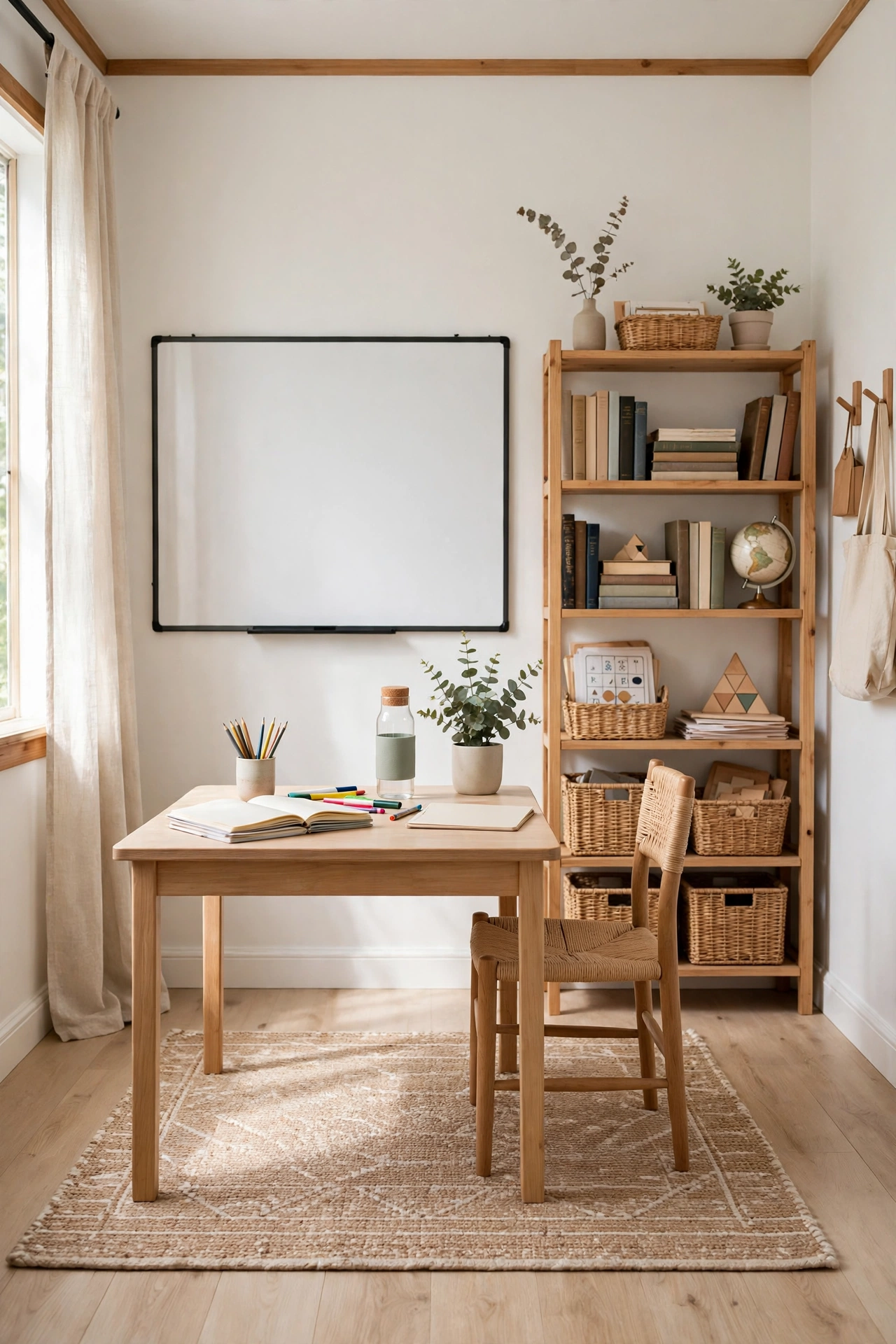
A spare bedroom gives your school day a clear start and stop. Set one wall with a whiteboard or chalkboard, place a sturdy table in the center, and line the opposite wall with a bookshelf for curriculum and read-alouds. Closing the door during lessons keeps the rest of the house out of sight and out of mind. A rug under the table softens the room and marks it as school territory. Add a small lamp for cloudy mornings and a wall calendar that shows the week ahead at a glance.
Try this: Put the teacher chair at the short end of the table so you can see every child without turning around.
Cost: $$ · Difficulty: Moderate
2. Living room learning corner

One desk, a wall shelf, and a small bin can build a consistent learning spot without taking over your living room. A rug under the desk draws a visible boundary, so kids know where school happens and where play happens. Keep daily supplies in the bin and the rest in a closet, so the corner resets in two minutes after lessons. A clip-on lamp adds task light without a new floor lamp. Choose a corner near a window when you can, since daylight keeps afternoon lessons from feeling dim and flat.
Try this: Pick a rug color that matches nothing else in the room, so the school zone reads as its own place.
Cost: $ · Difficulty: Easy
3. Kitchen table school station
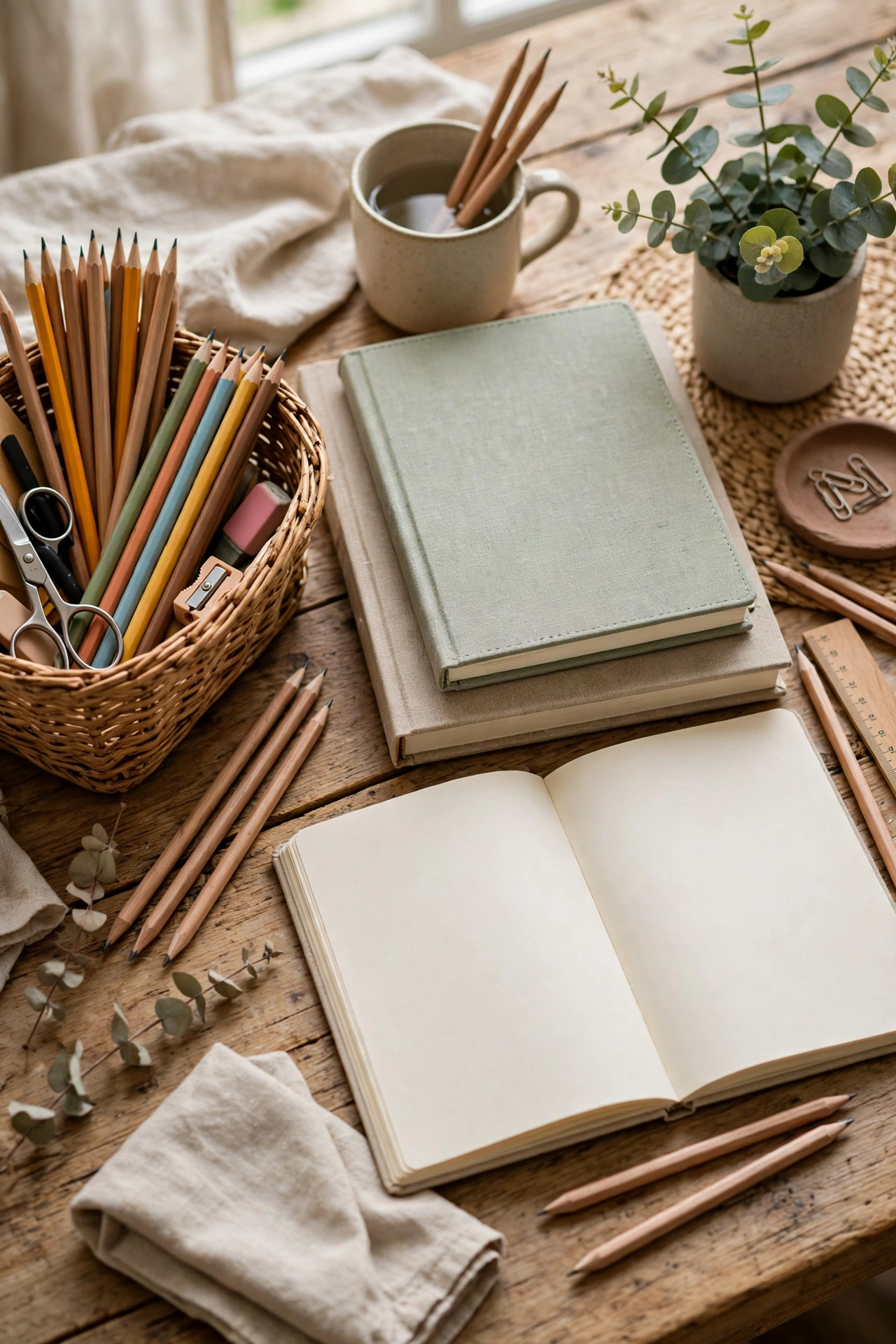
The kitchen table is the most forgiving schoolroom a home can offer. It sits near the sink for art cleanup, near the fridge for snacks, and in the middle of family traffic so young kids stay close during lessons. Keep a dedicated supply basket on the counter with pencils, scissors, glue, and the current workbooks, so morning setup takes one trip instead of five. After lessons, the basket goes back on the counter and the table returns to meals. A washable tablecloth protects the wood during paint and glue projects.
Try this: Assign each child a placemat in their own color, and school starts when the placemats come out.
Cost: $ · Difficulty: Easy
4. Closet classroom that closes away

A spare closet can hold a complete study spot that vanishes when school ends. Remove the hanging rod, mount a fold-down desk at elbow height, and add two shelves above it for books and bins. Paint the inside a calm, light color so the small space feels deliberate rather than cramped. Clip on a battery light or add a plug-in lamp for visibility. When lessons finish, fold the desk up and close the doors, and the room goes back to being a bedroom or guest room.
Try this: Hang a small corkboard inside the door for the daily schedule and finished work.
Cost: $ · Difficulty: Moderate
5. Rolling cart school station

A three-tier rolling cart carries the whole school day from room to room. Stock the top tier with writing tools, the middle tier with current books and workbooks, and the bottom tier with art supplies. Park it beside the table during lessons and roll it into a closet at night. Restocking takes five minutes on Sunday evening, and the cart keeps supplies off the dining table between sessions. Label each tier with a picture label for young readers, so kids can grab what they need without asking you every few minutes.
Try this: Keep one small bin on the cart for finished work that needs your review.
Cost: $ · Difficulty: Easy
6. Reading nook with floor cushions
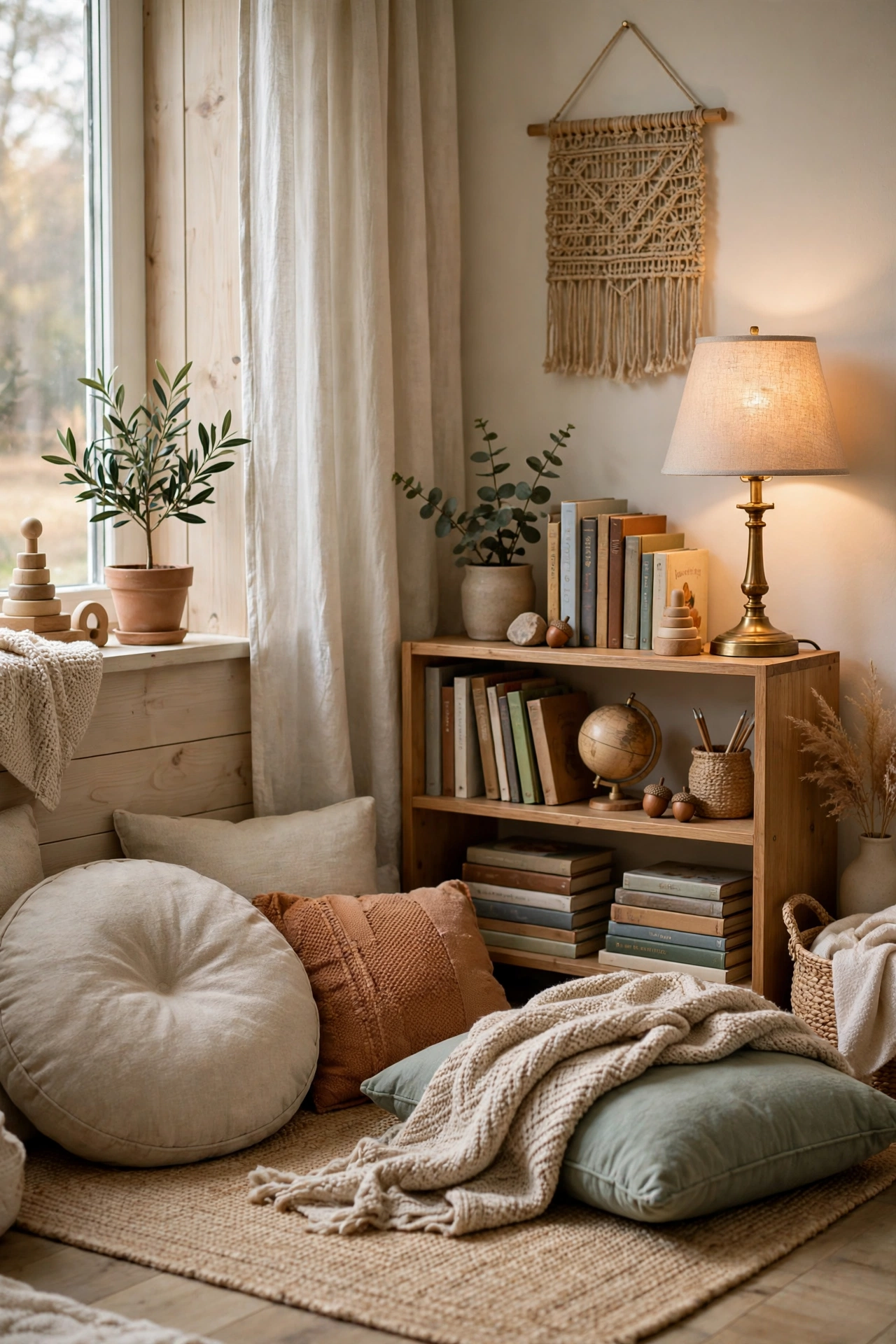
A reading nook gives independent reading its own address in the house. Tuck a bean bag or a stack of floor cushions into a quiet corner, add a low bookshelf within arm’s reach, and clip on a small lamp for focused light. Rotate the books every few weeks so the shelf stays fresh without growing. This corner also works as a calm spot for audiobooks and read-alouds, and it signals to kids that reading time differs from lesson time. Keep the nook away from the television so the habit sticks.
Try this: Let each child pick one new book for the shelf every Monday morning.
Cost: $ · Difficulty: Easy
7. Pegboard wall for supplies
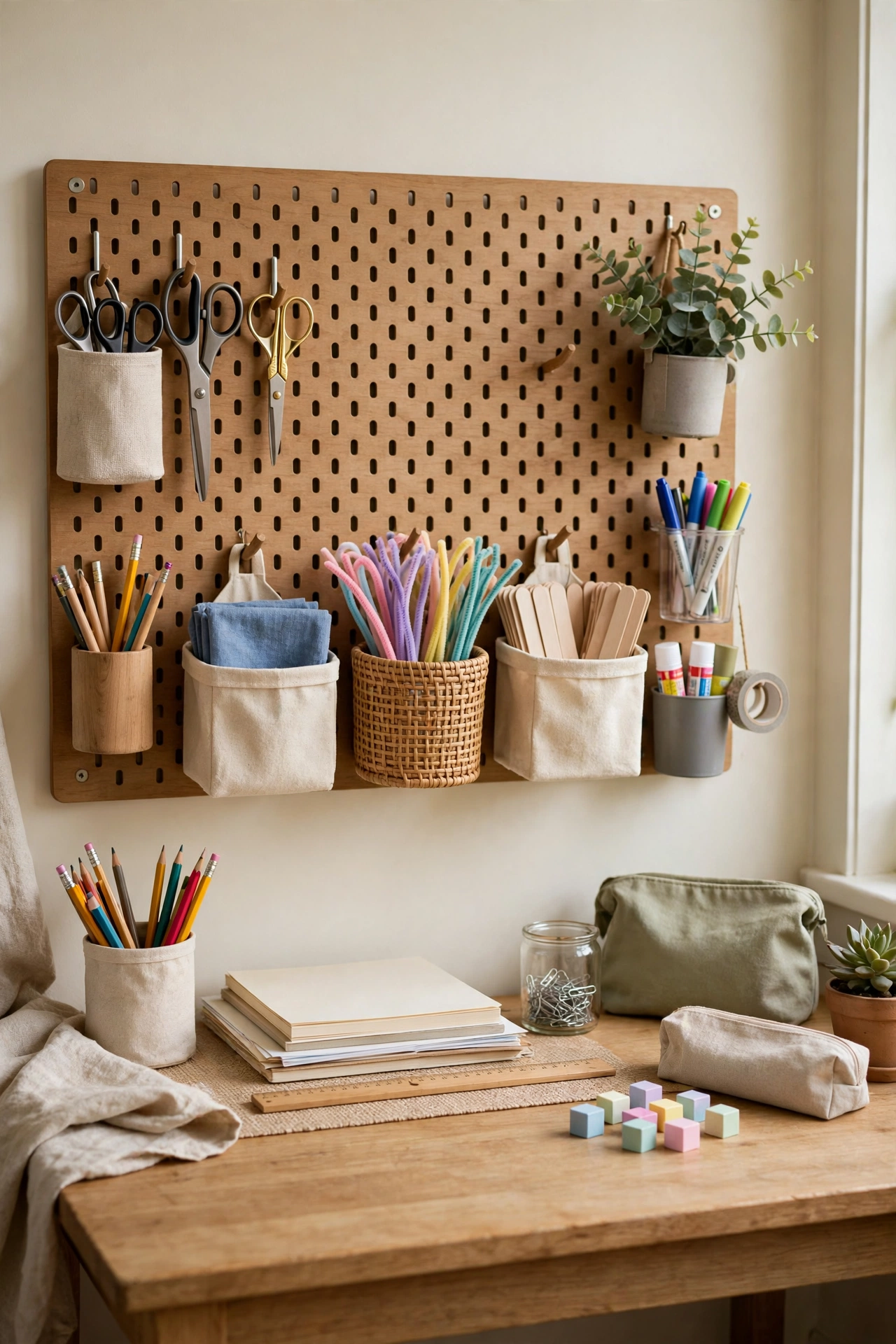
When floor space runs short, the wall above the desk becomes storage. A pegboard with hooks, cups, and small bins holds scissors, rulers, markers, and tape where kids can see everything at a glance. Mount it at child height so young learners reach supplies alone, and label each cup with a word and a picture. A small corkboard beside the pegboard displays finished work and the weekly schedule. This setup costs little, installs in an afternoon, and frees the desk surface for actual work instead of supply piles.
Try this: Leave one empty row on the pegboard for new tools, so growth does not force a rebuild.
Cost: $ · Difficulty: Easy
8. Side-by-side sibling desks
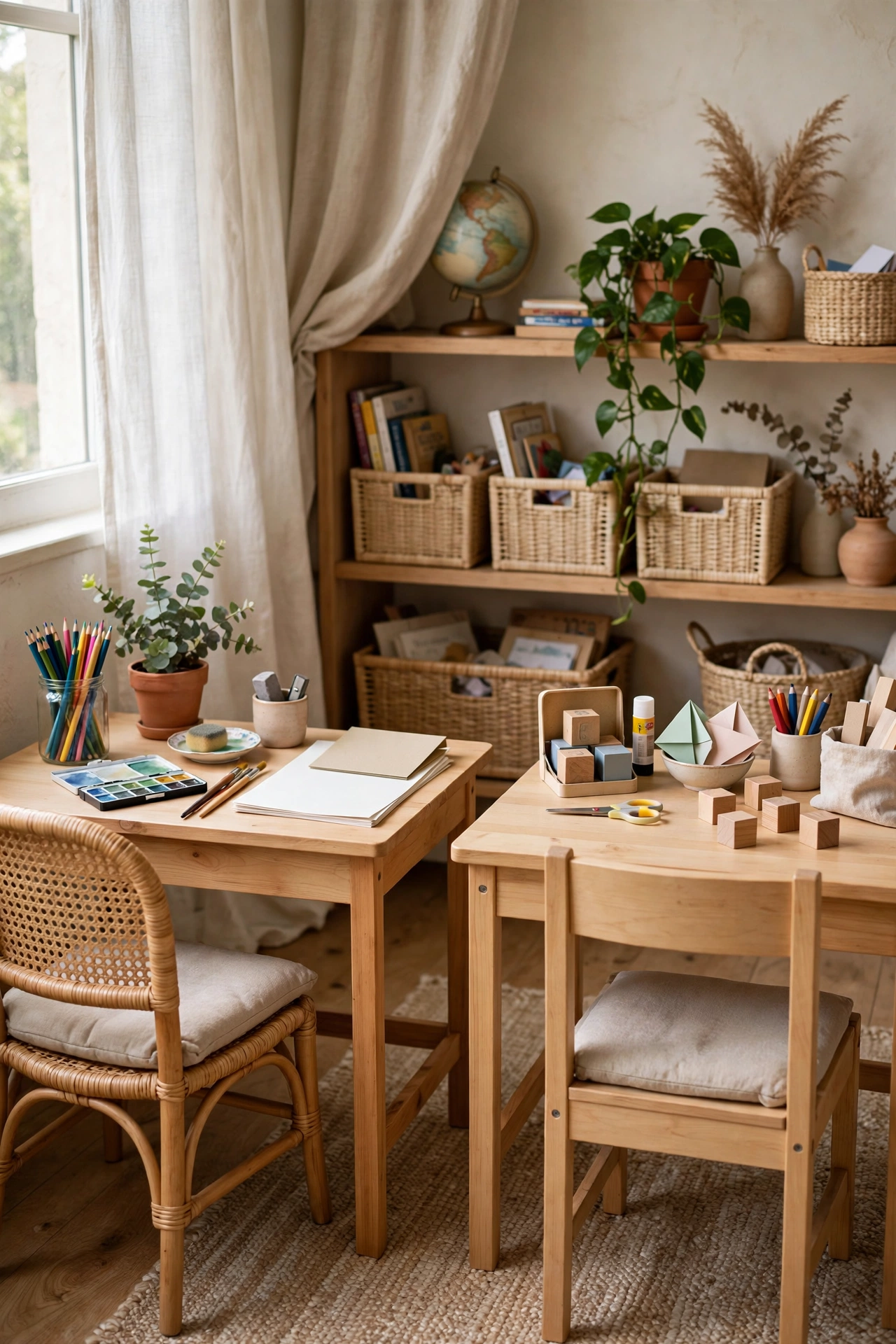
Two children sharing one room still need their own territory. Place two small desks side by side with a low divider or a pencil cup row between them, and give each child a labeled bin for their own books and tools. Separate desks cut down on arguments over space and let each child arrange supplies the way they like. A shared lamp between the desks saves outlet space, and a strip of tape on the floor can mark each zone for younger kids. This layout works in a bedroom, a living room corner, or a dedicated school room.
Try this: Let each child choose their own desk chair color, so ownership starts before the first lesson.
Cost: $$ · Difficulty: Easy
9. Shared family table for group lessons

A large table in the middle of the learning space becomes the heart of group teaching. Morning time, read-alouds, science demonstrations, and art projects all happen around one surface where everyone can see the same book or experiment. Keep a center caddy with shared supplies, and give each child a tray for their own work so papers do not mix. When lessons end, the trays stack on a shelf and the table clears for lunch. This setup suits families with several young children who still learn best close together.
Try this: Seat the youngest child beside you and older kids across the table, so help travels the shortest distance.
Cost: $$ · Difficulty: Easy
10. Art and messy project station

Messy projects deserve their own corner, and your dining table will thank you. Set a washable mat on a small table near a sink, stock labeled bins with paint, brushes, paper, and clay, and keep smocks on hooks beside the station. Storing supplies at child height means kids can set up alone and clean up without waiting for you. A plastic tray under each project catches drips before they reach the floor. Rotate the bins by unit, so only the current project supplies sit out and the rest stays stored.
Try this: Tape a sheet of old wrapping paper over the table before painting, and cleanup becomes one fold.
Cost: $ · Difficulty: Easy
11. Science and nature table

A small table devoted to science keeps experiments from colonizing the kitchen counter. Stock it with a magnifying glass, a few field guides, jars for collected leaves and rocks, and simple tools like measuring cups and a kitchen scale. A nature shelf beside the table holds finds from walks, and a notebook records observations week by week. Keep the table near a window for plant experiments and daylight. This station turns curiosity into a habit, since kids check the table daily to see what changed overnight.
Try this: Start a “find of the week” jar, and let each child add one item from outside every Monday.
Cost: $ · Difficulty: Easy
12. Tech charging station
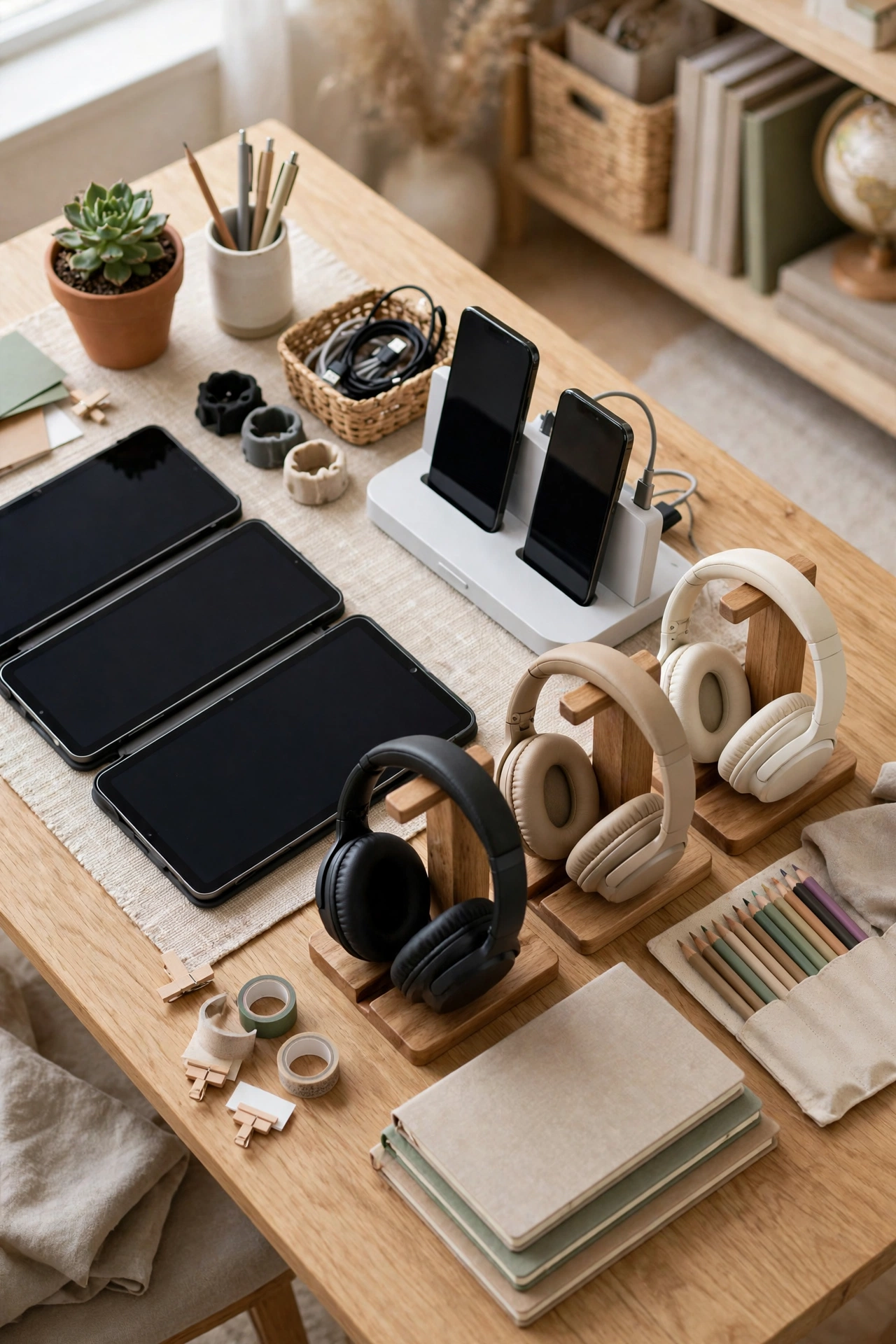
When tablets and laptops join the curriculum, they need a fixed home. Set one shelf or small cart as the charging station, with a labeled dock for each device, a power strip with a switch, and hooks for headphones. Devices charge overnight in one place, so nothing starts the school day dead, and screen time stays easier to manage when tech lives in one zone. Keep a simple rule: devices return to the dock when the lesson ends. A small basket beside the dock holds styluses, chargers, and cases so cables stop wandering through the house.
Try this: Label each charger with tape in the device owner’s color, and lost chargers drop to zero.
Cost: $ · Difficulty: Easy
13. Morning time basket corner

Morning time works best when everything for it sits in one basket. Fill a sturdy basket with the current read-aloud, a poetry book, a hymn or song sheet, and a small calendar, and keep it beside your chair in the living room or school room. The basket travels to wherever the family gathers, and the routine starts when the basket opens. This corner needs no furniture beyond a comfortable chair and a blanket, yet it anchors the whole day. Swap the basket contents each month so the routine stays fresh without a full reset.
Try this: Add one new poem card to the basket each week, and review the old ones on Fridays.
Cost: $ · Difficulty: Easy
14. Subject zones for reading and writing
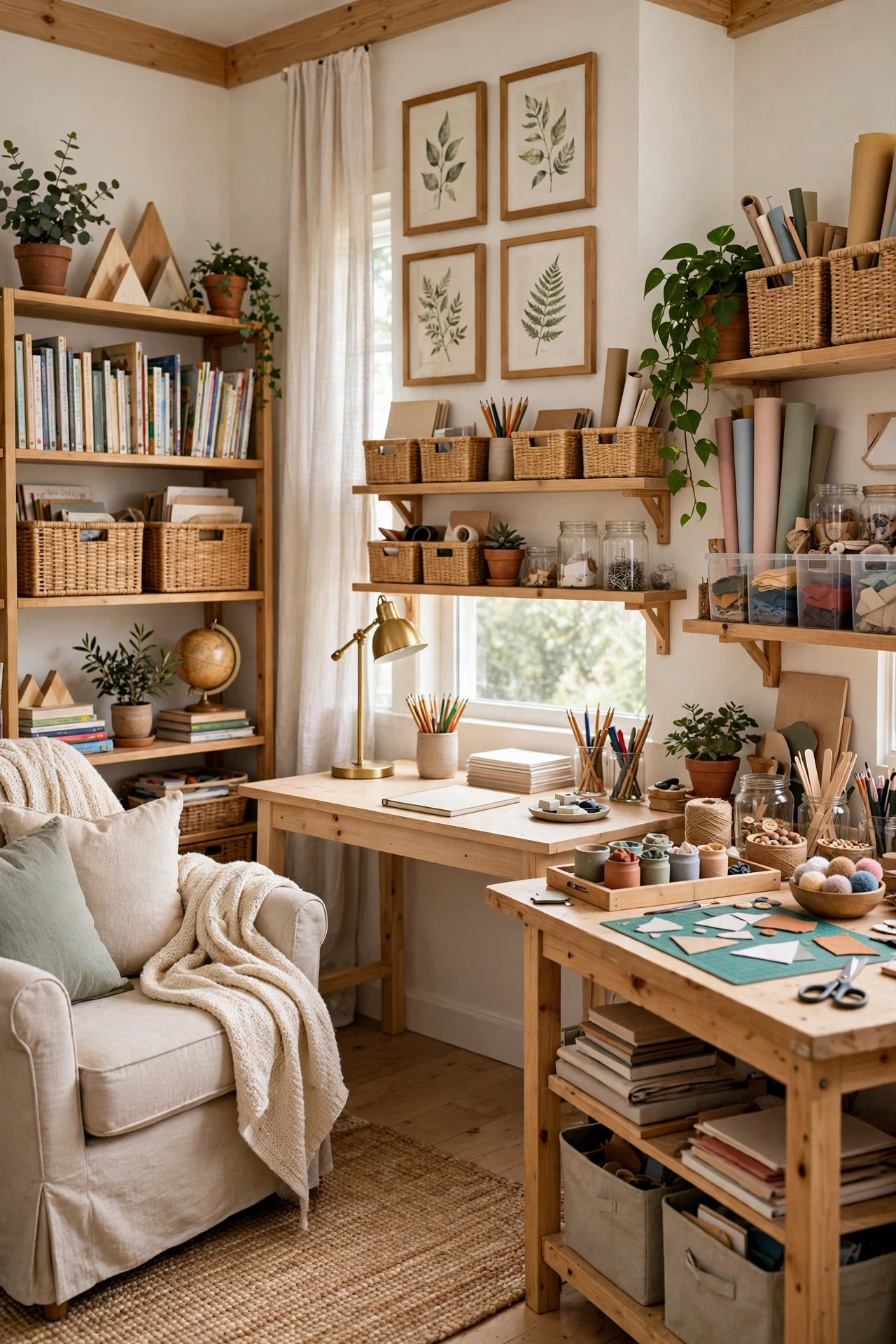
Dividing one room into zones removes a surprising amount of daily friction. Put a reading chair and bookshelf in one corner, a writing desk with paper and pens in another, and a project table with art and science tools in a third. Each zone stays stocked with its own materials, so kids always know where to go next and transitions take minutes instead of ten. Label each zone with a simple sign, and keep a small clock visible so older kids can manage their own rotations. This layout fits a spare room best, but a large living room corner can hold two zones well.
Try this: Color-code each zone with matching bins, so supplies never drift into the wrong corner.
Cost: $$ · Difficulty: Moderate
15. Gallery wall for finished work

One wall devoted to finished work turns an empty surface into motivation. Hang a wire with clips, a row of frames, or a large corkboard, and display artwork, maps, timelines, and the best copywork of the week. Rotating the display every two weeks keeps the wall fresh and gives every child a turn in the spotlight. Keep the wall at child eye level so kids can pin their own work without a ladder. This gallery also becomes a record of progress, since parents can photograph each rotation before swapping it out.
Try this: Date each piece lightly on the back before hanging it, so the year-end portfolio sorts itself.
Cost: $ · Difficulty: Easy
16. Sensory calm-down corner
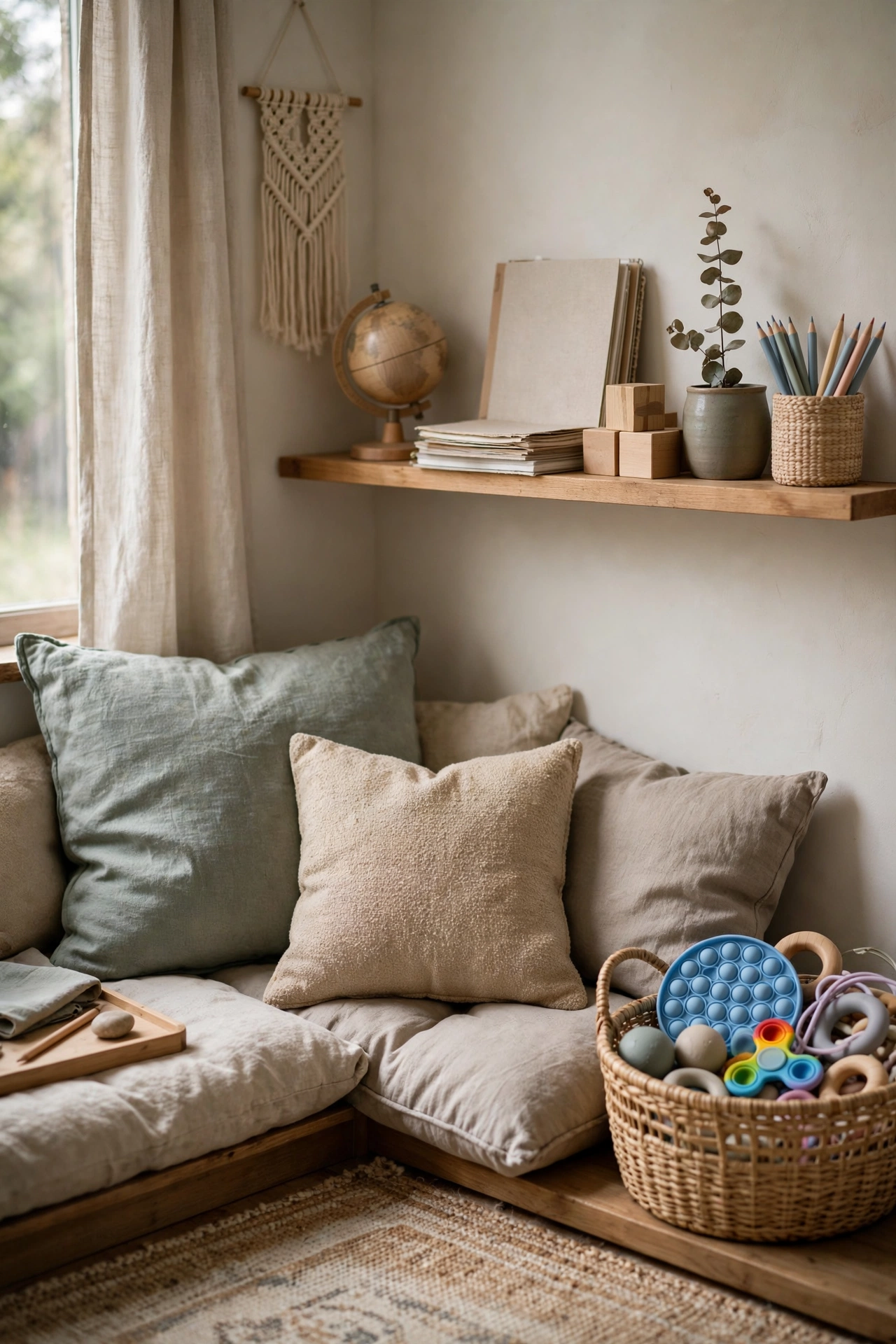
Some children focus better when the room itself stays calm. Set aside a small corner with soft lighting, muted colors, and a cushion or bean bag, plus a basket with fidget tools, noise-canceling headphones, and a few quiet books. This corner gives an overwhelmed child a place to reset without leaving the school area or disrupting the lesson. Keep the corner free of screens and bright posters, and teach kids to use it before frustration builds rather than after. A five-minute reset here often saves twenty minutes of lost focus later.
Try this: Add a sand timer to the basket, so resets have a clear end kids can see.
Cost: $ · Difficulty: Easy
17. Multi-age setup with color-coded bins

Teaching several grade levels in one room gets easier when every child owns a color. Give each child a bin, a shelf section, and a folder in their color, and store their books, workbooks, and tools inside. Older kids work independently at their own desks while younger ones stay near you at the family table, and the colors make it obvious whose materials belong where. A shared morning table brings everyone together for group lessons before splitting into independent work. This system also teaches responsibility, since each child maintains only their own color.
Try this: Print each child’s weekly checklist on paper in their color, so the right list lands in the right bin.
Cost: $ · Difficulty: Easy
18. Outdoor learning spot on the patio

A patio, balcony, or backyard corner makes a strong second classroom. Reading, journaling, and nature study all work outside, and a change of scenery can reset focus on slow days faster than almost anything else indoors. Keep a weather-resistant bin outside with notebooks, pencils, and a blanket, so moving a lesson outdoors takes one trip. A folding table and two chairs complete the setup, and shade matters more than furniture, so pick a spot under a tree or umbrella. Bring work inside when wind picks up, since flying papers end outdoor lessons fast.
Try this: Keep a dedicated outdoor notebook that never comes inside, so nature observations stay in one place.
Cost: $ · Difficulty: Easy
19. Bedroom study corner behind a bookshelf divider
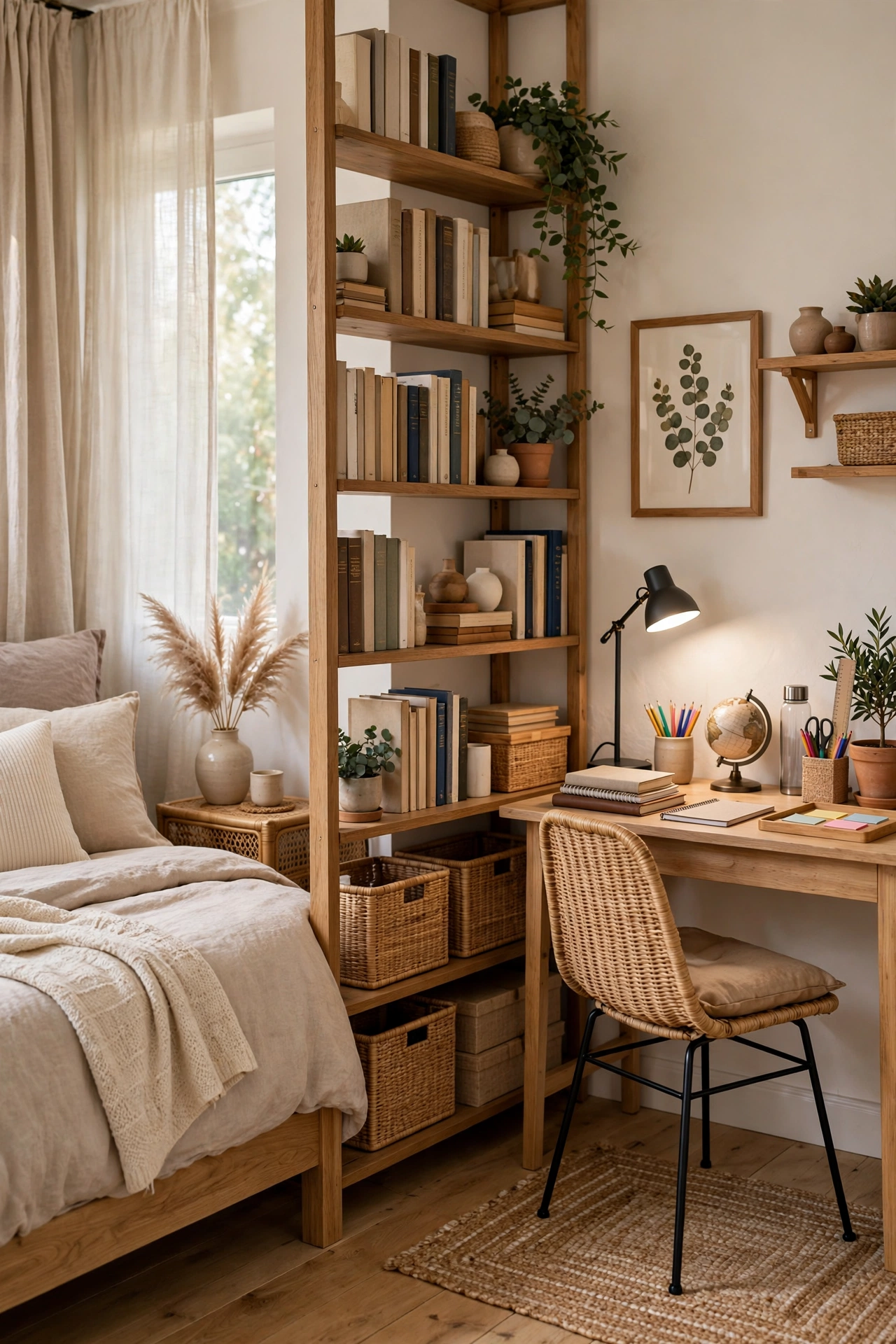
When a bedroom must double as a schoolroom, a divider does the job of a wall. Place a bookshelf, a curtain, or a folding screen between the bed and the desk, and the child gains a mental shift between rest and learning. Stock the desk side with a lamp, a small shelf, and a bin for daily supplies, and keep the bed side free of school materials. A loft bed with a desk underneath works the same way in tight rooms, using vertical space instead of floor space. This setup suits one child learning in their own room, especially an older student.
Try this: Face the desk toward the wall, not the bed, so the pillow stays out of sight during lessons.
Cost: $$ · Difficulty: Moderate
20. Montessori low shelves for little kids
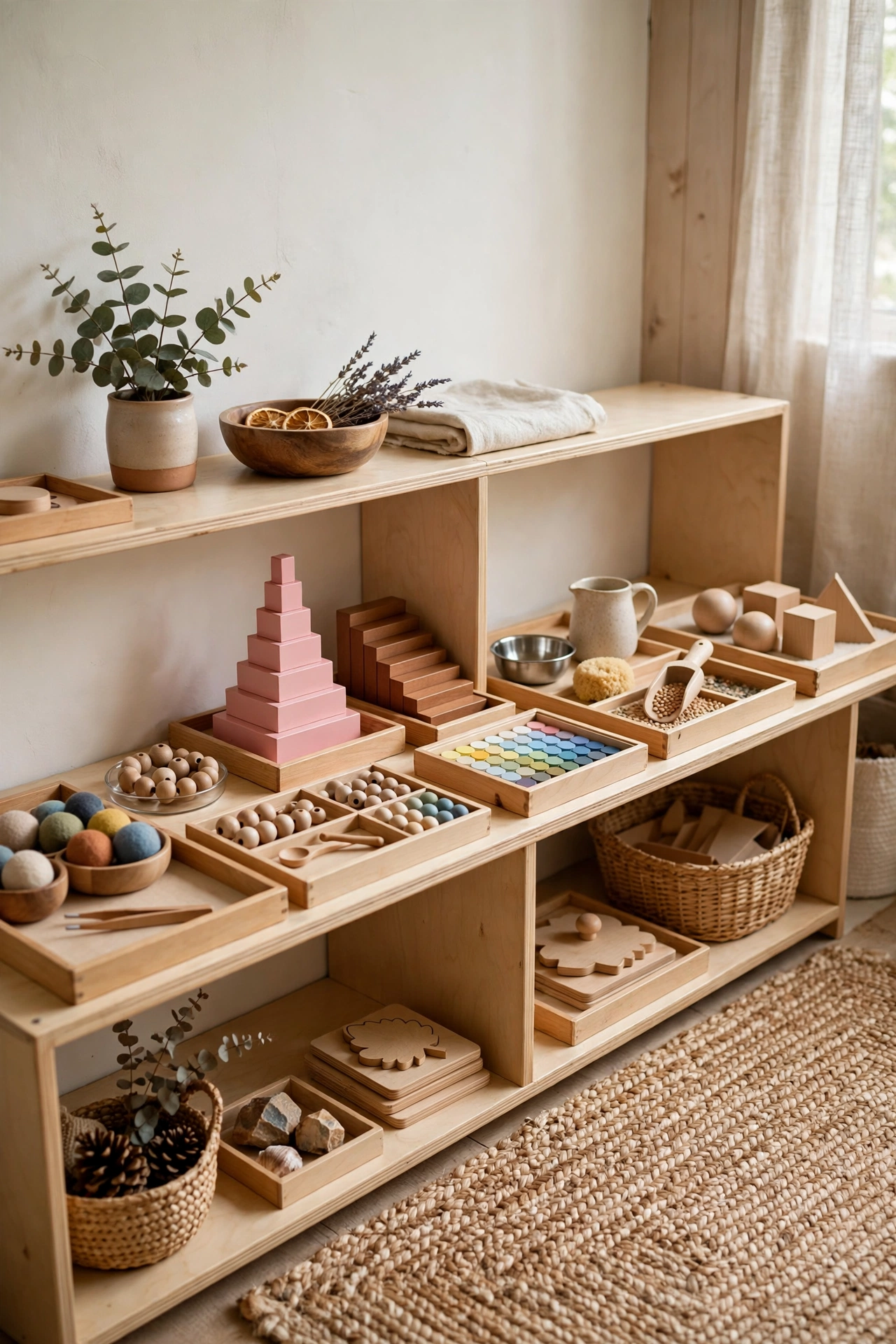
Young children learn best when materials sit where they can reach them alone. Low, open shelves with trays for puzzles, counting tools, letter cards, and art supplies let a preschooler or kindergartner choose work without climbing or asking. Keep only a few trays out at a time and rotate them weekly, so the shelf stays inviting instead of overwhelming. A small rug marks the work area, and a child-height table beside the shelves holds the current activity. This setup builds independence early, since kids learn to take out, use, and return each tray themselves.
Try this: Photograph each shelf layout before rotating trays, so reset takes minutes instead of guessing.
Cost: $$ · Difficulty: Moderate
21. Fold-down Murphy desk for small spaces

A wall-mounted desk that folds down saves floor space in homes where every square foot counts. Mount it in a hallway nook, a bedroom wall, or beside the living room sofa, and add two shelves above for books and bins. Lessons open with one pull, and the room returns to normal when the desk folds back up. Pair it with a folding chair that hangs on a hook nearby, so seating never blocks a walkway. This idea suits apartments, shared rooms, and families who need the school space to disappear after lunch.
Try this: Mount a small whiteboard on the wall above the desk, so lessons have a teaching surface without a table easel.
Cost: $$ · Difficulty: Moderate
22. Thrifted and repurposed school room
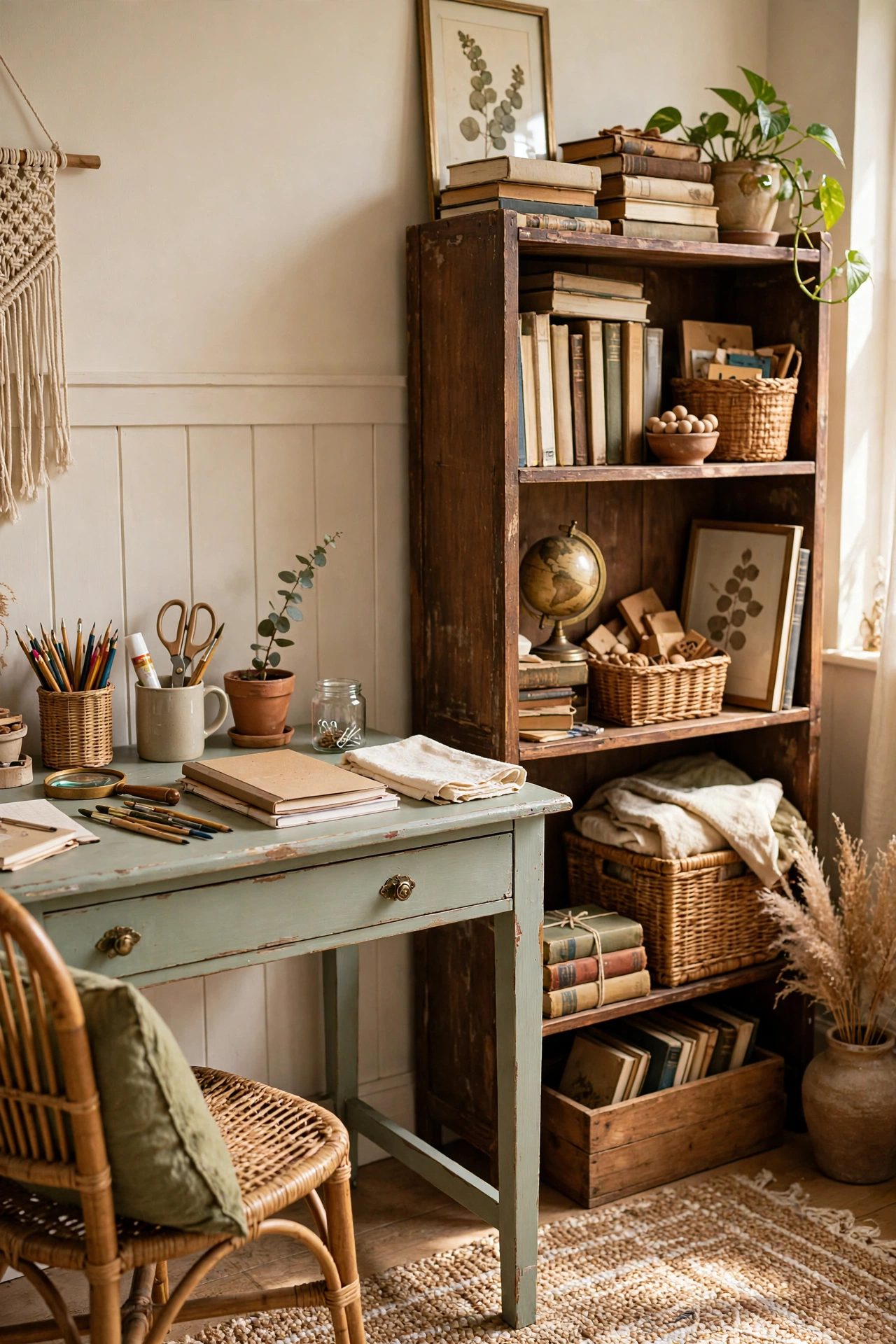
A full school room can come together for very little when you shop secondhand first. Thrift stores and garage sales turn up solid wood desks, bookshelves, and storage bins at a fraction of retail, and a coat of paint unifies mismatched pieces into one room. An old dresser holds art supplies in its drawers and books on top, while a retired kitchen cart becomes a rolling supply station. Check local buy-and-sell groups weekly, since families leaving homeschooling often sell furniture and curriculum together. This route also keeps the setup flexible, since replacing a thrifted piece costs little.
Try this: Paint every thrifted piece the same soft white, and the room reads as planned rather than patched together.
Cost: $ · Difficulty: Easy
Home school room ideas at a glance
Cost key: $ means $1 to $10, $$ means $11 to $99, $$$ means $100 to $999, $$$$ means $1,000 and up. Difficulty reflects setup effort, not teaching effort.
| Idea | Cost | Difficulty | Best for |
|---|---|---|---|
| Dedicated classroom in a spare room | $$ | Moderate | Families with a spare room |
| Living room learning corner | $ | Easy | Shared living spaces |
| Kitchen table school station | $ | Easy | Young kids who need supervision |
| Closet classroom that closes away | $ | Moderate | Small homes, one student |
| Rolling cart school station | $ | Easy | No fixed school space |
| Reading nook with floor cushions | $ | Easy | Independent reading time |
| Pegboard wall for supplies | $ | Easy | Tight rooms, visible storage |
| Side-by-side sibling desks | $$ | Easy | Two or more children |
| Shared family table for group lessons | $$ | Easy | Group teaching, young kids |
| Art and messy project station | $ | Easy | Craft-heavy weeks |
| Science and nature table | $ | Easy | Hands-on learners |
| Tech charging station | $ | Easy | Device-based curriculum |
| Morning time basket corner | $ | Easy | Daily routines, read-alouds |
| Subject zones for reading and writing | $$ | Moderate | Larger rooms, older kids |
| Gallery wall for finished work | $ | Easy | Motivation and progress records |
| Sensory calm-down corner | $ | Easy | Sensitive or easily overwhelmed kids |
| Multi-age setup with color-coded bins | $ | Easy | Several grade levels at once |
| Outdoor learning spot on the patio | $ | Easy | Nature study, warm weather |
| Bedroom study corner behind a bookshelf divider | $$ | Moderate | One child in their own room |
| Montessori low shelves for little kids | $$ | Moderate | Preschool and kindergarten |
| Fold-down Murphy desk for small spaces | $$ | Moderate | Apartments, shared rooms |
| Thrifted and repurposed school room | $ | Easy | Tight budgets, flexible plans |
How to choose the right setup
Start with the ages you teach, not the room you wish you had. Young children need you close, low shelves, and floor space for sprawling projects. Older students need a quiet desk, reference books at eye level, and a charging spot for their own device. Next, measure the real space: a corner that fits a desk and a shelf beats a spare room that doubles as a storage dump. Finally, buy in stages. A table, good light, and labeled bins carry the first month, and every later purchase should solve a problem you actually hit, like a second desk for a growing sibling or a cart for a room that must reset daily.
Safety notes
Anchor tall shelves, bookcases, and wall-mounted desks into studs with hardware rated above the load, since children climb and pull. The U.S. Consumer Product Safety Commission publishes guidance on anchoring heavy furniture, which you can read here: CPSC Anchor It guidance. Keep cords clipped along baseboards and away from walkways and small hands, and keep small parts, magnets, and beads out of reach of toddlers. For homes built before 1978, test for lead paint and follow lead-safe rules before sanding or drilling walls; the EPA Renovation, Repair and Painting program explains the requirements here: EPA Renovation, Repair and Painting program. Hire a licensed electrician for new outlets or hardwired lights, and keep the school space near a working smoke alarm.
Related reading
If your learning corner has to fit a tight spot, these small desk setups show layouts that work in tiny footprints: 12 Small Desk Setup Ideas for a Workspace That Fits Anywhere.
Once the desks are placed, these small desk organization systems keep supplies tidy through the week: 18 Small Desk Organization Ideas for a Desk That Stays Tidy.
For older students who want a workspace that looks grown-up, these desk setup styles cover every taste: 26 Beautiful Desk Setup Ideas for a Workspace You Actually Want to Sit At.
For printable practice to stock the worksheet bin, these toys and worksheets make learning feel like play: 10 Easy Toys Worksheets for Kids That Make Learning Fun.
If a parent works from home beside the school table, these home office ideas help both zones share one room: 7 New Home Office Ideas for Women That Feel Cozy and Stylish.
Frequently asked questions
Do I need a separate room to homeschool?
No. Many families homeschool at a kitchen table, in a living room corner, or with a rolling cart that parks in a closet at night. What matters is a system: a fixed place for daily supplies, a clear start to the school day, and a reset routine that returns the space to family use. A separate room helps, but organization and routine matter more than walls.
How much does it cost to set up a home school room?
A working setup can start under $50 with a table you already own, a basket for supplies, and labeled bins. Most families spend $50 to $200 as they add a bookshelf, a rolling cart, or a fold-down desk. Start with what you have, and add pieces only after you know what your family actually uses each week.
What furniture is essential for a home school room?
Three things cover the basics: a work surface at the right height for your children, seating that supports good posture, and storage for daily materials within arm’s reach. Everything beyond that, like reading nooks, art stations, and gallery walls, depends on your space and teaching style.
How do I homeschool multiple ages in one room?
Give each child a color for their bins, folders, and shelf labels, and keep a shared table for group lessons in the morning. Older kids move to their own desks for independent work while younger ones stay near you. A short end-of-day cleanup where everyone returns their own color keeps the system running.
How do I keep the room tidy at the end of the day?
Limit what sits out to the current unit’s materials, store the rest in a closet, and rotate supplies every few weeks. End each school day with a ten-minute cleanup where kids return items to their labeled homes. Small daily resets beat a big weekly overhaul, and they teach kids to own their space.
Final thoughts
The best home school room is the one your family actually uses every morning, whether that means a spare room with zones for every subject or a single cart that rolls to the kitchen table. Pick one idea from this list, set it up this weekend, and let the room grow with your kids from there.
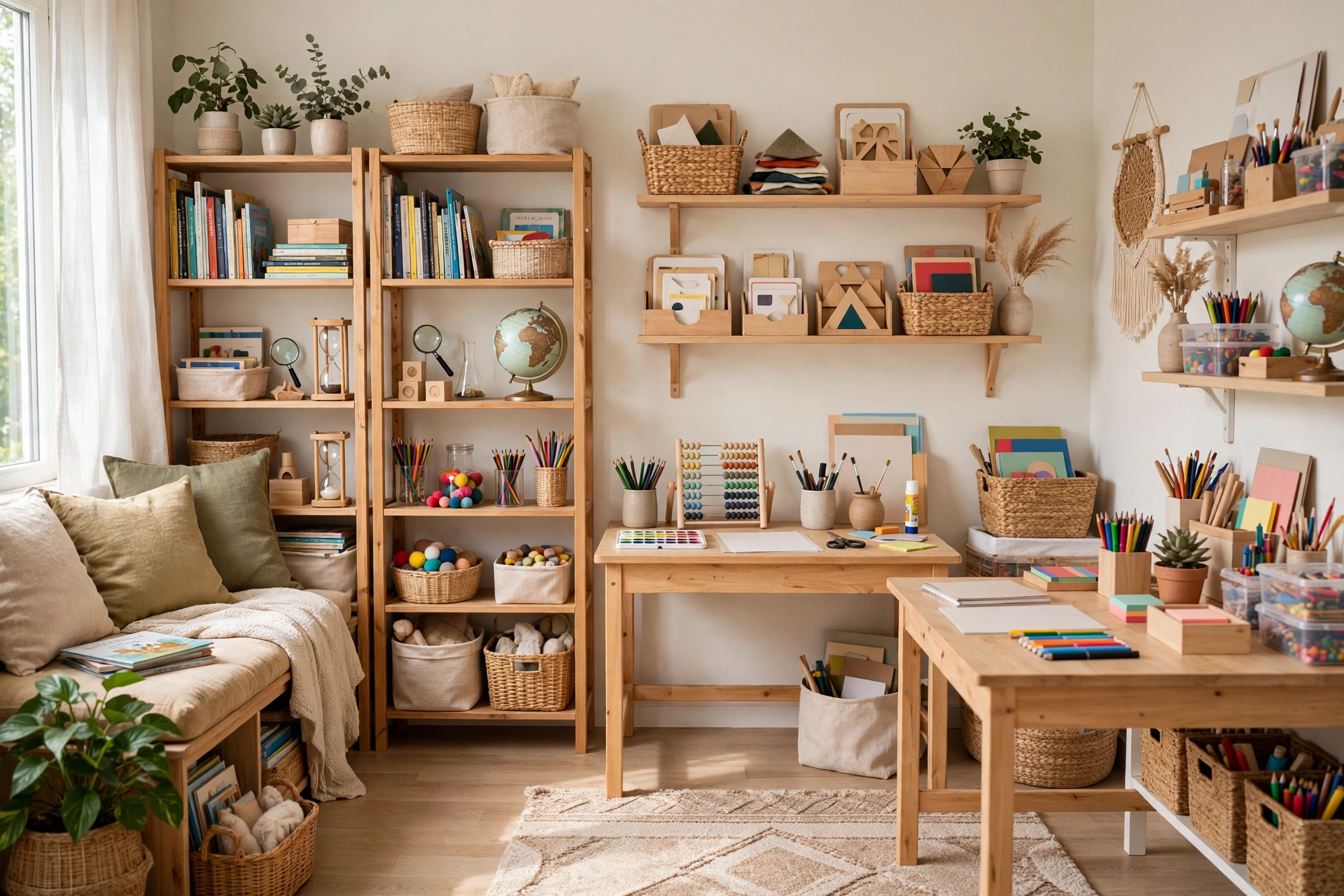
For best Ikea classroom organization, see our guide to 20 Best Ikea Classroom Organization Ideas, From KALLAX Cubbies to Rolling Supply Carts for KALLAX cubbies and TROFAST center bins to rolling supply carts and turn-in trays, with costs, difficulty, and time for each.


