


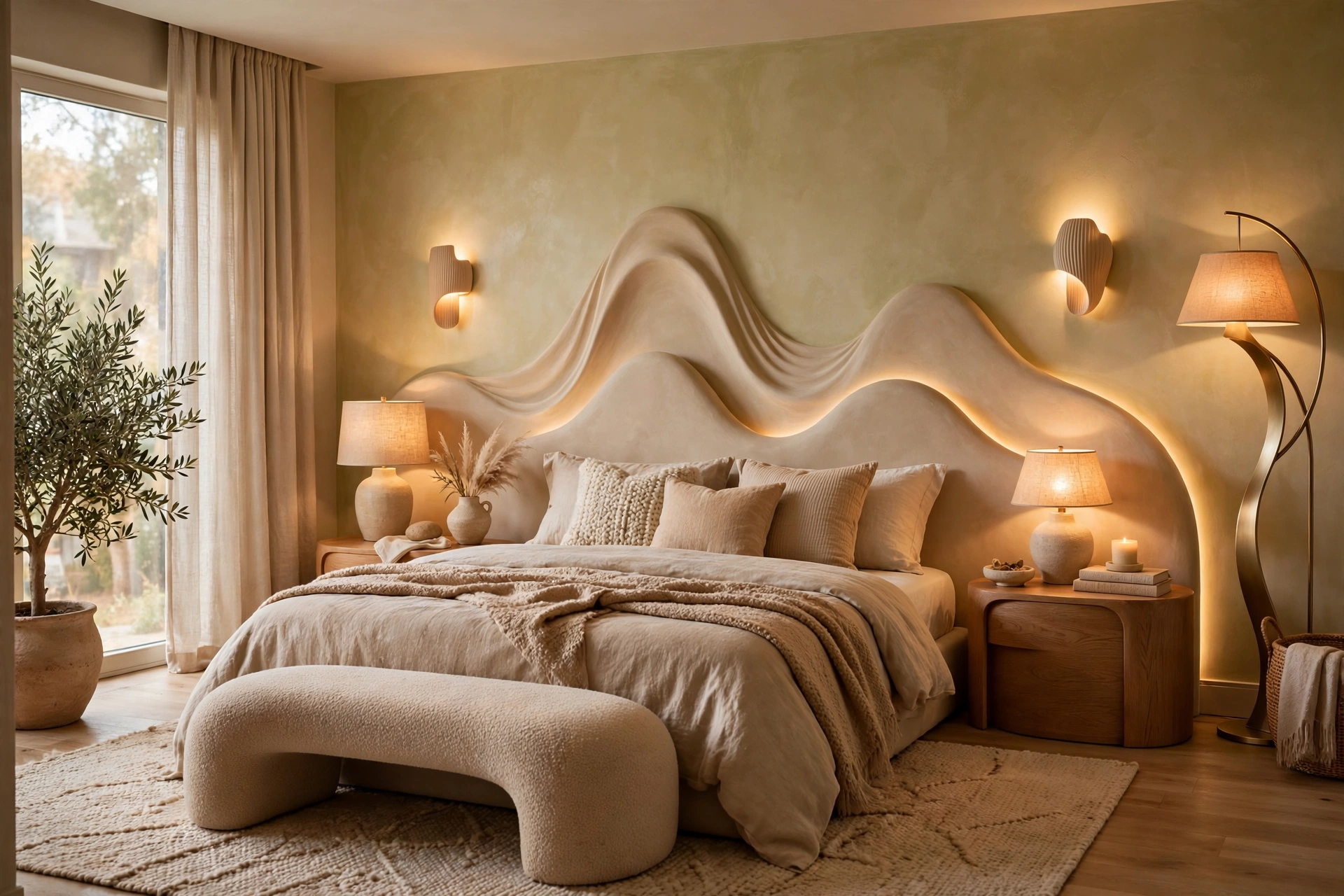
Refreshing a bedroom feels risky because trends move fast and a full redo costs real money. Repaint the whole room for a look you tire of in six months, and you pay for that choice twice. I repainted my own bedroom twice in three years before I learned to test a trend in one corner first, and that one habit has saved me more money than any sale.
This guide covers 10 bedroom trends for 2026, each with a low commitment way to try it, a real cost range, and a difficulty label. It is written for renters and owners who want a calmer, warmer room without gutting the space or chasing every new look at once.
Quick takeaways
- Warm neutrals, natural wood, and layered texture define bedrooms in 2026, while cool gray and matching furniture sets fade.
- Pick 2 or 3 trends at most, and test each one with bedding, lighting, or one wall before you commit to paint or furniture.
- Lighting planned around time of day does more for sleep than any single decor purchase.
- Storage beds and built in wardrobes keep small rooms calm without adding visible furniture.
- Low VOC paint, natural fibers, and secondhand wood pieces give a refresh that lasts past the trend cycle.
1. Warm neutrals replace cool gray
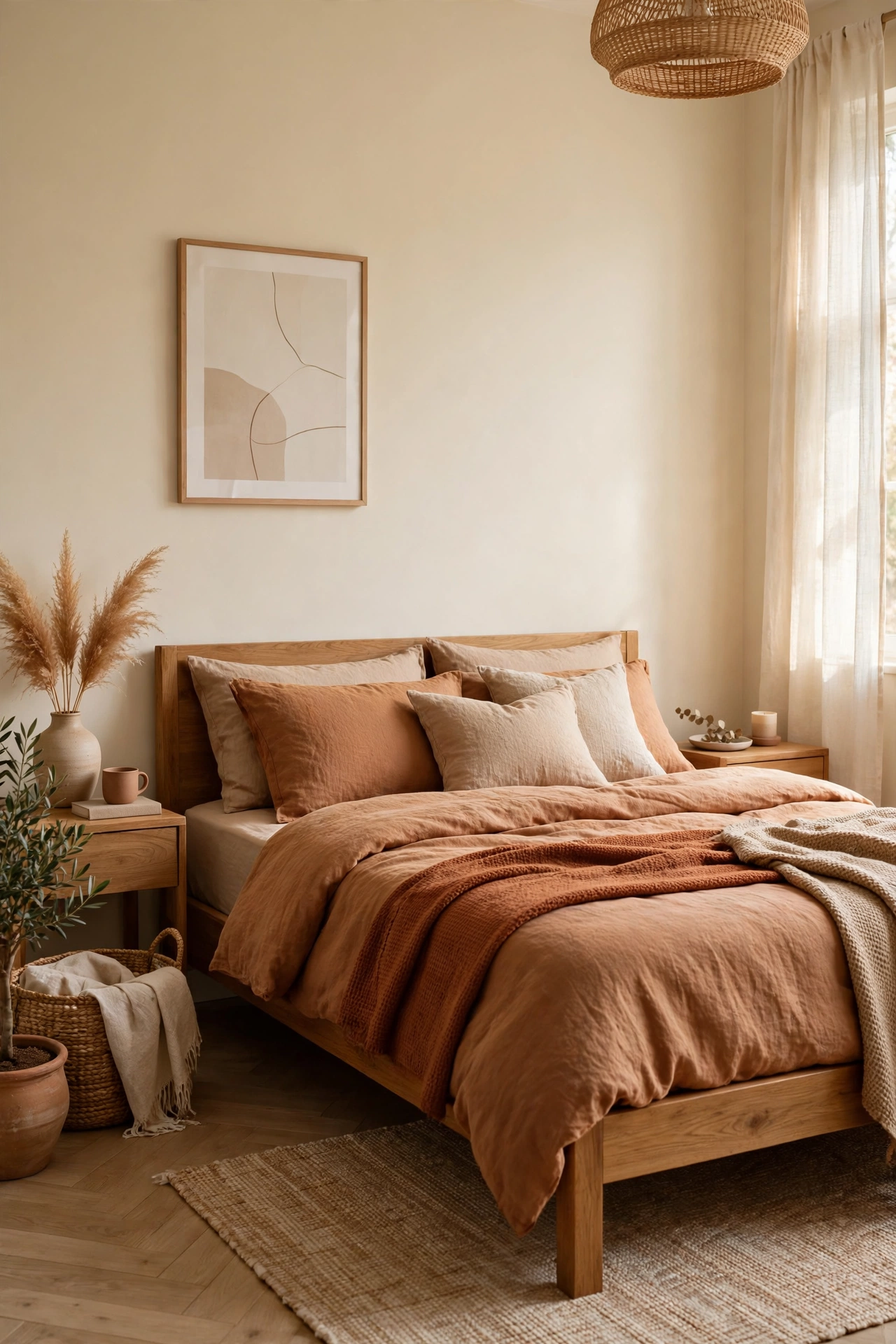
Cool gray walls and stark white bedding ruled bedrooms for years, and 2026 moves the other way. Butter cream, warm clay, soft taupe, and mushroom now set the base, and they read softer in morning light than any cool gray. Warm neutrals also pair with wood without a cold edge, so an oak frame or a walnut nightstand looks settled rather than staged. Start with bedding and curtains before you touch paint, since textiles set the tone for a fraction of the cost. Keep one crisp white element, such as pillowcases, so the room stays fresh instead of muddy.
Try this: Swap gray sheets for warm cream washed linen and add a clay colored throw at the foot of the bed.
Cost: $$$. Difficulty: Easy.
2. Color drenched cocoon rooms
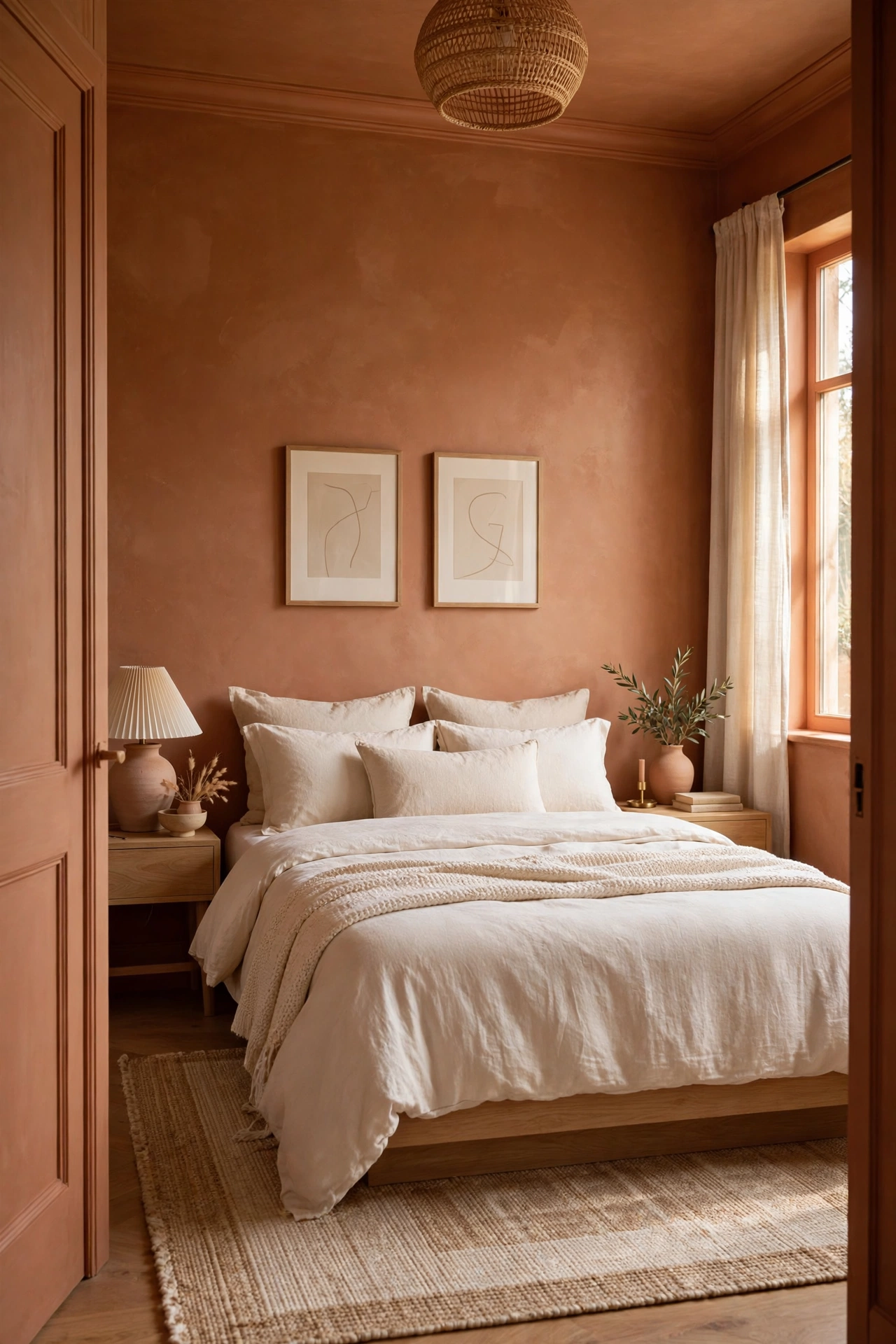
Color drenching paints walls, trim, and ceiling in one warm tone so the room reads as a single calm envelope. Butter yellow, soft clay, and warm plaster work best for bedrooms because they cocoon without darkening the space. The trick is contrast: keep bedding and curtains a few shades lighter so the bed stays the focal point and the room does not close in. This trend suits rooms with good daylight, since a fully drenched dark room can feel heavy. Test the tone on one wall and its trim first, and live with it for two weeks before you paint the rest.
Try this: Paint one wall and its trim in the same warm tone, then decide whether the ceiling joins in.
Cost: $$$. Difficulty: Weekend project.
3. Timber bed frames return
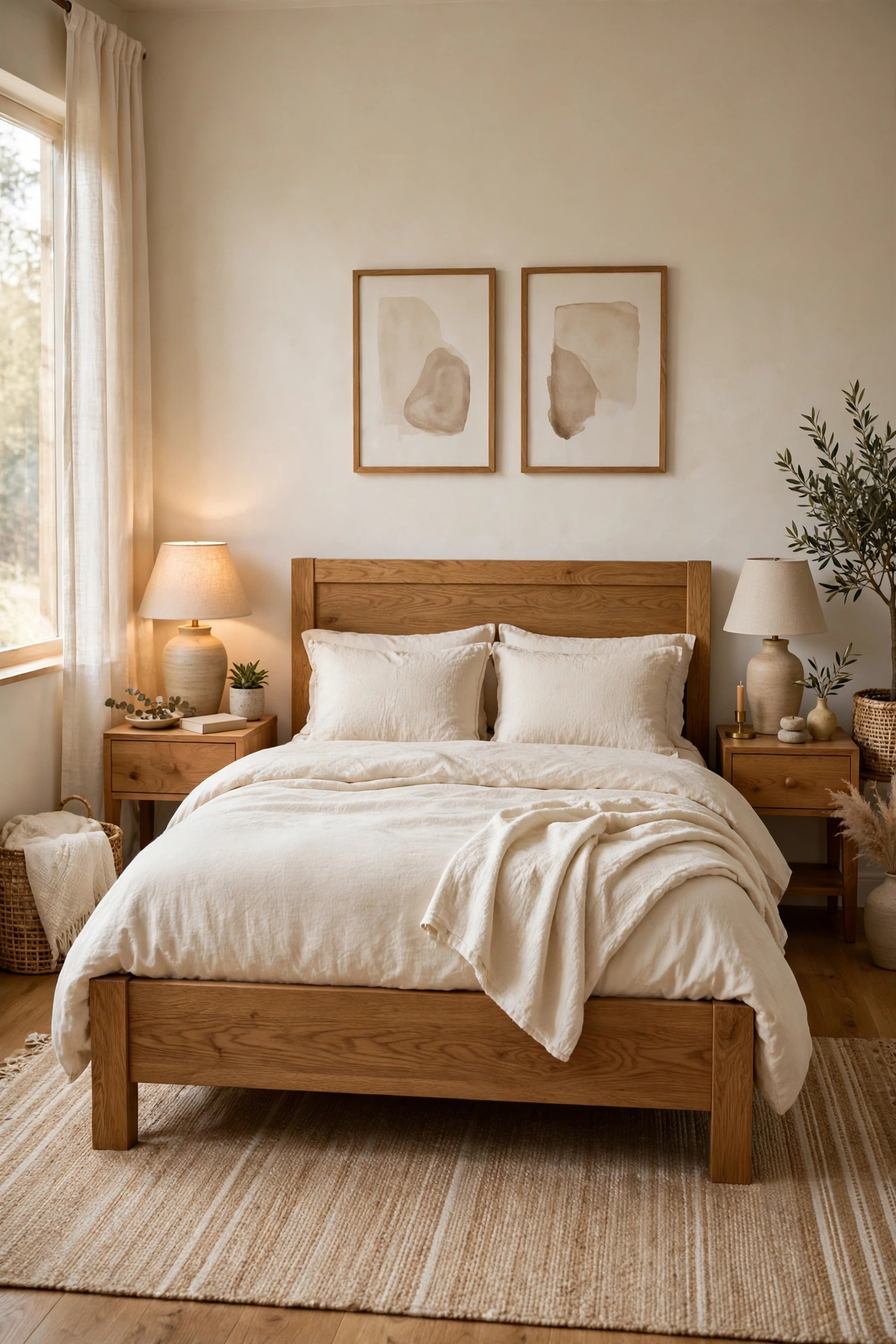
Softly curved beige upholstered headboards dominated bedrooms for years, and timber is bringing shape back. A solid oak, walnut, spindle, or sleigh frame makes the bed read as furniture instead of one large upholstered rectangle, and darker timber works well against cream, white, blue, or patterned linen. Scale matters more than style here. Measure the full frame, including posts and footboards, rather than trusting the mattress size, since a heavy frame can overwhelm a small room. Pair a timber frame with simple bedding so the wood carries the room instead of competing with pattern.
Try this: Choose a low profile timber frame with slim posts for a small room, and save tall sleigh posts for larger spaces.
Cost: $$$$. Difficulty: Medium.
4. Texture first, decoration second
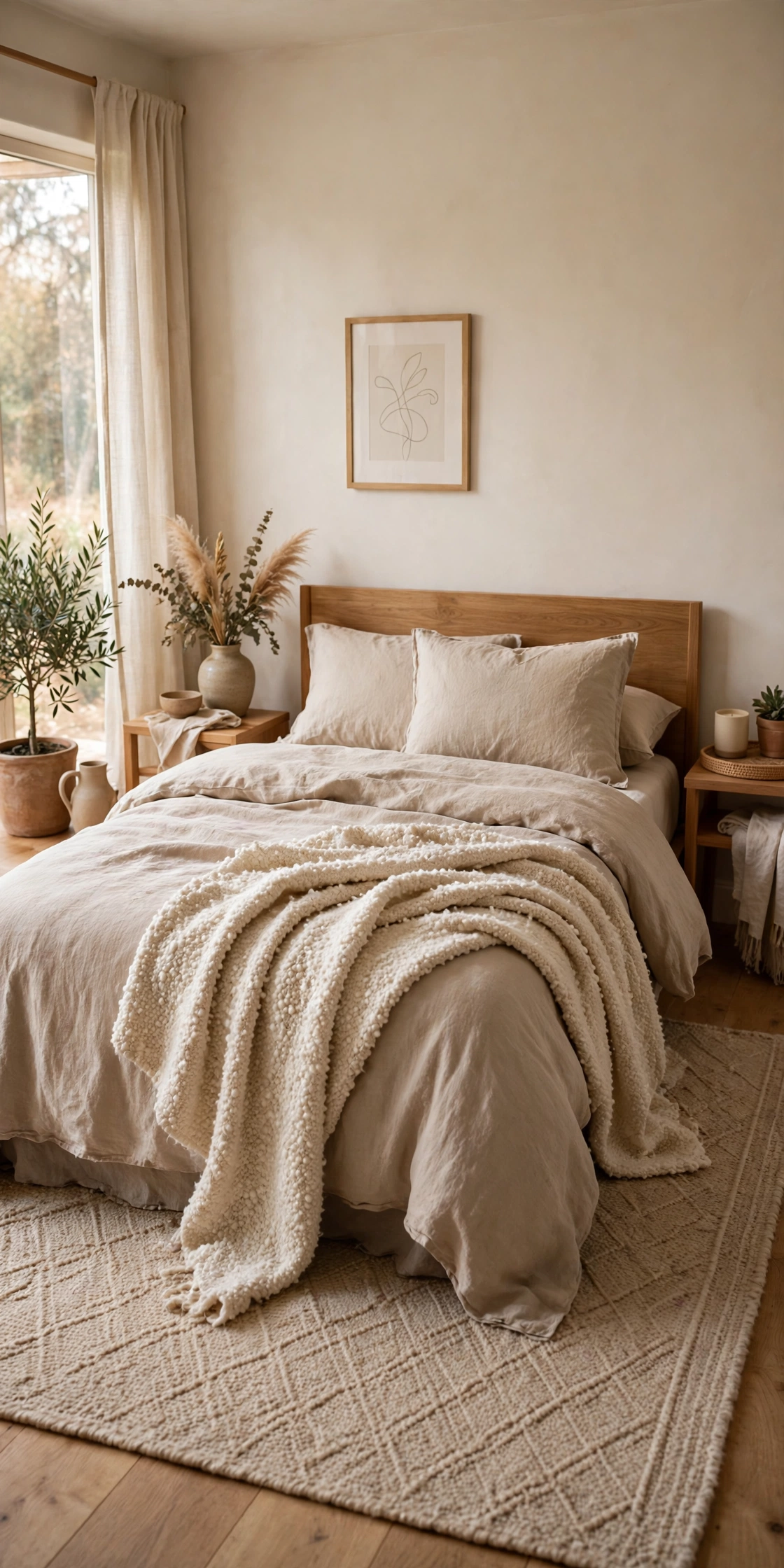
Bedrooms in 2026 build interest from materials rather than from extra objects on shelves. Boucle, washed linen, wool, chunky knit, and matte stone give a room depth you can feel, and three textures are enough to carry a bed and a floor. Start with the bed, since it fills the most visual space: a washed linen duvet, a boucle throw, and a wool rug underfoot change the whole room without a single new ornament. Keep patterns quiet so textures stay the focus, and repeat one texture in two places, such as linen on the bed and linen on the window, for a pulled together result.
Try this: Layer a boucle throw over a washed linen duvet and add a flatweave wool rug beside the bed.
Cost: $$$. Difficulty: Easy.
5. Sculptural beds become the design moment
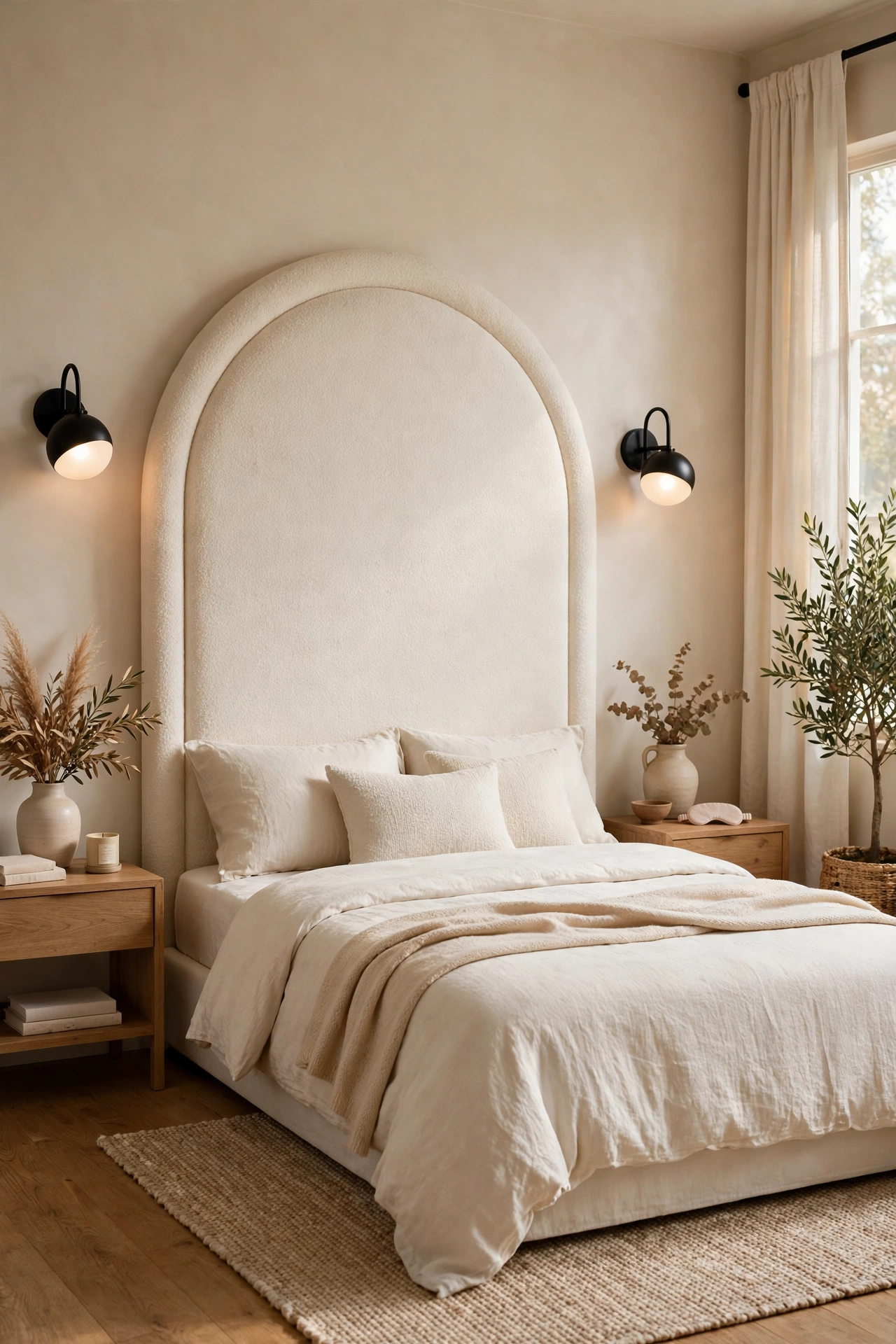
The bed is getting bigger as a design moment in 2026, through curved upholstered headboards, tall sculptural shapes, and canopy frames with sheer panels. A strong bedhead frames the whole room, which means the rest of the room can stay simple: plain nightstands, one lamp each side, and quiet walls. Canopy frames suit rooms with at least 8 foot ceilings, since low ceilings plus a tall frame crowd the space. Sheer panels soften a canopy without blocking light, and they come down easily if the look tires. Keep bedding in one or two tones so the headboard shape, not a busy print, holds attention.
Try this: Swap a flat headboard for a tall curved one in a single solid fabric, and leave the walls plain.
Cost: $$$. Difficulty: Medium.
6. Lighting planned around time of day

Lighting is moving from one overhead fixture to three planned layers, and that shift changes how a bedroom feels at night. Ambient light comes from a dimmable ceiling source or cove glow, task light from wall sconces or reading lamps beside the bed, and accent light from one small lamp on a dresser. Warm 2700K bulbs suit all three layers, and dimmers let the same room shift from bright morning to low evening light. Wall sconces also free the nightstand surface, which helps small rooms. Decide how you use the light before you buy: a tiny sconce looks lovely but fails for reading.
Try this: Add two dimmable wall sconces beside the bed and put the ceiling light on a dimmer.
Cost: $$$. Difficulty: Medium, with a licensed electrician for new circuits.
7. Collected furniture instead of matching sets
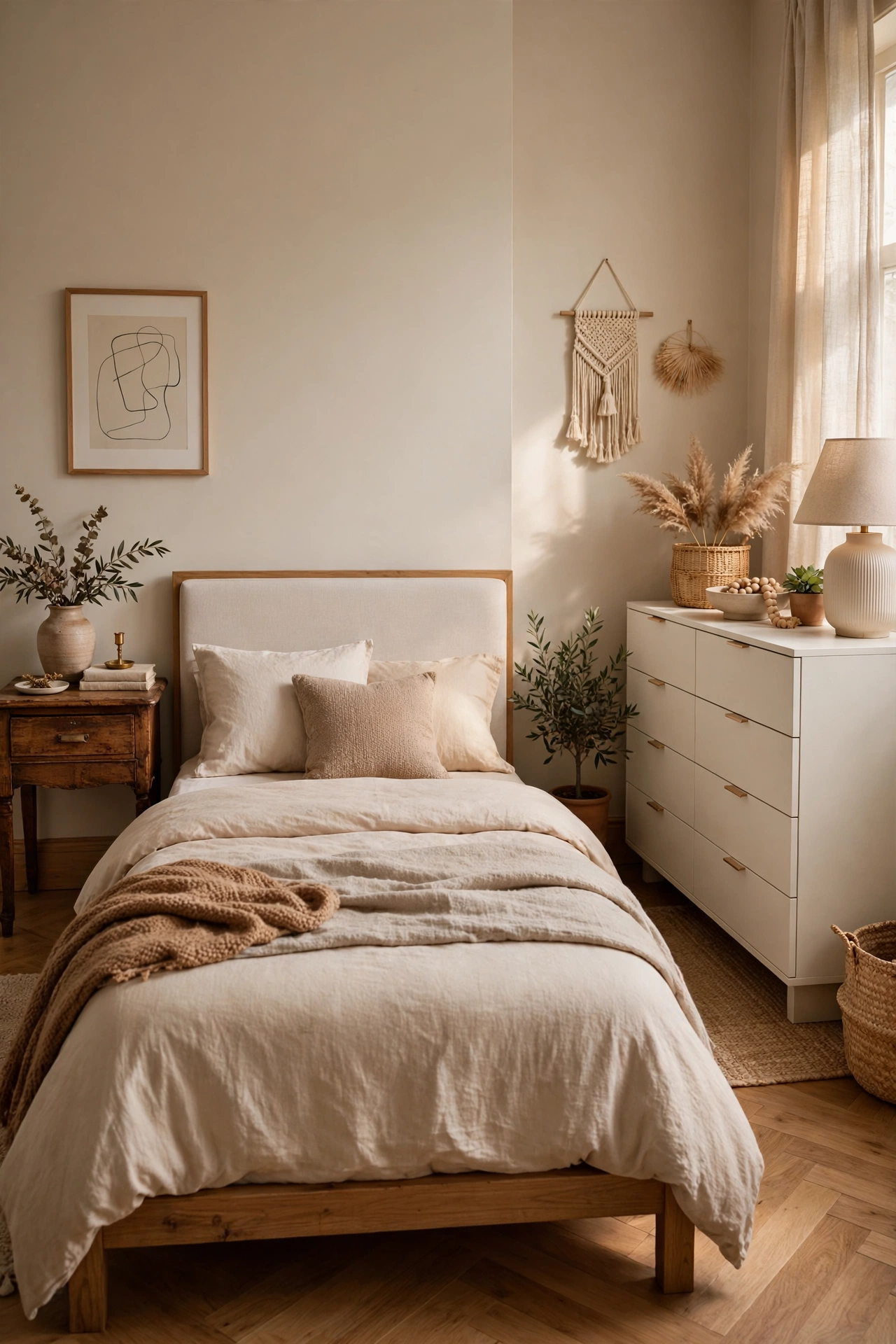
Matching bedroom sets are giving way to furniture collected over time, and the mix reads more personal than a showroom floor. One vintage wooden nightstand, a newer dresser, and a plain bed frame can share a room if one finish ties them together, such as warm wood tones or brushed brass hardware. Start with one vintage piece rather than replacing everything. Check secondhand wood for solid joints, working drawers, and a stable base before you buy, since a wobbly piece costs more in repairs than it saves. Keep the bedding calm so mixed furniture looks intentional instead of accidental.
Try this: Replace one matching nightstand with a vintage wood piece in a similar tone, and keep the other side plain.
Cost: $$$. Difficulty: Easy.
8. Storage that disappears into the room

Storage is moving into the architecture of the bedroom in 2026, so small rooms stay calm without extra furniture. Ottoman beds lift to hold spare bedding, under bed drawers hide out of season clothes, and built in wardrobes sit flush with the wall instead of jutting into the room. Floating nightstands keep the floor visible, which helps a small room read larger. Measure before you order an ottoman base, since the lift needs clear space beside the bed and a mattress light enough to raise. Keep daily items in the nightstand and seasonal items in the bed base.
Try this: Swap a standard bed base for an ottoman base in the same size, and move spare bedding inside it.
Cost: $$$$. Difficulty: Medium.
9. Sleep first, screen free zones
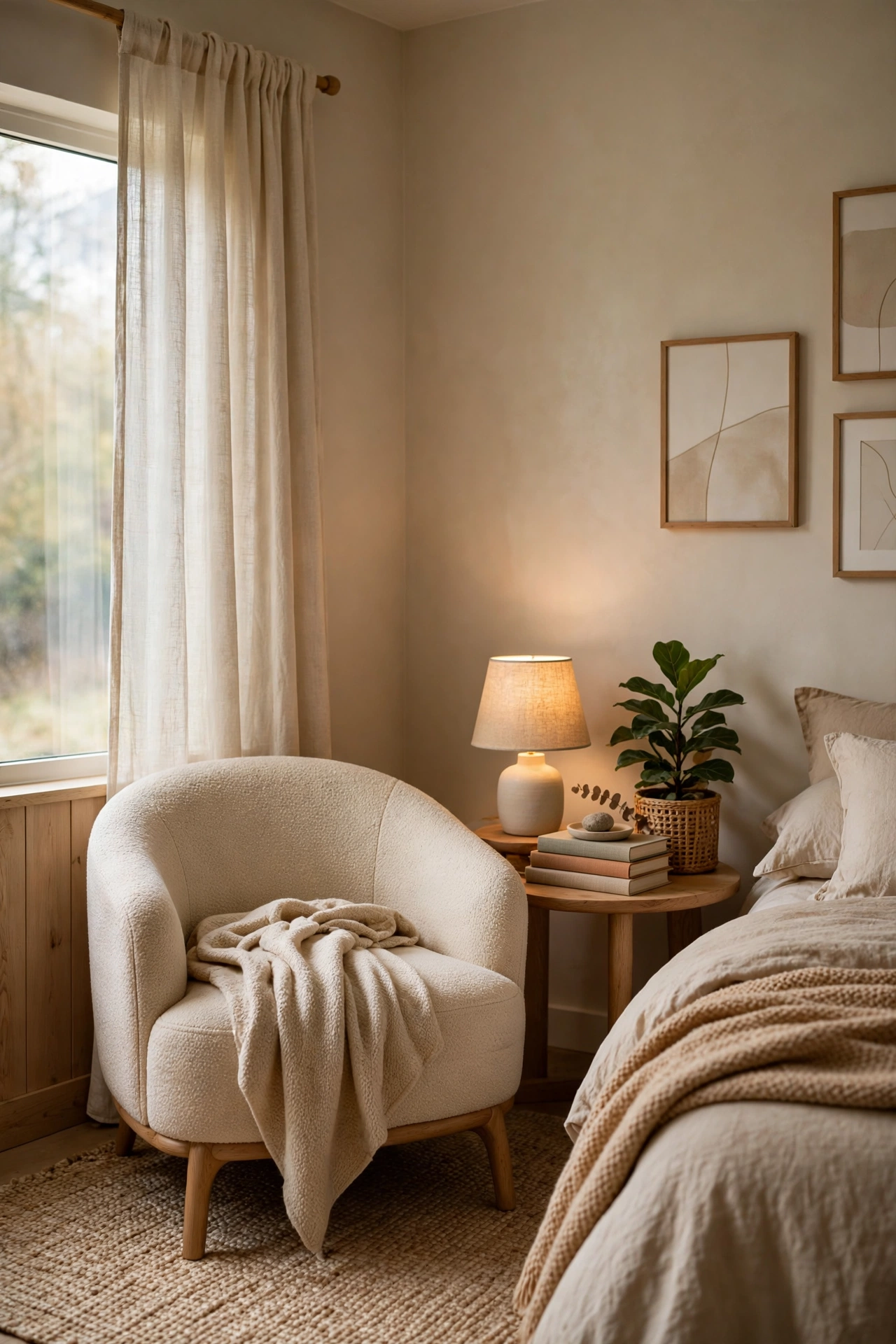
Bedrooms in 2026 are reclaiming their job as sleep rooms, and that means screens move out. A charging station in the hallway, an analog alarm clock, blackout curtains, and a reading chair in one corner turn the room into a wind down zone instead of a second office. The change costs almost nothing, and it works because the room stops cueing work at bedtime. Keep books or a paper journal in the room, so the space still invites you in the evening. If a television stays, hide it behind closed doors and set a firm off time.
Try this: Move phone chargers out of the bedroom for one week and add blackout curtains if morning light wakes you early.
Cost: $$$. Difficulty: Easy.
10. Sustainable materials and low VOC refresh
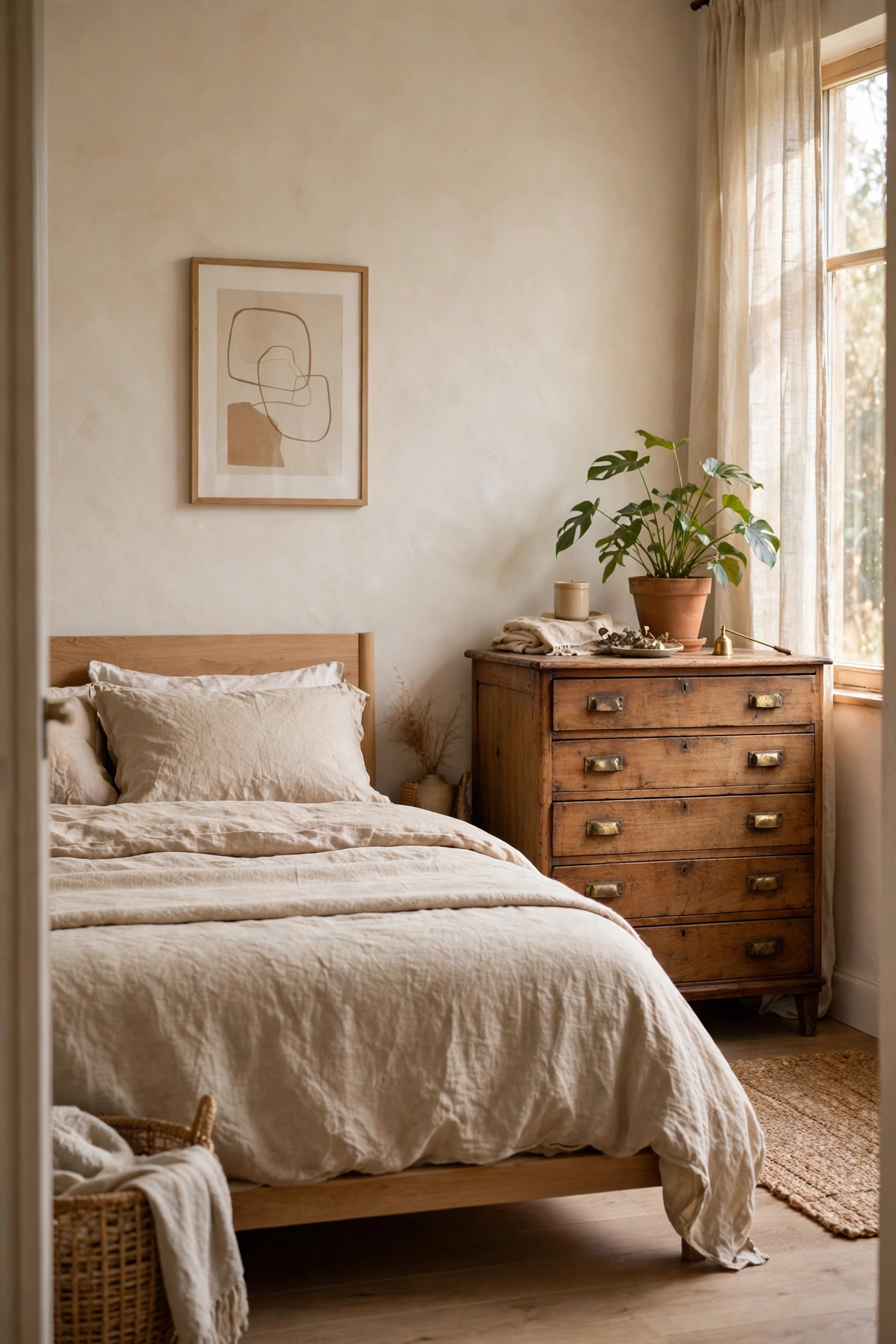
Sustainability is becoming a buying filter rather than a slogan in 2026, and bedrooms show it clearly. Low VOC paint cuts fumes during a repaint, natural fiber bedding such as linen, cotton, and wool lasts longer than synthetics, and secondhand wood pieces keep good furniture in use. Repairable pieces matter too: a dresser with standard hardware and solid joints can be fixed, while glued composite furniture usually cannot. Start with bedding and paint, since both affect comfort directly, and let larger furniture follow as budget allows. A sustainable refresh does not need to look rustic; natural materials suit warm modern rooms too.
Try this: Repaint one wall with low VOC paint and switch to washed linen bedding in a warm neutral tone.
Cost: $$$. Difficulty: Easy.
How to choose the right bedroom trends for your room
Start with the problem, not the trend. A dark room needs lighter tones and better lighting before it needs a new bed, and a cluttered room needs storage before it needs decoration. Pick 2 or 3 trends from this list that solve real problems in your room, and test each one in its cheapest form first: textiles for color, a plug in lamp for lighting, one vintage piece for collected furniture. Room size sets the order too. Small rooms gain most from storage beds, wall sconces, and light warm tones, while larger rooms can carry a timber frame or a canopy bed without crowding. Budget order matters as well: bedding and curtains first, lighting second, paint third, furniture last, since each step builds on the one before it.
Perfect bedroom trends for 2026 at a glance
| Trend | Cost | Difficulty | Best for |
|---|---|---|---|
| Warm neutrals replace cool gray | $60 to $180 | Easy | Any room, renters included |
| Color drenched cocoon rooms | $120 to $400 | Weekend project | Rooms with good daylight |
| Timber bed frames return | $400 to $1,200 | Medium | Medium and large rooms |
| Texture first, decoration second | $80 to $250 | Easy | Renters and quick refreshes |
| Sculptural beds as the design moment | $250 to $900 | Medium | Rooms with 8 foot ceilings or higher |
| Lighting planned around time of day | $90 to $350 | Medium | Readers and poor sleepers |
| Collected furniture, not matching sets | $50 to $400 | Easy | Secondhand shoppers |
| Storage that disappears into the room | $200 to $1,500 | Medium | Small rooms and shared rooms |
| Sleep first, screen free zones | $0 to $150 | Easy | Anyone, no tools needed |
| Sustainable materials and low VOC refresh | $80 to $300 | Easy | Repaints and bedding swaps |
Common mistakes to avoid
- Chasing all 10 trends at once. A room with a new trend in every corner reads busy, not current. Pick 2 or 3 and let them settle.
- Painting the whole room before testing the color. One wall and its trim for two weeks tells you more than a paint chip ever will.
- Buying a heavy timber frame or a canopy bed for a small room. Measure the full frame, including posts, and check ceiling height first.
- Lighting the room with one harsh overhead fixture. Three warm layers beat one bright ceiling light for both looks and sleep.
- Keeping a matching set because it feels safer. One swapped nightstand or one new lamp breaks the showroom look without a full replacement.
- Piling on cushions and throws until the bed takes ten minutes to make. Texture works through materials, not through cushion count.
Safety notes for a bedroom refresh
Anchor tall dressers, bookcases, and wardrobes into wall studs with anti-tip brackets, and keep tempting items off the top so children do not climb. The U.S. Consumer Product Safety Commission explains how to anchor furniture safely in its Anchor It guidance. Choose cord-free window treatments where children sleep, and hire a licensed electrician for new circuits, sconce wiring, or dimmer installs. Homes built before 1978 need a lead paint check before sanding or scraping old paint; the EPA Renovation, Repair and Painting program sets out the rules. Keep candles at least 12 inches from curtains, bedding, and dried flowers, and use battery candles near anything flammable. For sleep habits that support the screen free trend, the National Sleep Foundation sleep hygiene guide covers light, screens, and routine.
More bedroom and home ideas
If a deep wall color appeals to you, the shade by shade guide in these creative shades of dark and moody bedroom ideas helps you pick a tone that suits your light.
Once you pick a trend, the arrangement options in these useful bedroom layouts with different furniture show where the bed, dresser, and reading corner fit best.
For headboard wall treatments that pair with a sculptural bed, browse these inspiring wall panel headboard ideas for panel styles from shaker to fluted wood.
If storage is your priority, the built in systems in these smart built in closet storage ideas take the same hidden storage idea into the closet.
For a warmer rustic take on wood beds and layered bedding, these cozy farmhouse bedroom ideas show how timber and linen work in a farmhouse room.
Frequently asked questions
What bedroom trends are actually worth following in 2026?
Warm neutrals, layered texture, lighting planned around time of day, collected furniture, and sleep first zones have the most staying power, because each one improves daily comfort rather than just changing how the room photographs. Pick 2 or 3 that solve a real problem in your room, such as poor light or missing storage, and test each one in its cheapest form before you commit to paint or furniture.
Is gray really out for bedrooms?
Cool gray is fading as the default, but gray itself is not banned. Warm grays with taupe or mushroom undertones still work, especially beside wood and warm white bedding. The shift is away from cold, blue based gray walls paired with stark white, and toward warmer tones that read softer in morning light.
How do I try a trend without repainting everything?
Start with textiles and lighting, since both change a room for under $200 in most cases. Warm cream bedding, a boucle throw, and two dimmable sconces test the warm neutral and layered lighting trends without touching a paintbrush. If you like the result, paint one wall next, and only then consider the ceiling and trim.
What is color drenching?
Color drenching paints the walls, trim, and ceiling in one tone so the room reads as a single calm envelope. Butter yellow, soft clay, and warm plaster suit bedrooms best, and bedding a few shades lighter keeps the bed as the focal point. Test one wall and its trim for two weeks before you drench the whole room, since a fully drenched small dark room can feel heavy.
Are matching bedroom sets outdated?
Matching sets are fading in favor of collected furniture, but you do not need to replace a set you already own. Swapping one nightstand for a vintage wood piece, or changing the hardware across the set, breaks the showroom look for little money. One shared finish, such as warm wood or brushed brass, ties mixed pieces together.
Final thoughts
The best bedroom trend for 2026 is the one that makes your own room calmer to sleep in and easier to live with, so start with one change this weekend, live with it for two weeks, and let the next trend earn its place.


