

Packing for a dorm room feels hard because the room is small, the list is long, and no one tells you what actually matters on night one. Our first move-in day took three car trips and one forgotten pillow. The boxes that helped most were the ones we packed by category, not by grabbing random items from every room at home.
This college dorm checklist covers 10 packing categories, from bedding and bathroom gear to tech, storage, and a move-in day bag. It suits freshmen heading to their first dorm and parents helping them pack. Each category lists what to bring, what to skip, and what it usually costs.
Quick takeaways
- Check your bed size and your school banned-items list before you buy anything.
- Pack for one semester, not a full year, and swap clothes at break visits.
- Coordinate shared items with your roommate before move-in day.
- Keep a separate move-in day bag with documents, a charger, and cleaning wipes.
- Use a surge protector with a breaker, and never chain extension cords together.
1. Twin XL bedding and sleep setup
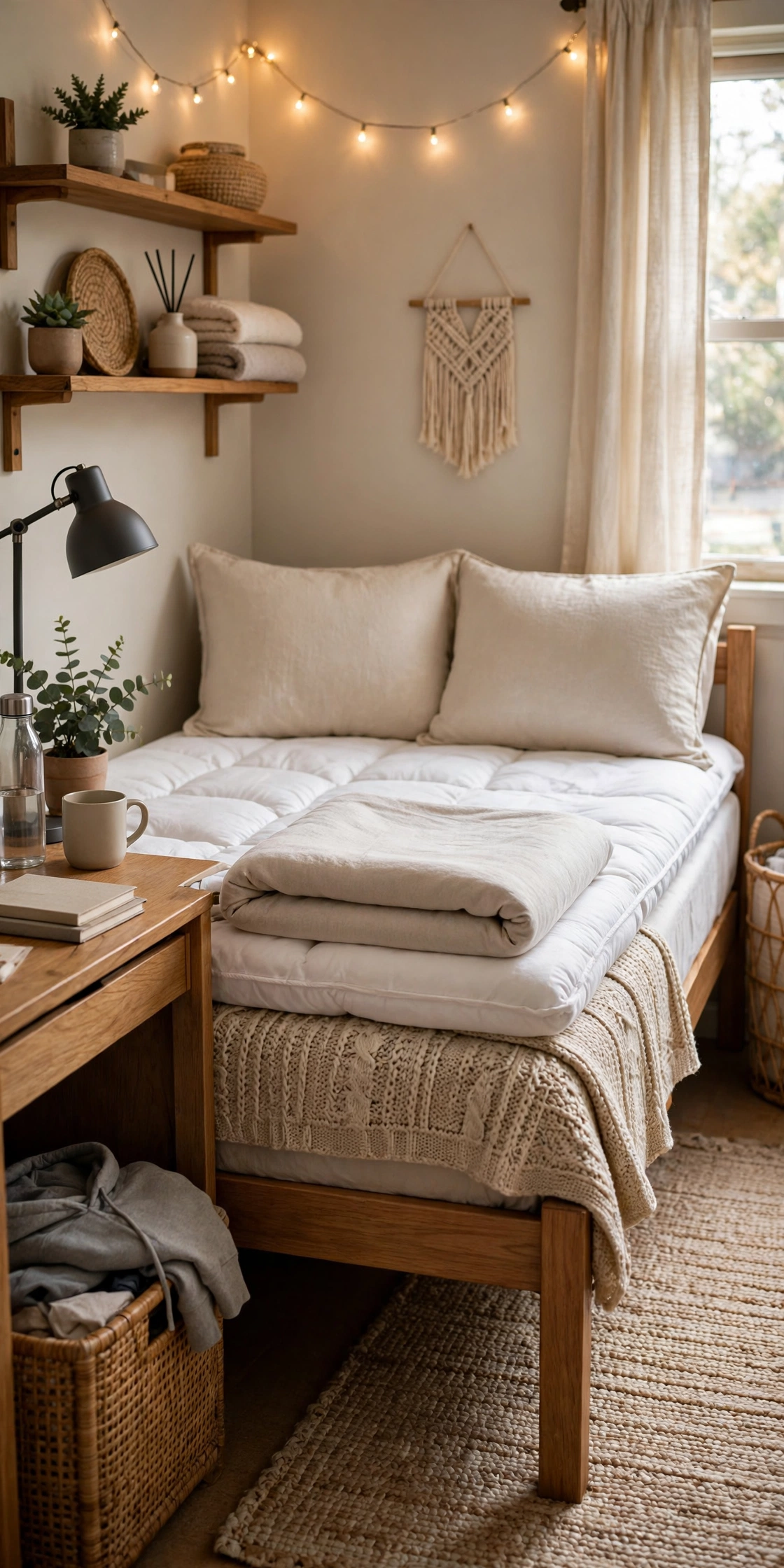
Most dorm beds are twin XL, which is 5 inches longer than a regular twin, so standard twin sheets will not fit. Pack two sets of twin XL sheets, a mattress topper, two pillows with cases, and a comforter or duvet you can wash easily. A washable blanket adds warmth in cold dorms without adding bulk. Check your school housing page for the exact bed size before you buy, since a few schools still use regular twins. A mattress topper makes a thin dorm mattress far more comfortable for a full semester of sleep.
Try this: Wash both sheet sets before move-in day, then pack one set in a labeled bag so your bed is ready on the first night without digging through boxes.
Cost: $$$| Difficulty: Easy | Time: 30 minutes to pack
2. Bathroom and shower kit

Shared dorm bathrooms mean you carry your supplies to and from the shower, so a shower caddy matters more than a bathroom shelf. Pack shower shoes, two bath towels, two hand towels, a robe, and your daily toiletries in travel-size bottles to start. A hanging toiletry bag keeps small items together and dries faster than a flat pouch. Add a small bath mat if your floor stays wet, and keep a spare towel in your room for laundry day gaps. Refill bottles from home sizes instead of buying new minis each month.
Try this: Pack your first-week toiletries in the caddy itself, so you can shower on night one without unpacking a single box.
Cost: $$| Difficulty: Easy | Time: 20 minutes to pack
3. Laundry setup
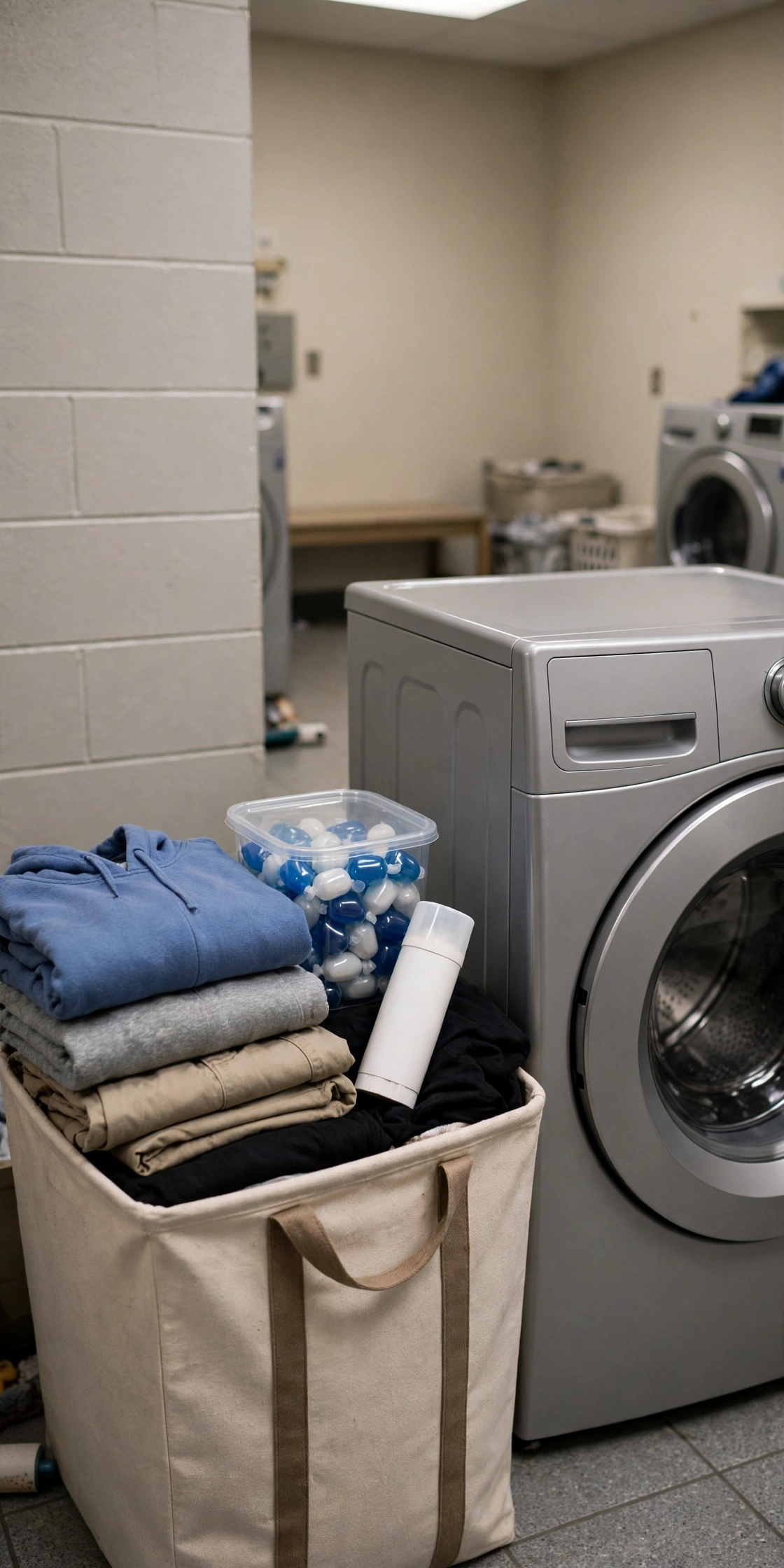
Dorm laundry rooms sit a walk away from most rooms, so a bag you can carry matters. Pack a sturdy hamper or laundry bag, detergent pods, a stain stick, and a small drying rack if your school allows one. Bring quarters or a loaded laundry card, since many campus machines still need them. Wash one load a week to keep the pile small, and set a phone reminder for the dryer so clothes do not sit and wrinkle. A mesh bag protects delicates and keeps small socks from vanishing in shared machines.
Try this: Put detergent pods, the stain stick, and laundry money in a zip pouch inside the hamper, so every load starts without a hunt for supplies.
Cost: $$| Difficulty: Easy | Time: 15 minutes to pack
4. Study supplies and desk gear
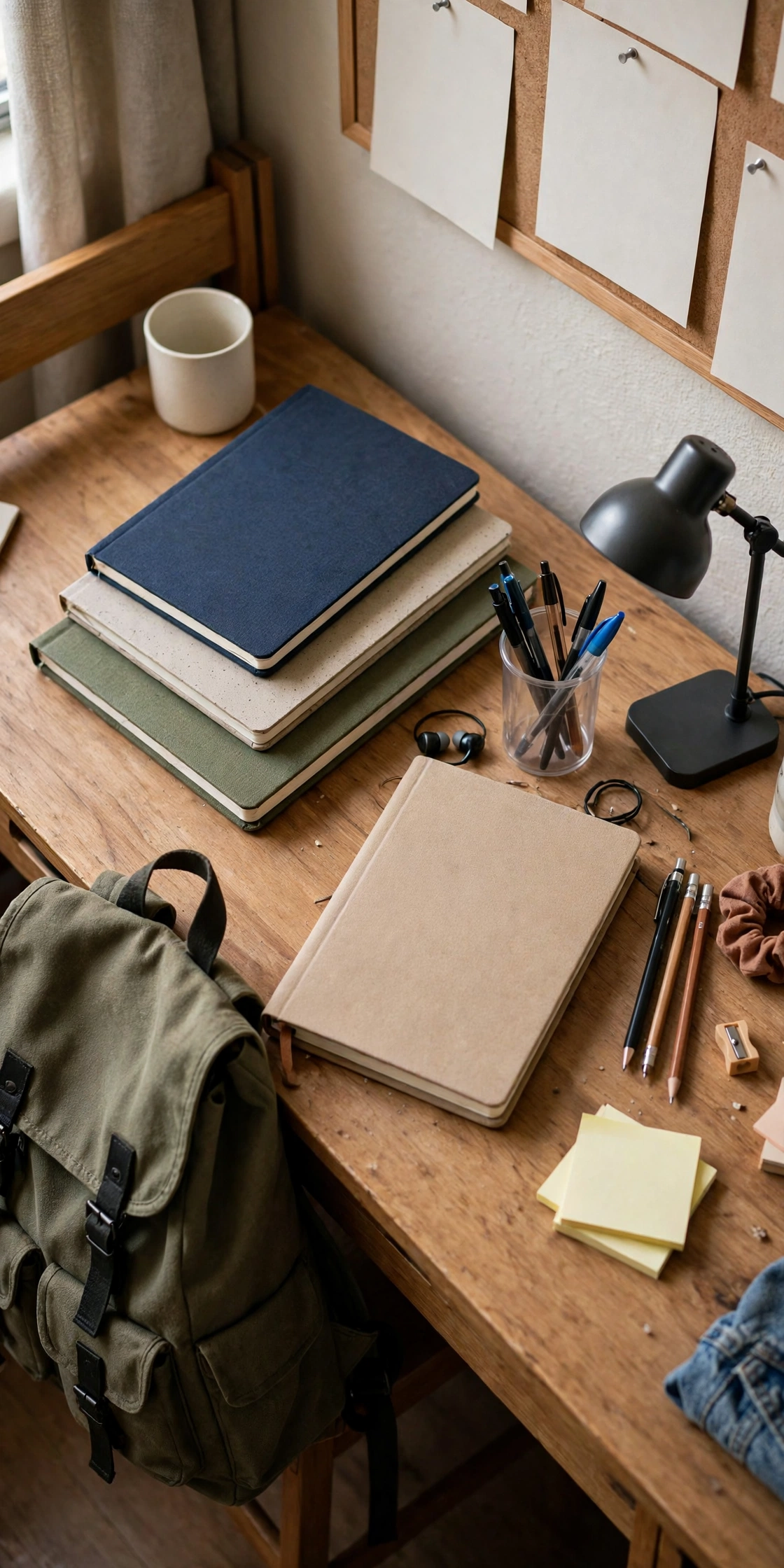
Classes still need paper tools, even when most homework lives online. Pack two notebooks, pens, pencils, highlighters, a folder or binder, scissors, tape, and a planner to track due dates and exam weeks. A sturdy backpack carries it all, and a small desk organizer keeps pens and chargers from sliding across a shared desk. Add a desk lamp if your room light is weak, since late reading under a ceiling light strains tired eyes. Keep one pen and a small notebook in your bag at all times for quick notes between classes.
Try this: Set up the planner on move-in day with every syllabus due date you already know, so week one starts with a plan instead of a scramble.
Cost: $$| Difficulty: Easy | Time: 30 minutes to pack
5. Tech and power

Dorm outlets sit in odd spots, often behind beds or desks, so power planning saves daily frustration. Pack your laptop and its charger, a phone charger with a long cable, noise-blocking headphones, and a surge protector with a built-in breaker. Add a portable charger for long days away from your room, and an ethernet cable if your dorm offers wired internet for steadier video calls. Skip chained extension cords, since many schools ban them for fire safety. Label every charger with tape so yours never walks off with a roommate’s identical cord.
Try this: Plug the surge protector in first on move-in day, then map which outlets it reaches before you arrange the bed and desk.
Cost: $$$| Difficulty: Easy | Time: 20 minutes to set up
6. Storage and organization

Dorm rooms give you a bed, a desk, and a small closet, and the rest is up to you. Pack under-bed bins for off-season clothes, a hanging closet organizer for shoes and small items, and adhesive hooks for bags, towels, and keys. A rolling cart fits beside a desk or in a closet gap and holds snacks, chargers, and study supplies. Drawer organizers keep small items from sliding into one messy pile. Measure your bed height and closet depth before buying bins, since dorm furniture sizes vary from school to school.
Try this: Label each bin by season or subject, so you grab the right box without opening all five.
Cost: $$| Difficulty: Easy | Time: 45 minutes to set up
7. Clothes for one semester
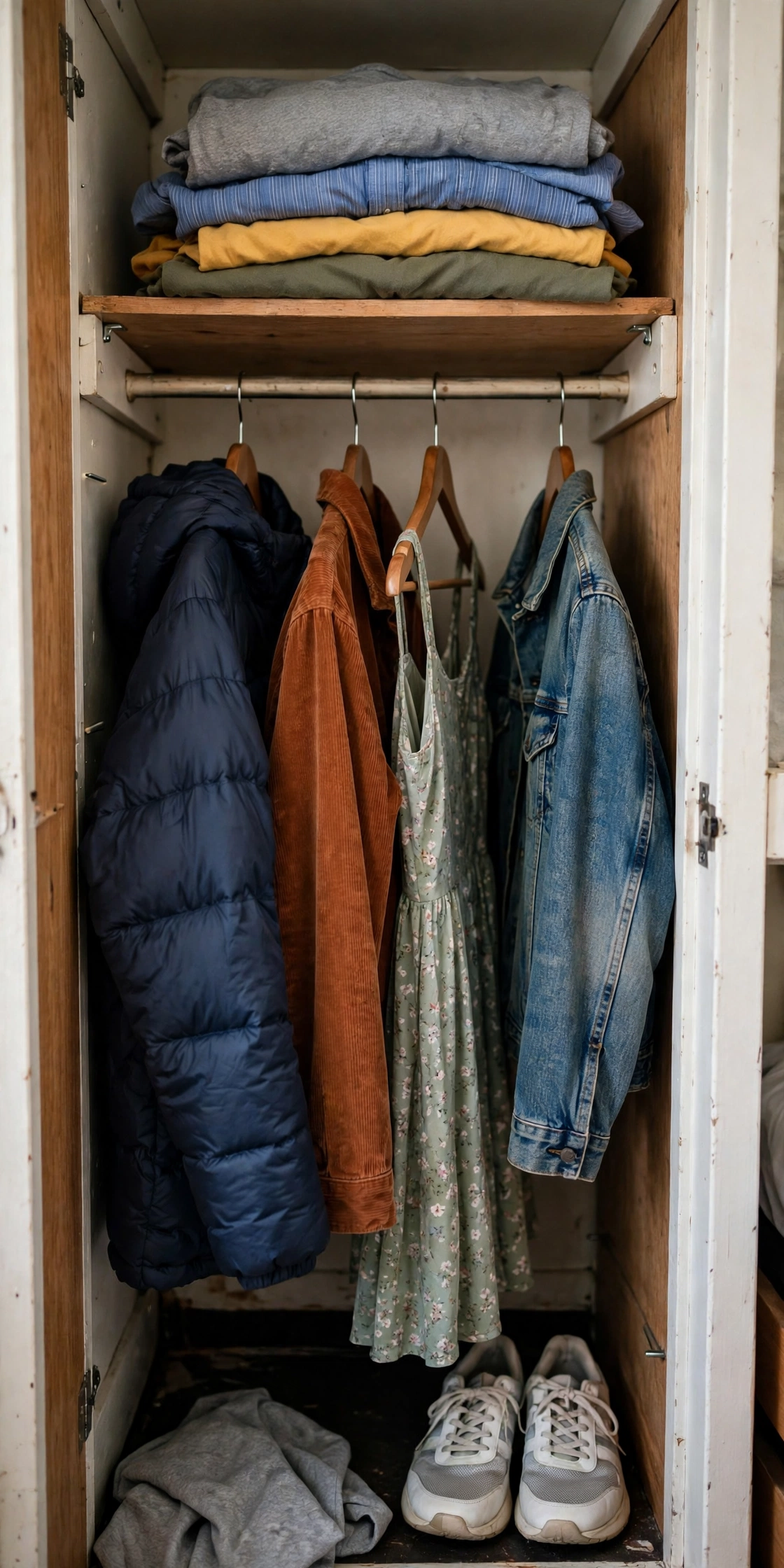
Closet space in a dorm fits one semester of clothes, not a full year. Pack everyday outfits for the current season, one interview outfit, gym clothes, rain gear, and shoes you actually wear each week. Leave heavy winter coats and formal clothes at home until a break visit, then swap them in. Roll soft clothes instead of folding them to fit more in drawers, and hang only what wrinkles easily. Count hangers before move-in day, since dorm closets rarely include enough for a full semester wardrobe.
Try this: Lay out seven days of outfits before packing, then pack those pieces plus two extras instead of your whole closet.
Cost: $$| Difficulty: Easy | Time: 1 hour to pack
8. Kitchen and snack basics
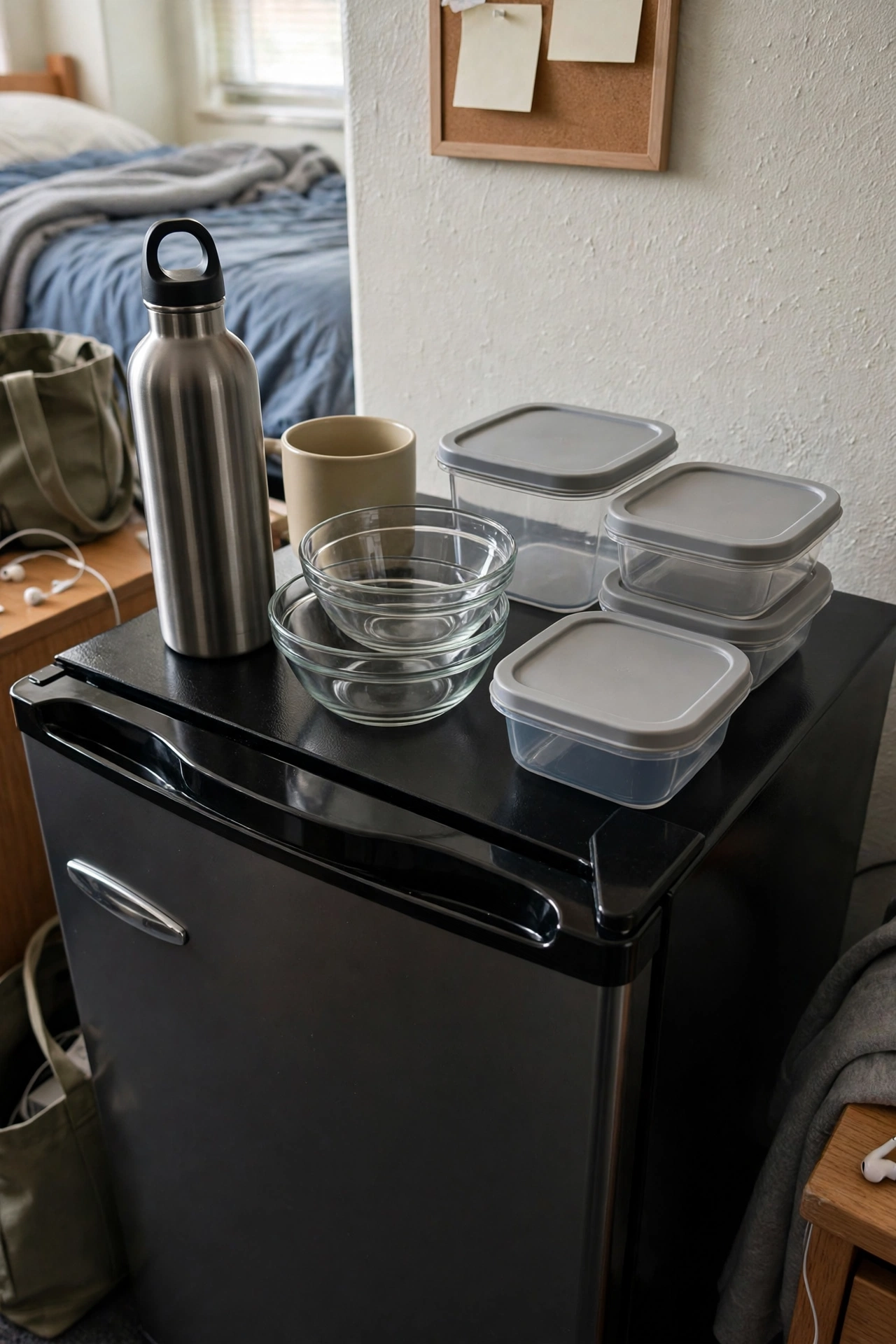
Most dorms ban full cooking setups, but a small snack kit still earns its space. Pack a reusable water bottle, a mug, two bowls, two plates, forks, spoons, and a few food storage containers for leftovers. Check your school rules before bringing a mini-fridge or microwave, since many rooms already include a combined unit or ban outside appliances. Coordinate with your roommate so you do not end up with two fridges and no floor space. Keep a small stash of snacks for late study nights, and wash dishes the same night to keep a shared room pleasant.
Try this: Text your roommate before move-in day and split the shared items, one brings the fridge, the other brings the microwave if both are allowed.
Cost: $$| Difficulty: Easy | Time: 20 minutes to pack
9. Health and first aid kit

A small health kit saves a late-night trip to a store that may already be closed. Pack bandages in a few sizes, pain relievers, allergy medicine if you use it, stomach medicine, and any daily medicine in its original labeled container. Add copies of your health insurance card and a short emergency contact list, and store the originals in a safe spot in your room. Learn where the campus health center sits during your first week, before you actually need it. Keep a water bottle and a few snacks in your bag for long days when meals run late.
Try this: Put the insurance copy and emergency list in your phone as photos too, so they stay with you even if your bag stays in the room.
Cost: $$| Difficulty: Easy | Time: 20 minutes to pack
10. Move-in day essentials

Move-in day runs on a separate bag, not on boxes you will unpack last. Pack your ID, housing papers, keys or access card, phone charger, a basic toolkit, cleaning wipes, trash bags, a door stop, and a small fan for a warm room. Wear comfortable shoes, since you will climb stairs and make several trips from the car. Keep water and snacks in the car for the wait at check-in lines. Unpack the bed first, then the bathroom kit, so the first night feels settled even if half your boxes stay sealed until morning.
Try this: Pack this bag last and load it last, so it comes out of the car first when you reach the dorm.
Cost: $$| Difficulty: Easy | Time: 30 minutes to pack
Compare the 10 categories
| Category | Typical cost | Difficulty | Pack time | Best for |
|---|---|---|---|---|
| Twin XL bedding and sleep setup | $60 to $120 | Easy | 30 minutes | First-night comfort |
| Bathroom and shower kit | $40 to $70 | Easy | 20 minutes | Shared bathrooms |
| Laundry setup | $25 to $45 | Easy | 15 minutes | Weekly washing |
| Study supplies and desk gear | $40 to $80 | Easy | 30 minutes | Class days |
| Tech and power | $50 to $100 | Easy | 20 minutes | Online classes |
| Storage and organization | $35 to $75 | Easy | 45 minutes | Small rooms |
| Clothes for one semester | $0 to $40 | Easy | 1 hour | Small closets |
| Kitchen and snack basics | $20 to $50 | Easy | 20 minutes | Late study nights |
| Health and first aid kit | $15 to $35 | Easy | 20 minutes | Late-night needs |
| Move-in day essentials | $20 to $45 | Easy | 30 minutes | Check-in day |
What to leave at home
Leave candles, space heaters, and string lights at home unless your school clearly allows them, since many dorms ban open flames and heat sources. Skip large furniture, a full year of clothes, and a printer if your campus offers free printing in the library. Pets, expensive jewelry, and full kitchen gear also stay home, since dorm rooms lack safe storage for them and shared rooms raise the chance of loss. Check your school banned-items list before packing, since rules vary and banned items may be taken at check-in.
If you want layout ideas after the packing is done, this roundup of college dorm room ideas for guys covers small-room setups worth borrowing.
If the packing list feels like part of a bigger reset, this checklist for getting your life together covers money, routines, and home habits in one place.
For a study corner that works in a small room, these home school room ideas show desk setups you can copy in a dorm.
A tidy desk helps even more in a dorm, and these small desk organization ideas keep pens, chargers, and notebooks in reach.
Dorm safety checks
Never cover or disable a smoke alarm, and learn two ways out of your room and your building during your first week. Plug surge protectors directly into wall outlets, and never chain them together or run them off extension cords. The U.S. Fire Administration fire prevention guidance warns against overloading outlets and charging devices through extension cords or multiplug adapters. Keep cords where no one trips over them, and replace any cord that feels warm, looks frayed, or smells odd. The Emory University power strip safety guidance notes that overloaded cords and power strips cause fires and injuries each year, and that strips suit low-power gear such as computers and phones, not fridges or heaters. Lock your room when you leave, store emergency numbers in your phone, and keep daily medicine in its original labeled container.
Frequently asked questions
What size sheets do college dorm beds need?
Most college dorm beds use twin XL sheets, which run 5 inches longer than a regular twin. Check your school housing page for the exact size, and pack two sets so laundry day never leaves you without bedding.
What should I leave at home?
Leave candles, space heaters, large furniture, and a full year of clothes at home. Check your school banned-items list before packing, since rules vary and banned items may be taken at check-in.
How many towels should I pack for a dorm?
Pack two bath towels and two hand towels to start. That covers laundry gaps without filling a small closet, and you can add more after the first month if you need them.
Do I need a mini-fridge or microwave?
Check what your school provides first, since many rooms already include a combined unit or ban outside appliances. Coordinate with your roommate so you do not end up with two fridges and no floor space.
When should I start packing for college?
Start two to three weeks before move-in day, and buy bulky items near campus if you can. That keeps car trips short and leaves room for anything you forgot.
Final thoughts
Pack by category, check the bed size and banned-items list first, and keep the move-in day bag separate. A dorm room fills fast, and the students who settle fastest are usually the ones who brought less and knew where it all was.