

Your life can feel scattered even when nothing big is wrong. Bills sit in a drawer, appointments slip past, sleep gets short, and every small task feels heavier than it should. I once found three unpaid bills in one kitchen drawer in a single week, and that was the week I stopped trying to fix everything at once.
This checklist gives you 20 small, concrete actions across money, home, paperwork, health, routines, digital life, and relationships. Each one takes under an hour to set up, and you can work through them one at a time, in any order. This is a practical reset for busy adults who want calmer weeks, not a perfect life.
Quick takeaways
- Start with the area that causes the most daily friction, not the area that looks worst on paper.
- Most items on this list cost nothing and take 30 minutes or less to set up.
- One action per week beats a full weekend overhaul that falls apart by Wednesday.
- A monthly review keeps the whole system alive after the first pass.
- Skip the later-topic sections on purpose: no 2-year plan, no vision board, and no bag checklists live here.
How to use this checklist
Read through all 20 items once and mark the three that would make your next week easier. Do those first, then add one new item each week. If an item does not fit your life, leave it out and move on. The list works because each action stands alone, so a missed week never breaks the chain.
Keep the list somewhere visible, like a note on your phone or a printed page on the fridge. Check items off as you finish them, and use the monthly review item at the end to catch anything that slipped. Progress here means fewer loose ends, not a flawless routine.
1. One-Month Spending Snapshot

Pull up your bank and card statements for the last full month and sort every charge into five buckets: housing, food, transport, bills, and everything else. Write the totals on one page, even if the numbers surprise you. The point is a clear picture, not a judgment, and one month of real data beats a guessed budget every time. Most people find two or three charges they forgot about, usually small subscriptions or delivery fees that add up quietly.
Try this: highlight every charge under $15 and add those up first, since small recurring charges are the easiest leaks to spot.
Cost: $| Difficulty: Easy | Time: 45 minutes.
2. Autopay for Fixed Bills

List every bill with a fixed amount and a fixed due date, then turn on autopay for as many as your accounts allow, starting with rent or mortgage, utilities, and insurance. Set one calendar alert two days before the largest payment clears, so a low balance never catches you off guard. Autopay removes late fees and the mental load of tracking due dates, and it works best when you keep a small buffer in the account that pays them. If autopay feels risky, start with a single bill and add one more each month.
Try this: set autopay for your smallest fixed bill first, then check the confirmation before adding the next one.
Cost: $| Difficulty: Easy | Time: 30 minutes.
3. Emergency Fund Starter

Open a separate savings account, or label one you already have, and set an automatic transfer of $25 each week into it. A starter fund of $500 covers most small shocks, like a flat tire or a broken phone screen, and the weekly transfer matters more than the amount. Keep this money out of your everyday spending account so it stays put, and skip the transfer only if a real emergency already used the fund. Once the starter goal is met, raise the weekly amount only if your budget allows it.
Try this: set the transfer for payday morning, so the money moves before you can spend it.
Cost: $$| Difficulty: Easy | Time: 15 minutes.
4. Credit Report and Debt List
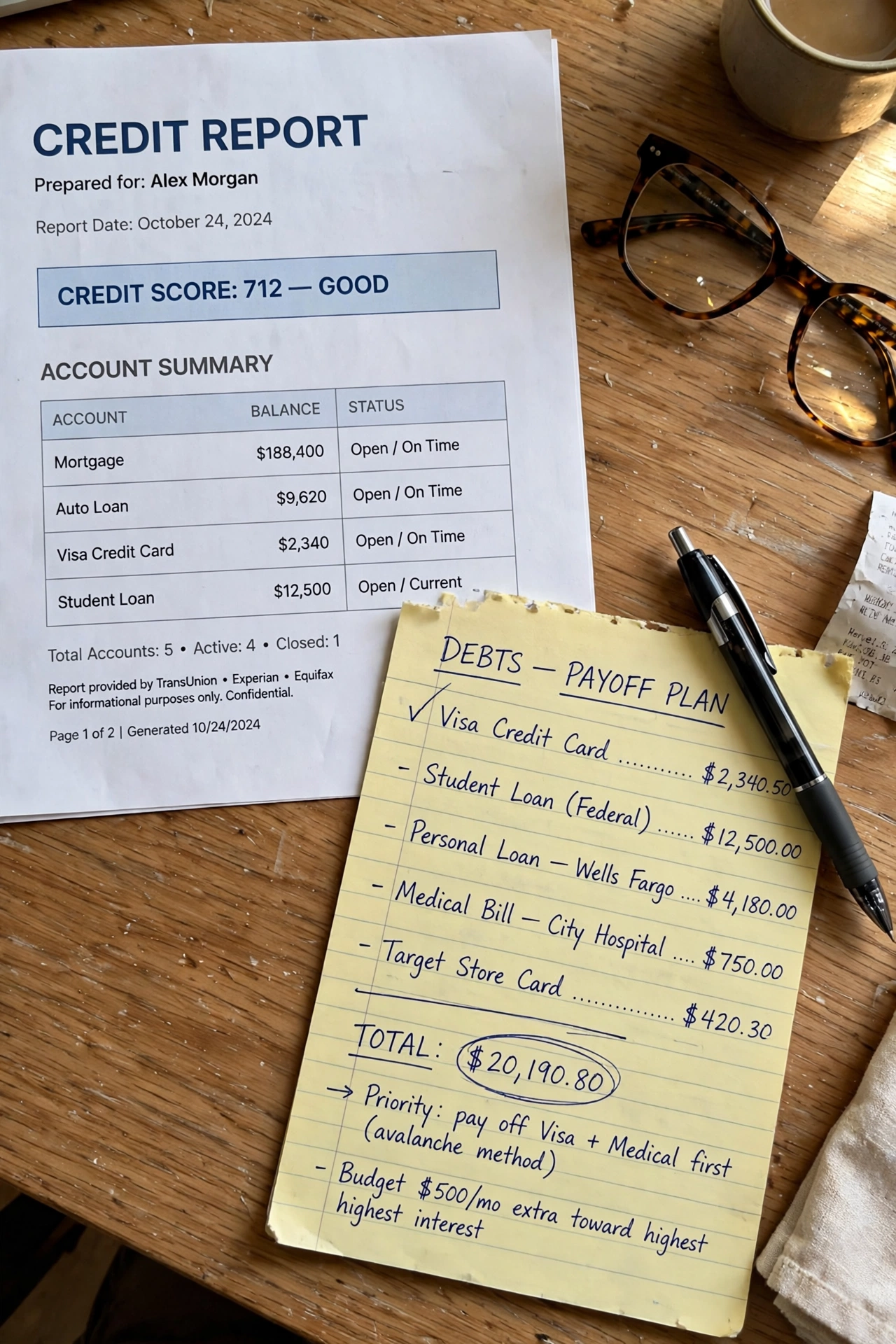
Pull your free credit reports and write down every debt on one page with its balance, minimum payment, and interest rate. Check each entry for errors, like an account you closed or a balance that looks wrong, and note anything you need to dispute. A single debt page turns a vague worry into a clear order of attack, and most people find that one high-interest balance deserves attention before the rest. The Consumer Financial Protection Bureau publishes free handouts on reading a credit report and disputing errors, which walk through each section in plain language.
Try this: circle the highest interest rate on your list and put any extra payment there first.
Cost: $| Difficulty: Moderate | Time: 60 minutes.
For help reading your report, the Consumer Financial Protection Bureau’s free financial education handouts cover credit reports, scores, and disputes in plain language.
5. Launch Pad by the Door

Pick one spot near the door you use most and give it a small tray or bowl for keys, a hook for your bag, and a place for sunglasses and a wallet. Everything you carry daily lives there, and nothing else does, so leaving the house stops involving a search. A launch pad works best when it holds only daily items, since extra objects turn it back into a cluttered surface within a week. If two people share the door, give each person a separate hook and tray to keep the system from mixing.
Try this: empty your pockets and bag into the tray tonight, then check tomorrow morning how fast you get out the door.
Cost: $ | Difficulty: Easy | Time: 20 minutes.
6. Ten-Minute Nightly Tidy

Set a phone timer for ten minutes each evening and put away only what is out of place: dishes to the sink, clothes to the hamper, papers to the filing tray, and shoes to the door. Stop when the timer ends, even if the room is not finished, because a short daily habit beats a long weekly session that you keep skipping. The tidy works because it resets the house to a known starting point each morning, so mess never grows past one day. Pick the same time each night, like right after dinner, so the habit attaches to something you already do.
Try this: start in the room you see first in the morning, since that room sets the tone for the day.
Cost: $| Difficulty: Easy | Time: 10 minutes nightly.
7. Weekly Cleaning Schedule

Write one cleaning task on each weekday and post the list where you will see it, like the fridge or the laundry room door. Monday can hold laundry, Tuesday the bathroom, Wednesday vacuuming, and so on, with one rest day built in. A short daily task keeps the house at a steady level of clean, and it avoids the weekend marathon that eats a whole Saturday. Adjust the tasks to your home size, since a small apartment needs fewer slots than a house, and swap tasks between days whenever a busy week demands it.
Try this: put the hardest task on your least busy weekday, not on Monday by default.
Cost: $| Difficulty: Easy | Time: 20 minutes to set up.
If you want a day-by-day version, this daily working mom cleaning schedule splits the same housework into small morning and evening tasks.
8. Mail, Filing, and Backup Station
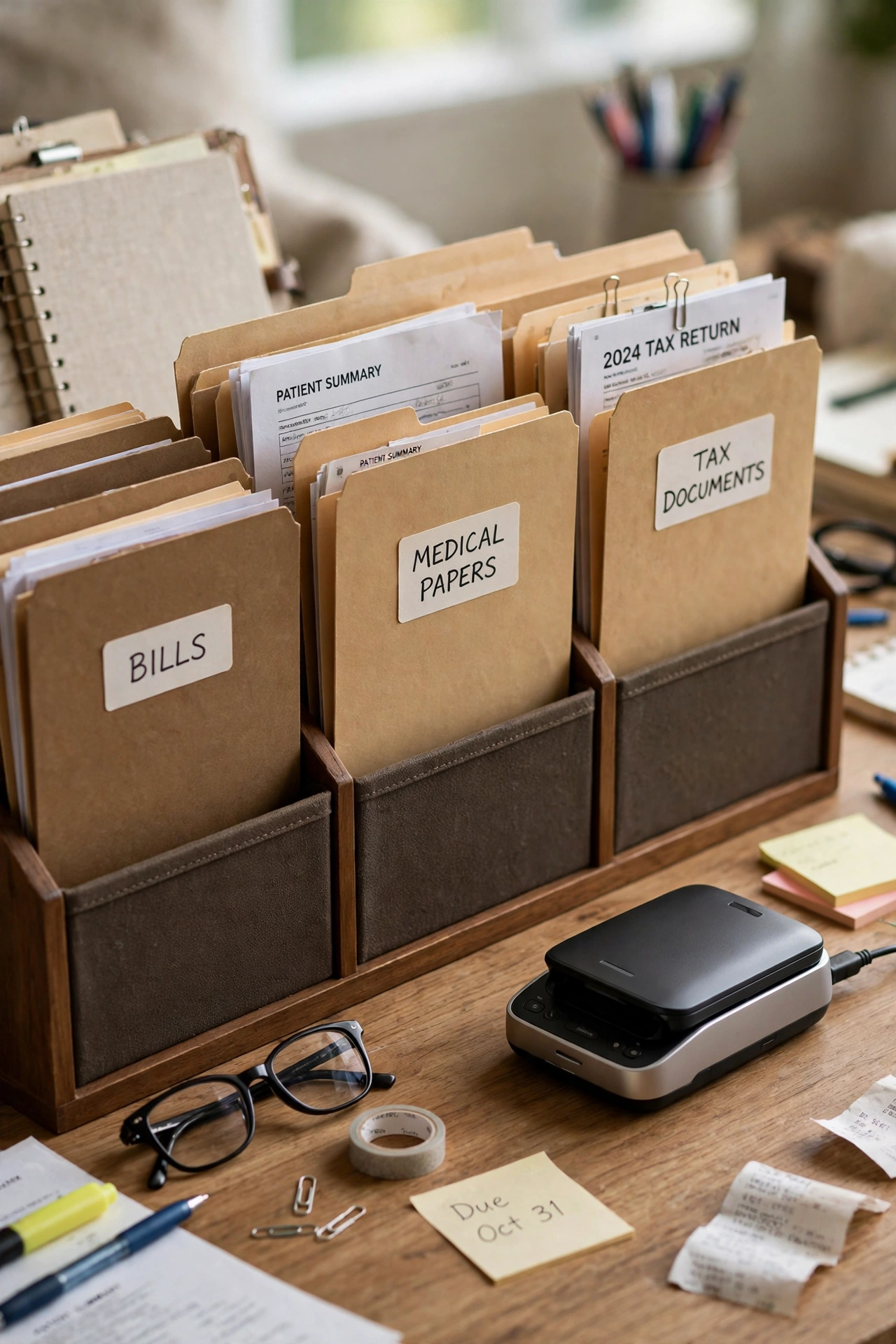
Set up one tray for incoming mail, four labeled folders for bills, medical papers, school papers, and tax papers, and a phone habit of photographing each important page into a cloud folder. Sort mail the day it arrives, since a pile older than a week starts hiding due dates and appointment letters. The folders keep paper findable without a filing cabinet, and the cloud copies protect you if a paper copy is lost or damaged. Shred junk mail at the same time you sort, so the tray never holds more than the current week.
Try this: photograph the first five papers in your current pile today, then file the originals and recycle the rest.
Cost: $ | Difficulty: Easy | Time: 40 minutes.
9. Fixed Sleep and Wake Times

Choose one bedtime and one wake time you can keep seven days a week, then set a phone alarm for 30 minutes before bed as a wind-down signal. Keep the bedroom cool, dark, and quiet, and move the phone charger out of the bedroom if late scrolling keeps pushing bedtime later. A fixed wake time steadies the whole day more than a fixed bedtime alone, since it anchors meals, work, and evening plans. The Centers for Disease Control and Prevention notes that going to bed and getting up at the same time every day, plus turning off screens 30 minutes before bed, supports better sleep.
Try this: move your wake time by 15 minutes every three days until you reach your target, instead of jumping an hour at once.
Cost: $| Difficulty: Moderate | Time: 15 minutes to set up.
For sleep habits backed by public health guidance, the CDC’s sleep guide lists the daily habits that support better sleep quality.
10. Book Overdue Appointments

Write down every appointment you have been putting off, then book the three most overdue ones in a single sitting: usually a physical exam, a dental cleaning, and an eye exam. Call in the morning when offices open, since same-week slots go first, and put each appointment in your calendar with a reminder the day before. Booking three at once clears the mental weight of a long avoidance list, and the rest can follow in the next month. If cost is the blocker, ask each office about payment plans or lower-cost checkup days before you skip the visit entirely.
Try this: book the appointment you dread most first, then the other two feel easy by comparison.
Cost: $ | Difficulty: Easy | Time: 30 minutes.
11. Prescription and Pill Organizer Reset
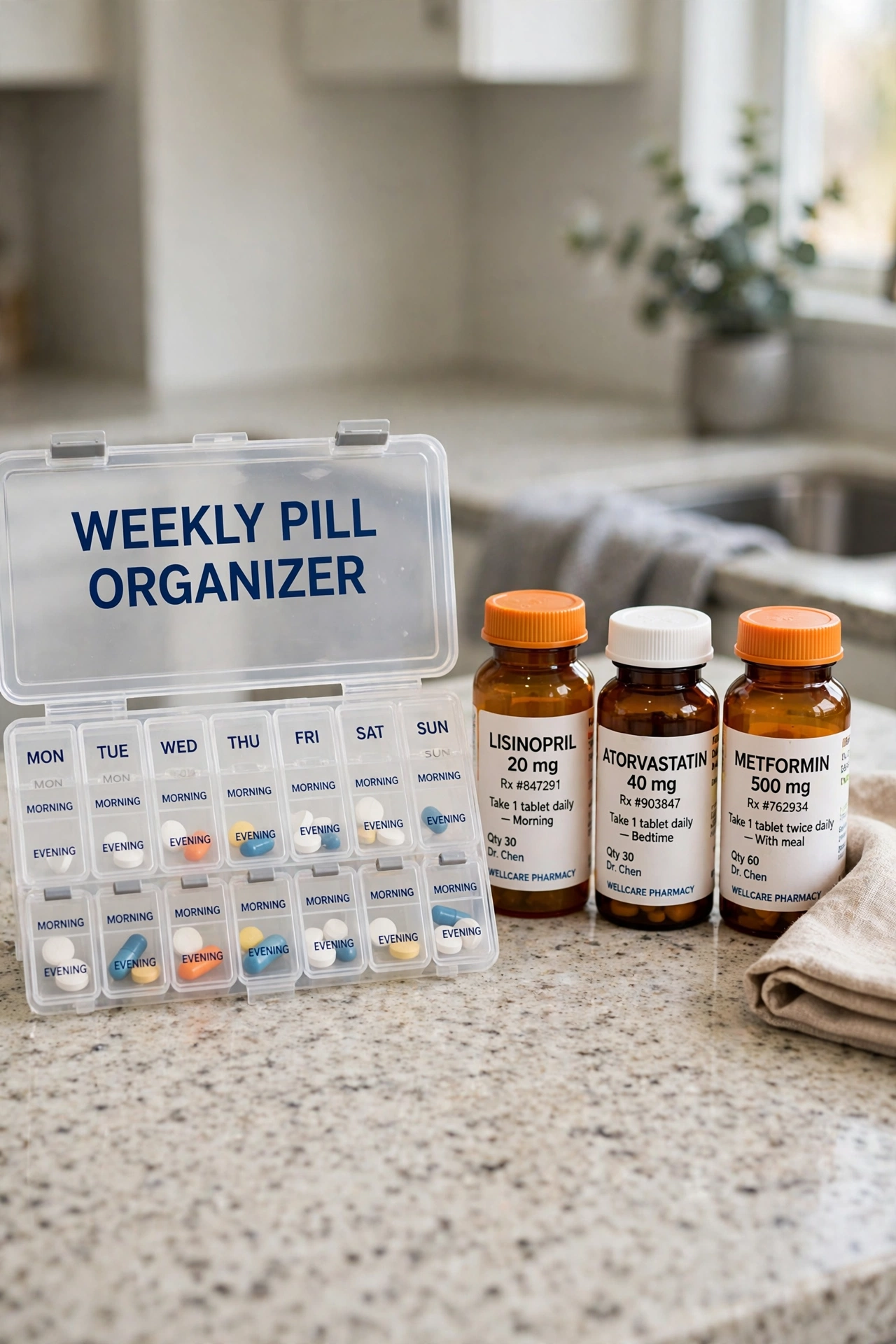
Gather every prescription bottle in one place, check each expiry date, and throw out anything expired at a pharmacy take-back point. Refill anything running low, then load a weekly pill organizer with morning and evening compartments and place it next to something you use daily, like the coffee maker. A visible organizer cuts missed doses better than memory alone, and a weekly refill slot keeps the habit steady. Write a small card with each medicine name, dose, and time, and keep it in your wallet for appointments and travel.
Try this: refill the organizer every Sunday night while dinner cooks, so it becomes part of the week, not an extra chore.
Cost: $ | Difficulty: Easy | Time: 25 minutes.
12. Movement Slot Three Times a Week

Block three 30-minute slots in your calendar for movement, and treat them like appointments you keep. Walking counts, so does cycling, swimming, or a home workout video, and the best choice is the one you will repeat in bad weather as well as good. Lay out shoes and a water bottle the night before, since a prepared start removes the morning decision that kills most plans. If three slots feel like too much, start with two for the first month and add the third only after the habit holds.
Try this: pair the walk with a podcast you only listen to while walking, so the walk carries its own reward.
Cost: $| Difficulty: Easy | Time: 30 minutes per session.
13. Sunday Weekly Planning Session

Pick a 30-minute slot every Sunday to look at the coming week: appointments, deadlines, school dates, and one personal goal. Write the top three tasks for each weekday on paper or in a planner, then check that no day holds more than it can carry. A weekly session stops Monday surprises, since conflicts surface while you still have time to move things. Keep the session short and in the same place each week, like the kitchen table after breakfast, so it becomes a habit instead of a project. A tidy desk helps this session run faster, since you are not clearing space before you start planning.
Try this: end each session by writing tomorrow’s top three tasks on a sticky note and placing it where you will see it first.
Cost: $| Difficulty: Easy | Time: 30 minutes weekly.
A clear workspace makes the planning session quicker, and these small desk organization ideas show how to keep a planning spot tidy without a full room makeover.
14. Three-Step Morning Anchor

Choose three small actions that happen in the same order every morning, like drinking a glass of water, making the bed, and writing the day’s top task on a note. Keep the list to three, since a longer morning routine falls apart on busy days, and keep the same order so the steps chain together without decisions. A morning anchor gives the day a steady start even when the rest of the schedule changes, and it takes less than ten minutes once the order is fixed. If mornings are rushed, shrink the steps instead of skipping them, like a half glass of water and a quick bed straighten.
Try this: post the three steps on the bathroom mirror for the first two weeks, then remove the note once the order feels automatic.
Cost: $| Difficulty: Easy | Time: 10 minutes daily.
15. Monthly Review Date
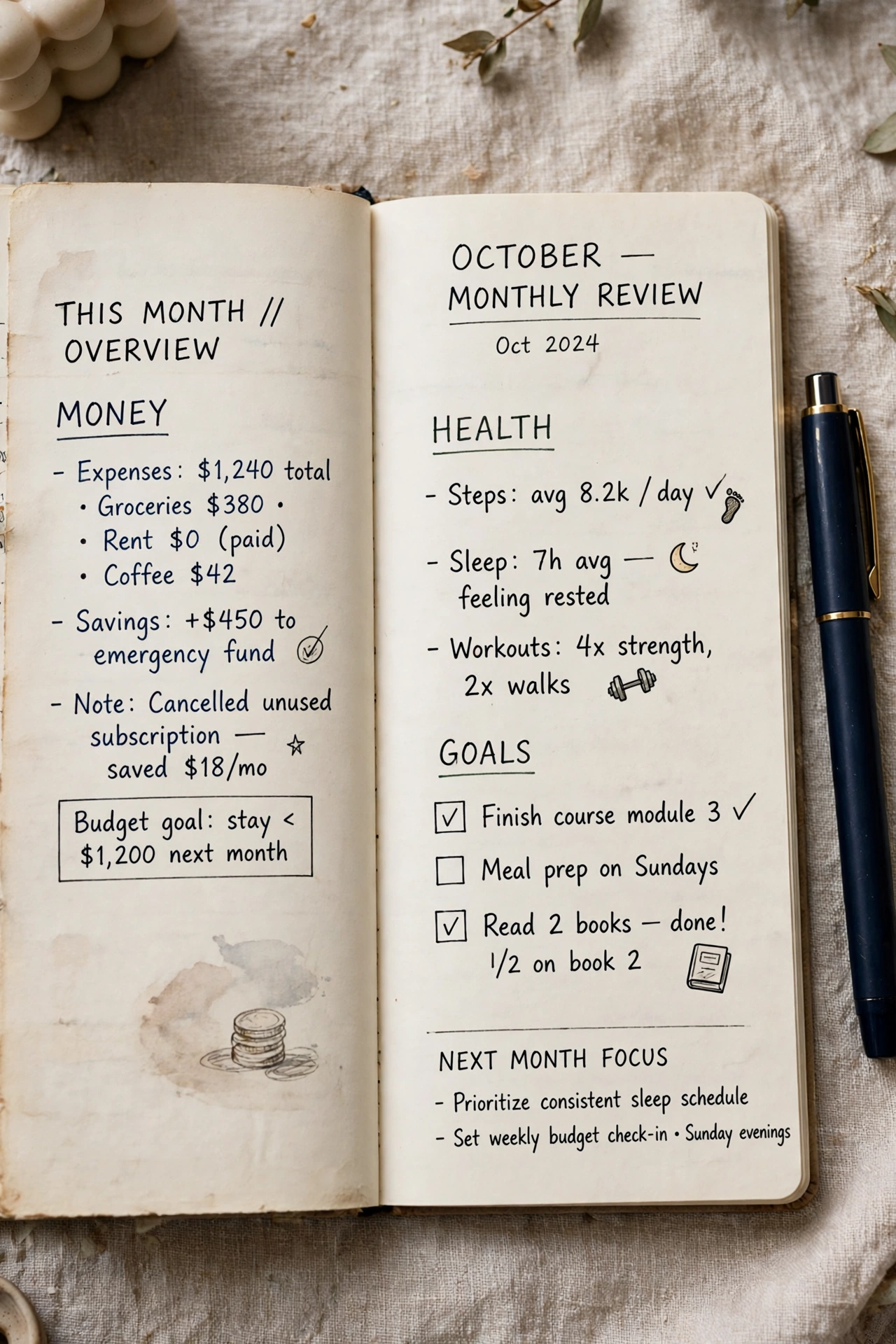
Set a repeating calendar event on the last Sunday of each month for a 30-minute review of money, health, home, and relationships. Ask four questions: what got done, what slipped, what needs a new date, and what can drop off the list entirely. A monthly review keeps small slips from growing into big ones, and it gives you a regular moment to adjust plans instead of carrying stale goals for months. Keep a single notebook or note for these reviews, so you can look back and see which areas keep slipping and need a different approach.
Try this: write the next month’s single most important task at the top of the review page before you close the notebook.
Cost: $| Difficulty: Easy | Time: 30 minutes monthly.
16. Deadline Reminder System

Enter every recurring deadline into your phone calendar with two alerts: one a week before and one the day before. Include bills, car registration, school forms, license renewals, and subscription renewals, since these are the dates that slip when they live only in your head. A two-alert system gives you time to act on the first warning and a last chance on the second, and it works best when you add each new deadline at the moment you learn about it. Review the calendar once a month and delete alerts for things that no longer apply, so reminders stay trusted instead of ignored.
Try this: add the next three deadlines you can think of right now, before you finish reading this section.
Cost: $| Difficulty: Easy | Time: 20 minutes to set up.
17. Password Manager and Two-Factor Authentication

Install a password manager, move your most important accounts into it first (email, bank, and any account tied to payments), and let it create a long, unique password for each one. Then turn on two-factor authentication for email and banking, using an authenticator app where the site allows it. Reused passwords are the most common way one breach spreads across accounts, and a manager removes the need to remember dozens of logins. The Cybersecurity and Infrastructure Security Agency recommends a password manager plus multi-factor authentication, especially for email and financial accounts, since those open the rest.
Try this: change your email password first, since email resets open nearly every other account you own.
Cost: $| Difficulty: Moderate | Time: 45 minutes.
For the official guidance behind this step, the CISA guide to strong passwords explains password managers and multi-factor authentication in plain terms.
18. Inbox and Subscription Cleanup
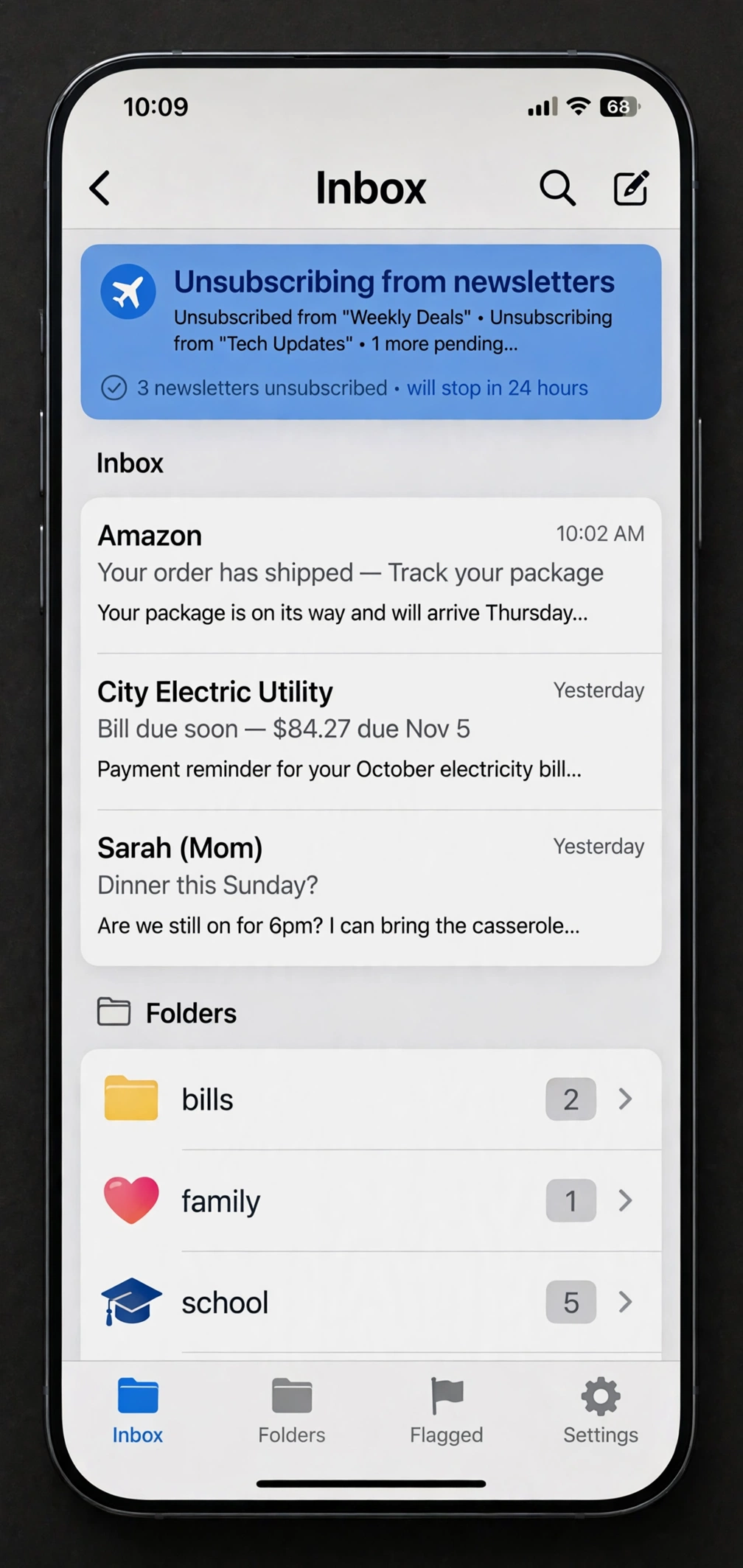
Open your email and unsubscribe from every newsletter you have not opened in the last month, then create three folders for bills, family, and school or work. Move the remaining mail into those folders and set a rule that sends new newsletters to a separate reading folder instead of the inbox. A lighter inbox cuts the daily noise that hides real messages, and the cleanup takes one focused session rather than daily effort. Repeat the unsubscribe pass once every three months, since new lists creep back in through sign-ups and purchases.
Try this: search your inbox for the word “unsubscribe” and work through the results in one sitting.
Cost: $| Difficulty: Easy | Time: 35 minutes.
19. Standing Weekly Check-Ins

Pick three people you want to stay close to and set a standing weekly call or message slot for each one, like Sunday evening for a parent and Wednesday lunch for a friend. A fixed slot removes the need to coordinate every week, and regular short contact keeps relationships warm better than rare long catch-ups. Keep the calls short when life is busy, since a ten-minute check-in still counts, and move the slot rather than skipping it when a week gets crowded. Write the three names and times on your calendar so the habit survives busy stretches.
Try this: send the first message today with a proposed time, instead of waiting for a free week that never comes.
Cost: $| Difficulty: Easy | Time: 20 minutes weekly.
20. One Boundary a Week

Choose one request, habit, or commitment each week that drains your time without giving much back, and say no to it clearly and early. A boundary can be as small as declining an extra shift, skipping a group chat that runs late, or leaving one evening unbooked. Saying no early is kinder than cancelling late, and one boundary a week builds the habit without turning every conversation into a negotiation. Track your boundaries in the monthly review notebook, so you can see which drains keep returning and need a firmer answer.
Try this: write down the one “yes” you regretted last week, and make that the boundary you set this week.
Cost: $| Difficulty: Moderate | Time: 10 minutes weekly.
Mistakes that stall a reset
The most common stall is trying all 20 items in one weekend, then dropping the whole list when Monday gets busy. A reset works when it grows one habit at a time, so a slow start is a strong start. Another stall is rewriting the list instead of using it: a prettier planner never replaces the first action. If you catch yourself reorganizing the checklist for the third time, pick the smallest item and do it before you touch the list again.
A second stall is keeping items that do not fit your life. A night-shift worker gains nothing from a 6 a.m. morning anchor, and a renter gains nothing from a homeowner task. Swap the timing or skip the item, and keep the rest. The list serves your life, and an item that fights your schedule will lose every time.
Life areas at a glance
| Life area | Items | Setup time | Start here if |
|---|---|---|---|
| Money | 1 to 4 | 15 to 60 minutes each | Late fees or money worry show up weekly |
| Home | 5 to 7 | 10 to 20 minutes each | Mornings start with a search |
| Paperwork | 8 | 40 minutes | Mail piles up past one week |
| Health | 9 to 12 | 15 to 30 minutes each | Sleep or appointments keep slipping |
| Routines | 13 to 16 | 10 to 30 minutes each | Weeks feel reactive instead of planned |
| Digital life | 17 to 18 | 35 to 45 minutes each | Passwords repeat across accounts |
| Relationships | 19 to 20 | 10 to 20 minutes weekly | Close people hear from you rarely |
A quick safety note
This checklist gives general life organization steps, not medical or financial advice. If sleep problems, low mood, or anxiety persist, talk to a doctor or counselor. If debt feels unmanageable, a nonprofit credit counselor or financial professional can review your full picture. Keep passwords private, never share login codes with anyone, and use only the official app or site when you turn on two-factor authentication.
Frequently asked questions
How long does it take to get your life together?
Most people feel a real difference within 30 days of starting three items, and the full list takes about three months at one item per week. The monthly review matters here, since it catches slips before they grow. No single week fixes everything, and that is normal: the goal is fewer loose ends each month, not a finished life.
Do I need to do all 20 items?
No. Start with the three items that would make your next week easier, then add one per week only if the earlier ones hold. Items that do not fit your life can stay unchecked. A checklist you half use beats a perfect list you never start.
What if I fall off track?
Restart with the smallest item on the list, like the ten-minute nightly tidy or the morning anchor. A missed week does not erase earlier progress, since the systems you set up keep working in the background. Use the next monthly review to reset dates, drop items that failed twice, and pick one replacement.
Is this the same as a bullet journal?
No. A bullet journal is a planning system with daily logs, trackers, and spreads, while this checklist is a one-time setup list across life areas. If you enjoy journaling as a system, a bullet journal design guide covers that side in full. This list works with or without a journal, since its items live in calendars, folders, and habits rather than pages.
If you want to explore the journaling system side, this bullet journal design guide covers daily logs, trackers, and spreads for beginners.
Do I need apps or a planner to follow this checklist?
No. A phone calendar, a notebook, and a few folders cover every item here. Apps help with password management and reminders, but paper works just as well for the planning session and the monthly review. Choose the tool you will actually open, since the best system is the one that survives a busy week.
Final thoughts
Getting your life together is a series of small setups, not one big overhaul, and this list gives you 20 places to start. Pick three, finish them, and let the monthly review carry the rest forward. My own drawer of unpaid bills is gone, and the calm that replaced it came from systems like these, one ten-minute habit at a time.
Ready to think further ahead? See these 5 simple steps to build your 2 year life plan, from stock-take to quarterly check-ins.
Want your quiet goals somewhere visible? See these 6 mental health vision board goal ideas, from calm mornings to confident boundaries.
Packing next? Use this college dorm checklist with 10 packing categories, from bedding to move-in day essentials.
For the food side of getting organized, these 9 brilliant monthly meal planning ideas turn dinner into a once-a-month plan instead of a daily scramble.