



Every December the same argument starts in our house: one of us wants the tree to look like it did when we were kids, and the other wants to try something new. The traditional tree always wins, because nobody has ever regretted red, gold, and warm lights.
These 12 traditional Christmas tree ideas cover every version of the classic look, from heirloom glass baubles to plaid farmhouse styles. Each idea includes a realistic cost and difficulty label, plus tips for live and artificial trees. My grandmother’s mercury glass ornaments go on our tree every year, and they still steal the show from everything new I buy.
Quick takeaways
- Traditional trees work on repetition: pick 2 to 3 colors and repeat them.
- Hang lights first, then garland, then ornaments largest to smallest.
- Live trees need water every day; a dry tree is a fire risk.
- Group ornaments by color or material instead of scattering randomly.
- A classic red, green, and gold tree costs $60 to $150 in new decor.
1. Red, green, and gold classic

The look everyone pictures: deep red and emerald green baubles with gold accents on a full green tree. Use about 12 ornaments per foot of tree height, so a 7-foot tree needs roughly 80 pieces, mixing shiny, matte, and glitter finishes. A basic ornament set in these colors costs $30 to $50, and warm white lights add another $20. Finish with a gold star topper.
Try this: hang the largest ornaments deep inside the branches first to give the tree depth. Difficulty: easy. Cost: $$$
2. Heirloom glass bauble tree
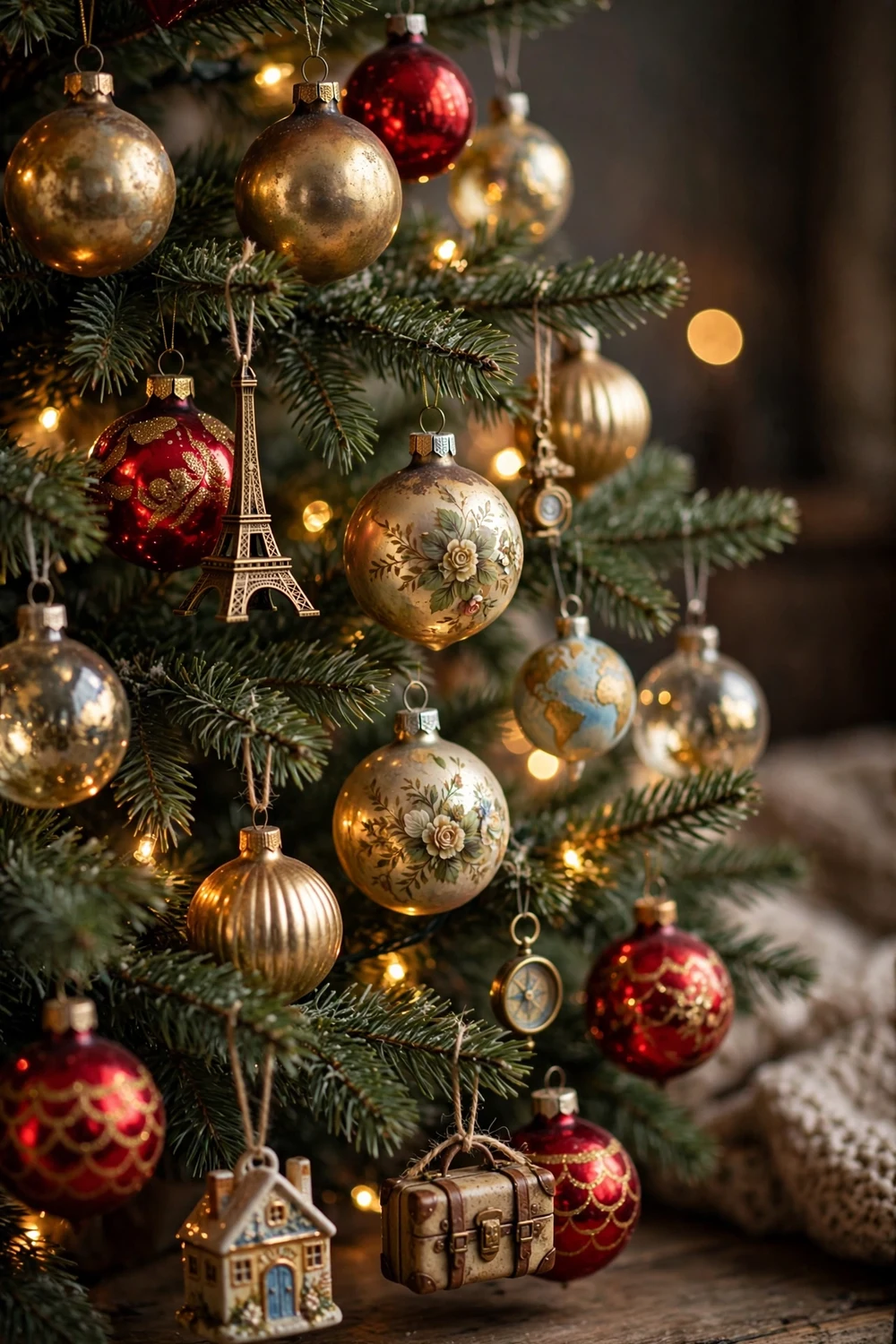
Build the tree around glass baubles collected over the years: childhood ornaments, travel souvenirs, hand-painted pieces. The mixed shapes look intentional when you repeat one color, like red, across the new filler baubles you add between them. Hang the most fragile pieces on the upper branches where kids and pets cannot reach. New glass filler sets run $25 to $40 for 30 pieces.
Try this: write the year on each new ornament with a paint pen so the collection tells its story. Difficulty: easy. Cost: $$
3. Ribbon-wrapped traditional tree

Weave 4-inch wired ribbon in deep red or gold vertically down the tree from top to bottom in four to six swags. The ribbon covers thin spots in the branches and makes a sparse artificial tree look twice as full. You need about 30 feet of ribbon for a 7-foot tree, which costs $20 to $35. Tuck the ribbon ends deep into the branches so they disappear.
Try this: twist the ribbon once every 12 inches so it catches the light from both sides. Difficulty: medium. Cost: $$
4. Plaid and burlap farmhouse tree

Wrap the tree in red-and-black buffalo plaid ribbon and burlap garland, then add wooden ornaments, pinecones, and warm white lights. The mix of textures reads cozy and traditional without looking country-kitsch, as long as you keep the palette to red, black, and natural brown. A plaid ribbon roll and burlap garland together cost about $30. Skip the shiny baubles here; matte finishes fit better.
Try this: spray-painted pinecones in matte gold add a finished touch for almost nothing. Difficulty: easy. Cost: $$
5. Angel-topper nostalgic tree
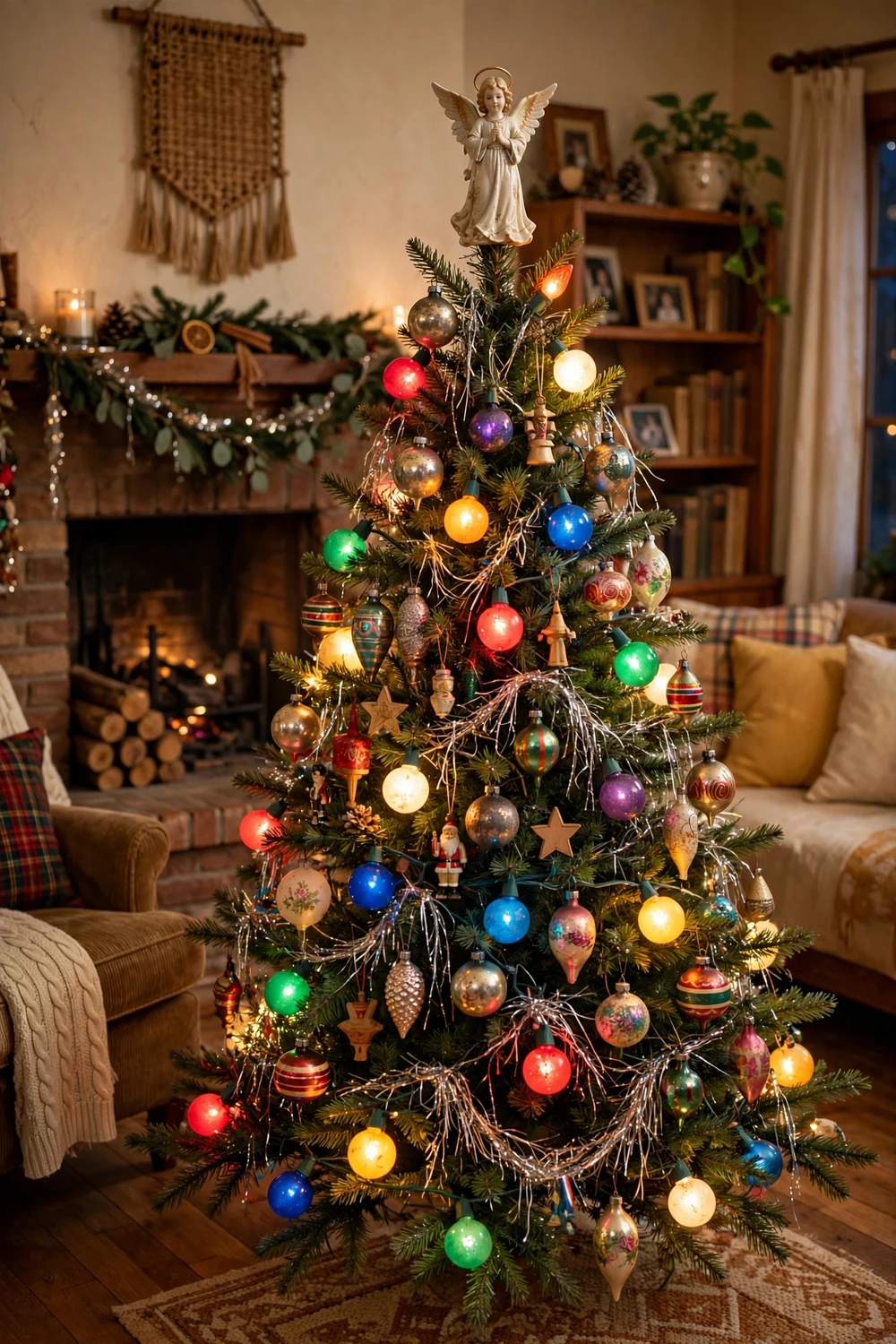
Top the tree with a porcelain or vintage-style angel and decorate below it the way your parents did: colored lights, mixed ornaments, tinsel strands. The angel sets the tone, and everything underneath can be happily imperfect. A good angel topper costs $25 to $45 and lasts decades. Let kids hang the lower third of the ornaments; the unevenness is the charm.
Try this: secure the topper with floral wire to the top branch so it stays upright. Difficulty: easy. Cost: $$
6. Candy cane red-and-white tree

Limit the palette to red and white: red baubles, white snowflake ornaments, red-and-white striped ribbon, and candy cane ornaments tucked into the branches. The strict two-color rule makes even a budget tree look designed. Candy cane ornaments cost about $8 for a dozen, and the rest is standard red-and-white stock. Bright white lights work better here than warm ones for the crisp contrast.
Try this: hang real candy canes on the lower branches as treats kids can take. Difficulty: easy. Cost: $$
7. Mercury glass vintage tree

Decorate entirely in mercury glass ornaments in silver, gold, and champagne, which reflect the tree lights and make the whole tree glow. The mottled silver finish hides dust and looks expensive even in a $30 set. Pair with warm white lights only; colored lights fight the reflective finish. A 40-piece mercury glass set costs $35 to $55.
Try this: place a mirror or two behind the tree to double the sparkle in the room. Difficulty: easy. Cost: $$
8. Natural pinecone and dried orange tree

String dried orange slices and cinnamon sticks with twine, add plain pinecones, and finish with simple warm lights and a burlap tree skirt. It smells like Christmas without any plug-in fragrance, and the whole thing costs under $30 if you dry the oranges yourself. Slice oranges a quarter inch thick and dry at 200F for 3 hours. Hang the slices where the lights hit them so they glow amber.
Try this: keep dried fruit and cinnamon away from open flames; use only cool LED lights. Difficulty: medium. Cost: $$
9. Retro tinsel tree
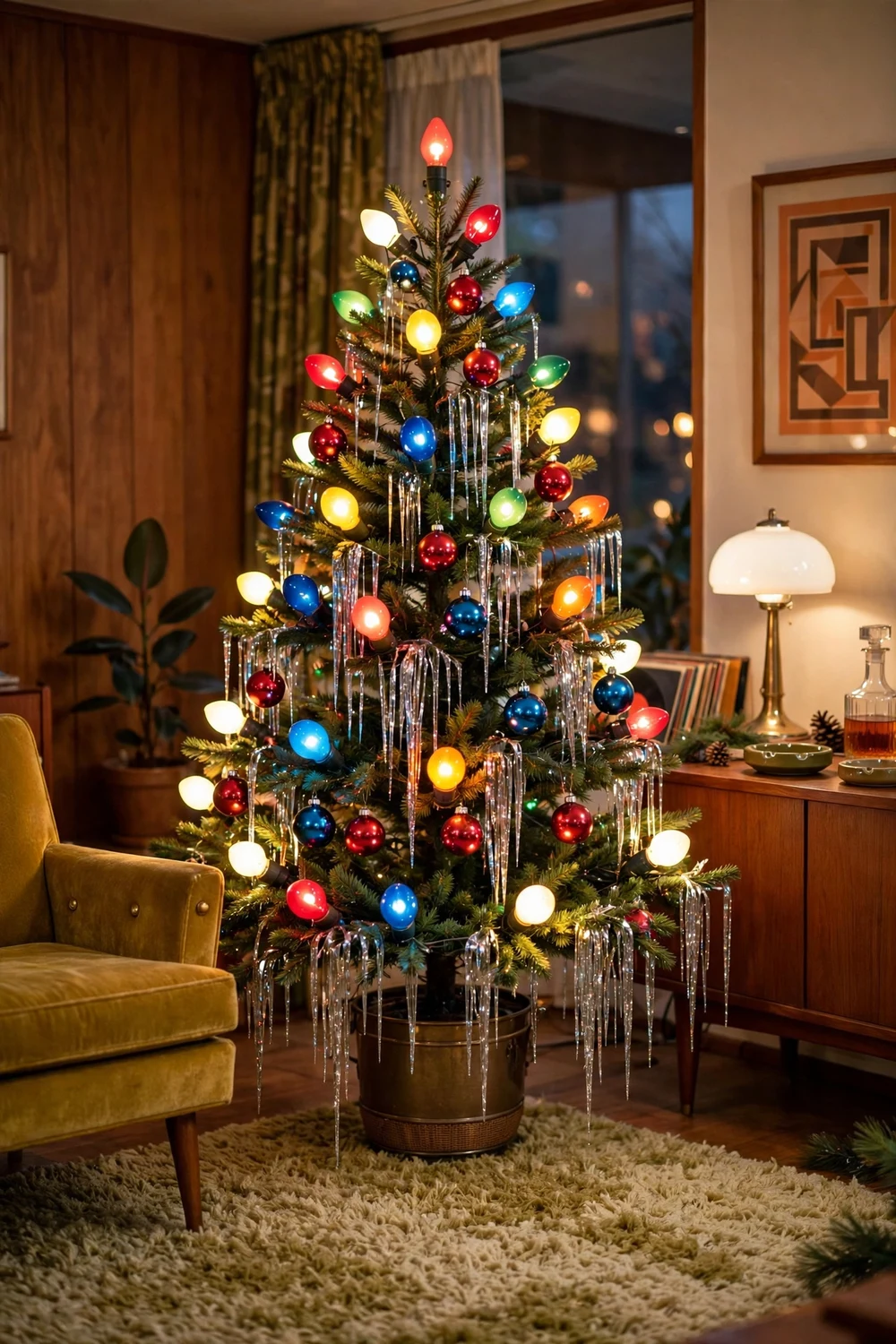
Go full mid-century: a green tree, multicolor big-bulb lights, shiny red and blue baubles, and real hanging tinsel icicles. The tinsel catches every light and moves with the air, which is the whole nostalgic effect. Lead-free tinsel strands cost about $10 for enough to cover a 7-foot tree. Drape one strand at a time rather than throwing handfuls, which is how tinsel looked in the old photos.
Try this: keep tinsel away from toddlers and pets; the strands are a choking hazard. Difficulty: easy. Cost: $$
10. Family story tree

Give every family member one branch zone and let each person hang ornaments that represent their year: a tiny soccer ball, a graduation cap, a new pet. The tree becomes a yearbook, and kids argue over whose zone is best instead of fighting about lights. Buy 3 to 4 mini ornaments per person at $3 to $5 each, and fill the rest with plain red baubles so the tree still reads as one.
Try this: photograph each zone before undecorating so you remember what the year looked like. Difficulty: easy. Cost: $$
11. Flocked white traditional tree
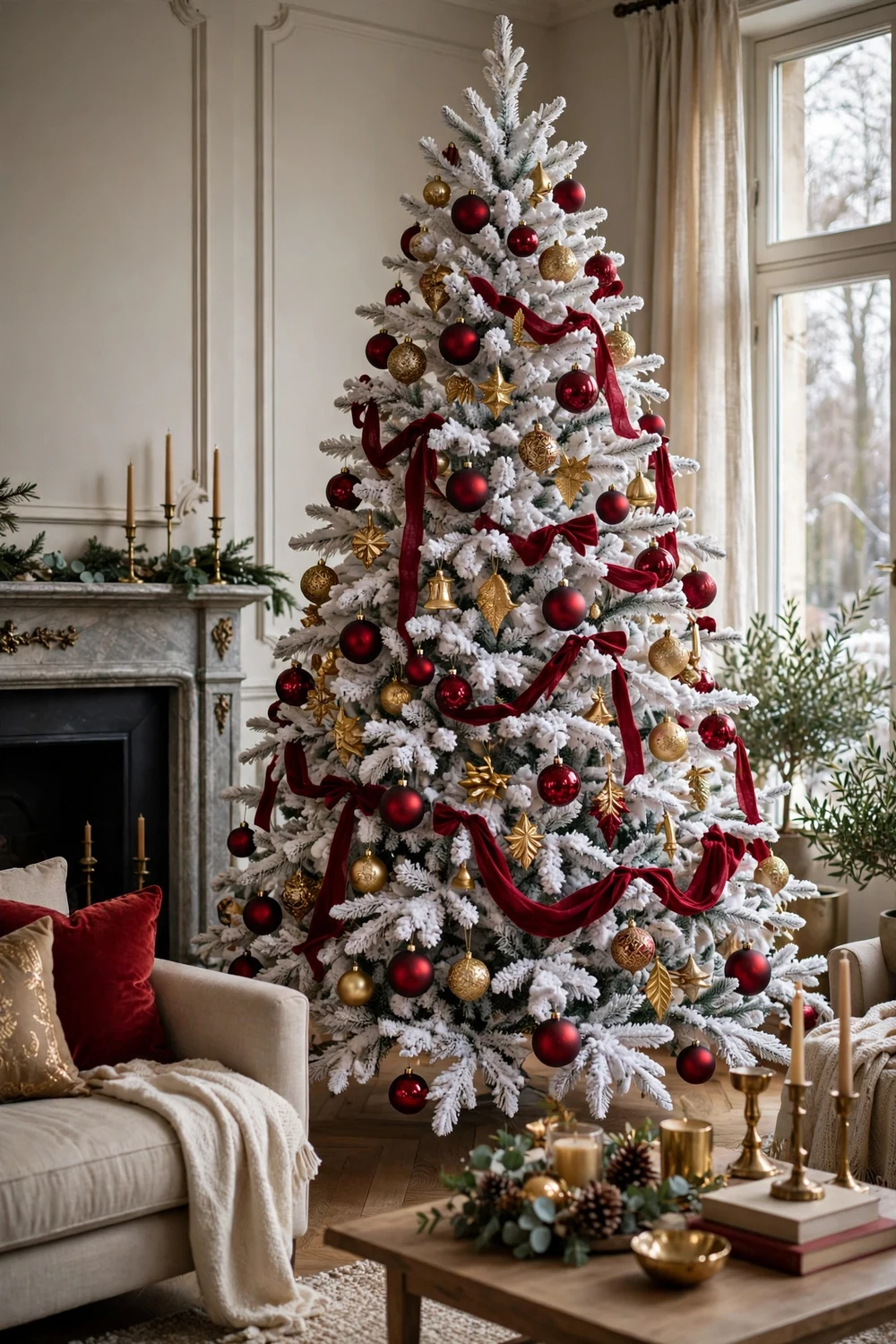
A flocked artificial tree gives you the snowy traditional look with red and gold ornaments that pop against the white branches. The flocking does half the decorating work, so you need fewer ornaments: about 8 per foot instead of 12. A 7-foot pre-lit flocked tree costs $150 to $250, but the decor on top runs only $40 to $60. Shake the tree outside before bringing it in to shed loose flocking.
Try this: deep red velvet ribbon reads especially rich against white flocking. Difficulty: easy. Cost: $$
12. Bead garland classic tree

Drape wooden or gold bead garlands in long swags around the tree, then add simple red baubles and a gold star. The beads add texture that tinsel never could, and they survive kids and cats far better than glass garland. You need about 4 strands of 9-foot garland for a 7-foot tree, around $25 total. Wooden beads in natural finish keep the look warm and old-fashioned.
Try this: drape beads after lights but before ornaments so they sit on the branches naturally. Difficulty: easy. Cost: $$
How to choose live or artificial
Pick the tree type before the decor, because it changes the plan. A live tree gives you the pine smell and the yearly ritual, but it needs water every single day, drops needles, and comes down in January. Fraser firs hold needles longest and have stiff branches for heavy ornaments. An artificial tree costs more up front but sets up in an hour, holds heavy glass without drooping, and a good one lasts a decade. If anyone in the house has a pine allergy, artificial is the kinder choice. Either way, measure your ceiling and subtract 12 inches for the topper before you buy.
Mistakes to avoid
Hanging ornaments before lights is the classic error; you will knock ornaments off reaching through the branches with light strings. Lights always go first. The second mistake is buying ornaments before measuring: a 7-foot tree needs roughly 80 ornaments, and people consistently buy half that, which leaves a sparse tree. The third is the tree skirt afterthought: put the skirt or collar on before decorating, because sliding it under a decorated tree dumps needles everywhere. Finally, do not place the tree where a door swings into it; December foot traffic will strip one side bare by Christmas Eve.
Christmas tree safety
A traditional tree with real lights needs real caution. Water a live tree every day. Fire experiments from the National Institute of Standards and Technology showed a watered tree resisted ignition where a dry tree caught fire, and the NFPA Christmas tree tip sheet covers picking, placing, lighting, and disposing of the tree safely. Keep the tree at least 3 feet from fireplaces, radiators, and heating vents. Turn tree lights off before bed and when you leave the house, and replace any string with worn cords or loose bulbs. For tall trees, use a sturdy step stool instead of a chair, and have someone steady the ladder when you place the topper. Battery candles are the safer choice near dried oranges and cinnamon from idea 8.
FAQ
How many ornaments do I need for a 7-foot tree?
About 80 ornaments, or roughly 12 per foot of height. Flocked trees need fewer, about 8 per foot, because the white branches fill in visually.
What order do you decorate a Christmas tree?
Lights first, then garland or ribbon, then ornaments from largest to smallest, then the topper. The tree skirt goes on before any of it.
How do I keep a live Christmas tree from drying out?
Water it every day, keeping the stand reservoir full. A fresh-cut tree can drink a gallon of water in the first 24 hours.
Are LED Christmas lights better than incandescent?
LEDs use less electricity and stay cool, which is safer around dried decor and cheaper to run all season. Warm white LEDs give the traditional glow.
When should I take the Christmas tree down?
Most families take it down in the first week of January. If a live tree is dropping heavy needles, take it down sooner; dry trees are a fire risk.
Can I mix old and new ornaments on a traditional tree?
Yes. Repeat one color across the new filler ornaments and group by color or material, and the mix will look intentional rather than random.
If you like a playful twist on tradition, see our black and pink Christmas tree ideas, and our DIY gingerbread house decorations match a traditional tree beautifully on the mantel.
The traditional tree endures because it is simple: a few colors, warm light, and the ornaments that carry your family’s history. Pick the version that fits your house, hang the lights first, and water the tree.


