


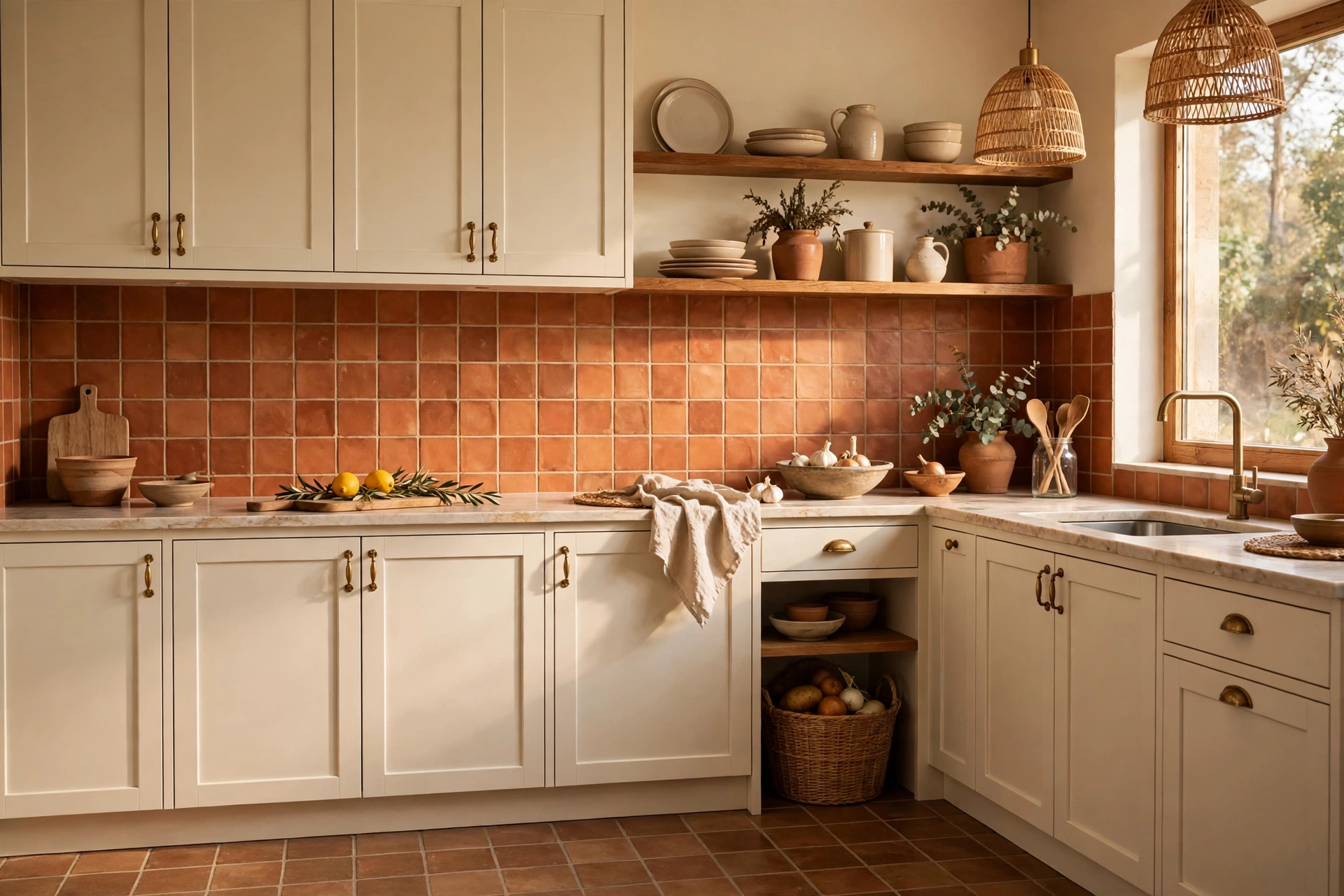
Brown tile gets skipped in a lot of kitchens because people worry it will read dark or dated. The tile itself is rarely the problem. The shade, the finish, and the grout around it decide whether a brown kitchen feels warm or heavy, and most of the fixes cost less than a full redo.
This guide covers 20 brown tile ideas for backsplashes, floors, and feature walls, with real costs and a starting point for each one. It is written for homeowners planning a kitchen refresh, a backsplash swap, or a full remodel, and every idea names the tile type, the finish, and the pairing that keeps the room light.
Quick takeaways
- Glossy and light brown tiles bounce light back, so small kitchens stay bright even with a brown backsplash.
- Matte and dark brown tiles work best on floors or one feature wall, paired with cream cabinets or white counters.
- Grout color changes the whole look: light grout shows the pattern, dark grout hides it and reads calmer.
- Seal natural stone and cement tiles before grouting, and check floor tiles for slip resistance before you buy.
- Start with the backsplash if your budget is tight. It uses the least tile and changes the room fastest.
1. Terracotta subway backsplash

Terracotta subway tiles in a 3 by 6 inch size give a kitchen instant warmth without a loud color. The clay tones sit between orange and brown, so they pair well with cream cabinets, butcher block, and black hardware. Run them in a classic brick pattern for a calm look, or stack them straight for a cleaner read. Terracotta is porous, so seal it before grouting and again after, or cooking splashes will stain the face of the tile.
Try this: order one box first and tape three tiles to the wall at night under your own lights, since terracotta shifts a lot between daylight and warm bulbs.
Cost: $$. Difficulty: Moderate.
2. Chocolate herringbone backsplash
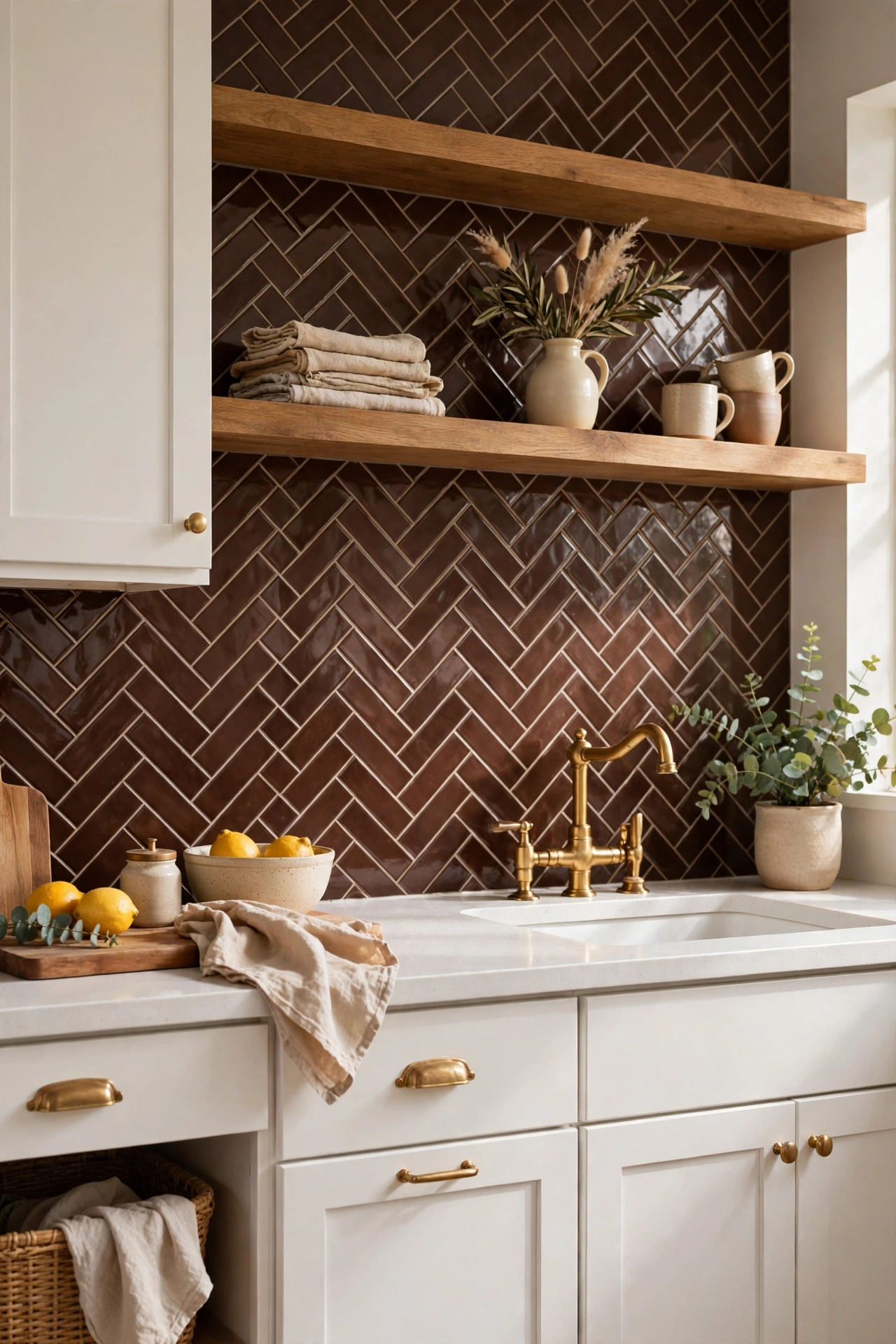
Chocolate brown tiles in a herringbone pattern turn a plain backsplash wall into the focal point of the room. The zigzag layout catches light from two directions, so the same tile looks lighter on one side and deeper on the other. Use a 2 by 6 inch or 3 by 6 inch ceramic tile, and keep the rest of the kitchen quiet with white quartz counters and simple cabinets. Herringbone takes more cuts than a straight layout, so buy 15 percent extra tile for waste.
Try this: mark the center of the wall and dry lay the first V of tiles on the counter before you mix any thinset.
Cost: $$. Difficulty: Hard.
3. Espresso mosaic accent strip
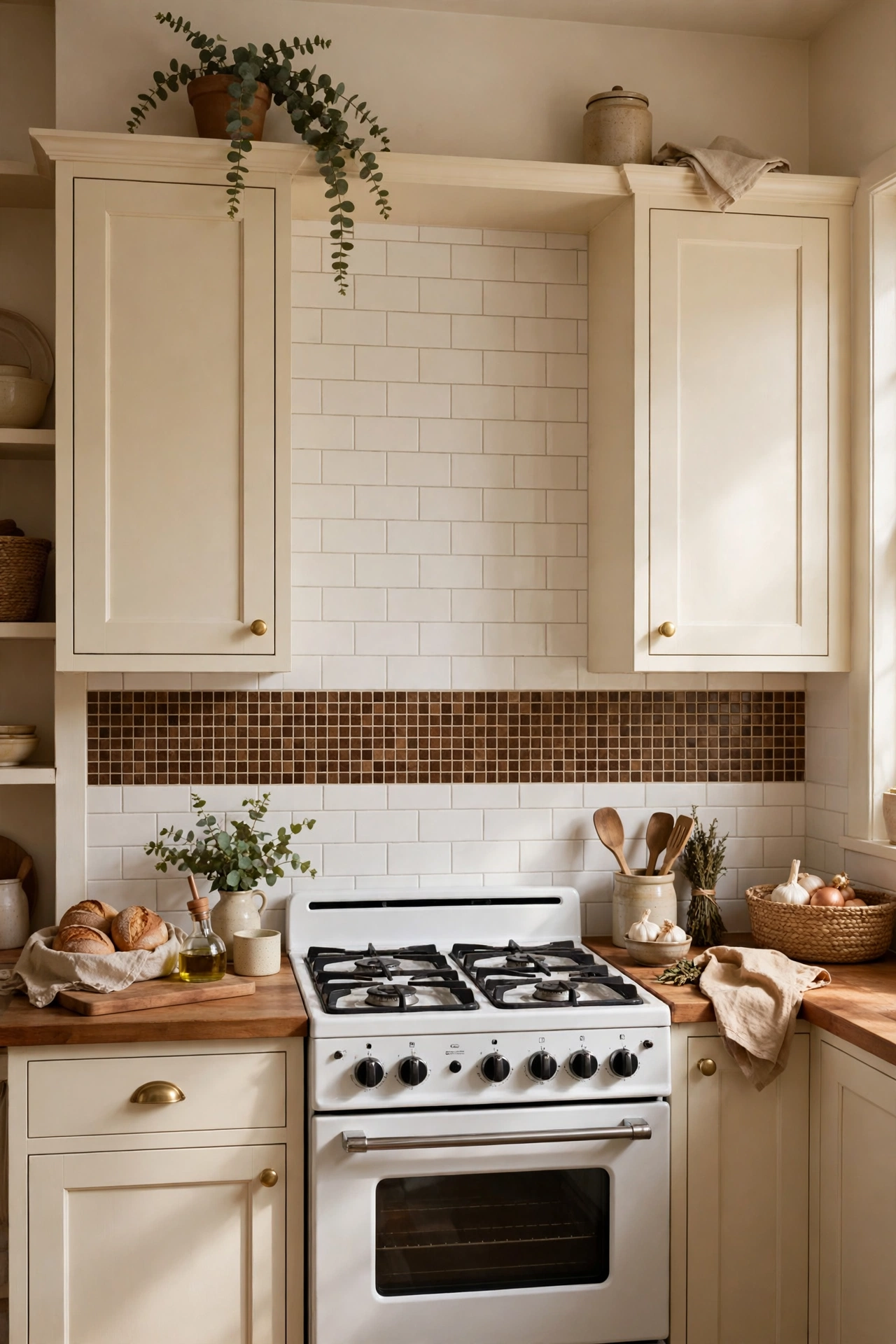
An espresso mosaic strip is a good middle step if a full brown backsplash feels like too much. Run a 6 inch tall band of small mosaic tiles behind the range or along the full counter run, then finish the rest of the wall in a plain cream tile. The dark strip reads as a deliberate accent instead of a leftover, and it hides cooking splashes better than a pale tile does. Mosaic sheets set fast, so this is one of the quicker tile jobs in a kitchen.
Try this: line the strip up with the bottom of the upper cabinets so the band has a clean top and bottom edge.
Cost: $. Difficulty: Easy.
4. Brown and cream checkerboard floor

A brown and cream checkerboard floor gives a kitchen a classic base that works with almost any cabinet color. Use 12 by 12 inch porcelain tiles so the pattern reads clearly from the doorway, and keep the grout a warm gray so the squares stay crisp without shouting. This floor hides crumbs and dust better than a solid dark floor, which matters in a room that gets used three times a day. Porcelain holds up to spills, pet claws, and dropped pans.
Try this: lay the pattern from the center of the room outward so the cut tiles land under the cabinets, not in the middle of the floor.
Cost: $$. Difficulty: Moderate.
5. Wood look brown plank tiles

Wood look porcelain planks in a medium brown give you the grain and warmth of hardwood with a surface that ignores water, steam, and mop buckets. Look for planks 6 inches wide and 24 to 36 inches long, and stagger the joints by at least 6 inches so the floor reads like real boards. A matte finish hides footprints better than a gloss finish, and a rectified edge keeps the grout lines thin. This is the safest brown floor choice for a kitchen that opens onto a garden or a mudroom.
Try this: check the slip rating on the box before you buy, and pick a tile rated for wet areas if the kitchen has a back door.
Cost: $$. Difficulty: Moderate.
6. Travertine look brown stone floor
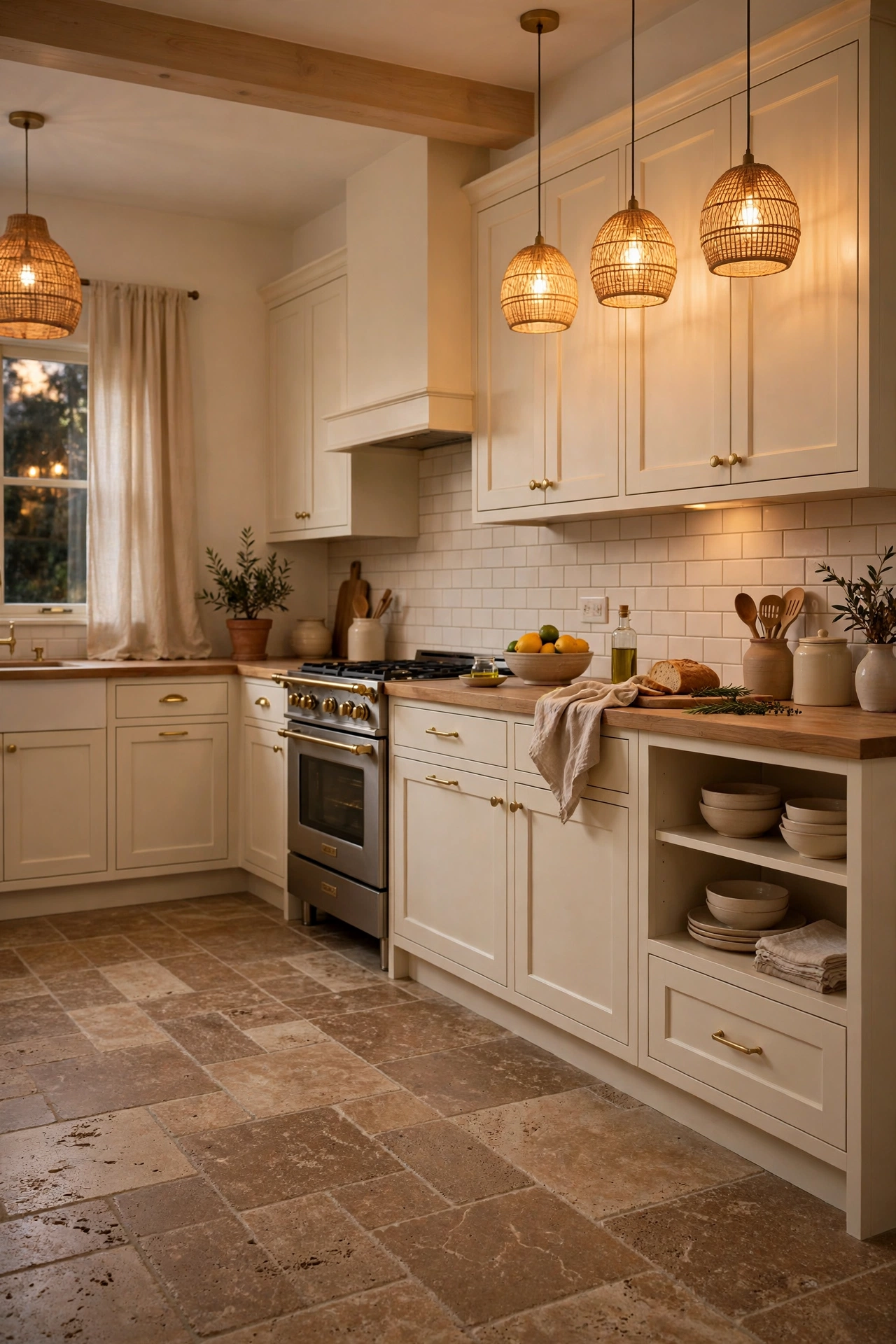
Travertine look porcelain in warm brown tones brings a natural stone feel to a kitchen without the sealing schedule real travertine demands. The printed veining and pitting vary from tile to tile, so the floor avoids the flat, repeated look of cheaper prints. Pair it with cream or sage cabinets and a stone countertop, and keep the grout close to the tile color so the veining does the talking. Large 18 by 18 inch tiles suit bigger kitchens, while 12 by 12 inch tiles fit smaller rooms.
Try this: mix tiles from three boxes as you lay them so no two matching prints land side by side.
Cost: $$$. Difficulty: Moderate.
7. Mocha matte backsplash with brass hardware

Mocha matte tiles sit in the middle of the brown range, dark enough to add depth and light enough to keep the wall from closing in. The matte finish softens reflections, so it suits kitchens with a lot of glass or a glossy countertop. Brass pulls, faucets, and pendant lights warm the mocha up further, while white counters stop the palette from going muddy. Matte tiles show grease marks more than gloss tiles, so wipe the cooking zone down after frying.
Try this: test one tile against your cabinet hardware in daylight, since mocha can lean gray or pink under different bulbs.
Cost: $$. Difficulty: Easy.
8. Caramel glass tile backsplash

Caramel glass tiles glow under under-cabinet lighting, and that glow is the reason they work in kitchens with little natural light. The translucent body picks up the light strip above it and throws a warm wash down the wall. Use a white thinset behind glass tile, since gray thinset dulls the color and shows through the tile. Glass scratches more easily than ceramic, so keep it on the wall and off the floor, and wipe it with a soft cloth instead of a scouring pad.
Try this: run the lighting on a dimmer so you can turn the glow down in the evening and up while you cook.
Cost: $$$. Difficulty: Moderate.
9. Brown zellige look handmade tiles

Zellige look tiles in brown carry small color shifts, uneven edges, and a soft glaze that make a backsplash feel made by hand rather than stamped out. Each tile varies slightly, so the wall gains movement without a busy pattern. Keep the layout simple, a straight stack or a brick pattern, and let the glaze variation do the work. These tiles cost more per square foot than plain ceramic, so many people use them on the range wall only and a plainer tile elsewhere.
Try this: blend tiles from several boxes before setting, or one shade can pool in a corner and look like a mistake.
Cost: $$$. Difficulty: Hard.
10. Rustic brown brick look tiles
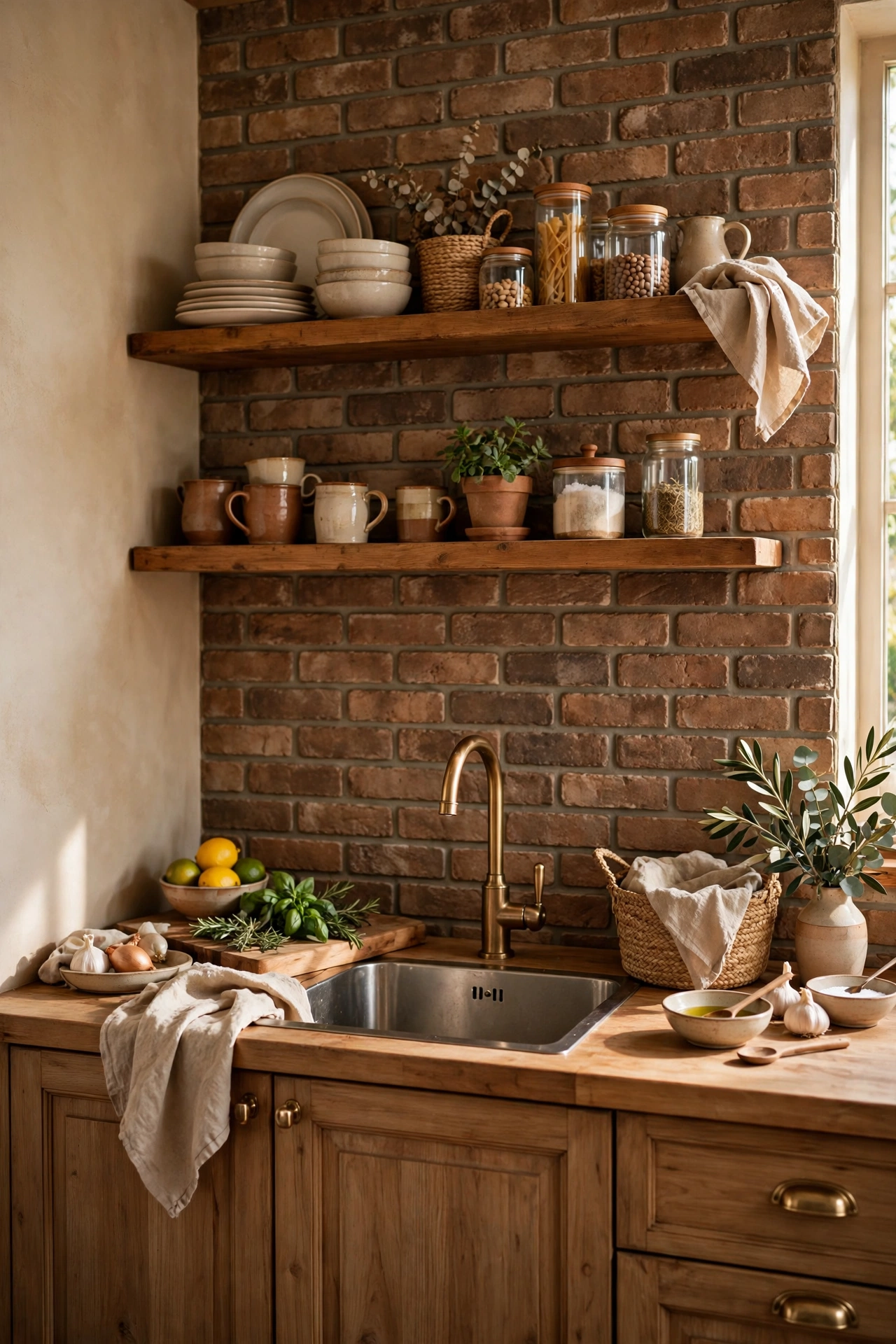
Brick look tiles in brown bring a farmhouse or industrial feel to a kitchen without the weight, dust, and depth of real brick. Thin brick veneer tiles run about half an inch thick, so they fit behind a range and under cabinets without rebuilding the wall. The rough texture suits open shelving, wood beams, and black metal hardware. Seal the face after grouting, since the texture traps grease and flour dust in a working kitchen.
Try this: use a grout bag instead of a float on rough brick tiles, so grout lands in the joints and not in the texture.
Cost: $$. Difficulty: Moderate.
11. Walnut brown large format floor tiles
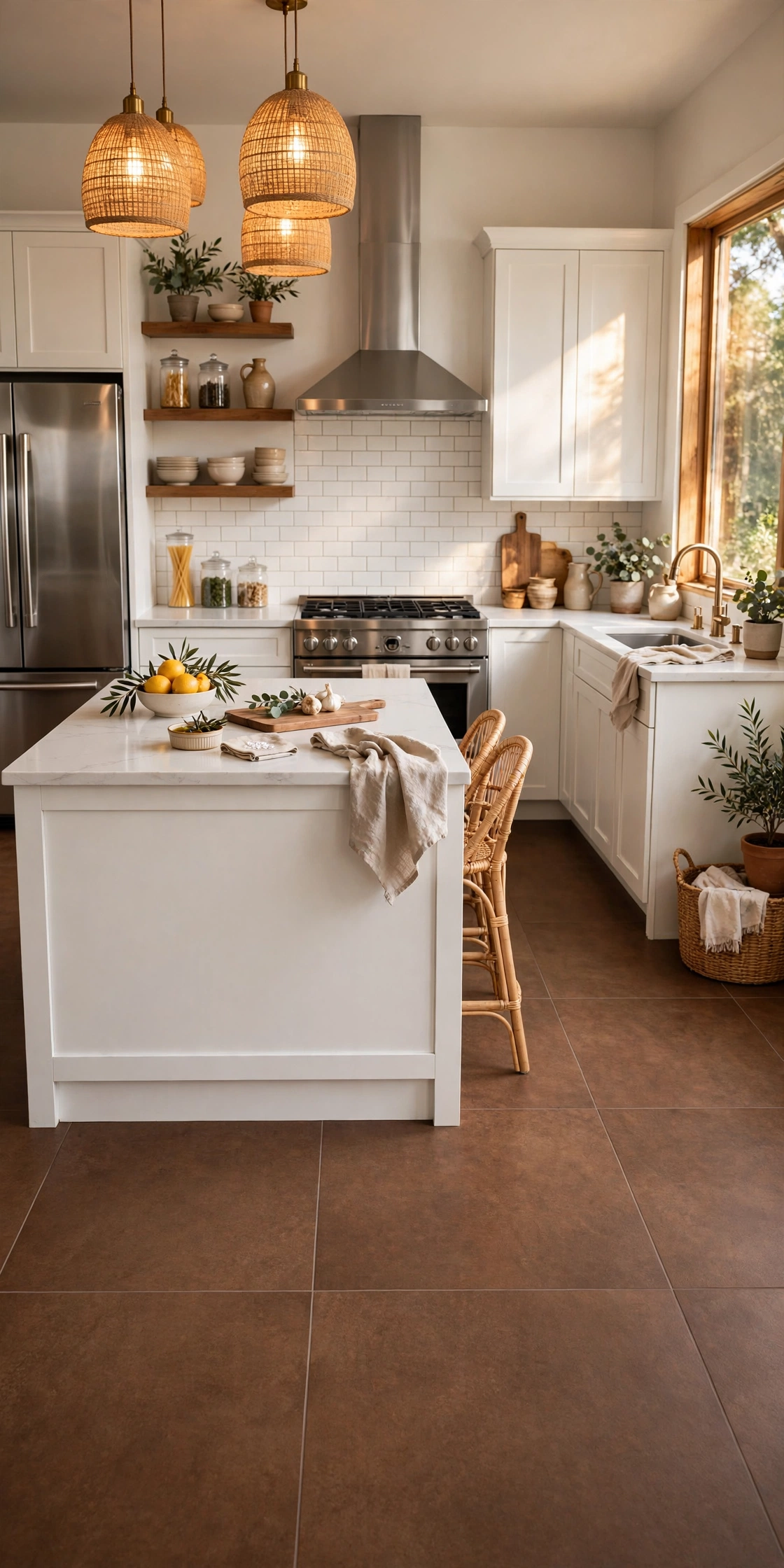
Large format tiles in walnut brown, 24 by 24 inches or 12 by 24 inches, cut down on grout lines and make a kitchen floor look calmer and bigger. Fewer joints also mean less grout to clean, which is a real gain in a room where spills happen daily. The trade-off is prep: large tiles need a flat subfloor, so check for dips with a long level before you start, and use a leveling clip system to stop lippage. A rectified edge keeps the joints at 1/16 inch.
Try this: back butter each tile with thinset as well as combing the floor, since large tiles hollow out over low spots.
Cost: $$$. Difficulty: Hard.
12. Brown penny round backsplash

Penny round mosaics in brown give a backsplash a soft, dotted texture that suits cottage kitchens, retro kitchens, and small galley kitchens alike. The small circles break up a long wall without a loud pattern, and the mesh backing makes the sheets easy to cut around outlets. Mix two or three brown shades on the same sheet for depth, or keep one shade for a quieter wall. Grout choice matters here: a mid-brown grout blends the dots, while a white grout turns the wall into a polka dot pattern.
Try this: press each sheet flat with a grout float right after setting, or the small tiles can tilt and catch light unevenly.
Cost: $$. Difficulty: Easy.
13. Tile clad kitchen island
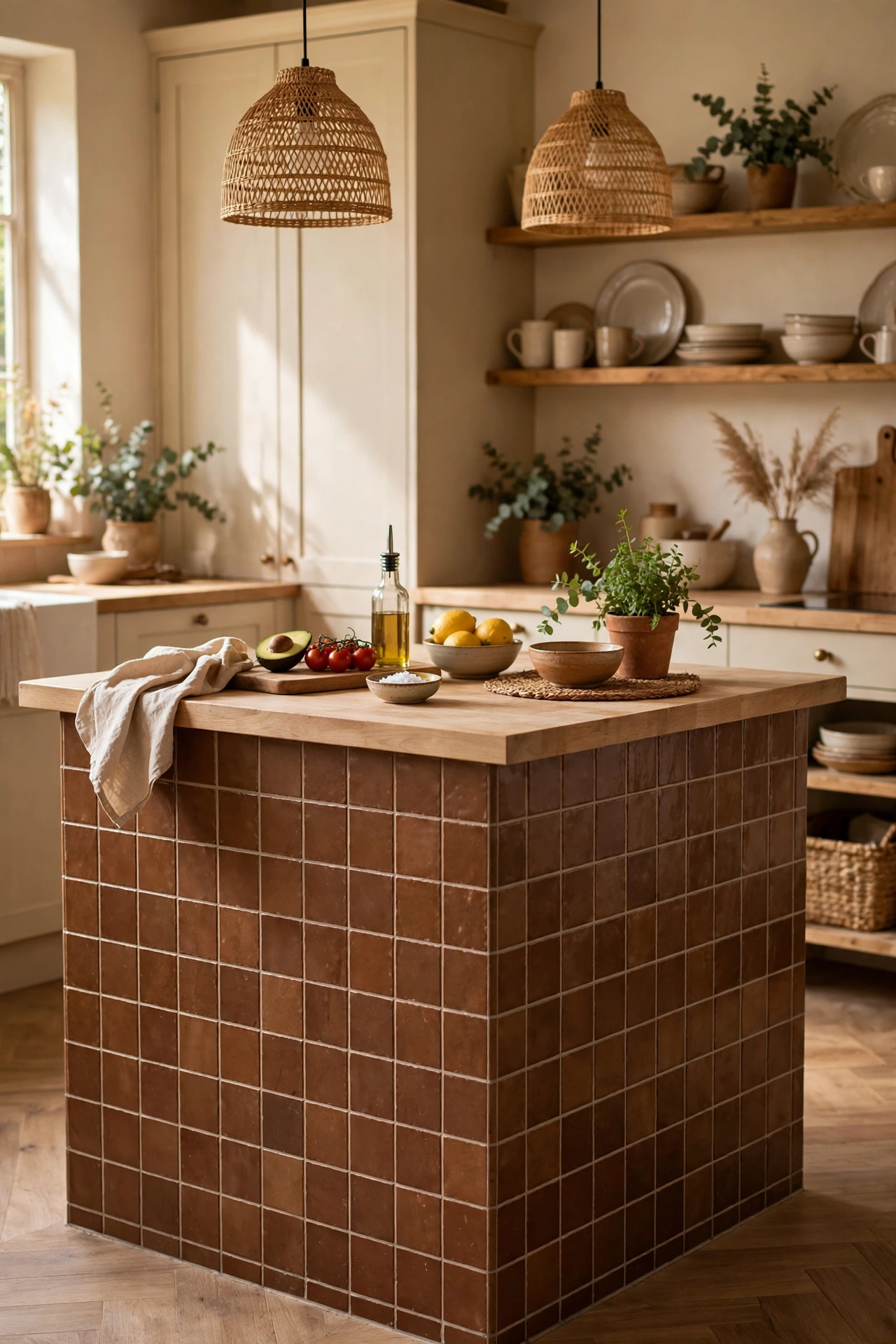
Cladding the sides of a kitchen island in brown tile turns the island into a piece of furniture instead of a plain cabinet box. Use the same tile as the backsplash for a matched look, or pick a deeper brown for contrast against pale cabinets. Tile on an island base takes kicks, vacuum bumps, and chair scrapes better than painted wood, and it wipes clean. Run a metal edge trim on the corners so the tile edges stay protected where stools slide in and out.
Try this: stop the tile 1 inch above the floor and add a recessed toe kick, so mops and feet never hit the tile edge.
Cost: $$. Difficulty: Moderate.
14. Brown marble look porcelain backsplash
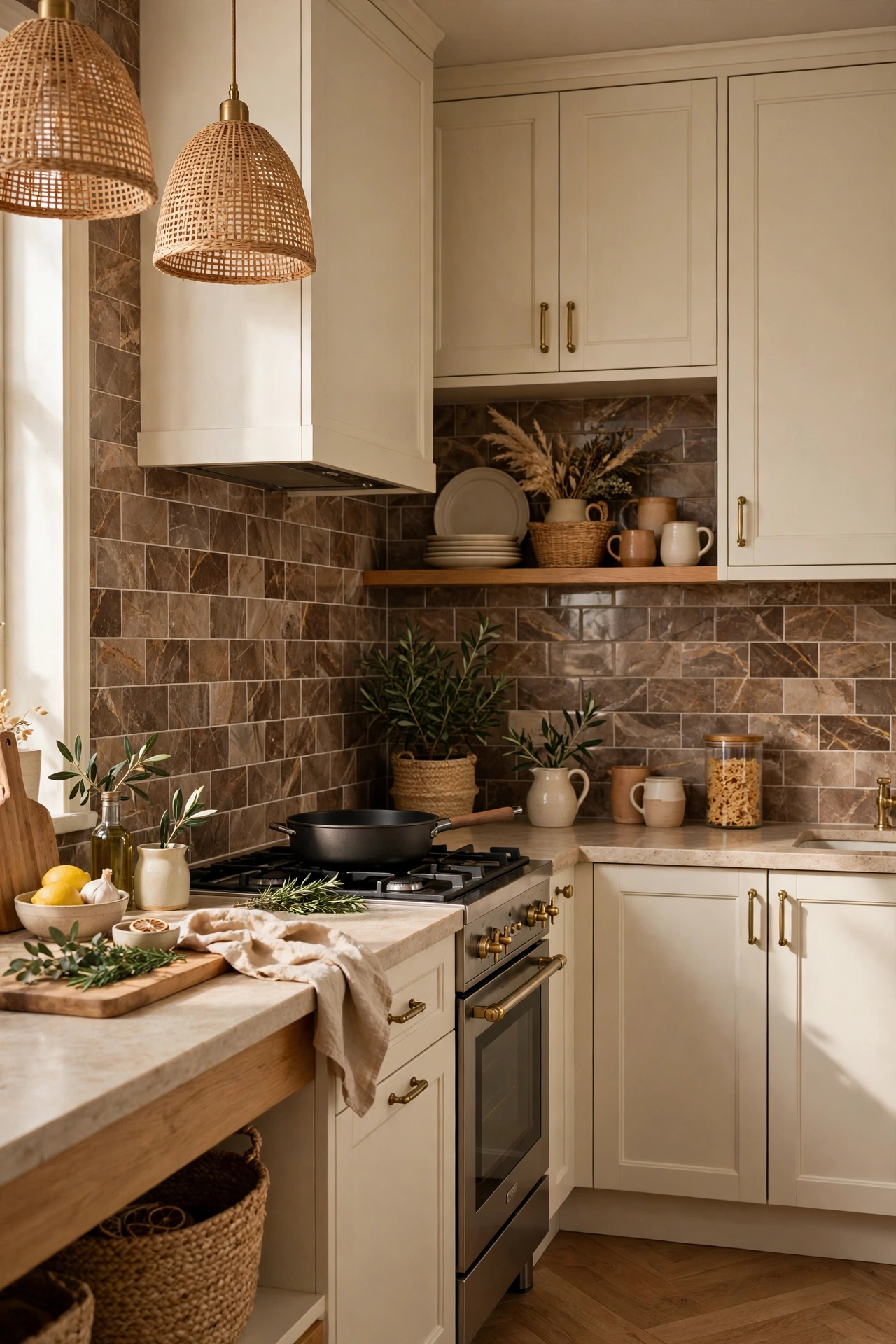
Brown marble look porcelain gives you the veining of marble with a surface that ignores lemon juice, tomato sauce, and red wine. Real marble etches on contact with acids, which is a daily risk behind a stove. Porcelain slabs or large tiles in a brown and cream vein pattern read as stone from a normal distance, and they need no sealing. Keep the counters simple, white quartz or light wood, so the veining stays the star of the wall.
Try this: book match two large tiles at the center of the range wall so the veins mirror each other like an open book.
Cost: $$$. Difficulty: Hard.
15. Brown and beige mosaic backsplash
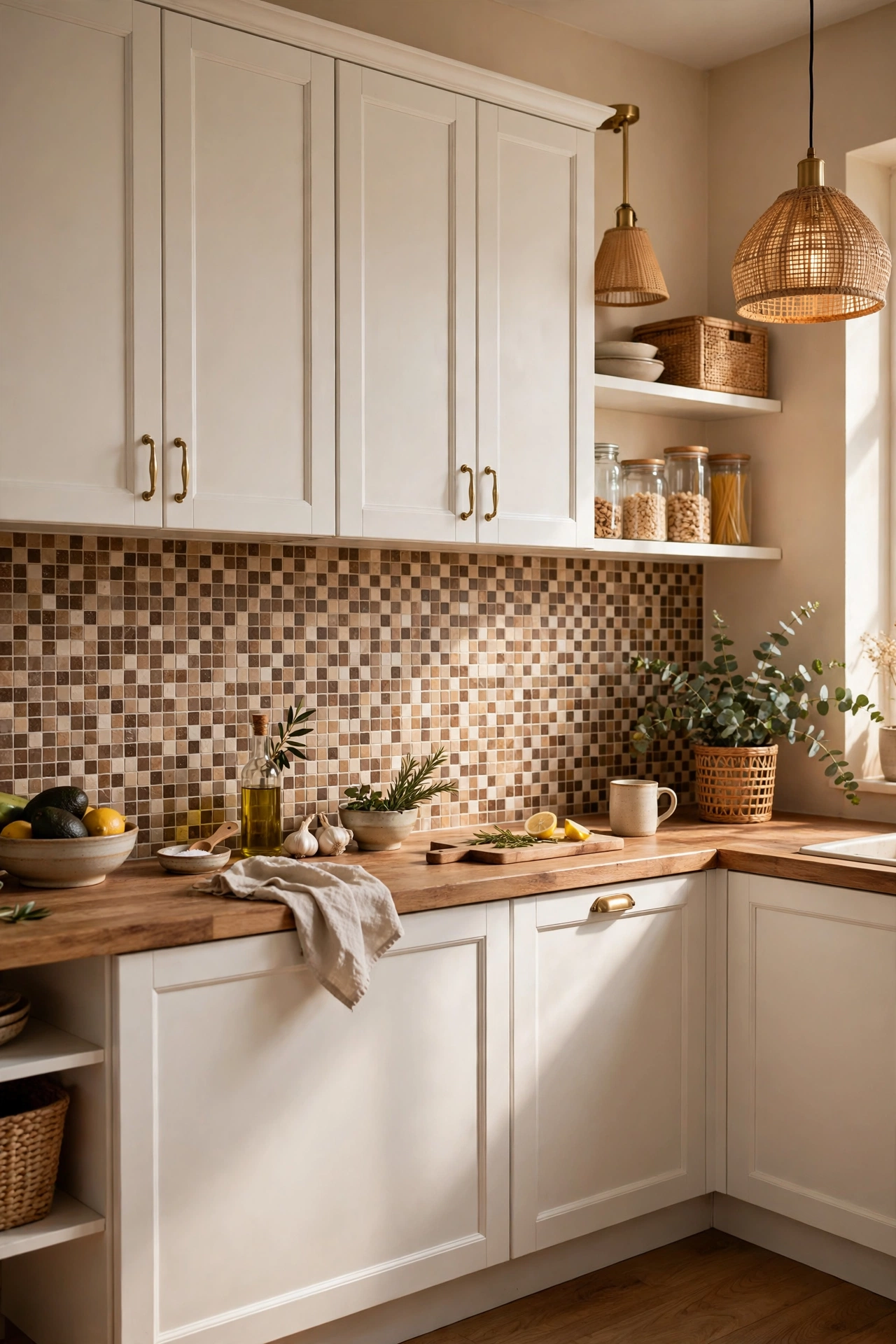
A brown and beige mosaic blends the two neutrals most kitchens already have, so it ties cabinets, counters, and floors together without a new color. Small mosaic squares or rectangles in mixed browns and beiges create a soft, speckled wall that hides splashes well. This is a forgiving choice for a first tile job, since the busy pattern hides small cutting and spacing slips. Use an unsanded grout on mosaics with tight joints so the grout does not scratch the glaze.
Try this: hold a sample sheet against your countertop and your cabinet door together before ordering, since beige can clash with a cool white.
Cost: $. Difficulty: Easy.
16. Dark chocolate floor with light grout
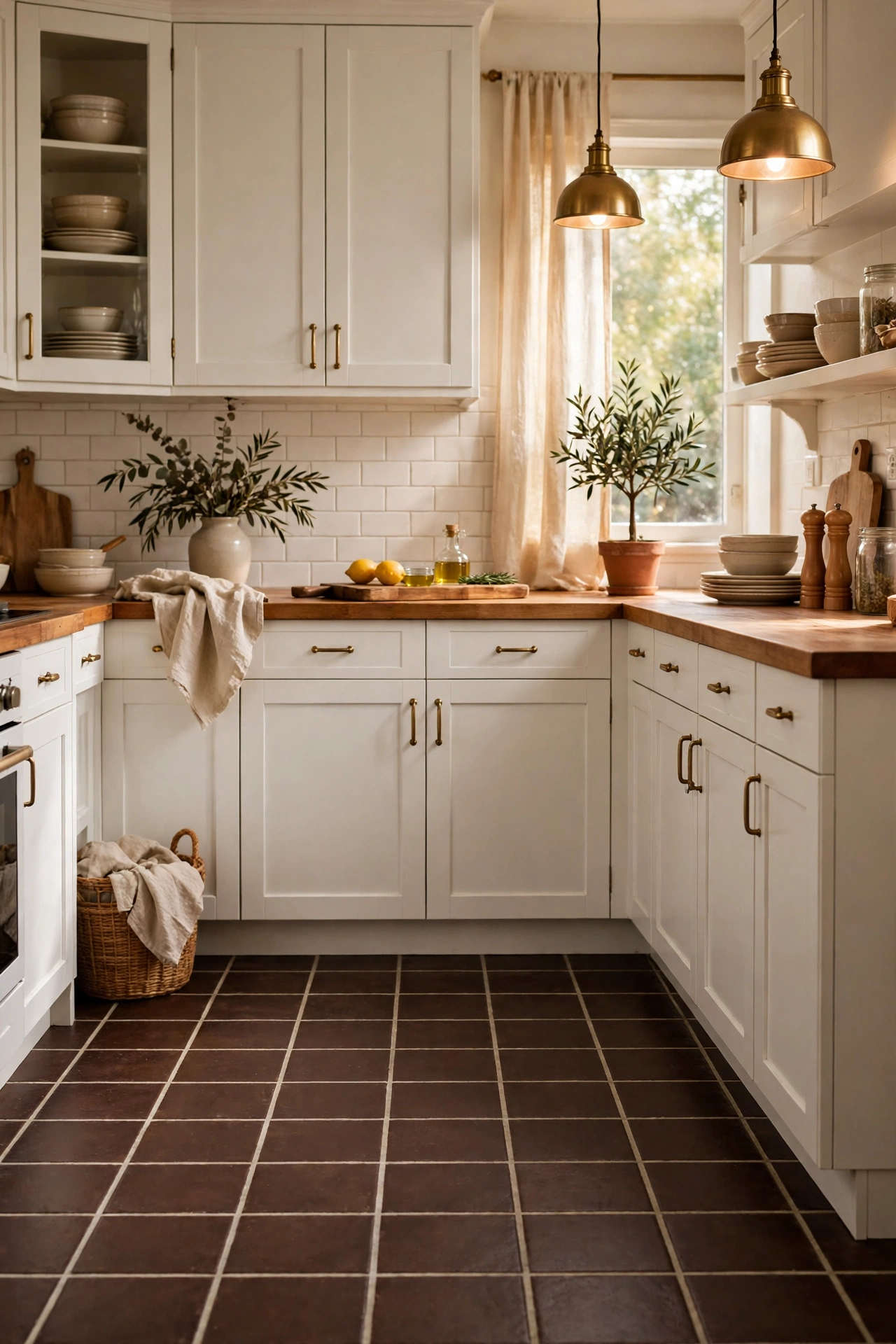
A dark chocolate floor with light grout lines reads as a grid, and that grid gives a kitchen structure even when the cabinets and counters are plain. The light joints break the dark field into squares, so the floor feels patterned rather than flat. This works best in kitchens with good light or white cabinets, since a dark floor in a dark room can feel heavy. Porcelain in a matte finish keeps the floor from showing every footprint.
Try this: seal the light grout after it cures, or kitchen traffic will darken the joints within a few months.
Cost: $$. Difficulty: Moderate.
17. Brown tile range wall
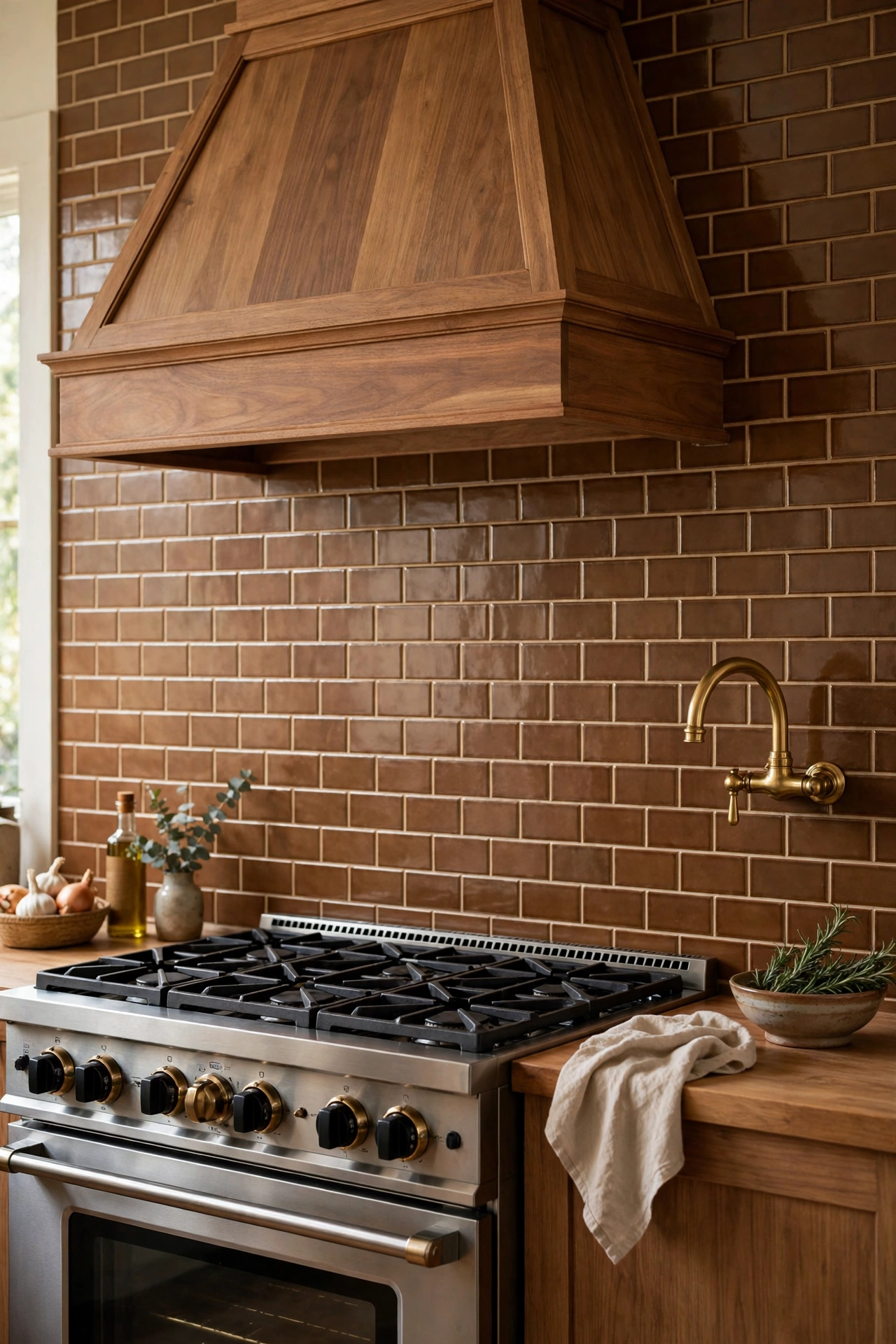
Tiling the full wall behind the range, from counter to ceiling, makes the cooking zone the clear focal point of the kitchen. Brown tiles here earn their keep: they take heat, steam, and grease better than paint or wallpaper, and they wipe down in seconds. Pick a heat-safe tile and a grout rated for the area behind a gas range, and keep the tile clear of the burner line the manufacturer specifies. A wood hood or a brass pot filler softens the tall tile wall.
Try this: tile the range wall first, then cut the side walls to meet it, so the most visible wall has the cleanest layout.
Cost: $$. Difficulty: Moderate.
18. Terracotta floor with cream cabinets

A terracotta floor with cream cabinets is a warm, old-world pairing that suits Mediterranean, Spanish, and farmhouse kitchens. The floor carries the color, so the cabinets can stay pale and the room stays bright. Terracotta tiles vary in tone from piece to piece, which keeps a large floor from looking flat. Seal the tiles well, since an unsealed terracotta floor stains fast under a coffee station or a pet bowl, and use felt pads under every chair leg.
Try this: buy a few extra tiles and keep them in the garage, since terracotta batches vary and a future repair needs a close match.
Cost: $$. Difficulty: Moderate.
19. Brown slate look farmhouse tiles

Brown slate look tiles give a farmhouse kitchen a rugged, natural floor without the flaking and uneven surface of real slate. The printed texture copies the cleft and color shifts of stone, while the porcelain body stays flat, dense, and easy to mop. Pair it with cream cabinets, a wood table, and black hardware for a classic farmhouse read. A darker grout blends the joints into the stone look, while a lighter grout shows each tile as a separate stone.
Try this: dry lay a 4 by 4 foot section first and step back to the doorway, since slate prints can repeat if you pull from one box only.
Cost: $$. Difficulty: Moderate.
20. Glossy caramel subway tiles for a small kitchen
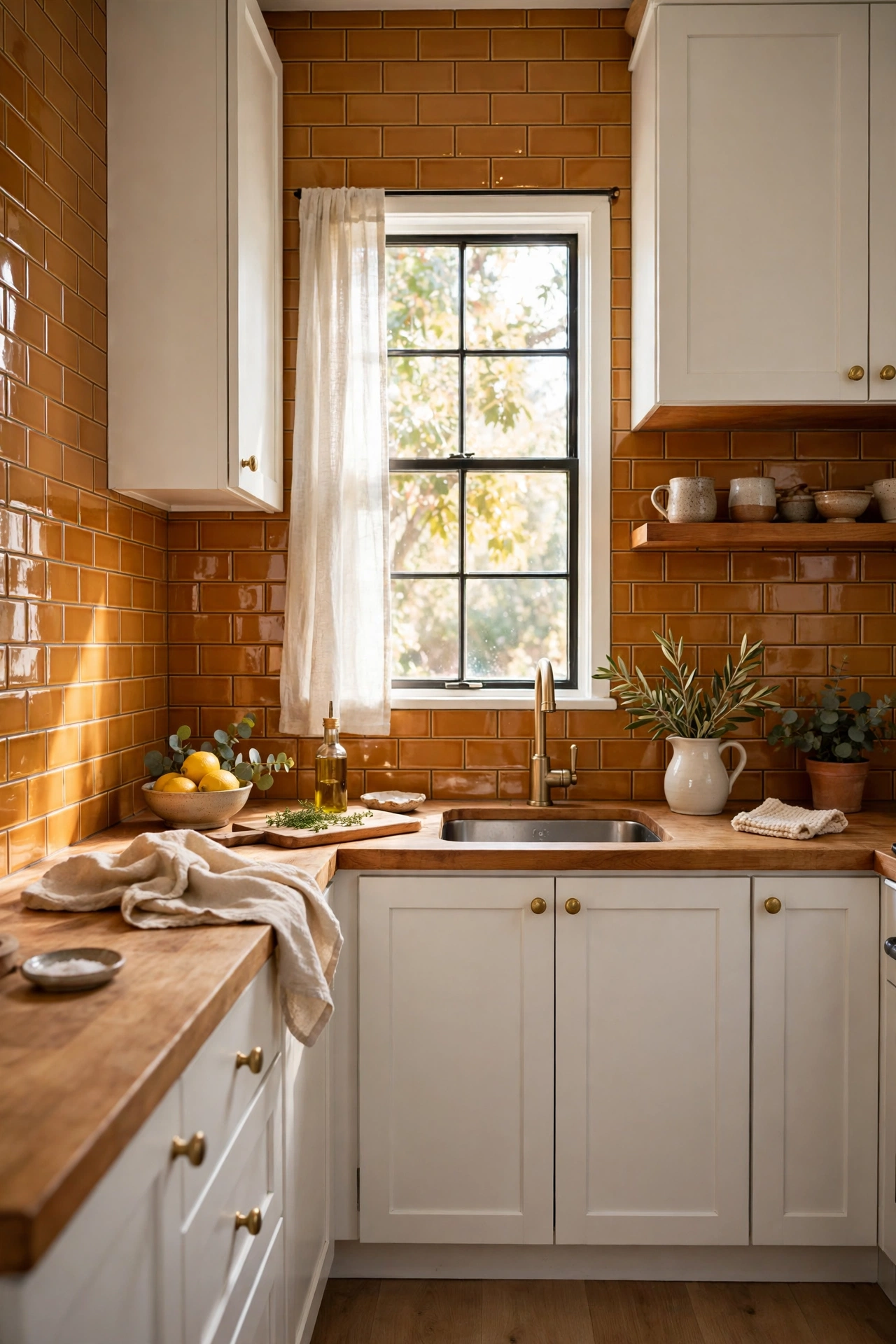
Glossy caramel subway tiles are the best brown tile choice for a small kitchen, because the shine bounces light around a room that has little of it. A 3 by 6 inch tile in a light caramel reads warm without darkening the wall, and the gloss wipes clean with a damp cloth after cooking. Keep the grout close to the tile color so the wall reads as one warm surface, and pair it with white cabinets and open shelving so the room keeps its air. This is also one of the cheapest brown tile looks per square foot.
Try this: carry the tile up to the ceiling on one wall if the cabinets stop short, since the extra height draws the eye up.
Cost: $. Difficulty: Easy.
How to choose the right brown tile for your kitchen
Start with placement, since it narrows every other choice. Backsplashes can take glass, ceramic, and handmade tiles, while floors need porcelain or dense stone with a slip rating for wet areas. Counters and island sides need a tile that resists chips at the edges, so thicker porcelain or stone works better there than thin ceramic.
Next, match the shade to your light. North facing kitchens and rooms with small windows suit light browns like caramel, tan, and light terracotta. South facing rooms with big windows can carry chocolate, espresso, and walnut without feeling dark. Take samples home and check them at breakfast light, midday light, and evening light before you order, since brown shifts more than white or gray under different bulbs.
Finish matters as much as color. Gloss finishes reflect light and wipe clean, but they show water spots and scratches. Matte finishes hide marks and suit floors, but they need a bit more scrubbing on a backsplash. For grout, a color close to the tile hides joints and calms a busy pattern, while a contrasting grout turns the layout itself into the design. For more kitchen direction, see these inspiring kitchen design ideas.
Brown tiles kitchen ideas at a glance
| Idea | Cost | Difficulty | Best for |
|---|---|---|---|
| Terracotta subway backsplash | $$ | Moderate | Warm, rustic kitchens |
| Chocolate herringbone backsplash | $$ | Hard | A statement range wall |
| Espresso mosaic accent strip | $ | Easy | Small budgets, quick updates |
| Brown and cream checkerboard floor | $$ | Moderate | Classic kitchens, high traffic |
| Wood look brown plank tiles | $$ | Moderate | Wet zones, pet homes |
| Travertine look brown stone floor | $$$ | Moderate | Natural stone look, no sealing |
| Mocha matte backsplash with brass | $$ | Easy | Soft, warm modern kitchens |
| Caramel glass tile backsplash | $$$ | Moderate | Low light kitchens |
| Brown zellige look handmade tiles | $$$ | Hard | Artisan, one-wall accents |
| Rustic brown brick look tiles | $$ | Moderate | Farmhouse, industrial kitchens |
| Walnut brown large format floor tiles | $$$ | Hard | Big, open kitchens |
| Brown penny round backsplash | $$ | Easy | Cottage, retro, galley kitchens |
| Tile clad kitchen island | $$ | Moderate | Islands that take hard use |
| Brown marble look porcelain backsplash | $$$ | Hard | Acid-proof stone look |
| Brown and beige mosaic backsplash | $ | Easy | First tile jobs, mixed neutrals |
| Dark chocolate floor with light grout | $$ | Moderate | Bright kitchens with white cabinets |
| Brown tile range wall | $$ | Moderate | Cooking zones, heat and grease |
| Terracotta floor with cream cabinets | $$ | Moderate | Mediterranean, farmhouse kitchens |
| Brown slate look farmhouse tiles | $$ | Moderate | Rugged floors, easy mopping |
| Glossy caramel subway tiles | $ | Easy | Small kitchens, tight budgets |
Common mistakes to avoid
- Skipping the sample check. Brown shifts under different bulbs, so a tile that looks caramel in the store can read gray at home. Check samples in your own kitchen at three times of day before ordering.
- Using wall tile on the floor. Wall ceramic cracks under foot traffic and chairs. Floors need porcelain or stone rated for floor use, with a slip rating for wet areas.
- Forgetting to seal. Terracotta, natural stone, and cement tiles stain fast in a kitchen. Seal before grouting and again after, and reseal grout on light floors each year.
- Ignoring lead paint in older homes. If your home was built before 1978 and you plan to strip paint or open walls for a tile job, check the U.S. Environmental Protection Agency lead guidance at epa.gov/lead before you start sanding or demolishing.
- Cutting tile dry indoors. Dry cutting throws silica dust into the air. Cut wet with a wet saw outdoors or in a ventilated space, and wear a rated respirator and eye protection.
- Moving outlets or plumbing without a pro. Tile work near sinks and ranges often means shifting an outlet or a water line. Hire a licensed electrician or plumber for that part instead of burying a junction box behind new tile.
For tile installation standards and best practice, the Tile Council of North America publishes guidance at tcnatile.com.
More kitchen ideas
If brown tile has you rethinking the whole room, start with the counters. For warm, light pairings that sit well next to brown tile, see these kitchen with beige countertops ideas.
For a bolder dark kitchen that still keeps brown tile in play, see these modern black and wood kitchen ideas.
For a soft, lived-in kitchen where brown tile feels right at home, see these charming English cottage kitchen ideas.
For cabinet pairings that work with brown tile floors and backsplashes, see these small farmhouse kitchen cabinets ideas.
Frequently asked questions
Do brown tiles make a kitchen look dark?
They can, but shade and finish decide it more than the color name. Light browns like caramel, tan, and light terracotta keep a kitchen bright, and gloss finishes bounce light back into the room. Dark browns like chocolate and espresso suit floors and one feature wall, especially with white cabinets, white counters, or strong lighting. If your kitchen has one small window, keep dark brown to the floor and use a lighter brown on the walls.
What grout color works best with brown tiles?
A grout close to the tile color hides joints and calms a busy pattern, which suits herringbone, mosaic, and handmade tiles. A contrasting grout, like light gray on a dark chocolate floor, turns the layout itself into the design and shows the pattern clearly. On floors, seal light grout after it cures, since kitchen traffic darkens unsealed joints within a few months.
Are brown tiles hard to keep clean?
Porcelain and glazed ceramic brown tiles wipe clean with a damp cloth and a mild cleaner, and they hide crumbs better than white tile. The grout needs more care than the tile: seal it, and reseal light grout each year. Natural stone, terracotta, and cement tiles need sealing before grouting and regular resealing, or cooking splashes and spills will stain them.
Which brown tile is best for a kitchen floor?
Porcelain is the safest floor choice, since it resists water, stains, and chips, and it comes in wood look, stone look, and slate look prints. Check the slip rating on the box and pick a tile rated for wet areas, especially near a back door or a sink. Avoid wall ceramic and unsealed natural stone on floors unless you accept a higher maintenance schedule.
Can I mix brown tiles with other kitchen colors?
Yes. Brown tile pairs with cream, white, sage green, black, and brass, and it sits well next to butcher block and stainless steel. Keep one warm metal, brass or copper, and one light surface, white quartz or cream cabinets, in the room so the brown reads as warmth rather than heaviness. Test the full combination with samples before ordering, since beige and brown can clash with cool whites.
Final thoughts
Brown tile works when the shade fits the light, the finish fits the placement, and the grout fits the pattern. Pick one idea, order samples, and check them in your own kitchen before you commit, since that one step prevents most of the regret in a tile job.
For vintage yellow kitchen styles to pair with warm tile tones, see these gorgeous vintage yellow kitchen styles.
Keep the inspiration going with 19 Fantasy Brown Granite Kitchen Designs.


